
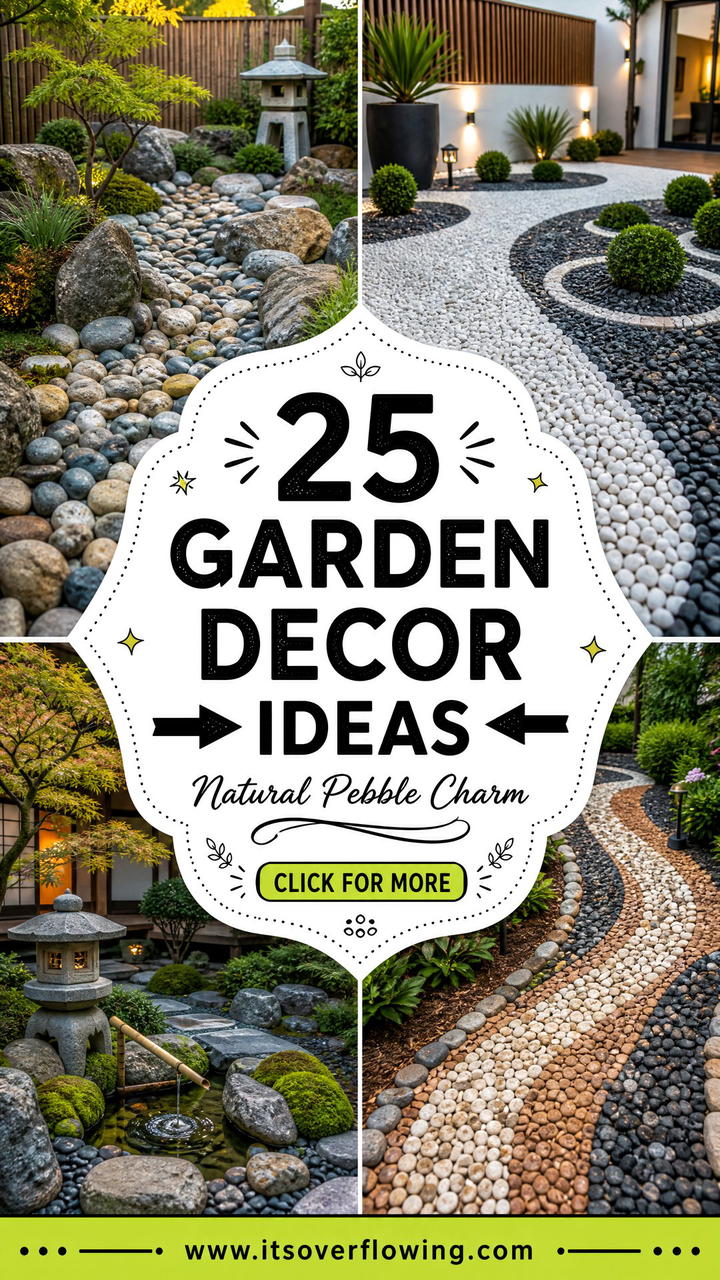
Transforming your outdoor space into a serene and stylish retreat is easily achievable when you incorporate the natural beauty of stones. Pebble accents offer a versatile and low-maintenance way to enhance your landscaping while providing a professional, polished finish. Whether you want to create a zen atmosphere or a modern garden layout, these small stones provide texture and visual interest. Using pebbles helps with drainage and prevents soil erosion, making them as functional as they are beautiful. You can experiment with different colors and sizes to match your existing home style. This guide explores creative ways to use these accents to elevate your backyard and make it feel like a designer masterpiece.
1. Pebble garden path
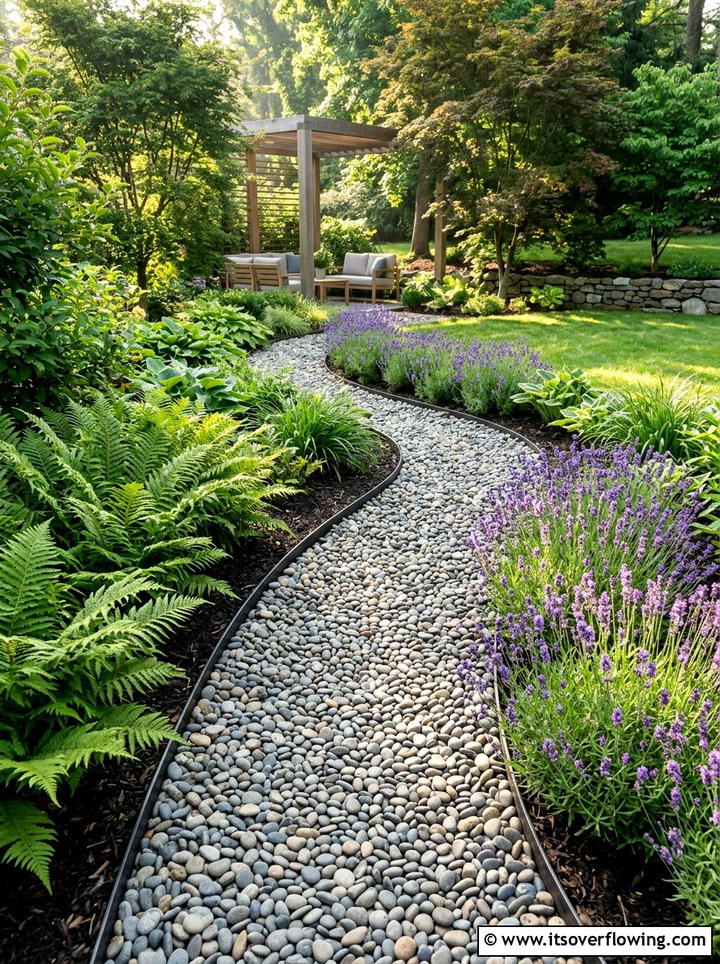
Walking through a backyard feels much more magical when you have a dedicated walkway made of smooth river stones. You can create a winding path that leads to a hidden seating area or a garden shed to add structure to the yard. Use larger flagstones for the main steps and fill the gaps with contrasting small pebbles to create a solid surface. Line the edges with low-growing plants like creeping thyme or moss to soften the overall look. This design works perfectly in traditional or cottage-style gardens where natural materials are key. The texture of the stones underfoot provides a sensory experience that grounds you while you enjoy your outdoor plants.
2. Succulent garden with pebbles
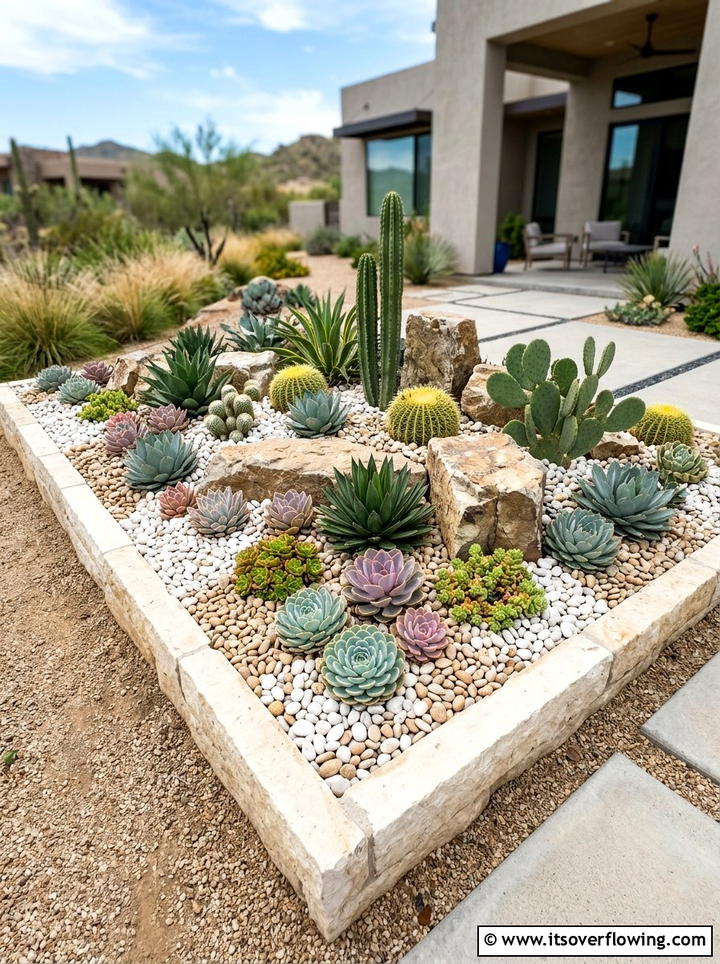
Succulents thrive in well-draining soil, making them the perfect companions for a pebble-based landscaping project. You can design a dedicated raised bed or a corner patch filled with various cactus species and colorful echeveria. Instead of using traditional mulch, spread a thick layer of white or tan pebbles around the base of each plant. This setup prevents moisture from sitting against the leaves while highlighting the unique shapes and vibrant colors of the succulents. Incorporate a few larger boulders to create height and depth within the small space. This desert-inspired look is incredibly easy to maintain and stays looking fresh throughout the hot summer months.
3. Dry creek bed
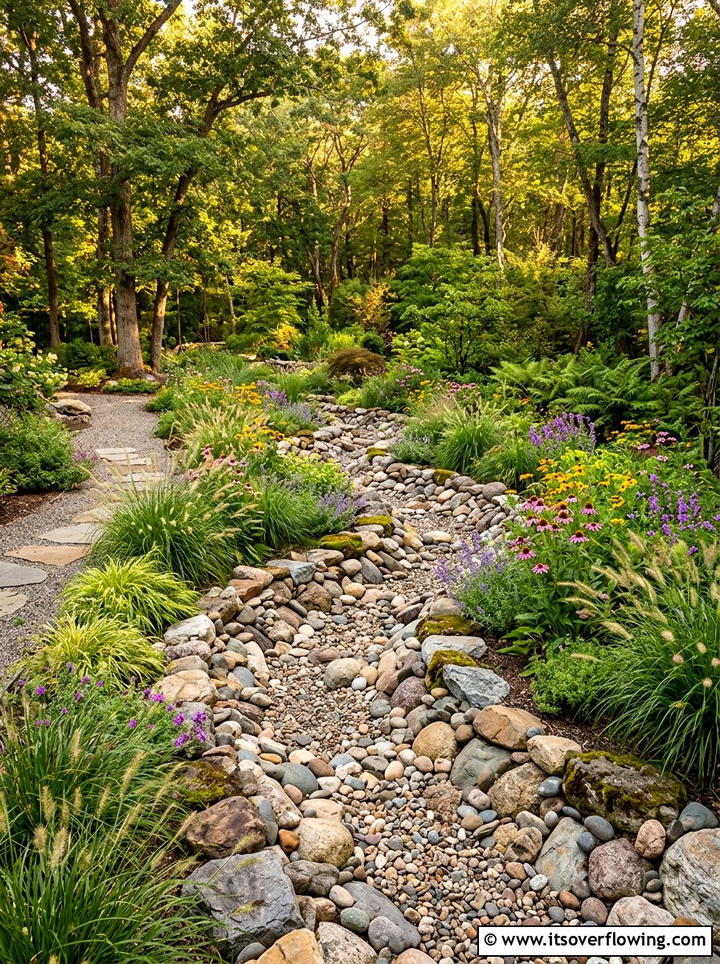
Building a dry creek bed is a fantastic way to manage water runoff while adding a striking focal point to your yard. You should start by digging a shallow, meandering trench that follows the natural slope of your property. Fill the center with larger river rocks and use smaller pebbles along the edges to mimic the appearance of a natural stream. Surround the “banks” with ornamental grasses and flowering perennials to make the feature look like it has always been there. This design solves drainage issues during heavy rain and remains a beautiful stone feature during the dry season. It creates a rugged, naturalistic vibe that requires almost no weeding.
4. Pebble flower bed edging
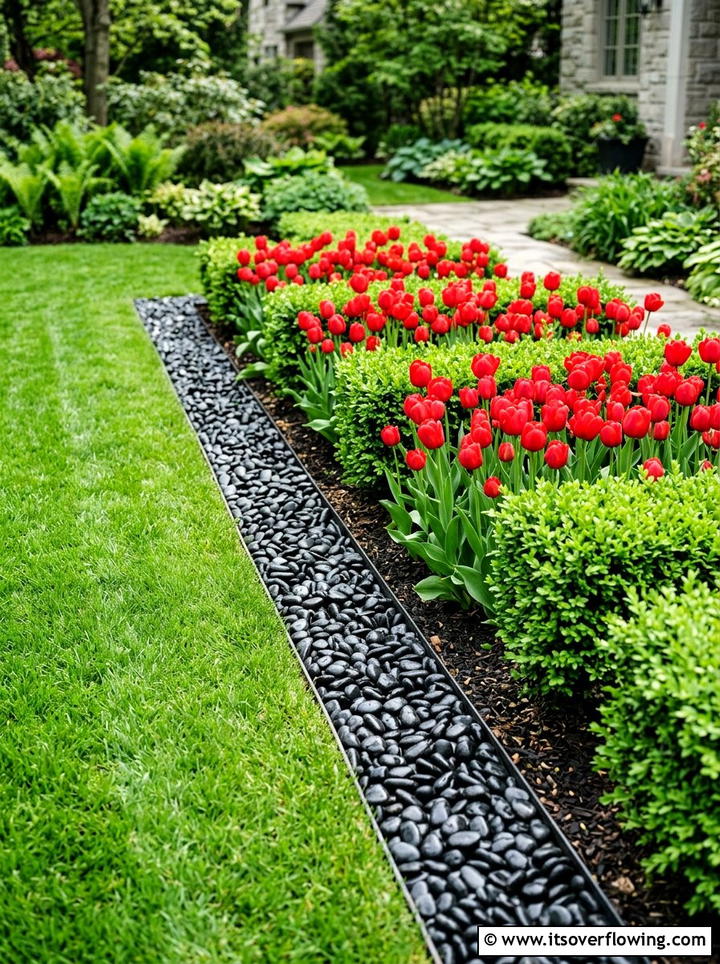
Defining the borders of your flower beds is essential for a clean and professional garden appearance. You can ditch the plastic or wood edging and opt for a wide border of polished black or gray pebbles instead. This creates a clear visual distinction between your green lawn and your colorful blooms. The stones help keep grass from creeping into the soil and provide a flat surface for lawn mower wheels to run along. Choose stones that complement your home’s exterior color for a cohesive look. Adding this simple detail makes the entire garden feel more organized and intentional without requiring expensive construction or heavy lifting.
5. Zen garden with raked pebbles
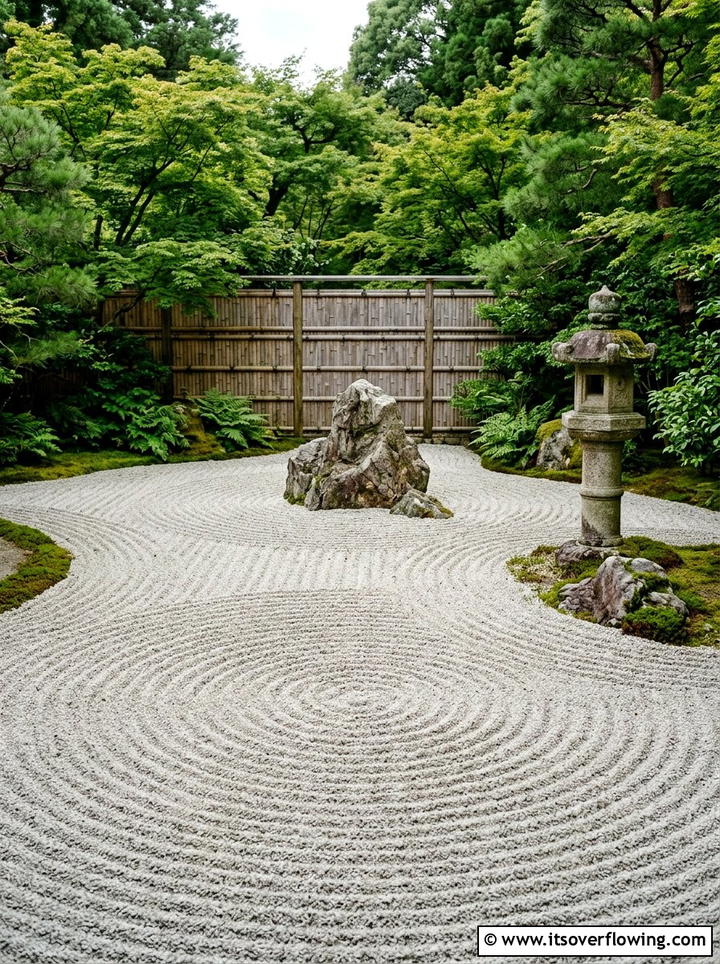
Creating a peaceful spot for meditation is easy when you use fine pebbles or gravel to form a traditional Japanese zen garden. Dedicate a square or circular area in a quiet corner of your yard for this minimalist design. Use a wooden rake to create swirling patterns in the light-colored stones, representing the movement of water. Place a few carefully selected large rocks or a small stone lantern to serve as focal points within the space. Surround the area with bamboo or tall privacy hedges to block out any external distractions. This design focuses on simplicity and balance, offering a calm environment for relaxation and deep thinking.
6. Stepping stone pebble mosaic
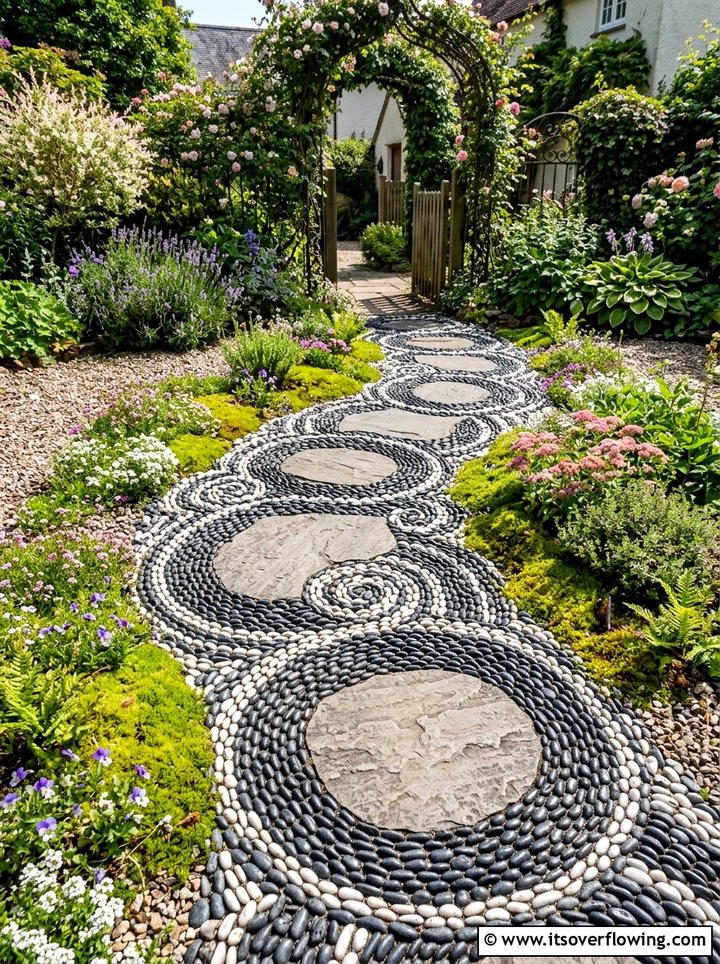
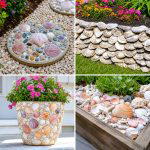
You can turn a basic garden walkway into a piece of art by creating intricate mosaic patterns using different colored pebbles. Instead of simple gravel, arrange small stones in circular or floral patterns around large flat stepping stones. This technique allows you to get creative with swirls, waves, or even geometric shapes that reflect your personal style. Use a mix of black, white, and earthy red stones to make the patterns pop against the surrounding greenery. This type of path works beautifully as an entry point to a patio or a decorative transition between different garden zones. It adds an artisanal touch that guests will surely notice and admire.
7. Pebble border for patio
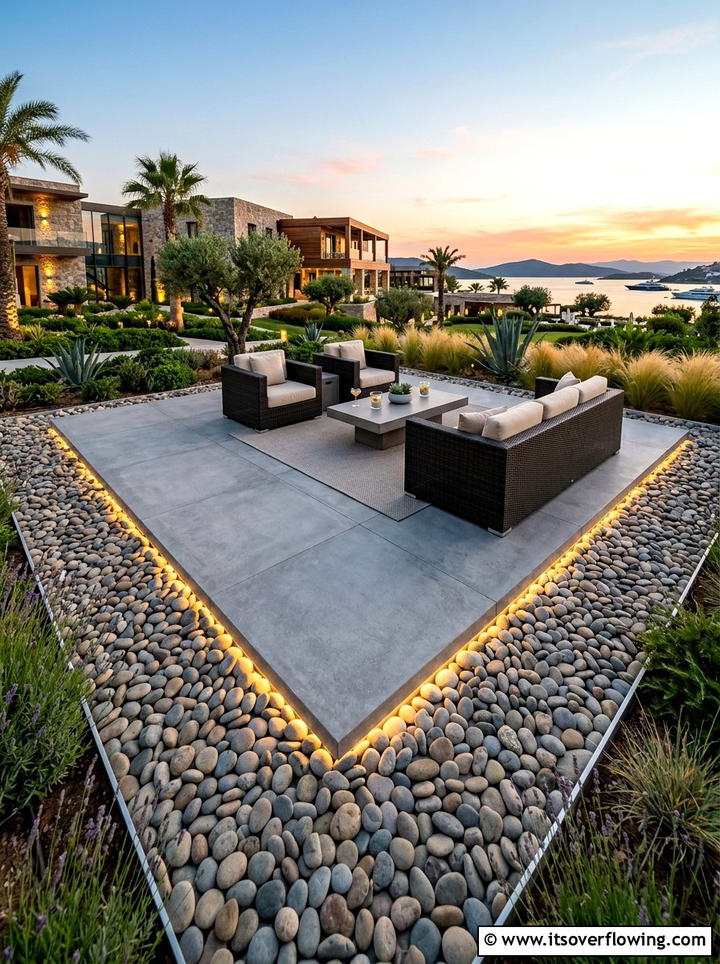
Adding a stone border around your existing concrete or wood patio helps it blend seamlessly into the rest of the landscape. You can leave a small gap between the patio edge and the lawn to fill with decorative river stones or smooth pebbles. This gap acts as a transition zone that prevents soil and grass clippings from blowing onto your clean seating area. Incorporate some outdoor floor lighting within the pebbles to illuminate the perimeter of your patio at night. This creates a high-end look that mimics luxury resort landscaping. It is an affordable way to upgrade your outdoor entertaining space and make it feel more expansive.


8. Rock garden with river stones
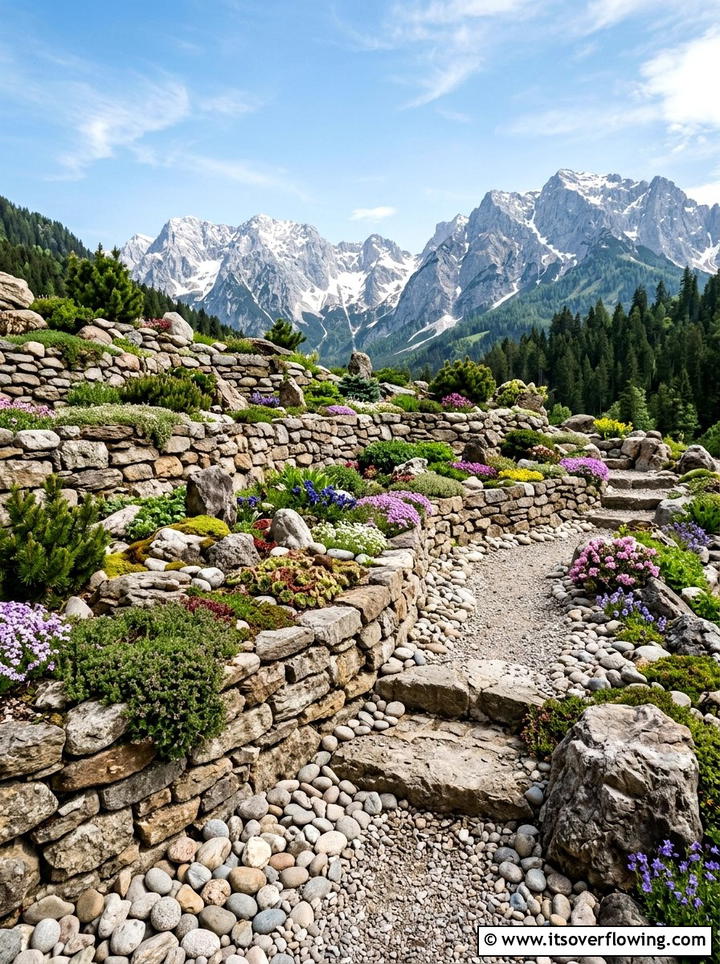
A rock garden is a perfect solution for spots in your yard where grass refuses to grow due to poor soil or shade. You can create a tiered design using large limestone blocks and fill the spaces between them with a variety of pebbles. Plant alpine flowers or hardy groundcovers that enjoy rocky environments to add splashes of color throughout the year. The mix of stone sizes creates a rugged and textured landscape that looks great even in the middle of winter. This style of garden is very durable and can withstand harsh weather conditions without losing its charm. It brings a natural mountain-like aesthetic to any suburban backyard.
9. Fire pit with pebble base
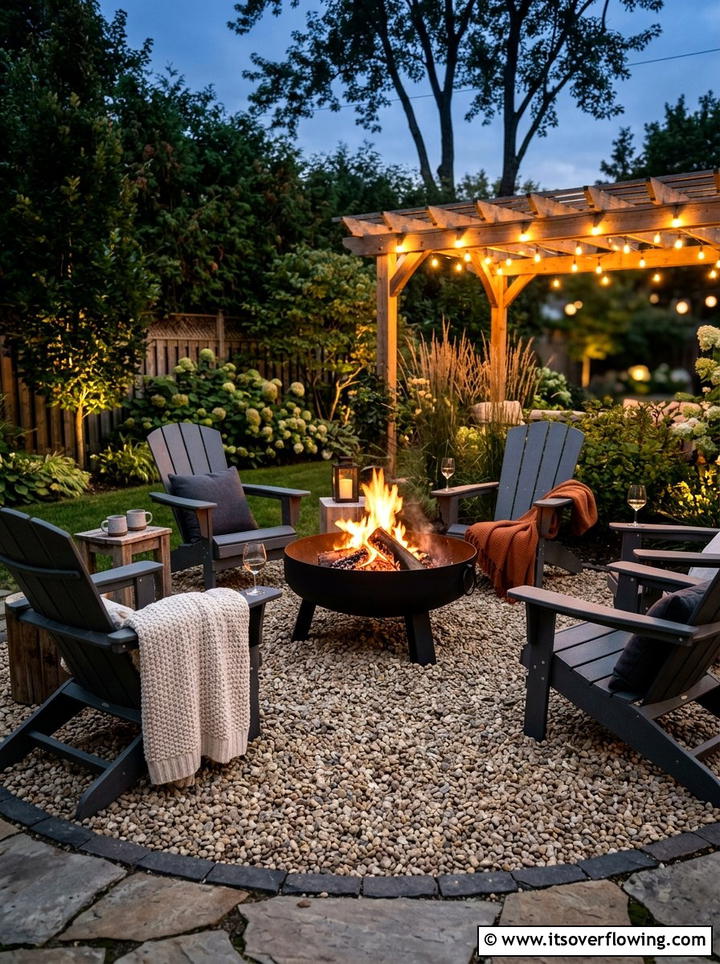
Setting up a safe and stylish base for your fire pit is easy when you use a thick layer of pebbles. Clear a large circular area and surround it with a metal or brick rim to keep the stones contained. Fill the interior with pea gravel or small river rocks to create a level surface for your fire bowl and chairs. Pebbles are heat-resistant and provide excellent drainage, ensuring your seating area stays dry after it rains. This setup prevents sparks from hitting dry grass and provides a clean look for your evening gatherings. It creates a cozy and defined “room” in your yard for roasting marshmallows and chatting.
10. Water feature pebble base
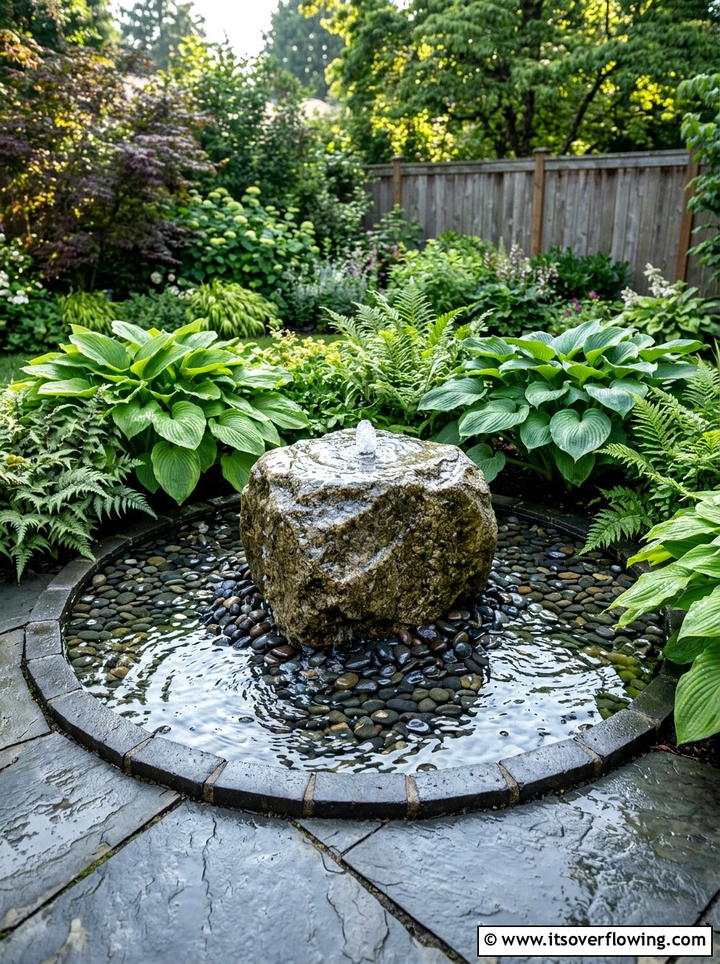
Adding the sound of moving water to your garden is much more soothing when the water flows over smooth pebbles. You can place a simple fountain or a bubbling rock in the center of a shallow basin filled with river stones. The water disappears into the pebbles and recirculates, creating a clean and modern look without an open pond. This is a great safety feature for families with small children or pets. Use dark, polished stones to create a beautiful reflective quality when they are wet. Surround the base with lush ferns or hostas to create a cooling oasis that attracts birds and butterflies to your backyard.
11. Modern pebble garden layout
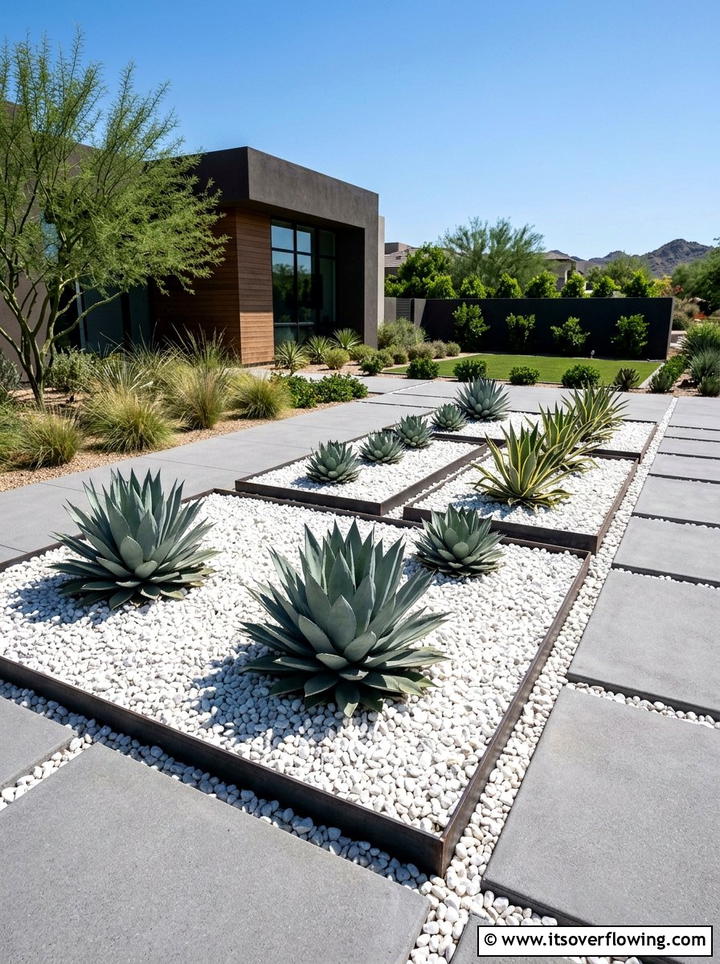
For a contemporary home, a minimalist garden layout using geometric shapes and pebbles is a fantastic choice. You can create large rectangular or square sections filled with uniform white pebbles, separated by metal edging or concrete dividers. Place a single architectural plant, like an agave or a Japanese maple, in the center of each section for maximum impact. This design emphasizes clean lines and high contrast, making the green foliage stand out against the bright stones. It is an ideal solution for small front yards or side paths where you want a high-impact, low-maintenance look. The grid-like structure provides a sense of order and modern elegance.
12. Pebble spiral garden
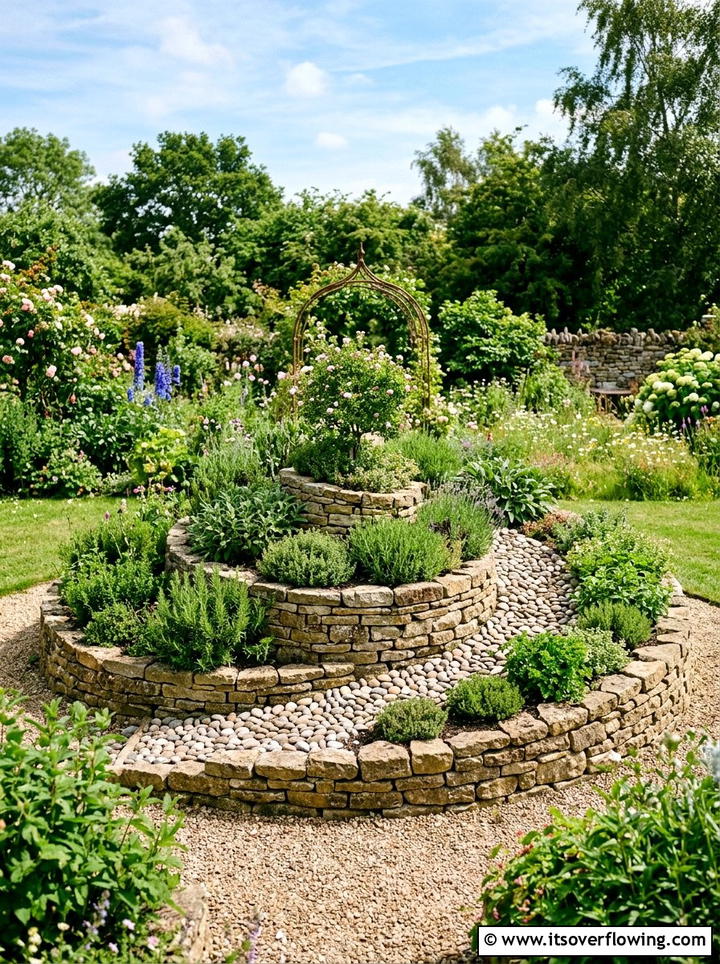
A spiral garden made from stones is a unique way to grow herbs or small flowers in a compact space. You can build a rising spiral wall using medium-sized rocks and fill the base and paths with small pebbles. This vertical design creates different microclimates, with the top being drier and the bottom holding more moisture. Using pebbles for the surrounding ground cover keeps the area tidy and makes it easy to access your plants for harvesting. This whimsical shape adds a touch of artistic flair to your backyard and serves as a great conversation starter. It is a functional and beautiful way to maximize your gardening space.
13. Container garden with pebble mulch
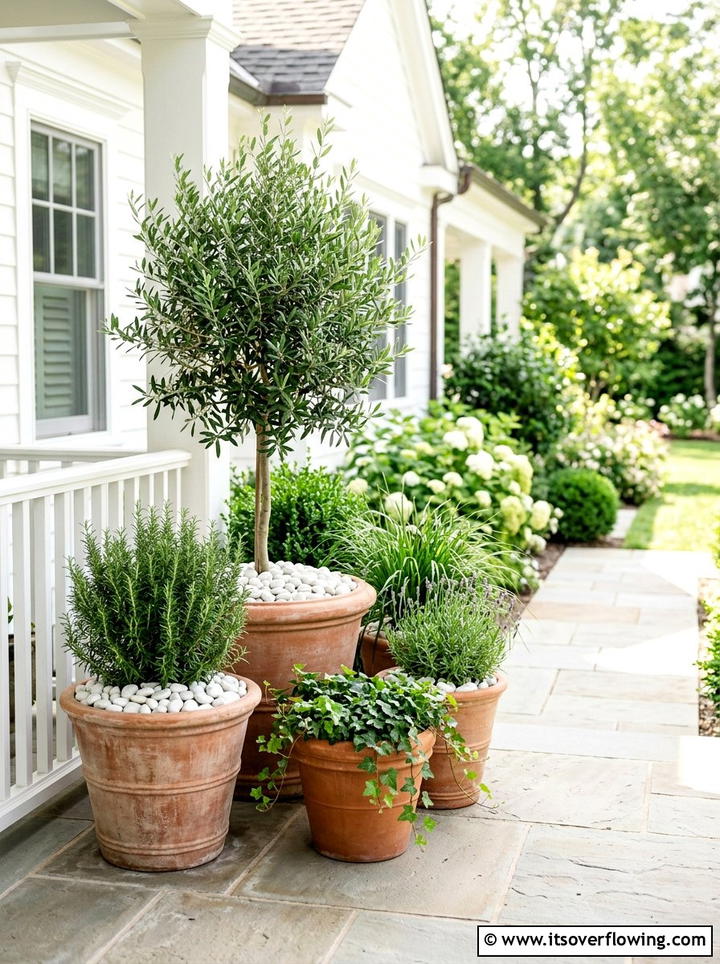
You can give your potted plants a professional finish by adding a layer of small pebbles to the surface of the soil. This “top dressing” serves several purposes beyond just looking pretty in your outdoor containers. It helps retain moisture in the soil, suppresses weed growth, and prevents dirt from splashing onto the leaves when you water them. Use white pebbles for a clean, modern look or earthy brown stones for a more natural terracotta aesthetic. This simple addition makes even basic plastic pots look more expensive and well-cared for. It works especially well for large statement planters on your porch or around your pool area.
14. Vertical garden with pebble base
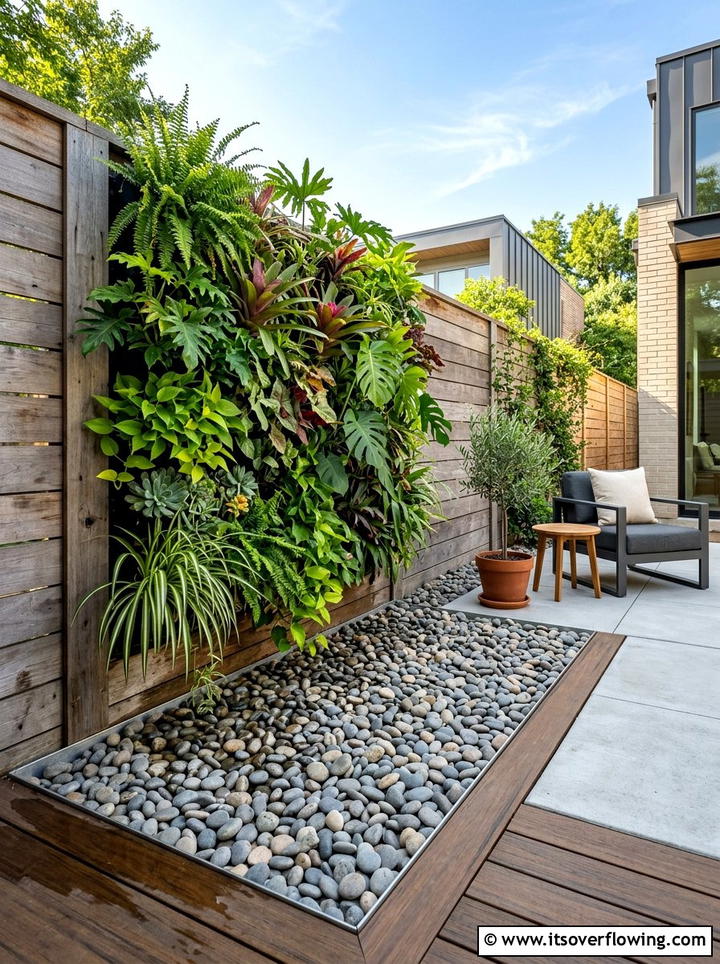
If you have a living wall or a vertical planter, adding a pebble base at the bottom creates a polished and functional drainage solution. As you water the plants on the wall, the excess moisture drips down into a bed of decorative stones below. This prevents puddles from forming on your patio or walkway and keeps the area looking neat. You can use large, smooth stones in a variety of colors to create a beautiful foundation for your vertical greenery. This setup looks particularly striking against a dark wooden fence or a modern concrete wall. It integrates the vertical and horizontal elements of your garden into one cohesive design theme.
15. Pebble drainage area
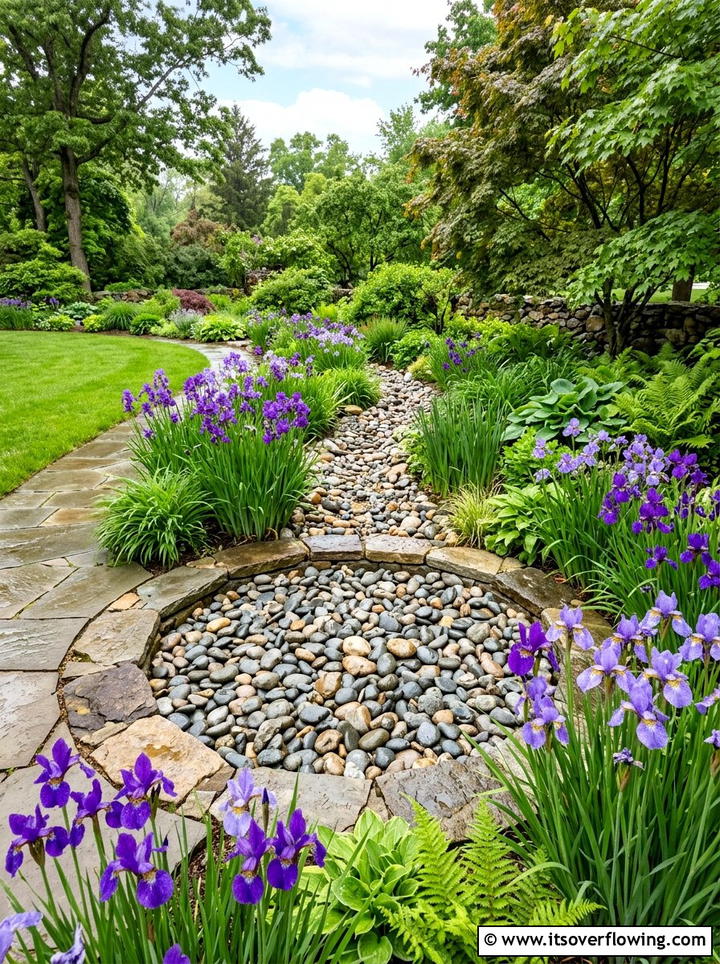
Many yards have low spots where water tends to pool after a heavy storm, but pebbles can turn these problems into features. You can dig out the soggy area and fill it with layers of gravel and decorative pebbles to create a French drain. On the surface, it looks like a beautiful stone garden bed, but underneath, it is working hard to redirect water away from your home. This functional decor piece saves your lawn from becoming a muddy mess while adding texture to the landscape. Surround the area with moisture-loving plants like irises or canna lilies to complete the look. It is a smart way to combine utility with high-end garden design.
16. Herb garden with pebble markers
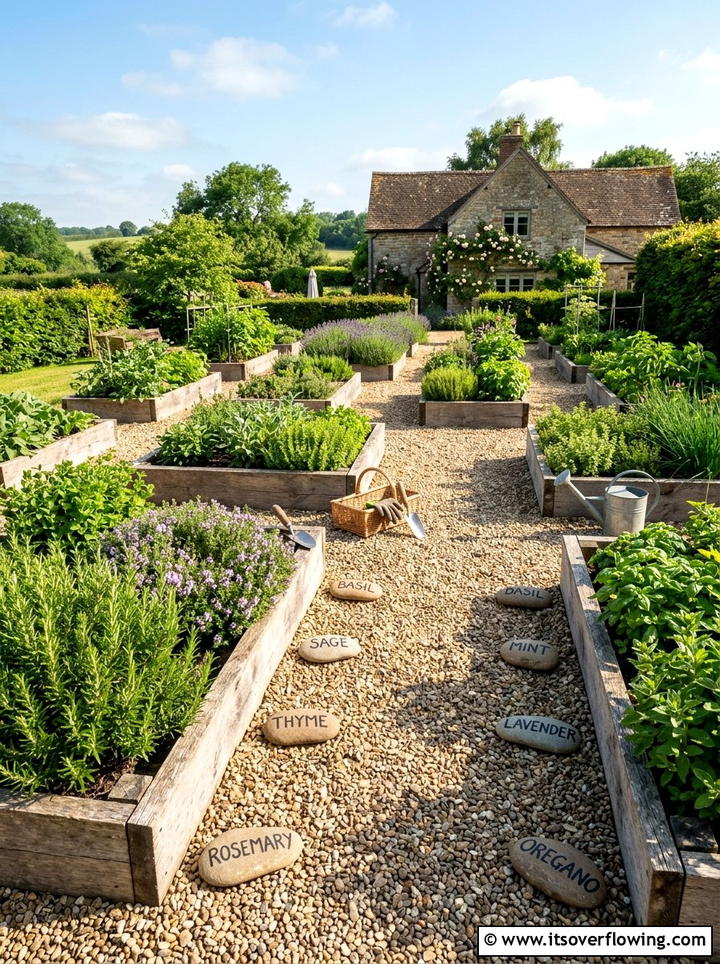
Organizing an herb garden is much more enjoyable when you use pebbles to create paths and markers. You can lay out a grid of small wooden boxes for your herbs and fill the walking spaces between them with fine pea gravel. This keeps your feet clean while you gather basil or rosemary for cooking in the kitchen. For a decorative touch, use large flat pebbles as natural plant labels by painting the names of the herbs on them. This rustic and charming look fits perfectly in a farmhouse or traditional garden setting. The stones provide a neutral background that lets the vibrant green herbs take center stage.
17. Sloped garden with pebble terracing
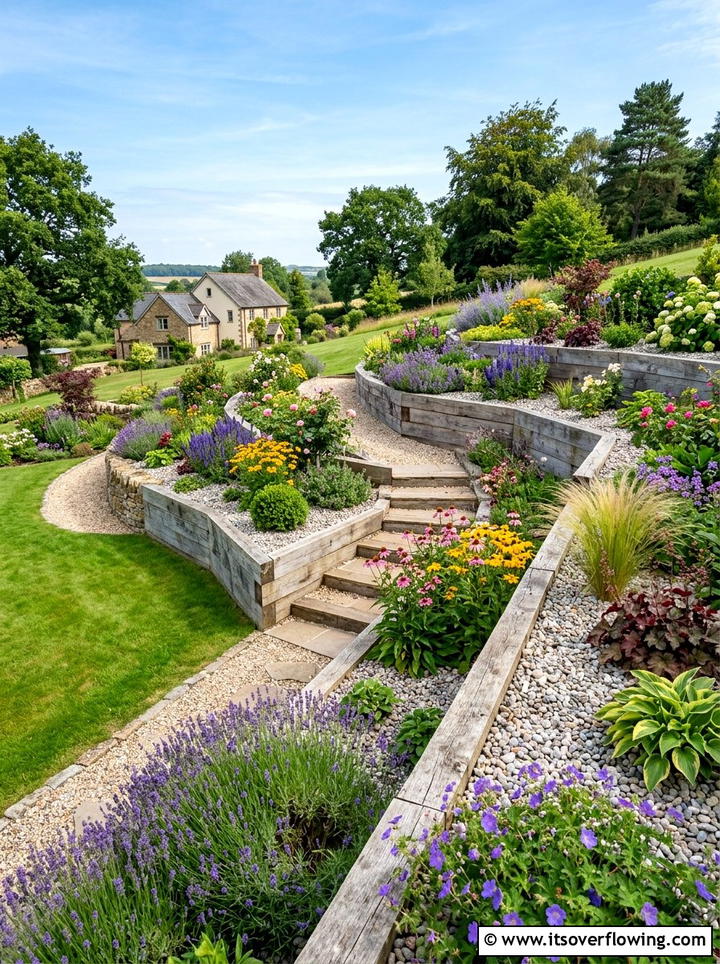
Landscaping a slope can be difficult, but pebbles and stones make it much easier to manage erosion and style. You can create a series of small terraces using timber or stone walls and fill the flat areas with decorative pebbles. This turns a difficult hill into a beautiful multi-level garden that is easy to navigate and plant. The stones help lock the soil in place and provide a stable surface for adding decorative elements like statues or benches. Use a mix of larger rocks for stability and smaller pebbles for a finished look. This design transforms a wasted hillside into a stunning focal point for your entire property.
18. Circular pebble seating area
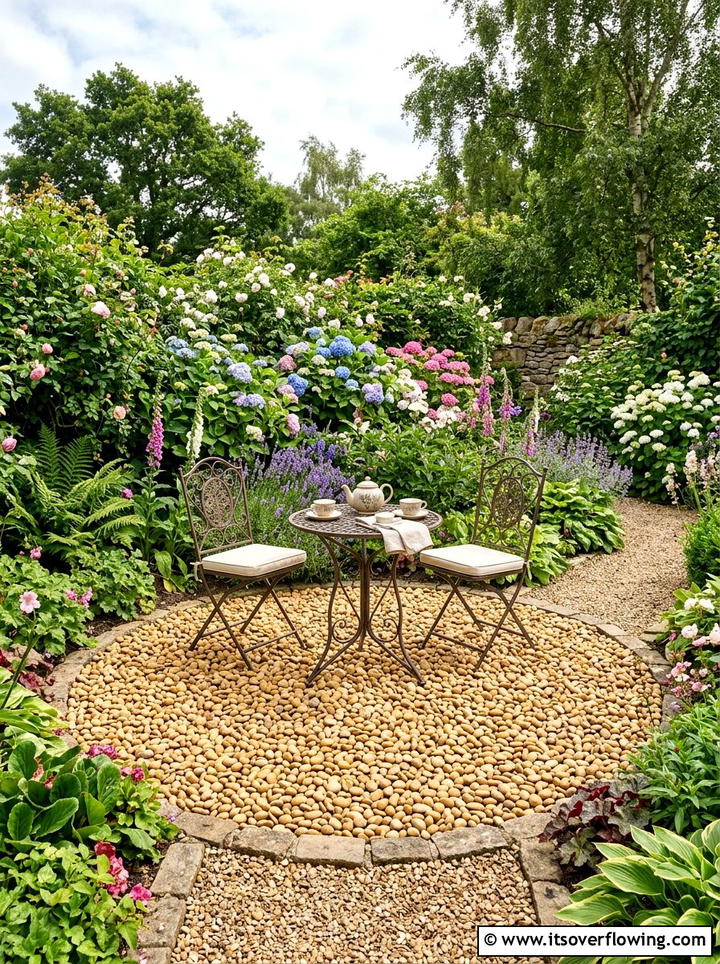
Creating a dedicated spot for a bench or a bistro set is easy with a circular pebble foundation. Mark out a large circle in your lawn and remove the grass before laying down a weed barrier and a thick layer of stones. This defined space creates a cozy destination in your yard that feels separate from the rest of the garden. Choose smooth pebbles that are comfortable to walk on and won’t shift too much under the weight of furniture. Surround the circle with tall flowers or shrubs to create a sense of privacy and enclosure. It is a simple weekend project that adds significant value to your outdoor living space.
19. Tropical garden with white pebbles
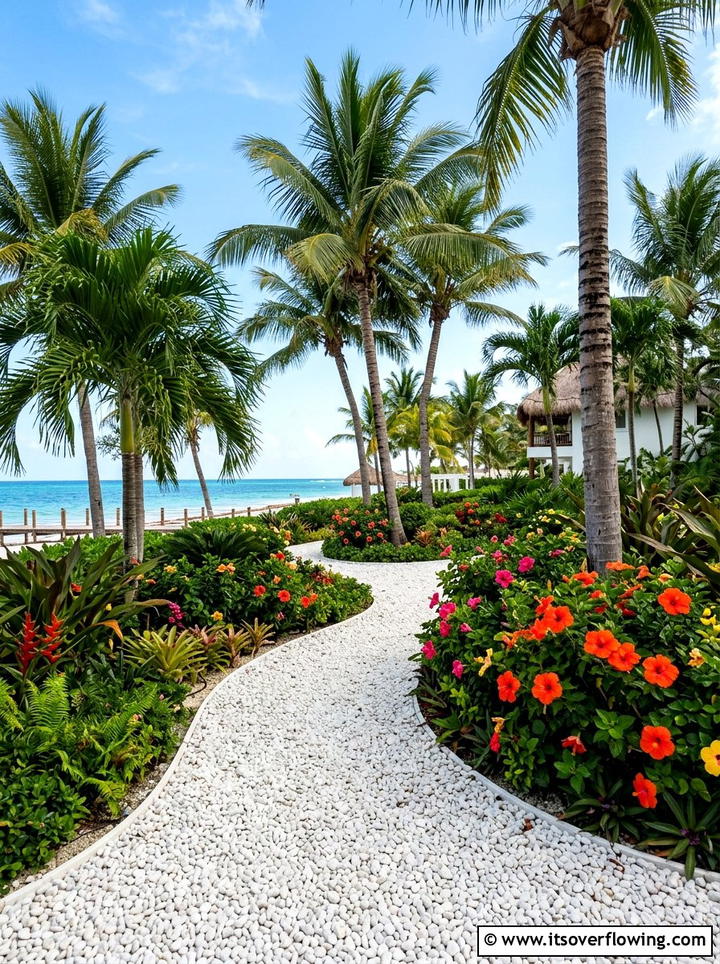
For a lush, tropical vibe, white pebbles provide the perfect high-contrast background for deep green foliage. You can plant large-leafed varieties like elephant ears, palms, and hibisicus in a bed covered with bright white stones. The light reflects off the pebbles, brightening up shaded areas and giving the garden a clean, coastal feel. This look is reminiscent of high-end resorts in the Caribbean and brings a vacation atmosphere to your own backyard. Add some colorful outdoor cushions and a hammock nearby to complete the tropical getaway theme. The white stones stay cool in the sun and make the vibrant flower colors really pop against the landscape.
20. Japanese garden with stone accents
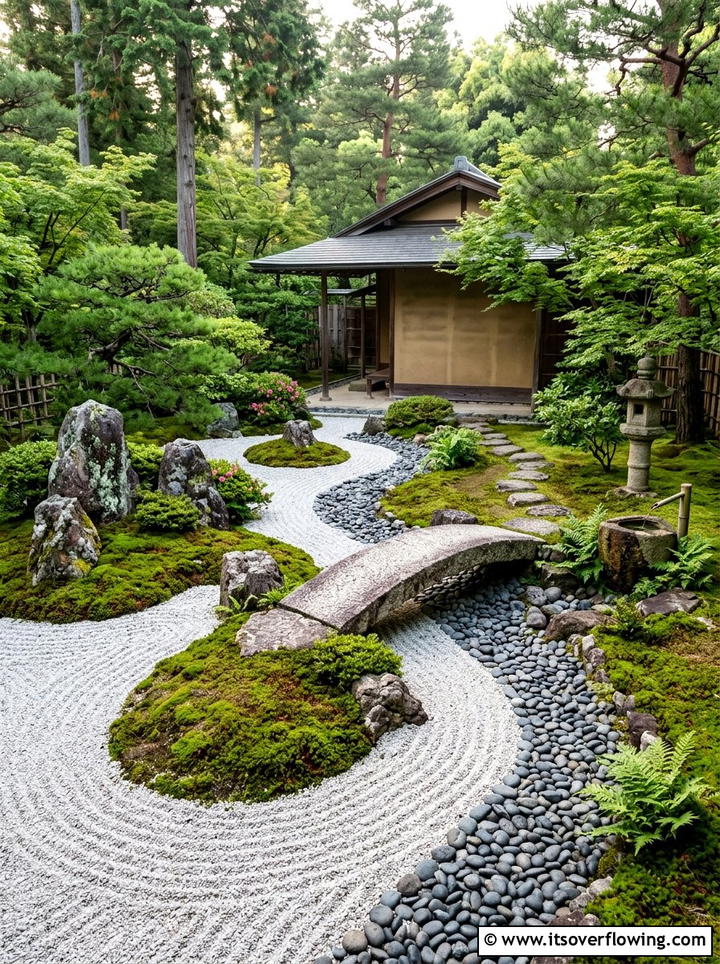
Traditional Japanese landscaping relies heavily on the use of stones and pebbles to represent natural elements like mountains and water. You can incorporate this style by using raked gravel areas, large “islands” of moss, and carefully placed boulders. Small pebble paths can wind through the space, leading past a stone basin or a quiet koi pond. This design focuses on harmony and carefully curated views from different angles of the garden. Use muted, natural stone colors like gray, tan, and charcoal to maintain a sense of calm and understated beauty. It is a sophisticated way to use pebbles that creates a timeless and elegant outdoor environment.
21. Wildlife garden with pebble pool
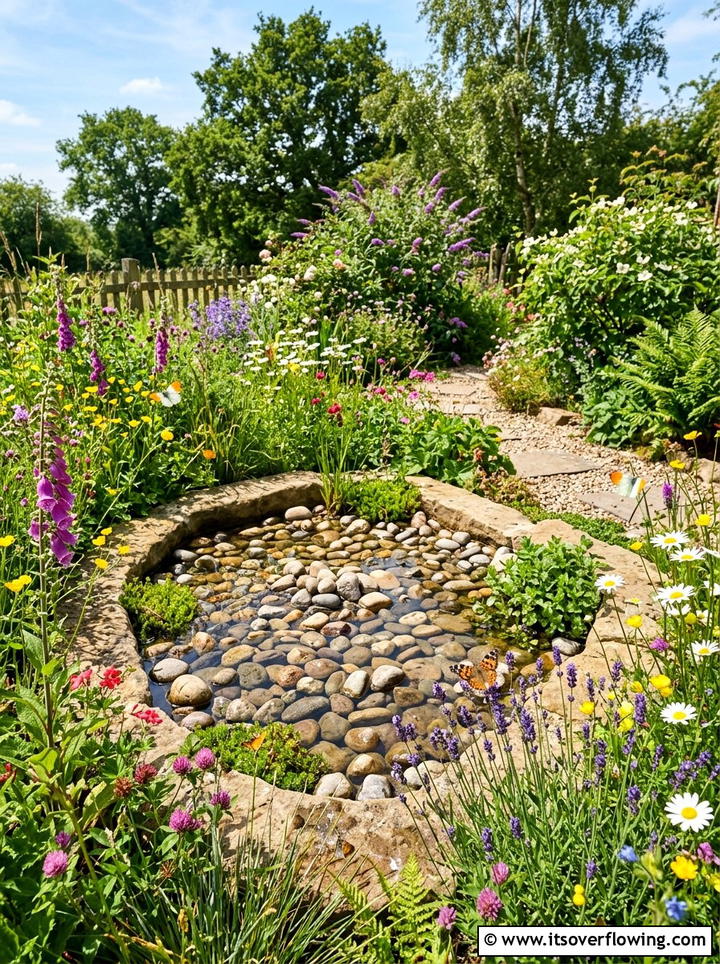
Attracting birds, bees, and butterflies to your yard is easier when you provide a shallow water source filled with pebbles. You can bury a shallow tray or basin and fill it with water and a layer of stones that break the surface. These stones provide a safe landing spot for insects and small birds to drink without the risk of drowning. Place the pebble pool near nectar-rich flowers to create a buzzing hub of activity in your garden. This small feature adds a dynamic element to your backyard and helps support local biodiversity. It is a simple, eco-friendly way to use pebbles for a meaningful purpose.
22. Geometric pebble patterns
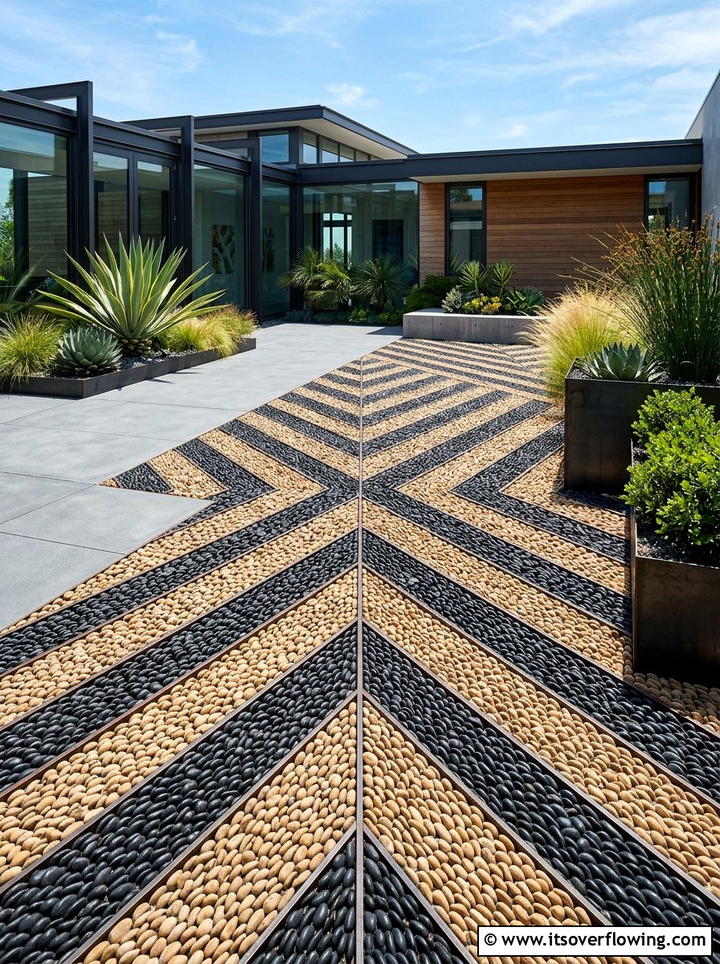
If you enjoy a more artistic and structured look, you can use pebbles to create bold geometric patterns in your landscape. Think about using metal dividers to create triangles, diamonds, or stripes filled with alternating colors of stones. You might use dark gray pebbles for one section and light tan for the next to create a striking visual rhythm. This technique works well in modern courtyards or as a decorative border along a driveway. It treats the ground like a canvas, allowing you to design a custom look that is completely unique to your home. These patterns remain visible year-round, even when plants go dormant in winter.
23. Tree base pebble mulch
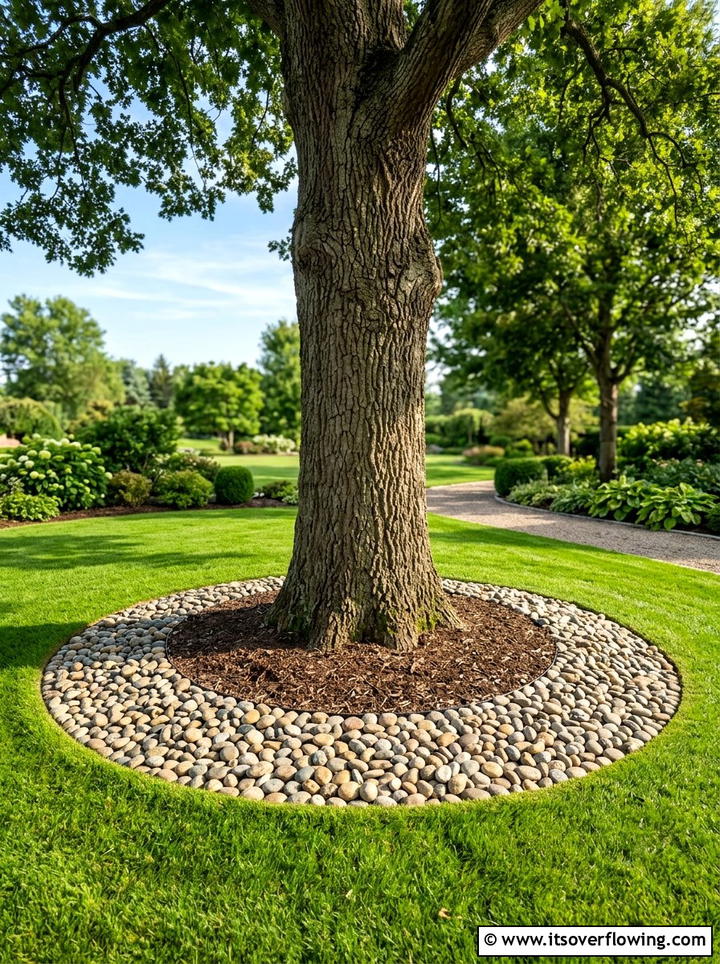
Protecting the base of your trees while keeping the area looking tidy is easy with a pebble mulch ring. Instead of messy wood chips that decompose and attract bugs, use a layer of stones around the trunk. This prevents lawnmowers from getting too close to the bark and provides a clean, finished look for your specimen trees. Make sure to leave a little space directly against the trunk to allow for air circulation and growth. Use stones that match your other garden borders to tie the whole landscape together. This simple maintenance step makes your trees look like they were professionally landscaped and keeps your lawn edges sharp.
24. Walkway with mixed pebble colors
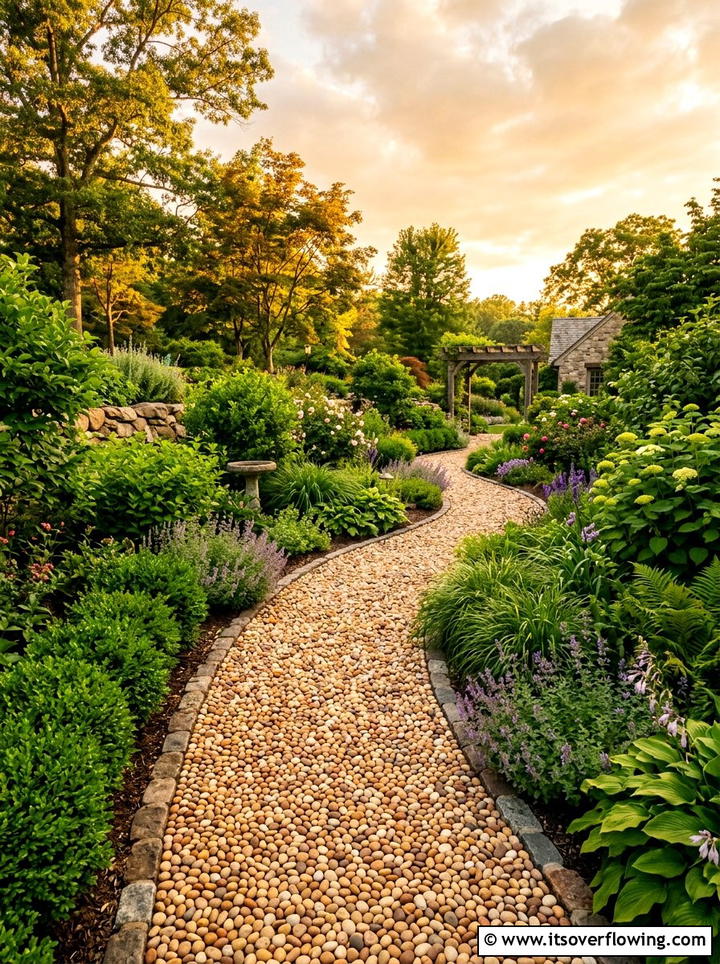
Using a variety of pebble colors can add warmth and depth to a simple garden walkway or side path. Instead of sticking to just one shade, try mixing earthy tones like honey, cream, and terracotta for a natural look. You can also create a “gradient” effect where the colors slowly transition from light to dark as you walk down the path. This variegated look hides dirt and debris better than solid colors and blends beautifully with a wide range of plant types. It creates a soft, inviting aesthetic that feels less formal than a paved walkway. The mixed colors add a playful yet sophisticated touch to any backyard design.
25. Fairy garden with tiny pebbles
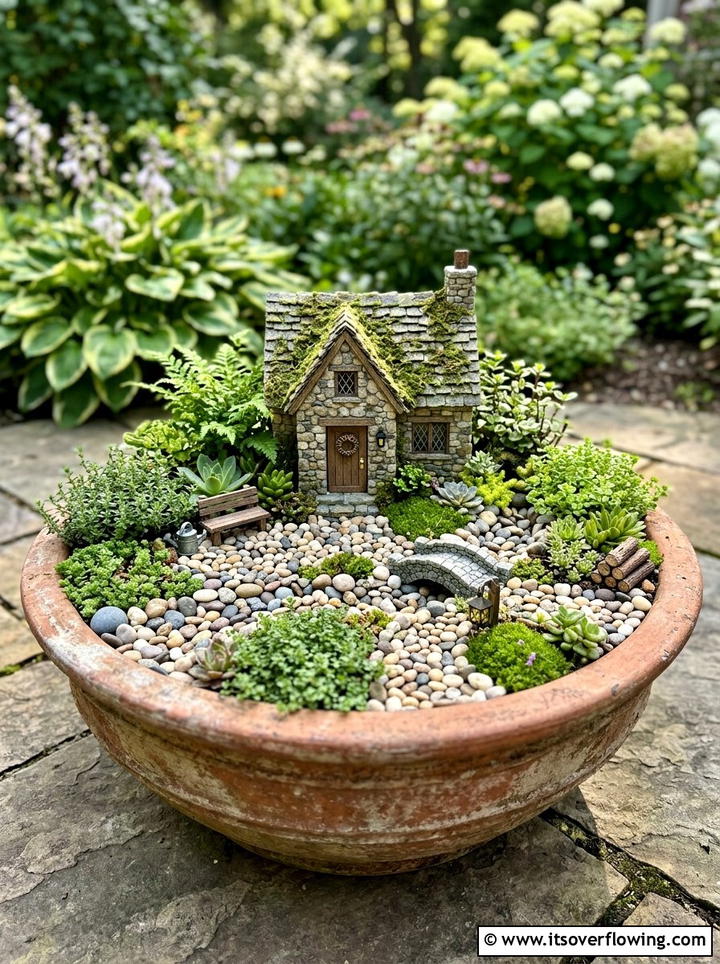
For a touch of whimsy and fun, you can use tiny pebbles to create miniature landscapes in a small corner or a container. These “fairy gardens” use small stones to represent paths, rivers, and patios for imaginary garden inhabitants. You can build tiny stone walls or use colorful pebbles to create a miniature mosaic in a large flower pot. This is a great project for families to do together, and it allows for endless creativity in a very small space. Even in a large backyard, these small, detailed areas add a sense of wonder and charm that delights visitors of all ages. It proves that pebbles can be used at any scale.
Conclusion:
Incorporating pebbles into your garden decor is a smart and stylish way to improve your home’s outdoor appeal. From functional drainage solutions to intricate mosaic paths, these versatile stones offer endless possibilities for every type of landscape style. They are incredibly durable, require very little maintenance, and help your plants thrive by regulating soil conditions. By choosing the right colors and sizes, you can create a cohesive look that reflects your personal taste and enhances your existing architecture. Whether you are aiming for a modern minimalist vibe or a cozy cottage feel, pebble accents provide the perfect finishing touch. Start small with a few containers or go big with a new stone path to see how these natural elements can transform your yard into a beautiful, inviting sanctuary.

Related posts:
 25 Garden Decor Ideas for Rustic Gardens With Natural Charm
 25 Garden Decor Ideas With Driftwood Accents For Coastal Charm
 25 Garden Decor Ideas With Rustic Accents for Cozy Charm
 25 Garden Decor Ideas With Shell Accents for Coastal Charm
 25 Garden Decor Ideas With Barrels For Rustic Outdoor Charm
 25 Garden Decor Ideas With Bird Baths For Peaceful Charm
 25 garden decor ideas with macrame for boho outdoor charm
 25 Garden Decor Ideas With Painted Rocks for Playful Charm
 25 Garden Decor Ideas With Stepping Stones for Charm
 25 Garden Decor Ideas With Vintage Pieces for Timeless Charm
 25 Garden Decor Ideas With Wagons for Rustic Outdoor Charm
 25 Garden Decor Ideas With Wheelbarrows for Rustic Charm