
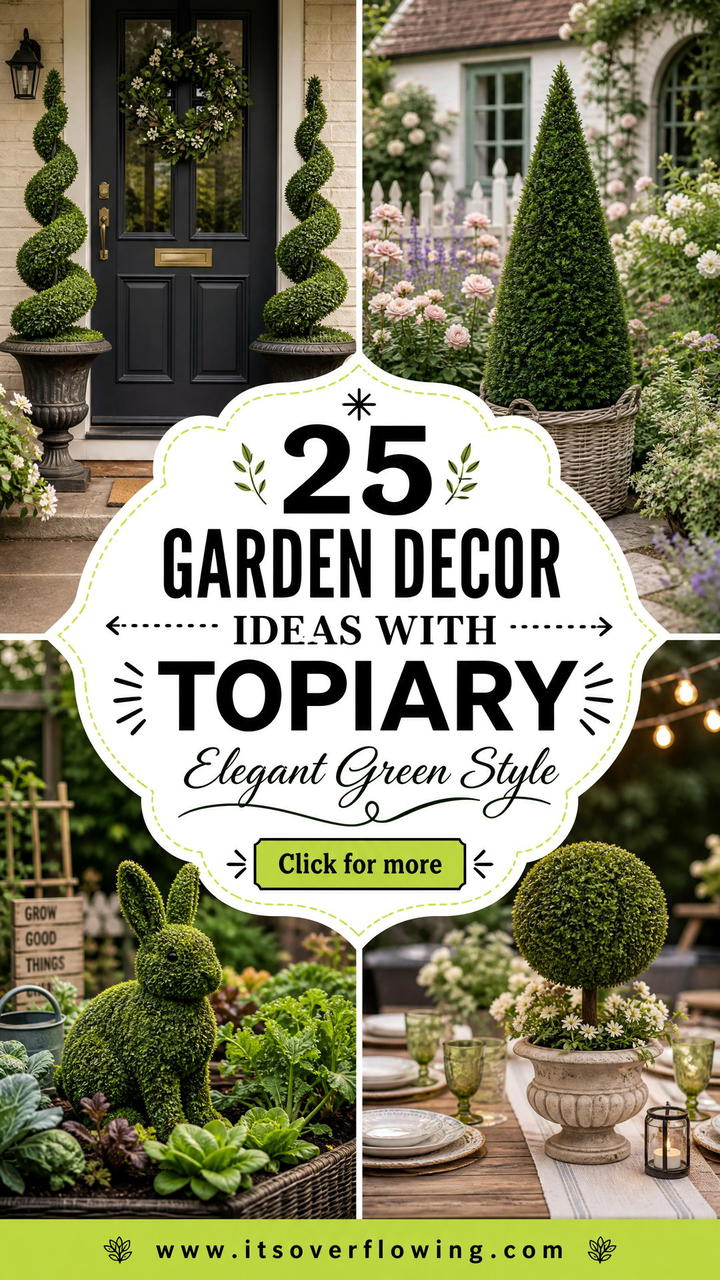
Topiary gardening is a timeless art form that transforms ordinary shrubs into living sculptures, offering a sense of order and sophistication to any outdoor space. Whether you are aiming for a formal European estate look or a whimsical cottage vibe, these shaped plants provide year-round structure and visual interest that standard perennials often lack. Incorporating topiary into your garden decor allows you to experiment with height, texture, and symmetry in ways that feel both intentional and artistic. From grand entryway spirals to charming animal shapes tucked into flower beds, the possibilities for enhancing your landscape with greenery are truly endless and rewarding for any gardener.
1. Boxwood Ball In Terracotta Pot
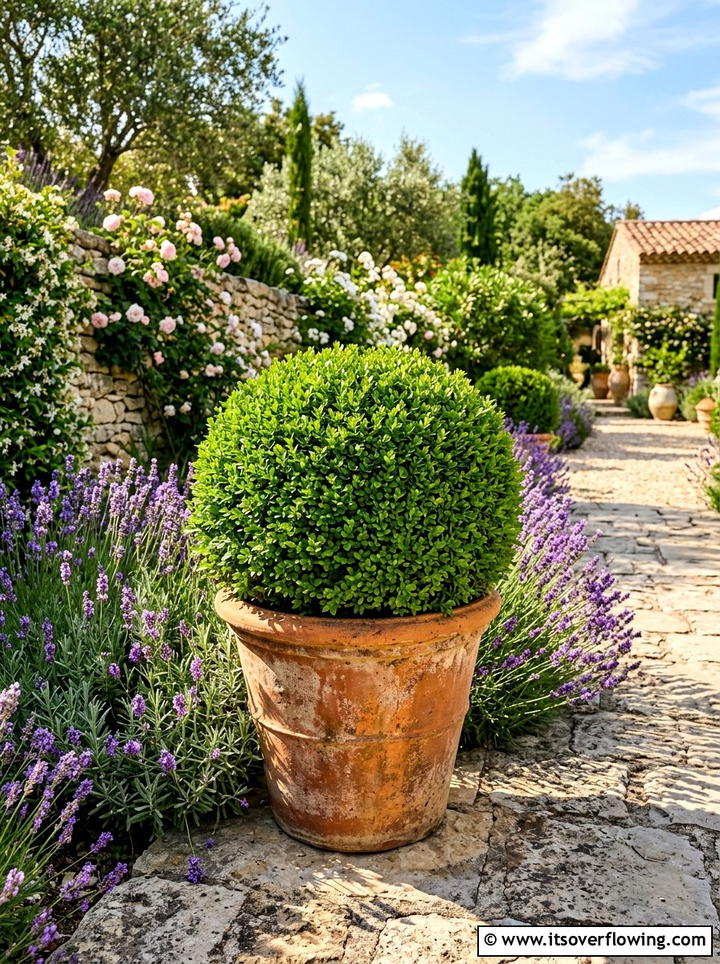
What if you could instantly elevate your patio with a single classic element? A perfectly manicured boxwood ball nestled inside a rustic terracotta pot offers a timeless Mediterranean feel that suits almost any architectural style. This design choice works beautifully because the warm, earthy tones of the clay contrast sharply with the vibrant, dense green leaves of the boxwood. You can place these pots in pairs to flank a doorway or scatter them along a walkway to create a rhythmic sense of movement. Because boxwoods are hardy, this simple setup remains attractive throughout the changing seasons, requiring only occasional trimming to maintain its clean, spherical shape.
2. Spiral Topiary By Front Door
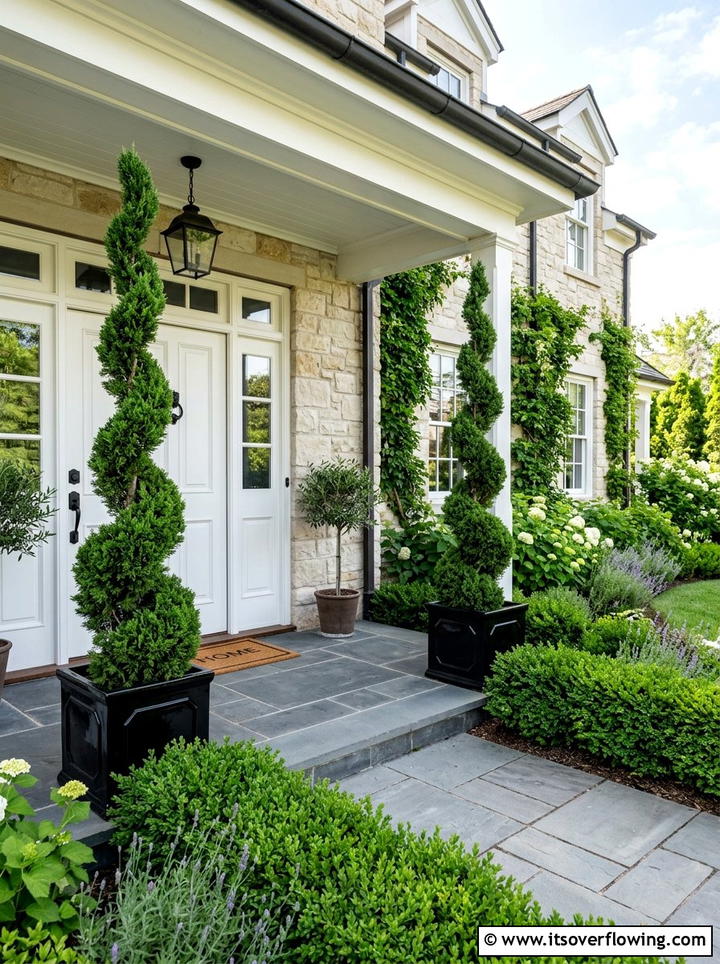
Have you ever noticed how a striking entrance can completely change the mood of a home? Adding a tall spiral topiary on either side of your front door creates an immediate sense of grandeur and welcoming elegance. These twisting evergreen shapes draw the eye upward, making your entryway appear taller and more significant. They work exceptionally well in narrow spaces where horizontal room is limited but vertical impact is desired. To keep them looking their best, choose a high-quality evergreen like juniper or arborvitae, which holds its shape well. Pairing these spirals with elegant black or white planters adds a modern touch to a traditional garden feature.
3. Animal Shaped Shrub In Backyard
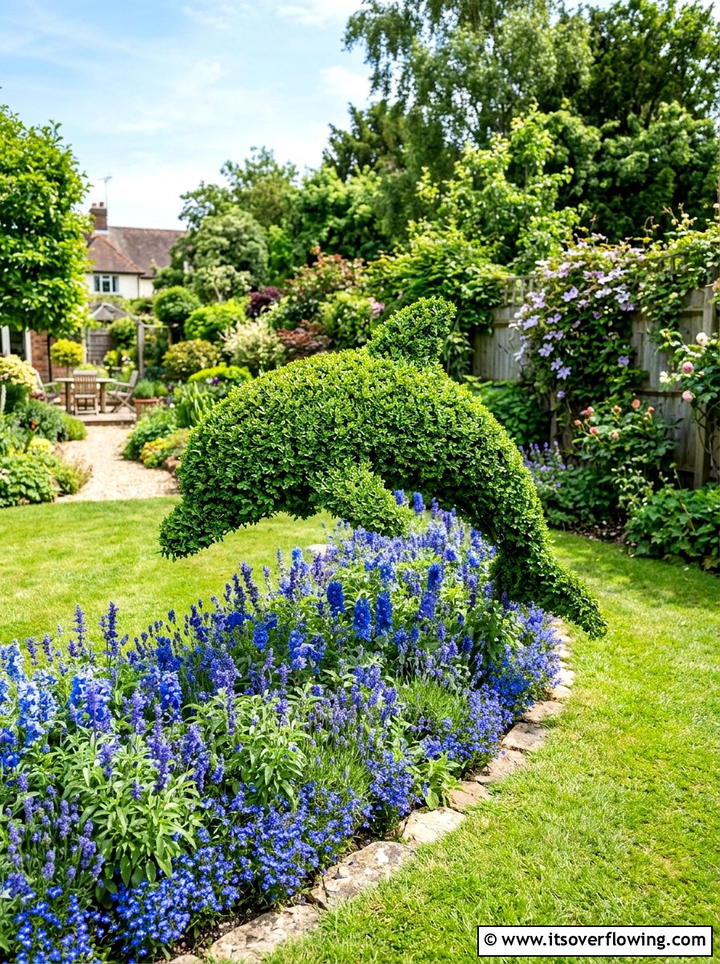
Imagine walking into a backyard and being greeted by a charming leafy sculpture that sparks joy and conversation. Animal-shaped topiaries, such as dolphins, elephants, or birds, bring a playful and whimsical element to a more relaxed garden setting. While these require a bit more skill to prune or a wire frame to guide growth, the result is a unique living art piece. These figures look best when placed as a surprise element among softer, flowering plants to create a contrast between the structured shape and the wild blooms. They are perfect for family gardens where children can enjoy the magical atmosphere created by these green creatures.
4. Cone Topiary In Cottage Garden
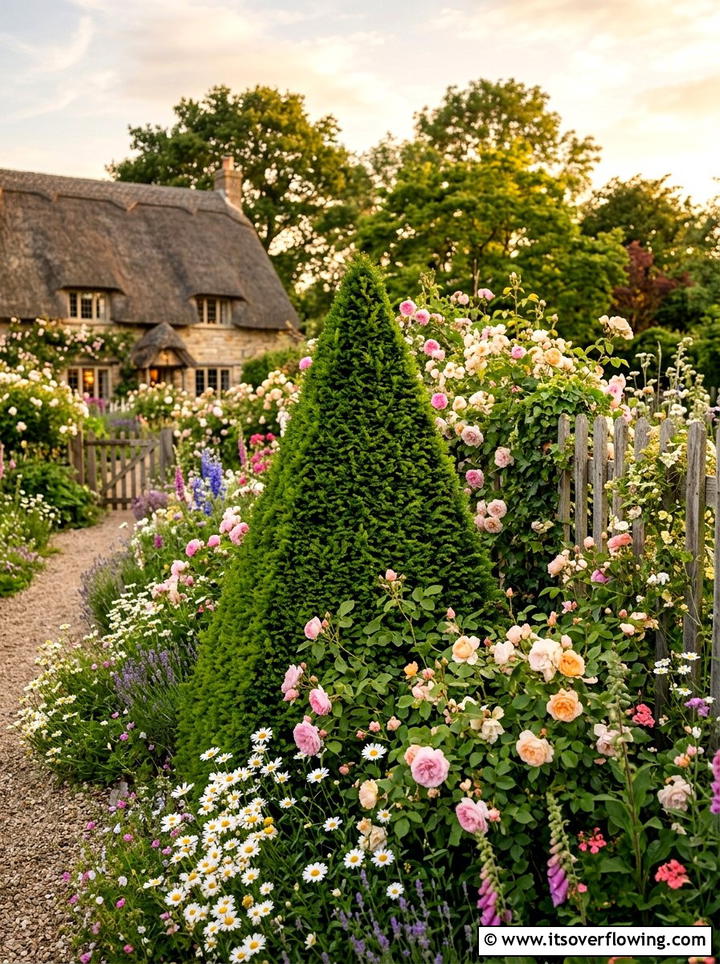
Cottage gardens often feel wild and free, but adding a structured cone topiary can provide a much-needed focal point amidst the floral chaos. The sharp, clean lines of a pyramid or cone shape help to anchor the sprawling growth of roses, lavender, and daisies. By placing a few cones at varying heights throughout a flower bed, you create a sense of depth and intentionality. This balance between the formal shape and the informal planting style is a hallmark of classic English garden design. It ensures that even in the winter months, when the flowers have faded, your garden still possesses a clear and beautiful skeleton.
5. Double Ball Topiary In Modern Planter
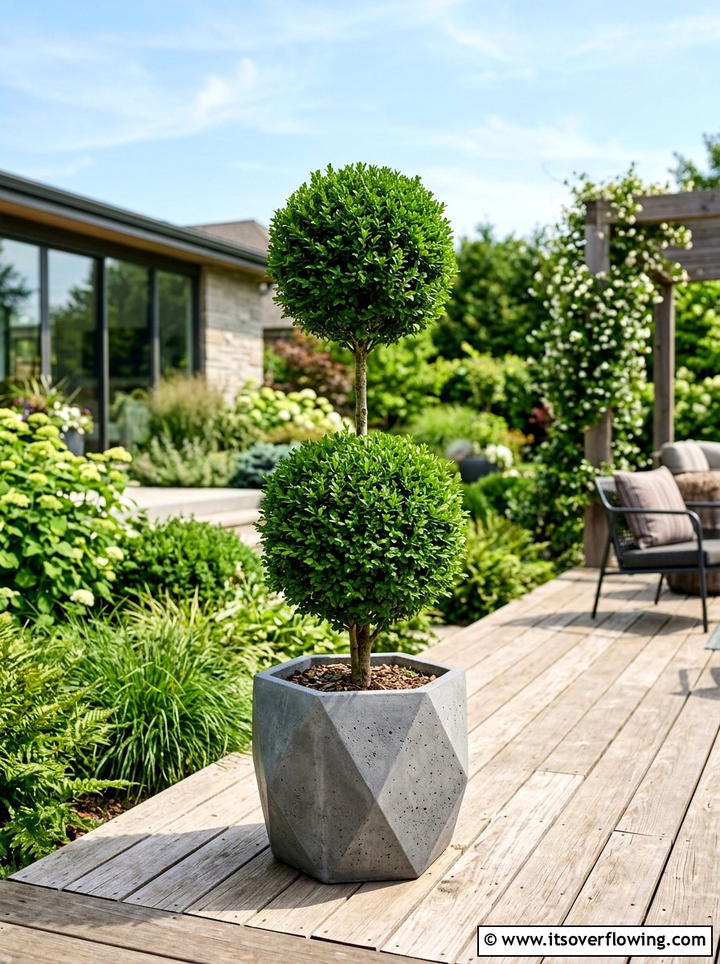
Are you looking for a way to add a contemporary edge to your balcony or deck? A double ball topiary, featuring two distinct spheres of greenery on a single slender stem, offers a sleek and architectural look. When placed in a minimalist, geometric planter, this style of topiary becomes a piece of modern decor that feels fresh and sophisticated. The negative space between the two green globes adds a layer of visual interest that a solid hedge cannot provide. This setup is ideal for urban dwellers who want to incorporate nature into a small space without overwhelming the area with messy or sprawling plant growth.
6. Low Boxwood Hedge In Parterre Garden
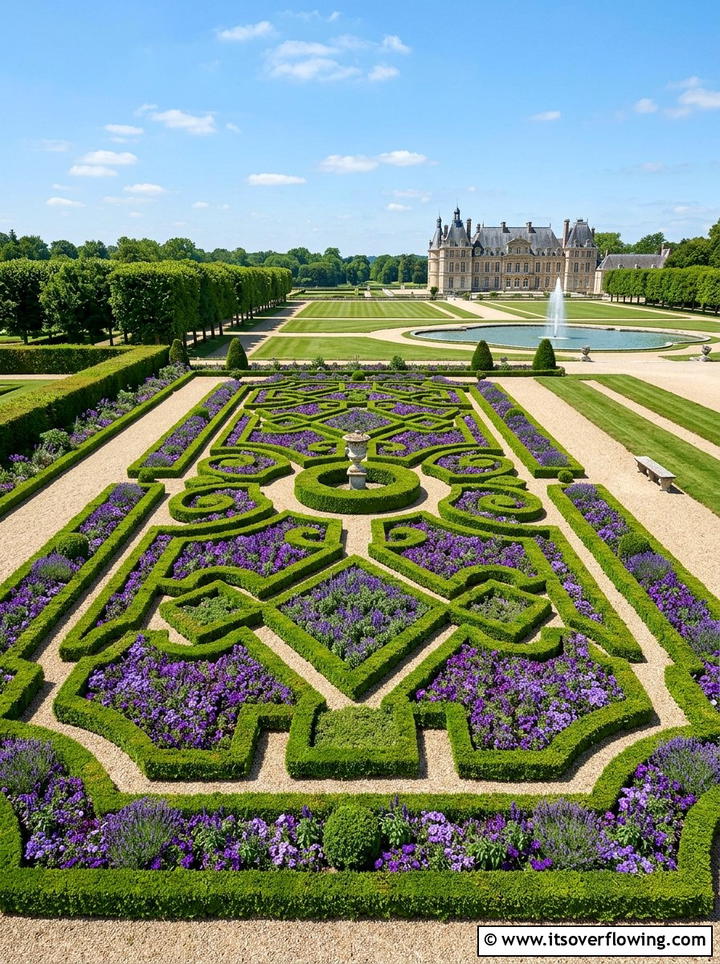
Creating a formal parterre garden involves using low-growing boxwood topiaries to form intricate geometric patterns on the ground. These low hedges act as a living frame for colorful annuals or aromatic herbs planted within the designated sections. This design technique dates back to the grand gardens of the French Renaissance and adds a high-end, luxury feel to any property. The key to a successful parterre is precision and symmetry, ensuring all lines are straight and all curves are even. Even in a small backyard, a simplified version of this layout can create a stunning visual impact that feels both organized and very lush.
7. Standard Bay Tree In Garden Bed
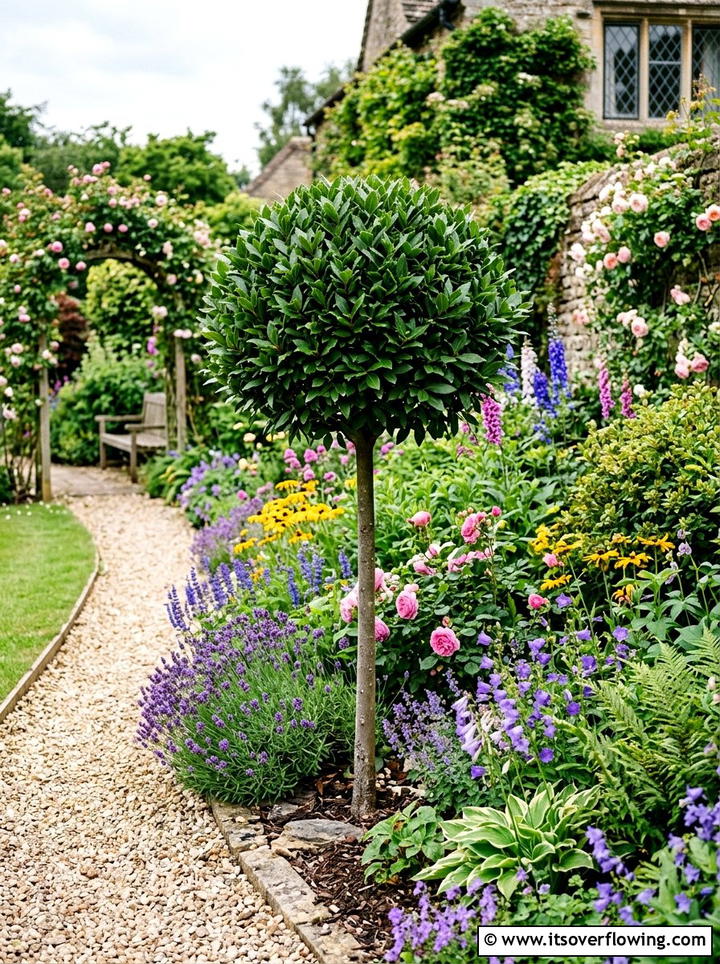
Have you considered using a standard bay tree to add vertical height and culinary utility to your landscape? A “standard” refers to a plant trained into a lollipop shape with a clear trunk and a rounded canopy. Planting these directly into garden beds among lower perennials creates a beautiful layered effect that mimics a miniature forest. Bay trees are particularly popular because their glossy leaves are not only attractive but also highly fragrant and useful for cooking. Their sturdy structure provides a permanent green anchor that stays consistent while the surrounding flowers bloom and fade through the spring and summer seasons.
8. Cloud Pruned Tree In Zen Garden
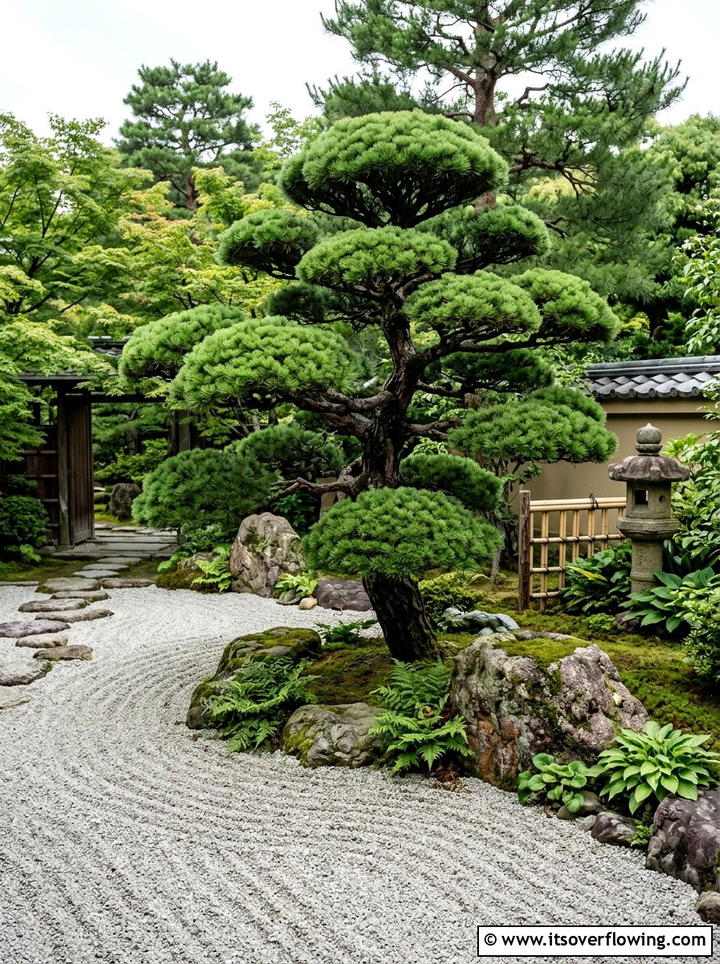
If you desire a garden that promotes peace and reflection, a cloud-pruned tree is an essential decorative element. This Japanese pruning style, known as Niwa-ki, involves shaping branches into soft, billowy mounds that resemble clouds floating in the sky. These trees serve as a dramatic focal point in a minimalist landscape filled with gravel, moss, and stone. The organic yet highly controlled shapes evoke a sense of ancient nature and careful craftsmanship. Because cloud pruning highlights the skeletal structure of the tree, it remains a captivating visual feature even when the garden is covered in a light dusting of winter snow.
9. Ivy Topiary On Wire Frame
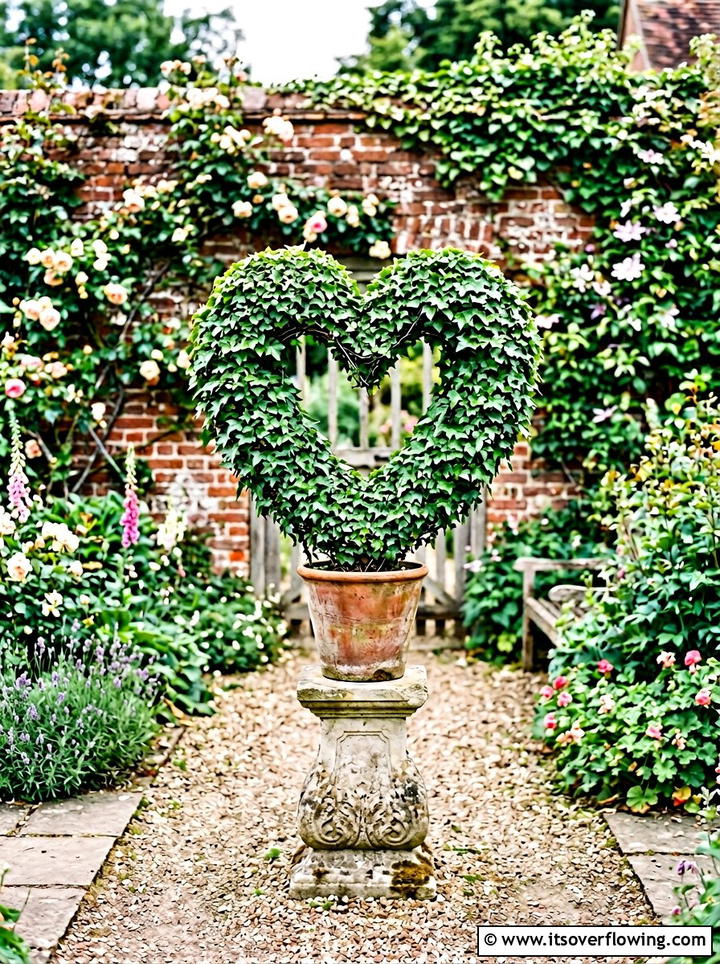
Sometimes the most beautiful garden decorations come from using climbing plants on a structured wire frame. English ivy is a perfect candidate for this because it grows quickly and covers frames with a dense layer of dark green leaves. You can find wire forms in various shapes, from simple globes and hearts to more complex structures like obelisks or small houses. These topiaries are versatile because they can be moved around the garden easily if grown in pots. They provide a softer, more textured appearance compared to the solid mass of a sheared shrub, making them ideal for romantic or vintage garden themes.
10. Pyramid Topiary In Gravel Courtyard
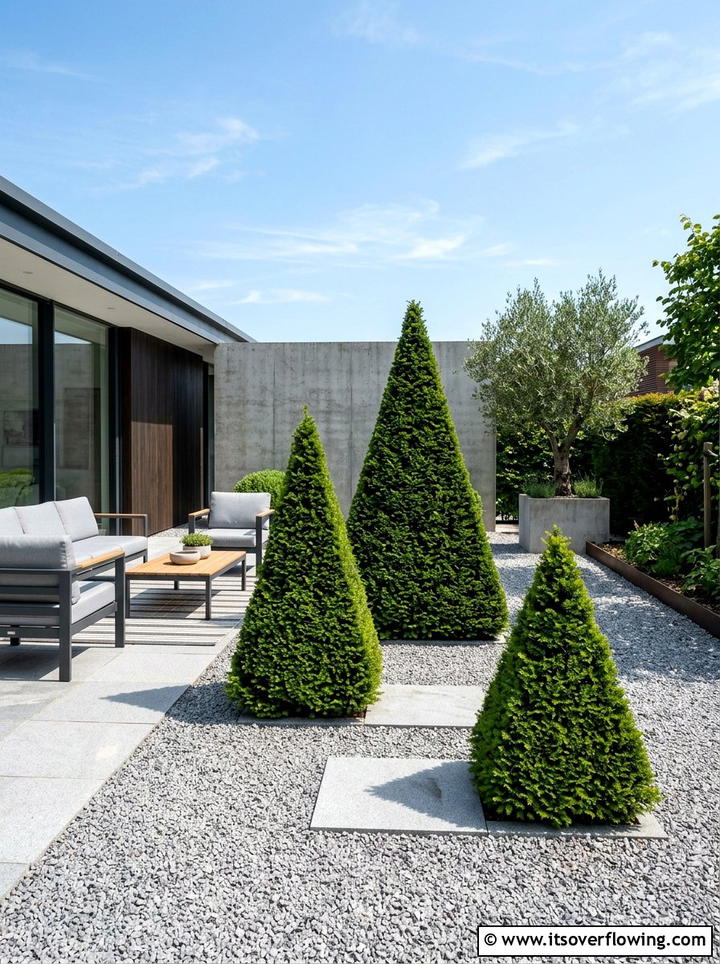
A gravel courtyard can sometimes feel a bit cold or sterile, but adding several pyramid-shaped topiaries can instantly warm up the space. The rigid, triangular forms provide a strong contrast to the loose, crunchy texture of the gravel underfoot. Placing three or five pyramids of different sizes in a cluster creates a dynamic arrangement that looks like a modern art installation. This approach is very low-maintenance, as the gravel eliminates the need for weeding, and the topiaries only require a quick trim once or twice a year. It is a perfect solution for creating a high-impact, low-effort outdoor living area.
11. Bird Shaped Topiary In Flower Garden
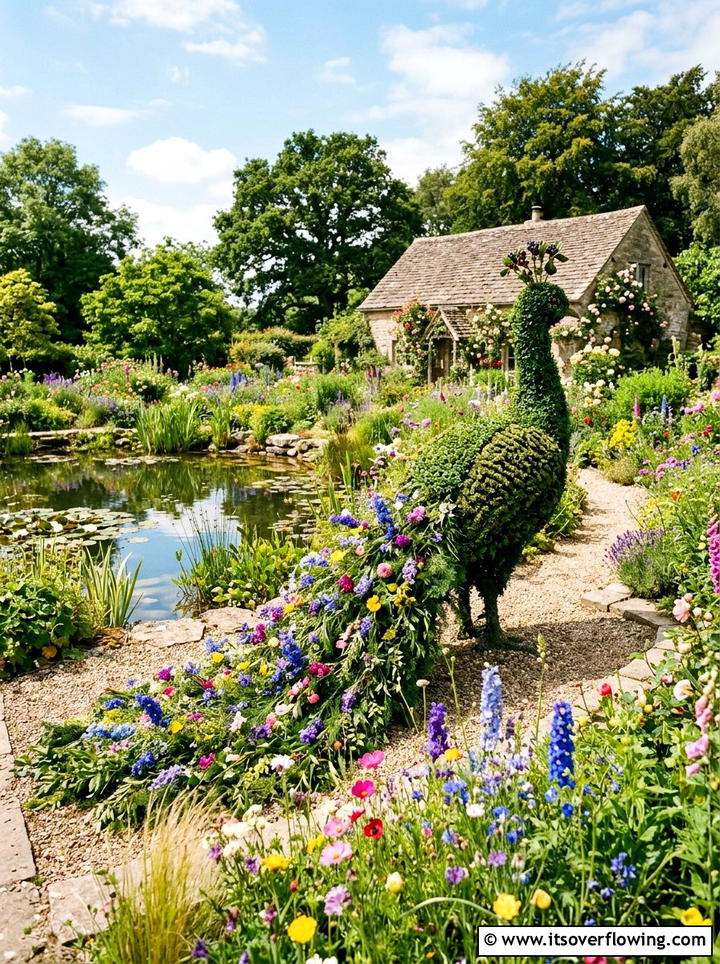
Adding a bird-shaped topiary tucked away in a corner of your flower garden creates a delightful sense of discovery for visitors. Whether it is a simple silhouette of a robin or a more detailed peacock with a trailing tail of greenery, these shapes add character. They work best when they appear to be emerging naturally from a patch of wildflowers or low-growing shrubs. This style of topiary celebrates the relationship between the garden and the local wildlife, even if the bird itself is made of boxwood or yew. It is a creative way to express your personality and bring a touch of fun to your landscape.
12. Tiered Topiary In Stone Urn
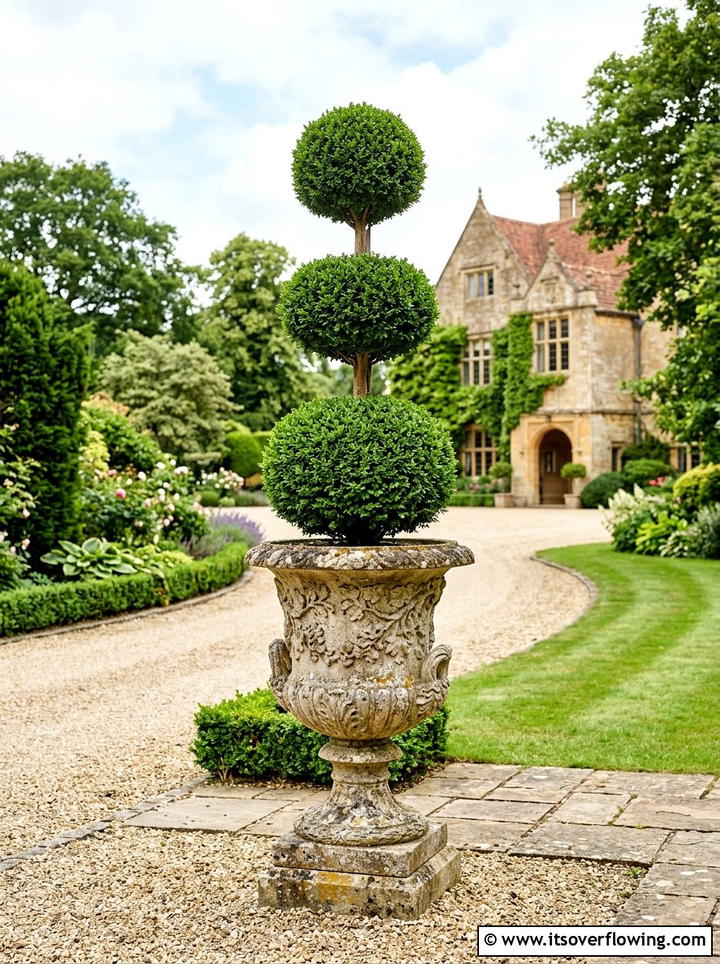
Do you want to achieve a look of old-world charm and timeless elegance? A tiered topiary, often featuring three decreasing spheres of foliage, looks magnificent when planted in a weathered stone urn. The heavy, ornate nature of the stone complements the refined and sculpted look of the plant. This combination is a classic choice for flanking a garden gate or marking the start of a stone path. The verticality of the tiered spheres draws the eyes upward, creating a sense of height and importance. Using stone containers adds a sense of permanence and history to your garden, making it feel like it has been there for decades.
13. Lavender And Boxwood Garden Border
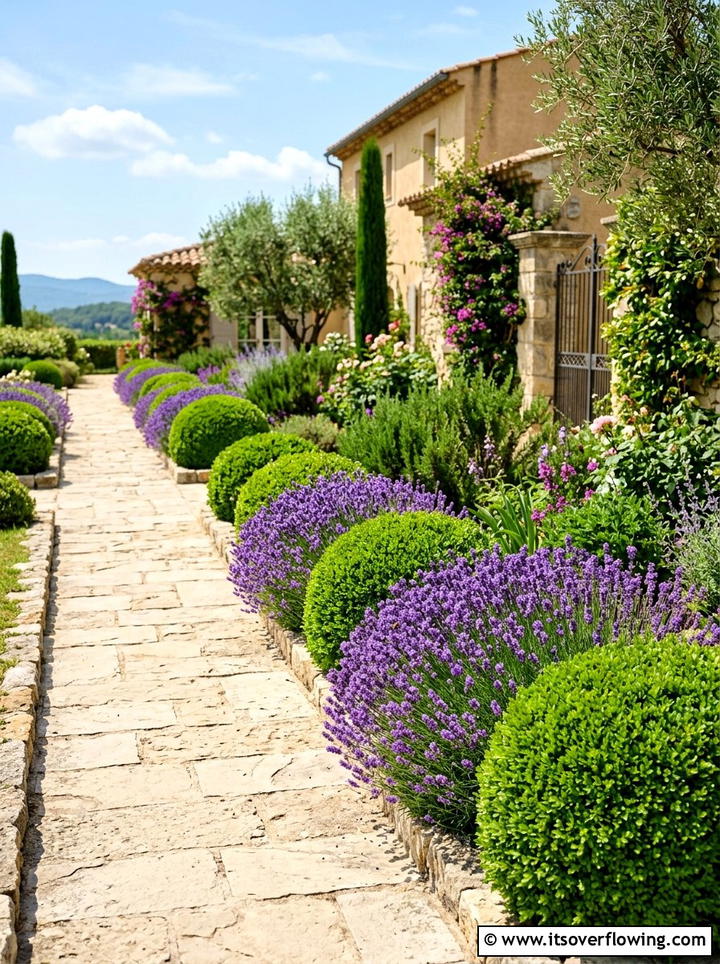
Combining the structural rigidity of boxwood with the soft, flowing purple blooms of lavender creates a stunning garden border. In this design, small boxwood spheres are spaced evenly along a path, with lavender planted in the gaps between them. The silver-green foliage and vibrant flowers of the lavender soften the formal look of the topiary, while the boxwood provides a clear edge. This pairing is not only visually beautiful but also offers a wonderful sensory experience through the scent of the lavender. It is an excellent way to define garden edges while maintaining a sense of movement and natural beauty throughout the growing season.
14. Large Globe Topiary On Open Lawn
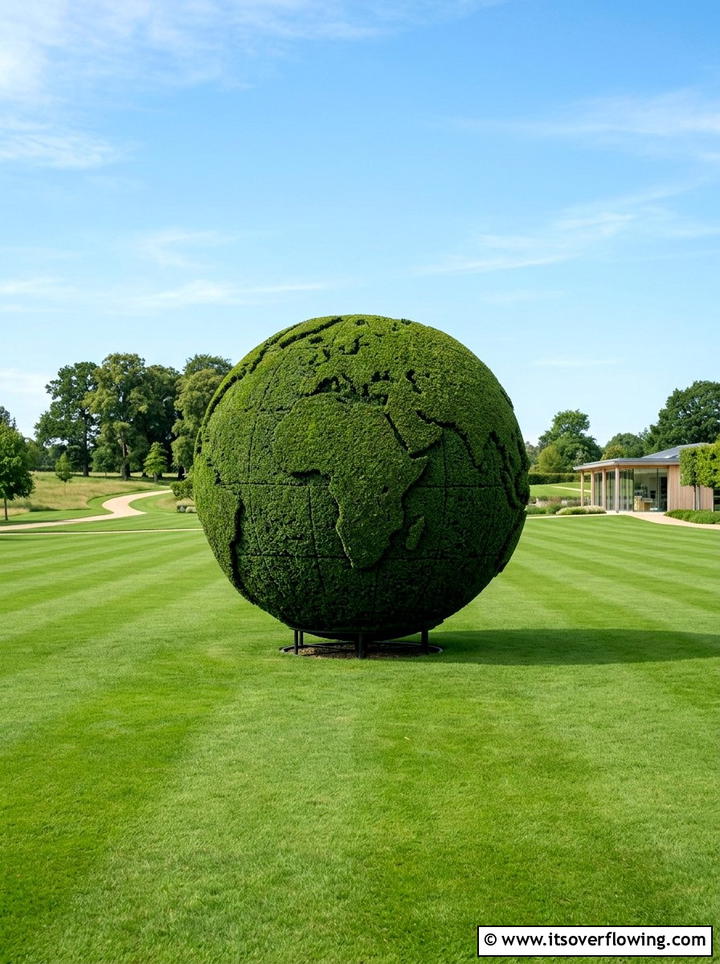
Sometimes a single, oversized globe topiary placed directly on a perfectly manicured lawn is all you need for a bold statement. This minimalist approach focuses on the scale and the perfection of the green sphere against the flat, horizontal plane of the grass. It creates a surreal, dreamlike quality that is often seen in contemporary landscape architecture. The large globe acts as a visual anchor, drawing the eye across the expanse of the lawn and providing a sense of balance. This is a great way to fill a large, empty space with something that feels substantial and artistic without the need for complex flower beds.
15. Topiary Archway Over Wooden Gate
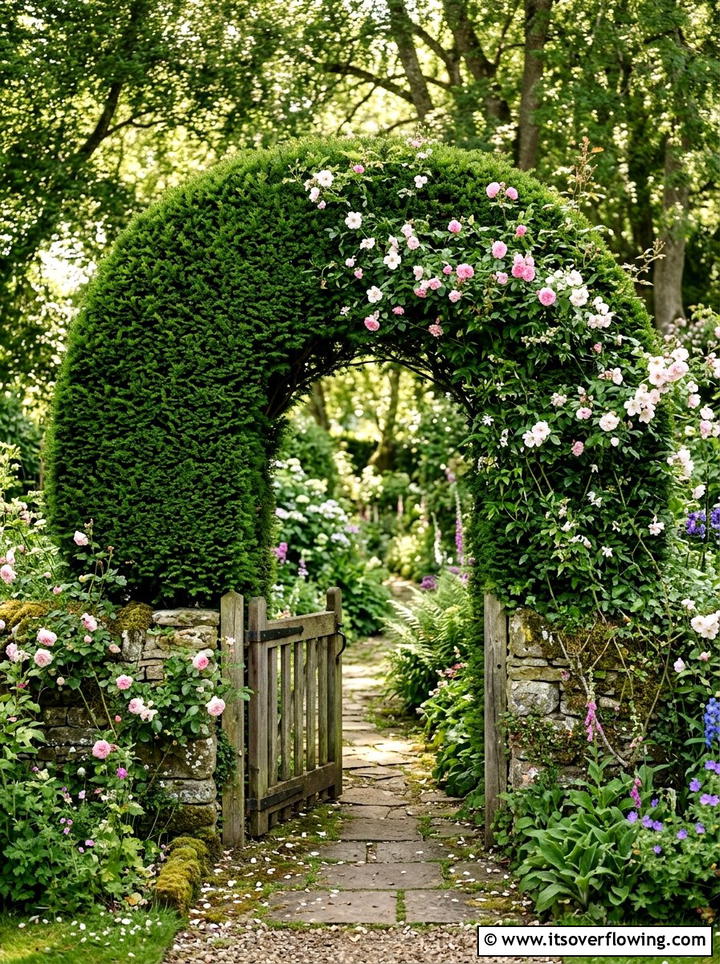
What could be more inviting than walking through a living archway of greenery to enter a hidden garden? Creating a topiary archway involves training flexible plants like hornbeam or yew over a sturdy metal or wooden frame above a gate. Over time, the plants merge and are sheared into a solid, architectural arch that defines the transition from one space to another. This feature adds a sense of mystery and enchantment to your property, making every entrance feel like a special occasion. It requires patience to grow, but the long-term result is a spectacular and permanent structural element that improves with every passing year.
16. Tall Rectangular Topiary Hedge
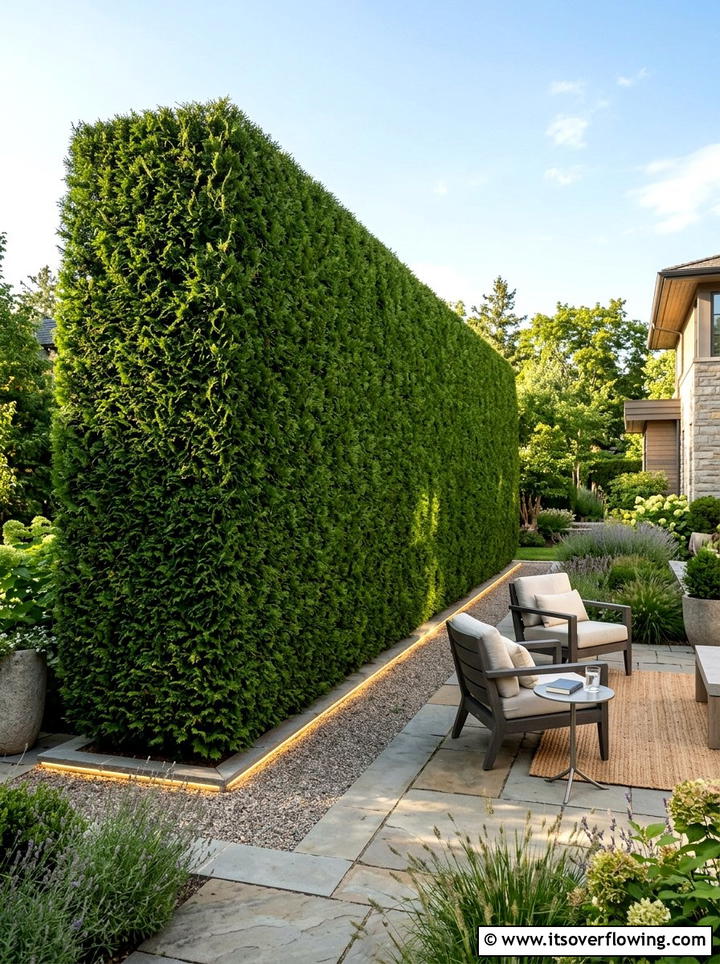
When you need both privacy and style, a tall rectangular topiary hedge is the ultimate functional decoration. Unlike a standard messy hedge, these are sheared into perfectly flat planes with sharp 90-degree angles, resembling a green wall. This creates a clean, architectural backdrop for other garden elements like statues, fountains, or colorful flower beds. These living walls provide excellent screening from neighbors while adding a sense of seclusion and luxury to your outdoor living areas. Choosing a dense evergreen species like yew ensures that your privacy screen remains thick and vibrant even during the darkest winter months, maintaining the garden’s structure year-round.
17. Lollipop Tree On Paved Patio
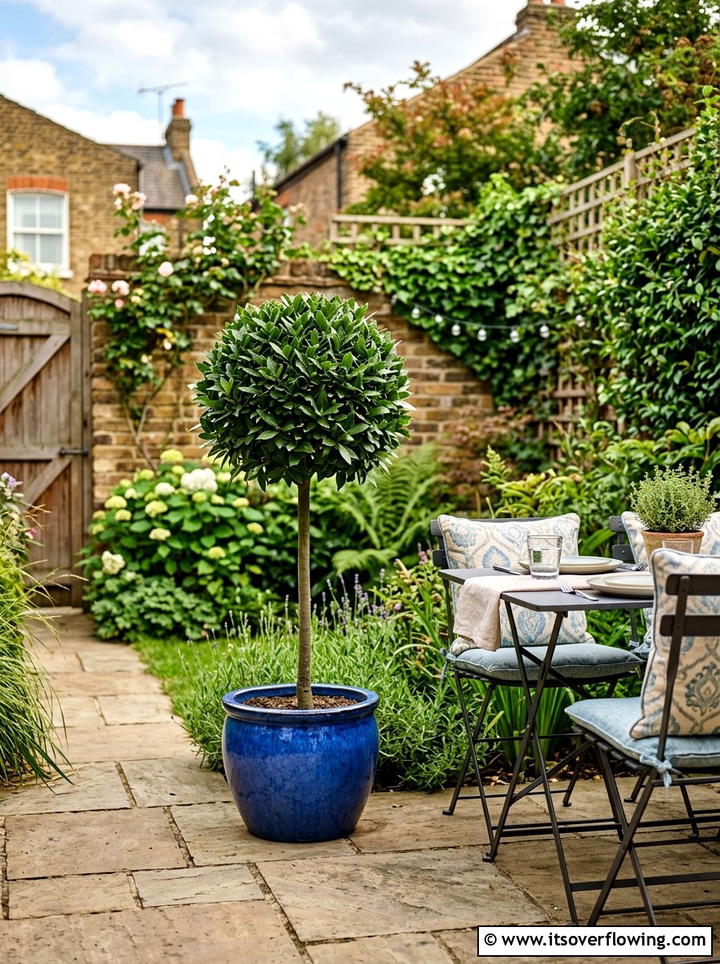
A lollipop tree, which is a standard topiary with a straight trunk and a perfectly round head, is the ideal choice for a paved patio. Because it has a small footprint, it can fit into tight corners or be used to line the edges of an outdoor dining area without taking up too much floor space. Placing these trees in stylish, modern pots allows you to bring height and greenery onto hard surfaces where planting directly into the ground isn’t possible. The clear trunk also allows for visibility at eye level, which keeps the patio feeling open and airy while still providing the benefits of lush, green foliage.
18. Symmetrical Topiary At Garden Stairs
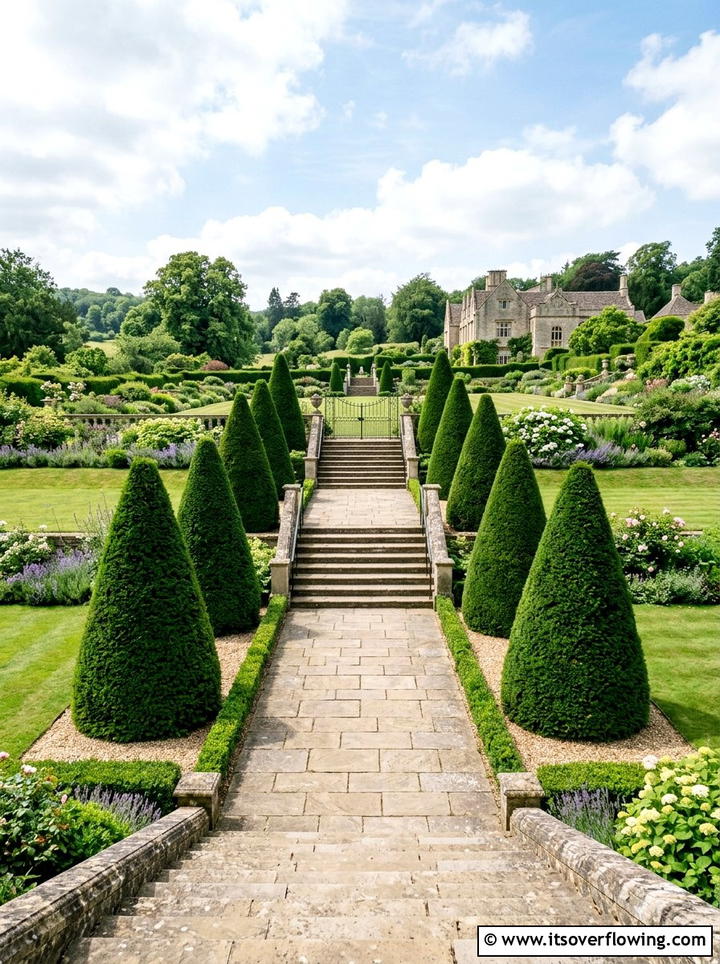
Using symmetrical topiaries to flank a set of garden stairs is a classic way to guide the eye and improve the flow of your landscape. Whether you use matching cones, balls, or spirals, the repetition of shape on either side of the steps creates a sense of order and rhythm. This design technique makes the transition between different levels of the garden feel intentional and grand. It also provides a clear visual cue for where to walk, making the space more functional. Choosing hardy evergreens ensures that your staircase remains a beautiful focal point regardless of the weather, providing a polished look throughout the entire year.
19. Rabbit Topiary In Vegetable Garden
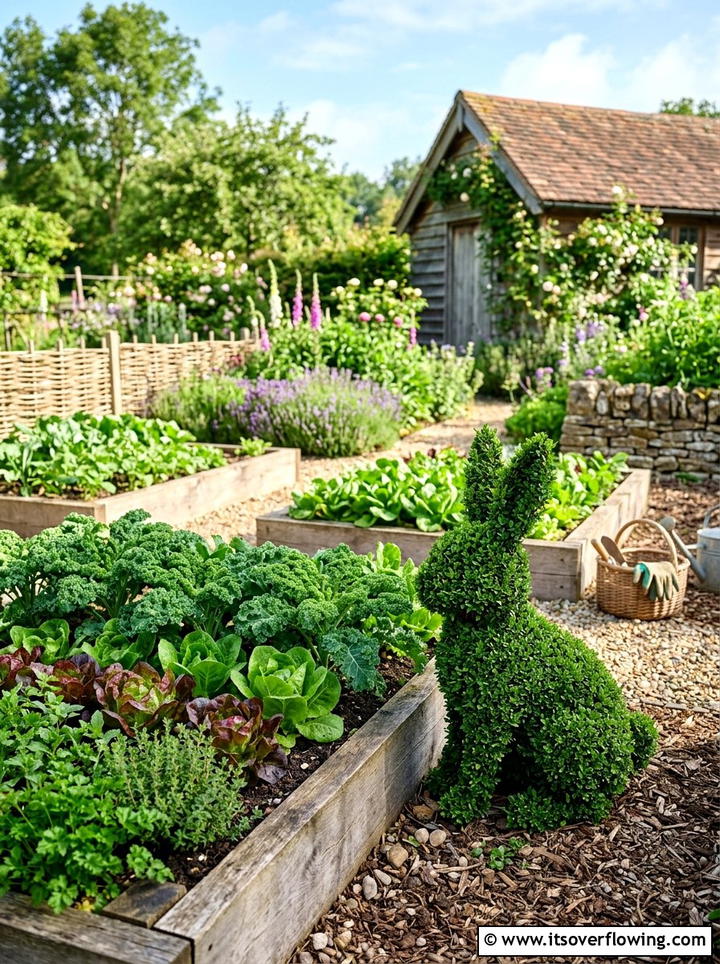
Who says a vegetable garden can’t be decorative and fun? Adding a small rabbit-shaped topiary near your lettuce or carrot patches brings a whimsical nod to classic garden stories like Peter Rabbit. This playful touch breaks up the straight rows of vegetables and adds a layer of charm to a utilitarian space. You can easily create this look using a wire frame and a fast-growing plant like boxwood or even a climbing herb like rosemary. It makes the chore of gardening more enjoyable and provides a cute surprise for anyone visiting your kitchen garden to pick fresh produce for a home-cooked meal.
20. Cypress Topiary In Mediterranean Garden
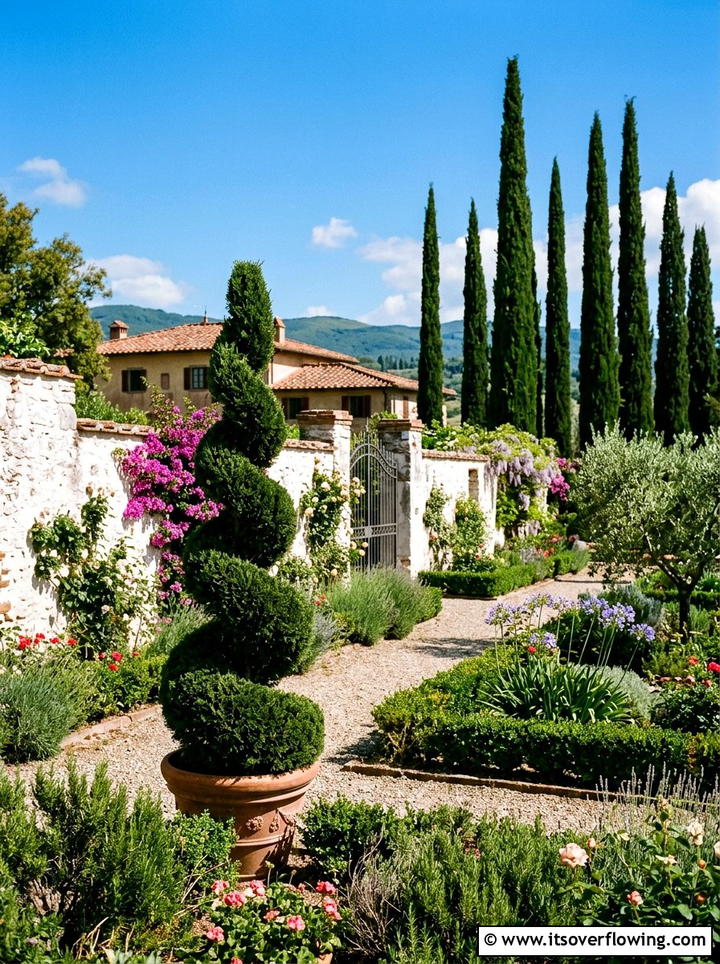
To capture the essence of a sunny Mediterranean villa, consider incorporating tall, slender cypress topiaries into your garden design. These naturally narrow trees can be further pruned into sharp, pencil-like shapes that provide dramatic vertical accents against a backdrop of stone walls and terracotta tiles. They are perfect for creating a sense of perspective and depth, especially when planted in long rows along a driveway or a terrace edge. The dark, dense foliage of the cypress contrasts beautifully with the pale, sun-bleached colors of Mediterranean architecture. These topiaries are drought-tolerant and thrive in full sun, making them a practical and stylish choice for warmer climates.
21. Multi Ball Topiary In Contemporary Space
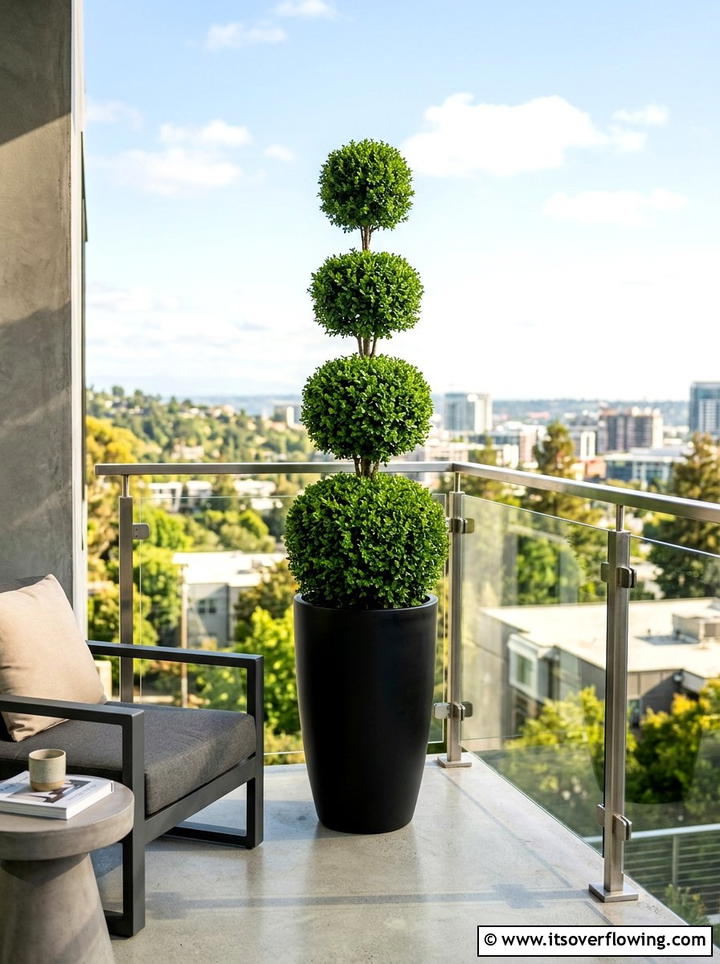
A multi-ball topiary, often featuring three or four globes of varying sizes stacked on a single trunk, is a true conversation piece for a contemporary garden. This unique shape feels more like a piece of sculpture than a plant, making it perfect for modern landscapes that value clean lines and interesting forms. Placing a multi-ball topiary in a simple, oversized concrete planter creates a high-contrast look that is very popular in urban design. The complexity of the stacked spheres provides enough visual interest that the rest of the surrounding decor can remain minimal and uncluttered, allowing the plant to be the undisputed star.
22. Deer Topiary In Woodland Setting
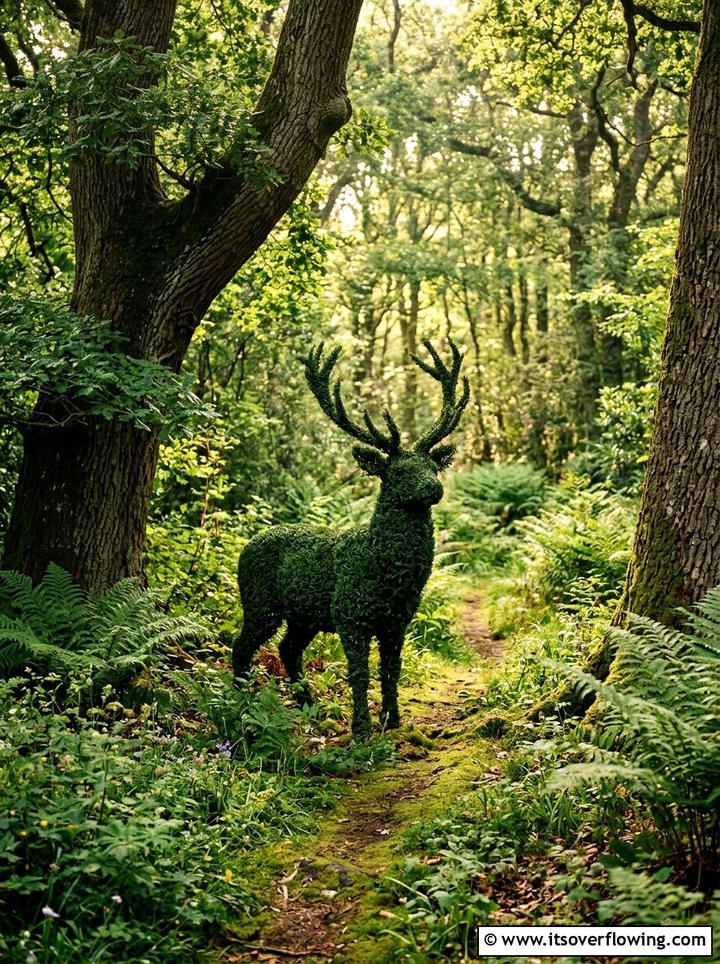
In a more natural, woodland-style garden, a deer-shaped topiary can feel like a magical part of the landscape. Unlike formal shapes, an animal topiary in this setting should look a bit softer and more integrated with the surrounding trees and ferns. You might use a frame covered in ivy or a finely sheared yew to create the silhouette of a stag or a doe resting among the trees. This design choice adds a touch of fantasy and elegance to a shaded area of the yard. It celebrates the local environment while adding a sophisticated artistic element that elevates the wilder parts of your garden into something special.
23. Miniature Topiary In Window Box
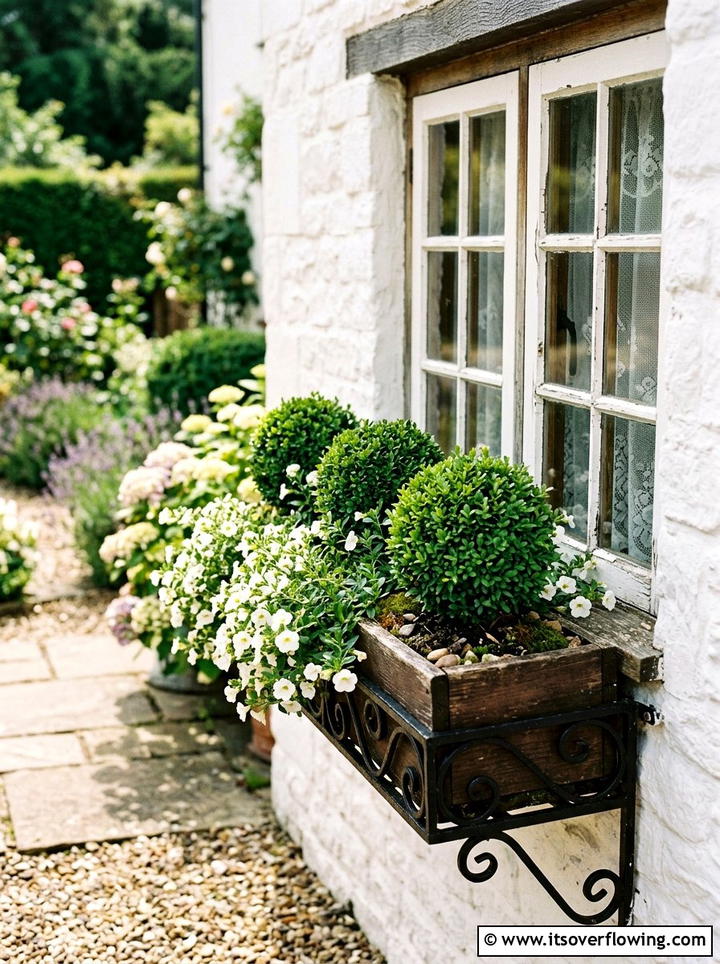
You don’t need a large backyard to enjoy the beauty of topiary art. Miniature topiaries, such as tiny boxwood balls or small ivy cones, can be used to create a sophisticated window box display. Mixing these structured little plants with trailing flowers or silver-foliaged trailers creates a balanced and high-end look for the front of your home. This is an excellent way to boost curb appeal and show off your gardening skills in a small, manageable way. Because they are in a window box, they are at eye level, allowing you to appreciate the fine details of the pruning and the healthy green leaves every day.
24. Topiary Centerpiece On Outdoor Table
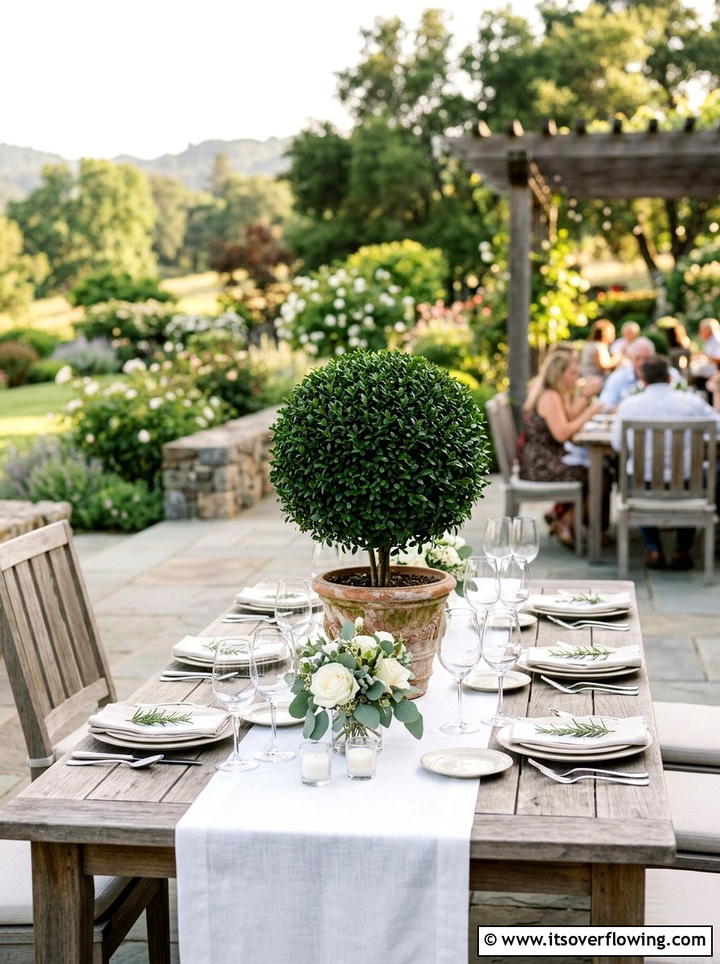
Transform your outdoor dining experience by using a small, potted topiary as a living centerpiece on your garden table. A single, perfectly pruned ball of myrtle or boxwood in a decorative ceramic pot provides a much more elegant and long-lasting alternative to cut flowers. It adds a touch of garden structure right to the middle of your social area, making the table feel more formal and finished. These small topiaries are easy to maintain and can be moved around as needed for different events. They provide a beautiful green focal point that encourages guests to linger and enjoy the fresh air and the natural surroundings.
25. Flowering Topiary In Mixed Garden
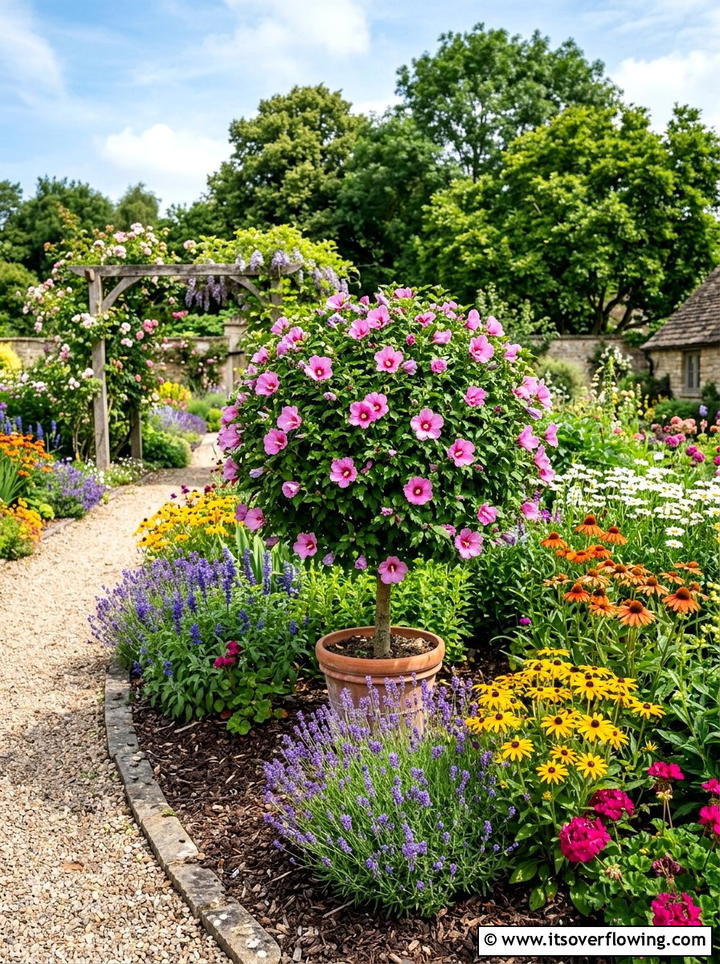
While most topiaries are made from evergreens, using a flowering shrub like azalea, camellia, or hibiscus adds a stunning pop of color to the structured shape. A flowering topiary offers the best of both worlds: the formal, pruned silhouette and the soft, vibrant beauty of seasonal blooms. These look incredible when placed in a mixed garden bed where they can stand out against a background of green foliage. The moment when the entire green shape is suddenly covered in bright flowers is truly spectacular. It requires a bit more care to prune around the flower buds, but the breathtaking visual reward is well worth the extra effort.
Conclusion:
Incorporating topiary into your garden decor is a powerful way to bring structure, elegance, and a touch of personality to your outdoor living space. From the formal symmetry of parterre hedges to the playful charm of animal-shaped shrubs, these living sculptures offer endless possibilities for creative expression. By following these ideas, you can transform any garden, regardless of its size or style, into a sophisticated sanctuary that remains beautiful through every season. Remember that the key to great topiary is patience and a steady hand with the shears, allowing you to enjoy the rewarding process of shaping nature into art. Whether you choose a classic boxwood ball or a dramatic spiral, these green accents will surely become the highlight of your landscape for years to come.

Related posts:
 25 Garden Decor Ideas With Summer Decor for Bright Style
 25 Garden Decor Ideas With Winter Decor for Cozy Style
 25 Garden Decor Ideas With Floral Hoops For Elegant Yards
 25 Garden Decor Ideas With Garden Arches For Stunning Style
 25 Garden Decor Ideas for Modern Gardens With Sleek Style
 25 Garden Decor Ideas With Bottle Lights For Glowing Style
 25 Garden Decor Ideas With Crates For Rustic Outdoor Style
 25 Garden Decor Ideas With Fence Decorations For Style
 25 garden decor ideas with herb displays for fresh style
 25 Garden Decor Ideas With Outdoor Rugs for Cozy Style
 25 Garden Decor Ideas With Porch Swings for Relaxing Style
 25 Garden Decor Ideas With Shade Sails for Cool Outdoor Style