
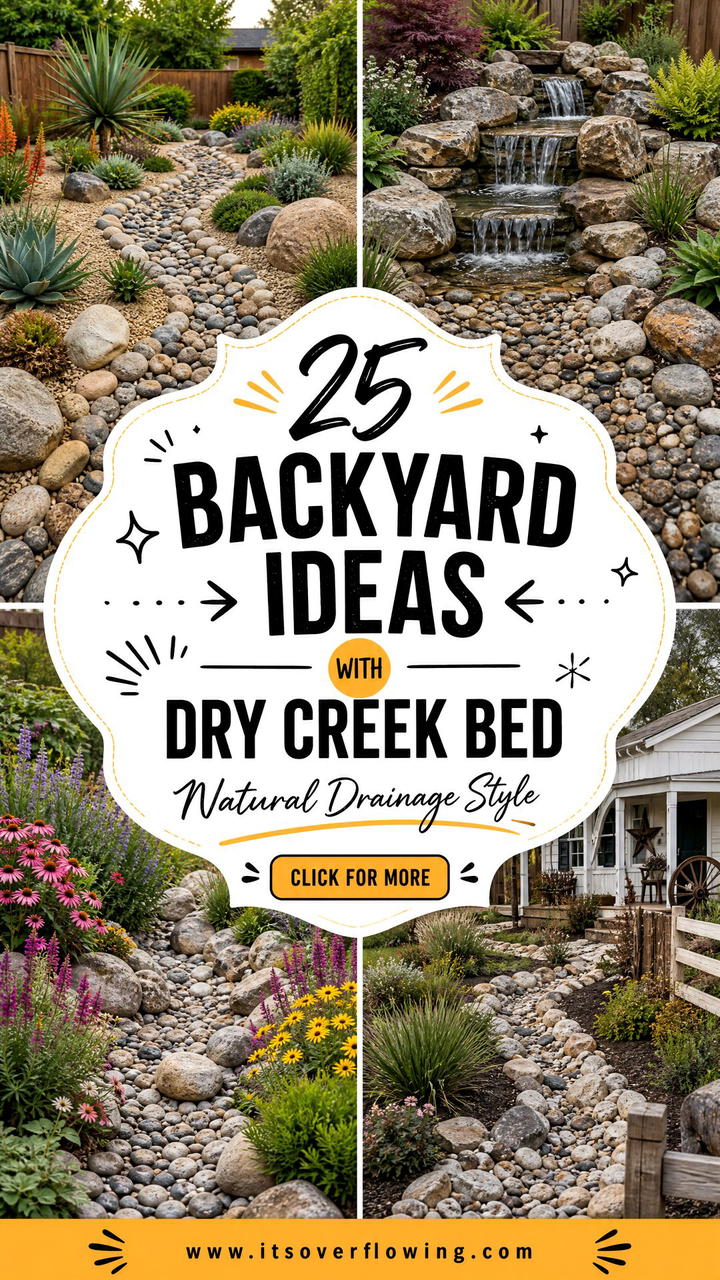
Imagine walking into a backyard that feels like a natural sanctuary, where every element serves a purpose and adds to the visual charm. A dry creek bed is one of the most versatile features you can add to your outdoor space, combining practical drainage solutions with stunning aesthetic appeal. It mimics the look of a natural stream while requiring almost no water to maintain, making it perfect for eco-conscious homeowners. Whether you want to fix a soggy spot in your yard or simply create a beautiful focal point, these concepts will inspire you to transform your landscape into something truly extraordinary and functional.
1. Dry Creek Bed With River Rock
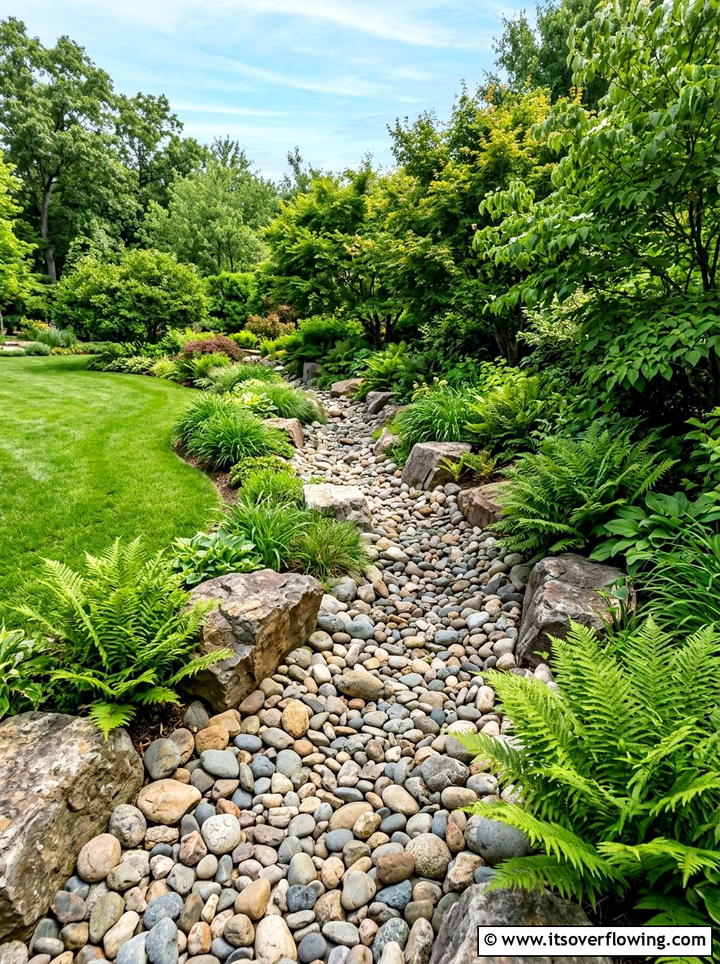
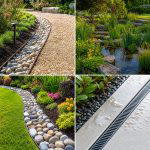
Starting with a classic approach involves using smooth river rocks to create a sense of movement across your landscape. You can mix different shades of gray, tan, and blue stones to give the bed a realistic appearance that mimics a flowing river. Larger rocks should be placed along the edges to act as anchors, while smaller pebbles fill the center to suggest where water would naturally run. This technique not only helps with managing rainwater runoff but also provides a textured look that stays beautiful throughout every season. It is a low-maintenance solution that brings a touch of wild nature right to your very own back door.
2. Wooden Footbridge Over Dry Stream
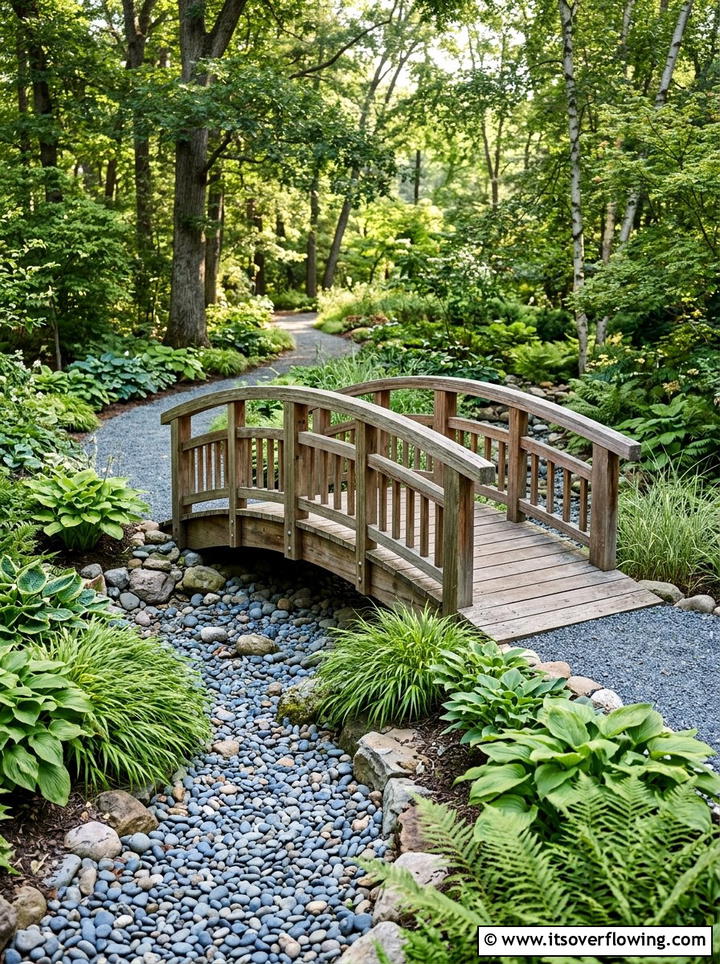
Have you ever wanted to add a touch of whimsy and architecture to your garden path? Placing a small wooden footbridge over your dry creek bed creates an instant focal point that invites exploration. It breaks up the stony texture of the ground and adds a vertical element that draws the eye across the yard. You can choose a rustic cedar bridge for a natural look or a painted one to match your home’s trim. This feature works especially well if the creek bed crosses a main walking path, making the transition feel intentional and charming. It turns a simple drainage feature into a highlight of your outdoor living space.
3. Dry Creek Bed For Drainage
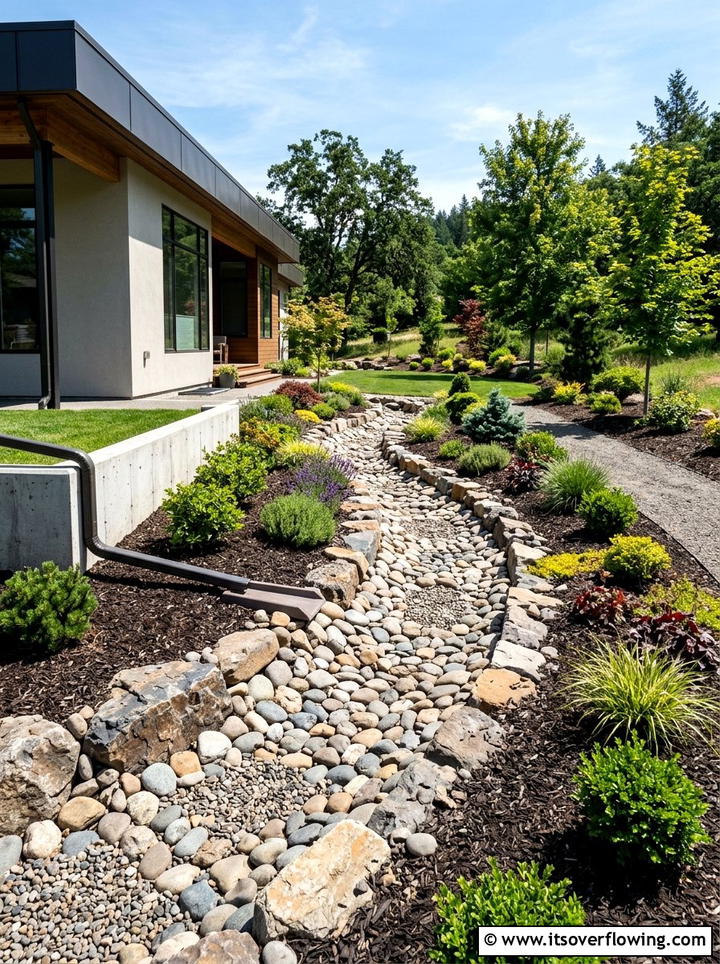
Does your yard suffer from standing water every time a heavy rainstorm passes through your area? Designing a dry creek bed specifically for drainage is a smart way to solve this common problem while enhancing your curb appeal. Instead of using ugly plastic pipes, you can guide excess water away from your foundation using a strategically placed channel of stones. The water seeps through the rocks and into the ground naturally, preventing erosion and keeping your lawn healthy. This functional approach ensures that your backyard remains dry and usable even after the heaviest downpours. It is the perfect marriage of engineering and landscape artistry for any home.

4. Native Plants Along Dry Creek
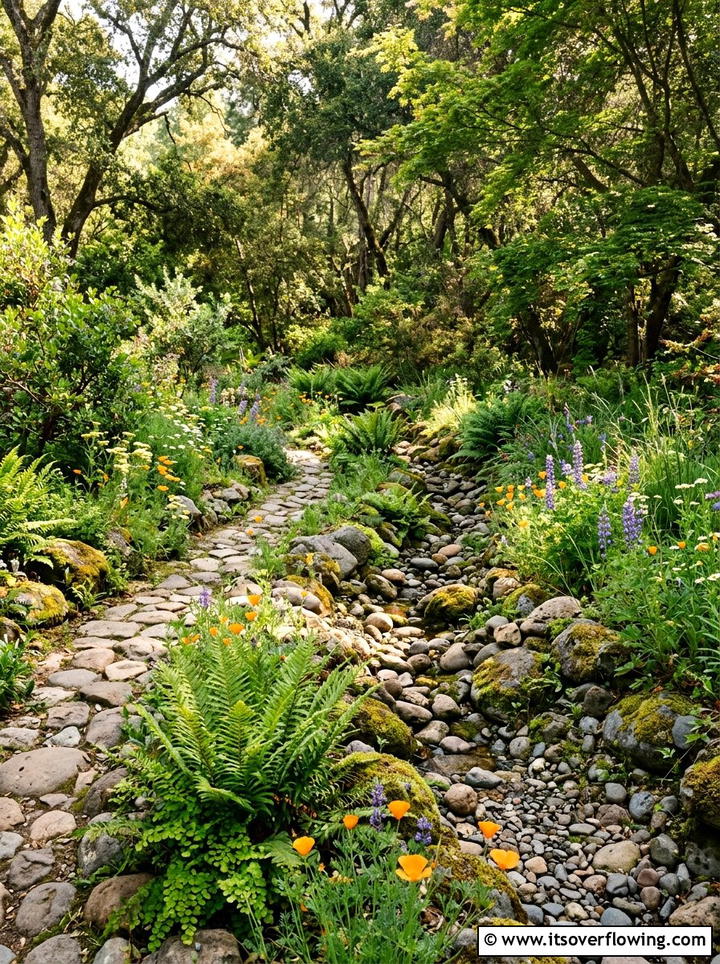
Choosing the right greenery to surround your stony stream can make the entire feature look like it has been there for decades. Native plants are the best choice because they are already adapted to your local climate and soil conditions, requiring less water and fertilizer. You can tuck ferns, hostas, or local wildflowers into the crevices between the larger boulders for a lush and organic look. These plants provide a soft contrast to the hard surface of the rocks, creating a balanced ecosystem in your backyard. Over time, the foliage will grow over the edges, softening the lines and making the creek bed look perfectly integrated.
5. Large Boulders In Dry Creek Bed
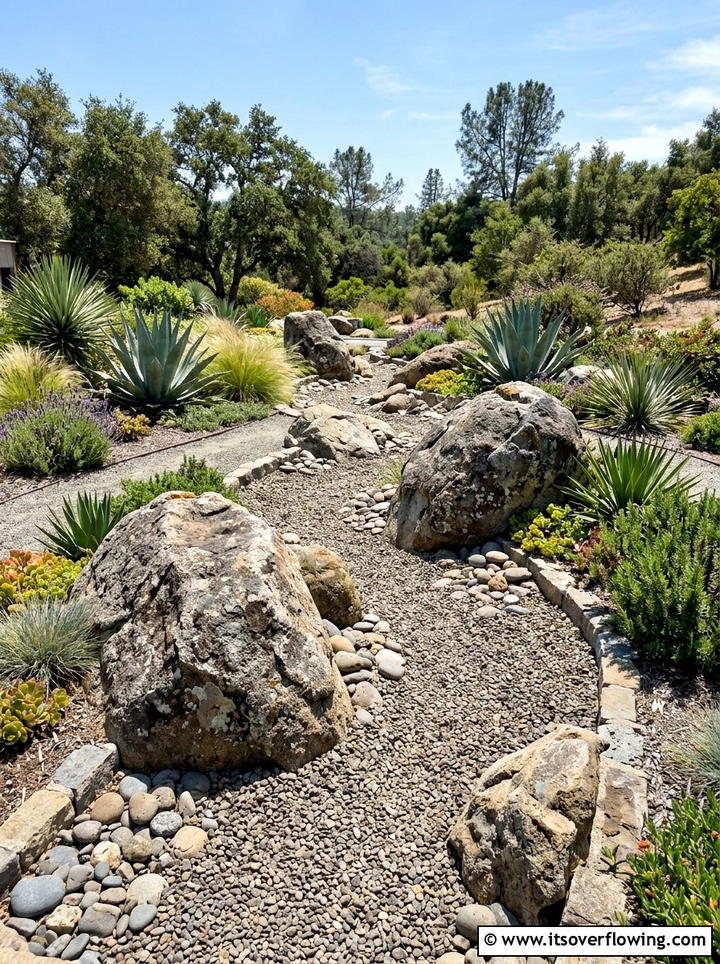
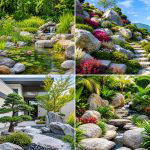
One of the best ways to make a man-made creek look authentic is by incorporating massive boulders at key intervals. These heavy stones act as natural anchors and break up the visual flow of smaller pebbles, adding a sense of scale and drama. You should bury the bottom third of each boulder into the ground to make them look like they are emerging naturally from the earth. Placing them at bends in the creek mimics how rocks would naturally accumulate in a real stream. This layering effect creates depth and texture, making your landscape feature look like a professional installation that has existed for many years.
6. Dry Creek Bed Near Patio
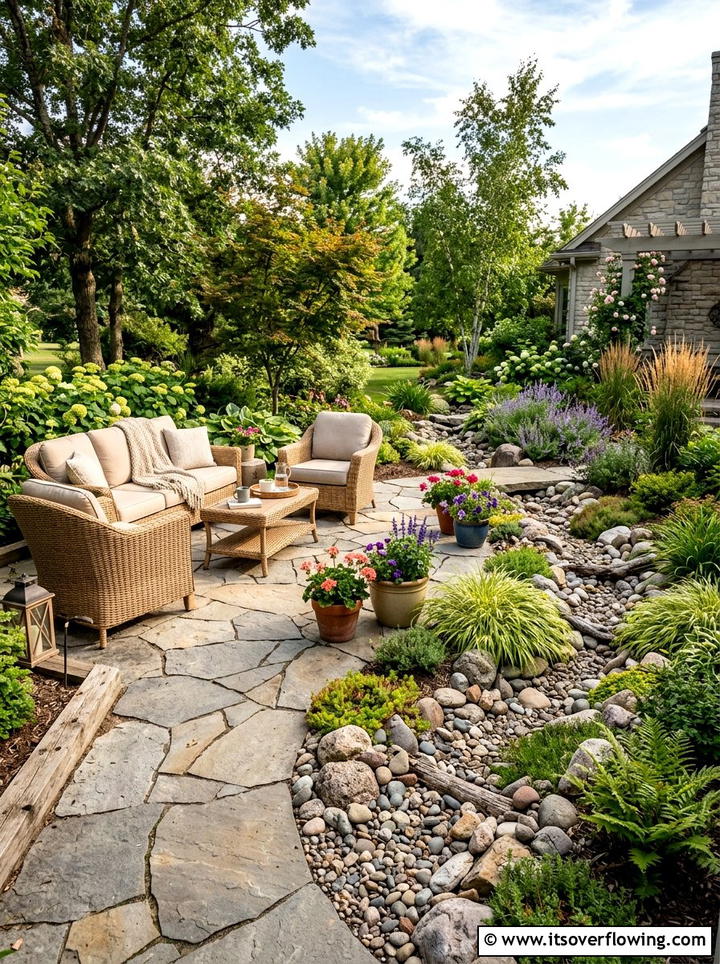
Integrating a stone feature right next to your seating area can make your patio feel more connected to the rest of the garden. The dry creek bed acts as a natural border between the hardscape of the patio and the softer elements of the lawn. This arrangement provides a relaxing visual that you can enjoy while sipping your morning coffee or hosting a dinner party. You can even use the rocks to create a slight elevation change, making the patio feel like a distinct outdoor room. The combination of structural pavers and natural stones creates a sophisticated look that boosts the value and beauty of your property.
7. Succulent Garden With Dry Stream
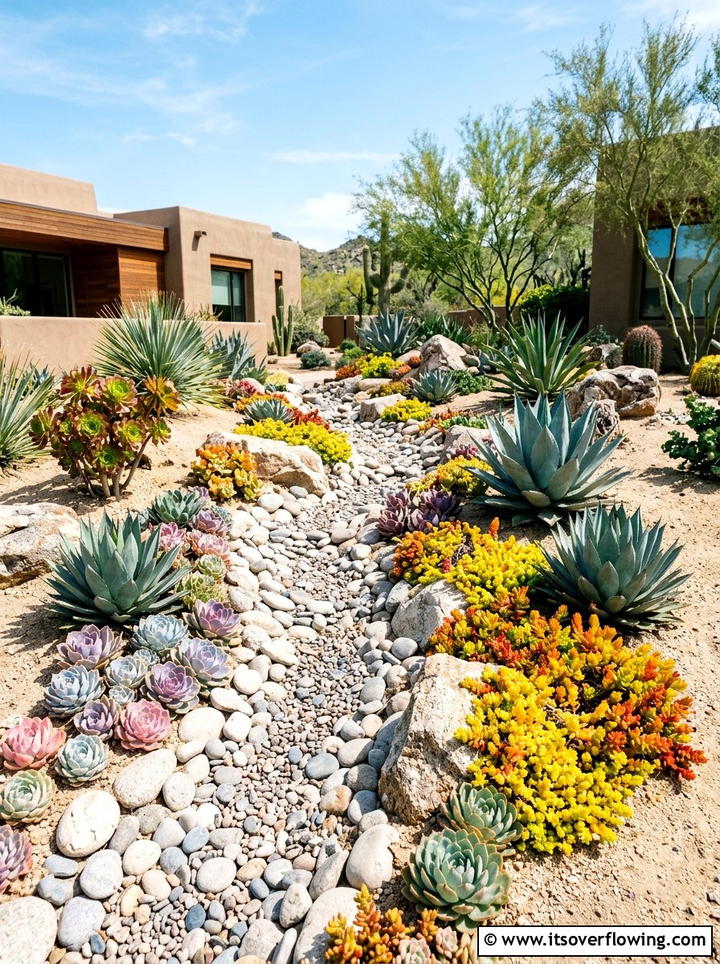
If you live in a dry climate, pairing a stony creek with various succulents is a brilliant way to save water. Succulents like agave, echeveria, and sedum come in many colors and shapes that pop against the neutral tones of the river rocks. You can cluster them in groups along the “banks” of your dry stream to mimic a desert wash. This setup requires very little upkeep and remains vibrant even during the hottest months of the year. The different textures of the waxy leaves and the hard stones create a modern, clean aesthetic that is very popular in contemporary landscaping and sustainable garden designs.



8. Dry Creek Bed With Solar Lighting
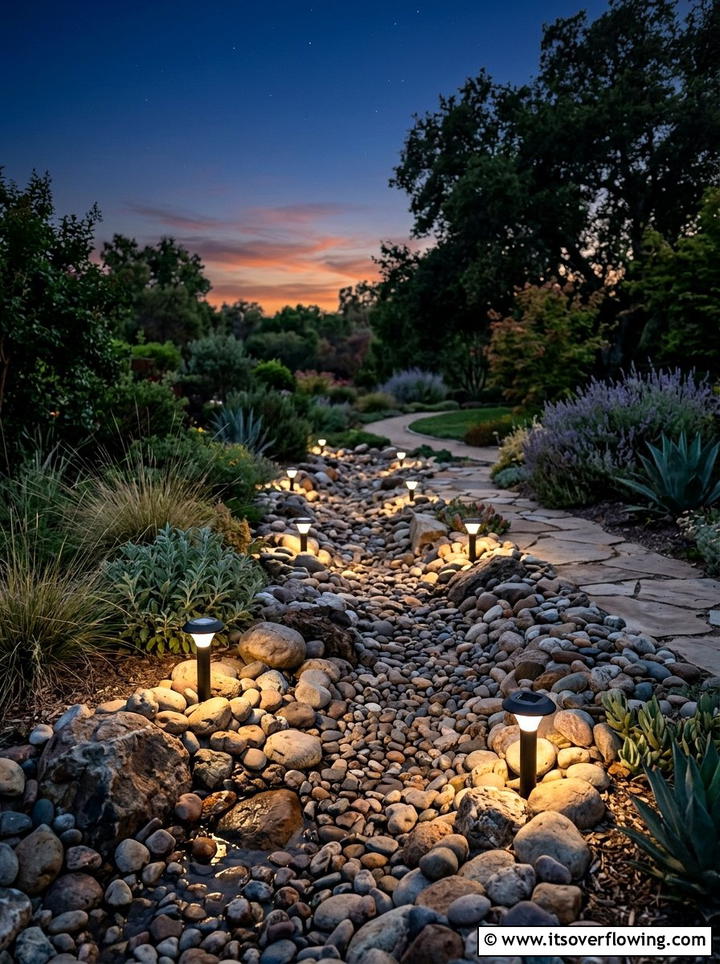
Adding illumination to your landscape feature ensures that its beauty doesn ‘t disappear once the sun goes down. You can tuck small solar-powered spotlights among the rocks to highlight the texture of the stones and the shapes of the nearby plants. Uplighting a few of the larger boulders or the underside of a bridge creates a dramatic and inviting atmosphere for evening strolls. Because these lights are solar-powered, you don’ t have to worry about complicated wiring or increasing your electricity bill. The soft glow transforms your backyard into a magical retreat that feels safe and enchanted throughout the night, perfect for late-night relaxation.
9. Modern Minimalist Dry Creek Bed
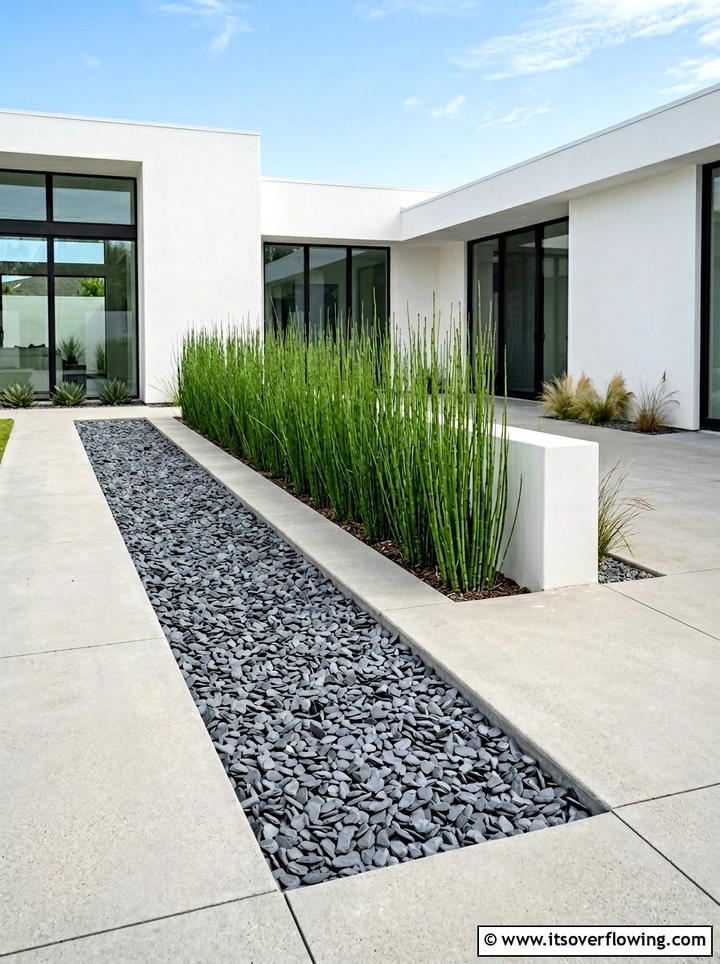
For those who prefer a clean and tidy look, a minimalist approach focuses on simple lines and a limited color palette. You can use uniform gray slate or white marble chips to create a sleek channel that cuts through a manicured lawn or a bed of dark mulch. Instead of a wild mix of plants, choose one or two architectural species like horsetail or ornamental grasses to line the edges. This style emphasizes the geometric beauty of the stones and creates a sense of calm and order in your outdoor space. It is a sophisticated way to manage water while maintaining a high-end, contemporary landscape appearance.
10. Japanese Zen Garden Dry Creek
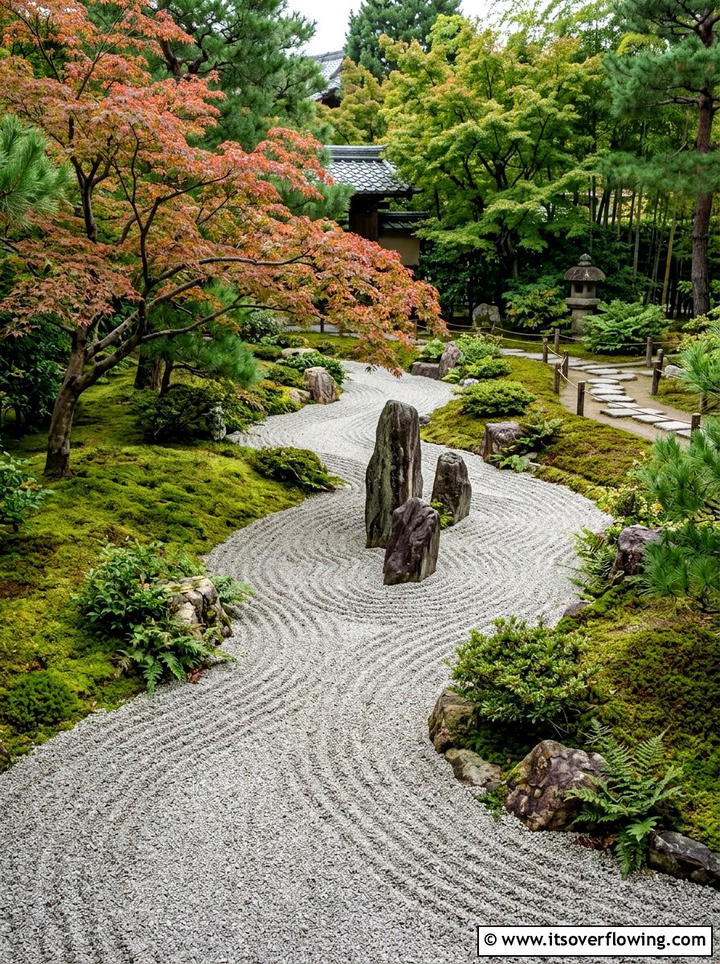
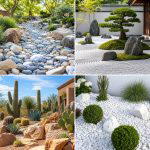
Creating a serene Japanese-inspired space often involves using stones to represent water in a symbolic way. You can rake small pebbles into rippling patterns around larger “island” stones to create a sense of peaceful movement without using a single drop of liquid. This type of dry creek bed is meant for contemplation and relaxation, often surrounded by moss, maples, and carefully pruned evergreens. The intentional placement of every rock encourages a mindful experience as you walk through your garden. This design is perfect for smaller backyards where you want to create a quiet escape from the busy world outside your gates.
11. Dry Creek Bed On A Slope
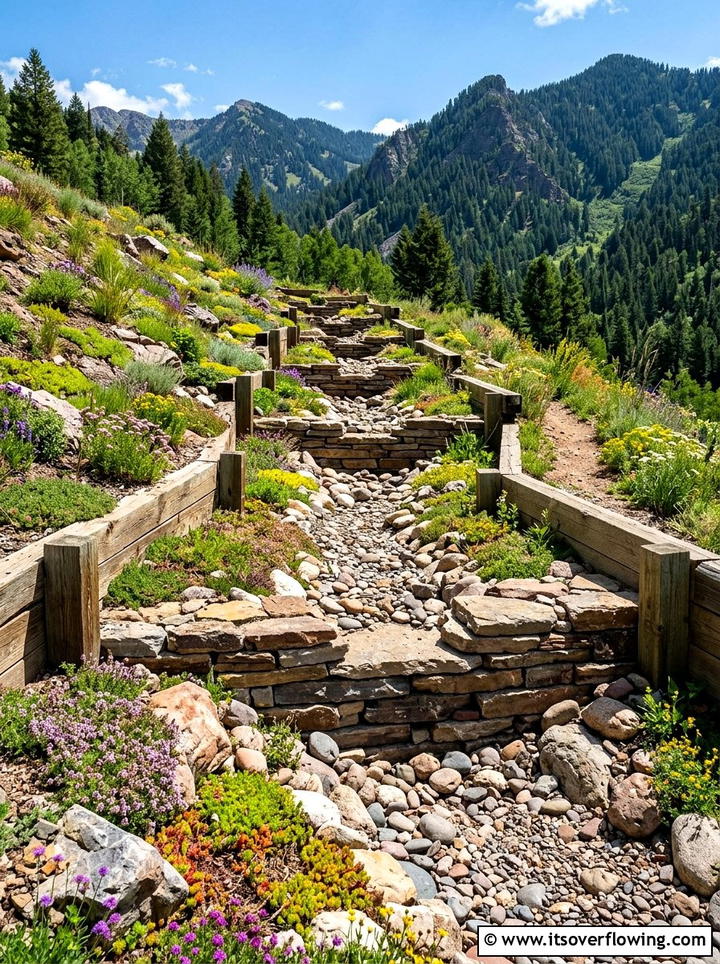
Do you have a hilly backyard that makes traditional gardening a challenge due to soil erosion? Installing a dry creek bed on a slope is a practical way to stabilize the earth while creating a stunning visual staircase of stones. You can build small “check dams” using flat rocks to slow down the flow of rainwater as it travels downhill. This prevents the water from washing away your mulch and plants during heavy storms. The resulting look is that of a mountain stream cascading down a hillside, which adds a lot of dynamic energy to your landscape. It turns a difficult terrain into a beautiful asset.

12. Pebble Path Dry Creek Bed
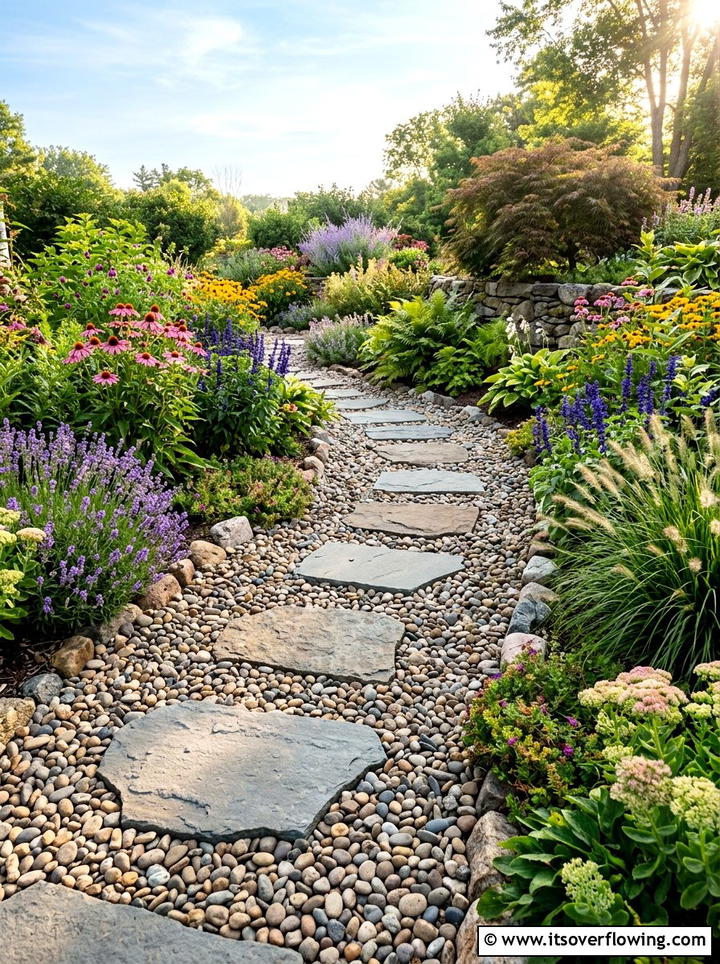
Combining your drainage feature with a functional walkway is a great way to maximize the utility of your backyard space. You can use larger, flat stepping stones in the middle of the creek bed to provide a stable surface for walking. This allows the feature to serve as both a beautiful rock garden and a practical path to different areas of your yard. Surrounding the stepping stones with smaller pebbles ensures that water can still flow underneath and around the path during rain. This dual-purpose design is efficient and looks very natural, making your garden feel more integrated and easier to navigate for your family.
13. Flagstone Bridge Across Dry Creek
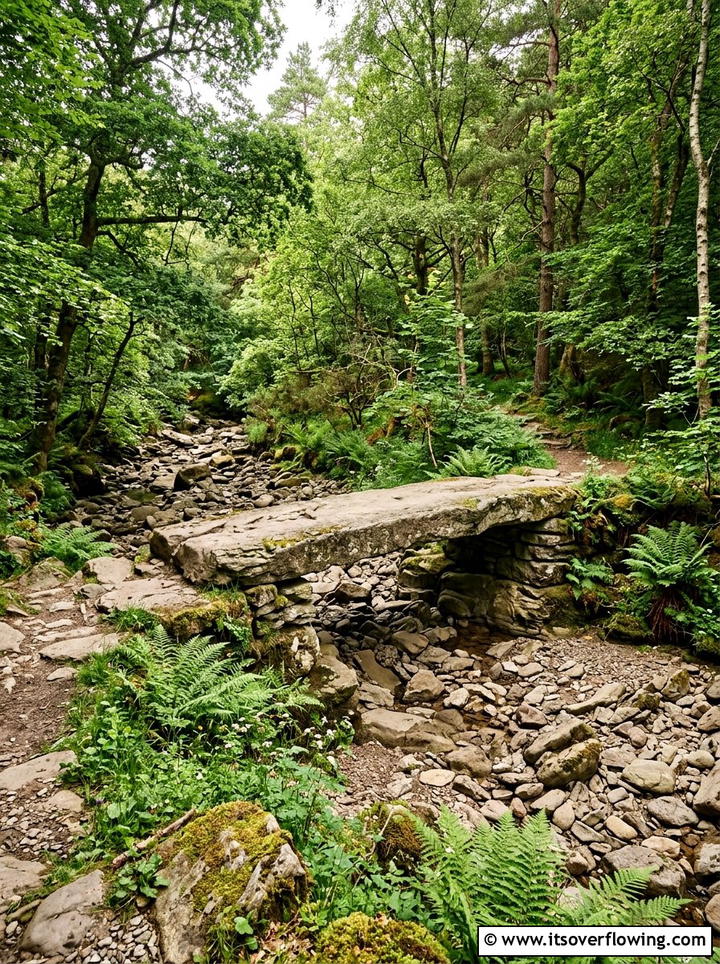
Using a single large slab of flagstone as a bridge offers a more grounded and permanent look than a wooden structure. This natural stone bridge blends seamlessly with the rocky bed below, creating a cohesive and rugged appearance. It is an excellent choice for rustic or woodland-style gardens where you want the human-made elements to look like part of the environment. Flagstone is also incredibly durable and requires no staining or sealing, making it a very low-maintenance option for your backyard. It provides a sturdy crossing point that looks like a natural rock formation that has been there for centuries, adding timeless character.
14. Dry Creek Bed Under Trees
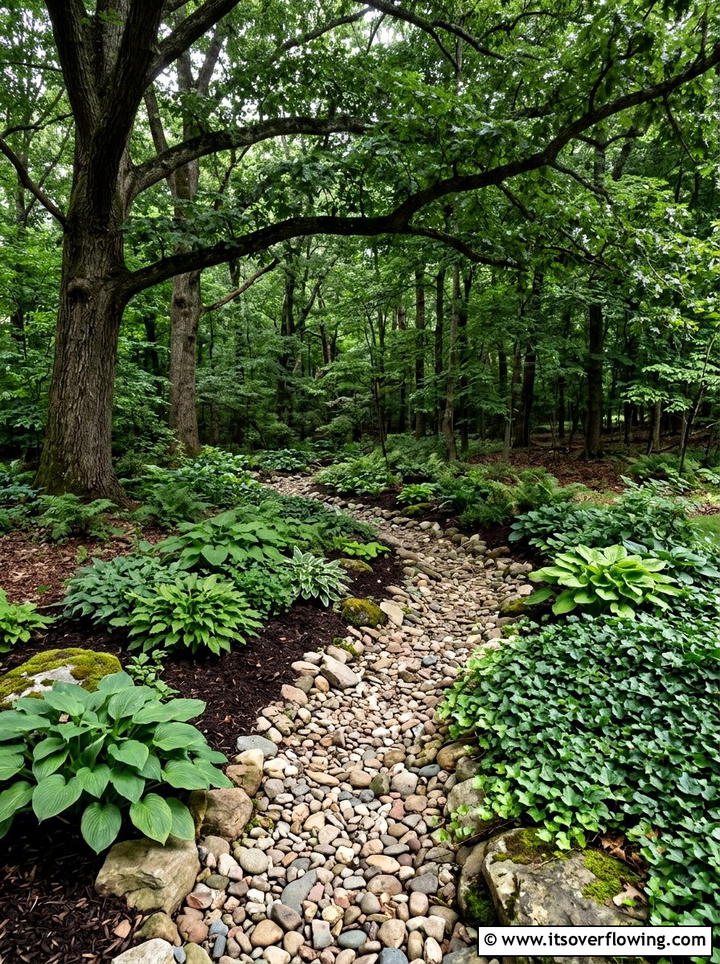
If you have a shady area where grass refuses to grow, a dry creek bed is the perfect solution for filling that gap. Rocks don ‘t need sunlight to look great, and they provide a clean surface that won’ t turn into a mud pit under the tree canopy. You can wind the stony path around the trunks of your trees, making it look like a natural forest floor feature. Shade-loving plants like hostas or coral bells can be planted along the edges to add color and life to the darker corners of your yard. This turns a problematic, bare spot into a lush and interesting woodland scene.
15. Low Maintenance Xeriscape Dry Creek
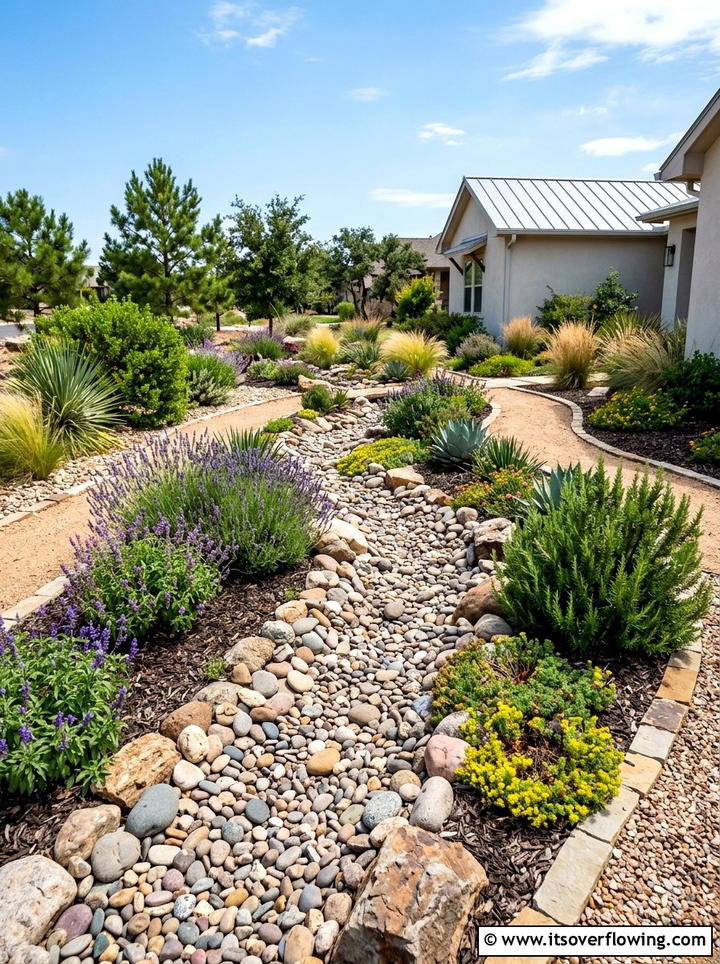
Xeriscaping is all about creating a beautiful yard that requires minimal water and work from the homeowner. A dry creek bed is a central component of this strategy, as it covers large areas with stones that never need mowing or watering. By using a heavy-duty weed barrier underneath the rocks, you can ensure that your feature stays clean and tidy with very little effort. You can pair the rocks with drought-tolerant shrubs and perennials that thrive in your specific region. This approach is not only environmentally friendly but also gives you more time to relax and enjoy your backyard instead of constantly maintaining it.


16. Dry Creek Bed With Waterfall Feature
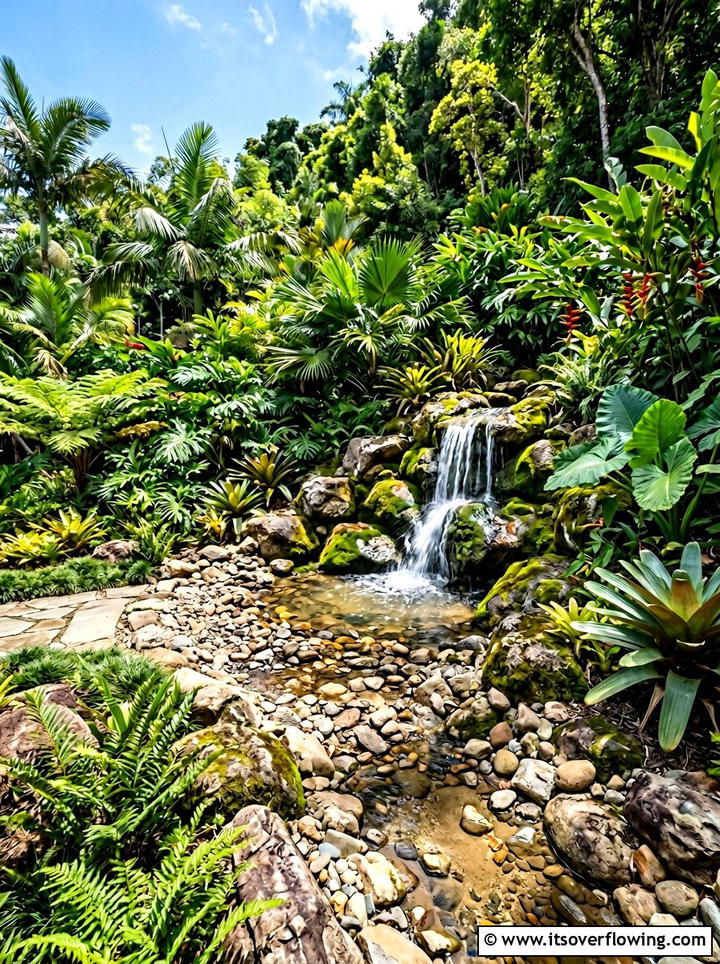
Would you like to hear the soothing sound of water without the hassle of a high-maintenance pond? You can incorporate a recirculating disappearing waterfall at the head of your dry creek bed to provide a sensory experience. The water flows over a few rocks and then disappears into a hidden reservoir beneath the stones at the end of the run. This gives you the best of both worlds: the beauty of a stone stream and the calming sound of moving water. It is a safer option for families with small children or pets since there is no standing water, while still providing a luxurious feel.
17. Colorful Perennials Near Dry Creek
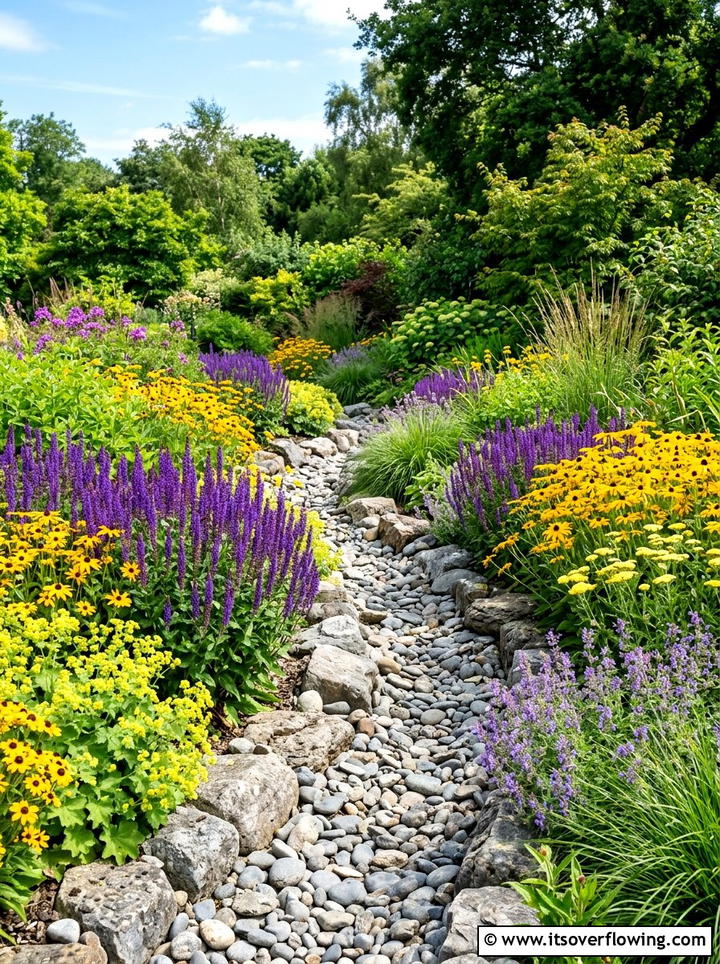
Adding a burst of color to your rock feature can be achieved by planting vibrant perennials along its winding path. Imagine the contrast of bright purple salvia or yellow black-eyed Susans against the cool gray tones of the river rocks. You can select plants that bloom at different times of the year to ensure that your dry creek bed is surrounded by color from spring through autumn. The stones act as a neutral backdrop that makes the flower colors appear even more intense and beautiful. This technique creates a lively and cheerful garden that attracts butterflies and bees, making your backyard a buzzing hub of nature.
18. Corner Backyard Dry Creek Bed
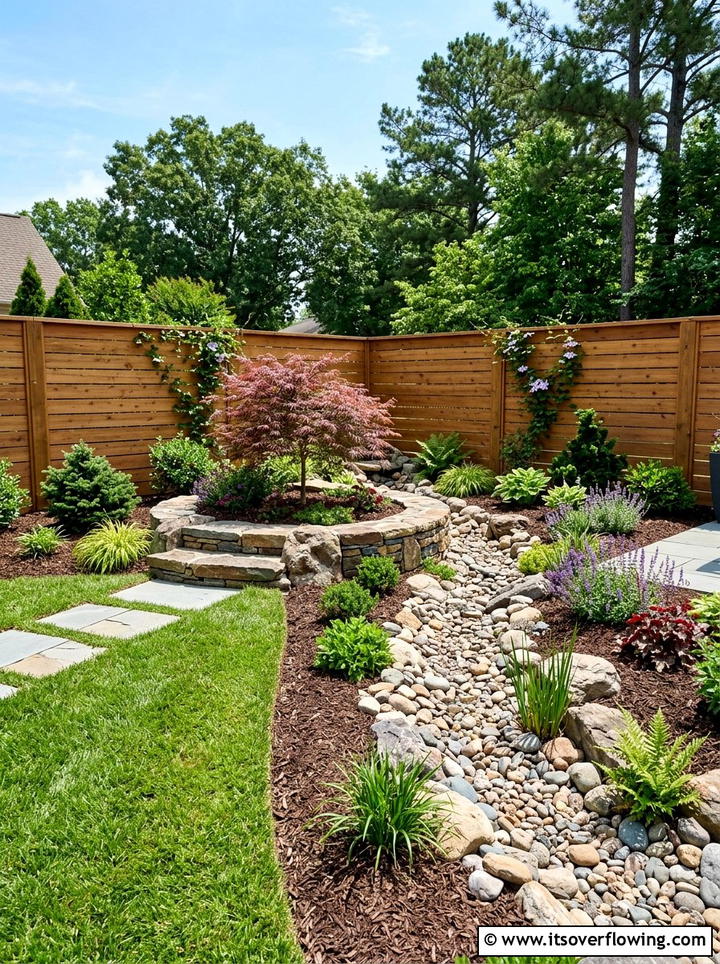
Often, the corners of a backyard are forgotten or become cluttered with discarded garden supplies and overgrown weeds. You can reclaim this space by installing a small, curved dry creek bed that tucks neatly into the corner of your fence line. This draws the eye to the back of the property and makes the entire yard feel larger and more finished. You can add a tall ornamental tree or a large boulder at the very back to give the feature a sense of height and purpose. It is a simple weekend project that can significantly improve the overall look and feel of your outdoor living area.
19. Dry Creek Bed With Stepping Stones
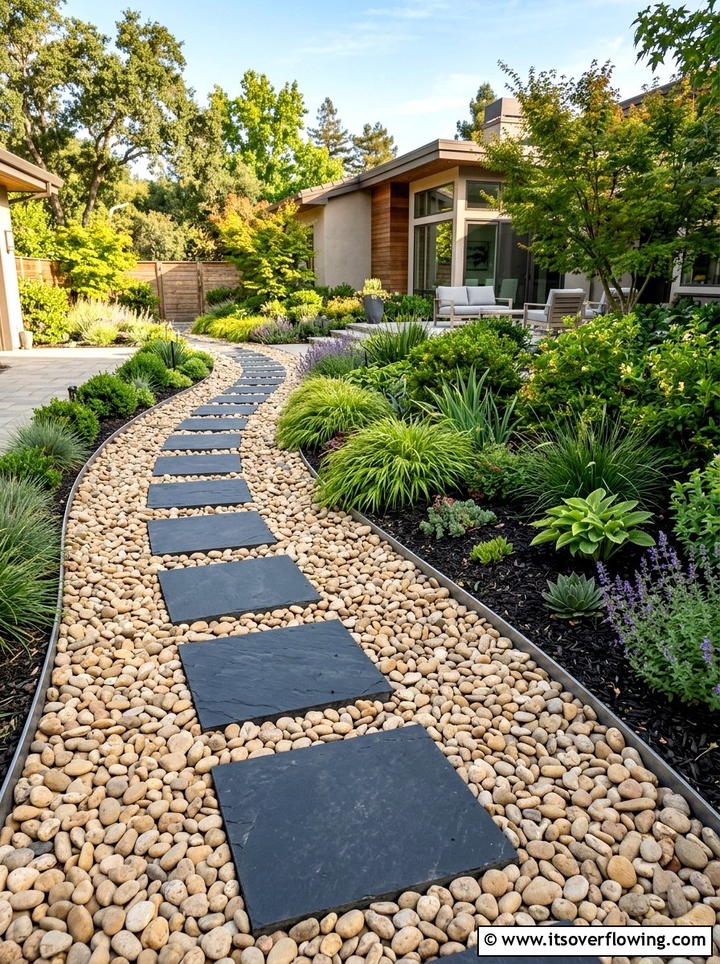
Using large, flat stepping stones within your creek bed provides a clear and easy path for guests to follow through your garden. These stones should be slightly higher than the surrounding pebbles to ensure they remain dry and visible even during a light rain. Choosing stones that contrast with the creek rocks, such as dark slate against light tan pebbles, creates a striking visual pattern. This design encourages people to slow down and appreciate the details of your landscaping as they move from one area to another. It adds a structured, intentional feel to the natural look of the dry stream, balancing order and organic beauty.

20. Natural Stone Dry Creek Bed
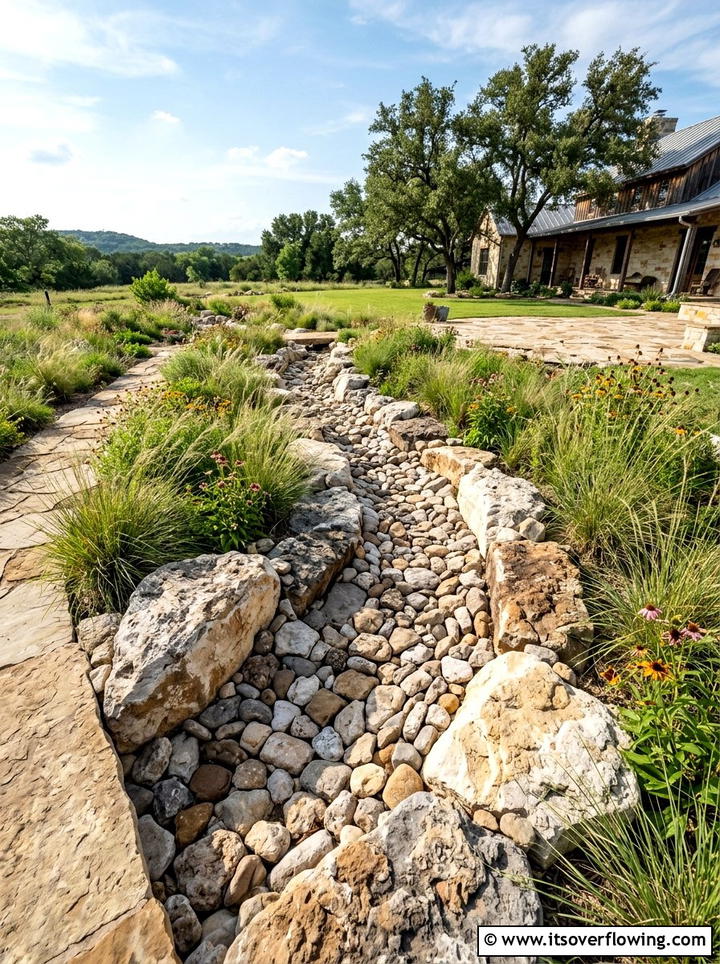
Using stones that are native to your specific geographic region is the best way to ensure your creek bed looks authentic. If you live in an area with limestone, use limestone; if you are in a granite-heavy region, use granite chunks. This makes the feature look like a natural geological formation that belongs in your specific neighborhood. You can mix various sizes, from tiny gravel to medium cobbles and large boulders, to mimic the sorted appearance of a real stream bed. This attention to local detail creates a sense of place and harmony that makes your backyard feel deeply connected to the surrounding natural landscape.
21. Dry Creek Bed Bordering Lawn
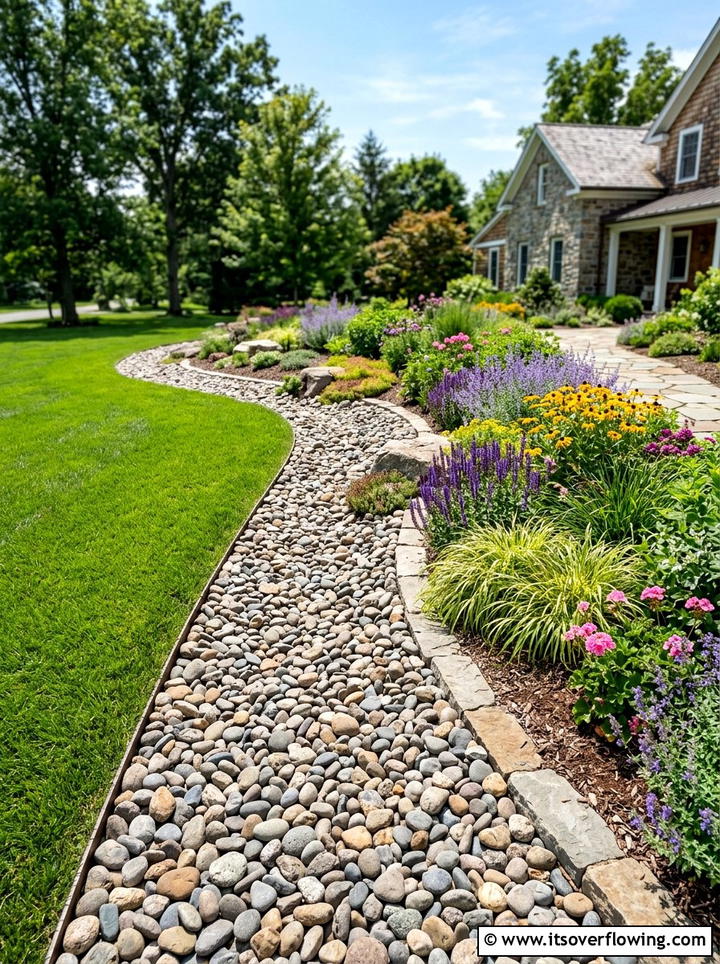
If you want a crisp transition between your green grass and your garden beds, a dry creek bed makes an excellent border. It replaces traditional plastic or metal edging with a wide, decorative band of stone that prevents grass from creeping into your flowers. This border is wide enough to walk on, making it easier to prune your plants or reach the middle of your garden without stepping on the soil. The visual contrast between the soft green lawn and the hard gray or brown stones is very appealing. It provides a clean, professional finish to your landscape that keeps everything looking organized and well-maintained.
22. Coastal Style Dry Creek Bed
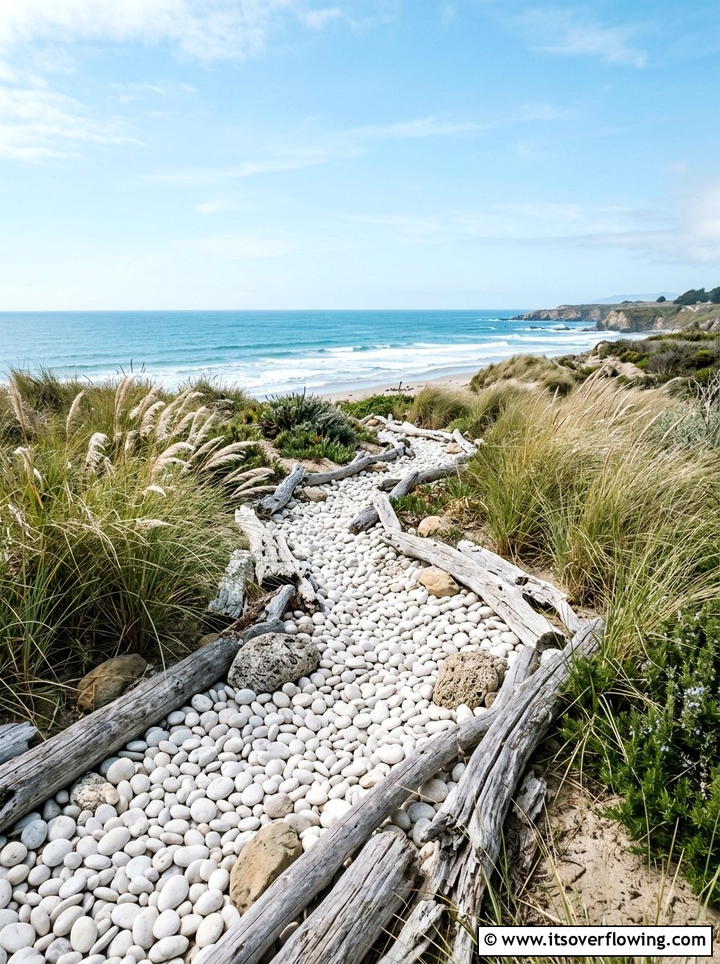
For homes near the water or those wanting a beachy vibe, a coastal-style dry creek bed uses light-colored stones and sandy textures. You can use smooth white pebbles or even crushed seashells to fill the bed, creating a bright and airy look that reflects the sun. Surround the feature with beach grass, lavender, and weathered driftwood to complete the seaside aesthetic. This style feels relaxed and breezy, making your backyard feel like a permanent vacation spot. It is a wonderful way to bring the feeling of the shore to your home, no matter how far away from the actual ocean you might live.
23. Tropical Garden Dry Creek Bed
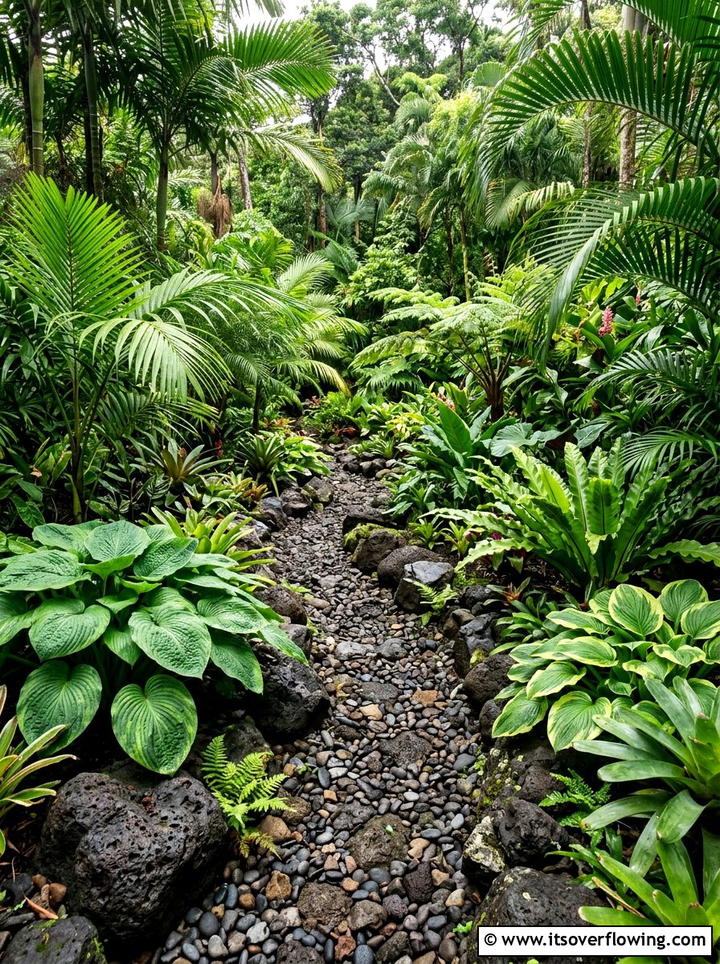
You can create a lush, exotic atmosphere by surrounding your dry creek bed with large-leafed plants and bold textures. Think about using oversized hostas, canna lilies, or even hardy palms if your climate allows for them. The stones of the creek bed should be dark and smooth, perhaps mimicking the volcanic rock found in tropical regions. The dense foliage will partially hang over the rocks, creating a sense of mystery and depth as the “stream” disappears into the greenery. This design creates a private, jungle-like retreat in your own backyard where you can escape the stresses of daily life in a beautiful setting.
24. Dry Creek Bed With Ornamental Grasses
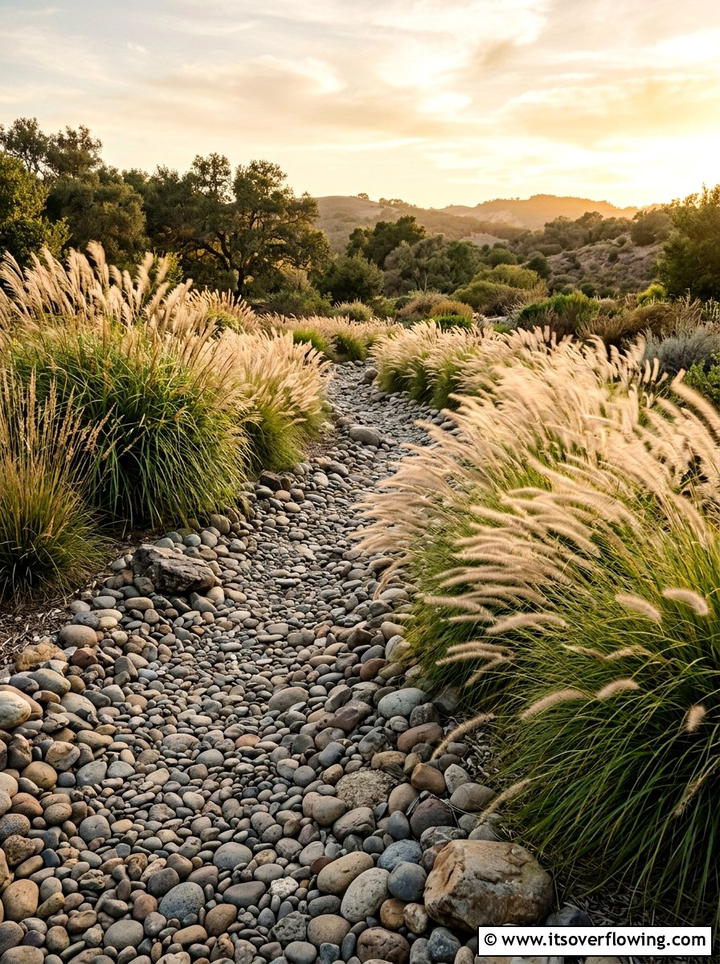
Ornamental grasses are the perfect companion for a dry creek bed because they add movement and sound to the garden. When the wind blows, the tall stalks of grass sway and rustle, mimicking the sound of water flowing over the stones. Varieties like fountain grass or blue fescue offer different heights and colors that complement the rocky textures beautifully. You can plant them in drifts along the edges of the stream to create a soft, flowing look that mimics a prairie or meadow. This combination is very easy to care for and provides visual interest through the winter months when other plants have gone dormant.
25. Rustic Farmhouse Dry Creek Bed
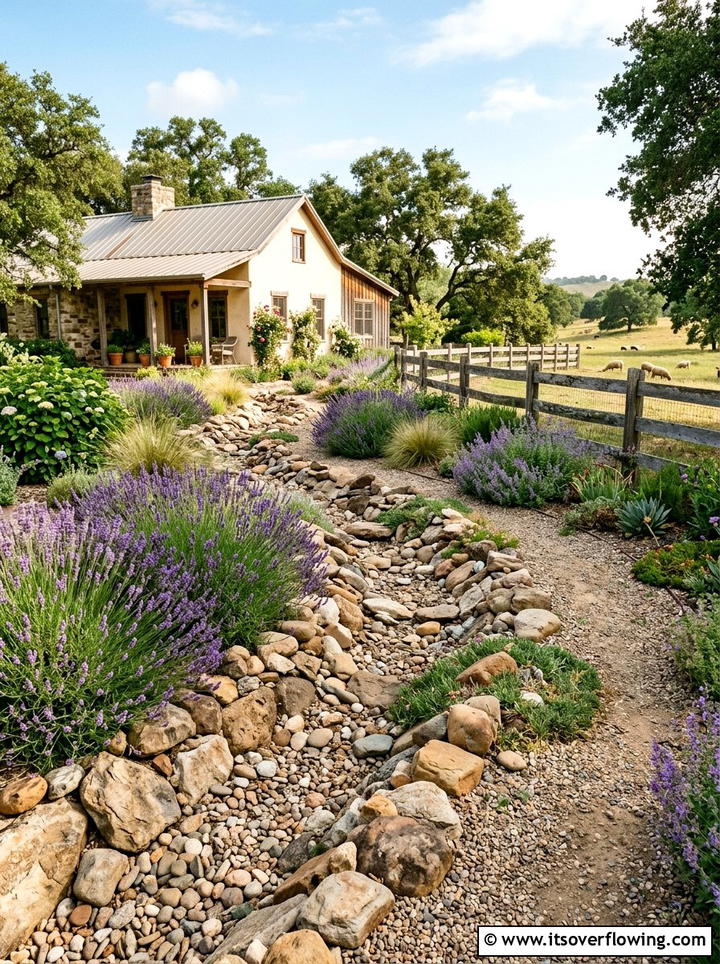
Creating a rustic farmhouse look involves using local stones and traditional plants to build a landscape that feels cozy and lived-in. You might include weathered wood elements or antique garden tools near the creek bed to enhance the vintage aesthetic of the space. The rock layout should be casual and slightly irregular, avoiding perfectly straight lines that look too modern or forced. Pairing the stones with lavender, sage, or climbing roses adds a soft fragrance and a pop of color to the neutral tones of the rocks. This style is all about comfort and simplicity, providing a peaceful retreat that feels connected to the history of the land.
Conclusion:
Transforming your backyard with a dry creek bed is an investment in both the beauty and the functionality of your home. These versatile landscape features provide an elegant solution to drainage issues while offering a stunning visual element that works in almost any climate or style. From modern minimalist designs to lush tropical retreats, the possibilities for customization are truly endless. By following these suggestions, you can create an outdoor space that feels curated, professional, and deeply connected to nature. Your backyard will become a place of relaxation and pride, proving that even the most practical landscape solutions can be breathtakingly beautiful when designed with care.

Related posts:
 25 Backyard Ideas With Drainage Solutions for a Drier Yard
 25 Backyard Ideas With Boulder Accents for Natural Drama
 25 Backyard Ideas With Rocks For A Natural Landscape Look
 25 Backyard Decorating Ideas With Signs For Backyard Charm
 25 backyard decorating ideas with herb stations for Fresh Charm
 25 backyard decorating ideas with personalized decor You’ll Love
 25 Backyard Decorating Ideas With Throws For Cozy Outdoor Style
 25 Backyard Ideas for Narrow Yards to Maximize Space
 25 Backyard Ideas With Barrel Planter for Rustic Garden Charm
 25 Backyard Ideas With Crate Planters for Fresh Style
 25 Backyard Ideas With Greenhouse for Fresh Garden Style
 25 Backyard Ideas With Mulch Beds for a Polished Garden