
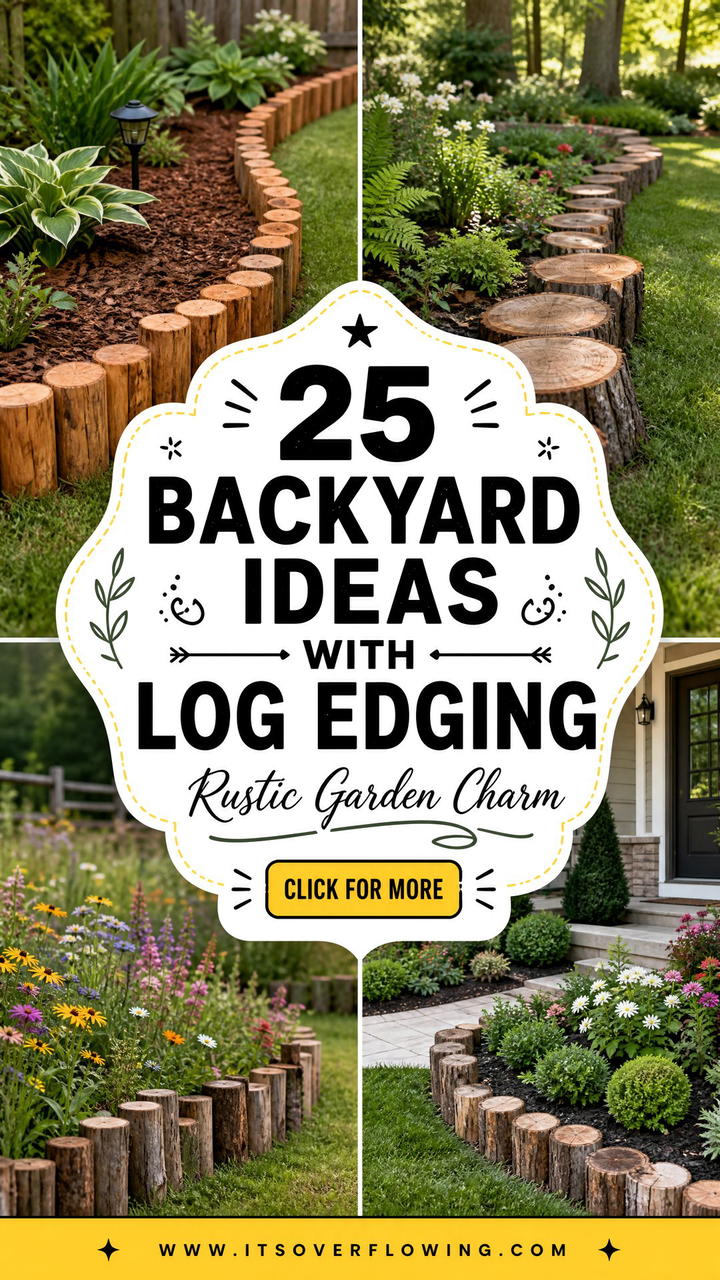
Creating a stunning backyard often starts with choosing the right natural materials to frame your landscape. Log edging offers a timeless, rustic charm that works beautifully in almost any outdoor setting, from cottage gardens to modern woodland retreats. Using reclaimed wood or freshly cut logs provides an organic boundary that feels much more integrated into the environment than plastic or metal alternatives. This guide explores creative ways to utilize log edging to define your garden beds, pathways, and seating areas effectively. Whether you prefer vertical stubs of varying heights or long horizontal trunks, log edging adds texture and a unique focal point that enhances your overall backyard aesthetic significantly.
1. Vertical Log Flower Bed
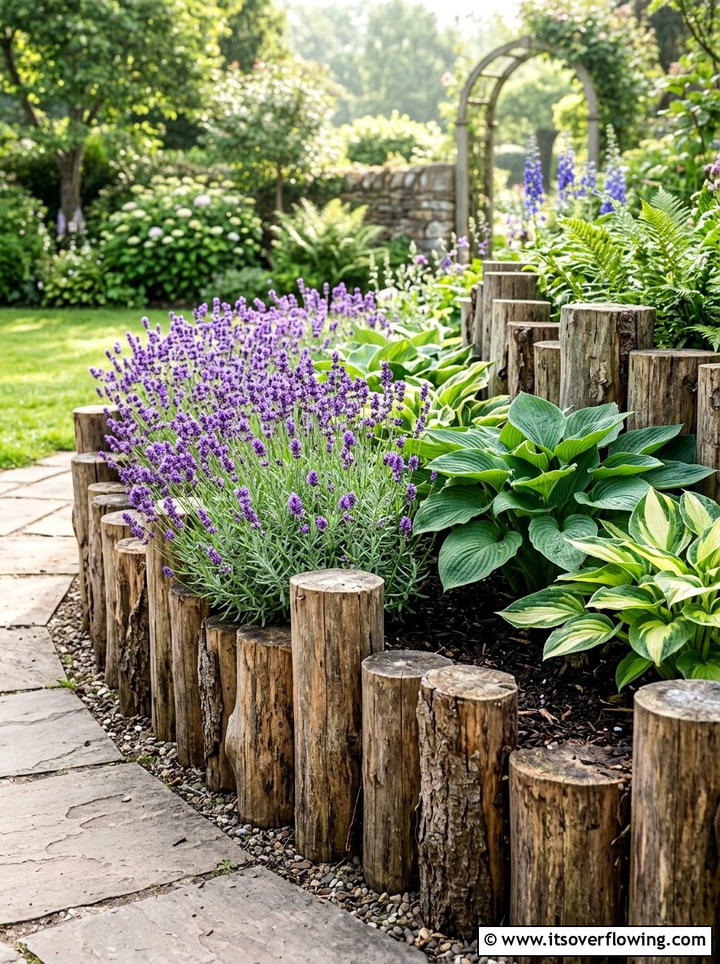
Building a vibrant flower bed with vertical log edging creates an immediate sense of depth and dimension in your backyard landscape. This design involves cutting logs into different lengths and burying them partially in the ground to create a staggered, undulating border. The natural bark textures contrast beautifully against soft perennial blooms like lavender, coneflowers, and hostas. By varying the height of each log, you can easily navigate uneven terrain or create a tiered effect that keeps mulch neatly contained. This approach works exceptionally well for curved garden beds, as individual logs can follow any line you choose. It results in a very professional and organic-looking garden feature.
2. Horizontal Log Pathway
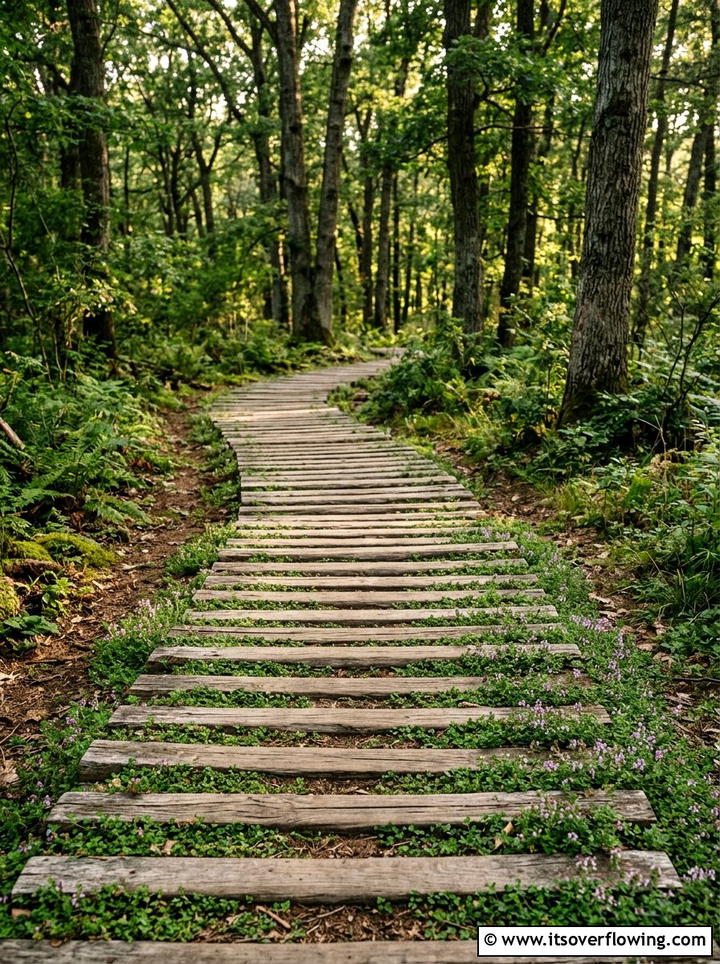
A horizontal log pathway offers a charming and practical way to navigate through your backyard while maintaining a completely natural aesthetic. Instead of using traditional pavers, long cedar or oak logs are laid parallel to one another to define the walking route clearly. This design looks incredible when paired with ground cover plants like creeping thyme or moss growing between the logs. The heavy timber provides a sturdy boundary that keeps the path material, such as wood chips or crushed gravel, perfectly in place. This layout works best in larger yards where a long, winding trail can lead guests toward a hidden seating area or a secret garden nook.
3. Vegetable Garden Log Border
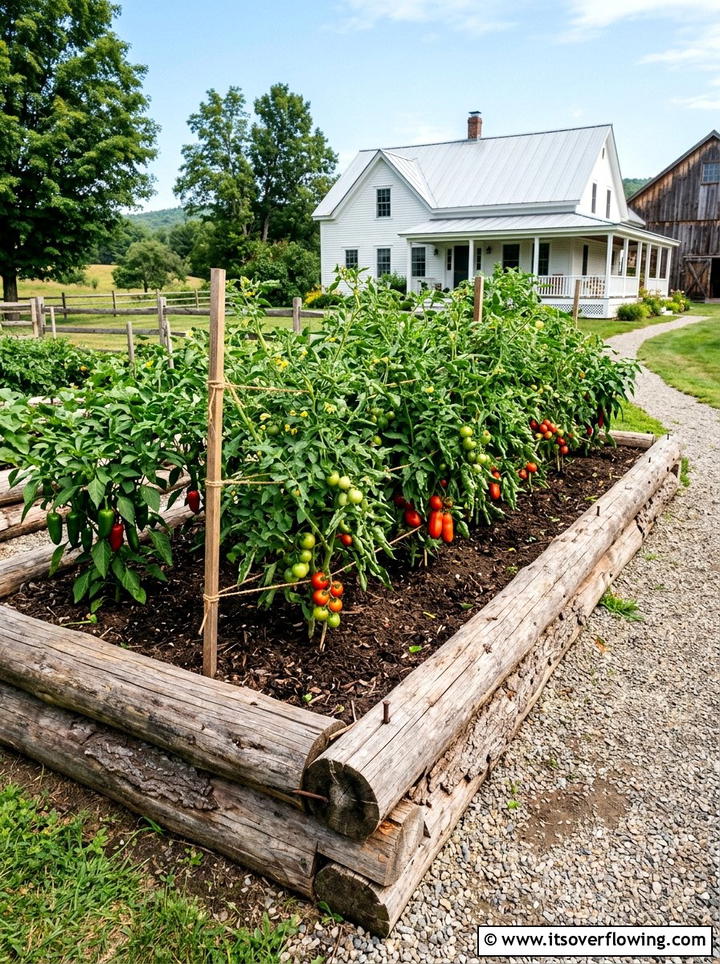
Designing a vegetable garden with log borders is a smart way to create a productive and beautiful space. Using thick, sturdy logs to frame your edible crops provides a clear separation from the rest of your lawn. This setup helps to keep invasive grass from creeping into your vegetable patches while providing a comfortable place to sit while weeding. You can stack the logs two or three high to create a slightly raised bed, which improves drainage and soil quality for your tomatoes and peppers. The rustic wood looks wonderful against the lush green leaves of your homegrown produce, creating a classic farmhouse backyard feel.
4. Tree Stump Garden Border
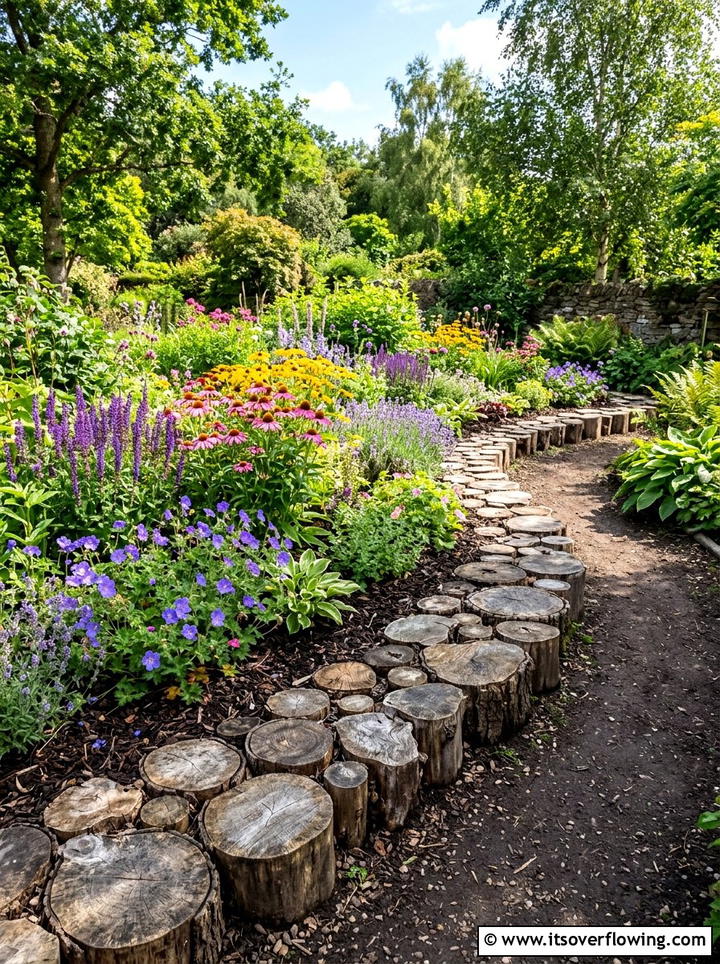
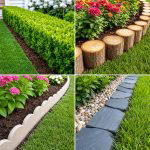
Using tree stumps as a garden border is an innovative way to recycle yard waste and add a whimsical touch to your landscape. This design features short, thick sections of tree trunks placed tightly together to form a solid and decorative edge. The varied diameters of the stumps create a visually interesting texture that mimics the natural forest floor. This type of edging is particularly effective for large flower beds or transition areas between a manicured lawn and a more wild, wooded section of the property. It provides a sturdy barrier and a unique artistic element that guests will definitely notice and admire when visiting.
5. Log Retaining Wall
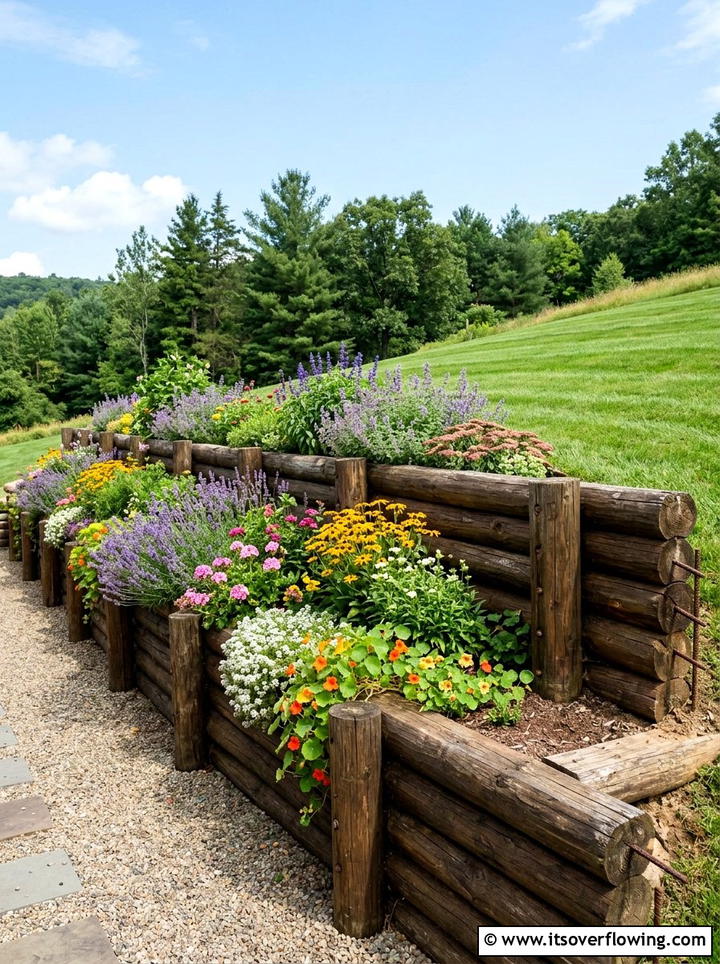
A log retaining wall is a functional and attractive solution for managing small slopes or creating level planting areas in your backyard. By stacking treated logs horizontally and securing them with rebar, you create a rustic barrier that holds back soil while looking completely natural. This design allows you to create beautiful terraces filled with cascading flowers or ornamental grasses. The warmth of the wood provides a much softer look than cold concrete blocks or bricks, making your garden feel more inviting. It is an excellent choice for a cottage-style landscape where organic materials and soft edges are preferred over sharp, modern lines.
6. Cedar Log Mulch Divider
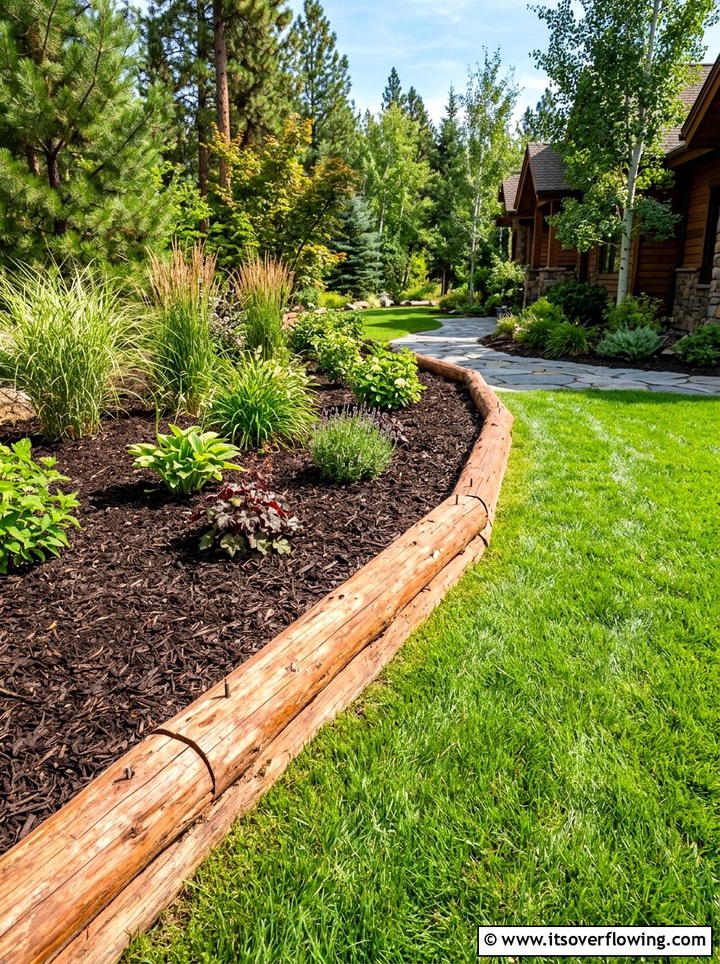
Implementing a cedar log mulch divider is a practical way to keep different landscaping materials separated and tidy. Cedar is naturally rot-resistant, making it an ideal choice for contact with wet soil and mulch. In this design, thin logs are placed horizontally to create a crisp line between a dark bark mulch bed and a bright green lawn. This prevents the mulch from washing away during heavy rain and keeps the grass from invading the plant beds. The reddish-brown hues of the cedar logs provide a beautiful contrast against the green foliage and dark soil, giving your entire backyard a very polished look.
7. Fire Pit Log Surround
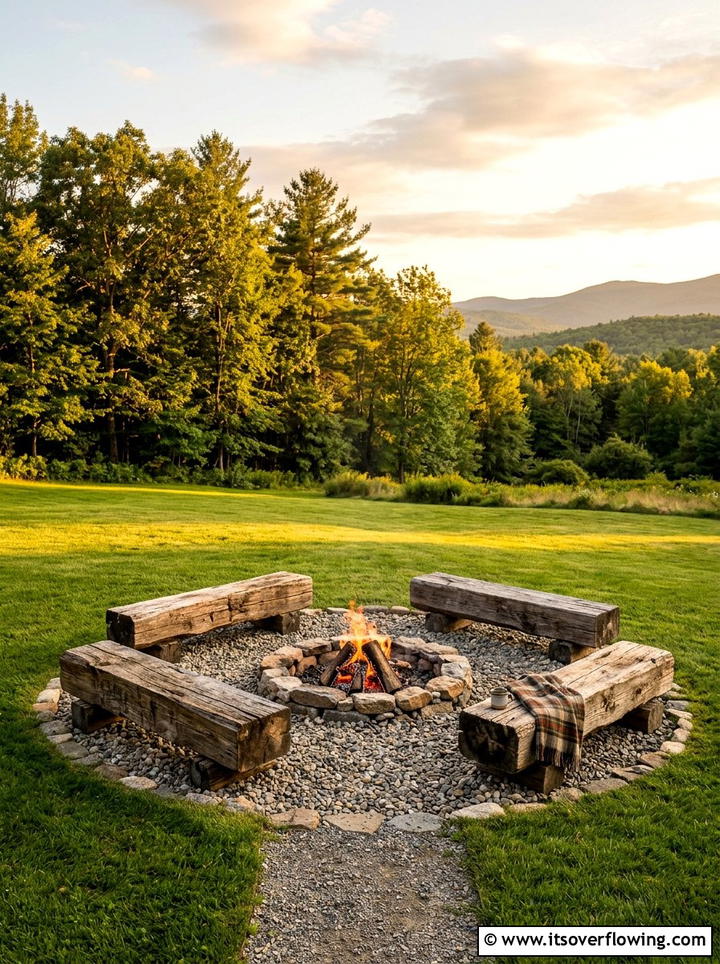
Creating a fire pit surround with logs is a brilliant way to establish a cozy and rustic outdoor gathering spot. By placing large, sturdy logs in a circular or square formation around the fire area, you define the zone while providing extra seating. This design looks best when the logs are slightly weathered, blending seamlessly into a woodland or mountain-inspired backyard. The wood acts as a natural boundary that separates the gravel or stone fire pit base from the surrounding grass. It creates a warm, camp-like atmosphere that encourages friends and family to linger long after the sun goes down in your backyard.
8. Curved Flower Bed Log Edging
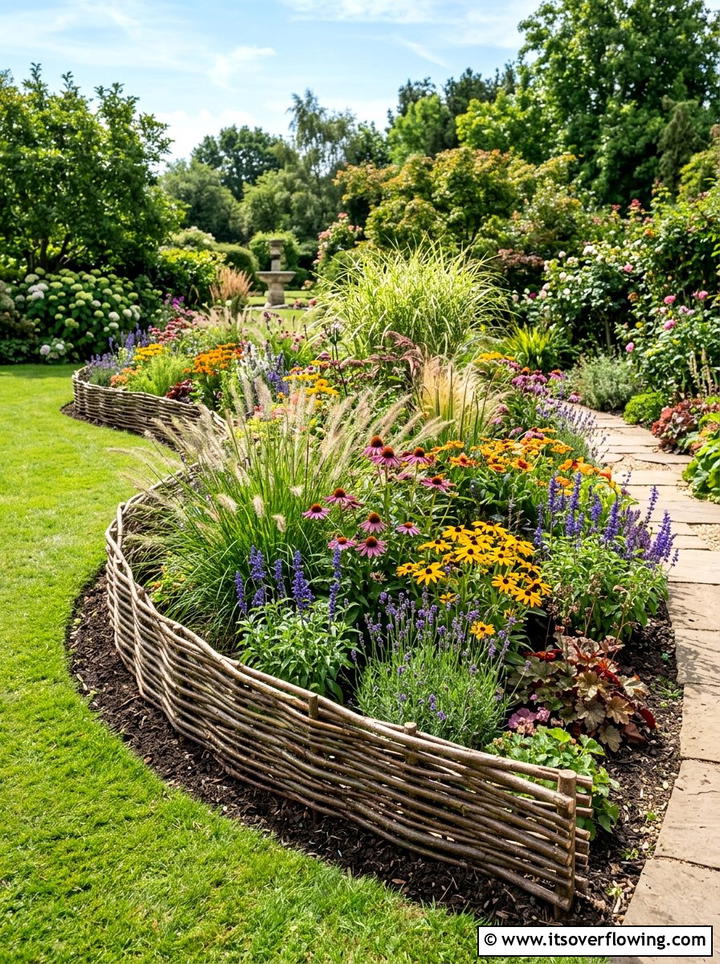
Designing a curved flower bed using log edging is a wonderful way to soften the straight lines of your home and patio. By using shorter sections of logs placed vertically or thin, flexible branches, you can easily follow the natural flow of your landscape. These curves create a sense of movement and lead the eye through the garden in a more relaxing way than rigid borders. This approach is perfect for highlighting a variety of plants, from tall ornamental grasses to low-growing succulents. The natural wood texture provides a grounded feel that makes the colorful blooms pop, resulting in a professionally designed and organic appearance.
9. Sloped Yard Log Border
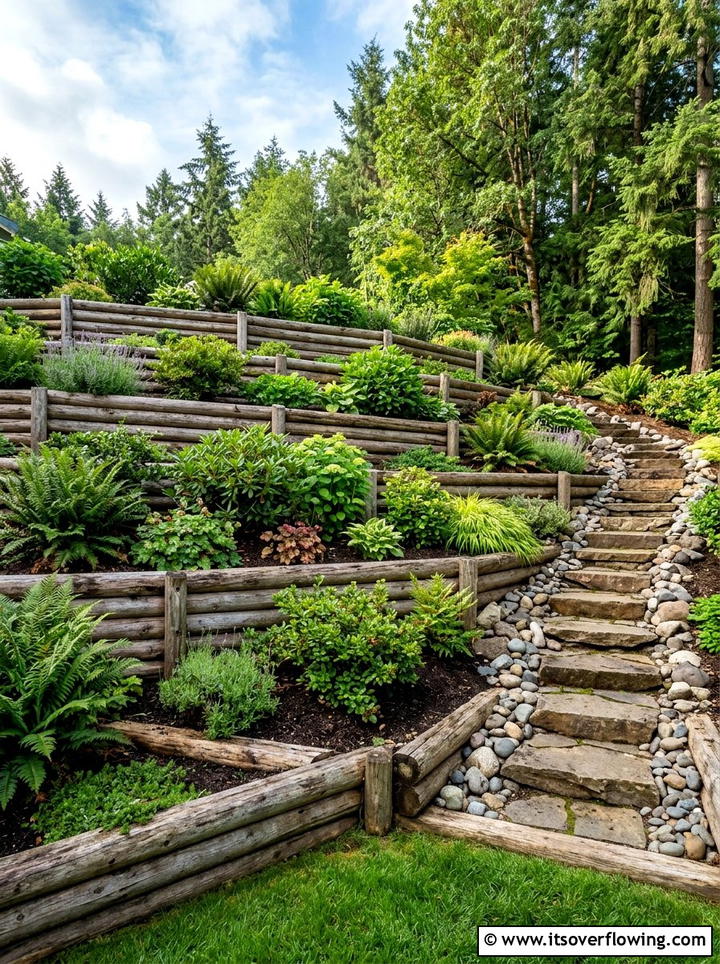
Managing a sloped yard becomes much easier and more aesthetic when you incorporate log borders into the design. Logs can be used to create small, terraced levels that prevent soil erosion and provide flat areas for planting. This design transforms a difficult hillside into a functional garden feature that is full of life and texture. By layering the logs horizontally along the contour of the hill, you create a series of steps that look completely natural. This setup is perfect for planting a mix of shrubs and ground covers that will eventually drape over the logs, creating a beautiful and lush green cascade.
10. Herb Garden Log Edging
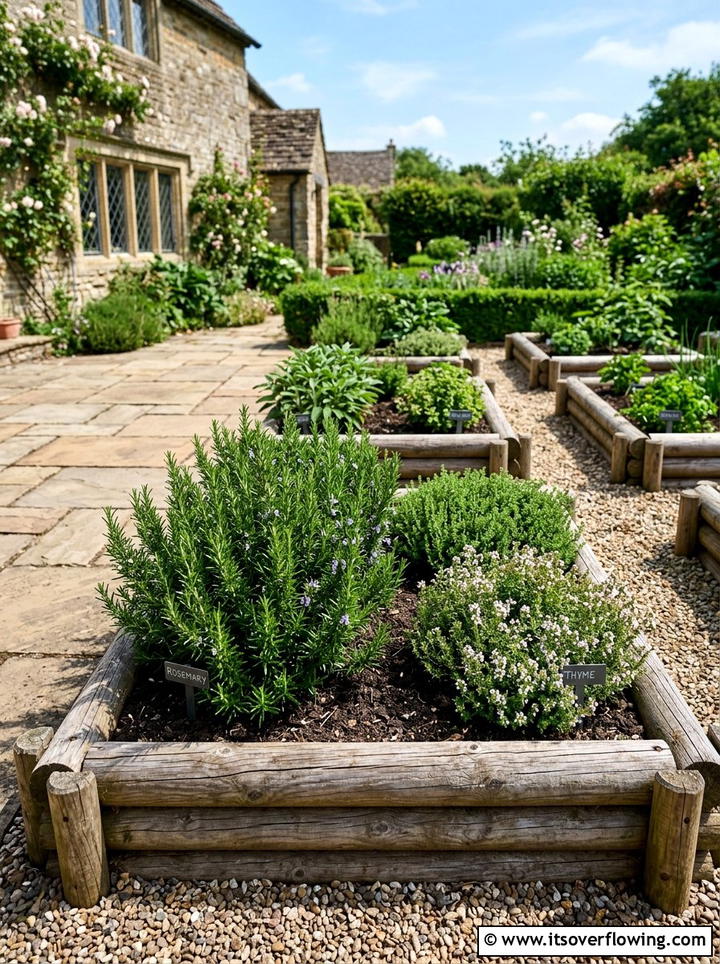
Establishing an herb garden with log edging is a delightful way to keep your culinary plants organized and accessible. This design uses small, uniform logs to create a series of squares or rectangles for different herbs like rosemary, thyme, and mint. The wood creates a clean border that looks great near a kitchen door or on a side patio. Because herbs often have different watering needs, the log borders help you manage the soil and moisture levels for each specific plant. The aromatic herbs paired with the earthy scent of the wood create a sensory experience that makes gardening in your backyard truly enjoyable.
11. Gravel Path Log Border
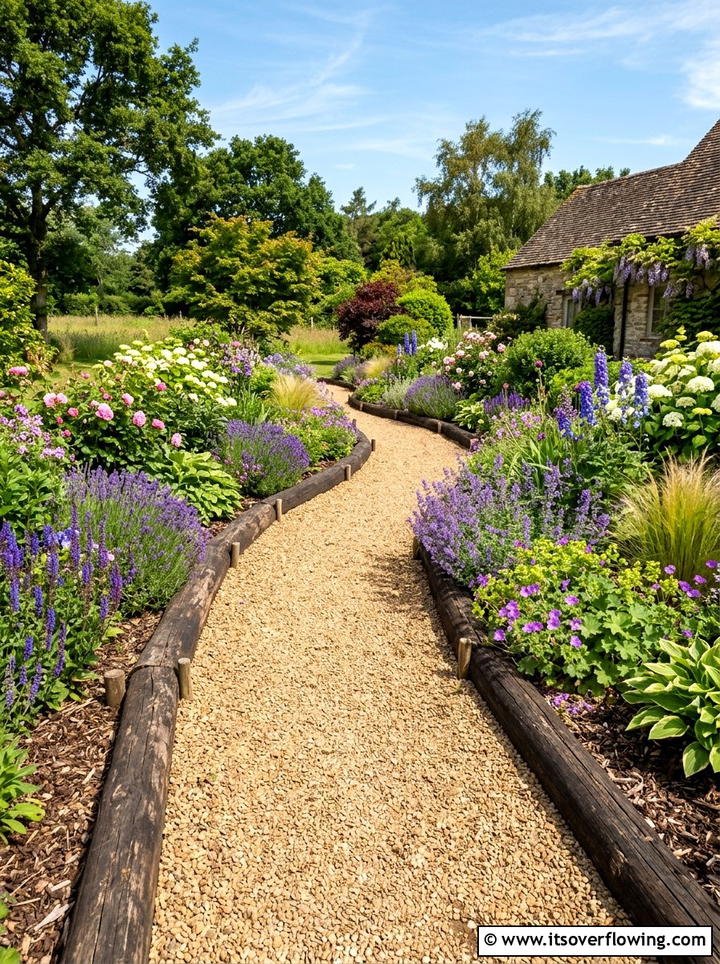
A gravel path with log edging is a classic landscaping choice that provides a clear and durable walkway through your backyard. The logs serve as a sturdy frame that keeps the loose gravel contained, preventing it from spilling onto your lawn or into your flower beds. This design is highly effective for long, straight paths or winding trails that connect different areas of your property. The contrast between the grey or tan gravel and the dark, textured wood creates a sophisticated yet rustic look. This setup is easy to maintain and adds a structured feel to even the most informal and wild garden spaces.
12. Stepped Log Garden Bed
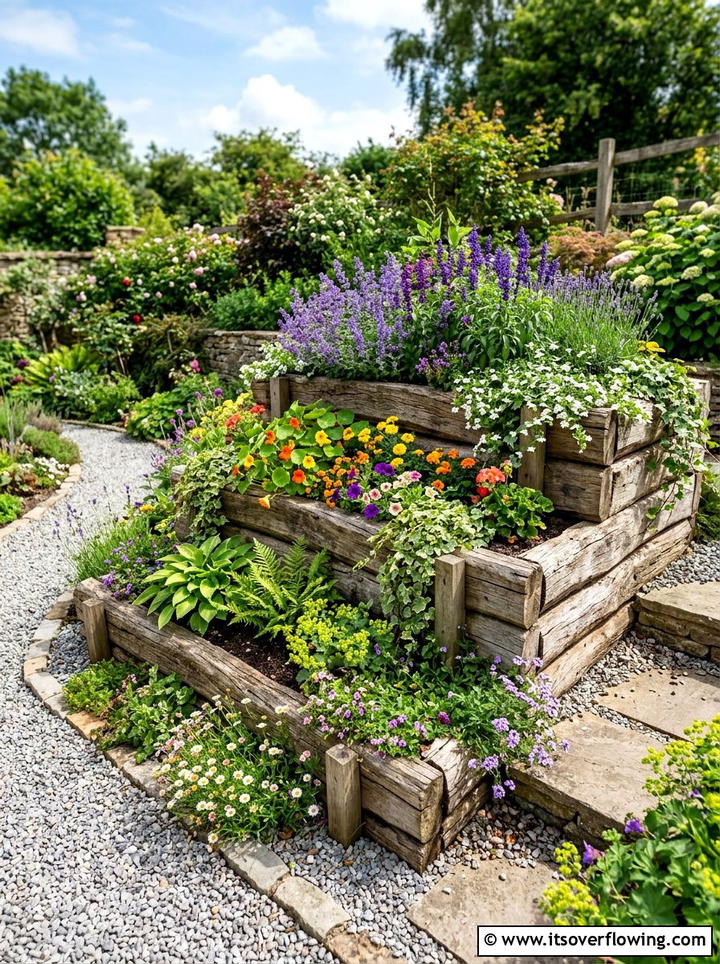
A stepped log garden bed is a fantastic way to add vertical interest and maximize planting space in a small backyard. This design involves creating several tiers using logs of different heights, resembling a set of stairs. Each level can be filled with a variety of plants, such as trailing vines on the bottom and taller perennials on the top. This arrangement allows for excellent drainage and makes it easier to tend to your plants without bending over too far. The tiered structure creates a dramatic focal point that draws the eye upward, making your entire garden space feel much more expansive and thoughtfully designed.
13. Tree Trunk Edging
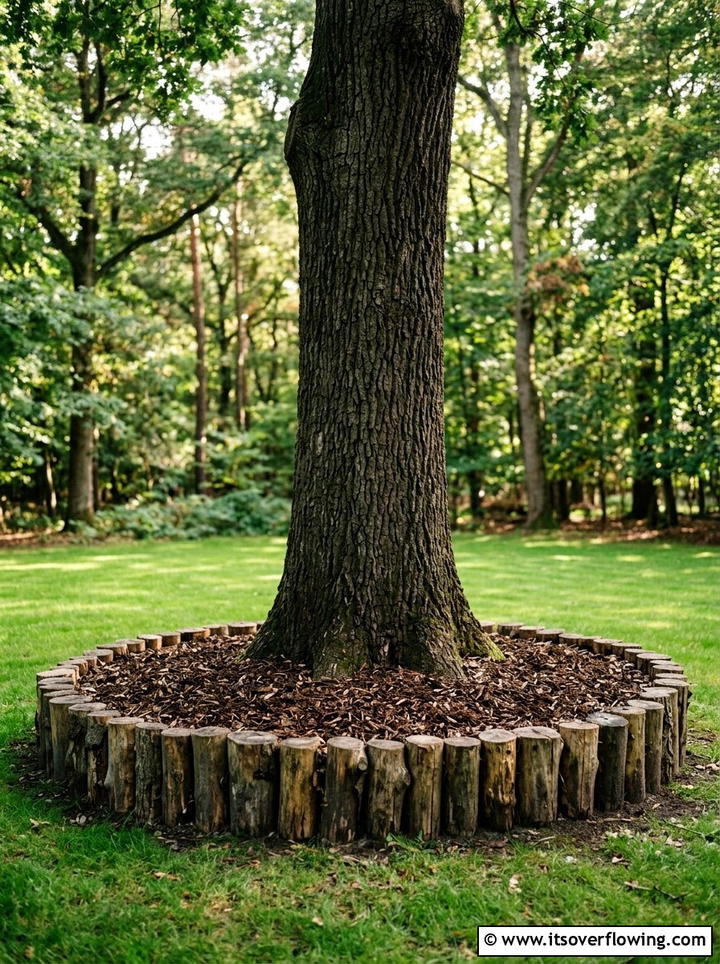
Using tree trunk sections as edging around established trees is a great way to protect the roots and create a defined mulch ring. This design features logs laid horizontally or placed vertically in a circle around the base of a large shade tree. It provides a clear boundary that prevents lawnmowers from getting too close to the trunk and damaging the bark. Filling the center with wood chips or bark mulch keeps the soil moist and cool for the tree. The heavy timber looks very natural and helps the tree stand out as a majestic focal point in your backyard, especially in woodland settings.
14. Tropical Garden Log Border
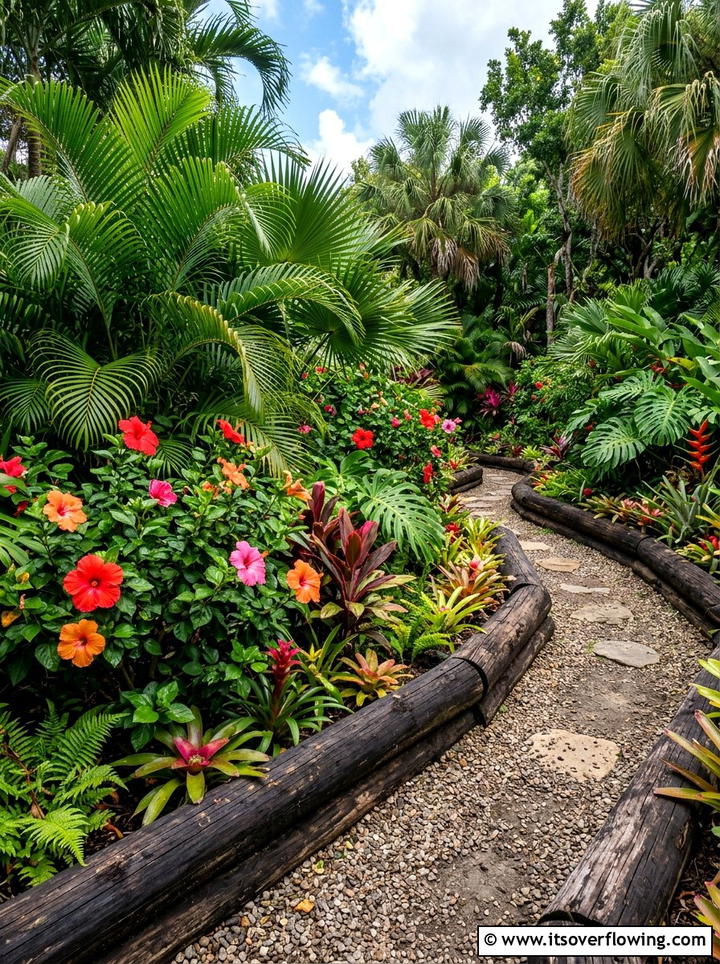
Enhancing a tropical garden with log borders adds an earthy element that complements large, lush leaves and exotic flowers. In this design, dark or weathered logs are used to frame beds filled with ferns, palms, and hibiscus. The organic texture of the wood mimics the fallen timber found on a jungle floor, making the entire space feel more authentic and secluded. The logs help to hold in the high levels of moisture that tropical plants often require. This setup creates a private oasis in your backyard where the wood acts as a grounding force against the bright colors and bold textures of the tropical foliage.
15. Woodland Path Log Edging
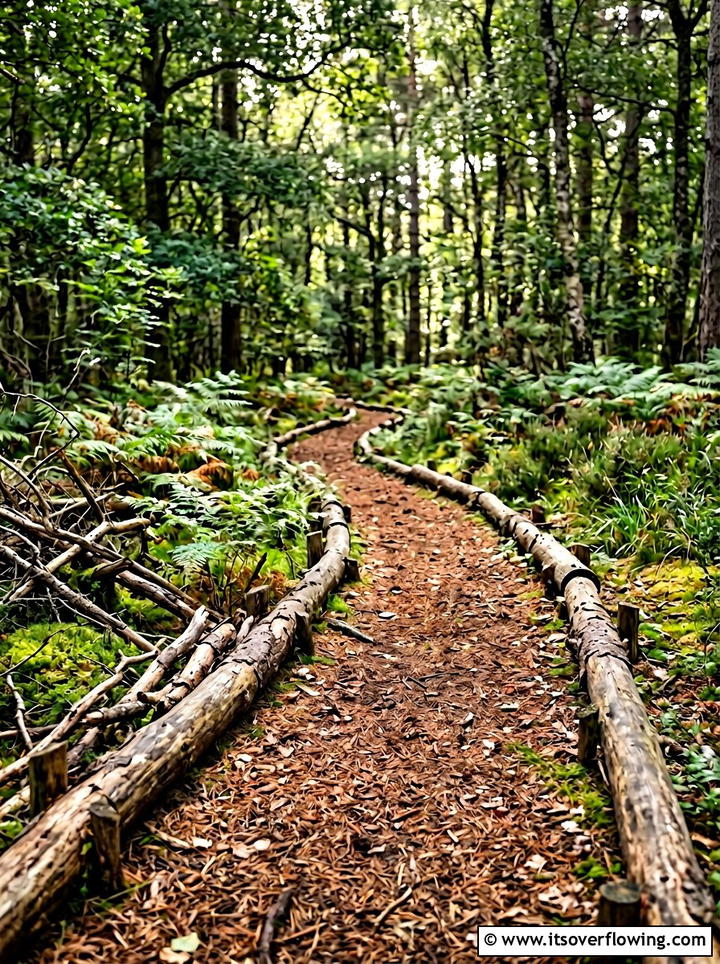
Creating a woodland path with log edging is the perfect way to invite exploration into the more shaded areas of your property. This design uses naturally fallen branches or logs to line a trail covered in pine needles or shredded leaves. The edging keeps the path clearly defined even as the forest floor changes with the seasons. It creates a seamless transition between your manicured lawn and the wilder, natural parts of your backyard. This look is enhanced by planting shade-loving plants like ferns and wild ginger along the edges of the logs, making the walkway feel like a magical journey through a secluded forest.
16. Kids Play Area Log Border
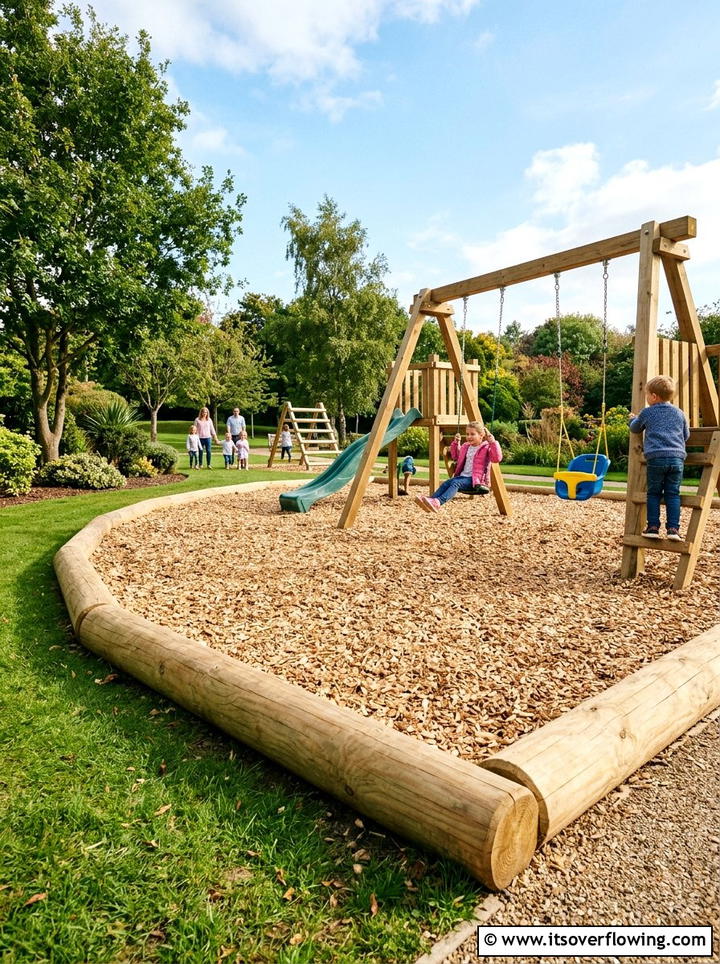
Designing a kids’ play area with a log border is a safe and eco-friendly way to define a space for fun and games. Using large, smooth logs to surround a swing set or a sandbox keeps the rubber mulch or wood chips contained and separate from the grass. The logs are low enough for children to step over easily but sturdy enough to withstand active play. This natural boundary looks much better than plastic edging and blends perfectly with the rest of your backyard landscape. It provides a clear zone for play while maintaining the overall aesthetic of your outdoor living area and garden.
17. Zen Garden Log Edging
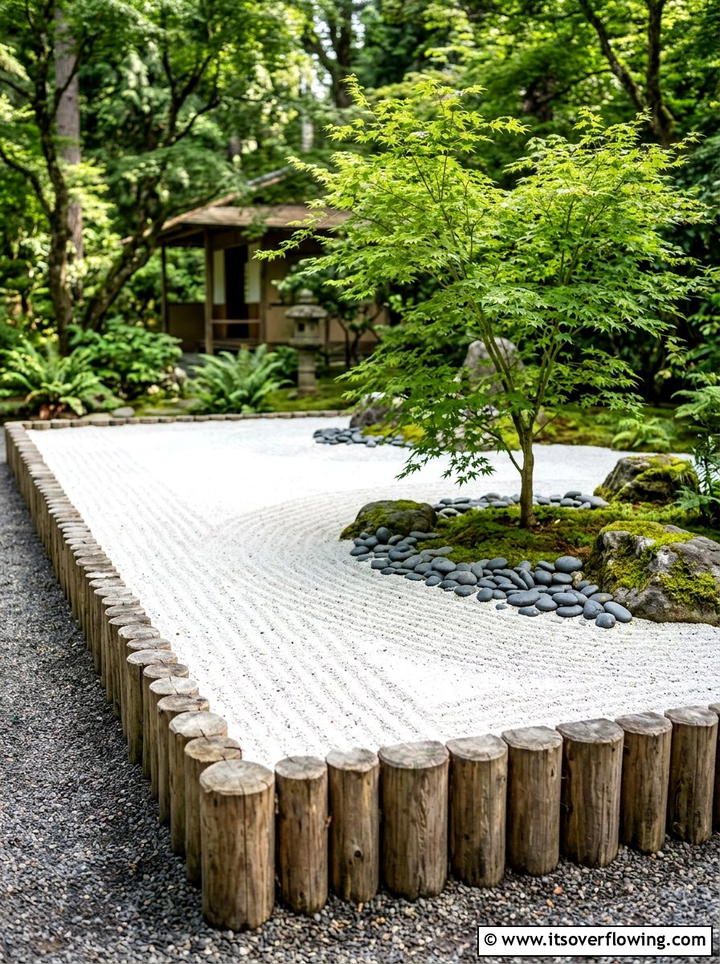
Incorporating log edging into a Zen garden design brings a sense of balance and organic simplicity to your meditation space. This design uses clean, straight logs or carefully placed vertical stubs to frame areas of raked sand, smooth river rocks, and minimalist plantings. The wood provides a warm, natural contrast to the cool tones of the stone and sand. By using log borders to define the perimeter, you create a peaceful sanctuary that feels grounded and connected to the earth. This setup is ideal for small backyard corners where you want to promote a sense of calm, tranquility, and mindful reflection throughout the day.
18. Raised Bed Log Edging
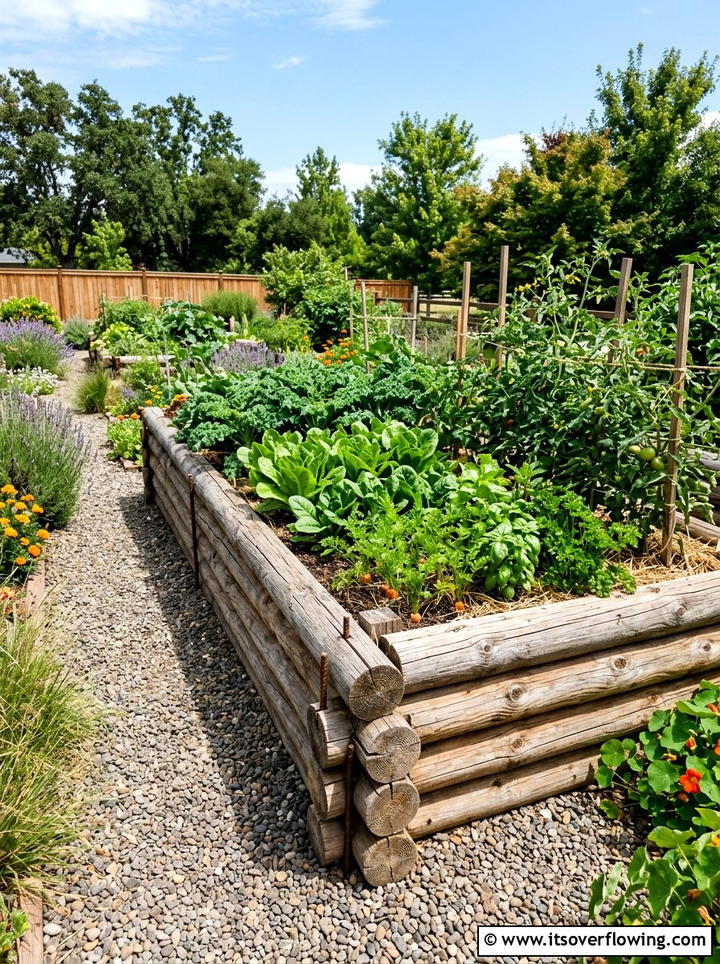
Raised beds made with log edging are a beautiful and sustainable alternative to traditional timber or stone planter boxes. In this design, logs are stacked horizontally to the desired height to create a deep planting area for flowers, herbs, or vegetables. The thick walls of the logs provide excellent insulation for the soil, keeping it at a more consistent temperature during the growing season. This rustic approach looks incredible in a cottage or farmhouse garden setting and provides a sturdy structure that will last for many years. It is an effective way to improve soil quality while adding a unique architectural element to your backyard.
19. Pond Edge Log Border
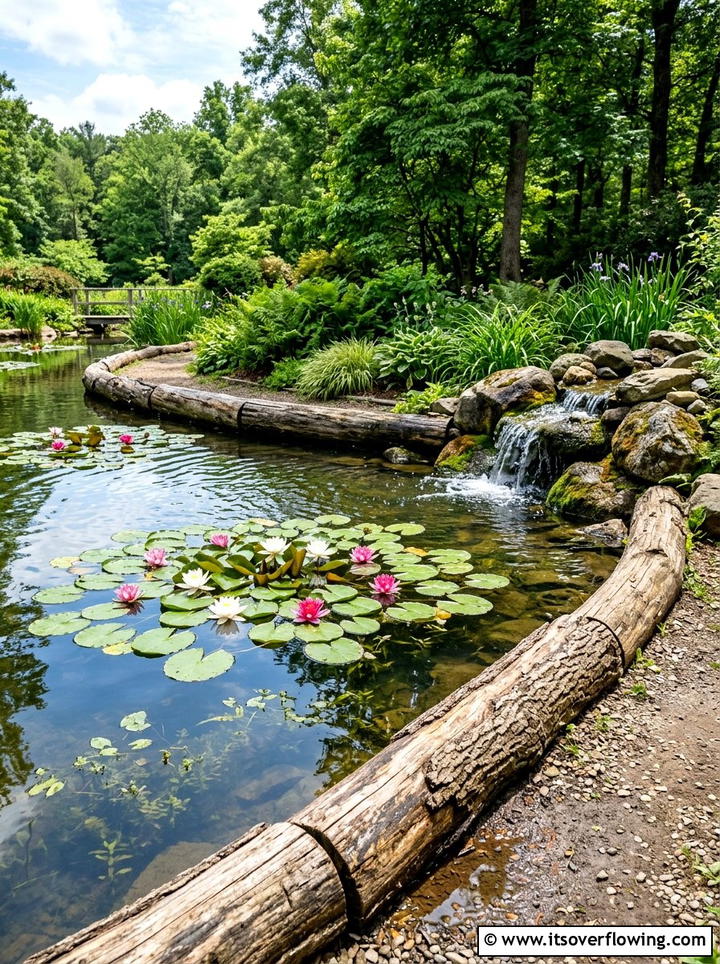
Using logs to border a garden pond or water feature creates a seamless and natural transition between the water and the surrounding landscape. This design involves placing logs partially over the edge of the water to hide pond liners and provide a natural habitat for local wildlife like frogs or turtles. The wood absorbs moisture and may eventually grow moss, adding to the aged and established look of the water feature. The logs also provide a stable place to tuck in aquatic plants or moisture-loving grasses. This setup makes the pond look like a natural part of the environment rather than a man-made addition to the yard.
20. Wildflower Meadow Log Edging
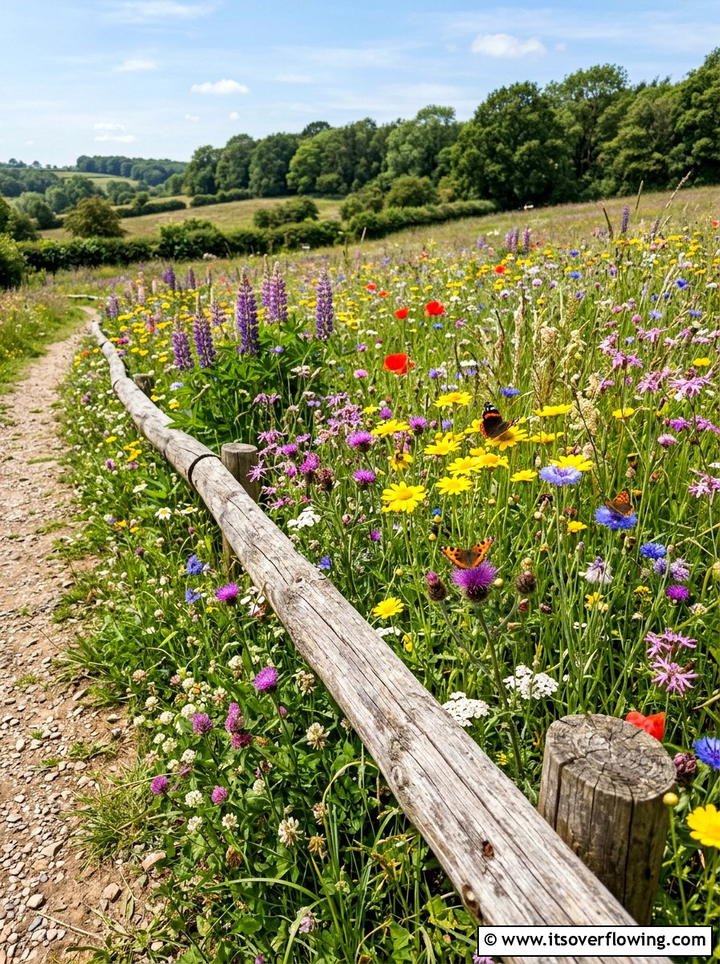
Creating a border for a wildflower meadow with logs is a great way to give a “wild” space a bit of intentional structure. Wildflowers can often look messy if they don’t have a defined boundary, so using logs to frame the area helps it look like a purposeful garden feature. This design works well in larger backyards where a meadow can provide a haven for pollinators like bees and butterflies. The natural wood perfectly complements the informal and colorful look of the wildflowers. It creates a clear path or viewpoint from which you can enjoy the beauty of the meadow without stepping on the delicate plants.
21. Low Garden Divider Log
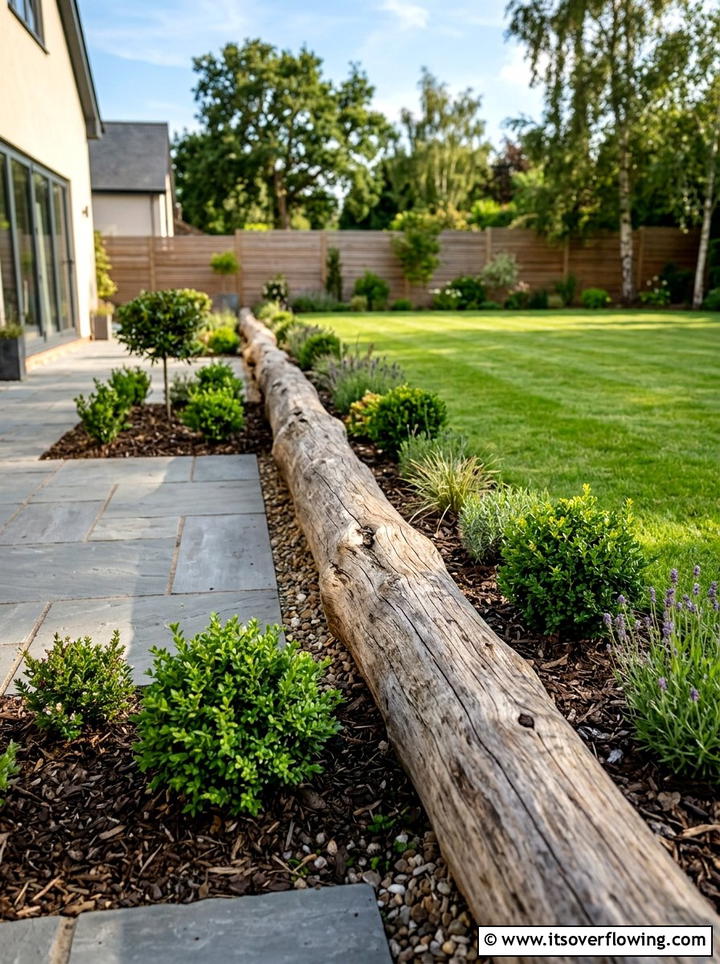
A low garden divider made of single logs is a simple yet effective way to define different zones in your backyard without blocking the view. This design uses long, thin logs laid end-to-end to create a subtle boundary between a patio area and the lawn or between different types of garden beds. It is a minimalist approach that adds just enough structure to keep the space organized while maintaining an open and airy feel. This type of edging is very easy to install and can be moved or adjusted as your garden grows and changes over time, making it a very flexible design choice.
22. Pine Needle Path Log Border
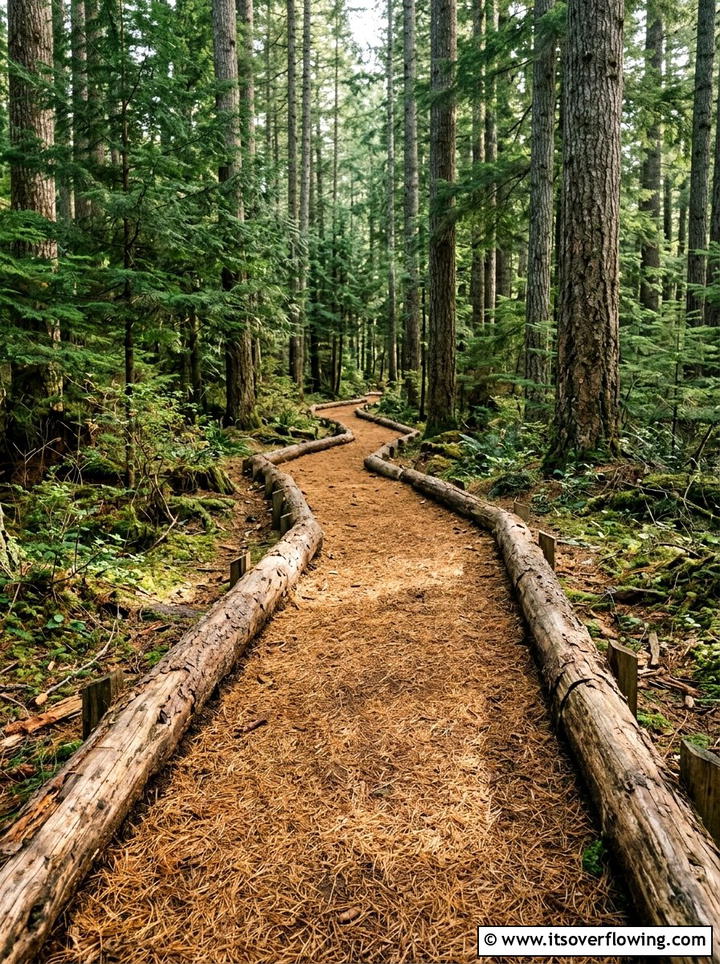
A pine needle path lined with log edging is the ultimate choice for a low-maintenance and highly aromatic garden walkway. The logs act as a soft frame that keeps the slippery pine needles in place, creating a comfortable and springy surface for walking. This design is particularly well-suited for shaded areas under evergreen trees where grass may have difficulty growing. The earthy brown tones of the logs and the needles create a cohesive and natural palette that feels very grounded. This setup requires very little upkeep and provides a quiet, serene path that blends perfectly into the natural landscape of a larger, wooded backyard.
23. Front Yard Log Landscaping
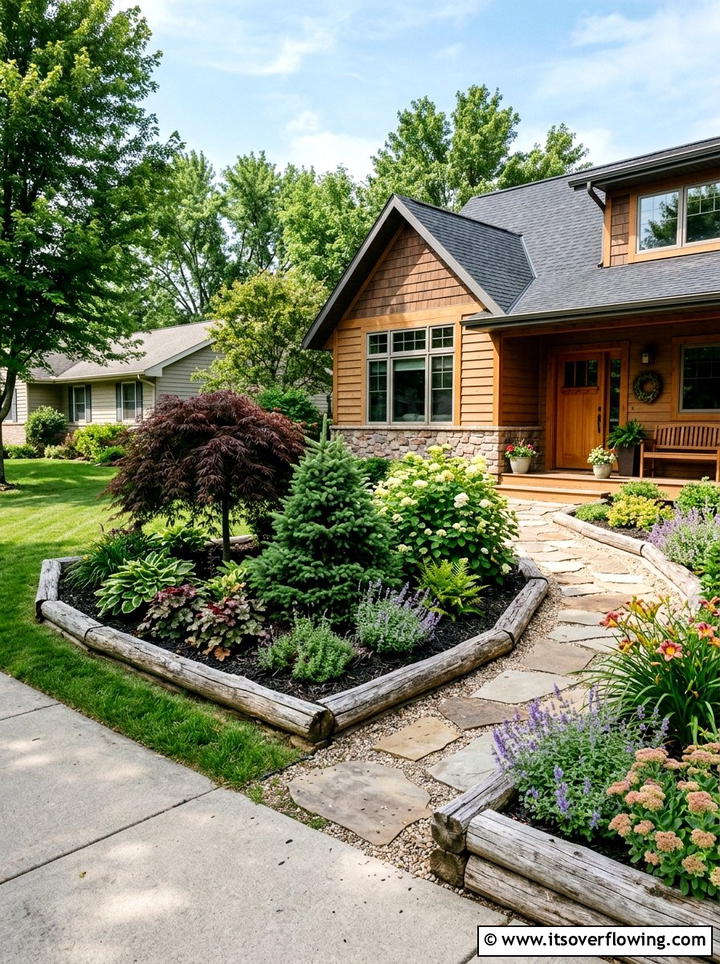
Using log edging in your front yard landscaping can instantly boost your home’s curb appeal with a touch of rustic sophistication. This design uses logs to frame a large island bed filled with a mix of shrubs, perennials, and ornamental trees. The wood provides a clear and attractive boundary that separates the garden from the sidewalk or driveway. It gives the front of your home a very welcoming and organic feel that stands out from more traditional landscaping styles. By choosing high-quality logs and maintaining them well, you create a professional and polished look that reflects a love for nature and unique design elements.
24. Stone Patio Log Edging
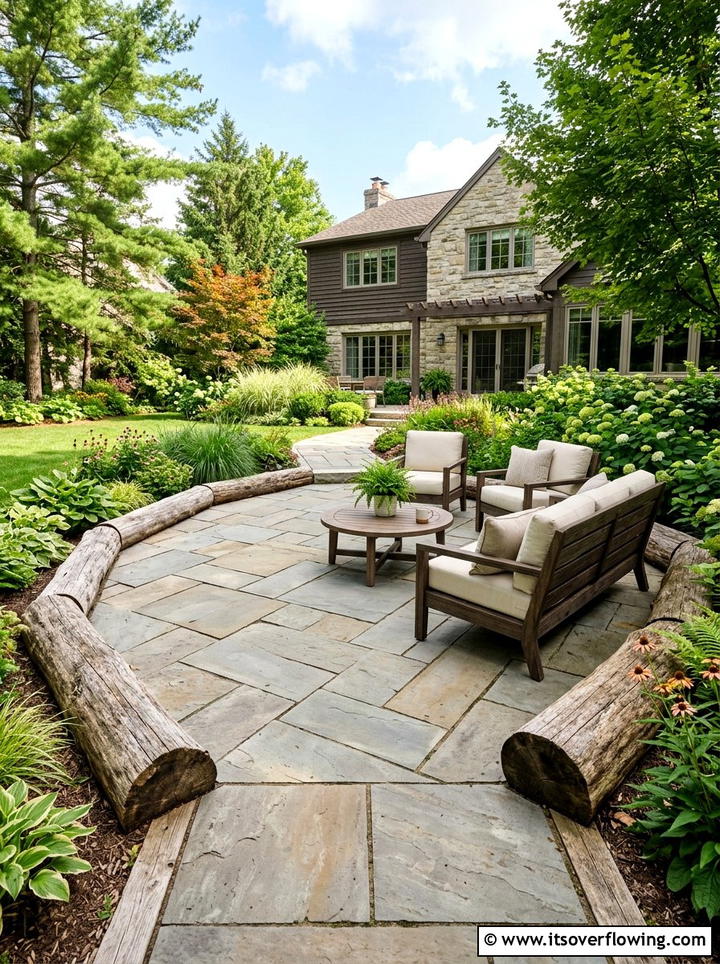
Adding log edging around a stone patio is a clever way to soften the transition between hardscaping and the natural elements of your garden. This design features logs placed along the perimeter of the flagstone or paver patio, acting as a buffer between the stone and the lawn. The warmth and texture of the wood complement the cool, hard surface of the stone beautifully. This setup also helps to prevent soil and grass from encroaching onto your outdoor living space. It creates a cozy, framed effect for your seating area, making the patio feel like an integrated part of the overall landscape design in your backyard.
25. Shade Garden Log Border
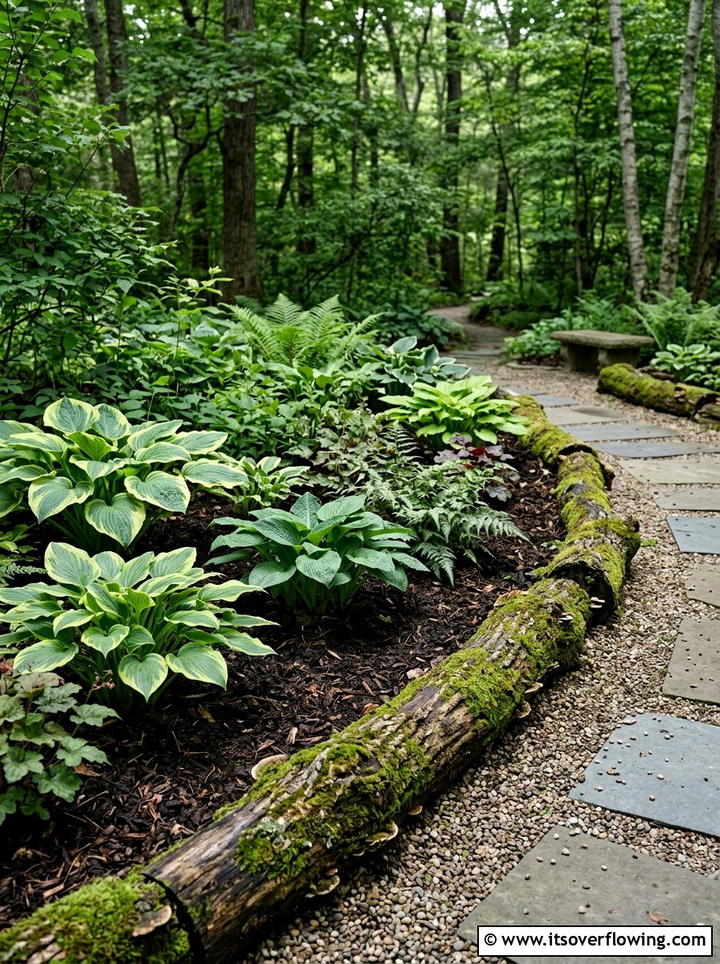
A shade garden with log borders is a perfect way to bring life and structure to the darker corners of your backyard. This design uses logs to frame beds filled with hostas, ferns, and bleeding hearts, which thrive in low-light conditions. The dark, moist environment of a shade garden is ideal for the wood, which may develop a beautiful layer of green moss over time. The log edging provides a sturdy boundary that keeps shade-loving ground covers from spreading too far. This setup creates a lush and cool retreat where the natural materials and soft foliage provide a sense of peace and quiet throughout the summer months.
Conclusion:
Wrapping up your backyard transformation with log edging is a fantastic way to blend functionality with natural beauty. These versatile borders do more than just keep your mulch in place; they provide a structural foundation that defines the different zones of your outdoor living space. From rustic pathways to sophisticated vegetable gardens, the use of timber brings a cohesive and warm feel to the environment. As the wood weathers over time, it develops a lovely patina that complements the changing seasons and growing greenery. Choosing this sustainable landscaping method ensures your yard remains inviting, stylish, and environmentally friendly for many years to come while maintaining a high-end look.

Related posts:
 25 Backyard Ideas With Barrel Planter for Rustic Garden Charm
 25 Backyard Decorating Ideas With Signs For Backyard Charm
 25 Backyard Ideas With Edging for a Clean, Finished Yard
 25 Backyard Ideas With Farmhouse Style for Rustic Outdoor Charm
 25 Backyard Ideas With Old Ladder Planter for Rustic Charm
 25 backyard decorating ideas with garden art for Creative Charm
 25 Backyard Ideas With Butterfly Garden for Colorful Charm
 25 Backyard Ideas With Cottage Garden for Cozy Outdoor Charm
 25 backyard decorating ideas with herb stations for Fresh Charm
 25 Backyard Decorating Ideas With Old Door Decor For Charm
 25 Backyard Decorating Ideas With Succulent Pots For Charm
 25 Backyard Ideas With Vintage Planters For Timeless Charm