
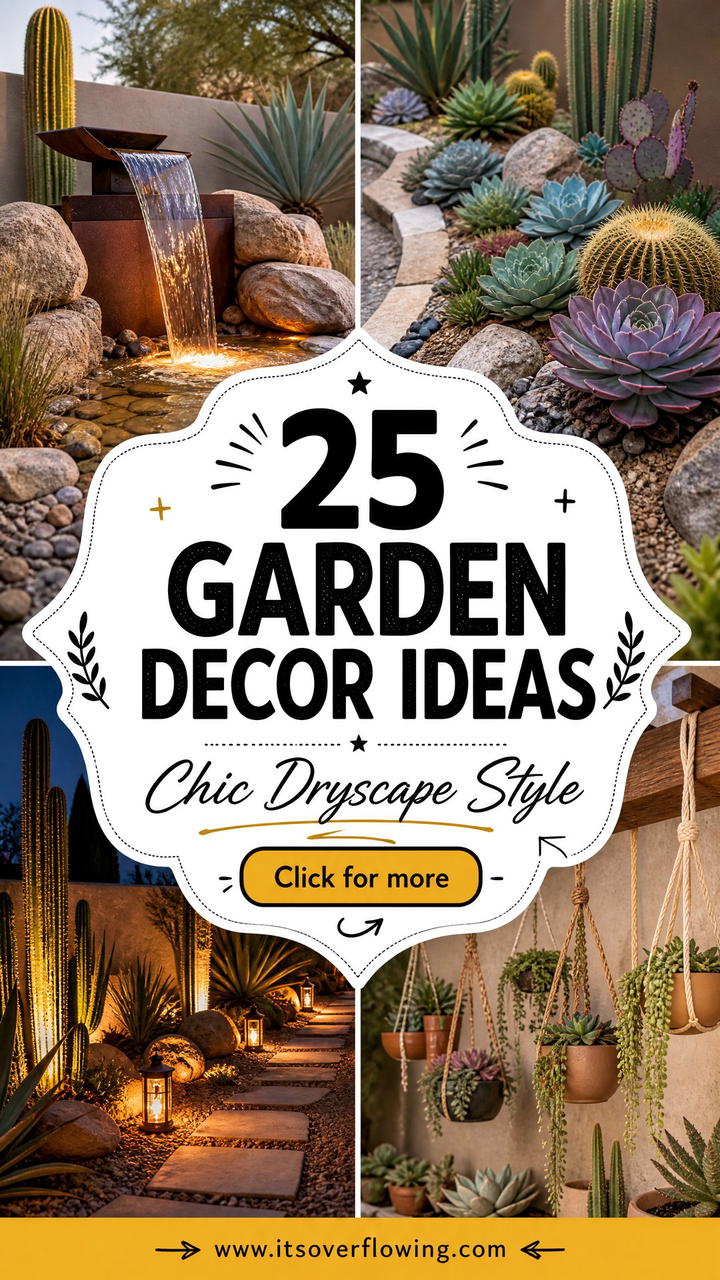
Creating a beautiful outdoor space in an arid climate requires a thoughtful blend of resilience and aesthetic appeal to truly stand out. Desert gardens offer a unique canvas where textures, earthy tones, and sunlight interact in ways that lush tropical environments simply cannot replicate. By selecting the right decor, you can transform a dusty patch of land into a sophisticated sanctuary that celebrates the local environment. This guide explores twenty-five innovative ideas that focus on hardscaping, drought-tolerant plants, and artistic elements specifically tailored for high-heat zones. Whether you prefer a modern minimalist look or a rustic southwestern vibe, these suggestions will help you craft a stunning, low-maintenance retreat that thrives in the sun.
1. Cactus Rock Garden
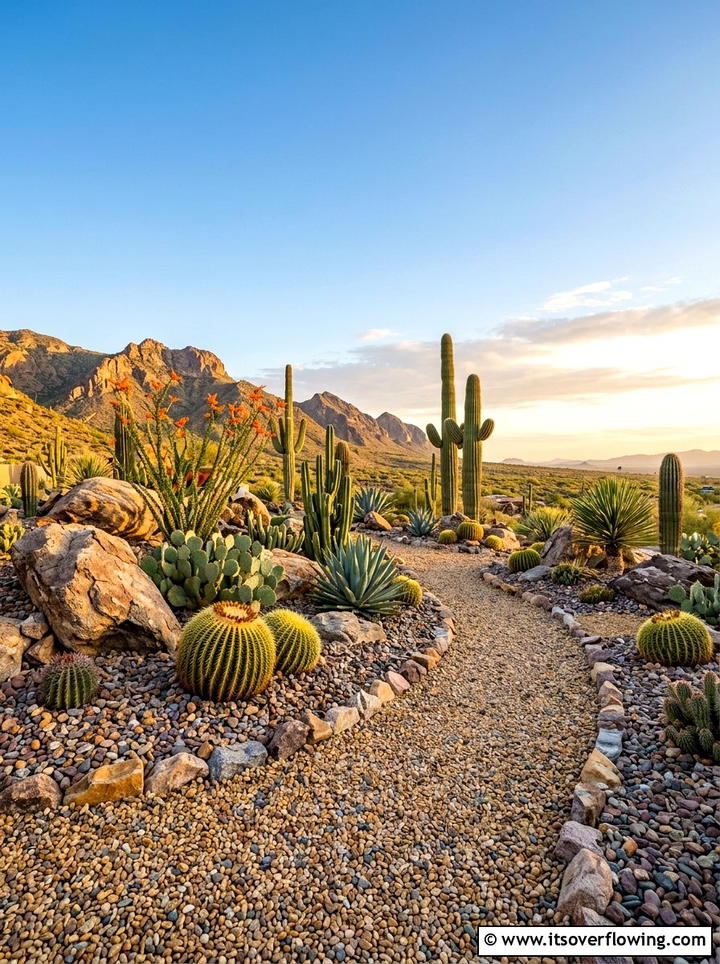
Have you ever noticed how the raw beauty of a cactus rock garden can instantly transform a barren backyard into a living masterpiece? Integrating various cactus species with natural stones creates a low-maintenance landscape that thrives in intense heat. You should focus on layering different sizes of river rocks and jagged boulders to provide a sense of depth and realism. Choose cacti with varying heights, such as tall Saguaro or prickly pear, to create visual interest. This design approach emphasizes the rugged textures of the desert while keeping water usage extremely low. It is a perfect solution for homeowners who want a stunning, sustainable outdoor space that requires minimal effort throughout the year.
2. Modern Desert Fire Pit
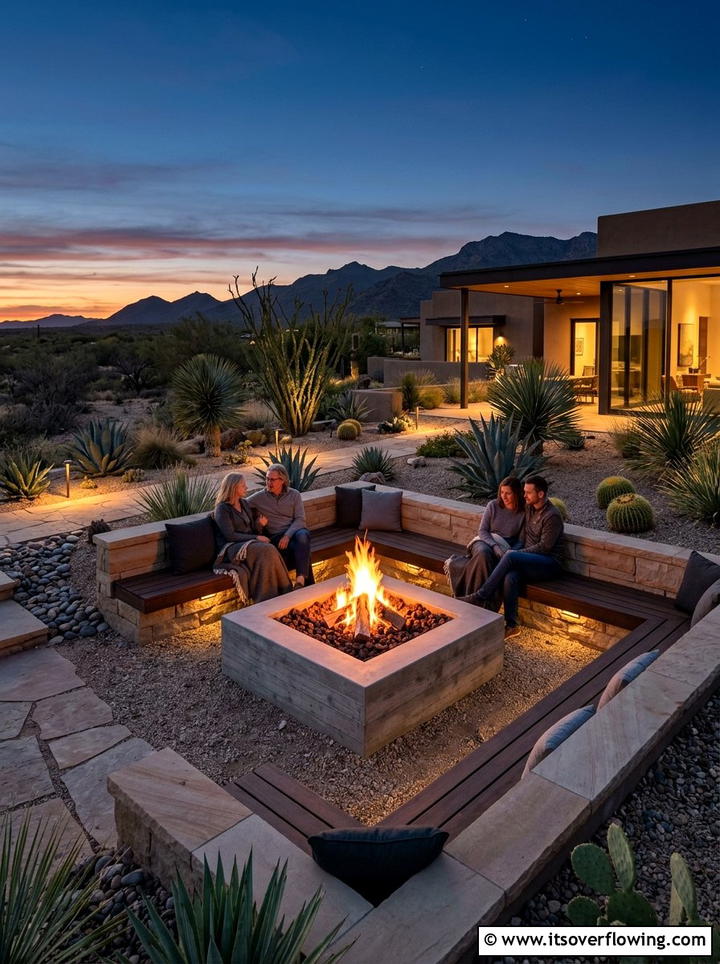
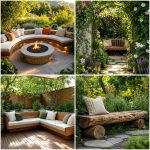
Is there anything more magical than sitting around a modern desert fire pit under a clear, starry night sky? Incorporating a sleek, minimalist fire feature into your garden provides a cozy gathering spot that contrasts beautifully with the stark landscape. You can use materials like smooth concrete or dark metal to achieve a contemporary look that feels both sophisticated and functional. Surround the area with built-in stone seating or weather-resistant chairs to encourage long conversations. This central element acts as a focal point, drawing the eye and grounding the entire backyard design. It adds warmth during chilly desert evenings while serving as a sculptural piece of art during the bright daylight hours.
3. Corten Steel Planters
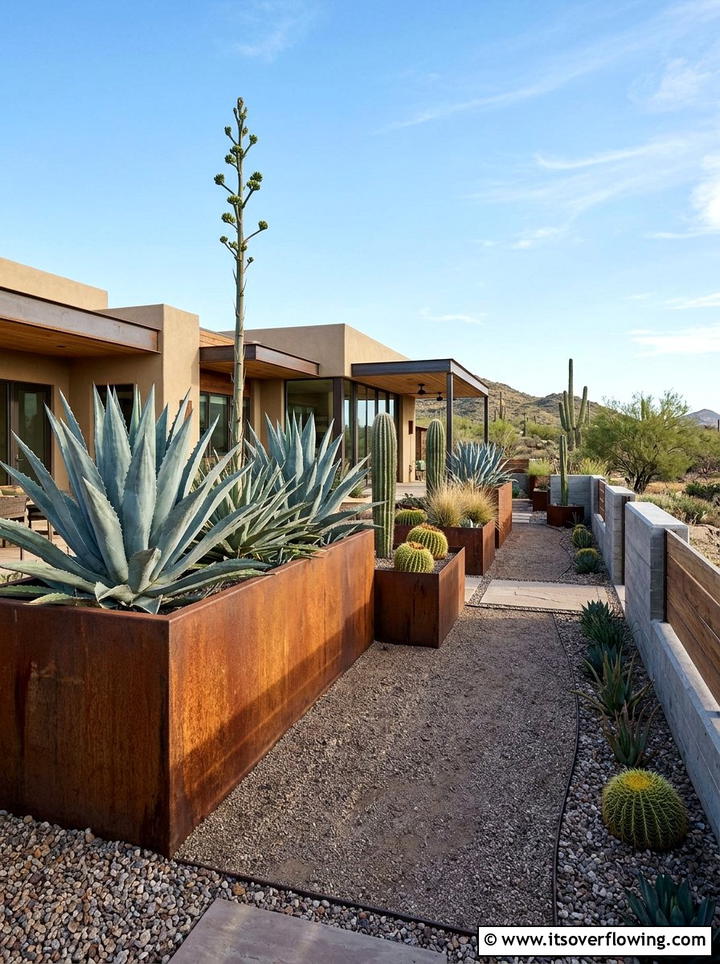
Think about how the rich, rusty orange tones of Corten steel planters perfectly complement the sandy hues of a desert environment. These durable metal containers develop a protective patina over time, making them ideal for harsh outdoor conditions. You can use them to create different levels in your garden, which adds a sense of architectural structure to the space. Fill them with architectural plants like agave or yucca to emphasize their bold, industrial aesthetic. The contrast between the weathered metal and the green plants creates a striking visual balance. Because they are so sturdy, they provide a long-lasting decorative solution that only looks better as it ages in the sun.
4. Desert Water Feature
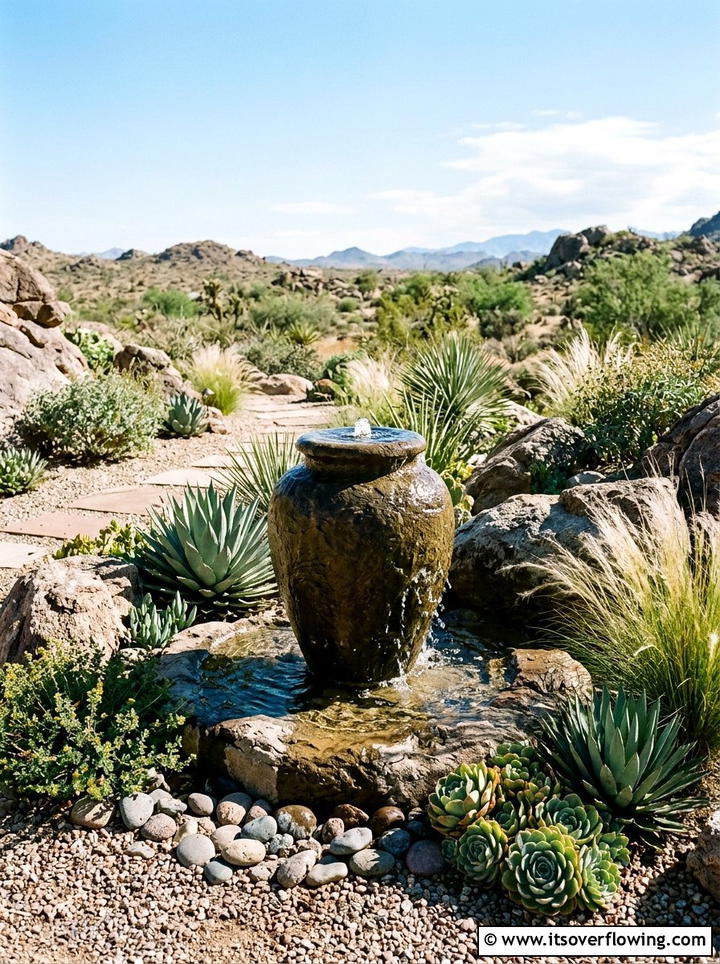
The sound of trickling water in a dry landscape offers a refreshing sensory experience that makes your garden feel like a hidden oasis. A desert water feature should be designed with evaporation in mind, often using recirculating pumps and enclosed basins. Consider a simple stone fountain or a modern bubbling urn that fits seamlessly into your existing rock work. This element not only cools the immediate air but also attracts local birds and wildlife to your yard. Positioning it near a seating area ensures you get the full benefit of its calming influence. It provides a stunning focal point that breaks up the monochromatic tones of a typical desert landscape.
5. Gravel Path Landscaping
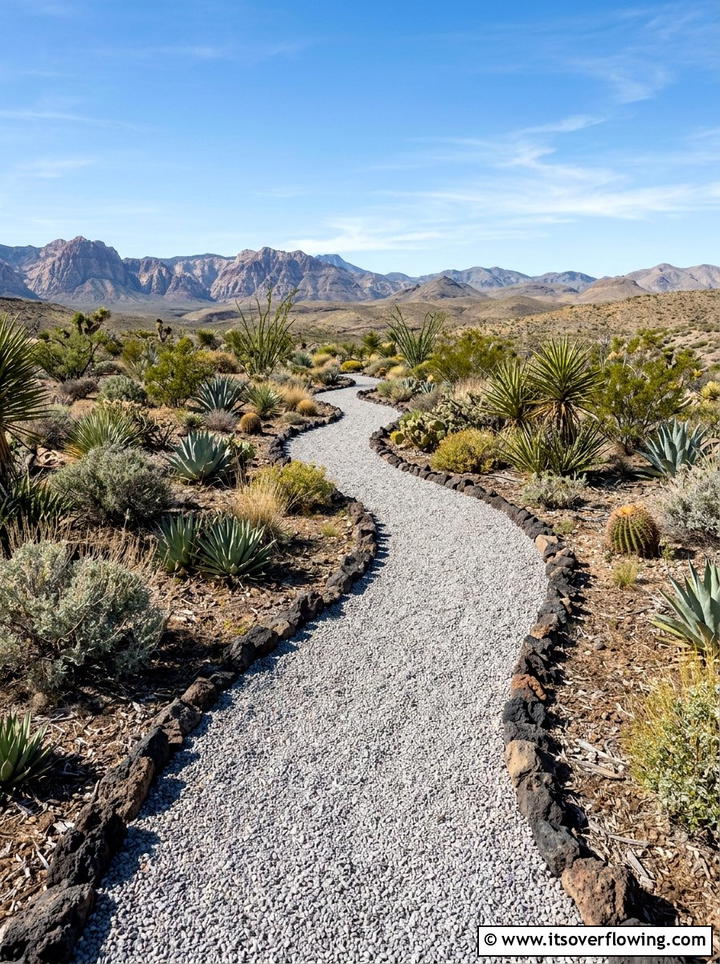
Meandering gravel paths are a classic staple of arid design because they are functional, permeable, and visually appealing. You can use different colors of pea gravel or crushed stone to define various zones within your garden. Incorporate larger flagstones or pavers to create a stable walking surface that prevents the gravel from shifting too much. These paths guide visitors through your outdoor space while highlighting your favorite plant clusters and garden art. The crunch of gravel underfoot adds a pleasant auditory element to your garden walk. Furthermore, using gravel as a ground cover helps to suppress weeds and retain what little moisture is available in the soil below.
6. Xeriscape Succulent Bed
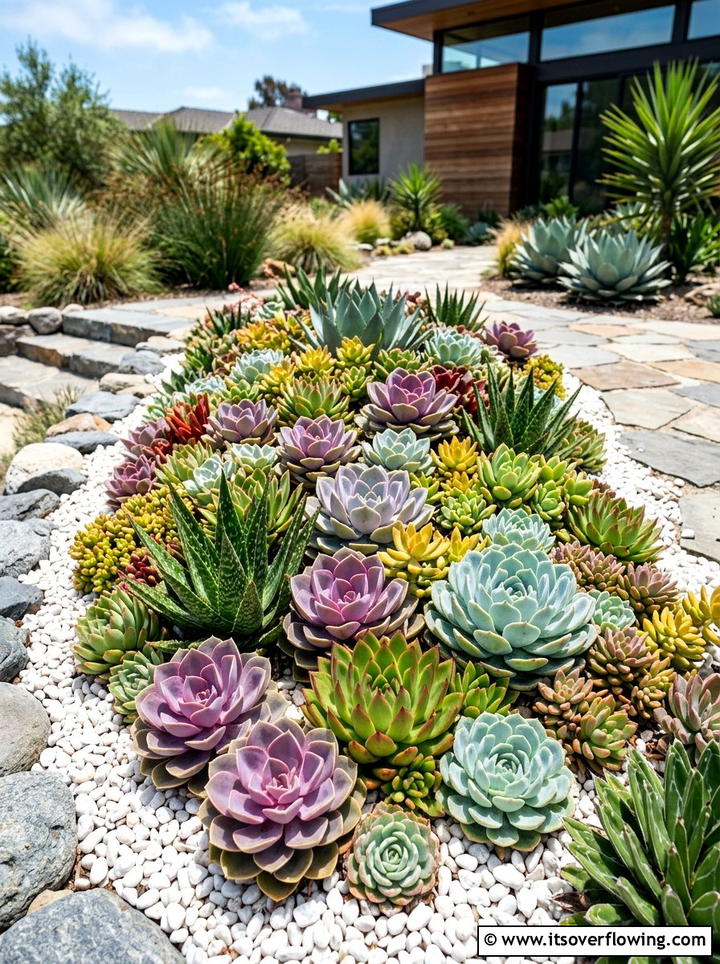
Imagine a vibrant tapestry of colors and shapes created entirely by a carefully planned xeriscape succulent bed. Succulents come in an incredible variety of textures, ranging from soft rosettes to spiky textures, allowing for endless creativity. You can arrange them in clusters to mimic natural growth patterns or in geometric rows for a more modern appearance. Using a mix of echeveria, sedum, and aloe provides a lush look without the need for frequent watering. To enhance the display, use a light-colored top dressing like white pebbles to make the plant colors pop. This type of garden bed is incredibly resilient and serves as an eco-friendly alternative to traditional flower gardens.
7. Southwestern Clay Pots
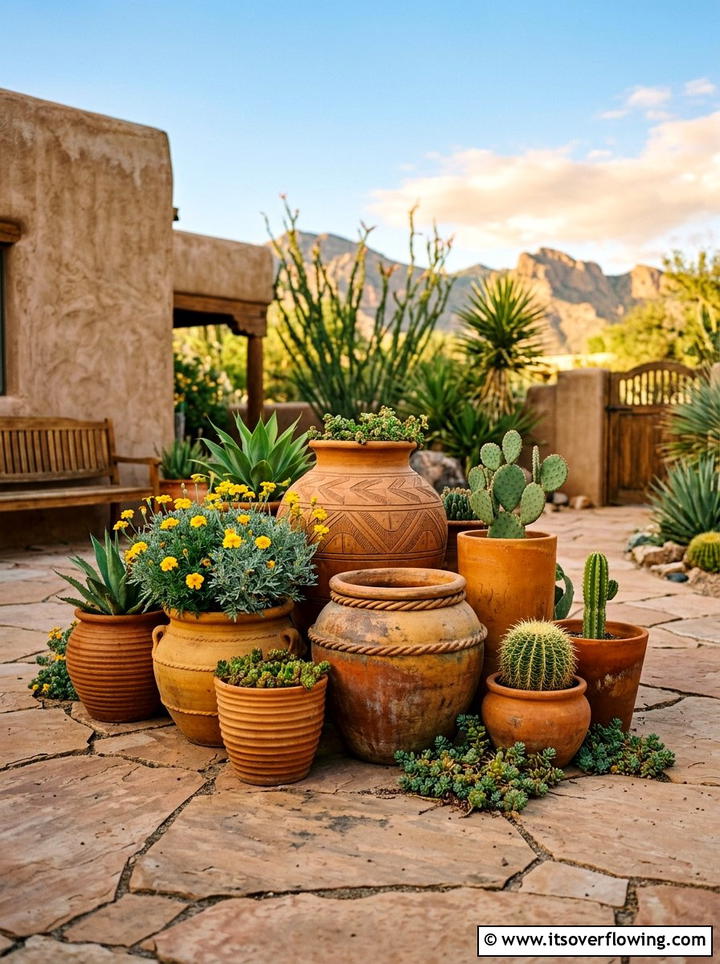
Adding a collection of southwestern clay pots is one of the easiest ways to bring traditional charm and warmth to your desert garden. These terracotta vessels come in various sizes and shapes, allowing you to create interesting groupings on your patio or along walkways. The natural porous material of the clay is actually beneficial for many desert plants as it allows the roots to breathe. You can leave them in their natural orange state or look for hand-painted designs that add a pop of cultural flair. Grouping them in odd numbers creates a more natural and visually pleasing arrangement. They are perfect for housing sensitive plants that may need occasional shade.
8. Outdoor Desert Lighting
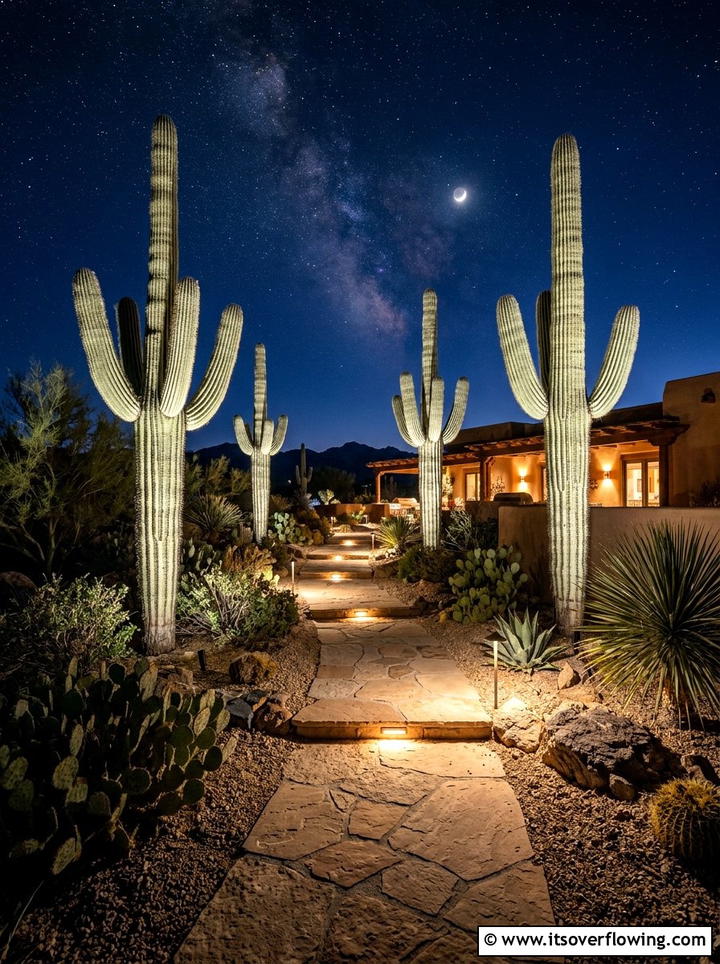
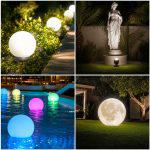
Proper outdoor desert lighting can turn your garden into an enchanting wonderland once the sun goes down. Focus on uplighting architectural plants like tall cacti or dramatic yuccas to create striking silhouettes against the night sky. Path lights with a warm glow help define walkways and ensure safety without overpowering the natural ambiance. You might also consider stringing solar-powered Edison bulbs across a patio area for a festive and inviting feel. Highlighting stone walls or metal sculptures adds depth and prevents the garden from looking flat in the dark. Strategic lighting ensures that you can enjoy the cool desert nights in a space that feels safe and beautifully curated.
9. Shade Sail Patio
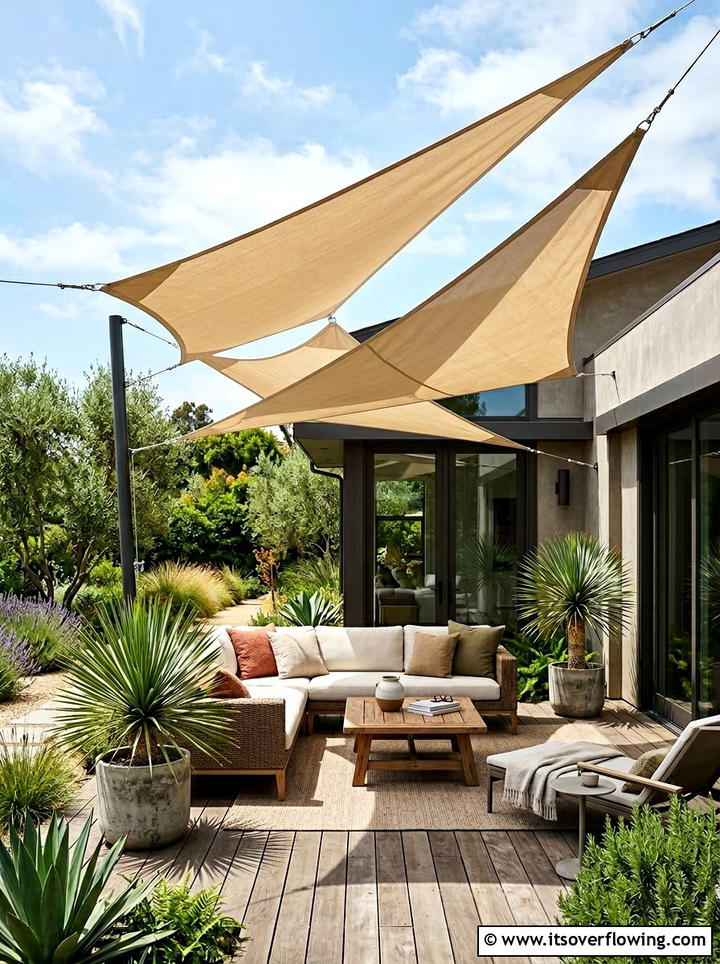
If you want to spend more time outdoors during the day, installing a shade sail patio is a stylish and effective solution. These fabric structures come in various geometric shapes and can be layered to create a contemporary, architectural look. They provide much-needed relief from the intense desert sun while still allowing for air circulation. You can choose neutral tones to blend with the landscape or bold colors to make a design statement. Anchoring them to sturdy poles or the side of your home creates a defined outdoor room. This setup is perfect for dining areas or lounge spots where you want to stay cool and protected from UV rays.
10. Rustic Wooden Pergola
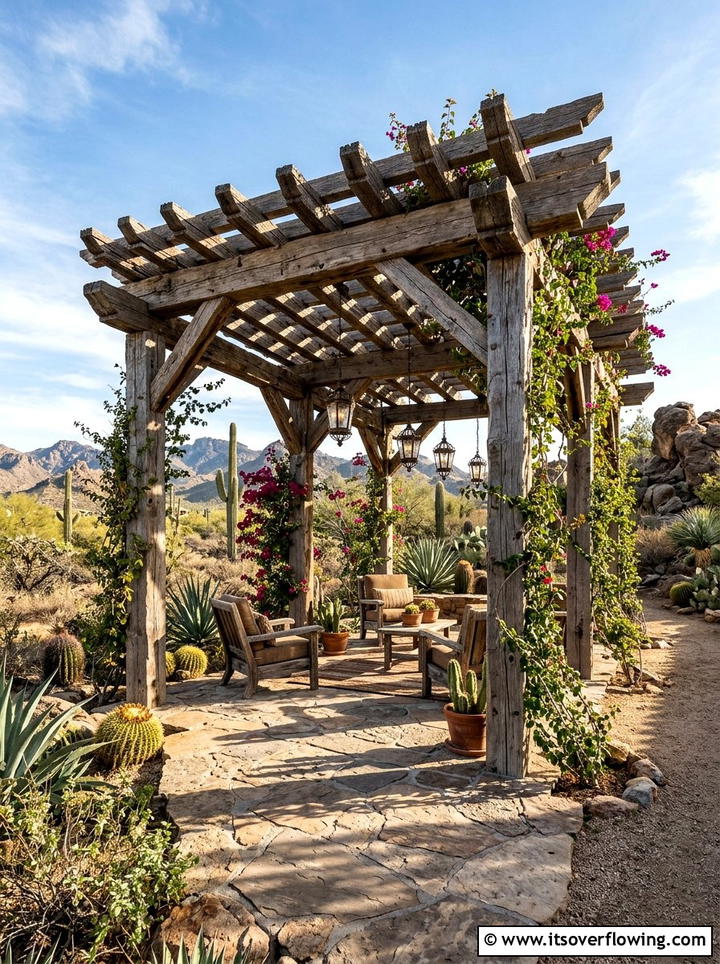
A rustic wooden pergola adds a sense of structure and timeless elegance to any desert backyard. Using weathered or reclaimed wood helps the structure blend in with the natural surroundings and gives it a lived-in feel. You can leave the top open to let in filtered light or cover it with bamboo mats for extra protection. This structure provides a great place to hang lanterns, wind chimes, or even drought-tolerant climbing plants. It defines a specific area for relaxation and helps to bridge the gap between your indoor and outdoor living spaces. The shadows cast by the beams create a dynamic pattern on the ground that changes throughout the day.
11. Native Wildflower Patch
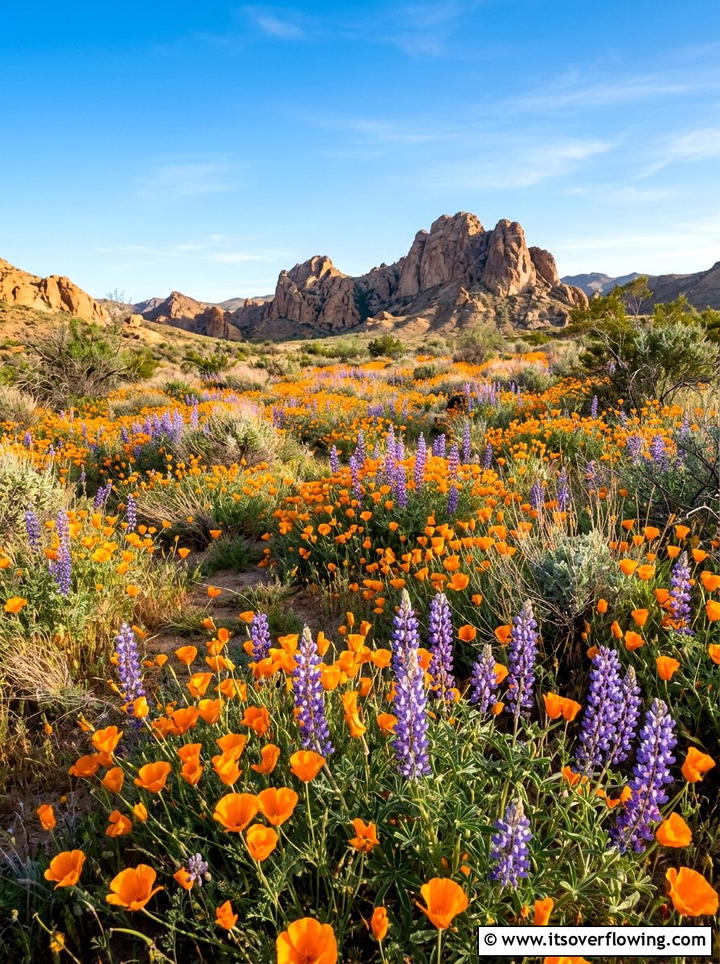
What could be more beautiful than a native wildflower patch that bursts into color after a rare desert rain? Planting seeds that are indigenous to your specific region ensures that the flowers will thrive with very little intervention. These blooms provide essential nectar for local pollinators like butterflies and hummingbirds, making your garden a vital part of the ecosystem. You can dedicate a corner of your yard to this natural look to contrast with more structured landscaping areas. The informal appearance of wildflowers adds a touch of whimsy and softness to the rugged desert environment. It is a low-cost way to introduce seasonal variety and vibrant color to your home.
12. Desert Metal Sculpture
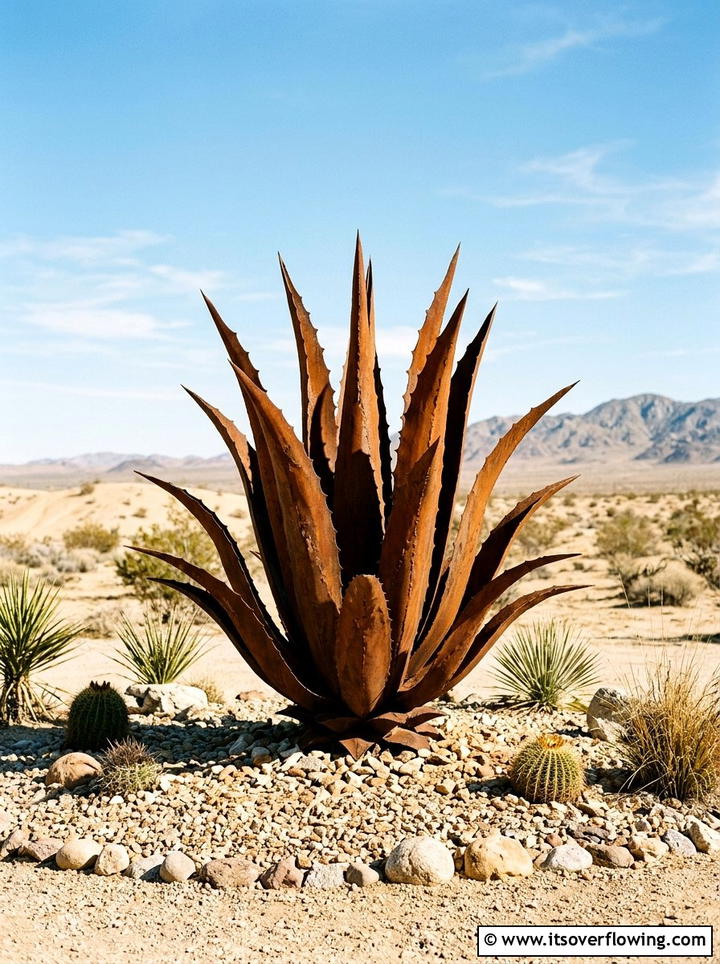
Integrating a desert metal sculpture is a fantastic way to introduce a focal point that requires absolutely no maintenance. Many artists create stunning pieces inspired by local flora and fauna, such as metal agave plants or stylized roadrunners. These sculptures can be placed among real plants to add a sense of height and artistic flair. Over time, the metal may develop a unique patina that reflects the local climate and adds character to the piece. Whether you choose a large-scale installation or several small accents, art helps to personalize your outdoor space. It serves as a conversation starter and remains a beautiful feature even during the harshest drought conditions.
13. Stone Boulder Accents
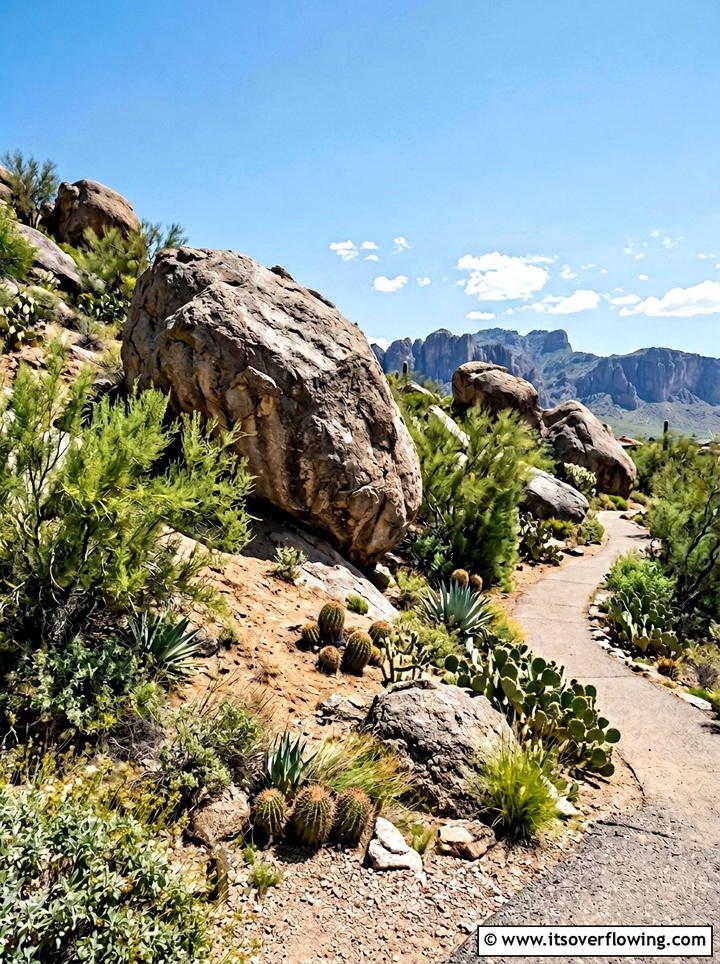
Using large stone boulder accents is a fundamental design principle for creating an authentic and grounded desert landscape. These massive rocks mimic the natural geology of the arid environment and provide a sense of permanence and scale. You should partially bury them to make them look like they have been there for centuries rather than just placed on top. Boulders can be used to anchor corners of garden beds or to create natural-looking retaining walls for sloped areas. Their varied colors and textures add visual interest and break up large expanses of gravel or sand. They are the ultimate low-maintenance decor element that only gets better with time and weathering.
14. Minimalist Concrete Bench
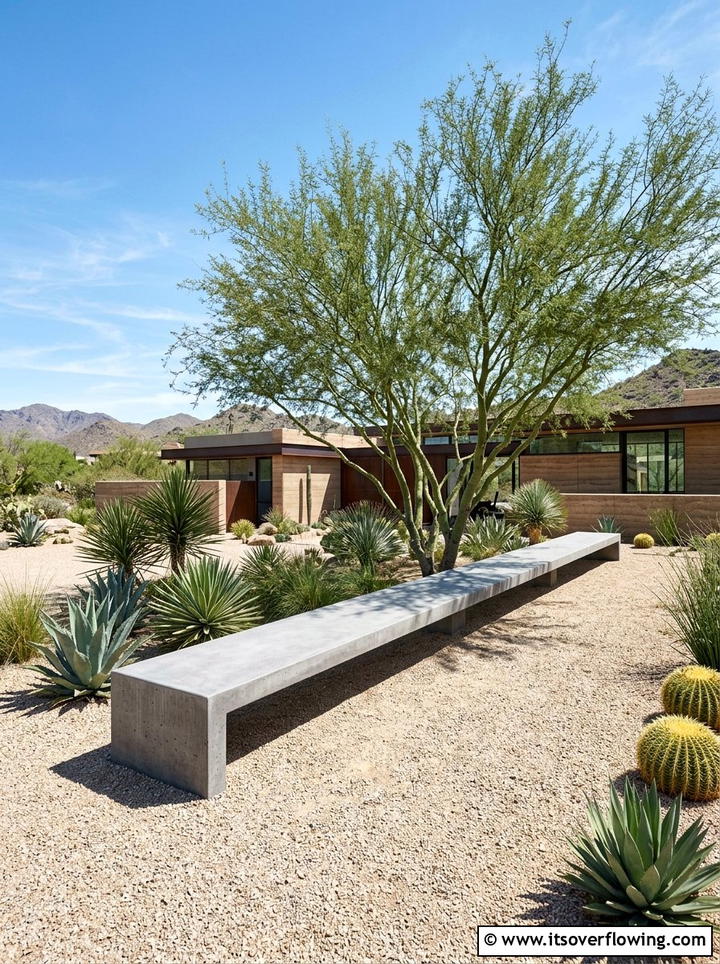
A minimalist concrete bench offers a sleek and durable seating solution that stands up well to the intense desert heat and wind. The clean lines of a concrete furniture piece complement modern architectural styles and provide a cool place to sit. You can soften the look by adding outdoor cushions in earthy tones or keeping it bare for a truly industrial feel. Positioning the bench under a tree or a shade structure ensures it remains a comfortable spot for reflection. Concrete is also a thermal mass, meaning it stays relatively cool in the shade compared to metal or wood. It is a functional piece of art that enhances the garden’s overall sense of calm.
15. Colorful Mosaic Garden Art
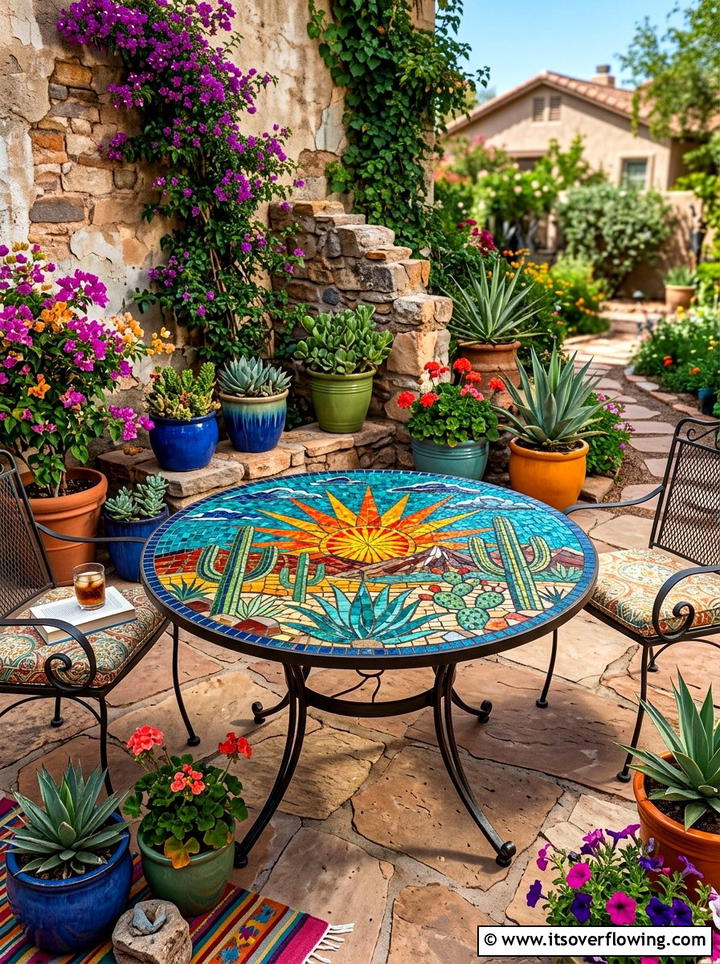
Brightening up a dry landscape is easy when you incorporate colorful mosaic garden art into your design. Mosaics can be used on stepping stones, tabletops, or even as decorative wall panels to introduce vibrant patterns. The shimmering glass or ceramic tiles catch the sunlight and add a playful energy to the space. You can choose designs that feature desert motifs like suns, lizards, or geometric tribal patterns. This type of decor allows you to inject your own personality and favorite colors into the garden. It provides a permanent splash of brightness that does not fade or wilt in the sun, making it a very practical choice for desert homeowners.
16. Hanging Desert Plant Display
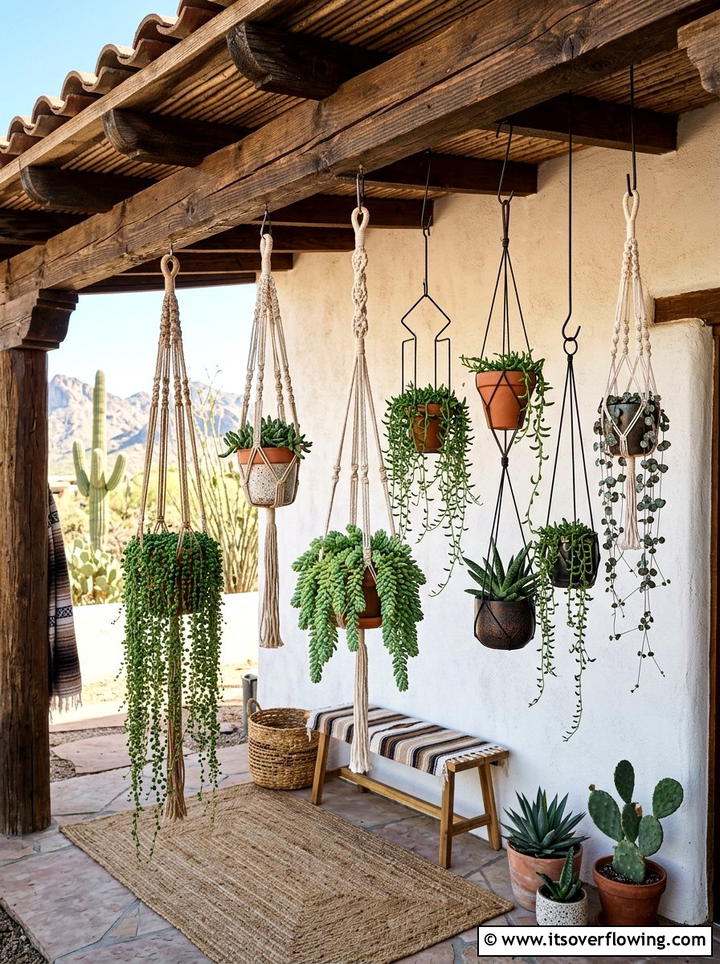
If you are looking to maximize space, a hanging desert plant display can bring greenery to eye level. You can use sturdy hooks and macramé hangers or modern metal frames to hold pots of trailing succulents like string of pearls. These displays work beautifully on a porch or under a pergola where they are protected from the harshest afternoon sun. They add a vertical dimension to your garden, making the space feel more lush and layered. Choosing pots that match your overall theme, such as terracotta or sleek black ceramic, helps unify the look. It is a creative way to showcase smaller, delicate plants that might get lost in a large ground-level garden.
17. Dry Creek Bed Design
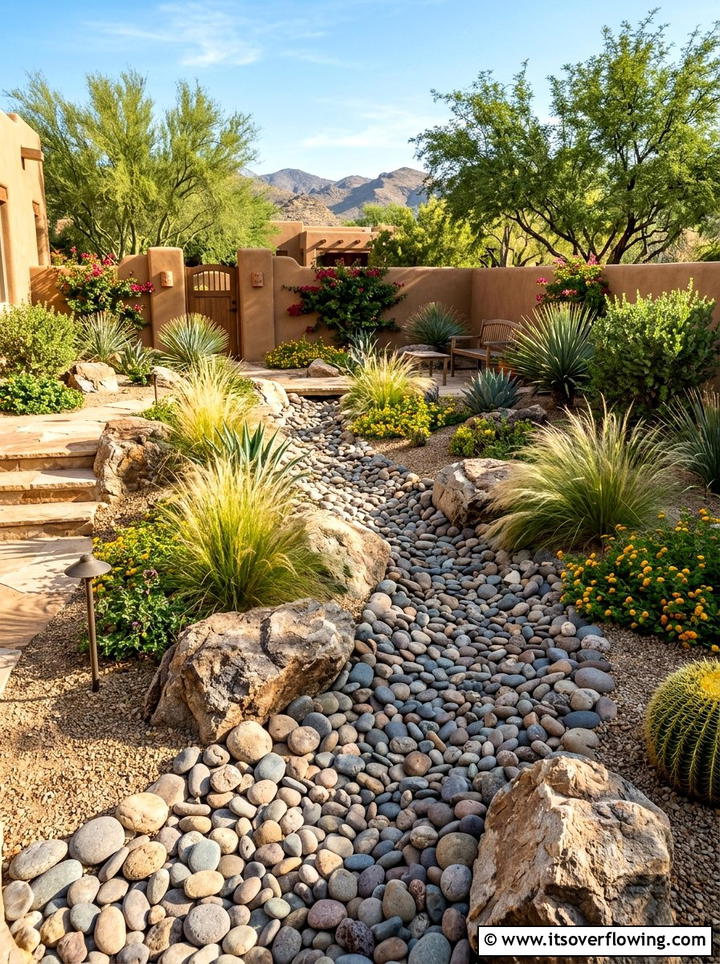
A dry creek bed design is a clever way to handle occasional heavy rainfall while adding a beautiful landscape feature to your yard. By using a mix of smooth river rocks and larger stones, you can create the illusion of a natural waterway winding through your garden. This feature helps direct runoff away from your home’s foundation during monsoon season, preventing erosion and flooding. Even when it is dry, the variation in rock sizes and colors adds a dynamic visual element to the terrain. You can plant ornamental grasses or small shrubs along the “banks” to further enhance the realistic look. It is a functional and artistic landscaping solution.
18. Vertical Succulent Wall
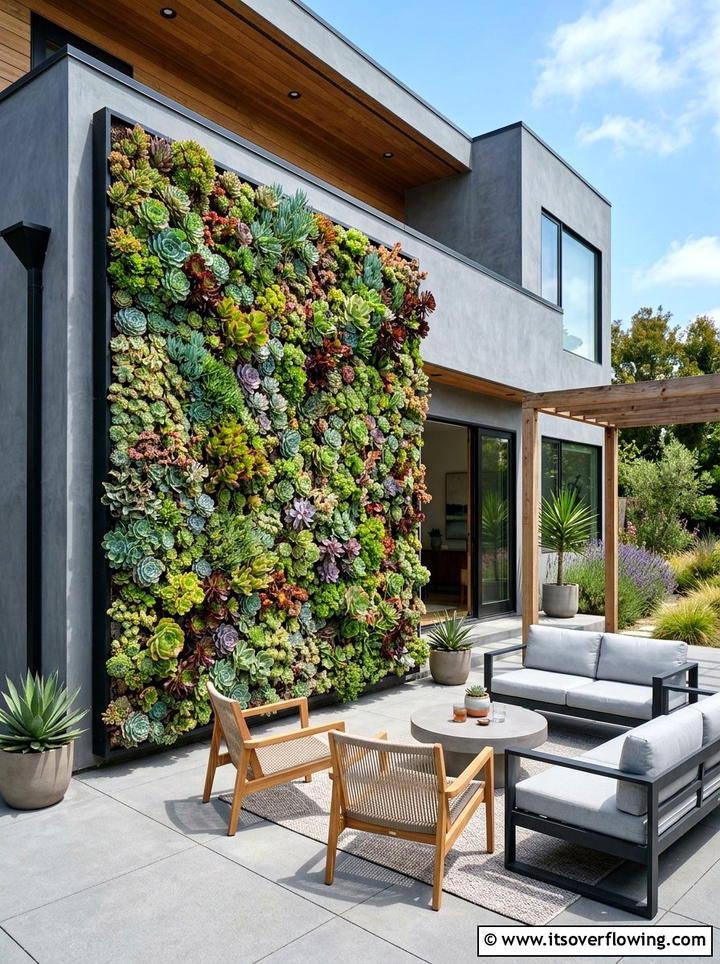
Transforming a bare exterior wall into a vertical succulent wall is a brilliant way to add life to a small desert space. These living walls use specialized modular panels or pockets to hold a variety of small succulents in a vertical arrangement. This design creates a stunning green focal point that saves ground space and acts as a natural insulator for the wall. Because succulents require very little water, maintenance is relatively simple compared to other types of vertical gardens. You can play with different colors and textures to create a living painting that changes as the plants grow. It is a modern and sophisticated way to bring more nature into your outdoor area.
19. Desert Bistro Set
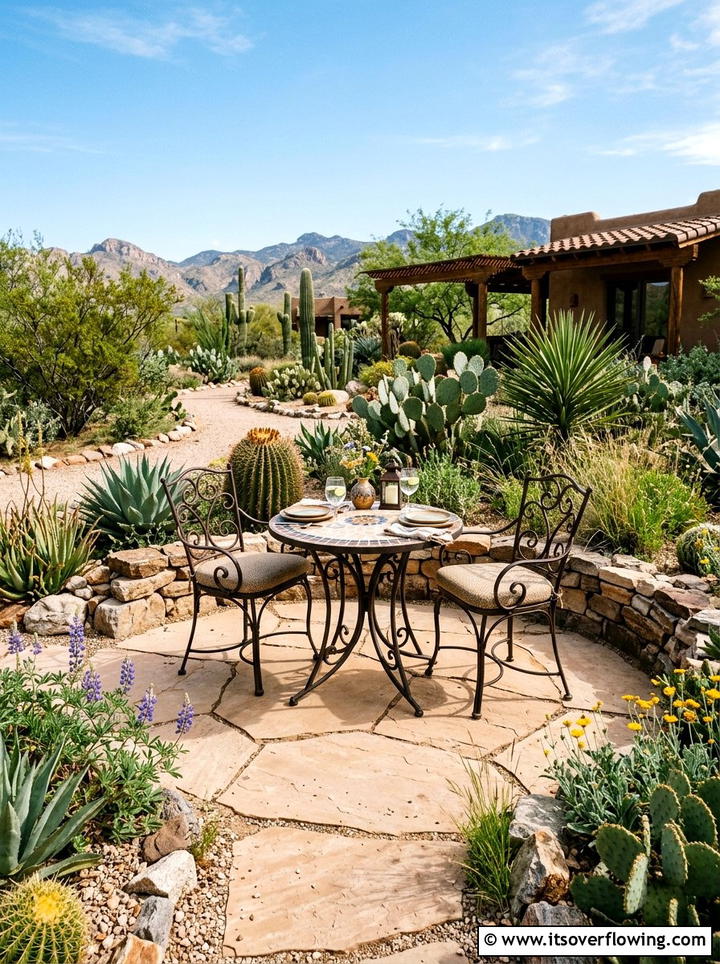
Creating a small nook with a desert bistro set provides the perfect spot for enjoying a morning coffee or a sunset drink. Look for furniture made from weather-resistant materials like wrought iron or powder-coated aluminum that can withstand the sun. A simple table and two chairs in a dark or neutral finish will blend seamlessly with the surrounding landscape. You can place the set on a small patch of flagstone or a gravel pad to define the area as a dedicated zone. Adding a small potted plant on the table makes the space feel more inviting and complete. It encourages you to slow down and appreciate the quiet beauty of your desert garden.
20. Terracotta Garden Path
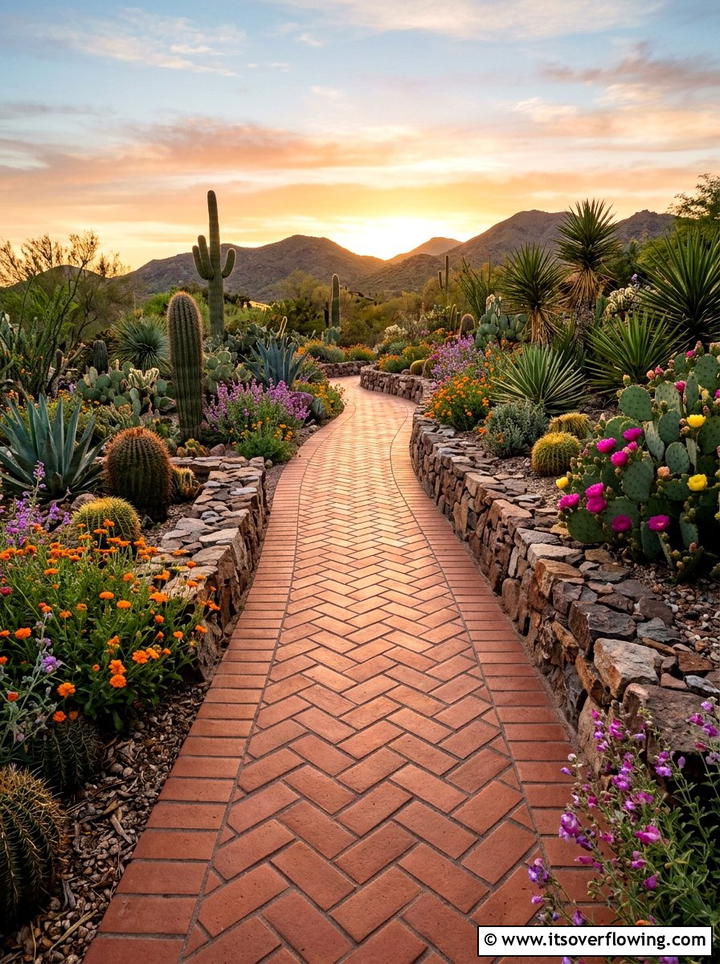
A terracotta garden path offers a warm and inviting walkway that feels deeply connected to traditional southwestern aesthetics. The rich reddish-brown tiles provide a beautiful contrast to green cacti and grey-toned gravel. You can lay the tiles in a classic herringbone pattern or a simple grid to suit your personal style preference. These paths are excellent for creating a clean and mud-free walking surface through your garden beds. The tiles absorb the sun’s heat during the day and can stay warm into the evening, which is pleasant for barefoot walking. Using terracotta creates a cohesive look when paired with clay pots and other earthy materials throughout the outdoor space.
21. Arid Climate Bird Bath
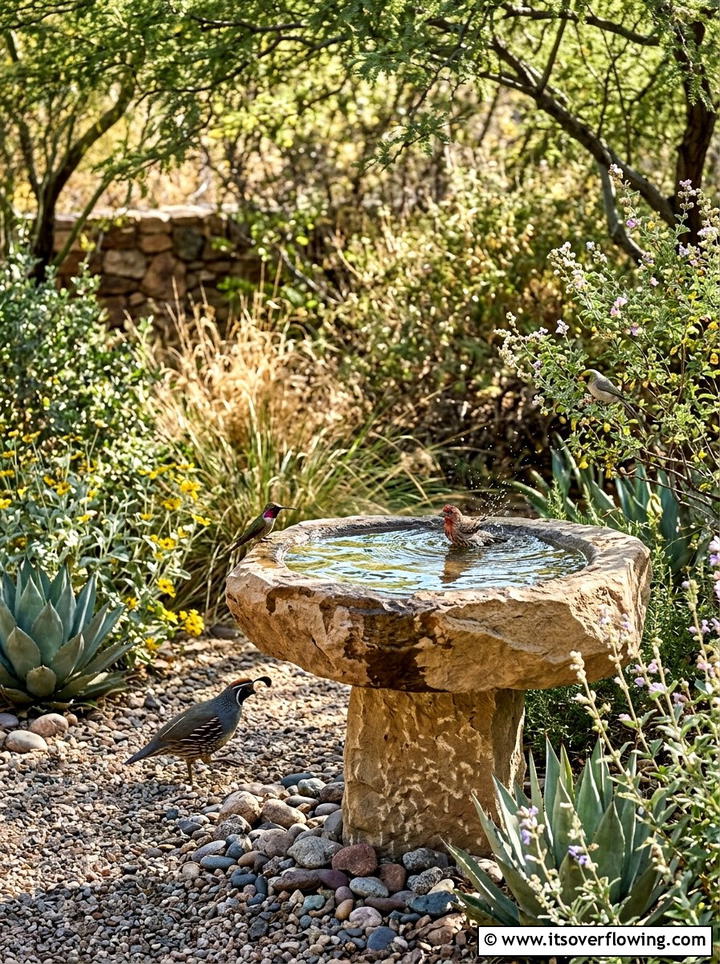
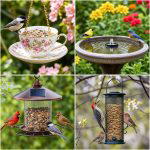
Introducing an arid climate bird bath is a wonderful way to support local wildlife while adding a decorative element to your yard. In a dry environment, water is a precious resource, and a shallow basin provides a safe place for birds to drink and bathe. Look for a bird bath made from stone or heavy ceramic that won’t tip over in strong desert winds. Placing it in a partially shaded spot helps keep the water cool and reduces the rate of evaporation. This small addition brings movement and life to your garden as you watch different species visit throughout the day. It serves as a peaceful and functional centerpiece for your landscape.
22. Mid Century Modern Desert Garden
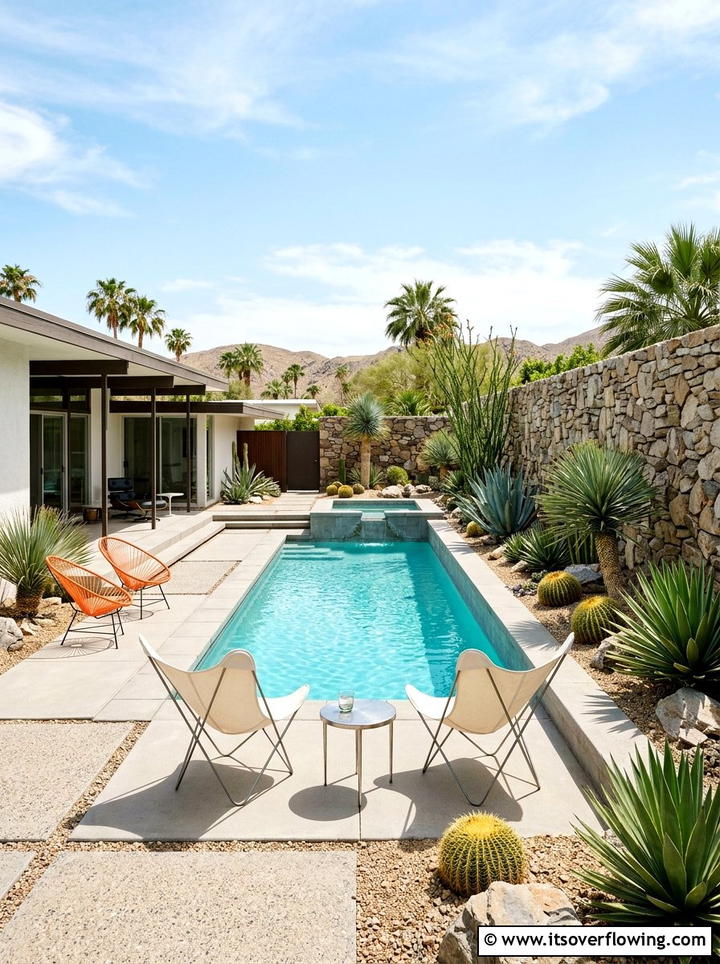
The mid century modern desert garden style focuses on clean lines, geometric shapes, and a seamless connection between the indoors and outdoors. You can achieve this look by using stacked stone walls, rectangular planters, and iconic furniture designs. This aesthetic celebrates the natural landscape by using minimalist plantings that highlight the unique form of each individual plant. Use a limited color palette of whites, greys, and blacks to let the natural greens and browns of the desert stand out. Large glass windows in the home help to frame the garden like a piece of art. It is a timeless and sophisticated approach that remains incredibly popular in desert regions for its simplicity.
23. Agave Focal Point
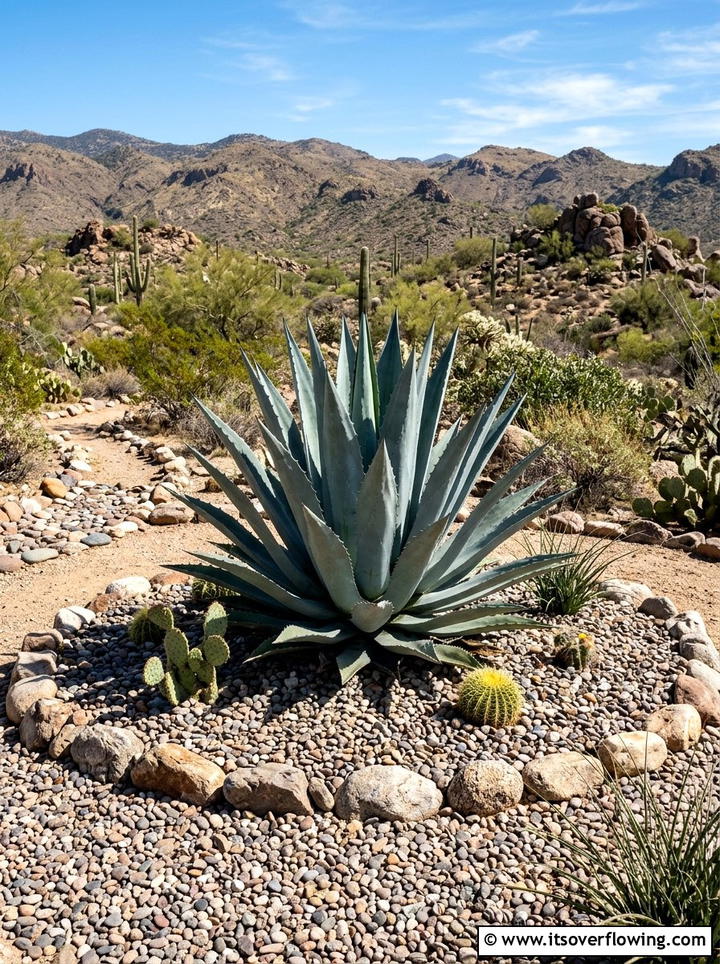
Planting a massive agave as a focal point is a bold move that instantly commands attention in any desert garden design. Agaves are known for their dramatic, architectural shapes and their ability to thrive with almost no attention once they are established. You can choose from many varieties, such as the blue agave or the variegated century plant, depending on the colors you want to emphasize. Surround the base with contrasting rocks or low-growing succulents to make the main plant stand out even more. Because of its large size and sharp spikes, it acts as a natural sculpture that defines the character of your entire yard. It is a resilient and high-impact choice.
24. Painted Adobe Walls
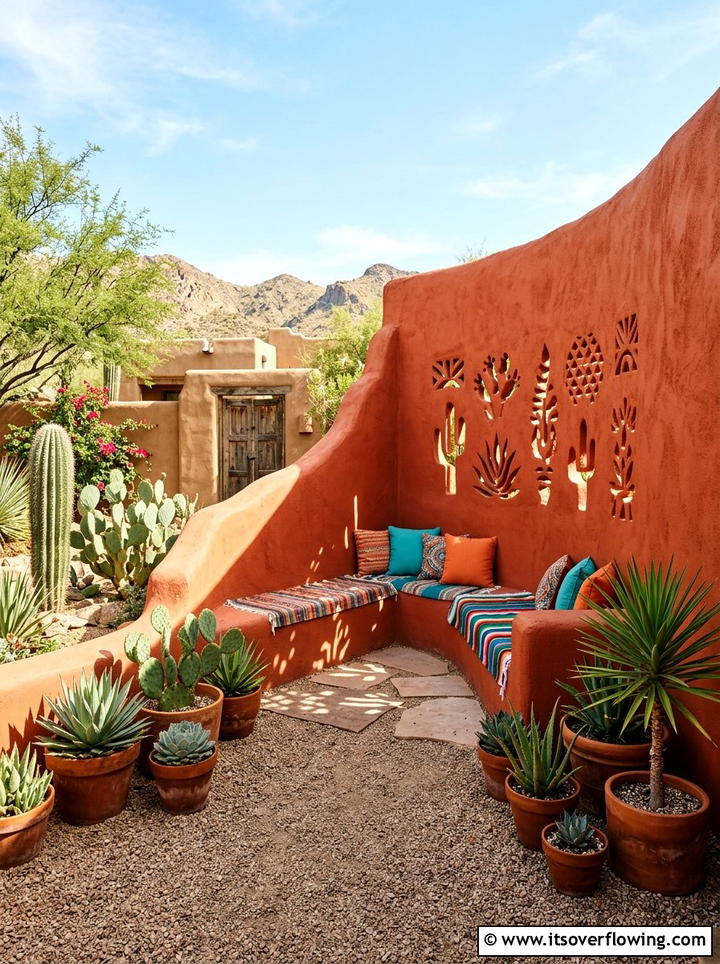
Adding painted adobe walls to your garden provides a sense of privacy and a beautiful backdrop for your desert plants. Traditionally made from earth and straw, adobe structures have a soft, organic texture that feels very authentic to arid regions. You can paint these walls in classic desert tones like terracotta, ochre, or even a bold turquoise for a more vibrant look. The thick walls offer excellent temperature regulation, keeping the garden area cooler during the hot afternoon hours. They also serve as a perfect surface for displaying wall art or hanging lanterns. This architectural feature creates a sense of enclosure and makes your garden feel like a private desert sanctuary.
25. Desert Rock Mulch
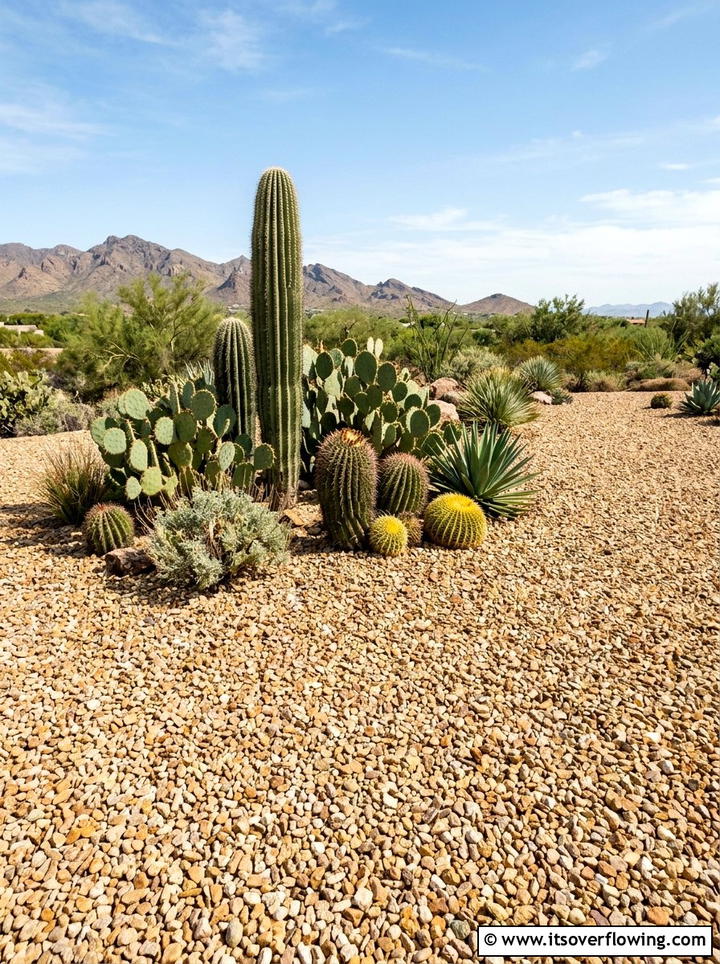
Using desert rock mulch is the ultimate way to finish your garden beds while providing essential benefits to your plants and soil. Unlike wood mulch, stone does not blow away in the wind or decompose over time, making it a permanent solution. You can choose from a wide variety of colors and sizes, from small pebbles to larger decorative stones, to match your home’s exterior. Rock mulch helps to regulate soil temperature and prevents the sun from baking the ground and killing beneficial organisms. It also creates a clean, polished look that ties all the different elements of your garden together. This simple choice is the backbone of a professional and successful desert landscape.
Conclusion:
Designing a desert garden is an opportunity to embrace the unique challenges and beauty of an arid climate through creative decor. By focusing on sustainable practices like xeriscaping and hardscaping, you can create an outdoor space that is both environmentally responsible and visually stunning. The twenty-five ideas discussed here provide a comprehensive roadmap for anyone looking to elevate their desert landscape, from functional seating to artistic focal points. Each element works together to build a cohesive environment that celebrates textures, resilience, and the natural light of the sun. Ultimately, a well-decorated desert garden becomes a peaceful retreat where you can connect with nature and enjoy the outdoors year-round.

Related posts:
 25 Garden Decor Ideas for Cottage Gardens With Cozy Charm
 25 Garden Decor Ideas for Large Gardens With Grand Impact
 25 Garden Decor Ideas for Modern Gardens With Sleek Style
 25 Garden Decor Ideas for Pollinator Gardens That Buzz
 25 Garden Decor Ideas for Rustic Gardens With Natural Charm
 25 Garden Decor Ideas for Small Gardens That Feel Spacious
 25 Garden Decor Ideas for Tropical Gardens With Island Vibes
 25 Garden Decor Ideas for Zen Gardens to Create Calm
 25 garden decor ideas with modern accents for chic spaces
 25 Garden Decor Ideas With Stone Accents for a Chic Yard
 25 Garden Decor Ideas With Trellis Backdrops for Chic Style
 25 Garden Decor Ideas With Winter Decor for Cozy Style