
Transforming your outdoor space into a functional and fragrant sanctuary begins with integrating a herb garden into your backyard layout. These versatile plants offer culinary delights, medicinal benefits, and a wonderful sensory experience that enhances any landscape. Whether you have a sprawling lawn or a compact urban patio, there is a perfect way to grow fresh rosemary, mint, and basil just steps from your kitchen door. Growing your own herbs is not only rewarding for home cooks but also adds visual texture and lush greenery to your garden design. This guide explores creative ways to blend herbal beauty with practical gardening techniques to create a stunning backyard retreat that feels both productive and incredibly peaceful.
1. Raised Bed Herb Garden
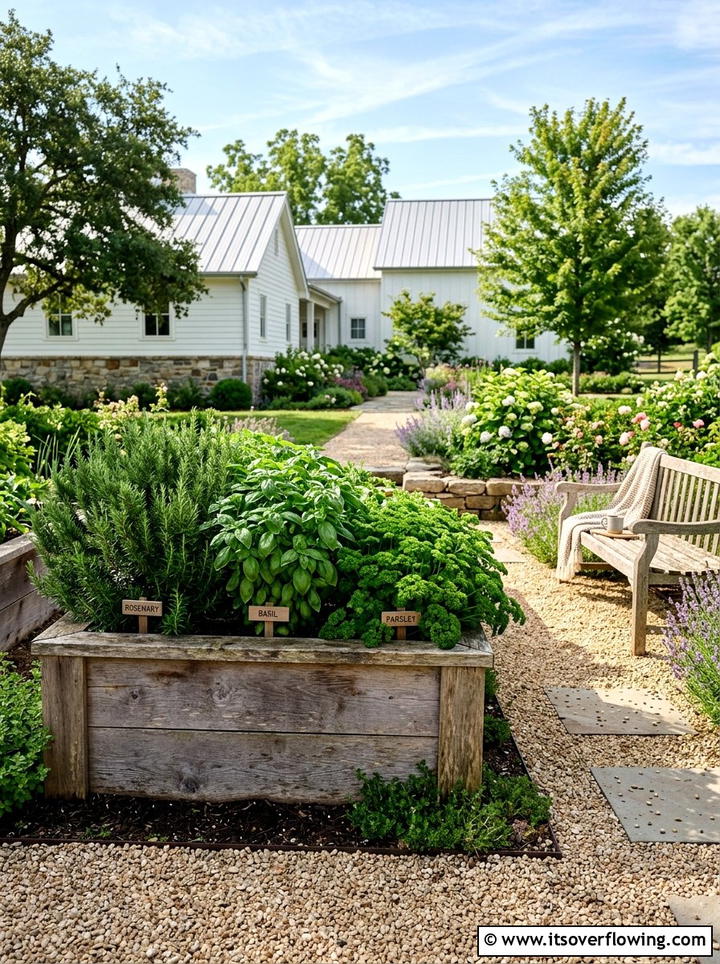
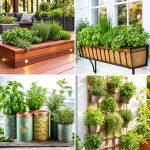
Building a raised bed for your herbs offers many practical advantages for the home gardener. These structures provide excellent drainage and allow you to control the soil quality precisely for sensitive plants like lavender or sage. You can use cedar wood or recycled plastic to create a clean look that fits your aesthetic perfectly. Elevating the plants also saves your back from unnecessary bending during harvest time throughout the growing season. This design keeps the herbs separated from grass or weeds, making maintenance much simpler for busy homeowners. A well-placed raised bed becomes a central focal point that brings organization and style to your outdoor living space while providing fresh flavors.
2. Vertical Herb Wall
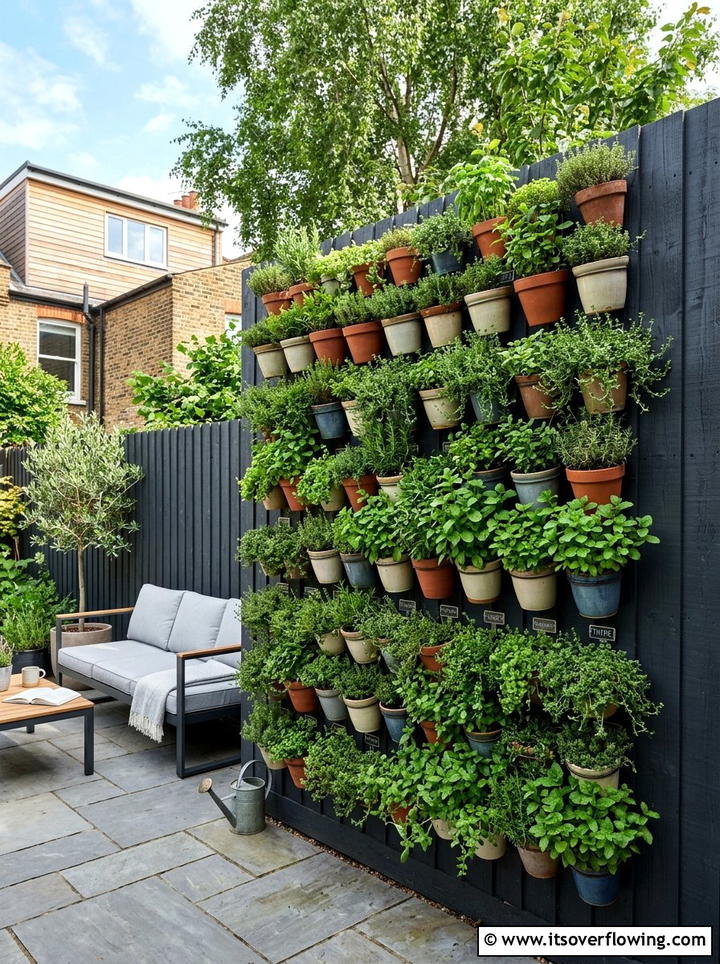
Utilizing vertical space is a brilliant solution for small backyards or narrow side yards. A vertical herb wall allows you to grow a massive variety of greens without taking up valuable floor space on your deck or patio. You can use hanging pockets, wall-mounted pots, or a custom-built trellis system to secure your favorite plants. This approach creates a lush living wallpaper that adds vibrant color and texture to plain fences or exterior walls. It is particularly effective for trailing herbs like thyme or creeping rosemary, which spill over the edges beautifully. A vertical garden also improves air circulation around the foliage, which helps prevent pests and diseases while making watering easy.
3. Culinary Herb Patio
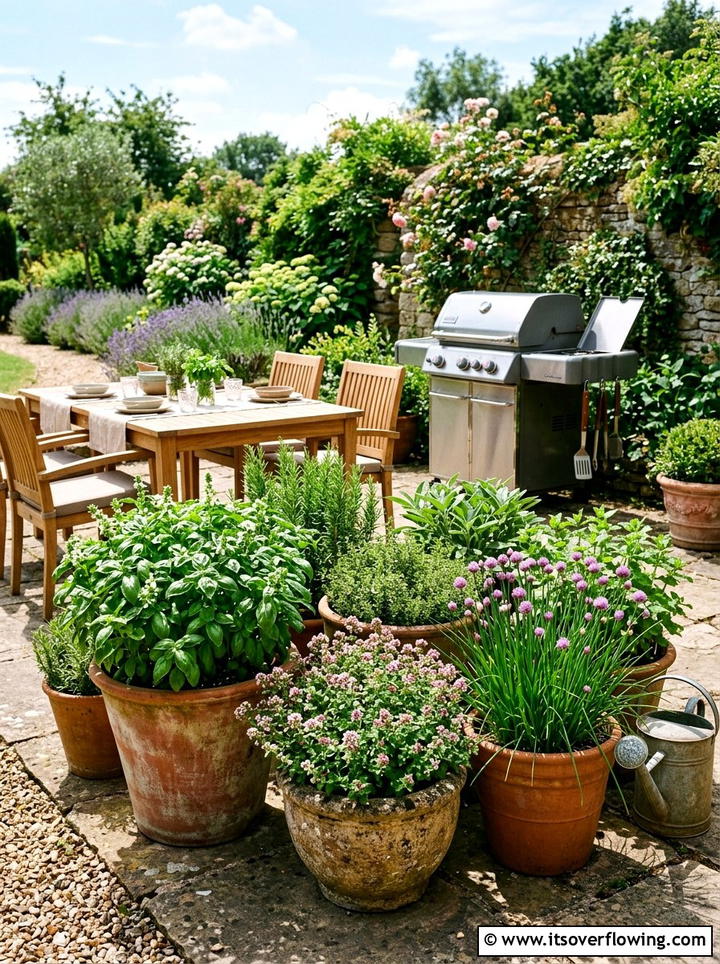
Designing a dedicated patio space for culinary herbs makes harvesting incredibly convenient for the home chef. You can arrange a series of large terracotta pots or modern stone planters around your outdoor dining area for easy access. This setup creates a fragrant atmosphere where guests can enjoy the scents of fresh basil and oregano while you grill. It also allows you to move the plants around to catch the best sunlight throughout the day. Using a mix of different pot sizes adds visual interest and depth to your patio corners. This functional arrangement ensures that your most-used ingredients are always within arm’s reach during your summer dinner parties.
4. Kitchen Garden Walkway
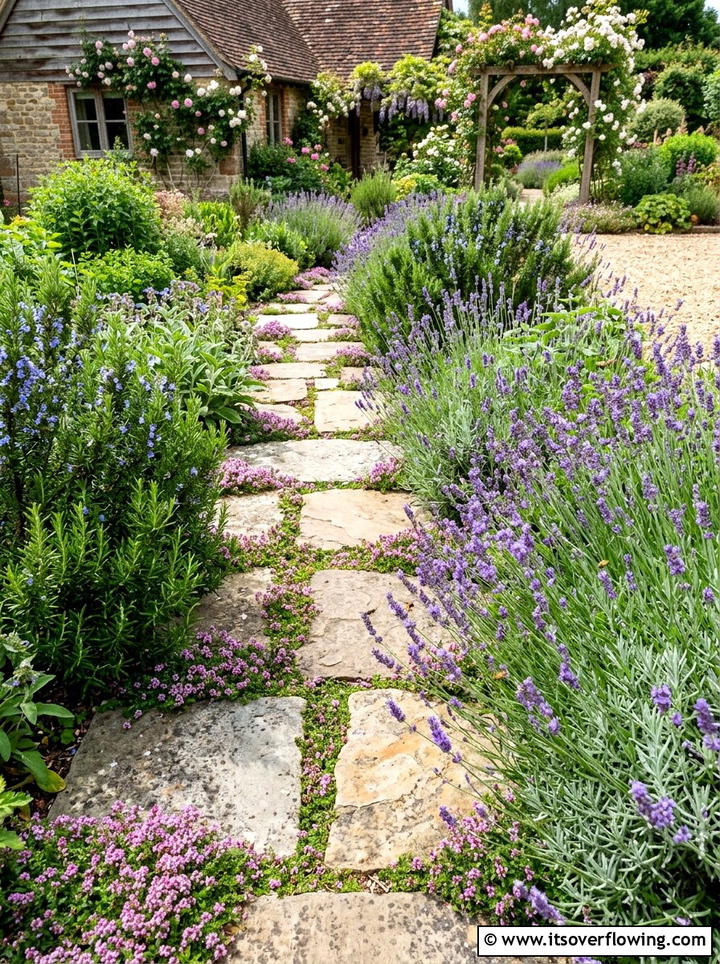
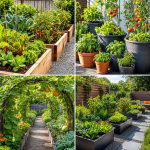
Creating a walkway lined with fragrant herbs turns a simple path into a delightful sensory journey. You can plant low-growing varieties like creeping thyme or chamomile between stepping stones to release their scent when stepped upon. Taller herbs like rosemary or lavender can border the path to create a soft, swaying hedge that guides guests through your backyard. This design integrates the herb garden into the natural flow of your landscape rather than keeping it tucked away. It works beautifully in both formal and cottage-style gardens by providing structure and softness. A herb-lined path is a practical way to maximize space while adding significant charm to your overall layout.
5. Herb Spiral Planter
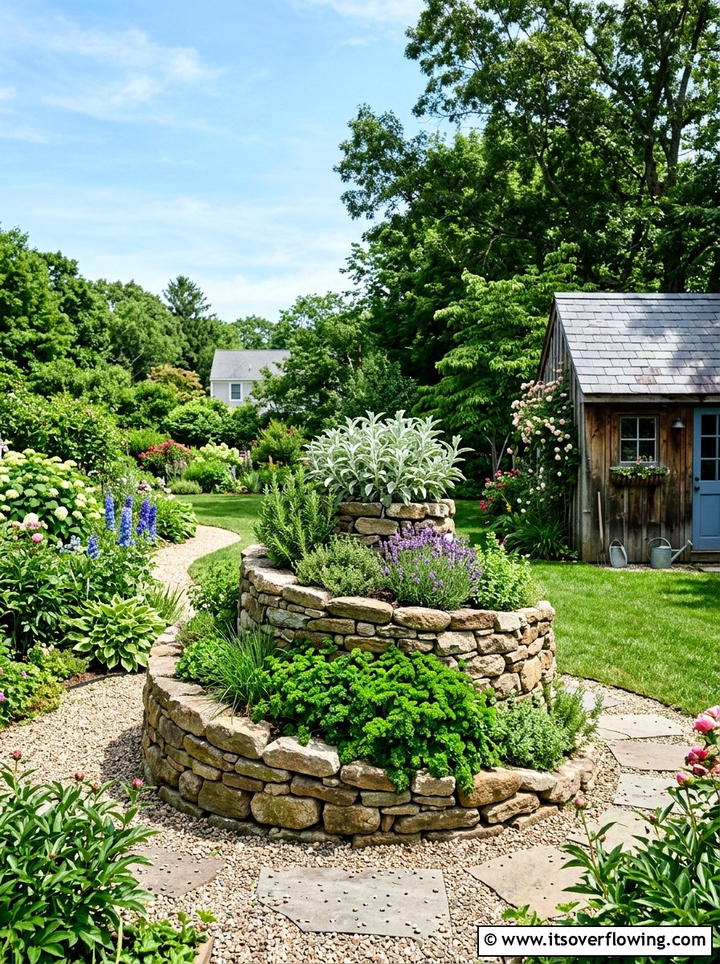
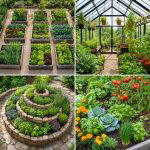
The herb spiral is a classic permaculture design that packs a lot of growing power into a very small footprint. By building a spiraling mound of stones or bricks, you create multiple microclimates within a single structure. The top of the spiral stays dry and sunny, which is perfect for Mediterranean herbs like oregano and rosemary. As the path winds downward, the soil stays moisture-rich and cooler, making it ideal for mint, parsley, and chives. This vertical approach is not only highly efficient but also serves as a stunning sculptural element in any backyard. It is a smart way to grow a diverse range of herbs together.
6. Pallet Herb Display
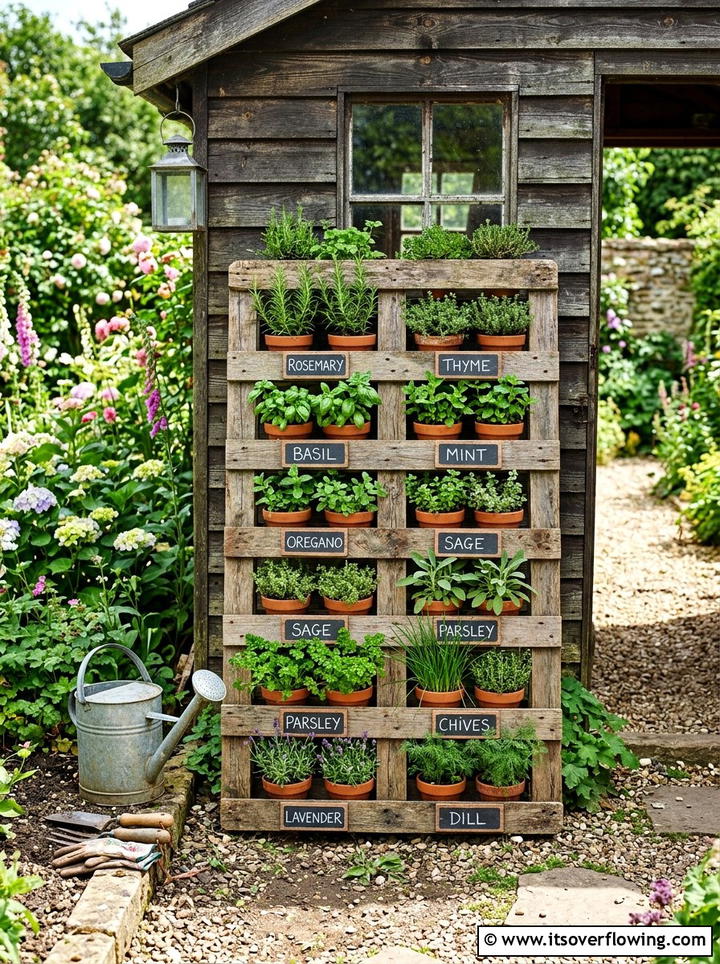
Upcycling a wooden pallet into a herb display is a budget-friendly and stylish way to organize your garden. You can lean the pallet against a fence or mount it directly to a wall to create rows of planting pockets. This rustic look fits perfectly with farmhouse or bohemian backyard themes and provides a great backdrop for green foliage. Painting the pallet in a bold color can make the herbs pop, while a natural stain keeps things looking organic. It is a fantastic project for DIY enthusiasts who want to maximize their growing area without spending much money. Each slat can house a different herb variety for easy identification.
7. Potted Herb Terrace
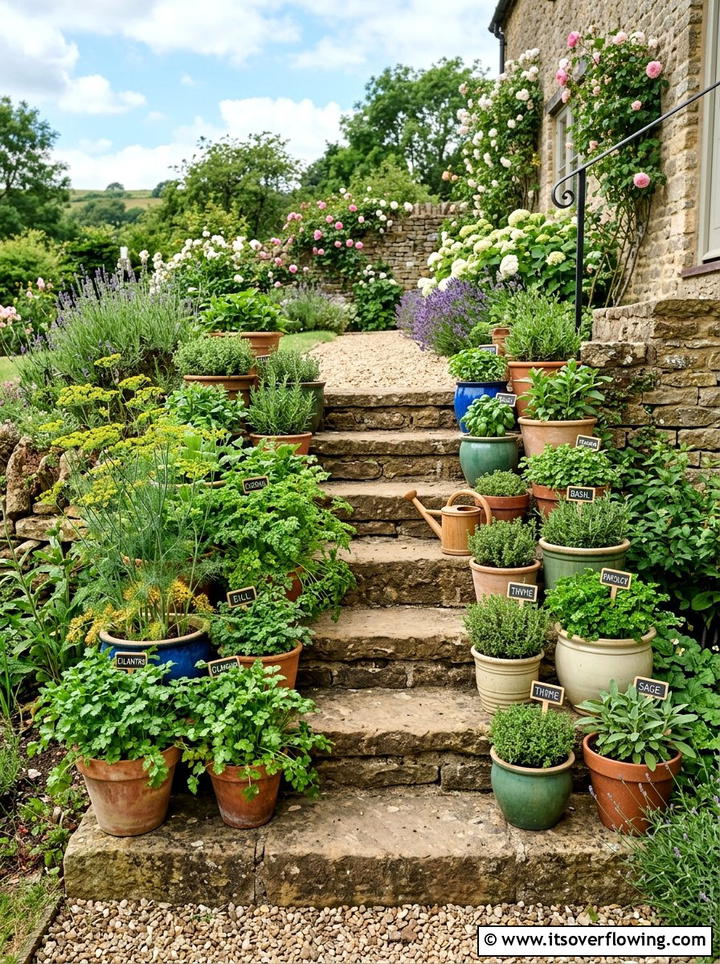
Arranging herbs on a multi-level terrace or a set of outdoor stairs creates a beautiful cascading effect. Using a variety of ceramic, metal, and clay pots adds an eclectic feel to your outdoor steps or retaining walls. This method is perfect for gardeners who want to keep different herb varieties separate to prevent aggressive plants like mint from taking over. You can easily swap out seasonal herbs or move pots to a sheltered spot during the winter months. A terraced herb display maximizes verticality and creates a lush, tiered look that draws the eye upward. It is an adaptable solution for sloped backyards or small porch areas.
8. Window Box Herbs
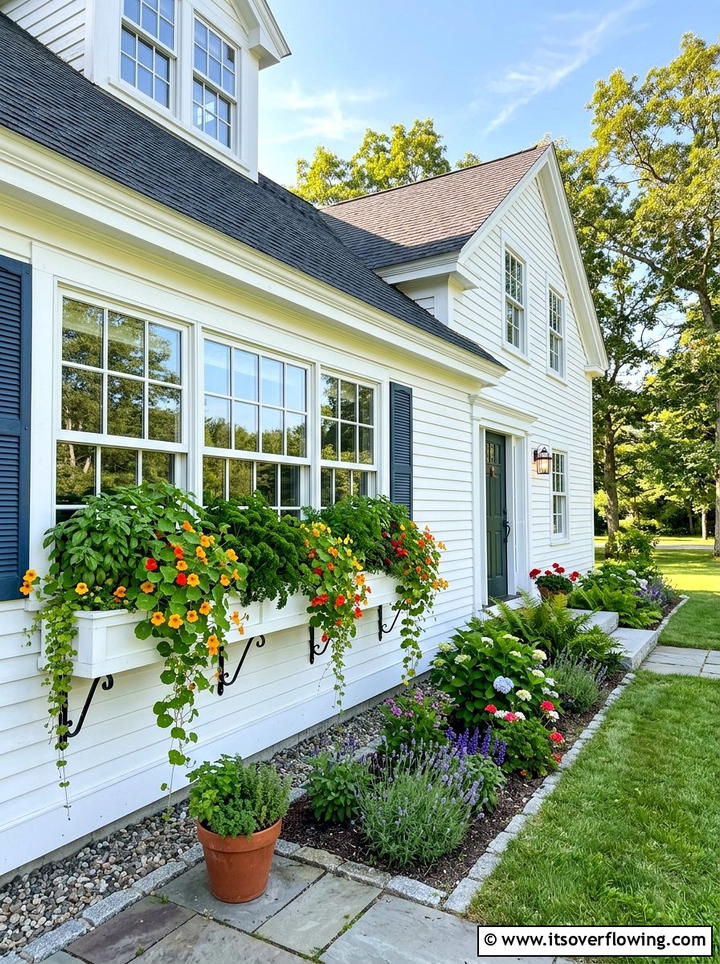
Installing window boxes filled with herbs brings the garden directly to your home’s exterior. This is an excellent choice for those who have limited ground space but still want a thriving garden. You can reach out of your kitchen window to snip fresh cilantro or chives while you are cooking dinner. Window boxes provide a tidy and contained environment that prevents herbs from spreading uncontrollably across your yard. They also add a pop of greenery and charm to your windowsills, improving your home’s curb appeal. Choosing a mix of upright and trailing herbs ensures a full and balanced look that looks great all season long.
9. Edible Landscape Border
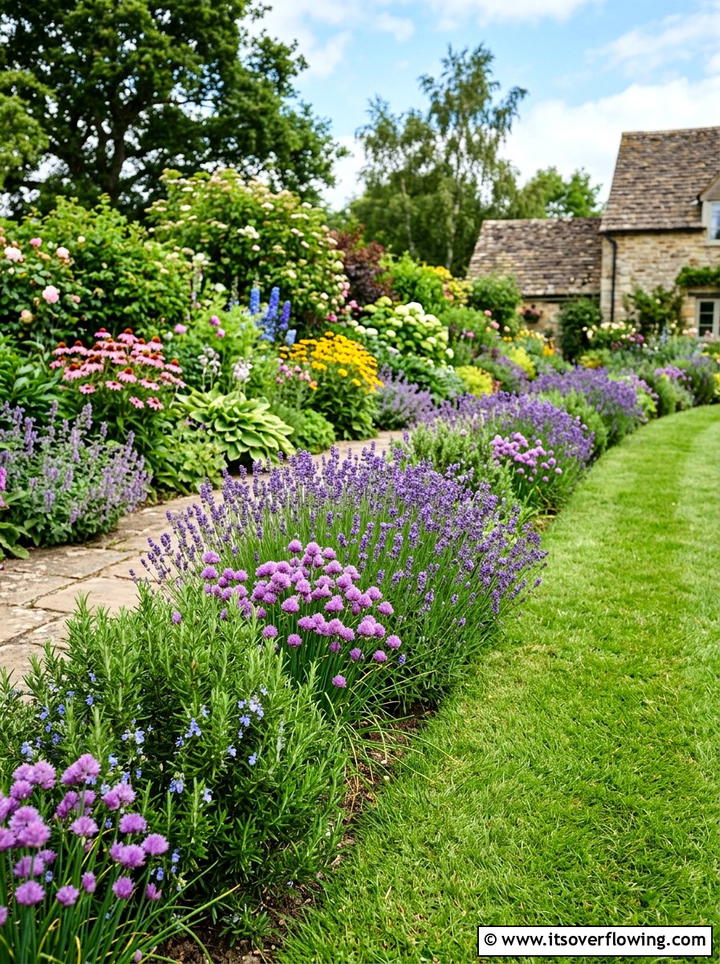
Integrating herbs into your existing landscape borders is a subtle way to create an edible garden. Instead of using strictly ornamental plants, you can use flowering herbs like echinacea, lavender, or borage to line your flower beds. These plants attract beneficial pollinators like bees and butterflies while providing you with useful harvests. Herbs often have beautiful foliage colors and textures that complement traditional shrubs and perennials perfectly. This approach creates a cohesive look where your food and flowers coexist in harmony. It is a sustainable gardening practice that makes every inch of your backyard productive and beautiful without requiring a separate, dedicated vegetable patch.
10. Modern Tiered Planter
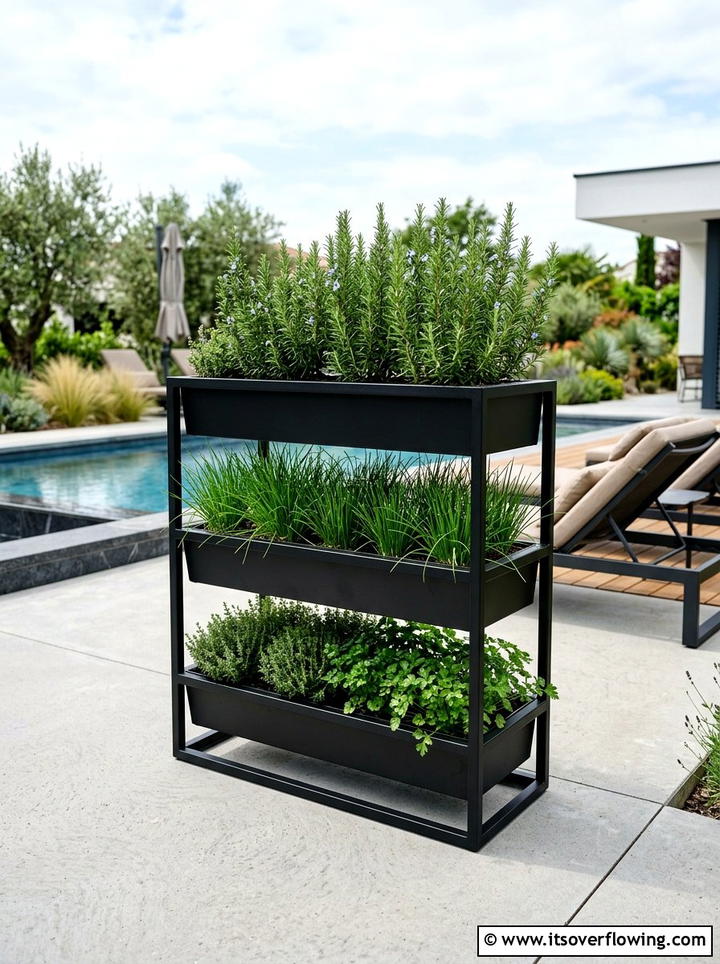
A modern tiered planter offers a sleek and organized way to display your herb collection in a contemporary backyard. These structures often feature clean lines and minimalist materials like powder-coated steel or smooth concrete. By stacking planting levels, you create a high-impact visual display that functions like a living sculpture. This design is particularly effective for keeping your herbs organized by their water or sunlight needs. Tiered planters are easy to maintain and provide a structured look that fits well on a modern deck or near a pool area. They offer a sophisticated way to grow fresh ingredients while maintaining a very polished and high-end aesthetic.
11. Hanging Herb Basket
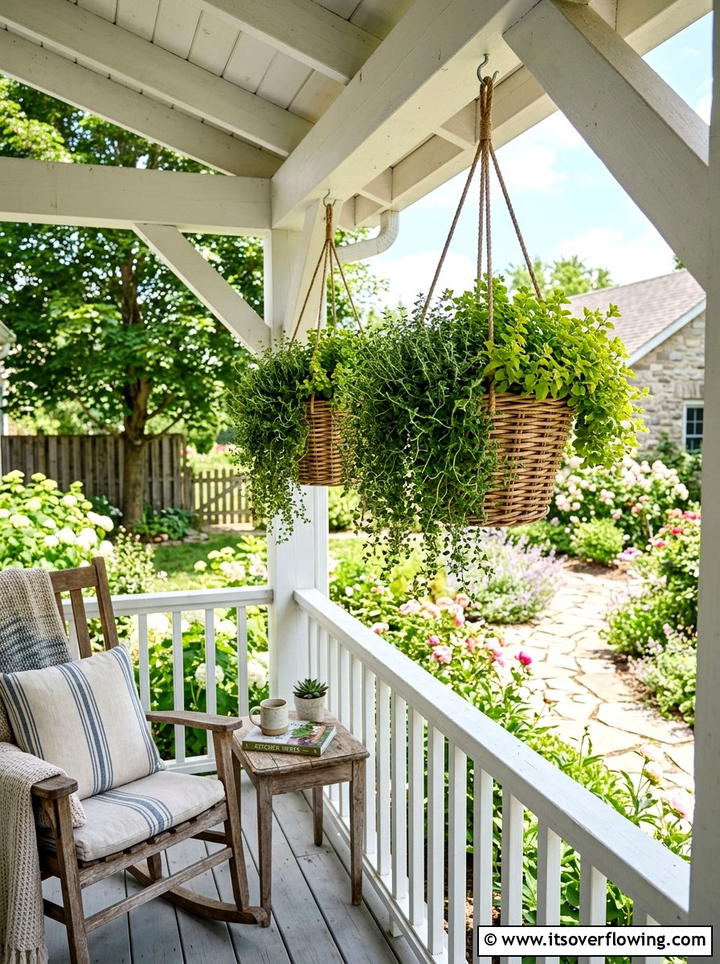
Hanging baskets are a wonderful way to keep herbs at eye level while freeing up floor space. You can hang these from shepherd’s hooks, porch rafters, or specialized wall brackets to add greenery to empty spaces. Trailing herbs like nasturtiums or creeping rosemary look spectacular as they spill over the sides of a woven or wire basket. This method keeps the plants away from ground-dwelling pests and makes it very easy to monitor their moisture levels. Hanging baskets are also highly portable, allowing you to move them around based on the changing light of the seasons. They add a whimsical and airy feel to any backyard garden design.

12. Rustic Ladder Garden
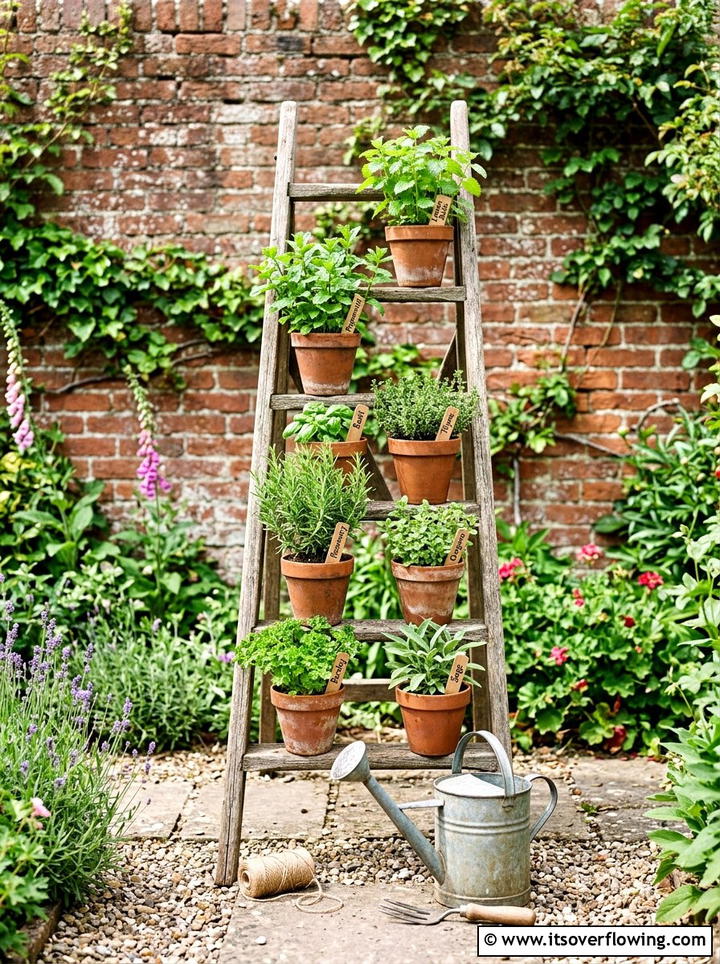
Repurposing an old wooden ladder into a plant stand creates a charming and nostalgic herb garden display. You can place small pots on each rung to create a vertical hierarchy of different textures and scents. This rustic setup works perfectly in a corner of the garden or against a shed wall to add character. It is an ideal way to display a large collection of herbs without needing a lot of square footage. The ladder provides a sturdy framework that can be moved or rearranged whenever you feel like changing your layout. This creative use of vertical space is both functional and a great conversation piece for guests.
13. Greenhouse Herb Corner
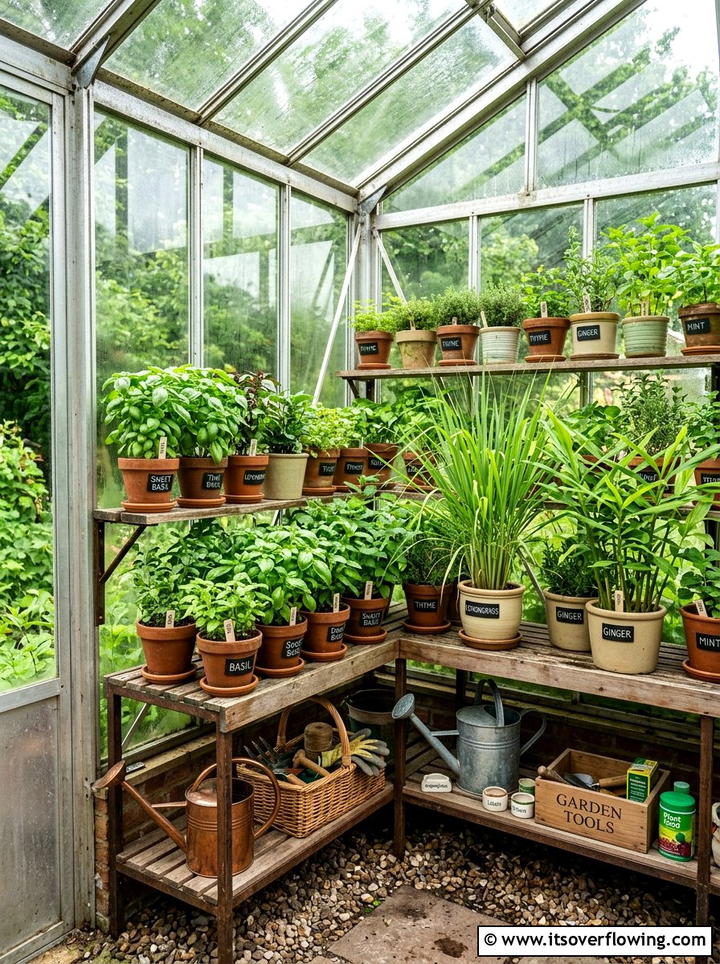
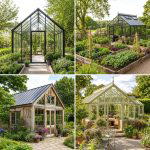
Dedication a corner of a small greenhouse to herbs ensures you have a fresh supply even during cooler months. The controlled environment of a greenhouse allows you to grow more tender herbs that might struggle in the open air. You can organize your herbs on shelving units to maximize the humid, warm air that these plants love. This setup is perfect for starting seeds early in the spring or keeping basil thriving long after the first frost. A herb corner within a greenhouse keeps your gardening tools and plants in one organized location. It provides a peaceful retreat where you can enjoy the earthy scents of gardening year-round.
14. Wheelbarrow Herb Planter
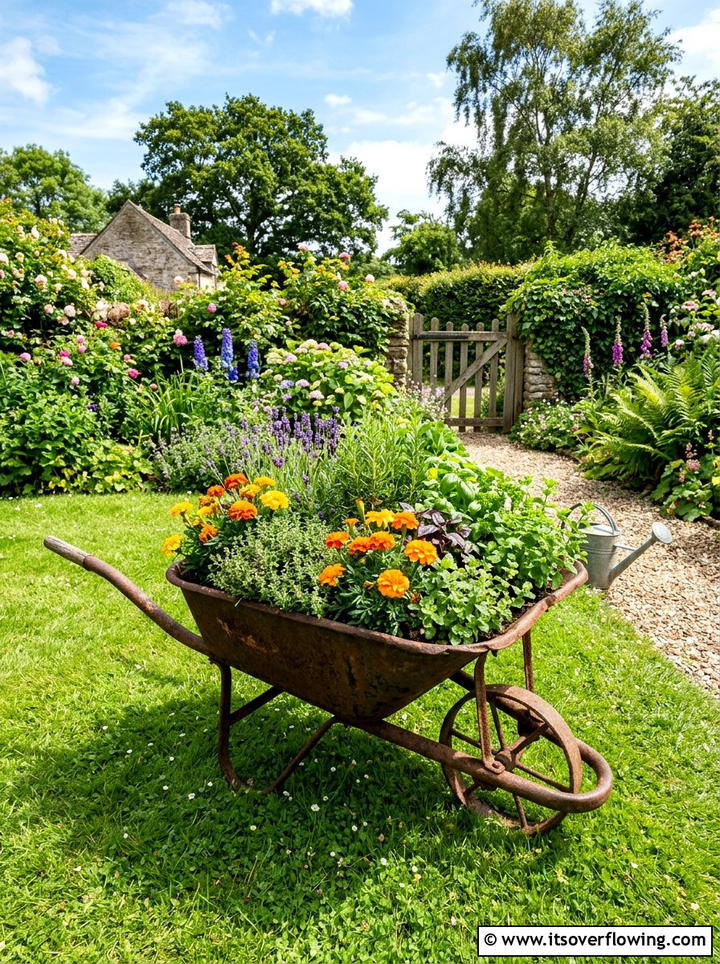
Transforming an old, vintage wheelbarrow into a mobile herb garden adds a playful and rustic touch to your backyard. This unique planter can be moved to different locations to take advantage of the sun or to serve as a mobile decoration for outdoor events. You can fill the basin with high-quality potting soil and plant a mix of colorful herbs for a lush, overflowing look. It is a great way to repurpose garden tools that are no longer in use for their original purpose. The wheelbarrow provides a deep enough container for most herbs to thrive while making a bold statement in your landscape design.
15. Stone Herb Garden
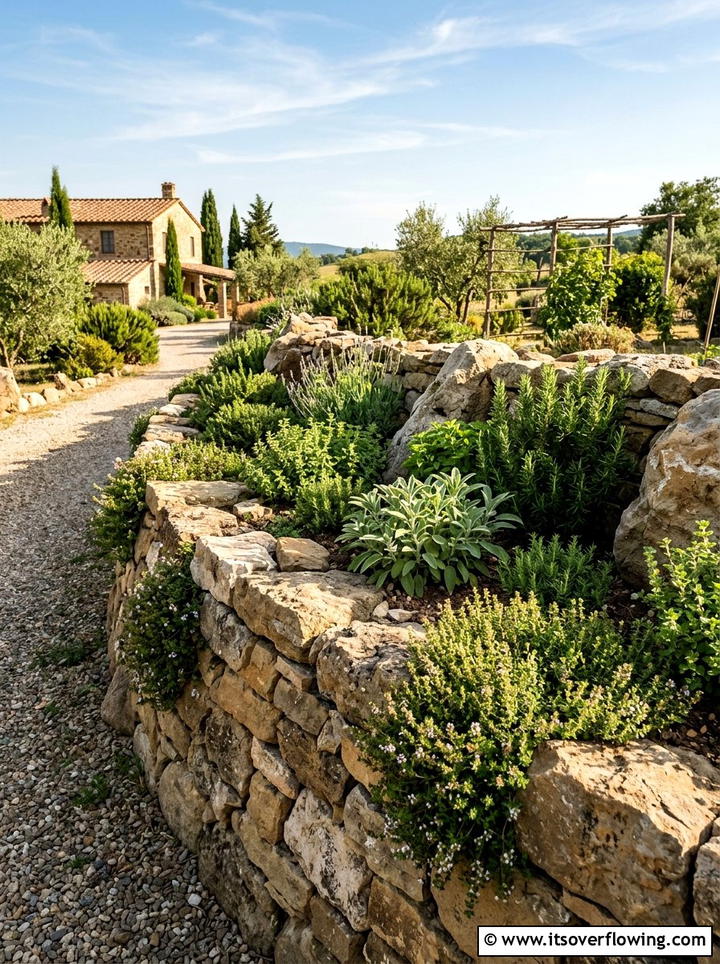
Creating a herb garden using natural stones or boulders provides a rugged and organic look that blends seamlessly with the earth. You can arrange flat stones to create small pockets for planting or build a low dry-stack wall to house your herbs. The stones absorb heat during the day and release it at night, which Mediterranean herbs absolutely love. This design is incredibly durable and requires very little maintenance once the stones are in place. It works well for rock gardens or near water features to add a sense of permanence and history. A stone-based garden feels grounded and provides a beautiful contrast to soft green leaves.

16. Circular Herb Bed
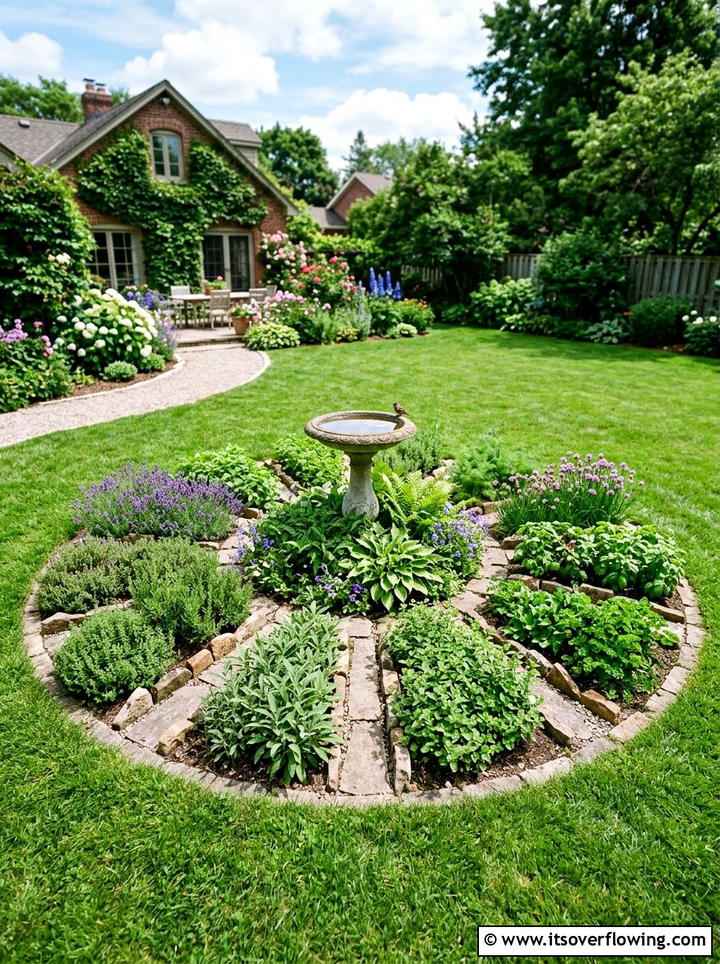
A circular herb bed acts as a beautiful focal point in the center of a lawn or at the intersection of paths. This geometric design allows you to organize your herbs in wedges, much like a wheel, with different varieties in each section. You can place a sundial, birdbath, or a large specimen plant like a bay laurel in the very center for extra height. The symmetry of a circular bed adds a sense of order and elegance to the backyard. It is easy to access all the plants from the outer edge, making maintenance and harvesting a very simple task. This layout is both artistic and highly functional.
17. Tropical Herb Sanctuary
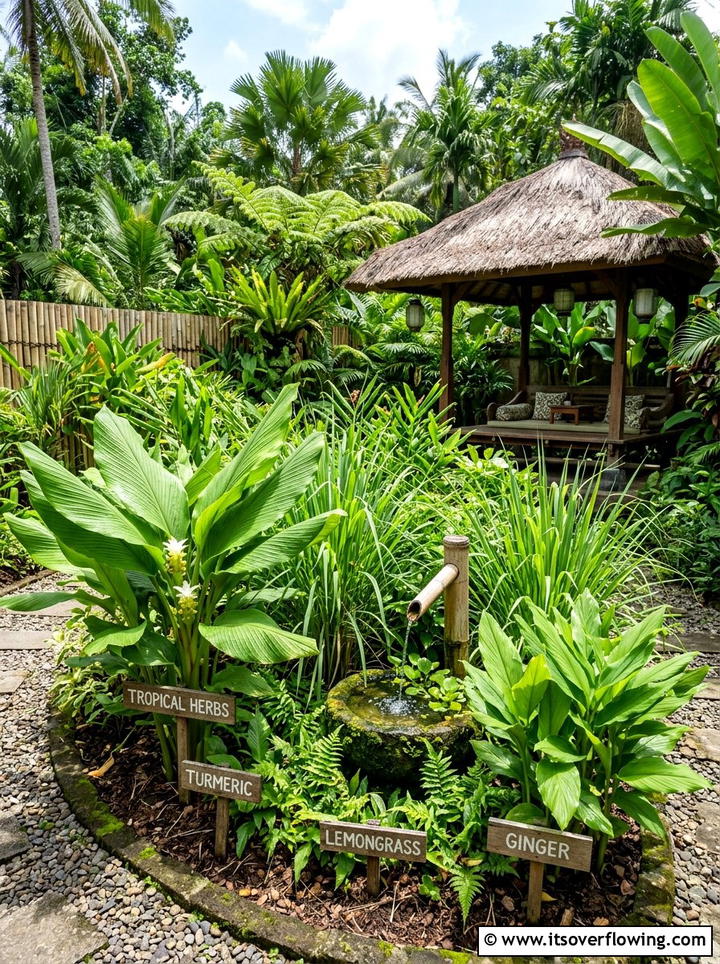
If you live in a warmer climate, creating a tropical-style herb garden can feel like a lush escape. You can use large-leafed herbs like ginger, lemongrass, and turmeric to create a dense and exotic atmosphere. Pairing these with vibrant flowering herbs like hibiscus or Thai basil enhances the tropical aesthetic. This type of garden often features rich, dark soil and a variety of textures that create a jungle-like feel. Using bamboo accents or a small water feature can complete the sanctuary vibe. It is a wonderful way to grow unique flavors while creating a private, shaded retreat in your own backyard for relaxation.
18. Rooftop Herb Garden
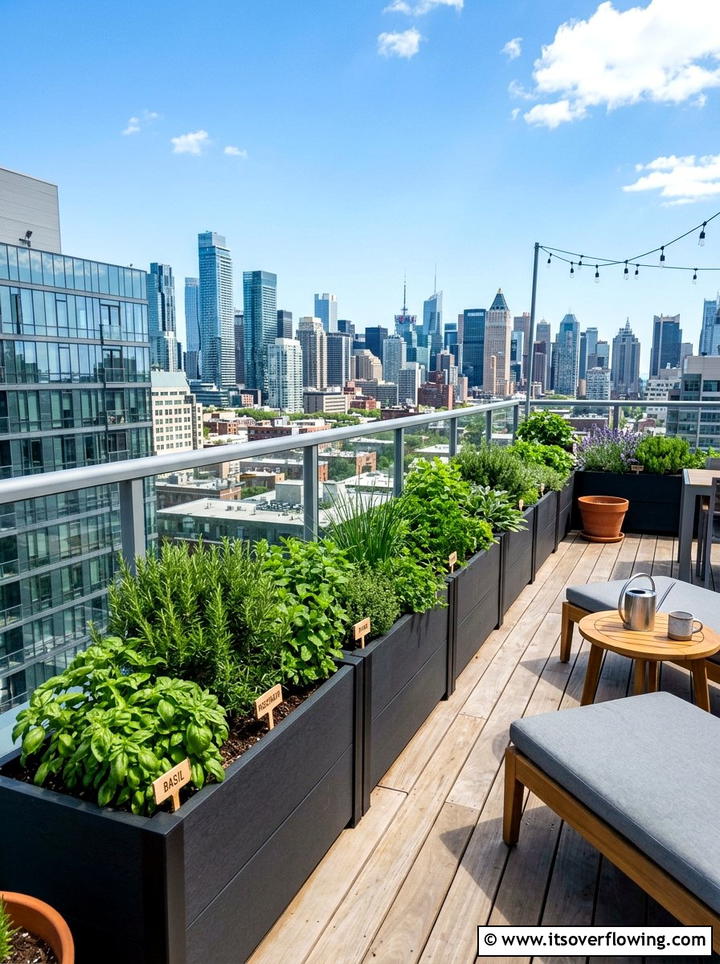
For those living in urban environments, a rooftop herb garden is the ultimate way to utilize unused space. Herbs generally love the full sun that rooftops provide, as long as they are watered regularly. You can use lightweight containers and modular planters to create a productive green space high above the city streets. This design helps insulate the building and provides a habitat for urban pollinators. A rooftop garden offers a private escape where you can enjoy fresh air and the satisfaction of growing your own food. It transforms a harsh concrete environment into a thriving and fragrant oasis that you can enjoy every single day.
19. Tea Herb Garden
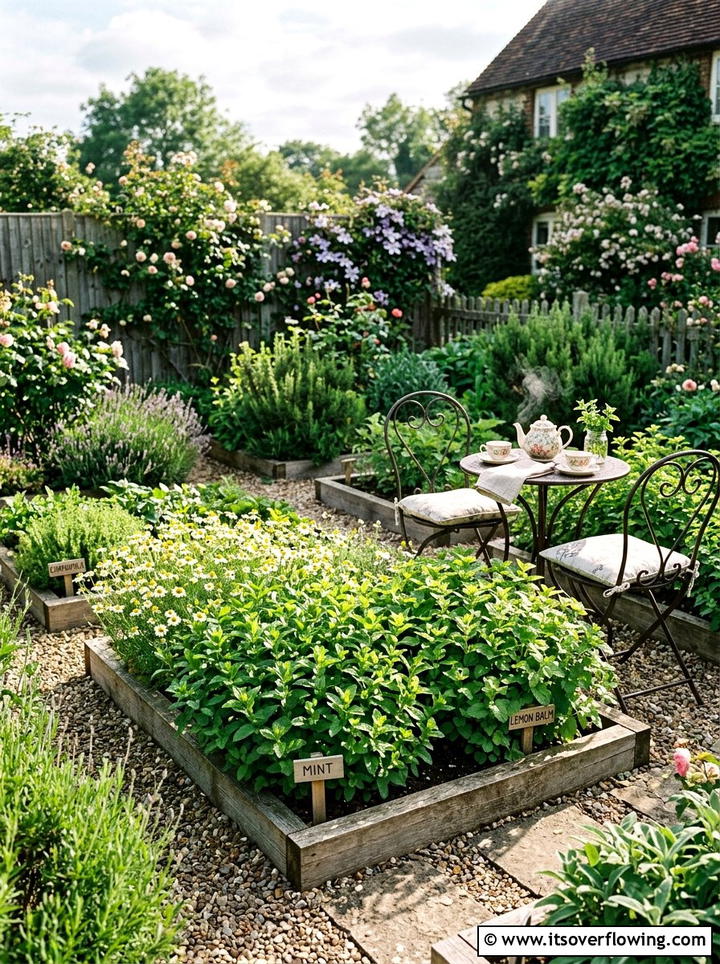
Designing a garden specifically for tea enthusiasts is a thoughtful and specialized backyard project. You can plant a variety of soothing herbs such as mint, lemon balm, chamomile, and stevia in a dedicated area. Placing a small bistro set nearby allows you to harvest leaves and brew a fresh cup of tea right in the garden. This themed garden focuses on scents and flavors that promote relaxation and wellness. The soft textures of tea herbs create a gentle and inviting landscape that encourages you to slow down. It is a wonderful way to create a functional hobby space that nourishes both your body and your soul.

20. Medicinal Herb Garden
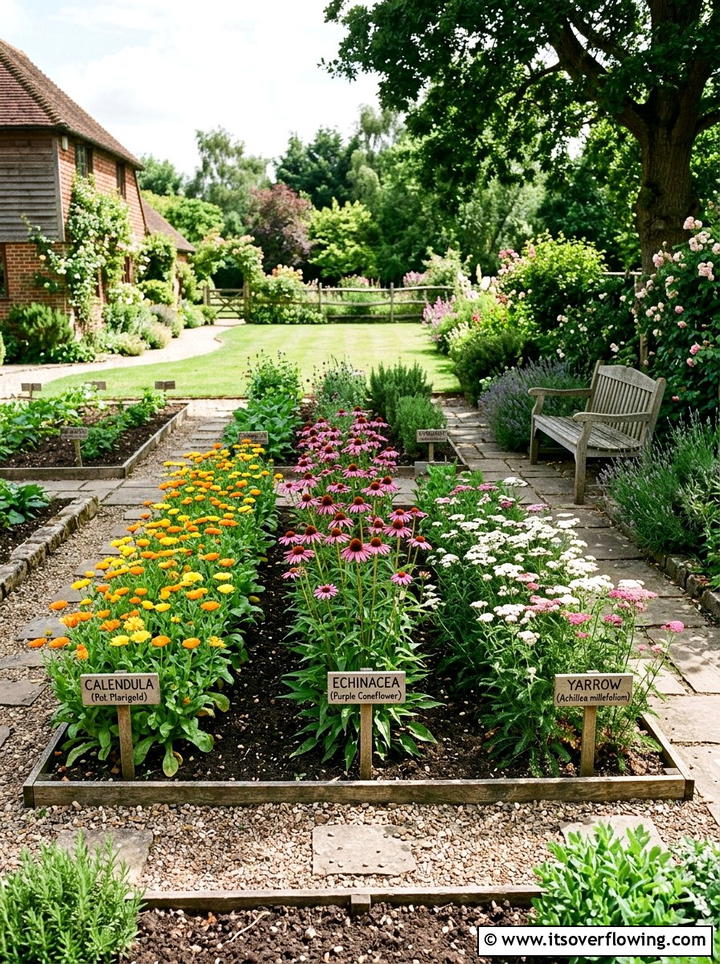
A medicinal herb garden is a practical way to grow plants that have been used for centuries in traditional healing. Varieties like calendula, lemon verbena, and yarrow are beautiful to look at and have many beneficial properties. You can organize these plants in a quiet, secluded part of the yard to create a “physic garden” feel. Labeling each plant with its traditional uses adds an educational element to your backyard. This type of garden encourages a deeper connection with nature and the history of plant-based wellness. It provides a constant source of natural ingredients for homemade balms, salves, or soothing infusions for your entire family.
21. Formal Herb Parterre
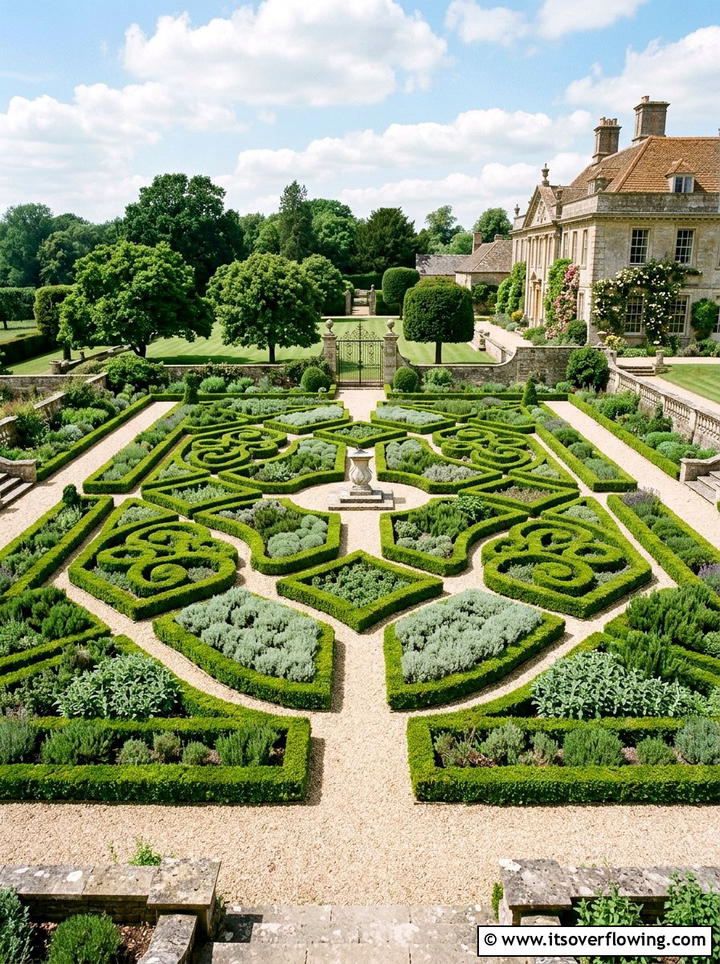
For a more structured and sophisticated look, a formal parterre garden uses clipped hedges to create intricate patterns. You can use low boxwood or rosemary hedges to frame small beds filled with different herb varieties. This traditional European design adds a sense of grandeur and timeless beauty to a large backyard. The clean lines and symmetry make the garden look neat and well-maintained throughout every season. While it requires more pruning and upkeep, the visual impact of a formal parterre is truly unmatched. It turns your herb garden into a work of art that complements traditional architecture and formal landscaping styles beautifully.
22. In-ground Herb Patch
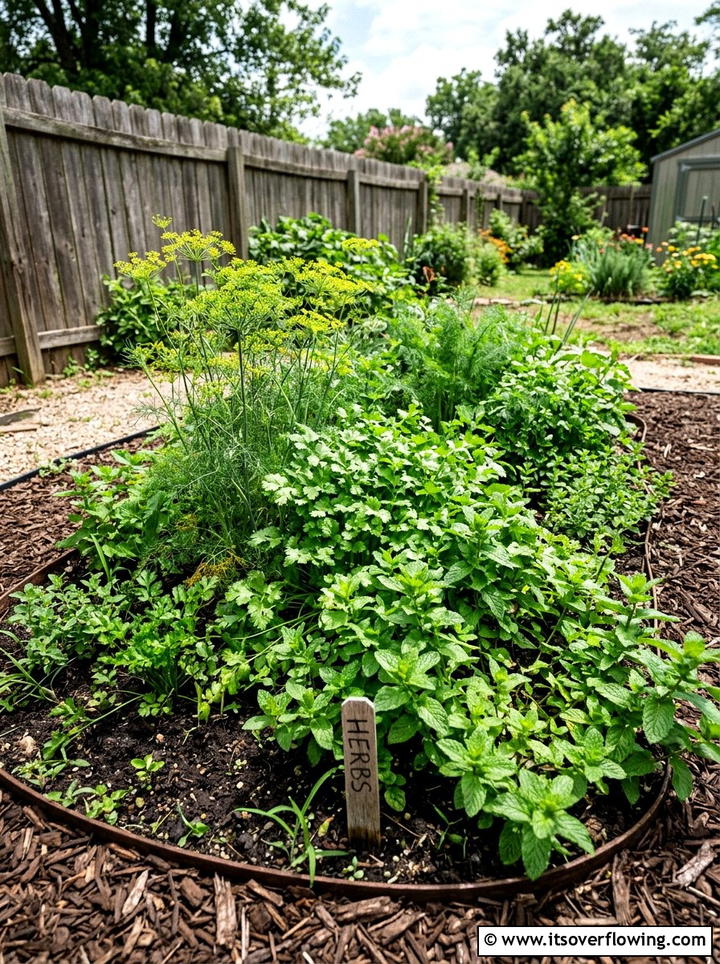
A simple in-ground herb patch is often the easiest and most natural way to start your gardening journey. By clearing a small area of your lawn, you can plant herbs directly into the earth for a sprawling, lush look. This method allows plants to develop deep root systems and often results in very vigorous growth. You can use mulch to keep the area tidy and suppress weeds while retaining moisture in the soil. An in-ground patch feels very traditional and integrates easily with other vegetable or flower beds. It is a cost-effective way to produce a large volume of herbs for drying, freezing, or gifting to your friends.
23. Pergola Herb Trellis
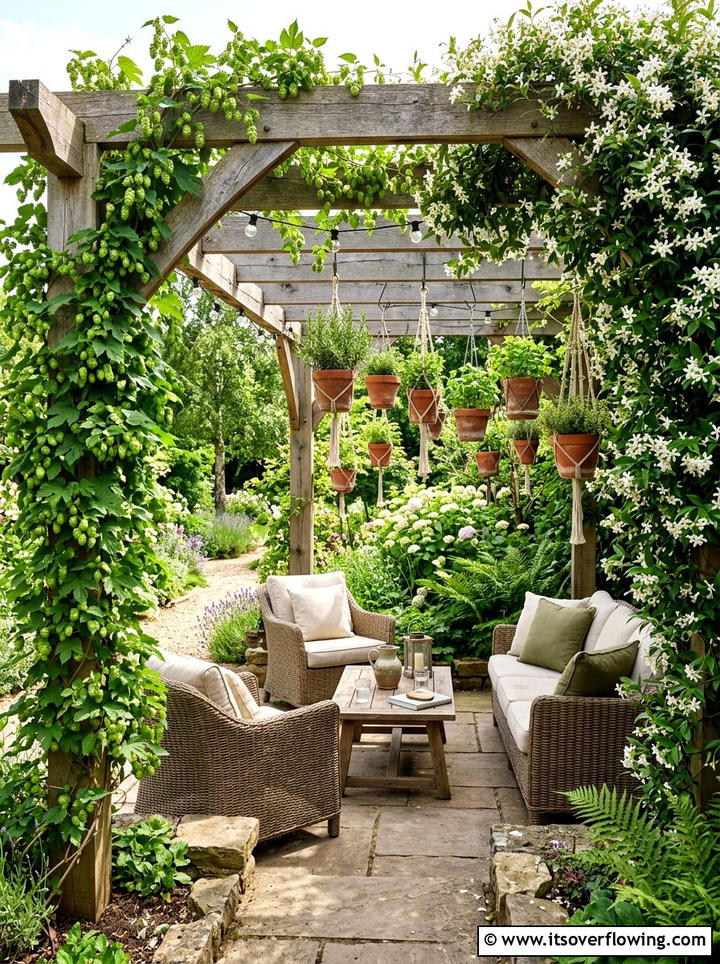
If you have a pergola or a gazebo, using the structure to support climbing herbs is a brilliant design choice. You can grow climbing varieties like jasmine or hops up the posts to provide shade and a wonderful aroma. Hanging pots can also be attached to the crossbeams to bring herbs down to eye level within the seating area. This creates a shaded, green canopy that feels like an outdoor room rather than just a garden. It is an excellent way to combine architectural interest with productive planting. Sitting under a pergola surrounded by fragrant herbs is a truly luxurious experience that enhances any summer afternoon.
24. Deck Railing Herbs
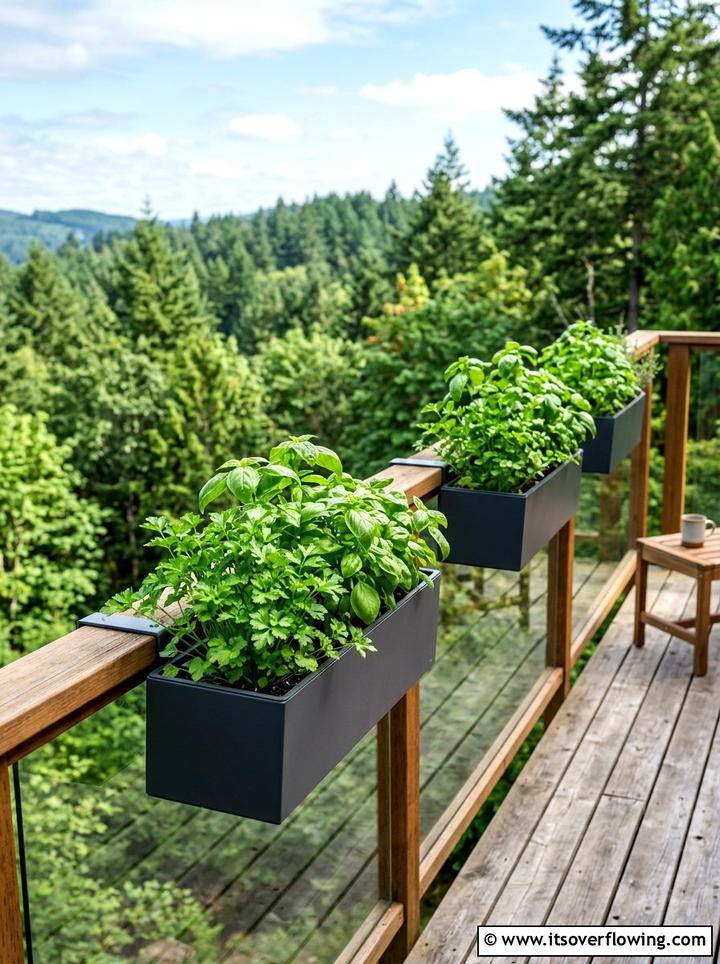
Deck railing planters are a smart way to maximize the utility of your outdoor living area without using any floor space. These specialized containers sit securely on top of your railings, putting your herbs at the perfect height for easy harvesting. This setup is ideal for people who want a garden but have limited mobility or don’t want to bend down to the ground. It also keeps your herbs away from pets or young children who might accidentally step on them. Having a row of vibrant green herbs along your deck adds privacy and a beautiful natural border to your entertainment space. It is highly convenient and very modern.
25. Concrete Block Herb Garden
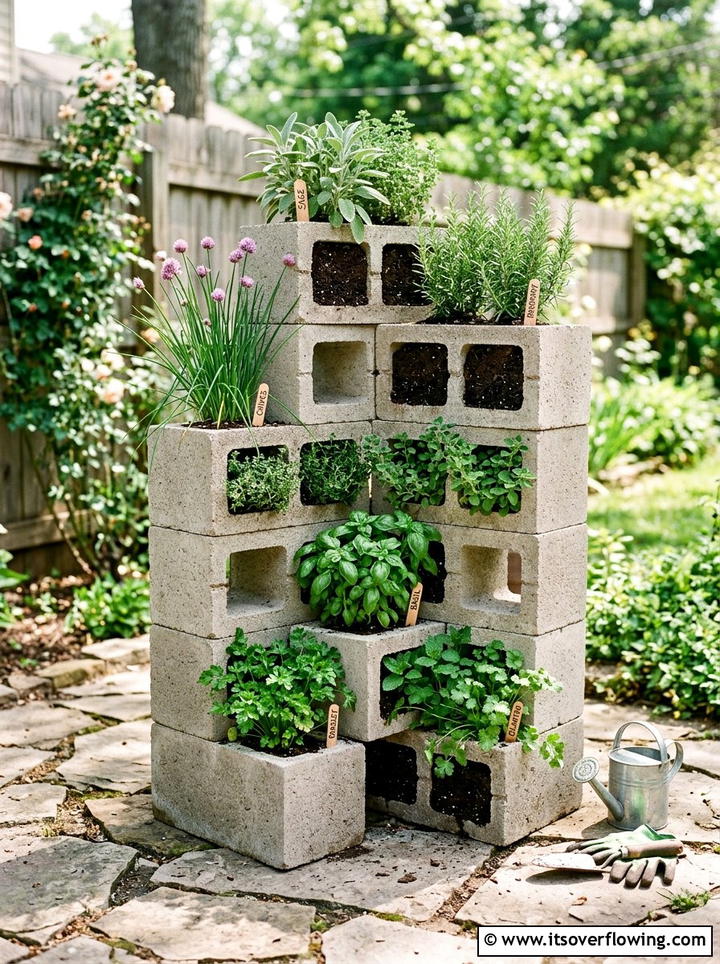
Using concrete cinder blocks to build a herb garden is a modern, industrial, and very affordable design idea. You can stack the blocks in various configurations to create a custom planter with multiple individual cells. Each hollow center of a block becomes a perfect home for a single herb plant, which helps prevent roots from tangling. You can paint the blocks to match your home’s exterior or leave them raw for a minimalist look. This modular approach is incredibly easy to assemble and can be expanded or moved as your garden grows. It is a durable and creative way to build a structured herb garden on a budget.
Conclusion:
Creating a backyard herb garden is a fulfilling journey that combines the joys of nature with the practical benefits of home cooking. Throughout these various designs, we have seen how simple it is to turn a patch of dirt into a thriving oasis of flavor and fragrance. Whether you choose a formal parterre or a simple set of pots on the porch, the result is always a more vibrant and useful outdoor space. These projects encourage us to spend more time outside and connect with the rhythms of the seasons right at home. By selecting the right layout for your specific lifestyle, you can enjoy a continuous harvest of fresh herbs that elevate every dish you prepare. We hope these ideas inspire you to start your own herbal adventure and transform your backyard into a beautiful, productive retreat today.

Related posts:
 25 backyard decorating ideas with herb stations for Fresh Charm
 25 Backyard Ideas With Greenhouse for Fresh Garden Style
 25 Backyard Ideas With Vegetable Garden For Fresh Harvests
 25 garden ideas with vegetables: Fresh Backyard Inspiration
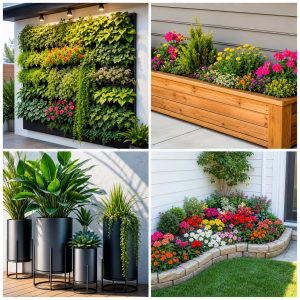 25 Backyard Decorating Ideas With Planters For Fresh Style
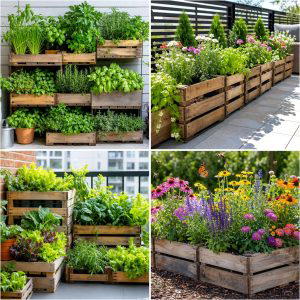 25 Backyard Ideas With Crate Planters for Fresh Style
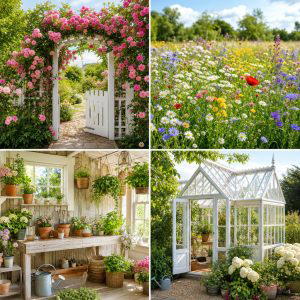 25 Backyard Ideas With Cottage Garden for Cozy Outdoor Charm
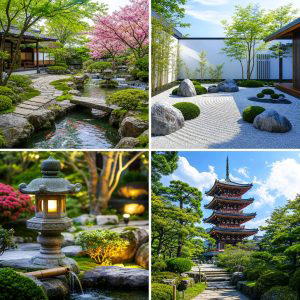 25 Backyard Ideas With Japanese Garden for Zen Outdoor Style
 25 Backyard Decorating Ideas With Signs For Backyard Charm
 25 Backyard Decorating Ideas With Throws For Cozy Outdoor Style
 25 Backyard Ideas With Gravel Patio for Stylish Outdoor Living
 25 Backyard Ideas With Swings For Cozy Outdoor Relaxation