
Transforming your outdoor space into a sanctuary for local wildlife brings a unique sense of peace and vitality to your home. Integrating bird feeders into your garden design does more than just provide a food source; it creates a dynamic, ever-changing landscape filled with movement and song. Whether you have a sprawling backyard or a compact urban balcony, there are countless ways to blend these functional elements with your existing plants and hardscaping. This guide explores creative ways to place feeders to enhance your garden’s beauty while supporting the environment. From rustic wooden stations to sleek modern designs, you will discover how to attract a variety of feathered friends to your doorstep.
1. Copper bird feeder in perennial garden
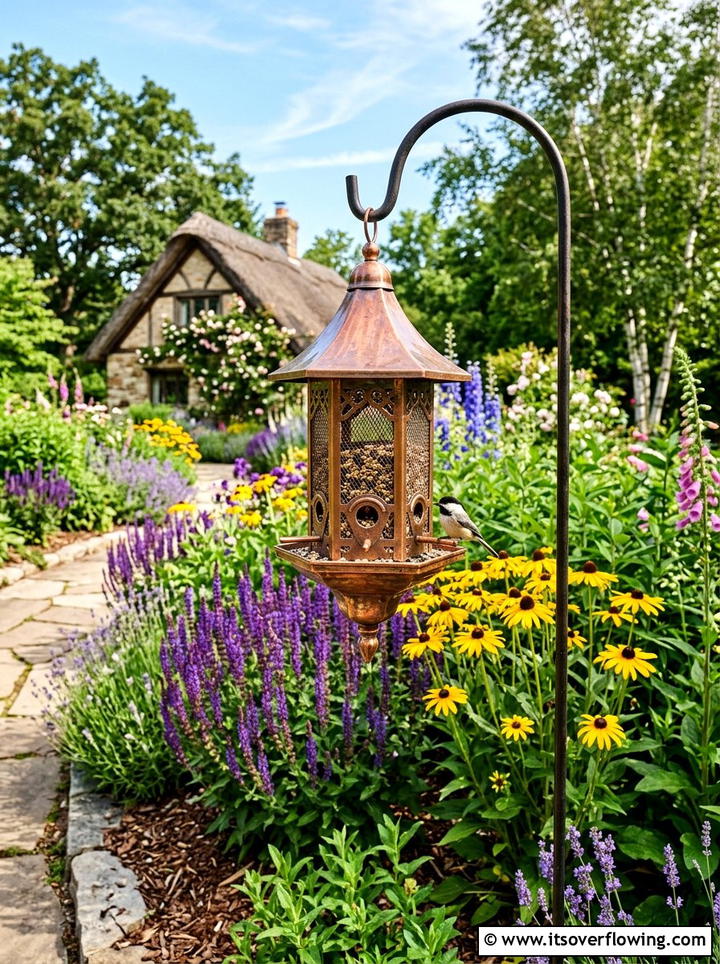
Imagine a shimmering copper feeder standing tall among a sea of purple salvia and bright yellow coneflowers. This setup creates a stunning focal point that bridges the gap between metal artistry and natural beauty in your backyard. Copper develops a beautiful patina over time, which helps it blend seamlessly into the greenery as the seasons change. Placing the feeder within a dense perennial bed offers birds a quick escape route to nearby foliage if they feel threatened by predators. You should choose plants that bloom at different times to ensure the area remains vibrant and active throughout the spring and summer months. This design provides both food and shelter.
2. Wooden bird table on lawn
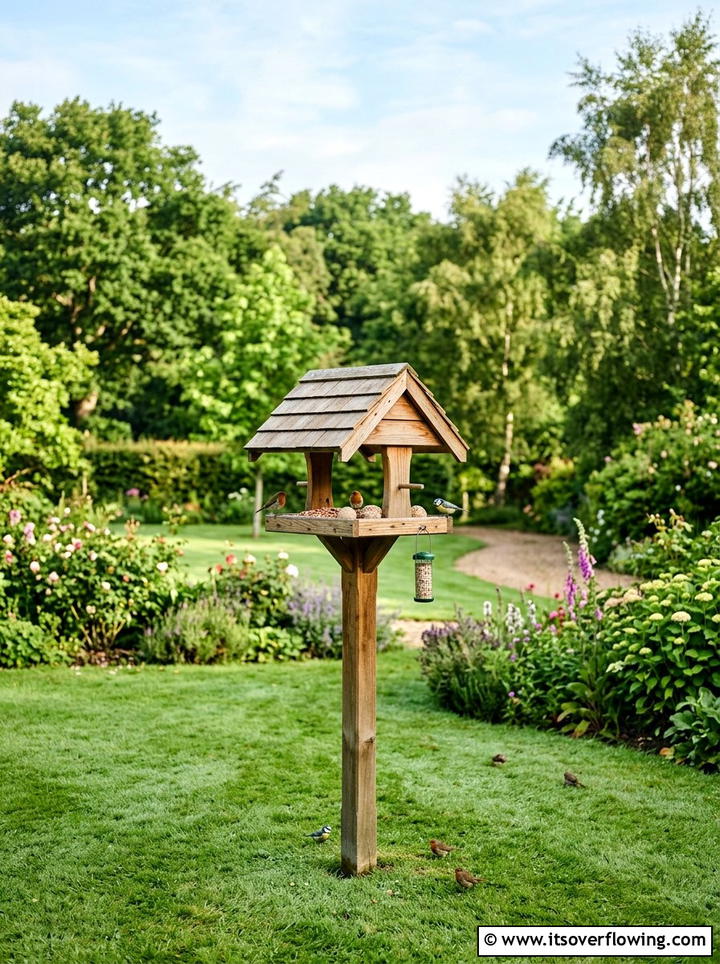
A traditional wooden bird table serves as a charming centerpiece for a wide-open lawn area. These structures offer a flat surface where larger birds can land comfortably to enjoy their seeds and grains. By placing the table in the middle of a grassy patch, you create a clear line of sight that allows you to observe various species from your window. The open space also makes it harder for cats or other ground predators to sneak up on the feeding birds. Using weather-resistant wood like cedar or teak ensures that the table stays durable through rain and snow. It adds a classic, timeless feel to any landscape design.
3. Bird feeder hanging from oak tree
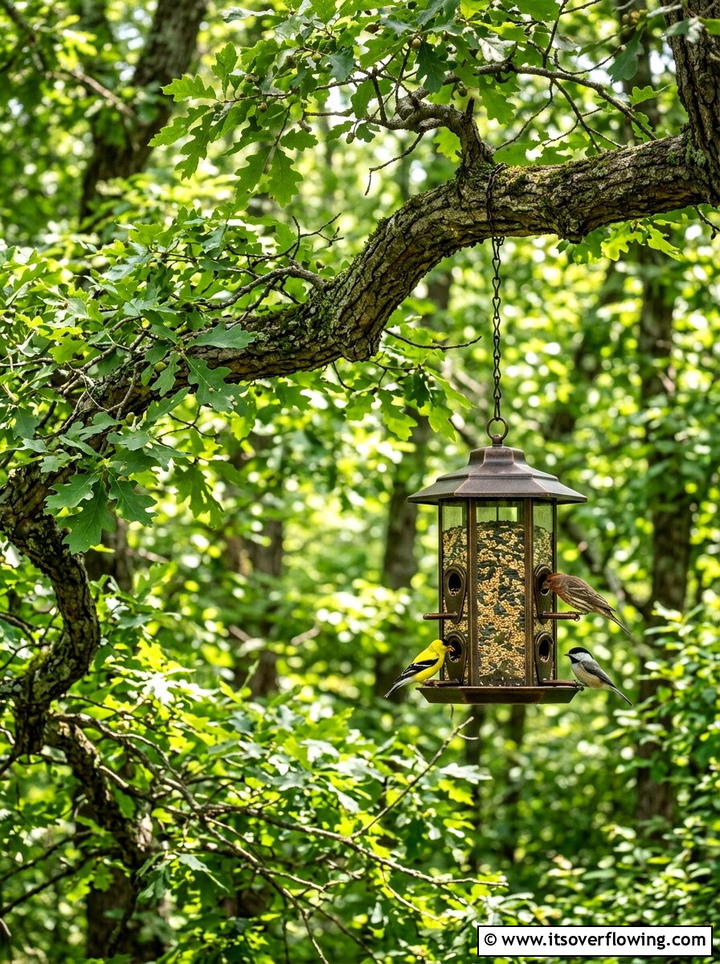
Have you ever noticed how a simple branch can become a bustling hub of activity with the addition of a well-placed seed dispenser? Hanging a feeder from a sturdy oak tree mimics a bird’s natural foraging environment, making them feel safe and secure. The thick canopy provides excellent shade during hot summer days, keeping the birdseed cool and fresh for longer periods. You can use decorative chains or thick jute rope to hang various feeder styles at different heights to attract multiple species. This approach utilizes vertical space in your garden while keeping the ground clear for walking or other decorative plants.
4. Window bird feeder for kitchen view
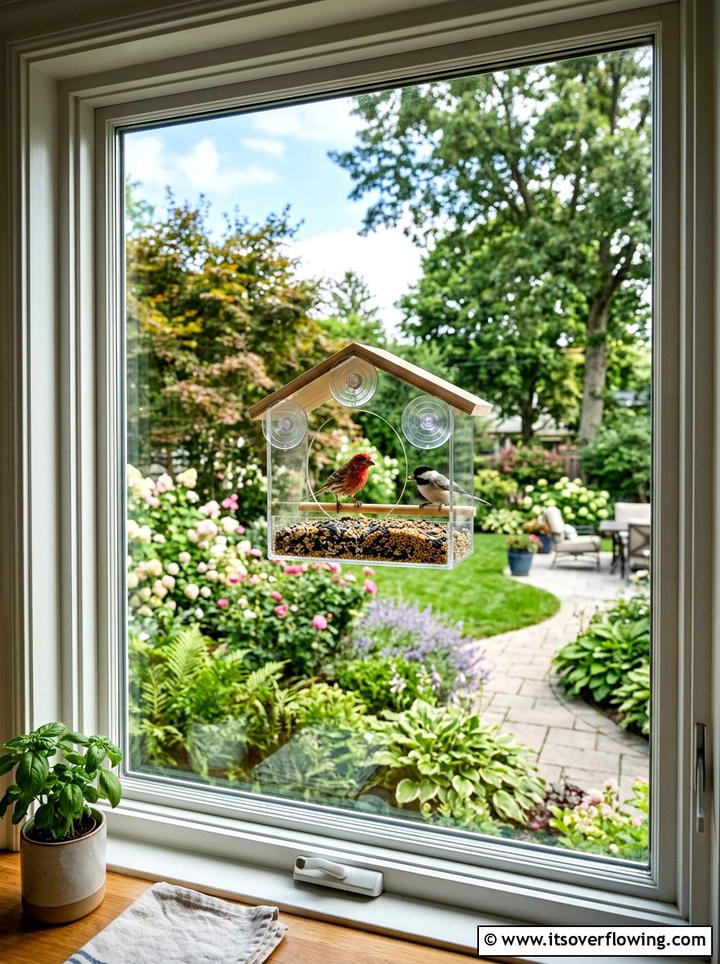
Waking up to the sight of a colorful cardinal just inches from your glass window transforms your morning coffee routine into a nature documentary. Window feeders use strong suction cups to attach directly to the glass, providing an intimate view of wild birds without the need for binoculars. This setup is particularly effective for small urban spaces or apartments where ground space is limited. It allows children and adults alike to see the fine details of feathers and feeding habits up close. To ensure success, keep the glass clean and place the feeder on a window that overlooks a quiet part of your garden.
5. Bird feeder pole in wildflower meadow
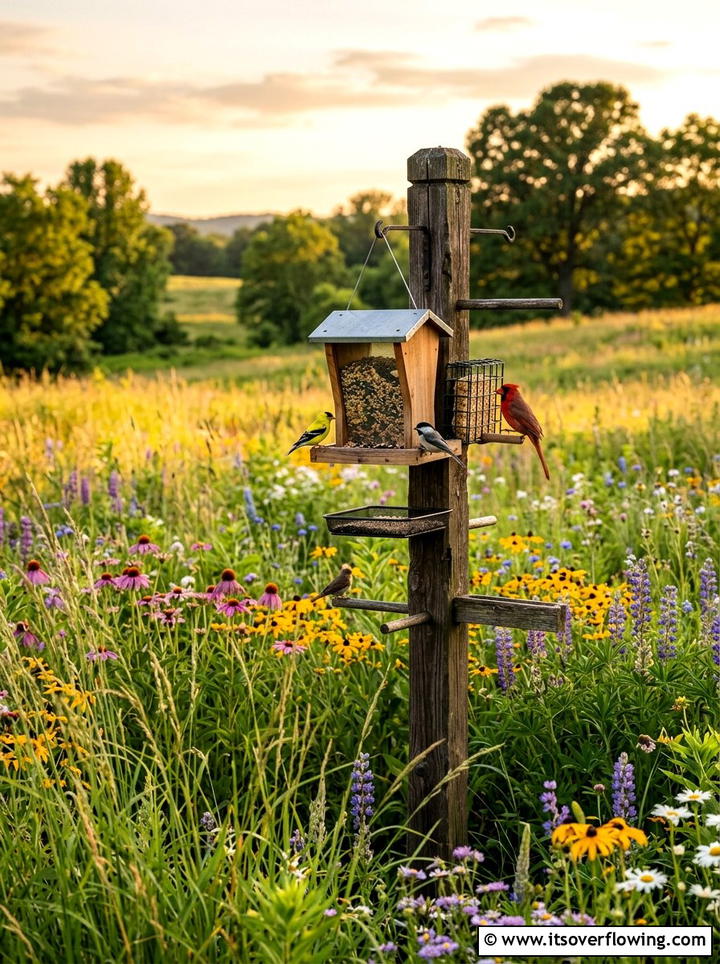
The sight of tall, swaying grasses and colorful blooms surrounding a central feeding station creates a wild, untamed beauty in your backyard. A sturdy metal pole can be installed in the heart of a wildflower meadow to provide a reliable food source amidst the nectar-rich flowers. This combination attracts both seed-eating birds and pollinators like bees and butterflies, creating a thriving ecosystem. The meadow provides natural nesting materials and insects, which complements the supplemental seeds you provide in the feeder. It is a low-maintenance way to support biodiversity while enjoying a picturesque, rustic view that feels like a hidden escape.
6. Modern glass bird feeder on patio
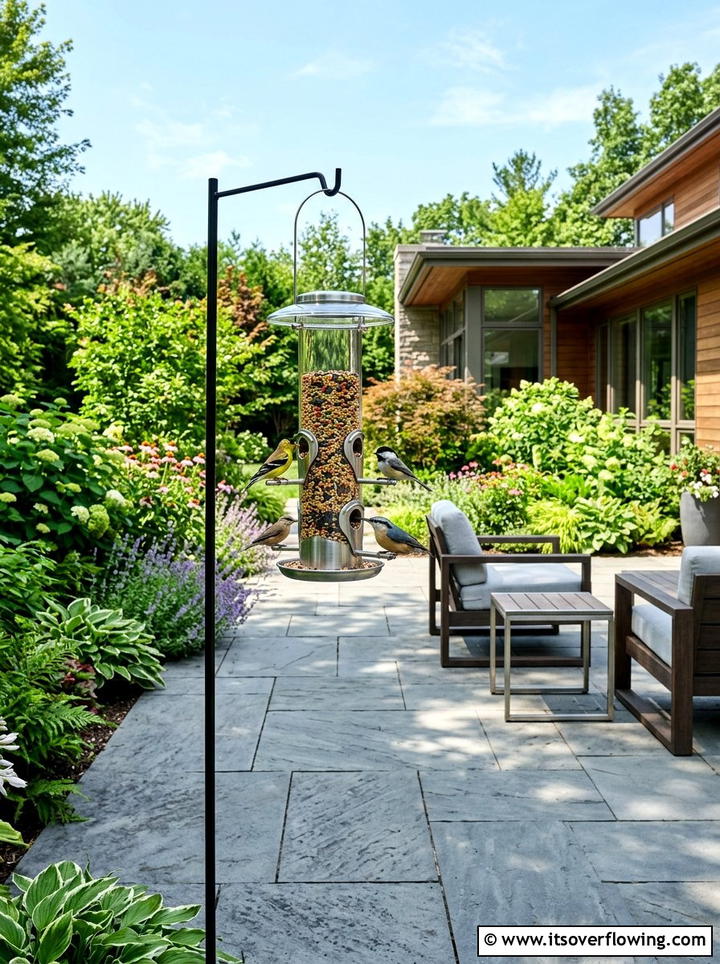
Do you appreciate clean lines and minimalist aesthetics in your outdoor living area? A modern glass feeder placed on a contemporary patio adds a touch of sophistication while serving its functional purpose. These sleek designs often feature transparent reservoirs that allow you to easily monitor seed levels from a distance. When positioned near outdoor furniture, it creates a peaceful ambiance for relaxation as you watch birds flutter by. Using high-quality glass and stainless steel ensures the feeder remains a durable piece of decor. This style works perfectly in modern landscapes that prioritize simplicity, high-end materials, and a sense of architectural order.
7. Hummingbird feeder near porch
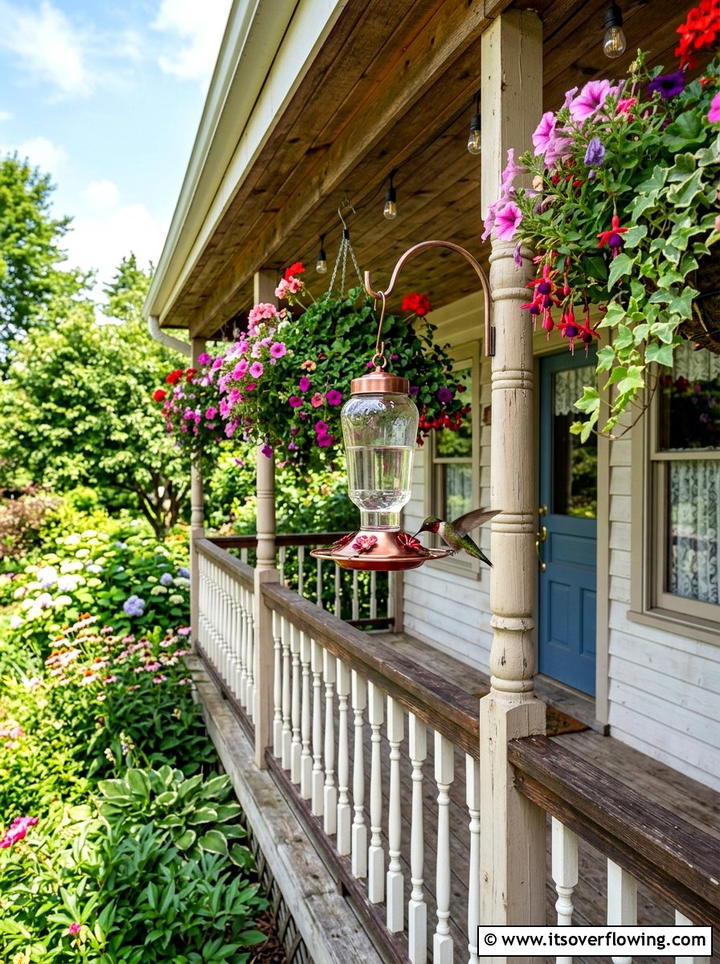
The rapid hum of wings and the flash of iridescent feathers bring a magical energy to any porch or veranda. Hanging a bright red hummingbird feeder near your seating area allows you to witness these tiny wonders as they hover and sip nectar. To maximize sightings, surround the area with tubular flowers like fuchsia or trumpet vine that naturally attract these birds. Keeping the feeder in a shaded spot helps prevent the sugar water from fermenting too quickly in the heat. It is an excellent way to bridge the gap between your home’s architecture and the vibrant life of your garden.
8. Rustic birdhouse feeder in cottage garden
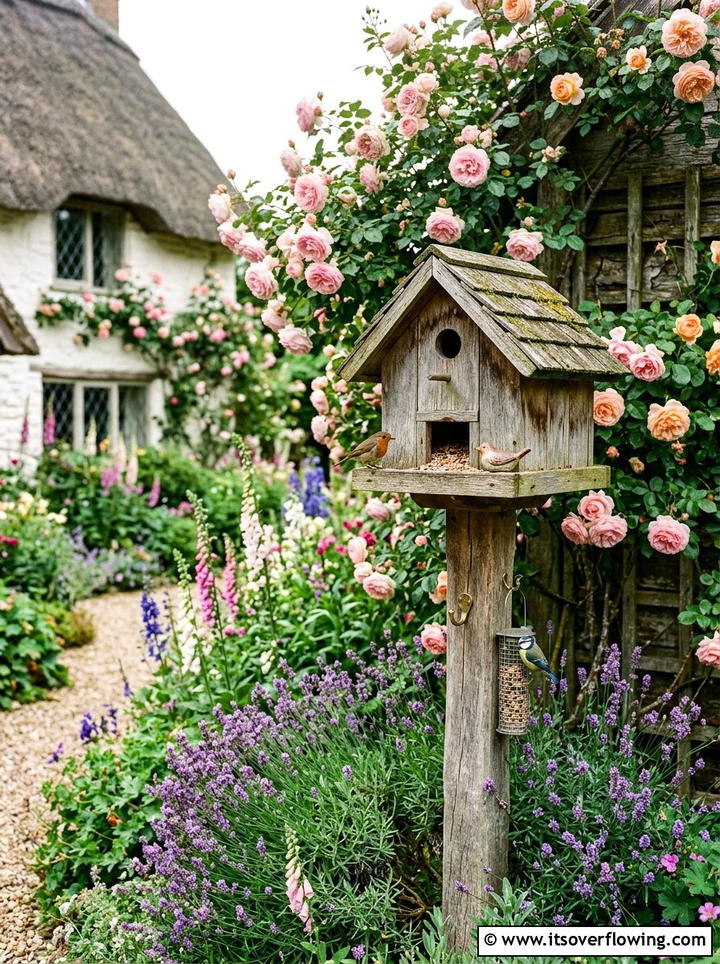
A cottage garden filled with climbing roses and lavender is the perfect setting for a rustic birdhouse-style feeder. These feeders often feature weathered wood and shingled roofs that evoke a sense of nostalgia and cozy charm. By placing it near a garden path, you create an inviting scene that feels like a storybook illustration. The intricate details of the birdhouse provide visual interest even when birds are not present. This design encourages a wide variety of small songbirds to visit, providing them with a sheltered place to eat. It perfectly complements the soft, informal planting style characteristic of traditional English country gardens.
9. Squirrel proof bird feeder on metal pole
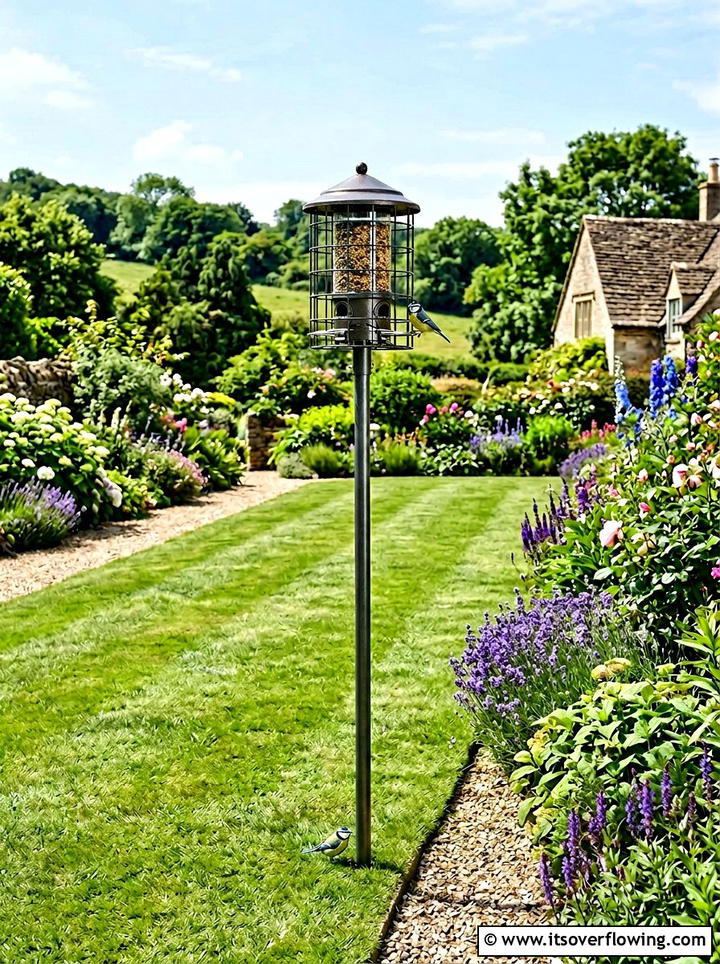
Dealing with persistent squirrels can be a challenge, but a specialized feeder on a tall metal pole offers a practical solution. These feeders often feature weight-sensitive mechanisms that close the feeding ports when a heavy squirrel lands on them. Placing the pole at least ten feet away from trees or structures prevents squirrels from jumping onto the feeder from above. This setup ensures that the expensive birdseed you buy actually goes to the feathered friends you want to attract. The clean, functional look of a metal pole fits well in most backyard designs while providing a dedicated zone for bird watching.
10. Bird feeder station with bird bath
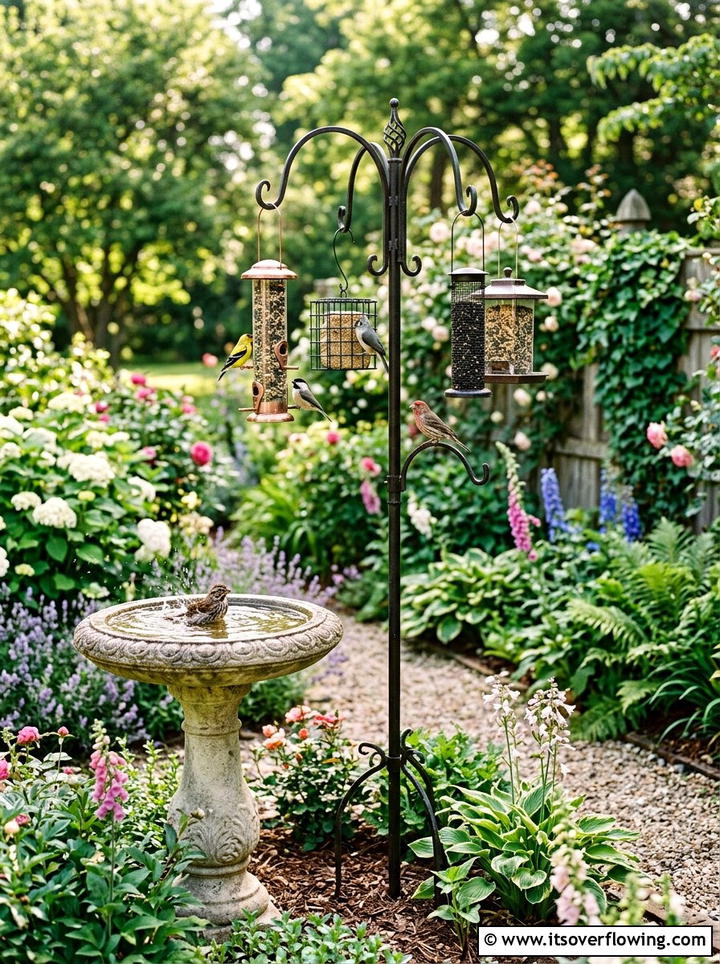
Providing both food and water in one centralized location creates a true oasis for birds in your backyard. A multi-hook feeding station can hold several different types of feeders while a pedestal bird bath sits nearby for drinking and bathing. This combination is highly effective because birds are naturally drawn to the sound and sight of moving water. You can decorate the base of the station with hostas or ferns to create a lush, integrated look. Maintaining a clean water source is essential for bird health and ensures they return to your garden daily. It serves as a comprehensive wildlife sanctuary.
11. Hanging hopper feeder under pergola
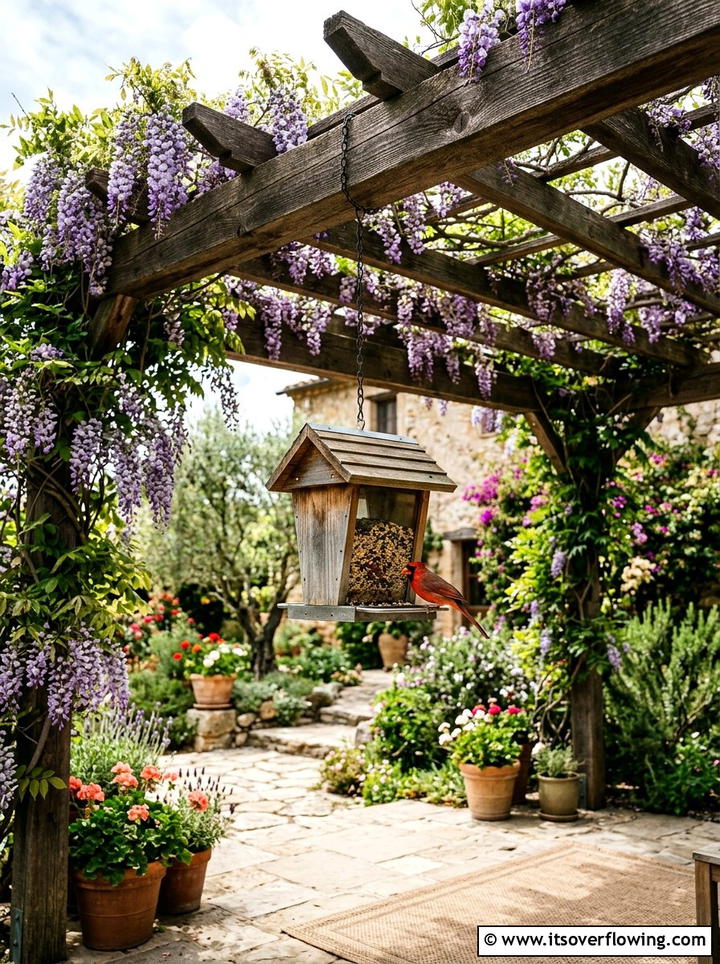
A pergola covered in climbing vines like wisteria or clematis provides a beautiful architectural framework for hanging a hopper-style feeder. The overhead structure protects the birdseed from direct rain, keeping it dry and preventing mold growth. This placement allows you to enjoy bird watching while sitting underneath the pergola in the shade. The large capacity of hopper feeders means you do not have to refill them as often, making them a convenient choice for busy gardeners. The combination of structural wood and hanging greenery creates a layered, tiered effect that adds depth and visual complexity to your outdoor entertaining space.
12. Suet feeder on backyard fence
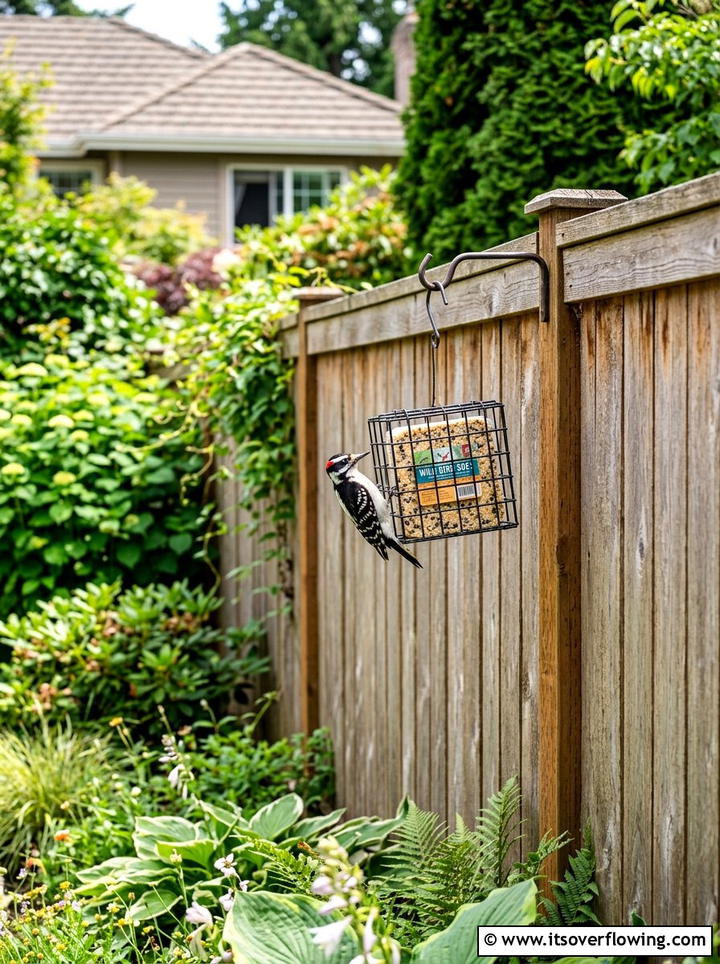
Woodpeckers and nuthatches are often attracted to high-energy suet, which can be easily provided in a simple wire cage attached to a fence. Mounting a suet feeder on a wooden backyard fence is a space-saving way to attract different bird species than those that visit seed feeders. You can paint the fence a dark green or brown to help the feeder blend in, or leave it natural for a rugged look. This placement is ideal for smaller yards where there might not be enough room for large poles or standing tables. It keeps the activity at eye level, making it easy to observe the birds.
13. Platform bird feeder in shade garden
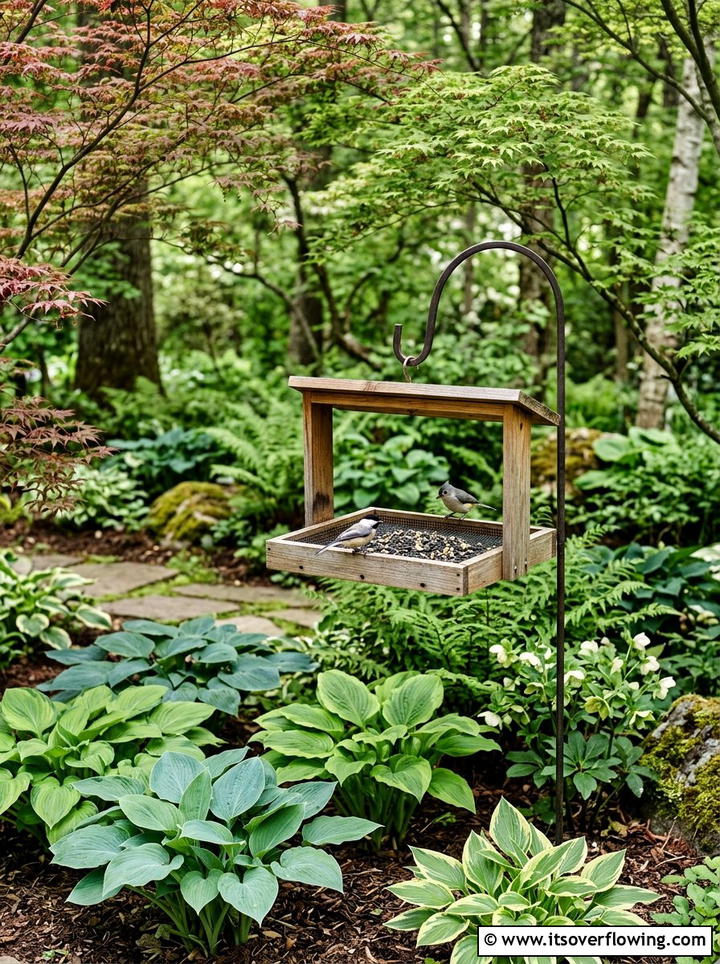
Shady corners of the garden often feel quiet and still, but a platform feeder can bring them to life. Platform feeders are open trays that accommodate a wide variety of birds, including those that prefer to feed on the ground like juncos and doves. Placing one under a canopy of hostas or Japanese maples provides a cool retreat for birds during the heat of the day. The simple design of a platform feeder makes it easy to clean and refill with different types of snacks like fruit or nuts. It adds a subtle, functional element to a woodland-style garden filled with textures and greens.
14. Decorative metal bird feeder in rose garden
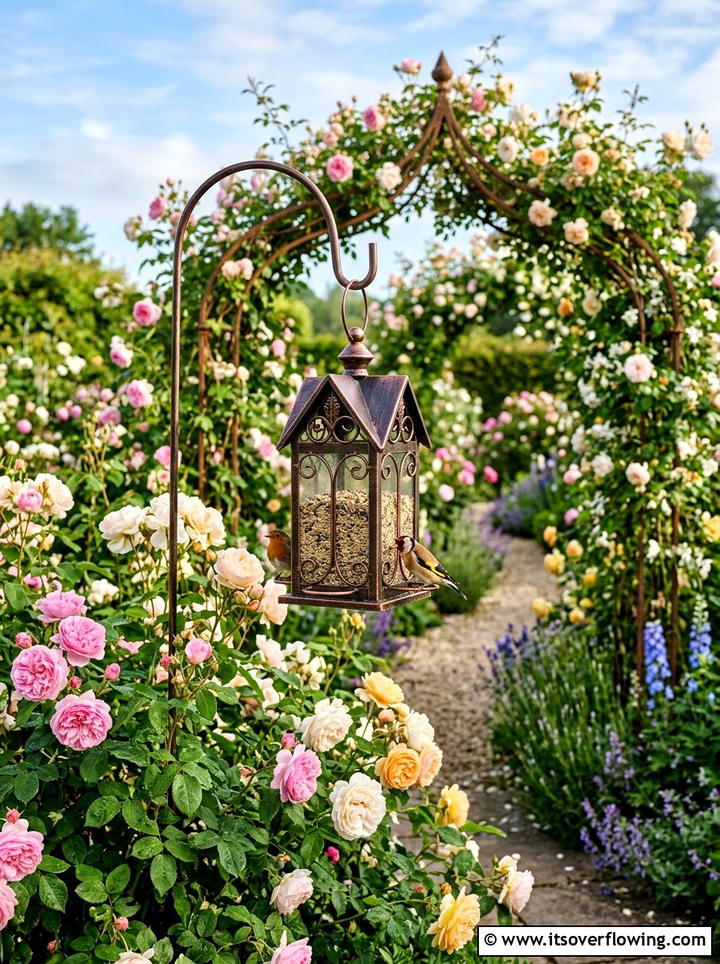
The elegance of a rose garden is enhanced by the addition of an ornate metal bird feeder with intricate scrollwork. These decorative pieces act as garden sculptures that provide a functional service to the local bird population. The thorns of the rose bushes offer a natural defense against predators, making birds feel safer as they approach the feeding area. You should choose a feeder with a finish that complements your rose colors, such as antique bronze or classic black. This setup creates a sophisticated and romantic atmosphere where the beauty of flowers and the joy of nature meet in perfect harmony.
15. Tube bird feeder near evergreen shrubs
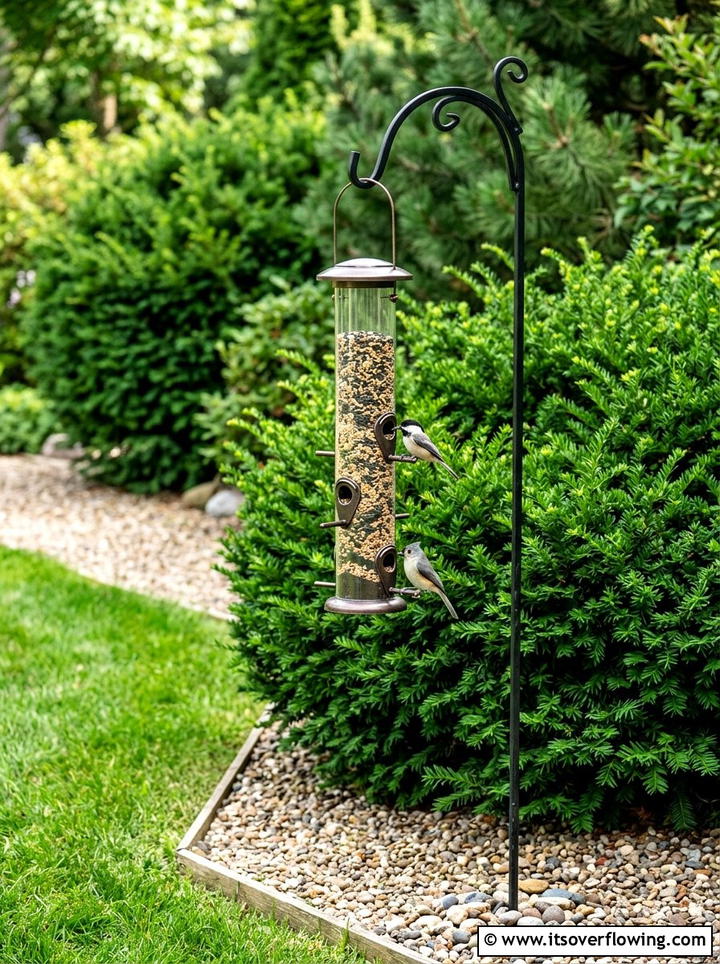
Evergreen shrubs like boxwood or yew provide excellent year-round cover for birds, making them the perfect neighbors for a tube feeder. These long, cylindrical feeders are designed specifically for small birds like finches and chickadees who can easily perch on the small pegs. Placing the feeder just a few feet away from the shrubs allows birds to dart in for a quick snack and then retreat to the safety of the foliage. This arrangement is especially important during the winter months when deciduous trees are bare and birds need extra protection from the wind and cold. It ensures a lively garden.
16. Solar powered bird feeder in rock garden
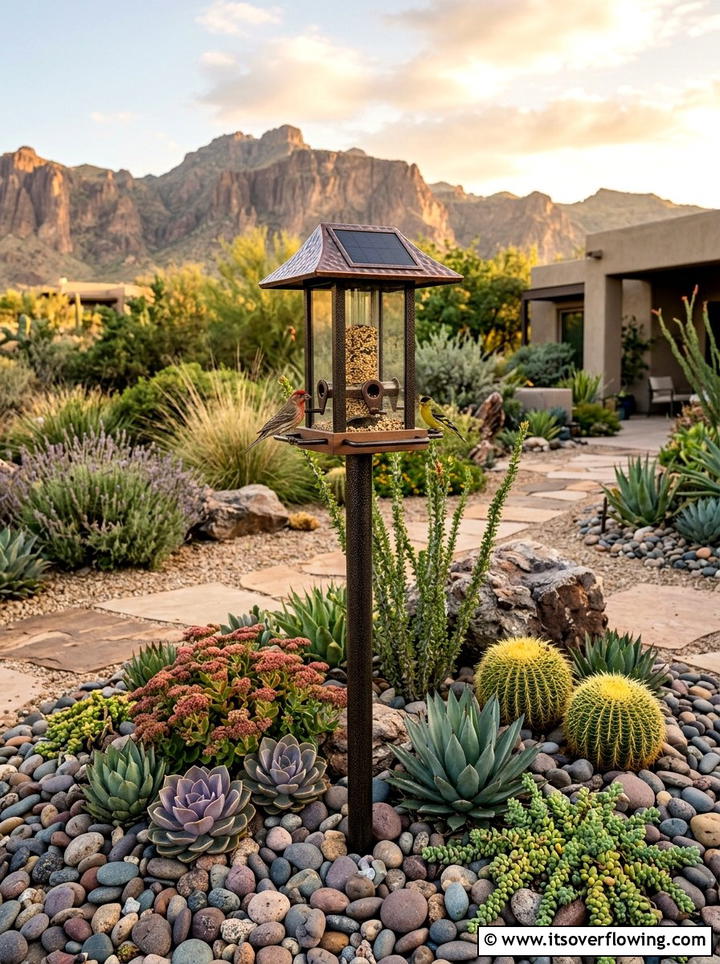
Integrating modern technology with natural stone elements creates a unique and functional rock garden feature. Solar-powered feeders often include LED lights that glow softly at night, turning the feeder into a beautiful garden lantern after the birds have gone to roost. This design is perfect for a rock garden where low-growing succulents and gravel paths provide a clean, uncluttered backdrop. The light attracts nocturnal insects, which can further benefit the local ecosystem. During the day, the feeder remains a busy spot for birds, while at night, it adds a magical, illuminated touch to your landscape design without needing extra wiring.
17. Seed bird feeder on balcony railing
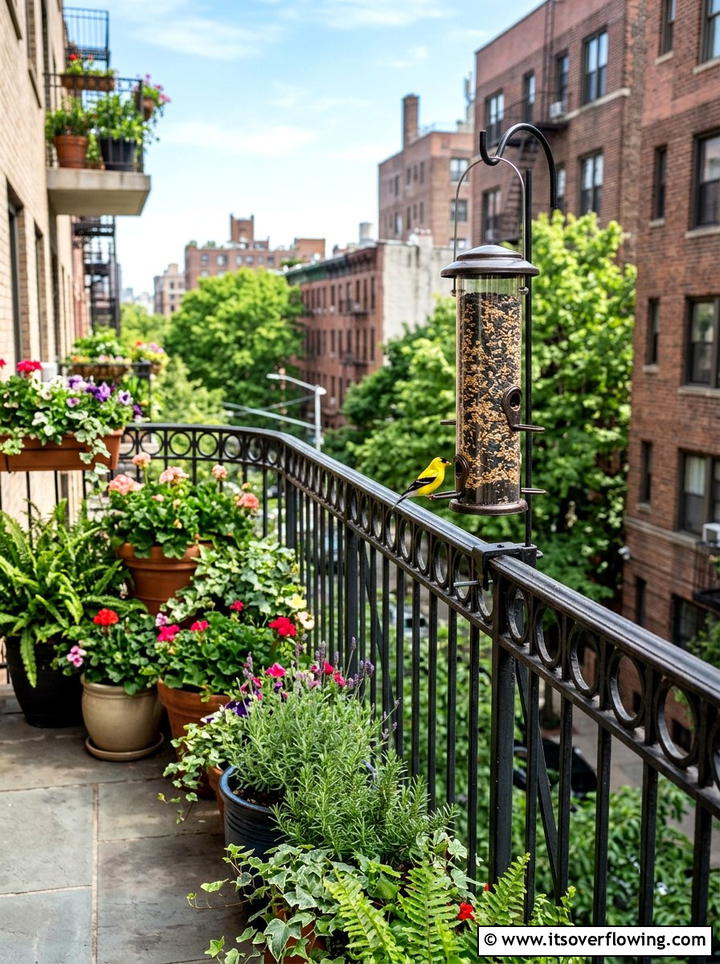
Living in an apartment does not mean you have to miss out on the delights of bird watching. A railing-mounted feeder is designed to clip securely onto a balcony or deck, bringing nature right to your outdoor living space. These compact units are easy to maintain and provide a wonderful way to connect with the outdoors in an urban environment. You can surround the feeder with potted herbs or flowers to create a miniature garden that feels like a high-rise sanctuary. It is a fantastic way to utilize small spaces and bring a sense of calm to a busy city lifestyle through nature.
18. Ground bird feeder under fruit tree
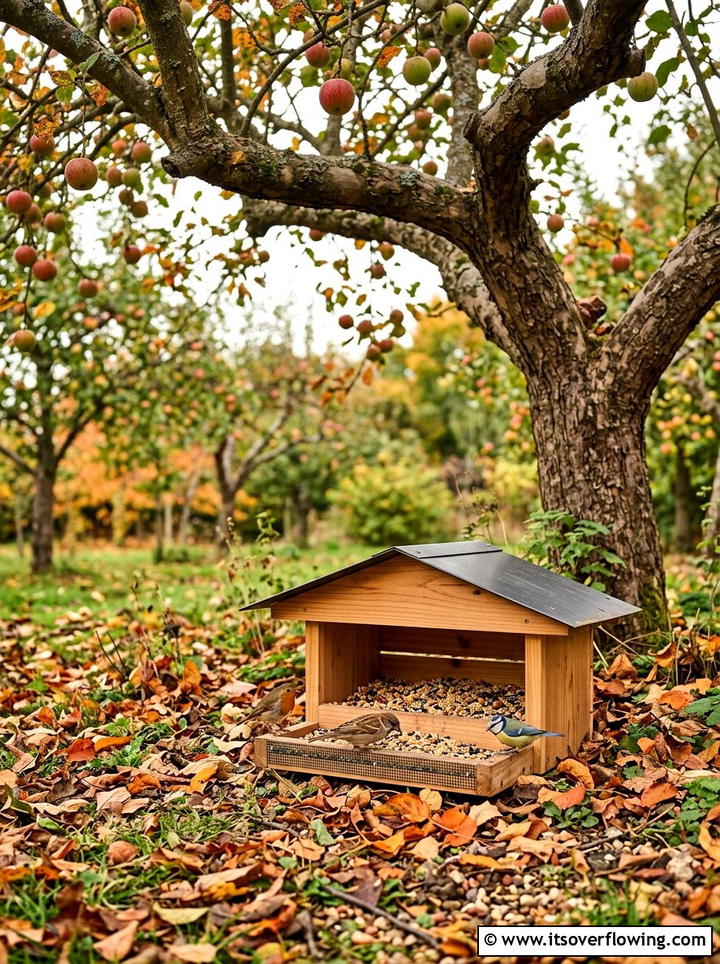
Fruit trees naturally attract birds with their blossoms and fruit, making them an ideal location for a ground-level feeding station. A simple low-profile tray placed under the spreading branches of an apple or cherry tree accommodates ground-feeding species like robins and thrushes. This setup recycles the natural shade of the tree and provides a discrete area for birds to gather. The fallen fruit can complement the seeds you provide, creating a diverse buffet for different species throughout the year. It is a practical and ecological approach that works with the existing rhythm of your garden to support the local wildlife population.
19. Clay bird feeder in Mediterranean garden
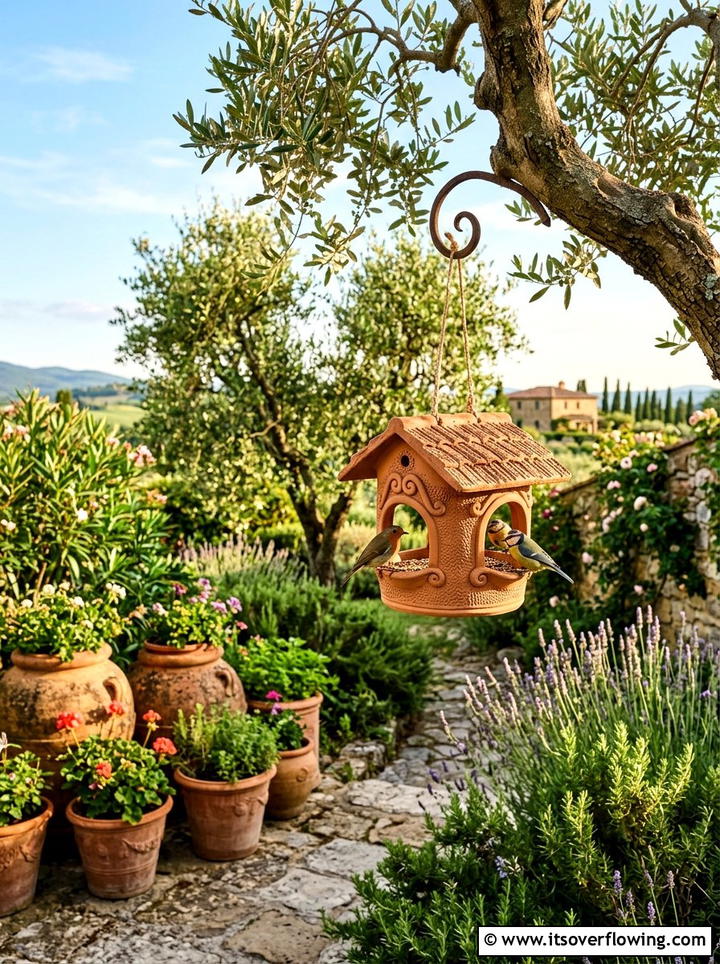
A Mediterranean-style garden with terracotta pots, olive trees, and gravel paths is the perfect home for a handcrafted clay bird feeder. The warm, earthy tones of the fired clay blend beautifully with the sun-drenched palette of the landscape. These feeders often have a rustic, artisanal feel that adds character and a sense of history to the garden. Because clay is a natural material, it remains cool in the sun and is safe for birds to use. This design choice emphasizes a connection to traditional crafts while providing a stylish and durable feeding option that enhances the overall Mediterranean aesthetic of the space.
20. Multi arm bird feeder station in back yard
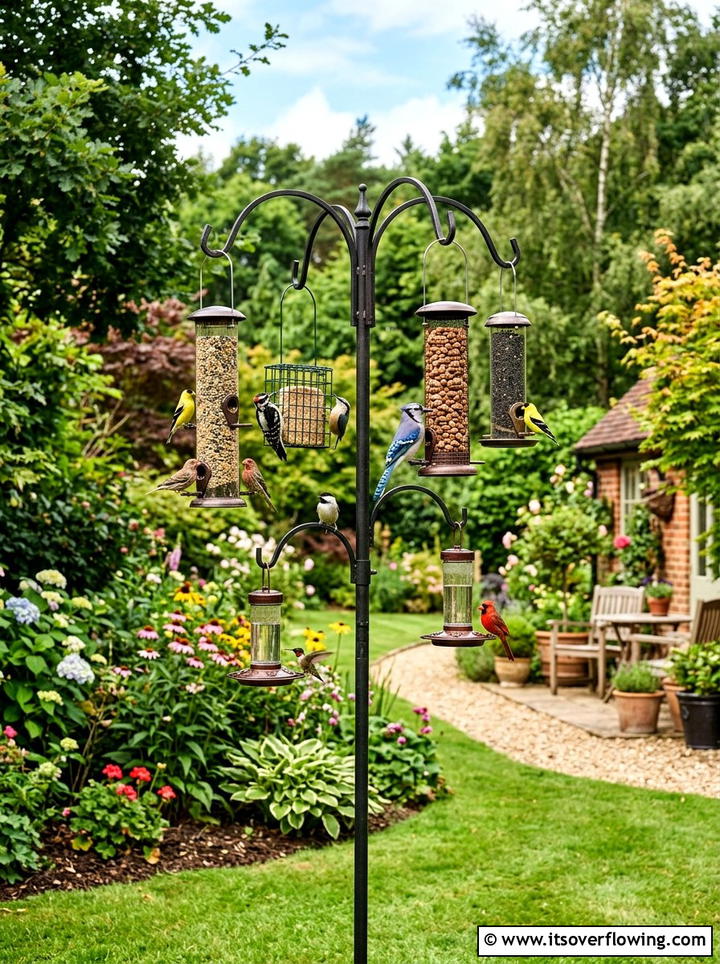
If you want to attract the widest variety of birds possible, a multi-arm feeding station is the ultimate solution. These tall poles feature several hooks at different heights, allowing you to hang tube feeders, suet cages, and even a small water dish simultaneously. Placing this station in a central backyard location makes it the main attraction for both birds and observers. You can customize the types of seeds in each feeder to target specific species, from tiny goldfinches to larger blue jays. The vertical nature of the station saves ground space while creating a high-traffic area filled with constant movement and bird songs.
21. Natural log bird feeder in woodland garden
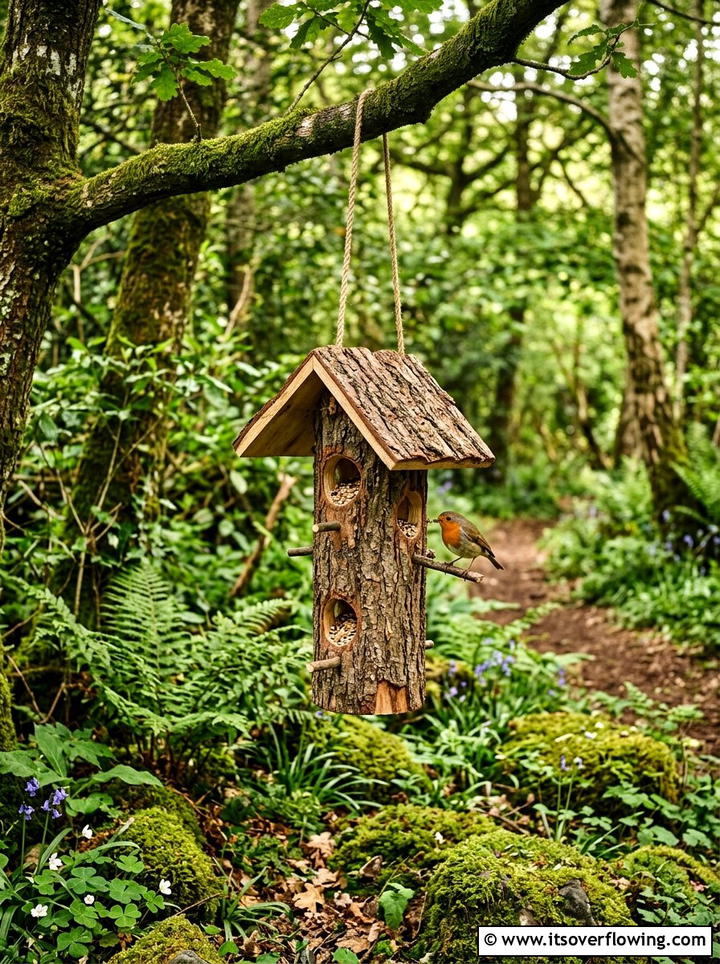
For a garden that mimics a natural forest, a feeder made from a hollowed-out log is an excellent choice. This organic design blends perfectly with a landscape filled with ferns, moss, and towering trees. You can drill small holes into the log and fill them with suet or peanut butter to attract birds like nuthatches that naturally forage on bark. This type of feeder looks like a fallen branch, making it a very unobtrusive addition to the environment. It provides a tactile, textured element to your garden while offering a familiar and safe feeding experience for birds that live in woodland habitats.
22. Colorful ceramic bird feeder near garden path
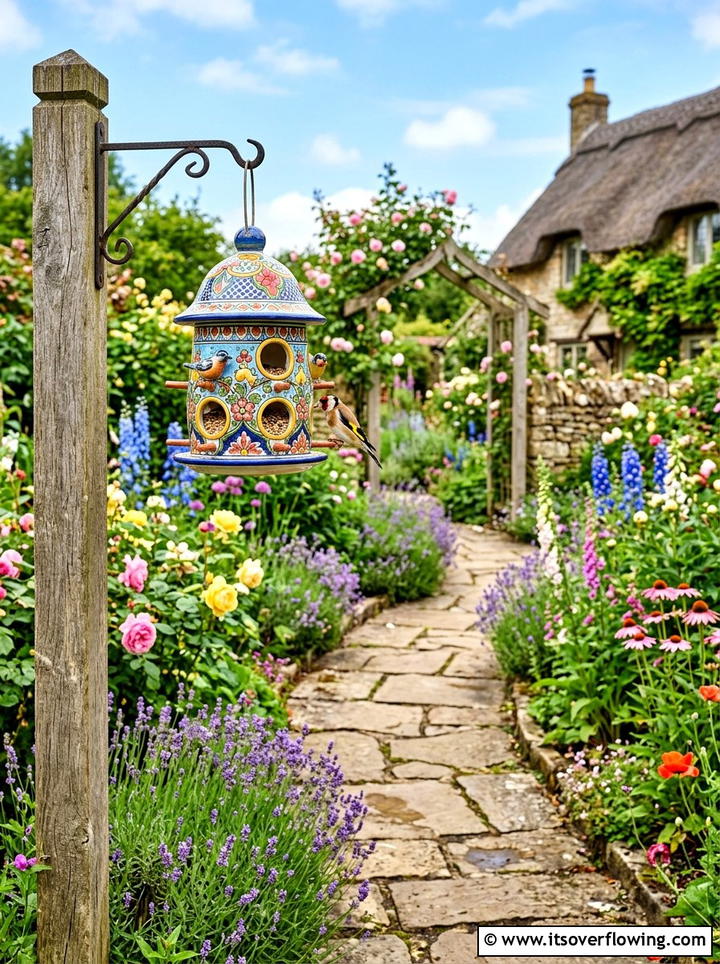
Adding a pop of color to your garden path with a brightly glazed ceramic feeder creates a cheerful and welcoming atmosphere. These feeders come in a wide range of hues, from deep cobalt blue to vibrant sunny yellow, allowing you to match them with your garden’s color scheme. Placing one near a walkway ensures you get a good view of the birds every time you step outside. The smooth surface of the ceramic is easy to wipe clean, which is important for preventing the spread of diseases among bird populations. It serves as both a functional tool and a piece of outdoor art.
23. Large gazebo bird feeder in open yard
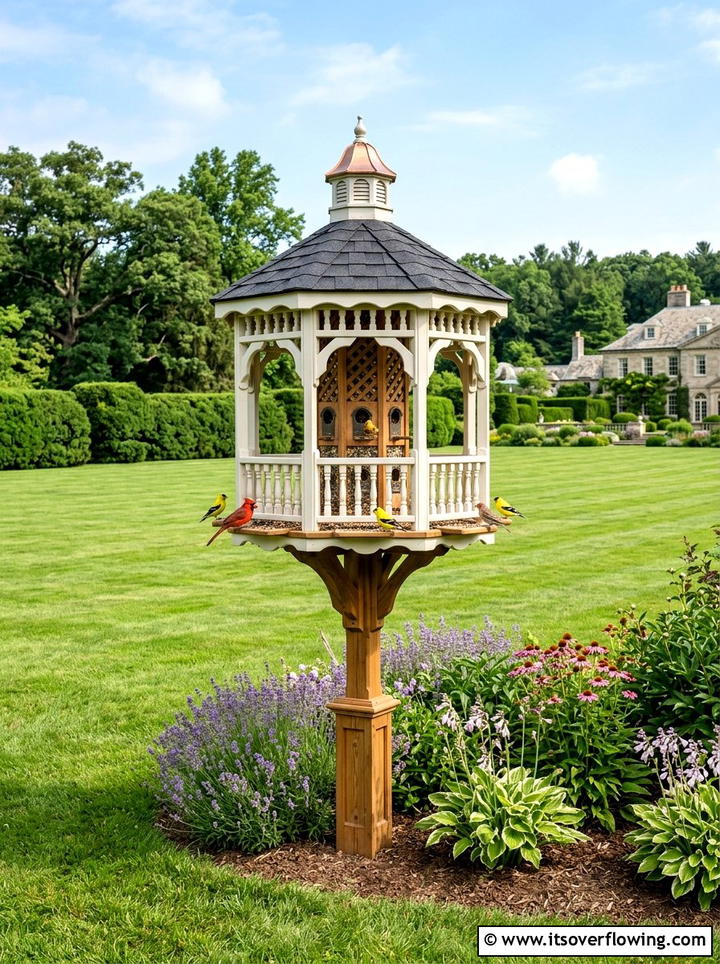
A large, gazebo-style feeder makes a grand statement in a spacious backyard or open lawn area. These architectural feeders are often quite large and can hold a significant amount of birdseed, attracting large groups of birds at once. The wide roof provides excellent protection from the elements, ensuring the birds can feed comfortably even during a rainstorm. Because of its size, the gazebo feeder becomes a primary landscape feature that draws the eye and defines the space. It is a classic choice for homeowners who want to make bird feeding a significant part of their overall garden design and outdoor lifestyle.
24. Small plastic bird feeder in herb garden
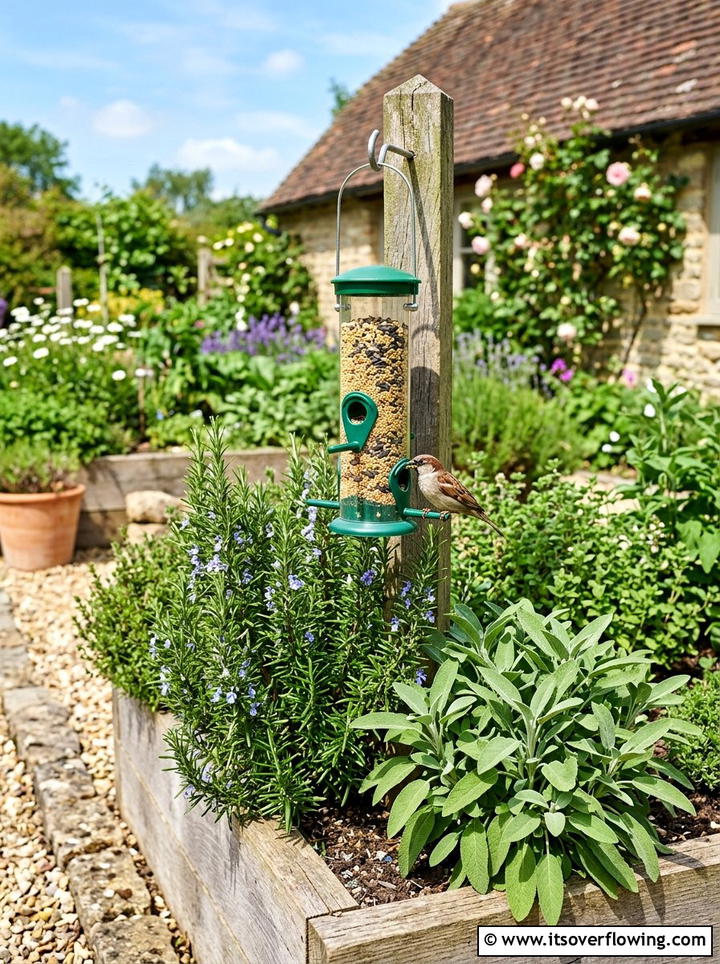
An herb garden is often a fragrant and busy place, making it a lovely spot for a small and practical plastic feeder. These lightweight feeders are easy to move around and can be hung from a simple shepherd’s hook among the rosemary and thyme. Plastic feeders are often very affordable and come in clear designs that make it easy to see when it is time for a refill. The aromatic herbs can provide some natural pest deterrent properties while the birds help control insects that might damage your plants. This setup is perfect for a functional, edible garden that also welcomes wildlife.
25. Cast iron bird feeder on brick wall
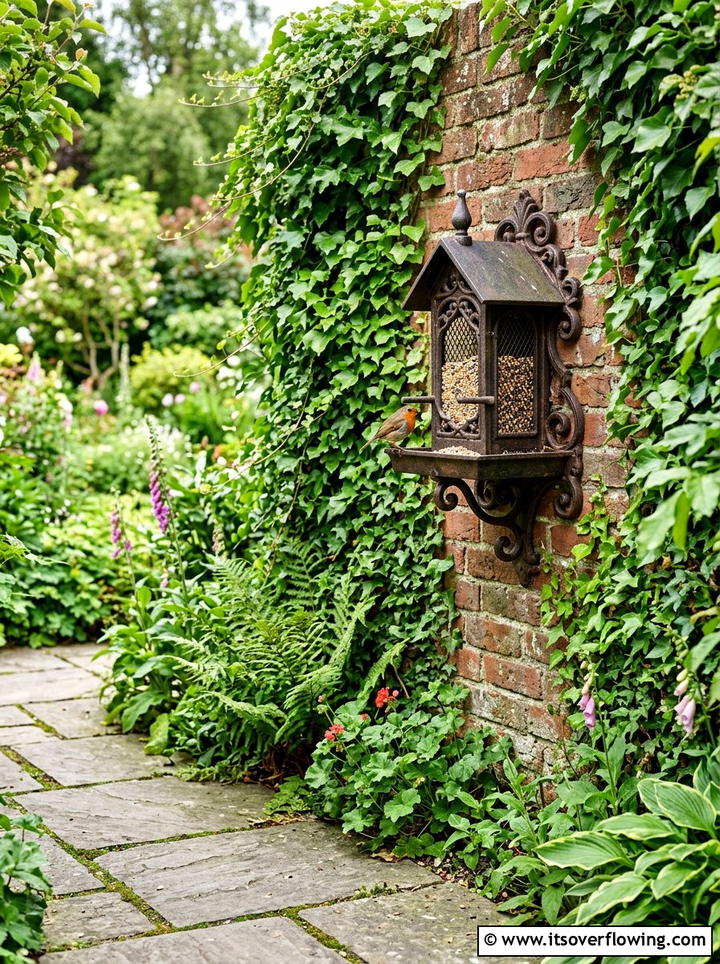
Mounting a heavy-duty cast iron feeder onto a brick wall adds a touch of industrial elegance and permanence to your garden. These durable feeders are built to last for decades and can withstand harsh weather conditions without losing their charm. The dark metal contrasts beautifully against the red or brown tones of the brickwork, creating a sophisticated visual effect. This placement is ideal for courtyards or narrow side yards where ground space is at a premium. It keeps the feeder securely in place and at a consistent height for easy viewing. The sturdy construction also makes it a very squirrel-resistant option for your garden.
Conclusion:
Creating a garden that welcomes birds is a rewarding endeavor that connects you more deeply with the natural world. By carefully choosing and placing bird feeders, you transform a standard yard into a vibrant ecosystem filled with life and beauty. Each of these ideas offers a unique way to integrate functionality with style, ensuring your garden remains an inviting space for both humans and wildlife. Whether you prefer the sleek look of glass or the rustic charm of wood, the key is to provide a safe and consistent food source. Your commitment to bird feeding will be rewarded with years of joyful observations and a healthier garden.

Related posts:
 25 Backyard Ideas With Bird Garden for a Lively Retreat
 25 Upcycled Garden Ideas With Bird Feeders for Backyard Birds
 25 Garden Ideas With Bird Baths to Attract Backyard Birds
 25 Upcycled Garden Ideas With Bird Baths for Backyard Beauty
 25 Backyard Decorating Ideas With Bird Baths You’ll Love
 25 Backyard Decorating Ideas With Signs For Backyard Charm
 25 Backyard Ideas With Barrel Planter for Rustic Garden Charm
 25 Backyard Ideas With Flower Garden for Colorful Curb Appeal
 25 backyard ideas with pathways for Charming Garden Flow
 25 backyard ideas with potting station for Garden Lovers
 25 Backyard Ideas With Vertical Garden For Small Spaces
 25 Recycled Garden Ideas for Backyard Decor