
Adding natural stone elements to your landscape creates a sense of permanence and timeless beauty that few other materials can match. Pebble mosaics are a particularly stunning way to introduce texture, color, and artistic flair to your outdoor living spaces. These intricate arrangements of smooth river rocks and beach stones can transform a simple walkway or patio into a breathtaking masterpiece. Whether you are aiming for a peaceful Zen retreat or a vibrant Mediterranean courtyard, stone patterns offer endless possibilities for customization. This guide explores various ways to integrate these durable and tactile features into your garden for a high-end, curated look that captures everyone’s attention.
1. Spiral pebble path
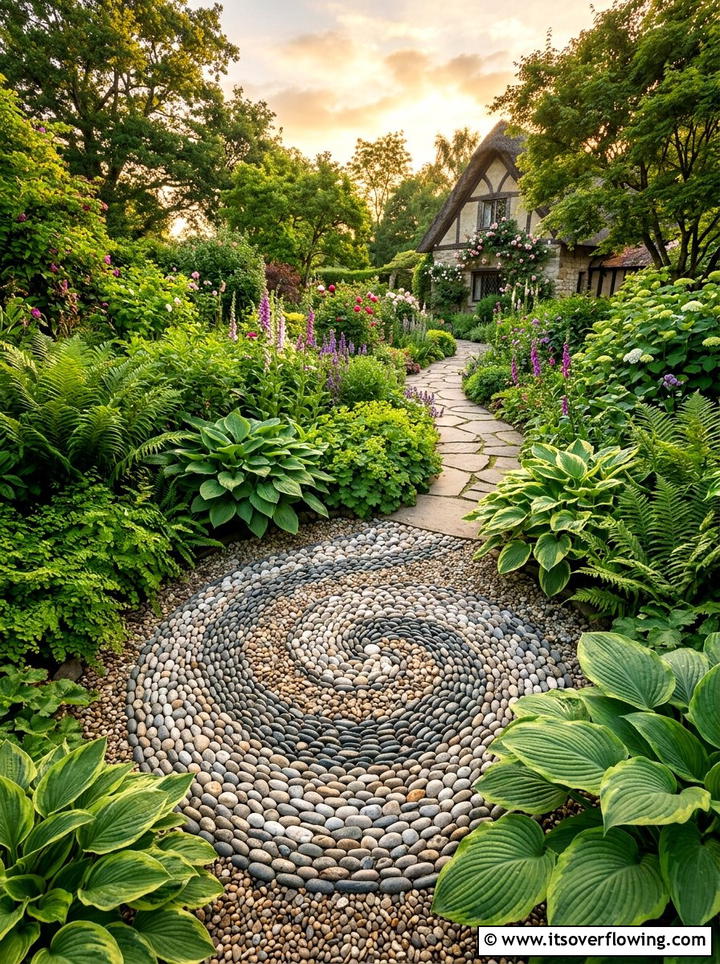
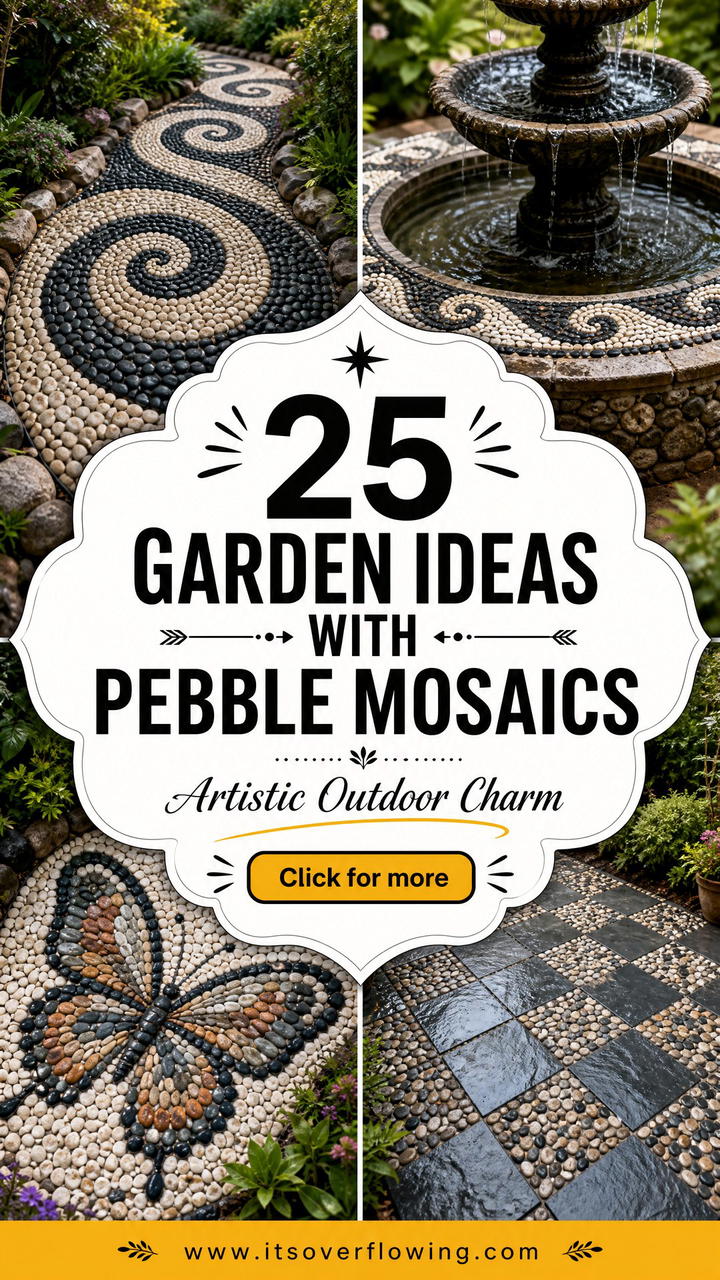
Spirals represent growth and movement, making them a perfect addition to any natural outdoor setting. You can create a winding trail through your flower beds using small, polished river stones in various shades. This design works best when you alternate between light and dark colors to emphasize the swirling shape clearly. Start from a central point and lay the stones on their sides for better durability over time. This technique is often called “on-edge” paving and provides a very stable walking surface for guests. A spiral path adds a whimsical touch to a cottage garden or a peaceful, meditative Zen space in your backyard.
2. Flower stone mosaic
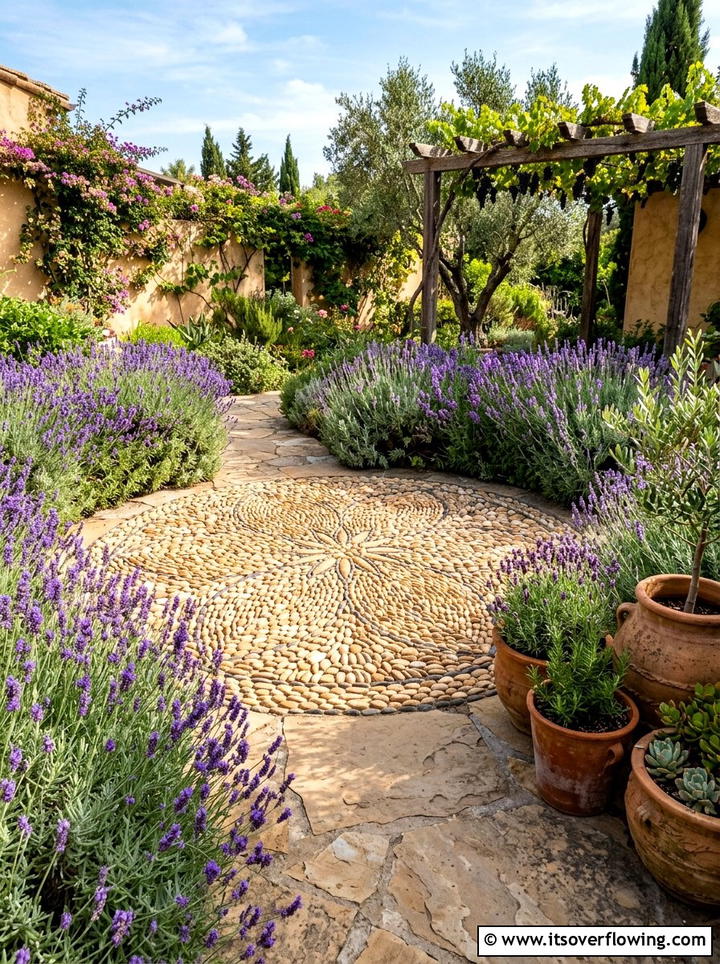
A floral pattern brings a soft, organic feel to hardscaped areas like patios or entryways. You can use rounded pebbles to form delicate petals around a central stone “seed” for a natural look. Choosing stones with different textures adds depth and makes the flower pop against the surrounding mortar or soil. These floral motifs look wonderful when placed at the intersection of garden paths or as a focal point near a seating area. They bridge the gap between the living plants in your garden and the structural elements of your home. Using varied earth tones helps the design blend seamlessly with the outdoor environment.
3. Compass rose garden floor
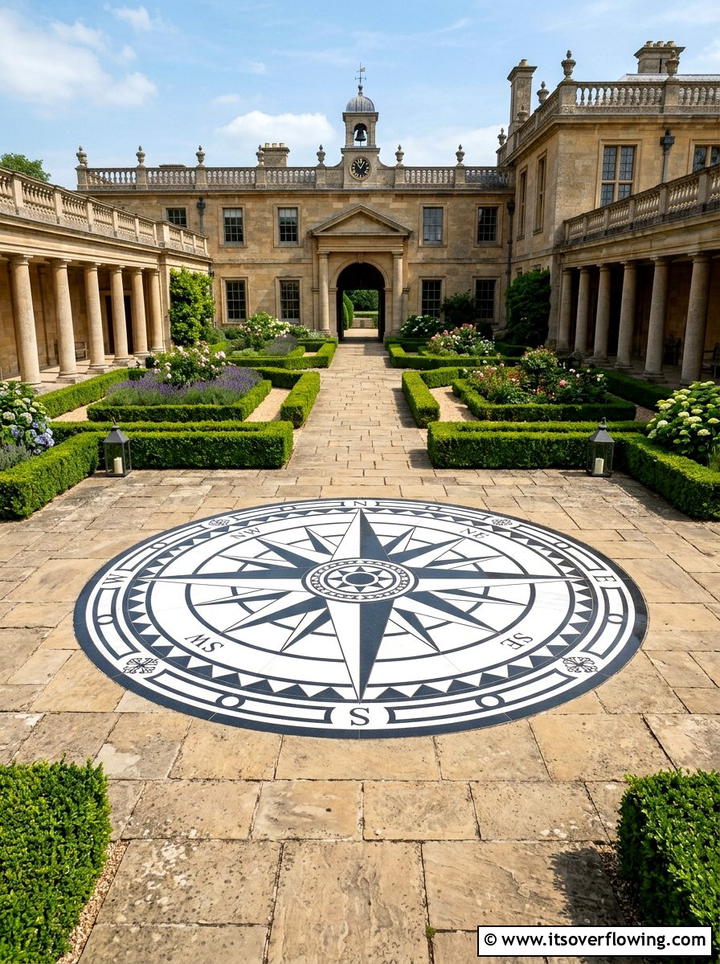
A compass rose mosaic serves as a functional and decorative centerpiece for a large patio or courtyard area. This classic design uses pointed geometric shapes to indicate the four cardinal directions using contrasting stone colors. You might use black basalt for the primary points and white quartz for the background to create high visibility. This specific layout provides a sense of order and structure to an open outdoor space, making it feel more intentional. It works exceptionally well in formal garden settings or coastal homes where nautical themes are prevalent. The precision required for this design showcases high-quality craftsmanship and attention to detail.


4. River rock patio rug
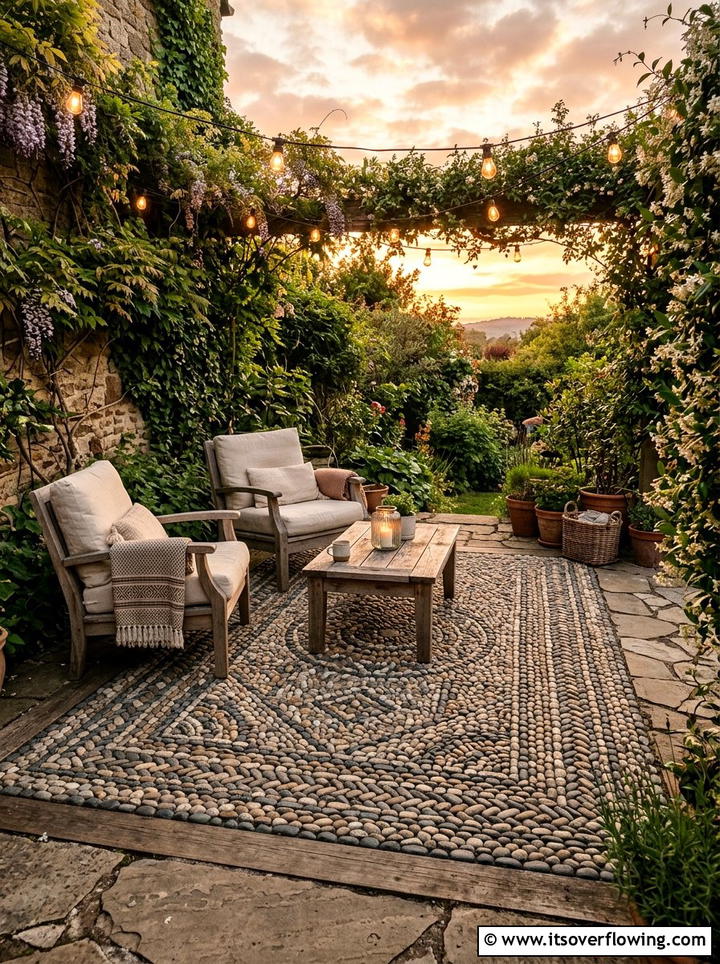
You can define a specific seating or dining area by creating a stone “rug” directly on your patio surface. This involves laying a rectangular or oval mosaic pattern that mimics the appearance of a textile floor covering. Use a mix of small pebbles to create intricate borders and a central decorative field that grounds your outdoor furniture. This technique helps to zone a large backyard, making the space feel more cozy and inviting for gatherings. Unlike fabric rugs, a stone version is completely weather-resistant and will not fade or mold over time. It provides a permanent, low-maintenance solution for adding style to your floor.
5. Tree base stone circle
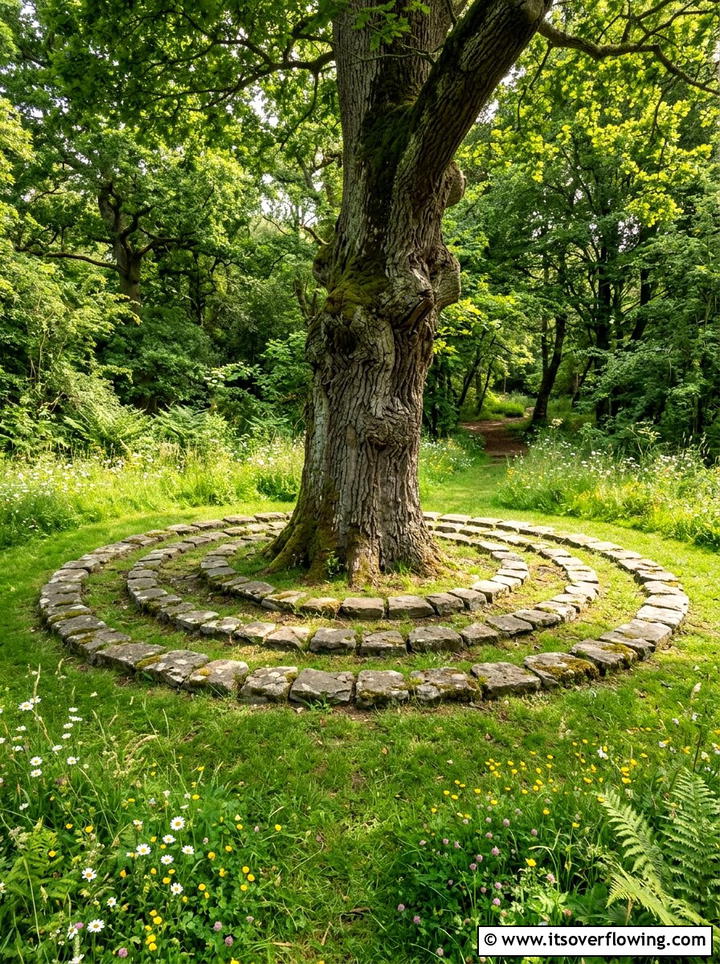
Creating a decorative ring around the base of a mature tree protects the roots while adding visual interest. Instead of simple mulch, try a mosaic of flat stones arranged in concentric circles or radiating lines. This prevents grass from encroaching on the tree and provides a clean, finished look to your landscaping. Make sure to leave enough space around the trunk to allow for natural growth and water penetration into the soil. Using stones that match your home’s exterior stone or brick helps to create a cohesive design throughout the property. This simple addition turns a functional garden task into a beautiful artistic statement.
6. Geometric pebble walkway
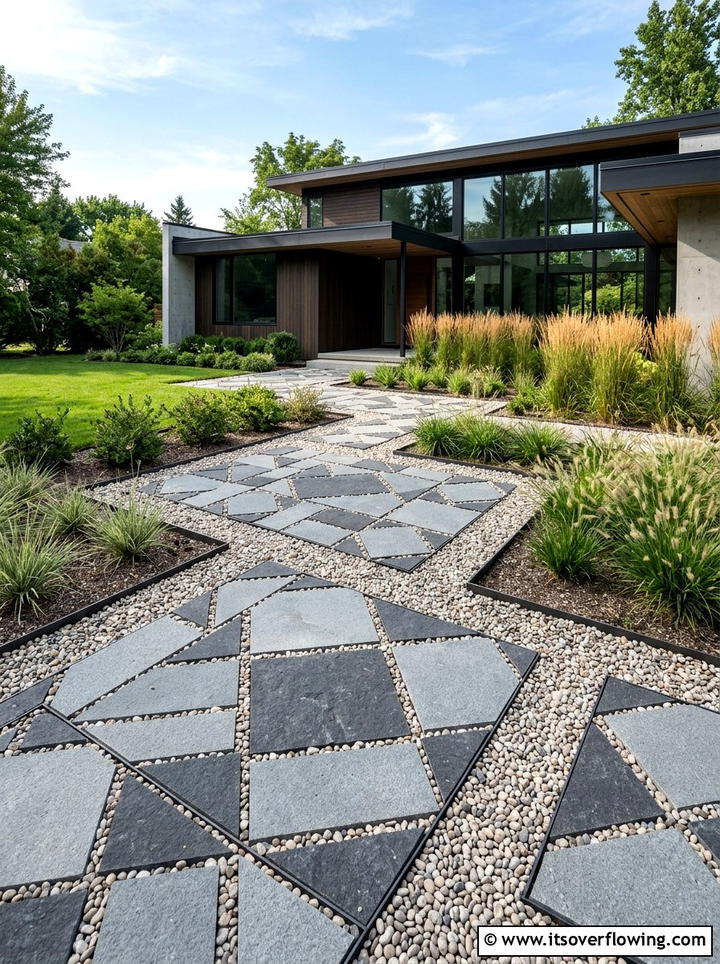
For a more modern or contemporary garden, a geometric pebble walkway offers clean lines and sharp angles. You can use squares, triangles, or chevrons to create a repetitive pattern that feels organized and sophisticated. This style works best with uniform stones in consistent sizes to maintain the precision of the geometric shapes. Choosing a monochromatic color palette, such as different shades of grey, keeps the look sleek and understated. A geometric path provides a strong visual lead toward a front door or a backyard destination. It pairs beautifully with minimalist planting schemes and architectural foliage like ornamental grasses or structural boxwood hedges.
7. Fish scale stone pattern
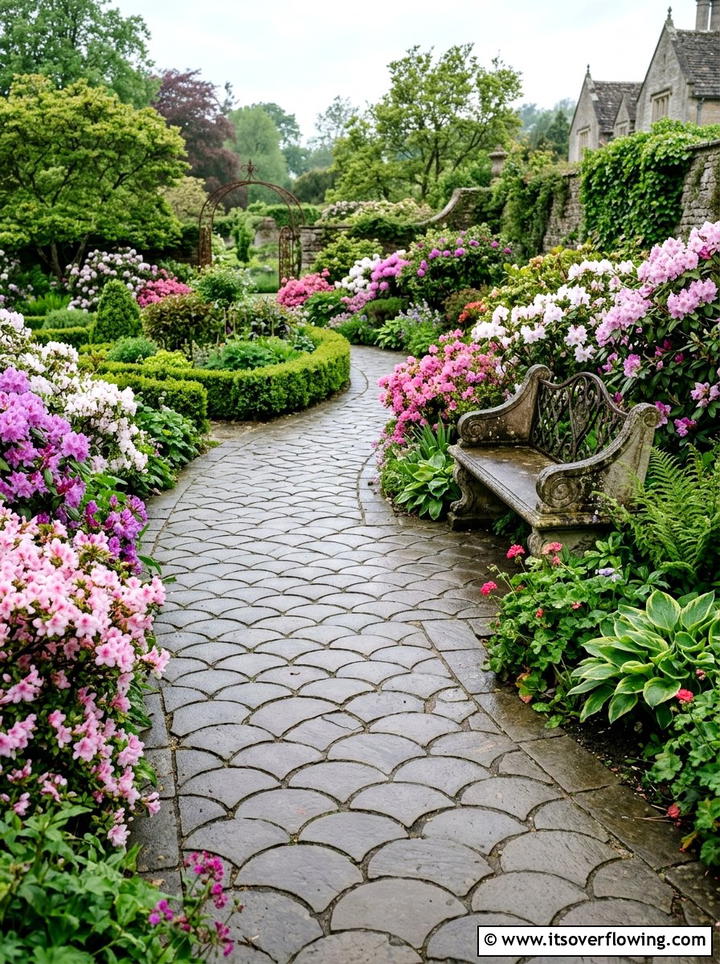
The fish scale pattern, also known as scallop or fan design, adds a sense of flow and rhythm to a walkway. This traditional paving style uses curved rows of pebbles that overlap slightly to create a shimmering, textured effect. It is particularly effective on sloping paths or curved garden areas where straight lines would feel out of place. The overlapping shapes naturally draw the eye forward, making a small garden feel much longer and more expansive. You can use stones of similar colors for a subtle look or vary the shades for a more dramatic, bold appearance. This pattern feels very European and classic.
8. Stone mosaic stepping stones
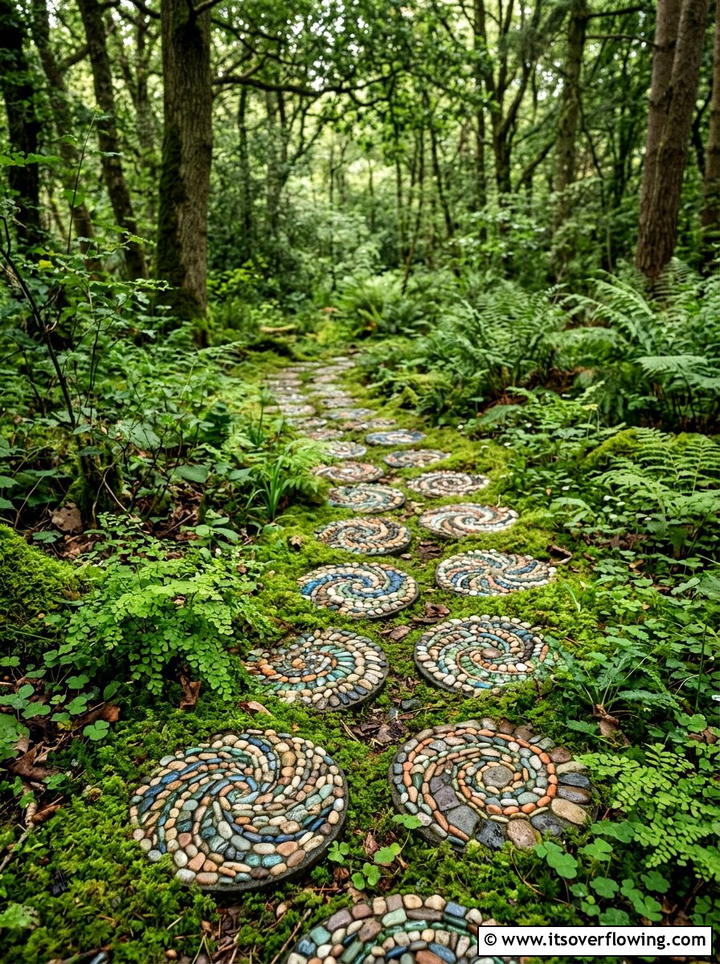
If you are not ready for a full path, individual mosaic stepping stones are a great way to start. Each stone can be a unique piece of art, featuring different patterns like swirls, stars, or simple abstract shapes. You can cast these in circular or square molds using concrete and hand-placed pebbles for a personalized touch. These stones are easy to move and can be rearranged as your garden grows and changes over the seasons. They provide a sturdy, non-slip surface for walking through muddy areas or delicate ground cover plants. This approach allows you to experiment with different stone colors and textures easily.
9. Fountain pebble border
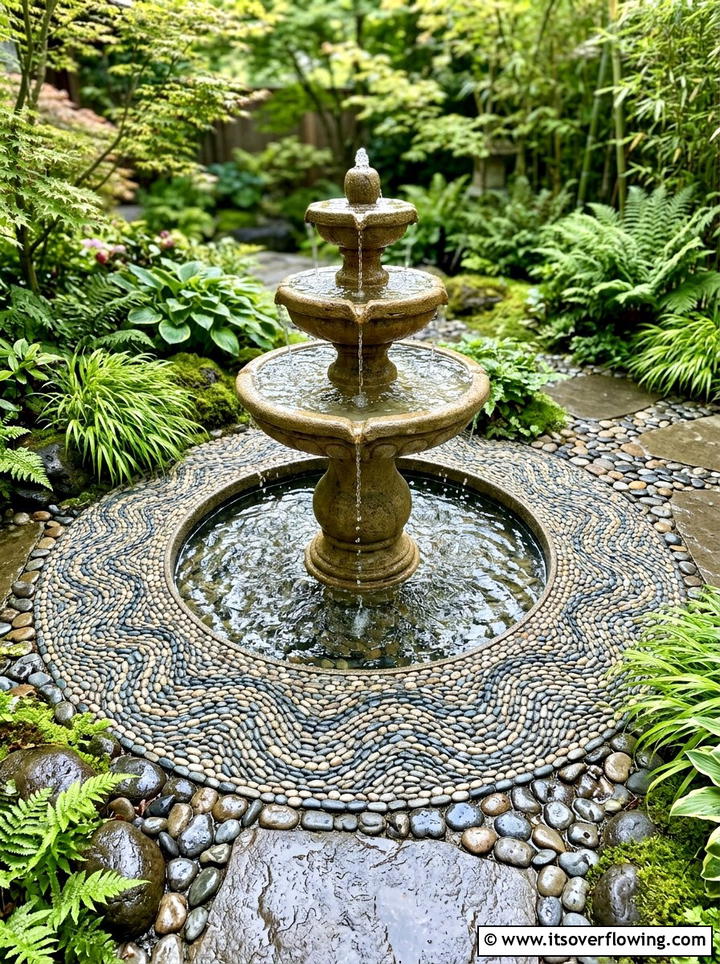
Water features are naturally complemented by the smooth, wet look of river stones and polished pebbles. Creating a mosaic border around the base of a fountain or pond enhances the connection between the water and land. You can design patterns that mimic ripples or waves to reinforce the aquatic theme of the area. When the stones get wet from splashing water, their colors become more vibrant and deep, creating a dynamic visual experience. This border also helps to hide liners or plumbing while providing a stable edge for maintenance tasks. It turns a standard water feature into a custom, high-end landscape element.
10. Zen garden swirl
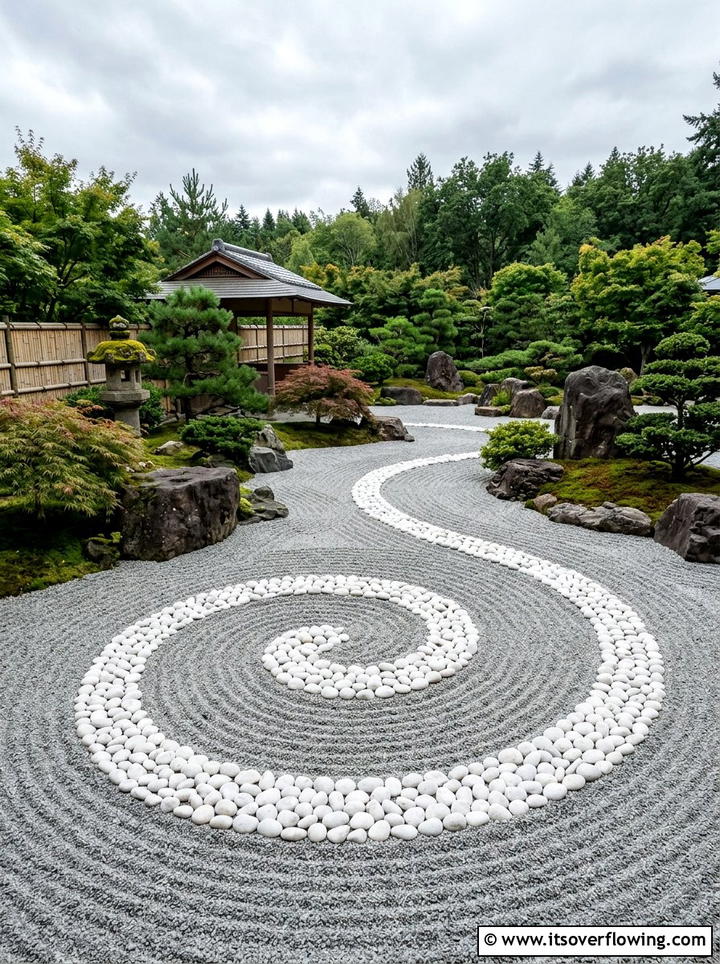
In a Japanese-inspired Zen garden, pebble swirls can represent the movement of water or wind through a dry landscape. These designs are often minimalist, using white or light grey stones to create large, sweeping curves on the ground. The simplicity of the pattern encourages reflection and provides a calm focal point for meditation or relaxation. Unlike raked sand, a stone mosaic swirl is permanent and will not be disturbed by wind or rain. This makes it a practical choice for homeowners who want the Zen aesthetic without the daily maintenance requirements. It looks stunning when paired with moss, bamboo, and large boulders.
11. Butterfly stone mosaic
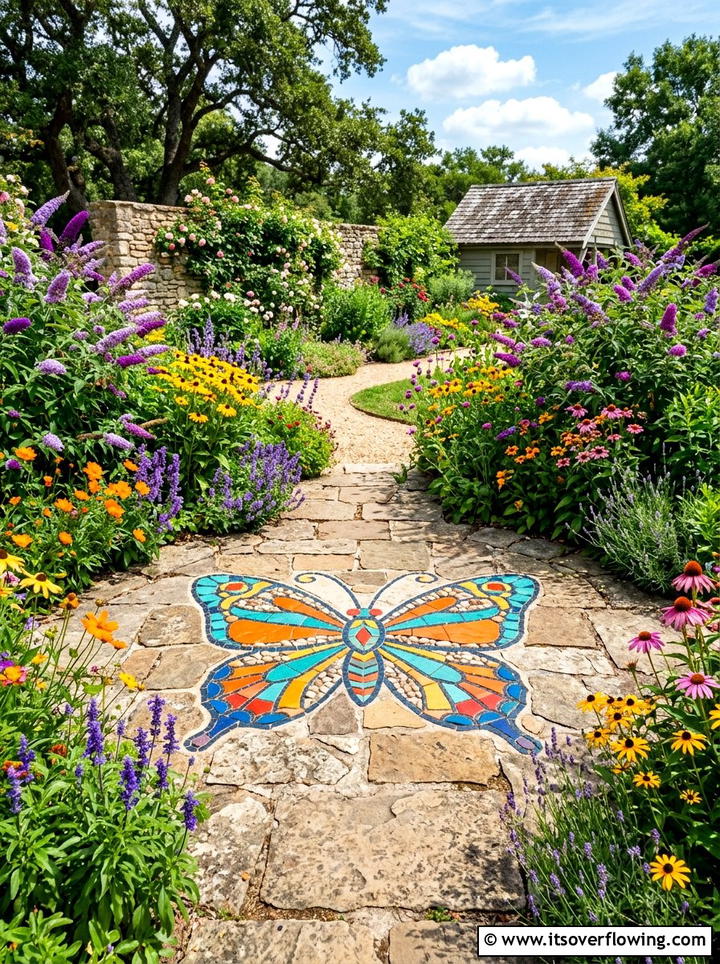
A butterfly design adds a playful and charming element to a child’s garden or a vibrant pollinator patch. You can use colorful pebbles to define the intricate wing patterns and a longer, darker stone for the body. This type of mosaic serves as a beautiful surprise hidden among the flowers and greenery of your backyard. It works well as an inset piece in a larger patio or as a standalone feature near a garden bench. Children especially love discovering these artistic details as they explore the outdoors. Using bright quartz or glass pebbles can make the butterfly appear to shimmer in the bright afternoon sunlight.
12. Mediterranean courtyard floor
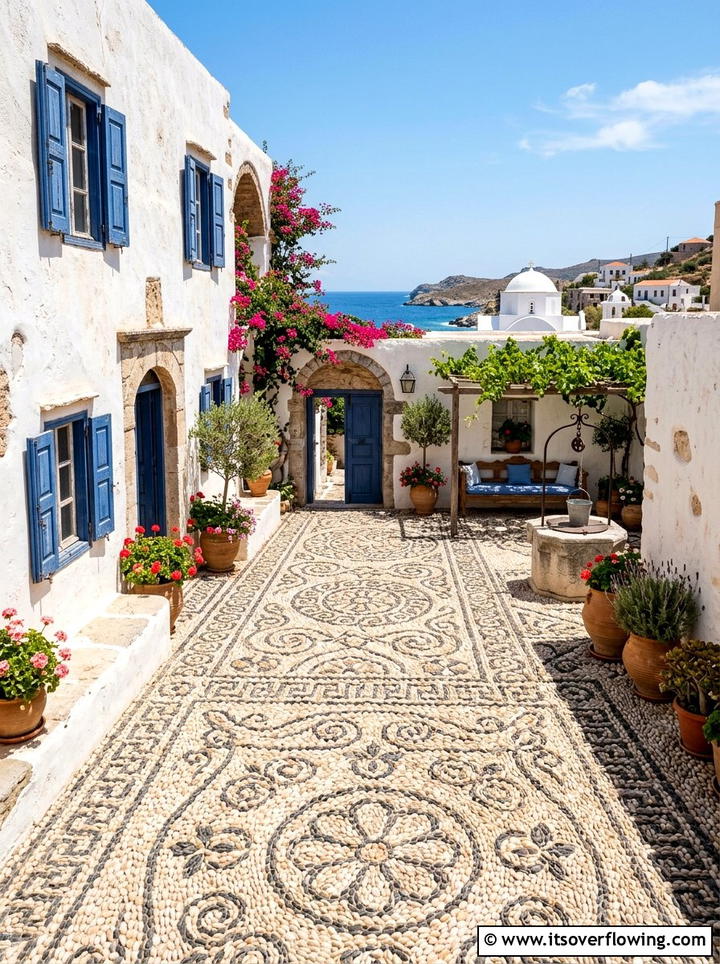
Mediterranean style often features expansive areas of stone “pebble piqué” or cobblestone mosaics that cover entire courtyards. This look is achieved by packing small stones tightly together to create a durable, textured surface that stays cool in the heat. Common patterns include large interlocking circles or intricate tapestry designs that cover the whole ground area. This style of flooring is perfect for warm climates where outdoor living is a primary part of daily life. It provides a rustic yet elegant backdrop for terracotta pots, wrought iron furniture, and climbing bougainvillea. The natural variations in the stones give the courtyard a historical, well-traveled character.
13. Leaf stone pattern
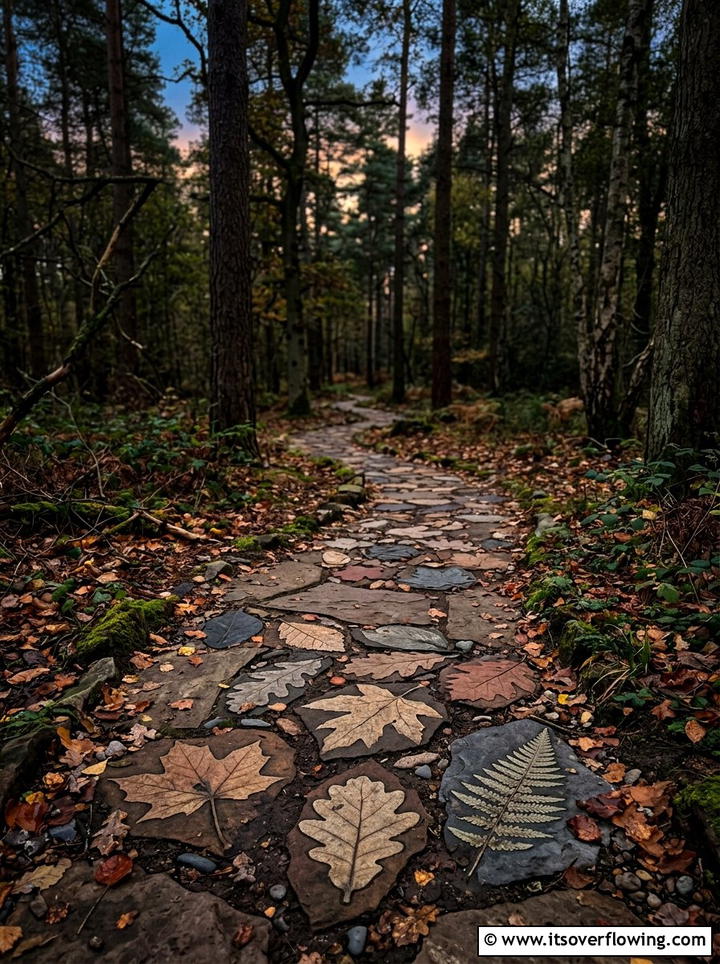
Incorporate the shapes of the surrounding foliage into your hardscaping by creating leaf-shaped stone inlays. You can use green-tinted stones or varied earth tones to mimic the appearance of fallen leaves on a garden path. This design feels very organic and grounded, helping the man-made elements of the garden blend with the natural world. It is particularly effective in wooded areas or under large shade trees where real leaves are frequently present. The detailed veins of the leaf can be created using very small, thin pebbles for a realistic effect. This artistic touch adds a layer of story and meaning to your outdoor pathways.
14. Concentric circle pebble patio
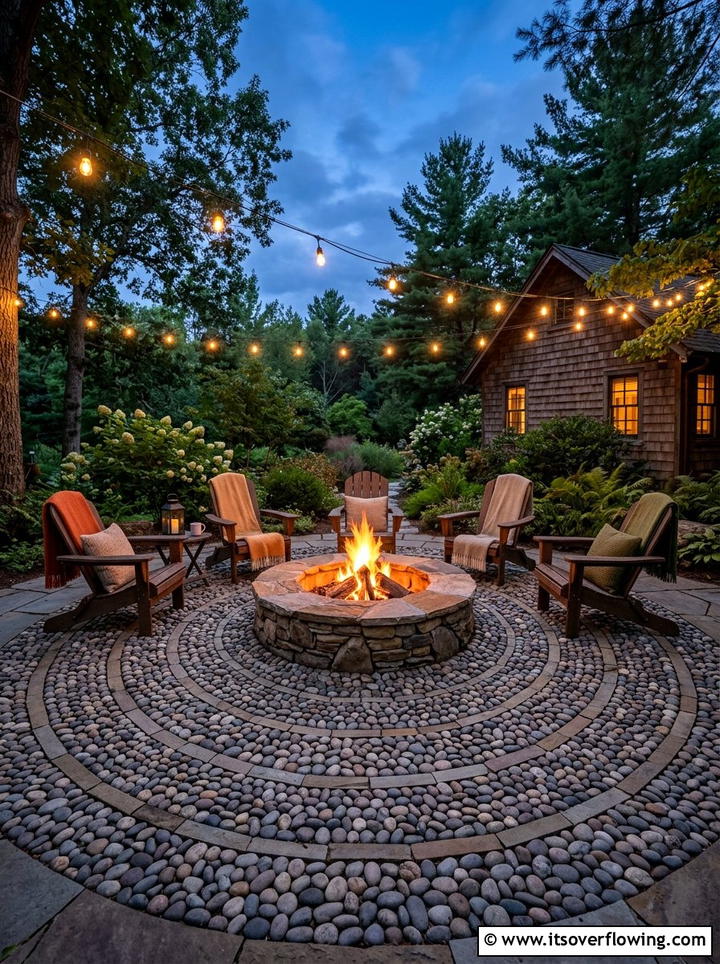
Concentric circles create a strong sense of harmony and balance in a circular patio or seating area. By starting at the center and working outward, you can create a target-like pattern that draws people toward the middle. You can alternate between different stone sizes or colors for each ring to add visual variety and depth. This design is excellent for fire pit areas, as it naturally frames the central feature and provides a safe, non-flammable floor. The circular lines help to soften the harsh corners of a rectangular yard or house. It feels like a natural ripple effect frozen in stone on your garden floor.
15. Pebble and slate checkerboard
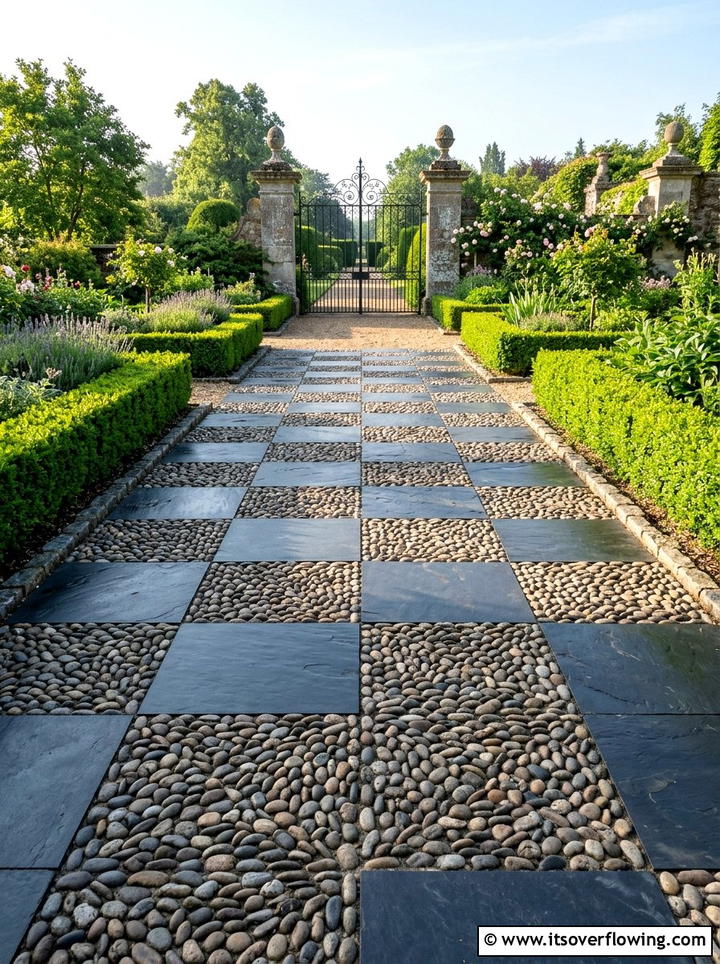
For a sophisticated and high-contrast look, combine smooth pebbles with large, flat slate tiles in a checkerboard pattern. Use the slate squares for the main walking surface and fill the alternating squares with intricate pebble mosaics. This mix of textures creates a visually stimulating floor that feels both modern and traditional at the same time. The flat slate provides a very stable surface for furniture, while the pebbles add artistic flair and drainage. This style is perfect for an elegant entryway or a formal side garden path. The dark slate and light pebbles create a classic color scheme that never goes out of style.
16. Wave stone path
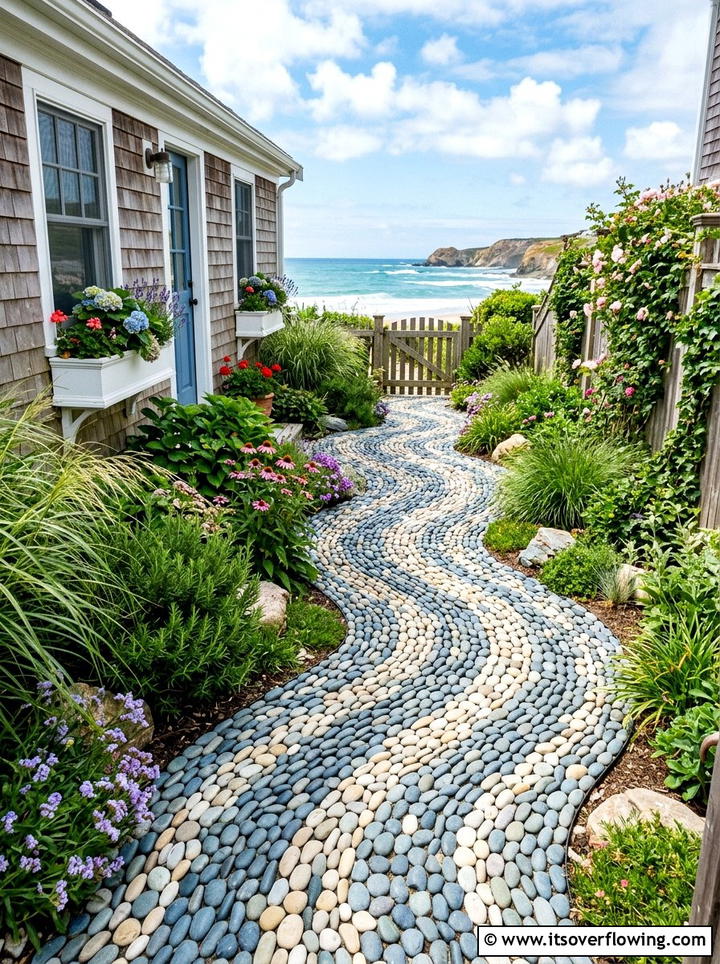
A wave pattern brings the soothing feeling of the ocean to your backyard, regardless of where you live. You can create long, undulating lines of blue, grey, and white stones that flow down the length of a long walkway. This design is perfect for narrow spaces, as the horizontal curves make the path appear wider and more interesting. It encourages a slower pace of walking, inviting you to follow the rhythm of the “water” through your garden. Using stones with a natural sheen or slight sparkle can enhance the watery effect when the sun hits them. It is a beautiful way to animate a flat surface.
17. Sunburst pebble patio
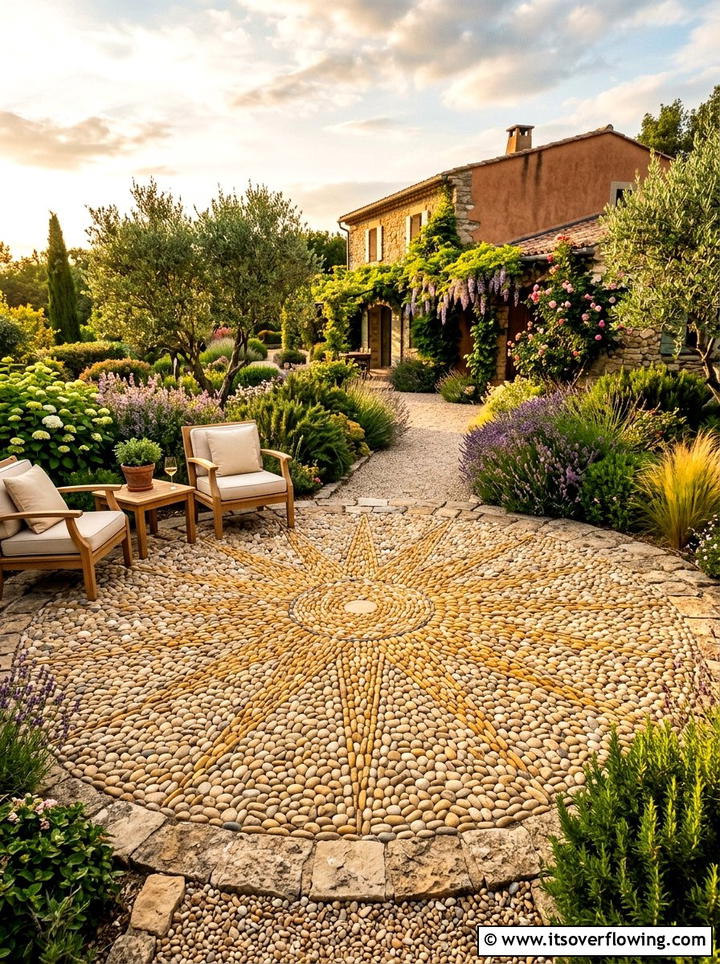
A sunburst design radiates energy and warmth from a central point, making it an ideal choice for a sunny patio. Use long, tapered lines of yellow, tan, or orange stones to represent the sun’s rays extending across the ground. This pattern can fill an entire circular area or serve as a decorative medallion in the center of a larger square patio. It provides a bright and cheerful atmosphere that feels welcoming throughout the year, even during the darker winter months. The sunburst serves as a great conversation piece when entertaining guests outdoors. It perfectly captures the essence of summer and light in your landscape.
18. Dragonfly garden mosaic
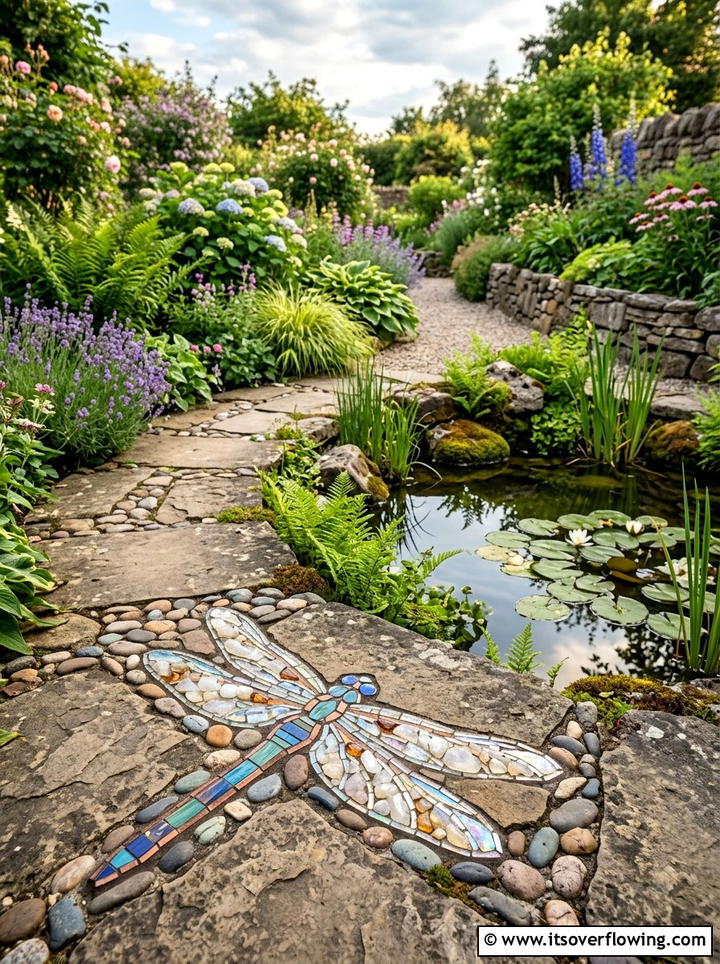
Dragonflies are symbols of transformation and grace, making them a meaningful addition to a peaceful garden sanctuary. You can use elongated stones for the body and flat, translucent pebbles for the delicate wings of the insect. This mosaic looks best when placed near water features or damp areas where dragonflies naturally congregate in the wild. The intricate details of the wings allow for a lot of creativity with different stone sizes and subtle color shifts. Placing a dragonfly mosaic along a path creates a sense of discovery and magic for anyone walking through the space. It is a refined way to celebrate local wildlife.
19. Vertical pebble wall
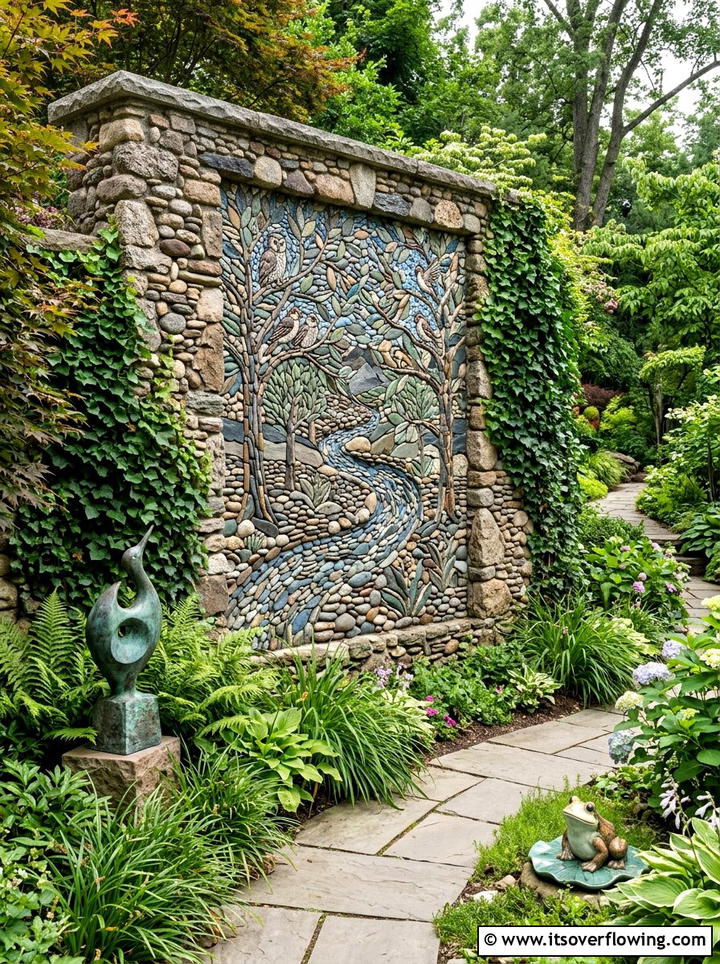
Pebble mosaics do not have to be limited to the ground; they can also be applied to vertical surfaces for a unique look. You can create a stunning mosaic on a retaining wall, an outdoor fireplace, or the side of a garden shed. Using mortar to secure the stones, you can build intricate murals that add texture and color at eye level. This approach is perfect for small gardens where floor space is limited but you still want to include artistic elements. A vertical mosaic acts as a permanent outdoor wallpaper that is weather-resistant and incredibly durable. It transforms a functional wall into a beautiful work of art.
20. Pebble garden edging
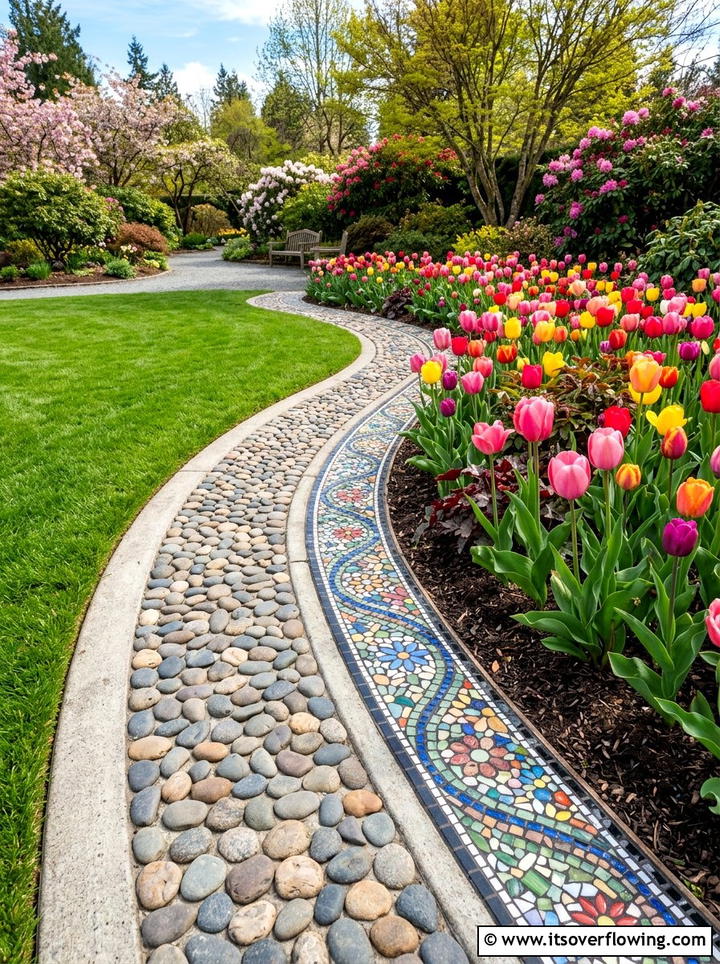
Define the borders of your flower beds or lawns with a decorative pebble mosaic edging instead of standard plastic or wood. You can create a narrow strip of patterned stones that acts as a clean transition between different areas of the garden. This not only looks beautiful but also helps to keep mulch in place and prevents grass from spreading into your planting zones. A mosaic edge is much more durable than traditional materials and will not rot or break over time. You can choose colors that complement your plants, such as deep reds or soft tans. It gives your garden beds a polished and professional finish.
21. Starfish stone mosaic
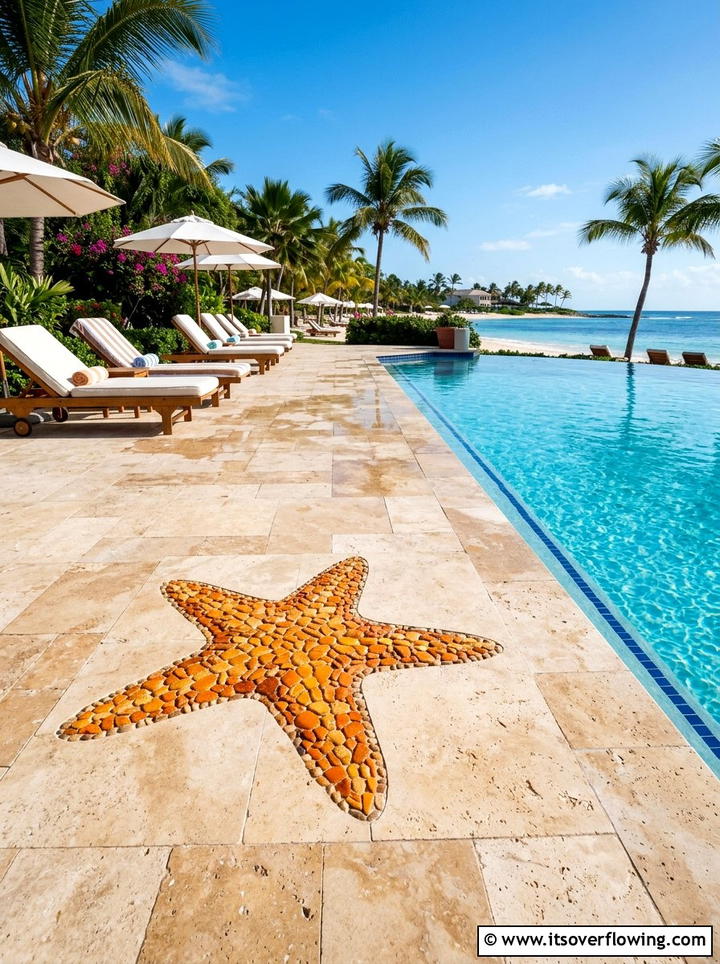
A starfish pattern is a lovely way to introduce a coastal or beach theme to your outdoor living space. Use five radiating arms made of textured orange or sand-colored stones to create a realistic look on your patio. This design works wonderfully around pool areas or in coastal gardens where the sea is a primary source of inspiration. You can surround the starfish with blue or white pebbles to mimic the look of the ocean floor or a sandy beach. This mosaic adds a relaxed, vacation-like feel to your backyard, making every day feel like a trip to the shore. It is a fun and approachable design.
22. Labyrinth stone path
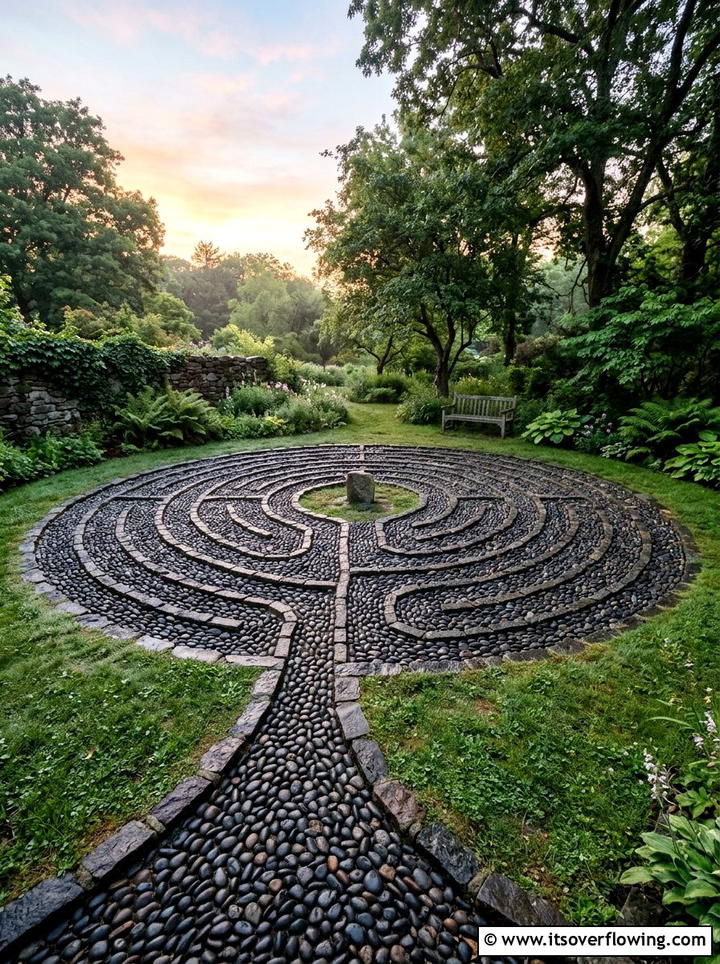
A labyrinth is a single winding path that leads to a center point and back out again, often used for walking meditation. You can build a permanent labyrinth in your yard using pebble mosaics to define the walking lanes and the borders. This creates a dedicated space for quiet reflection and mindfulness right in your own home. Use contrasting stone colors to make the path easy to follow as you walk slowly along the winding curves. Unlike a maze, there are no dead ends, making it a peaceful and stress-free experience for everyone. A stone labyrinth adds a profound sense of history and spirituality to any garden.
23. Bird bath pebble base
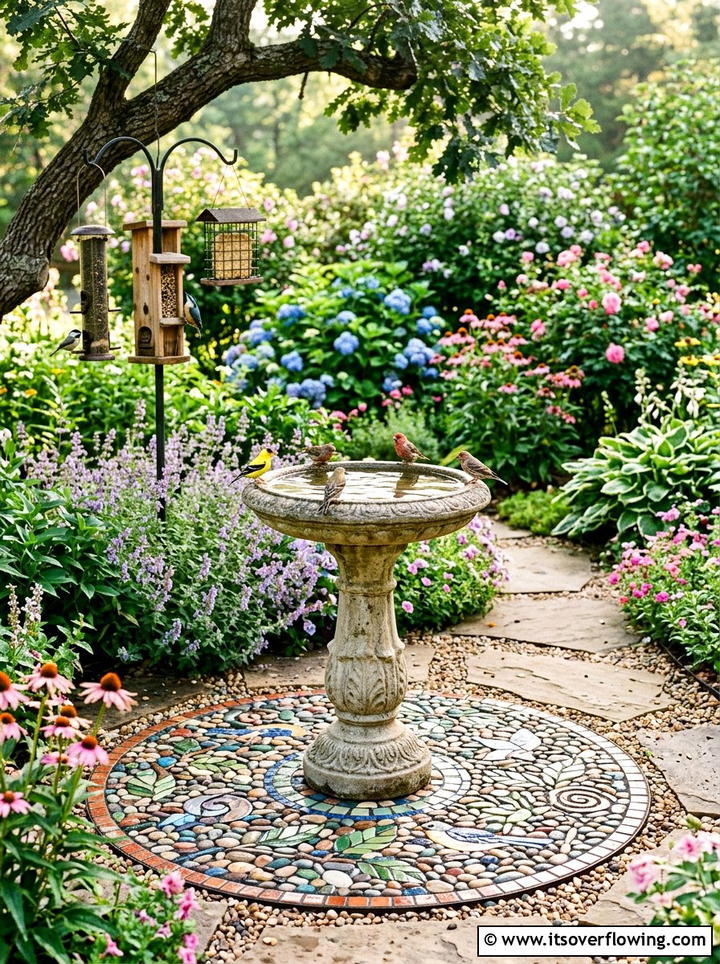
Ground your bird bath with a beautiful pebble mosaic base that catches drips and provides a stable foundation. You can design a circular pattern around the pedestal that features bird motifs or simple radiating lines. This prevents the area around the bird bath from becoming a muddy mess while adding a decorative element to the scene. The stones provide a textured surface for birds to land on if they hop out of the water for a moment. Using smooth river rocks ensures that the area is easy to clean with a garden hose when necessary. This small project makes a big difference in the garden’s overall look.
24. Gradient stone walkway
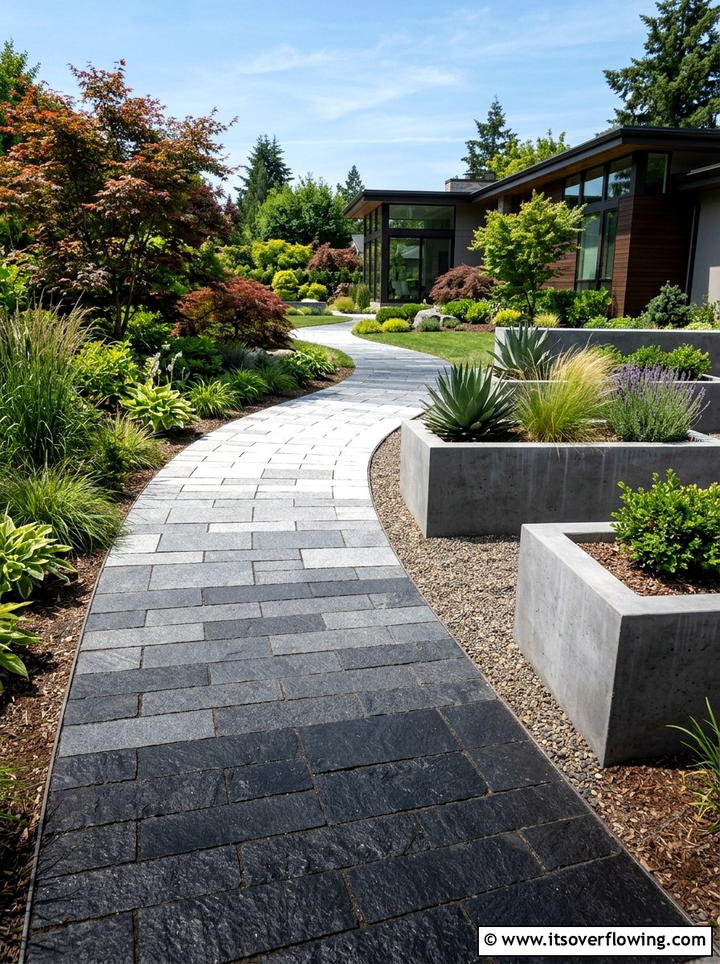
A gradient mosaic uses a slow transition of colors to create a sophisticated and modern visual effect. You can start with dark black stones at one end of a path and gradually introduce lighter greys and finally white pebbles at the other. This technique creates a sense of depth and perspective that can make a short path feel much longer. It is a very artistic approach that requires careful planning and stone selection to ensure a smooth color transition. The result is a sleek, professional-looking walkway that feels like a piece of contemporary art. It works exceptionally well in minimalist or architectural garden designs.
25. Herringbone pebble path
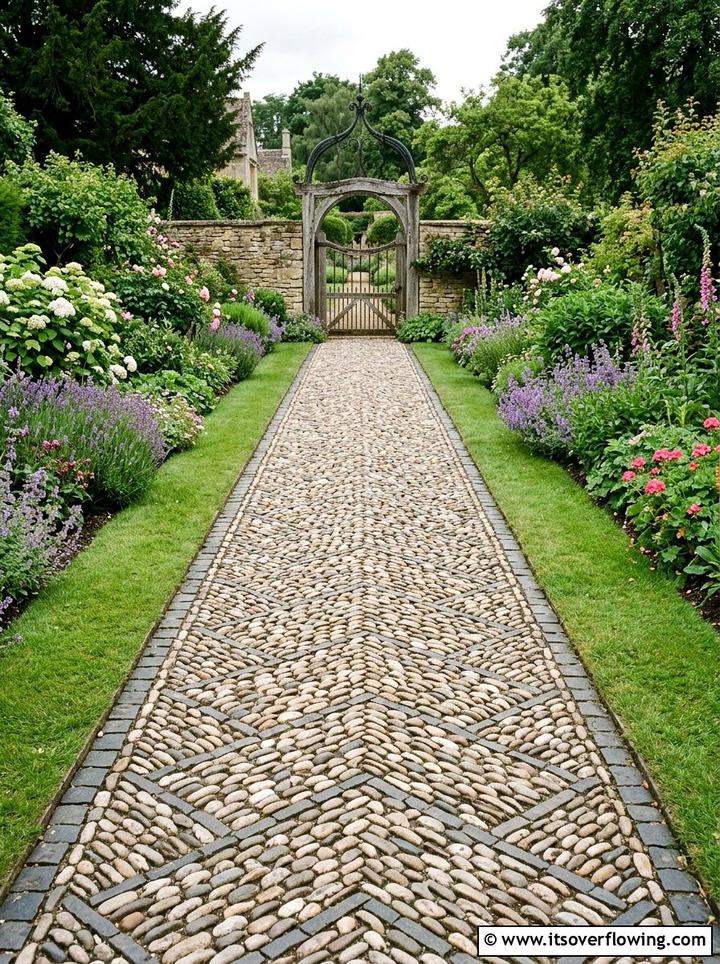
The herringbone pattern is a classic masonry design that looks stunning when recreated with small, uniform pebbles. By laying the stones at forty-five-degree angles to each other, you create a repetitive V-shape that is incredibly strong and stable. This pattern is excellent for high-traffic walkways because the interlocking nature of the stones prevents shifting and sinking over time. It provides a formal and organized look that suits traditional homes and structured garden layouts perfectly. You can use a single stone color for a subtle texture or two colors for a more graphic, bold appearance. This design is both functional and aesthetically pleasing for any path.
Conclusion:
Pebble mosaics are a versatile and enduring way to elevate your garden’s design from ordinary to extraordinary. By using natural materials like river rocks and beach stones, you can create intricate patterns that reflect your personal style and the beauty of nature. From functional walkways and stable patio floors to purely decorative murals and tree surrounds, the applications are truly limitless. These stone features require very little maintenance and only look better as they age and weather in the outdoor environment. We hope these twenty-five concepts have inspired you to start your own stone project and bring a touch of artisanal craftsmanship to your backyard sanctuary.

Related posts:
 25 Garden Design Ideas for Patios With Stylish Outdoor Charm
 25 Garden Ideas for Boho Style With Relaxed Outdoor Charm
 25 garden ideas for farmhouse homes: Rustic Outdoor Charm
 25 garden ideas with fairy gardens for Magical Outdoor Charm
 25 Garden Ideas With Old Furniture for Vintage Outdoor Charm
 25 small garden ideas with flowers for Colorful Outdoor Charm
 25 creative garden ideas with pallet planters for Rustic Charm
 25 Garden Design Ideas for Cottage Gardens Full of Charm
 25 Garden Design Ideas for Farmhouse Landscapes With Rustic Charm
 25 Garden Design Ideas With Pot Displays for Instant Charm
 25 Garden Ideas With Driftwood Sculptures for Rustic Charm
 25 Garden Ideas With Shell Borders for Coastal Charm