
Creating a beautiful outdoor space that captures the heart of rural living starts with understanding the balance between utility and aesthetics. Farmhouse garden design is all about blending functional elements like vegetable patches with the romantic, overgrown beauty of traditional cottage flowers. This style emphasizes natural materials, reclaimed wood, and stone to create a landscape that feels like it has evolved over many decades. Whether you are working with a sprawling multi-acre lot or a small suburban backyard, these concepts will help you establish a nostalgic and inviting environment. You can achieve a timeless look by focusing on hardy plants and classic structures that celebrate the simplicity of country life.
1. White Picket Fence
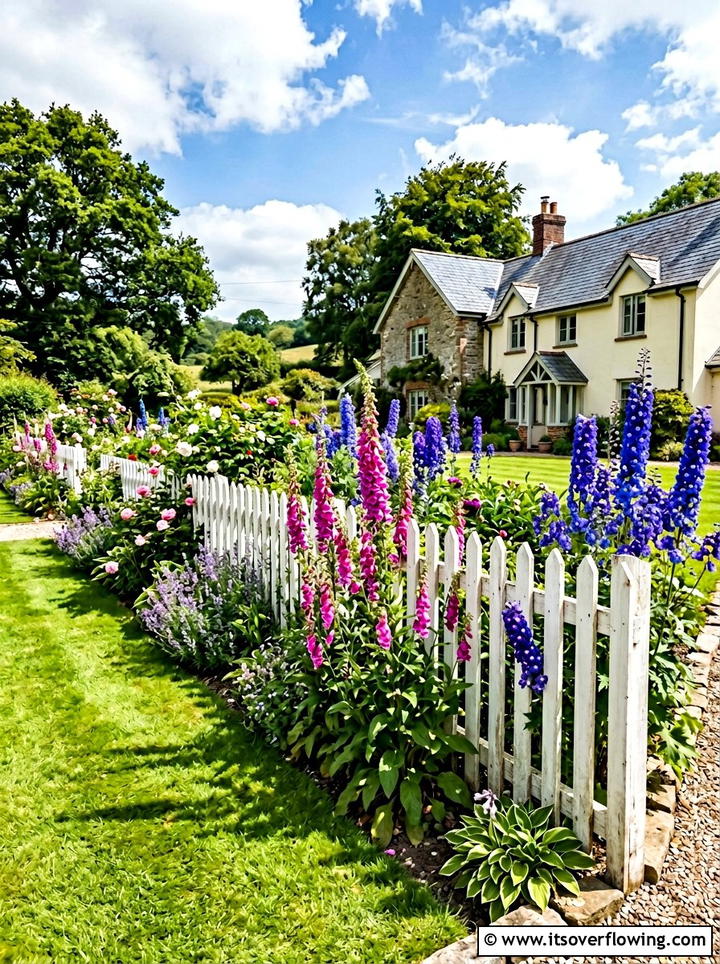
Have you ever dreamed of a classic American landscape that feels welcoming from the very first glance? A white picket fence is the quintessential farmhouse element that defines your property line while adding a touch of nostalgic charm. This design usually features low wooden railings painted in a crisp white finish to contrast against vibrant green grass. You can plant tall perennials like foxgloves or delphiniums right behind the slats to create a layered look. The fence provides a sturdy backdrop for climbing vines and creates a clear boundary for your flower beds. It keeps the space looking organized while maintaining an airy, open feel that invites neighbors to stop and admire your blooms.
2. Raised Bed Vegetable Garden
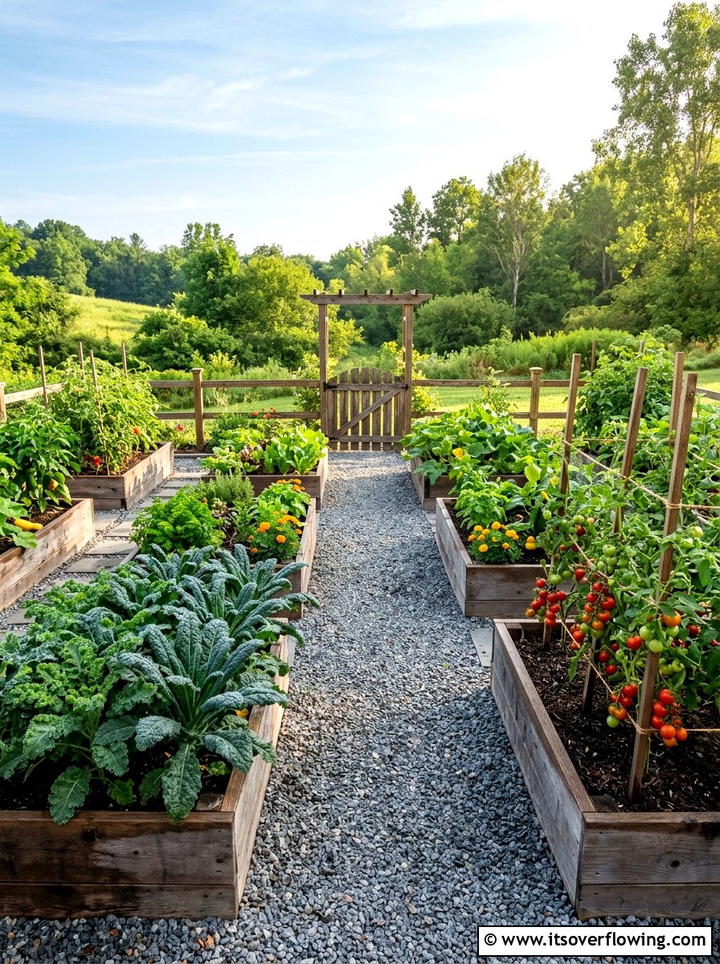
Imagine stepping out of your back door to harvest fresh greens from a perfectly organized set of growing containers. Raised beds are a staple in farmhouse landscapes because they combine productivity with a very clean and structured appearance. You should use natural cedar or reclaimed barn wood to build these structures, ensuring they stand about two feet tall for easy access. Filling these beds with a mix of kale, tomatoes, and marigolds creates a functional yet beautiful focal point in your yard. The symmetrical layout of multiple beds separated by narrow paths makes the entire area look intentional and well-maintained. It is a practical way to grow food while enhancing the rustic theme.
3. Gravel Path
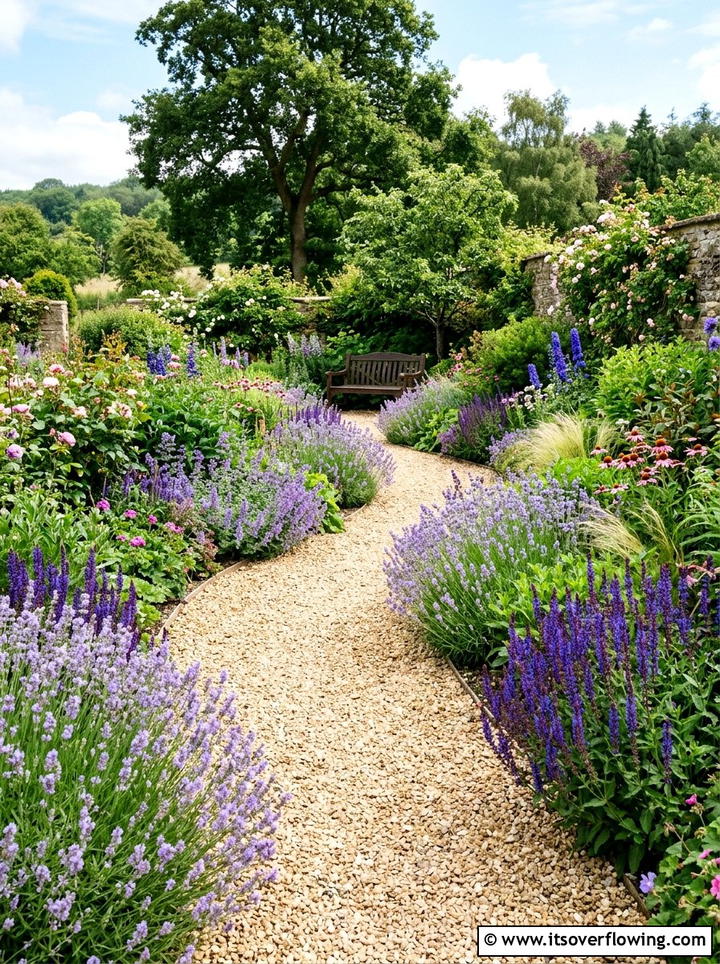
Walking through a garden should be a sensory experience that starts with the sound of crunching stone beneath your feet. Gravel paths offer a relaxed and informal way to navigate your outdoor space without the rigidity of concrete or pavers. You can use pea gravel or crushed limestone in light gray or tan shades to complement the natural tones of your home. These paths should meander through flower borders, leading the eye toward a destination like a bench or a shed. To keep the gravel in place, use simple metal or wood edging that disappears into the foliage. This low-maintenance solution helps with drainage and adds an old-world texture to your entire landscape.
4. Rustic Potting Shed
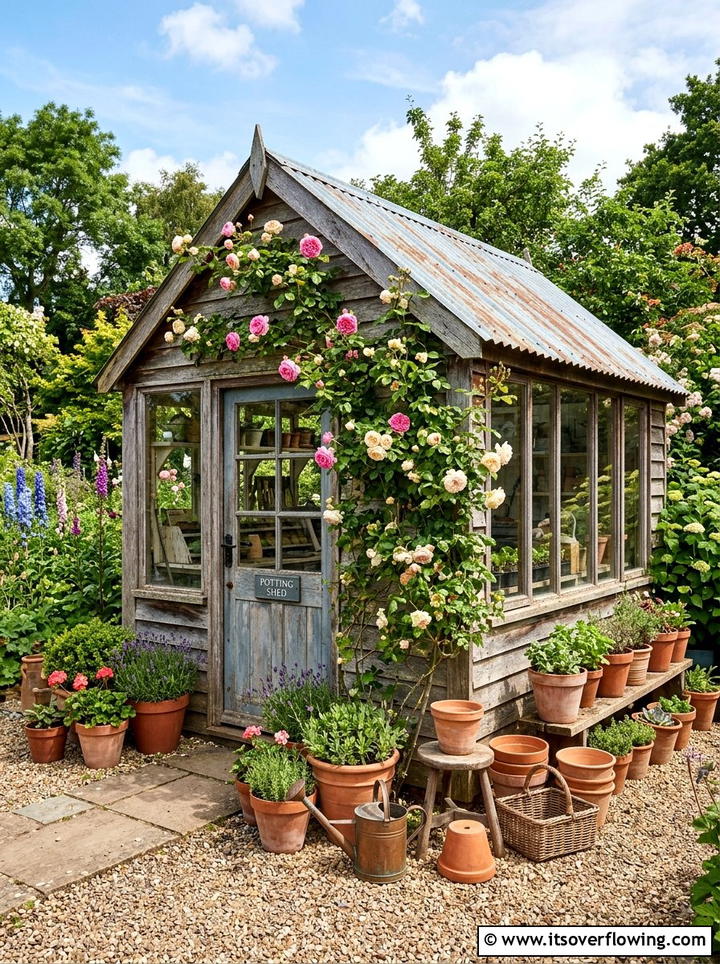
Every gardener needs a dedicated space to store tools and transplant seedlings, and a rustic shed can become a stunning backyard feature. Instead of a basic plastic structure, look for a wooden building with large windows and a weathered tin roof. You can paint it in a soft neutral color or leave the wood to silver naturally over time. Surround the shed with climbing roses or potted herbs to help it blend seamlessly into the environment. Inside, you can have organized wooden shelves and a sturdy workbench for your daily tasks. This functional building acts as a charming anchor for the garden, providing both utility and a picturesque backdrop for your outdoor activities.
5. Wildflower Meadow
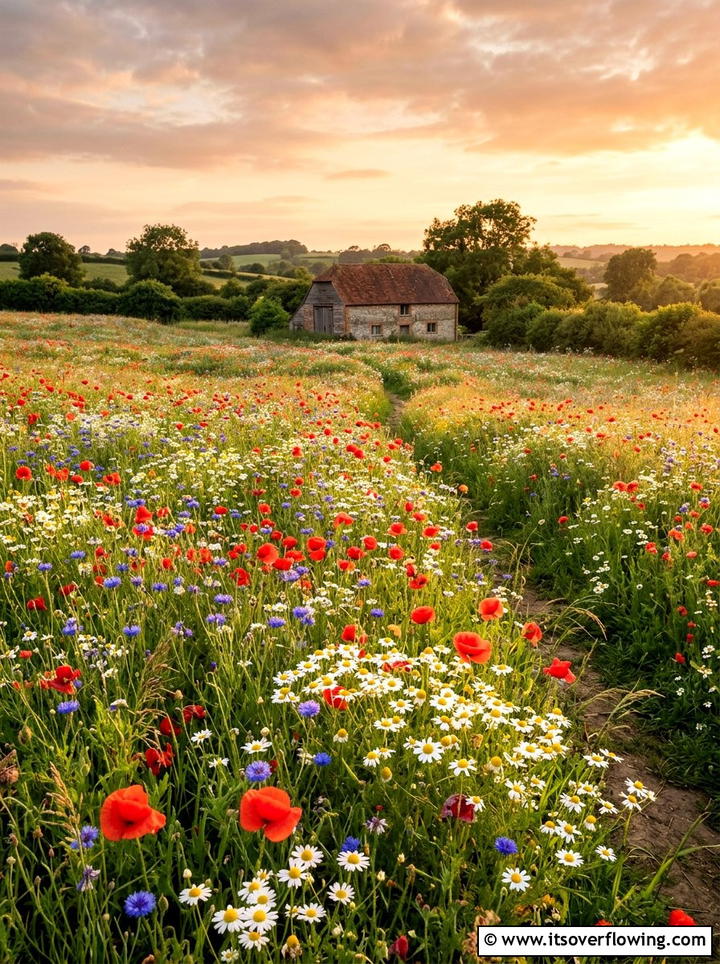
Why spend hours mowing a lawn when you could look out over a sea of colorful blooms that dance in the breeze? A wildflower meadow is a fantastic way to fill large open spaces with low-maintenance plants that support local pollinators. You can mix seeds for poppies, daisies, and cornflowers to create a vibrant tapestry that changes with the seasons. This approach works best in sun-drenched areas where the flowers can grow tall and thick. By replacing traditional grass with a meadow, you create a wildlife sanctuary that feels wild and untamed. It perfectly captures the carefree spirit of a working farm while providing a breathtaking view from your porch or windows.
6. Stone Wall
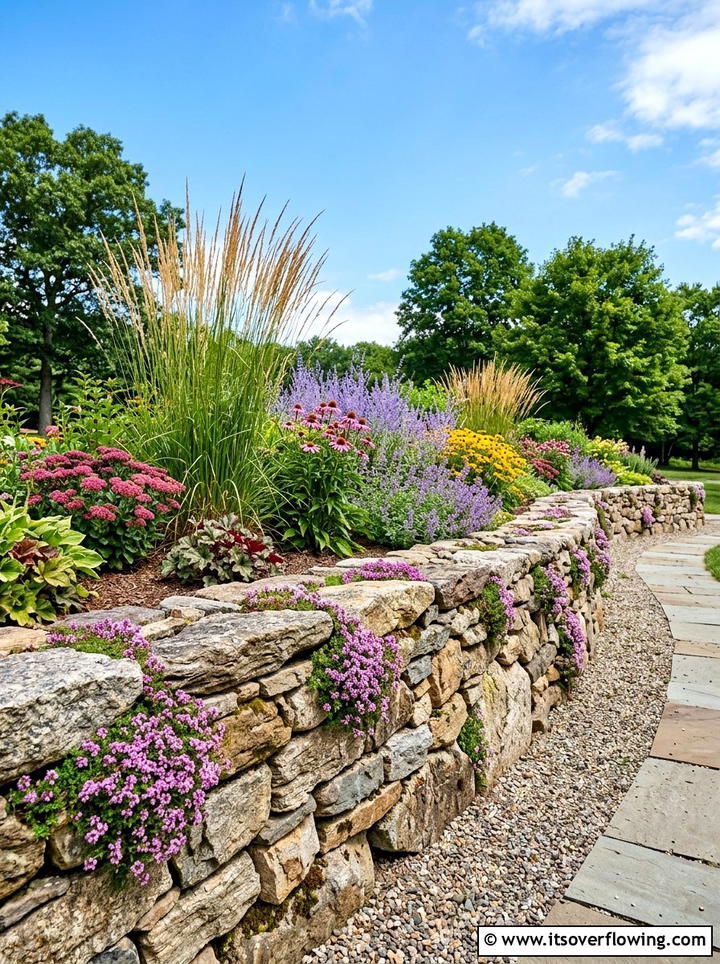
Adding structural depth to your landscape is easy when you incorporate the rugged beauty of a dry-stack stone wall. These walls serve as excellent terrace supports or simple boundary markers that look like they have been there for a century. You should use local fieldstone to ensure the colors match the natural geology of your region. The gaps between the stones provide the perfect environment for creeping thyme or moss to grow, softening the hard edges. A low stone wall can also provide extra seating during garden gatherings or act as a sturdy backdrop for a vibrant perennial border. It adds a sense of permanence and history to any farmhouse exterior design.
7. Climbing Rose Arbor
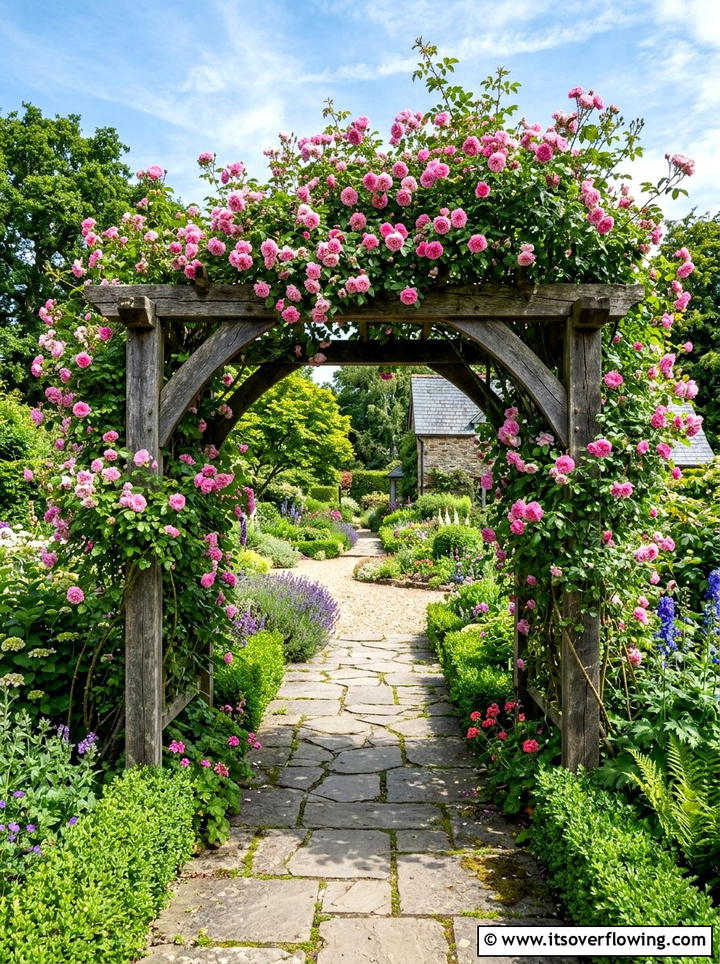
Is there anything more romantic than walking under a canopy of fragrant roses as you enter a garden space? An arbor made of heavy timber or wrought iron creates a vertical focal point that draws the eye upward. You can train climbing varieties like New Dawn or Eden roses to wrap around the frame, filling the air with a sweet scent during the summer months. Position the arbor at the entrance of a walkway or as a transition between different garden “rooms. ” This structure provides height and architectural interest while showcasing one of the most beloved flowers in farmhouse history. It is a simple way to add elegance and vertical greenery.
08. Antique Livestock Trough
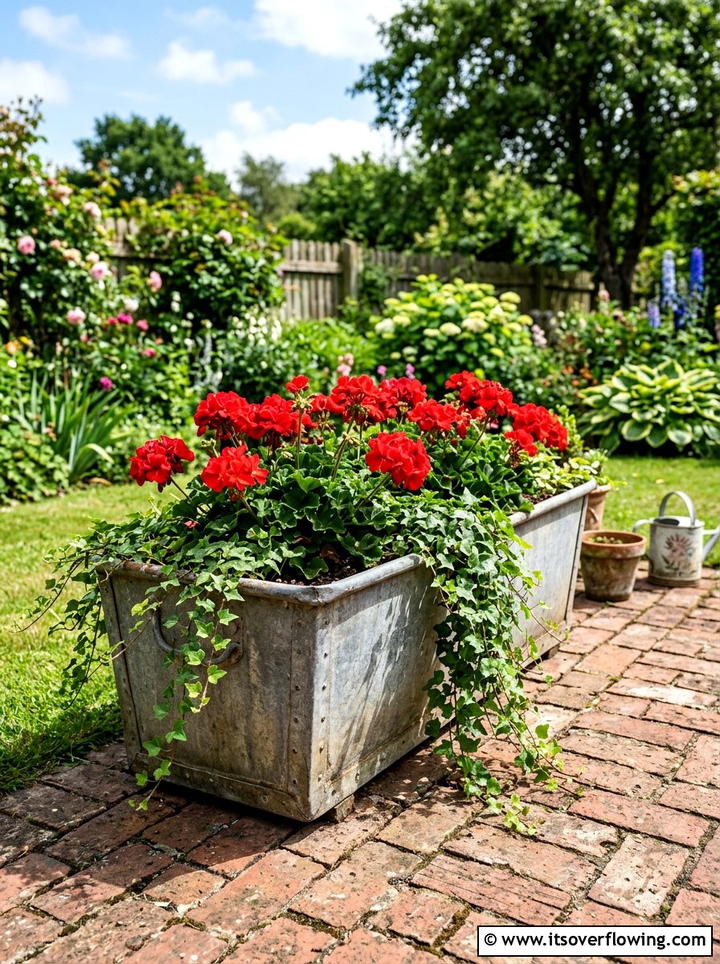
Repurposing old farm equipment is a clever way to add character and history to your planting areas without spending much money. Antique galvanized steel livestock troughs make excellent large-scale planters for annuals, perennials, or even small shrubs. These heavy-duty containers are perfect for creating a focal point on a patio or at the end of a driveway. You must ensure you drill plenty of drainage holes in the bottom to keep your plants healthy. Fill them with a mix of trailing vines and upright grasses to create a high-impact display. The silvery metal finish develops a beautiful patina over time, which perfectly complements the weathered wood of a farmhouse home.
9. Herb Garden Spiral
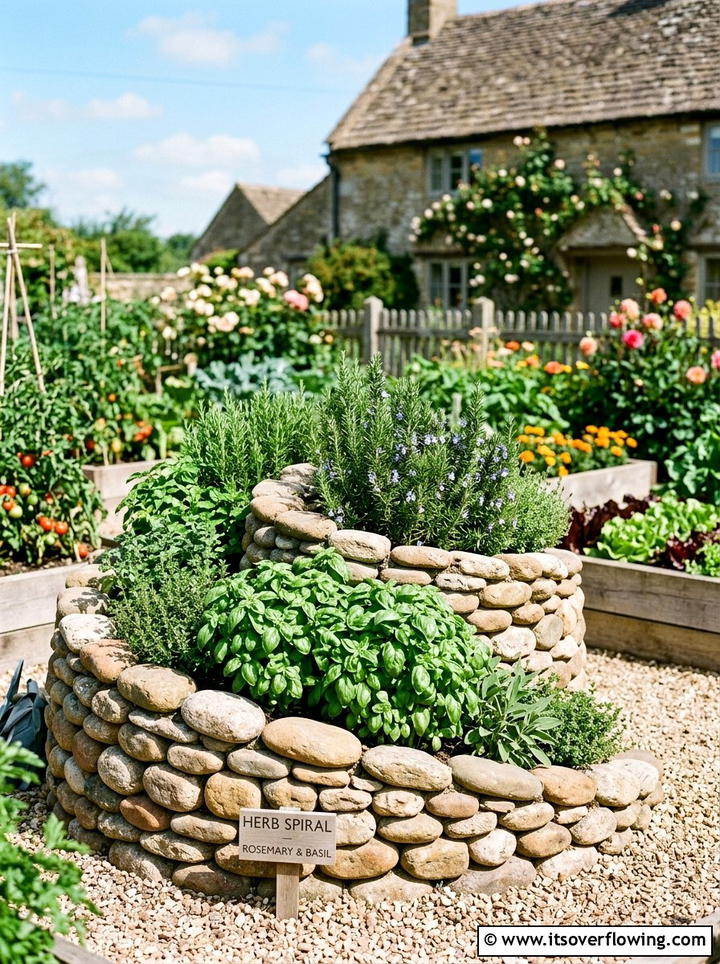
Can you imagine having all your culinary herbs growing in a compact and visually interesting structure right near your kitchen door? A herb spiral is a permaculture design that uses a stone or brick ramp to create different microclimates for various plants. Mediterranean herbs like rosemary and thyme thrive at the dry top, while moisture-loving mint and parsley sit at the base. This vertical design saves space and adds a unique sculptural element to your backyard. Using weathered bricks or rounded river stones ensures the structure looks natural and fits the farmhouse aesthetic. It is a highly functional way to organize your plants while creating a conversation piece for guests.
10. Porch Container Garden
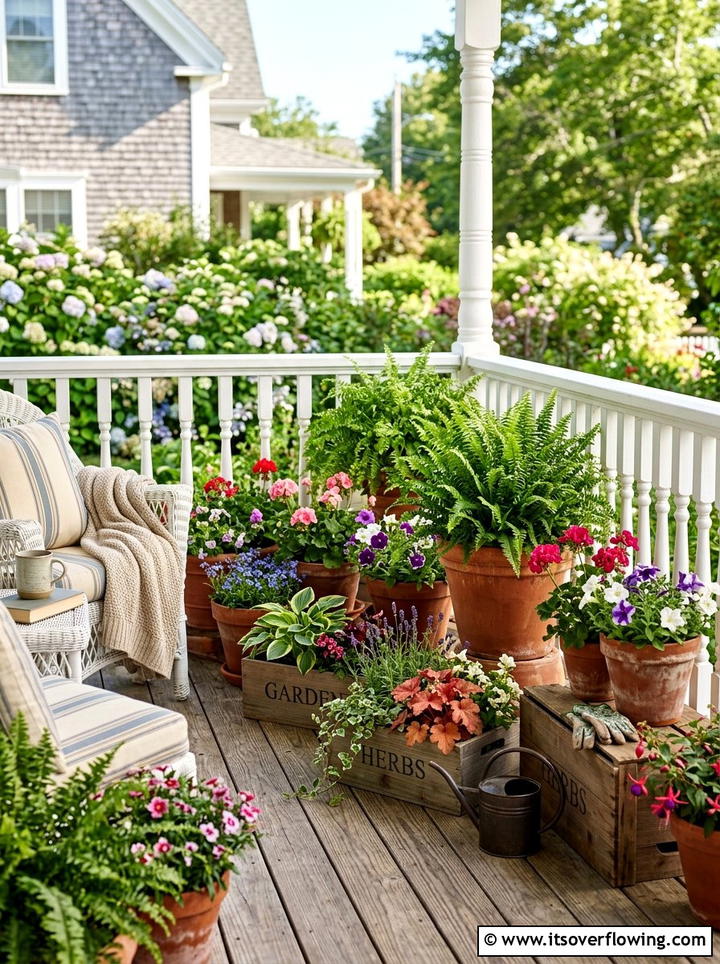
Your front porch is the transition between your cozy interior and the great outdoors, making it the perfect spot for potted displays. Using a variety of terracotta pots, wooden crates, and ceramic urns allows you to create a lush, layered look on your steps. You should choose plants with different heights and textures, such as ferns, geraniums, and trailing ivy, to fill the space. Keeping the containers in a consistent color palette helps the display feel cohesive rather than cluttered. These pots are easy to swap out as the seasons change, ensuring your entryway always looks fresh and inviting. It provides a warm welcome for anyone visiting your farmhouse-style home.
11. Barnwood Gate
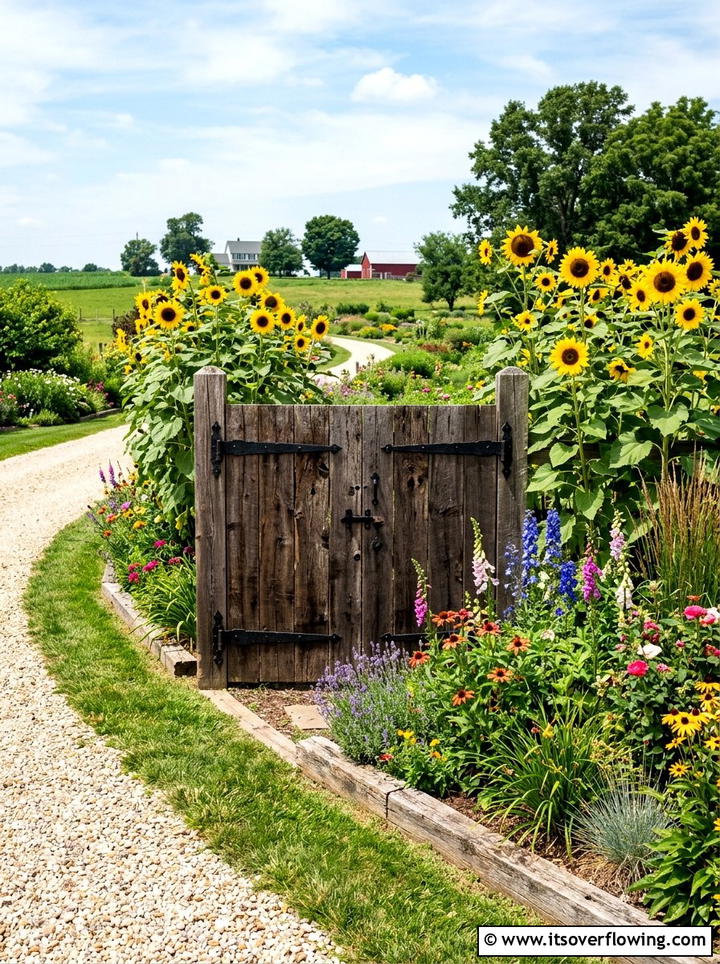
A beautiful entrance sets the tone for the entire property, and a gate made from reclaimed barnwood offers instant rustic appeal. You can use thick planks of weathered wood and heavy black iron hinges to create a sturdy and attractive portal. This gate works perfectly when paired with a stone wall or a simple wooden fence. The natural texture of the aged wood provides a warm contrast to the soft green foliage of nearby plants. You might even consider adding a small decorative window or a curved top to give the gate a more custom, artisanal feel. It serves as a functional barrier while acting as a beautiful piece of outdoor art.
12. Farmhouse Dining Area
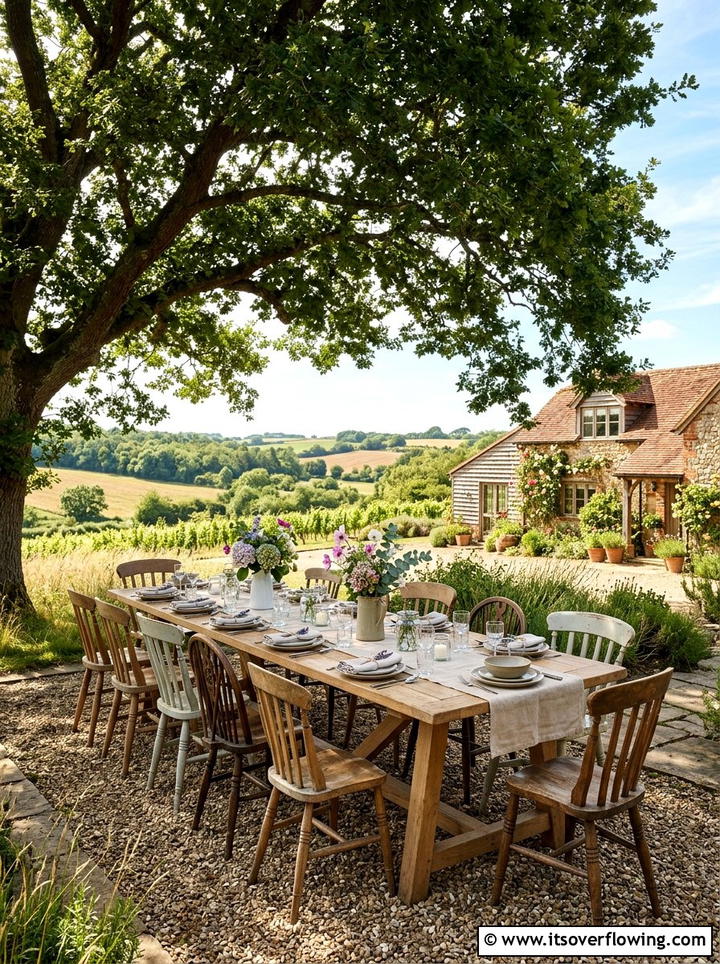
Hosting a meal outdoors is one of the greatest joys of country living, especially when you have a dedicated dining space. You should look for a long, heavy wooden trestle table that can accommodate large groups of family and friends. Surround the table with mismatched chairs or long benches to keep the vibe relaxed and informal. Placing this area under a large shade tree or a simple pergola allows for comfortable afternoon gatherings. Use natural linen runners and simple mason jar centerpieces to decorate the space for special occasions. This setup encourages people to linger over their food and enjoy the peaceful surroundings of your carefully designed farmhouse garden.
13. Fruit Orchard
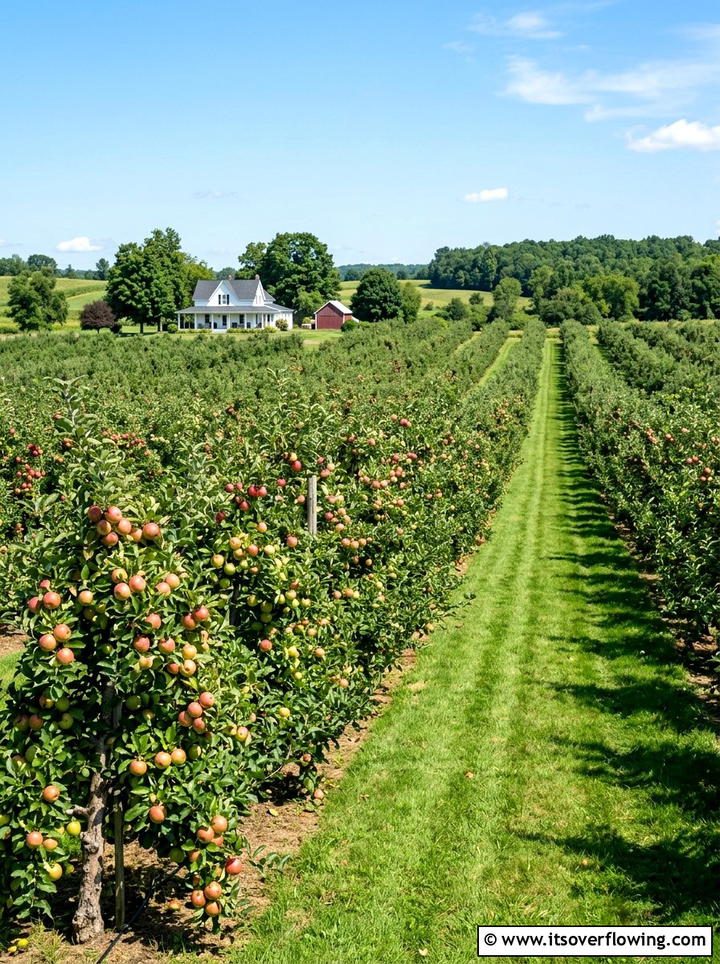
Transforming a corner of your property into a small fruit orchard provides both a beautiful landscape and a delicious harvest. You can plant a variety of apple, pear, and peach trees in neat rows to create a sense of order and abundance. During the spring, the blooming branches fill the air with fragrance and provide a stunning visual display of white and pink flowers. In the summer and fall, the ripening fruit adds pops of color to the green canopy. Keeping the grass beneath the trees neatly trimmed or planting a clover lawn creates a soft, park-like atmosphere. It is a long-term investment that brings immense value and beauty.
14. Hydrangea Walkway
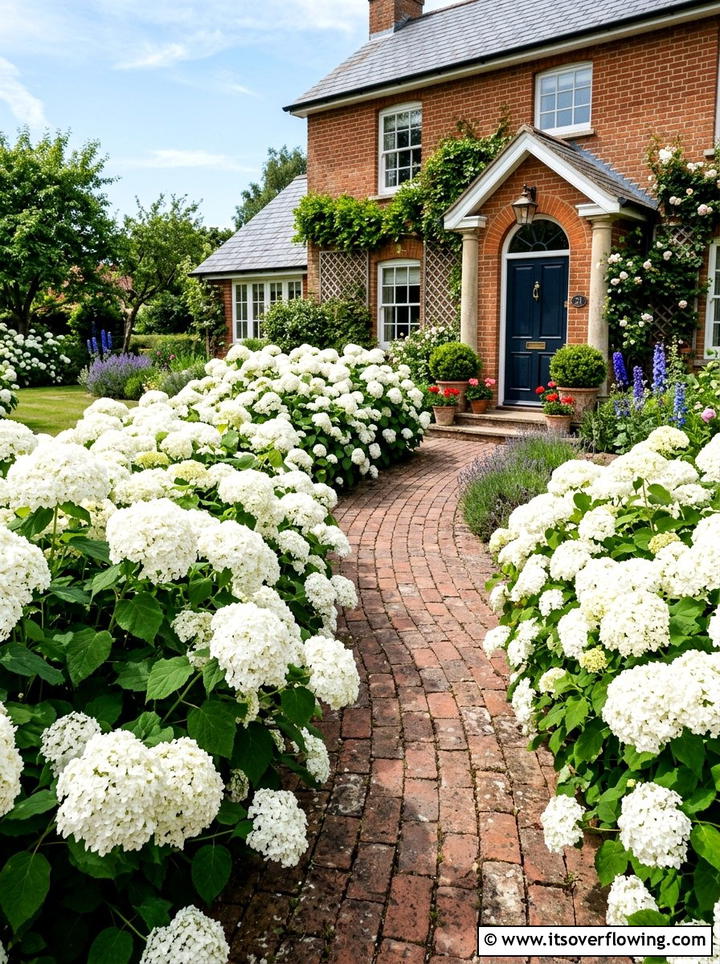
Do you love the look of massive, pillowy blooms that seem to glow in the late afternoon sun? Planting a long row of hydrangeas along a walkway creates a stunning corridor of color that lasts for months. These shrubs are beloved in farmhouse gardens for their lush foliage and impressive flower heads. You can choose classic blue or pink varieties, or go for the timeless elegance of white oakleaf hydrangeas. As the bushes grow, they will spill over the edges of the path, creating a soft and romantic feel. This design approach is perfect for leading guests from the driveway to the front door, providing a high-impact visual experience that feels very traditional.
15. Woven Willow Fence
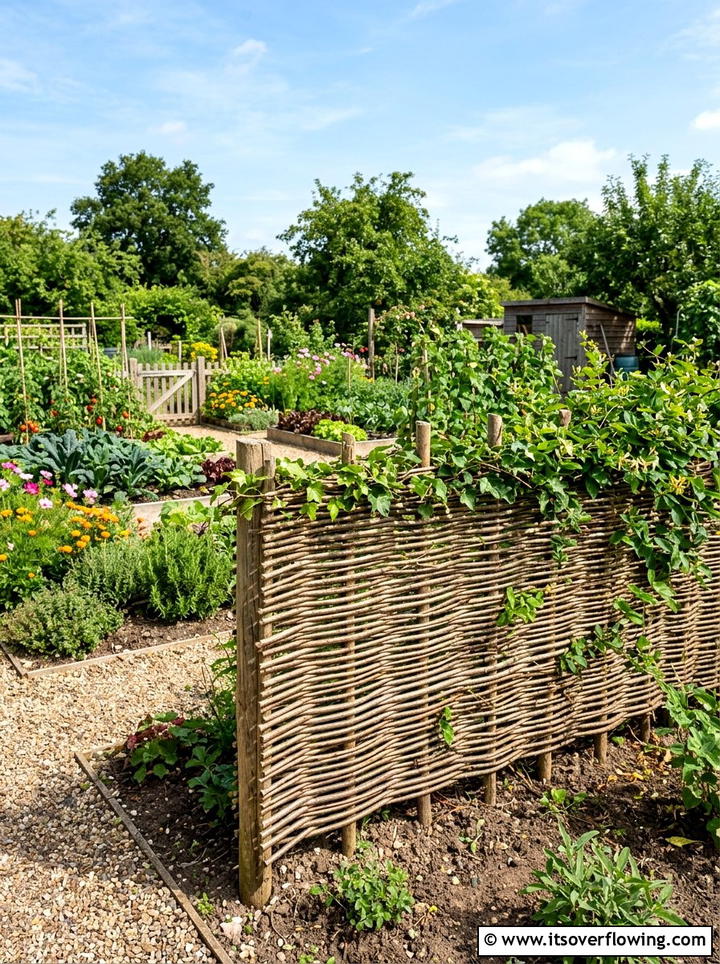
If you are looking for a natural and eco-friendly way to screen off a specific area, a woven willow fence is an excellent choice. Also known as wattle fencing, this ancient technique involves weaving flexible willow or hazel branches between upright stakes. The result is a beautiful, textured barrier that blends perfectly with a rustic or woodland-style garden. It provides excellent privacy for a seating area or a compost bin without looking like a harsh modern wall. The organic lines and earthy tones of the wood add a handcrafted feel to your landscape. This type of fencing is also great for supporting light climbing plants like sweet peas or morning glories.
16. Boxwood Knot Garden
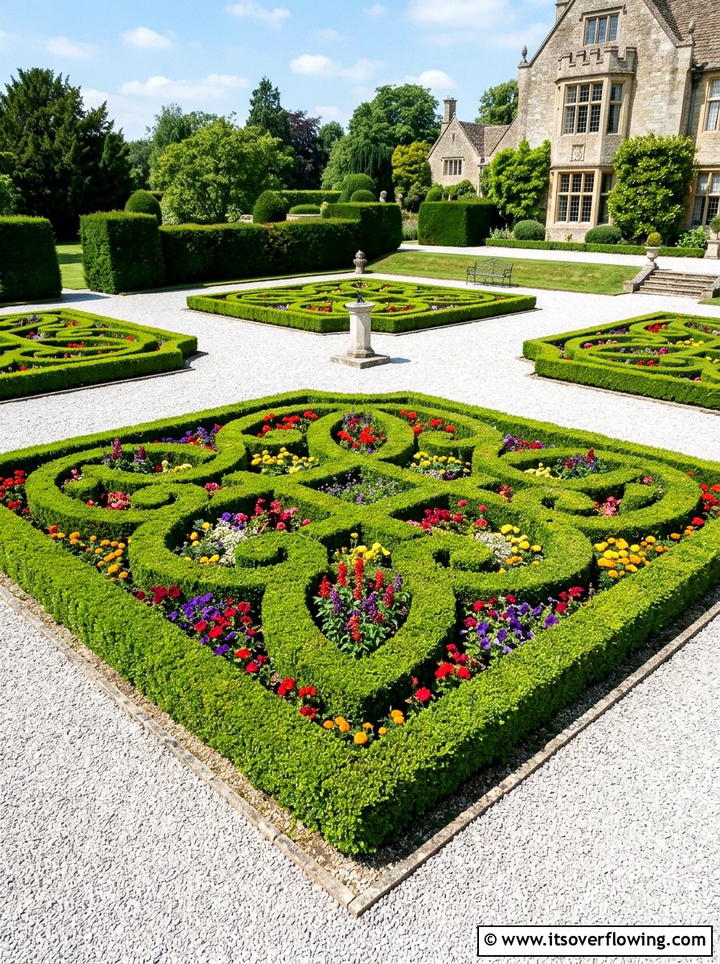
For those who appreciate a bit of formal structure amidst the rustic charm, a small boxwood knot garden adds a sophisticated touch. This design involves planting low-growing boxwood hedges in geometric patterns or interlocking loops. You can fill the spaces between the hedges with colorful annuals or fragrant herbs like lavender. This structured element provides year-round green interest, even during the cold winter months when other plants have gone dormant. Placing a knot garden near the center of a courtyard or in a front yard creates a sense of elegance and order. It is a classic European design that has been adapted into farmhouse landscapes for centuries to add visual weight.
17. Vintage Tool Display
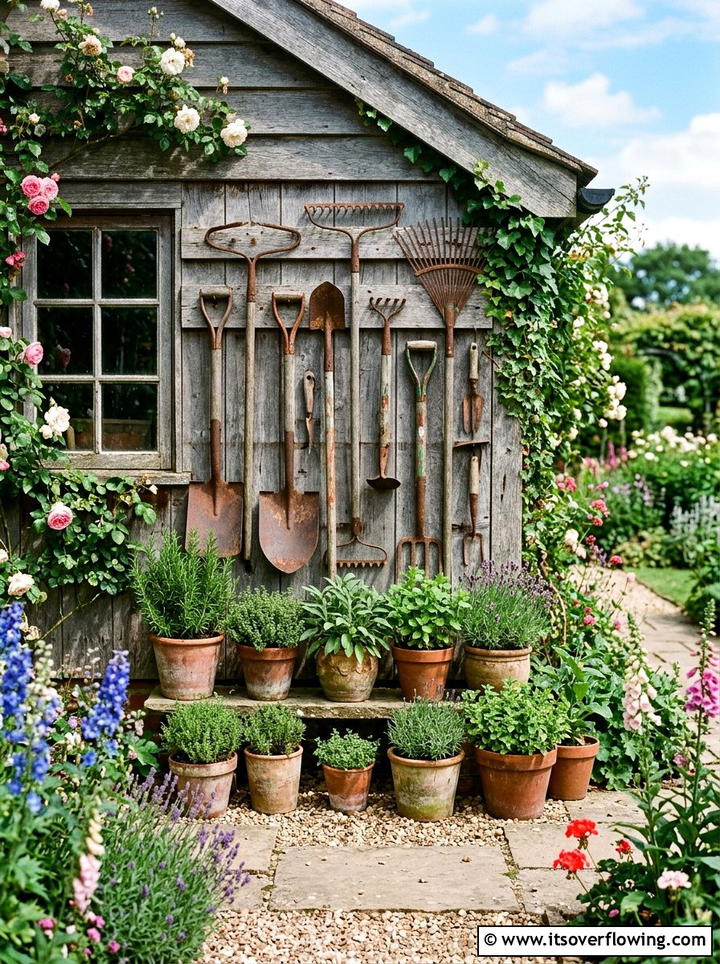
Why hide your old garden tools in a dark corner when they can serve as unique decorative elements in your landscape? Mounting vintage shovels, rakes, and watering cans onto an exterior wall or the side of a shed creates an instant focal point. You can find these items at flea markets or antique shops, looking for pieces with interesting patinas and wooden handles. This display honors the history of farming and gardening while adding a personal, artistic touch to your outdoor space. It works particularly well in a potting area or near a vegetable garden. By treating these functional items as art, you enhance the authentic farmhouse character of your entire property.
18. Rain Barrel Water Feature
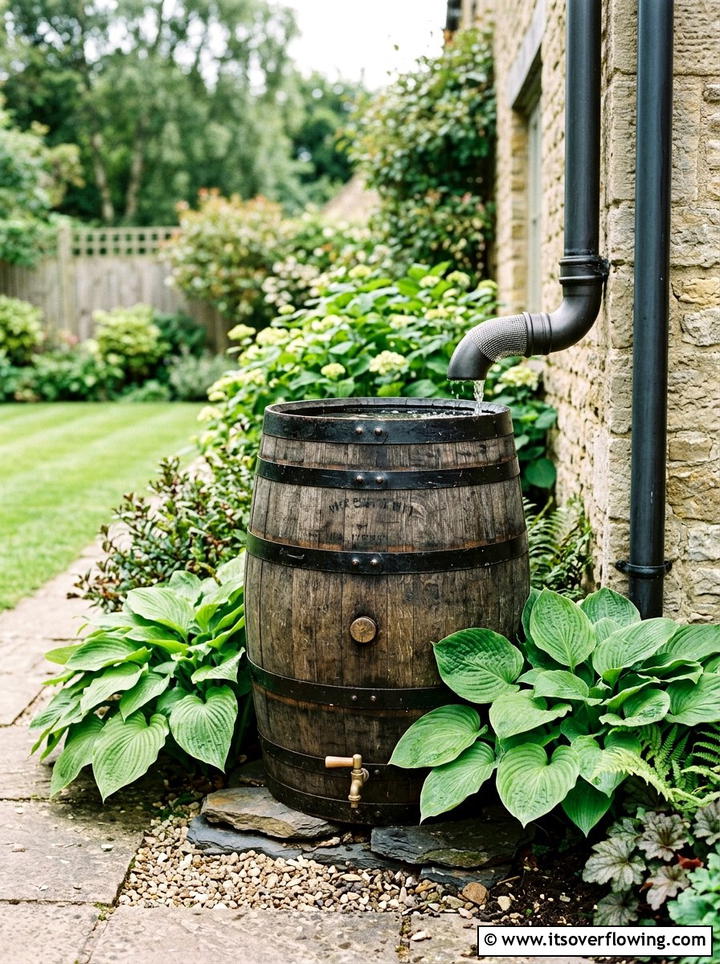
Collecting rainwater is a smart environmental practice that can also enhance the visual appeal of your garden. You can find decorative rain barrels made of recycled wood or high-quality resin that looks like an antique whiskey barrel. Placing one under a downspout allows you to easily water your nearby plants without using tap water. To turn it into a feature, surround the base with moisture-loving plants like hostas or ferns. You can even find models that include a small planter on top for a splash of color. This practical addition showcases your commitment to sustainability while fitting perfectly into the rustic and utilitarian theme of a traditional farmhouse home.
19. Fire Pit Seating
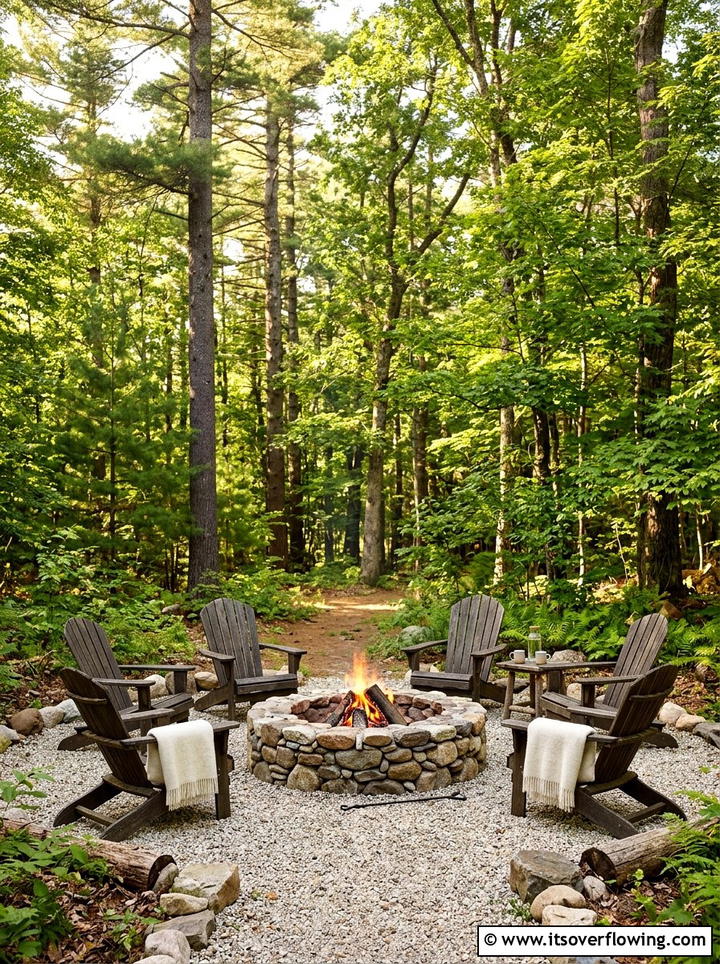
Creating a cozy spot for evening gatherings is essential for making the most of your farmhouse landscape. A simple fire pit made from stacked fieldstone or a heavy cast iron bowl provides a central point for relaxation. You should arrange a circle of Adirondack chairs or rustic wooden benches around the fire to encourage conversation. Surrounding this area with a ring of gravel or flagstone keeps the space safe and defined. During the cooler months, you can add outdoor blankets and pillows to make the seating even more inviting. It is the perfect place for roasting marshmallows and enjoying the quiet beauty of a starry night in the country.

20. Sunken Brick Patio
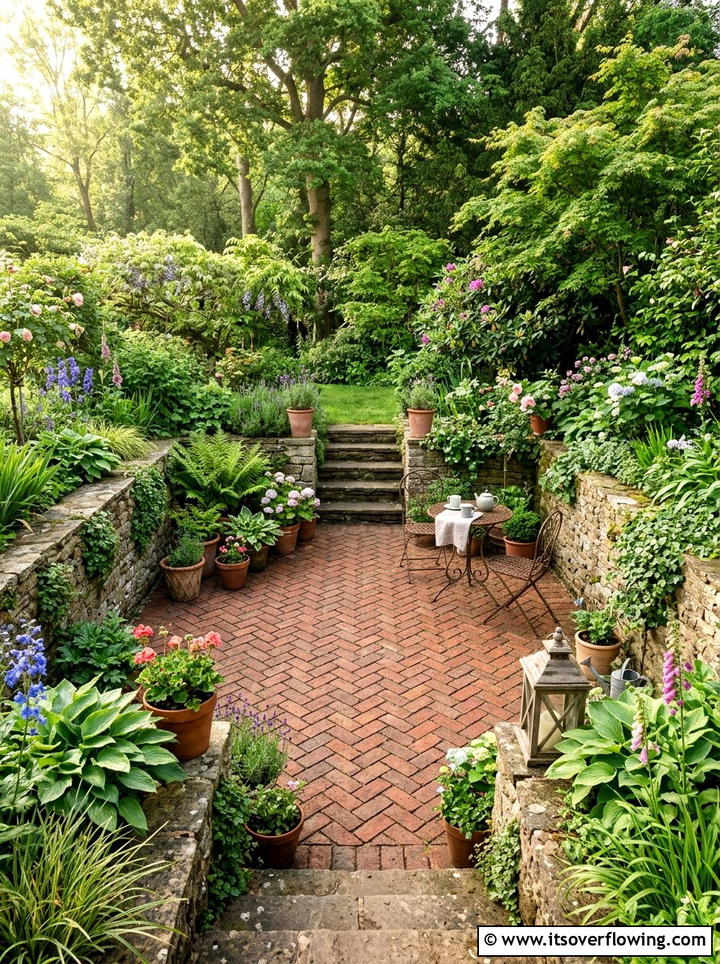
A sunken patio offers a sense of seclusion and intimacy that is hard to achieve with a standard flat deck. By excavating a small area and lining it with weathered red bricks, you create a charming “outdoor room” that feels tucked away. Use a herringbone or basketweave pattern for the flooring to add visual interest and a sense of history. Surround the perimeter with raised flower beds or a low stone wall to further define the space. This design is ideal for a private reading nook or a small morning coffee spot. The sunken nature of the patio provides shelter from the wind and creates a very cozy, protected atmosphere for relaxing.
21. Vertical Pallet Herb Wall
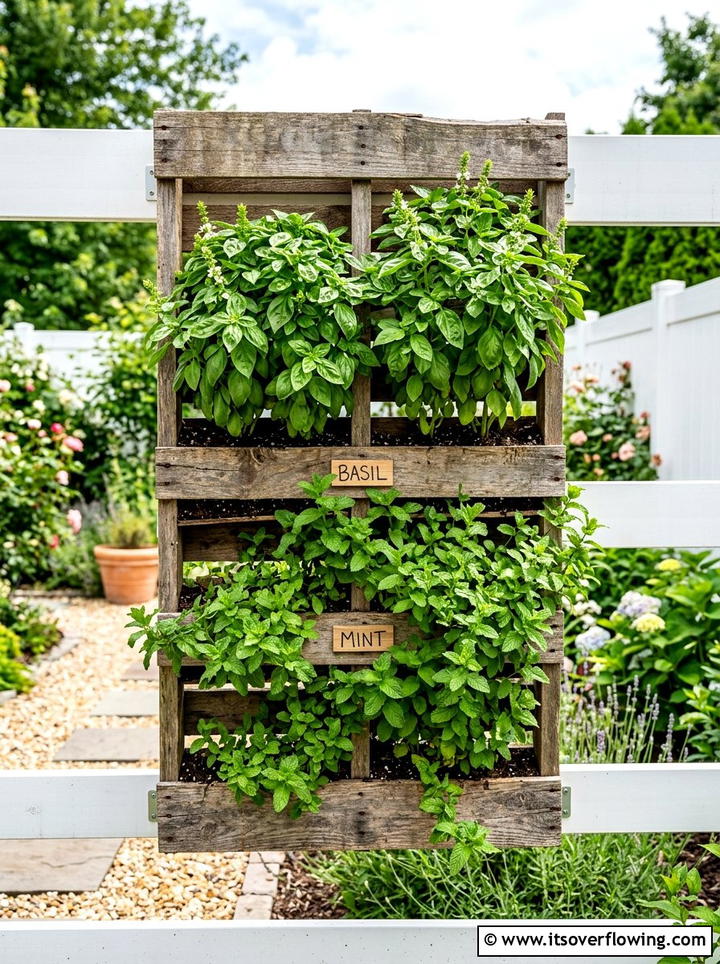
When you have limited ground space, going vertical is the best way to expand your growing area. You can easily repurpose a wooden shipping pallet into a lush herb wall by adding backing fabric and filling the slats with soil. This structure looks great leaning against a fence or mounted to the side of a porch. Planting a variety of herbs like basil, cilantro, and chives creates a beautiful living tapestry that smells amazing. The weathered wood of the pallet fits the farmhouse aesthetic perfectly and provides a sturdy frame for your plants. It is a budget-friendly and creative solution for anyone who wants a functional kitchen garden in a small footprint.
22. Lavender Field
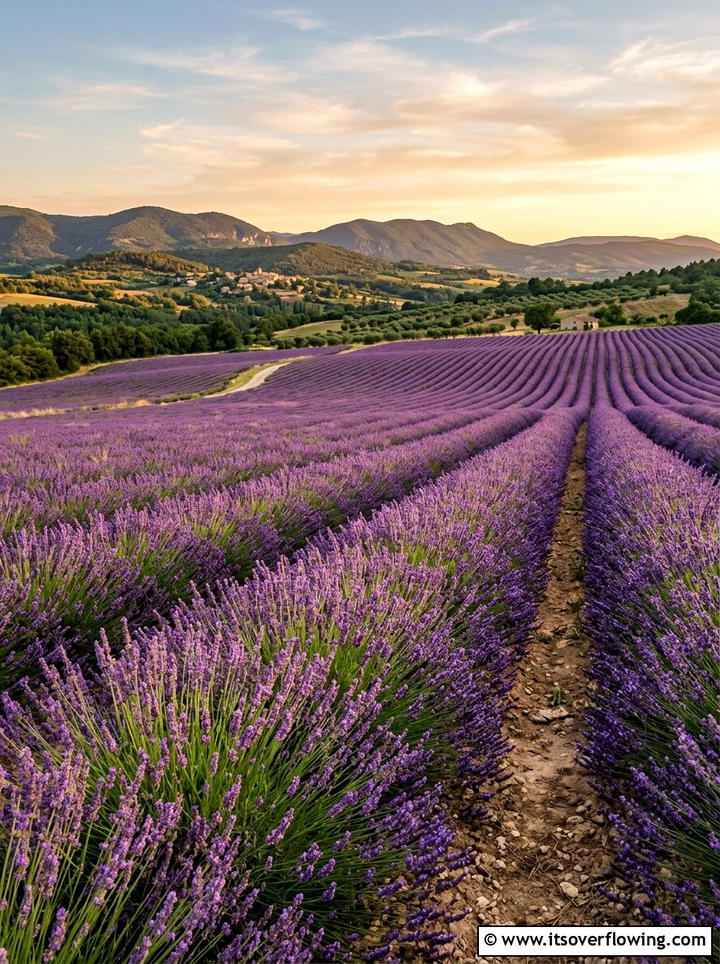
Can you picture a sprawling area of your yard filled with the soft purple hues and calming scent of lavender? Planting a large drift of lavender creates a Mediterranean-inspired farmhouse look that is both drought-tolerant and stunning. This plant thrives in sunny spots with well-drained soil and requires very little maintenance once established. As the lavender blooms, it will attract bees and butterflies, bringing your garden to life with movement. You can harvest the stems for dried bouquets or sachets to bring the fragrance indoors. A field of lavender provides a soft, ethereal texture that contrasts beautifully with the heavy wood and stone elements of a traditional farmhouse landscape.
23. Porch Swing Area
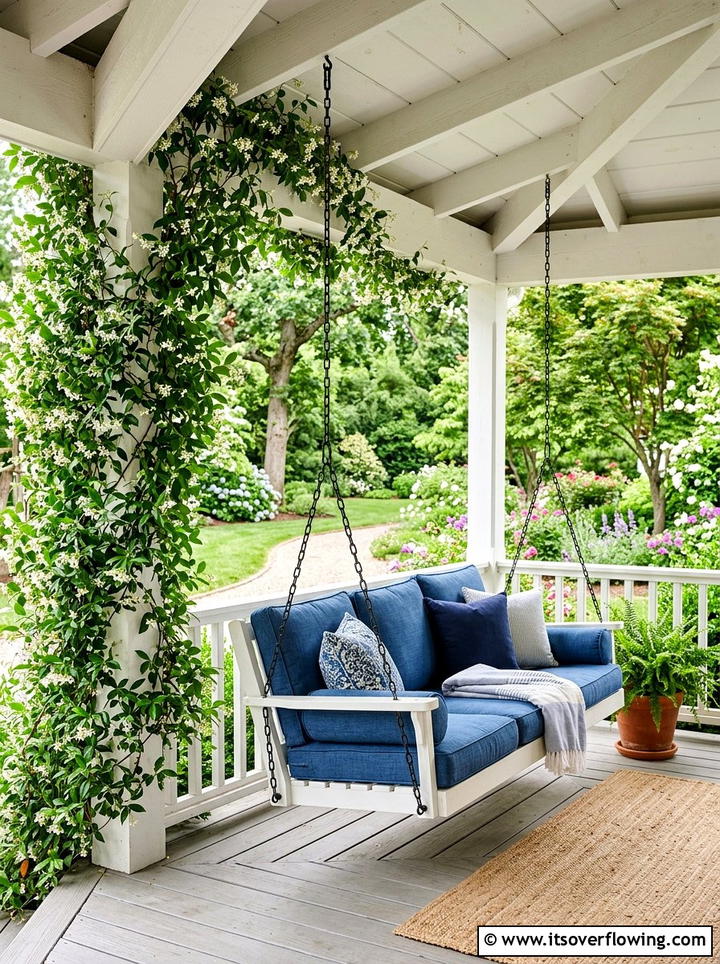
A farmhouse isn’t complete without a comfortable place to sit and watch the world go by. A wooden porch swing hanging from a sturdy beam or a dedicated A-frame in the garden offers a nostalgic and relaxing experience. You can style the swing with outdoor cushions in classic patterns like ticking stripes or buffalo check. Surround the area with fragrant climbing vines like honeysuckle or jasmine to enhance the sensory experience. Whether it is located on a wrap-around porch or under a large oak tree, the swing becomes a favorite spot for morning reflection or afternoon naps. It embodies the slow-paced, peaceful lifestyle that farmhouse design is all about.
24. Birdhouse Village
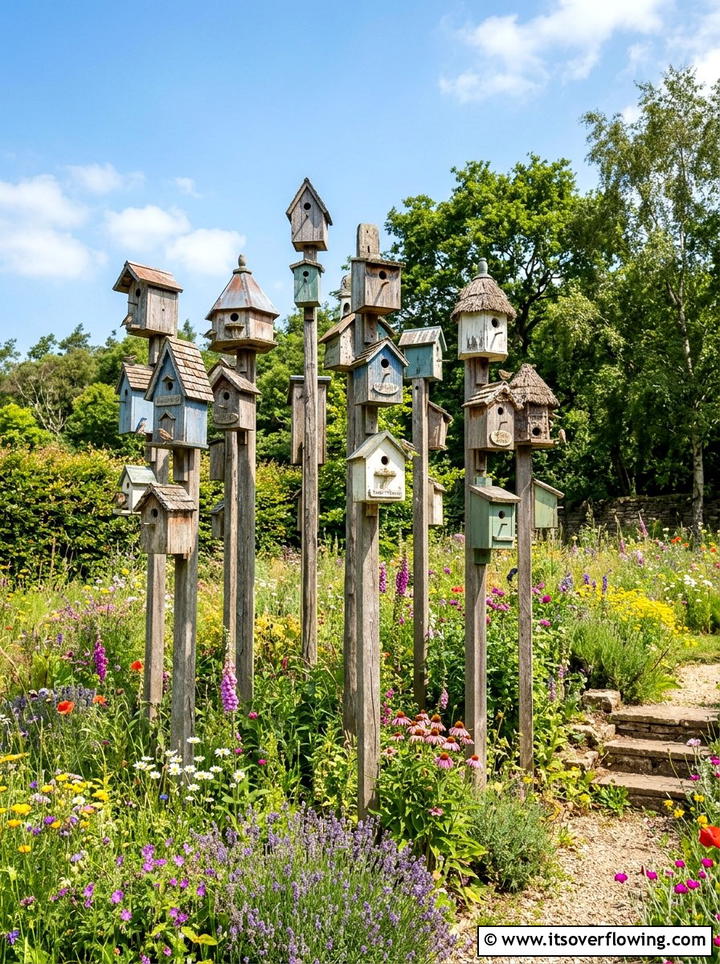
Attracting wildlife to your garden adds a layer of joy and activity that makes the space feel truly alive. You can create a “birdhouse village” by mounting several different styles of wooden birdhouses on tall posts at varying heights. Look for designs that resemble miniature barns or cottages to keep with the farmhouse theme. Placing these in a quiet corner of the yard surrounded by berry-producing shrubs will encourage many different species to nest. Not only does this provide a service to local birds, but the houses themselves act as charming sculptural elements. Watching the birds fly in and out provides endless entertainment and connects you closer to the natural world.
25. Old Wagon Wheel
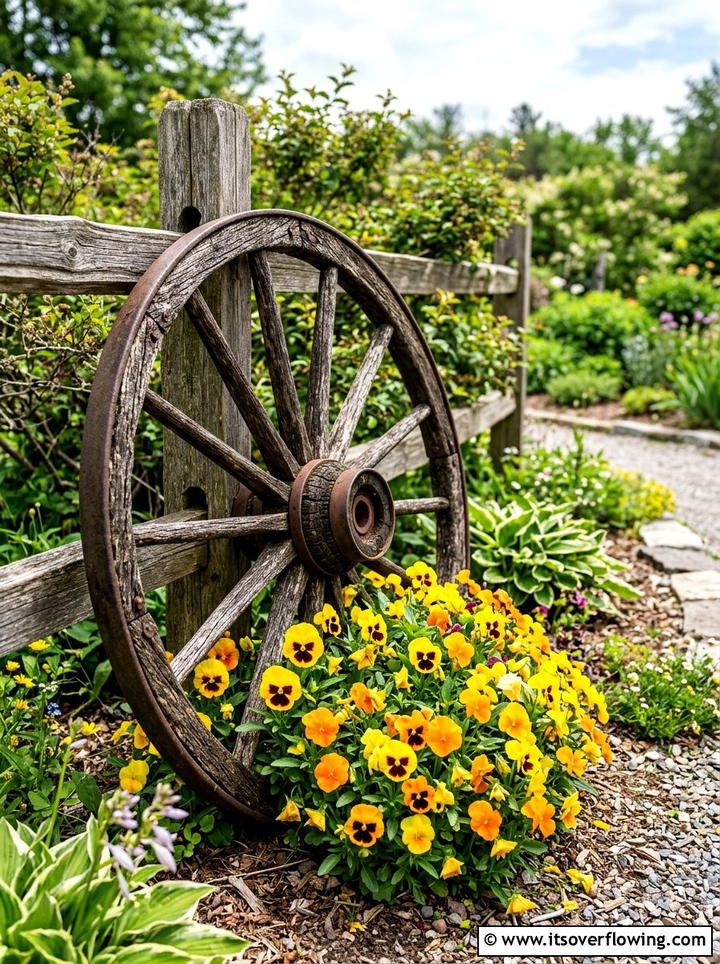
Using an old wooden wagon wheel as a garden ornament is a classic way to pay homage to the agricultural roots of farmhouse style. You can lean a large wheel against a fence or use it as a centerpiece in a circular flower bed. Planting low-growing flowers like pansies or marigolds between the spokes creates a “spoke garden” effect that is very visually appealing. The weathered wood and rusted metal of the wheel provide a beautiful contrast to soft, colorful flower petals. It serves as a rustic focal point that tells a story of the past. This simple addition instantly adds character and a sense of timelessness to any garden design.
Conclusion:
Building a farmhouse garden is an ongoing journey that rewards you with a peaceful and productive outdoor sanctuary. By focusing on traditional materials like stone and weathered wood, you create a foundation that only gets better with age. These twenty-five ideas provide a roadmap for blending the practical needs of a home with the romantic beauty of nature. Whether you are planting a massive lavender field or simply adding a birdhouse to a corner, each element contributes to a cohesive and inviting atmosphere. Embrace the imperfections and let your landscape evolve naturally over time. With a little planning and a lot of heart, your garden will become a cherished extension of your home.
Related posts:
 25 Garden Design Ideas for Farmhouse Landscapes With Rustic Charm
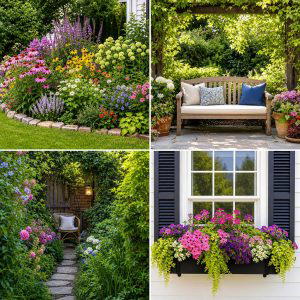 25 Garden Ideas for Cottage Homes Full of Timeless Charm
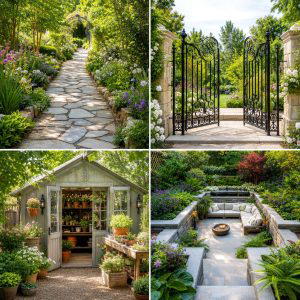 25 Garden Ideas for Traditional Homes With Timeless Charm
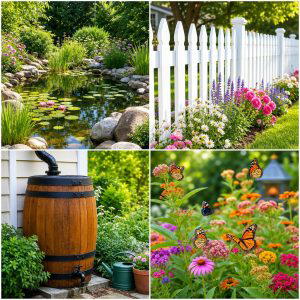 25 Creative Garden Ideas for Rural Homes: Rustic Yard Tips
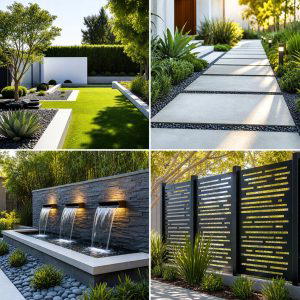 25 garden ideas for modern homes: Sleek Outdoor Inspiration
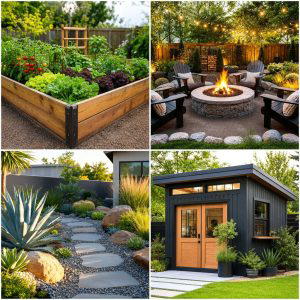 25 Creative Garden Ideas for Suburban Homes
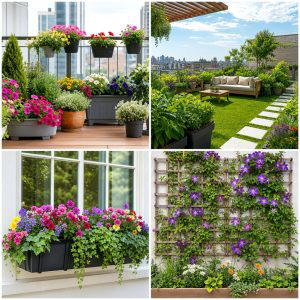 25 Creative Garden Ideas for Urban Homes
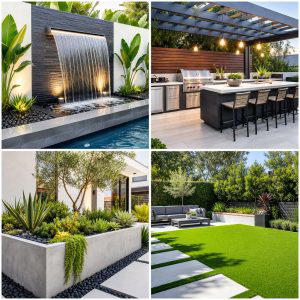 25 Garden Ideas for Contemporary Homes With Sleek Style
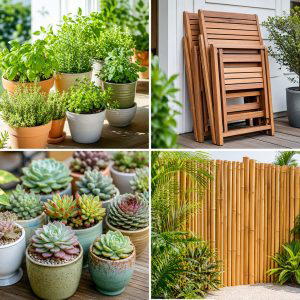 25 Garden Ideas for Rental Homes That Are Easy to Move
 25 Garden Ideas for Suburban Homes With Curb Appeal
 25 Small Garden Ideas for Urban Homes With Big Impact
 25 creative garden ideas with pallet planters for Rustic Charm