
Creating a coastal-inspired outdoor space can transform your backyard into a serene getaway that feels like a permanent vacation. Using seashells as garden borders is an innovative way to introduce natural textures and bright, reflective surfaces that traditional stones or plastic edging simply cannot provide. Whether you live near the coast or in a landlocked area, these organic elements add a layer of whimsy and sophistication to your landscape design. Seashells are surprisingly durable, standing up to various weather conditions while providing essential minerals like calcium to the soil as they slowly break down over time. This approach to landscaping not only enhances the visual appeal of your flower beds and pathways but also promotes a sustainable environment. By carefully selecting different types of shells, you can create a customized look that ranges from a rugged, natural shoreline to a polished, high-end tropical resort aesthetic that catches the eye of every visitor.
1. Large conch shell flower bed edging
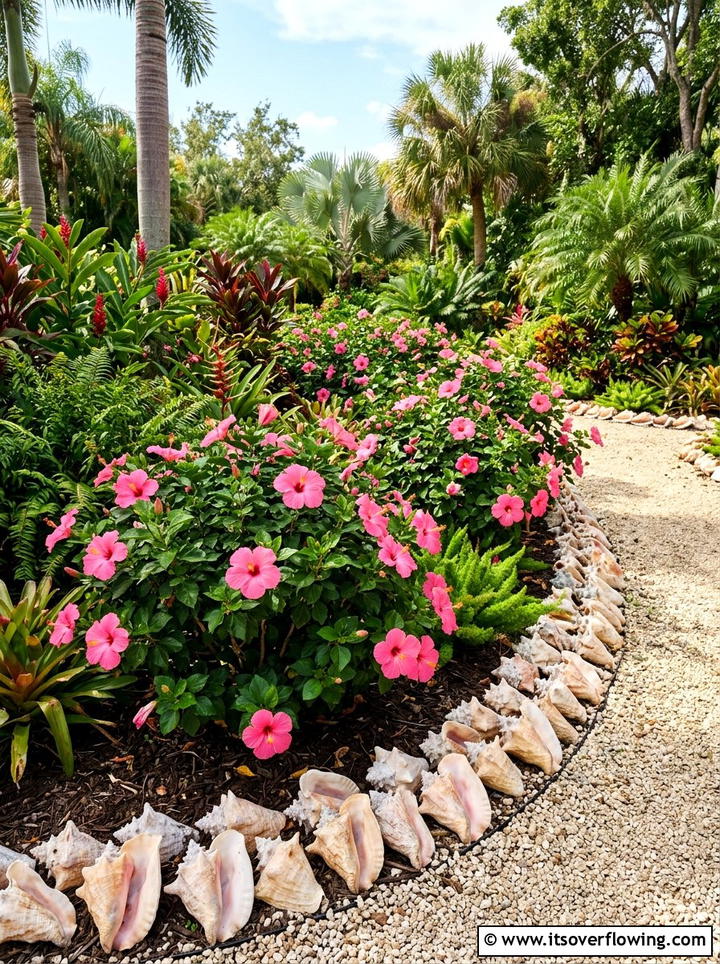
Have you ever thought about how large conch shells can transform a simple backyard flower bed into a coastal retreat? When you line a lush garden filled with pink hibiscus and deep green ferns with these oversized shells, the visual impact is immediate. The natural curves and soft pink interiors of the conch shells provide a stunning contrast against dark garden soil and mulch. This full garden setup creates a tropical vibe that feels both intentional and organic. You can space the shells evenly or nestle them together to form a solid line that keeps weeds at bay while adding architectural interest to your landscape during every season of the year.
2. Crushed oyster shell garden path
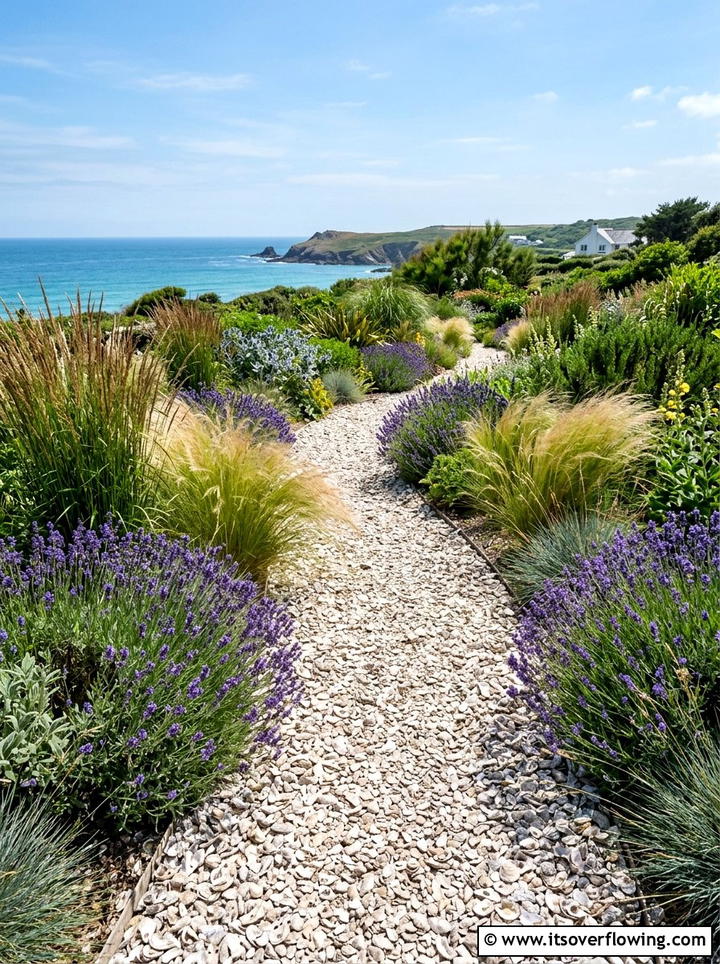
Walking through a garden becomes a sensory experience when you incorporate a path made of crushed oyster shells. This design features a winding walkway that cuts through a vibrant landscape of ornamental grasses and purple lavender plants. The shells provide a bright, off-white surface that reflects sunlight beautifully during the day and glows softly under moonlight or garden lanterns at night. As you step on the shells, they settle into a firm, permeable surface that allows for excellent drainage while crunching gently underfoot. Surrounding the path with low-growing groundcovers helps to soften the edges, creating a professional and polished look that mimics a high-end seaside estate.
3. White scallop shell border for succulents
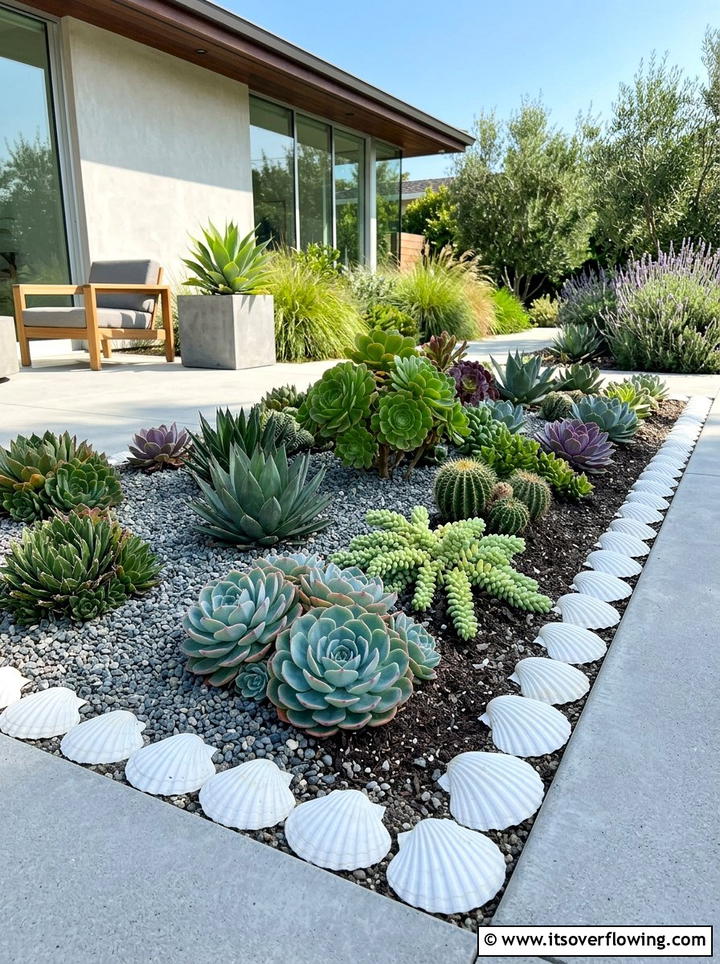
Can you imagine the striking contrast between fleshy, green succulents and the crisp, ridged texture of white scallop shells? In this modern garden layout, various types of succulents like echeveria and jade are arranged in a raised bed or a rock garden setting. The perimeter is meticulously lined with uniform scallop shells, all facing the same direction to create a rhythmic, wave-like pattern. This clean and minimalist approach highlights the unique shapes of the plants while providing a bright frame that makes the colors of the succulents pop. The shells also help to reflect heat away from the soil, which is beneficial for drought-tolerant plants in sunny spots.

4. Coastal garden bed with mixed seashells
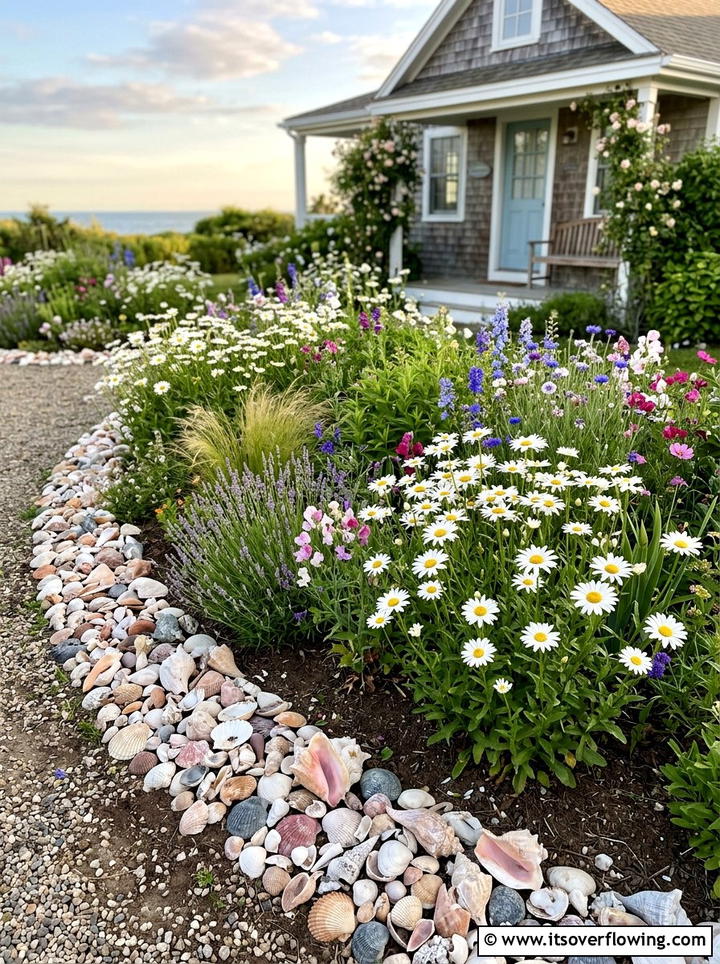
Creating a diverse and eclectic look is easy when you use a mix of different seashells collected over time to border your garden. This particular design features a wide variety of textures and sizes, ranging from tiny cockles to medium-sized whelks, scattered along the edge of a flower bed. The garden itself is filled with a colorful mix of perennial flowers like daisies and black-eyed Susans, which benefit from the whimsical, beachcomber aesthetic. By mixing the shells, you avoid a rigid or formal feel, opting instead for a relaxed, lived-in garden style. This approach is perfect for family gardens where children can add their own beach finds to the growing border.
5. Clam shell edging for tropical plants
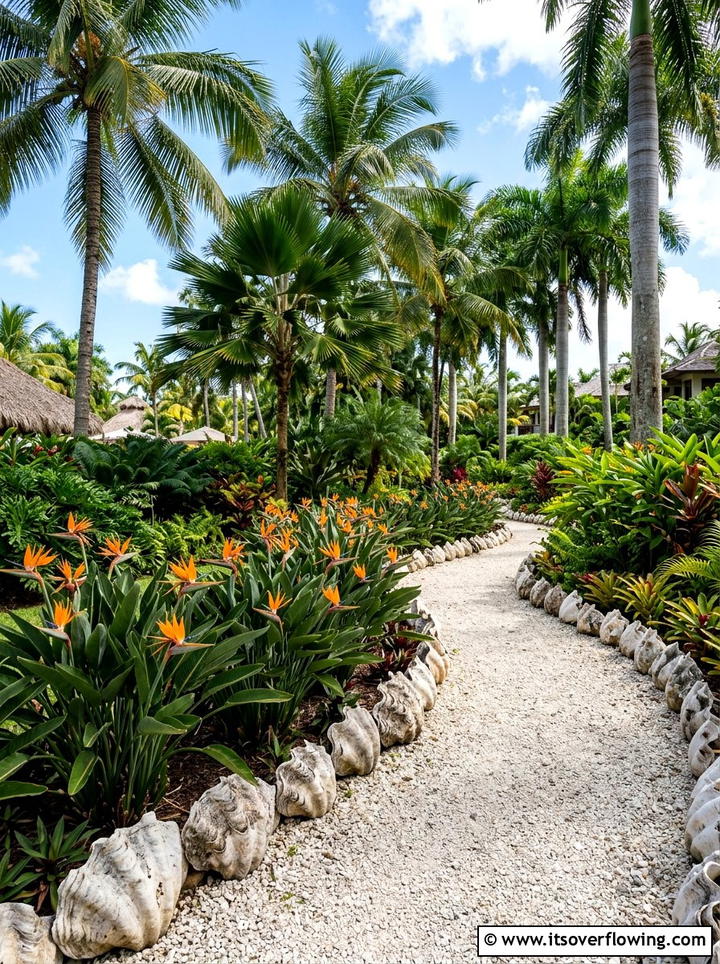
Tropical landscapes often require bold elements to match the scale of large leaves and bright blooms, and clam shells fit this perfectly. Large clam shells are used here to create a sturdy and prominent border around a garden filled with bird of paradise and palm trees. The shells are partially buried in the soil to ensure they stay in place, forming a scalloped edge that looks like a natural extension of the coast. This design works exceptionally well in humid climates where the shells maintain their integrity and color. The bright white of the shells highlights the deep greens of the tropical foliage, creating a high-contrast and luxurious garden atmosphere.
6. Nautical rope and shell garden border
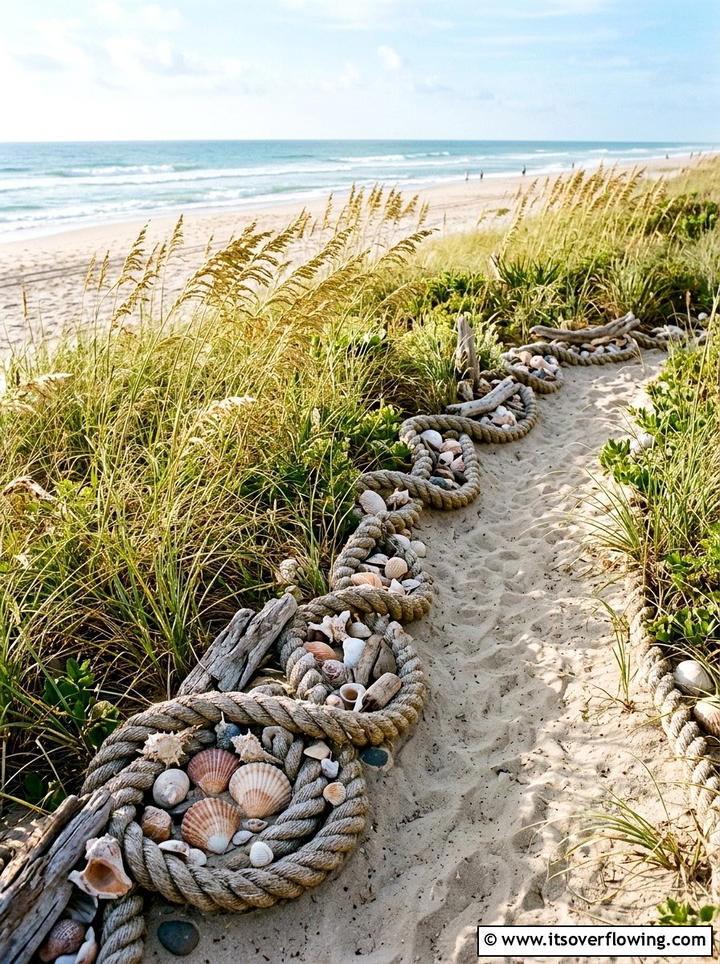
Does your garden need a touch of maritime charm to tie your outdoor decor together? This design combines thick, weathered nautical rope with large shells tucked into the loops to create a unique border for a sandy garden area. The garden features salt-tolerant plants like sea oats and beach sunflowers, which thrive in sandy soil environments. By wrapping the rope around the perimeter and placing shells at regular intervals, you create a defined boundary that looks like it belongs on a pier. This style is particularly effective for defining transition areas between a deck and the rest of the yard, providing a clear visual cue for guests.
7. Crushed seashell mulch for flower pots
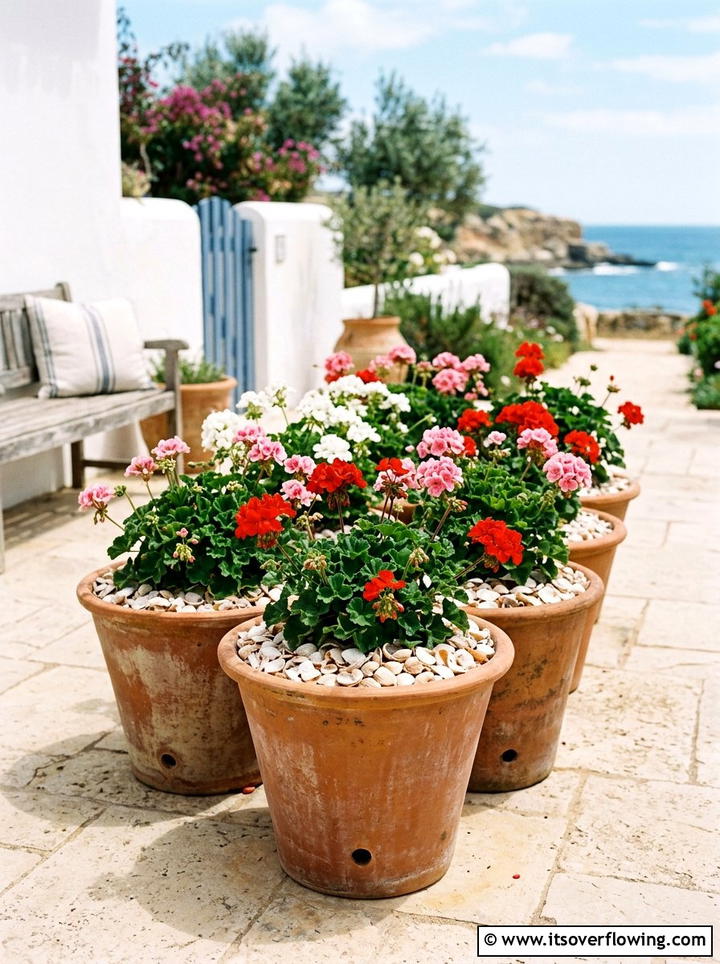
Using shells doesn’t have to be limited to large ground beds, as they also make an excellent topper for oversized garden containers. In this setup, several large terra cotta pots are filled with bright geraniums and trailing ivy, with the soil surface covered in a thick layer of crushed shells. This “living border” within the pot keeps the soil moist and cool while preventing weeds from sprouting in the container. The white shells provide a clean, finished look that elevates the appearance of the entire patio. When the sun hits the shells, they sparkle, adding a touch of elegance to your seating area or front porch steps.
8. Abalone shell border for small garden ponds
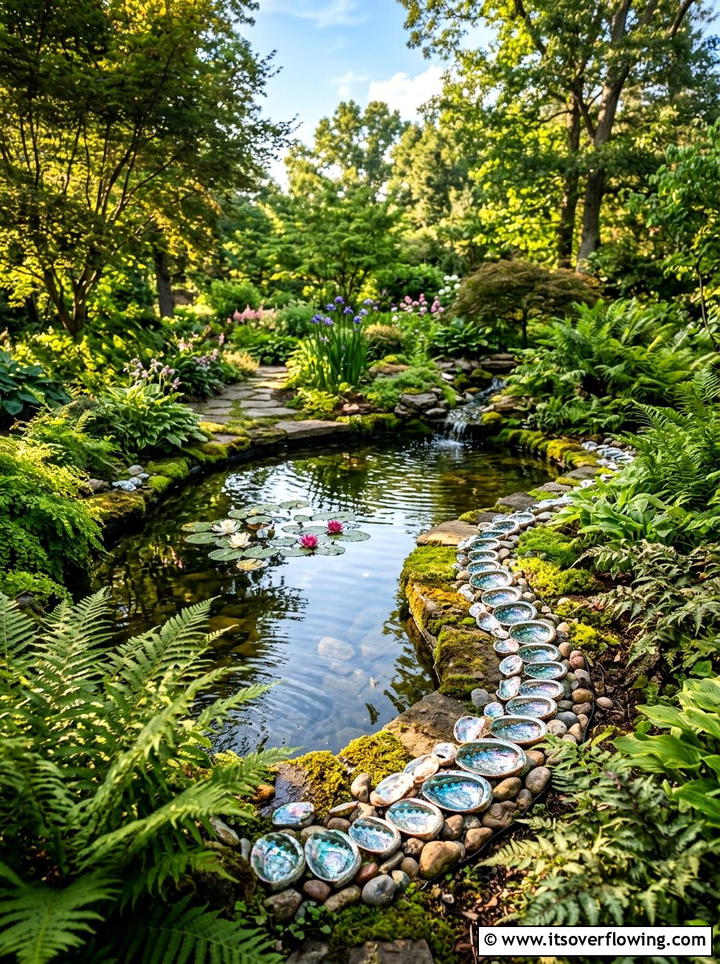
The shimmering, iridescent interior of abalone shells makes them a perfect choice for bordering a small garden pond or water feature. In this tranquil design, the shells are placed along the water’s edge, reflecting the movement of the water and the light of the sun. The garden surrounding the pond is filled with moisture-loving plants like hostas and ferns, which create a lush, green backdrop for the shining shells. As the water ripples, the abalone shells catch the light, creating a magical effect that enhances the peacefulness of the space. This design is ideal for creating a focal point in a quiet corner of the yard.
9. Driftwood and conch shell garden perimeter
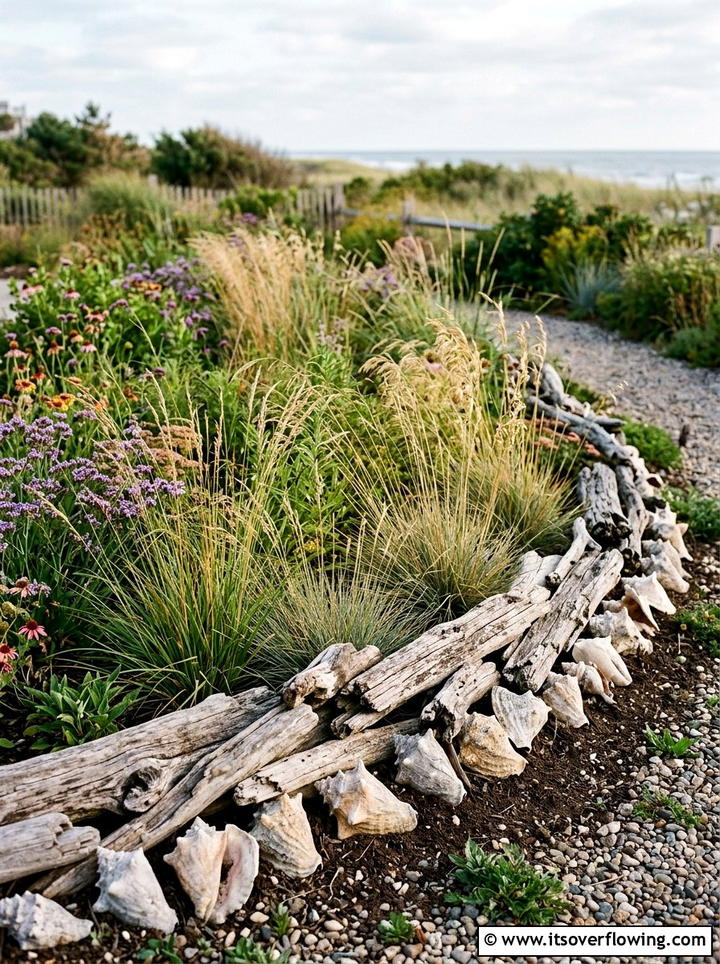
Combining wood and shells creates a rustic, natural look that feels like a piece of the shoreline has been moved into your backyard. This garden border uses long pieces of silver-toned driftwood interspersed with large conch shells to frame a bed of wild grasses and coastal shrubs. The different heights and textures of the wood and shells provide a layered look that is visually interesting from every angle. This design is great for informal gardens where a perfectly straight line isn’t necessary. The weathered wood complements the natural calcium of the shells, creating a harmonious and organic boundary that looks better as it ages over the years.
10. Cockle shell edging for herb gardens
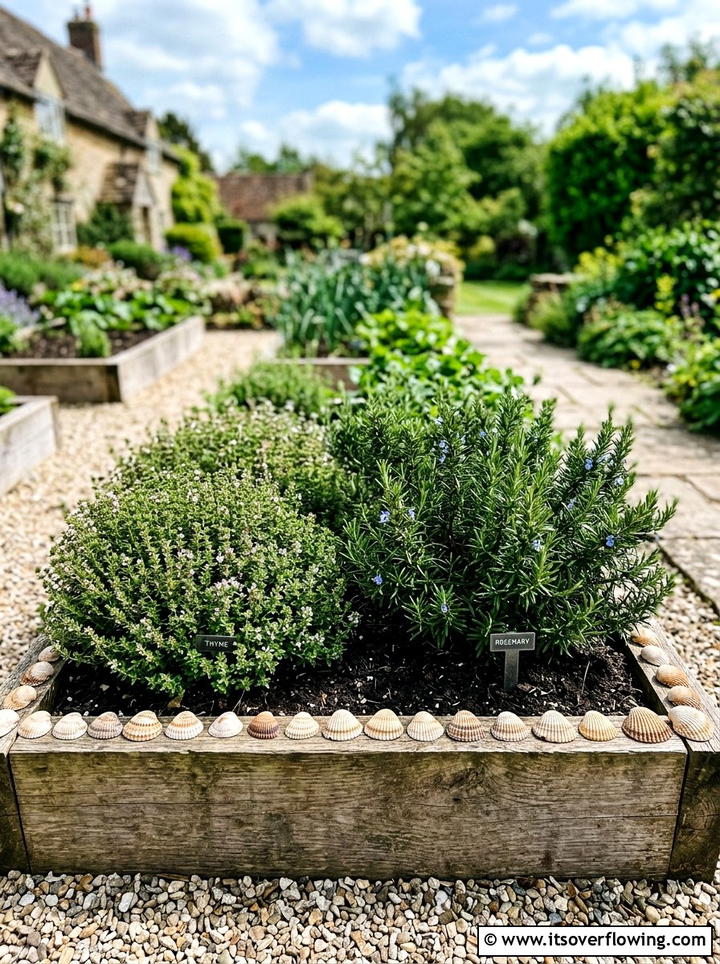
Herb gardens are often small and intimate, making them the perfect place for a delicate border of small cockle shells. This design features a raised herb bed filled with rosemary, thyme, and basil, bordered by a neat row of identical cockle shells. The small size of the shells matches the scale of the herb plants, providing a tidy and organized appearance. Because cockle shells are often found in abundance, it is easy to create a continuous and uniform line around the entire bed. The light color of the shells helps you see the edge of the bed clearly, even in the twilight hours of the evening.
11. Beach theme garden with blue glass and shells
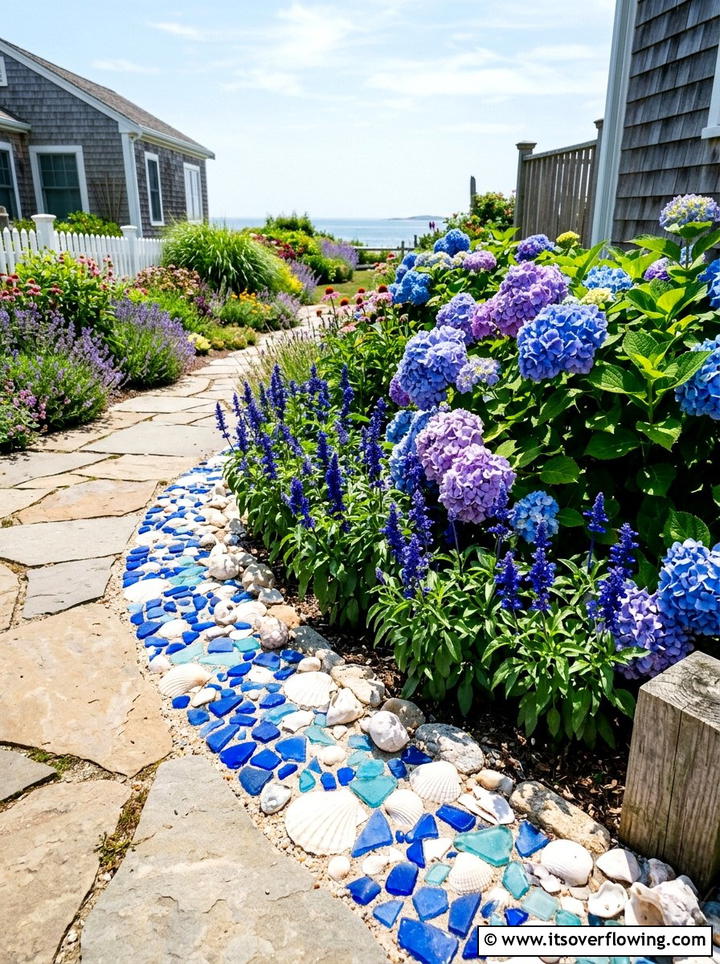
Imagine a garden that captures the essence of the ocean through color and texture by mixing blue sea glass with white shells. This vibrant garden design features a border where tumbled blue glass pieces are scattered among various white shells to mimic the look of waves hitting the shore. The interior of the garden is filled with white hydrangeas and blue salvia, reinforcing the nautical color palette throughout the space. This creative border adds a pop of color that remains bright even when the flowers are not in bloom. It is a fantastic way to recycle glass while creating a stunning visual feature in your landscape.
12. Large sea snail shell border for paths
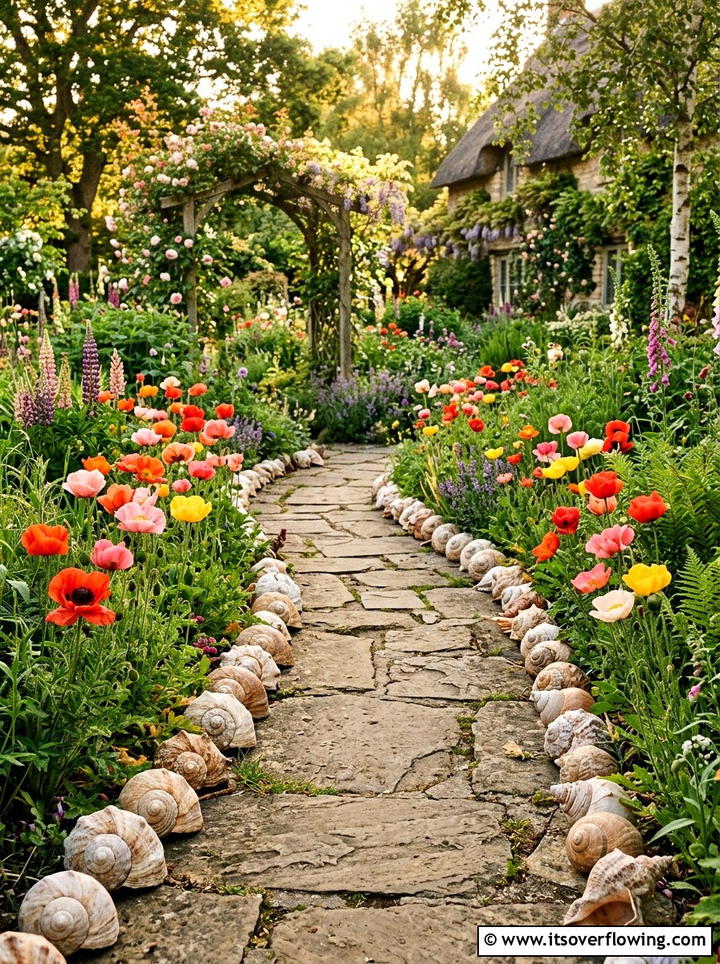
Sea snail shells, with their unique spiral shapes, offer a whimsical and artistic way to edge a garden path. This design features a narrow stone walkway bordered by a line of large, spiraling snail shells that guide the eye through the garden. The surrounding area is filled with delicate flowers like cosmos and poppies, which dance in the breeze above the sturdy shells. The spirals add a sense of movement to the garden, making the path feel like it is leading to a hidden or secret location. This approach is perfect for gardeners who want to add a touch of fantasy and charm to their outdoor environment.
13. Oyster shell layer for garden drainage
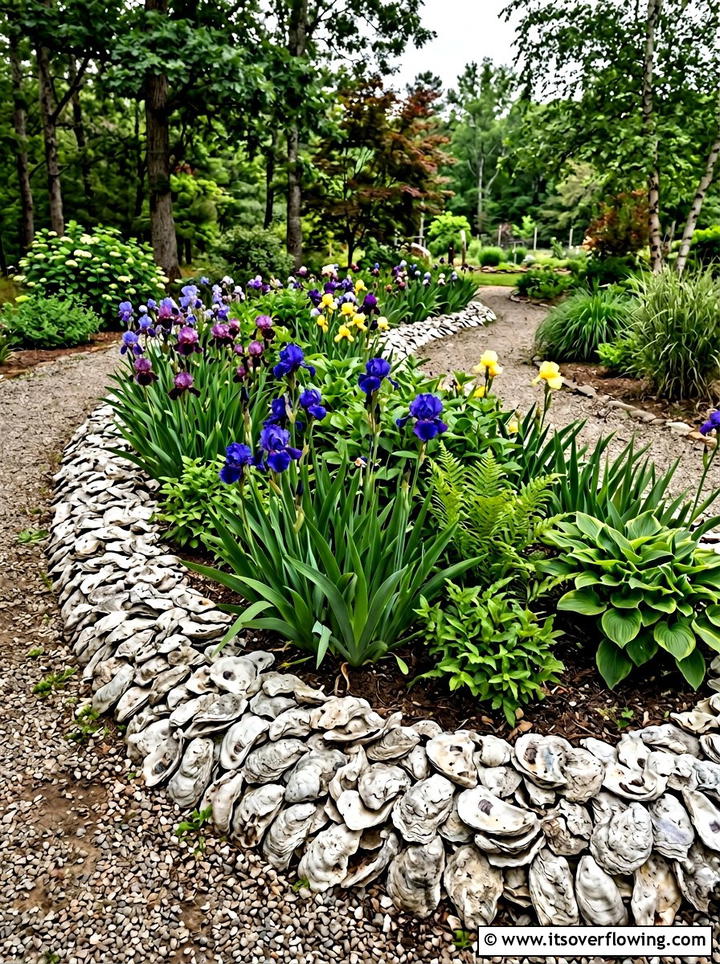
Did you know that shells can be both beautiful and functional by improving the drainage of your garden beds? In this practical design, a thick layer of whole oyster shells is used to border a garden area that sits in a low-lying part of the yard. The shells are piled up to create a barrier that allows water to flow through while keeping the soil in place. The garden is planted with moisture-tolerant species like iris and canna lilies, which thrive in this well-drained environment. The rugged, greyish-white texture of the oyster shells provides a natural and earthy look that fits perfectly in a woodland or coastal garden setting.
14. Scallop shell edge for cottage gardens
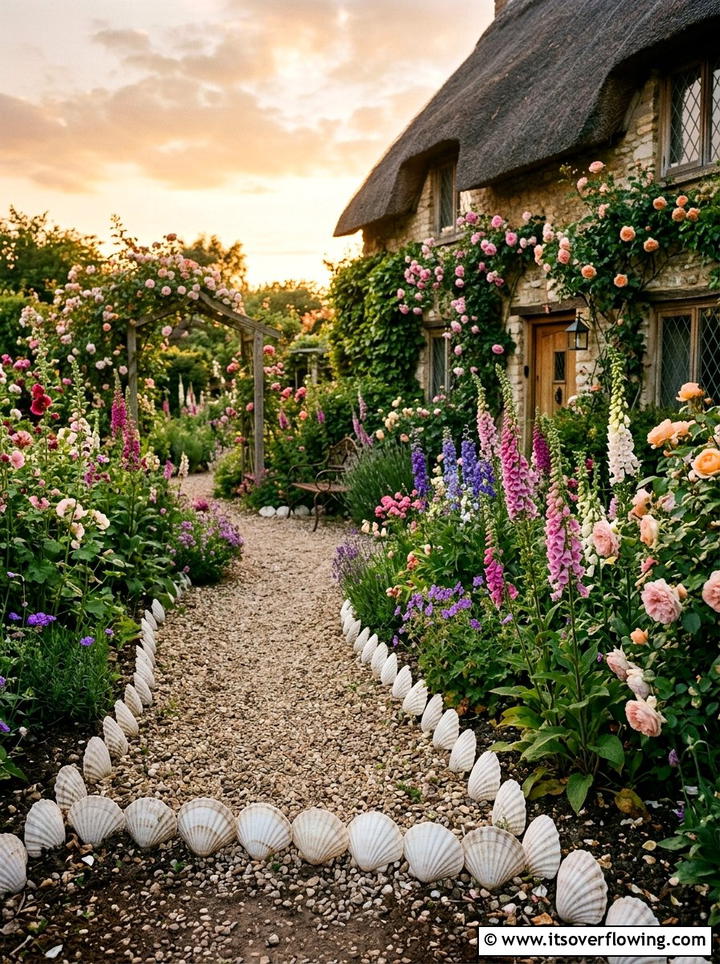
Cottage gardens are known for their romantic and overflowing appearance, and scallop shells add just the right amount of vintage charm. This design features a riot of colorful flowers like roses, foxgloves, and lavender, all held back by a neat border of upright scallop shells. The shells are tucked into the soil vertically, creating a picket-fence effect that is both playful and elegant. This border helps to define the garden beds against a green lawn, providing a clear distinction between the wild floral display and the manicured grass. The shells reflect the soft colors of the flowers, enhancing the overall dreamy atmosphere of the cottage style.
15. Shell and pebble mosaic garden border
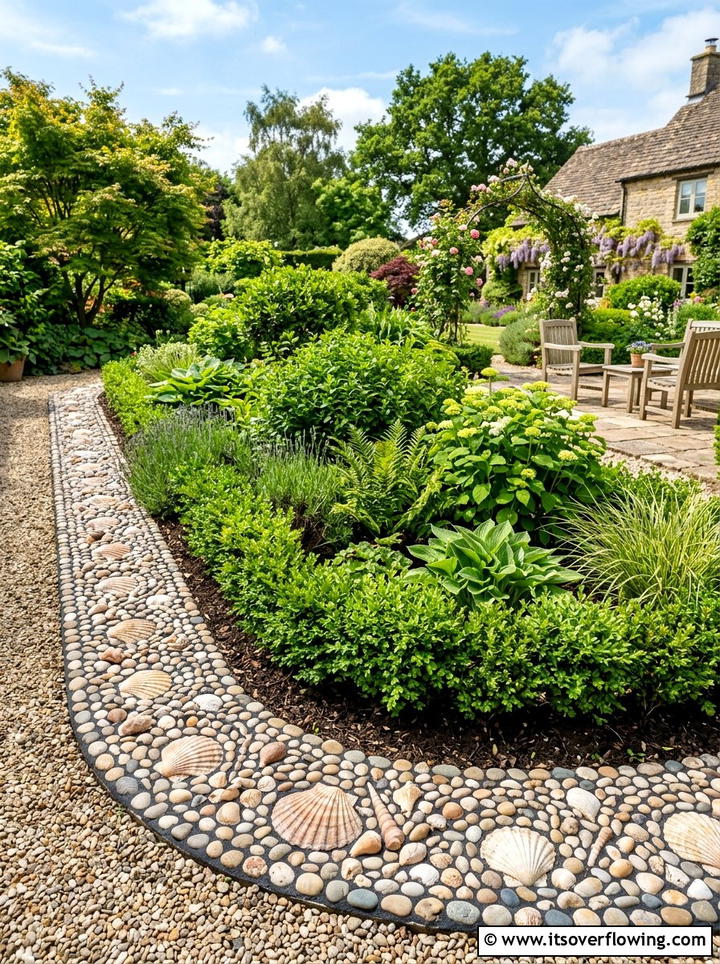
For those who enjoy a more artistic project, creating a mosaic border using shells and smooth river pebbles is a rewarding option. This design features a flat, wide border where shells are pressed into a bed of mortar or sand alongside colorful pebbles to create intricate patterns. The garden itself is kept simple with low-growing green shrubs to ensure the focus remains on the detailed border work. This type of edging is very durable and provides a smooth surface that is easy to trim around with a lawnmower. It allows for complete customization, letting you create stars, waves, or abstract designs that reflect your personal style.
16. Coastal xeriscape with large conch shells
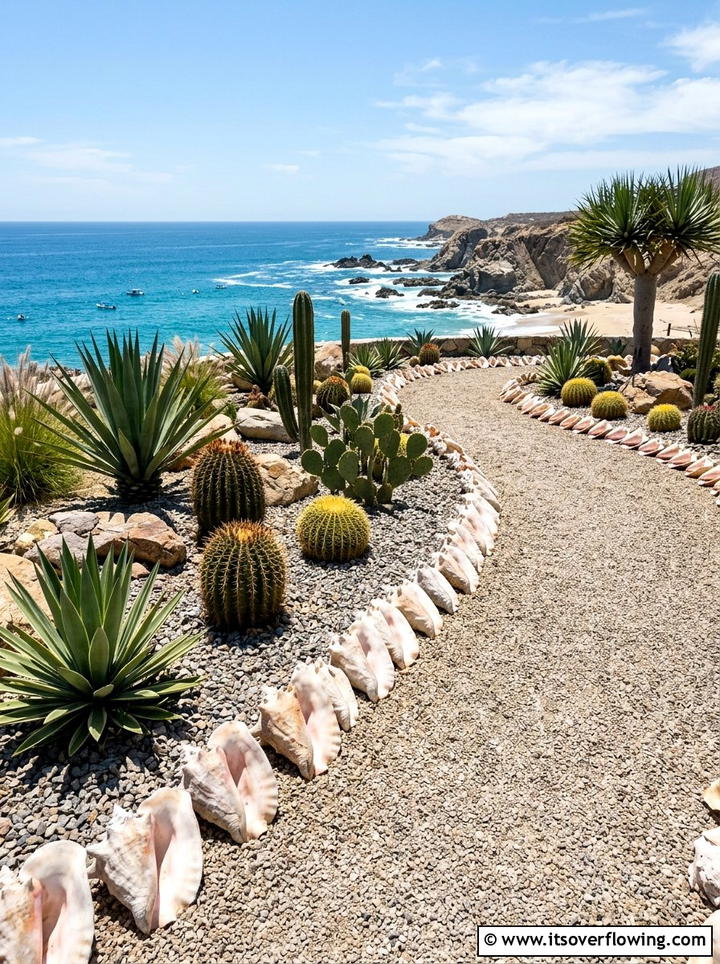
Xeriscaping is a water-wise gardening technique that looks stunning when paired with large, bold shells like the queen conch. In this desert-meets-coast design, various cacti and agaves are planted in a bed of crushed gravel, with large conch shells used as focal points along the border. The shells provide a soft, organic contrast to the sharp lines of the succulent plants and the coarse texture of the gravel. This low-maintenance garden is perfect for dry climates where traditional flowers might struggle to survive. The shells add a touch of the ocean to the arid landscape, creating a unique and refreshing visual juxtaposition that requires very little upkeep.
17. Sea glass and shell edging for flower beds
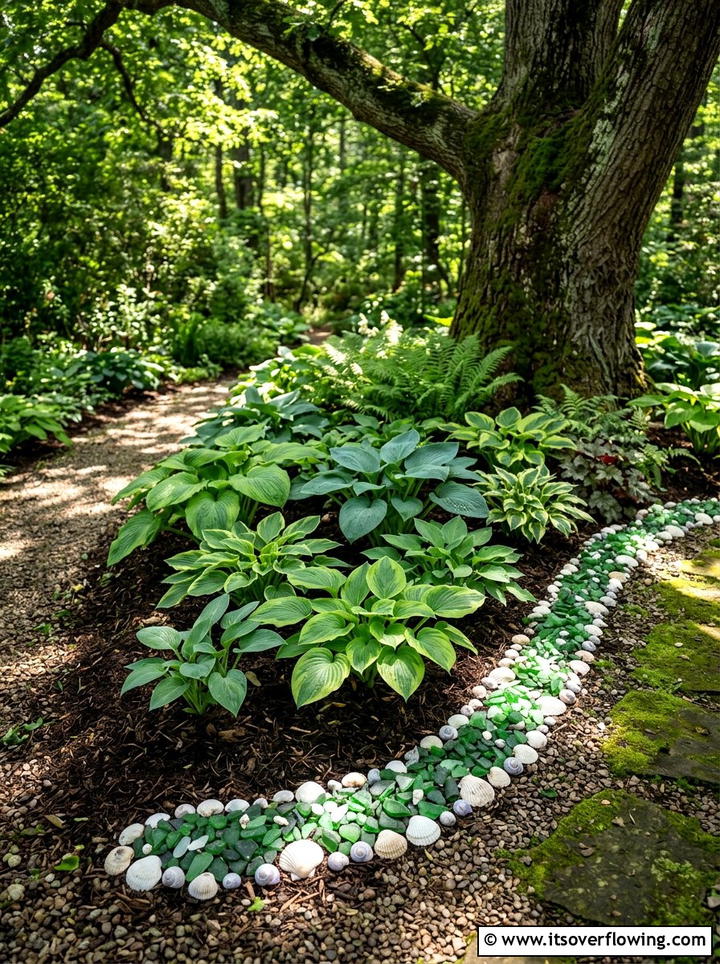
Brightening up a shady garden bed is easy when you use reflective materials like sea glass and polished shells. This design features a border under a large tree where hostas and impatiens are planted, edged with a mixture of green sea glass and white whelk shells. The glass catches what little light filters through the tree canopy, creating a glowing effect that brightens the dark corner of the yard. The white shells provide a stark contrast to the deep green leaves of the shade-loving plants, making the garden bed appear larger and more defined. This is an excellent way to add color to areas where flowers are limited.
18. Clam shell border for seaside landscaping
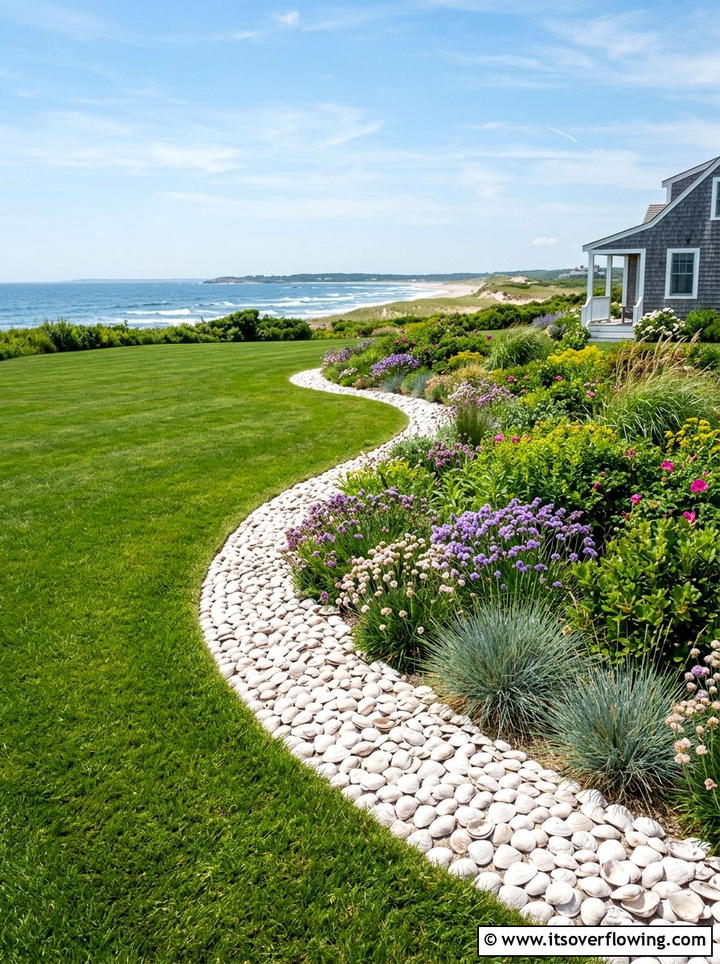
If you are lucky enough to live near the water, using local clam shells to edge your lawn is a natural and cost-effective choice. This design features a vast lawn that meets a large garden bed filled with native seaside plants like beach plums and bayberries. The transition between the grass and the garden is marked by a wide, flat border of sun-bleached clam shells. This look is incredibly authentic and ties the home’s landscaping directly into the surrounding coastal environment. The shells are easy to replenish after a storm, making it a sustainable and practical choice for coastal homeowners who want a low-impact garden.
19. Conch shell line for shady garden corners
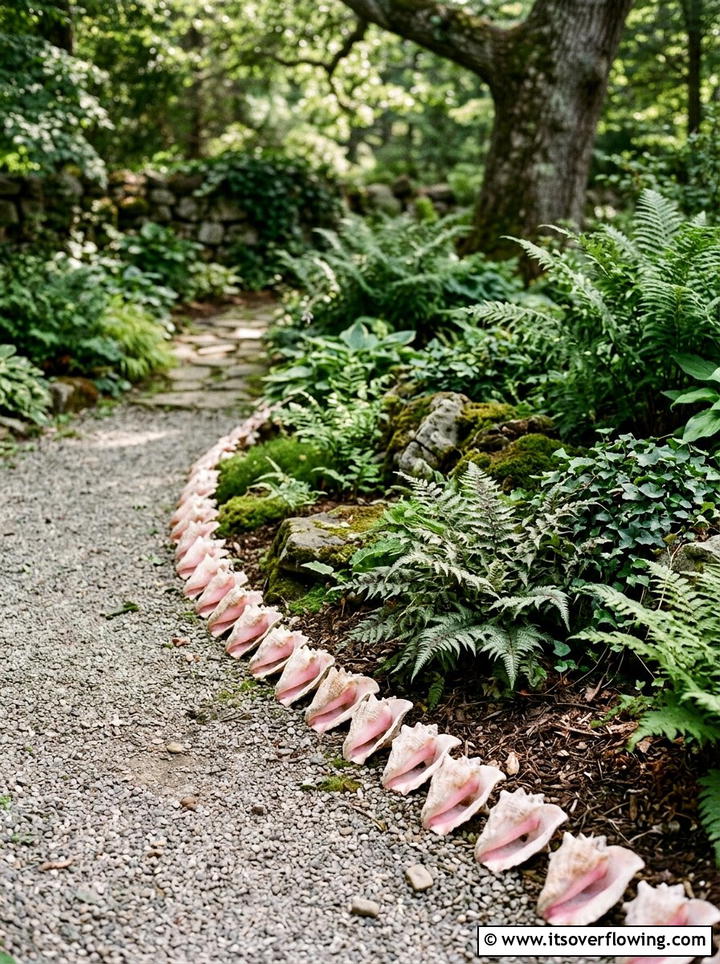
Do you have a forgotten corner of the garden that needs a bit of personality and light? This design uses a single, neat line of pink-lipped conch shells to border a small garden of ferns and bleeding hearts in a shaded area. The bright interior of the shells acts like a natural reflector, bringing a bit of brightness to the soil level. The garden feels more intentional and cared for with the addition of these architectural shells, turning a dark spot into a charming focal point. This simple addition can completely change the mood of a quiet garden nook, making it a pleasant place to sit and relax.
20. Seashell and river rock garden transition
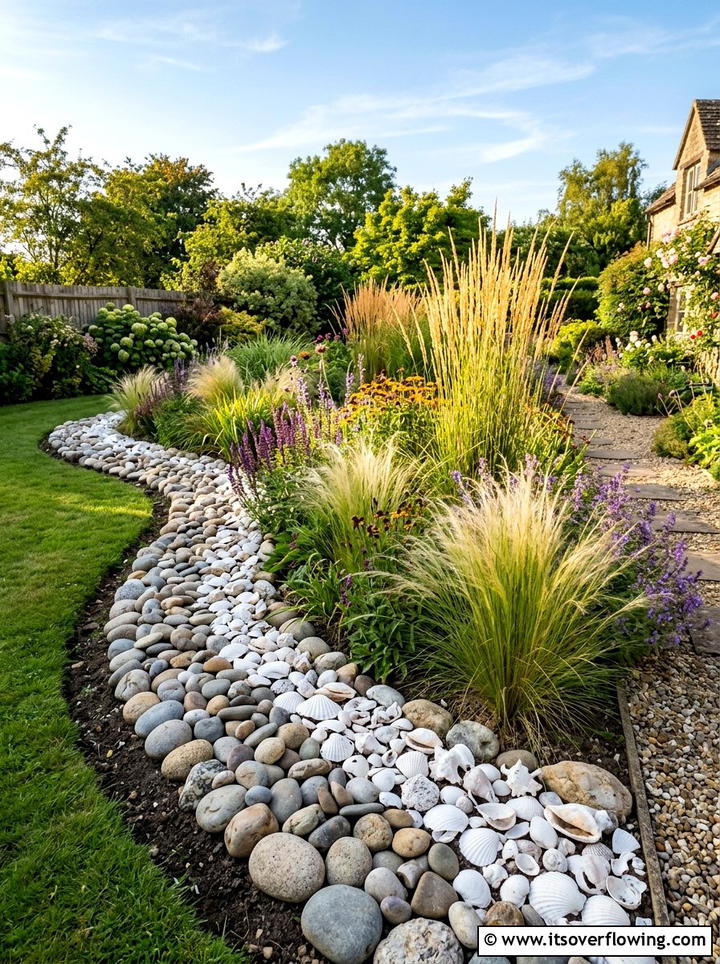
Combining the smooth, rounded shapes of river rocks with the sharp, detailed textures of seashells creates a balanced and interesting garden border. In this design, a bed of ornamental grasses is bordered by a mixture of grey river stones and various white shells, creating a thick and sturdy edge. The stones provide the weight and structure needed to keep the border in place, while the shells add a decorative flair that lightens the overall look. This transition style works well in modern landscapes where clean lines and natural materials are prioritized. The variety in size and color between the rocks and shells keeps the border visually engaging.
21. Crushed shell border for rose gardens
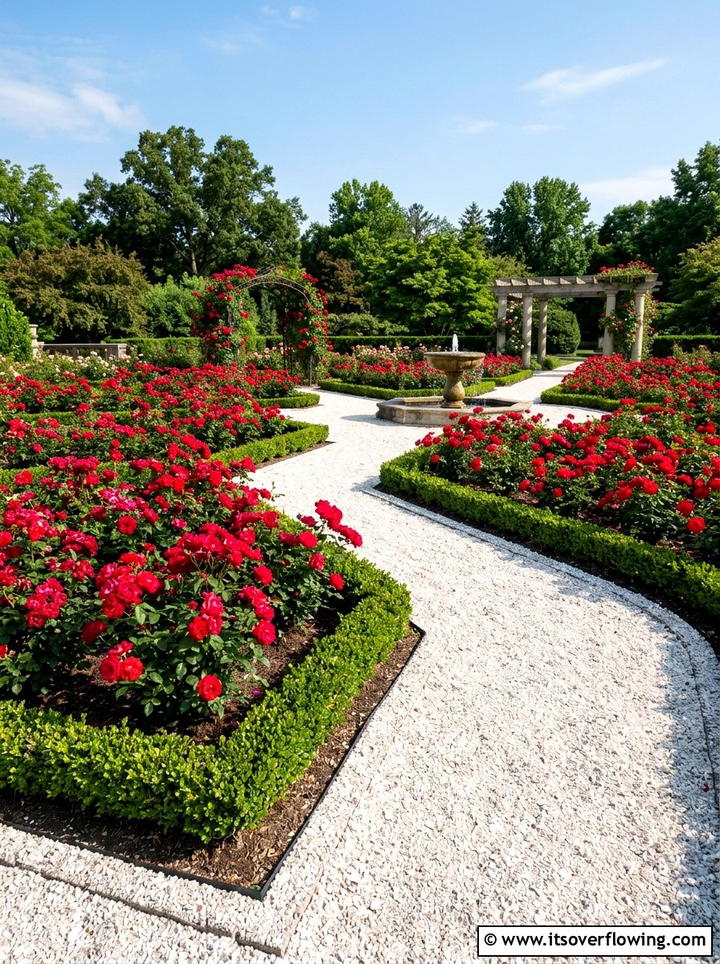
Rose gardens often feel formal, but adding a border of crushed shells can give them a lighter, more relaxed coastal feel. This design features rows of vibrant red and pink rose bushes, with the paths between them covered in fine, crushed white shells. The shells act as a natural mulch, reflecting light up into the bushes and helping to deter certain pests from reaching the stems. The bright white ground cover makes the deep colors of the roses appear even more saturated and beautiful. This combination of classic floral beauty and beachy texture creates a sophisticated garden that feels both traditional and uniquely modern at the same time.
22. Beach stone and scallop shell perimeter
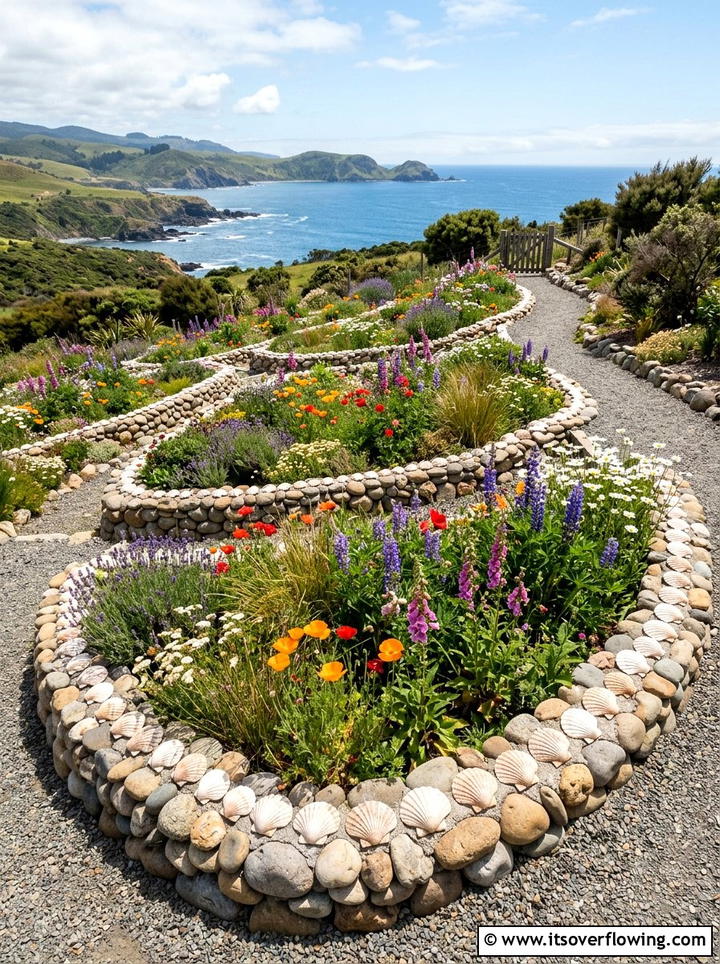
Using flat beach stones as a base for upright scallop shells creates a sturdy and layered border that is perfect for sloped gardens. This design features a series of terraced garden beds filled with colorful wildflowers, with each level bordered by grey beach stones topped with a row of white shells. The stones help to prevent soil erosion on the slope, while the shells provide a decorative finish that ties the whole landscape together. The repetition of the shells across the different levels of the garden creates a sense of harmony and flow, making the entire hillside look like a carefully planned coastal installation.
23. Large clam shell accent for garden beds
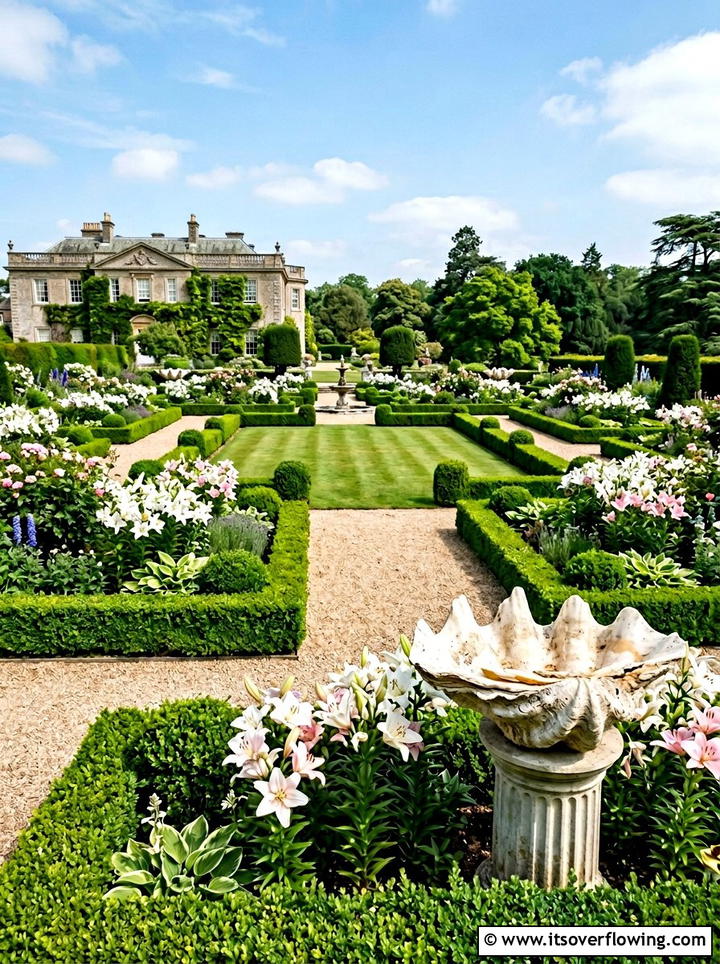
Sometimes, a single large shell can make a bigger statement than a hundred small ones when used as a strategic accent. In this garden design, massive clam shells are placed at the corners of a rectangular garden bed filled with white lilies and green boxwood shrubs. These “anchor” shells provide a sense of weight and permanence to the garden layout, acting like natural sculptures. The rest of the border can be kept simple with wood or stone, allowing the large shells to stand out as the primary decorative element. This high-end look is perfect for formal gardens that need a touch of natural, coastal elegance.
24. Spiral snail shell edging for fairy gardens
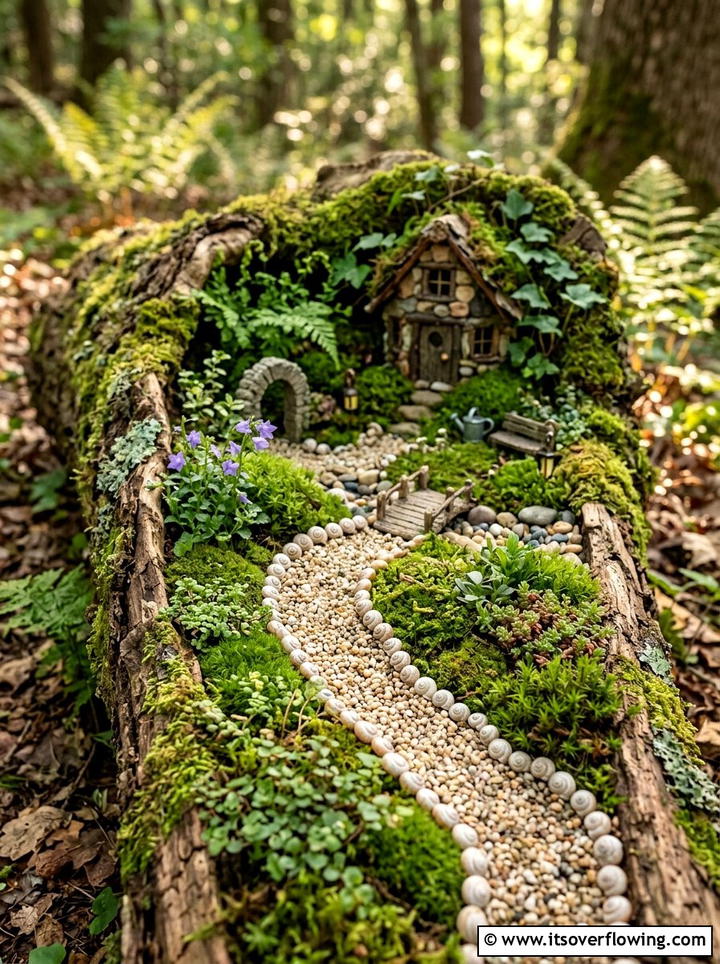
Fairy gardens are all about the small details, and tiny spiral snail shells make the perfect borders for these miniature landscapes. This design features a small, enchanted-looking garden tucked into a hollow log or a large planter, filled with miniature mosses and tiny flowering plants. The paths and beds within the fairy garden are lined with delicate snail shells, creating a magical and whimsical environment that sparks the imagination. The small scale of the shells is perfectly suited for this type of gardening, providing a sense of wonder and discovery for anyone who takes a closer look at the intricate, tiny world you have created.
25. Layered shell and gravel garden edging
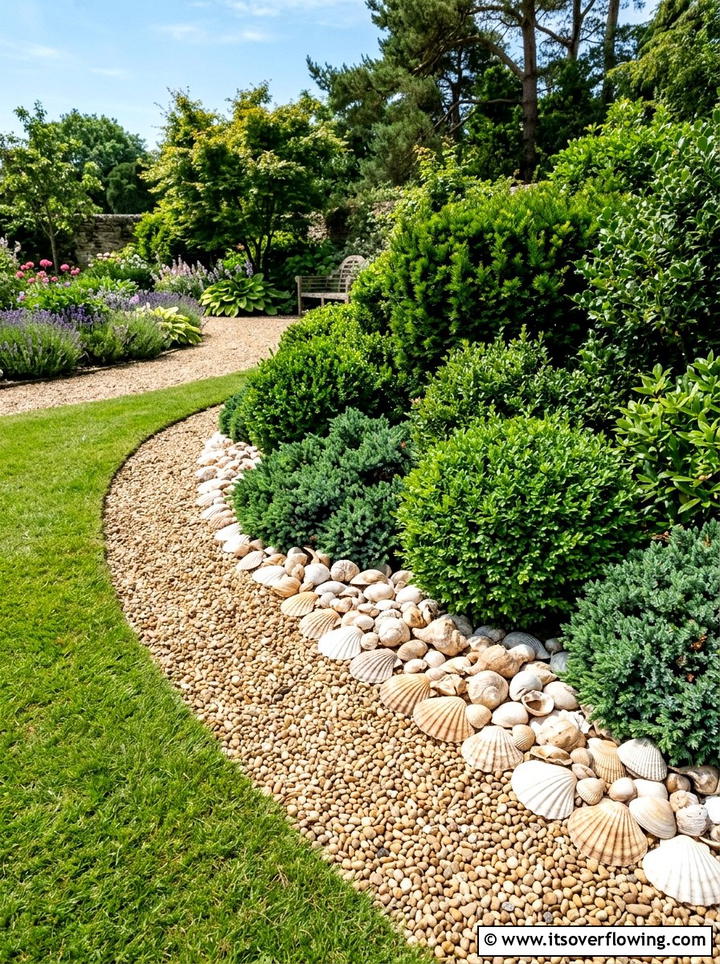
Creating a layered look using different sizes of shells and gravel provides a professional finish that is both attractive and functional. This design features a wide border where fine pea gravel is used as a base, with larger whole shells layered on top to create a textured perimeter. The garden itself is filled with a mix of evergreen shrubs and seasonal flowers, providing year-round interest. This layered approach ensures that the border stays in place even during heavy rain, while the mix of materials adds depth and complexity to the landscape. It is a great way to use up different types of shells while maintaining a cohesive look.
Conclusion:
Integrating seashells into your garden borders is a creative and environmentally friendly way to elevate your home’s outdoor aesthetic. These natural treasures offer a unique combination of durability, functionality, and timeless beauty that works with almost any garden style, from modern xeriscapes to traditional cottage floral beds. By following these ideas, you can define your garden spaces with textures and colors that reflect the serene and captivating spirit of the coastline. Shells not only serve as a beautiful boundary but also contribute to the health of your soil and the overall brightness of your landscape. Whether you are using large conch shells for a bold statement or crushed oysters for a practical pathway, the result is a personalized garden that feels like a peaceful retreat. Embracing this coastal design trend allows you to showcase your love for nature while creating a visually stunning and low-maintenance outdoor environment that you and your guests will enjoy for many years to come.

Related posts:
 25 garden ideas with garden edging for Polished Borders
 25 creative garden ideas with pallet planters for Rustic Charm
 25 Garden Design Ideas for Cottage Gardens Full of Charm
 25 Garden Design Ideas for Farmhouse Landscapes With Rustic Charm
 25 Garden Design Ideas for Patios With Stylish Outdoor Charm
 25 Garden Design Ideas With Pot Displays for Instant Charm
 25 Garden Ideas for Boho Style With Relaxed Outdoor Charm
 25 garden ideas for english style: Classic Cottage Charm
 25 garden ideas for farmhouse homes: Rustic Outdoor Charm
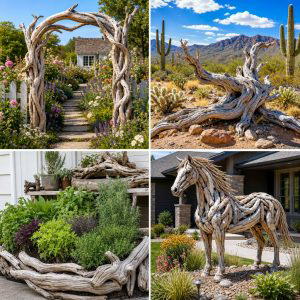 25 Garden Ideas With Driftwood Sculptures for Rustic Charm
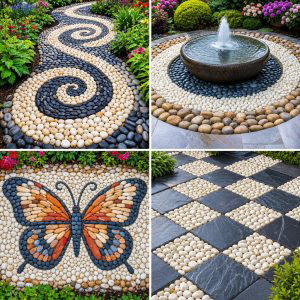 25 Garden Ideas With Pebble Mosaics for Artistic Outdoor Charm
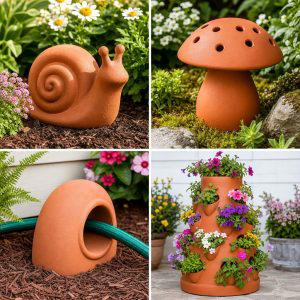 25 Garden Ideas With Terracotta Crafts for Rustic Charm