
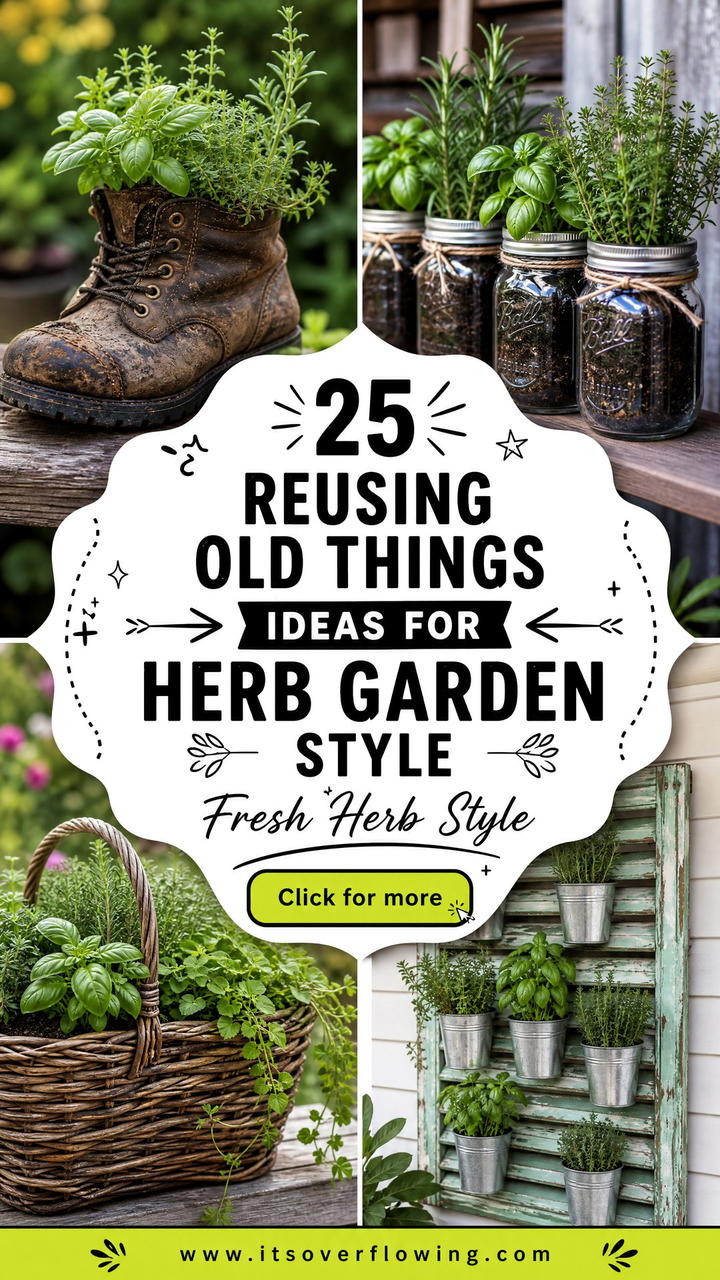
Creating a lush and productive herb garden does not have to be an expensive endeavor involving high-end ceramic pots and designer hardware. In fact, some of the most charming and successful herb gardens come from items you might otherwise toss into the trash or leave to gather dust in the attic. Repurposing old objects adds a unique and personalized touch to your outdoor or indoor space while also helping the environment. This sustainable approach allows you to grow fresh basil, mint, and rosemary in a way that reflects your own personal style. You can turn almost anything with a hollow center into a thriving home for your favorite culinary plants today.
1. Vintage Tea Tin Herb Garden
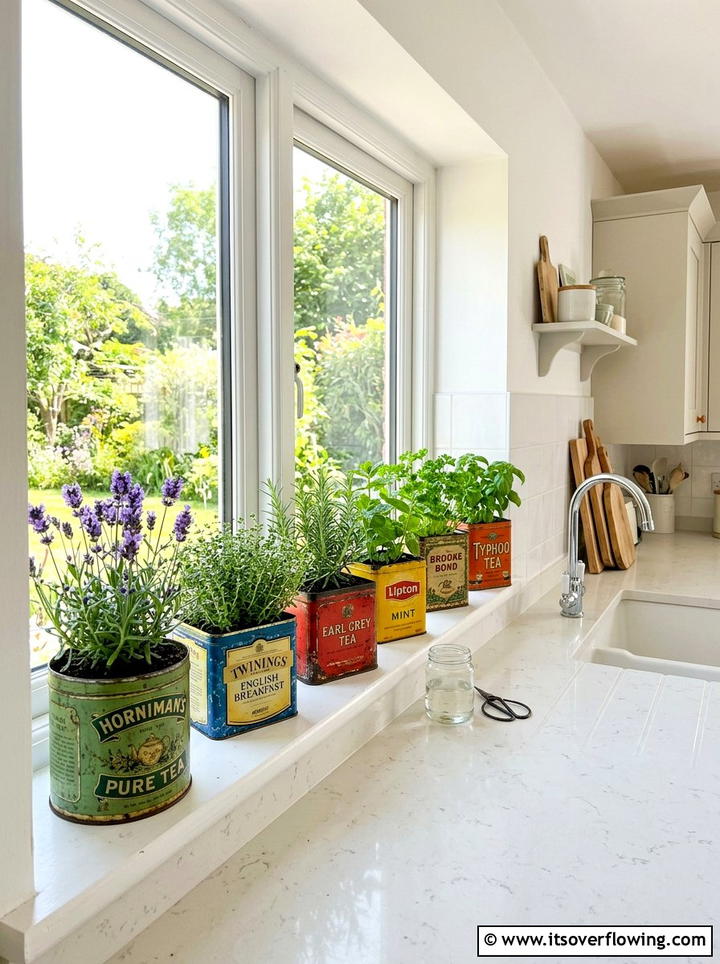
Vintage tea tins are a fantastic way to bring a touch of nostalgic charm to your kitchen windowsill while growing fresh herbs. These containers often feature beautiful typography and vibrant colors that look better than standard plastic nursery pots. You will need to start by cleaning the tins thoroughly to remove any leftover tea residue. Since drainage is critical for healthy herb roots, you must drill a few small holes in the bottom of each tin before planting. Fill them with high-quality potting soil and choose compact herbs like thyme or chives for the best results. They fit perfectly on narrow surfaces and look stunning when grouped together.
2. Wooden Crate Herb Garden
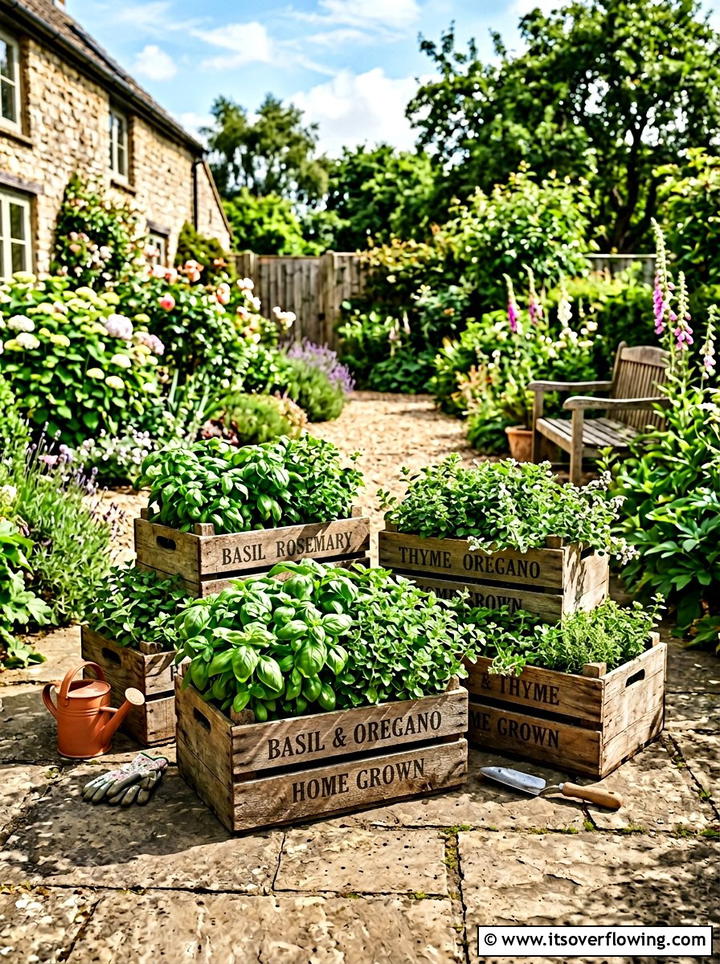
Using old wooden crates provides a rustic and farmhouse feel to any porch or patio setup. These larger containers are perfect for creating a mini-garden that holds several different types of herbs at once. You should line the crate with landscape fabric or a plastic liner with holes to prevent the wood from rotting too quickly. This setup allows you to keep your most-used kitchen herbs like oregano and parsley in one convenient location. The height of the crate makes it easier to manage and move around your outdoor space as the sunlight shifts. It is a simple way to organize your culinary garden effectively.
3. Galvanized Bucket Herb Garden
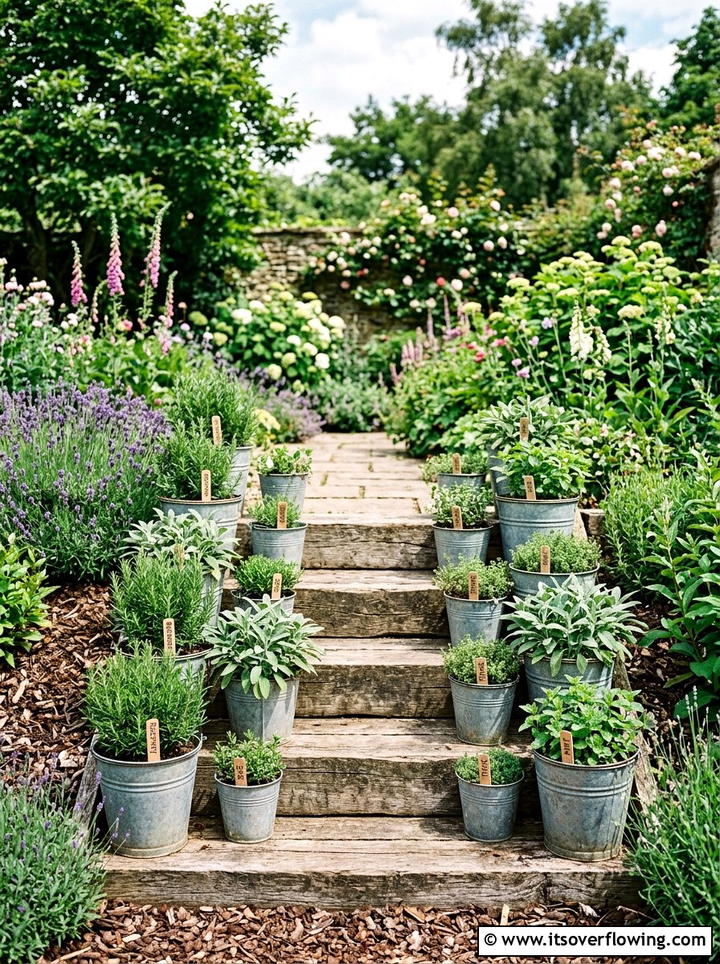
Galvanized metal buckets are incredibly durable and offer a classic industrial look for your backyard herb collection. These sturdy containers can withstand various weather conditions without cracking or fading like some plastic options might. You can use different sizes of buckets to create a tiered visual effect on your garden steps. Just be sure to drill several drainage holes in the bottom to ensure the soil does not stay too wet for your plants. Herbs like rosemary and sage thrive in these deep containers because they provide plenty of room for root growth. They are easy to carry by the handles if you need to move them.

4. Old Boot Herb Garden
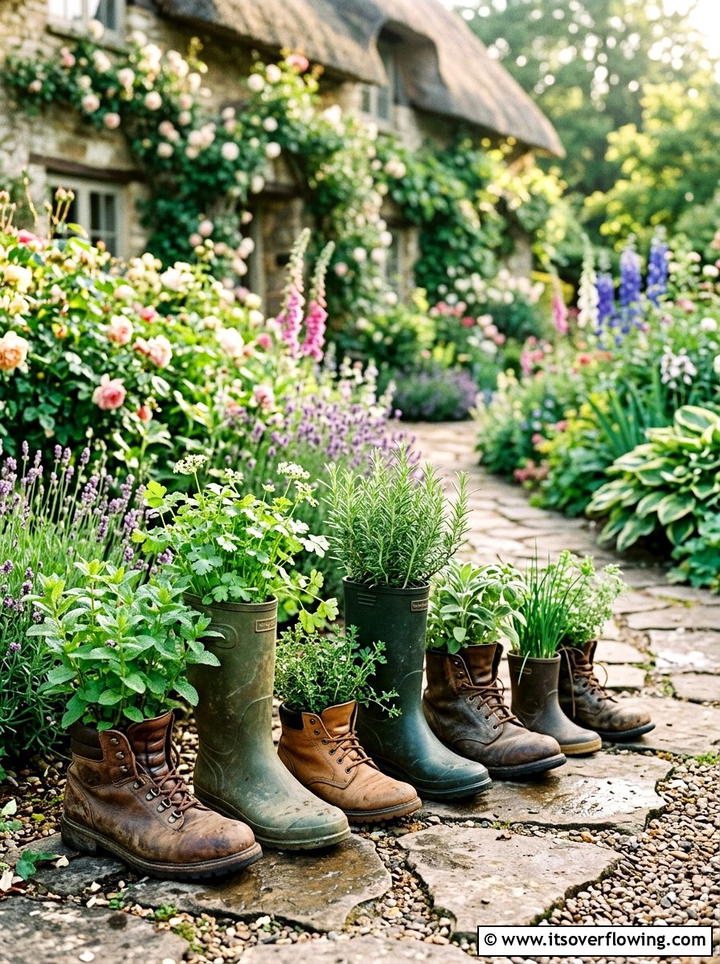
Turning old leather or rubber boots into herb planters is a whimsical way to add personality to your garden path. This creative reuse project works best with boots that are no longer wearable but still hold their shape well. You can tuck various herbs like mint or cilantro right into the top of the boot for a quirky display. Make sure to fill the toe area with small stones or gravel to help with drainage and weight. These planters look especially charming when tucked into corners or placed near a garden gate. It is a conversation starter that turns everyday waste into a beautiful green focal point.
5. Mason Jar Herb Garden
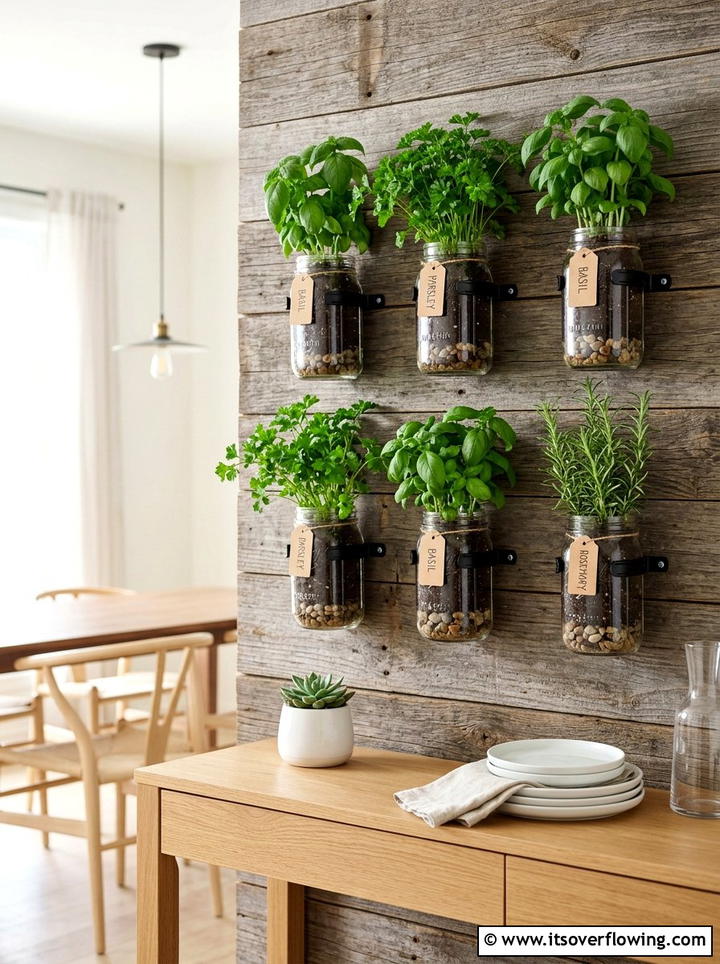
Mason jars are a staple of DIY projects and they make excellent vessels for a tidy indoor herb garden. You can mount them onto a piece of reclaimed wood for a beautiful wall display or line them up on a sunny shelf. Since glass jars do not have drainage holes, you should place a layer of pebbles at the bottom to catch excess water. Growing herbs like basil or mint in these clear containers allows you to monitor the moisture levels easily. This setup is perfect for small apartments where outdoor space is limited but sunlight is plentiful. It keeps your fresh ingredients right at your fingertips.
6. Colander Hanging Herb Garden
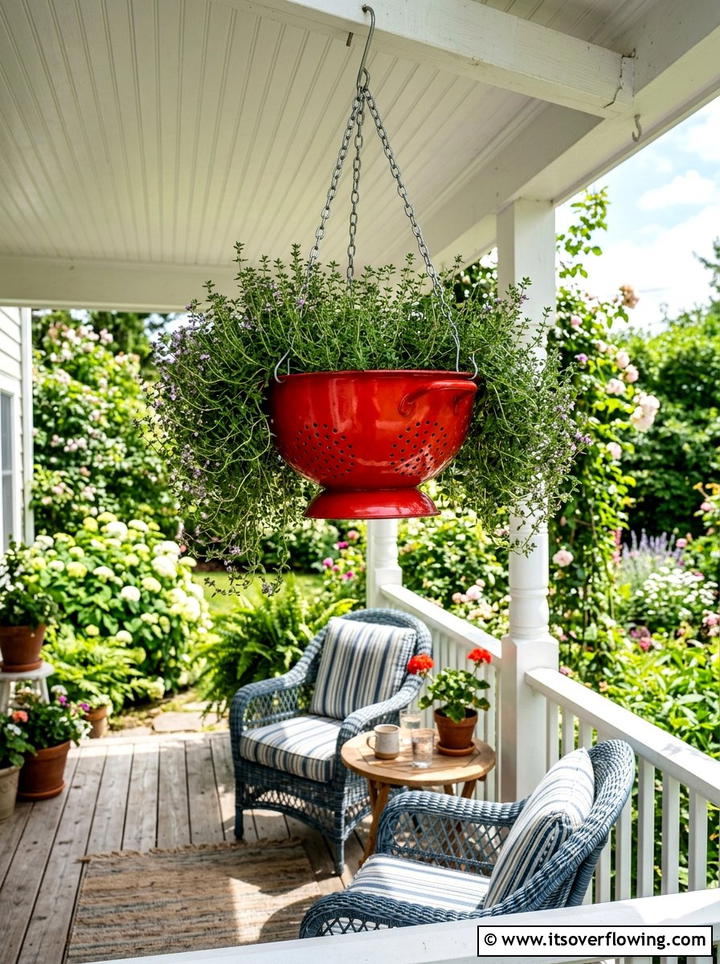
An old metal colander is a perfect ready-made planter because it already features built-in drainage holes. You can attach sturdy chains or heavy-duty twine to the handles to transform it into a unique hanging basket. These colanders are ideal for herbs that enjoy good airflow and excellent drainage, such as cascading thyme or creeping rosemary. They look wonderful hanging from a porch ceiling or a sturdy tree branch in your backyard. The bright colors of vintage enamel colanders add a cheerful pop to your greenery. It is a clever way to repurpose kitchenware that has lost its shine but still has great utility.
7. Vertical Pallet Herb Garden
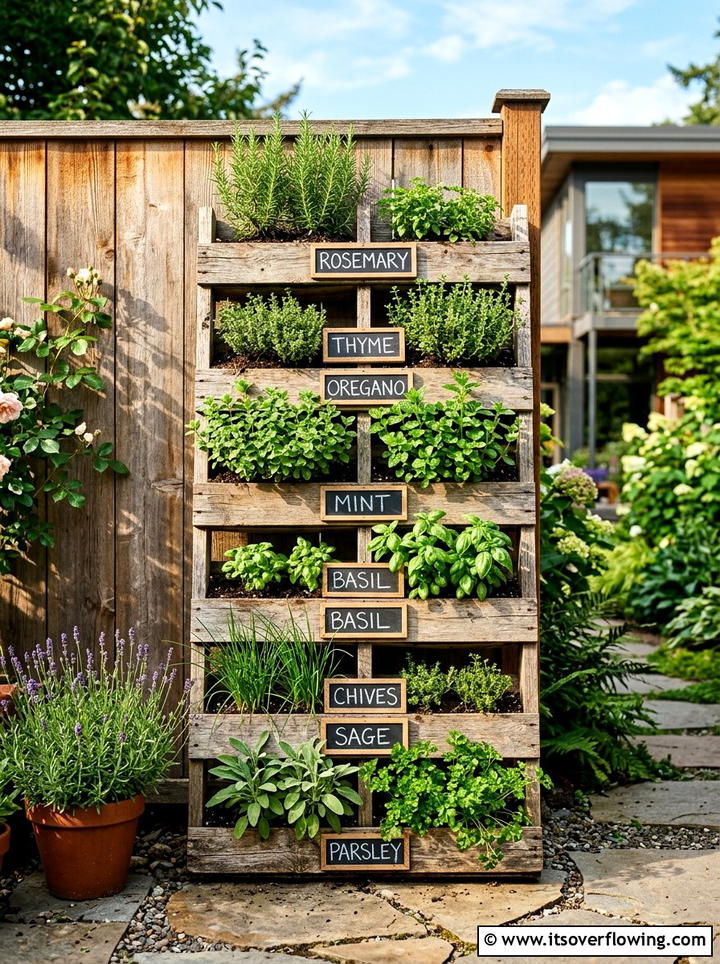
Reclaimed wooden pallets are the ultimate solution for gardeners who want to grow many herbs in a very small footprint. By leaning a pallet against a wall or fence, you create a vertical garden with multiple rows for planting. You will need to secure landscape fabric to the back and bottom of the slats to hold the soil in place. This design is perfect for creating a green wall of fragrance on a balcony or small patio area. You can even paint the slats with chalkboard paint to label each herb clearly. It is an affordable way to maximize your growing space while looking very modern.
8. Teapot Herb Garden
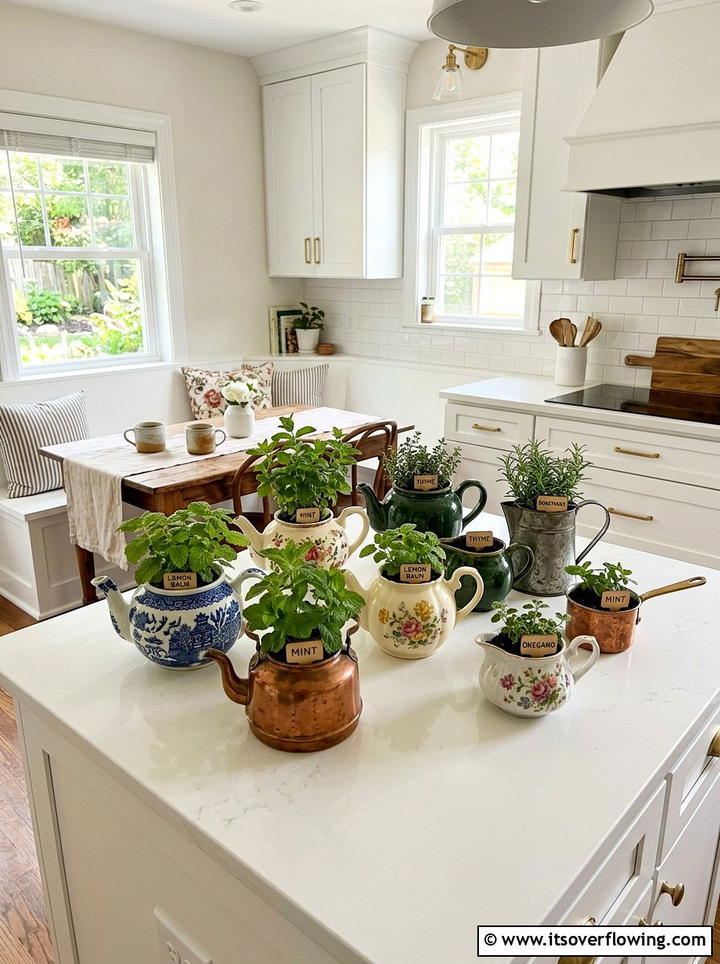
Old ceramic or metal teapots make the most adorable planters for a small-scale kitchen herb garden. These items often have beautiful patterns or interesting shapes that add character to your countertop or garden table. You can plant single herbs like small-leaf basil or lemon balm directly into the opening at the top. If the teapot is a valuable antique, you might want to use it as a decorative cover for a plastic nursery pot instead. The spout provides a unique look and can even help with airflow to the roots. It is a delightful way to give a second life to a chipped kitchen item.
9. Old Drawer Herb Garden
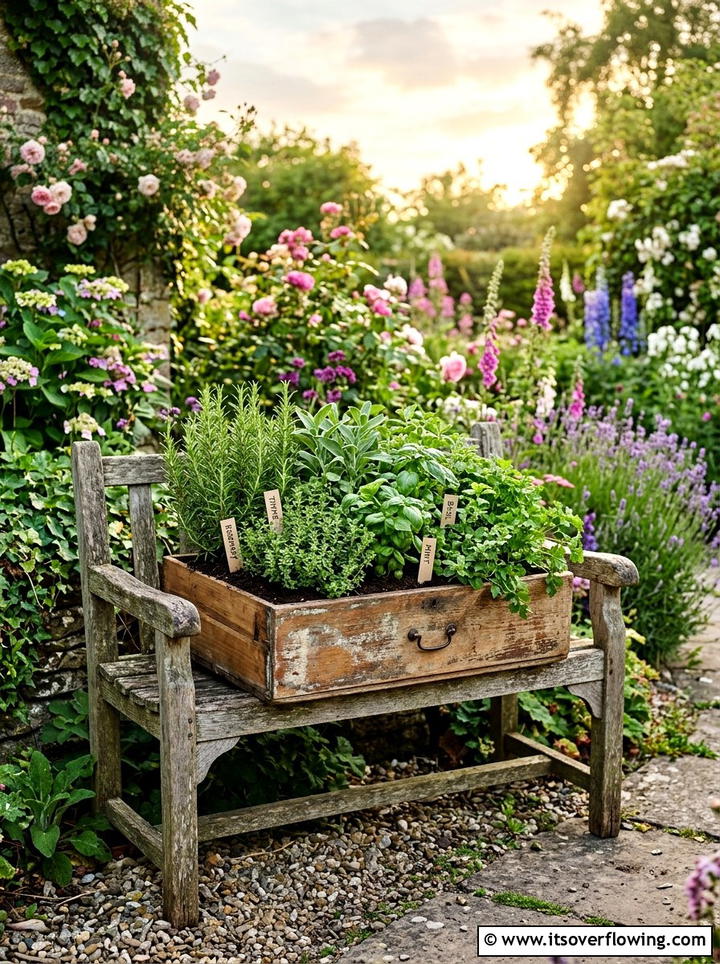
A discarded dresser drawer can be easily transformed into a spacious and shallow planter box for your favorite herbs. These drawers provide a wide surface area that is perfect for growing a variety of herbs side by side. You should treat the wood with a water-resistant sealant or line it with plastic to ensure the container lasts for many seasons. This setup works exceptionally well on a low bench or directly on the ground in a sunny spot. You can leave the original handles on for an extra touch of vintage style. It is a great way to recycle furniture into something functional.
10. Plastic Bottle Herb Garden
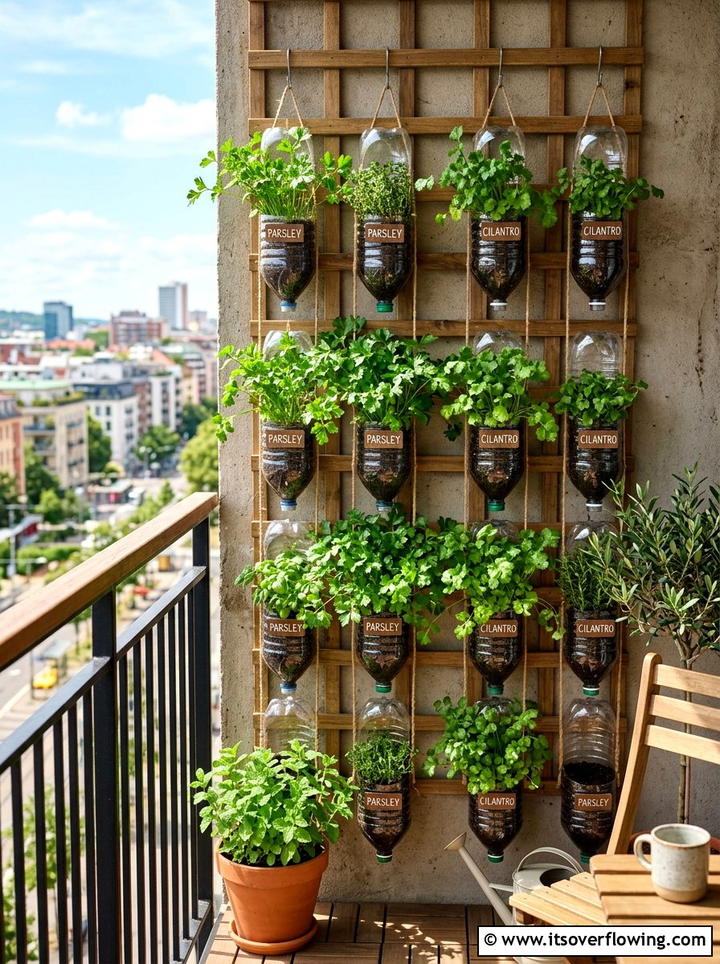
Recycling plastic soda or water bottles into a vertical herb garden is an environmentally friendly and budget-friendly project. You can cut out the side of the bottle and hang multiple units together using sturdy string or wire. This method is particularly effective for people living in urban environments with very little ground space. It allows you to grow a large volume of herbs like parsley and cilantro using very few resources. These lightweight containers are easy to move if the weather gets too cold or too hot for your plants. It is a smart way to reduce plastic waste while producing fresh food.
11. Wine Bottle Herb Garden
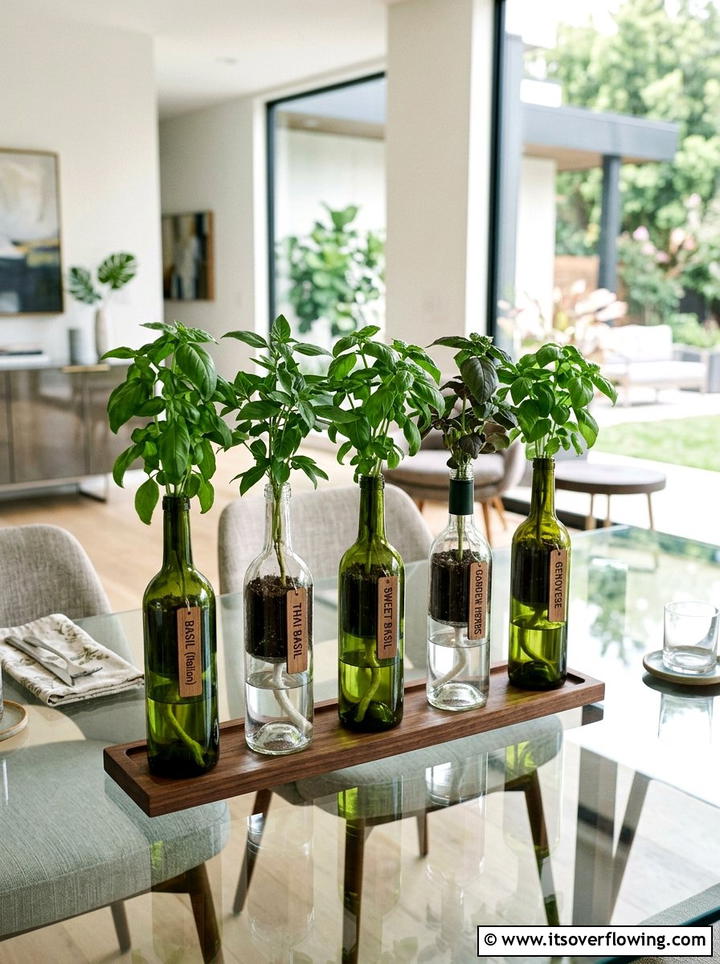
Empty wine bottles can be converted into sleek and modern self-watering herb planters with a little bit of effort. By carefully cutting the bottle in half, you can flip the top part over into the bottom to create a reservoir. A small piece of cotton wick pulls water up to the soil, keeping your herbs hydrated without constant monitoring. This system is perfect for thirsty herbs like basil that prefer consistent moisture levels. These glass planters look very sophisticated on a dining room table or a modern kitchen counter. It is a creative way to reuse glass while maintaining a very clean aesthetic.
12. Tire Herb Garden
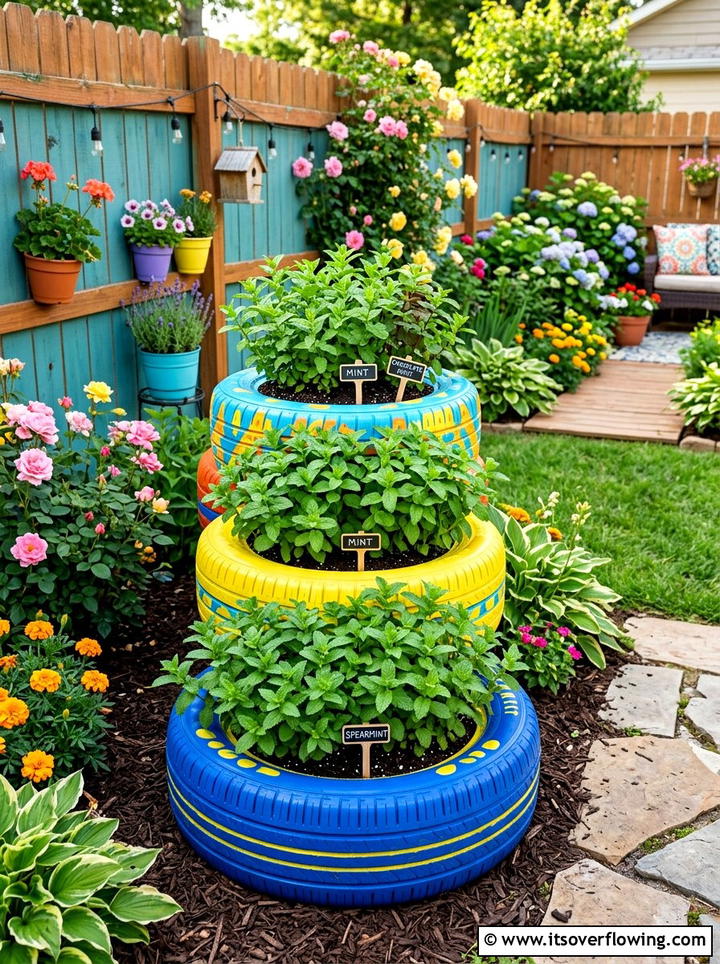
Old tires can be cleaned, painted, and stacked to create large and durable raised beds for your herb garden. This method is excellent for growing aggressive herbs like mint that tend to take over a traditional garden bed. The thick rubber walls help insulate the soil, keeping the roots warmer during the cooler months of the year. You can paint them in bright, bold colors to turn them into a fun visual feature in your backyard. Placing a few tires of different sizes together creates an interesting landscape design. It is a heavy-duty solution for recycling items that are otherwise very difficult to discard.
13. Old Sink Herb Garden
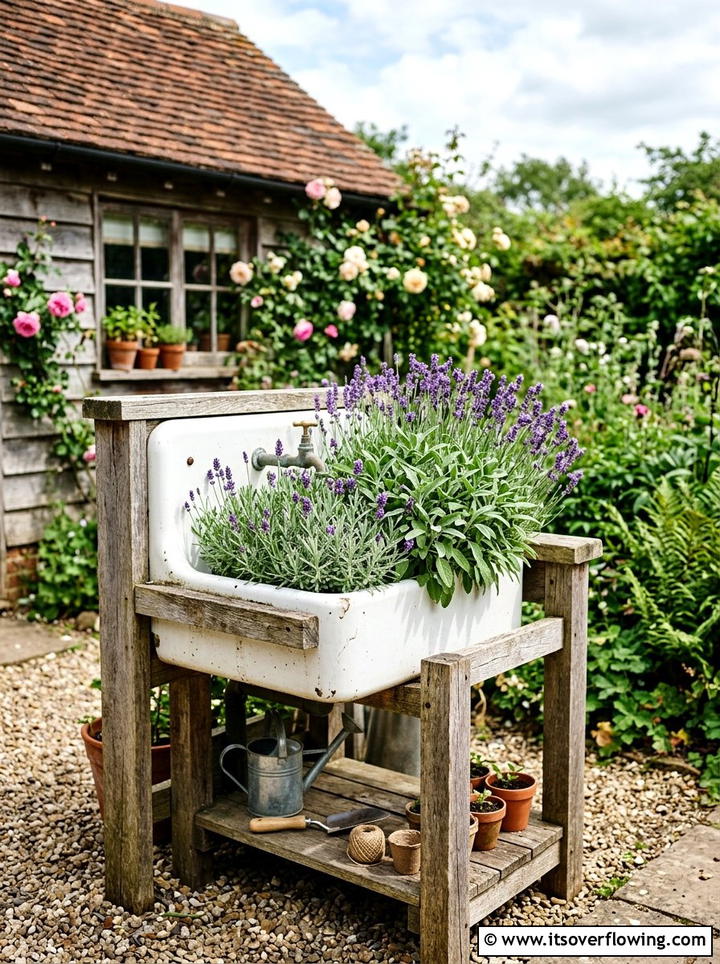
A vintage porcelain or stainless steel sink makes for a surprisingly effective and stylish outdoor herb planter. Since sinks already have a drainage hole in the center, they are naturally suited for holding soil and plants. You can mount the sink on a wooden frame or set it on top of some sturdy bricks for a raised garden. This height makes it very comfortable to harvest your herbs without having to bend over too much. The deep basin provides plenty of room for larger herbs like lavender or sage to spread their roots. It adds a quirky, cottage-core vibe to any backyard or garden area.
14. Rain Gutter Herb Garden
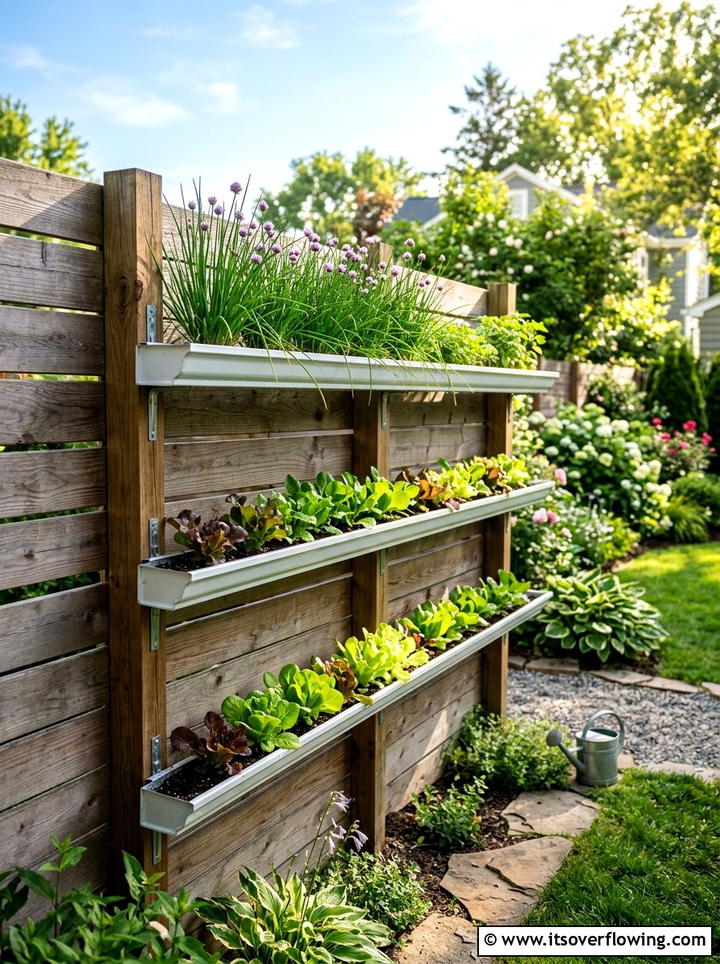
Using sections of old aluminum rain gutters is a brilliant way to create a long, narrow herb garden along a fence. These gutters can be mounted horizontally in rows, allowing you to grow a massive amount of herbs in very little space. They are the perfect depth for shallow-rooted herbs like lettuce, chives, and different varieties of thyme. This setup keeps your herbs off the ground and away from many common garden pests and hungry rabbits. It also makes watering very efficient since you can simply run a hose down the length of the gutter. It is a very clean and organized growing system.
15. Ladder Herb Garden
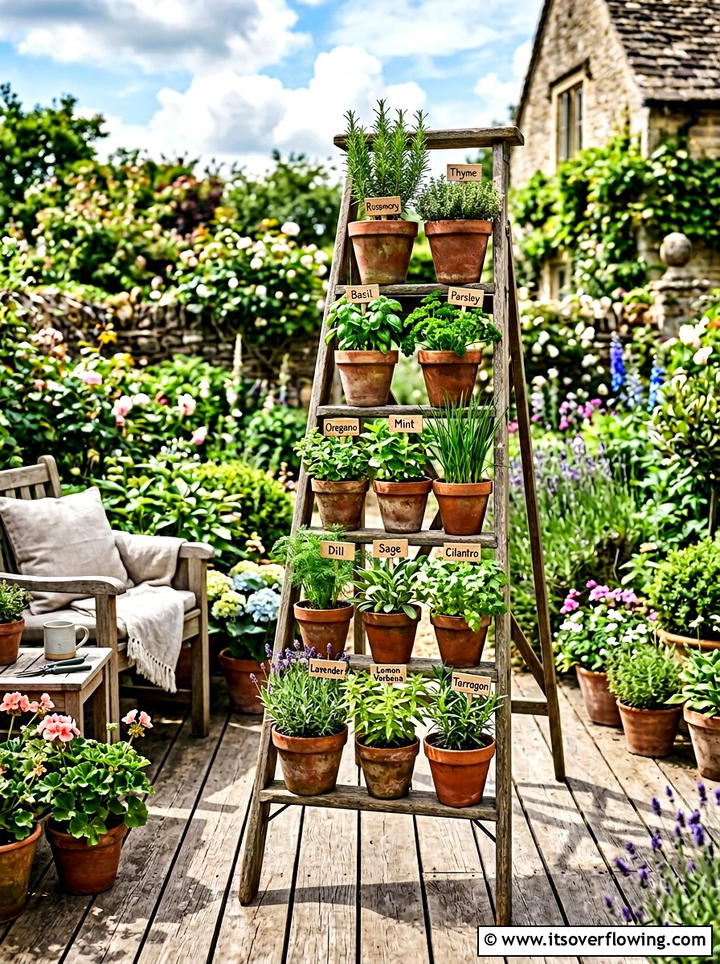
An old wooden or metal stepladder can serve as a multi-tiered display stand for several different herb containers. By placing planks of wood across the rungs, you create sturdy shelves that can hold dozens of small pots. This vertical arrangement allows each plant to receive plenty of sunlight without being shaded by its neighbors. It is a fantastic way to add height and visual interest to a flat patio or deck area. You can easily organize your herbs by type or by how much water they need on each level. It is a flexible and portable solution for any herb lover.
16. Birdcage Herb Garden
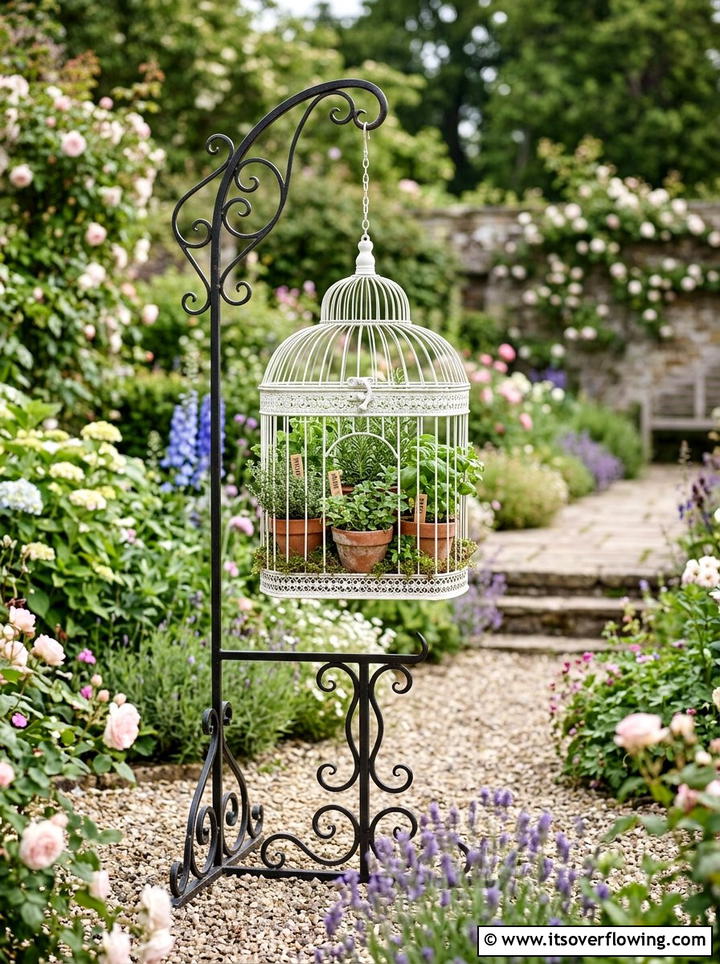
A vintage metal birdcage can be turned into a stunning and protected home for your delicate herb plants. You can place several small pots inside the cage or line the bottom with moss and soil for a more natural look. This setup is particularly useful if you have pets or local wildlife that might try to nibble on your fresh greens. The intricate metalwork of the cage creates beautiful shadows and adds an elegant touch to your garden decor. You can hang the birdcage from a hook or set it on a decorative pedestal. It is a very romantic way to display your herbs.
17. Wicker Basket Herb Garden
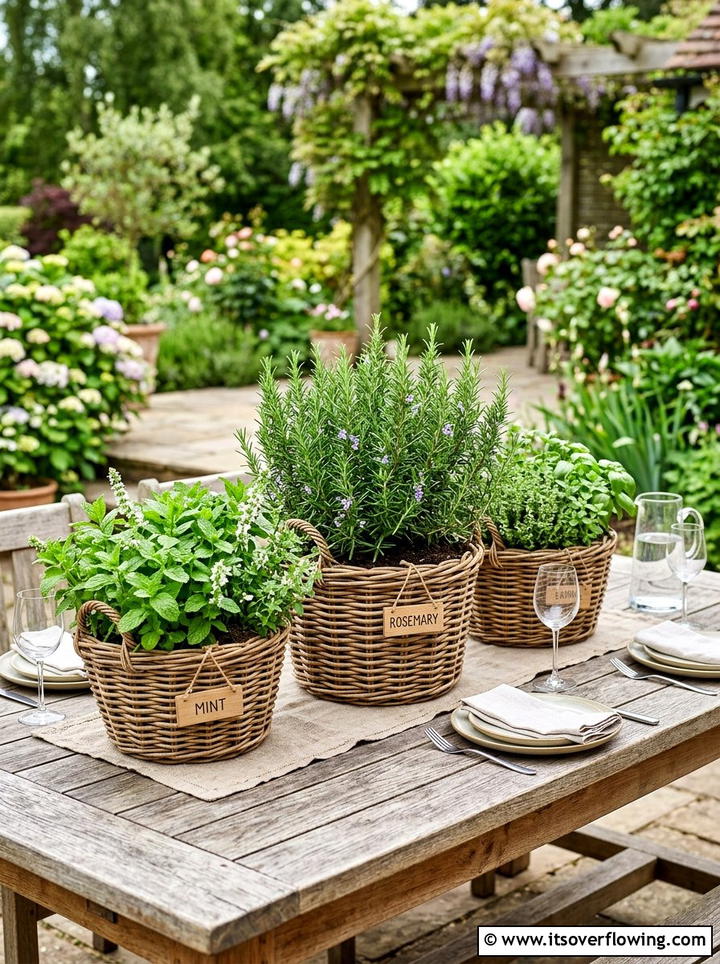
Old wicker baskets offer a soft and natural look that blends perfectly with the greenery of a fresh herb garden. You must line the inside of the basket with a thick plastic liner to prevent the soil from falling through the weave. These baskets are lightweight and easy to move around your home or garden to find the best sunlight. They are ideal for creating a centerpiece on an outdoor dining table filled with fragrant rosemary and mint. The textured surface of the wicker adds a cozy, rustic feel to your space. It is a great way to reuse old storage containers.
18. Tin Can Herb Garden
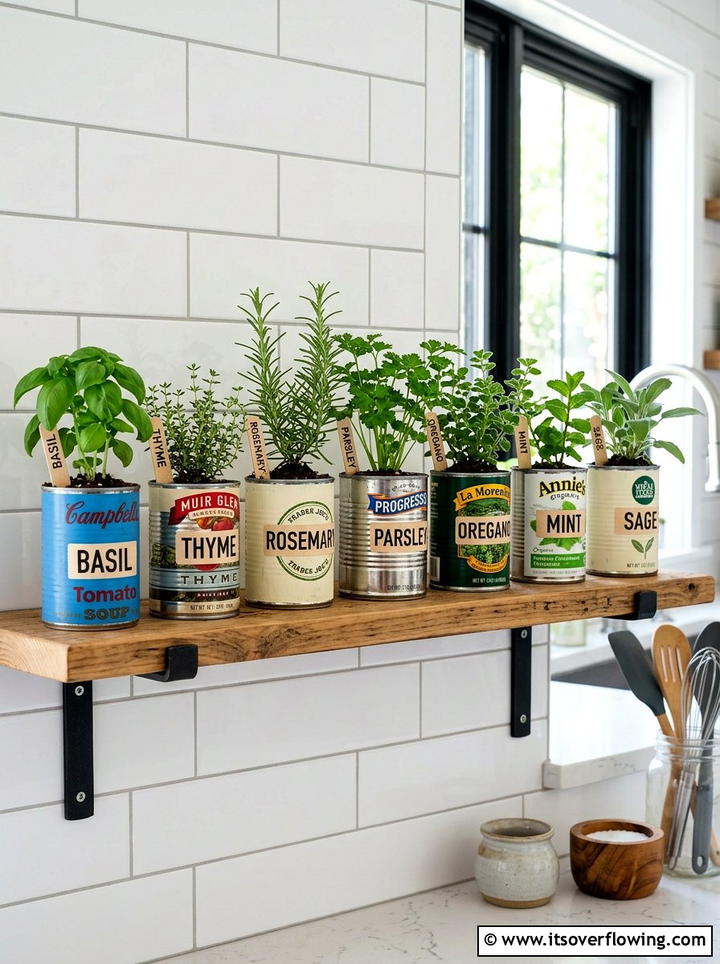
Empty food tins are perhaps the easiest and most accessible items to repurpose into a charming herb garden. You can remove the labels and paint the cans or leave them with a shiny metallic finish for a modern look. After poking holes in the bottom for drainage, these cans are ready to hold small herb plants on a sunny ledge. You can even use magnets to attach them to a metal backsplash or a refrigerator for a vertical kitchen garden. This is a perfect project for teaching children about recycling and gardening at the same time. It is simple, effective, and very cheap.
19. Old Chair Herb Garden
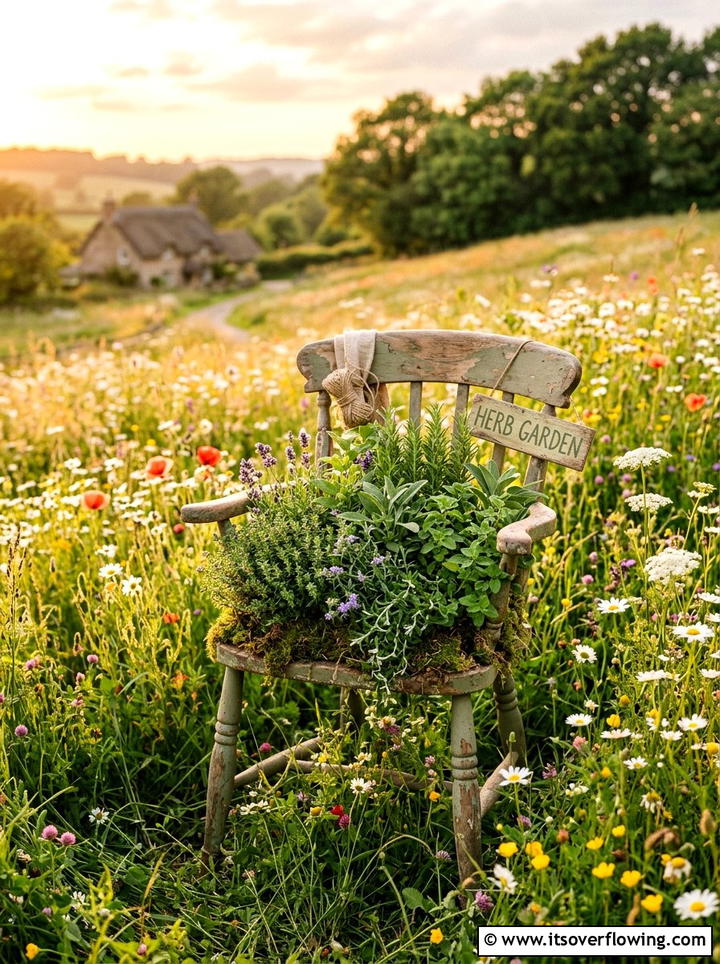
An old wooden chair with a broken seat can be given a new purpose as a unique planter for your herbs. By removing the remaining seat material and replacing it with a basket or landscape fabric, you create a deep planting pocket. This elevates your herbs to a convenient height, making it very easy to clip off what you need for cooking. The back of the chair can even act as a support for climbing herbs or small flowering plants. It looks wonderful sitting in a flower bed or on a porch as a piece of living furniture. It brings a creative touch to recycling.
20. Spice Jar Herb Garden
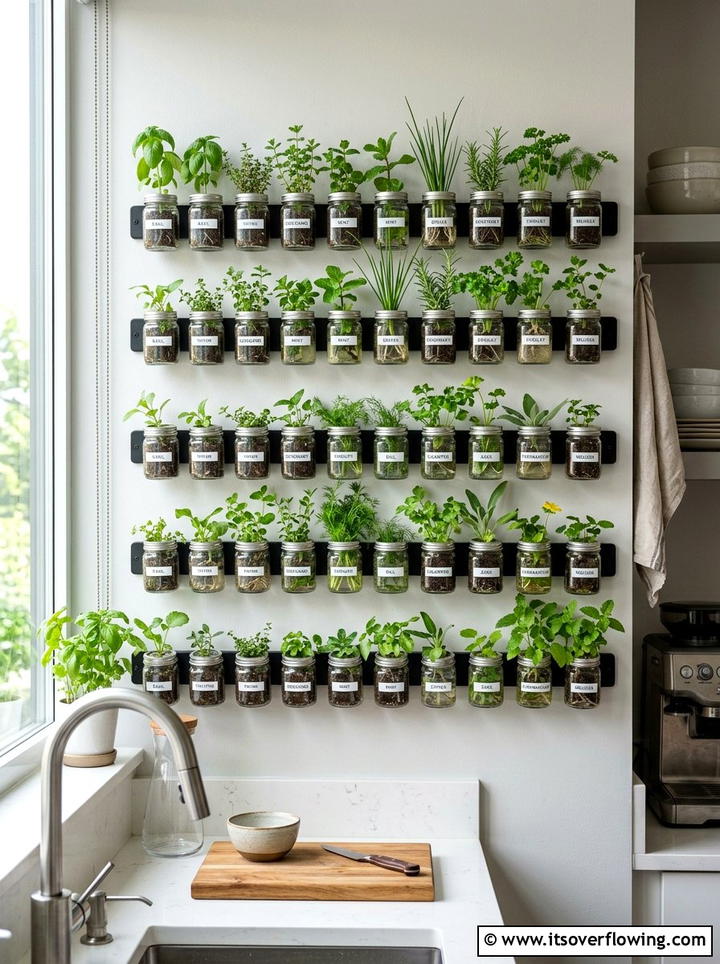
Small glass spice jars are the perfect size for starting herb seeds or growing tiny succulent-style herbs. You can mount these jars to a magnetic board or a wooden strip to keep them organized and off your counters. While they are small, they are excellent for herbs that you only need in small quantities at a time. This setup allows you to have a huge variety of flavors in a very compact area of your kitchen. It is a very tidy way to keep your cooking space organized while still enjoying the benefits of fresh greens. It looks very professional and intentional in any kitchen.
21. Suitcase Herb Garden
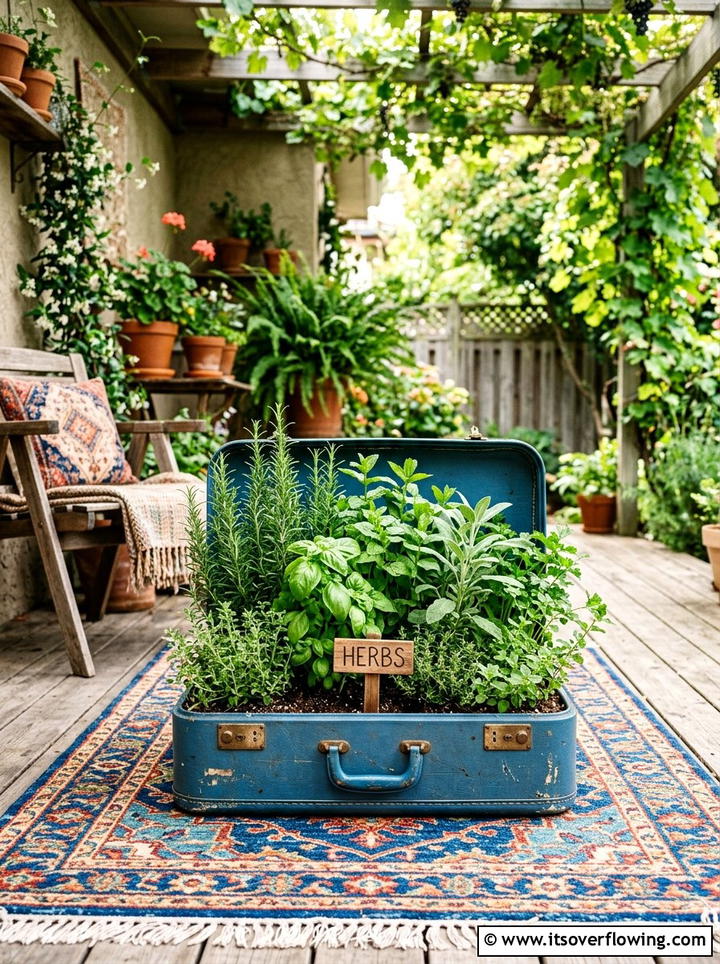
A vintage hard-shell suitcase can be transformed into a portable and stylish herb garden for your patio or balcony. You should fill the bottom half with a layer of drainage material before adding soil and your favorite herb plants. This deep container provides enough space for a diverse mix of herbs to grow together in a beautiful arrangement. When the weather gets harsh, you can simply close the lid slightly or move the entire suitcase to a protected area. It adds a sense of adventure and travel to your garden design. It is a very creative way to reuse a piece of history.
22. Shutter Herb Garden
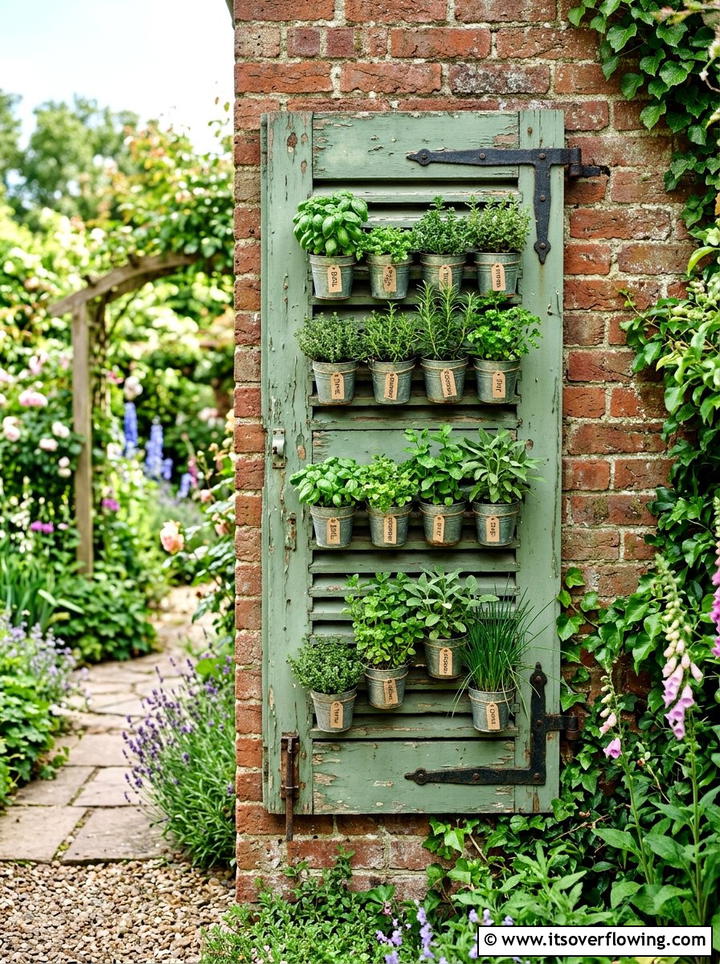
Old wooden window shutters are ideal for creating a vertical herb garden that looks like a piece of wall art. You can tuck small herb pots into the slats of the shutter or attach small tin cans directly to the wood. This setup allows for excellent air circulation around your plants, which helps prevent mold and various diseases. It is a great way to cover an ugly wall or fence while adding functionality to your outdoor living area. You can paint the shutter to match your home’s exterior for a cohesive and polished look. It is a very smart use of vertical space.
23. Shoe Organizer Herb Garden
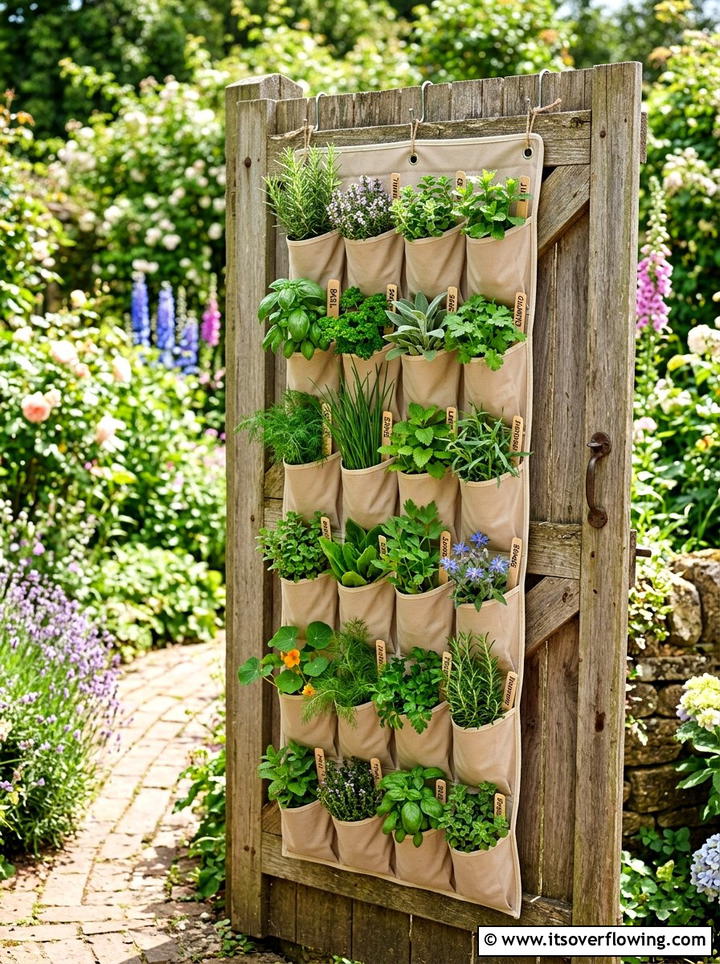
An over-the-door fabric shoe organizer is one of the most efficient ways to grow a massive herb garden in a tiny space. Each pocket becomes an individual planting cell for a different herb, from parsley and chives to mint and oregano. The fabric allows for natural drainage and breathability, which is excellent for the health of the plant roots. You can hang the organizer on a sunny fence, a balcony railing, or even the back of a door. This method makes it incredibly easy to label each pocket so you always know exactly what you are harvesting. It is a very practical and low-cost solution.
24. Wagon Herb Garden
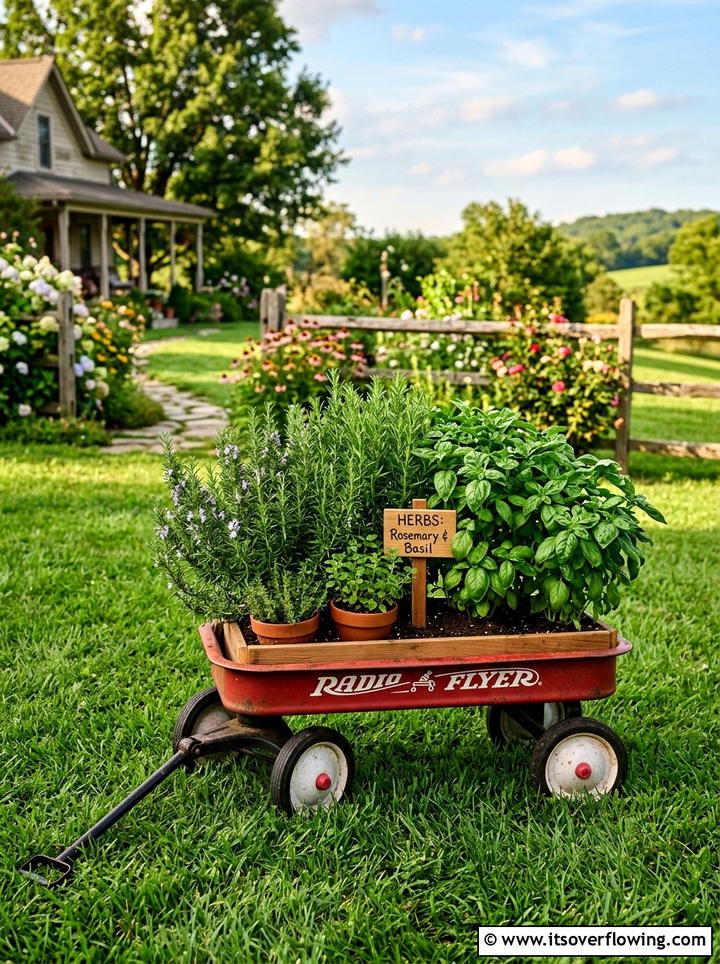
An old metal toy wagon or a garden cart makes a fantastic mobile herb garden that you can move around easily. This is particularly helpful if your yard has changing light patterns throughout the day or if you need to move plants. The deep bed of the wagon can hold several large herb plants, creating a lush and portable green space. You can drill drainage holes in the bottom and fill it with high-quality potting mix for the best results. It looks charming and nostalgic parked near your back door or on a garden path. It is a fun way to repurpose childhood toys.
25. Brick Herb Garden
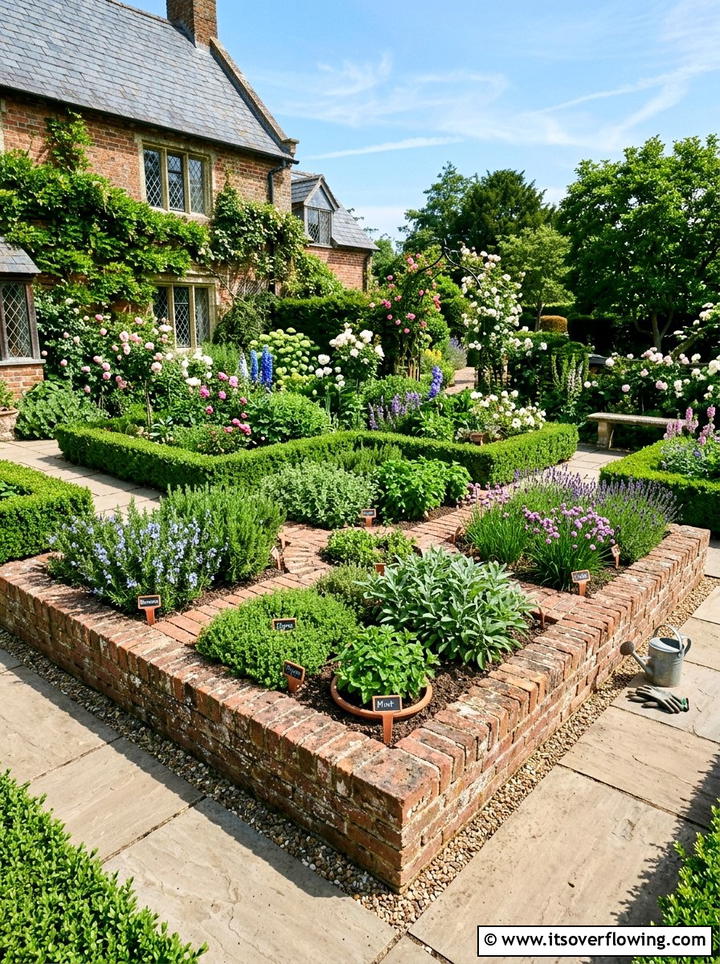
Old bricks can be stacked to create a beautiful and structured herb garden border or a small raised bed. This material provides excellent insulation for the soil and helps regulate the temperature for your herb roots during the summer. You can create different compartments with the bricks to keep invasive herbs like mint separate from your more delicate plants. The weathered look of old bricks adds a sense of permanence and history to your garden landscape. It is a very sturdy and low-maintenance way to organize your herbs. This design is perfect for creating a dedicated and professional-looking culinary herb zone.
Conclusion:
Building a herb garden by reusing old things is a rewarding process that combines creativity with sustainable living practices. Instead of buying new plastic pots, you can look around your home and find hidden treasures that can house your favorite plants. Each repurposed item tells a unique story and adds a layer of character to your home that store-bought items simply cannot match. Whether you choose vintage tins, old boots, or discarded furniture, your herb garden will become a beautiful and functional part of your life. Enjoy the fresh flavors and the satisfaction of knowing you have created something wonderful while protecting the planet.

Related posts:
 25 reusing old things ideas for boho garden look: DIY Style
 25 reusing old things ideas for patio Style and Charm
 25 reusing old things ideas for balcony garden: Small-Space DIYs
 25 reusing old things ideas for benches: Budget Garden Seats
 25 reusing old things ideas for container garden: DIY Planters
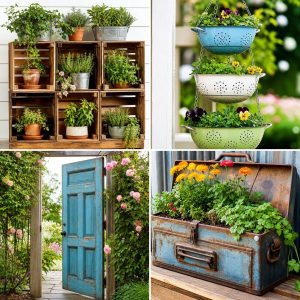 25 reusing old things ideas for farmhouse garden look
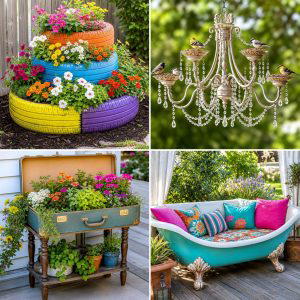 25 reusing old things ideas for garden Charm on a Budget
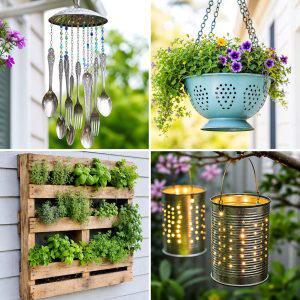 25 Reusing Old Things Ideas for Garden Art That Inspires
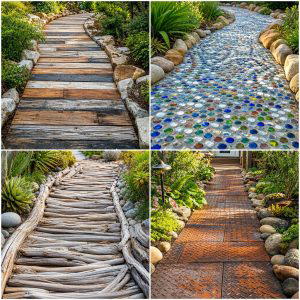 25 reusing old things ideas for garden pathways
 25 reusing old things ideas for garden planters
 25 Reusing Old Things Ideas for Small Garden Charm
 25 reusing old things ideas for succulent garden Decor