
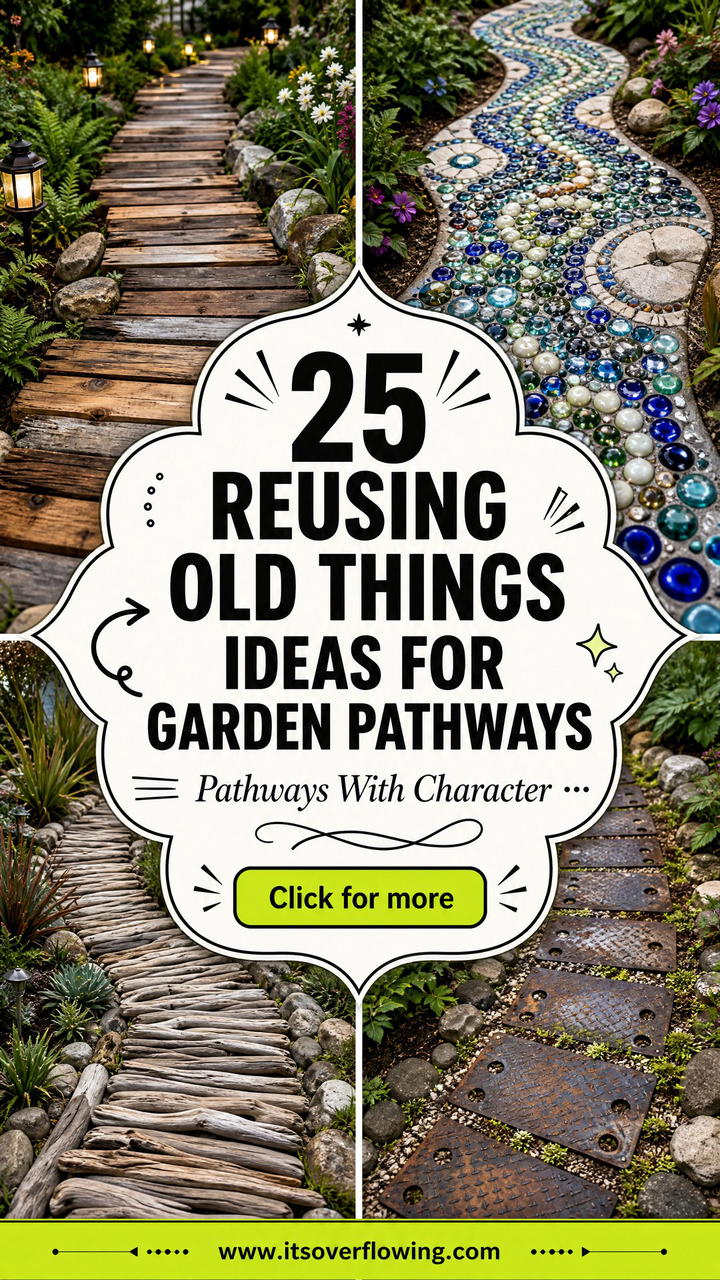
Transforming your backyard into a lush oasis does not have to cost a fortune if you use imagination. Reusing old items to create unique garden pathways is a brilliant way to reduce waste and add personality to your landscape. Whether you are looking for a rustic wood look or a colorful mosaic feel, upcycled materials offer endless possibilities for every style. These projects allow you to craft a functional walk that tells a story of sustainability and creativity. You will find that items often headed for the trash can become the most beautiful focal points in your garden. Let’s explore some of the best ways to repurpose old things into stunning pathways today.
1. Reclaimed Brick Walkway
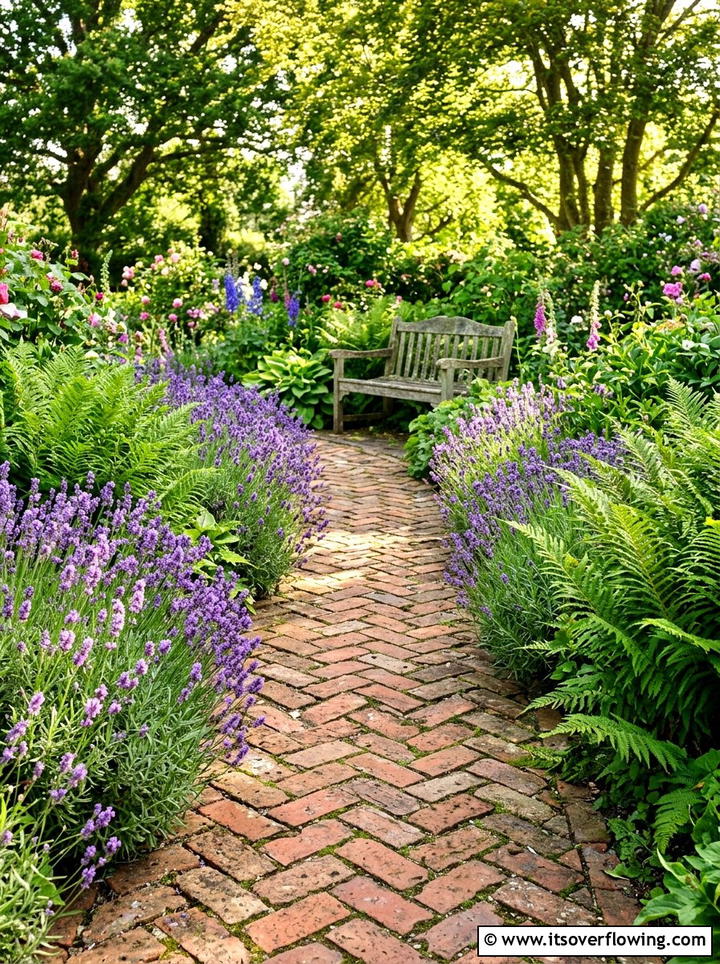
Reclaimed bricks bring a sense of history and warmth to any outdoor space. You can often find these materials for free or very cheap at construction sites or old buildings. Laying them in a classic herringbone or basketweave pattern creates a timeless look that fits traditional or cottage gardens. Bricks are incredibly durable and can withstand heavy foot traffic and changing weather conditions for many years. To ensure a professional finish, level the ground with a layer of sand before setting the bricks. This prevents shifting and keeps the walkway safe for walking. The weathered texture of old bricks adds instant charm to your home’s exterior landscape.
2. Wood Pallet Walk
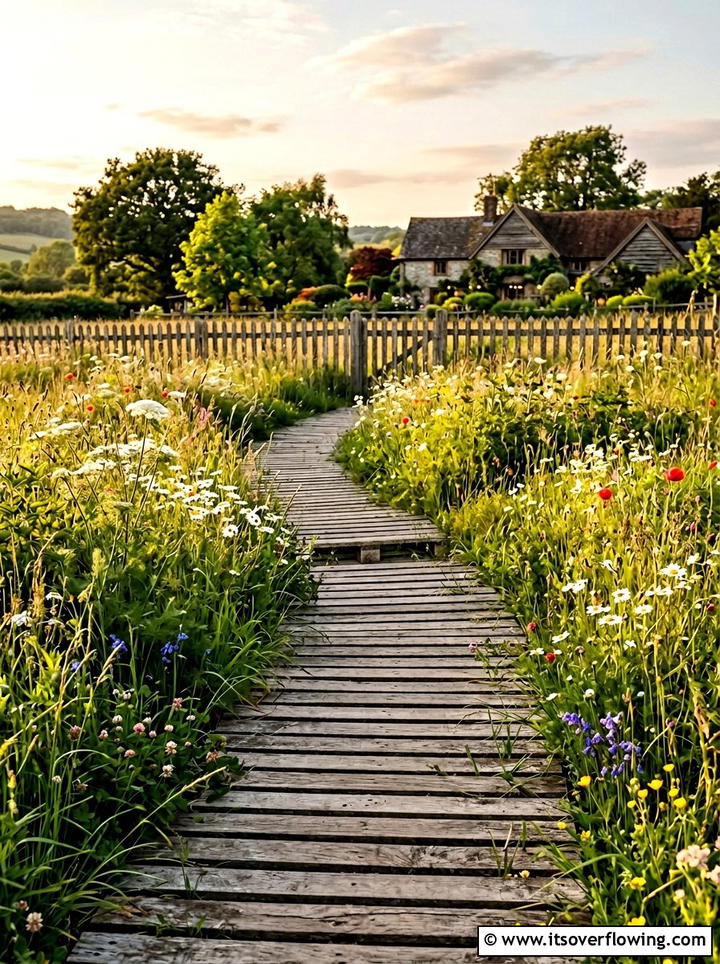
Wood pallets are a versatile and readily available resource for DIY garden projects. You can take them apart to use the individual slats as stepping stones or boardwalk planks. This creates a beautiful rustic path that feels right at home in a country or farmhouse garden. It is important to treat the wood with a weather-resistant sealant to prevent rot from ground moisture. Placing the slats over a bed of gravel helps with drainage and keeps the wood dry. This approach is perfect for muddy areas where you need a quick and easy solution. The natural wood tones blend seamlessly with the surrounding greenery and garden plants.
3. Colored Glass Bottle Path
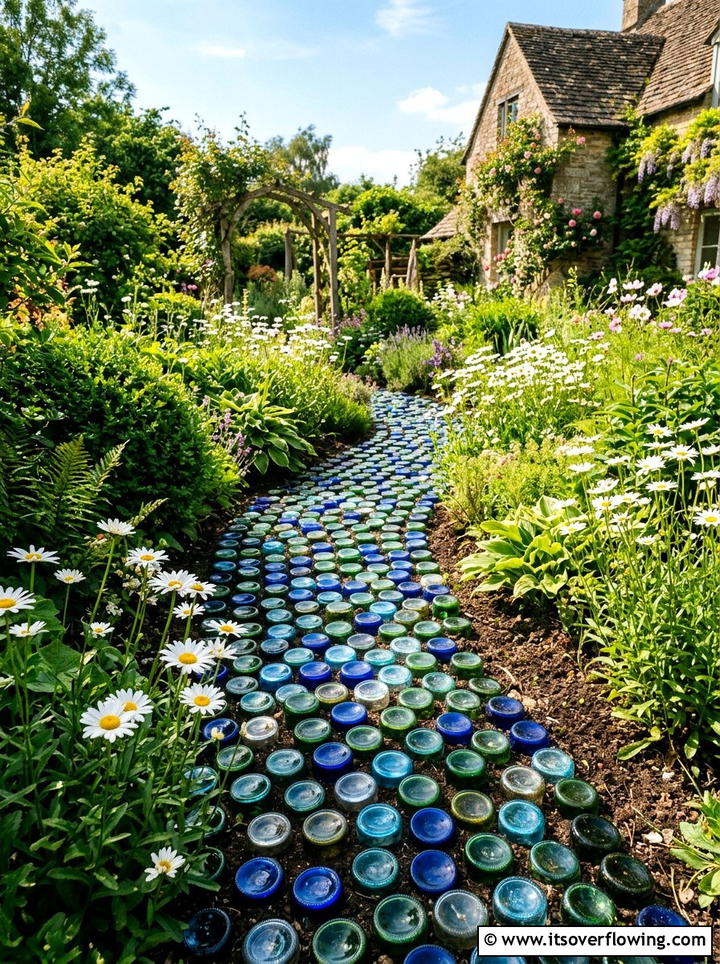
Repurposing glass bottles is a wonderful way to add vibrant color and light to your garden paths. You can bury the bottles neck-down in the soil so only the bottoms are visible. This creates a unique jewel-toned border or a full sparkling walkway when the sun hits the glass. Using different heights and colors like blue, green, and brown adds a playful artistic touch to your outdoor space. It is a great conversation starter and an eco-friendly way to keep glass out of landfills. Make sure the ground is packed tightly around each bottle to keep them secure. This design works beautifully in whimsical or bohemian gardens.




4. Tree Log Slice Path
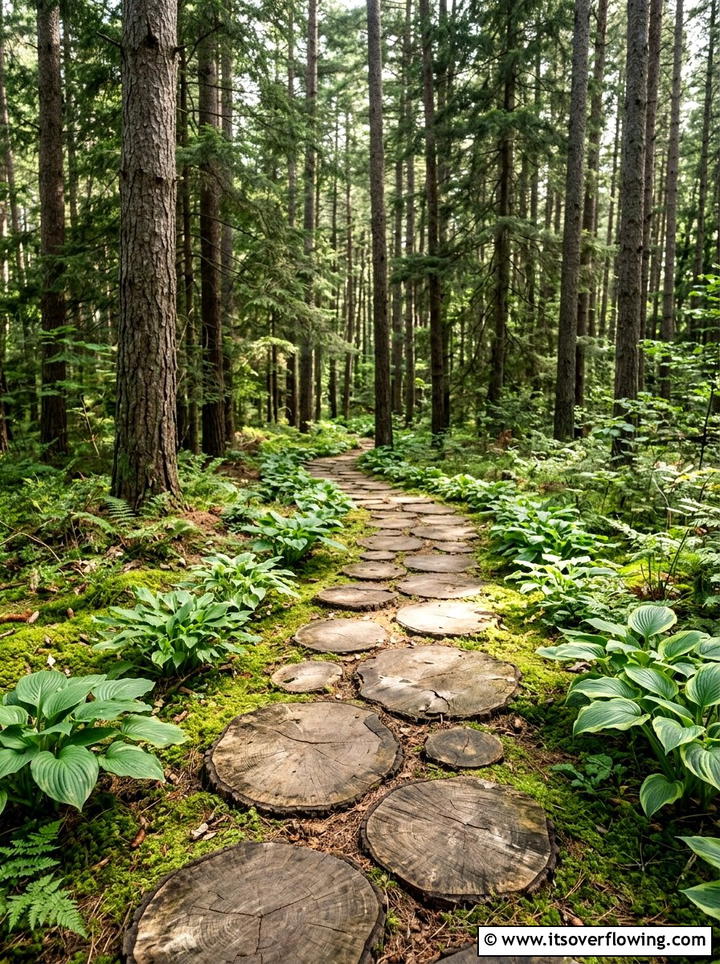
Using slices from fallen tree logs creates a natural and organic path that feels like a forest trail. These wooden rounds, often called “cookies, ” offer a beautiful texture with visible tree rings. You should choose rot-resistant wood like cedar or locust if possible to ensure the path lasts. Setting the log slices into a bed of mulch or pea gravel helps hold them in place. This design is perfect for wooded areas or shaded garden corners where you want a soft look. Applying a coat of exterior sealer will help preserve the wood and prevent it from becoming slippery when it gets wet.
5. Broken Tile Mosaic Walk
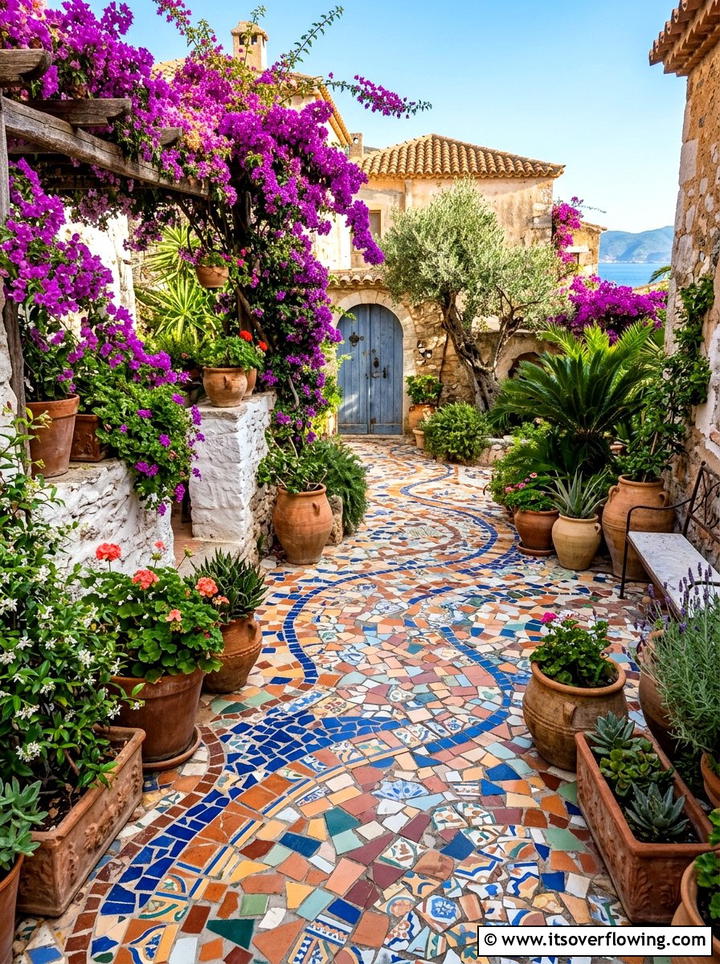
Broken ceramic tiles can be transformed into a stunning mosaic pathway that looks like a work of art. You can use leftovers from bathroom renovations or find chipped tiles at local hardware stores. By embedding the pieces into a thin layer of wet concrete, you create a durable and colorful walking surface. This method allows you to be creative with patterns, swirls, or even floral designs. It is an excellent way to use up small scraps that would otherwise be discarded. Once the concrete sets, the result is a smooth and vibrant path. This style is ideal for adding a Mediterranean or eclectic feel to your backyard.
6. Old Rubber Tire Path
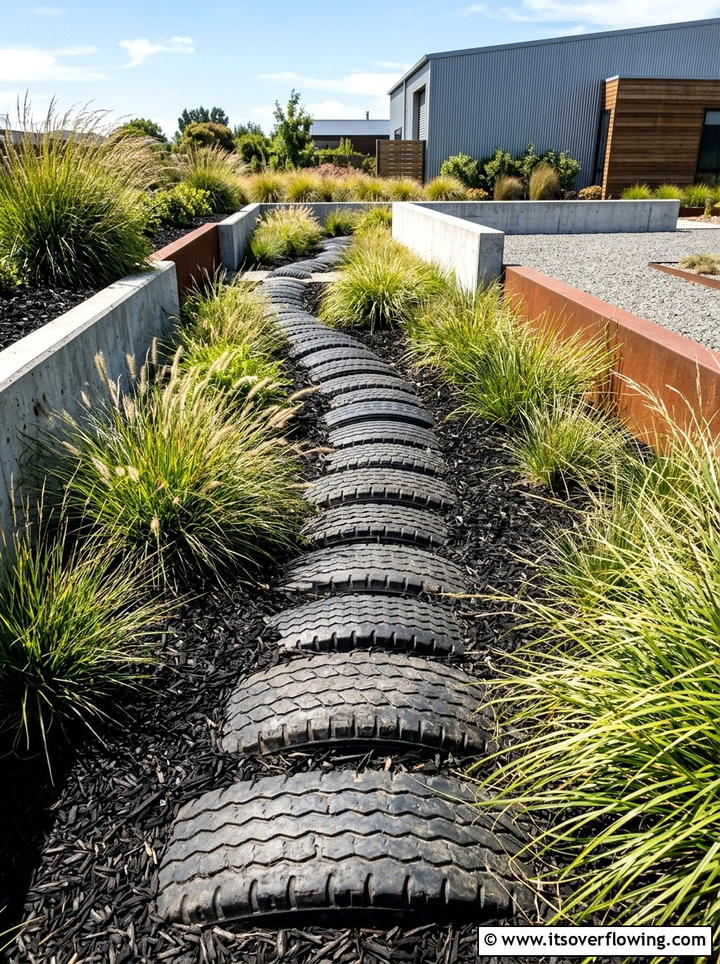
Old tires can be repurposed into a very durable and weather-resistant garden pathway. By cutting the sidewalls off and laying the tread flat, you create a non-slip surface that is great for slopes. Another option is to fill the center of whole tires with soil and plants to create a raised stepping path. This is a very practical way to recycle rubber that is otherwise difficult to dispose of safely. The dark color of the rubber absorbs heat, which can be beneficial in cooler climates. This industrial look works well in modern or utility gardens. It provides a stable grip even during rainy seasons.
7. Flat River Rock Trail

River rocks are a classic choice for a natural and serene garden walkway. You can collect smooth stones from your own property or find them at local landscaping supply yards. Laying them flat creates a comfortable surface for bare feet and gives the garden a peaceful, zen-like atmosphere. You can mix different sizes and colors to create a more textured and interesting visual effect. Digging a shallow trench and filling it with landscape fabric first will prevent weeds from growing through your rocks. This type of pathway is very low maintenance and handles heavy rainfall by allowing water to drain naturally.

8. Concrete Stepping Stone Path
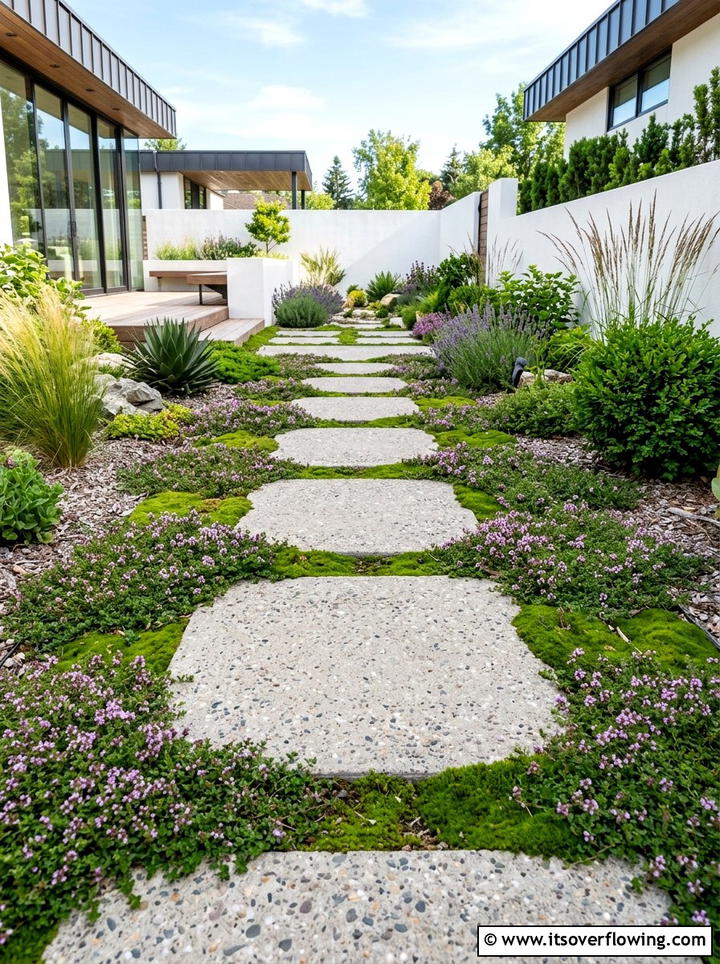
Old concrete slabs or broken pieces of sidewalk can be reused to create a modern stepping stone path. By arranging the irregular chunks with small gaps between them, you create a “crazy paving” effect. Filling the gaps with creeping thyme or moss adds a soft touch of green to the hard gray concrete. This is a fantastic way to save money while creating a sturdy and permanent walkway. You can also paint the concrete with masonry paint if you want a more uniform or bright look. It is a practical solution for heavy traffic areas that need a solid foundation for walking.
9. Rusty Metal Grate Walkway
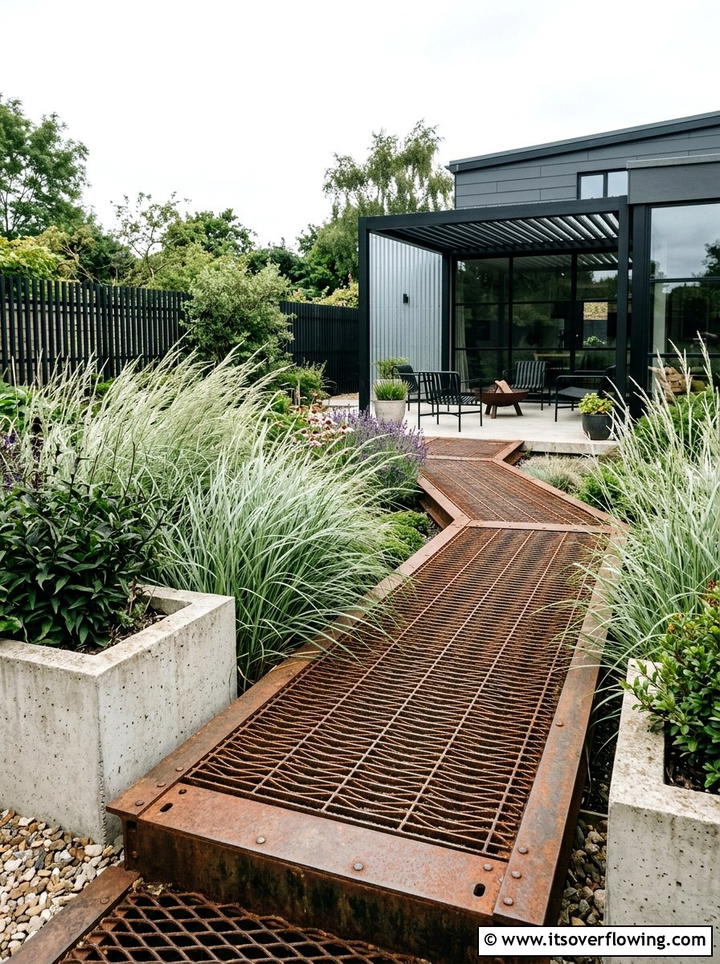
Industrial metal grates can be salvaged from scrap yards to create a very unique and edgy garden path. These grates allow grass or small groundcover plants to grow through the holes, creating a “living” walkway. The metal provides a very firm surface that is perfect for moving garden carts or wheelbarrows. Over time, the metal will develop a beautiful rusty patina that looks stunning against green foliage. This design is perfect for contemporary or industrial-style landscapes. It is important to ensure the grates are secured firmly to the ground to avoid any tripping hazards. This recycled material is incredibly strong and long-lasting.
10. Wood Shutter Garden Path
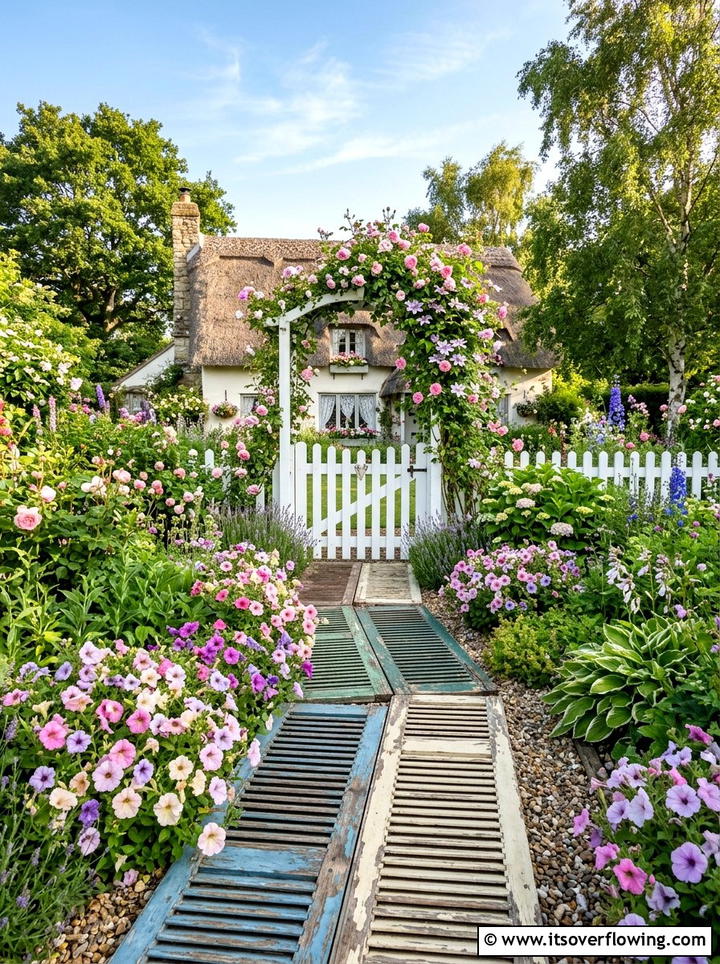
Vintage wooden shutters can be laid flat on the ground to create a charming and unexpected garden walkway. This is a creative way to use architectural salvage that might have peeling paint or a weathered look. The slats of the shutters provide a natural texture and a bit of grip for walking. It is best to use these in low-traffic areas or as a decorative accent in a flower bed. Make sure to treat the wood with a preservative to protect it from rot and insects. This idea brings a touch of farmhouse style and history to your outdoor living space.
11. Crushed Concrete Rubble Path
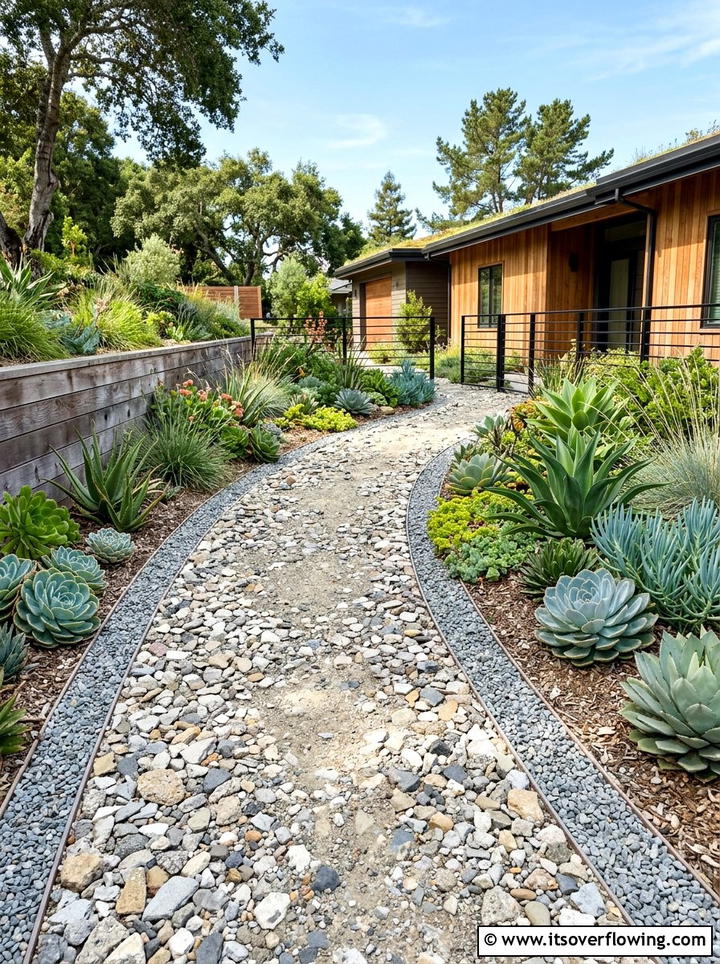
Crushed concrete is often available as a byproduct of demolition and makes for a very sturdy path base. You can use it as a standalone material to create a crunchy, gravel-like walkway that is very affordable. The light gray color reflects light and looks very clean against dark garden soil or bright green grass. It packs down well over time, creating a stable surface that does not shift easily underfoot. This material is excellent for drainage, making it a smart choice for wet areas of the yard. It is a practical and eco-friendly way to reuse old building materials in your landscape.
12. Large Slate Stone Walk
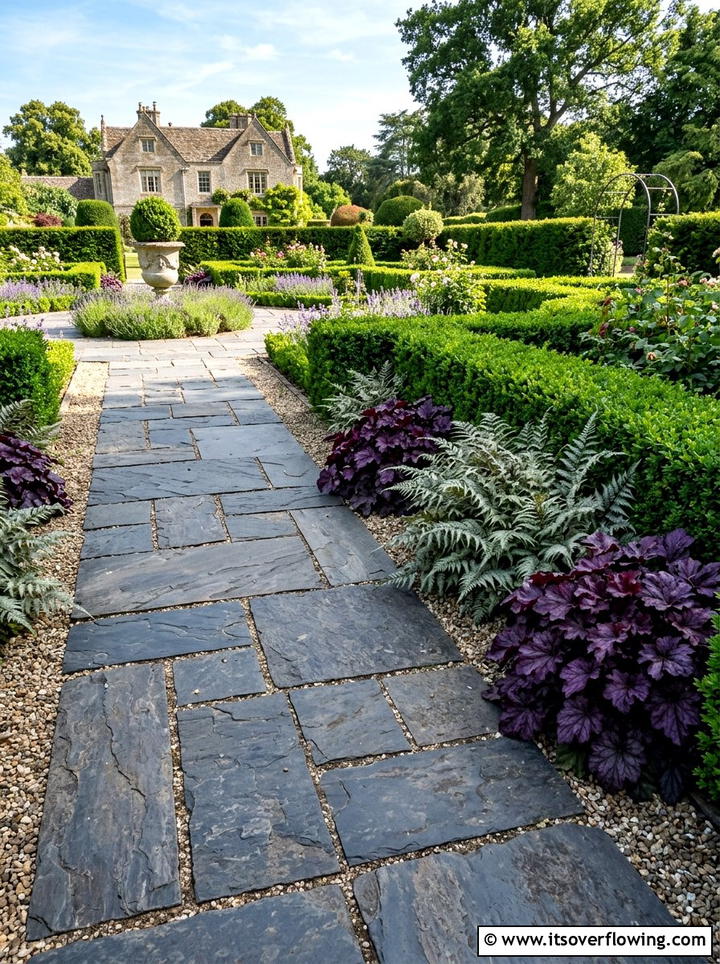
Slate is a beautiful natural material that can often be found in old roofing or as scraps from patio projects. Large, flat pieces of slate make excellent stepping stones because they are naturally slip-resistant and very durable. The dark blue, gray, or purple tones of slate add a sophisticated and elegant look to your garden. You can lay them directly into the soil or over a bed of fine sand for extra stability. Slate stays cool in the summer heat, making it comfortable for pets and people to walk on. It is a high-end look achieved through clever reuse of natural stone materials.
13. Old Railroad Tie Steps
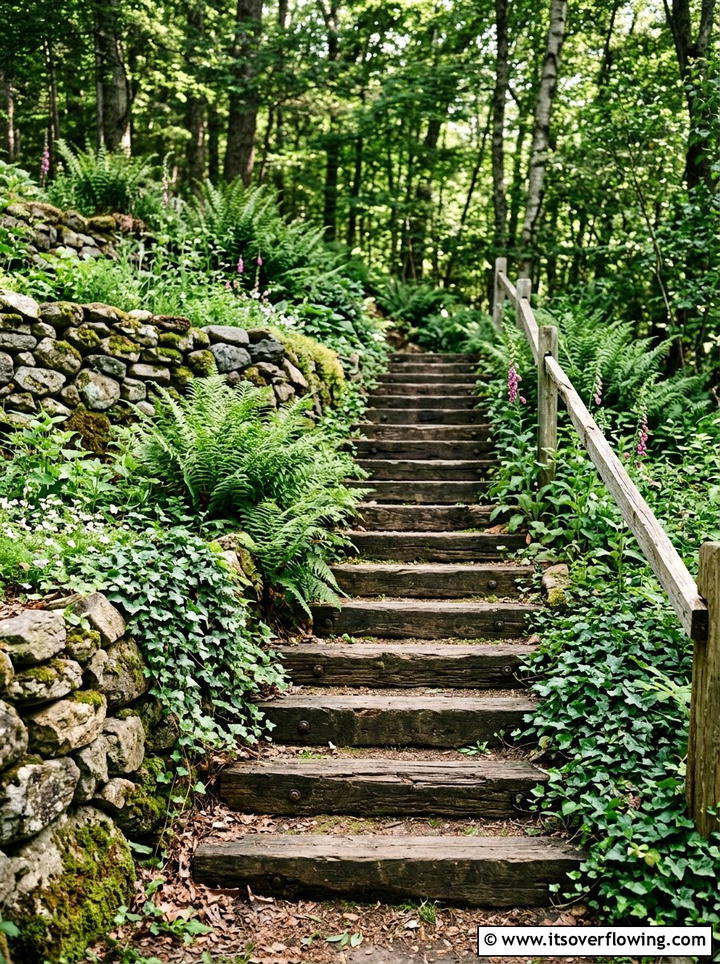
Railroad ties are heavy-duty timbers that can be repurposed into rugged garden steps or long pathways. These large beams are perfect for sloped yards where you need to create a level walking surface. They have a dark, weathered appearance that looks great in rustic or woodland garden settings. Because they are often treated with preservatives, they last a very long time even when in direct contact with the soil. You can secure them with rebar stakes to prevent them from moving on a hillside. Filling the space between the ties with gravel or bark mulch completes the natural and sturdy look.
14. Small Pebble Mosaic Path
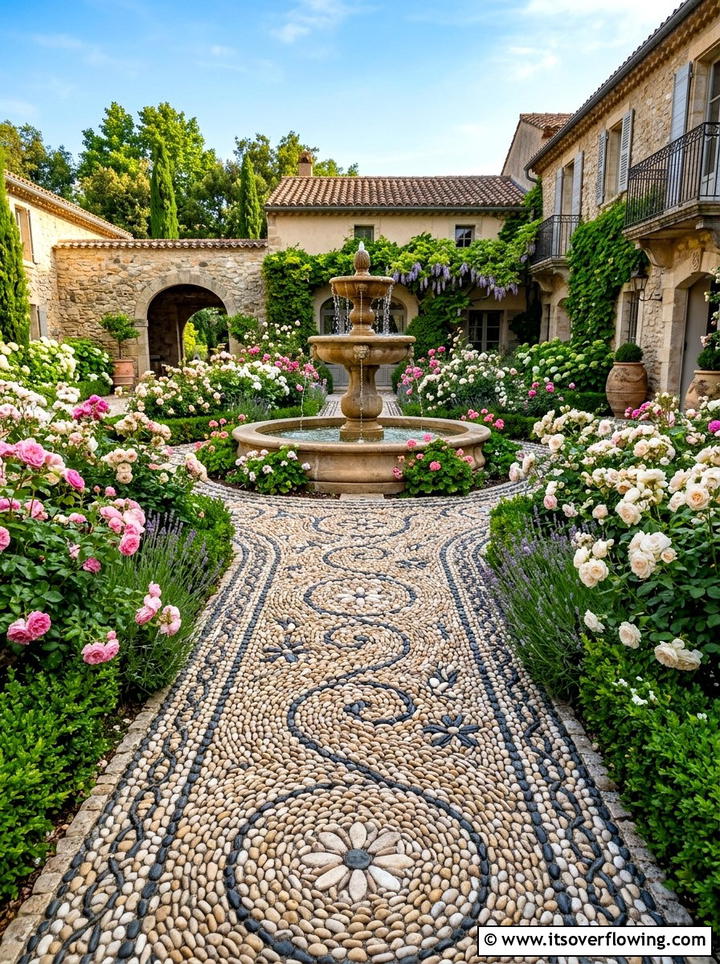
Creating a pebble mosaic is a labor of love that results in a breathtakingly beautiful garden feature. You can collect small, smooth pebbles from beaches or riverbeds to create intricate swirling patterns or geometric shapes. These stones are set into a mortar base to ensure they stay in place for many years. This type of path is common in European gardens and adds a sense of luxury and craftsmanship. It is a perfect project for a small entryway or a focal point in a courtyard. The different colors of the pebbles allow you to “paint” a picture on the ground with stones.
15. Broken Pottery Shard Walkway
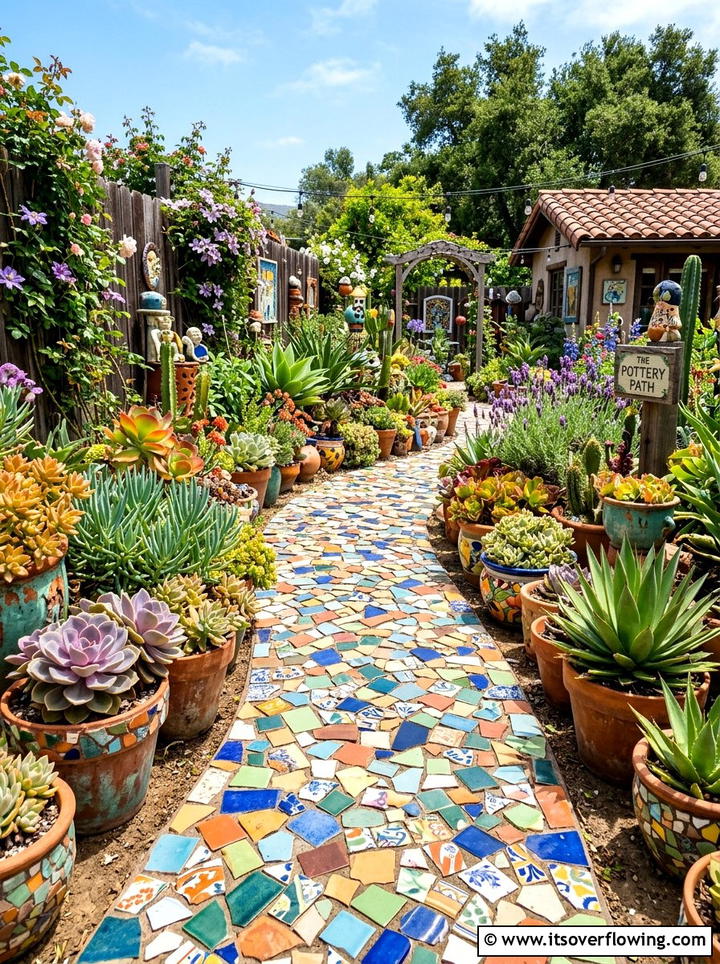
If you have a collection of broken terracotta pots or ceramic planters, do not throw them away. You can use the shards to create a textured and colorful path that is full of character. The earthy tones of terracotta look beautiful when mixed with blue or white glazed pottery pieces. These shards can be pressed into a sand or soil base to create a casual and artistic walking trail. This is a great way to recycle garden waste while adding a unique handmade feel to your space. The irregular shapes of the pieces make the path feel very organic and integrated with the garden.
16. Salvaged Deck Wood Trail
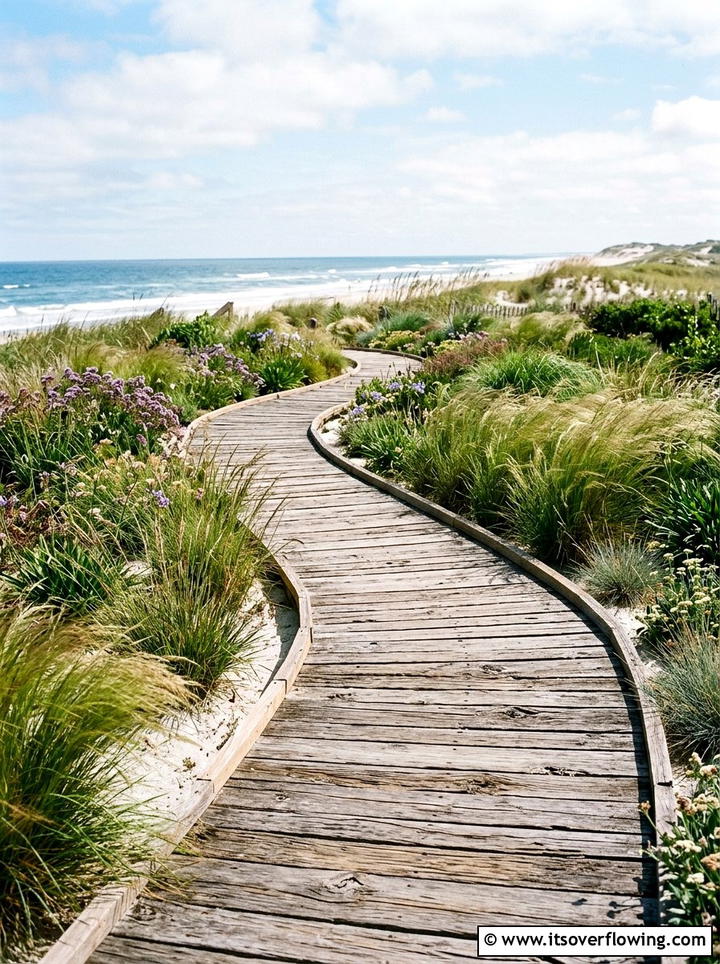
When old decks are replaced, the wood is often still strong enough to be used for a garden path. You can cut the boards into shorter lengths and lay them out as a boardwalk style trail. This is especially useful in areas with uneven ground or where you want to keep your feet dry. The weathered gray color of old pressure-treated wood has a lovely seaside or coastal feel. Fastening the boards to a simple frame will keep the path level and secure for walking. This reuse project saves a lot of lumber from the landfill while providing a functional garden upgrade.
17. Flagstone Paver Walkway
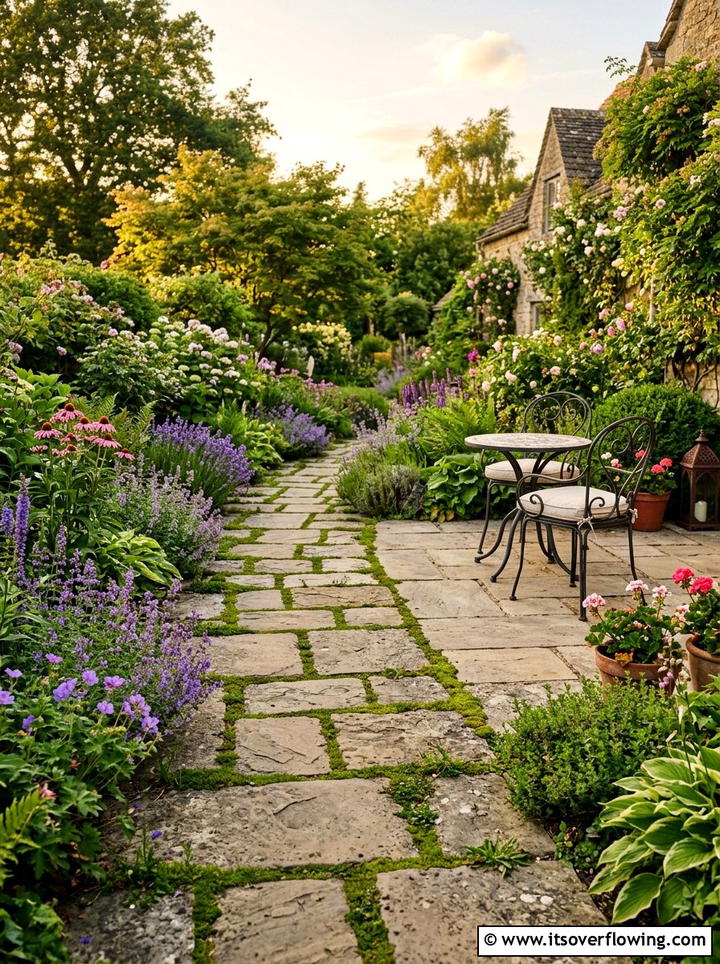
Flagstones are large, flat stones that are often salvaged from old patios or walkways during renovations. They have irregular shapes that fit together like a puzzle, creating a very natural and high-quality look. Because they are heavy and flat, they provide a very stable surface for walking and even for garden furniture. You can fill the joints with sand, small pebbles, or even low-growing plants like moss. Flagstones come in various colors, from warm tans to cool grays, allowing you to match your home’s exterior. They are a permanent and beautiful solution for any main garden path or entrance.
18. Glass Marble Inlay Path
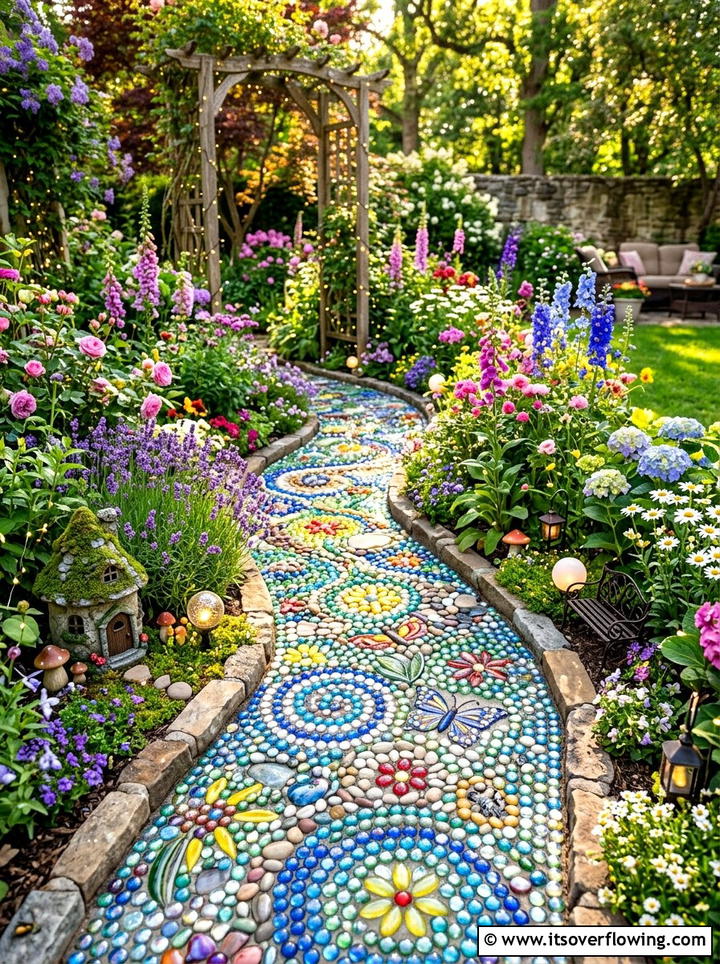
For a touch of magic and whimsy, you can incorporate glass marbles into a concrete or sand-based pathway. When the light hits the marbles, they sparkle and glow, creating a magical effect that children and adults will love. You can arrange them in patterns or scatter them randomly for a “starry night” look on the ground. Marbles are very inexpensive and come in every color imaginable, allowing for total creative freedom. This is a perfect way to add a bit of sparkle to a shaded or dark part of the garden. The smooth surface of the marbles feels interesting underfoot and adds visual depth.
19. Hollow Cinder Block Path
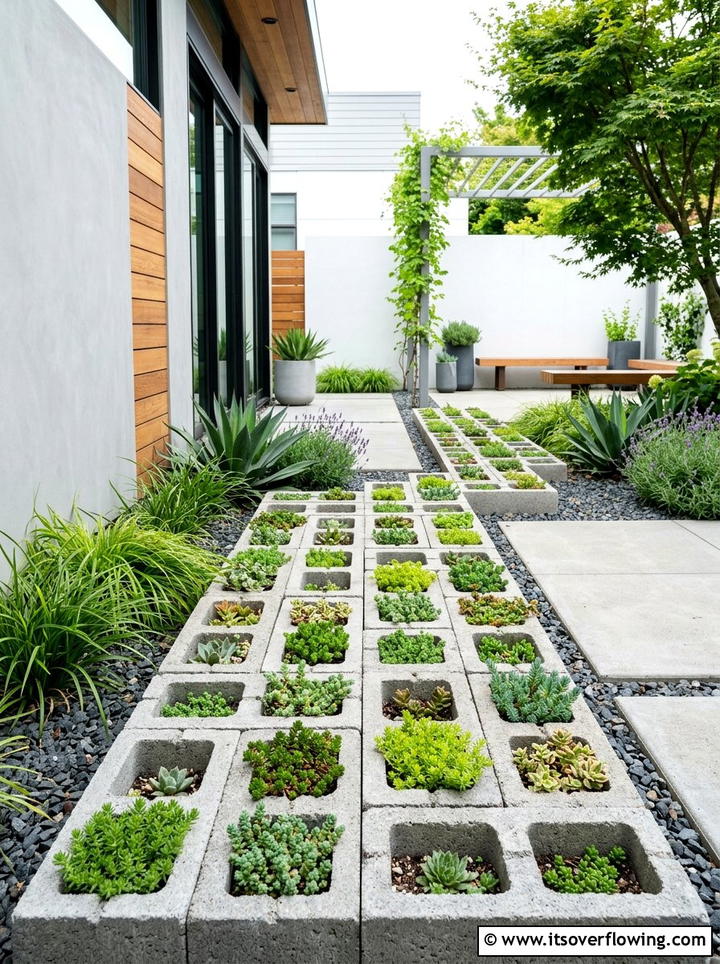
Cinder blocks are often left over from building projects and can be used to create a very modern and functional path. By laying them flat with the hollow side up, you can fill the holes with gravel, sand, or even small succulents. This creates a grid-like pattern that is very stable and visually striking in a contemporary garden. The gray concrete of the blocks provides a neutral backdrop for colorful plants or stones. You can also paint the blocks to add a pop of color to your walkway. This is a very affordable and easy-to-install option for any DIY enthusiast.
20. Smooth Cobblestone Passage
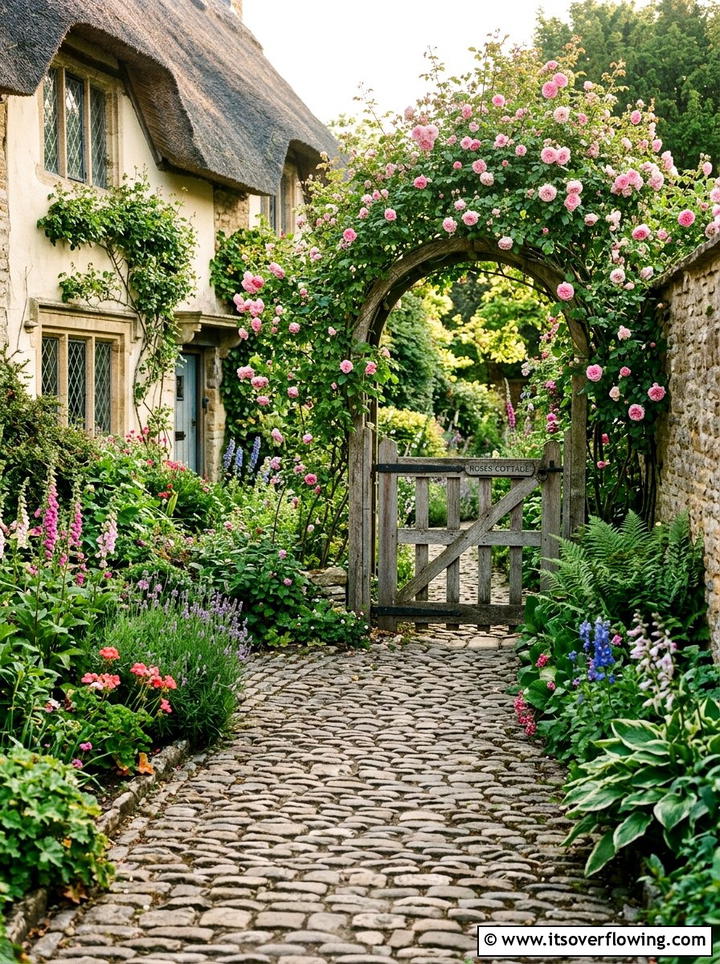
Cobblestones offer an old-world charm that can make your garden feel like a historic European village. Many people find these stones when digging in their yards or can buy them from salvage yards. Their rounded tops and irregular sizes create a very tactile and interesting walking surface. They are incredibly durable and can last for centuries with very little maintenance required. Setting them in a bed of sand allows for slight movement without cracking, which is great for areas with freezing temperatures. This classic look is perfect for a main garden path that leads to a hidden seating area or fountain.
21. Driftwood Garden Path
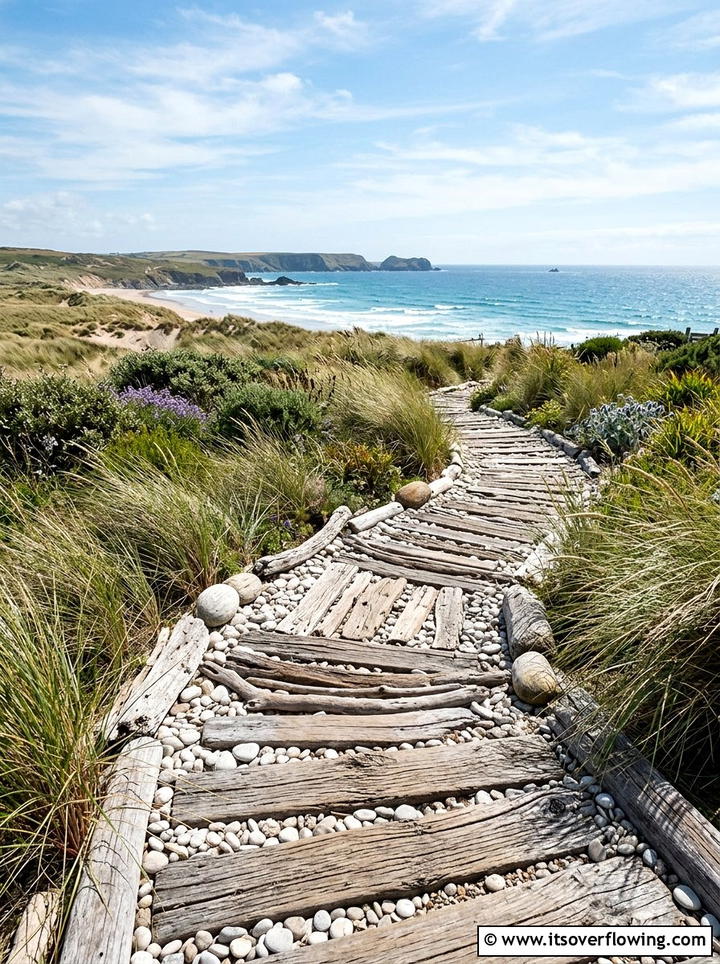
If you live near a beach, driftwood can be a beautiful and free material for a garden pathway. The sun-bleached wood has a soft texture and a unique silvery color that looks stunning in coastal gardens. You can lay the pieces side-by-side or use them as borders for a sand or gravel path. Driftwood is naturally weathered by salt and water, making it quite resistant to rot compared to other woods. This idea adds a very relaxed and vacation-like vibe to your outdoor space. It is an excellent way to bring the beauty of the ocean into your own backyard landscape.
22. Crushed Shell Walkway
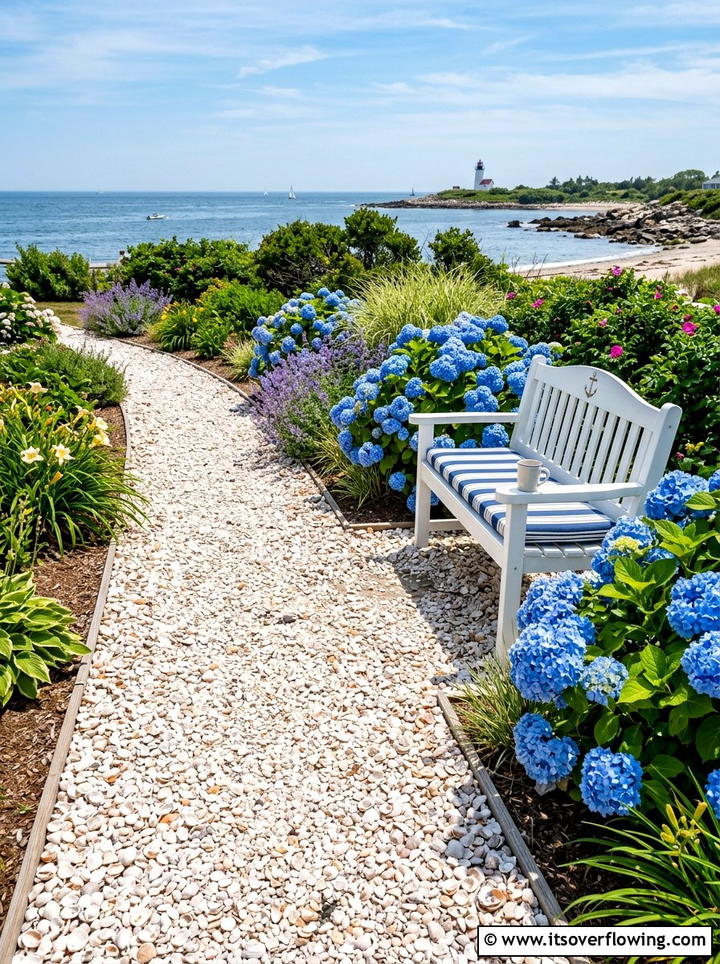
Crushed seashells are a fantastic alternative to gravel and provide a bright, clean look for garden paths. You can often find bags of crushed oyster or clam shells at garden centers or collect them from local beaches. As you walk on the shells, they break down into smaller pieces, creating a very firm and stable surface over time. The white and tan colors reflect the sun and help brighten up shady areas of the garden. They also provide excellent drainage and help deter pests like slugs from crossing your paths. This material is perfect for a coastal or beach-themed garden design.
23. Loose Gravel Garden Trail
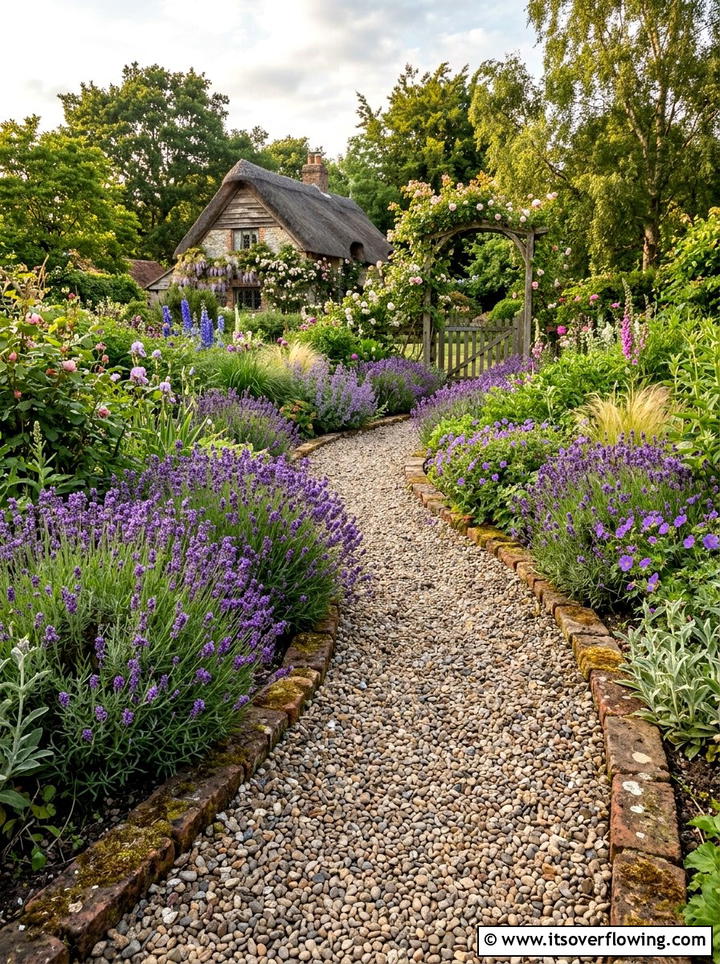
Gravel is one of the most popular and easiest materials to reuse from other landscaping projects. You can find different types of gravel, such as pea gravel or crushed stone, at very low prices. It creates a satisfying crunch underfoot and allows water to flow through easily, preventing puddles. To keep the gravel in place, you should use some form of edging, such as old bricks or wood. It is a very flexible material that can follow any curve or shape in your garden. This makes it ideal for informal paths that wind through flower beds and under large trees.
24. Old Metal Plate Walkway
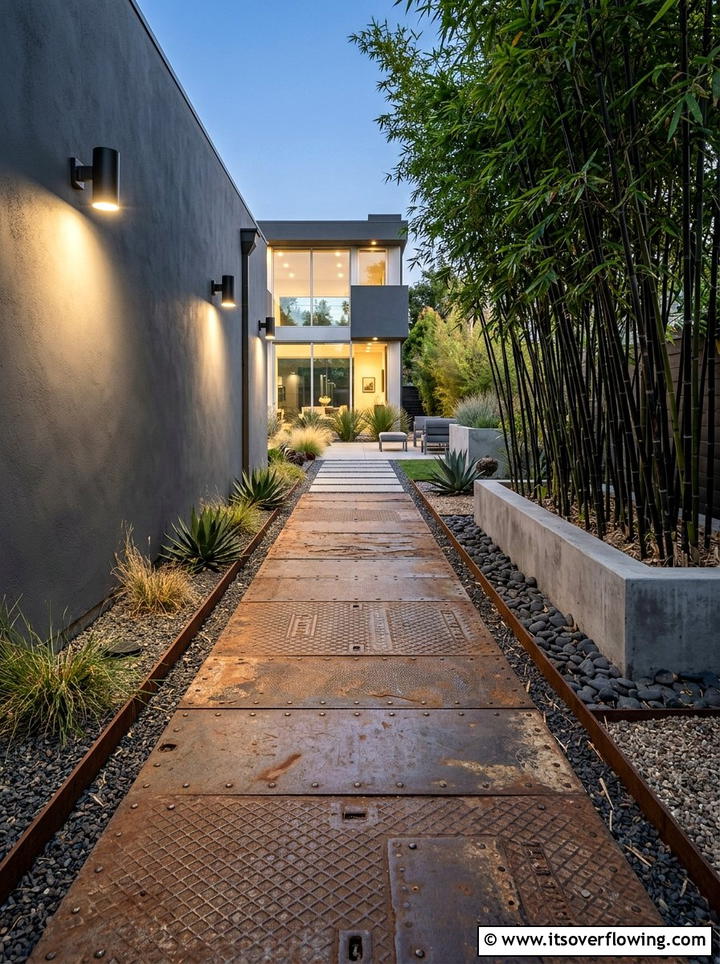
Heavy metal plates or industrial floor panels can be reused to create a very strong and unique walkway. These plates often have a diamond pattern or texture that provides excellent grip even when they are wet. They are perfect for a modern or minimalist garden where you want a clean and industrial aesthetic. You can leave them to rust for a natural orange hue or paint them for a more polished look. Because they are so heavy, they stay in place without much effort once they are leveled. This is a creative way to use scrap metal that would otherwise be melted down.
25. Log End Wood Path
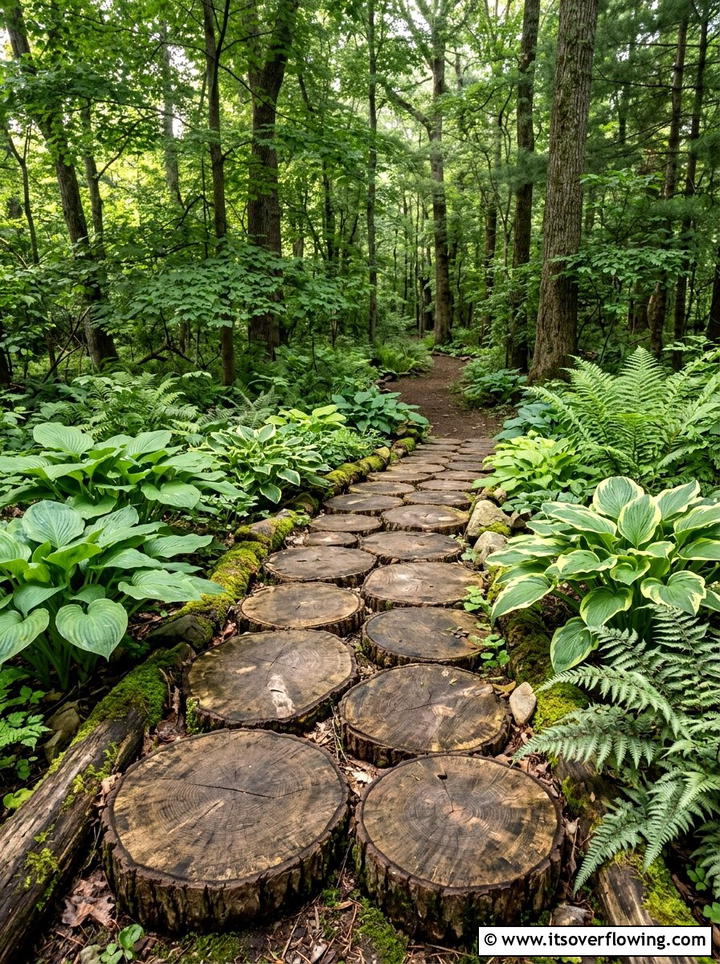
Similar to log slices, using the ends of logs buried vertically creates a very textured and interesting path. This method uses the density of the wood to provide a very solid surface that feels like a natural boardwalk. You can vary the heights slightly to create a more rustic and handcrafted look in your garden. This type of path works exceptionally well in damp or boggy areas where you need to stay above the mud. The end grain of the wood absorbs sealer well, helping it to last for a long time. It is a beautiful way to use every part of a fallen tree.
Conclusion:
Building a garden pathway from recycled materials is a rewarding way to improve your home while being kind to the environment. By looking at old items with a creative eye, you can find beauty and utility in things others might throw away. Whether you choose the rustic charm of wood pallets or the artistic flair of a tile mosaic, your path will be unique. These projects not only save money but also add a personal touch that store-bought pavers simply cannot provide. We hope these twenty-five ideas inspire you to start your next DIY project. Happy gardening and enjoy the process of creating a beautiful walk through your personal outdoor sanctuary.

Related posts:
 25 reusing old things ideas for balcony garden: Small-Space DIYs
 25 reusing old things ideas for benches: Budget Garden Seats
 25 reusing old things ideas for boho garden look: DIY Style
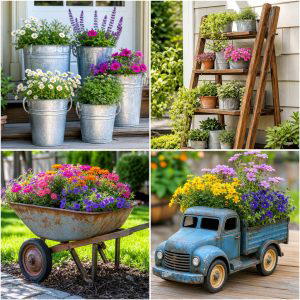 25 reusing old things ideas for container garden: DIY Planters
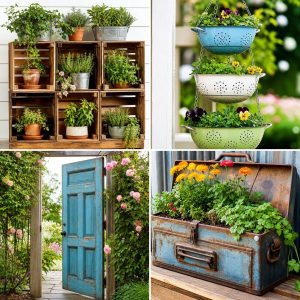 25 reusing old things ideas for farmhouse garden look
 25 reusing old things ideas for garden Charm on a Budget
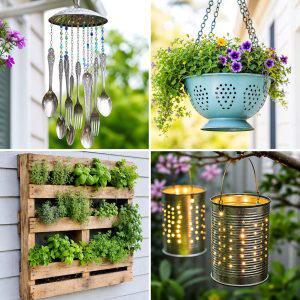 25 Reusing Old Things Ideas for Garden Art That Inspires
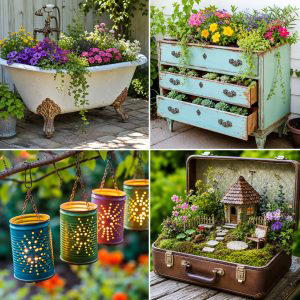 25 reusing old things ideas for garden decor
 25 reusing old things ideas for garden planters
 25 reusing old things ideas for herb garden Style
 25 Reusing Old Things Ideas for Small Garden Charm
 25 reusing old things ideas for succulent garden Decor