
Transforming your outdoor space does not require a massive budget or brand-new materials from a luxury store. By looking at your recycling bin with fresh eyes, you can discover a world of sustainable possibilities for your backyard or balcony. Recycled plastic is incredibly durable, weather-resistant, and versatile, making it the perfect medium for creative gardening projects. Reducing waste while enhancing your landscape allows you to build a personalized sanctuary that reflects your commitment to the planet. From simple planters to complex structures, these projects offer a fun way to engage with nature. Let’s explore how you can repurpose everyday plastic items into beautiful and functional garden features that will surely impress your neighbors and friends.
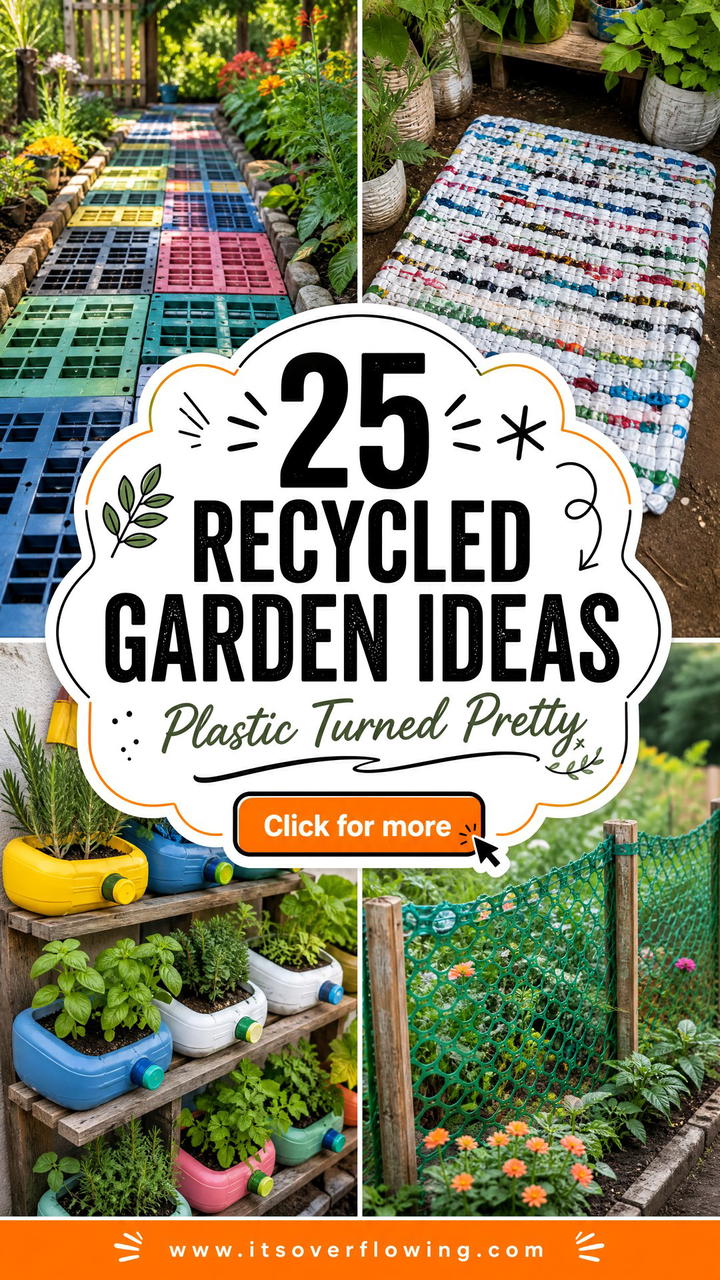
1. Plastic bottle vertical garden
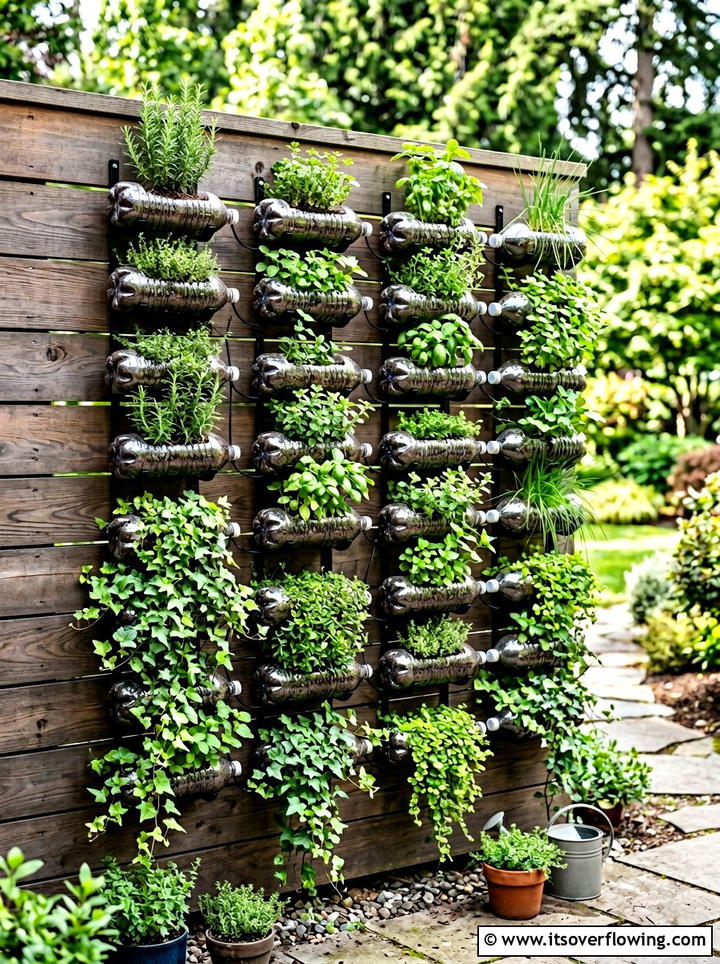
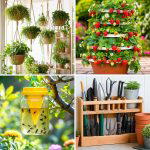
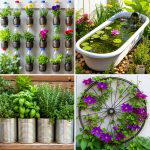
Creating a lush green wall is easier than you think when you utilize empty soda or water bottles as individual planters. You can string these bottles together using heavy-duty twine or wire and hang them against a sunny fence or wall. This approach is perfect for urban gardeners who have limited ground space but want to grow a variety of herbs or small flowers. Each bottle acts as a self-contained unit that holds soil and moisture effectively. By layering several rows of these containers, you create a striking visual display that covers plain surfaces with vibrant greenery. It is a fantastic way to keep plastic out of landfills while significantly maximizing your vertical growing area.
2. Self watering plastic bottle planter
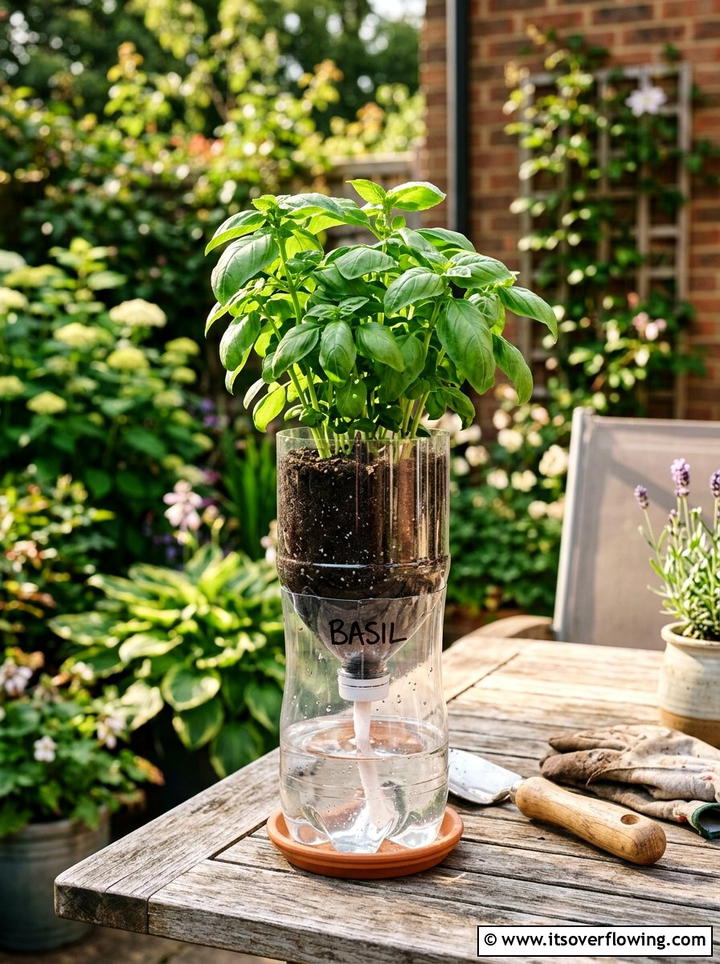
Maintaining consistent moisture for your indoor or outdoor plants can be quite a challenge during the hot summer months. A self-watering planter made from a two-liter plastic bottle provides a clever solution by using a simple wicking system. You just need to cut the bottle in half and invert the top portion into the bottom base filled with water. A small piece of cotton string or fabric pulls moisture up into the soil as the plant needs it. This setup ensures your seedlings or herbs stay hydrated even if you forget to water them for a couple of days. It is a practical and eco-friendly project that uses basic household items effectively.
3. Milk jug bird feeder
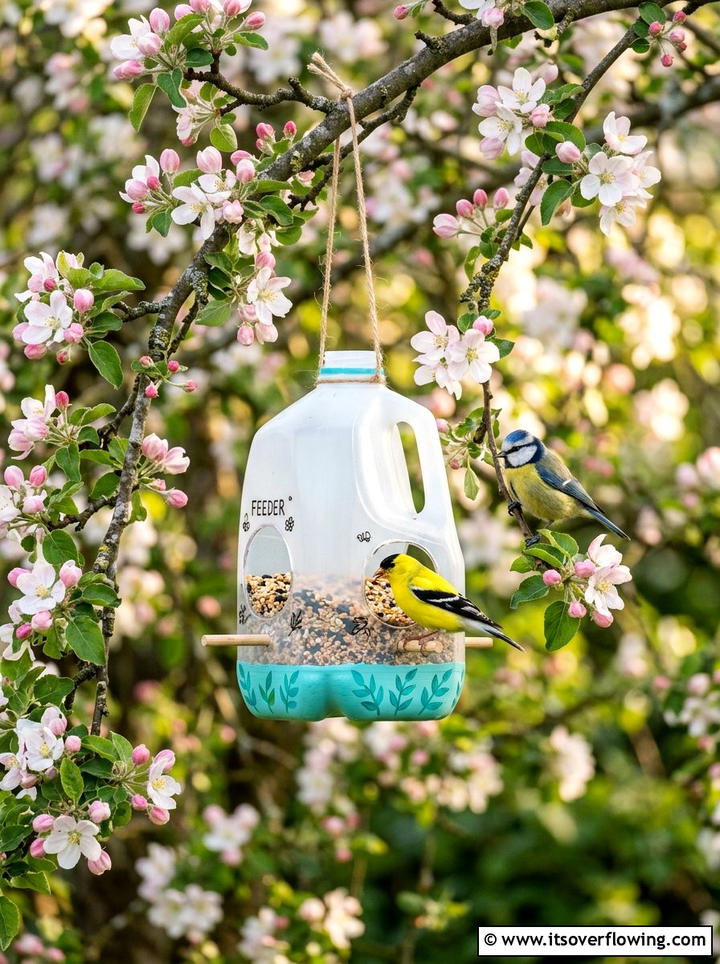
Attracting local wildlife to your garden brings a sense of peace and joy to your daily outdoor routine. You can easily transform a clean plastic milk jug into a functional bird feeder with just a few simple cuts. By creating large openings on the sides, you allow birds to access the seeds while the roof protects the food from rain. Adding a small wooden dowel or a sturdy twig through the bottom provides a comfortable perch for your feathered visitors. This project is a wonderful way to involve children in nature conservation while repurposing bulky plastic waste. Hanging it from a tree branch creates a lively focal point in any backyard.
4. Plastic bottle greenhouse
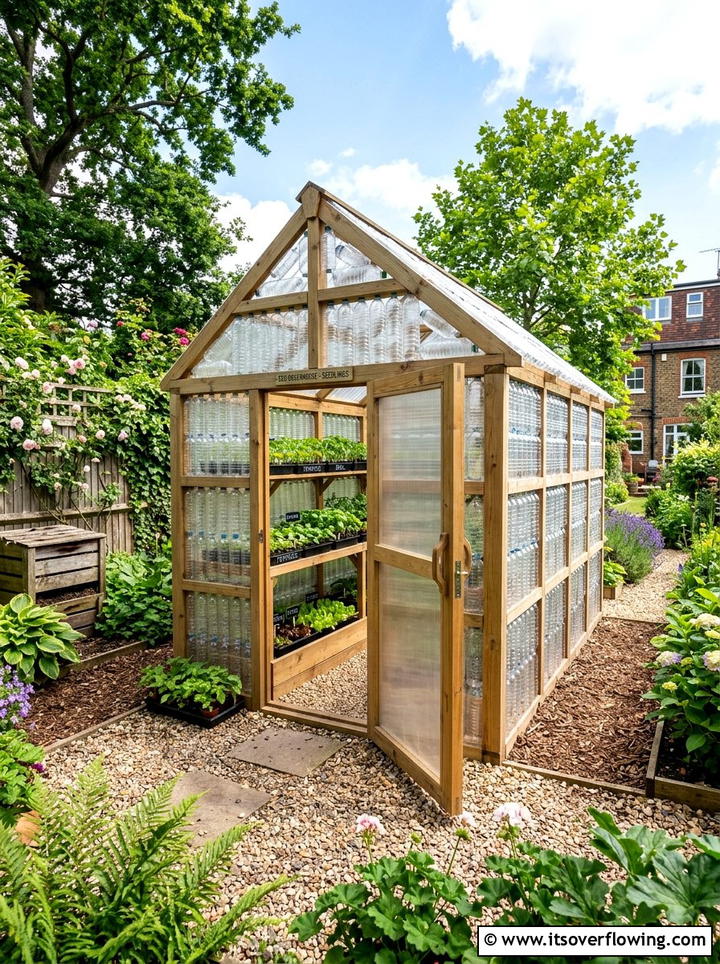
Building a full-sized greenhouse can be expensive, but you can create a miniature version using dozens of clear plastic bottles. By removing the bottoms and nesting the bottles together on wooden frames, you create insulating walls that trap heat and moisture. This recycled structure provides a warm environment for sensitive plants to thrive during the colder spring or autumn seasons. The clear plastic allows plenty of sunlight to reach your crops while protecting them from harsh winds and frost. It is an ambitious yet rewarding project that turns large quantities of waste into a valuable gardening asset. Your plants will enjoy a much longer growing season in this handmade shelter.
5. Laundry detergent bottle planter
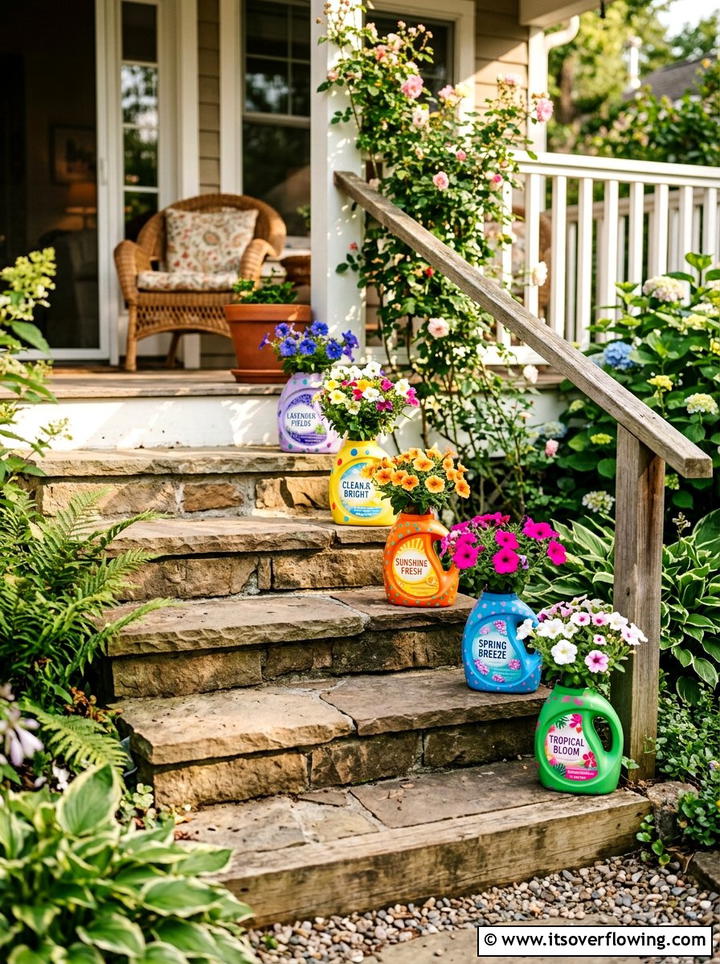
Large laundry detergent containers are made of thick, durable plastic that can withstand many years of outdoor exposure. These sturdy jugs can be cut and painted to create unique, colorful planters for your porch or garden steps. Because they often have built-in handles, they are very easy to move around as the sunlight changes throughout the day. You can get creative with different shapes, such as cutting them to look like whimsical animals or modern geometric pots. Just remember to poke several drainage holes in the bottom to keep your plants healthy. This project is a great way to give heavy-duty plastic a second life as a garden decoration.
6. Plastic bottle edging
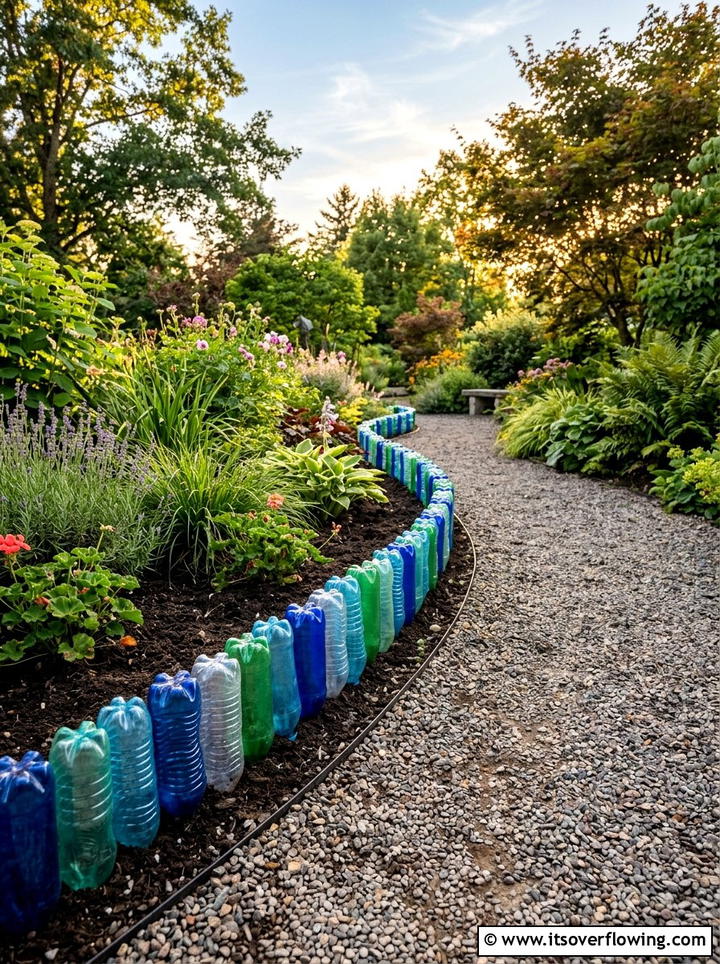
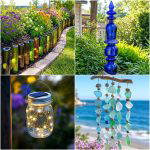
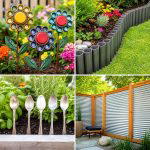
Defining your garden beds with clear boundaries makes your landscape look professional and well-maintained without spending much money. You can use glass or plastic bottles buried neck-down in the soil to create a decorative and functional border. When you line up bottles of the same size and color, you produce a clean and uniform look along your paths. This recycled edging helps keep mulch in place and prevents grass from creeping into your flower beds. It is a simple weekend task that provides a massive visual impact on your overall garden design. Using different colored bottles can add a playful and artistic touch to your outdoor walking paths.
7. Plastic cap garden mosaic
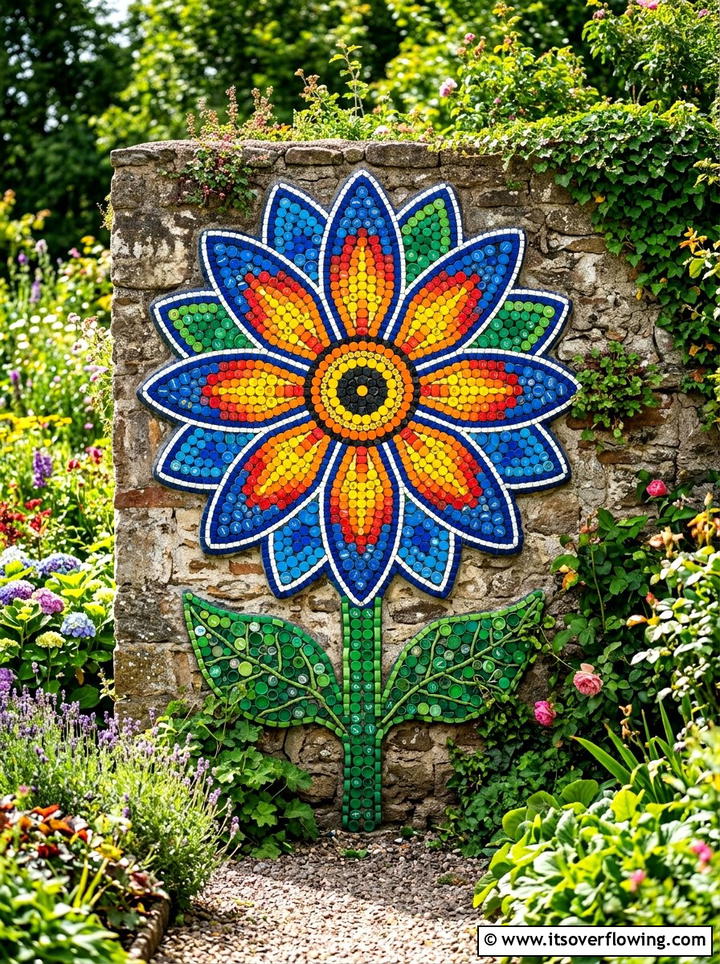
Small plastic bottle caps often end up in the ocean, but you can use them to create beautiful art. Collecting caps of various colors allows you to design intricate mosaic patterns on garden walls, stepping stones, or wooden fences. You can arrange them to look like vibrant flowers, butterflies, or abstract geometric shapes that brighten up dull corners. This project is essentially like painting with plastic, and it offers a fun way to involve the whole family in decorating. By gluing the caps onto a sturdy exterior surface, you create weather-resistant art that lasts for years. It is a brilliant way to recycle those tiny pieces of plastic effectively.
8. Soda bottle drip irrigation
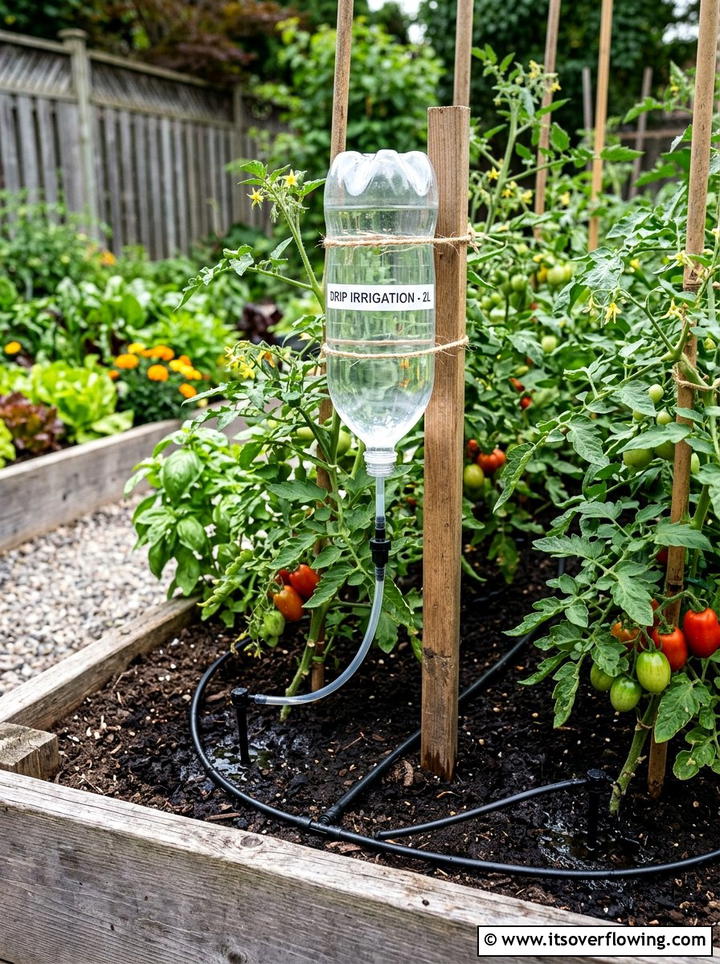
Watering your plants directly at the roots is the most efficient way to keep them healthy and conserve water. You can make a simple drip irrigation system by poking tiny holes in the sides of a plastic soda bottle. Bury the bottle next to a thirsty plant, leaving the neck exposed so you can easily refill it with a hose. The water slowly seeps out through the holes, providing a steady supply of moisture to the root zone where it is needed most. This method reduces evaporation and prevents fungal diseases that often occur when leaves get wet. It is an excellent low-tech solution for maintaining a productive vegetable garden.
9. Plastic spoon garden markers
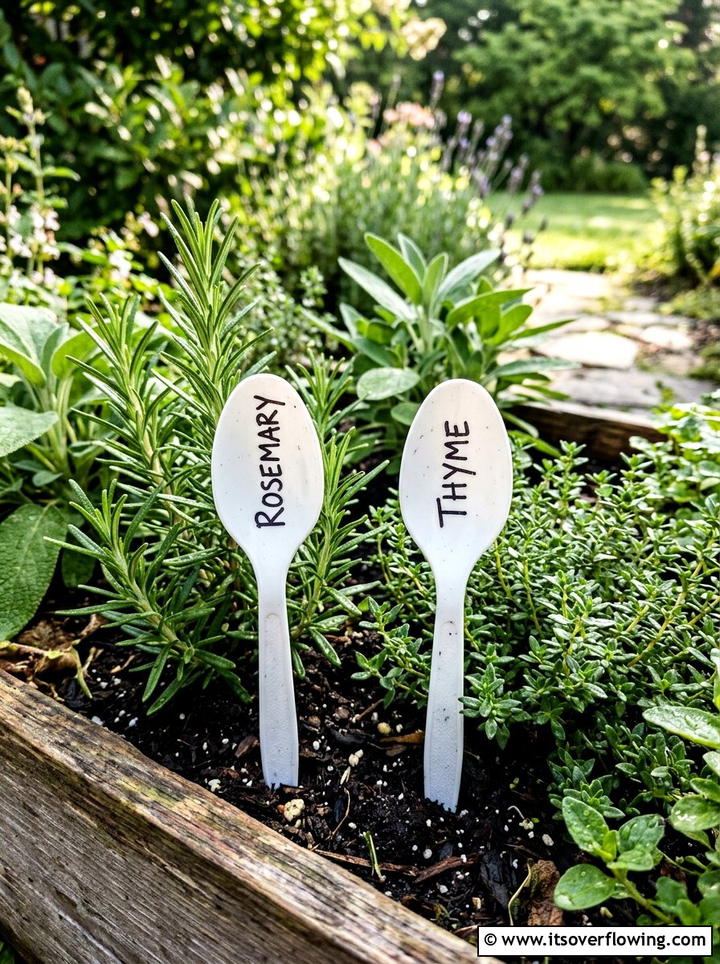
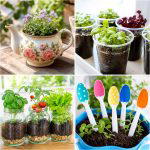
Identifying your different herbs and vegetables is much easier when you have clear and durable labels in your garden. Recycled plastic spoons make excellent markers because they are waterproof and have a smooth surface for writing plant names. You can use a permanent marker to label each spoon and then stick the handle directly into the soil. For a more decorative look, try painting the spoons in bright colors that match the flowers or vegetables they are identifying. These markers will not rot like wooden sticks often do when exposed to damp garden soil. It is a quick and clever way to keep your planting rows organized all season.
10. Yogurt cup seed starter
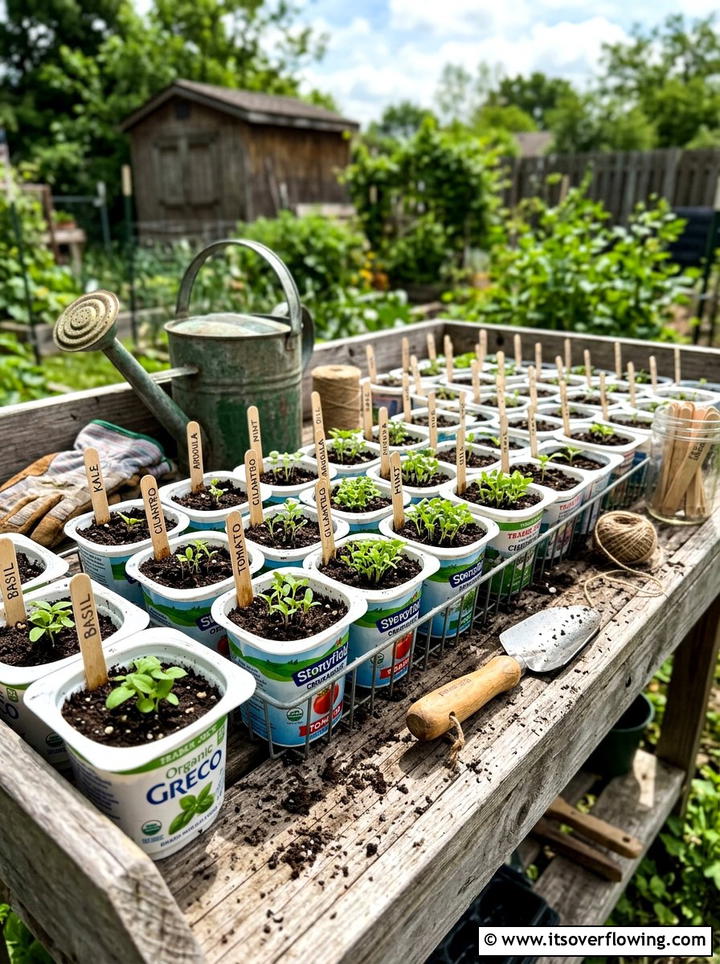
Starting your own plants from seeds is a rewarding experience that saves you a lot of money at the nursery. Small plastic yogurt or sour cream containers are the perfect size for nurturing young seedlings until they are ready for transplanting. After cleaning the cups thoroughly, simply poke a few drainage holes in the bottom and fill them with high-quality potting mix. These containers are lightweight, stackable, and easy to label with a marker or tape. Because the plastic is flexible, you can gently squeeze the sides to pop the plant out without damaging the delicate root system. It is a simple way to recycle common kitchen waste for gardening.
11. Plastic pallet garden walkway
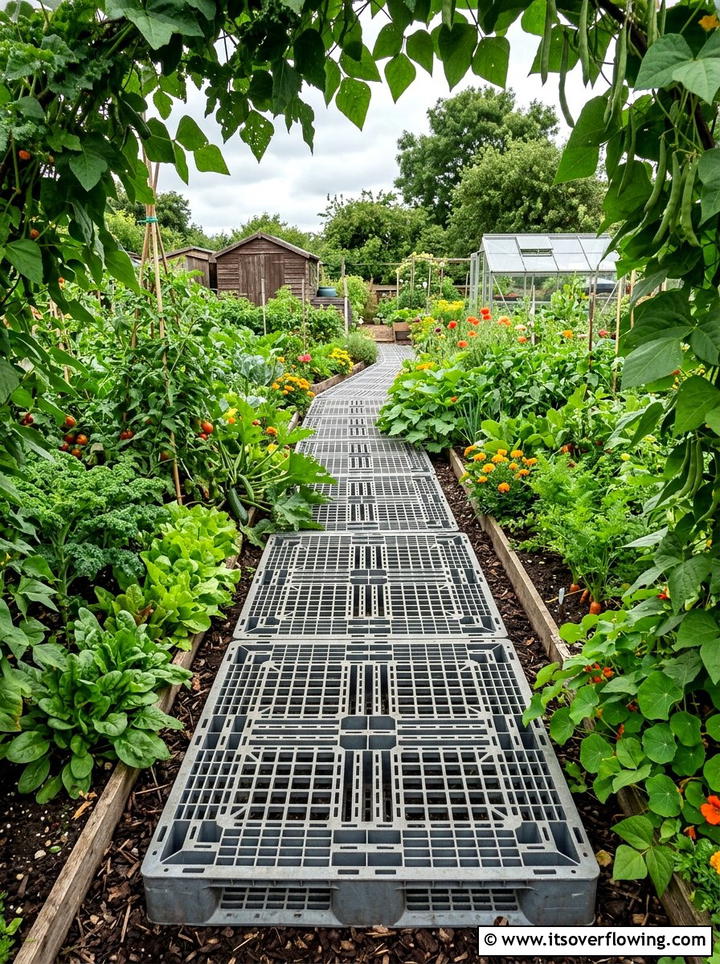
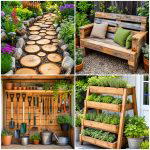
Shipping pallets made of recycled plastic are incredibly strong and resistant to moisture, making them ideal for outdoor flooring. You can lay these pallets down to create a stable and mud-free walkway through your vegetable garden or damp areas. The slotted design allows water to drain through, preventing puddles from forming on the surface during heavy rain. If you prefer a more finished look, you can fill the gaps with pea gravel or small decorative stones for added texture. These pallets are much lighter than concrete but provide a similar level of durability for foot traffic. It is a functional project that solves drainage issues while reusing industrial materials.
12. Hanging plastic bottle flower pot
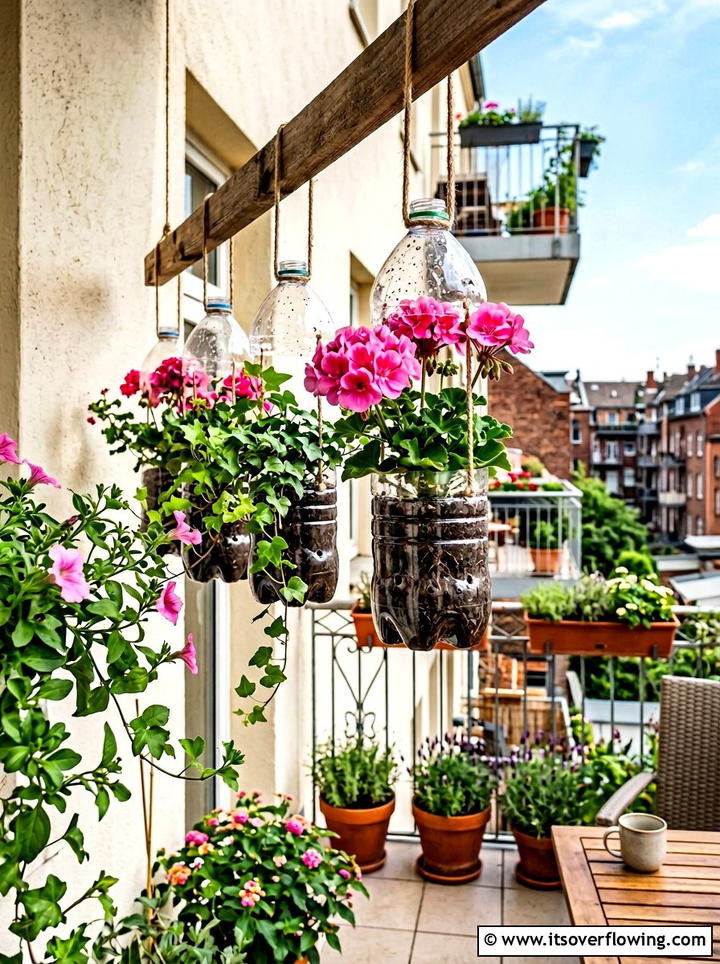
Adding vertical interest to your porch or balcony is easy with lightweight hanging planters made from recycled soda bottles. You can cut the bottles horizontally or vertically and secure them with colorful nylon rope or sturdy metal chains. These hanging pots are perfect for trailing plants like petunias or ivy that look beautiful spilling over the sides. Because they are so light, you can hang several of them from a single hook or a wooden beam. Painting the plastic in metallic or pastel shades can make these recycled containers look like expensive boutique decor. It is a creative way to maximize your growing space in small urban environments.
13. Plastic bottle bird bath
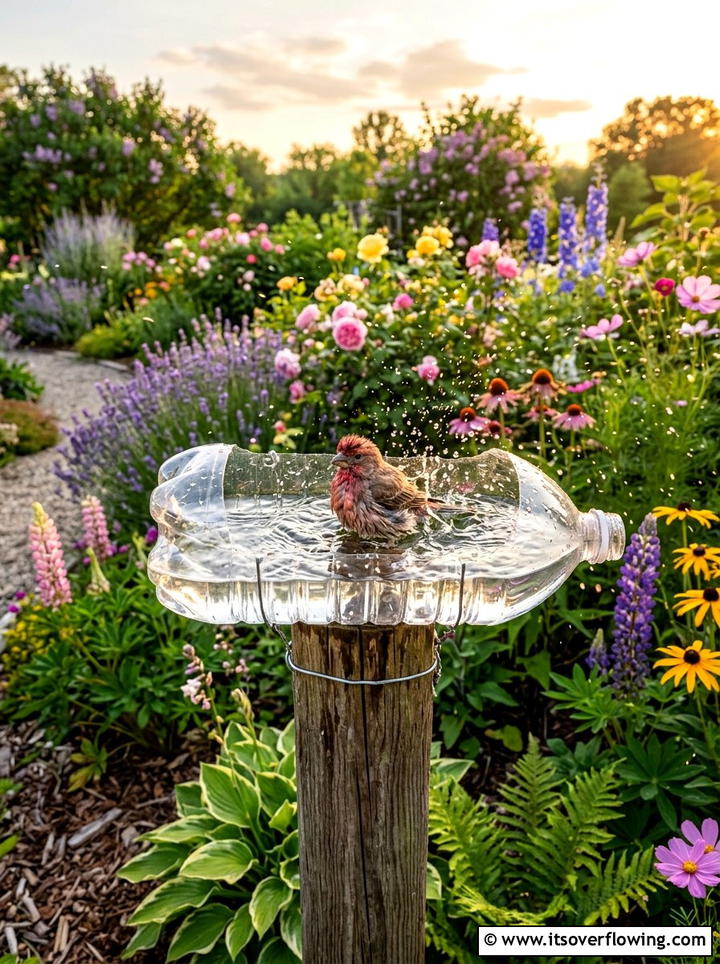
Providing a source of clean water is just as important for birds as providing food in your backyard. You can construct a simple bird bath using a large plastic tray or a wide-mouthed container and a sturdy base. A large plastic bottle can be rigged above the tray to act as a reservoir that slowly refills the bath as water evaporates. Placing a few flat stones in the center gives the birds a safe place to land and splash around. Keeping the water fresh will ensure that your garden remains a popular destination for local songbirds and butterflies. This recycled project helps support the local ecosystem while adding a serene feature.
14. Recycled plastic lumber garden bed
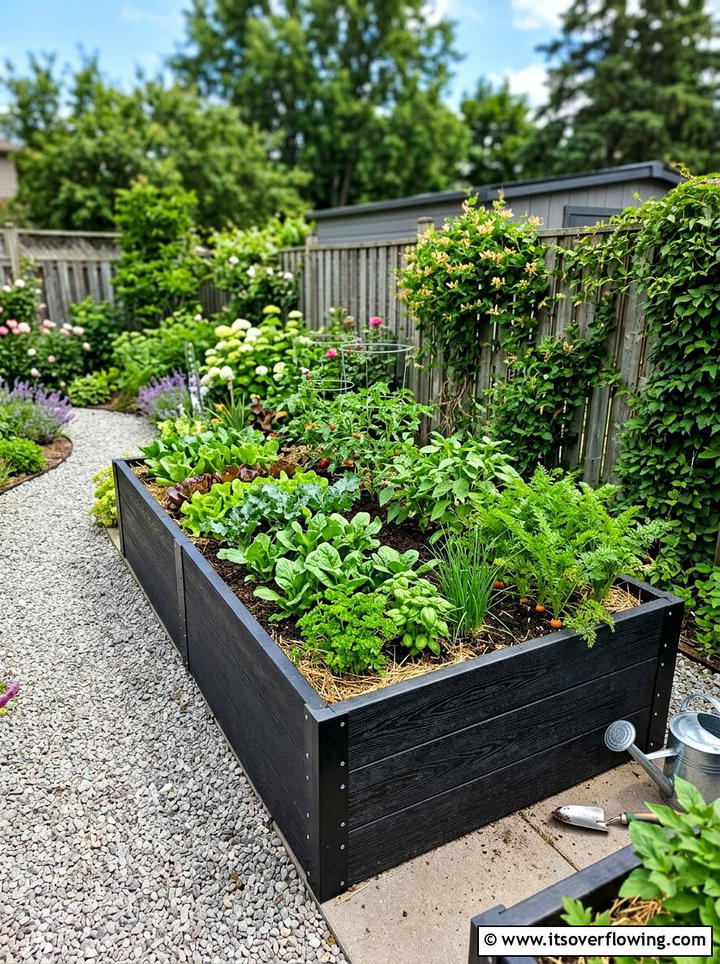
Building raised garden beds is a popular way to control soil quality and improve drainage for your favorite vegetables. Instead of using expensive cedar or chemically treated wood, you can use planks made from 100% recycled plastic lumber. This material is incredibly durable because it never rots, splinters, or requires any painting or staining over the years. You can assemble the beds using standard wood screws and tools, just like you would with traditional timber. These beds are perfect for organic gardening since they do not leach any harmful chemicals into the soil over time. It is a long-term investment in your garden that utilizes modern recycling technology beautifully.
15. Woven plastic bag garden rug
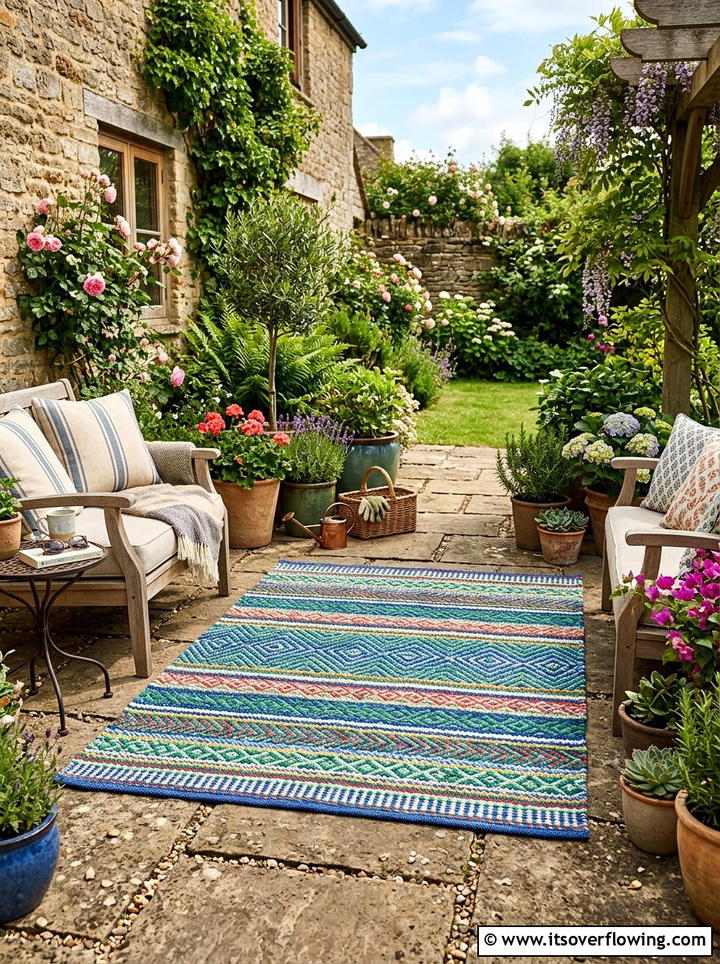
Discarded plastic grocery bags can be turned into a durable and waterproof outdoor rug for your patio or garden seating area. By cutting the bags into strips and braiding or crocheting them together, you create a thick and cushioned surface. This “plarn” or plastic yarn is resistant to mold and can be easily hosed off when it gets dirty. You can mix different bag colors to create vibrant patterns or stick to one color for a more minimalist look. This project takes some time and patience, but the result is a unique and eco-friendly accessory for your home. It is a wonderful way to repurpose single-use plastic bags effectively.
16. Plastic bucket container garden
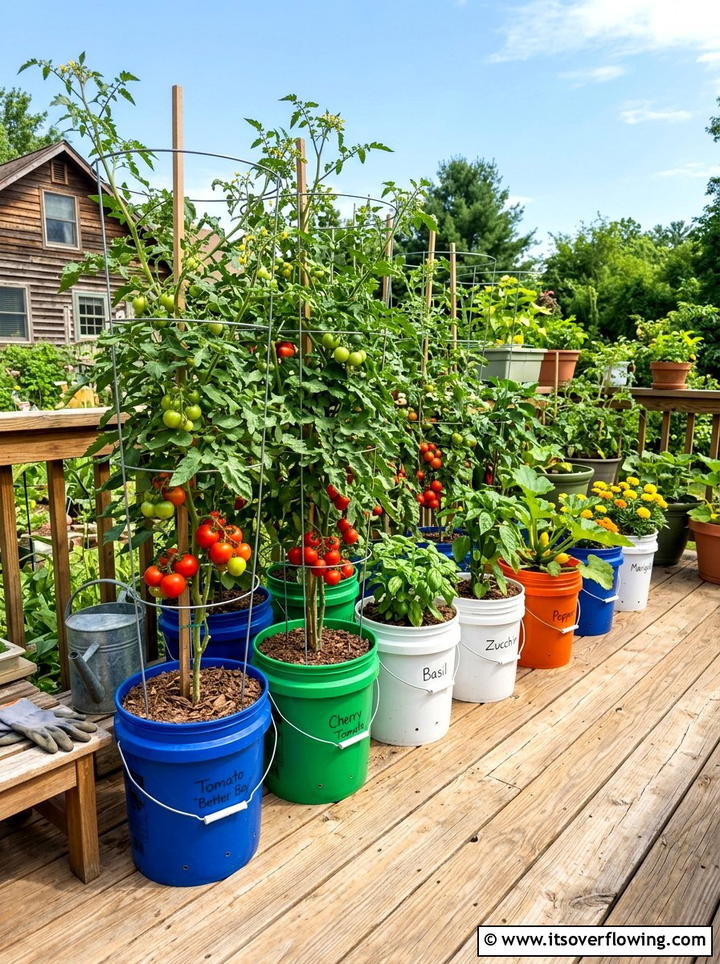
Five-gallon plastic buckets are often discarded at construction sites or bakeries, but they are perfect for growing large plants. These deep containers provide plenty of room for the roots of tomatoes, peppers, or even small citrus trees to expand. You can paint the exterior to match your garden style or wrap them in burlap for a more rustic and natural look. Adding a layer of gravel at the bottom helps with drainage and prevents the bucket from becoming too top-heavy in the wind. These mobile gardens are ideal for renters who want to take their plants with them when they eventually move. It is a practical and productive recycling idea.
17. Soda bottle cloche
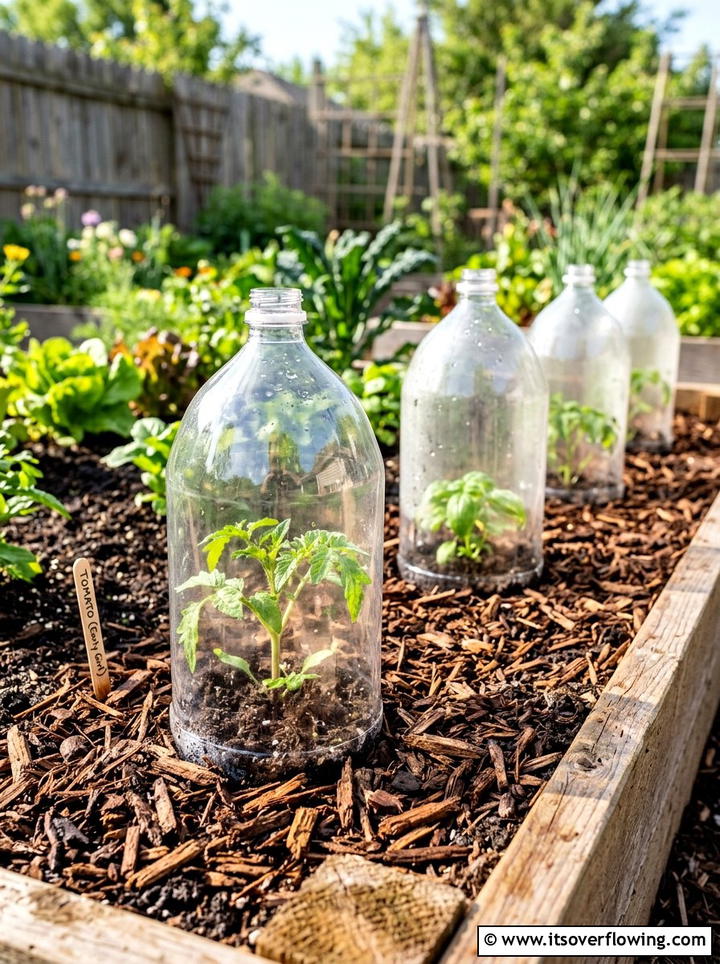
Protecting young seedlings from late spring frosts or hungry garden pests is essential for a successful and healthy harvest. You can make an effective garden cloche by cutting the bottom off a clear one-liter or two-liter plastic soda bottle. Simply place the bottle over the small plant and press it firmly into the soil to create a mini-greenhouse. The cap can be left on for extra warmth or removed during the day to provide much-needed ventilation and airflow. These cloches act as a physical barrier against wind and insects while trapping heat to speed up early growth. It is a simple and zero-cost way to give your plants a head start.
18. Plastic container herb garden
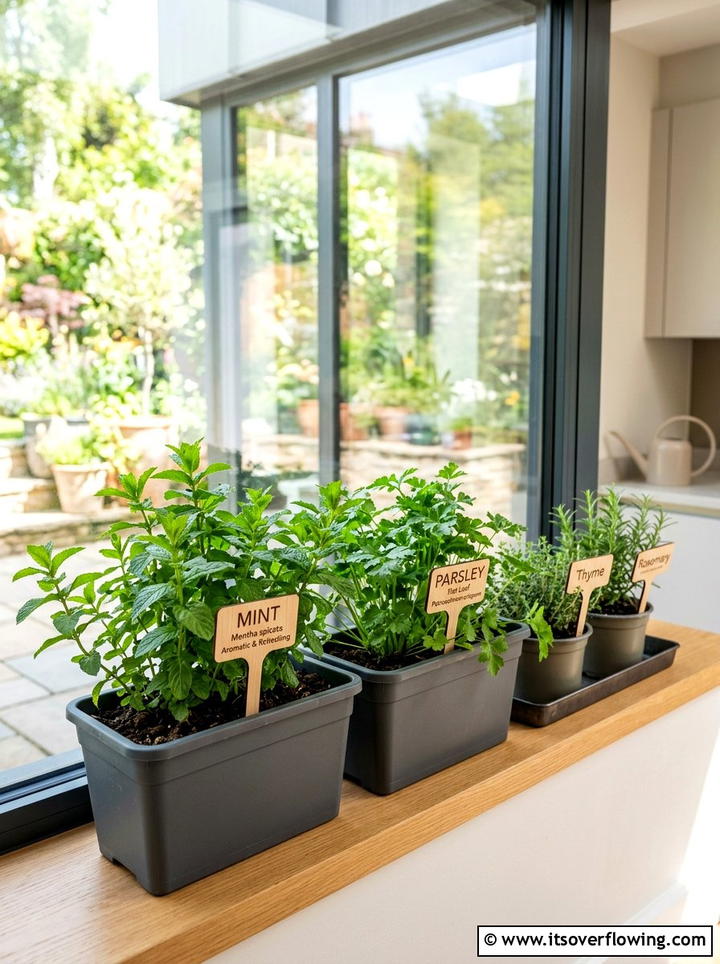
A kitchen windowsill herb garden is a great way to have fresh flavors within reach while you are cooking. You can repurpose various plastic food containers, like large yogurt tubs or clear deli cups, into a matching set of herb pots. Decorating them with chalkboard paint allows you to label each herb and change the names as you replant different varieties. These small containers fit perfectly on narrow ledges or can be grouped together on a decorative recycled plastic tray. Growing herbs like basil, mint, and cilantro in recycled pots is an easy entry point into sustainable gardening. It turns everyday waste into a source of fresh and healthy food.
19. Recycled plastic garden chair
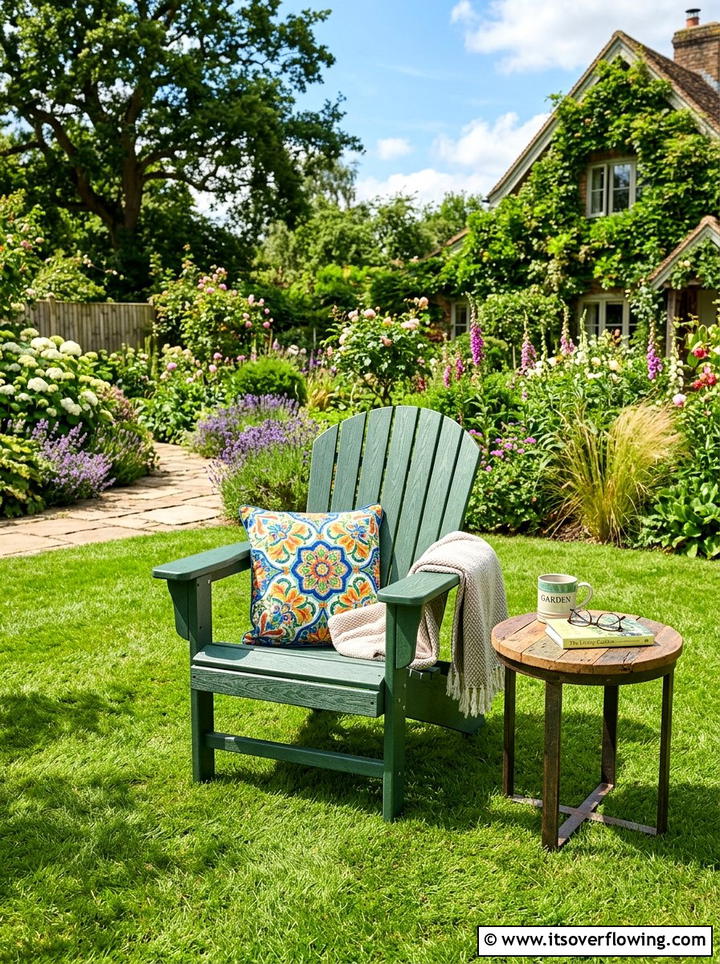
Comfortable seating is a must for enjoying the fruits of your labor in the garden after a long day of work. You can find or even build outdoor furniture made from high-density polyethylene, which is often sourced from recycled milk jugs. These chairs are incredibly heavy, so they won’t blow away in a storm, and they never need to be sanded or refinished. They come in a wide variety of colors that stay vibrant even after years of exposure to direct sunlight and rain. Investing in recycled plastic furniture is a great way to support the circular economy while enhancing your outdoor living space. It is a stylish and permanent solution for garden relaxation.
20. Plastic bottle watering can
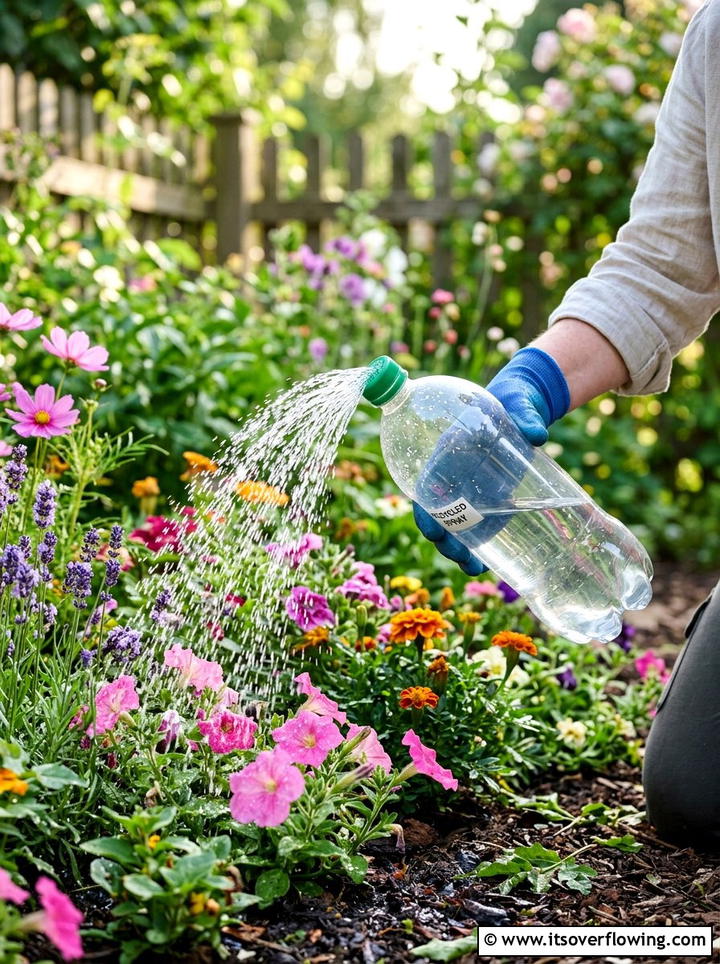
If you have a small collection of indoor plants, you might not need a large and bulky traditional watering can. You can easily make your own by poking several small holes in the cap of a clean plastic milk jug or water bottle. This creates a gentle rose-style spray that is perfect for watering delicate seedlings without washing away the soil. The handle on a milk jug makes it very easy to carry and tip, giving you great control over the flow. This project is a fantastic example of how a simple modification can turn common trash into a very useful tool. It is a quick and effective DIY project for any gardener.
21. Juice container window box
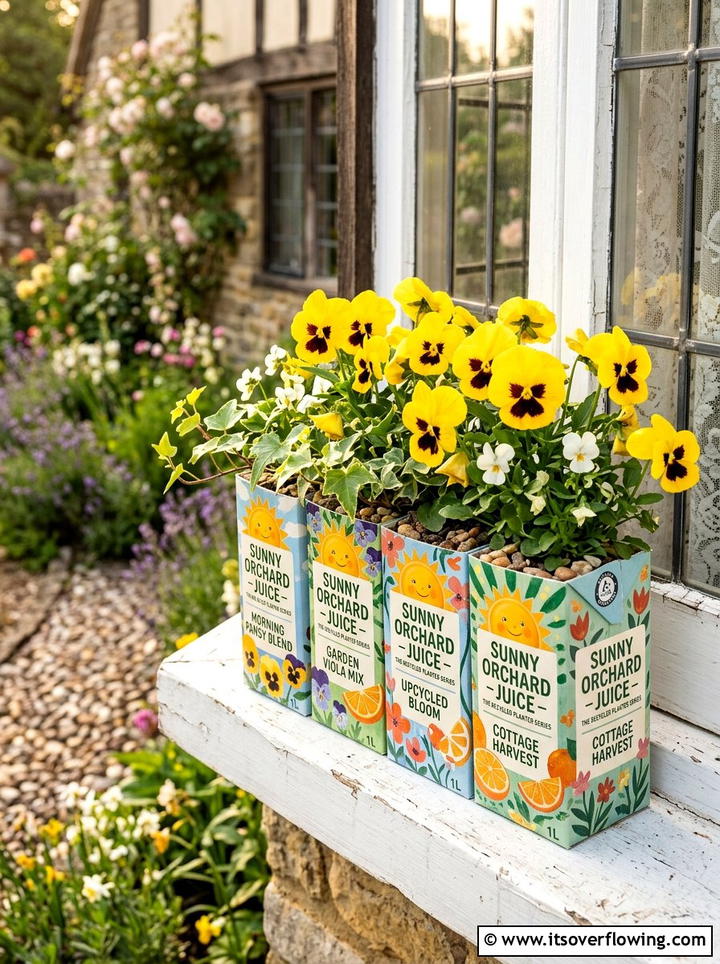
Rectangular plastic juice or milk cartons can be laid on their sides and cut open to create narrow window boxes. These containers are already designed to hold liquid, so they are naturally waterproof and very sturdy for holding soil and plants. You can line several of them up along a window ledge or secure them to a wooden railing using zip ties or screws. Painting them with exterior-grade spray paint can transform these humble cartons into a sophisticated and colorful floral display. They are the perfect size for planting bright pansies, succulents, or small trailing vines. It is a great way to add charm to your home’s exterior without much effort.
22. Plastic mesh garden fence
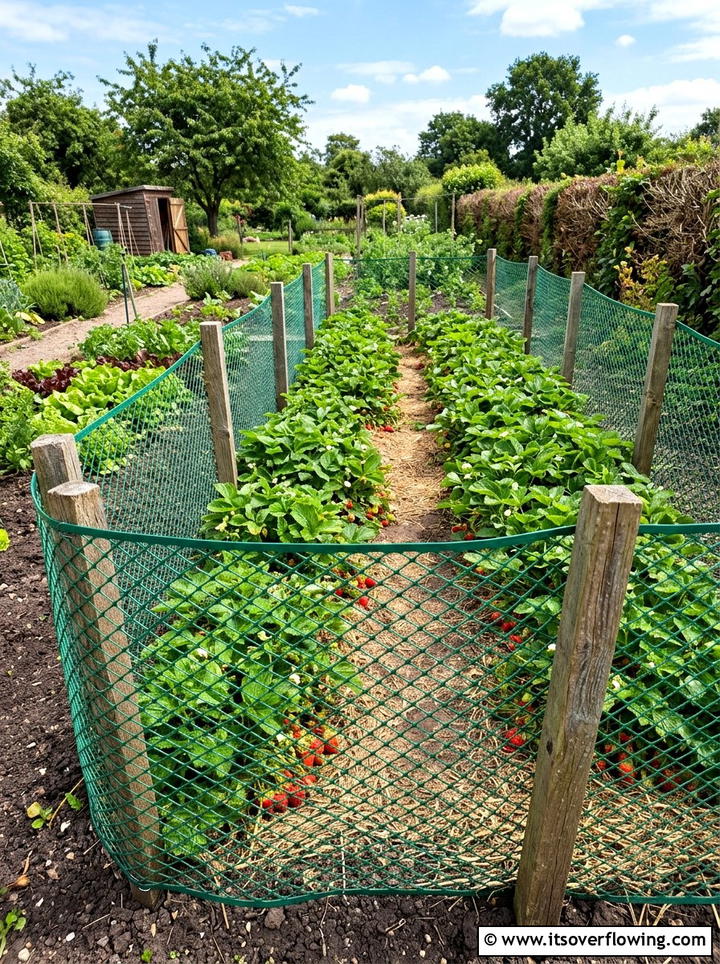
Protecting your prized vegetables from rabbits and other small critters is a constant struggle for many backyard gardeners. You can repurpose plastic mesh from various packaging or construction sites to create a lightweight and effective garden fence. Simply attach the mesh to wooden or metal stakes driven into the ground around the perimeter of your planting beds. This type of fencing is almost invisible from a distance, so it doesn’t clutter up the visual landscape of your yard. It is a much more affordable alternative to traditional wire fencing and is very easy to install or move as needed. This recycled barrier keeps your harvest safe and secure all season.
23. Recycled plastic rain barrel
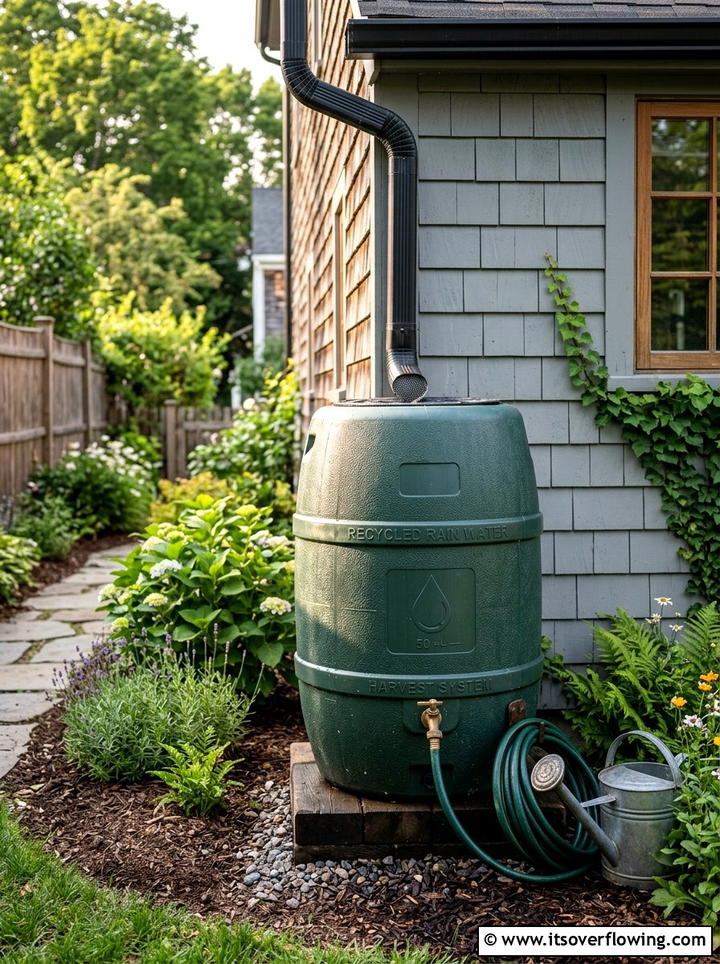
Collecting rainwater is an excellent way to reduce your utility bills and provide your plants with chlorine-free water. You can repurpose a large, heavy-duty plastic drum into a functional rain barrel by adding a faucet and an overflow valve. Placing the barrel under a downspout allows you to capture hundreds of gallons of water during a single heavy rainstorm. Using a mesh screen over the top prevents mosquitoes from breeding and keeps leaves out of the stored water. This project is a significant step toward creating a truly sustainable and self-sufficient garden ecosystem. It utilizes a large plastic item that might otherwise be very difficult to recycle or discard.
24. Plastic bottle garden chandelier
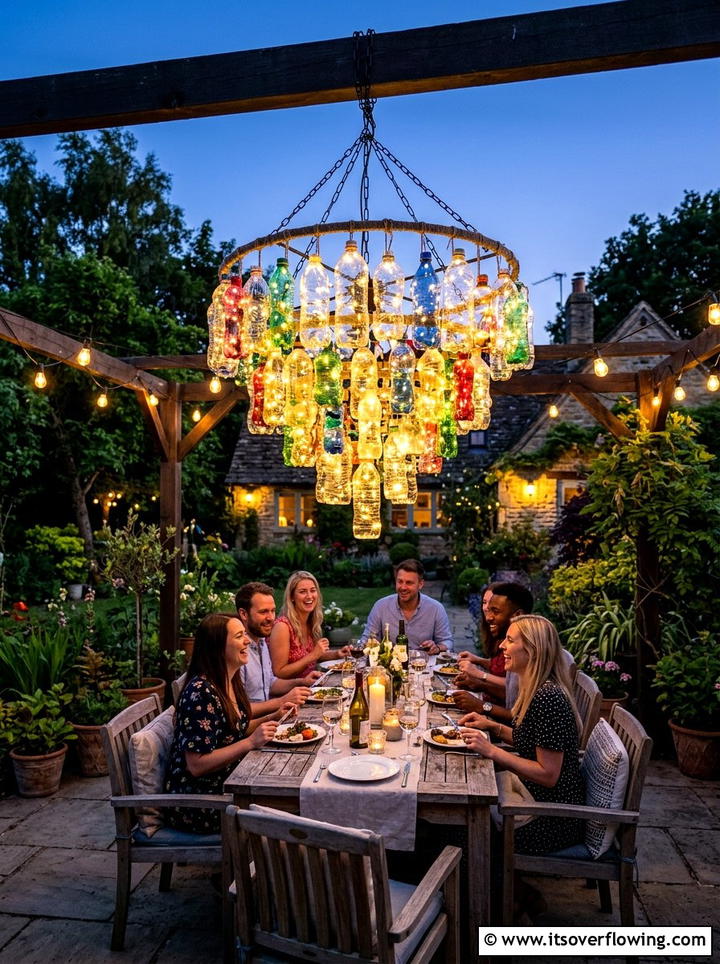
Adding light to your garden creates a magical atmosphere for evening gatherings and late-night strolls through the greenery. You can create a unique outdoor chandelier by hanging decorated plastic bottle bottoms from a circular frame or a sturdy branch. Placing battery-operated LED tea lights or solar-powered bulbs inside the plastic shapes creates a beautiful glowing effect that mimics glass. The plastic diffuses the light softly, casting intricate shadows across your patio or lawn area. This project is a wonderful way to add a touch of whimsy and elegance to your outdoor space using nothing but trash. It is a creative centerpiece that will definitely start conversations with your garden guests.
25. Plastic pipe trellis
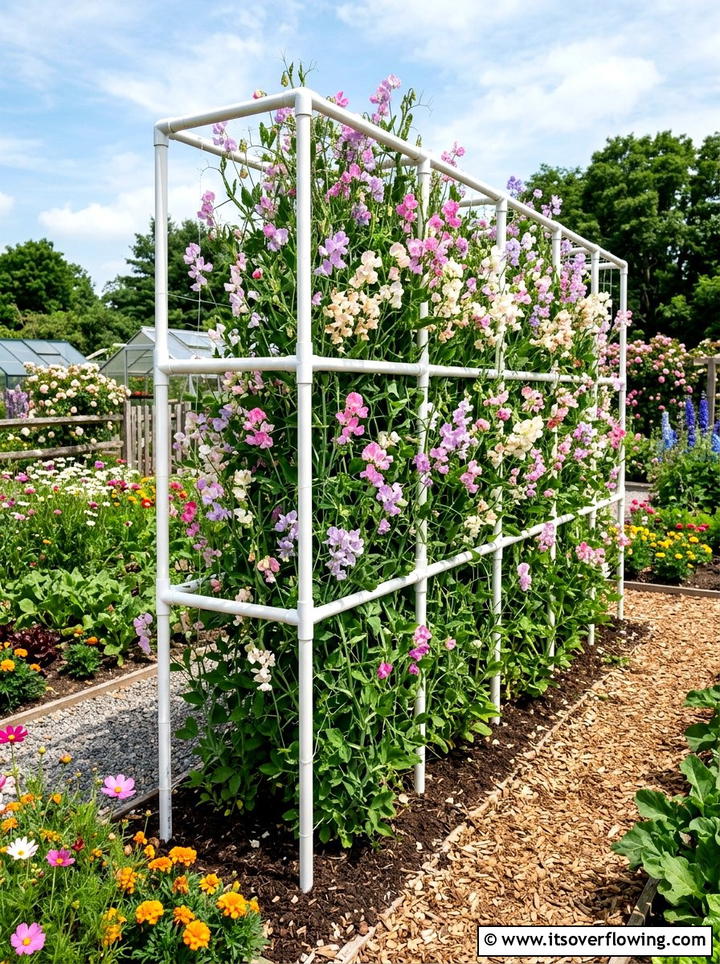
Climbing plants like peas, beans, and flowering vines need a strong vertical support system to grow healthy and reach the sunlight. You can use leftover pieces of plastic PVC pipe to construct a durable and custom-shaped trellis for your garden beds. By connecting the pipes with standard elbow or T-joints, you can create arches, fans, or simple rectangular grids. Plastic piping is lightweight, weather-resistant, and can be painted to blend in with your plants or stand out as a modern feature. This type of trellis will last for many years and can be easily disassembled for storage during the winter. It is a versatile and functional recycling project for any yard.
Conclusion:
Embracing recycled plastic projects in your garden is a powerful way to combine creativity with environmental responsibility. Each of these twenty-five ideas demonstrates that with a little imagination, what we often consider trash can become a valuable resource for growth. By choosing to repurpose materials like bottles, jugs, and pipes, you are actively reducing the amount of waste that enters our delicate ecosystems. These projects not only save you money but also allow you to create a unique and personalized outdoor space that tells a story. Whether you are building a full greenhouse or just labeling your herbs, every small action contributes to a more sustainable future. We hope these ideas inspire you to look at your recycling bin as a treasure chest of potential for your next beautiful garden adventure.
Related posts:
 25 recycled garden ideas with plastic bottles for DIY
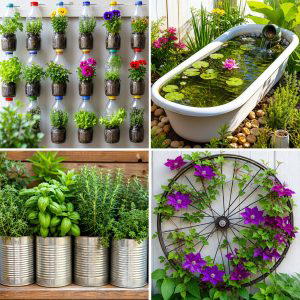 25 Recycled Garden Ideas DIY Projects for Outdoor Charm
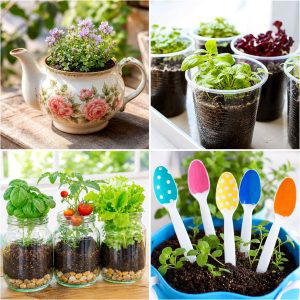 25 Recycled Garden Ideas for School Projects
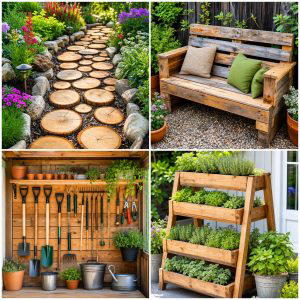 25 recycled garden ideas with wood scraps: Easy DIY Projects
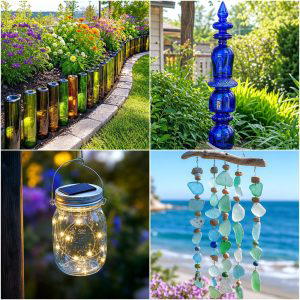 25 recycled garden ideas with recycled glass art to Love
 25 recycled garden ideas with recycled metal art to Try
 25 recycled garden ideas with recycled wood art to Try
 25 Upcycled Garden Ideas With Plastic Bottles to Make
 25 Upcycled Garden Ideas With Kids Projects for Family Fun
 25 Upcycled Garden Ideas With Reclaimed Wood Projects
 25 recycled garden ideas with garden markers: Fun DIYs
 25 recycled garden ideas with pallet wall garden DIYs