
Transforming your outdoor space doesn’t require a massive budget or a trip to a luxury garden center when you can use what you already have. Upcycling items into beautiful hanging planters is a brilliant way to breathe new life into your garden while keeping waste out of landfills. These creative projects allow you to experiment with different textures, colors, and heights, adding a unique personality to your backyard that store-bought items simply cannot replicate. Whether you are working with a tiny balcony or a sprawling lawn, vertical gardening with repurposed materials maximizes your planting area significantly. It is all about seeing the potential in everyday objects like old colanders, rusted buckets, or vintage birdcages to create a lush, vertical oasis.
1. Colander hanging planter
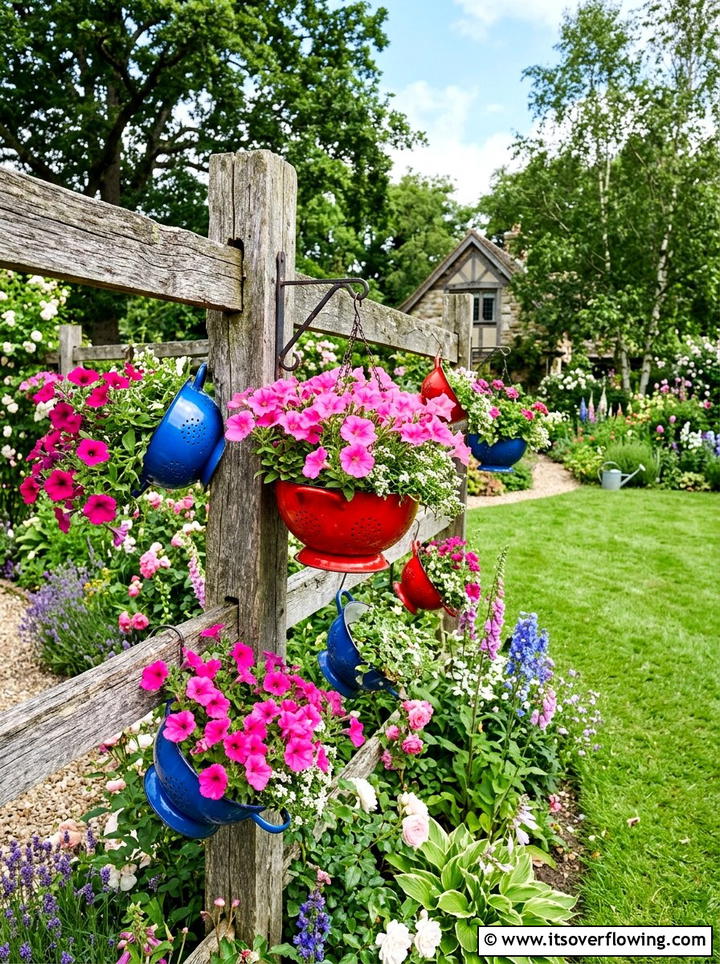
Using a kitchen colander as a planter is a genius move because it already has drainage holes built into the design. To create a cohesive look, you can spray paint the metal a vibrant color like turquoise or sunshine yellow to contrast with your green plants. Hang these along a wooden fence at varying heights to create a dynamic visual display. Fill them with trailing petunias or vibrant pansies that will eventually spill over the edges, hiding the metal and creating a floating ball of blossoms. This setup works perfectly on a sun-drenched patio where the drainage will not cause any issues with the flooring below, providing a bright and airy garden atmosphere.
2. Birdcage hanging planter
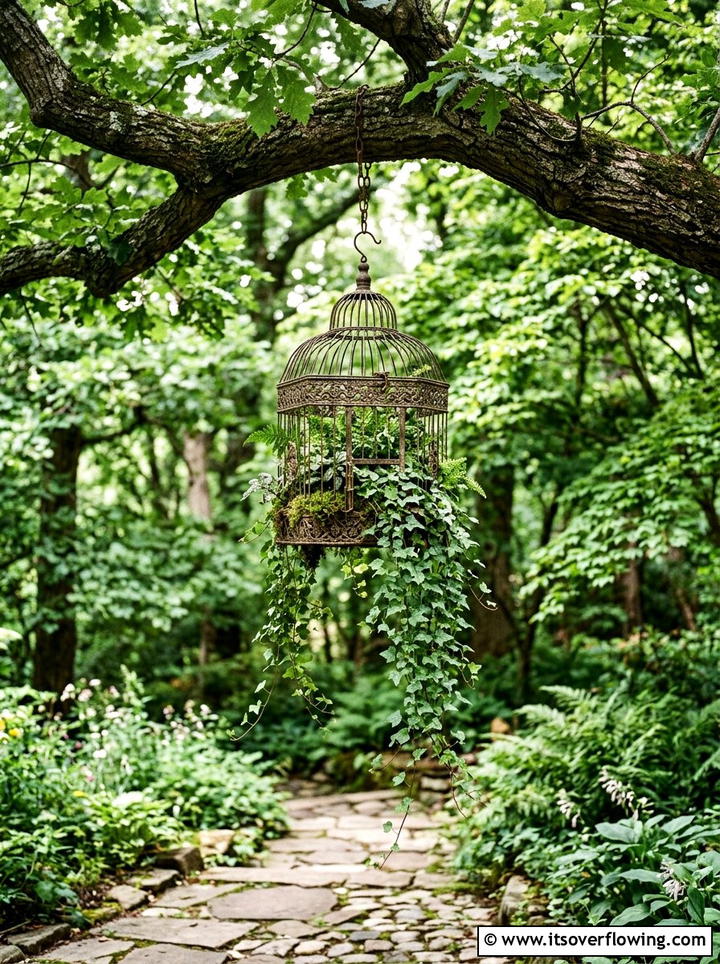
An old birdcage can become a romantic focal point in a cottage-style garden when repurposed as a hanging planter. Instead of birds, fill the interior with lush moss and delicate ferns or ivy that can weave through the bars. Hanging these from a sturdy tree limb or a wrought iron shepherd’s hook adds an enchanting, whimsical touch to any outdoor corner. The intricate metalwork of the cage provides a beautiful contrast to the soft, organic textures of the plants inside. For a more aged look, let the metal develop a natural patina over time. This design creates a vertical interest that draws the eye upward and makes your garden feel larger.
3. Tea tin hanging planter
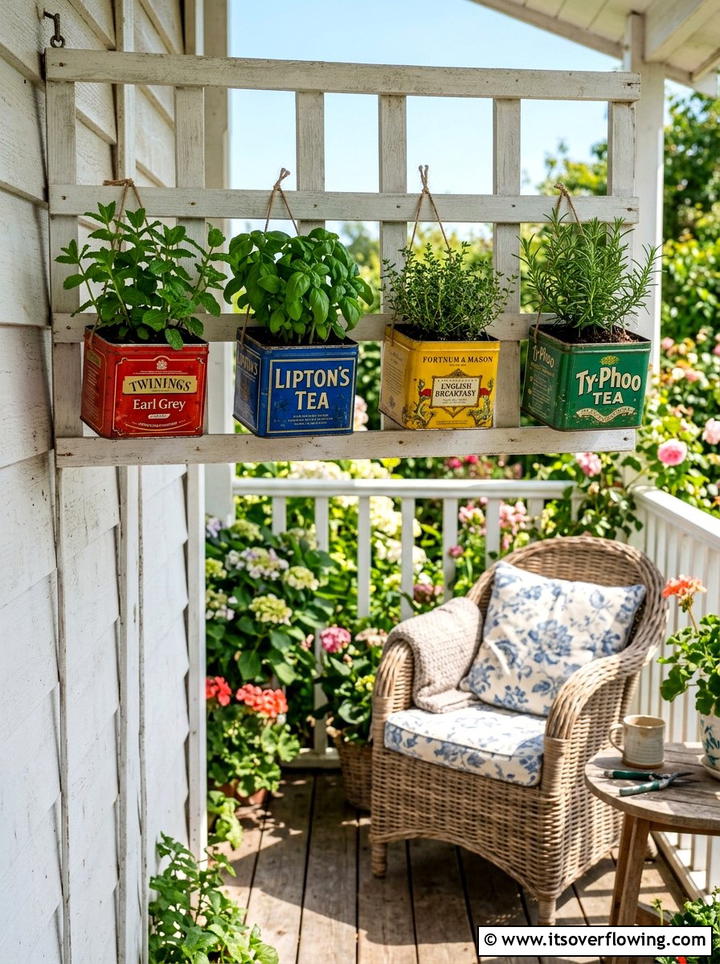
Vintage tea tins offer a charming, retro vibe for a small herb garden or a succulent display on a porch wall. These colorful containers often feature beautiful typography and patterns that add instant character to your outdoor space. To turn them into planters, simply drill a few holes in the bottom for drainage and attach a sturdy wire handle for hanging. Grouping several tins together on a trellis or a garden wall creates a curated, botanical gallery look. They are particularly effective for plants with shallow root systems, such as string of pearls or various types of sedum. This setup brings a touch of indoor nostalgia to your fresh, airy garden environment.
4. Plastic bottle hanging planter
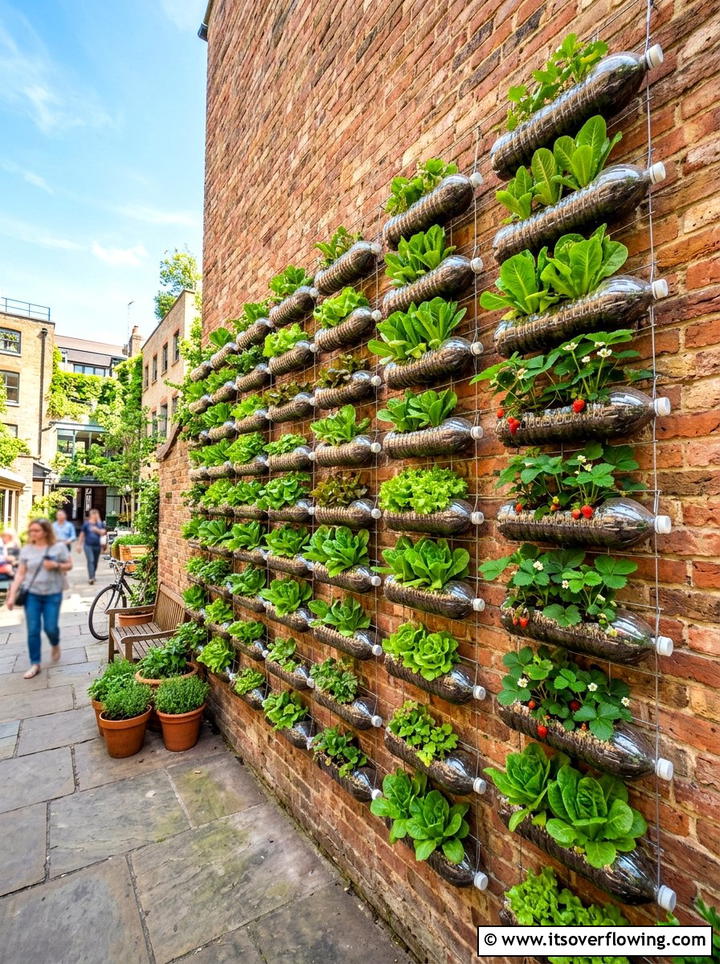
Repurposing plastic soda bottles is an incredibly eco-friendly way to create a vertical vegetable or flower garden. By cutting an opening in the side and hanging them horizontally with sturdy twine, you can create a stacked “green wall” effect. This method is perfect for growing strawberries or small leafy greens like lettuce and spinach. When dozens of these bottles are hung together against a sunny wall, they create a lush, modern tapestry of edible plants. It is a practical solution for urban gardeners who have limited ground space but want to produce their own food. The clear plastic allows you to monitor soil moisture easily, ensuring healthy plant growth.
5. Tire hanging planter
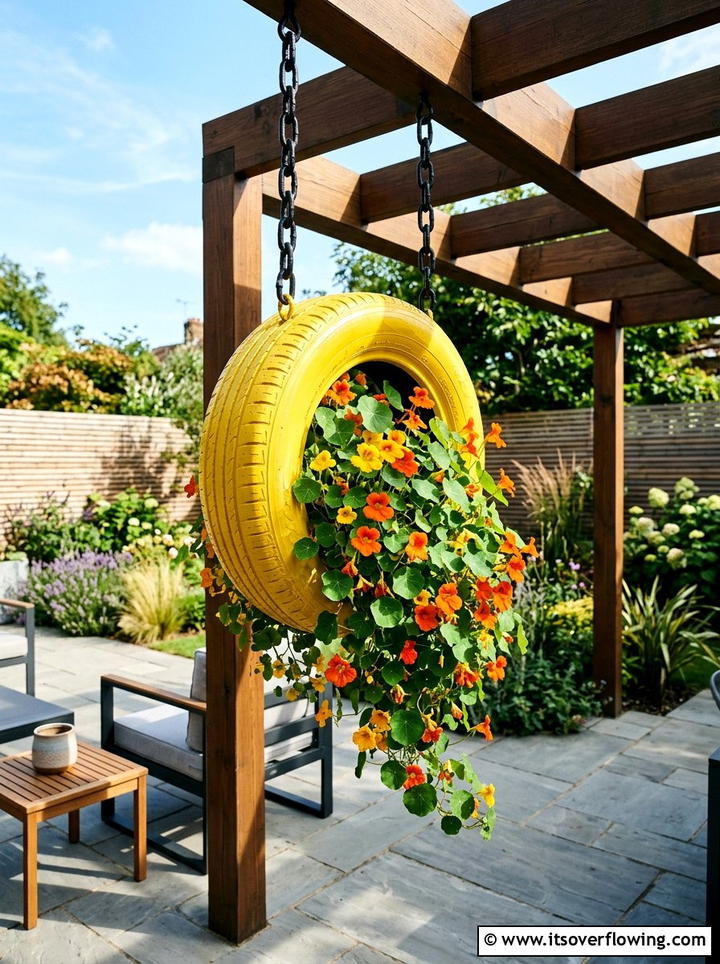
Old tires can be transformed into bold, large-scale hanging planters that make a serious statement in a modern or eclectic garden. By painting them in bright, solid colors, you turn industrial waste into high-impact garden art. These are best hung from sturdy structures like a heavy pergola or a thick tree branch using strong chains. Fill the bottom curve of the tire with soil and plant cascading flowers like nasturtiums or trailing lobelia. The wide, circular shape provides ample room for root growth, while the rubber acts as a durable container that withstands the elements. This design adds a playful, oversized geometric element to your outdoor landscape.
6. Wooden pallet hanging planter
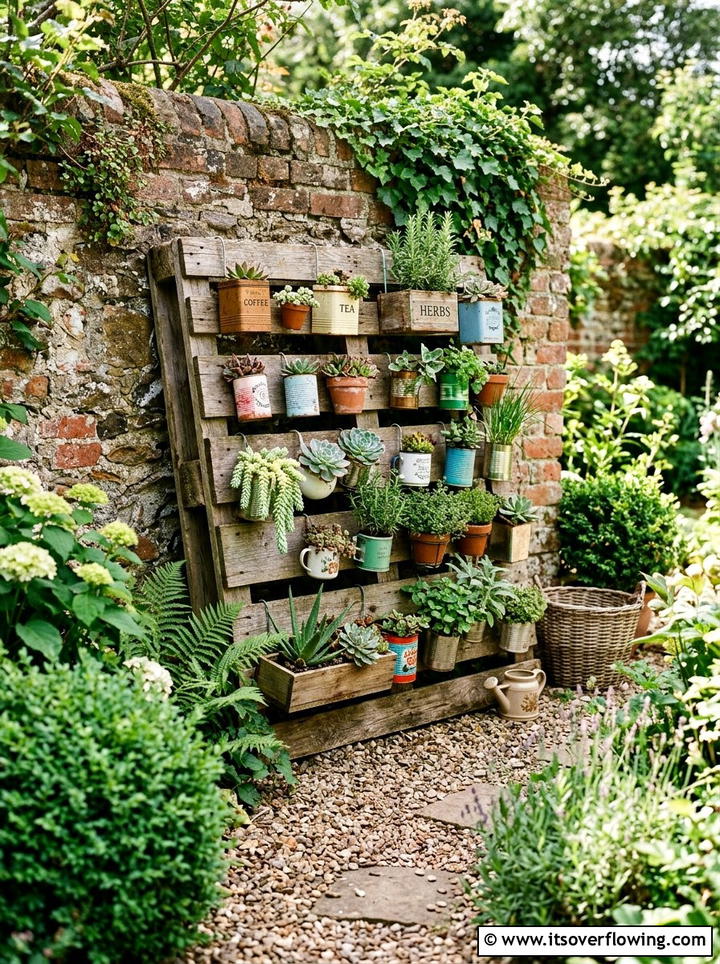
A wooden pallet is a versatile foundation for a vertical garden that can hold multiple hanging pots or built-in planter boxes. By attaching small hooks or wire loops, you can hang various upcycled containers across the slats to create a diverse plant display. Lean the pallet against a brick wall or mount it securely to a fence to save space. This setup is ideal for creating a dedicated herb station right outside your kitchen door. The raw wood texture provides a rustic, farmhouse aesthetic that complements the organic look of sage, rosemary, and thyme. It turns a flat, boring wall into a textured, three-dimensional living installation.
7. Vintage suitcase hanging planter
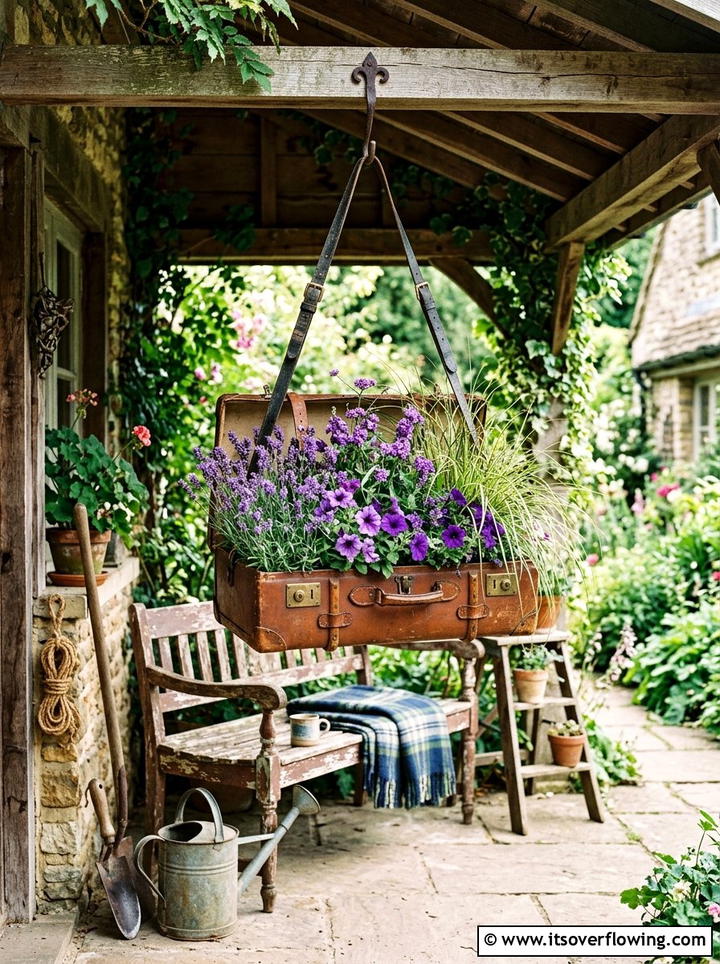
Transform an old, hard-shell suitcase into a quirky hanging garden feature that adds a sense of adventure to your yard. By propping the lid open and securing it, you create a deep planting pocket perfect for a mix of flowering annuals and tall grasses. Use heavy-duty straps or chains to hang the suitcase from a porch ceiling or a sturdy garden arch. This unconventional planter works best with a “thriller, filler, and spiller” planting technique to create a full, lush appearance. The suitcase becomes a conversation piece that anchors a seating area, bringing a touch of vintage travel charm and creative personality to the entire garden space.
8. Mason jar hanging planter
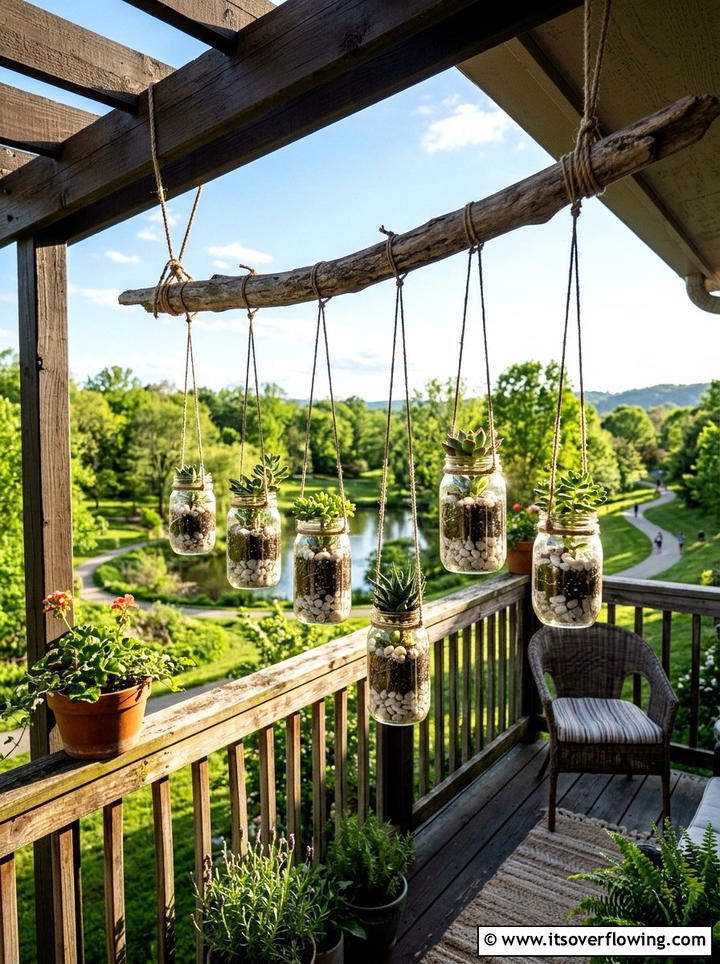
Mason jars are a staple of DIY decor, and they look stunning when used as hanging planters for small succulents or air plants. You can wrap the necks of the jars with copper wire or rustic twine to create secure hanging loops. Suspend them at different levels from a piece of driftwood or a simple wooden bar to create a floating glass garden. The transparency of the glass allows you to see the layers of pebbles and soil, adding a decorative geological element to the display. These work exceptionally well in a porch or balcony setting where they can catch the sunlight and glow beautifully throughout the afternoon.
9. Rubber boot hanging planter
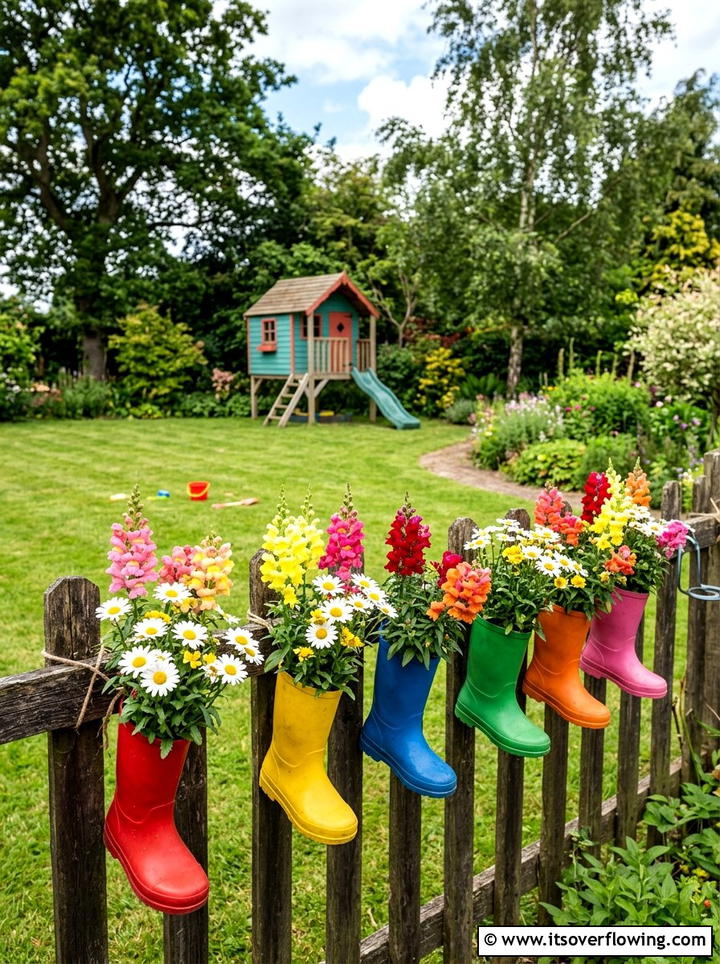
Give those old, leaky rain boots a second life by hanging them along a garden fence as whimsical planters. Colorful boots, especially those with fun patterns like polka dots or florals, add an instant pop of joy to a child’s garden or a playful backyard. Simply drill drainage holes in the soles and use the pull-tabs or a small hole in the back to hang them on nails or hooks. Fill them with upright flowers like marigolds or snapdragons that peek out from the top. This vertical arrangement is a clever way to add color to a plain fence while celebrating the charm of well-loved garden gear.
10. Chandelier hanging planter
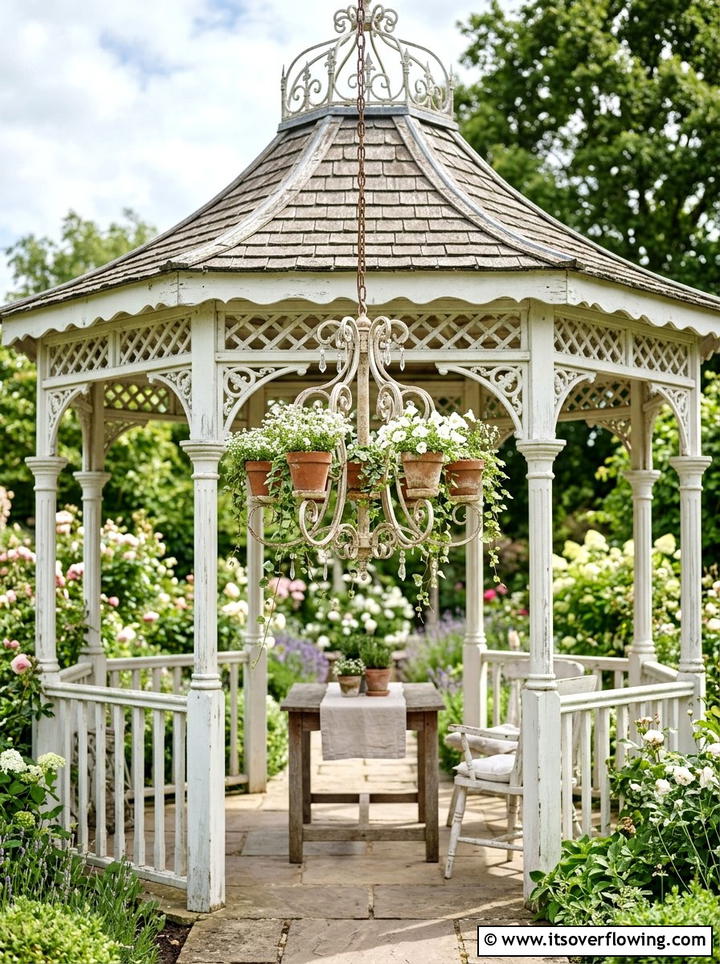
An old, non-functional chandelier can be stripped of its wiring and transformed into an elegant, multi-tiered hanging planter. Replace the light bulb sockets with small terracotta pots or metal cups to hold cascading vines and delicate flowers. When hung from a central point in a gazebo or under a large tree, the chandelier becomes a sophisticated garden centerpiece. This upcycling project blends the grandeur of indoor lighting with the natural beauty of the outdoors. It is a perfect way to add a touch of “shabby chic” elegance to your garden, creating a focal point that feels both luxurious and grounded in nature’s growth.
11. Metal funnel hanging planter
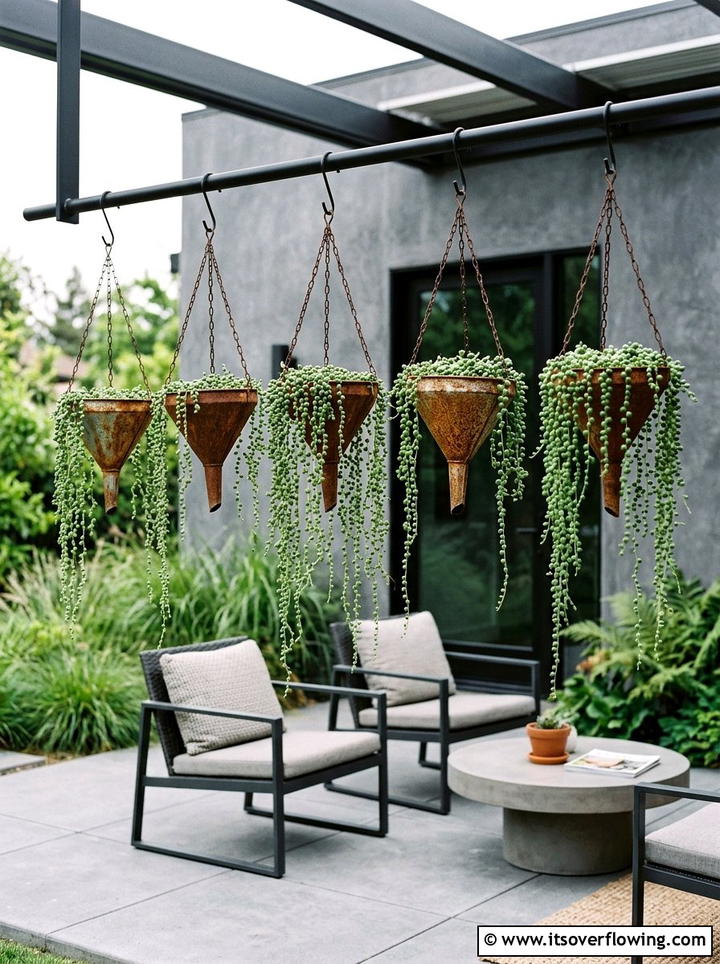
Vintage metal funnels possess a unique industrial shape that makes them perfect for modern, minimalist hanging planters. Their natural cone shape provides excellent drainage through the narrow bottom, which you can plug lightly with a stone or mesh. Use thin wire to hang them from a simple metal rod or a porch overhang. These look best when planted with trailing succulents or delicate string-of-pearls that accentuate the vertical lines of the funnel. The silver or rusted metal finish provides a cool, neutral backdrop that makes the vibrant green of the plants really stand out. This arrangement creates a sleek, contemporary look for any small outdoor area.
12. Woven basket hanging planter
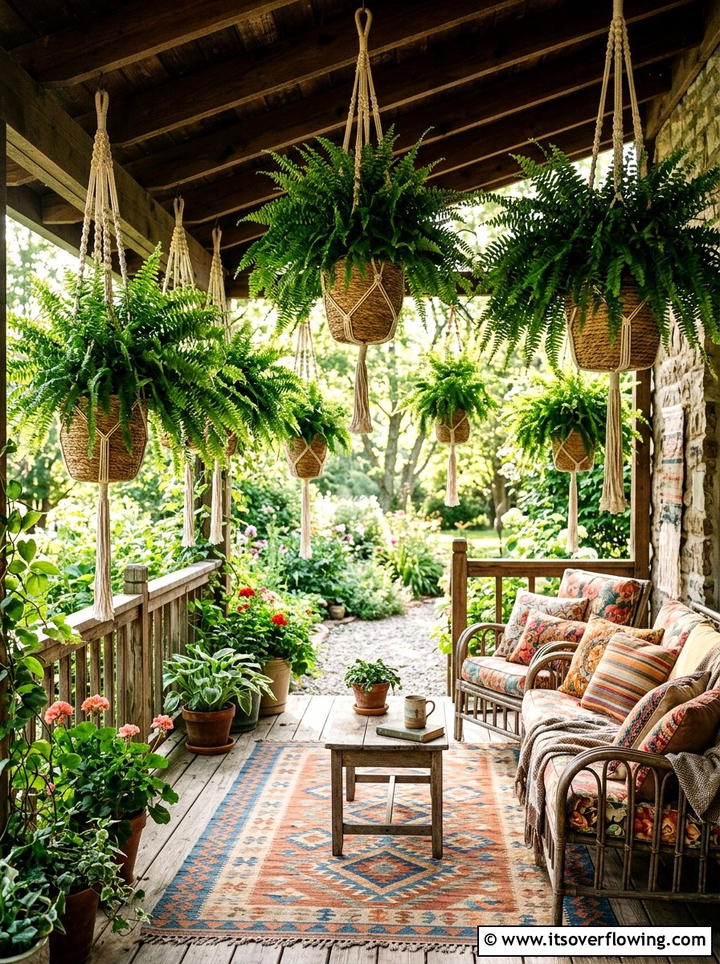
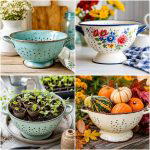
Woven baskets of all shapes and sizes can be repurposed into soft, textured hanging planters that fit perfectly in a bohemian-style garden. Line them with plastic or coco coir to hold the soil and prevent the natural fibers from rotting too quickly. Use thick macramé cords or sturdy jute rope to hang them from hooks on a porch or a garden trellis. The variety in weave patterns and earthy tones adds a warm, organic feel to the space. When filled with overflowing ferns or lush ivy, these baskets create a cozy, jungle-like atmosphere that feels inviting and relaxed, making your garden a true sanctuary.
13. Paint can hanging planter
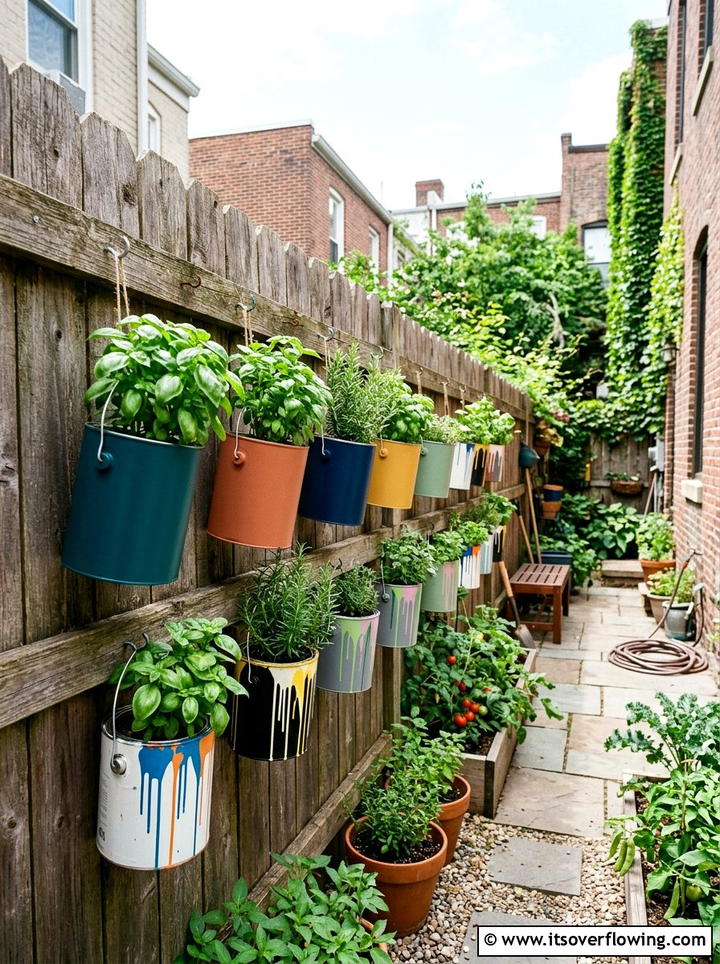
Empty paint cans can be cleaned and repurposed into modern, industrial hanging planters with a simple coat of outdoor paint. For a more “art studio” vibe, you can leave the paint drips on the sides for a colorful, textured look. Punch holes in the sides to attach a wire handle and hang them in a row along a sunny garden wall. These deep containers are excellent for growing larger herbs like basil or even small tomato varieties. Grouping several cans in different sizes creates a structured, rhythmic display that adds a sense of order and modern creativity to a functional backyard or a utility area.
14. Coconut shell hanging planter
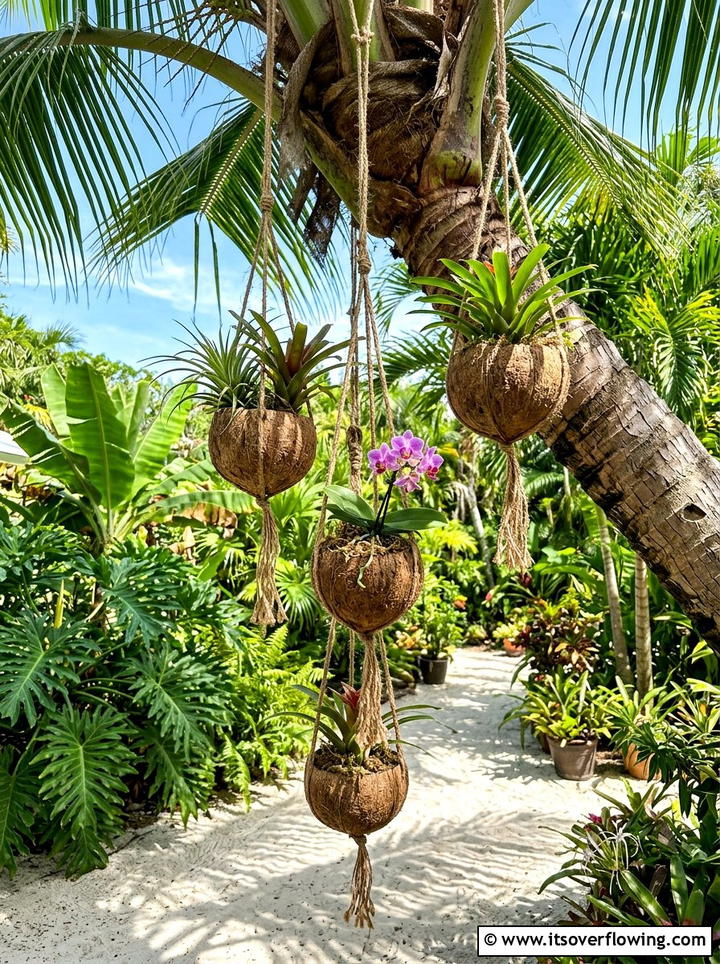
Natural coconut shells provide a sustainable and tropical-looking container for small hanging plants. After cleaning out the fruit, drill three small holes around the rim to attach hanging strings and a few at the bottom for drainage. These are the perfect size for air plants, orchids, or small cacti that don’t require much soil. Hanging several coconut shells at various heights from a low-hanging tree branch creates a relaxed, island-inspired vibe. The rough, brown texture of the shell contrasts beautifully with bright green tropical foliage, bringing a vacation feel to your own backyard garden throughout the warm summer months.
15. Denim pocket hanging planter
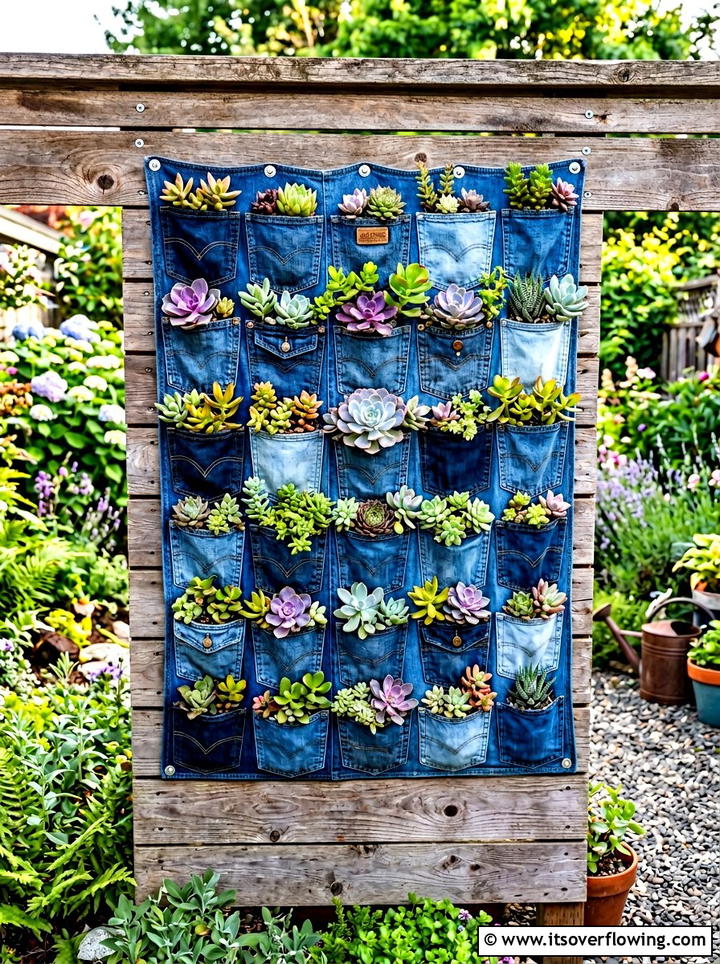
Old pairs of jeans can be turned into a unique vertical garden by using the pockets as small planting pouches. Cut out the pockets, leaving enough fabric to secure them to a wooden board or a wire mesh frame. This “denim wall” can be hung on a fence or a porch wall to hold small succulents or hardy herbs. The blue fabric provides a cool, casual background that highlights the different shapes and colors of the plants. This is a great way to recycle old clothes while creating a soft, textile-based garden feature that adds an unexpected and creative touch to your outdoor living space.
16. Old kettle hanging planter
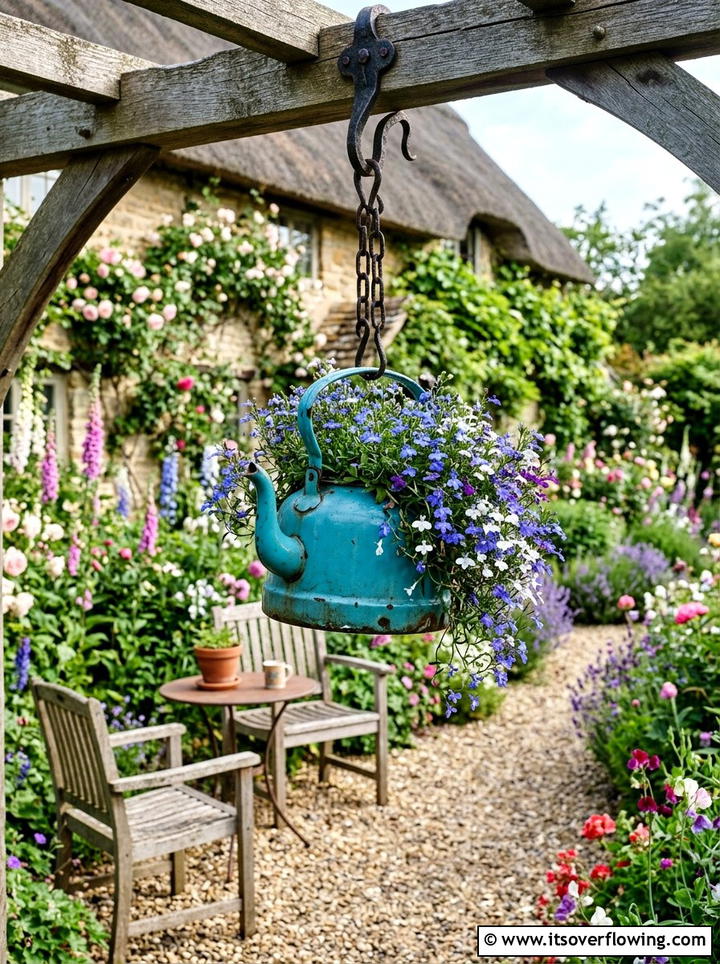
A vintage tea kettle or a large metal coffee pot makes for a charming, oversized hanging planter that anchors a garden corner. The spout provides natural drainage, and the sturdy handle makes it easy to hang from a strong hook. Choose kettles with bright enamel finishes or interesting metallic patinas to add a pop of color or a sense of history to your space. These look wonderful when planted with “spiller” plants like creeping Jenny that can cascade over the sides and around the handle. This setup feels cozy and lived-in, perfect for a garden designed around a comfortable outdoor seating or dining area.
17. Picture frame hanging planter
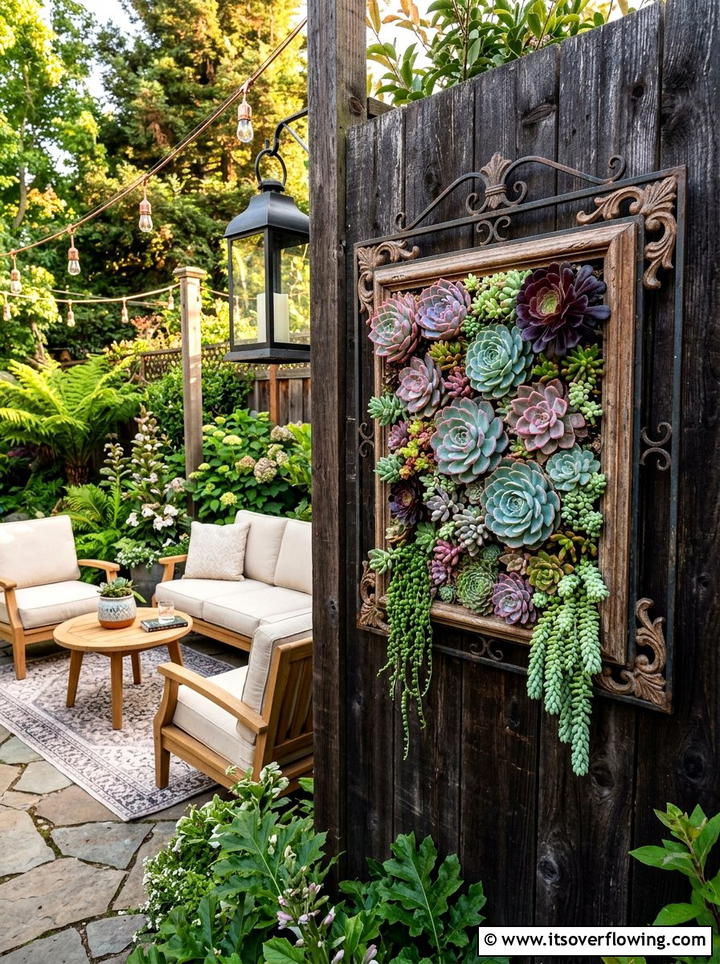
An empty, ornate picture frame can be the border for a stunning “living picture” hanging on your garden wall. By attaching a shallow wooden box with a wire mesh front to the back of the frame, you can plant a variety of colorful succulents. The frame defines the space, turning the plants into a piece of vertical art. Hang this on a protected wall or fence where it can be seen from a seating area. The combination of the structured frame and the organic, growing textures inside creates a sophisticated and artistic garden feature that serves as a beautiful and unique focal point.
18. Enamel mug hanging planter
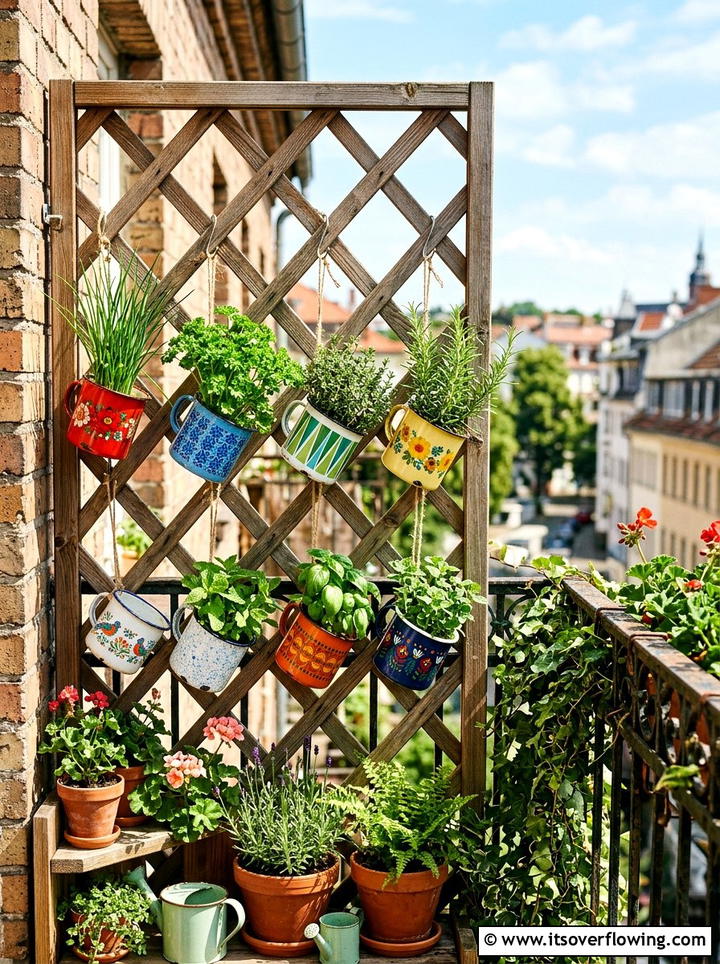
Old enamel mugs are incredibly durable and come in a variety of nostalgic colors and patterns, making them perfect for a small-scale hanging garden. You can hang them by their handles from a series of small hooks on a wooden lattice or a simple horizontal branch. These are ideal for a “taco garden” featuring different types of cilantro, peppers, and small herbs. The compact size of the mugs makes them manageable for even the smallest balconies or kitchen windows. This arrangement adds a cheerful, communal feel to your garden, reminiscent of a cozy campsite or a vintage farmhouse kitchen brought outdoors.
19. PVC pipe hanging planter
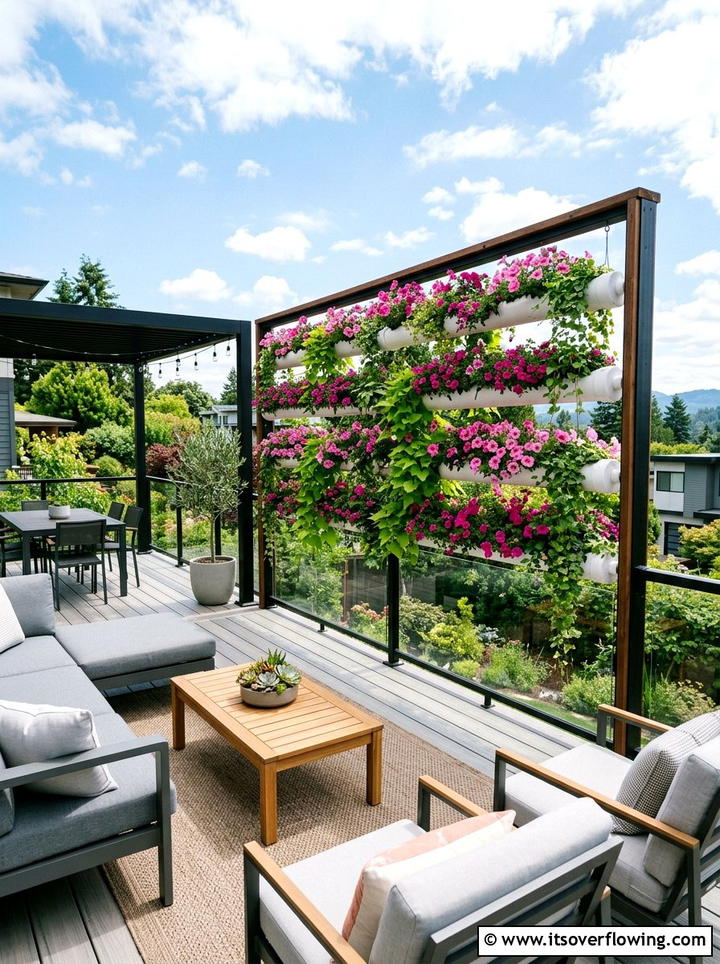
For a sleek and modern vertical garden, sections of PVC pipe can be cut and hung horizontally to create long, floating planter troughs. Paint the pipes a clean white or a bold metallic to hide their industrial origins. Use thin steel cables to stack multiple pipes vertically, creating a “curtain” of greenery that can act as a living privacy screen on a porch. This design is highly efficient for growing strawberries, lettuce, or a variety of trailing flowers. The clean lines and uniform shape provide a contemporary aesthetic that works well with modern architecture and minimalist garden designs, maximizing growing space elegantly.
20. Ladle hanging planter
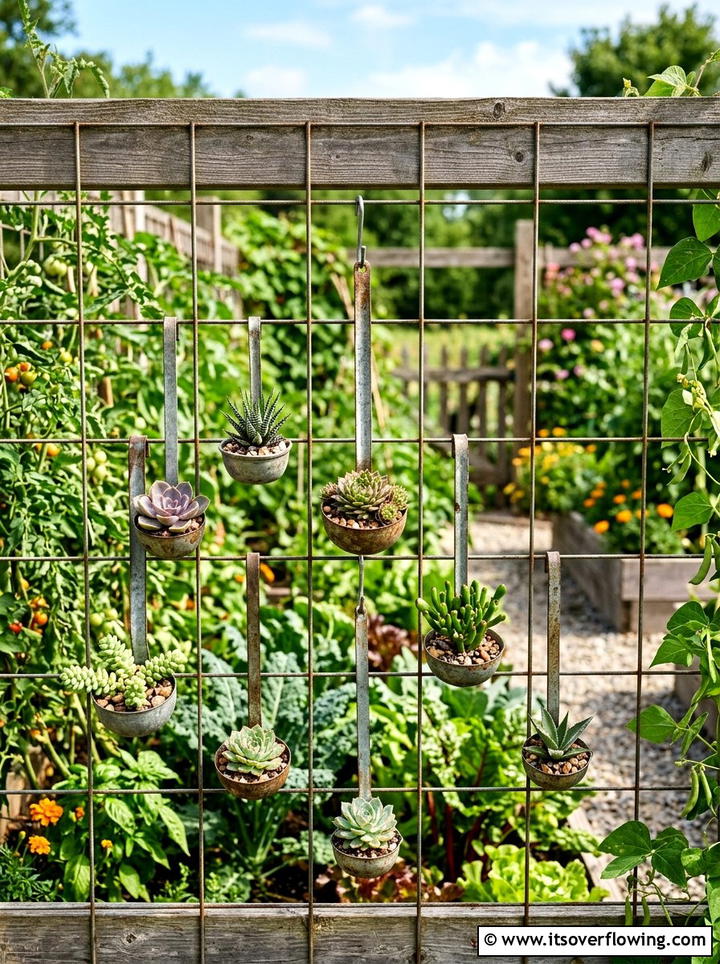
Large kitchen ladles, especially vintage silver or sturdy stainless steel ones, can be repurposed into tiny, elegant hanging planters for individual succulents. Bend the handle to create a hook that can hang over a fence rail, a trellis wire, or a tree branch. These “single-serve” planters look best when grouped together in a cluster, creating a shimmering, metallic garden installation. They are perfect for showing off rare or particularly beautiful succulent varieties that might get lost in a larger pot. This upcycling idea adds a touch of culinary whimsy to the garden, celebrating the beauty of small things in a creative way.
21. Toy truck hanging planter
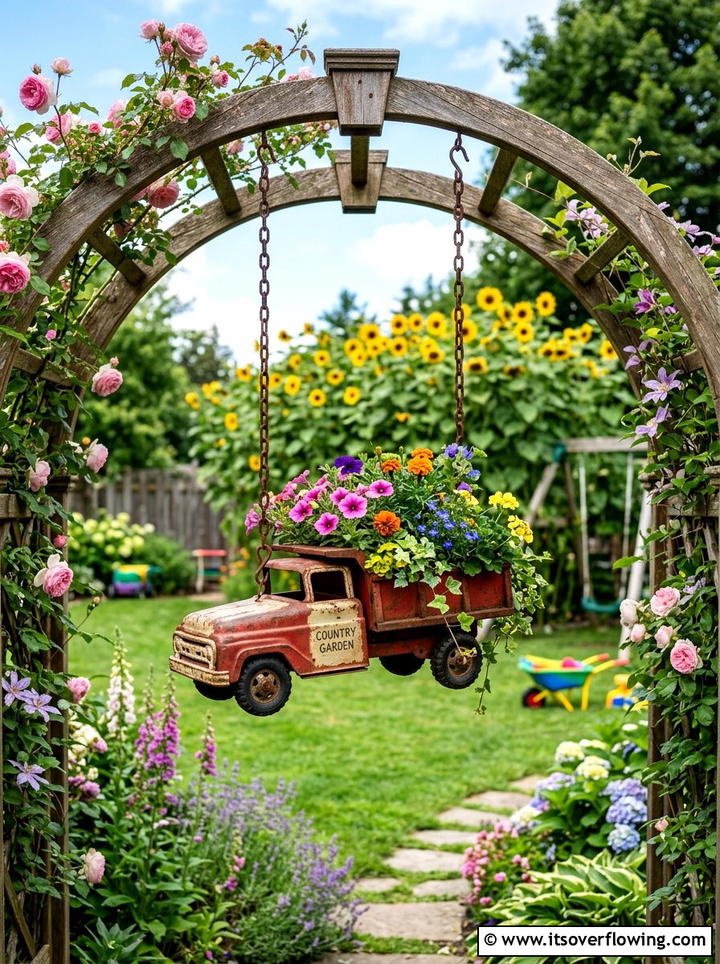
An old metal toy truck, like a classic Tonka, can be converted into a playful hanging planter by using the bed of the truck to hold soil. Use sturdy chains attached to the axles or the frame to hang the truck from a pergola or a large tree. This is a fantastic way to preserve a childhood toy while adding a nostalgic and humorous element to your landscape. Plant the truck bed with hardy succulents or “spilling” flowers that make it look like the truck is hauling a heavy load of blossoms. It is a guaranteed conversation starter and a joyful addition to any family garden.
22. Log hanging planter
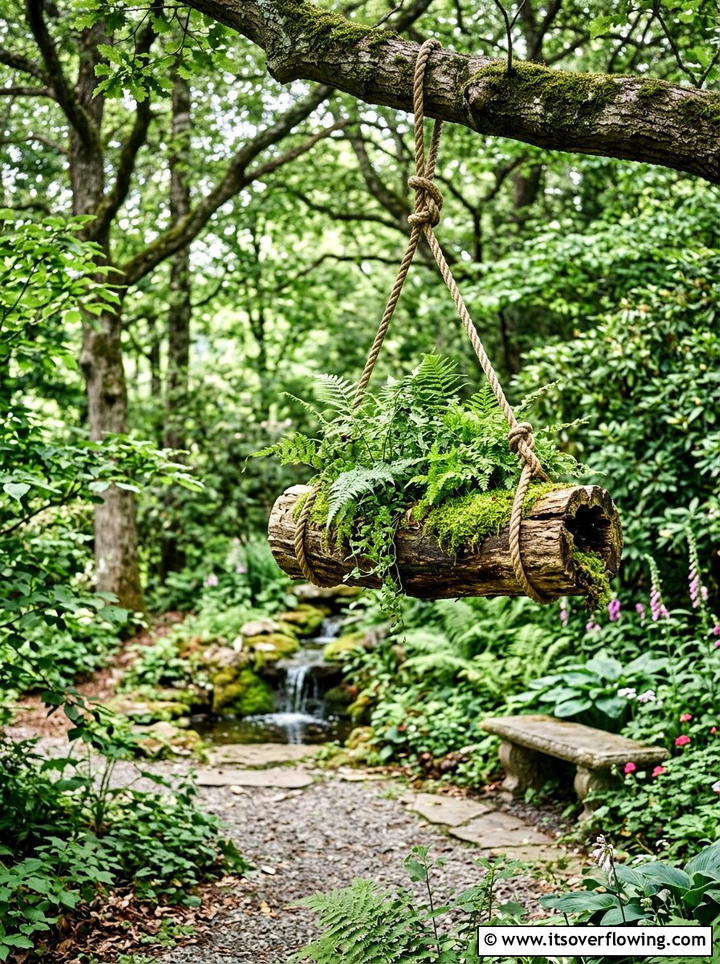
A hollowed-out log or a large piece of interesting driftwood can be transformed into a natural, rustic hanging planter that blends seamlessly with the environment. By carving out a central channel and adding soil, you create a long, organic vessel for forest-dwelling plants like ferns, moss, and woodland flowers. Use thick manila rope to hang the log horizontally from a sturdy branch. This design creates a beautiful “floating forest” effect that adds depth and texture to a shaded garden area. The decaying wood provides a rich environment for certain plants, making it a functional and highly aesthetic choice for nature lovers.
23. Wine bottle hanging planter
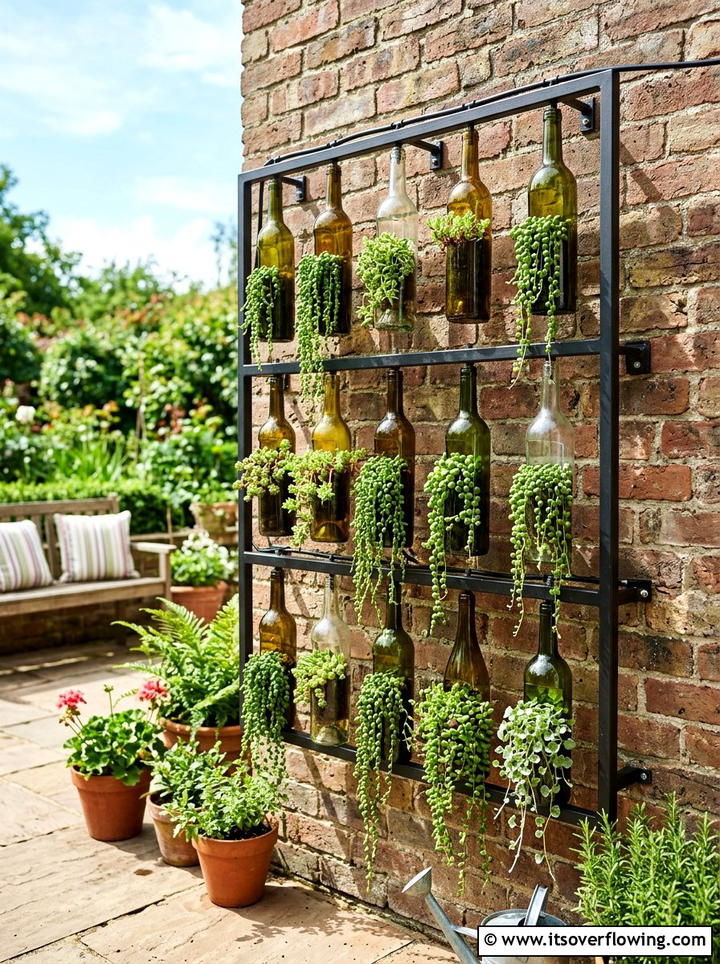
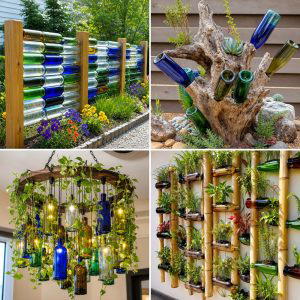
Glass wine bottles can be cut and repurposed into elegant, upside-down hanging planters or vertical troughs. When the bottom is removed, the bottle acts as a self-watering vessel where the neck holds the plant and the upper part holds the reservoir. These look stunning when hung in a row along a sunny window or a porch beam, where the glass can catch and refract the light. The different shades of green, brown, and clear glass add a sophisticated color palette to the garden. This modern upcycling project is perfect for creating a clean, botanical look that feels both environmentally conscious and stylishly refined.
24. Metal bucket hanging planter
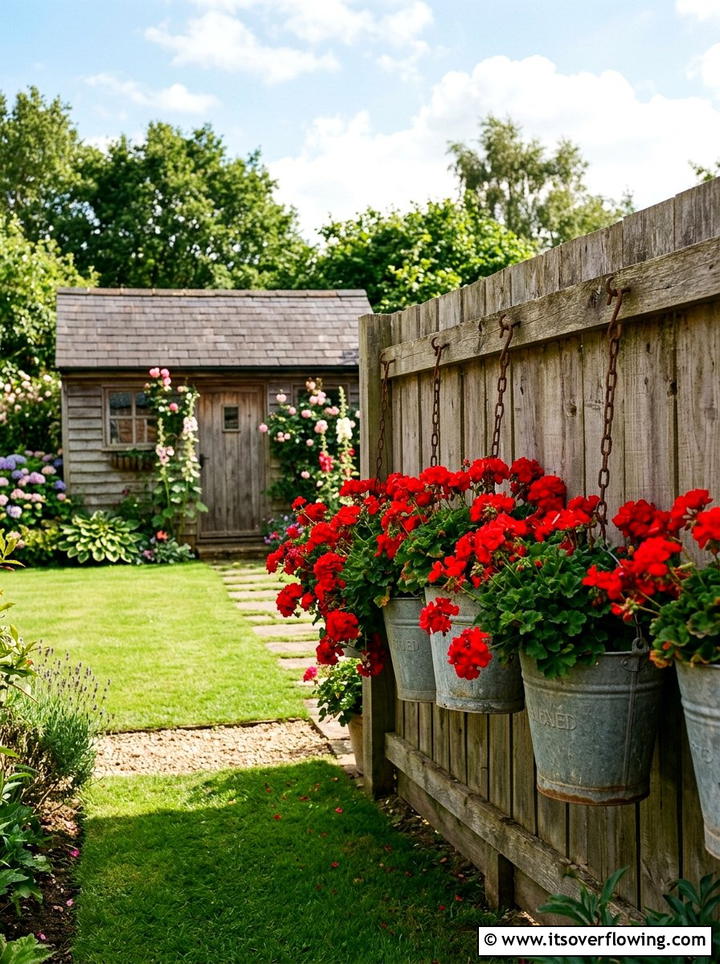
Classic metal buckets in various sizes are the workhorses of the upcycled garden, providing a simple and timeless look for hanging plants. Whether they are galvanized steel or painted in bright colors, these buckets can hold a significant amount of soil for larger plants like geraniums or fuchsias. Hang them from sturdy hooks on a fence or a porch railing to add height and volume to your floral displays. The handles make them easy to move if you need to adjust their sun exposure. This straightforward design adds a traditional, rustic charm to the garden that feels hardworking, honest, and very inviting.
25. Shoe organizer hanging planter
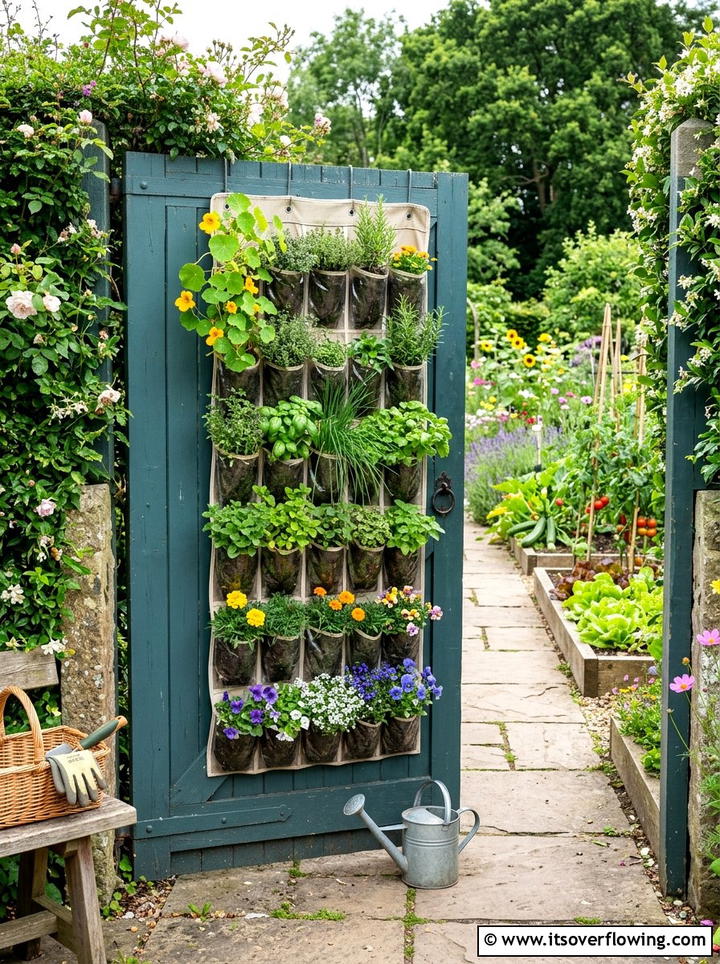
A fabric or plastic over-the-door shoe organizer is one of the most efficient ways to create a massive vertical garden on a budget. Each pocket becomes an individual planting cell, allowing you to grow dozens of different herbs or flowers in a very small footprint. Hang the organizer on a sunny wall or the back of a garden gate to create a dense wall of foliage. This setup is particularly good for creating a “living wall” that can hide an ugly fence or provide a lush backdrop for an outdoor dining area. It is a practical, high-yield gardening solution that turns vertical space into a productive oasis.
Conclusion:
Embracing upcycled hanging planters is a fantastic way to showcase your personal style while practicing sustainable gardening in your own backyard. Each project offers a chance to look at discarded items with fresh eyes, turning what was once trash into a functional piece of garden art. By utilizing vertical space, you can grow more flowers, herbs, and succulents without cluttering your ground area. This approach not only saves money but also creates a garden that tells a story and sparks conversation with every visitor. Start small with one or two projects and watch as your outdoor area transforms into a vibrant, eco-friendly sanctuary filled with color and life.

Related posts:
 25 Upcycled Garden Ideas With Succulent Planters to Try
 25 Upcycled Garden Ideas With Ladder Shelves to Try
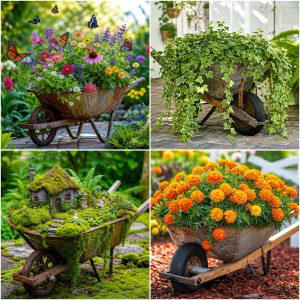 25 Upcycled Garden Ideas With Old Wheelbarrows to Try
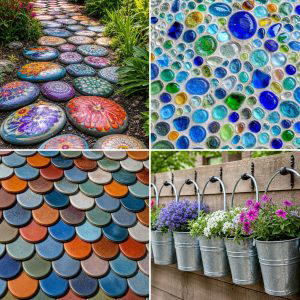 25 Upcycled Garden Ideas With Pathway Markers to Try
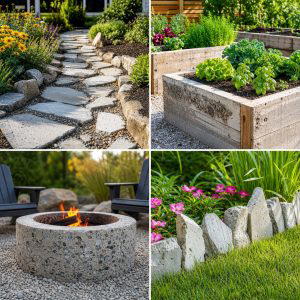 25 Upcycled Garden Ideas With Concrete Scraps To Try
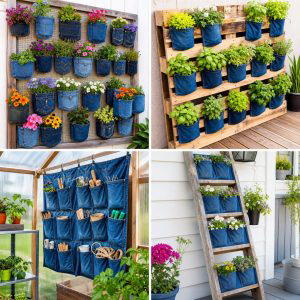 25 Upcycled Garden Ideas With Denim Pockets for Clever Planters
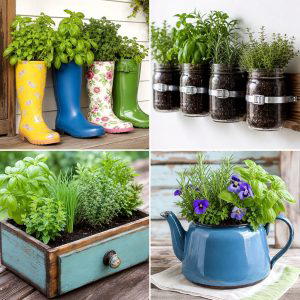 25 Upcycled Garden Ideas With Herb Planters This Weekend
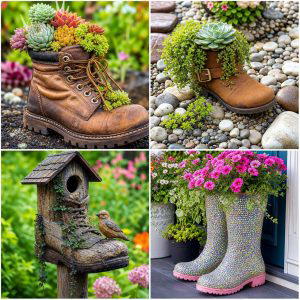 25 Upcycled Garden Ideas With Old Boots for Playful Planters
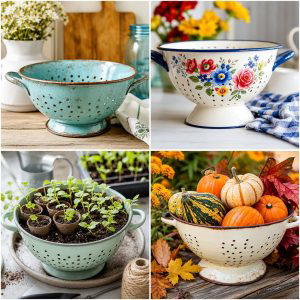 25 Upcycled Garden Ideas With Old Colanders for Fun Planters
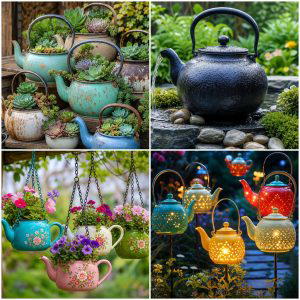 25 Upcycled Garden Ideas With Old Kettles for Cute Planters
 25 recycled garden ideas with hanging bottle planters: DIY
 25 recycled garden ideas with recycled wood art to Try