
Creating a sustainable outdoor space often starts with finding new purposes for everyday items that might otherwise end up in a landfill. Upcycling is a wonderful way to personalize your garden while keeping costs low and helping the environment at the same time. Herbs are the perfect plants for these projects because they generally require less soil and can thrive in various small containers. Whether you have a sprawling backyard or a tiny apartment balcony, these creative solutions will help you grow fresh seasonings right at your fingertips. By reimagining old household objects as functional planters, you add unique character and a touch of rustic charm to your home exterior.
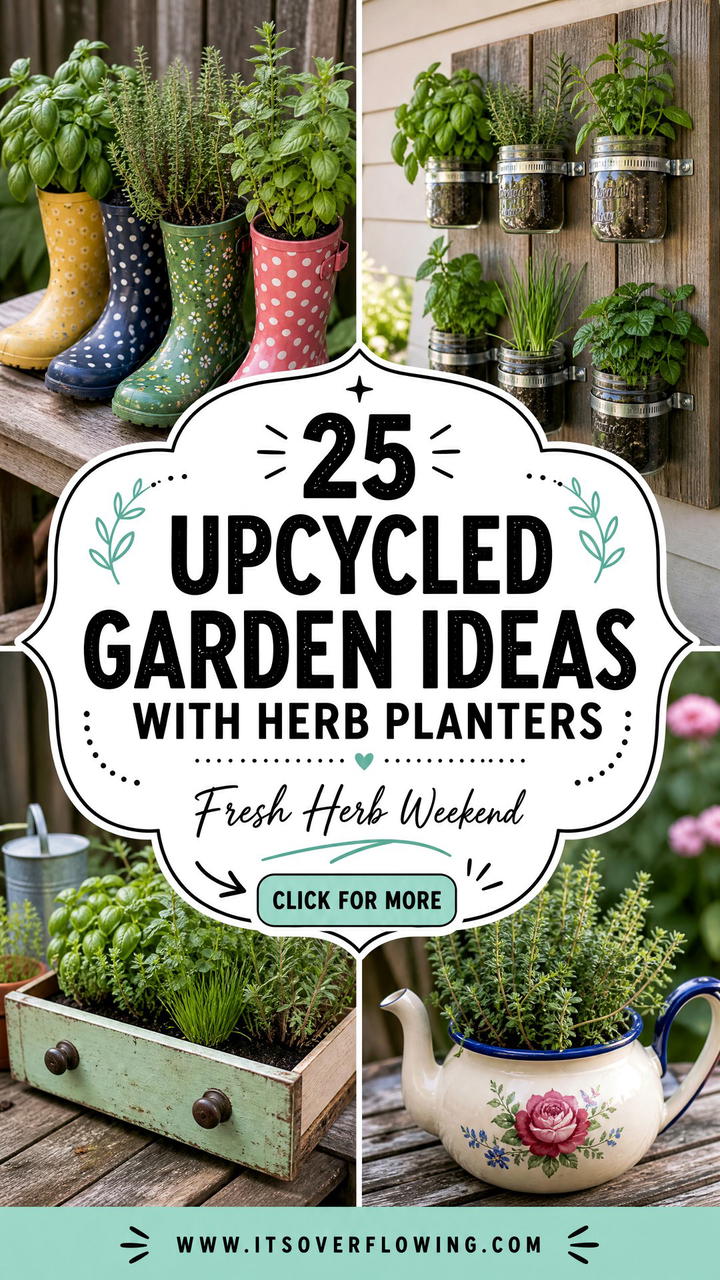
1. Vertical Pallet Planter
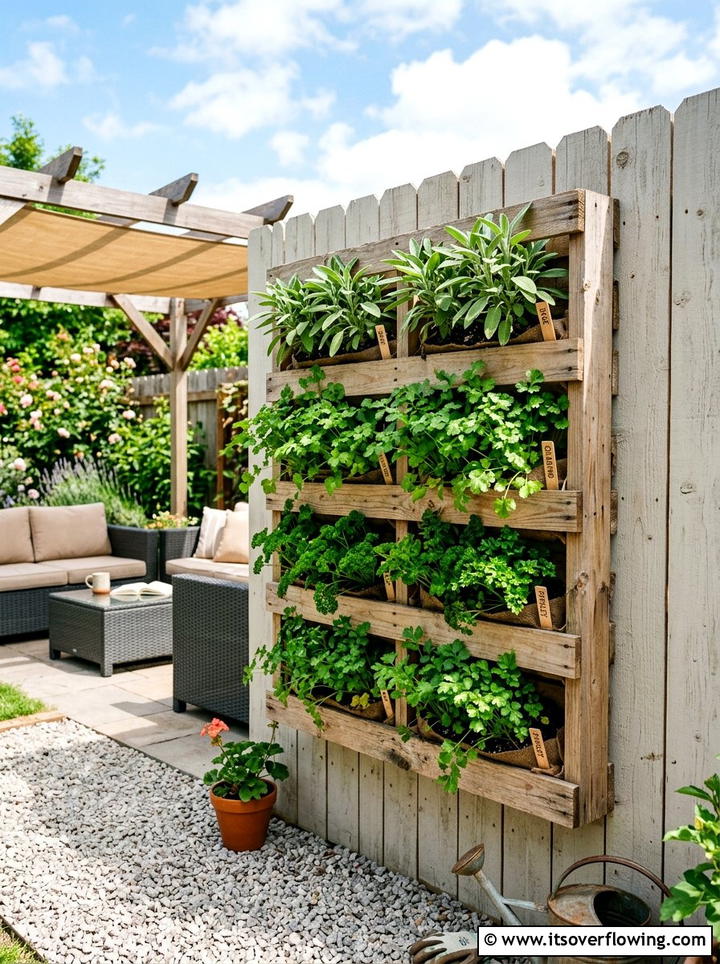
Transforming a discarded wooden pallet into a thriving herb station is one of the most popular eco-friendly projects for modern gardeners. Do you have a small patio or balcony that lacks floor space? This vertical solution allows you to grow various herbs like basil, thyme, and mint without cluttering your walking area. You can sand down the wood and paint it with weather-resistant colors to match your outdoor decor. By stapling landscape fabric inside the slats, you create deep pockets that hold soil and moisture effectively. It serves as a beautiful living wall that provides fresh ingredients for your kitchen all season long while adding a rustic, natural charm.
2. Old Ladder Herb Stand
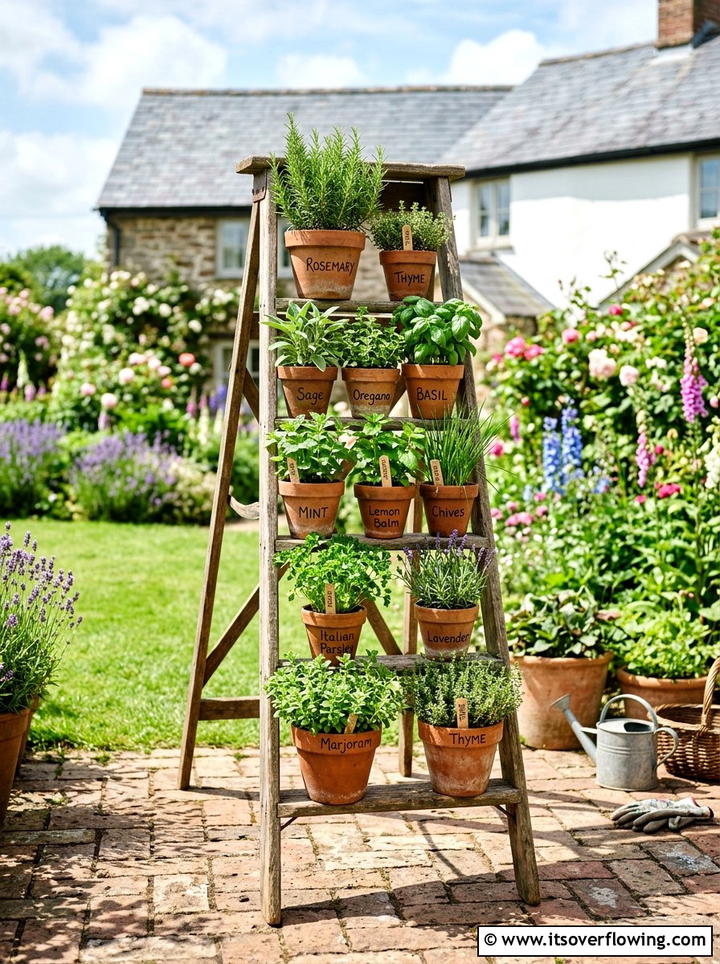
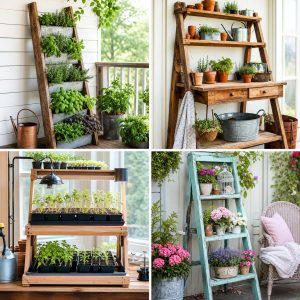
Have you ever wondered what to do with a rickety wooden ladder leaning in your garage? Turning an old step ladder into a multi-tiered herb display is a brilliant way to use vertical height in your garden. You can place different sizes of pots on each step to create a cascading green effect. This setup is particularly useful for organizing herbs by their sunlight needs, placing sun-loving rosemary at the top and shade-tolerant parsley lower down. It creates a stunning focal point on a porch or near a back door. The weathered wood texture provides a vintage aesthetic that fits perfectly with a farmhouse or cottage garden style.
3. Hanging Colander Planter
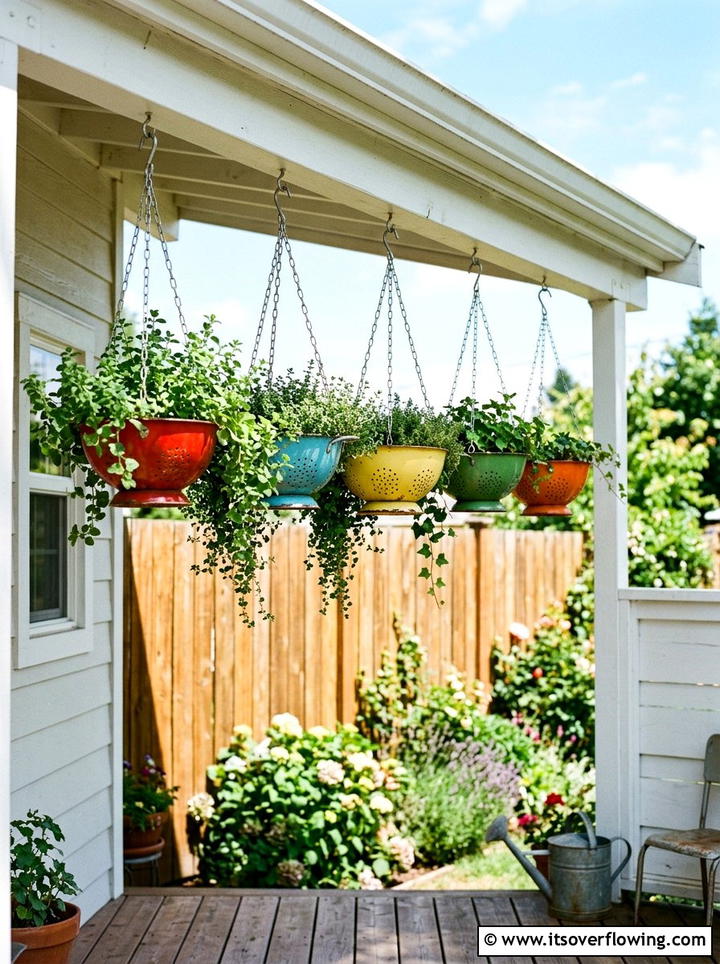
Metal colanders make excellent hanging baskets because they come with built-in drainage holes that prevent your herbs from getting waterlogged. You can find colorful vintage enamel colanders at thrift stores to add a pop of brightness to your outdoor space. Simply attach sturdy chains or twine to the handles and hang them from a porch ceiling or a sturdy tree branch. These planters are perfect for low-growing herbs like oregano or trailing varieties like creeping thyme. Because they are elevated, they stay away from ground-dwelling pests and receive plenty of air circulation. It is an affordable and quirky way to introduce functional greenery to any sunny overhead area.
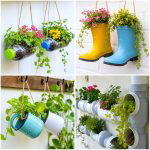
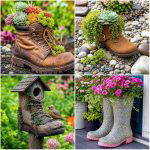
4. Rain Boot Herb Garden
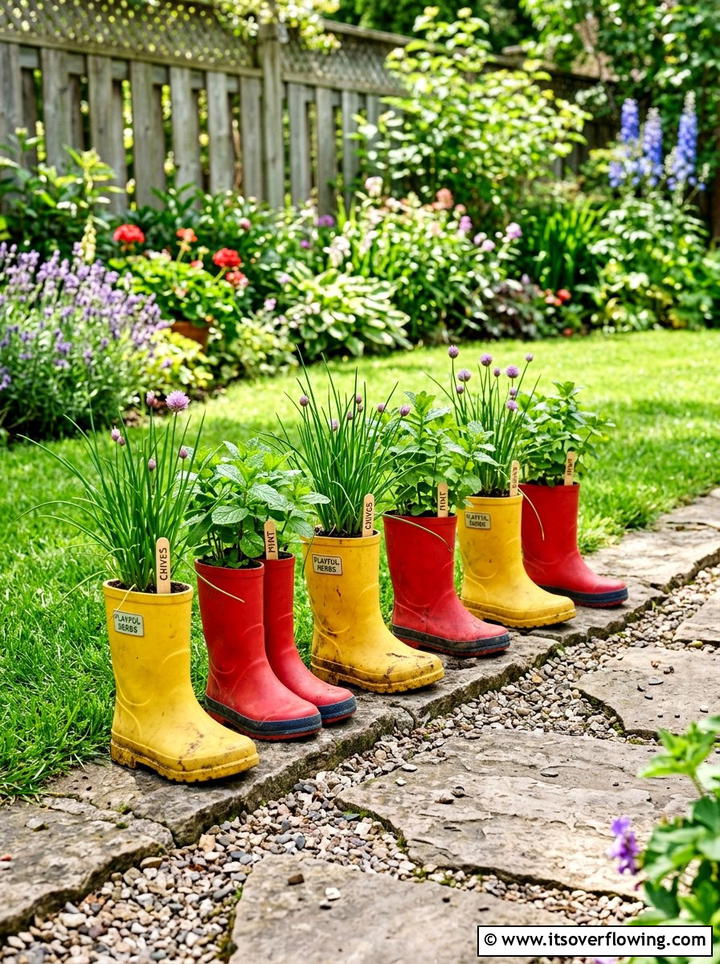
Outgrown or leaky colorful rubber rain boots can find a second life as whimsical planters for your backyard. Kids’ boots are especially charming and can be lined up along a garden path or mounted directly onto a wooden fence. Make sure to poke a few drainage holes in the bottom soles to ensure your plants stay healthy. Filling them with fragrant herbs like lavender or chives adds a playful touch to your landscaping. This project is a fantastic way to involve children in gardening while teaching them about recycling. The bright colors of the boots contrast beautifully with the deep green hues of the fresh growing herbs.
5. Wood Crate Planter
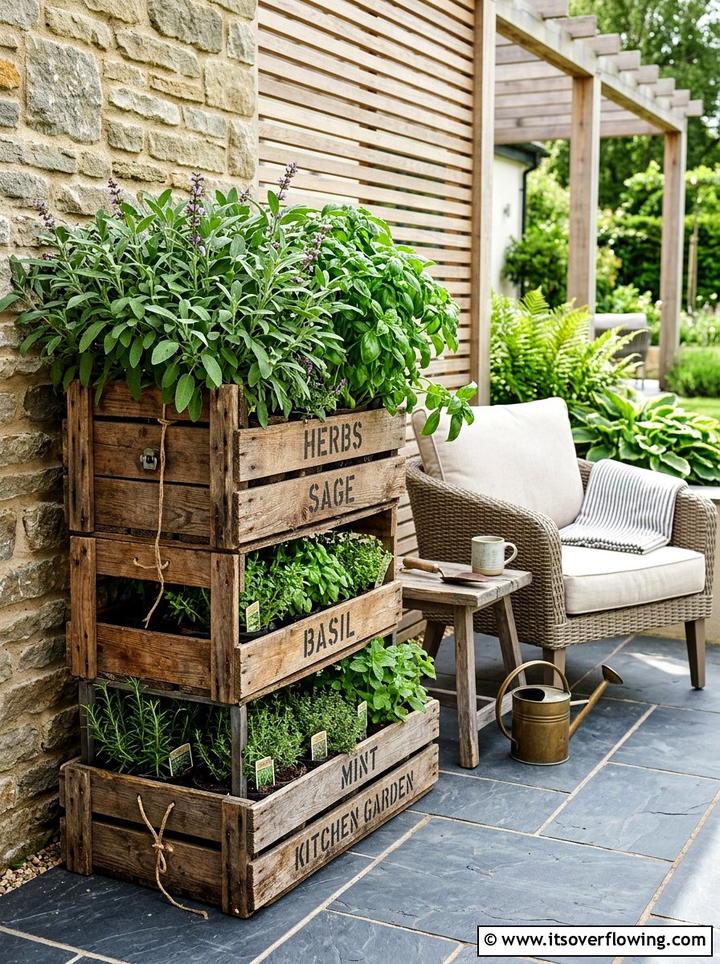
Stacking old wooden crates is a simple yet effective way to build a modular herb garden that can grow with your needs. You can arrange them in a corner to create a tiered look or line them up to define a garden border. These crates provide ample depth for herbs with larger root systems, such as sage or mint. To protect the wood from rotting too quickly, it is helpful to line the inside with plastic or landscape fabric before adding soil. The natural wood grain offers a timeless look that complements any outdoor furniture. It is a sturdy and practical choice for creating an organized herb zone.
6. Wall Mason Jars
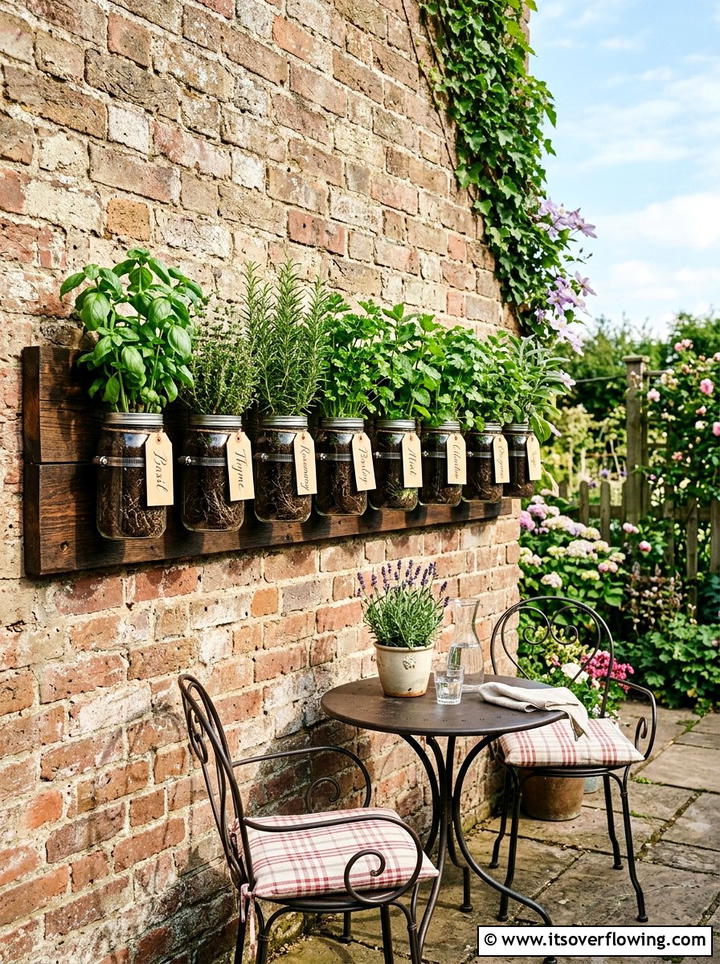
Using glass mason jars for herbs is a classic DIY project that works exceptionally well for small-scale kitchen gardening. You can mount these jars to a piece of reclaimed wood using pipe clamps to create a beautiful wall-mounted display. Since glass jars do not have drainage holes, it is essential to add a layer of small pebbles at the bottom to catch excess water. These clear containers allow you to see the root growth and soil moisture levels easily. They look particularly striking when installed on a sunny kitchen wall or a sheltered patio. This method keeps your herbs organized, accessible, and adds a modern farmhouse feel.
7. Galvanized Bucket Planter
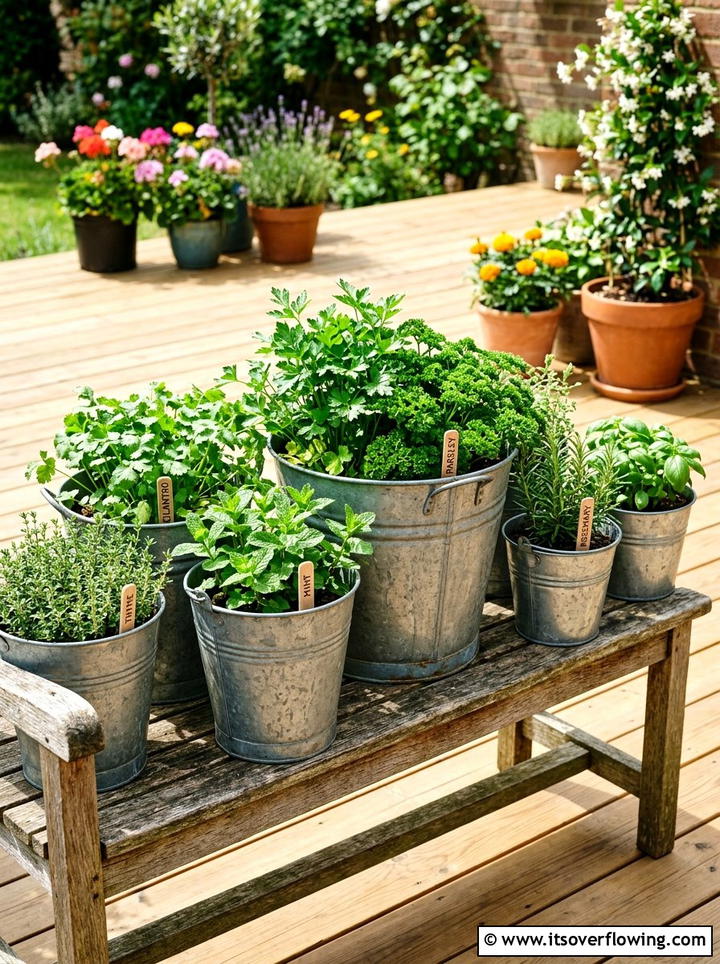
Galvanized metal buckets are incredibly durable and provide an industrial or rustic vibe to your outdoor herb collection. You can use large buckets for a single expansive herb bush or cluster several small pails together on a wooden bench. Their reflective surface helps keep the soil cool during hot summer days, which is beneficial for many delicate herb varieties. Drilling holes in the bottom is necessary for drainage, but the sturdy metal will last for many years in various weather conditions. These buckets are easy to move around, allowing you to chase the sunlight as the seasons change throughout the year in your backyard.
8. Recycled Plastic Bottle Garden
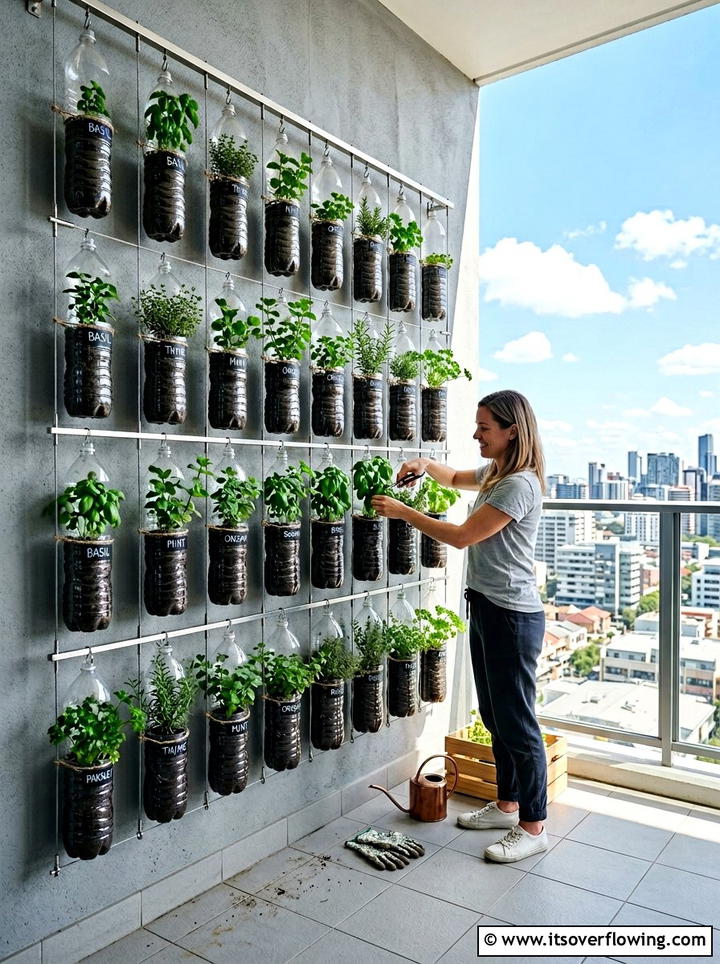
If you want to reduce your plastic waste, consider building a vertical herb garden using empty soda or water bottles. By cutting an opening in the side and stringing them together with heavy-duty twine, you can create a space-saving hanging garden. This method is perfect for apartment dwellers with limited balcony space who want to grow their own cilantro or dill. The clear plastic allows sunlight to reach the soil from all angles, promoting healthy growth. It is a very low-cost project that demonstrates how everyday trash can be converted into a functional food source. It looks best when hung against a plain wall.
9. Old Drawer Herb Garden
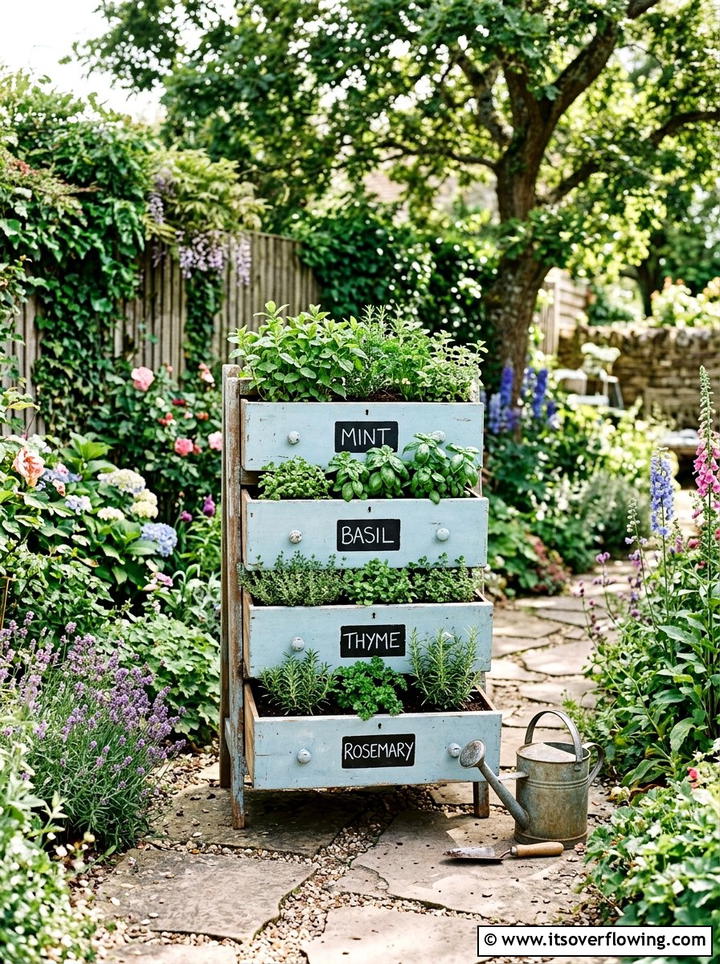
Repurposing drawers from a discarded dresser is a creative way to create wide, shallow planters that are perfect for herbs. You can stack them in a staggered fashion to create a mini-terrace effect in your garden. Painting the drawer fronts with chalkboard paint allows you to label each herb clearly, making it easy to identify your basil from your Thai basil. These planters provide plenty of surface area for planting a variety of different herbs in one place. Using old drawers adds a sense of history and personality to your outdoor space. It is a wonderful way to save old furniture from the local landfill.
10. Metal Tea Tin Planter
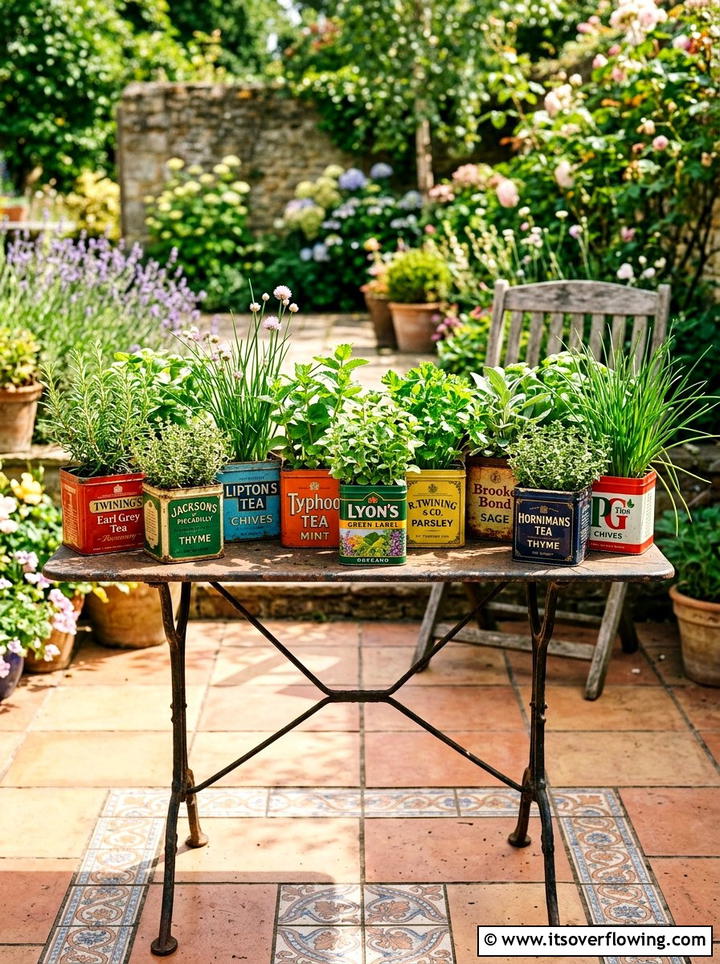
Vintage tea tins often feature beautiful graphics and colors that make them perfect decorative containers for small herbs. These small tins fit perfectly on a sunny windowsill or a small patio table for easy access while cooking. Since they are smaller, they are ideal for herbs that do not require much space, like chives or thyme. You can group several tins together to create a colorful and eclectic centerpiece for your outdoor dining area. The metal protects the roots, while the unique designs serve as an instant conversation starter for guests. It is a simple way to bring a touch of nostalgia into your modern garden.
11. Painted Tire Planter
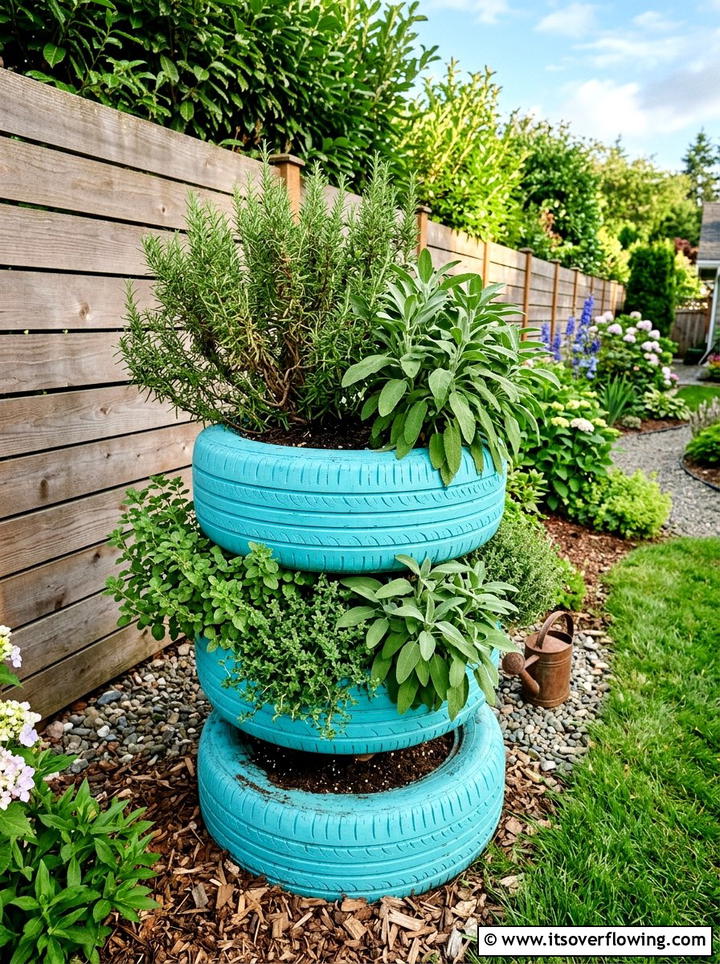
Old tires are often difficult to dispose of, making them an excellent candidate for a large-scale upcycled herb garden project. By stacking two or three tires and painting them in bright, cheerful colors, you create a substantial raised bed. This height makes it much easier to tend to your herbs without having to bend down too far. Tires are extremely weather-resistant and provide a large volume of soil for expansive herbs like rosemary or large sage bushes. They work well in a backyard corner or as part of a playful playground garden. This approach turns an industrial eyesore into a vibrant and productive part of your home.
12. Gutter Herb Garden
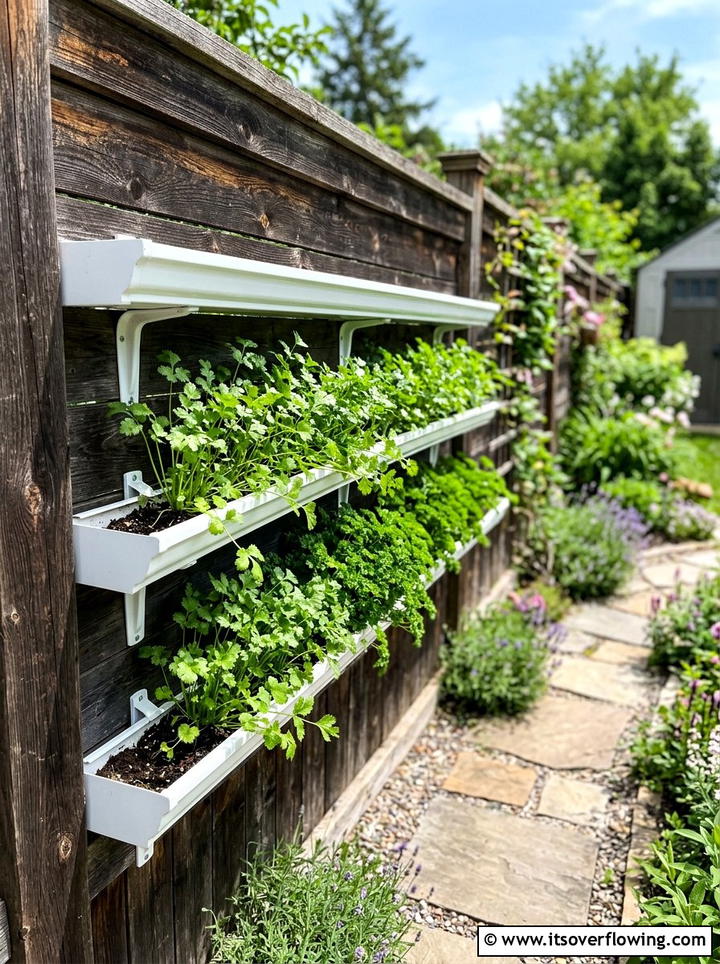
Installing sections of rain gutters along a fence or wall creates a sleek and modern horizontal herb garden. This system is perfect for growing leafy herbs that have shallow root systems, such as lettuce or cilantro. Gutters are lightweight and easy to install, making them a great choice for long, narrow spaces that are otherwise unused. You can paint them to match your house trim or leave them in their original metallic finish for a clean look. They provide a very organized appearance and keep your herbs high off the ground, away from many common garden pests. It is a smart and very efficient use of space.
13. Concrete Block Planter
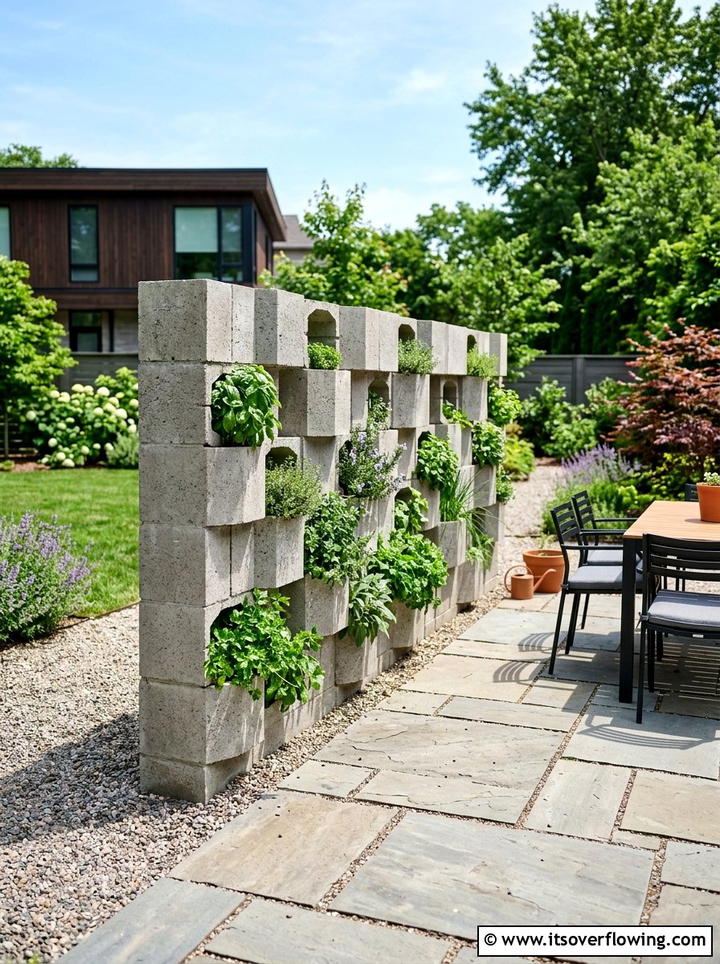
Cinder blocks are inexpensive and offer a modular way to build a custom herb garden wall in your backyard. Each hole in the block serves as an individual planting pocket, allowing you to keep invasive herbs like mint contained. You can stack the blocks in various configurations to create a functional privacy screen or a decorative border. Painting the exterior of the blocks with geometric patterns or solid colors can transform their industrial look into something very artistic. The concrete retains heat well, which can help your herbs through cooler nights. It is a permanent and very sturdy solution for a dedicated outdoor herb growing area.
14. Vintage Birdcage Planter
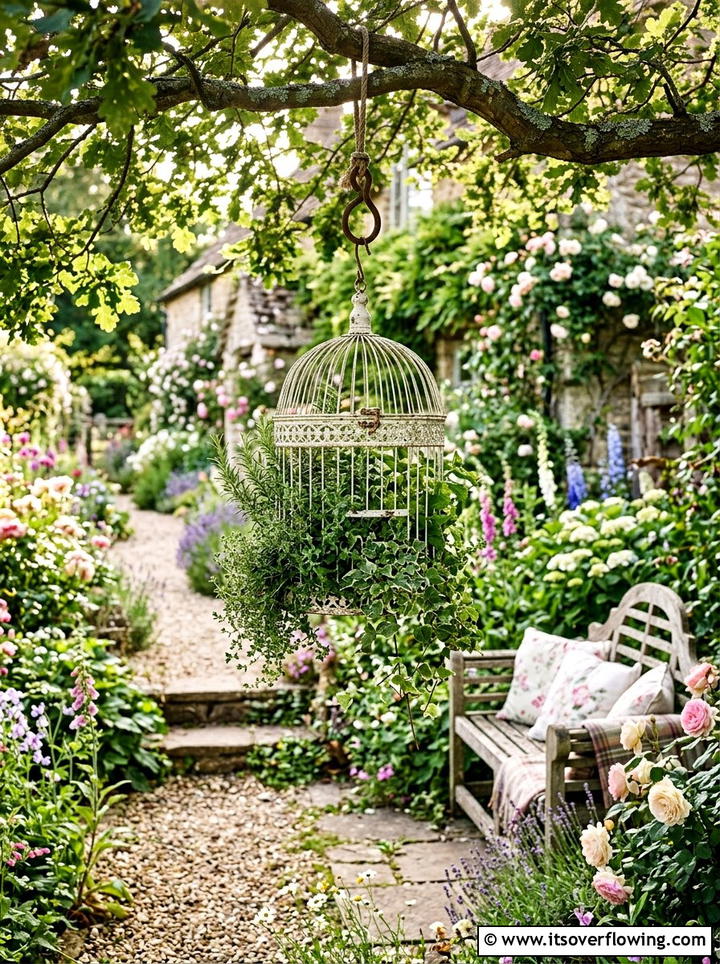
An old decorative birdcage can be transformed into a stunning and unique hanging planter for your favorite aromatic herbs. By lining the bottom with coco liner or moss, you can create a secure base for the soil and plants. The wire bars allow herbs like thyme or oregano to poke through and trail down the sides beautifully. This setup protects your plants from larger birds or pets while adding a romantic, Victorian touch to your porch. It is a perfect focal point for a garden corner or a balcony. The intricate metalwork of the cage contrasts elegantly with the soft, organic shapes of the growing herbs.
15. China Teacup Herb Pot
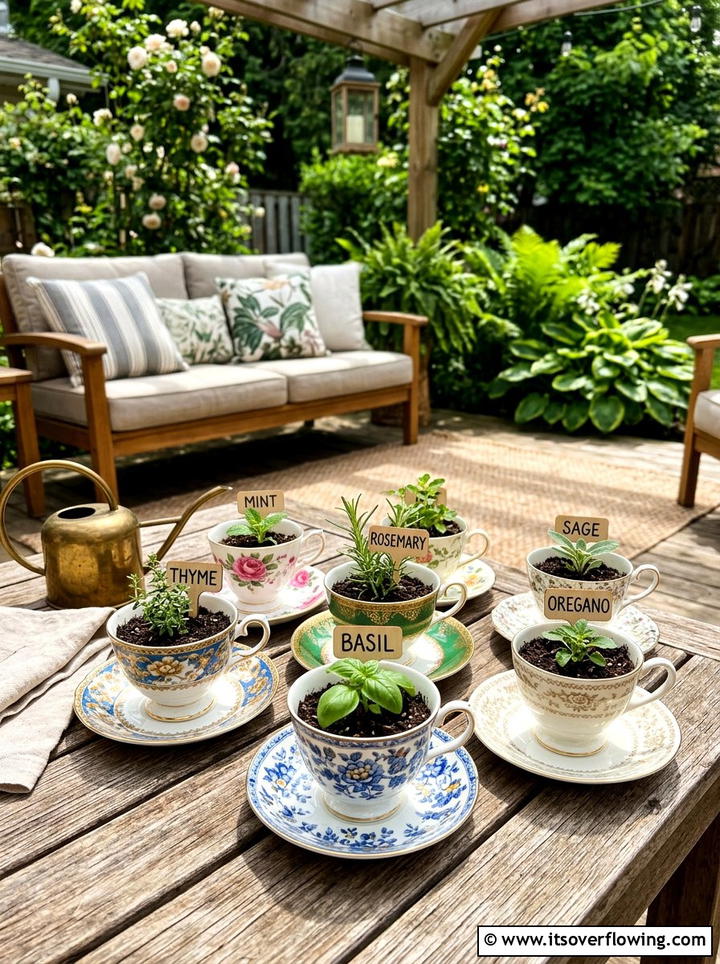
Using mismatched china teacups for small herbs is a delightful way to create a “tea garden” on your patio table. These dainty containers are perfect for slow-growing herbs or for starting seeds before transplanting them into larger pots. You can find beautiful cups at garage sales or thrift shops for very little money. While they are small, they add a refined and charming aesthetic to any outdoor seating area. They also make wonderful handmade gifts for friends who enjoy cooking with fresh ingredients. It is a great way to display delicate patterns and colors while enjoying the practical benefits of having fresh herbs nearby.
16. Metal Coffee Tin Planter
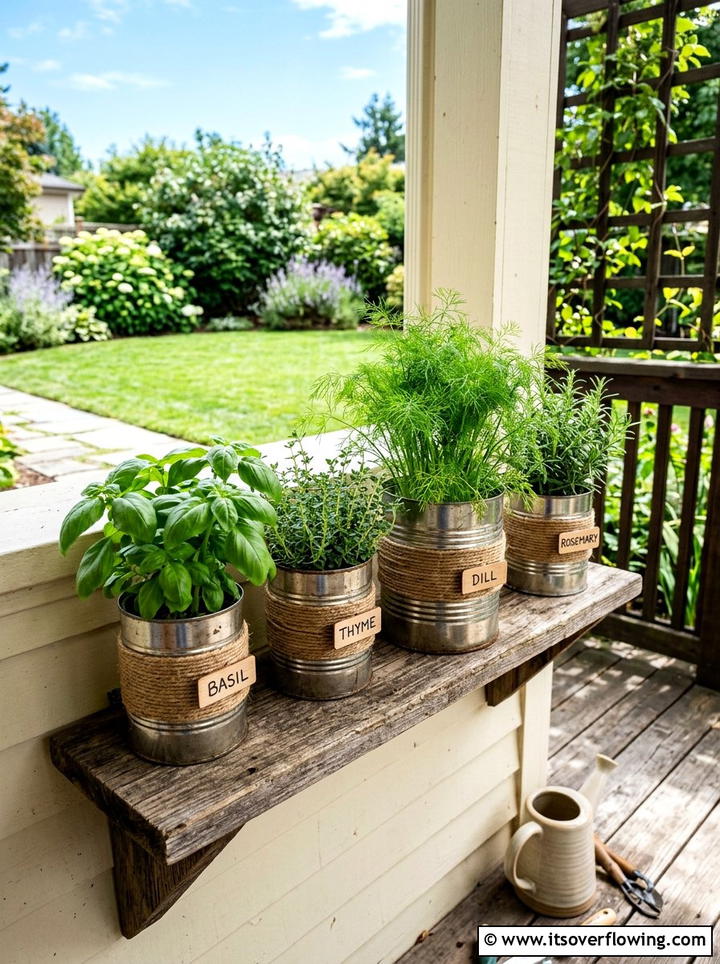
Large coffee tins are sturdy, plentiful, and can be easily decorated to become stylish containers for your herb collection. You can wrap them in twine, paint them, or even use contact paper to give them a completely new look. These tins are deep enough to support the healthy growth of herbs like basil or parsley. They look great when lined up on a shelf or grouped together on a plant stand. Because they are lightweight, they are easy to move if the weather turns bad or if you want to change your decor. It is a simple and cost-effective way to maintain a very productive herb garden.
17. Wicker Basket Herb Garden
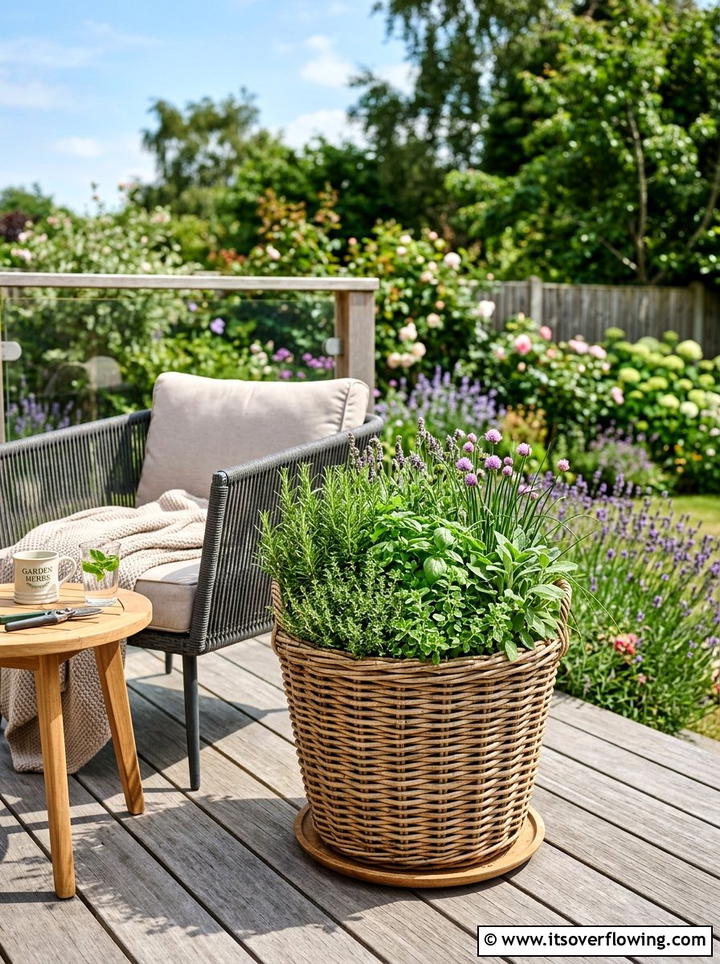
Old wicker baskets provide a natural and textured look that blends seamlessly with any garden environment. You can line these baskets with plastic to hold the soil and moisture, ensuring the wicker stays dry and lasts longer. They are perfect for creating a portable herb garden that you can bring inside during frost or heavy rain. The woven material allows for some breathability for the roots, which many herbs appreciate. Whether it is a large laundry basket or a small picnic basket, the organic feel adds warmth to your patio. It is a lovely way to repurpose items that might have lost their original structural integrity.
18. Enamel Teapot Planter
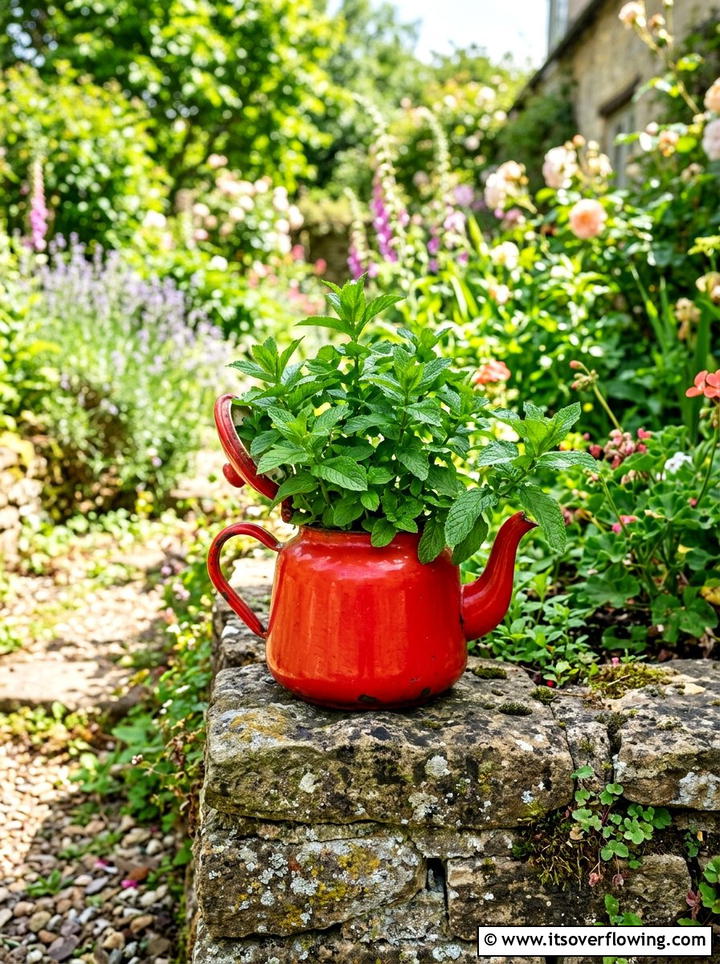
An old enamel teapot makes a quirky and functional planter that adds a touch of farmhouse charm to your herb garden. The spout provides built-in overflow drainage, and the handle makes it easy to reposition the plant as needed. These pots are often found in bright whites, blues, or reds, providing a classic vintage look. They are the perfect size for a single, lush herb plant like mint or chives. Placing a teapot planter on an outdoor side table creates a cozy and lived-in feel for your garden. It is a creative way to use kitchenware that is no longer safe for boiling water or serving tea.
19. Repurposed Chair Planter
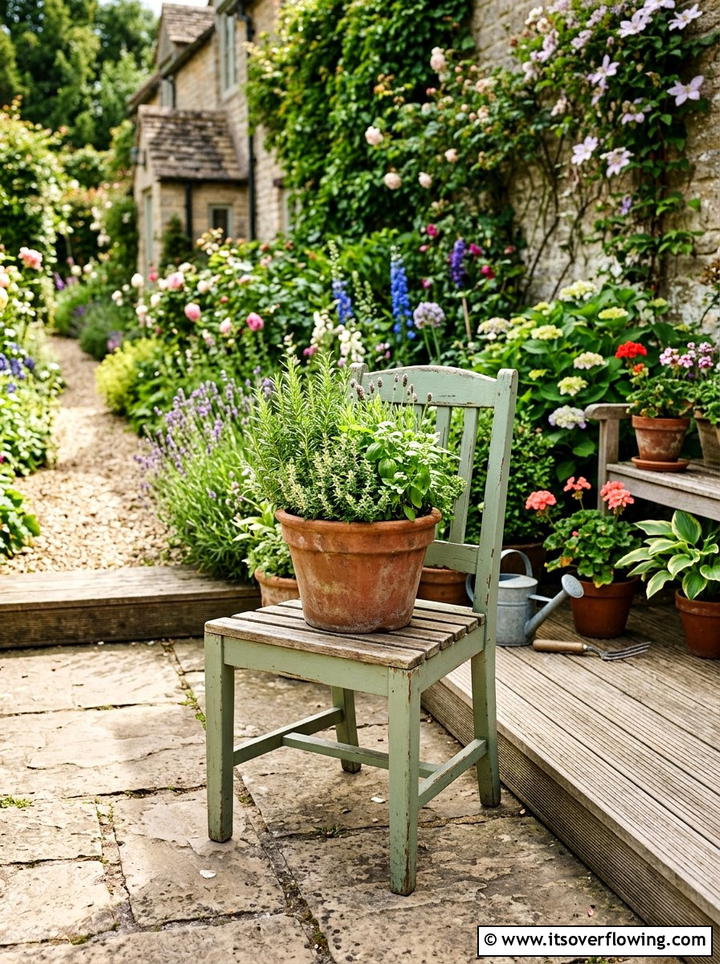
Turning an old wooden chair with a broken seat into a plant stand is a creative way to add height to your garden. By removing the seat and replacing it with a large pot or a custom wooden box, you create a throne for your herbs. This elevates the plants, making them a focal point and easier to reach for harvesting. You can paint the chair a bold color to make it stand out against the green backdrop of your yard. It is a fantastic way to rescue a piece of furniture and turn it into a piece of living art. The structure provides a sturdy base for heavy planters.
20. Rustic Wheelbarrow Planter
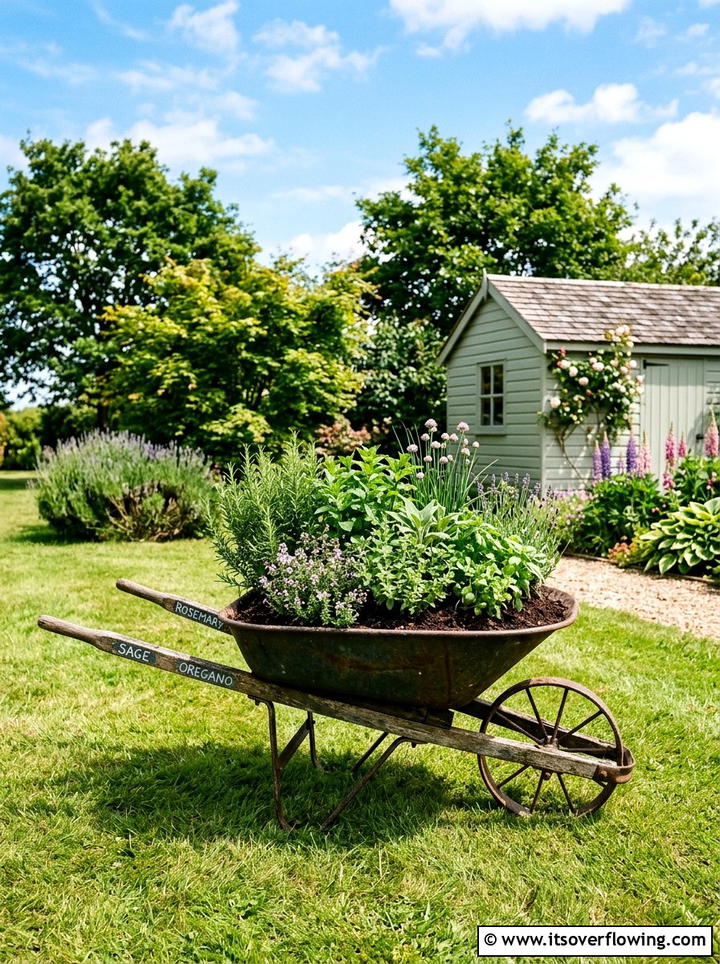
An old metal or wooden wheelbarrow that is no longer fit for heavy labor can become a stunning mobile herb garden. Filling the basin with rich soil allows you to plant a large variety of herbs in one place, creating a miniature ecosystem. The best part is that you can move the wheelbarrow around your yard to follow the sun or move it out of the way for gatherings. It adds a nostalgic, hardworking feel to your landscape while providing a massive amount of fresh produce. This large-scale planter is ideal for creating a lush, overflowing display of fragrant greens and colorful edible flowers.
21. Old Shutter Planter
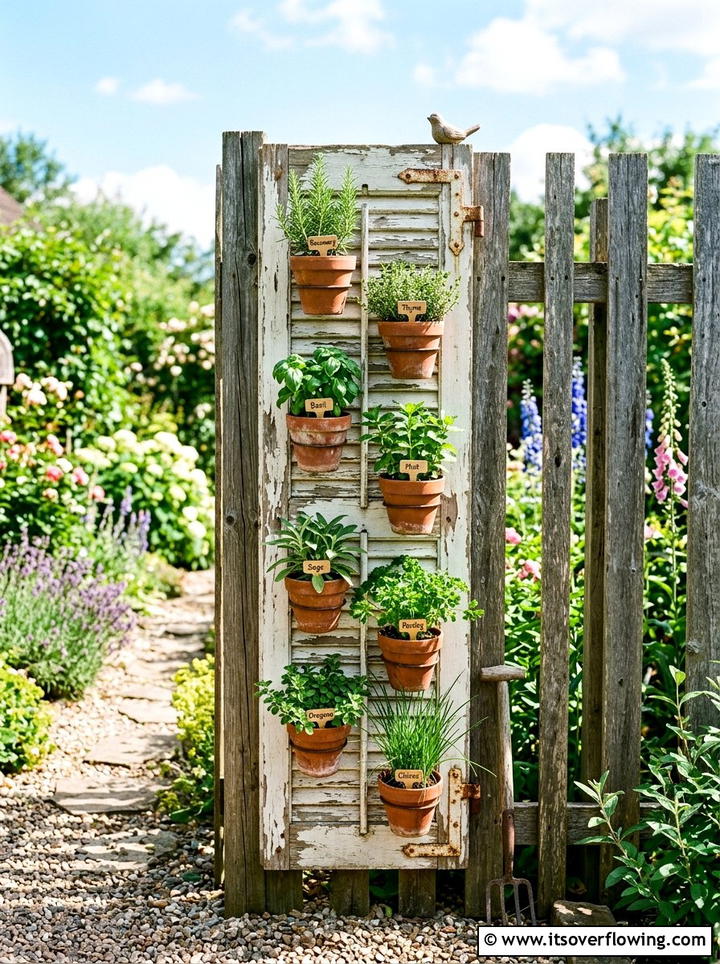
Vintage window shutters can be repurposed into a unique vertical planter by attaching small pots or tins to the slats. This creates a beautiful textured wall hanging that is perfect for a narrow side yard or a small balcony wall. You can lean the shutter against a fence or mount it securely to a brick wall. It provides a wonderful backdrop for your herbs and allows you to organize them vertically. Painting the shutter in a distressed style adds to its antique appeal and makes the green herbs stand out vividly. It is a smart way to add architectural interest and greenery to a flat vertical surface.
22. Hanging Burlap Bags
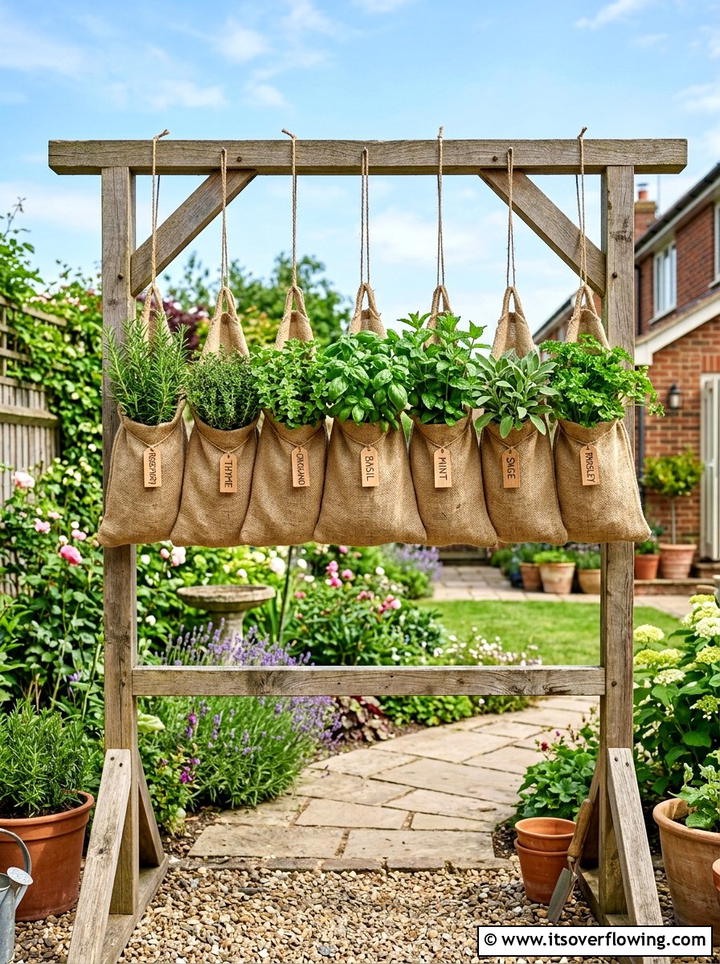
Burlap sacks are excellent for creating a rustic and breathable environment for growing your favorite herbs. You can hang these bags from a sturdy wooden frame or along a sunny fence line. The porous nature of the fabric allows for excellent drainage and prevents the roots from becoming waterlogged. This method is particularly good for herbs that like a lot of air around their roots. Burlap adds a soft, natural texture to your garden and is very inexpensive to source. It is an eco-friendly option that eventually biodegrades, making it a very sustainable choice for seasonal herb gardening in any outdoor setting.
23. Metal Watering Can Planter
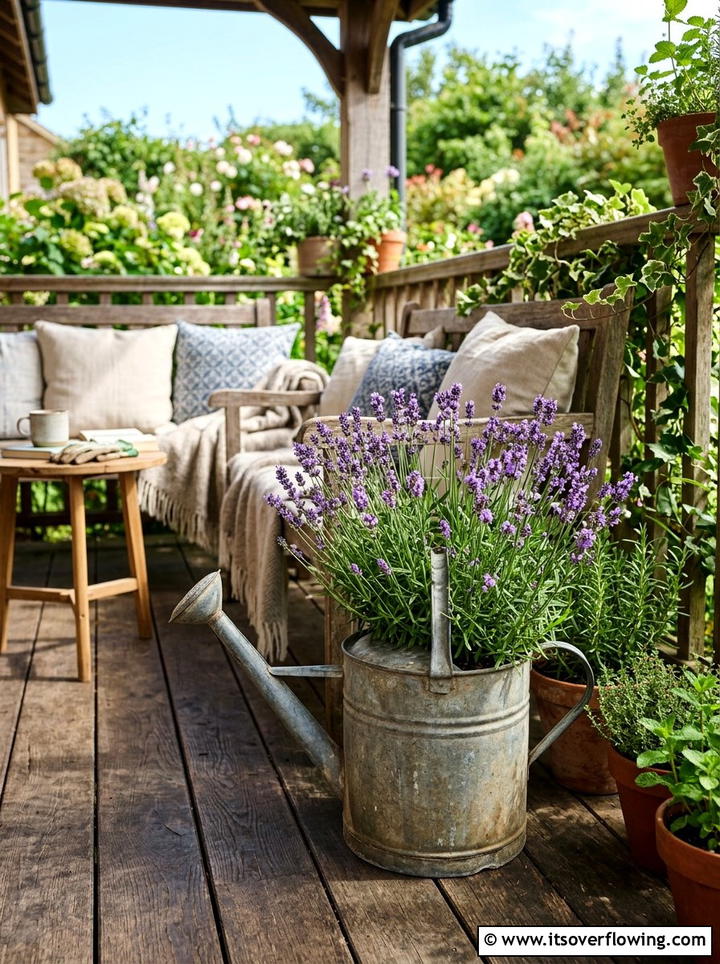
Using an old metal watering can as a planter is a classic garden look that never goes out of style. The long spout and large handle give it a distinctive silhouette that looks beautiful nestled among other garden ornaments. It is the perfect size for a bunch of fragrant lavender or a large basil plant. These cans are built to withstand the elements, so they will last for years as a permanent fixture in your backyard. Placing several watering cans of different sizes together creates a charming and cohesive display. It is a poetic way to repurpose a tool that was originally meant to care for plants.
24. Painted Tin Can Wall
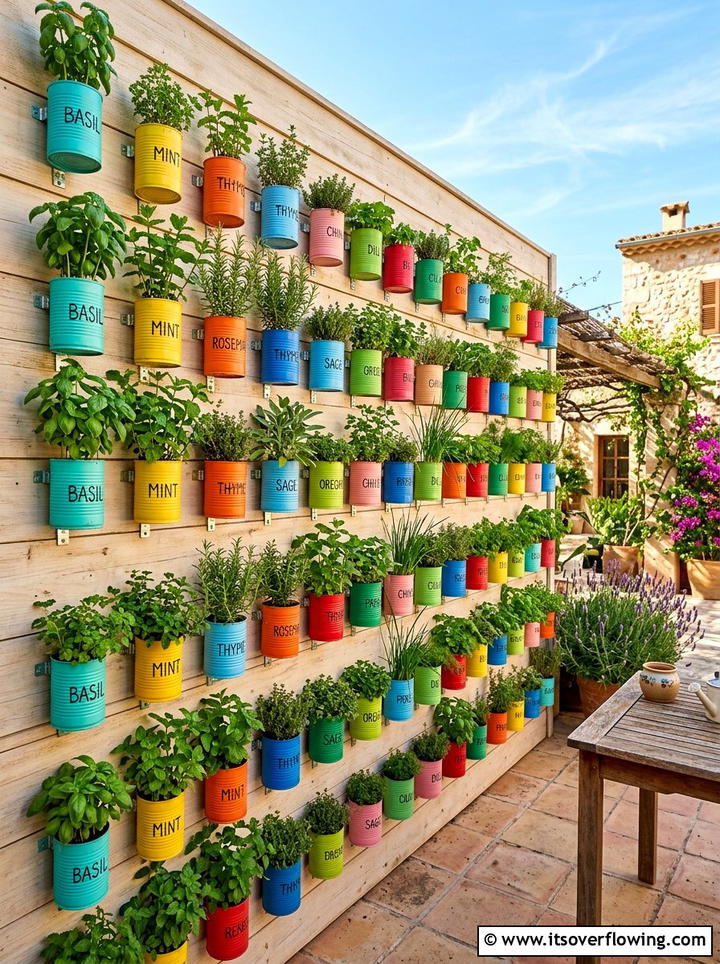
Empty food cans are perhaps the most accessible material for a DIY upcycled herb garden. By cleaning them and painting them in a variety of colors, you can create a vibrant and modern wall-mounted herb display. Using a hammer and nail to poke drainage holes in the bottom is quick and easy. You can screw the cans directly onto a wooden fence or hang them using wire loops. This project is infinitely customizable and allows you to grow dozens of different herb varieties in a very small area. It is a brilliant example of how minor effort can turn household waste into a beautiful and productive garden.
25. Wood Barrel Planter
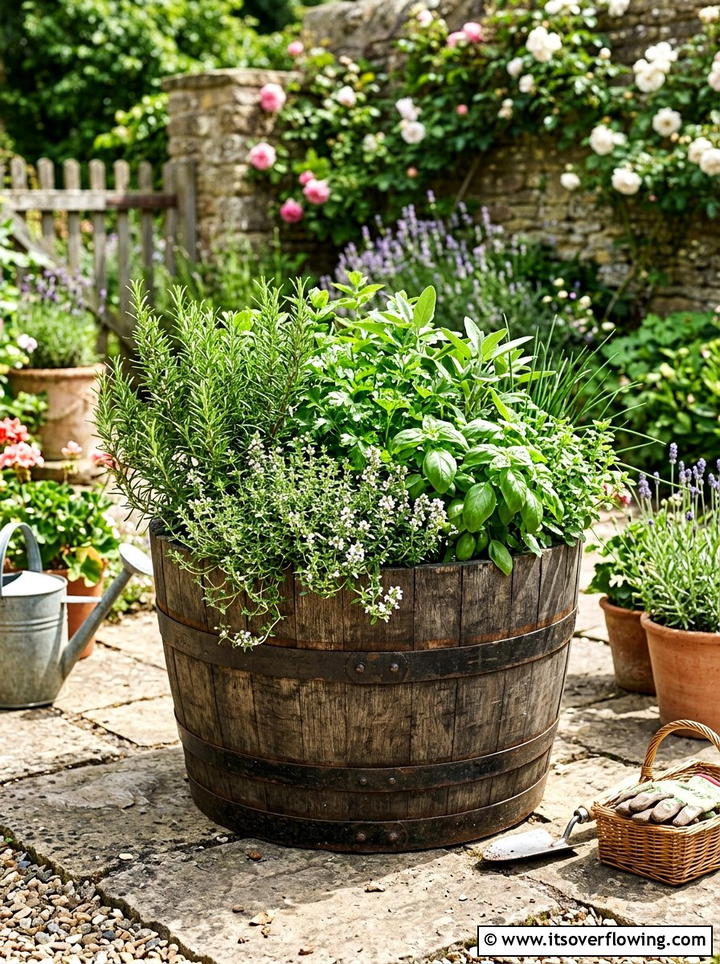
Half of an old wooden barrel provides a deep and wide planting area that is perfect for a large, mixed herb garden. These barrels are heavy and stable, making them ideal for windy locations or as a permanent feature on a large deck. The thick wood helps to insulate the soil, protecting your herbs from extreme temperature fluctuations. You can plant taller herbs in the center and shorter ones around the edges to create a professional-looking arrangement. The weathered silver or brown wood offers a timeless, high-quality look that enhances the value of your outdoor space. It is a classic and very effective upcycling project.
Conclusion:
Embarking on an upcycling journey for your herb garden is a rewarding way to blend creativity with environmental responsibility. Each of these twenty-five ideas offers a unique way to transform forgotten items into functional vessels for life. By growing your own herbs, you reduce the need for plastic-packaged store-bought seasonings and enjoy the freshest flavors possible. These projects not only save money but also infuse your outdoor space with a personal touch that store-bought pots simply cannot replicate. Whether you choose a simple tin can or a large wheelbarrow, your garden will become a more vibrant, sustainable, and charming place to spend your time throughout the year.

Related posts:
 25 Upcycled Garden Ideas With Denim Pockets for Clever Planters
 25 Upcycled Garden Ideas With Hanging Planters to Try
 25 Upcycled Garden Ideas With Old Boots for Playful Planters
 25 Upcycled Garden Ideas With Old Colanders for Fun Planters
 25 Upcycled Garden Ideas With Old Kettles for Cute Planters
 25 Upcycled Garden Ideas With Succulent Planters to Try
 25 Upcycled Garden Ideas With Garden Benches for Cozy Seating
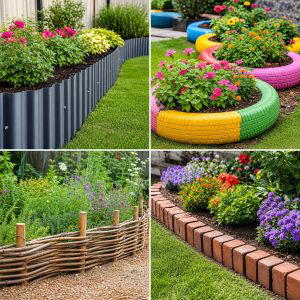 25 Upcycled Garden Ideas With Garden Edging for Neat Borders
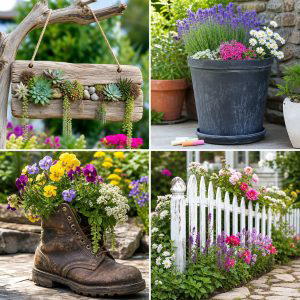 25 Upcycled Garden Ideas With Garden Signs for Cute Yard Decor
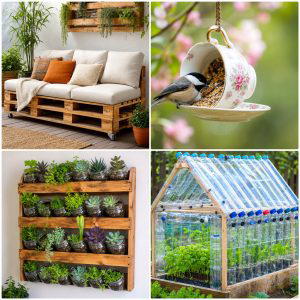 25 Upcycled Garden Ideas for Patios to Refresh Outdoor Living
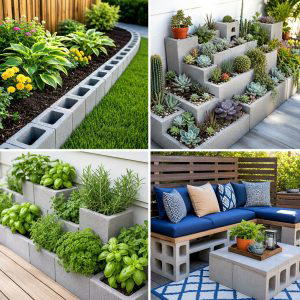 25 Upcycled Garden Ideas With Cinder Blocks for Easy Raised Beds
 25 Upcycled Garden Ideas With Ladder Shelves to Try