
Have you ever looked at a stack of leftover tiles in your garage and wondered how to give them a second life? Transforming these remnants into beautiful garden features is a fantastic way to reduce waste while adding a unique, personal touch to your outdoor space. Whether you have sleek porcelain, rustic terracotta, or vibrant Moroccan patterns, these materials are incredibly durable and weather-resistant. Using recycled tiles allows you to experiment with colors and textures that you might not have considered otherwise. This guide will walk you through creative ways to incorporate these pieces into your landscape, turning your backyard into a stunning sanctuary filled with handcrafted charm and sustainable style.
1. Tiled garden path
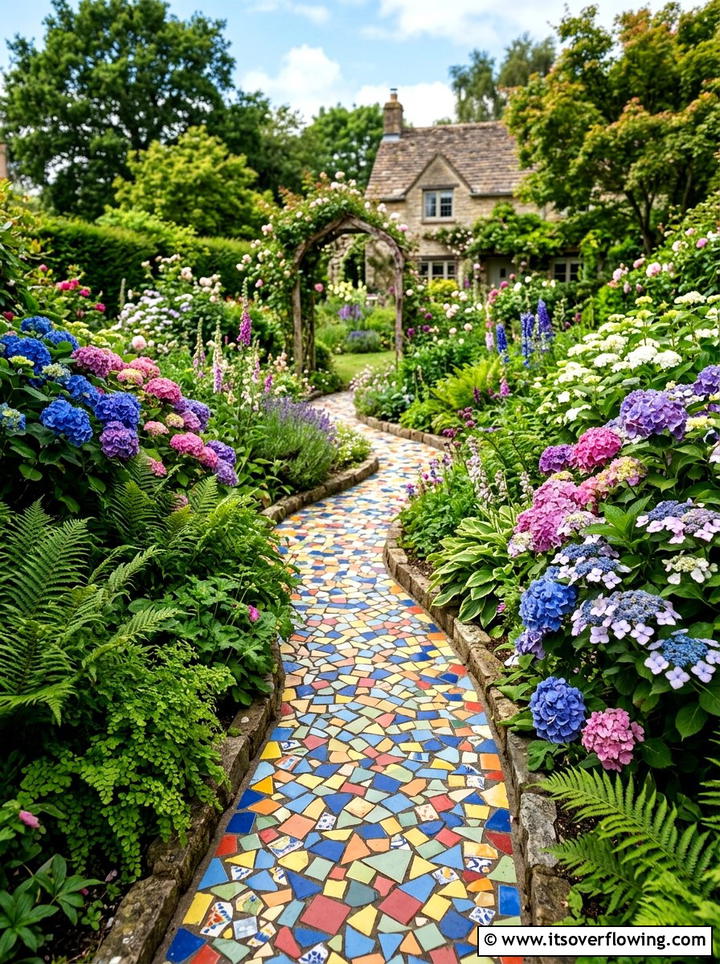
Creating a colorful walkway through your flowers starts with preparing a solid base of sand and gravel to ensure stability. You can lay out your leftover tiles in a structured grid or a more whimsical random pattern to suit your garden’s overall personality. Using different shapes and sizes adds visual interest and helps the path blend into the natural curves of your landscaping. Once the tiles are set, use a weather-resistant grout to fill the gaps and prevent weeds from sprouting between the pieces. This project not only makes your garden more accessible during rainy weather but also provides a permanent splash of color that never fades over time.
2. Mosaic planter pots
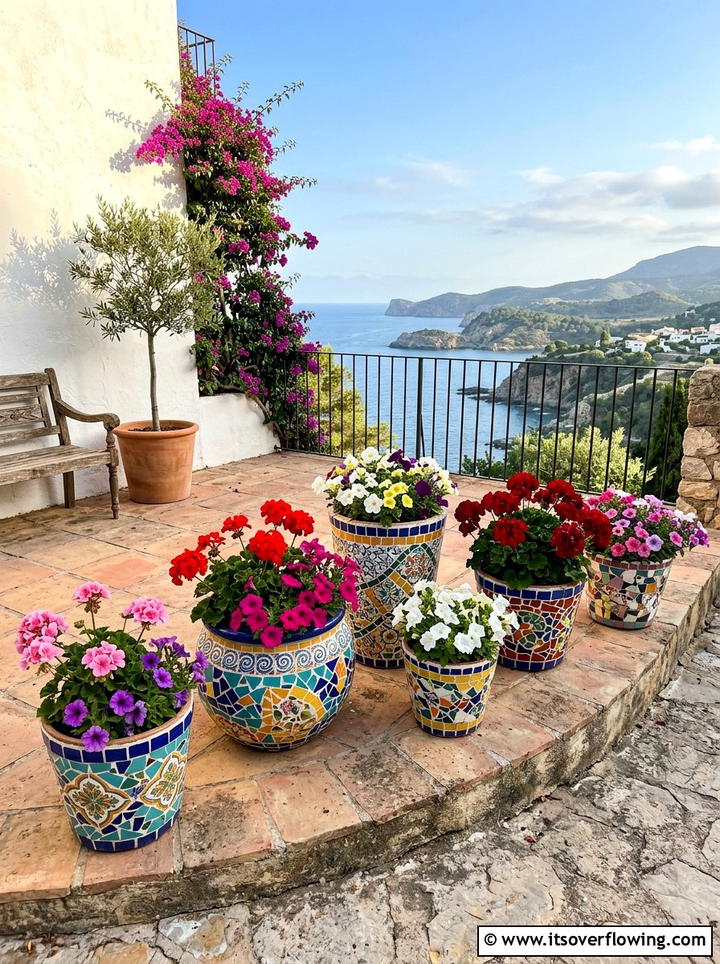
Do you have plain terracotta pots that need a little bit of extra flair to stand out on your patio? You can easily upgrade these basic containers by adhering broken tile shards to the outside surface using a strong waterproof adhesive. This technique allows you to create intricate patterns or abstract designs that reflect the sunlight beautifully as you move around the garden. After the glue has dried completely, apply grout to smooth out the sharp edges and create a finished, professional look for your new plant home. These customized pots become focal points in your outdoor decor while providing a heavy, stable base for your favorite blooming flowers.
3. Tile topped garden table
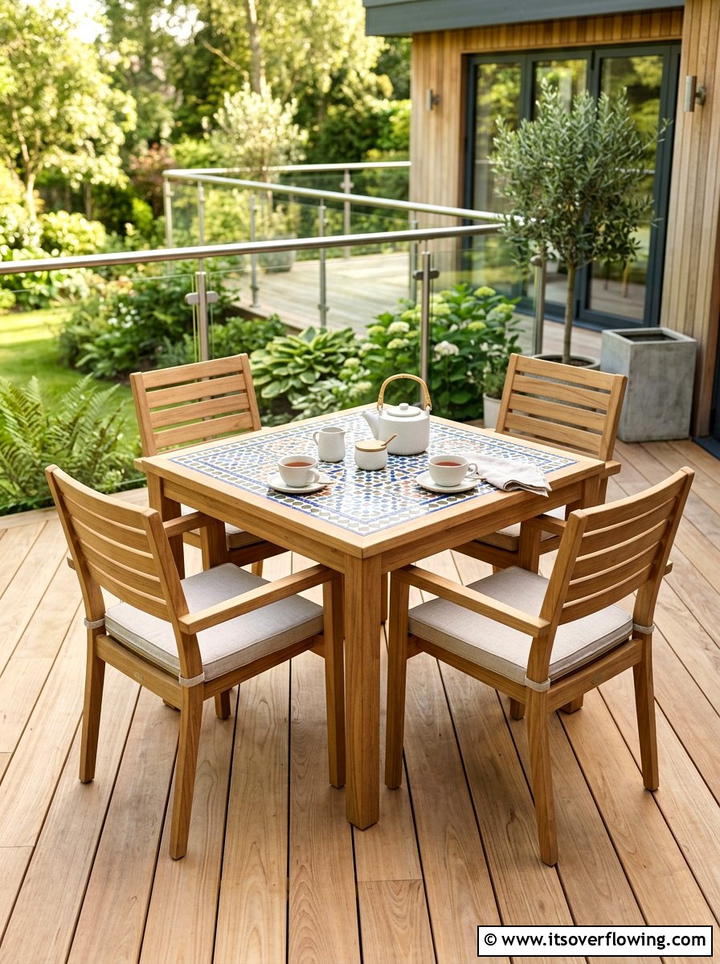
If you have an old wooden or metal coffee table that has seen better days, you can give it a fresh look with tile. Simply sand down the surface and apply a layer of thin-set mortar before arranging your leftover tiles across the top. This creates a durable, wipe-clean surface that is perfect for outdoor dining or resting your morning coffee while you enjoy the birds. Choose tiles that complement your patio cushions or outdoor rugs to create a cohesive and stylish lounge area. The finished table acts as a functional piece of art that withstands spills and varying weather conditions throughout the different seasons of the year.


4. Stepping stones for lawn
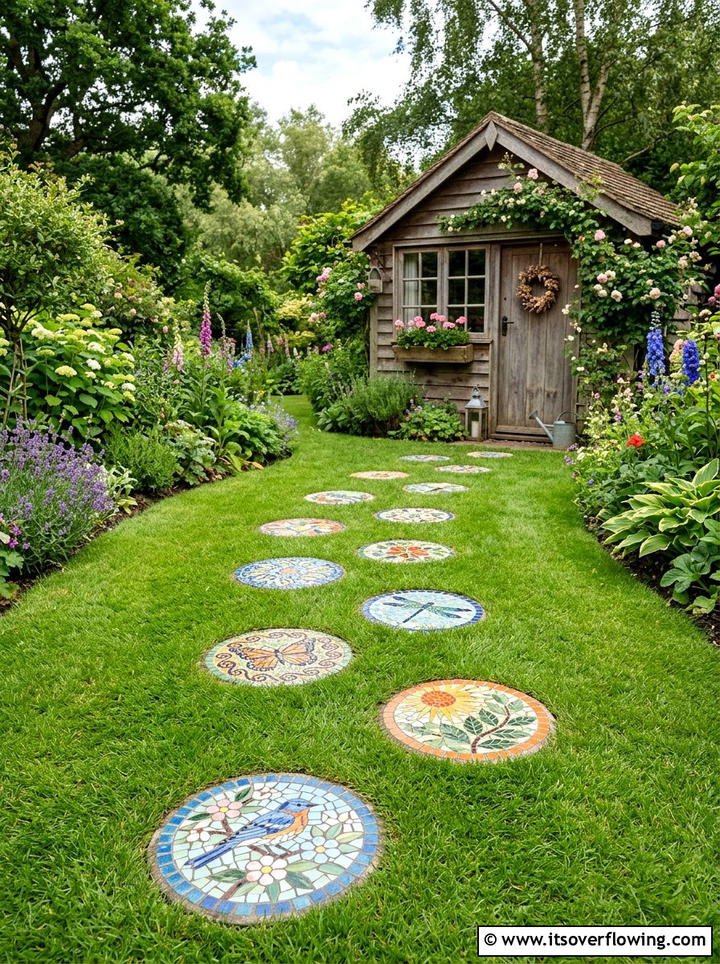
Individual stepping stones are a wonderful way to protect your grass from heavy foot traffic while adding charm to the lawn. You can use large format tiles or create round concrete molds and embed smaller tile pieces into the wet cement. This approach allows you to customize the size and shape of each stone to fit the specific needs of your garden layout. These stones provide a stable footing through grassy areas and look especially lovely when surrounded by low-growing groundcover plants or delicate moss. They are easy to install and can be rearranged whenever you decide to change the flow of your outdoor living space.
5. Tiled garden stair risers
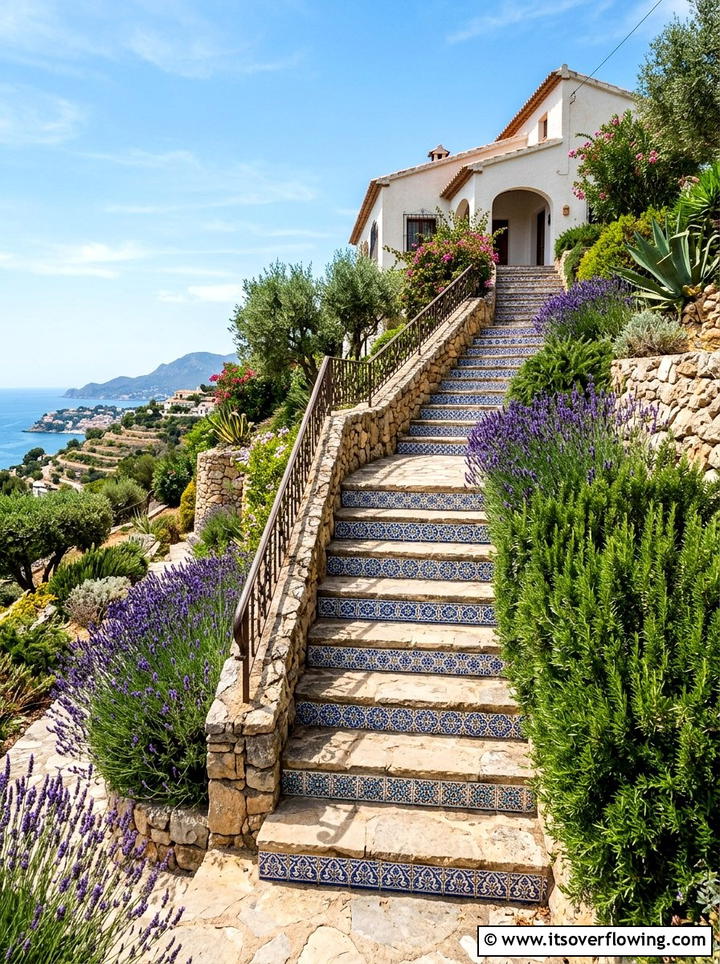
Transforming a plain set of concrete garden stairs into a Mediterranean-inspired masterpiece is easily achieved by tiling the vertical risers. You can use a mix of patterns and colors to create a vibrant visual rhythm that draws the eye upward toward your home. This project adds a surprising element of design to functional structures and makes the entire staircase feel like a deliberate part of your landscape architecture. Using high-quality outdoor adhesive ensures the tiles stay in place despite changes in temperature or moisture levels. The result is a stunning entryway that welcomes guests with a burst of color and a sophisticated, high-end feel for your property.
6. Colorful garden bench
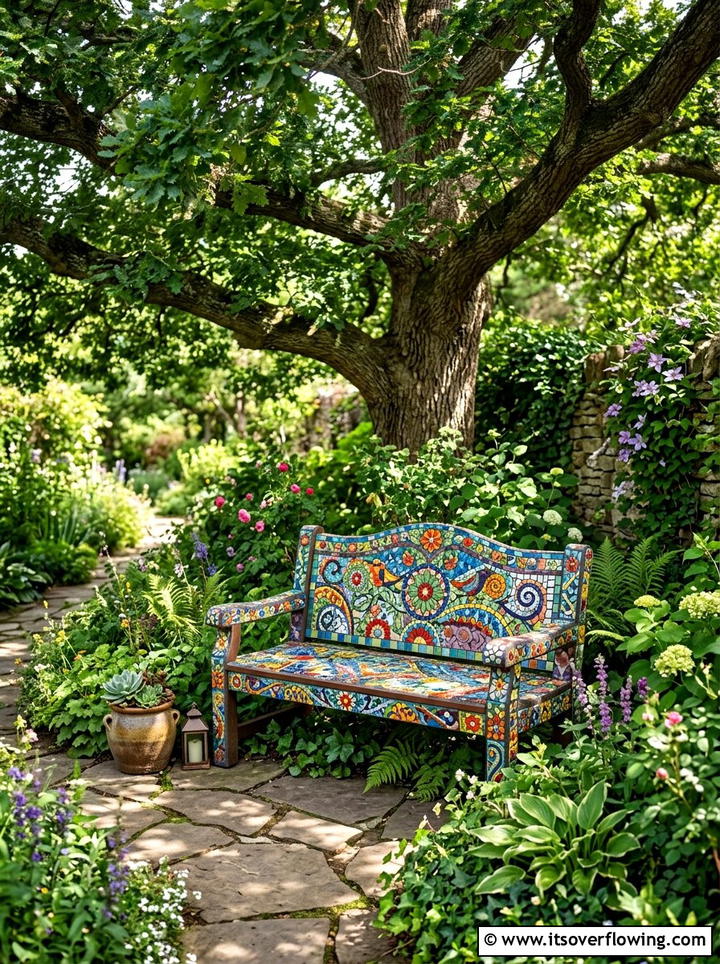
A simple concrete or wooden bench can be transformed into a luxurious seating area by covering the seat and backrest with tile. Using smooth ceramic or glass tiles makes the surface comfortable for sitting while adding a layer of protection against wood rot or concrete staining. You can create a themed mosaic or use large, sleek tiles for a more modern and minimalist look that fits your style. This project turns a basic piece of furniture into a permanent garden fixture that requires very little maintenance over many years. It provides a perfect spot to sit and admire your plants while adding a bold architectural element to your backyard.
7. Retaining wall mosaic
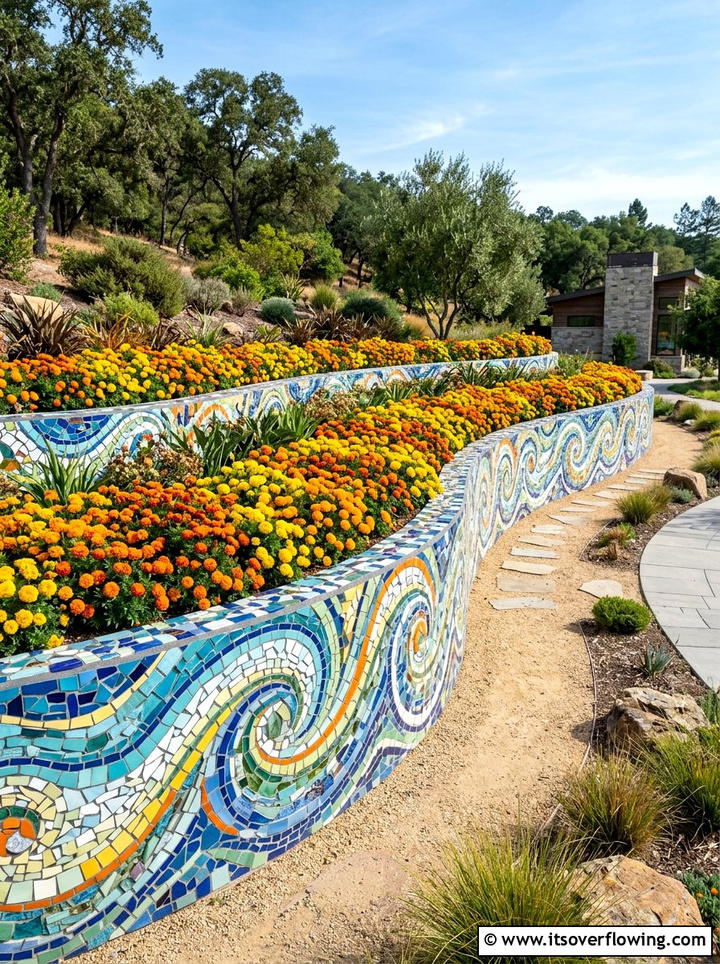
Low retaining walls often look drab and industrial, but they offer the perfect canvas for a large-scale mosaic art installation. You can use your leftover tiles to depict nature scenes, geometric patterns, or simple color gradients along the length of the wall. This turns a purely functional structure into a beautiful feature that enhances the overall aesthetic of your tiered garden beds. By breaking the tiles into smaller pieces, you can follow the curves of the wall more easily and create intricate details. This artistic approach softens the look of hardscaping and integrates the wall seamlessly into the surrounding greenery and floral displays of your yard.
8. Tile birdbath base
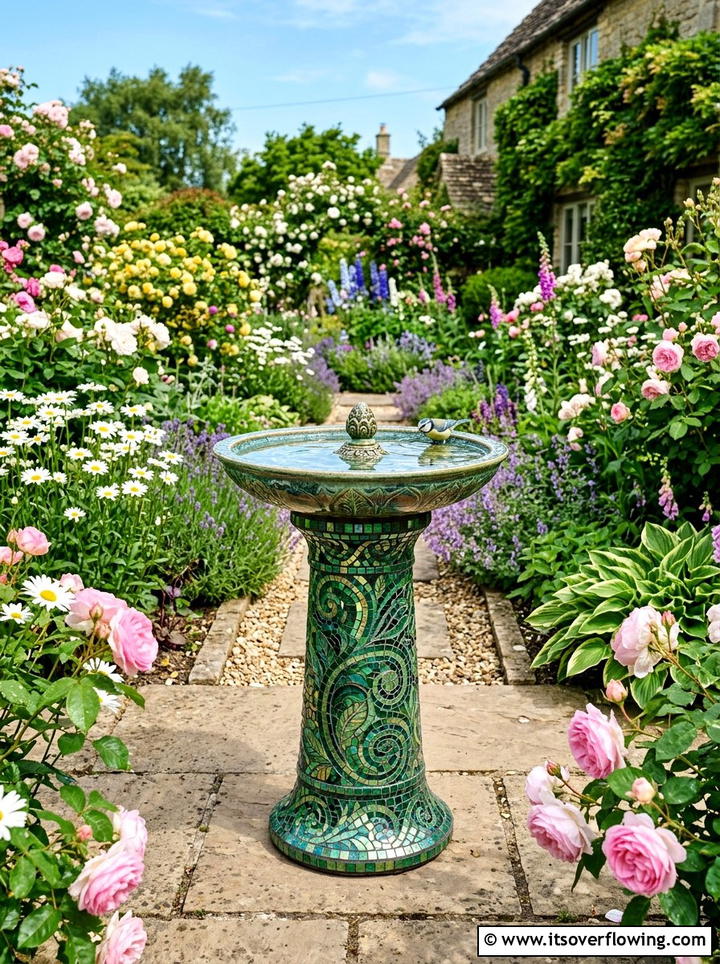
Give your feathered friends a stylish place to visit by decorating the pedestal of a birdbath with colorful tile remnants. This project adds weight and stability to the birdbath while making it a bright focal point in the middle of your garden. You can use shades of blue and green to mimic the appearance of water or use bright yellows to attract more birds. The tiled surface is easy to spray clean with a hose and will not fade under the harsh rays of the summer sun. It creates a delightful destination in your yard that combines nature with handmade craftsmanship, making birdwatching an even more enjoyable daily activity.
9. Outdoor kitchen backsplash
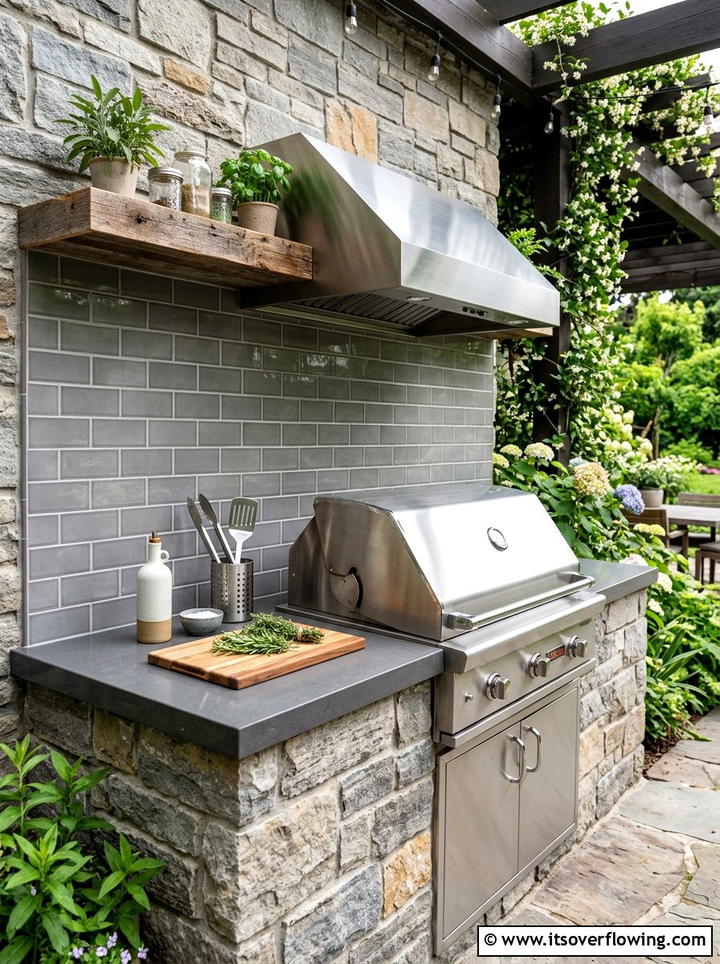
If you have a built-in barbecue or an outdoor sink area, a tiled backsplash is both a practical and beautiful addition. Leftover subway tiles or patterned cement tiles can protect the wall behind your cooking station from grease splatters and water damage. This creates a professional look that mirrors the quality of an indoor kitchen while being tough enough to handle the outdoor environment. You can choose a neutral color to blend in with your stonework or a bold pattern to define the cooking zone. This simple upgrade makes cleaning up after a summer party much easier while adding significant visual appeal to your entertaining space.
10. Tiled flower bed edging
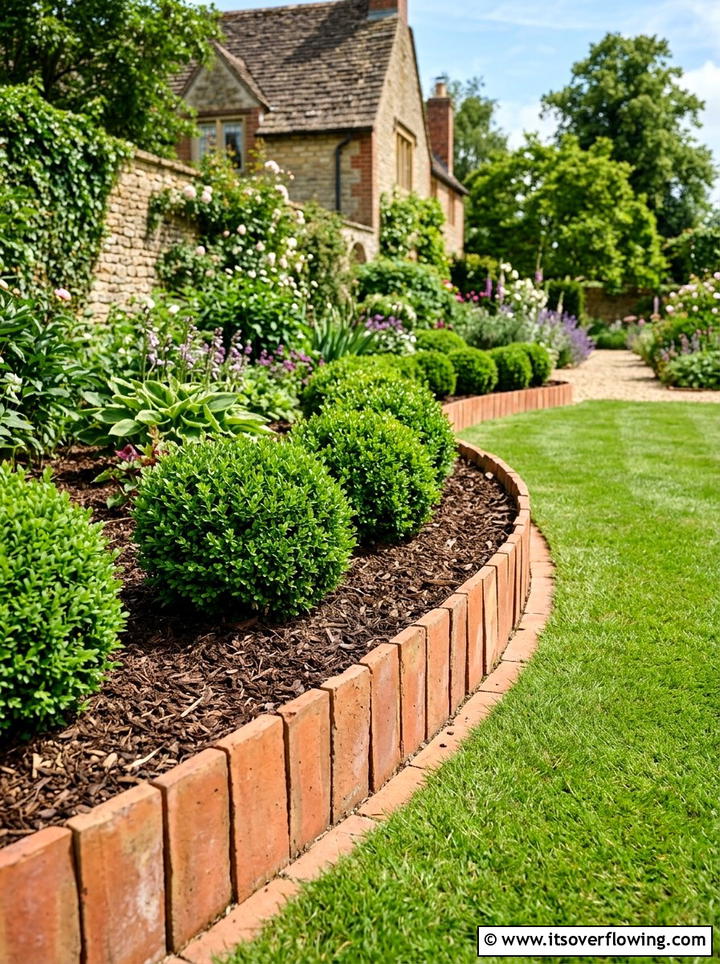
Defining the borders of your flower beds with leftover tiles is a smart way to keep grass from encroaching on your blooms. You can sink long rectangular tiles vertically into the ground to create a clean, sharp line between the lawn and the soil. This prevents mulch from washing away during heavy rains and gives your garden a very neat and manicured appearance. Using tiles of varying heights can create a textured look that adds dimension to your landscaping without requiring expensive materials. It is a cost-effective solution that utilizes every scrap of tile while providing a functional benefit to your daily garden maintenance routine.
11. Tree ring mosaic
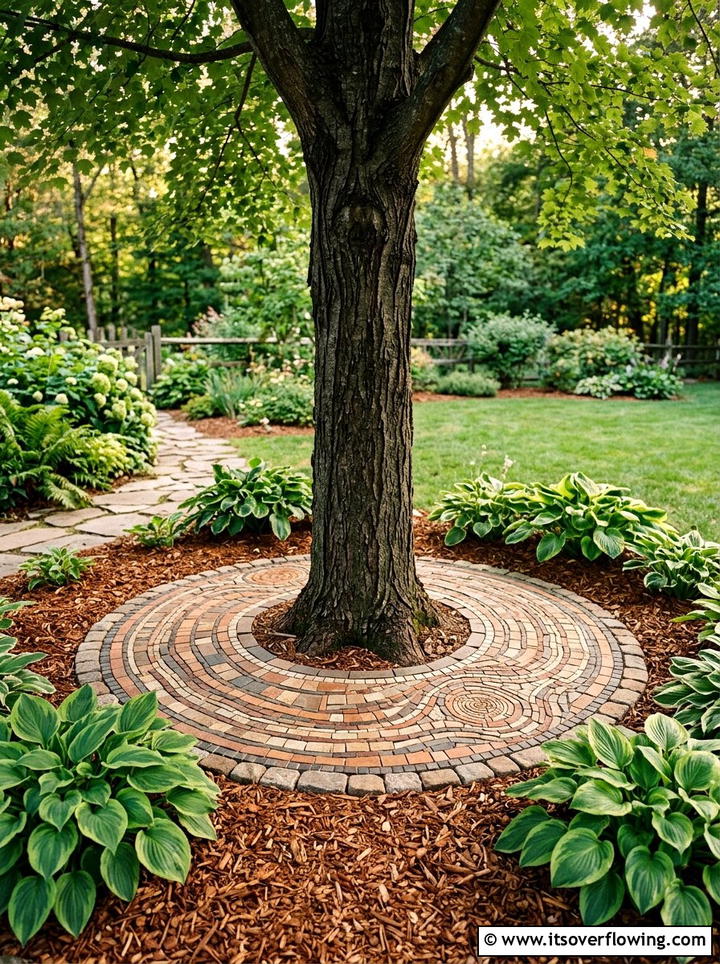
Wrapping a colorful mosaic ring around the base of a mature tree creates a tidy look and prevents weeds from growing near the trunk. You can build a small concrete border and embed your leftover tiles into the top surface to create a decorative circle. This project protects the tree’s root system from mower damage while providing a clean space for a layer of decorative mulch or small shade-loving plants. The tiles reflect the sunlight filtering through the leaves, creating a magical and polished look beneath the canopy. It is an easy way to highlight the natural beauty of the trees in your backyard with artistic flair.

12. Garden wall art
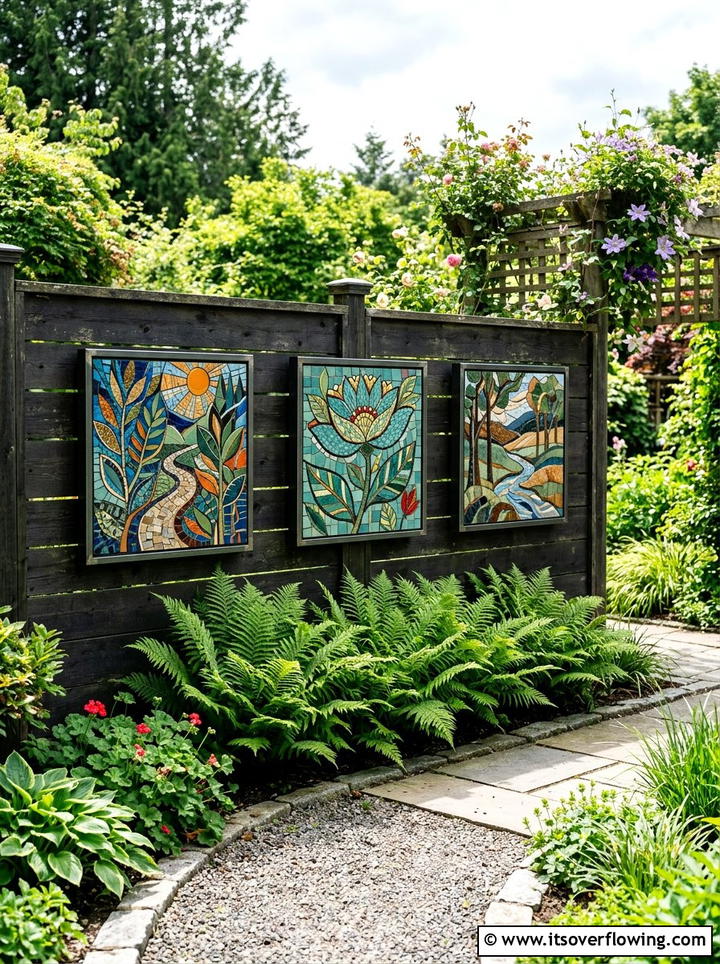
Large outdoor walls can sometimes feel empty and cold, but you can fix this by creating framed tile art pieces. Use a piece of weather-resistant backing board to assemble a mosaic design and then hang it on your fence or exterior wall. This allows you to bring the colors and styles of your interior decor into your outdoor living rooms for a seamless transition. You can change the art pieces seasonally or create a permanent gallery of different tile textures and patterns. These waterproof artworks stay vibrant all year long and provide a sophisticated touch that makes your patio feel like an extension of your home.
13. Tiled patio border
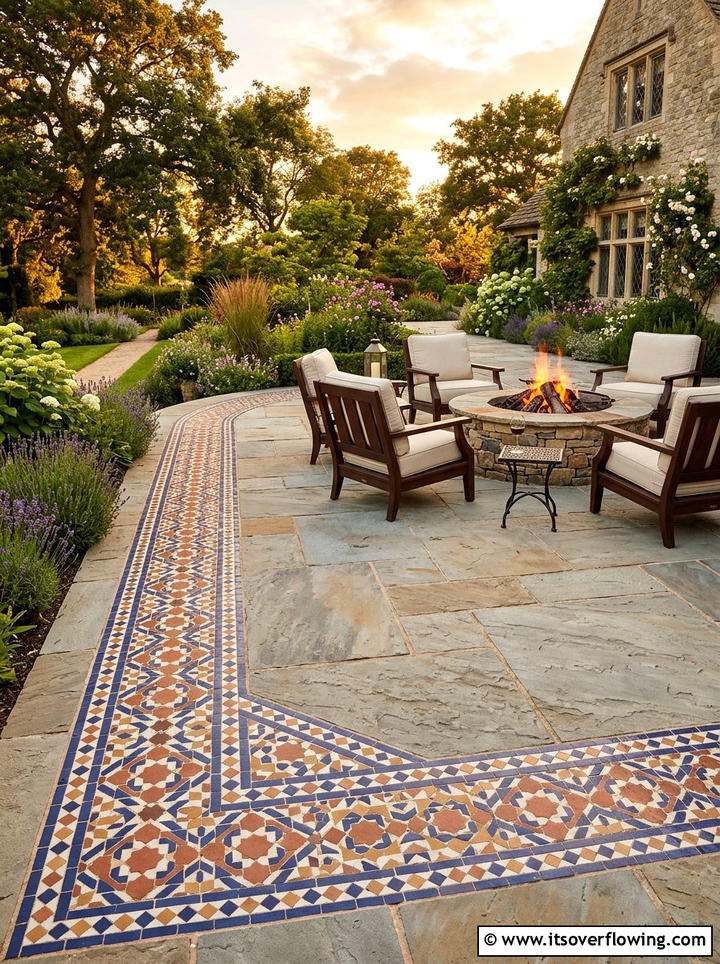
If your existing patio feels a bit plain, you can add a decorative border using leftover tiles to define the space. Removing a small strip of pavers or concrete around the edge allows you to install a row of colorful tiles for a custom look. This border acts as a visual frame for your furniture and helps to distinguish different zones, such as the dining area and the lounge spot. Choosing a tile that contrasts with your main patio material creates a high-end designer feel without the cost of a full renovation. It is a subtle but effective way to use smaller amounts of leftover tile creatively.
14. Mosaic garden chair
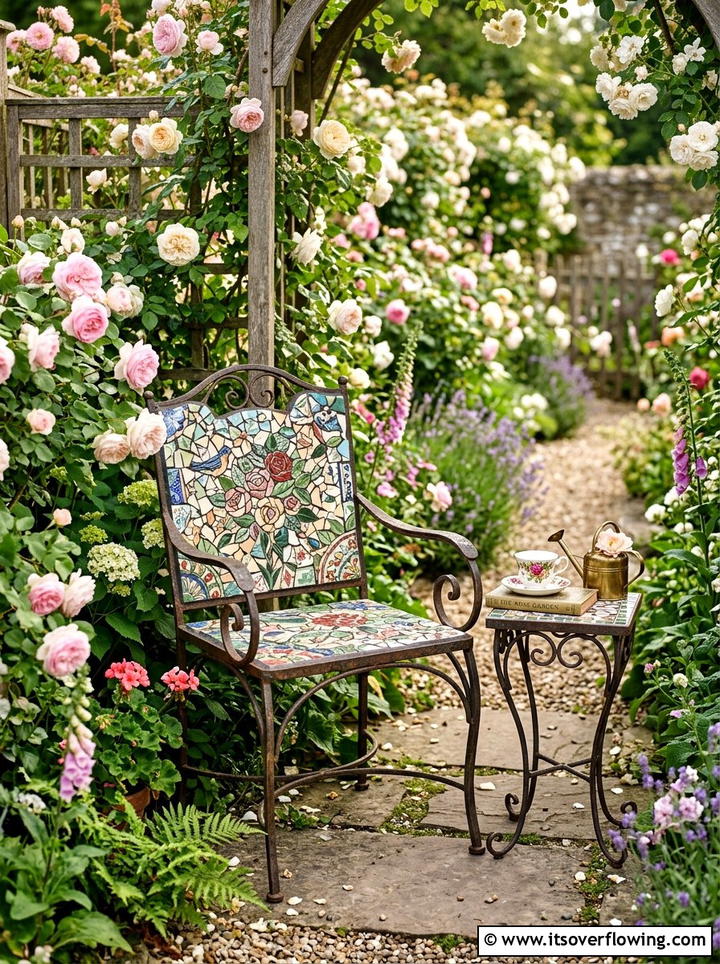
An old wrought iron or plastic chair can be completely revamped by adding a mosaic seat using broken tile pieces. This project requires a bit of patience to fit the pieces together, but the result is a one-of-a-kind piece of functional garden sculpture. The tiled seat is durable and remains cool to the touch during the summer, making it a comfortable place to rest. You can use a variety of colors to create a bohemian look or stick to a single tone for something more modern. These chairs look fantastic tucked into a hidden corner of the garden or placed prominently on a sunny front porch.
15. Tile vegetable garden markers
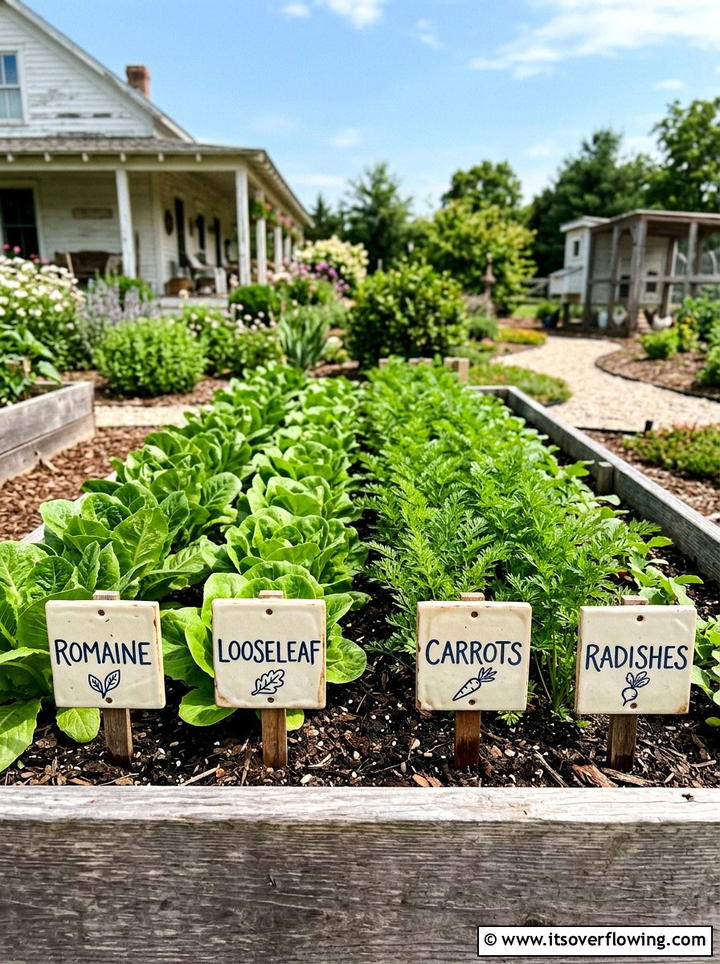
Small pieces of leftover tile make excellent permanent markers for your vegetable or herb garden rows. You can use a paint pen or outdoor enamel to write the names of your plants directly onto the smooth surface of the tile. These markers will not rot or fade like wooden stakes and they stay easily visible among the growing foliage of your crops. You can push them into the soil or glue them to small stones for extra weight so they stay in place. This simple organization tool helps you keep track of your seedlings while adding a touch of handmade charm to your productive garden space.
16. Tiled pond surround
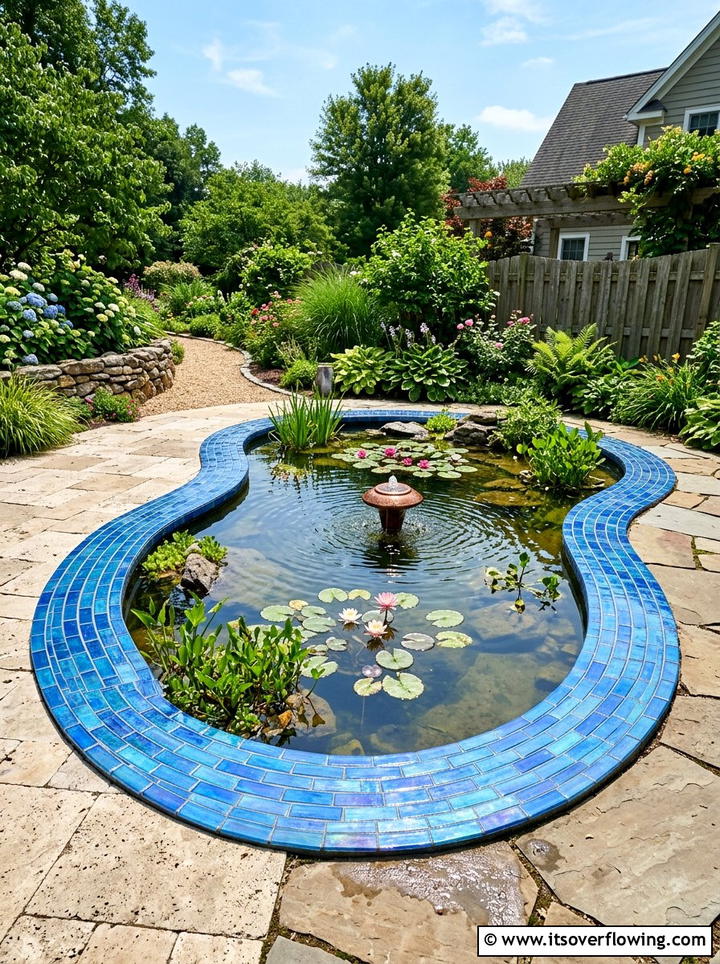
Enhancing the edges of a small backyard pond with tile creates a clean and polished transition between the water and the land. You can use tiles that have a natural stone look to blend into the environment or bright glass tiles to create a shimmering effect. This border helps to hide pond liners and provides a flat surface for placing potted aquatic plants or decorative garden statues. The reflection of the tiles in the water adds a beautiful layer of visual interest to your aquatic feature. It makes the pond area feel more like a deliberate design element and less like a simple hole in the ground.
17. Fire pit tile surround
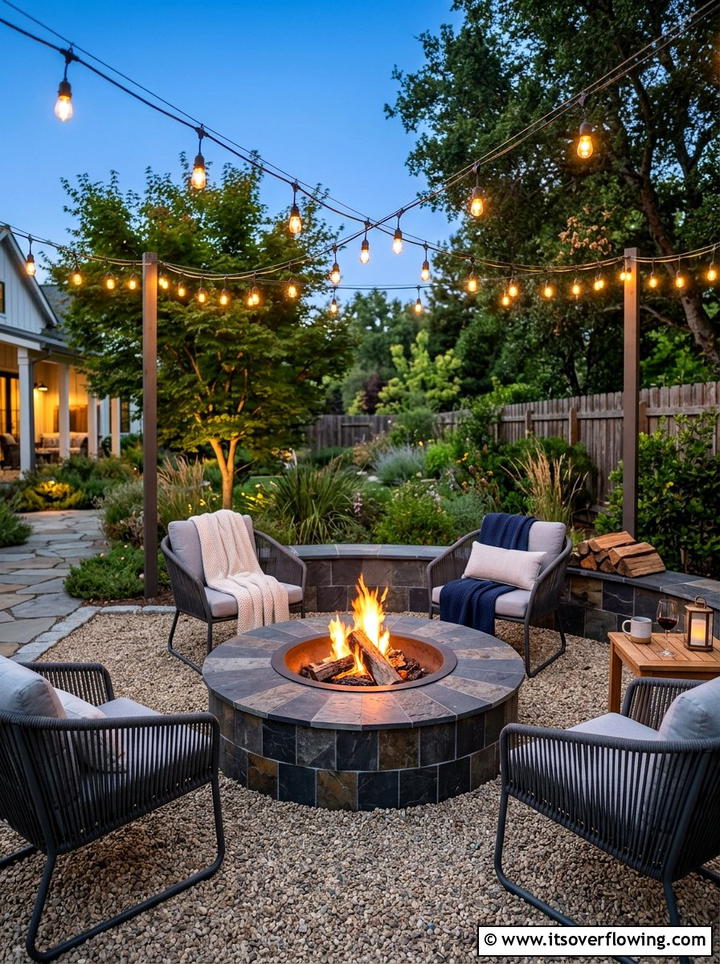
A standard metal or stone fire pit can be elevated with a tiled apron or surround to catch stray embers and provide a place for drinks. Using heat-resistant tiles ensures the installation remains safe and durable even during cozy autumn bonfires with family and friends. This project creates a defined social hub in your backyard and makes the area feel much more inviting and complete. You can choose earthy tones to match the fire elements or vibrant patterns that stand out against the night sky. The tiled surface is easy to sweep clean of ash, keeping your fire pit area looking tidy and ready for use.
18. Vertical tile succulent wall
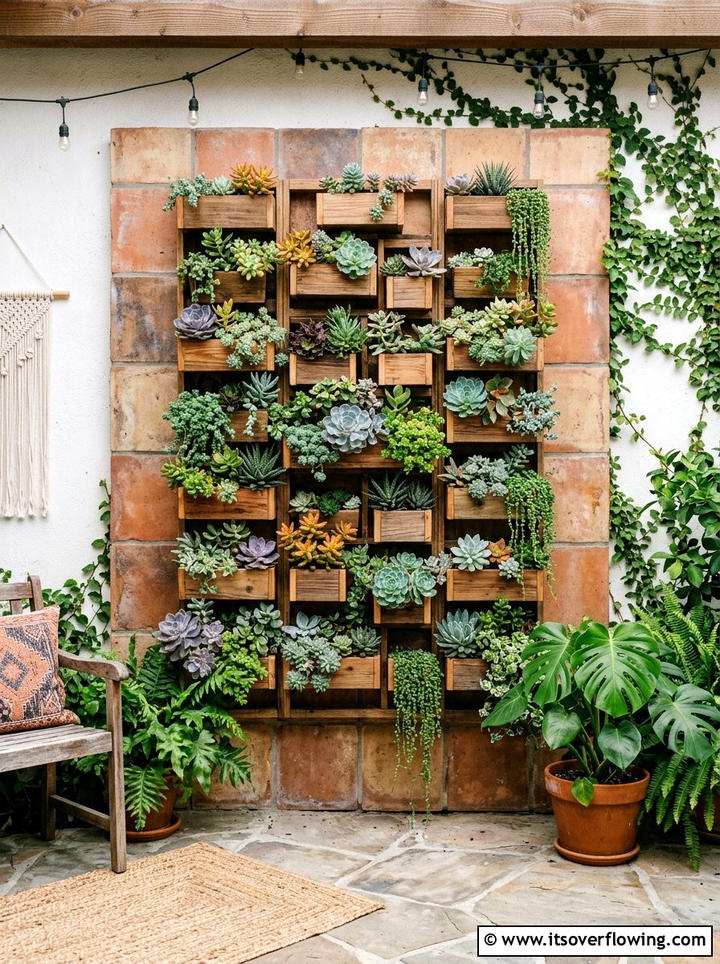
Vertical gardening is a popular way to save space, and adding tile backings to your wall planters makes them even more attractive. You can mount small wooden boxes or ceramic pockets onto a large tiled panel to create a living wall of succulents. The tiles provide a colorful backdrop that makes the green and purple hues of the plants pop with intensity. This arrangement is perfect for small balconies or patio walls where floor space is limited but you still want a lush garden feel. The tile also protects your wall from moisture as you water your plants, ensuring your home exterior remains in great condition.
19. Tiled house number plaque
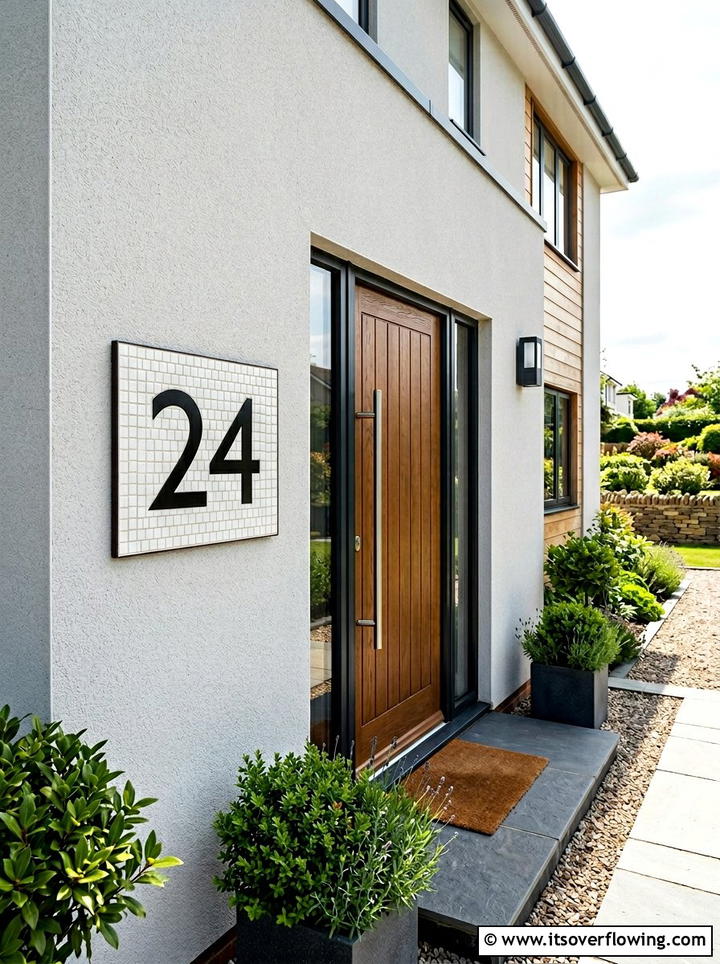
Creating a custom house number plaque is a quick and satisfying way to use up beautiful leftover tile pieces. You can mount large numbers onto a tiled background and frame it with a simple wooden or metal edge for a professional finish. This adds instant curb appeal to your home and makes it easier for guests and delivery drivers to find your front door. Choosing colors that contrast with your siding ensures the numbers are easy to read from the street at any time of day. This small detail shows a high level of care and attention to the design of your home’s exterior and entryway.
20. Garden walkway mosaic
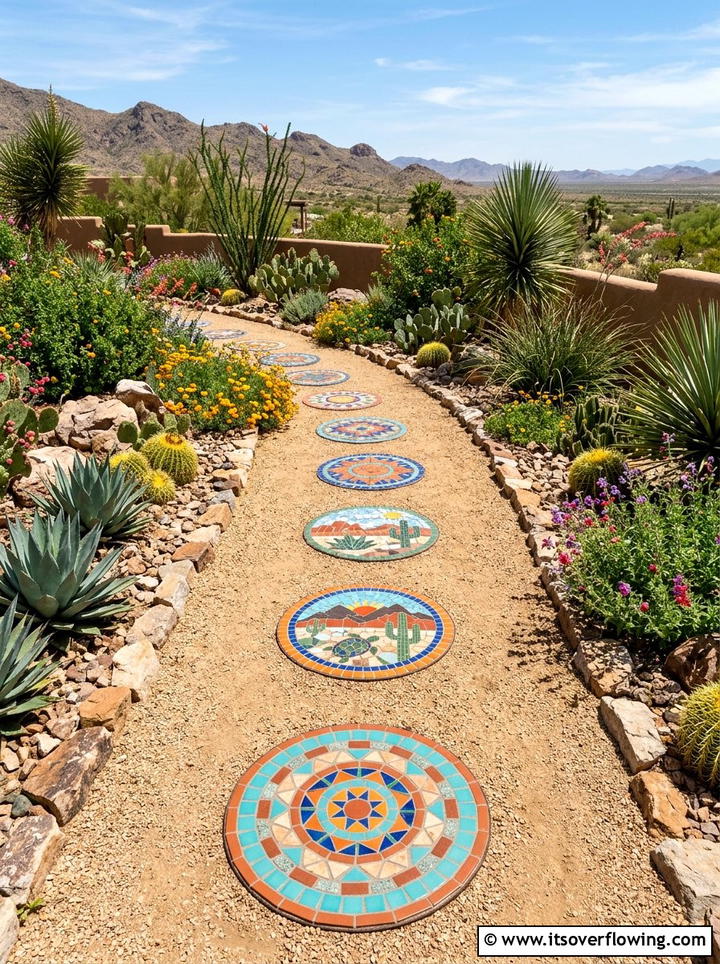
Instead of a solid tiled path, you can create small mosaic islands or medallions within a gravel or woodchip walkway. This technique uses fewer tiles while creating striking visual points of interest as you move through your different garden rooms. You can use the tiles to create traditional patterns like a compass rose or abstract swirls that guide the flow of movement. These mosaics stay firmly in place when set in a shallow bed of mortar, providing a solid stepping point in softer terrain. It is a fantastic way to stretch a small amount of leftover tile across a much larger area of your landscape.
21. Tiled outdoor shower wall
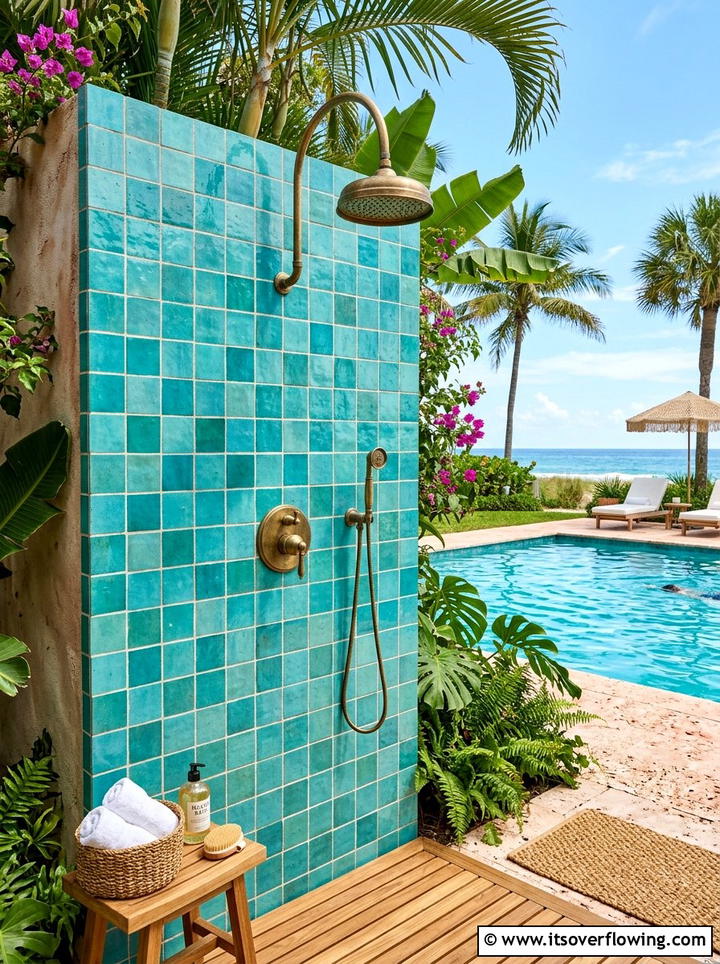
For homes near the beach or with a pool, an outdoor shower is a luxurious addition that can be beautified with leftover tiles. Tiling the wall behind the showerhead creates a waterproof and easy-to-clean surface that feels like a private spa retreat. You can use blue and white tiles for a classic coastal vibe or earthy terracotta for a rustic, natural feel. This project adds a sense of permanence and quality to an outdoor utility, making it a highlight of your backyard design. The cool touch of the tile is refreshing on hot days and provides a durable surface that handles soap and water effortlessly.
22. Decorative tile sun catcher
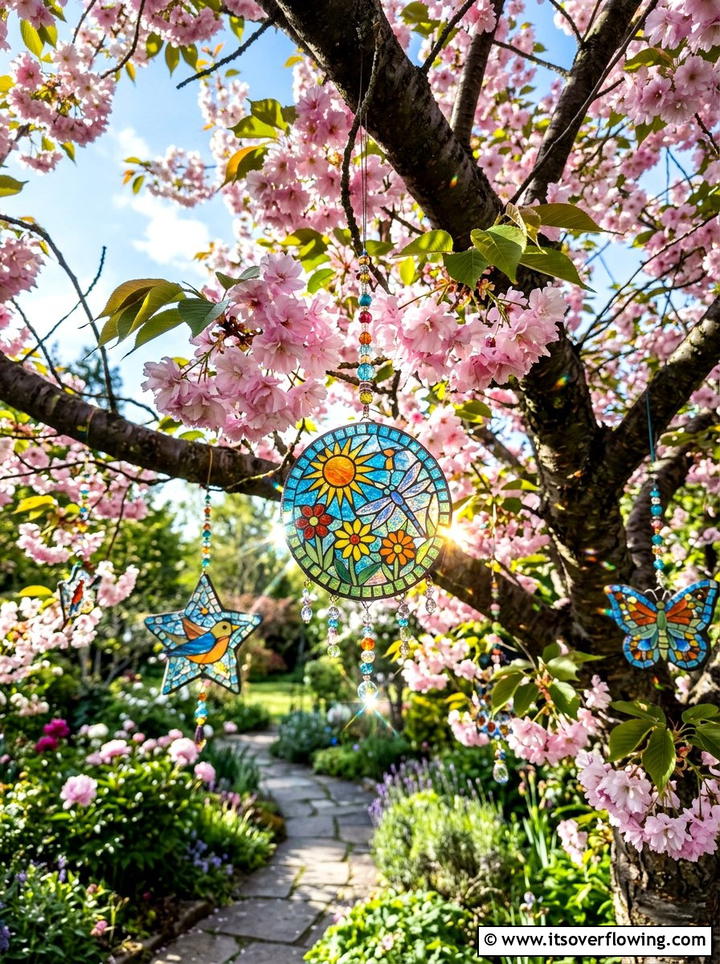
Small shards of glass or glazed ceramic tiles can be hung from tree branches to act as beautiful sun catchers. You can glue the pieces onto clear acrylic sheets or wire them together to create dangling ornaments that catch the light as they spin. When the sun hits the tiles, they cast colorful reflections across your garden, creating a magical atmosphere during the golden hour. This is a great way to use very small fragments of tile that might otherwise be thrown away as waste. These ornaments are weather-resistant and provide a year-round decorative element that adds movement and sparkle to your favorite outdoor trees.
23. Tiled windowsill for greenhouse
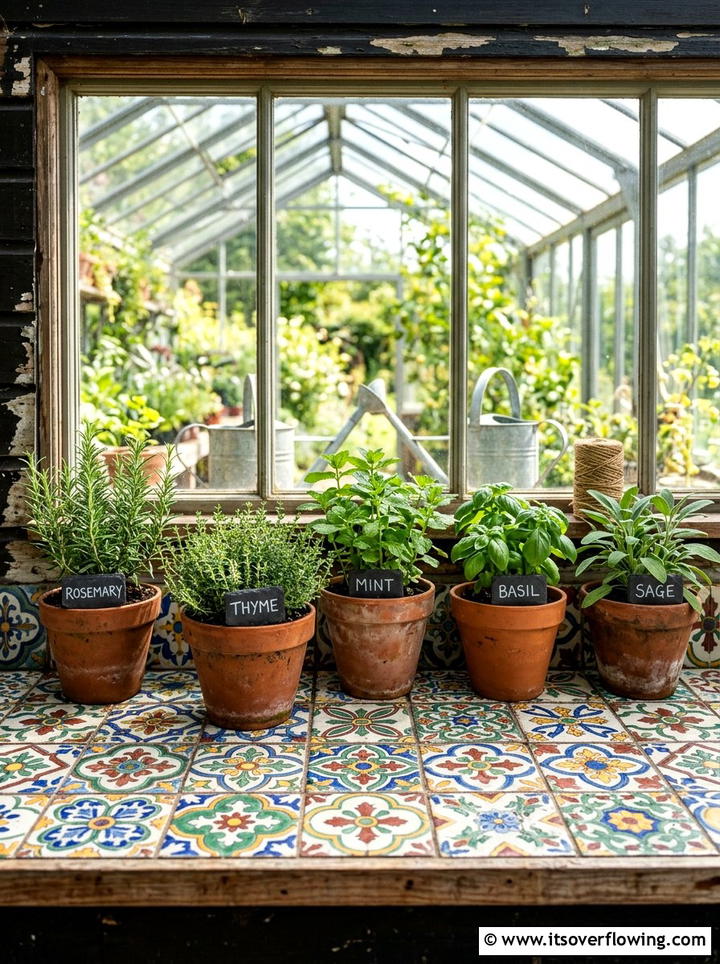
If you have a greenhouse or a garden shed, adding a tiled windowsill provides a durable surface for setting down muddy tools or wet pots. Leftover tiles are perfect for this task because they can be easily wiped clean and will not be damaged by constant exposure to moisture. This small detail makes your workspace feel more organized and attractive, turning a humble shed into a charming potting station. You can use a mix of patterns to create a playful look or a single color for a clean and focused environment. It is a practical upgrade that uses leftover materials to improve the functionality of your hobbies.
24. Mosaic butterfly puddler
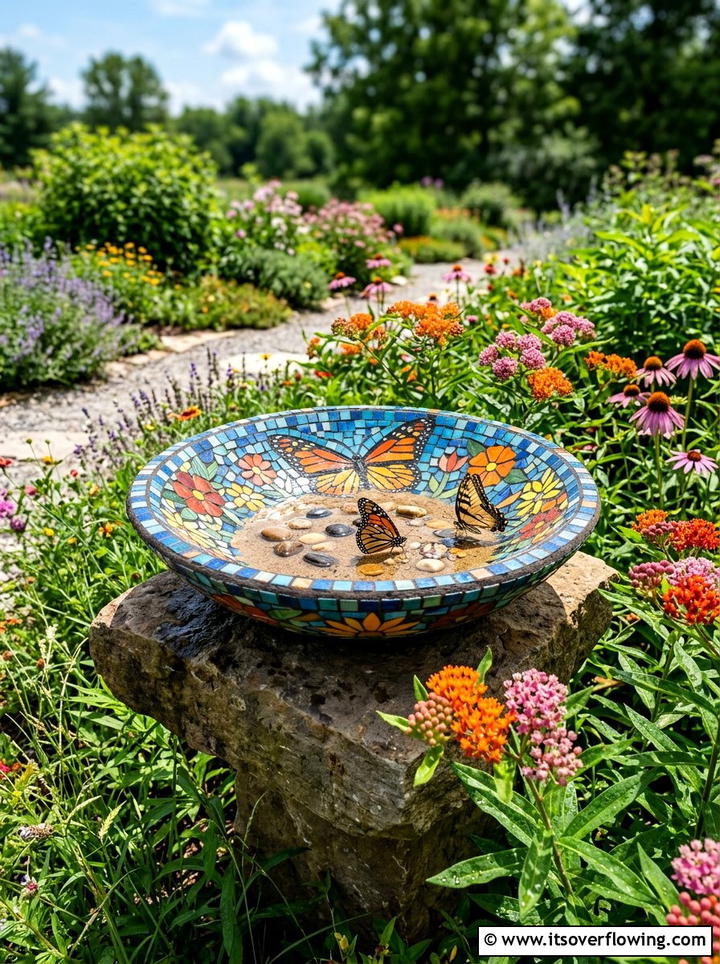
Butterflies need shallow water sources to stay hydrated, and a tiled puddler is a beautiful way to provide this essential garden feature. You can fill a shallow dish with sand and colorful tile pieces, leaving enough space for small pools of water to collect. The tiles provide a safe landing spot for the butterflies while adding a bright splash of color to your flower beds. Place the puddler in a sunny spot where butterflies like to congregate to enjoy the warmth and the moisture. This project supports local pollinators while adding a delicate and artistic touch to your backyard ecosystem that everyone can enjoy watching.
25. Tiled gate post accents
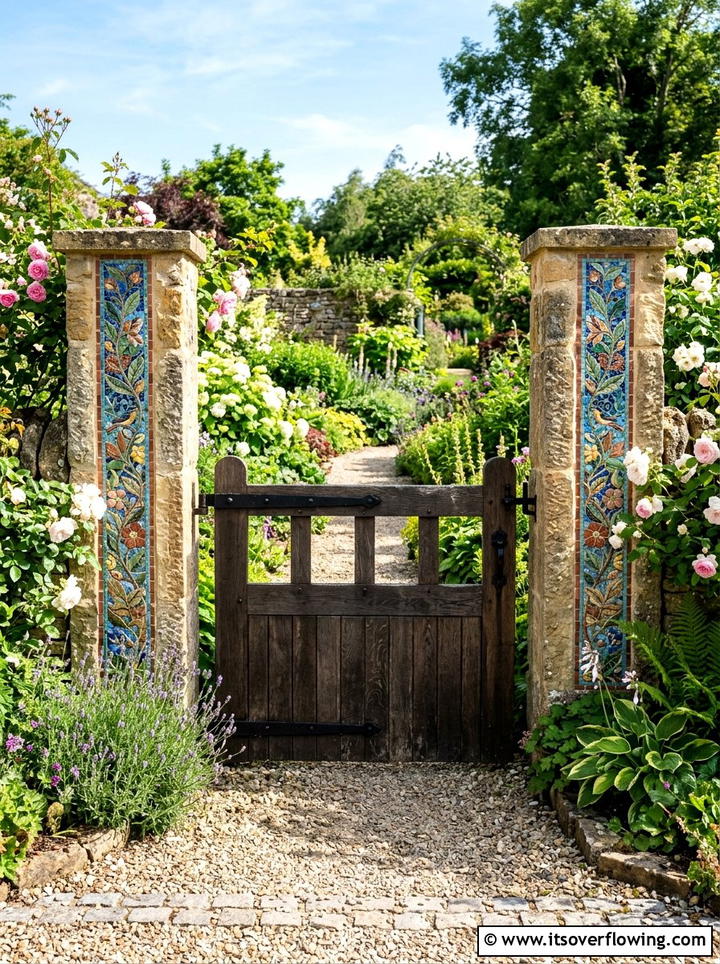
Adding small tile details to your wooden or stone gate posts is a subtle way to tie your entire garden design together. You can inset a vertical strip of colorful mosaic into the post to create a unique and welcoming entrance to your property. This small touch of color makes your garden feel more cohesive and shows that every detail has been carefully considered. Using the same tiles that appear in your paths or planters creates a sense of harmony throughout the landscape. It is a quick project that adds a surprising amount of character to your fences and gates without requiring a lot of time or materials.
Conclusion:
Repurposing leftover tiles for your outdoor projects is a rewarding way to blend artistry with practical sustainability in your home landscape. Each project you complete adds a layer of history and personality to your garden that store-bought items simply cannot replicate. From small accents like plant markers to larger installations like tiled walkways, the possibilities for customization are truly endless. You will find that these durable materials stand up well to the elements while keeping your backyard looking fresh and vibrant through every season. Embracing these recycled solutions helps reduce landfill waste while allowing your creative spirit to flourish in the great outdoors.

Related posts:
 25 recycled garden ideas with garden markers: Fun DIYs
 25 recycled garden ideas with pallet wall garden DIYs
 25 recycled garden ideas with aluminum cans: Clever DIYs
 25 recycled garden ideas with chipped dishes: Pretty DIYs
 25 recycled garden ideas with egg cartons: Easy Seed DIYs
 25 recycled garden ideas with glass bottles: Chic DIYs
 25 recycled garden ideas with leaf mold bins: Eco DIYs
 25 recycled garden ideas with logs: Rustic Outdoor DIYs
 25 recycled garden ideas with milk jugs: Smart DIYs
 25 recycled garden ideas with newspapers: Clever DIYs
 25 recycled garden ideas with old colanders: Fun Planter DIYs
 25 recycled garden ideas with old kitchenware: Creative DIYs