
Creating a beautiful outdoor sanctuary often begins with the perfect structural element to define your space. Adding a pergola covered in lush vines transforms a basic backyard into a breathtaking retreat that feels both private and inviting. These architectural features provide much-needed shade while acting as a living canvas for nature to climb and bloom. Whether you have a massive estate or a tiny urban patio, the combination of wood, metal, and greenery offers endless possibilities for styling. In this guide, we explore twenty-five unique ways to integrate pergolas and climbing plants into your landscape. These ideas focus on beauty, functionality, and creating a viral-worthy aesthetic for your home.
1. White Wood Pergola With Wisteria
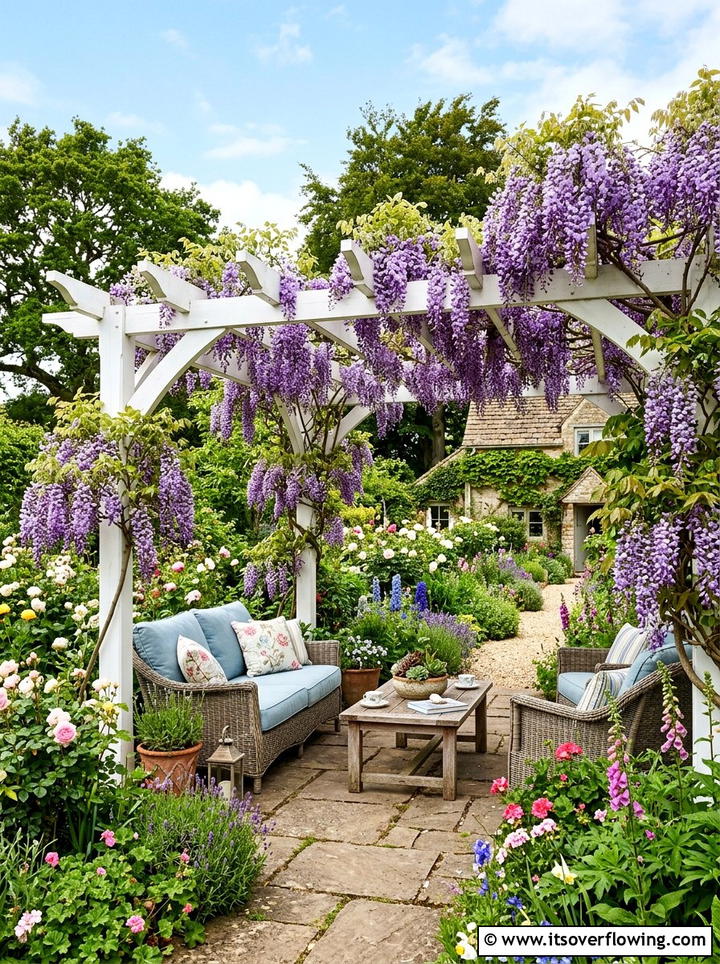
A classic white wood pergola provides a clean and crisp backdrop for the dramatic purple blooms of wisteria. This design choice is perfect for homeowners who want a romantic or cottage-core aesthetic in their garden. Wisteria grows vigorously, eventually creating a heavy canopy that offers deep shade during the hot summer months. You should ensure the structure is sturdy enough to handle the weight of the thick, woody vines over time. Placing a comfortable outdoor sofa or a dining set underneath makes this the ultimate spot for afternoon tea or morning coffee. The contrast between the bright white paint and the soft lavender flowers is truly timeless.
2. Black Metal Pergola With Jasmine
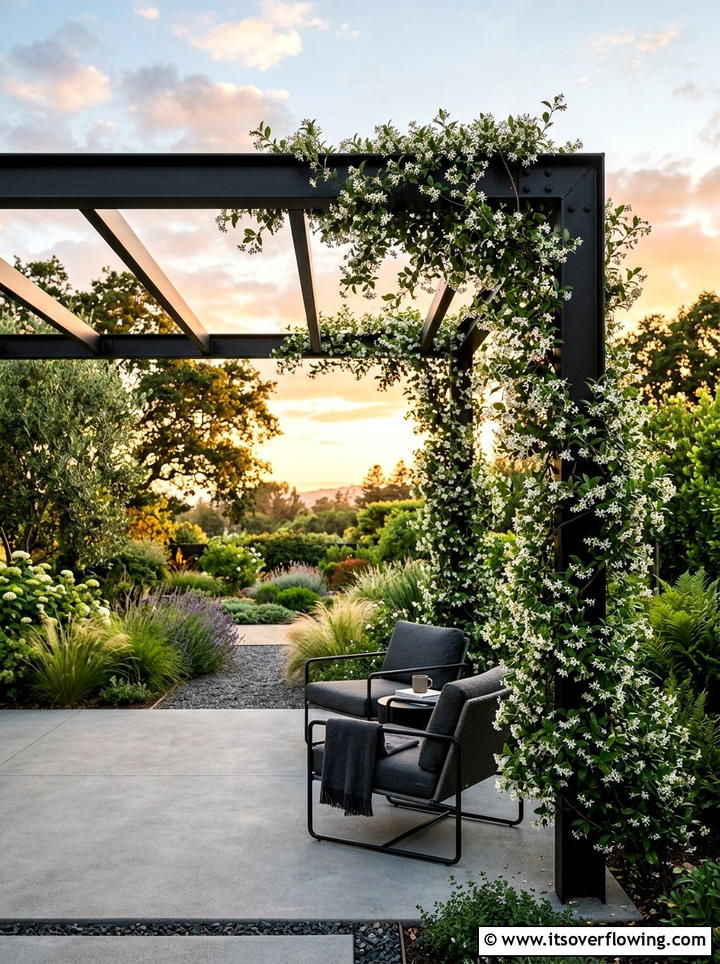
Modern landscapes benefit greatly from the sleek lines of a black metal pergola paired with fragrant jasmine. The dark frame creates a bold focal point that stands out against the green foliage and small white flowers. Jasmine is an excellent choice because it grows quickly and fills the air with a sweet scent during the evening. This setup looks stunning on a minimalist concrete patio with simple, contemporary furniture. You can add some string lights to the metal beams to create a cozy atmosphere for nighttime entertaining. The industrial look of the metal beautifully balances the delicate, sprawling nature of the jasmine vines.
3. Rustic Cedar Pergola With Grapevines
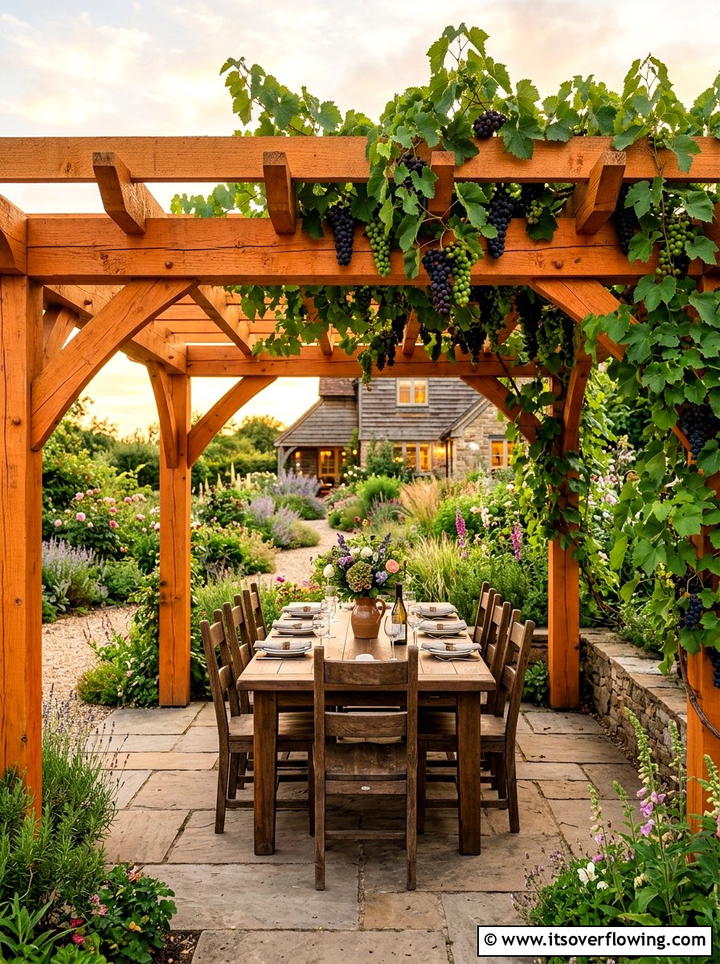
If you love a Mediterranean or farmhouse feel, a rustic cedar pergola with trailing grapevines is an ideal choice. Cedar is naturally rot-resistant and ages beautifully to a silver-grey or can be stained to keep its warm orange tone. Grapevines provide large, textured leaves that offer excellent sun protection and a bountiful harvest in late summer. This design works exceptionally well over a large wooden dining table where friends and family can gather for meals. The heavy clusters of fruit hanging from the rafters add an organic, earthy charm to your backyard. It is a functional and beautiful way to garden vertically.
4. Small Patio Pergola With Climbing Roses
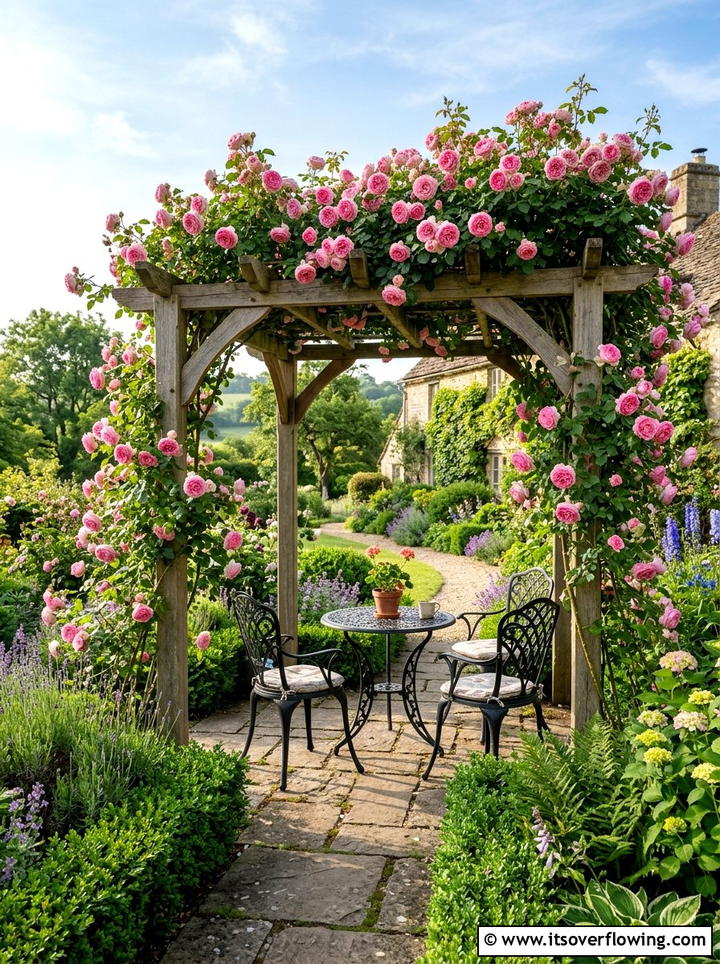
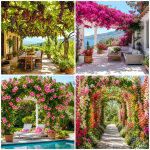
Even a compact backyard can accommodate a small pergola adorned with vibrant climbing roses. Choosing a repeat-blooming variety ensures your patio stays colorful from late spring all the way through the autumn months. Roses add a sense of luxury and traditional elegance to any outdoor seating area, no matter the size. You can train the canes to wrap around the posts and across the top beams for maximum coverage. Pair this with a bistro set for a charming French-inspired breakfast nook right outside your back door. The fragrance of the roses will make sitting outside a truly sensory experience for everyone.
5. Freestanding Garden Pergola With Ivy
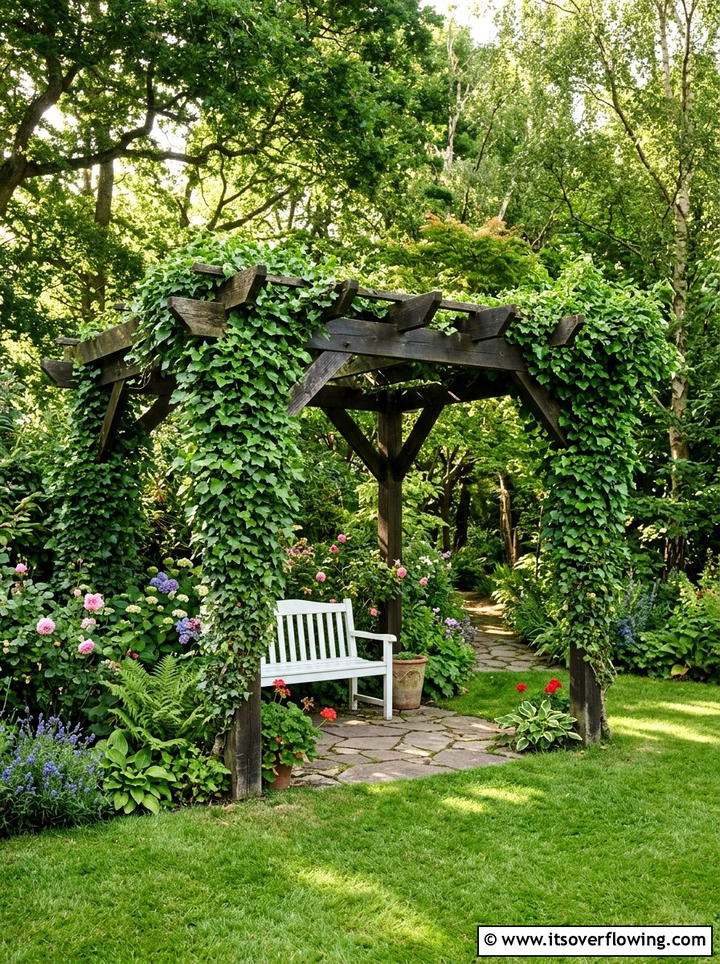
A freestanding pergola placed in the middle of a lush lawn creates a secret destination within your own property. Covering the structure in thick English ivy gives it an ancient, established look that blends perfectly with a woodland garden. Ivy is incredibly low-maintenance and stays green all year round, providing visual interest even during the winter. This design is perfect for housing a garden bench or a swinging chair where you can escape to read a book. The dense greenery provides a high level of privacy and wind protection. It acts as a living sculpture that improves the overall depth of your landscape.
6. Corner Pergola With Honeysuckle
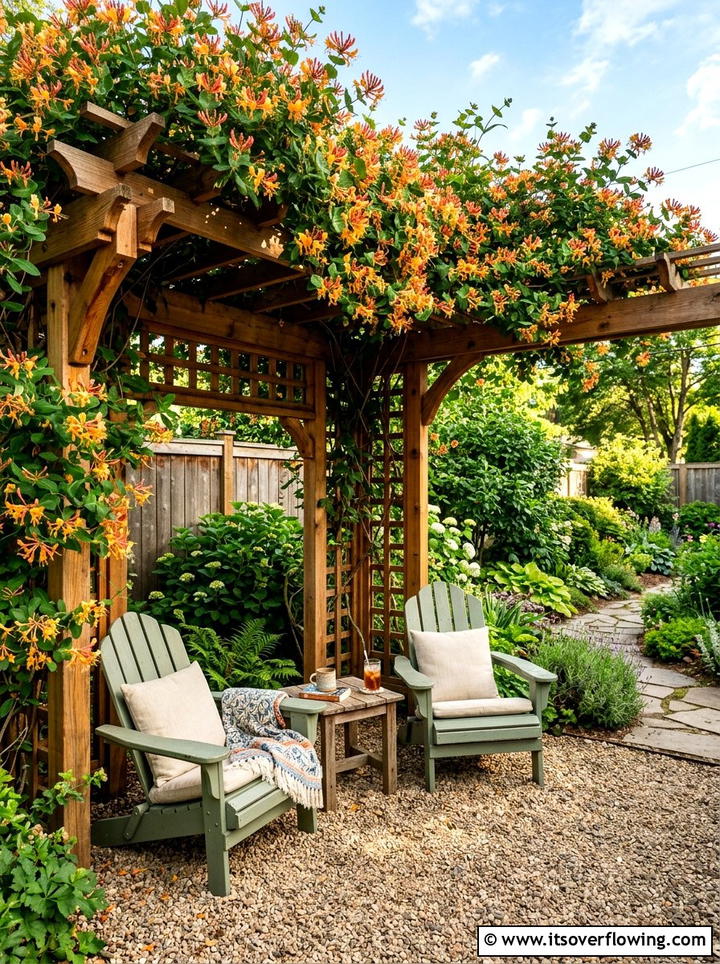
Utilizing an unused corner of your yard with a custom-fit pergola and honeysuckle vines is a smart design move. Honeysuckle is famous for its tubular flowers that attract hummingbirds and butterflies to your garden throughout the season. The vines are flexible and easy to train, making them perfect for covering smaller or more uniquely shaped structures. A corner pergola creates a cozy, tucked-away vibe that feels much more intimate than a wide-open patio. You can floor the area with pea gravel or pavers to define the space further. It is a wonderful way to turn a forgotten corner into a highlight of your home.
7. Attached Pergola With Clematis
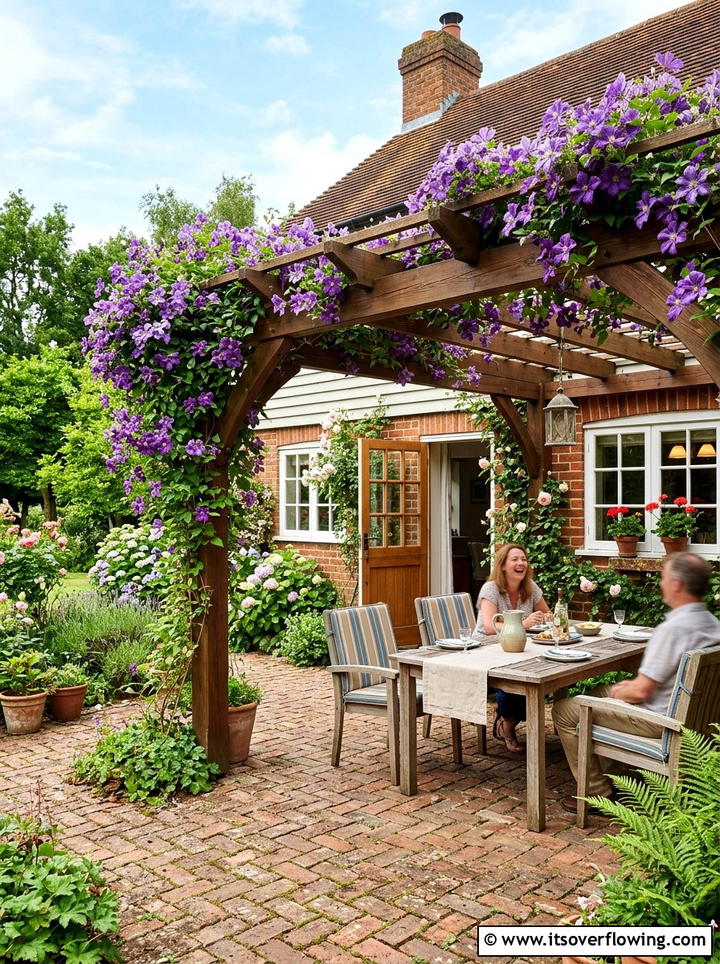
Attaching a pergola directly to the back of your house creates a seamless transition between your indoor and outdoor living areas. Clematis is a popular vine for this setup because it comes in many colors and leaf shapes to match your home. The thin stems of clematis easily wind around trellis panels or thin pergola rafters without becoming too heavy or destructive. This design acts like an outdoor extension of your living room, providing a shaded place to relax just steps from your kitchen. Using a variety of clematis that blooms at different times ensures constant color. It makes your home exterior look much more expensive.

8. Poolside Pergola With Bougainvillea
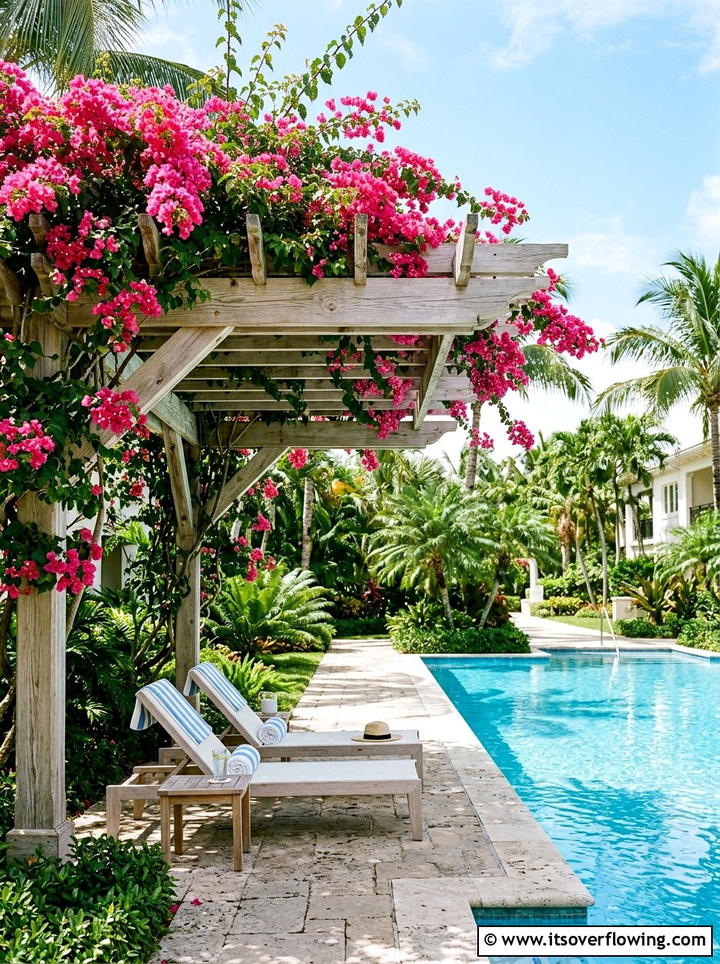
For a tropical or coastal vibe, nothing beats a poolside pergola draped in the neon pink or orange bracts of bougainvillea. These plants thrive in the heat and provide a stunning burst of color that reflects beautifully in the blue water. The pergola offers a much-needed break from the sun for swimmers and lounge chair enthusiasts alike. Bougainvillea is quite drought-tolerant once established, making it a great low-water choice for sunny pool decks. This design feels like a high-end resort right in your own backyard. The combination of structural wood and wild, colorful flowers creates a perfect balance of order and natural beauty.
9. Zen Garden Pergola With Trumpet Vine
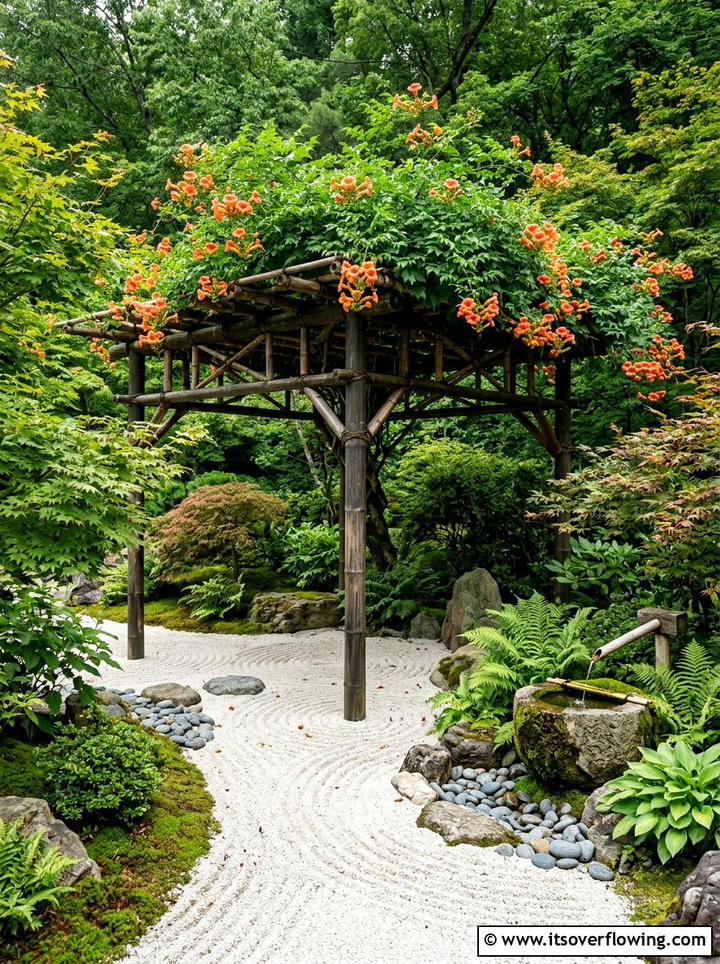
Incorporating a simple, minimalist pergola into a Zen-inspired garden adds height and architectural interest to the peaceful space. Trumpet vine is a vigorous climber with bright orange or yellow flowers that provides a bold contrast to calm surroundings. The large, tubular blooms are a favorite for local wildlife and add a sense of movement to the garden. Use natural materials like bamboo or dark-stained wood for the pergola to maintain the meditative atmosphere. Placing a stone fountain or a sand pit nearby enhances the tranquil feeling of the area. It is a great way to combine structural design with the wild beauty of nature.
10. Arched Pergola With Passionflower
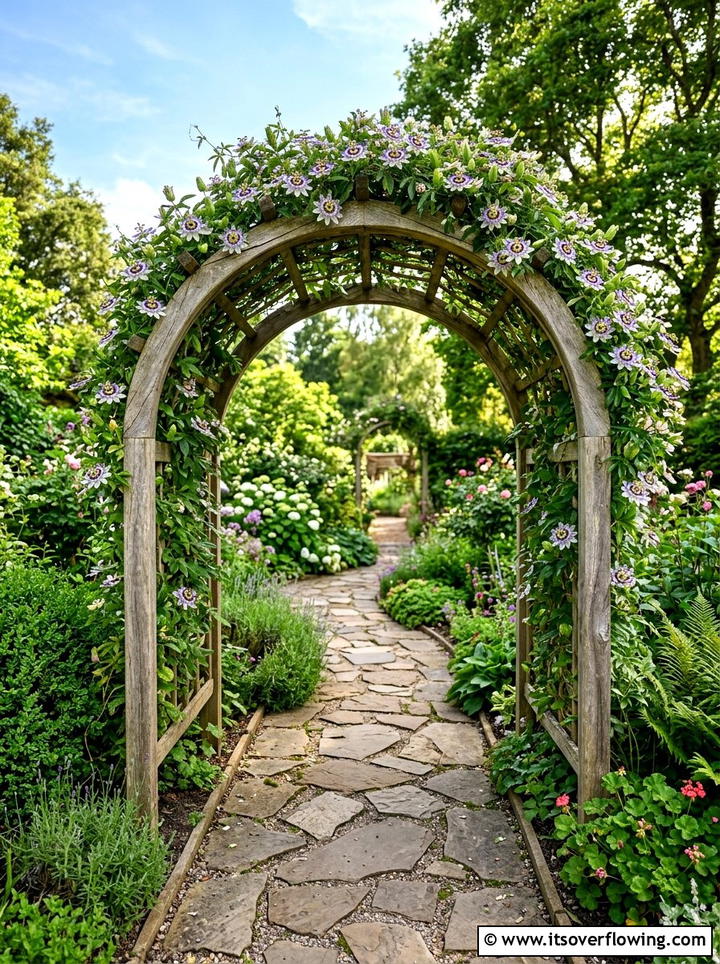
An arched pergola serves as a breathtaking entryway to a garden path or a specific zone in your backyard. Passionflower is an exotic-looking vine with intricate purple and white blooms that will fascinate anyone who walks through the archway. The vines are fast-growing and will quickly cover the curved top of the structure to create a floral tunnel effect. This design adds a sense of mystery and journey to your landscape as people move from one area to another. It is a fantastic focal point that draws the eye and encourages exploration. The unique shape of the arch breaks up the straight lines of the house.
11. Contemporary Pergola With Hydrangea Petiolaris
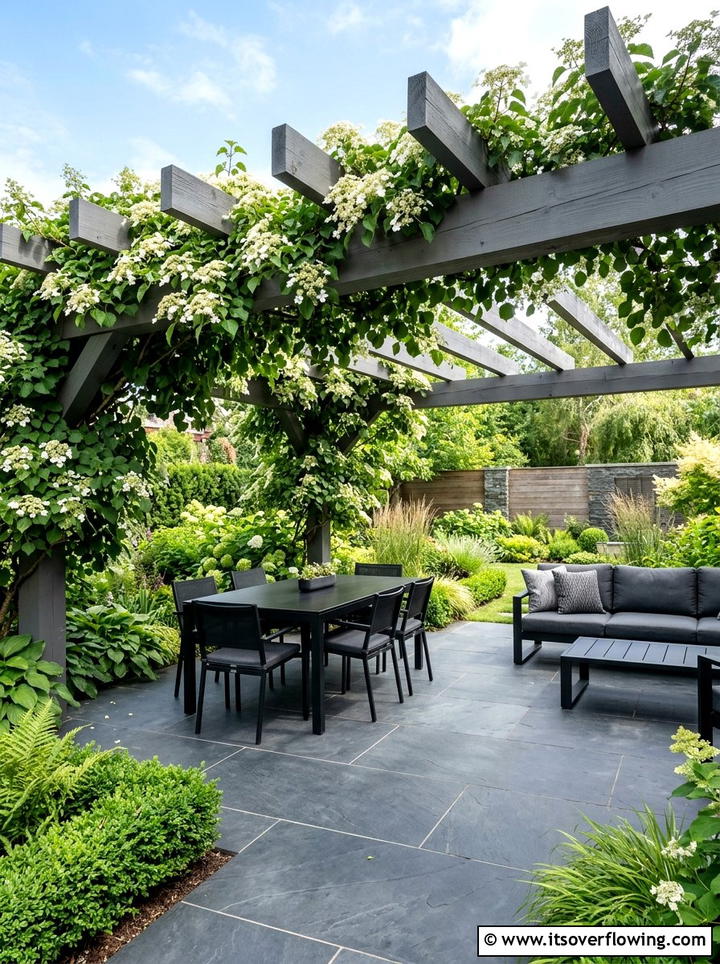
Climbing hydrangeas are perfect for a contemporary pergola design that emphasizes texture and subtle elegance over bright, flashy colors. The glossy green leaves and lacy white flower clusters create a sophisticated look that complements modern architecture and neutral color palettes. Unlike many other vines, climbing hydrangeas take a few years to establish but become incredibly lush and full over time. The woody stems look beautiful even in winter when the leaves have fallen, providing year-round architectural value. This design works well over a slate or large-format tile patio with high-end outdoor furniture. It offers a calm and refined atmosphere for hosting sophisticated outdoor dinner parties.
12. Farmhouse Pergola With Potato Vine
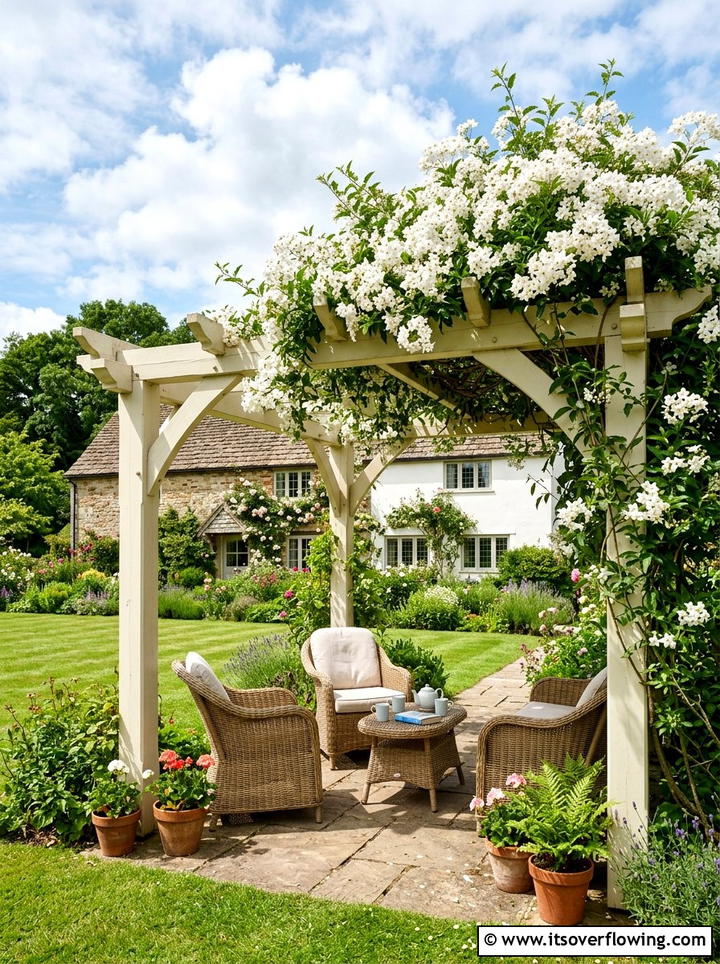
Potato vine is a versatile and fast-growing plant that produces clouds of small white flowers, making it ideal for farmhouse styles. This vine covers a pergola quickly, providing a light and airy canopy that lets dappled sunlight filter through to the ground. Pair this with a classic wooden pergola painted in a soft cream or left in a natural light wood finish. The look is casual, welcoming, and perfect for a family-oriented backyard with plenty of green space. Adding some wicker chairs and galvanized metal planters completes the farmhouse aesthetic. It is a budget-friendly way to get a lot of green coverage in just one season.
13. Traditional Pergola With Virginia Creeper
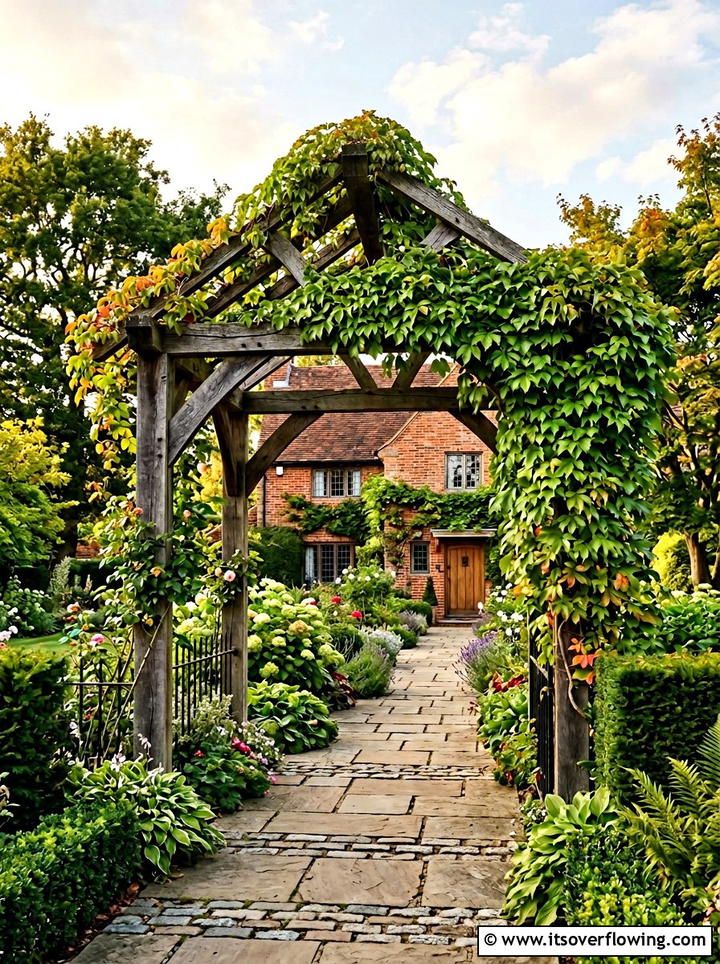
For those who love seasonal changes, a traditional pergola covered in Virginia creeper offers a spectacular show of color. In the summer, the leaves are a deep, rich green that provides a very dense and private shade canopy for your patio. When autumn arrives, the foliage transforms into brilliant shades of red, orange, and burgundy before falling for the winter. The five-pointed leaves add a nice texture that looks great against classic brick or stone houses. This vine is very hardy and can grow in almost any soil condition, making it a reliable choice for beginners. It gives your garden a very established and stately appearance.
14. Tropical Pergola With Mandevilla
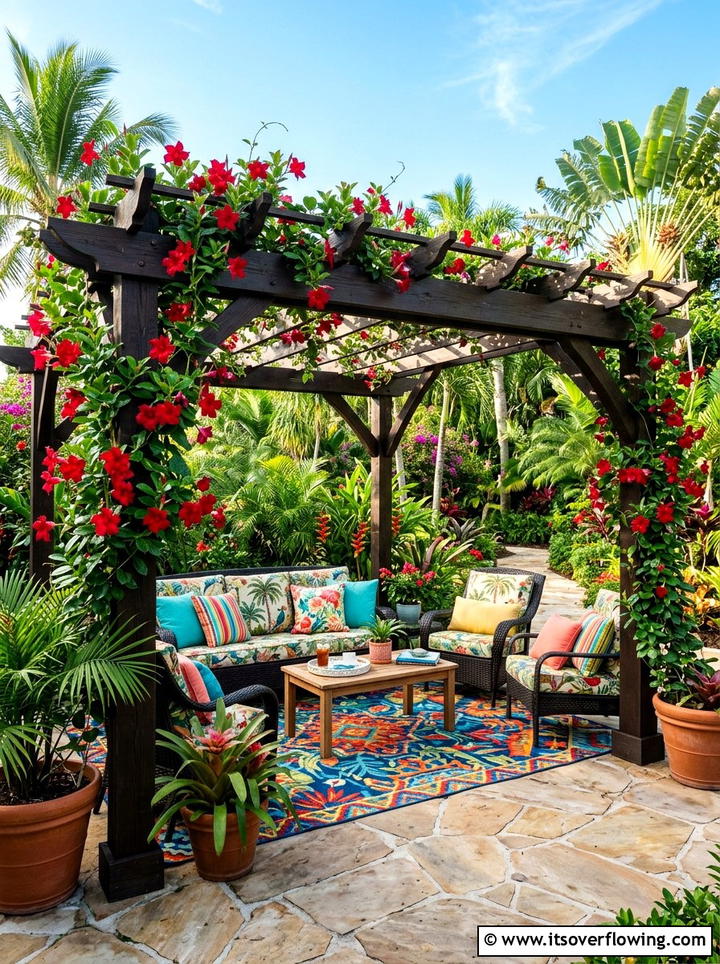
Mandevilla is the perfect vine for creating a tropical oasis under your pergola, especially if you live in a warmer climate. These plants produce large, trumpet-shaped flowers in shades of pink, red, or white that bloom continuously throughout the summer months. The glossy, dark green leaves provide a perfect background for the bright flowers, making every inch of the pergola look vibrant. This design looks amazing when paired with bold outdoor rugs and colorful throw pillows on your patio furniture. It creates a vacation-like atmosphere that makes you feel like you are on a private island. The vines are easy to manage and don’t get too heavy.
15. Minimalist Pergola With Star Jasmine
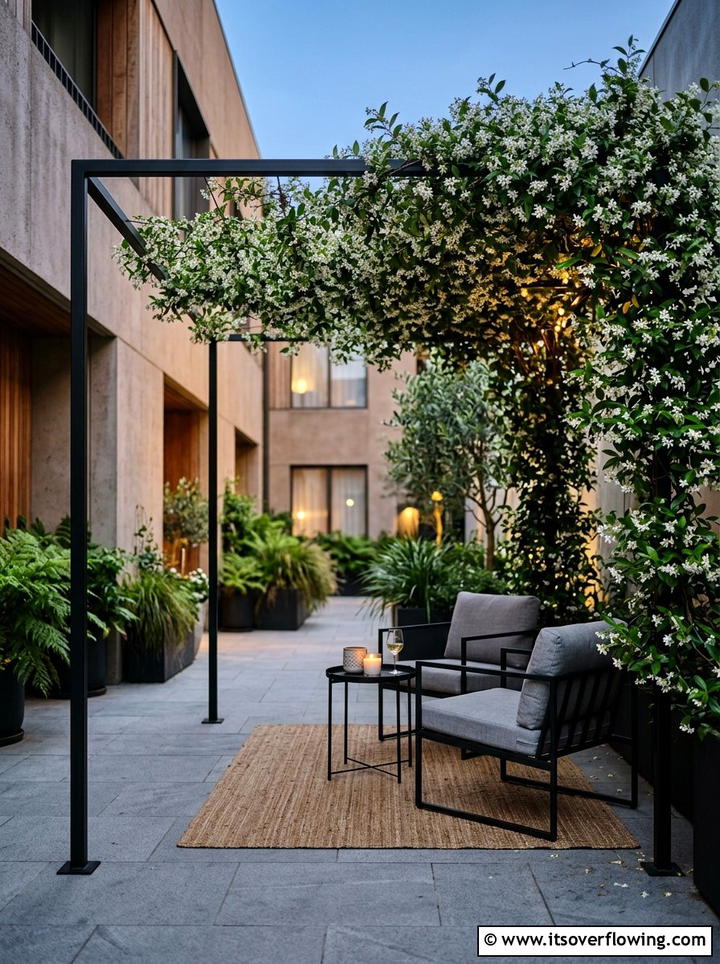
Star jasmine is a favorite for minimalist designs because it is evergreen and maintains a very tidy and organized appearance. The small, white, star-shaped flowers are incredibly fragrant and can fill an entire garden with a lovely scent on warm nights. A minimalist pergola made of thin steel or dark wood allows the beauty of the jasmine to take center stage. This setup is perfect for a small balcony or a modern urban courtyard where space is at a premium. The clean lines and consistent greenery create a peaceful and uncluttered environment. It is a sophisticated choice that requires very little pruning to stay looking its best.
16. Tuscan Style Pergola With Grapevine
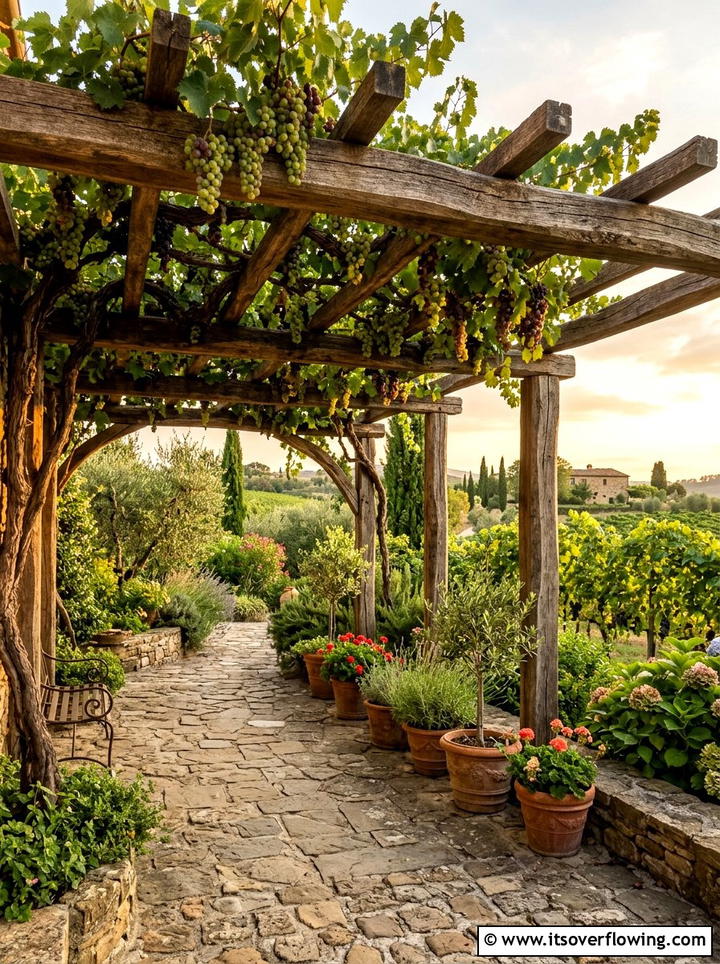
To achieve an authentic Tuscan look, use a heavy-timbered pergola with thick, gnarled grapevines that have been growing for many years. The combination of old wood and fruiting vines evokes the feeling of the Italian countryside and timeless European garden design. Use terracotta pots and stone paving to enhance the Mediterranean vibe of the seating area beneath the structure. This design is not just about looks; it provides a wonderful place to grow your own grapes for eating or making juice. The dappled light that filters through the large grape leaves creates a magical atmosphere for long lunches. It is a romantic and highly productive garden feature.
17. Deck Pergola With Bignonia
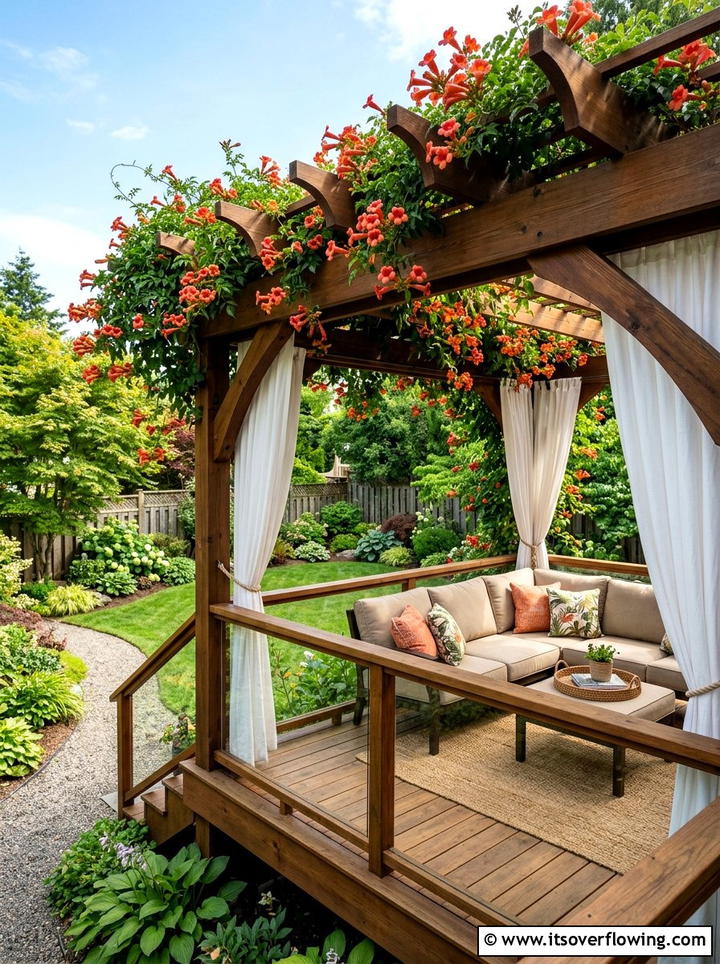
Building a pergola directly onto an elevated deck is a great way to add privacy and vertical interest to the space. Bignonia, also known as crossvine, is a fast-growing climber with pretty orange and yellow flowers that will quickly cover the frame. This vine is great for decks because it is evergreen in many climates and doesn’t drop a lot of messy debris. The pergola helps to define the deck as a separate “room” from the rest of the yard, making it feel more cozy. You can hang outdoor curtains from the sides for even more privacy from neighbors. It transforms a flat deck into a three-dimensional living space.
18. Stone Patio Pergola With Wisteria Sinensis
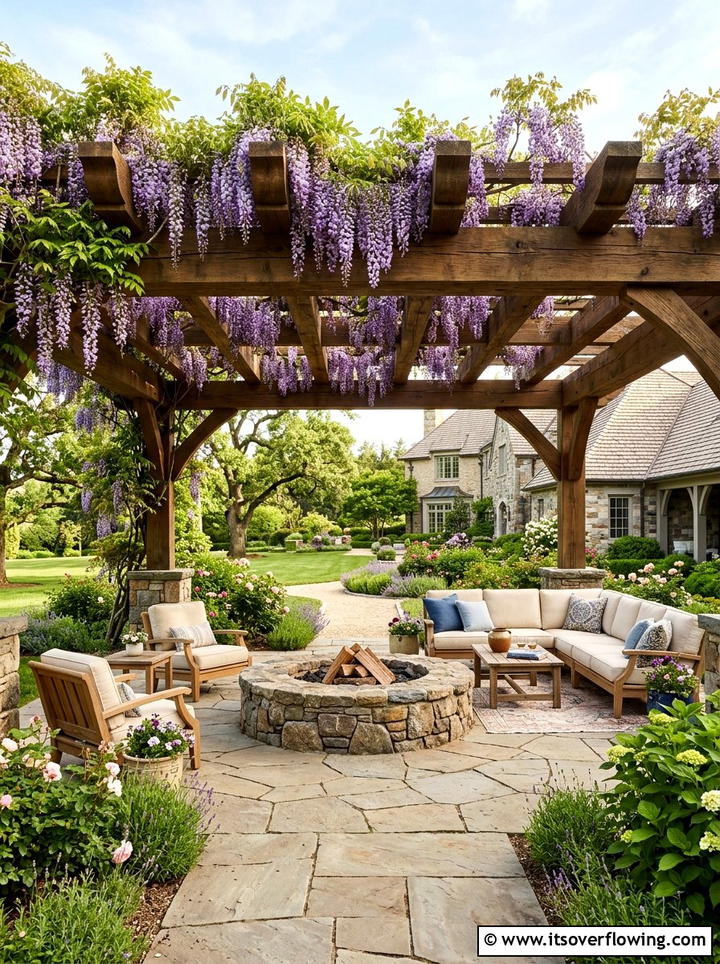
A stone patio provides a rugged and permanent foundation for a large pergola covered in Chinese wisteria. The contrast between the cold, hard stone and the soft, dripping floral racemes of the wisteria is visually stunning and very high-end. This design is best for large backyards where the pergola can act as a major architectural statement piece. Wisteria sinensis is known for its incredible fragrance and its ability to bloom before the leaves fully emerge in the spring. Placing a large fire pit under the pergola makes the space usable during the cooler spring evenings. It is a luxury garden design that adds significant value to a home.
19. Outdoor Dining Pergola With Sweet Autumn Clematis
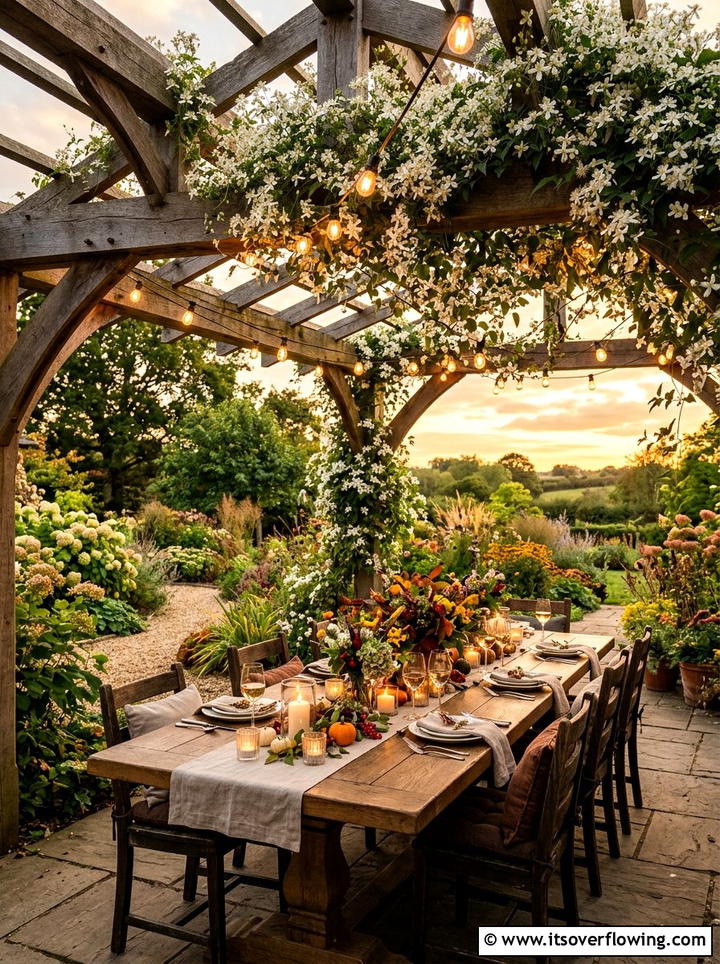
Sweet autumn clematis is a vigorous vine that blooms in late summer and early fall with thousands of tiny white flowers. This makes it an excellent choice for a pergola situated over an outdoor dining area where you host harvest dinners. The scent is incredibly sweet and adds a wonderful layer to the experience of eating outdoors with friends. Because this vine grows so quickly, it can provide full shade in just one or two growing seasons. The white flowers look like a blanket of snow covering the top of your pergola in the late season. It is a beautiful way to celebrate the end of the summer.
20. Fire Pit Pergola With Climbing Hydrangea
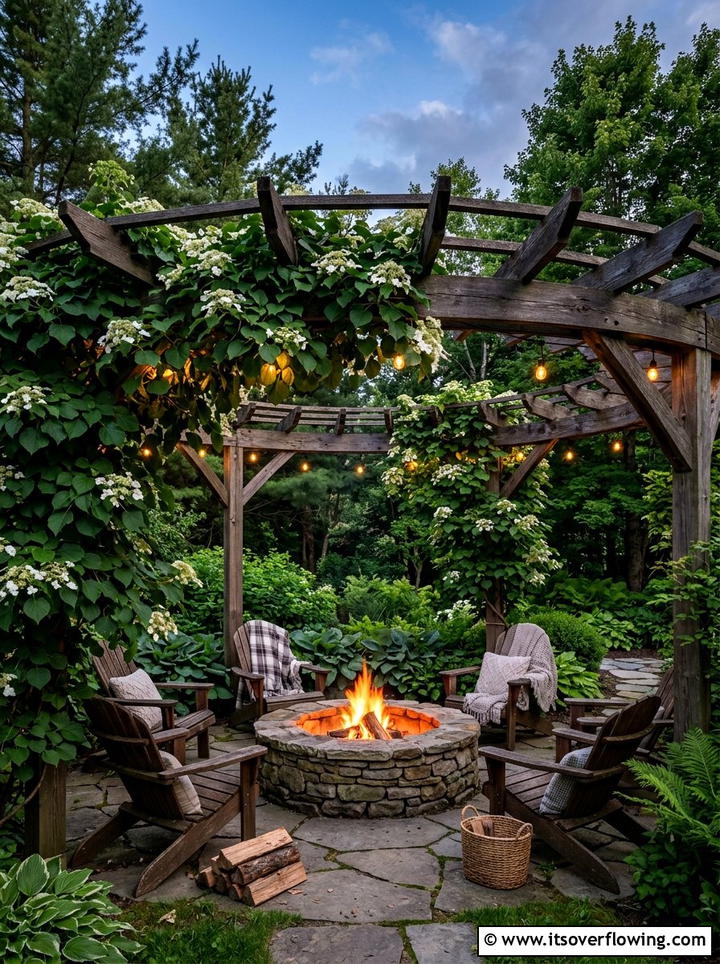
Surrounding a fire pit with a pergola provides a sense of enclosure and makes the fire feel more like a hearth. Climbing hydrangea is a great vine for this because its thick, woody stems and large leaves create a very solid wall of greenery. This helps to block the wind, making the fire pit area warmer and more comfortable for everyone sitting around the flames. The white flowers in early summer add a touch of brightness to the area during the day. This design creates a focal point in the yard that is perfect for gathering with friends late into the night. It feels very grounded and permanent.
21. Secluded Garden Pergola With Silver Lace Vine
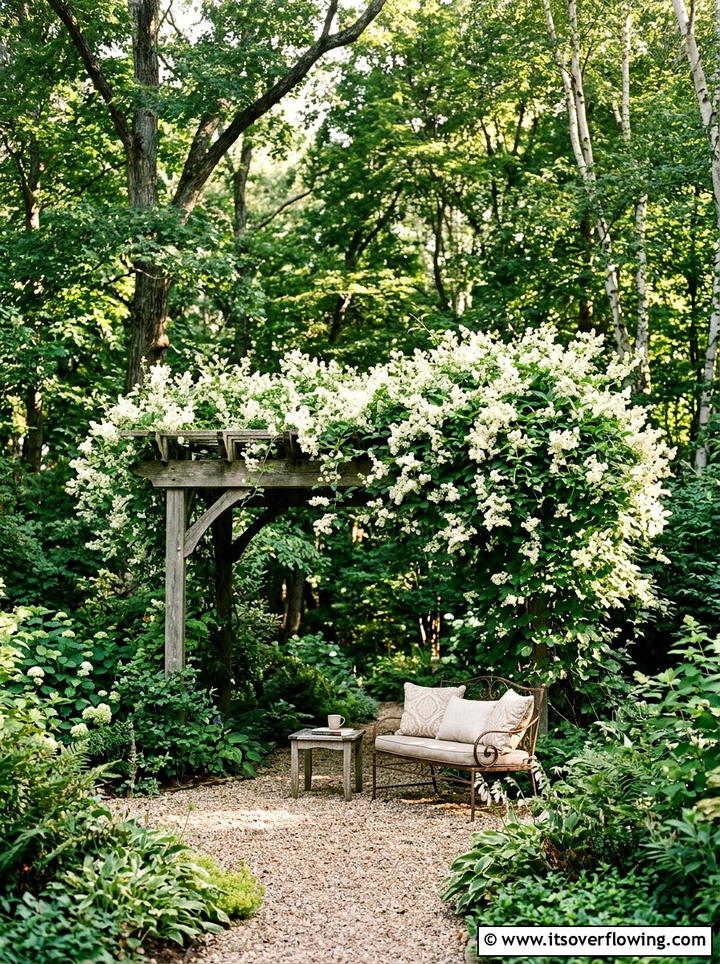
Silver lace vine is one of the fastest-growing vines available, making it perfect for creating a secluded getaway in a short time. Its frothy white flowers and delicate green leaves create a soft, romantic look that hides the structure of the pergola completely. This is a great choice for a pergola located at the far end of a garden where you want total privacy. The vine can be quite aggressive, so it is perfect for large structures where you want maximum coverage with minimal effort. It creates a “living wall” effect that blocks out the rest of the world. It is the ultimate choice for a hidden garden sanctuary.
22. Backyard Pergola With Chocolate Vine
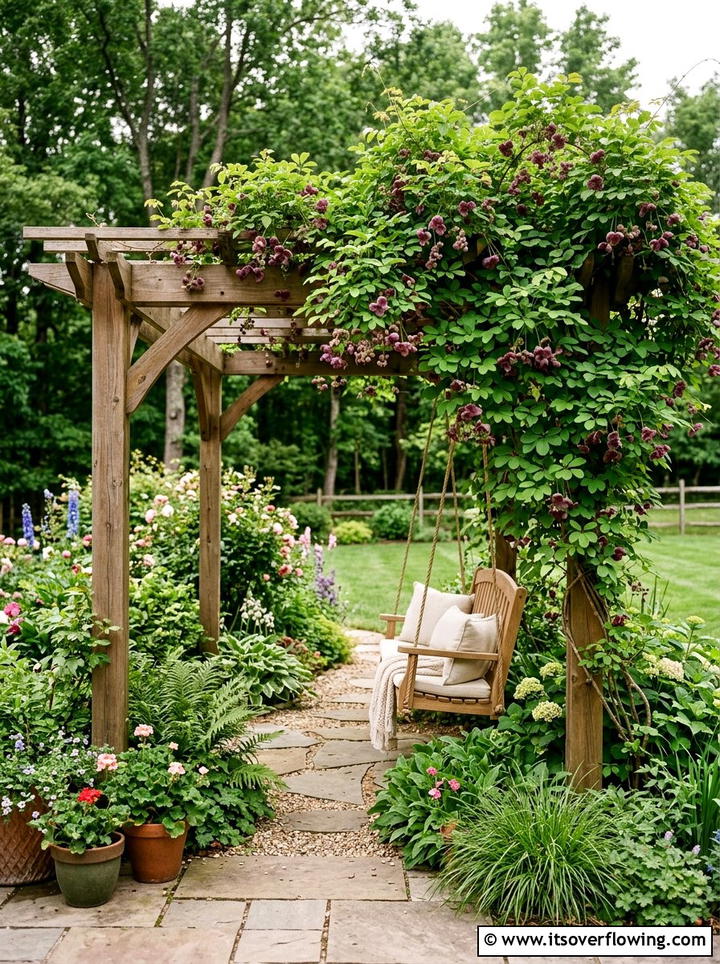
Chocolate vine, or Akebia, is a unique climber with interesting five-lobed leaves and small, brownish-purple flowers that smell like cocoa. Using this on a backyard pergola adds a conversation piece and a unique scent to your outdoor living space. The foliage is very dense and creates a beautiful, textured screen that provides excellent shade for those sitting underneath. It is a very hardy vine that can tolerate some shade, making it perfect for pergolas that aren’t in full sun all day. This design feels very organic and fits well into a naturalistic or woodland garden style. The dark flowers are subtle but very beautiful upon close inspection.
23. Painted Wood Pergola With Creeping Fig
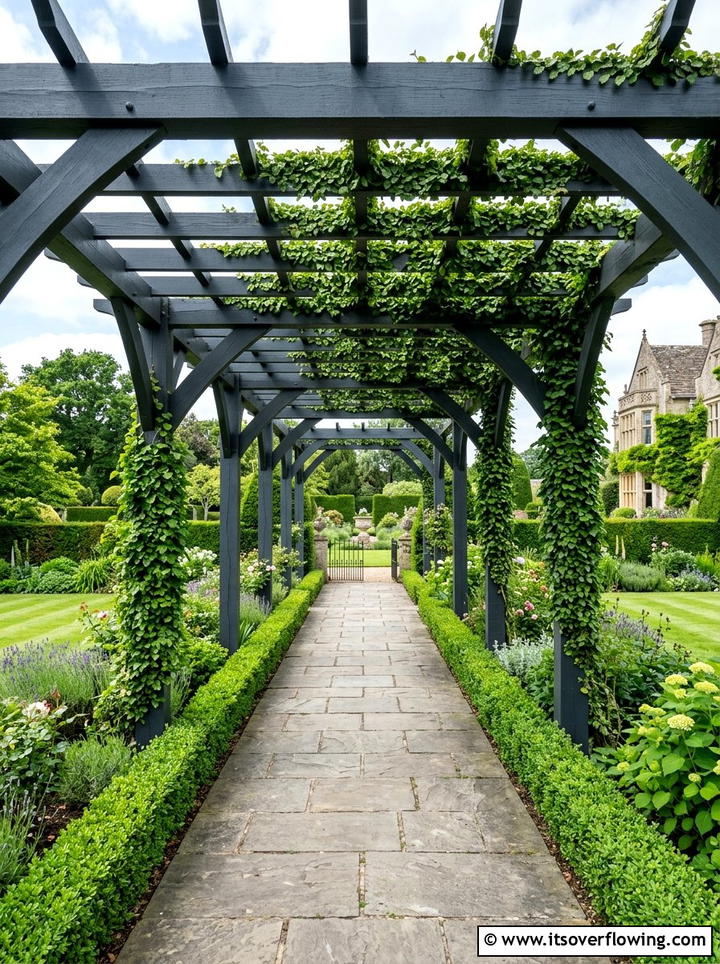
For a very formal or traditional look, consider a painted wood pergola covered in the tight, green foliage of creeping fig. Creeping fig attaches itself closely to the wood, creating a manicured “green” structure that looks very intentional and tidy. This is a great choice for classic gardens where you want the architectural lines of the pergola to still be visible. Painting the wood a dark charcoal or a deep forest green allows the vine to blend in seamlessly for a monochrome look. It is a very low-maintenance option that stays green and lush throughout the year. This style works beautifully in urban courtyards or formal estate gardens.
24. Steel Pergola With Snail Vine
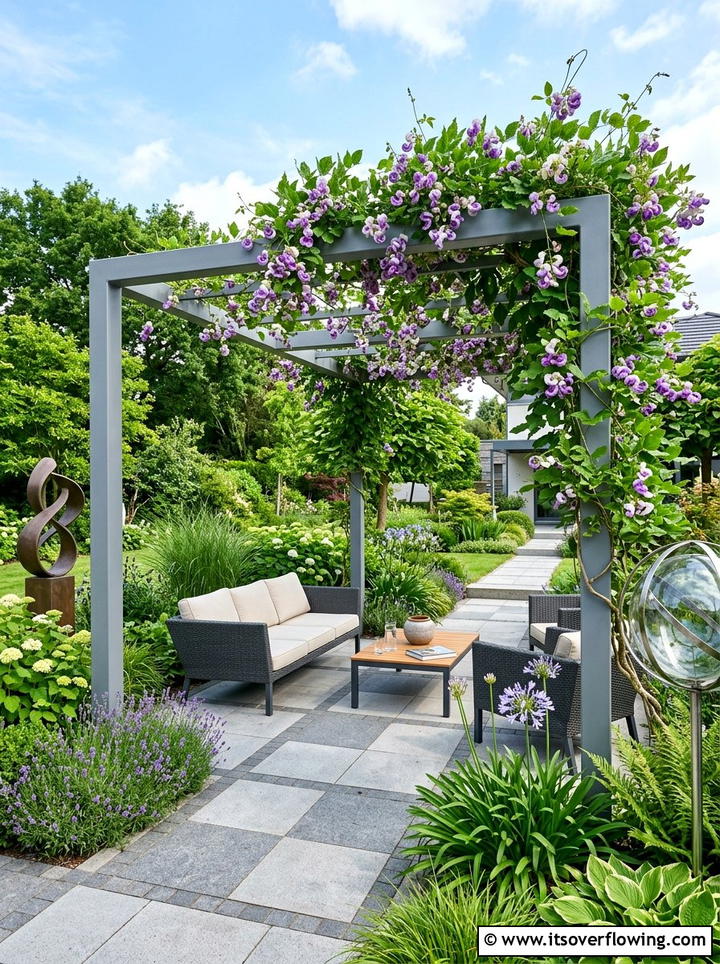
Snail vine is a tropical climber with fascinating, curled flowers that look like small snail shells in shades of purple and cream. Pairing this unusual plant with a modern steel pergola creates a very contemporary and artistic look in your garden. The thin steel beams provide a strong support for the twisting vines without looking bulky or heavy. This design is perfect for someone who wants a garden that stands out from the neighbors with unique plant choices. The fragrance of the snail vine is also a lovely bonus for anyone relaxing under the pergola. It is a great example of how structure and nature can work together.
25. Gravel Path Pergola With Morning Glory
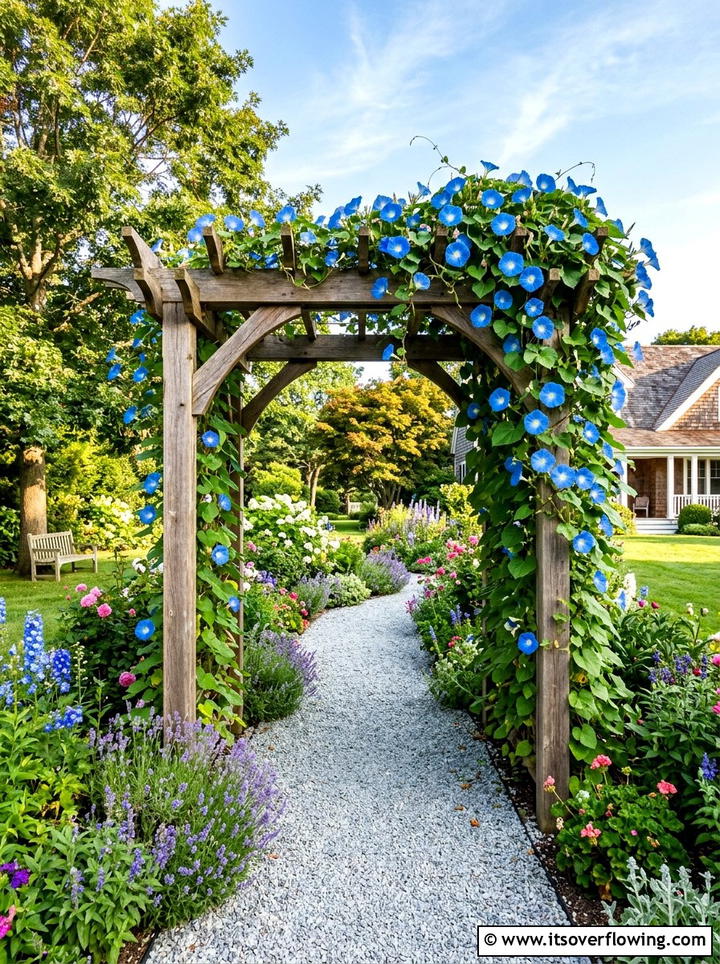
A simple pergola placed over a gravel path creates a beautiful transition zone as you move through your garden. Morning glories are easy-to-grow annual vines that provide a massive amount of color in shades of blue, purple, and pink. Because they grow from seed each year, you can change the color palette of your pergola every single season if you wish. The large, heart-shaped leaves provide a nice contrast to the crunch of the gravel underfoot. This design is very budget-friendly and offers a high impact for very little initial investment. It is a classic garden project that brings joy every morning when the new flowers open.
Conclusion:
Designing a garden with a pergola and climbing vines is one of the most effective ways to add character and comfort to your home. These structures offer a unique blend of architecture and biology, creating living spaces that change and grow with the seasons. Whether you prefer the romantic look of roses or the modern appeal of jasmine on metal, there is a combination for every style. Investing in a quality pergola ensures you have a permanent focal point that provides shade and privacy for years to come. We hope these twenty-five ideas inspire you to transform your backyard into a lush, vine-covered paradise that you will enjoy every day.

Related posts:
 25 creative garden ideas with pergola vines for Shaded Beauty
 25 Garden Design Ideas With Woodland Plants for Lush Shade
 25 garden ideas with hostas for Lush Shade Garden Beauty
 25 Garden Ideas for Shade to Brighten Dark Corners
 25 small garden ideas with pergola corner for Shaded Retreats
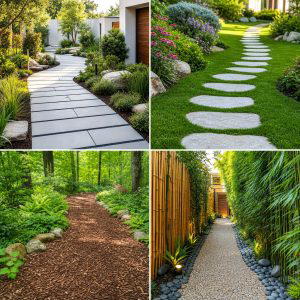 25 Garden Design Ideas With Pathways for Beautiful Garden Flow
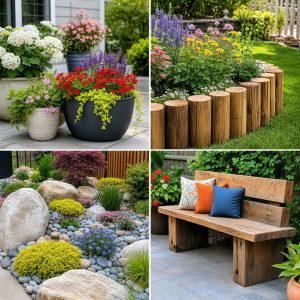 25 Garden Design Ideas for Low Budget Projects That Look Expensive
 25 Garden Design Ideas for Patios With Stylish Outdoor Charm
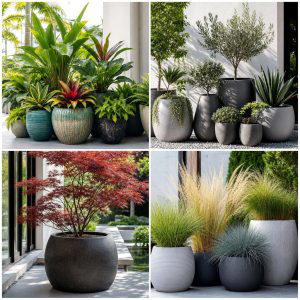 25 garden design ideas with container clusters: Stylish Pots
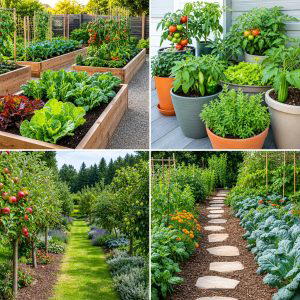 25 garden design ideas with edible plants: Beautiful Foodscapes
 25 garden design ideas with monochrome plants: Chic Planting
 25 Garden Design Ideas With Privacy Screens for Secluded Yards