
Hostas are the undisputed kings of the shade garden, offering a lush, architectural beauty that few other perennials can match. These versatile plants come in an incredible array of sizes, textures, and colors, ranging from deep forest greens to vibrant chartreuse and cool, icy blues. Many gardeners appreciate them for their low-maintenance nature and their ability to thrive in those tricky, dimly lit corners of the yard where grass often struggles to grow. By incorporating different varieties, you can create a layered, professional-looking landscape that feels both tranquil and high-end. Whether you are looking to fill a massive space under an old oak tree or want a sophisticated container display for your patio, hostas provide the perfect solution for long-lasting, reliable greenery throughout the growing season.
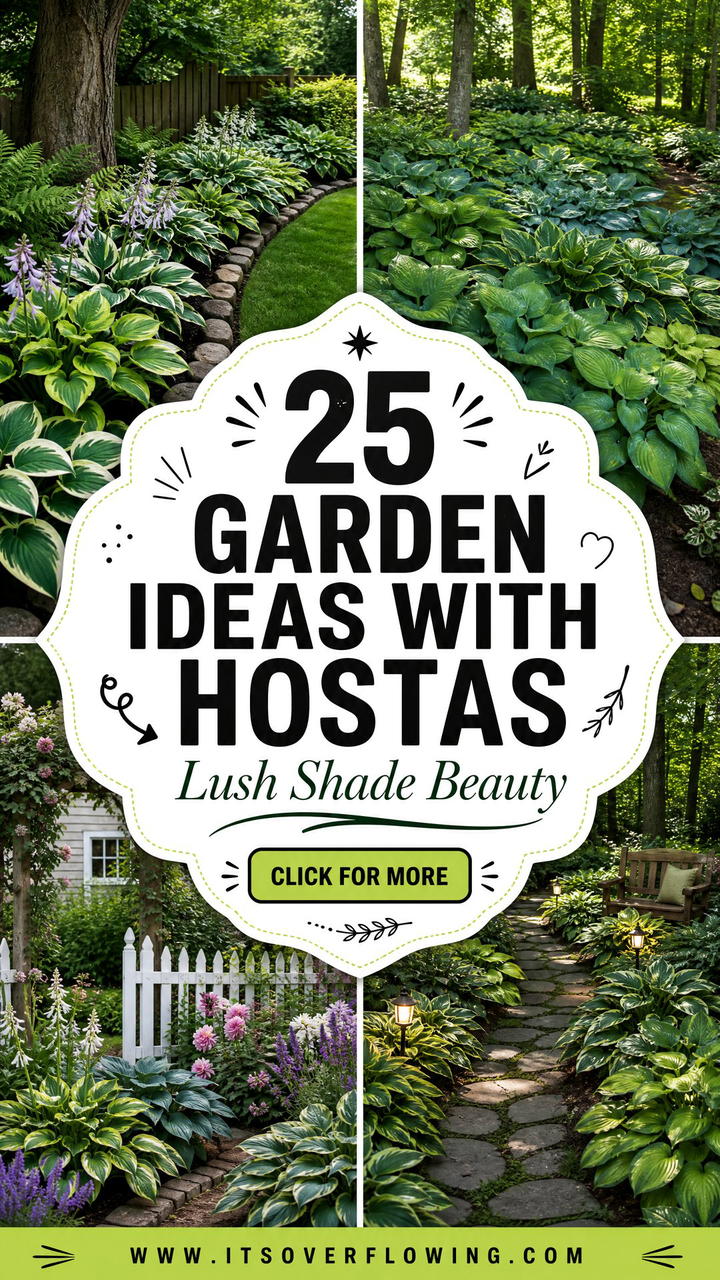
1. Shade garden border
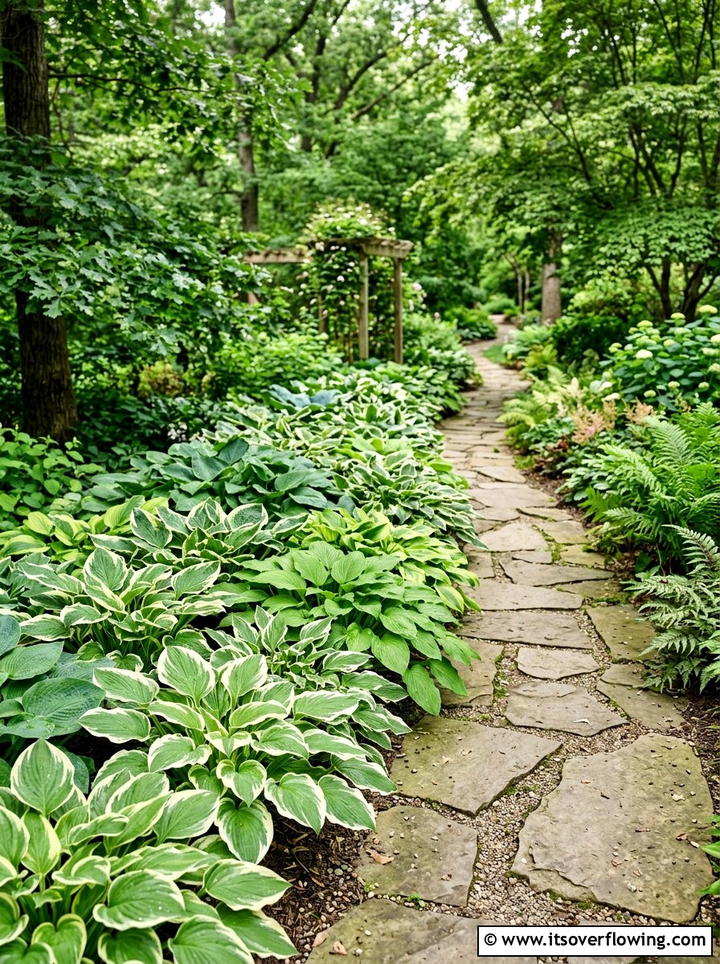
Imagine walking along a garden path lined with a thick, undulating border of soft, overlapping leaves. A shade garden border using hostas creates a clean, defined edge that naturally guides the eye through your outdoor space while suppressing weeds effectively. You can mix different heights to create a tiered effect, placing smaller varieties like ‘Mouse Ears’ in the very front and taller ones further back. This approach adds a structural element to your landscaping that remains beautiful from spring until the first frost. Using hostas as a border plant also helps soften the hard edges of walkways, driveways, or patio stones, making the entire area feel more organic and inviting for your guests.
2. Hostas and ferns
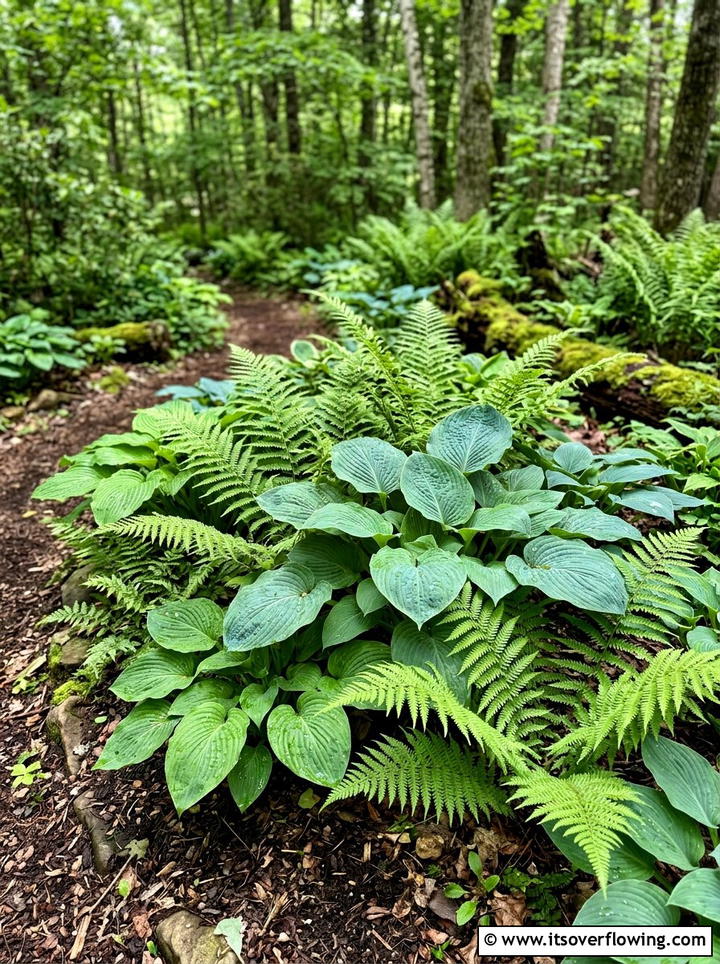
Have you ever noticed how the broad, solid leaves of a hosta perfectly complement the delicate, lacy fronds of a fern? Combining these two shade-loving classics creates a stunning contrast in texture that instantly elevates any woodland garden or dark corner. The architectural weight of a large hosta provides a stable backdrop for the airy, vertical movement of ferns like the Ostrich or Japanese Painted varieties. This pairing mimics the natural growth patterns found on a forest floor, resulting in a serene and cooling atmosphere that feels like a private escape. When you plant them together, ensure they both have moist, well-draining soil to help them flourish and maintain their vibrant green hues throughout the summer months.
3. Container garden hostas
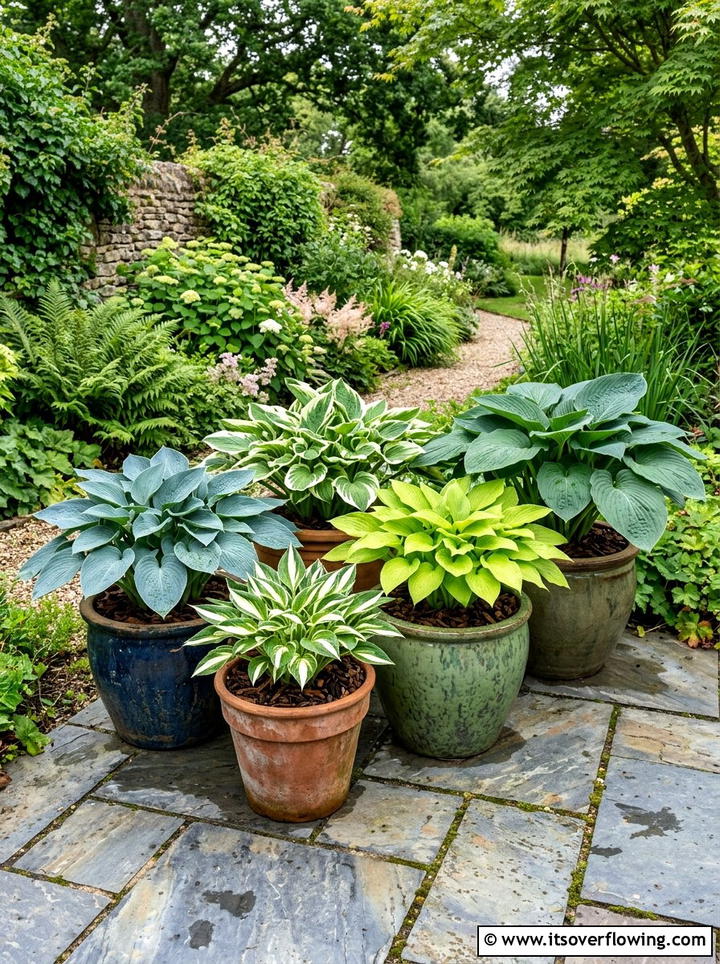
Can you grow beautiful hostas even if you only have a small balcony or a paved patio area? Absolutely, because hostas are incredibly well-suited for container gardening, allowing you to bring lush foliage to areas without open soil. Choosing a decorative ceramic pot or a rustic wooden barrel provides a stylish home for these perennials, highlighting their unique leaf patterns and colors at eye level. This method also gives you better control over the soil quality and moisture levels, which is vital for keeping the plants looking their best. Moving the containers around allows you to experiment with different lighting conditions or refresh your porch decor whenever you feel like changing the look of your outdoor living space.
4. Blue hostas specimen
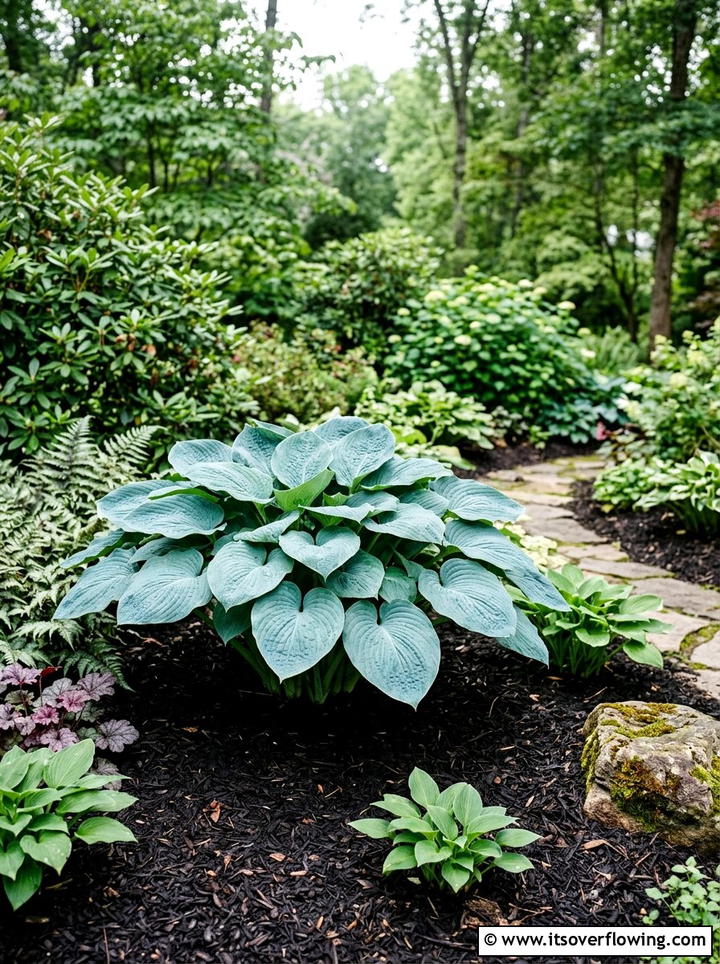
The striking, waxy coating on blue hostas creates a misty, ethereal look that stands out against the typical bright greens of a standard garden. Using a single, large blue variety like ‘Halcyon’ or ‘Blue Angel’ as a focal point specimen draws the viewer’s attention and adds a sense of cool sophistication to your landscape design. These varieties often hold their color best in deeper shade, as too much direct sunlight can melt away the protective blue bloom on the leaves. When surrounded by dark mulch or stones, the powdery blue tones become even more prominent, creating a professional-designed appearance that looks like it belongs in a high-end garden magazine or a viral Pinterest post.
5. Giant hosta garden
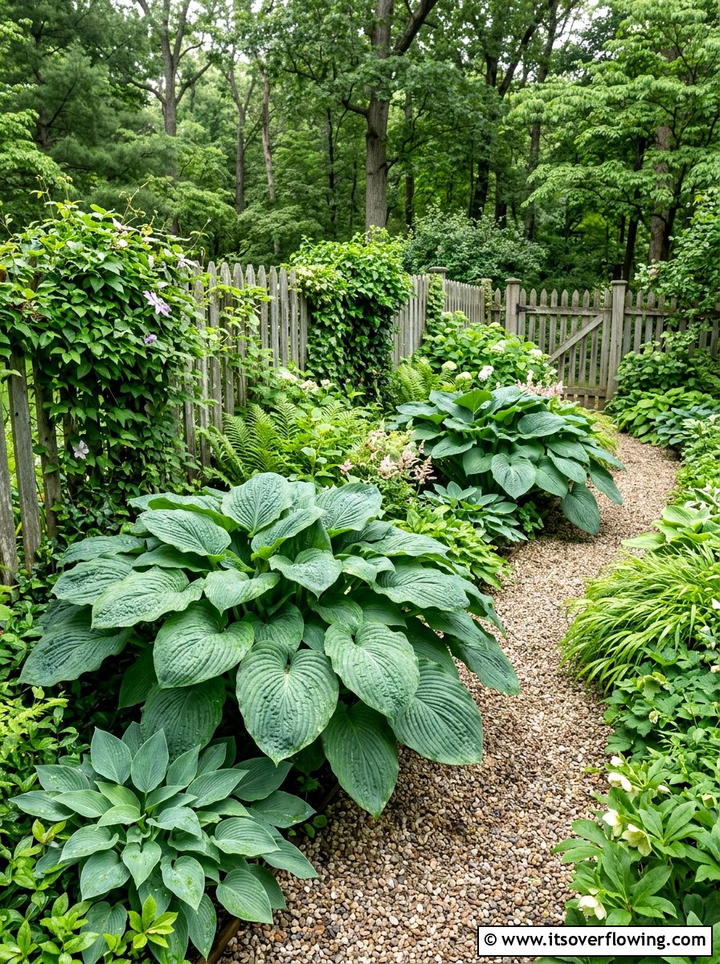
There is something truly awe-inspiring about walking past a hosta that has grown to be several feet wide and tall. Creating a giant hosta garden focuses on massive varieties such as ‘Empress Wu’ or ‘Sum and Substance’ to create a bold, tropical-like atmosphere in temperate climates. These oversized plants act as living sculptures, filling large gaps in the landscape and providing a dramatic sense of scale that smaller perennials simply cannot achieve. Because they grow so large, they are excellent for covering up unsightly areas or providing a lush screen along a fence line. Their huge leaves also do a fantastic job of shading out weeds, making this a low-maintenance choice for busy homeowners.
6. Miniature hostas rock garden
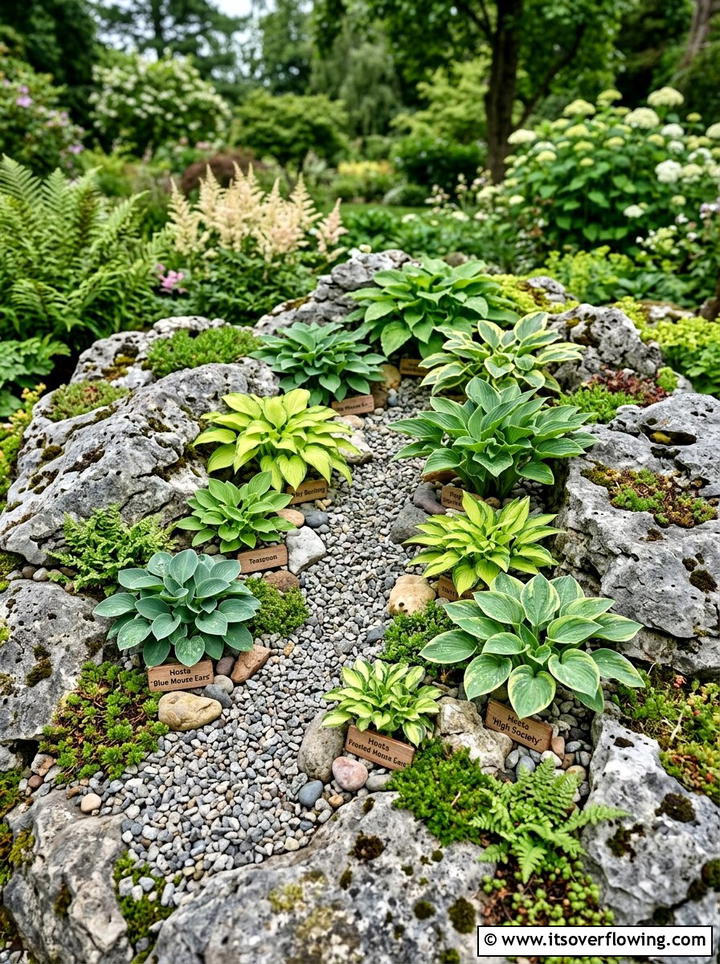
Tiny treasures can sometimes make the biggest impact in a small garden design. A miniature hosta rock garden utilizes smaller varieties like ‘Blue Mouse Ears’ or ‘Pandora’ s Box’ tucked into crevices between large stones or pebbles. These diminutive plants are perfect for areas where space is limited, such as a rockery or a small fairy garden. The hard, jagged edges of the rocks contrast beautifully with the soft, rounded foliage of the mini hostas. This setup allows you to appreciate the intricate details and delicate colors of the leaves up close. It is a fantastic way to add visual interest to a sloped area or a corner of a courtyard without overwhelming the surrounding landscape.
7. Variegated hostas walkway
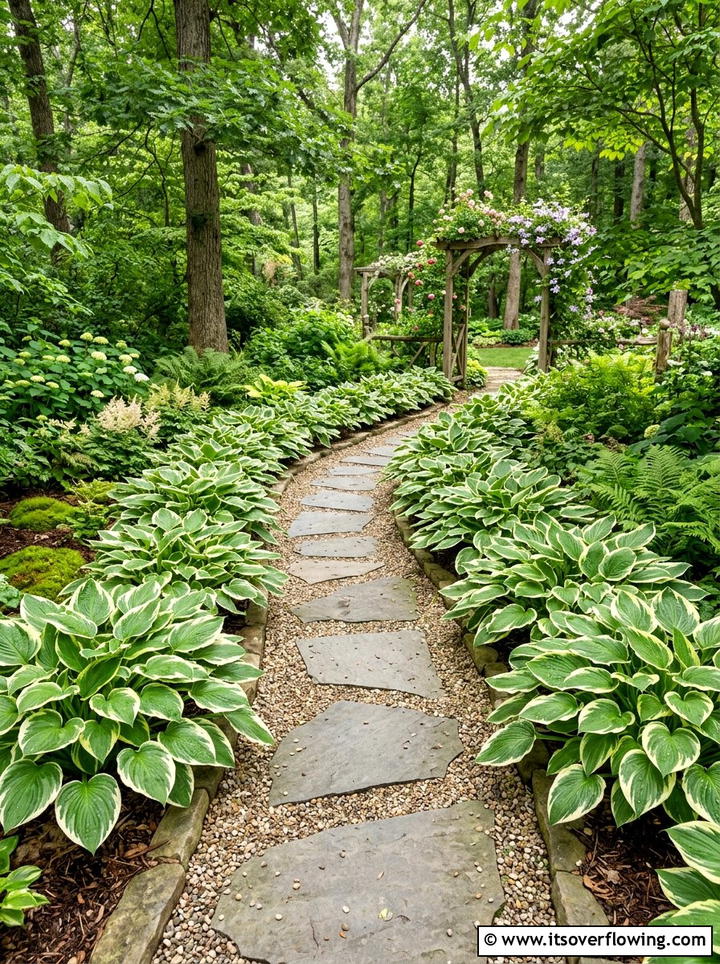
Walking along a path should be a sensory experience that delights the eye at every step. A variegated hostas walkway uses plants with white or yellow leaf margins to brighten up a shaded path and create a sense of movement. The light-colored edges of the leaves catch what little light is available, making the entire walkway feel brighter and more spacious. This design choice is particularly effective for long, narrow passages alongside a house or a fence. By repeating the same variegated variety throughout the length of the path, you create a cohesive and rhythmic look. The contrast between the dark green centers and bright edges adds a layer of depth that keeps the garden looking dynamic.

8. Hosta garden under trees
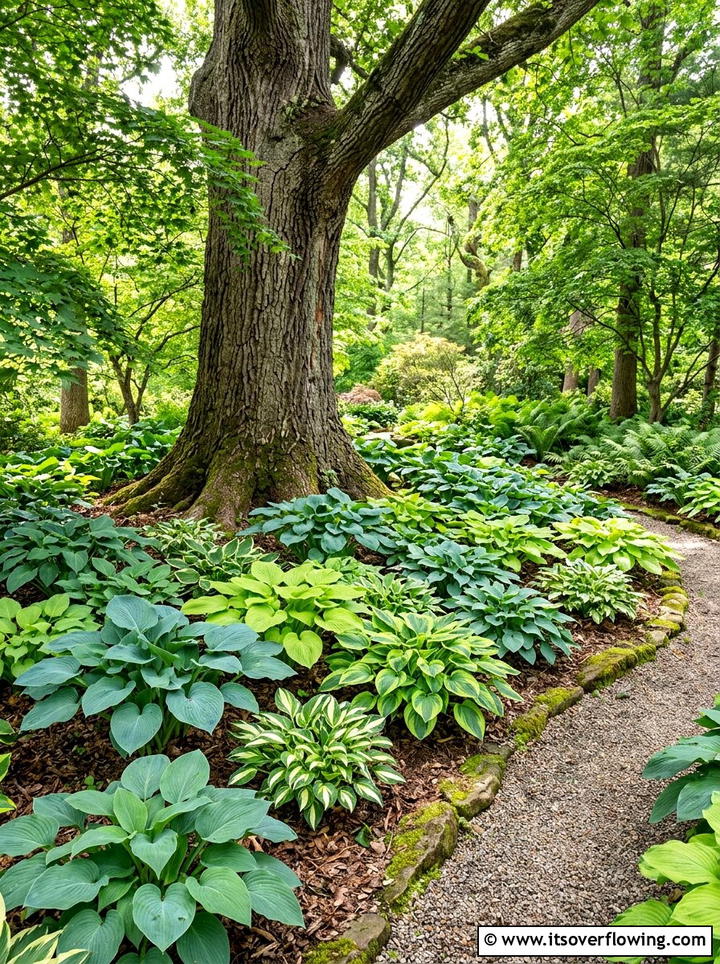
Do you have a large tree that creates a dry, shady patch where nothing seems to grow? Planting a hosta garden under trees is a classic solution that turns a barren area into a lush, green oasis. Hostas are remarkably resilient and can compete with tree roots for moisture if they are given a good start with plenty of compost. Selecting varieties with different leaf shapes and colors allows you to create a textured carpet beneath the canopy. This not only looks beautiful but also helps to protect the tree roots by providing a natural mulch of falling leaves. The dappled sunlight filtering through the branches above creates a magical, forest-like atmosphere that is incredibly relaxing to sit near.
9. Hostas with coral bells
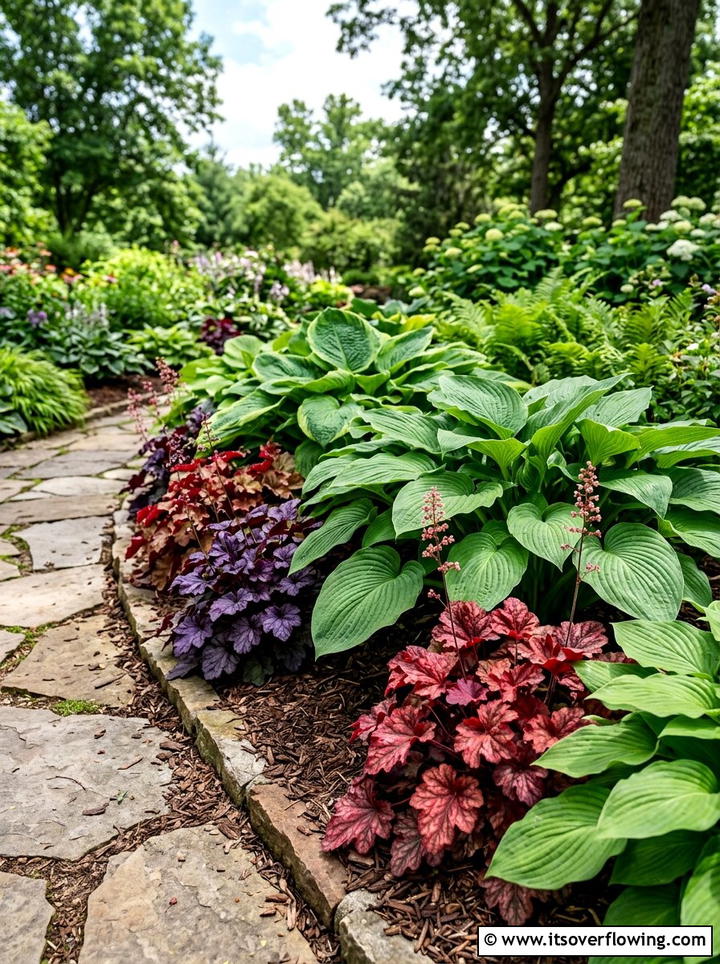
If you want to add a splash of unexpected color to your shade garden, consider pairing your hostas with coral bells. These plants, also known as Heuchera, come in stunning shades of purple, silver, and burgundy that pop against the green foliage of the hostas. The combination of the broad, rounded hosta leaves and the ruffled, colorful coral bell leaves creates a sophisticated and vibrant display. This pairing works exceptionally well in garden beds or large containers where you want to create a focal point. Because both plants have similar light and water requirements, they make excellent companions. This mix of foliage colors ensures that your garden remains visually interesting even when the plants are not in bloom.
10. White flowering hostas
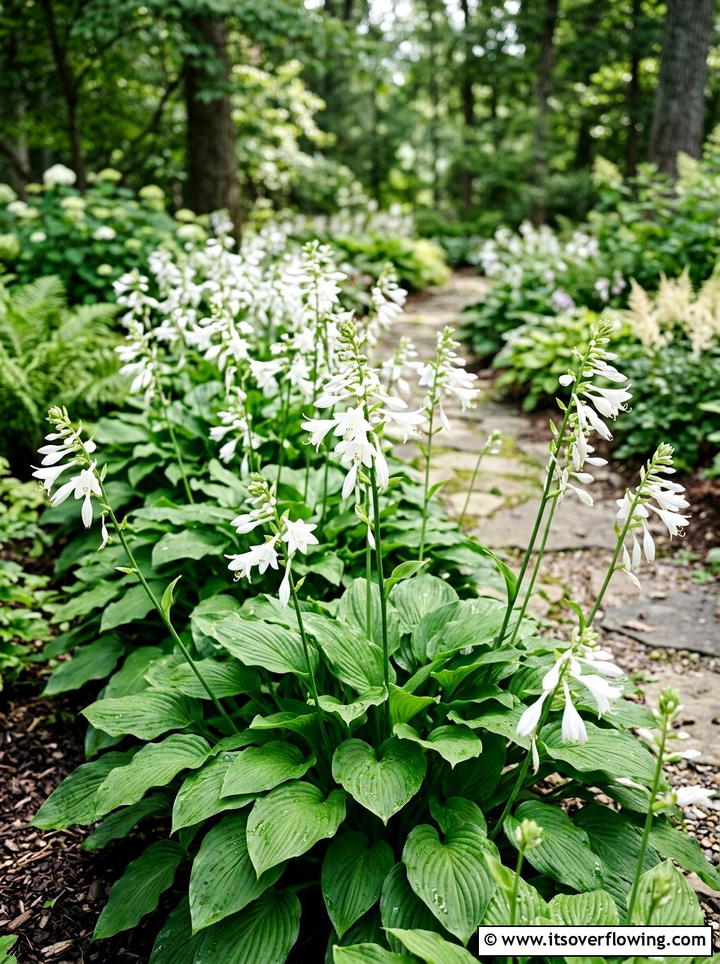
While hostas are primarily grown for their leaves, many varieties produce stunning white flowers that fill the air with a sweet fragrance. Choosing white flowering hostas adds an extra layer of beauty to your garden during the mid-to-late summer months. Varieties like ‘Plantaginea’ are famous for their large, trumpet-shaped blooms that look elegant against the lush green background. These flowers attract pollinators such as bees and hummingbirds, bringing life and movement to your shaded retreat. The bright white blossoms also stand out beautifully in the twilight, making them a perfect addition to a moon garden design. Placing these fragrant plants near a patio or a window allows you to enjoy their scent throughout the summer evenings.
11. Hosta ground cover
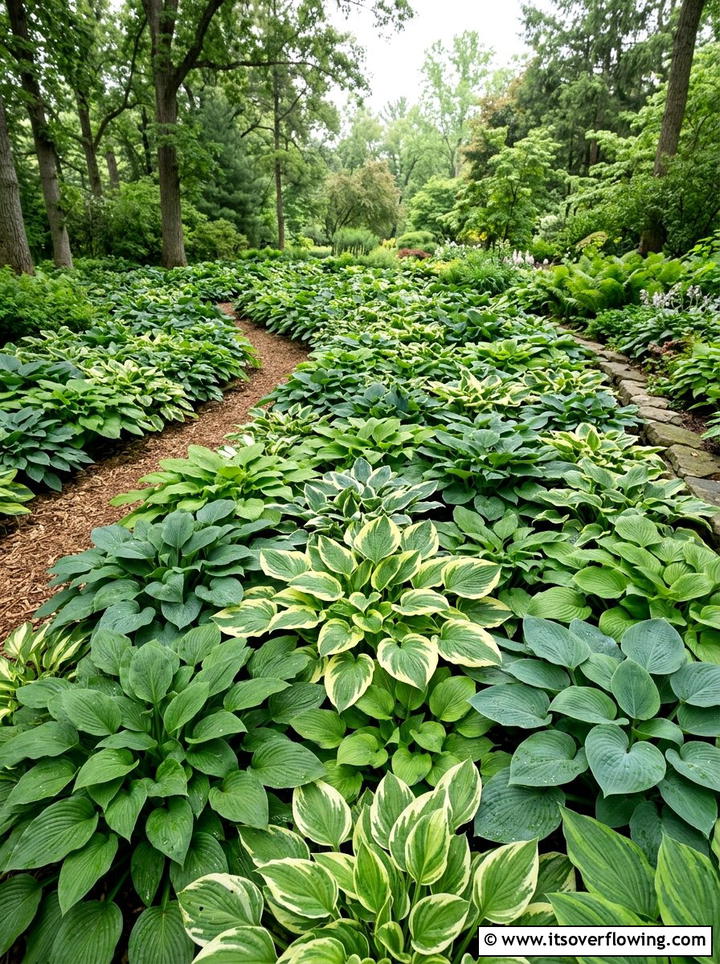
Are you tired of constantly weeding large areas of your yard? Using hostas as a ground cover is an effective and beautiful way to suppress weeds while creating a sea of lush greenery. When planted closely together, the broad leaves of the hostas overlap to form a dense canopy that prevents sunlight from reaching the soil below. This naturally inhibits weed growth and helps to retain moisture in the earth. Choosing a single variety for a large area creates a clean, modern look, while mixing different types can result in a more natural, meadow-like appearance. This is a particularly good choice for hillsides or underrepresented areas of the garden where regular maintenance might be difficult or time-consuming.
12. Slanted garden hostas
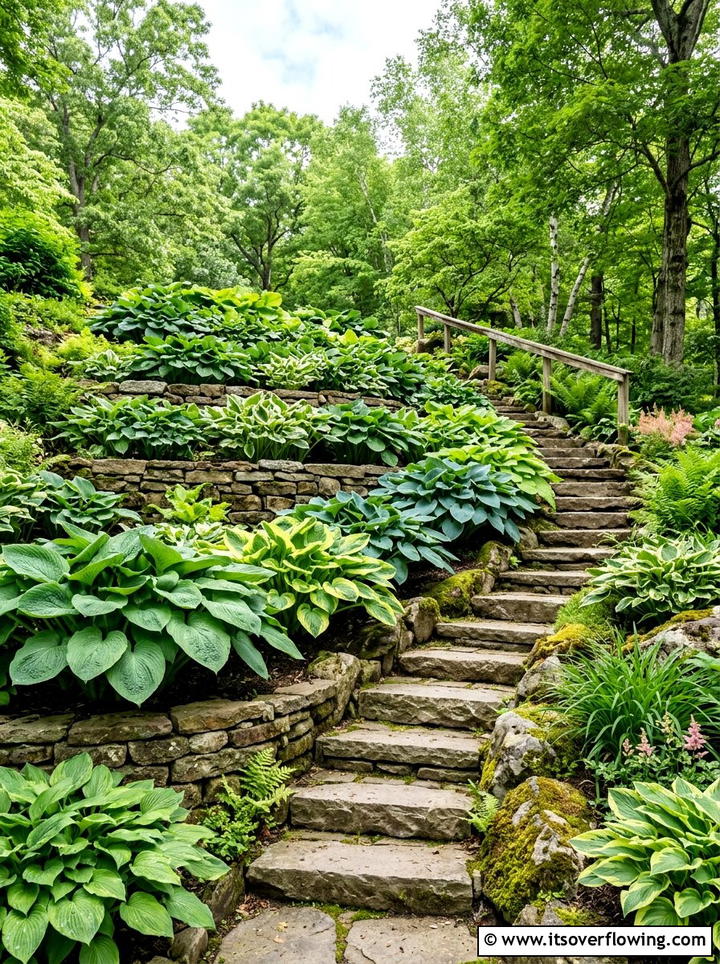
Gardening on a slope can be challenging, but using hostas on a slanted garden can help stabilize the soil and create a stunning vertical display. Because of their extensive root systems, hostas are excellent at holding onto the earth and preventing erosion during heavy rains. You can plant them in staggered rows to create a cascading effect of leaves flowing down the hillside. This design draws the eye upward and makes the most of the vertical space in your yard. Using different colors and sizes on the slope adds depth and dimension, turning a difficult landscape feature into a major highlight. The large leaves also help to shade the soil, keeping it cool and moist even on a sunny day.
13. Modern hosta landscaping
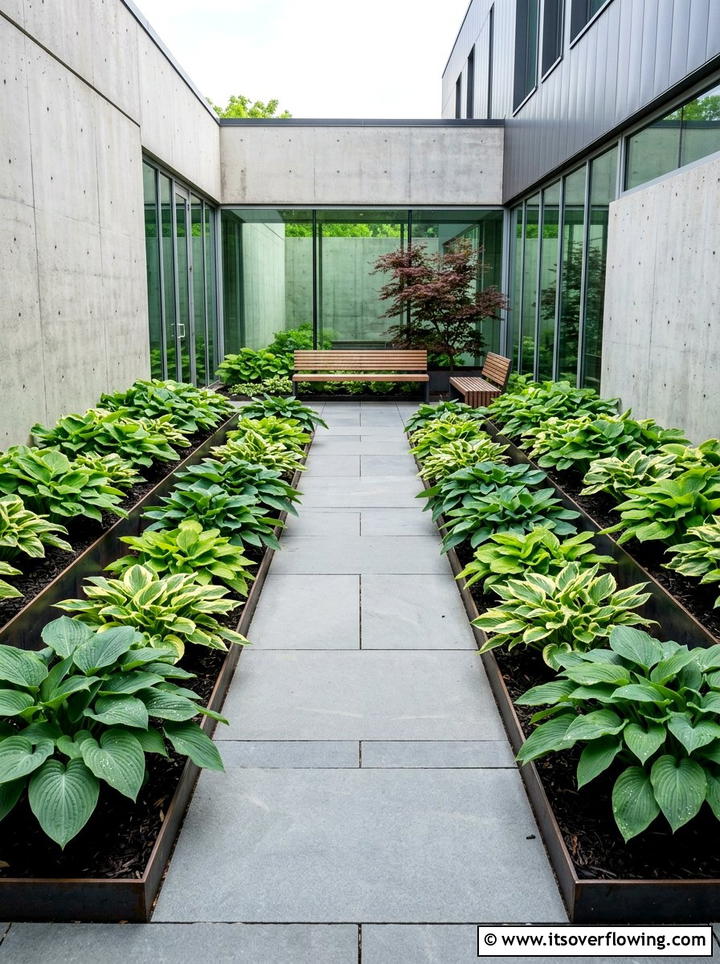
For a clean and contemporary look, modern hosta landscaping focuses on minimalism and geometric patterns. Instead of a wild, rambling garden, you might plant hostas in neat, symmetrical rows or in structured grid patterns. Using large, solid-colored varieties like the chartreuse ‘Sum and Substance’ against a backdrop of gray slate or black mulch creates a striking, high-contrast appearance. This style of gardening emphasizes the architectural form of the plant and its bold, clean lines. It is an excellent choice for urban gardens or modern homes where a sleek and organized aesthetic is desired. The simplicity of the design makes it easy to maintain while still providing a powerful visual impact that feels very intentional.
14. Cottage garden hostas
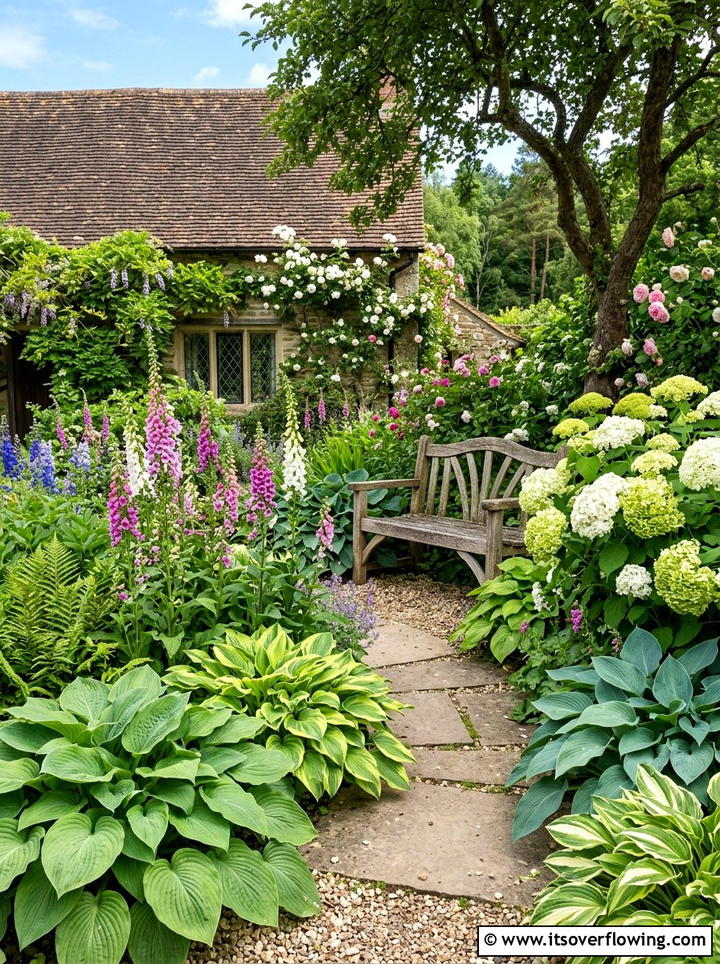
The charm of a cottage garden lies in its abundance and seemingly effortless beauty. Incorporating cottage garden hostas involves mixing these shade-loving plants with other traditional favorites like hydrangeas, foxgloves, and bleeding hearts. The hostas provide a steady, green presence that anchors the more fleeting blooms of the other perennials. Their large leaves fill in gaps and provide a soft, romantic feel to the overall design. You can allow them to grow over the edges of gravel paths or spill out from under rustic wooden benches. This layered and slightly overgrown look creates a sense of history and coziness that makes any outdoor space feel like a private sanctuary tucked away from the rest of the busy world.
15. Tropical look hostas
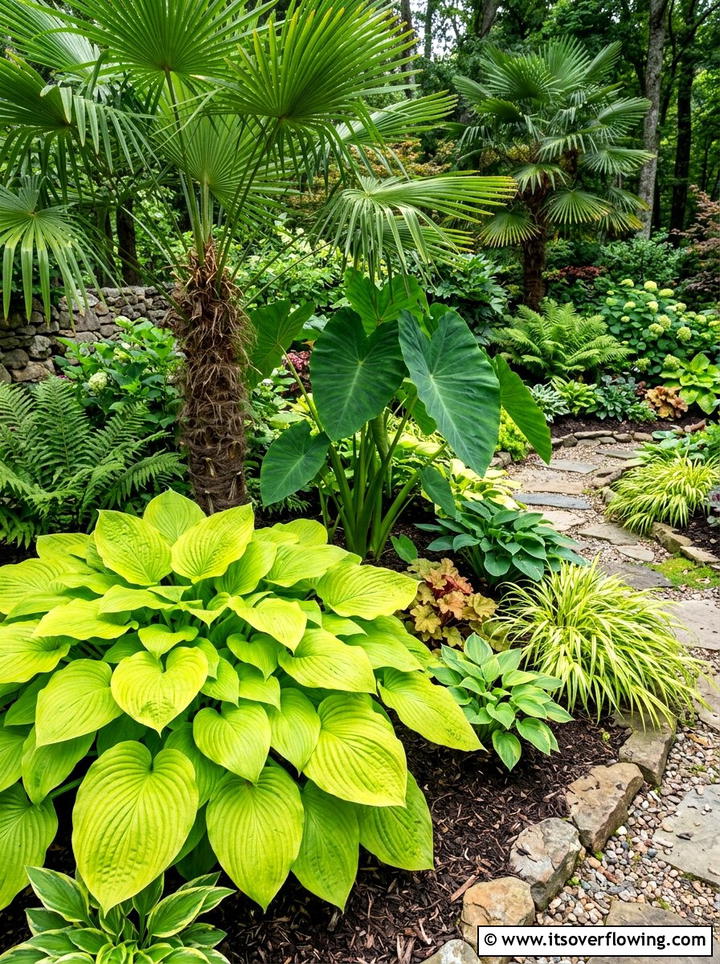
You don’t need to live in a warm climate to enjoy a garden that feels like a lush, tropical paradise. By choosing large-leafed hostas and pairing them with other bold foliage plants, you can achieve a tropical look in almost any region. Varieties with huge, bright green or yellow leaves mimic the appearance of exotic jungle plants. When you mix them with cold-hardy palms or tall grasses, the effect is incredibly lush and vibrant. This design style is all about big leaves and dramatic textures, creating a sense of being in a far-off destination. Adding a few colorful pots or a small water feature can further enhance the tropical vibe, making your backyard feel like a permanent vacation spot.
16. Shade garden path hostas
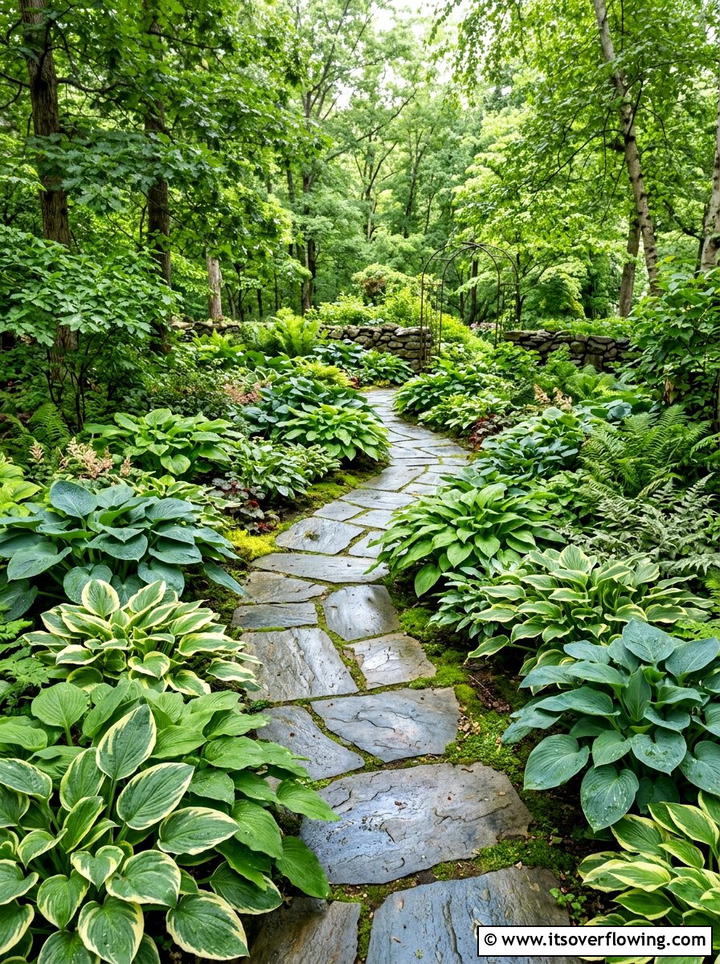
Creating a journey through your backyard is easy when you use shade garden path hostas to line the edges of your walkways. As you stroll along the path, the soft leaves of the hostas brush against your ankles, providing a tactile experience that connects you with nature. Using a variety of hostas with different patterns and textures keeps the journey interesting at every turn. You can use smaller types for the narrow parts of the path and larger ones where the walkway opens up into a seating area. This planting strategy helps to define the route and makes the walk feel intentional and well-designed. The cooling effect of the greenery also makes the path much more pleasant during hot summer days.
17. Japanese garden hostas
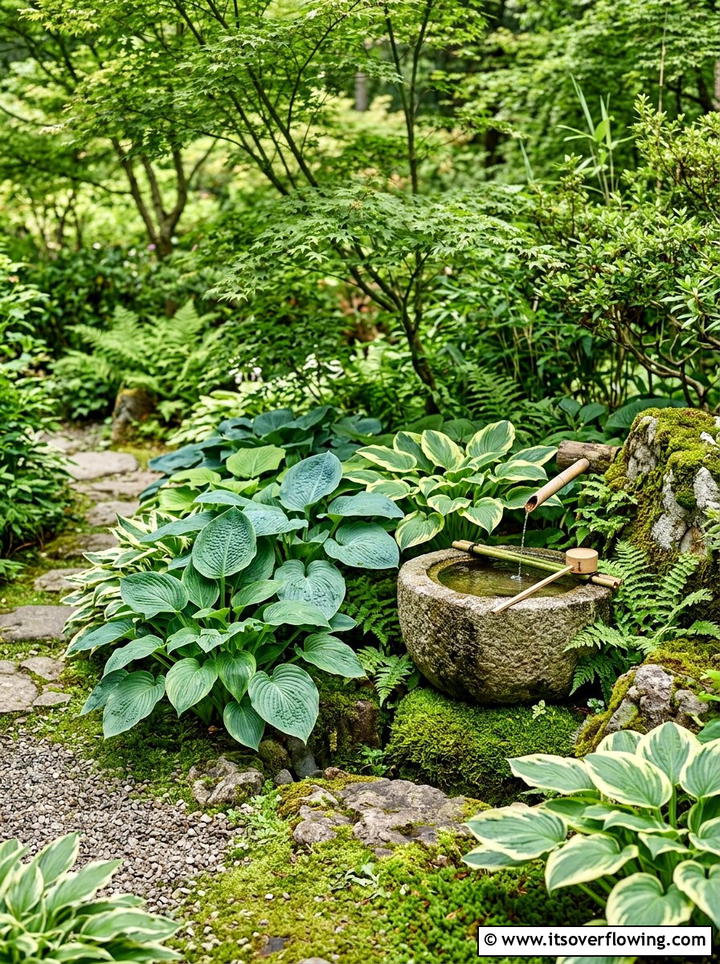
Hostas are a staple in traditional Japanese garden design, where they are valued for their tranquil and serene appearance. In a Japanese garden, hostas are often used sparingly to highlight specific features like a stone lantern, a water basin, or a moss-covered rock. The focus is on the balance between the plant’s form and the surrounding space. Choosing varieties with simple, elegant leaves and muted colors helps to maintain a sense of calm and order. They are frequently planted near water features, where their leaves can reflect in the still surface of a pond. This minimalist approach creates a meditative atmosphere that encourages reflection and appreciation for the subtle beauty of the natural world and its cycles.
18. Hosta and hydrangea garden
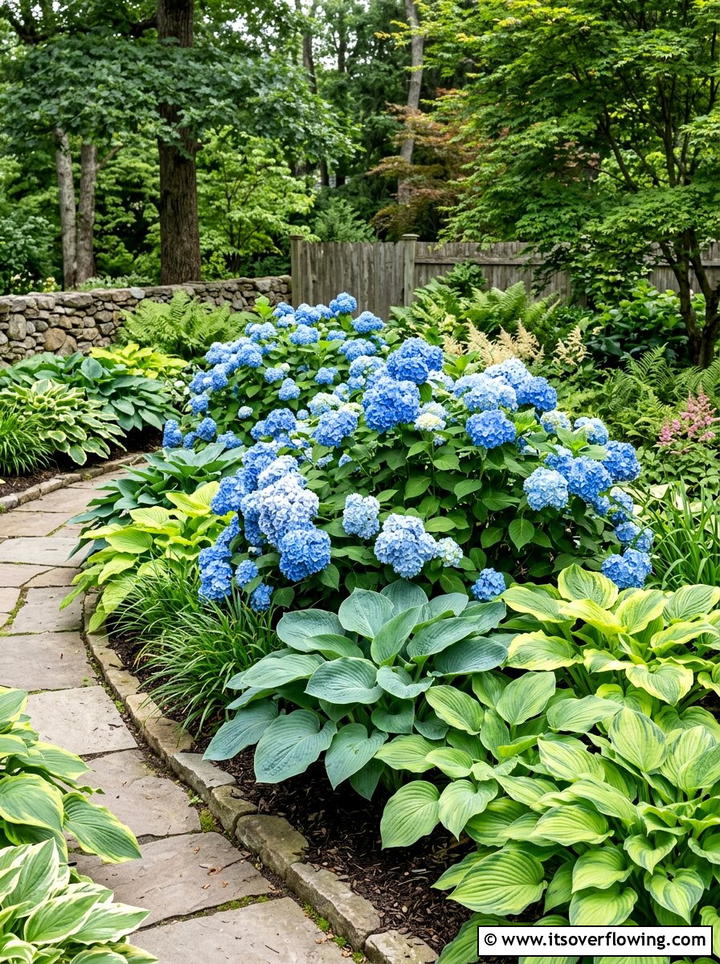
Combining hostas and hydrangeas is a match made in gardening heaven, as both plants thrive in similar shaded conditions. A hosta and hydrangea garden offers a beautiful mix of large, colorful flower heads and bold, architectural foliage. The hydrangeas provide height and seasonal color, while the hostas fill in the space below with a thick carpet of green. This combination creates a very full and lush look that can easily transform a boring side yard into a show-stopping display. You can coordinate the colors of the hydrangea blooms with the variegated edges of the hostas for a professional, designer-themed result. This classic pairing is a favorite for many gardeners because it is both reliable and incredibly visually rewarding.
19. Colorful foliage hostas
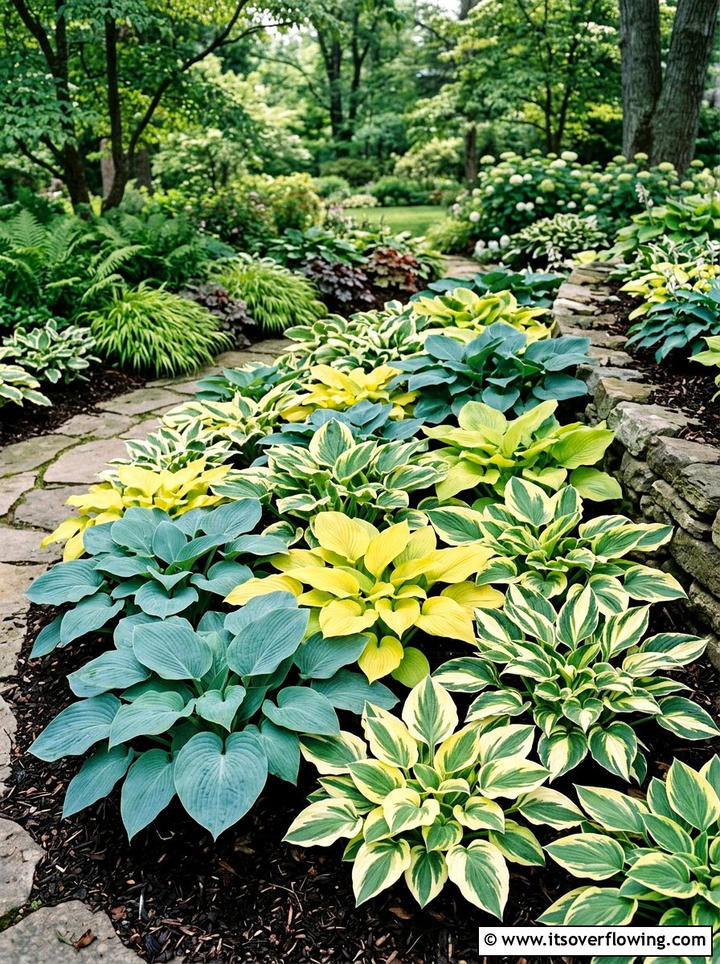
While many people think of hostas as just green plants, there is actually a huge range of colorful foliage hostas available to gardeners today. From the bright, neon yellow of ‘Fire Island’ to the deep, almost black-green of ‘Lakeside Looking Glass’ , the options are nearly endless. By mixing these different colors together, you can create a vibrant and energetic garden bed that doesn’t rely on flowers for its appeal. This is especially useful in shaded areas where many flowering plants struggle to bloom. The different leaf colors can be used to create patterns, highlights, and shadows, adding a level of artistic flair to your landscape. This colorful approach ensures that your garden looks fantastic from the moment the leaves unfurl in spring.
20. Large leaf hostas
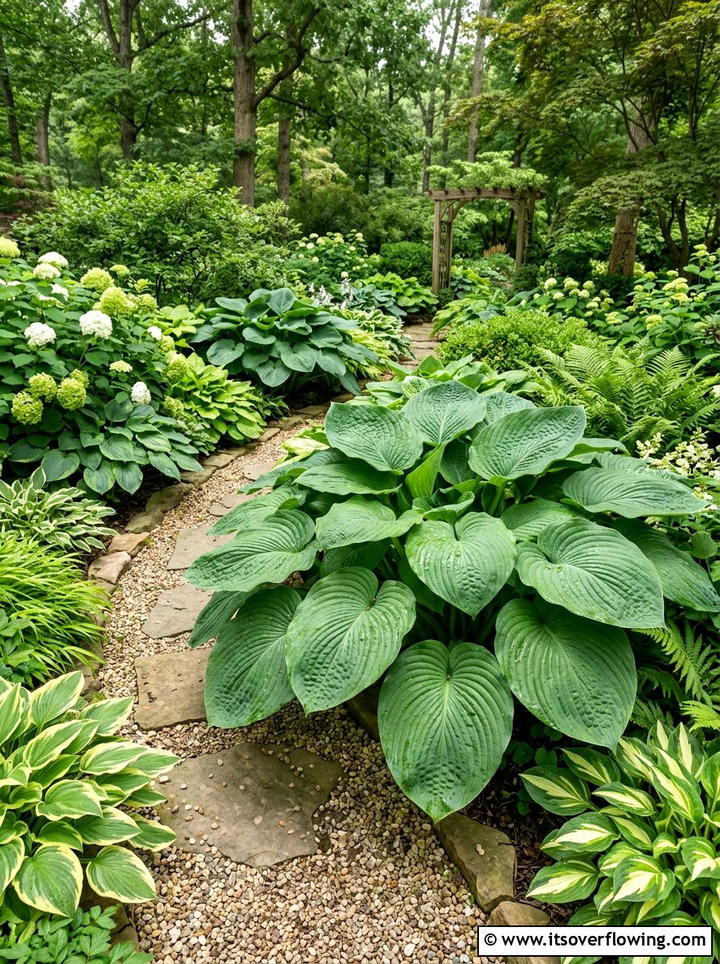
If you want to make a big statement with minimal effort, large leaf hostas are the way to go. These plants produce massive, heart-shaped leaves that can be over a foot wide, creating an instant impact in any garden bed. They are perfect for filling large, empty spaces under trees or along the side of a building. The scale of these leaves is so impressive that they often become the main talking point for visitors to your garden. Because the leaves are so large, they also do an excellent job of protecting the soil from heavy rain, preventing compaction and runoff. Pairing these giants with smaller, fine-textured plants creates a wonderful contrast that highlights the sheer size and power of the hosta.
21. Mixed hosta garden beds
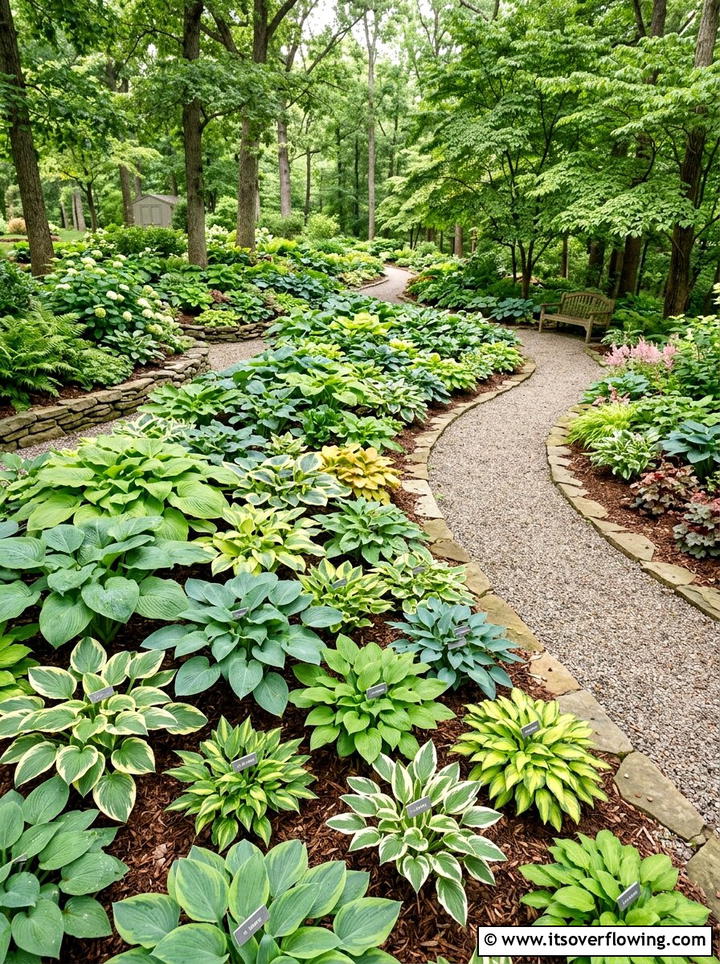
Why settle for just one type of hosta when you can create mixed hosta garden beds that showcase the incredible diversity of this plant family? By combining different sizes, colors, and textures, you can create a rich and complex tapestry of foliage that looks like a work of art. You might place tall, blue-leaved varieties in the back, variegated yellow ones in the middle, and tiny green ones in the front. This layering technique adds depth and ensures that there is something interesting to look at from every angle. A mixed bed is also more resilient to pests and diseases, as the different varieties may have different levels of resistance. It is a fun and creative way to experiment with landscape design.
22. Raised bed hostas
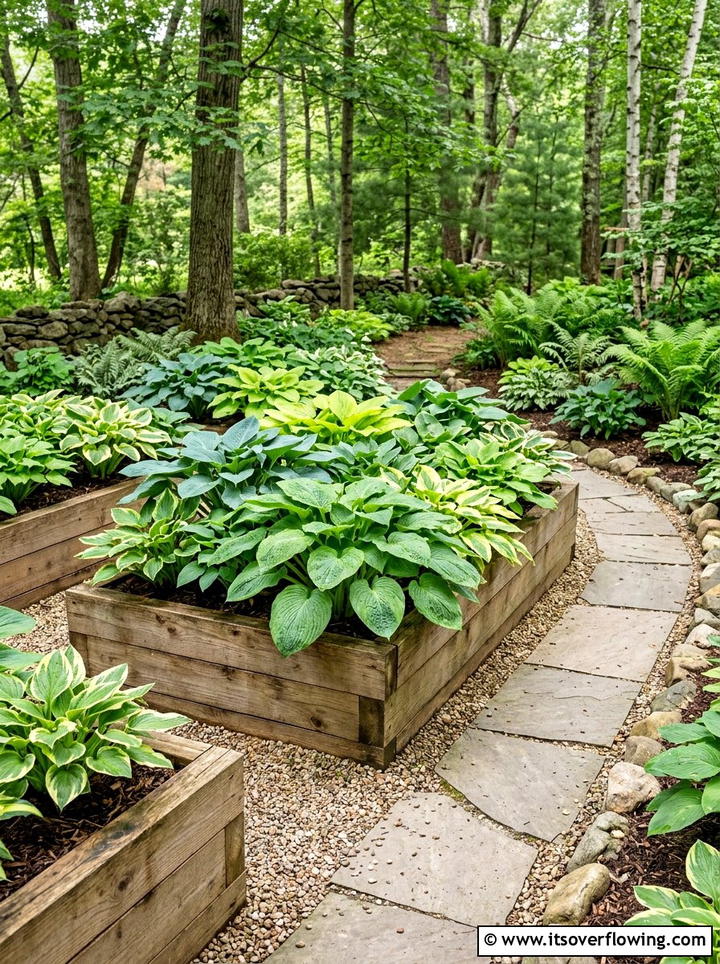
Planting your hostas in raised beds is a great way to improve drainage and keep your plants safe from pests like slugs and snails. Raised bed hostas also allow you to bring the beautiful foliage closer to eye level, making it easier to appreciate the intricate patterns and colors. You can build the beds out of wood, stone, or brick to match the style of your home and garden. This elevated planting method is particularly useful if you have heavy clay soil that doesn’t drain well, as it gives you total control over the growing medium. The clean edges of the raised beds also help to contain the hostas and prevent them from spreading into other areas of the yard where they might not be wanted.
23. Hosta garden pond edge
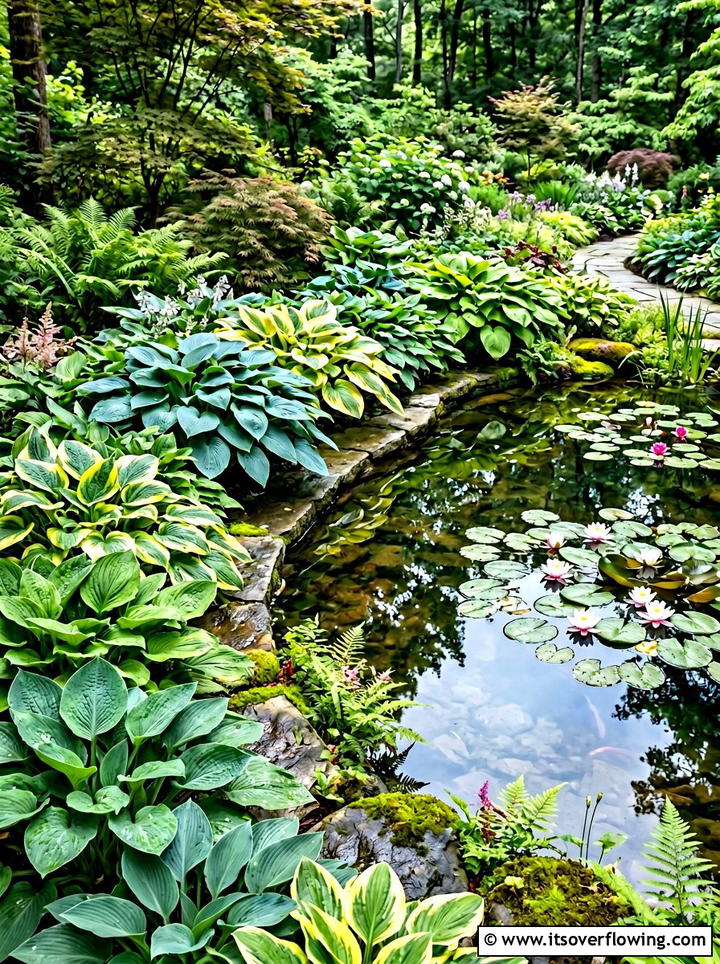
There is nothing quite as peaceful as the sight of hostas growing along the edge of a backyard pond. A hosta garden pond edge utilizes the plants’ love for moisture and shade to create a soft, natural transition between the water and the surrounding landscape. Their broad leaves can hang over the water, providing shade for fish and creating beautiful reflections on the surface. This planting style helps to hide the plastic liners or concrete edges of the pond, making the water feature look like it has always been part of the environment. Choosing varieties with different shades of green and blue can mimic the movement of the water, enhancing the tranquil and serene atmosphere of your private garden oasis.
24. Perennial shade garden
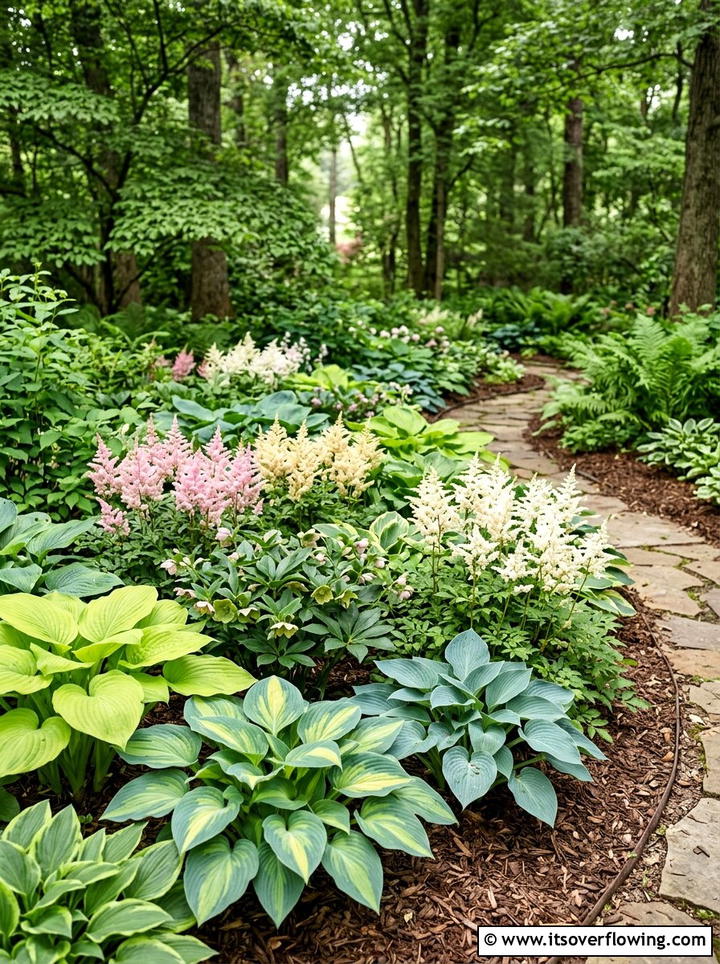
A well-designed perennial shade garden relies on hostas as a foundational element that provides structure and consistency year after year. By planting them alongside other shade-loving perennials like astilbes, hellebores, and lungworts, you can create a garden that offers beauty in every season. The hostas act as the backbone of the design, their lush leaves providing a steady background for the changing blooms of the other plants. As the spring flowers fade, the hostas are just reaching their peak, ensuring that the garden never looks empty or neglected. This approach to gardening is both sustainable and rewarding, as the plants will continue to return and grow larger each year, creating a more established and mature landscape over time.
25. Hosta companion planting
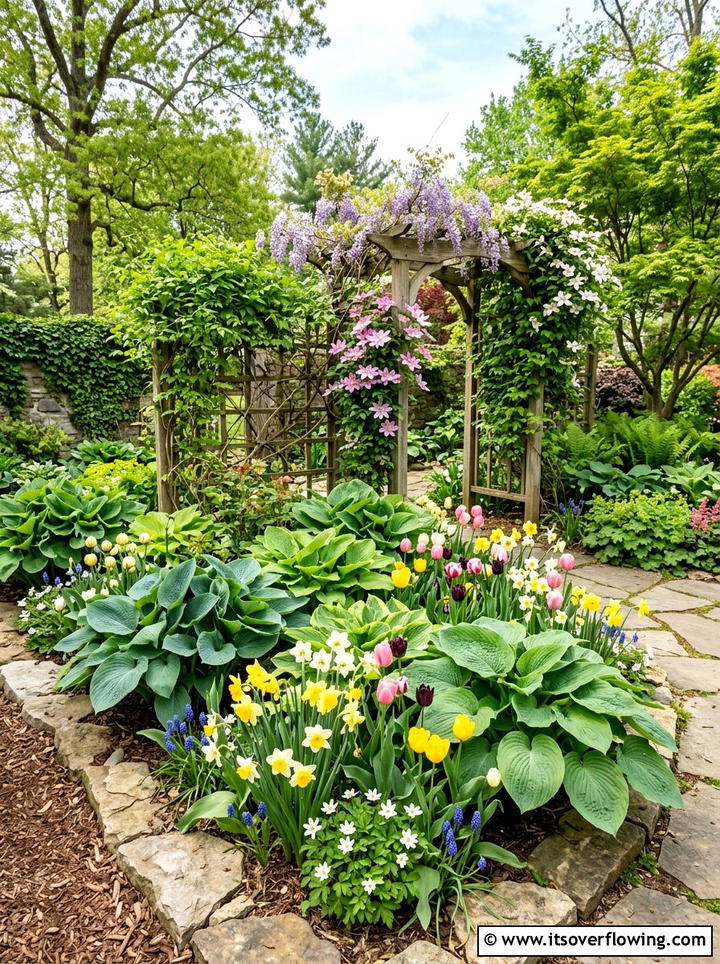
Success in the garden often comes down to hosta companion planting, which involves choosing neighbors that will help your hostas thrive and look their best. In addition to ferns and coral bells, consider planting hostas with spring bulbs like daffodils and tulips. As the bulb foliage begins to yellow and die back after blooming, the emerging hosta leaves will grow over and hide the mess. You can also use hostas to provide a cool, shaded environment for the roots of climbing plants like clematis. This symbiotic relationship ensures that every inch of your garden is working together to create a beautiful and healthy ecosystem. By thinking about how different plants interact, you can create a professional-level garden that is both functional and stunning.
Conclusion:
Designing a garden with hostas is a rewarding journey that allows you to transform even the darkest corners of your property into lush, vibrant spaces. Their incredible diversity in size, color, and texture means there is a perfect hosta for every situation, from tiny rock gardens to massive woodland estates. By following these ideas and incorporating variety into your landscape, you can create a professional and stylish outdoor area that will be the envy of your neighbors. Hostas are not only beautiful but also incredibly resilient and easy to care for, making them an ideal choice for both beginner and experienced gardeners. We hope these suggestions inspire you to get out into your yard and start creating your own shaded paradise today. Whether you are looking for a simple border or a complex mixed bed, hostas provide the perfect foundation for a stunning and serene garden that you will enjoy for many years to come.

Related posts:
 25 Garden Design Ideas With Woodland Plants for Lush Shade
 25 creative garden ideas with pergola vines for Shaded Beauty
 25 Garden Design Ideas With Trellis Walls for Vertical Beauty
 25 garden ideas for dry climate: Water-Wise Outdoor Beauty
 25 Garden Ideas for Small Spaces to Maximize Beauty
 25 Garden Ideas Low Maintenance for Easy Outdoor Beauty
 25 Garden Ideas With Evergreens for Year-Round Beauty
 25 garden ideas with fruit trees for Beauty and Harvests
 25 Garden Ideas With Roses for Romantic Outdoor Beauty
 25 Small Garden Ideas to Maximize Beauty in Tiny Spaces
 25 Small Garden Ideas for Year Round Color and Lasting Beauty
 25 small garden ideas with trellis to Maximize Beauty Fast