
Hydrangeas are the undisputed royalty of the summer garden, offering a nostalgic charm that few other shrubs can match. Their massive, pillowy blooms and lush green foliage create a sense of abundance and romance in any outdoor space. Whether you are looking to fill a shady corner or create a bold sun-drenched border, these versatile plants offer endless possibilities for your landscape. In this guide, we explore twenty-five ways to incorporate different varieties into your yard. From classic cottage aesthetics to sleek modern styles, you will discover how to use their colors and textures to transform your garden into a serene retreat. Let’s dive into these beautiful and practical planting strategies for your home.
1. Front yard hydrangea landscape
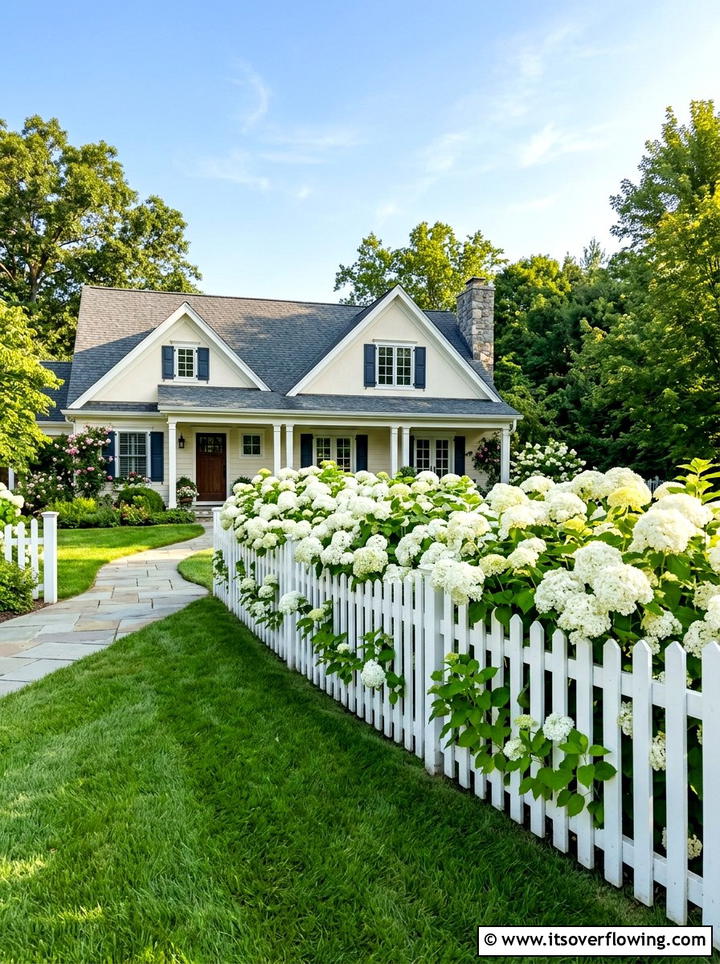
Have you ever noticed how a front yard transforms with massive, colorful blooms right by the entrance? Using these shrubs in your front landscape creates an immediate sense of welcoming charm for guests. You can plant them in large clusters near your porch to soften the architectural lines of your home. They work exceptionally well when framed by a neat lawn or a small stone retaining wall. Choose varieties that stay compact if you have limited space under your windows. This approach ensures your home looks curated and vibrant throughout the growing season. It is a simple way to boost your curb appeal without needing a professional landscaper or expensive renovations.
2. Hydrangea flower bed border
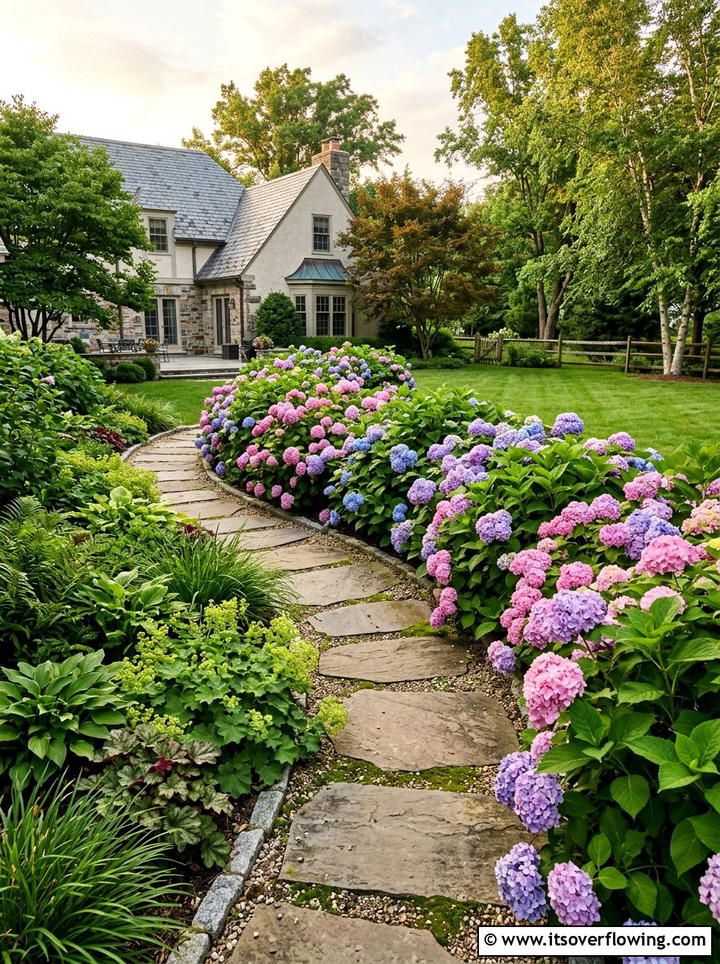
Imagine walking along a path lined with soft, cloud-like flowers that define the edges of your garden. Creating a border with these flowering shrubs helps to organize your outdoor space while adding incredible texture. You can use a single variety for a clean, uniform look or mix different colors for a more playful feel. Low-growing varieties are perfect for lining walkways because they won’t overgrown the path. Make sure to space them correctly so they have room to breathe as they mature. This technique helps to transition between different areas of your yard, such as moving from a flat lawn to a taller perennial garden bed.
3. Potted hydrangeas for patio
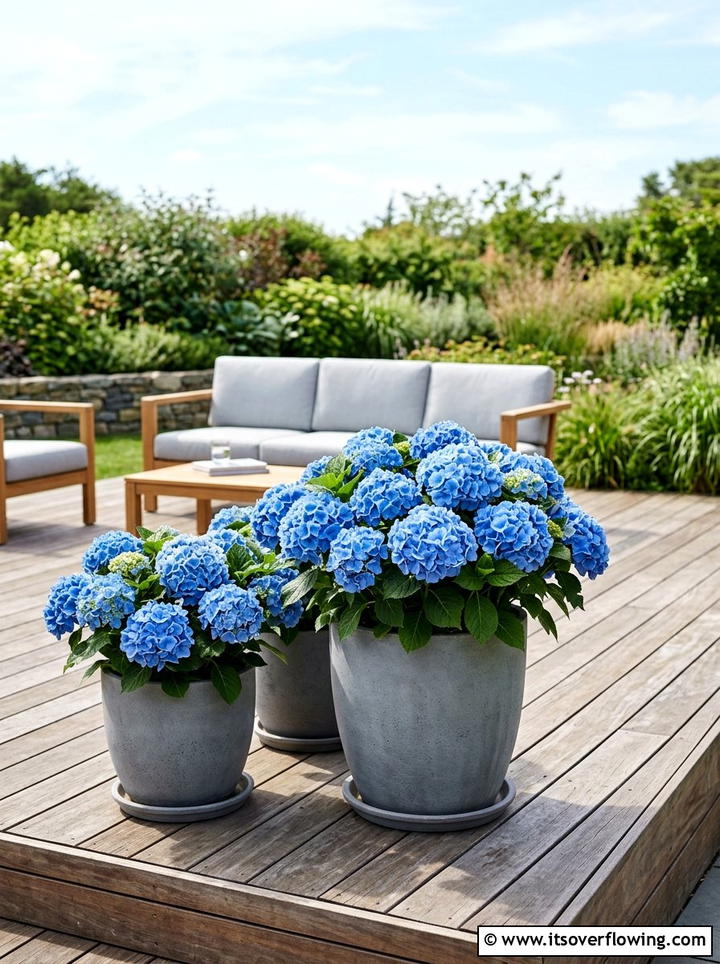
Containers offer the perfect solution for gardeners who have limited ground space or want to decorate a wooden deck. You can easily grow these beautiful plants in large, stylish pots to create mobile focal points. This method allows you to move the plants around to catch the best light throughout the day. It also makes it much easier to control the soil quality and moisture levels. Choose colorful ceramic pots that complement the bloom colors for a cohesive look. Adding these to your patio creates an intimate, lush atmosphere for outdoor dining or morning coffee. They bring life to hardscape areas that might otherwise feel cold or empty.
4. White hydrangea garden walkway
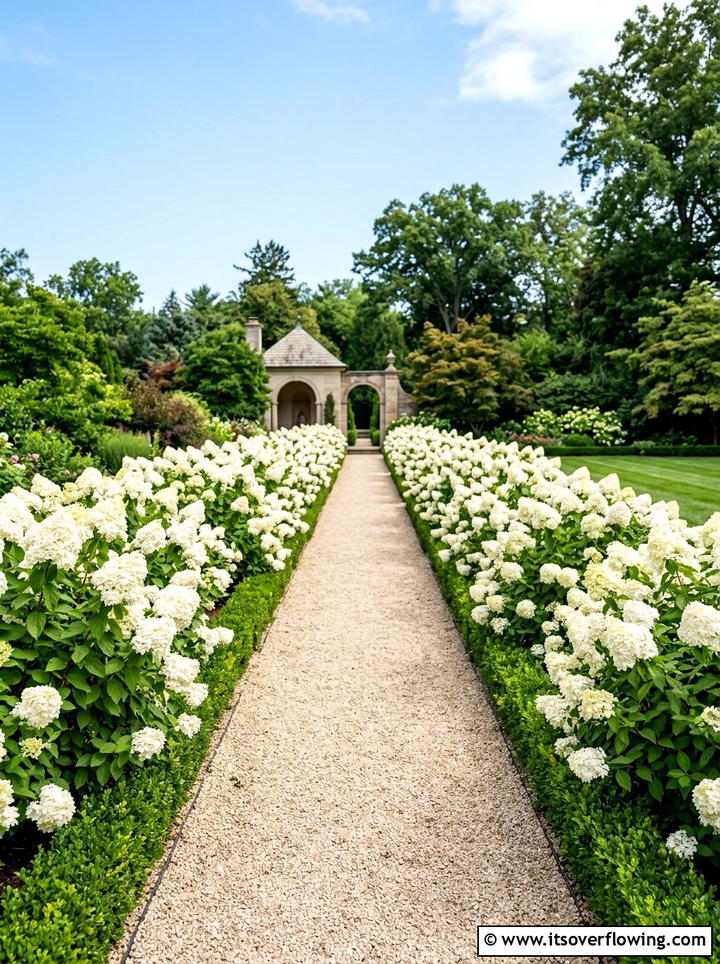
Walking through a garden filled with bright white flowers feels incredibly peaceful and sophisticated. A white-themed walkway provides a clean aesthetic that looks stunning during the day and glows under the moonlight. You can achieve this look by planting rows of white mophead or panicle varieties along your main garden path. The neutral color allows the green foliage to pop, creating a refreshing and cool atmosphere during hot summer months. It is a timeless choice that fits perfectly with both traditional and contemporary home styles. Consider adding small solar lights along the path to highlight the blossoms after the sun goes down for extra magic.
5. Blue hydrangea cottage garden
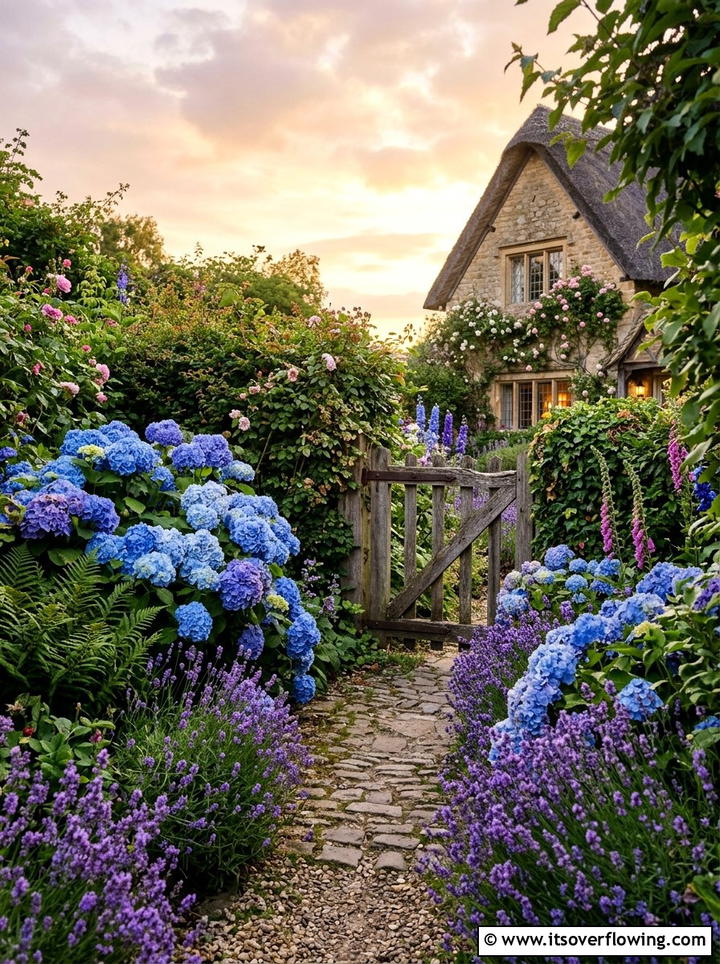
Do you dream of a whimsical space filled with classic blue tones and a relaxed, overgrown feeling? The cottage garden style is the natural home for blue varieties, where they can grow alongside lavender and climbing roses. These cool-toned flowers create a sense of depth and tranquility in a busy planting scheme. To maintain the blue color, you may need to adjust the acidity of your soil with specific fertilizers. This style encourages a bit of wildness, allowing the plants to spill over stone walls or rustic fences. It creates a fairy-tale environment that feels lived-in and deeply personal, making your backyard feel like a hidden sanctuary.
6. Hydrangeas and hostas shade garden
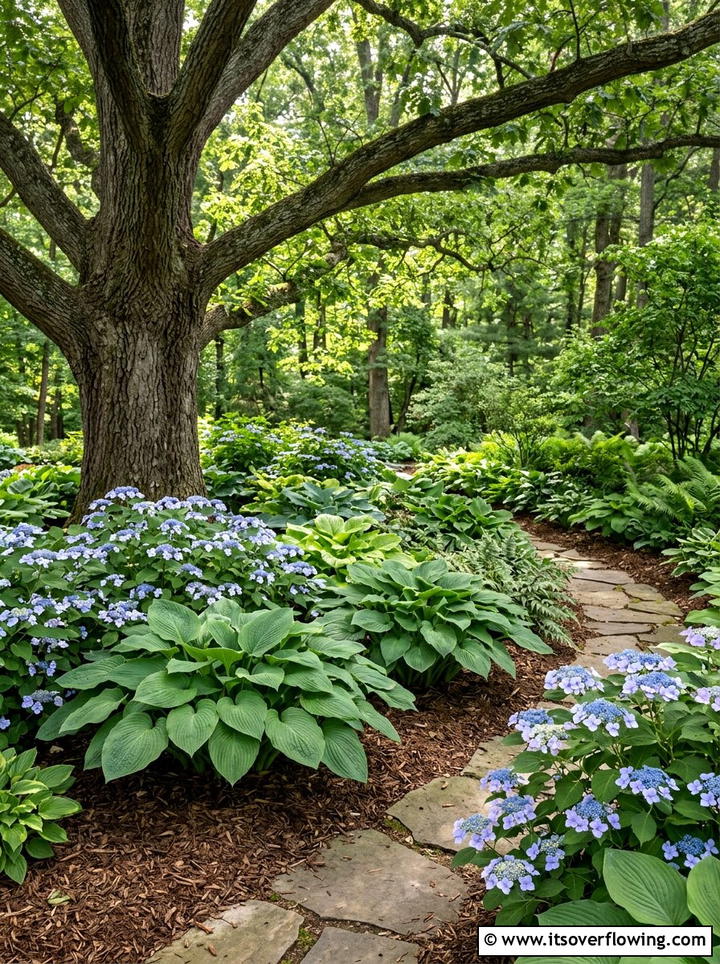
Finding plants that thrive in the shadows can be a challenge, but this combination is a match made in heaven. Large-leafed hostas provide a stunning textural contrast to the delicate flower heads of the hydrangea. Both plants love moist soil and dappled light, making them perfect for those tricky spots under tall trees. You can play with different shades of green and variegated foliage to keep the area interesting even when the flowers are not in bloom. This pairing creates a cool, lush carpet of vegetation that feels refreshing on a hot afternoon. It turns a dark corner of your yard into a rich and intentional landscape feature.
7. Hydrangea hedge for privacy
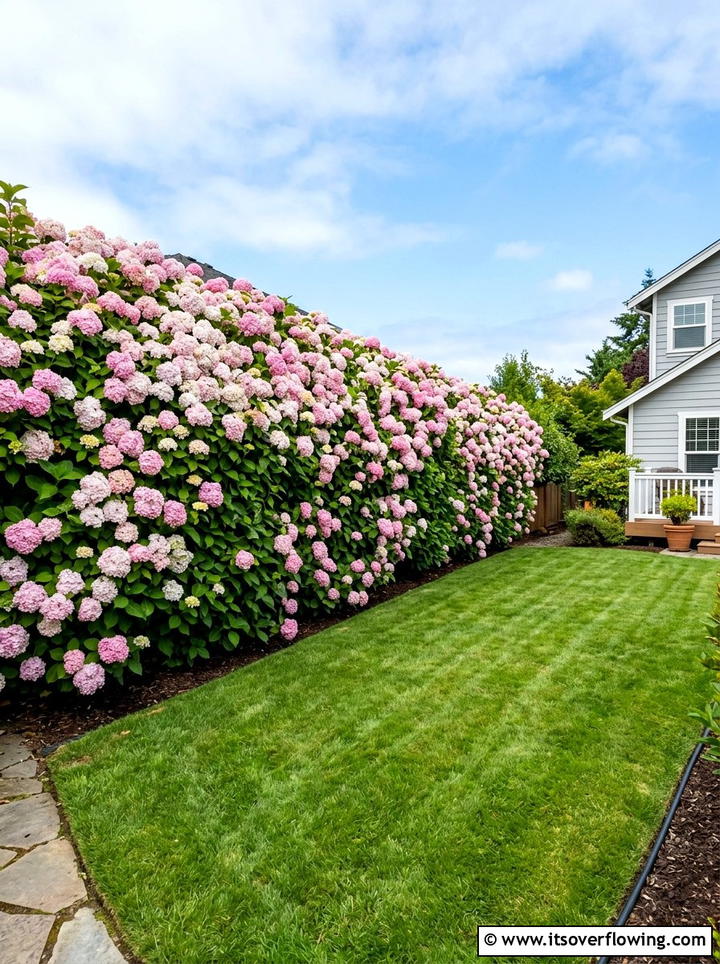
Privacy screens do not always have to be made of boring evergreen trees or tall wooden fences. A flowering hedge provides a soft, living wall that blocks the view of neighbors while offering seasonal beauty. Taller varieties can grow several feet high, creating a dense barrier of leaves and flowers. This is a great way to mark the boundary of your property or divide your yard into distinct outdoor rooms. The hedge will change throughout the seasons, offering lush greens in spring, bright colors in summer, and interesting dried textures in winter. It is a functional landscape element that serves a dual purpose as a stunning floral display.
8. Climbing hydrangea on brick wall
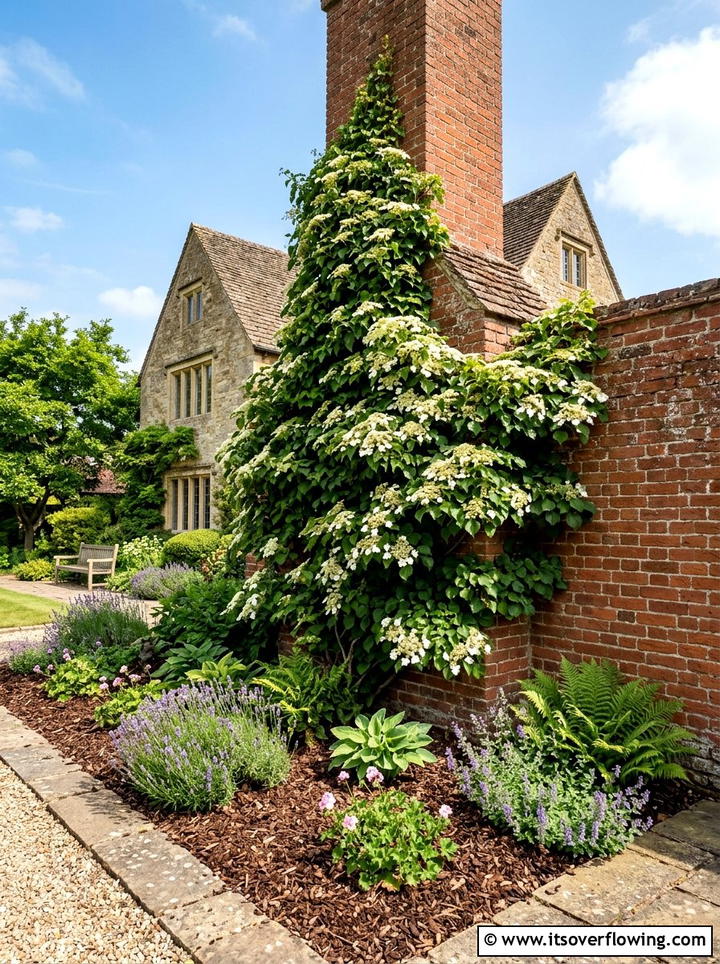
Vertical gardening is a smart way to add greenery when you are running out of horizontal space. These unique climbing vines attach themselves to brick or stone surfaces using small rootlets, creating a lush green curtain. They eventually produce flat, lacecap-style flowers that look delicate against the rugged texture of a wall. This is a slow-growing option that rewards patience with a massive, impressive display over time. It is perfect for covering up an unsightly garage wall or adding character to a plain chimney. The dark green leaves provide a beautiful backdrop for other garden plants during the spring and summer months before turning yellow.
9. Oakleaf hydrangea fall color
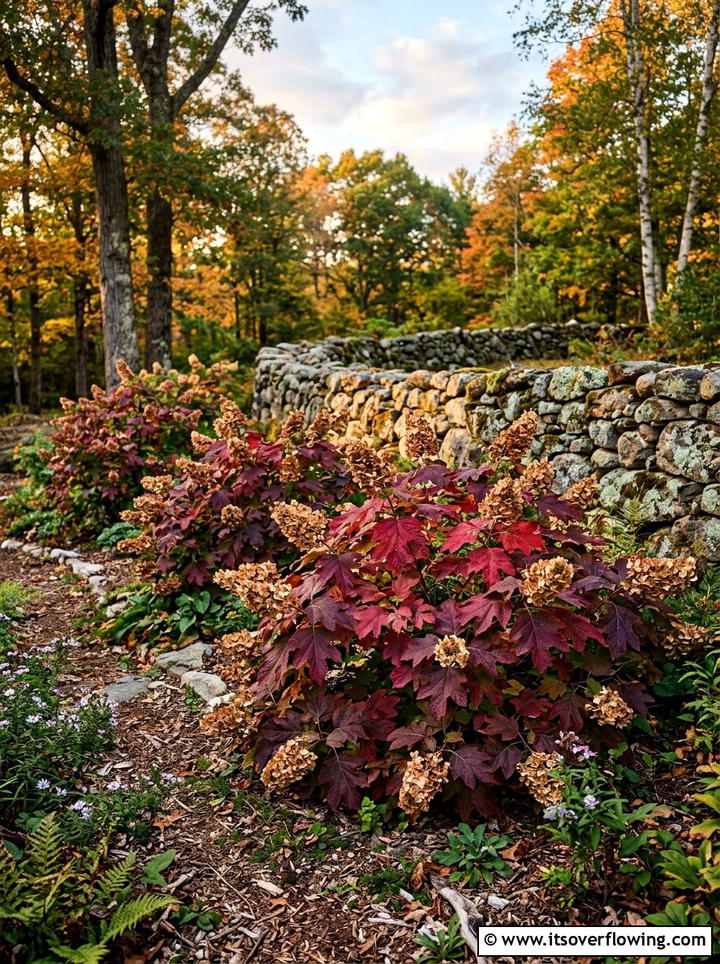
Most people focus on summer blooms, but some varieties offer incredible beauty well into the autumn season. The oakleaf variety is famous for its distinct foliage that resembles an oak tree and turns brilliant shades of red and purple. These plants also feature large, cone-shaped white flowers that take on a pinkish hue as they age. Including these in your landscape ensures that your garden remains visually interesting after other flowers have faded. They have a more rugged, natural look compared to the round mophead types. This makes them ideal for woodland gardens or more informal landscapes where you want a variety of shapes and seasonal transitions.
10. Pink hydrangea backyard garden
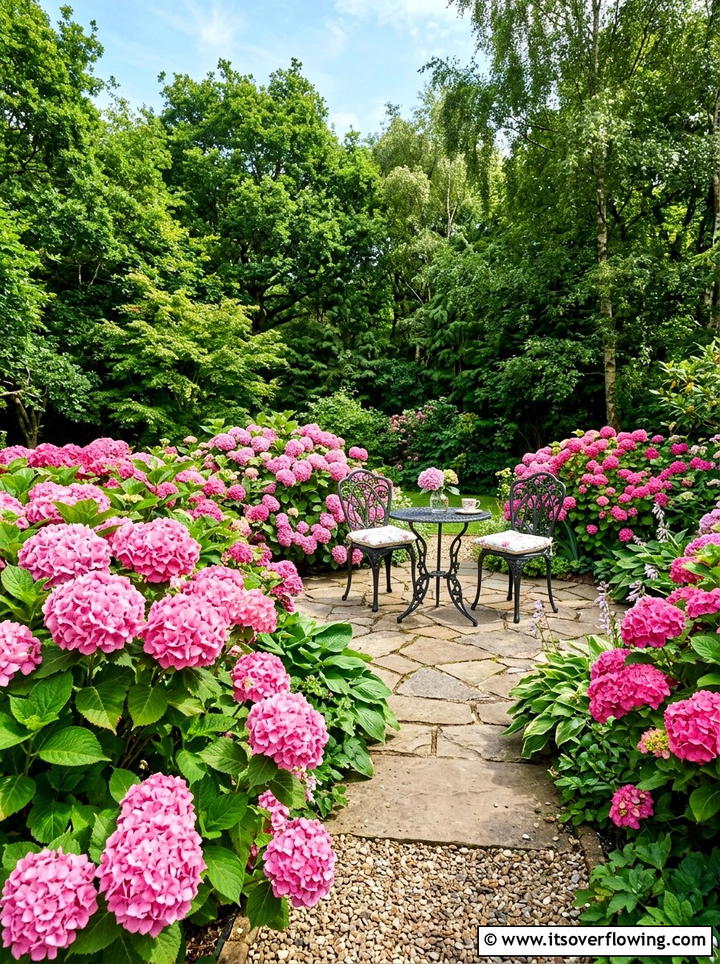
Warm pink tones can make a backyard feel cheerful, energetic, and full of life throughout the summer. You can find these shrubs in shades ranging from soft pastel blush to deep, vibrant raspberry. Planting pink varieties near a seating area creates a warm and inviting backdrop for family gatherings or backyard parties. These colors look particularly striking against dark green hedges or dark-colored garden furniture. If your soil is naturally alkaline, your plants will likely stay pink without much effort. This color palette is perfect for creating a romantic or feminine garden theme that feels lush and abundant during the peak of the growing season.
11. Limelight hydrangea privacy screen
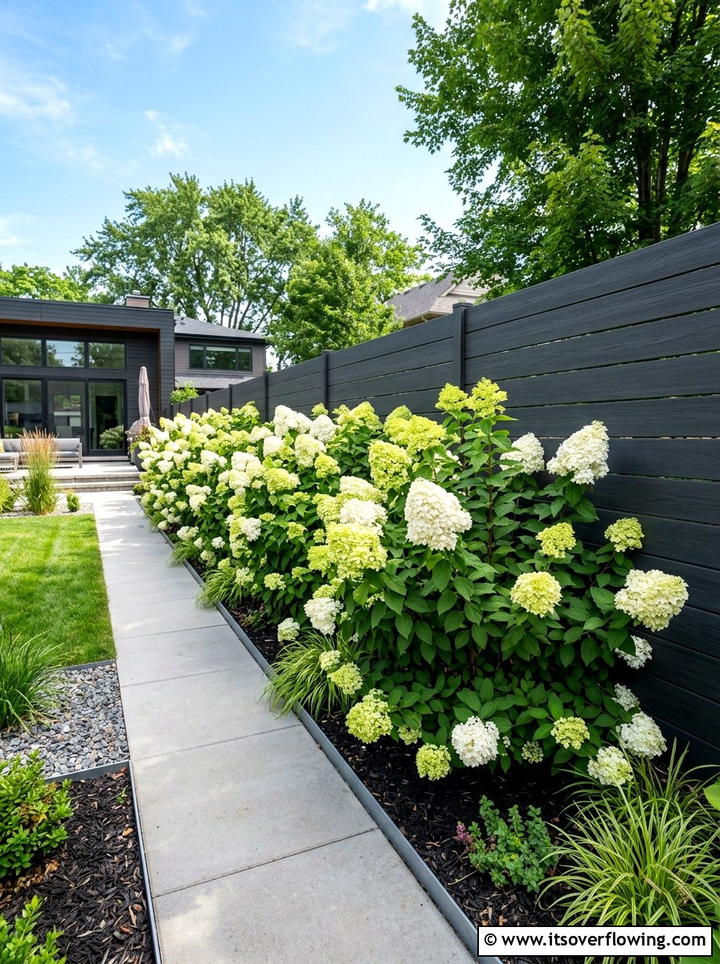
If you want a modern and hardy privacy solution, the panicle variety known as Limelight is an excellent choice. These plants are famous for their sturdy stems and massive lime-green flowers that eventually turn a crisp white. They grow quite tall and upright, making them perfect for creating a dense screen along a driveway or property line. Unlike some other types, these thrive in full sun and are very reliable bloomers every single year. Their structure is more architectural and clean, which fits well with contemporary home designs. They provide a high-impact visual barrier that remains attractive even as the flowers dry on the stem in late autumn.
12. Endless Summer hydrangea layout
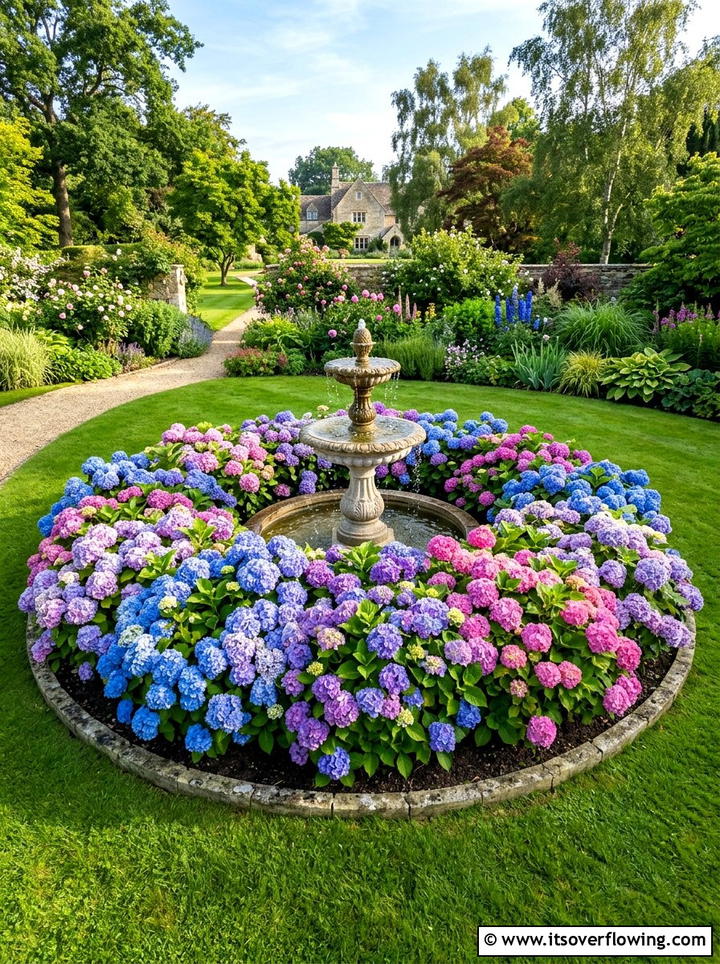
Repeat-blooming varieties have changed the way people garden by offering flowers from late spring all the way until the first frost. These plants are perfect for focal points in your flower beds because they provide consistent color for months. You can plant them in groups of three or five to create a massive impact in a specific area of your yard. Because they bloom on both old and new wood, they are much more forgiving if you live in a cold climate. This layout ensures that even if a late spring frost hits, you will still get plenty of flowers later in the summer season.
13. Hydrangeas with lavender landscape
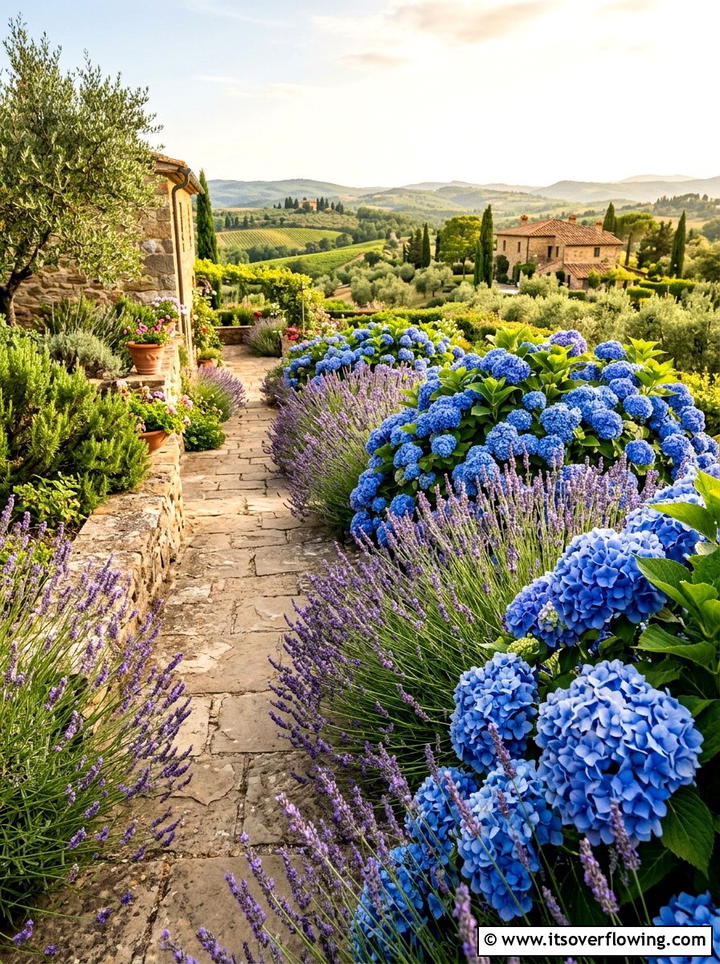
Combining the soft mounds of these shrubs with the upright, silver-toned spikes of lavender creates a Mediterranean-inspired look. The contrast between the large hydrangea leaves and the fine-textured lavender foliage is visually stimulating and sophisticated. This pairing also offers a wonderful sensory experience, as the scent of lavender fills the air around the colorful blooms. Both plants appreciate well-drained soil, though you should place the hydrangeas in slightly more shade than the sun-loving lavender. This design works beautifully along a sun-drenched stone path or a south-facing wall. It brings a touch of elegance and a lovely color palette of blues, purples, and greens to your home.
14. Small backyard hydrangea garden
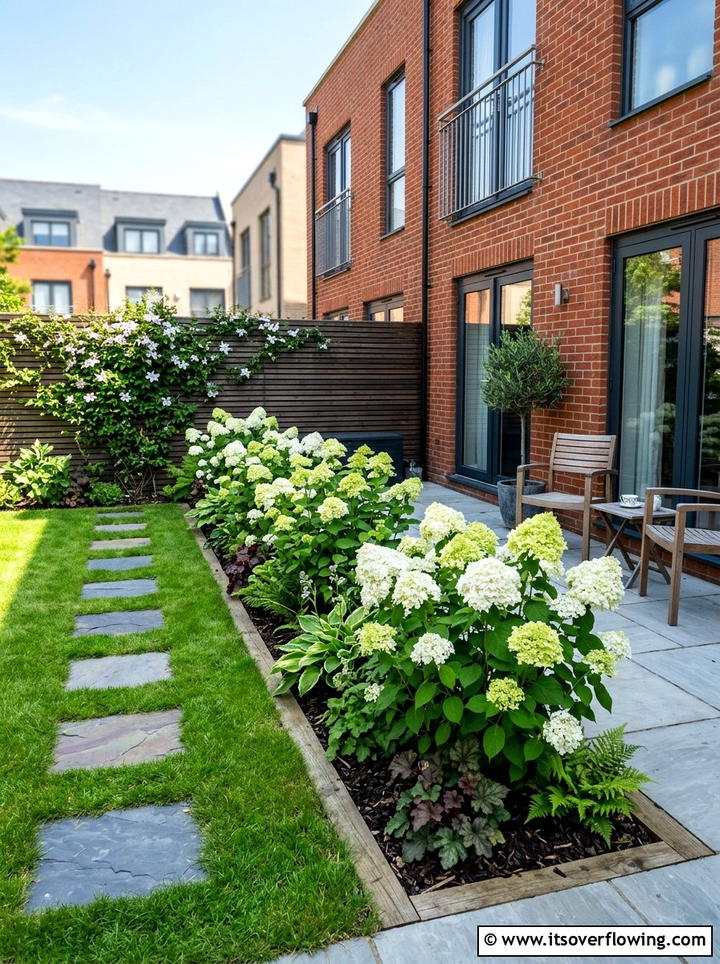
You do not need a massive estate to enjoy the beauty of these flowering shrubs in your daily life. Many dwarf varieties have been developed specifically for small spaces and urban backyards where every inch counts. These compact plants offer the same large blooms but stay at a manageable height of two or three feet. You can tuck them into corner beds or use them to fill the space between a patio and a fence. Using light-colored blooms can actually help a small space feel larger and more open. This approach allows you to enjoy a high-density floral look without the maintenance of larger, sprawling garden varieties.
15. Hydrangeas under large trees
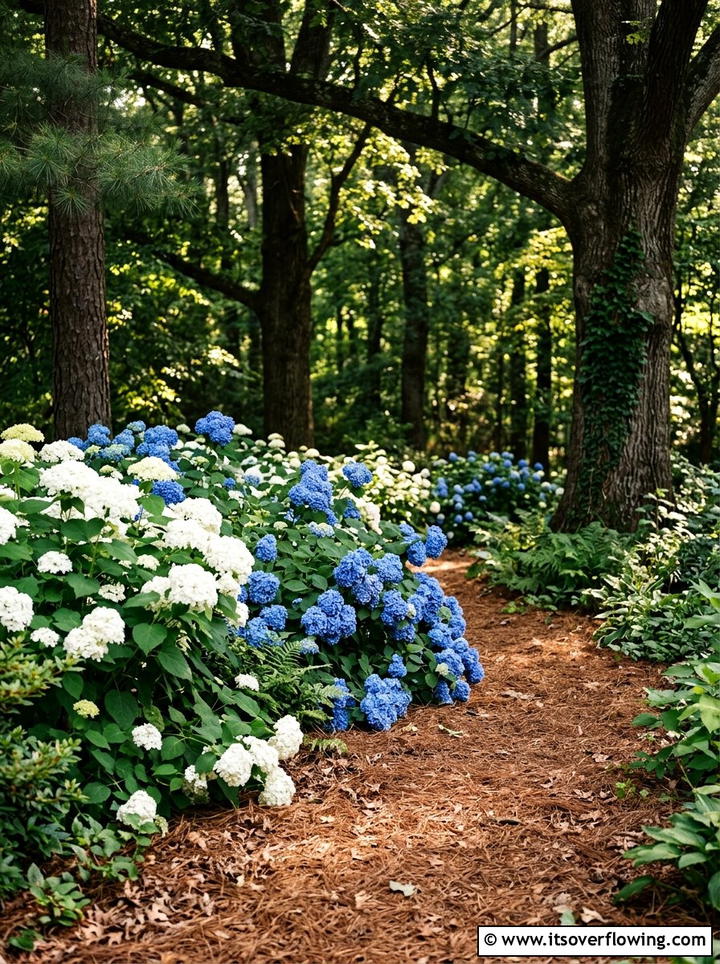
The area beneath a large shade tree often becomes a patch of bare dirt or patchy grass where nothing grows. However, these shrubs are one of the few plants that can thrive in the dappled light found under a canopy. They appreciate the protection from the harsh afternoon sun that big trees provide for their delicate leaves. You will need to ensure they get enough water, as the tree roots will compete for moisture in the soil. Using mulch around the base of the shrubs helps to keep the roots cool and hydrated. This creates a beautiful woodland floor effect that looks natural and very intentional.
16. Modern white hydrangea garden
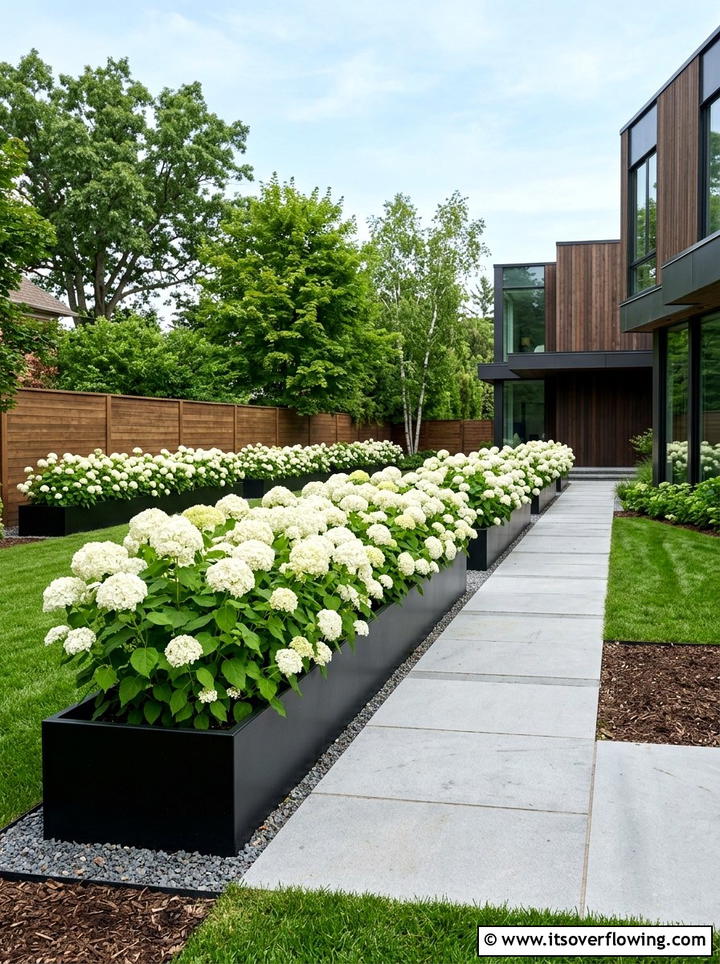
Modern landscaping often focuses on clean lines, a limited color palette, and repetitive patterns for a high-end look. Planting a single variety of white hydrangea in long, straight rows creates a powerful and minimalist architectural statement. This look is often paired with black or charcoal gray accents, such as modern planters or dark gravel mulch. The simplicity of the green and white color scheme feels very fresh and high-end. It works perfectly with contemporary house designs that feature large windows and sharp angles. This style proves that you can use a classic flowering shrub to achieve a very current and trendy aesthetic for your home exterior.
17. Hydrangea garden gate entrance
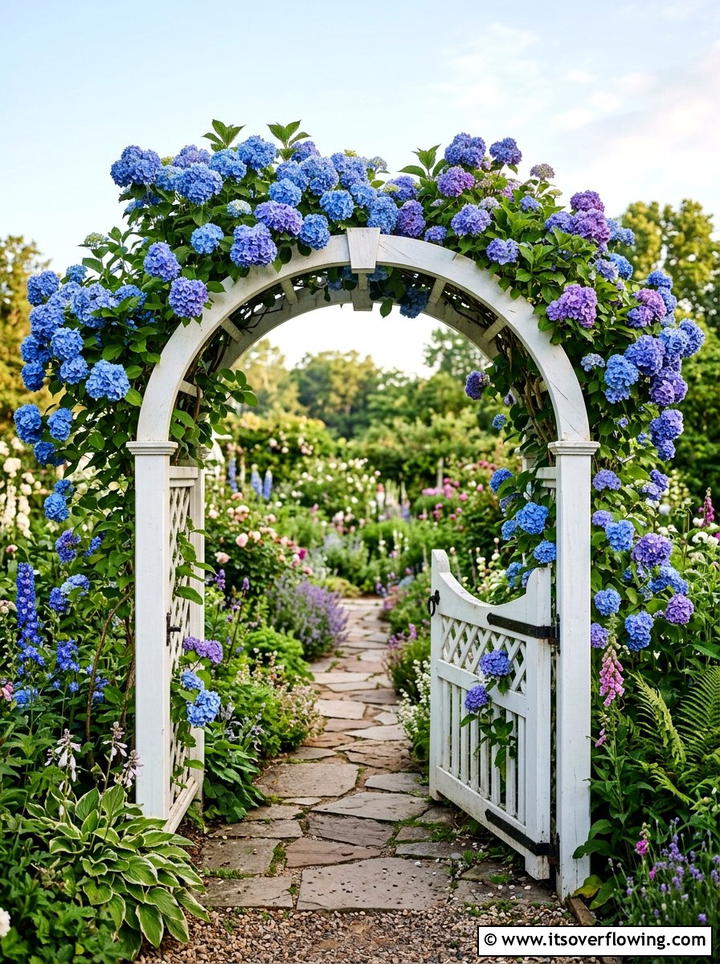
Creating a sense of arrival is important for any home, and a garden gate framed by flowers is truly magical. You can plant tall, bushy varieties on either side of an arbor or gate to create a living entryway. As the plants grow, they will lean inward, creating a tunnel of blooms that you walk through to enter the yard. This sets a romantic and welcoming tone for the rest of your garden experience. It is a wonderful way to use height and volume to define the transition between the public street and your private sanctuary. Every time you enter, you will be greeted by a wall of color.
18. Perennial hydrangea garden bed
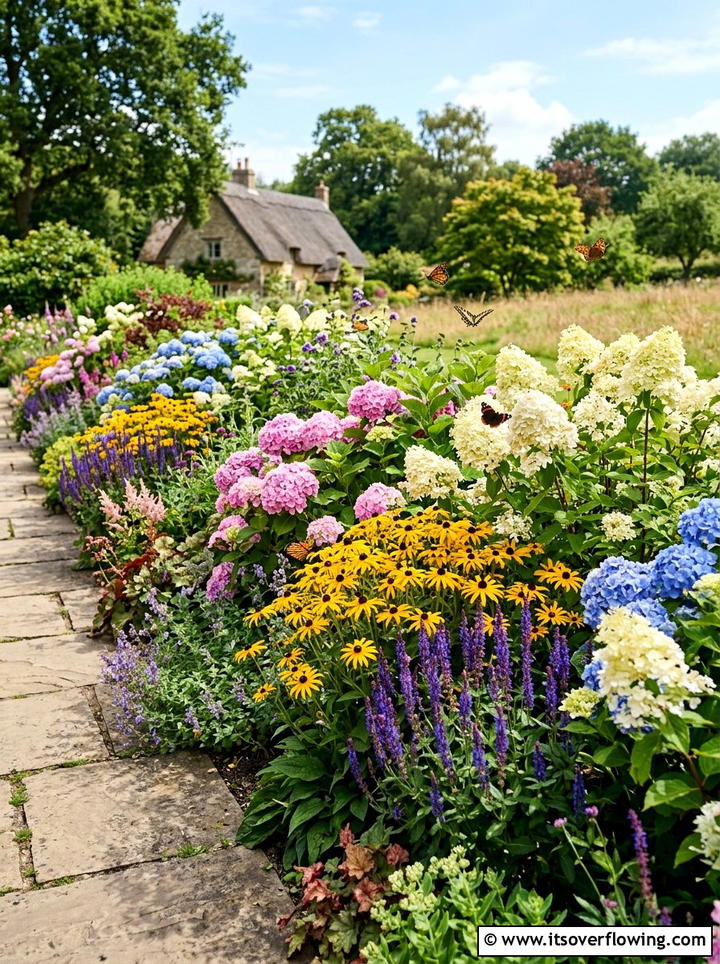
Mixing these shrubs with other perennial flowers ensures that your garden has something blooming throughout the entire growing season. You can plant them as a backdrop for shorter flowers like daisies, salvia, or black-eyed Susans. The large leaves of the hydrangea provide a solid green background that makes the colors of smaller flowers stand out. As the perennials fade, the hydrangeas continue to hold their shape and provide structure to the bed. This layers-of-color approach creates a rich, professional-looking garden that feels full and diverse. It encourages a healthy ecosystem by providing variety for local pollinators like bees and butterflies throughout the summer months.
19. Hydrangea window box display
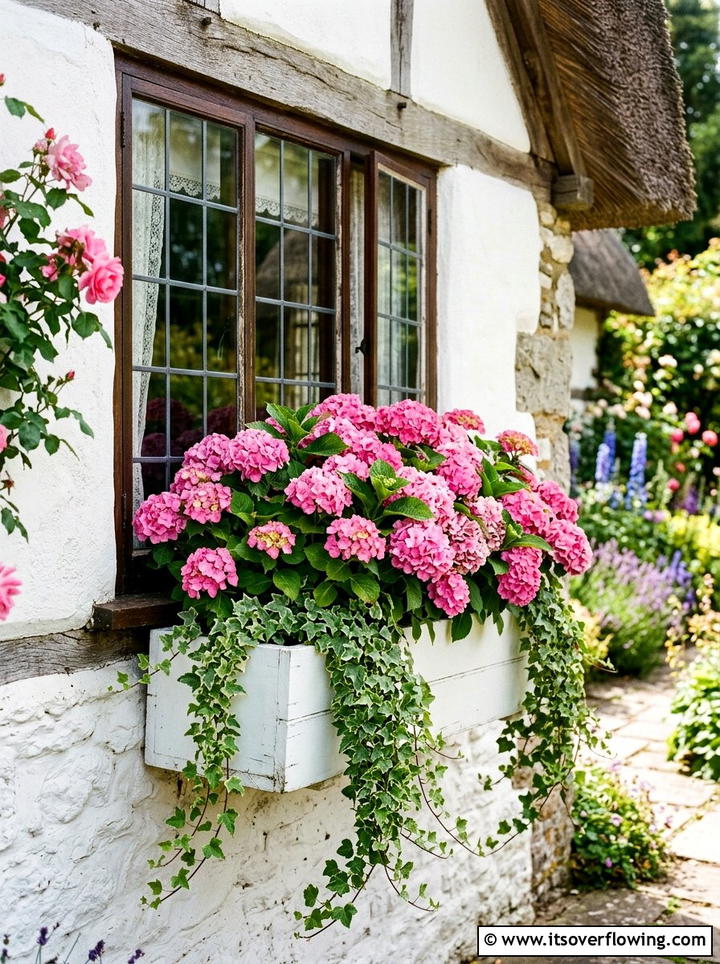
Window boxes are a charming way to bring flowers closer to your home and enjoy them from the inside. While standard varieties are too large, specialized dwarf types are perfect for these elevated containers. They provide a lush, cascading effect that softens the look of your home’s exterior and adds immediate personality. You can mix them with trailing ivy or sweet potato vine for a full and overflowing look. Make sure the window boxes are securely attached, as these plants require frequent watering and the soil can become heavy. This is a perfect way to add color to a second story or a kitchen window.
20. Raised bed hydrangea garden
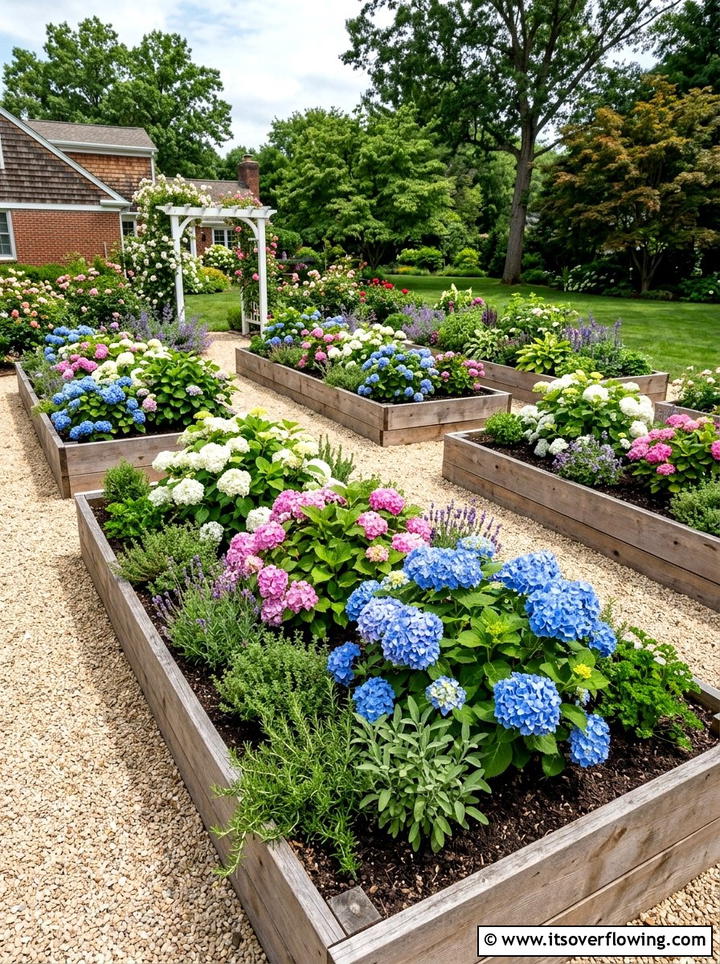
Raised beds provide excellent drainage and make it much easier to tend to your plants without bending over. You can build these beds out of wood or stone to match the rest of your garden ‘s hardscaping. This method is particularly useful if your backyard has heavy clay soil that doesn’ t drain well. Filling the beds with high-quality potting mix will result in much larger blooms and healthier foliage. Raised beds also help to contain the plants and prevent them from spreading into your lawn area. They create a neat, organized appearance that is easy to maintain and visually very satisfying for the home gardener.
21. Multi colored hydrangea bed
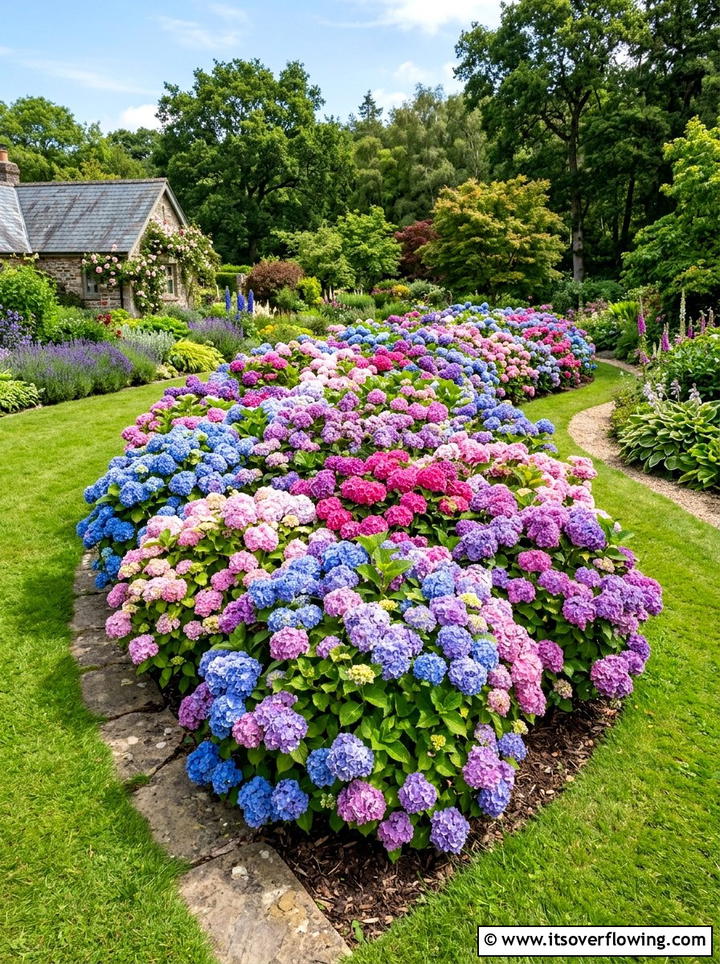
Why choose just one color when you can have a rainbow of blues, pinks, and purples in one area? If your soil has varying acidity levels, you might naturally see different colors on the same plant or in the same bed. You can intentionally create this look by planting different varieties next to each other for a vibrant and eclectic feel. This style is very playful and works well in informal landscapes or children ‘s gardens. It celebrates the unique ability of these plants to change color based on their environment. The result is a high-energy flower bed that captures everyone’ s attention and looks incredible in photographs.
22. Hydrangeas along wooden fence
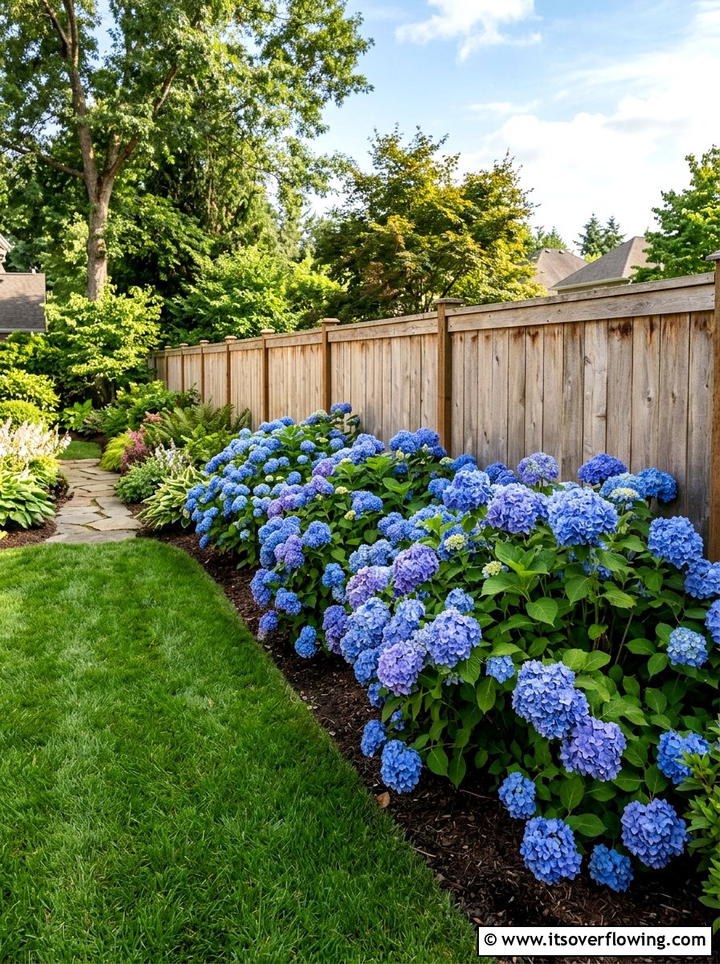
A plain wooden fence can sometimes feel a bit harsh or boring in a backyard setting. Planting a row of these shrubs along the fence line softens the wood and integrates the structure into the garden. The flowers act as a beautiful natural wallpaper that covers the horizontal slats and adds vertical interest. This also helps to muffle noise from neighbors or the street, creating a quieter outdoor experience. You can choose colors that contrast with the stain of your fence, such as white blooms against dark brown wood. This is a classic landscaping move that provides a lot of visual impact for a relatively small investment.
23. Victorian garden hydrangea style
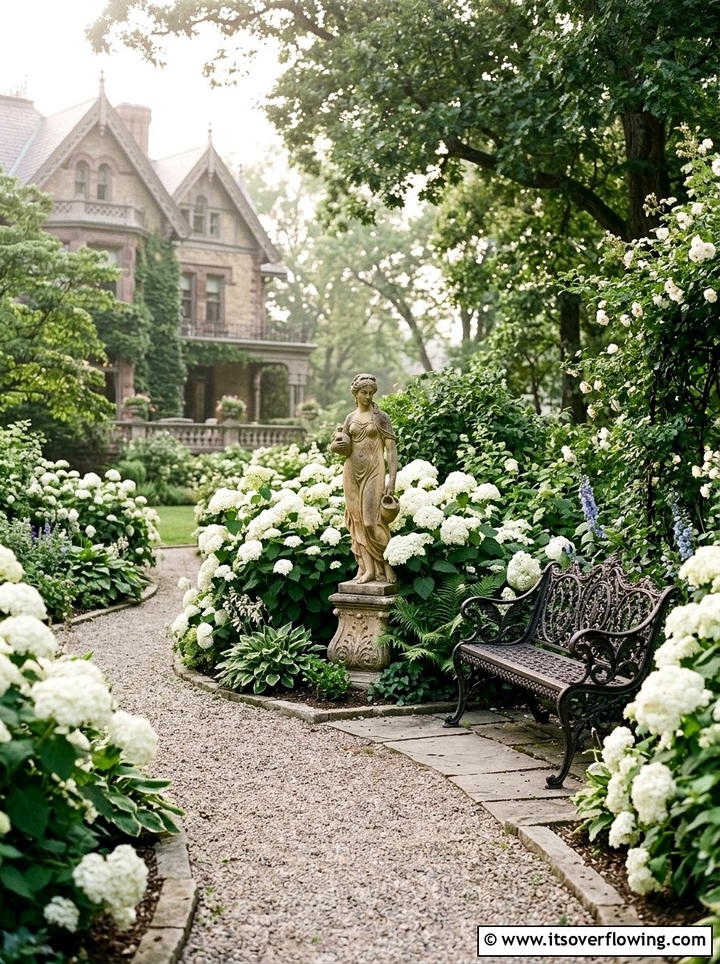
The Victorian era was famous for its love of lush, romantic flowers and formal garden structures. You can recreate this historic look by planting large mophead varieties in symmetrical patterns or around central statues. Combining these blooms with wrought iron furniture and stone ornaments completes the vintage aesthetic. This style often uses pastel colors like light blue, soft pink, and creamy white to maintain a delicate and refined feel. It is a perfect choice for older homes with traditional architecture or for anyone who loves a bit of garden history. The result is a space that feels timeless, elegant, and deeply steeped in classic garden tradition.
24. Panicle hydrangea sunny garden
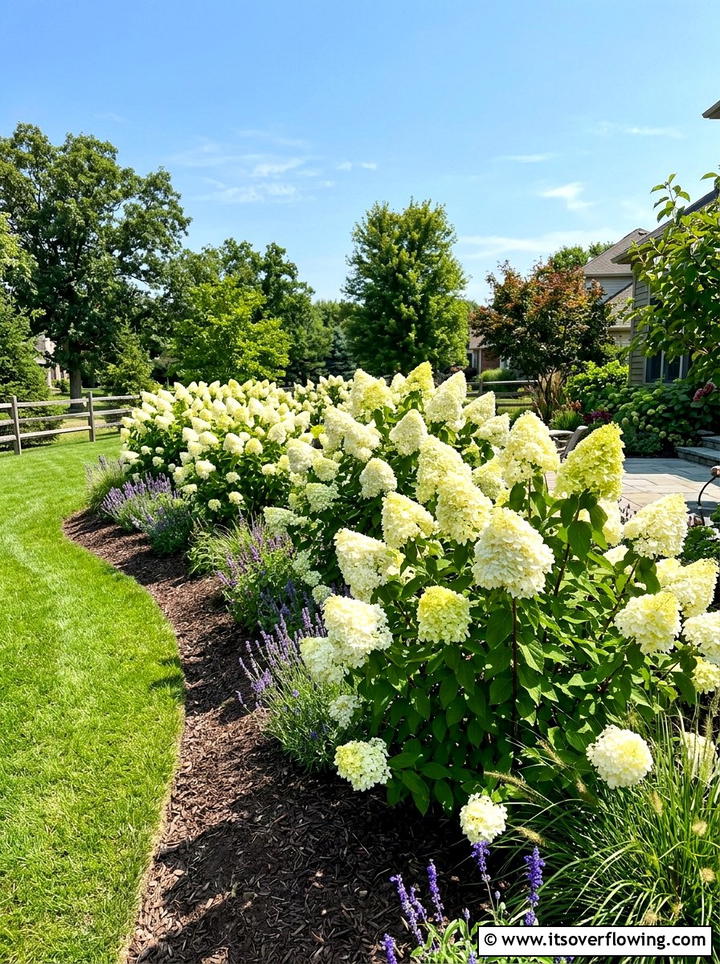
While many people think of these as shade plants, the panicle variety actually loves the sun and thrives in bright light. These plants produce large, cone-shaped flowers that are incredibly tough and can withstand the heat of the afternoon. They are perfect for wide-open backyard spaces where there isn’t much tree cover. Because they are so resilient, they are often used in commercial landscapes and low-maintenance home gardens. They provide a lot of height and volume, making them great for filling large gaps in a landscape. Their sturdy stems also make them the best choice for cut flower arrangements that you can bring indoors.
25. Hydrangea and boxwood landscape
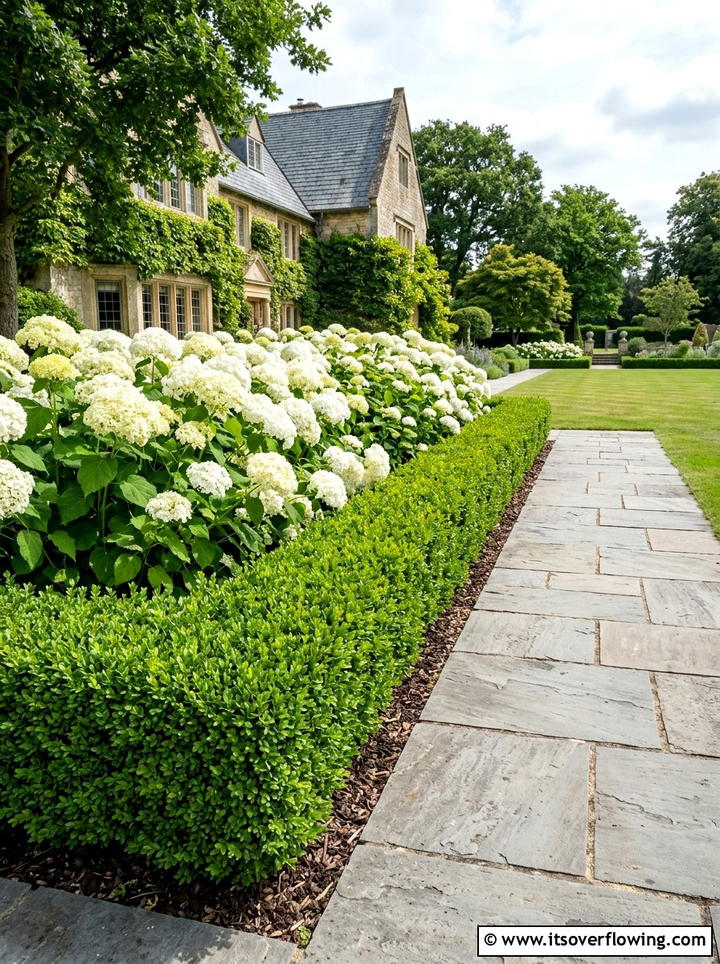
For a very formal and structured look, try pairing the wild blooms of a hydrangea with the neat, clipped shapes of boxwood. This combination is a staple in high-end landscape design because it balances soft textures with rigid forms. The evergreen boxwoods provide structure and green color even in the winter when the hydrangeas have lost their leaves. During the summer, the colorful blooms spill over the neat green hedges in a beautiful display of organized chaos. This design works perfectly for front entryways, formal parterre gardens, or along long driveways. It creates a polished and sophisticated look that remains attractive throughout every month of the year.
Conclusion:
Creating a garden filled with these iconic shrubs is a rewarding journey that adds lasting value and beauty to your property. We have explored a wide range of styles, from the structured elegance of modern white beds to the whimsical charm of cottage-inspired borders. Each variety offers something unique, whether it is the fall colors of the oakleaf or the reliable repeat blooms of the newer hybrids. By understanding their needs for light and moisture, you can successfully integrate them into almost any part of your yard. We hope these twenty-five ideas inspire you to start planting and enjoying the lush, colorful world of hydrangeas at home.

Related posts:
 25 garden design ideas with color themes: Stunning Palette Tips
 25 Creative Garden Ideas With Shoe Planter Wall Displays
 25 Garden Design Ideas With Pot Displays for Instant Charm
 25 garden ideas with hanging baskets for Colorful Displays
 25 Garden Ideas With Old Ladders for Charming Vertical Displays
 25 Creative Garden Ideas With Rain Barrel Displays That Wow
 25 garden design ideas with focal points: Stunning Yard Plans
 25 Garden Ideas for Desert Style With Stunning Low-Water Looks
 25 Garden Ideas for Windy Areas That Look Stunning
 25 Garden Ideas With Pavers for Stunning Paths and Patios
 25 Garden Design Ideas With Seasonal Flowers for Year-Round Color
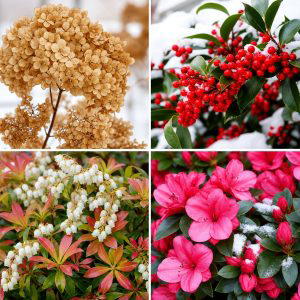 25 Garden Ideas for Year Round Color in Every Season