
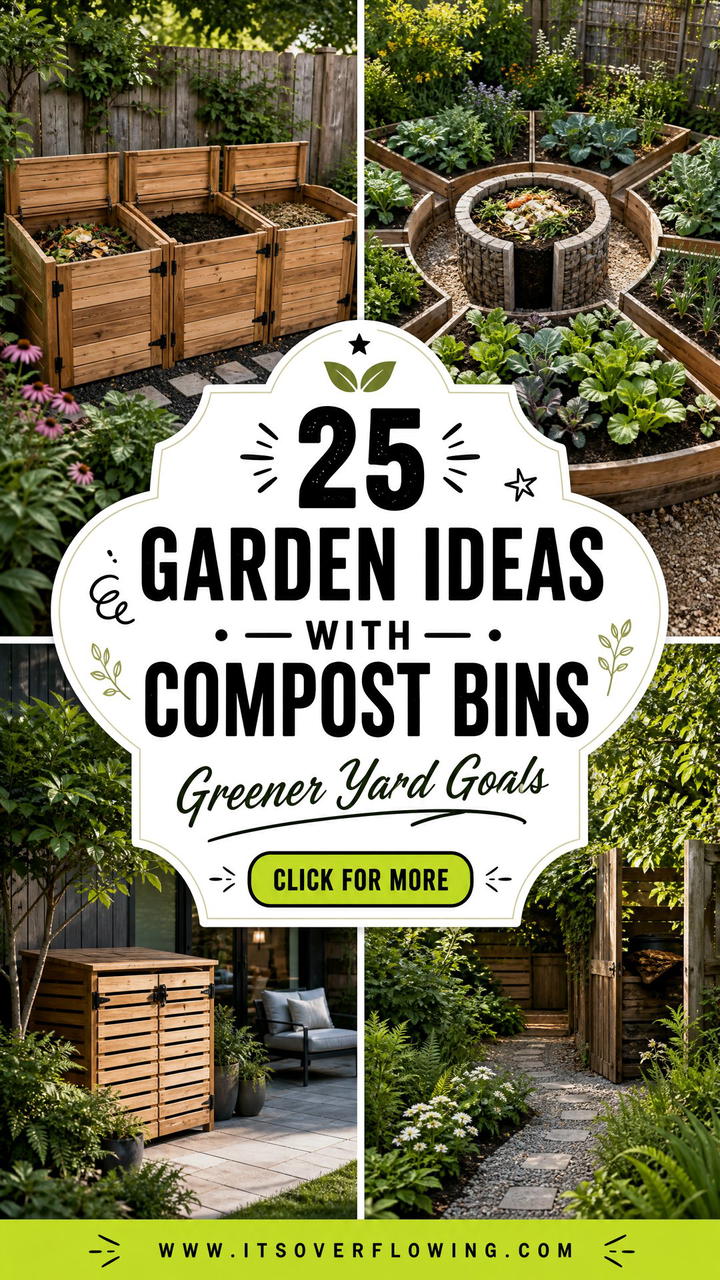
Creating a sustainable and thriving outdoor space begins with understanding the cycle of nature right in your own backyard. Integrating a compost bin into your garden design is not just a functional choice for waste management; it is a commitment to soil health and vibrant plant growth. Many gardeners worry that these utility areas will detract from the aesthetic beauty of their landscape, but modern design solutions offer seamless ways to blend functionality with style. Whether you have a sprawling suburban lot or a compact urban courtyard, there are numerous ways to incorporate composting systems that look intentional and sophisticated. By choosing the right placement and materials, you can transform a simple decomposition site into a central feature of your eco-friendly garden sanctuary.
1. Wooden Pallet Compost Enclosure
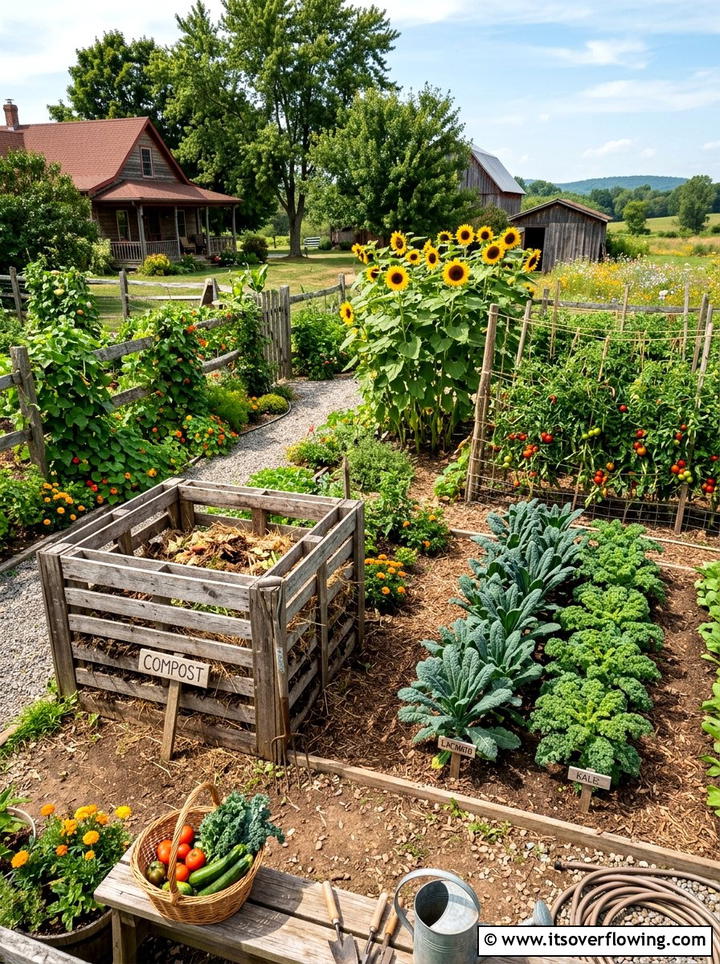
A rustic garden often benefits from the natural and rugged look of reclaimed materials like wooden pallets. This design approach creates a cohesive and hardworking vegetable patch where functionality meets a DIY aesthetic. You can arrange the pallets in a sturdy U-shape at the edge of your growing area to keep the space organized. Surround this zone with tall sunflowers or climbing beans to soften the wooden edges and integrate the structure into the lush greenery. This setup provides ample airflow for the organic matter while keeping the rest of your backyard looking tidy and purposeful. It is a cost-effective way to build a sustainable cycle within a charming, country-style landscape.
2. Hidden Behind Trellis Screening
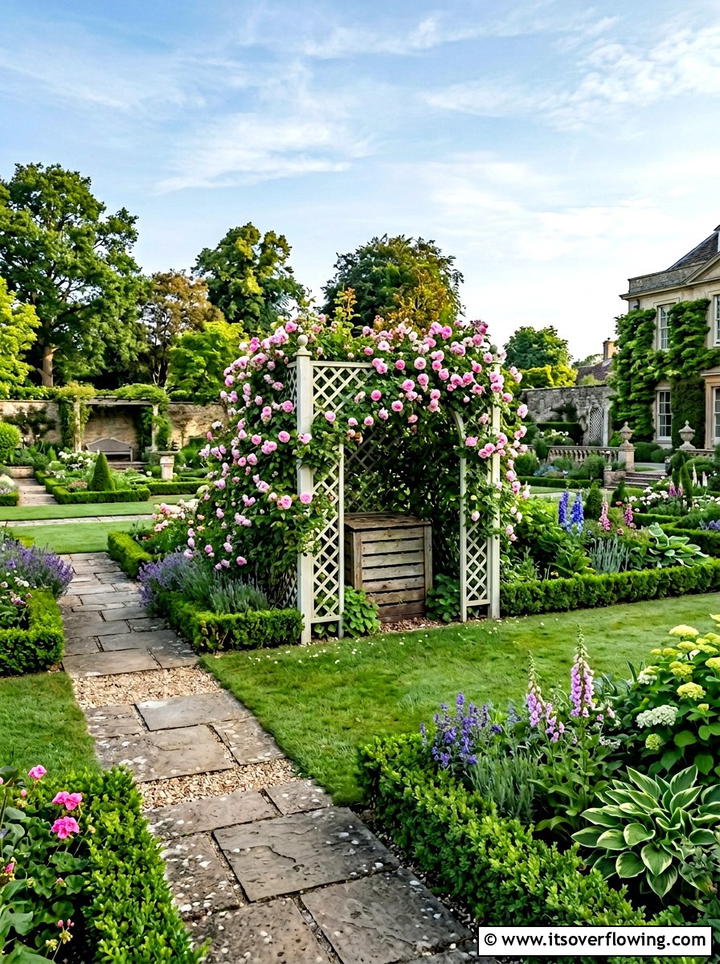
You can maintain a formal garden appearance by using elegant trellis panels to hide your composting area from view. This setup works perfectly in a structured backyard with manicured lawns and symmetrical flower beds. Positioning the bins behind a climbing rose or clematis-covered screen ensures the utility zone stays out of sight while remaining accessible. The surrounding area can feature stone pathways and neatly clipped boxwood hedges to enhance the sophisticated feel. This method allows you to practice eco-friendly gardening without interrupting the visual flow of your landscape. It creates a secret corner where the magic of decomposition happens behind a beautiful wall of living vines and flowers.
3. Integrated Raised Bed Composter
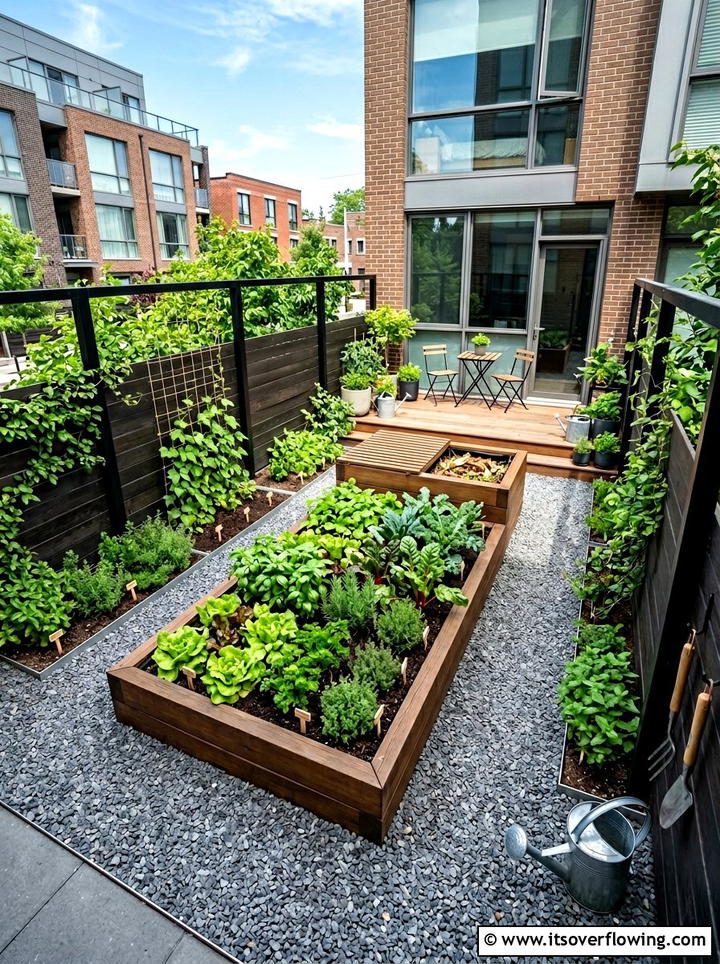
Small urban spaces benefit greatly from multi-functional garden structures that maximize every inch of available ground. You can design a series of raised vegetable beds where one section is dedicated specifically to a sunken composting system. This keeps the entire operation at waist height, making it easy to manage while you tend to your leafy greens and herbs. The surrounding wooden frames should match perfectly to create a streamlined and modern look. Use bright, clean lines and gravel paths to keep the area looking professional and tidy. This integration ensures that nutrients are always close to your plants, promoting a healthy and very productive growing environment in a compact footprint.
4. Corner Stone Pit System
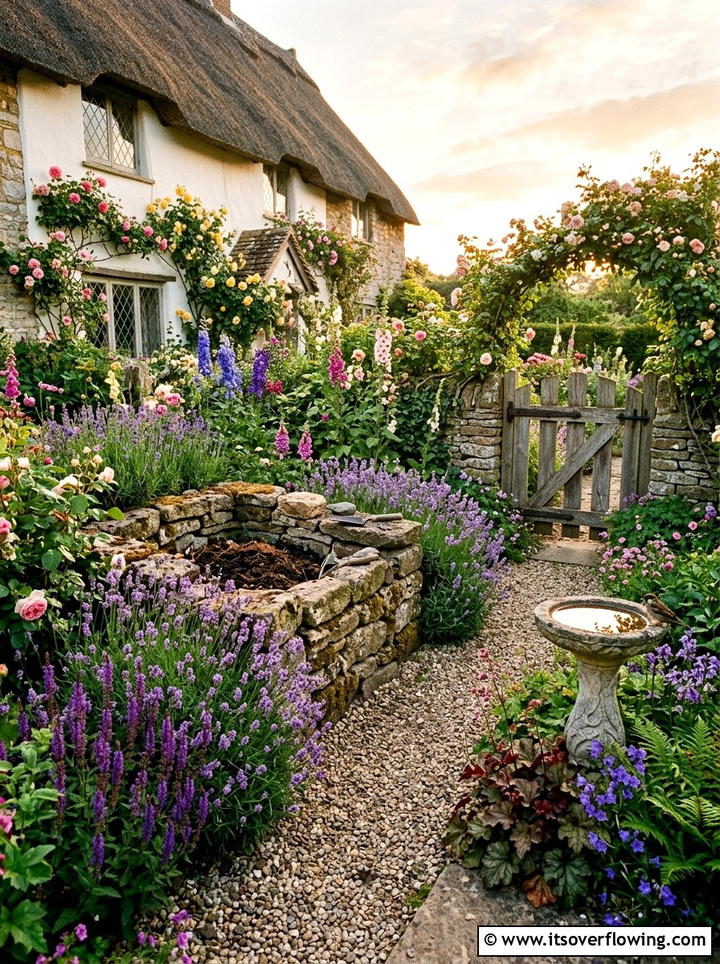
A traditional cottage garden with stone walls provides the perfect backdrop for a permanent and durable composting station. You can use local fieldstones to build a low-walled enclosure in a quiet corner of the yard. This structure should blend seamlessly with the existing masonry and hardscaping elements of your outdoor space. Surround the stone pit with billowing perennial flowers like lavender and salvia to create a soft and fragrant border. The heavy stone helps regulate temperature for the organic matter while adding a timeless, architectural quality to the garden. It feels like a natural part of the landscape rather than an added afterthought in your beautiful backyard retreat.
5. Modern Metal Slat Bin
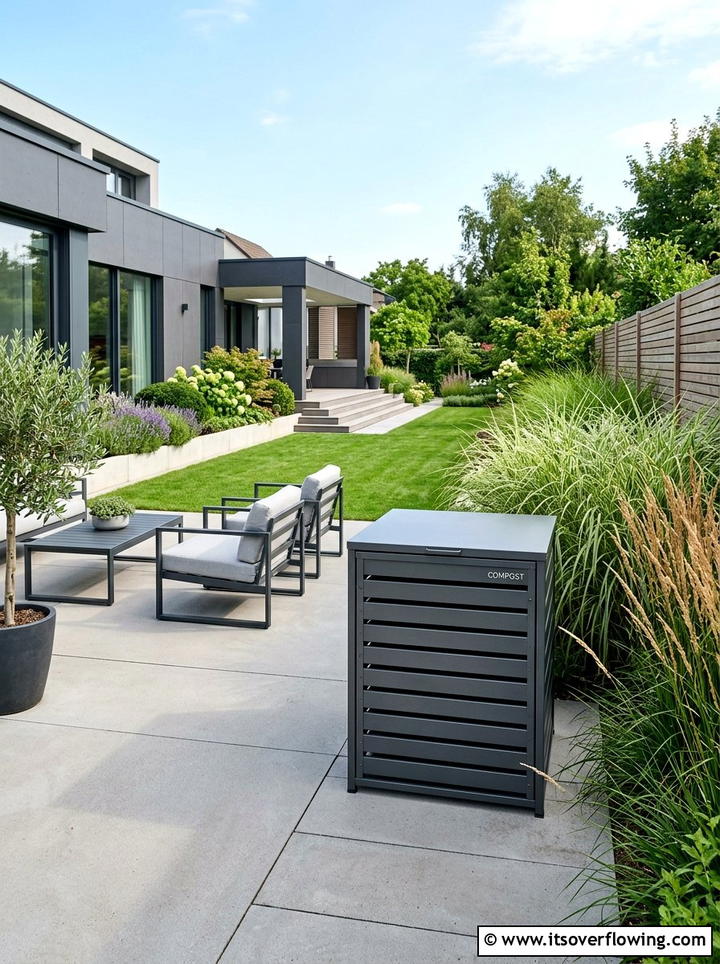
Contemporary garden designs often utilize industrial materials like steel or aluminum to create a sleek and minimalist aesthetic. You can install a slatted metal bin at the end of a linear patio or deck area. The dark tones of the metal provide a striking contrast against bright green ornamental grasses and architectural plants. This setup keeps the composting process ventilated and organized while fitting perfectly into a high-end, modern landscape. Pair the bin with smooth concrete pavers and minimalist outdoor furniture to complete the look. It proves that sustainability can be incredibly stylish and sophisticated when you choose materials that reflect a clean and very updated design language.
6. Cedar Wood Three Bin System
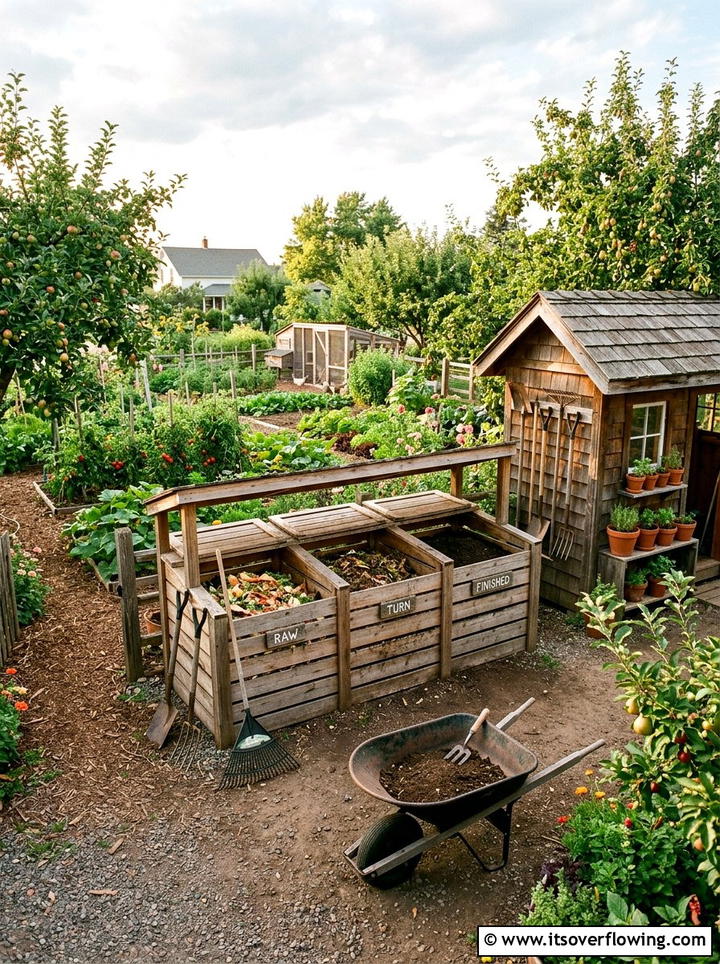
A large family garden needs a high-capacity system that can handle a significant amount of kitchen and yard waste. A three-bin cedar structure offers an organized way to manage different stages of the decomposition process effectively. Cedar is naturally rot-resistant and ages to a beautiful silvery-gray that complements any outdoor setting. Place this station near a large potting shed or a dedicated workspace to create a functional gardening hub. Surround the area with fruit trees and berry bushes to reinforce the theme of growth and harvest. The large scale of the bins acts as a grounding element in the landscape, providing structure and a clear sense of purpose.
7. Potted Herb Garden With Vermicompost
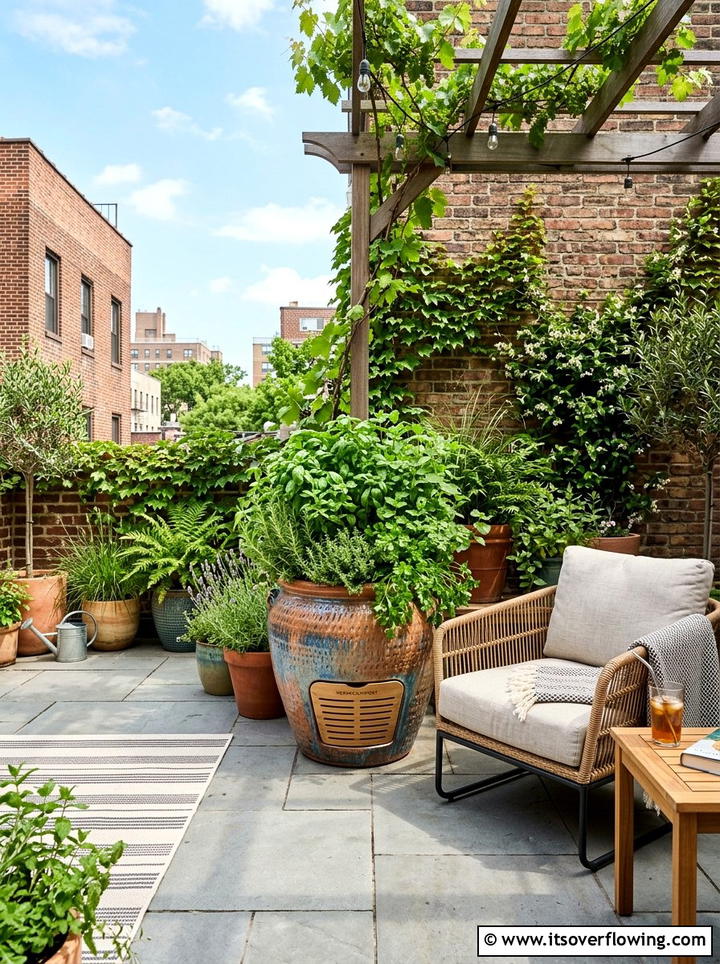
Even a small balcony or patio can host a thriving ecosystem by using a stylish vermicompost system hidden inside a planter. You can select a large, decorative ceramic pot that features a hidden compartment for red wiggler worms. Surround the top of the pot with fragrant herbs like basil, thyme, and mint to create a lush mini-garden. This setup is perfect for urban dwellers who want to reduce waste while growing their own fresh ingredients for cooking. The dark, rich soil produced by the worms feeds the herbs directly, creating a closed-loop system. It looks just like a standard high-end planter, making it a perfect addition to any modern terrace.

8. Vertical Garden With Built In Composter
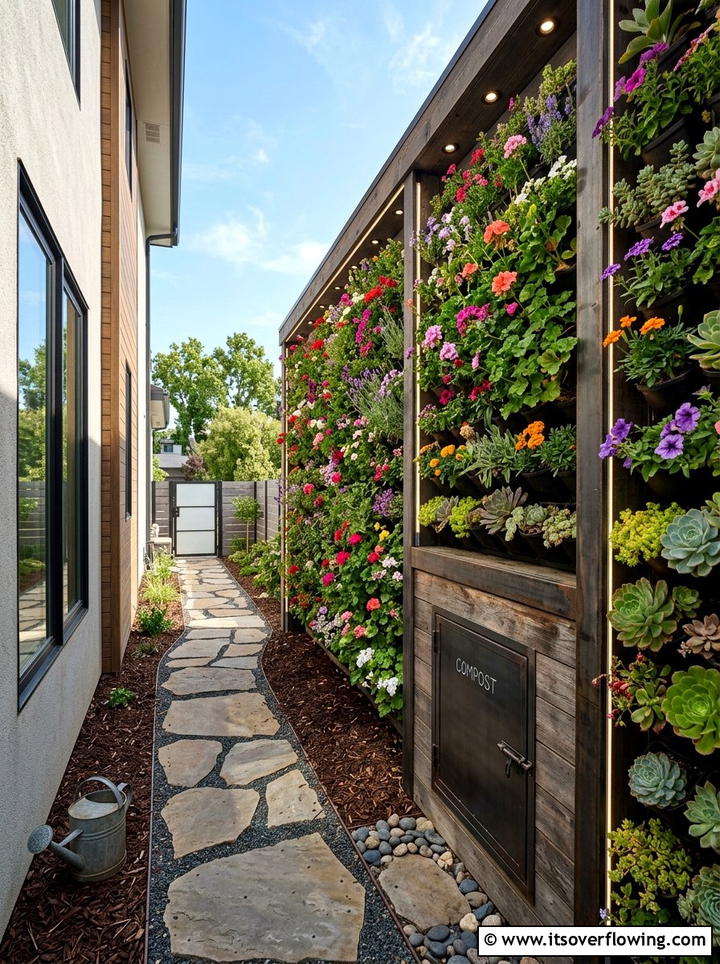
Utilizing vertical space is a smart way to incorporate composting into a narrow side yard or a small courtyard garden. You can build a tall wooden wall featuring various tiers for planting colorful flowers and cascading succulents. Within the base of this structure, a discreet door can provide access to a vertical composting column. This design draws the eye upward and turns a functional item into a striking architectural feature. The surrounding area can be finished with dark mulch and soft outdoor lighting to create a moody and modern atmosphere. It is an innovative way to keep your garden fed while adding a unique visual element to your outdoor living area.
9. Decorative Wattle Fence Composting Area
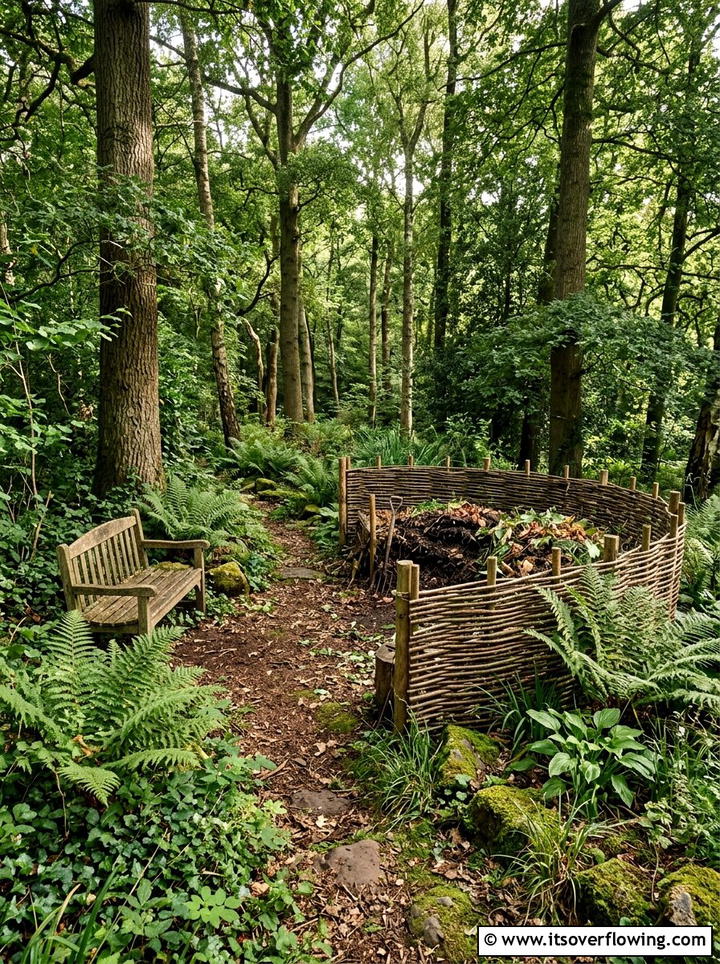
For those who love a natural and organic look, a wattle fence made from woven willow or hazel branches is ideal. This traditional technique creates a beautiful, textured enclosure for your compost piles in a woodland or wildlife garden. The soft, curved lines of the woven wood blend perfectly with tall ferns and native shrubs. It provides a cozy and protected environment for beneficial insects and microbes to thrive in the soil. Position this area near a rustic bench or a fire pit to create a relaxed and earthy vibe. The wattle fencing adds a touch of historical charm while serving as a highly effective and breathable container for organic waste.
10. Under Deck Hidden Compost Access
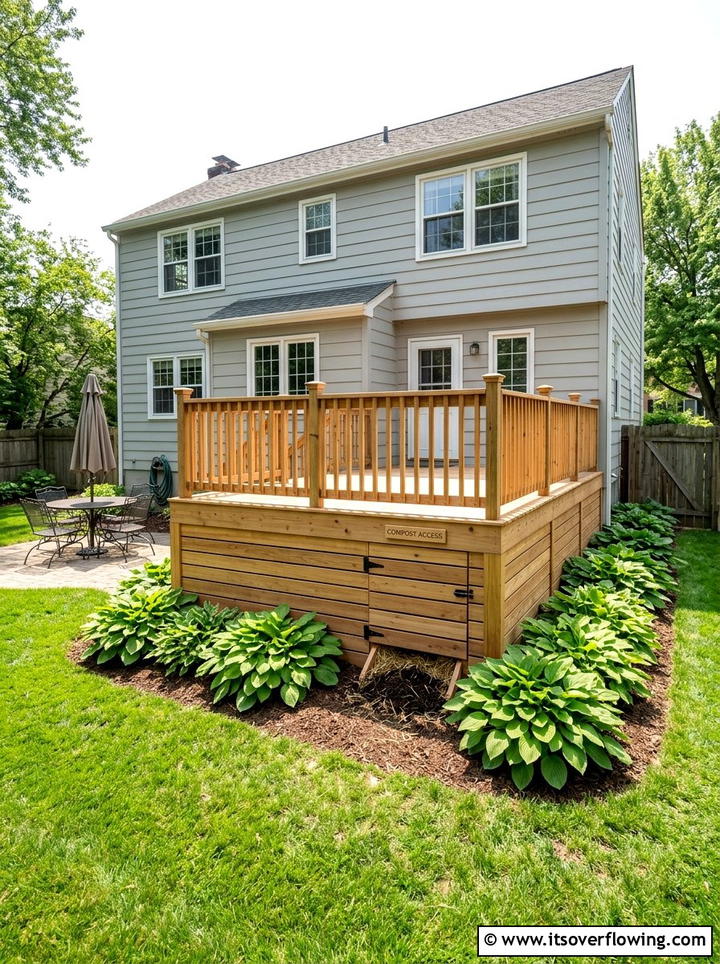
If you have a raised deck, you can utilize the dark and cool space underneath for a hidden composting system. This design keeps the bins completely out of sight while making use of an often-neglected area of the yard. You can install a small trap door or a sliding panel in the skirting of the deck for easy access. Surround the base of the deck with shade-loving plants like hostas and bleeding hearts to create a lush border. This setup is perfect for maintaining a clean and uncluttered lawn for kids and pets to play on. It is a clever architectural solution that keeps the “dirty” work of the garden neatly tucked away from view.
11. Small Space Tumbler In Flower Bed
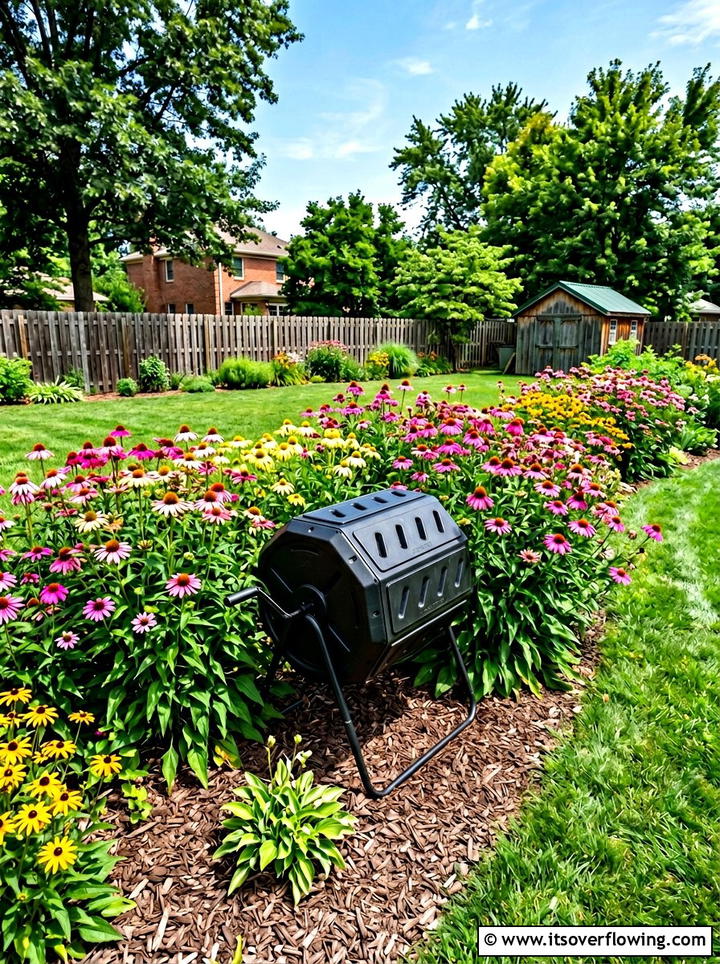
A rotating compost tumbler is a great choice for gardeners who want fast results without the heavy lifting of turning piles. You can tuck a modern, dark-colored tumbler into a dense border of tall flowering perennials like coneflowers and black-eyed Susans. The height of the flowers helps camouflage the mechanical look of the bin while keeping it within reach. This setup works well in a medium-sized backyard where space is at a premium but productivity is a high priority. Use a layer of wood chips around the base to keep the area tidy and provide a stable surface. The tumbler becomes a hidden engine that fuels the vibrant colors of your floral displays.
12. Cottage Garden Compost Hedge
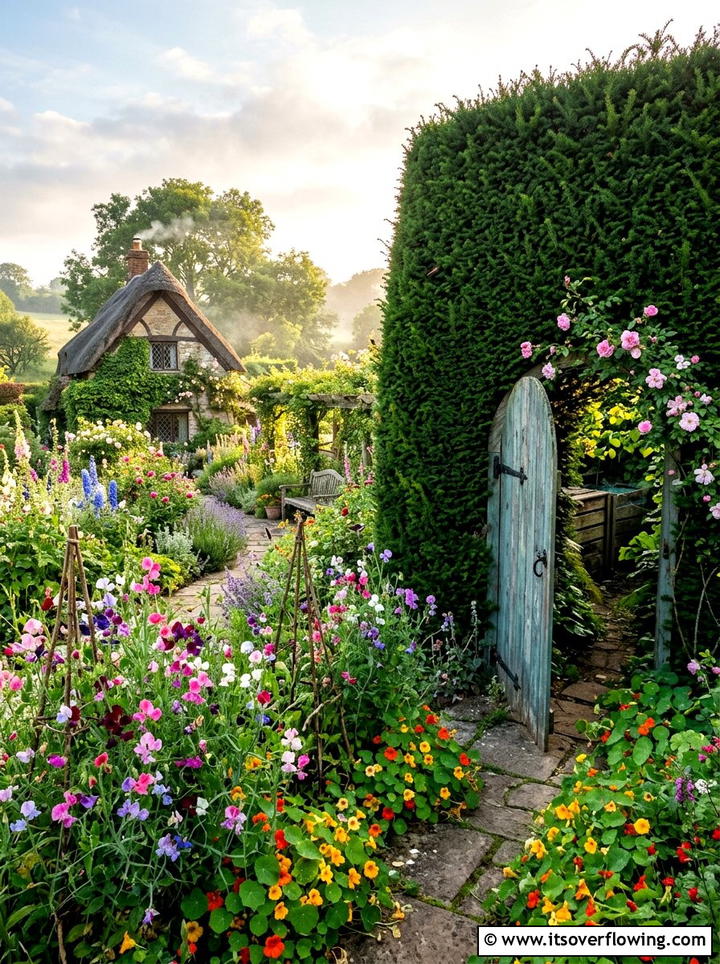
In a whimsical cottage garden, you can hide your composting activities behind a “living wall” of tall shrubs or a thick hedge. This creates a soft and natural boundary that blends into the overall landscape design. Evergreen plants like yew or privet provide year-round screening, ensuring the bins are never visible from the main house. You can place a small gate in the hedge to allow for easy entry and exit with a wheelbarrow. Surround the entrance with climbing sweet peas or nasturtiums to add pops of color and fragrance. This approach treats the composting area as a private outdoor room, maintaining the magical and untamed feel of a classic country garden.
13. Concrete Block Composting Station
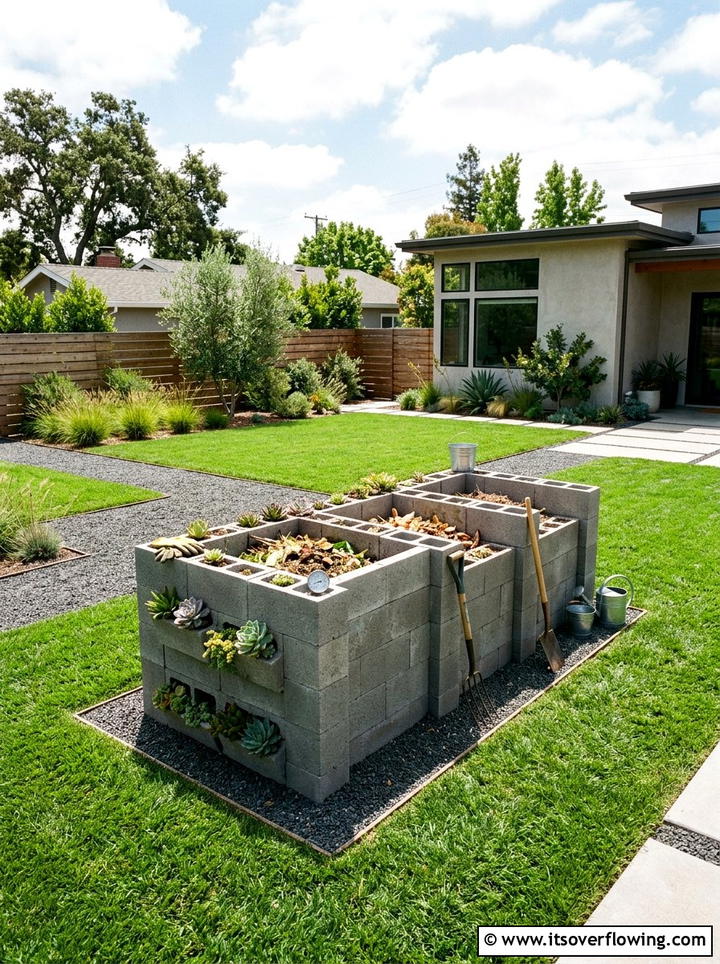
Industrial and brutalist design elements are becoming popular in modern landscaping, and concrete blocks offer a sturdy solution for composting. You can stack the blocks to create a clean-lined, modular station at the back of a contemporary yard. The gray tones of the concrete look stunning when paired with bright green lawn and dark gravel pathways. You can even plant small succulents in the holes of the blocks to add a touch of life to the structure. This setup is incredibly durable and can withstand any weather conditions while keeping your organic matter contained. It provides a sense of permanence and strength to the overall design of a minimalist and very modern outdoor space.
14. Reclaimed Timber Bin In Woodland Garden
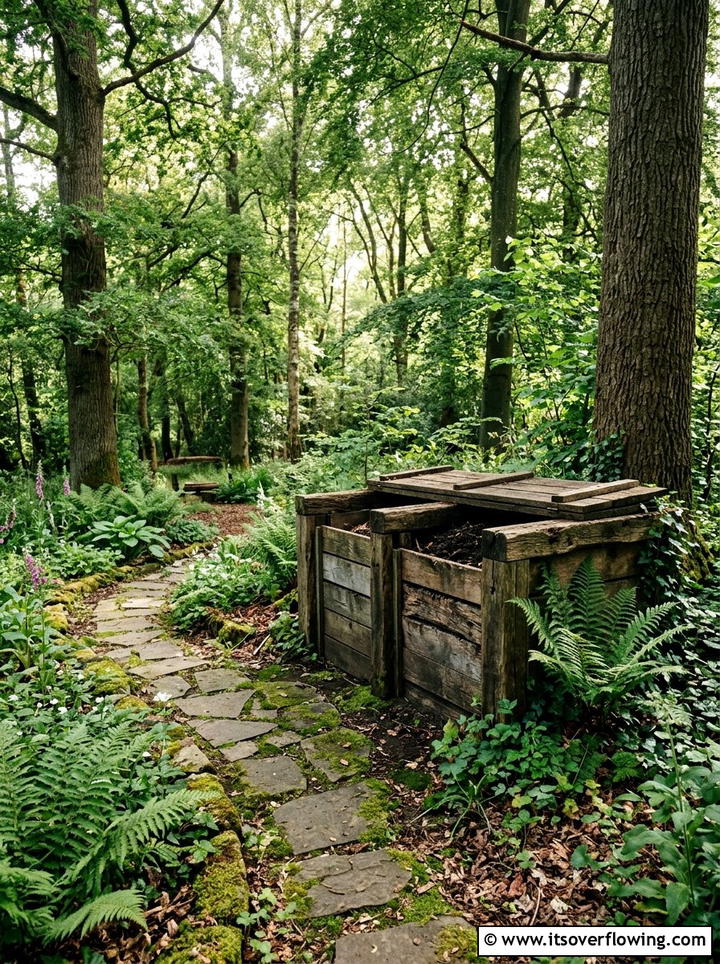
A woodland-themed garden is the perfect place for a compost bin made from thick, reclaimed timber beams. The heavy wood mimics the look of fallen logs and fits naturally under the canopy of mature trees. You can surround the bin with native groundcovers and moss-covered rocks to enhance the forest floor aesthetic. This design feels grounded and quiet, providing a peaceful spot for nature to do its work. The thick timber provides excellent insulation for the compost, keeping it active even during the cooler months of the year. It is a beautiful way to celebrate the cycle of life in a garden that feels like a natural extension of the wild.
15. Greenhouse Integrated Composting Pit
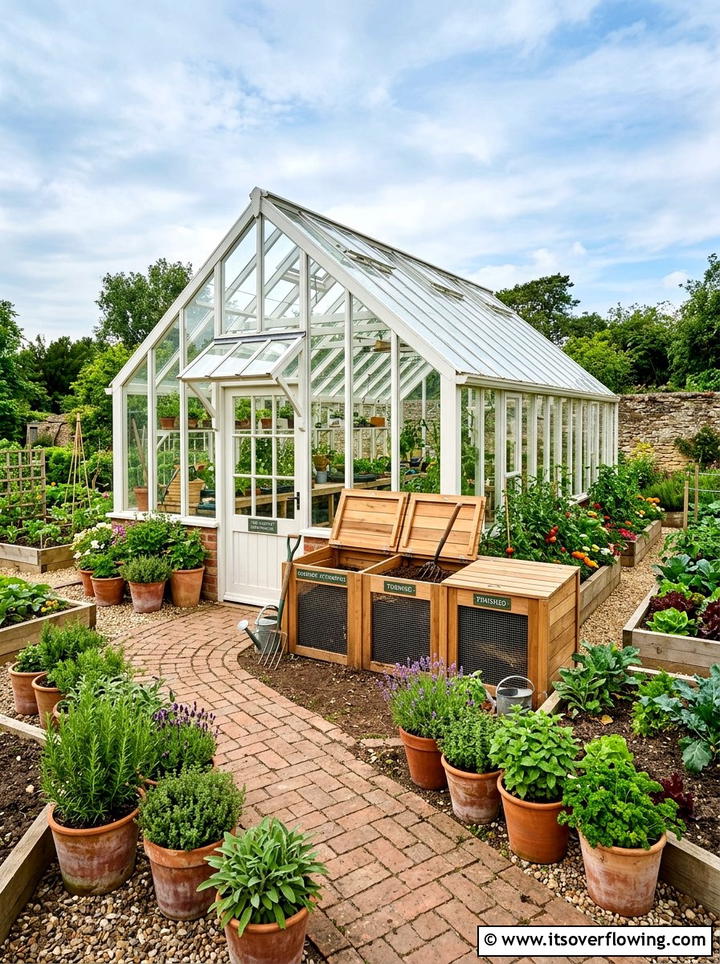
Serious gardeners who own a greenhouse can benefit from placing a composting pit directly inside or adjacent to the structure. The heat generated by the decomposing organic matter can help regulate the temperature for delicate seedlings nearby. You can design the greenhouse with a stylish brick or stone floor that includes a recessed area for the compost. This keeps the workspace organized and ensures that fresh soil is always available right where you need it most. Surround the greenhouse with neat herb beds and terracotta pots to create a classic and functional gardening zone. It is a highly efficient setup for anyone who loves to spend their time nurturing plants indoors.
16. Bamboo Screened Compost Corner
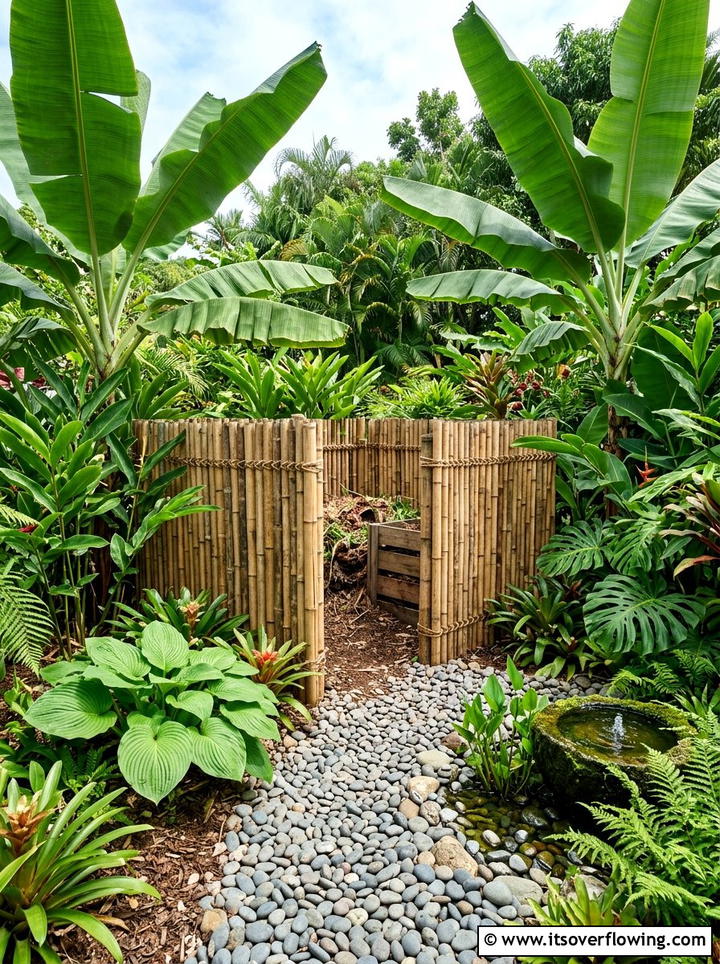
A zen-inspired or tropical garden can benefit from the light and airy look of a bamboo screen around the composting area. The vertical lines of the bamboo provide a clean and textured backdrop for large-leafed plants like hostas or banana trees. This setup creates a serene and private corner in the garden where the work of sustainability can happen quietly. You can use a simple black plastic bin inside the screen to keep costs down while maintaining a high-end look on the outside. Add a small bubbling water feature nearby to create a relaxing soundscape that masks any activity. This design proves that even utility areas can contribute to a peaceful and very calm outdoor atmosphere.
17. Contemporary Black Plastic Tumbler Landscape
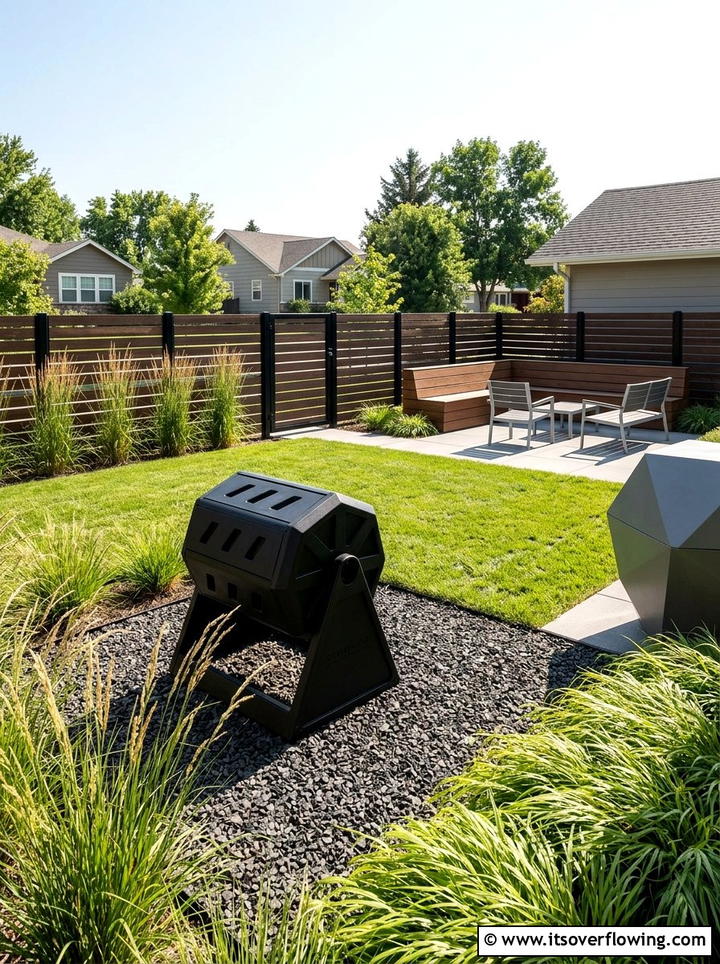
Modern homeowners often prefer the convenience of high-quality plastic tumblers, which can be integrated into a sleek landscape with ease. You can place a matte black tumbler on a dedicated pad of dark basalt gravel surrounded by ornamental grasses. This color palette creates a sophisticated and cohesive look that matches modern home exteriors perfectly. The round shape of the tumbler adds a geometric element to the garden design, making it feel like a piece of functional sculpture. By surrounding it with architectural plants like agave or yucca, you elevate the look of the bin. It becomes a clean and very efficient part of a well-ordered and stylish suburban backyard.
18. Orchard Style Leaf Mold Bin
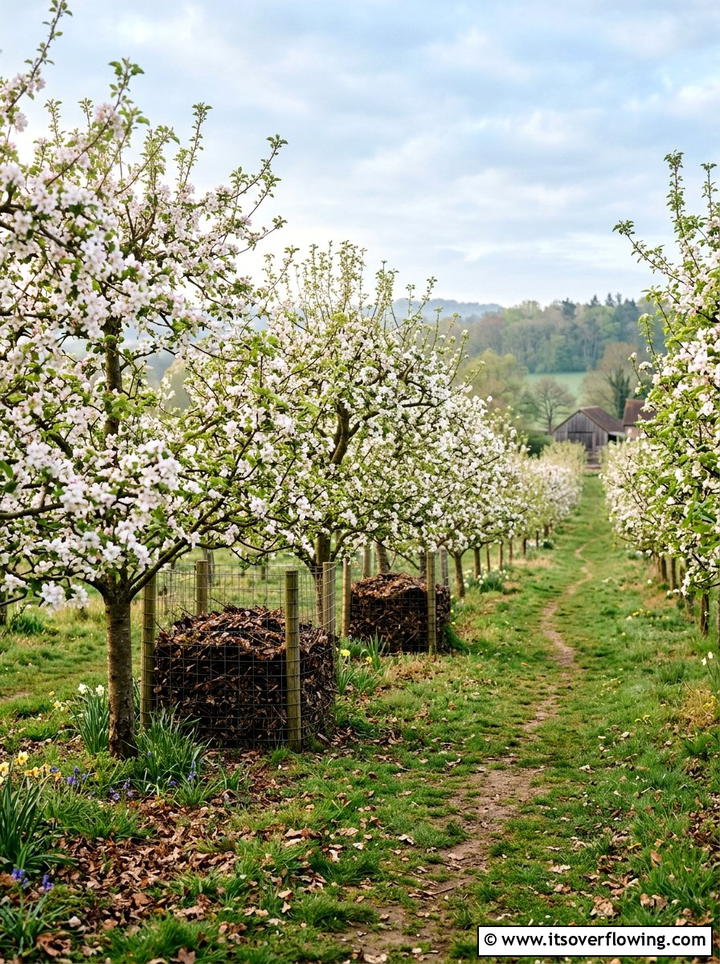
If you have fruit trees or a mini-orchard, a dedicated bin for creating leaf mold is a wonderful addition to the landscape. You can use simple wire mesh cylinders supported by wooden stakes to hold large quantities of fallen leaves. Place these bins in the spaces between your trees to create a cycle of nutrients that benefits your fruit production directly. The look is airy and unobtrusive, allowing the beauty of the trees and their blossoms to remain the main focus. As the leaves break down, they provide a rich mulch that keeps the roots of your orchard healthy and moist. It is a low-maintenance and very traditional way to manage seasonal garden debris.
19. Painted Wood Bin To Match Garden Fence
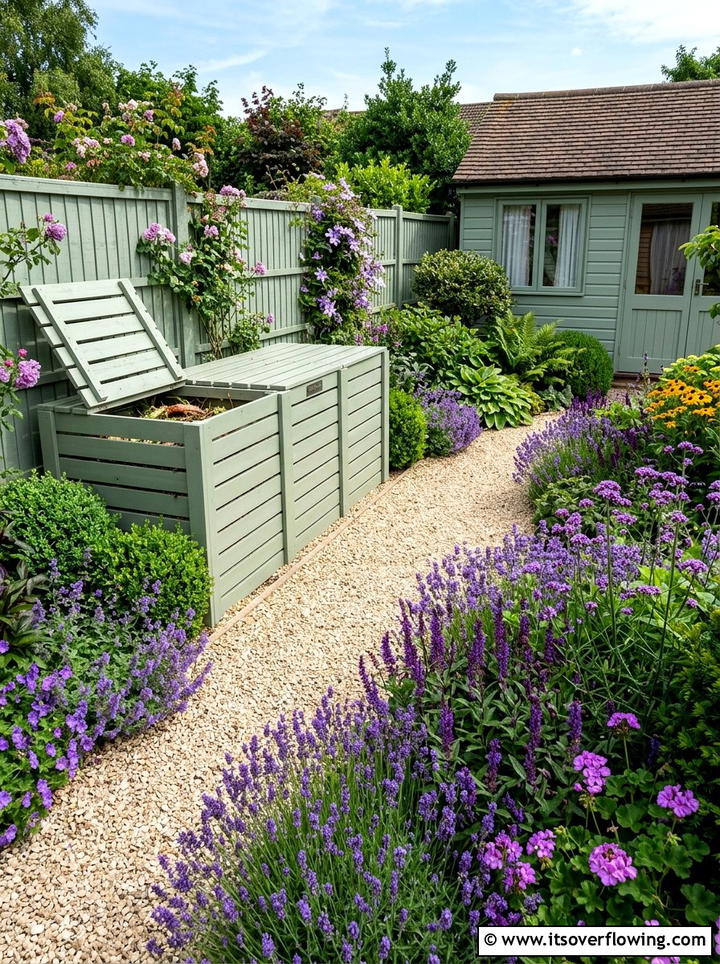
For a perfectly coordinated look, you can build a wooden compost bin and paint it the same color as your garden fence or shed. This visual continuity helps the structure disappear into the background, making the garden feel larger and more cohesive. Whether you choose a classic white, a moody charcoal, or a soft sage green, the matching colors create a professional finish. Surround the bin with a mix of perennial flowers and evergreen shrubs to further soften its presence in the yard. This approach is ideal for homeowners who want a tidy and very well-planned landscape where every element feels like it belongs to a single design vision.
20. Herbaceous Border With Hidden Compost Trench
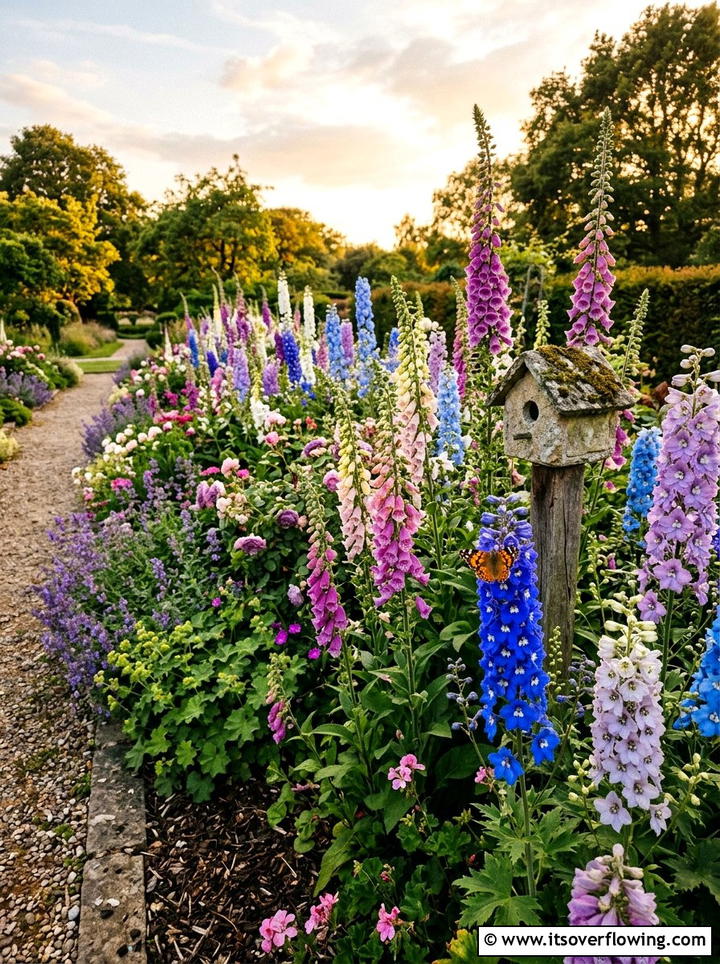
Trench composting is a method where you bury organic matter directly into the soil between your plants. You can design a wide herbaceous border filled with lupines, delphiniums, and foxgloves that hides a secret composting system beneath the surface. This eliminates the need for a visible bin entirely, making it perfect for small gardens or those who prefer a completely natural look. The decomposing material feeds the flowers directly from below, resulting in exceptionally lush and vibrant growth. You can mark the areas being “fed” with small, decorative garden stakes or stones. It is a stealthy way to practice sustainability while maintaining the pristine beauty of your favorite flower garden.
21. Brick Walled Compost Enclosure
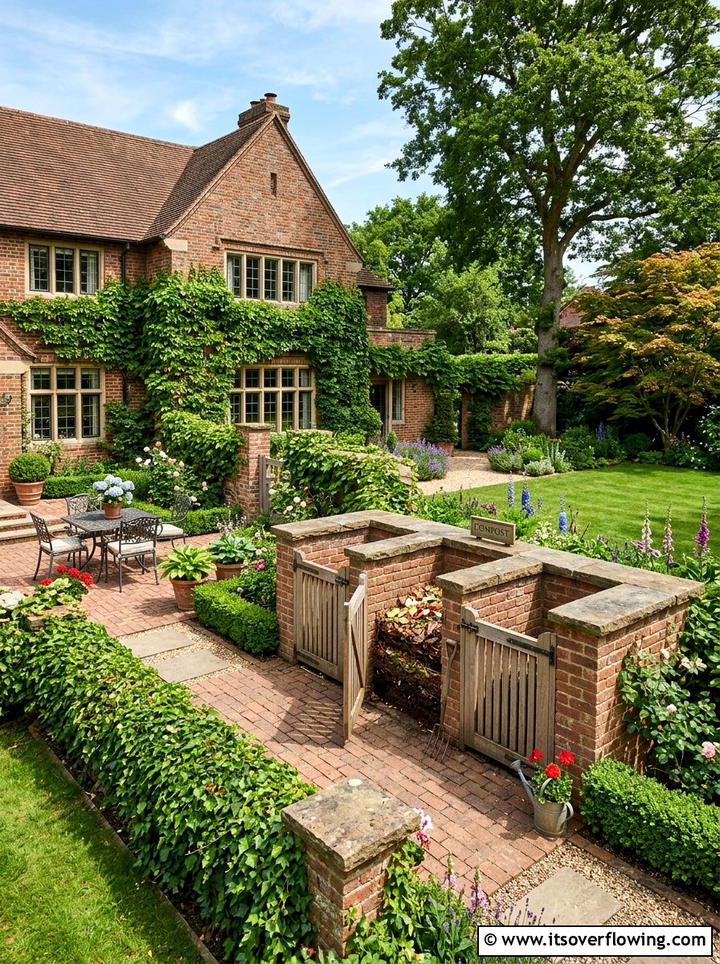
A traditional brick-walled enclosure provides a sense of history and permanence to a formal garden setting. You can use reclaimed bricks that match the architecture of your home to create a two or three-sided structure. This design works beautifully alongside a brick patio or a classic garden path. Top the walls with flat stones or wood to create a finished look that can even serve as an extra potting surface. Surround the brickwork with climbing ivy or hydrangea for a timeless and elegant appearance. The bricks hold heat well, which speeds up the composting process, making this a functional and very attractive choice for a traditional backyard landscape.
22. Vegetable Patch With Central Keyhole Bin
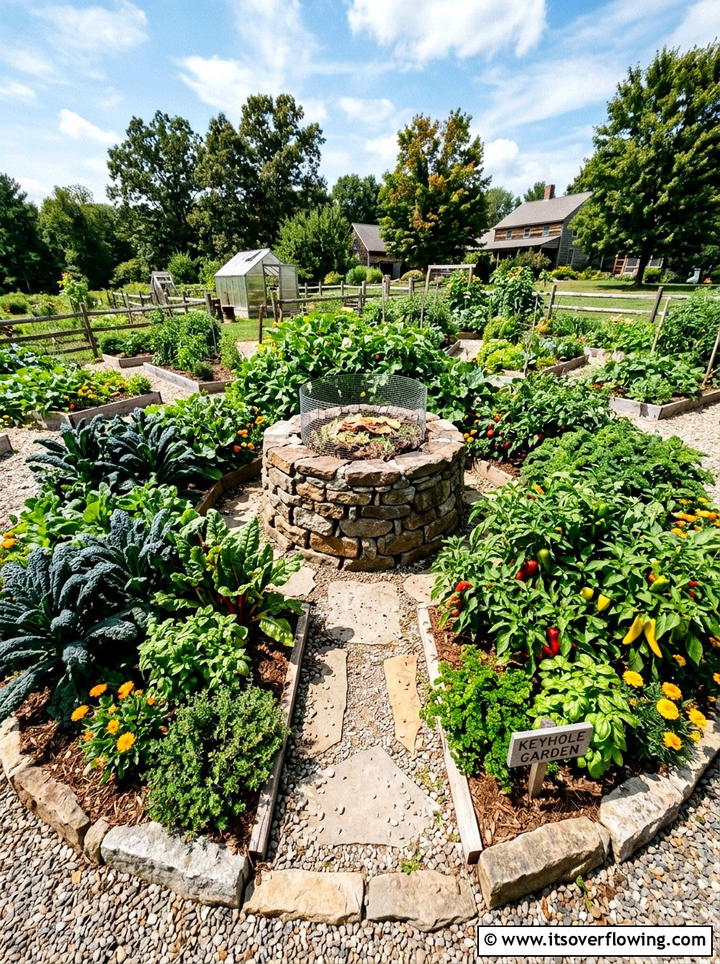
The keyhole garden design is a brilliant way to integrate composting directly into the center of a circular vegetable bed. You can build a tall, central basket made of wire or wood where you place all your kitchen scraps. The surrounding circular bed is filled with soil and planted with a variety of vegetables and herbs that benefit from the moisture and nutrients. This creates a striking focal point in the middle of your garden while making watering and feeding incredibly easy. The entire structure can be built with stones or bricks to create a beautiful, mound-like feature. It is a highly productive and visually interesting way to grow food sustainably.
23. Modernist Slatted Wood Bin Near Patio
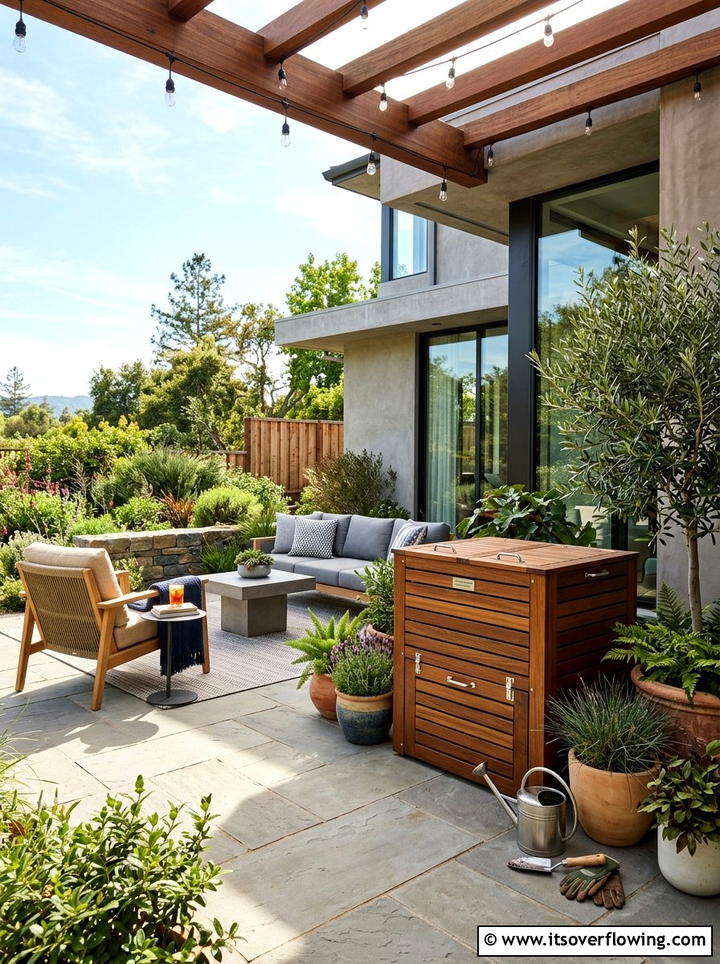
If your composting area must be located near your outdoor entertaining space, choose a modernist slatted wood design. Using high-quality hardwoods like ipe or teak ensures the bin looks like a piece of high-end outdoor furniture rather than a utility item. The horizontal slats provide excellent ventilation while creating a clean and contemporary pattern. Place the bin on a smooth stone terrace surrounded by potted plants and comfortable lounge seating. This design makes composting feel like a normal and stylish part of everyday life. It is the perfect solution for urban dwellers with limited space who still want to participate in eco-friendly practices without sacrificing their patio’s aesthetic.
24. Wildflower Meadow With Perimeter Composting
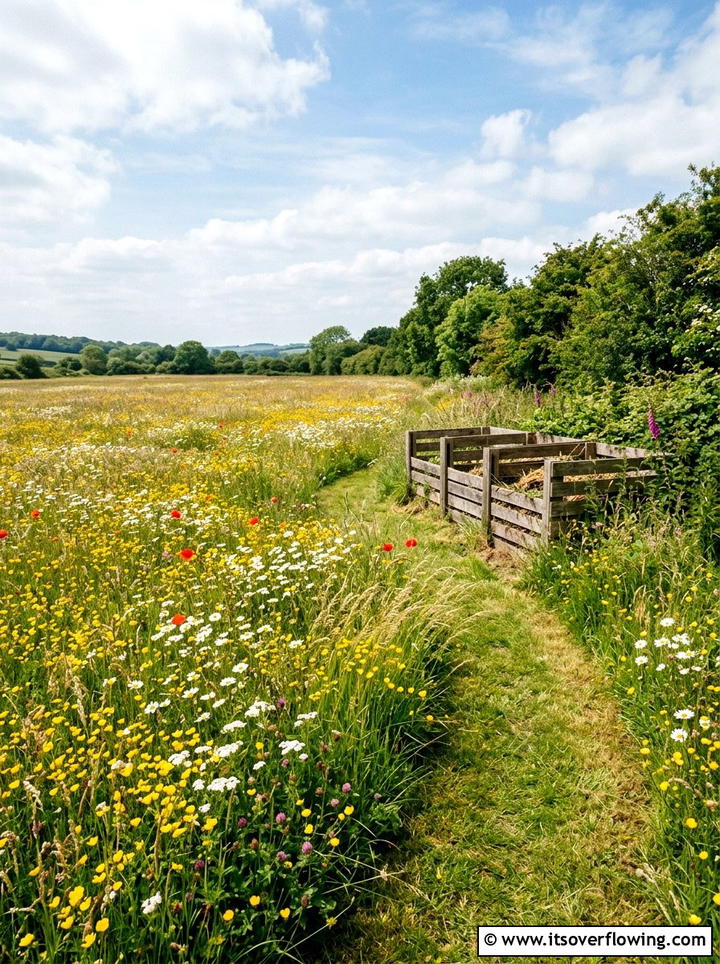
A wildflower meadow is a low-maintenance and beautiful way to support local pollinators, and it can also host a discreet composting area. You can place simple wooden bins along the perimeter of the meadow where the tall grasses and flowers naturally hide them. This setup allows you to easily toss in clippings and organic waste while you enjoy the buzzing of bees and butterflies. The surrounding area remains wild and untamed, with paths mown through the flowers for easy access. This design approach celebrates the raw beauty of nature and keeps the functional elements tucked away in the margins. It is a perfect fit for a large, naturalistic garden or a rural property.
25. Gravel Path Leading To Hidden Compost Area
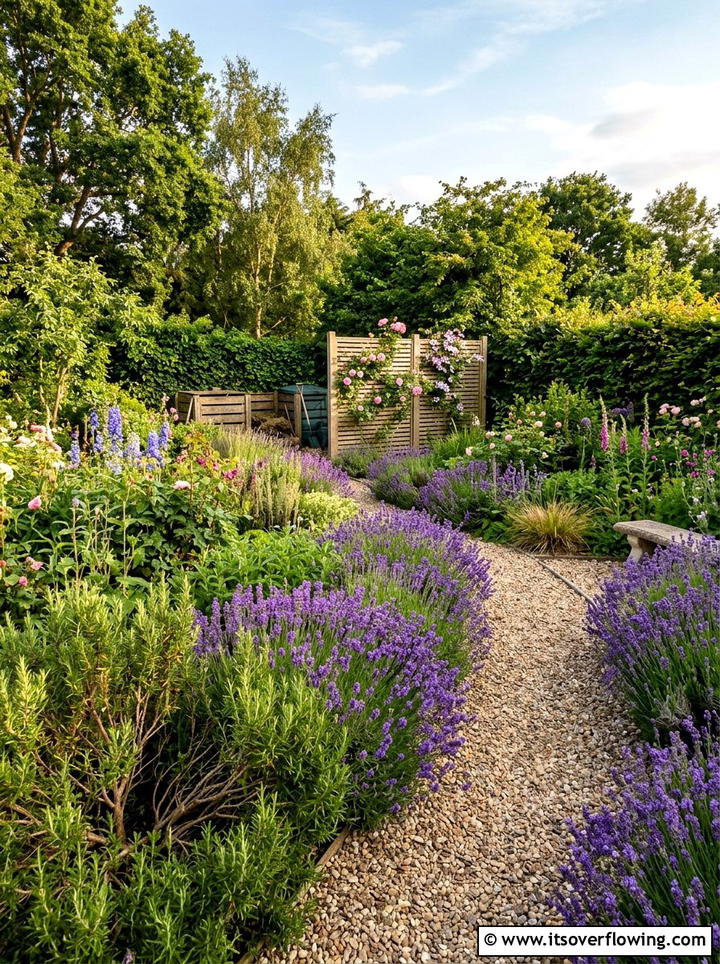
Designing a clear and attractive path to your composting station ensures that the chore of taking out the scraps feels like a pleasant walk through the garden. You can use light-colored pea gravel or crushed stone to create a winding path that leads through a gate or around a corner. Surround the walkway with fragrant herbs and lavender to make the journey sensory and enjoyable. At the end of the path, a neat and organized set of bins awaits, tucked behind a screen or a cluster of shrubs. This intentional layout makes the composting area feel like a destination rather than a hidden shame. It integrates the functional task into the overall flow and beauty of your landscape.
Conclusion:
Integrating a compost bin into your garden is one of the most rewarding decisions any homeowner can make for the environment. As we have seen, there are countless ways to ensure these systems enhance rather than detract from your outdoor aesthetic. Whether you prefer the sleek lines of a modern metal bin or the rustic charm of a stone pit, there is a solution that fits every style and space. By prioritizing soil health, you are investing in the long-term vitality and beauty of your entire landscape. A well-designed composting area becomes a quiet engine of growth, turning waste into a valuable resource right before your eyes. Embrace these creative ideas to build a garden that is as functional and sustainable as it is breathtakingly beautiful.

Related posts:
 25 Creative Garden Ideas DIY: Easy Projects for Every Yard
 25 garden design ideas for side yard strips: Narrow Space Wins
 25 garden design ideas with focal points: Stunning Yard Plans
 25 Garden Design Ideas With Texture for a Lush Yard Look
 25 garden ideas for family gatherings: Welcoming Yard Tips
 25 garden ideas for hummingbirds: Nectar-Rich Yard Tips
 25 garden ideas for mediterranean style: Sunny Yard Looks
 25 Garden Ideas for Summer to Make Your Yard Shine
 25 Garden Ideas for Tropical Style to Brighten Your Yard
 25 Garden Ideas With Pathways for a Beautiful Yard Makeover
 25 Small Garden Ideas for Side Yard Spaces That Shine
 25 Small Garden Ideas With Dwarf Trees for Big Small-Yard Impact