
Creating a Mediterranean garden allows you to bring the warmth and charm of the European coast right to your own backyard. This style is characterized by sun-drenched spaces, hardy plants, and natural materials that thrive in warm climates. You do not need to live in Italy or Greece to achieve this look in your outdoor living area. By focusing on textures like terracotta, stone, and gravel, you can build a low-maintenance sanctuary that feels timeless and inviting. These gardens often prioritize outdoor living and social interaction. Whether you are working with a small patio or a sprawling estate, these concepts will help you design a space that feels like a permanent vacation.
1. Mediterranean Gravel Courtyard
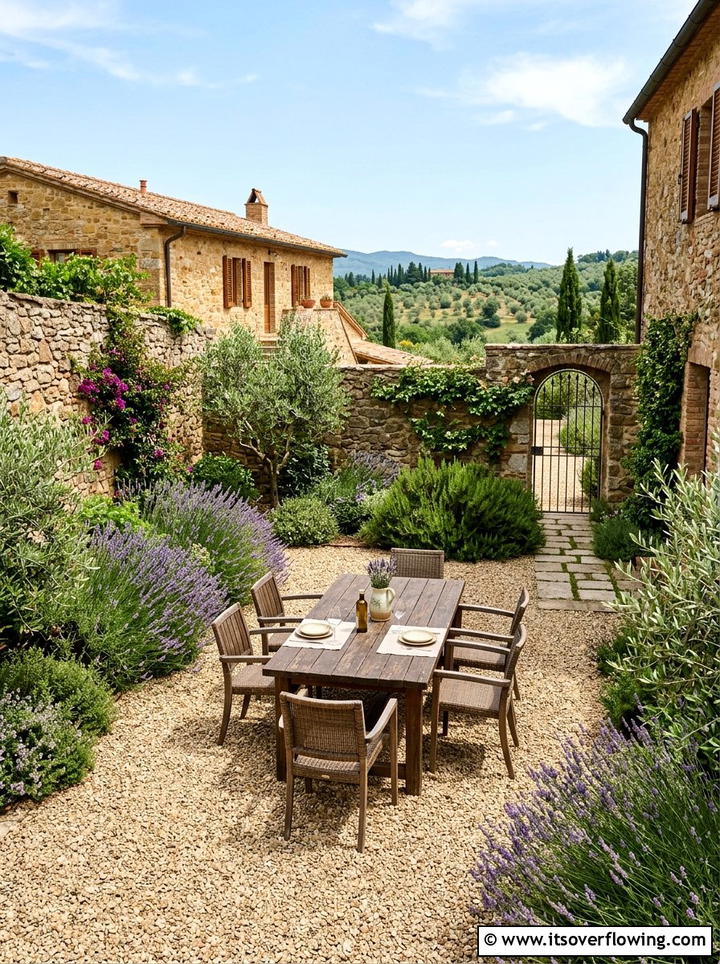
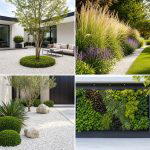
A Mediterranean gravel courtyard provides a low-maintenance and highly functional space for relaxing outdoors. Using light-colored gravel or crushed limestone reflects the sun and keeps the area looking bright throughout the day. You should plant drought-resistant species like lavender and rosemary directly into the ground through the gravel for a natural look. Adding a central seating area with a small table and chairs makes this space perfect for morning coffee or evening chats. The crunch of the gravel under your feet adds a sensory element that defines the coastal European experience. It is an excellent way to cover large areas without needing a lawn or constant watering.
2. Olive Tree Focal Point
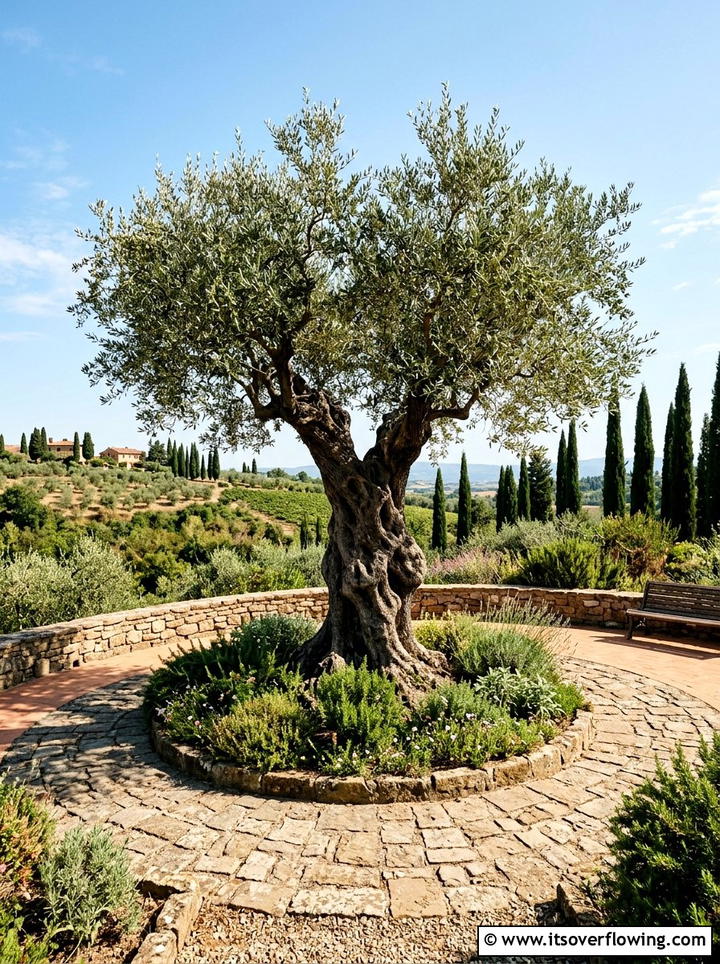
An olive tree focal point serves as the majestic heart of any traditional Mediterranean garden design. These ancient-looking trees feature silver-green foliage and gnarled trunks that add instant character and history to your landscape. You can plant a single mature tree in the center of a circular stone patio to create a powerful visual statement. Surround the base of the tree with low-growing herbs or soft mulch to protect the roots while keeping the look clean. This setup provides gentle, dappled shade that is perfect for placing a small bench or a decorative urn. It truly anchors the entire garden with its timeless and rustic Mediterranean presence.
3. Terracotta Pot Grouping
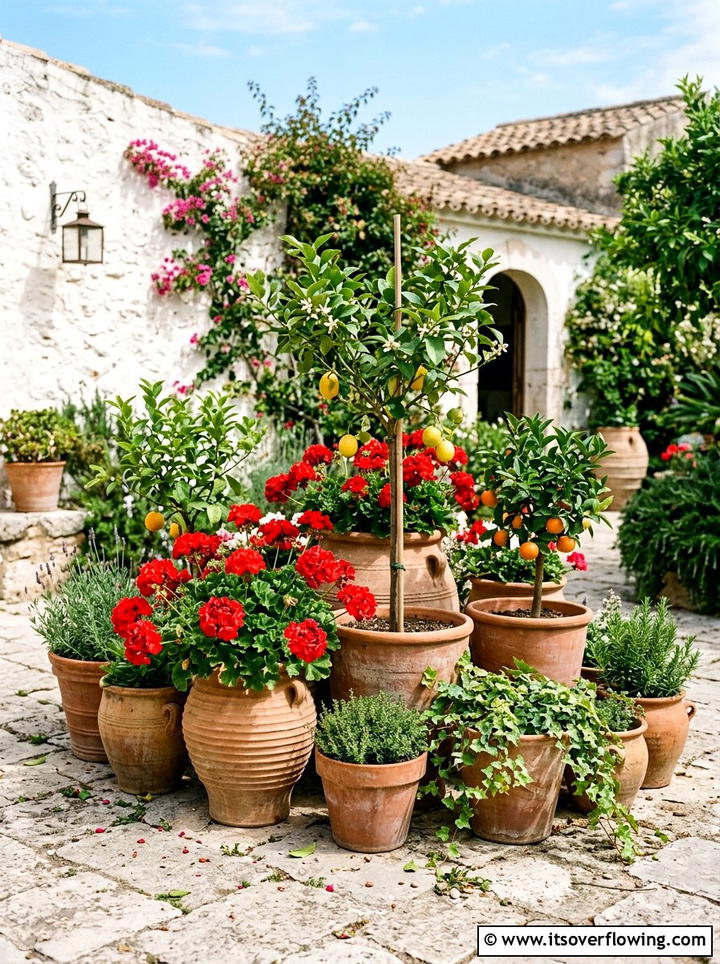
Using a terracotta pot grouping is a classic way to add height and interest to your outdoor patio or terrace. These clay vessels come in various shapes and sizes, allowing you to create a dynamic visual display. You can plant vibrant red geraniums, fragrant citrus trees, or spiked agaves to contrast with the warm orange tones of the pots. Grouping them in odd numbers often looks more natural and appealing to the eye. This approach is perfect for small spaces where you cannot plant directly into the ground. It also allows you to move plants around easily to catch the best sunlight throughout the changing seasons.
4. Stone Wall Terrace
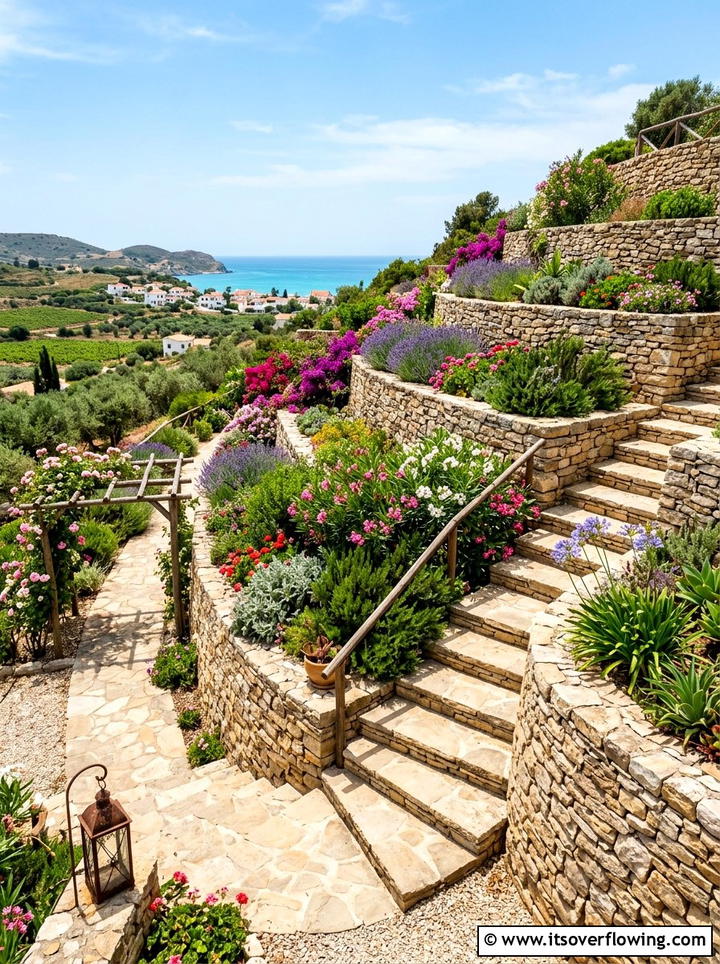
A stone wall terrace is the ideal solution for adding structure and levels to a sloping backyard area. Using dry-stack limestone or local fieldstone creates a rugged and authentic look that mimics the hillsides of Tuscany. These walls provide excellent drainage and can be used to create flat planting beds for colorful Mediterranean flora. You can allow small succulents or trailing vines to grow in the crevices of the stones for a lived-in feel. Incorporating wide stone steps between the levels makes the entire garden feel more accessible and grand. This structural element provides a solid foundation for your entire Mediterranean outdoor living design.
5. Lavender Herb Border
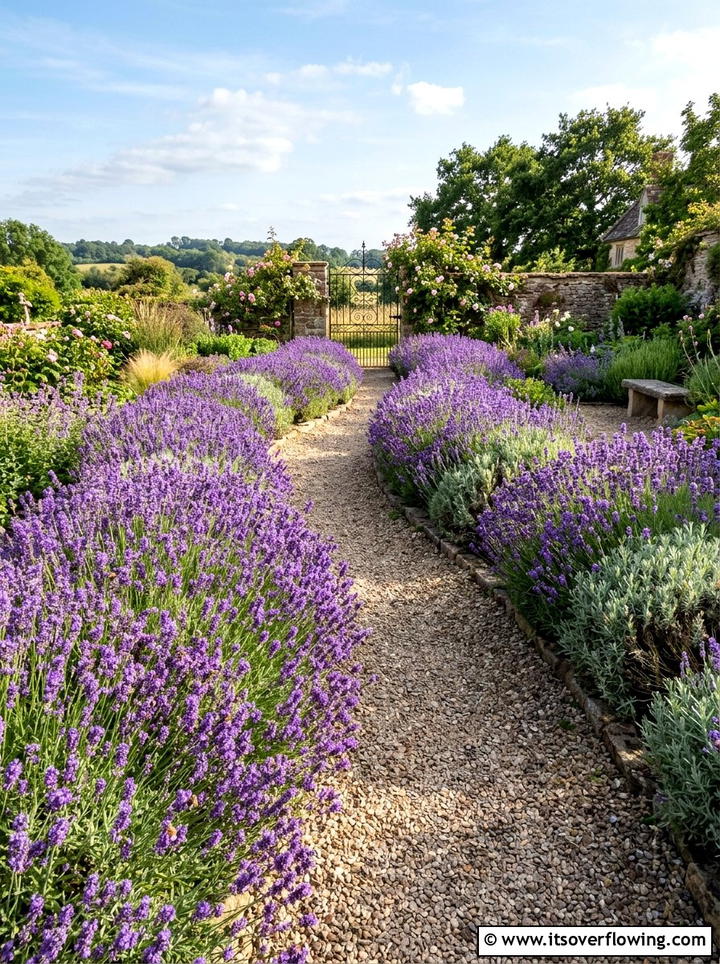
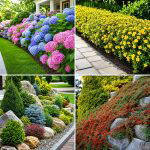
A lavender herb border creates a stunning visual line of purple blooms while filling your garden with a calming scent. Planting these hardy shrubs along a pathway or the edge of a patio defines the space beautifully. The silver-grey foliage stays attractive even when the plants are not in full bloom during the colder months. You should choose a sunny spot with well-draining soil to ensure the lavender stays healthy and vibrant. Walking past these plants releases their essential oils, making your garden a true sensory retreat. It is a simple way to introduce color and fragrance that attracts beneficial bees and butterflies.
6. Pergola Shaded Seating
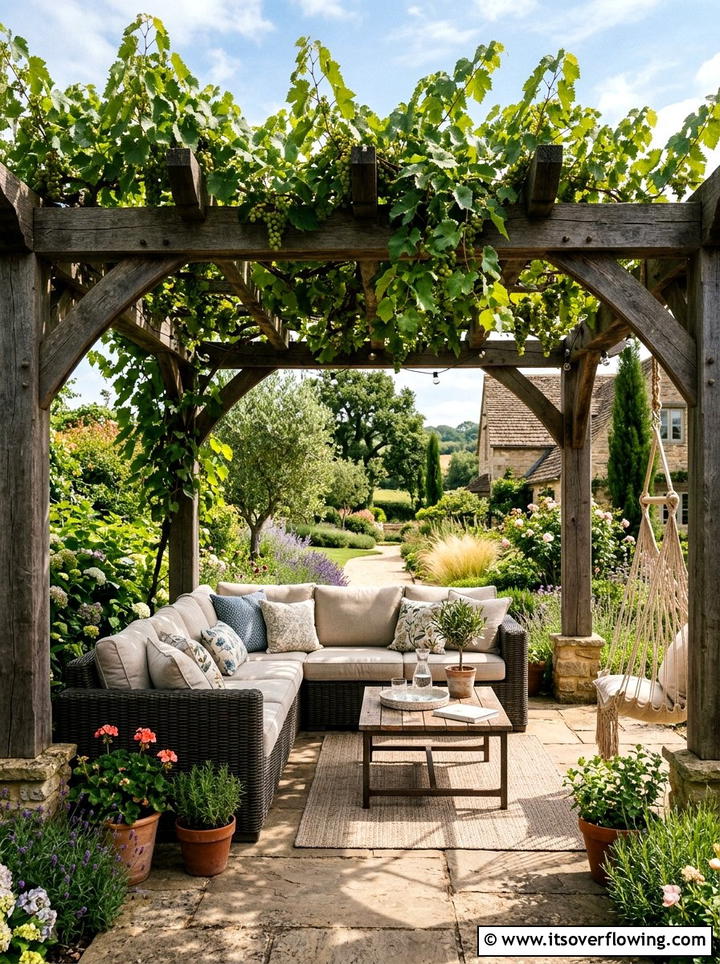
Installing a pergola shaded seating area creates a comfortable destination for dining or lounging in your Mediterranean garden. These wooden or metal structures provide a framework for climbing plants like grapevines or fragrant jasmine to grow. Over time, the greenery fills in to create a natural ceiling that protects you from the intense midday sun. You can hang outdoor lanterns or string lights from the beams to enjoy the space well into the evening hours. Placing a sturdy wooden table or comfortable sofas underneath makes the area feel like an outdoor room. This design element perfectly balances architectural structure with the softness of growing nature.
7. Tiered Fountain Water Feature
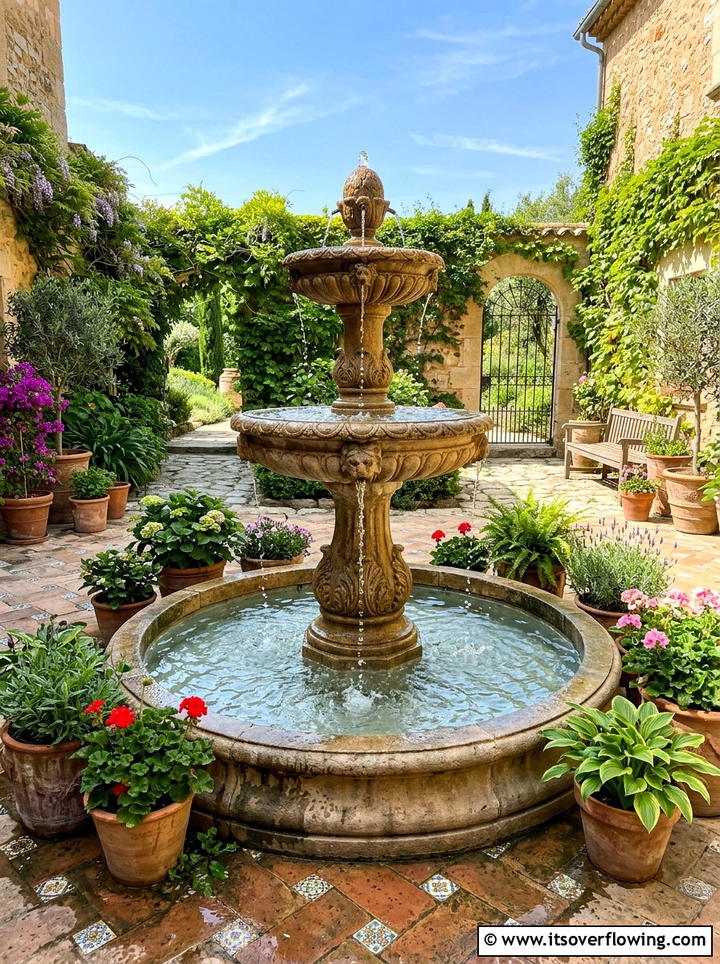
A tiered fountain water feature adds a refreshing sound and a cooling element to your hot Mediterranean landscape. These stone or ceramic fountains often serve as the central piece in a formal courtyard or garden nook. The sound of trickling water helps to mask neighborhood noise and creates a peaceful atmosphere for relaxation. You can surround the fountain with mosaic tiles or low-lying shrubs to make it stand out even more. Birds will often visit the fountain, adding life and movement to your outdoor space. It is a classic feature that brings a sense of luxury and tranquility to any backyard garden design.
8. Bougainvillea Climbing Trellis
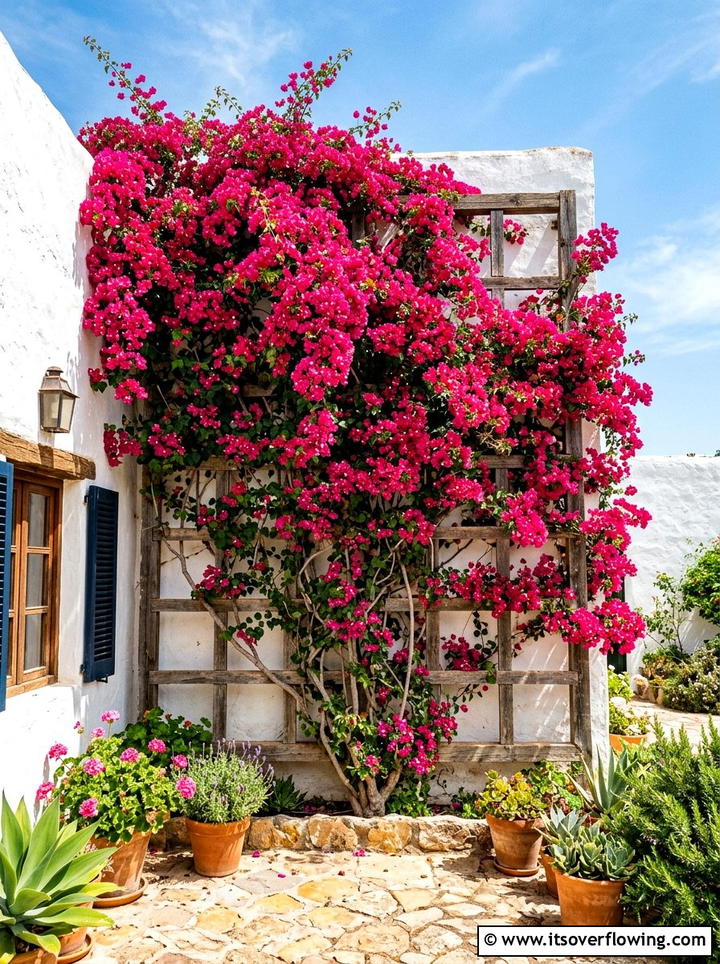
A bougainvillea climbing trellis brings an explosion of vibrant pink, purple, or orange color to your garden walls. These hardy vines thrive in the sun and can quickly cover a wooden trellis or a plain stone wall. Their intense color provides a beautiful contrast against the white-washed surfaces or blue accents common in Mediterranean styles. You should prune them regularly to maintain the desired shape and encourage more blooms throughout the warm season. This vertical interest saves ground space while making your garden feel lush and full of life. It is a fantastic way to hide ugly fences or add privacy to your outdoor living area.
9. Citrus Tree Orchard
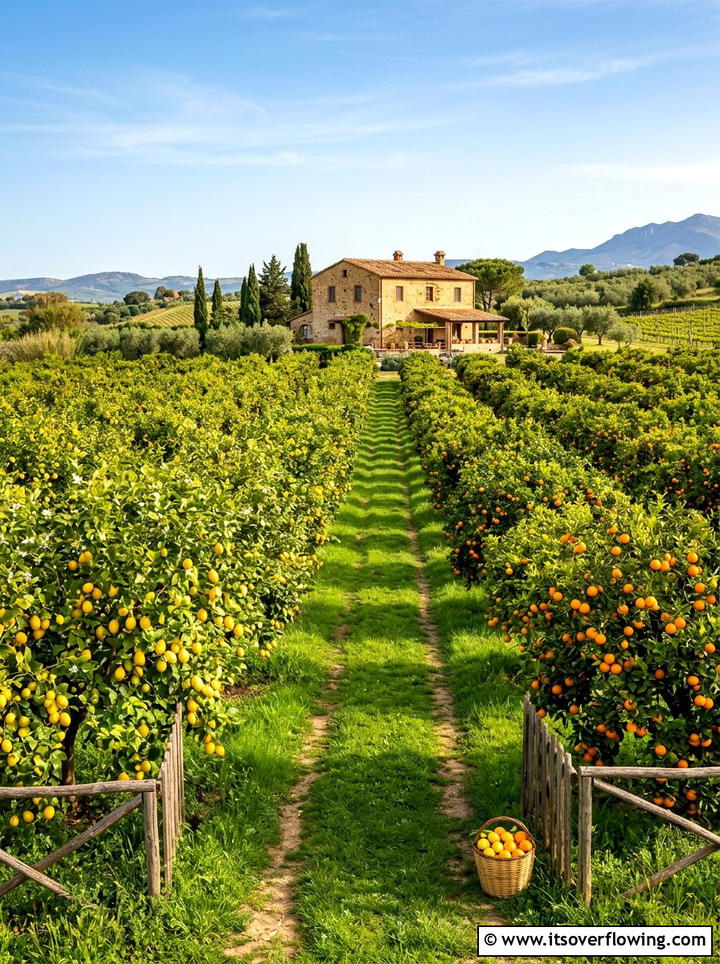
A citrus tree orchard provides both visual beauty and a delicious harvest of lemons, limes, or oranges. These trees have glossy green leaves and fragrant white blossoms that smell incredible during the spring months. You can plant them in a formal grid pattern or scatter them casually around your backyard for a natural look. If you have a small garden, many citrus varieties grow very well in large pots on a sunny patio. The bright fruit adds a pop of natural color that feels fresh and quintessentially Mediterranean. Having fresh fruit just a few steps from your kitchen is a wonderful luxury for any homeowner.
10. Mosaic Tile Patio
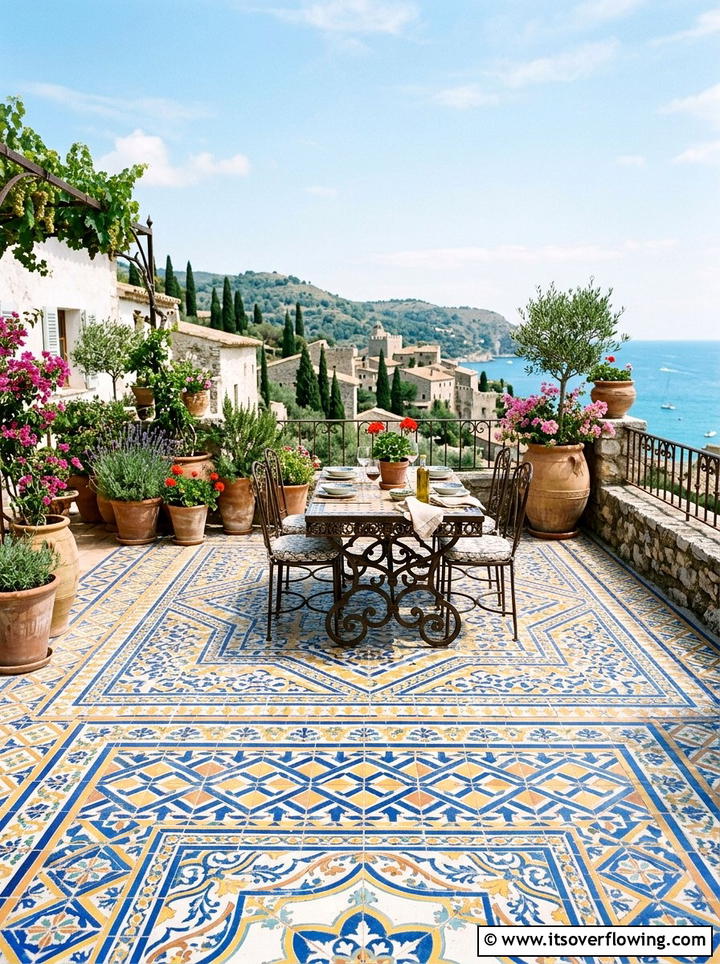
Designing a mosaic tile patio introduces intricate patterns and historical charm to your outdoor flooring. These colorful tiles can be used to create borders around a stone patio or as a full decorative rug pattern. Using shades of blue, terracotta, and ochre reflects the traditional palettes found in Spain and North Africa. These surfaces are easy to clean and stay cool underfoot, which is ideal for hot summer days. You can pair the tiles with simple wrought iron furniture to let the patterns be the main focus. It is a creative way to add personality and a handcrafted feel to your Mediterranean garden space.
11. Wrought Iron Garden Gate
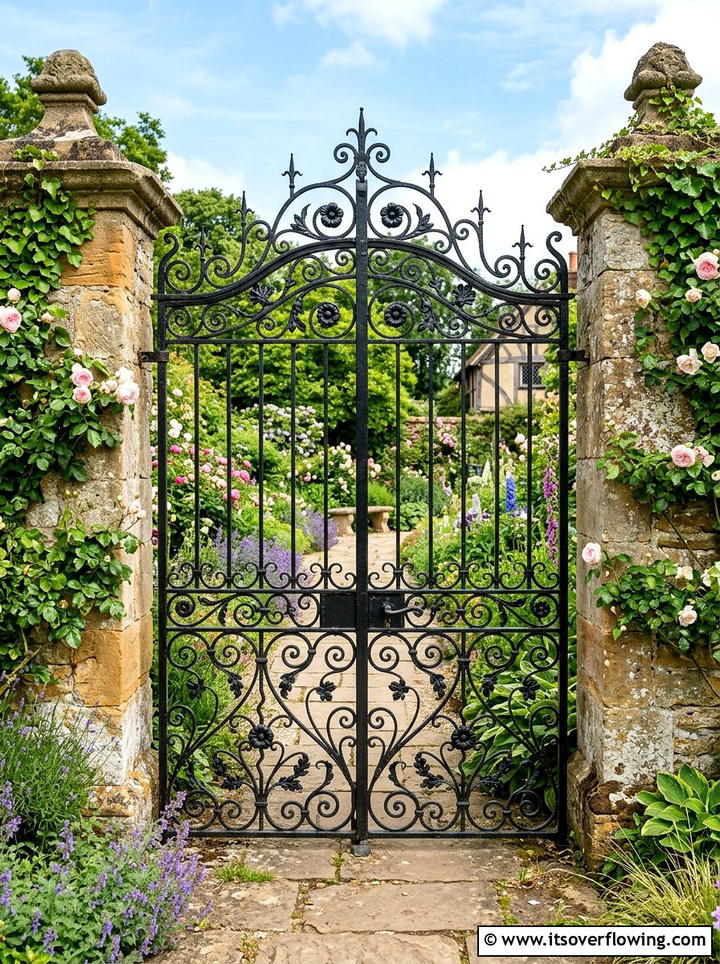
A wrought iron garden gate serves as a beautiful and secure entrance to your Mediterranean-style sanctuary. These gates often feature scrolled designs or geometric patterns that add a touch of old-world elegance. You can paint the iron black for a classic look or use a rusted finish for a more rustic feel. Installing the gate within a stone wall or between two large pillars creates a clear transition into your garden. It provides a glimpse of the beauty inside while keeping the space feeling private and enclosed. This functional element adds significant curb appeal and sets the tone for the entire outdoor design.
12. Cypress Tree Screening
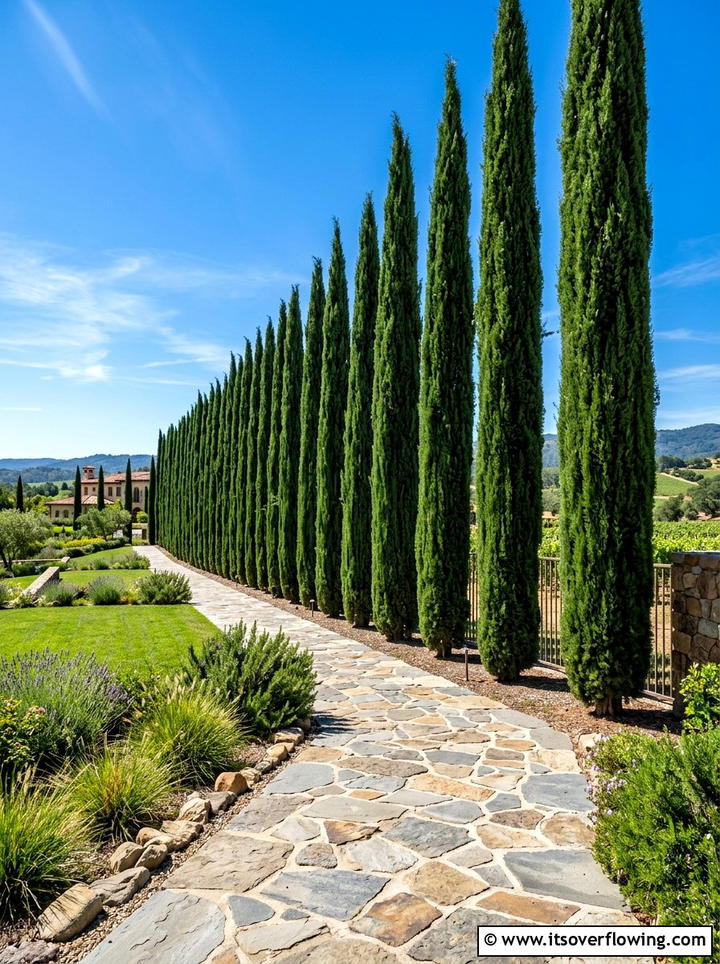
Using cypress tree screening is a traditional way to add height and privacy to your Mediterranean landscape. These tall, narrow evergreen trees are famous for their presence in the Italian countryside. You can plant them in a tight row to create a natural green wall that blocks out the wind and noise. They require very little horizontal space, making them perfect for narrow side yards or small garden borders. Their dark green foliage provides a sophisticated backdrop for shorter flowering plants or light-colored stone walls. This vertical element creates a sense of scale and drama that defines the Mediterranean horizon in any garden.
13. Blue Accent Wall
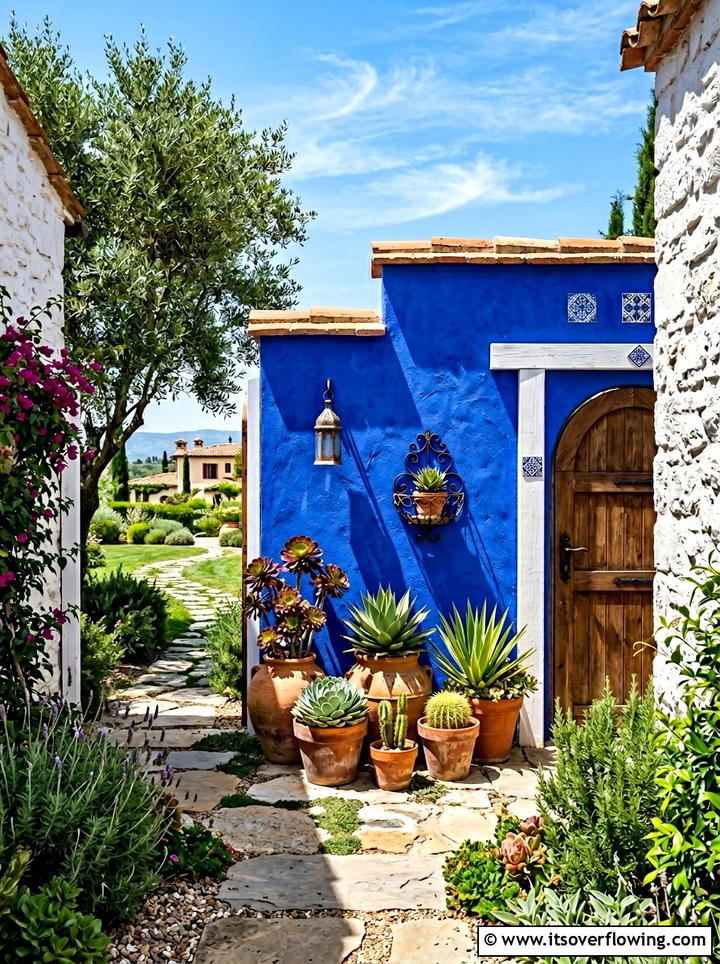
A blue accent wall brings the vibrant colors of the Mediterranean Sea and sky directly into your garden. Painting a single garden wall in a deep cobalt or a bright Santorini blue creates a stunning focal point. This bold color choice makes the green of your plants and the white of your stone look even more vivid. You can hang a few terracotta pots or a piece of metal wall art on it to add texture. This simple design trick can make a small courtyard feel much larger and more energetic. It is an affordable way to transform the mood of your outdoor space without a full renovation.
14. Outdoor Kitchen Pizza Oven
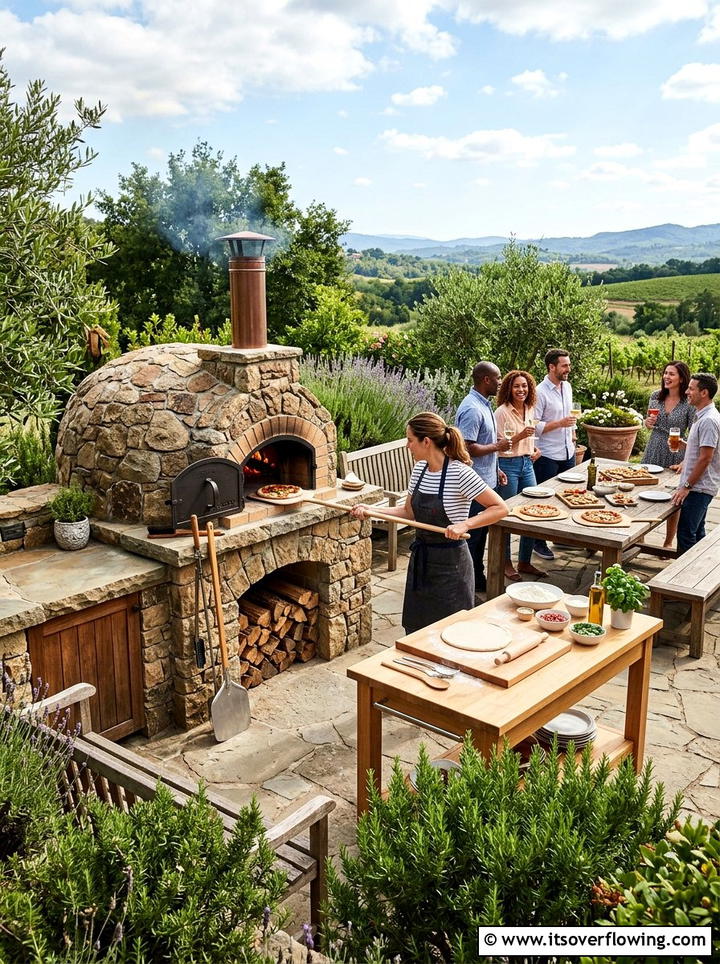
An outdoor kitchen pizza oven is the ultimate feature for those who love to entertain in Mediterranean style. Building a masonry oven into your patio allows you to cook authentic wood-fired meals for family and friends. You can surround the oven with natural stone or smooth plaster to match the rest of your garden’s aesthetic. Including a nearby prep counter and a wood storage area makes the space both functional and stylish. This area naturally becomes a social hub where guests can gather and watch the cooking process. It celebrates the Mediterranean tradition of slow cooking and enjoying good food in the fresh air.
15. Drought Tolerant Xeriscape
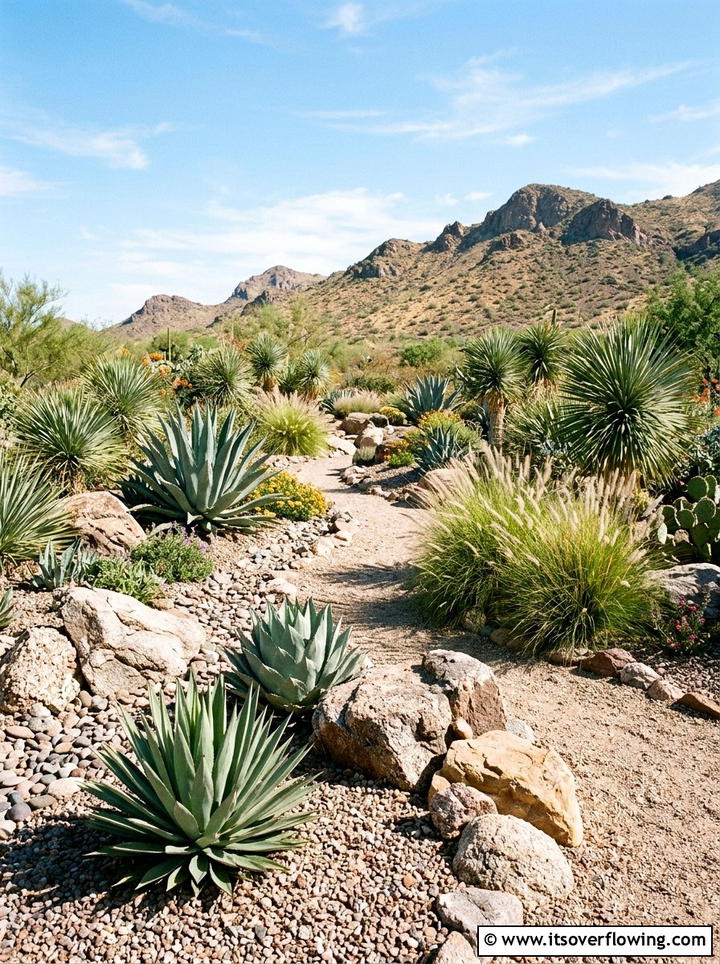
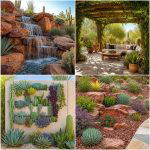
A drought tolerant xeriscape is a sustainable and beautiful way to design a Mediterranean garden with minimal water needs. This style uses native plants, succulents, and hardy shrubs that can survive long periods of dry weather. You can use various sizes of river rocks and boulders to create a natural-looking landscape that requires no mowing. Plants like agave, yucca, and ornamental grasses provide architectural shapes and interesting textures. This approach is not only environmentally friendly but also saves you a lot of time on garden maintenance. It results in a rugged, natural beauty that feels perfectly suited to a sun-drenched outdoor environment.
16. Gravel Path Walkway
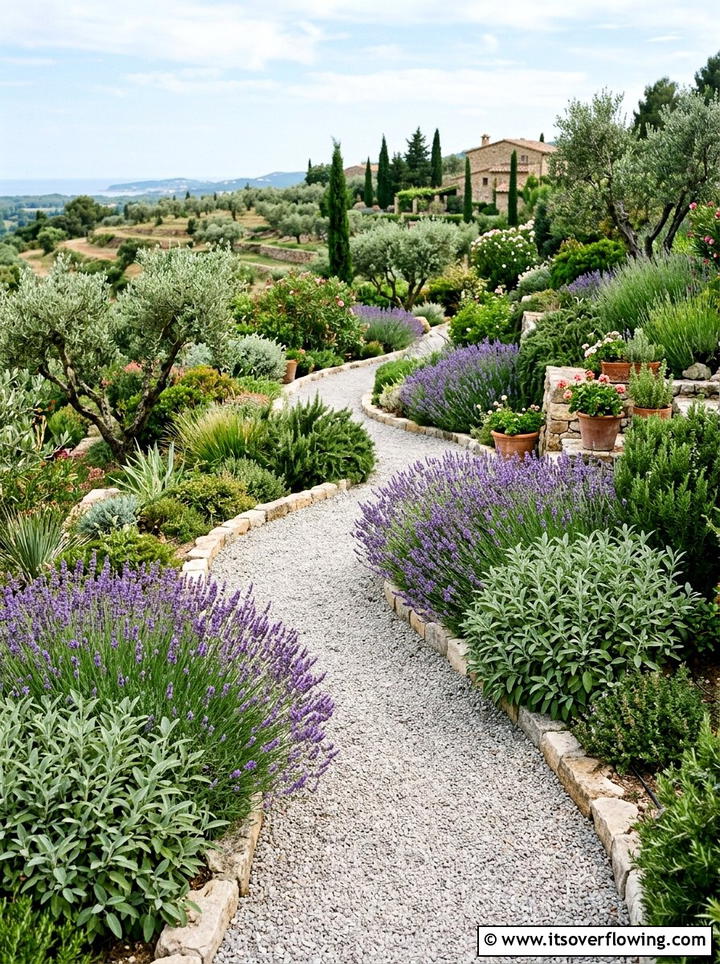
A gravel path walkway offers a soft and organic way to navigate through different sections of your garden. Using small, rounded pebbles in tan or grey tones creates a path that feels natural underfoot. You can line the edges of the path with larger stones or low-growing plants to keep the gravel in place. These paths allow water to soak into the ground, which is better for the environment than solid concrete. Meandering paths encourage slow walking and exploration, helping you to enjoy every corner of your landscape. It is a budget-friendly way to add structure and movement to your Mediterranean garden design.
17. Succulent Rock Garden
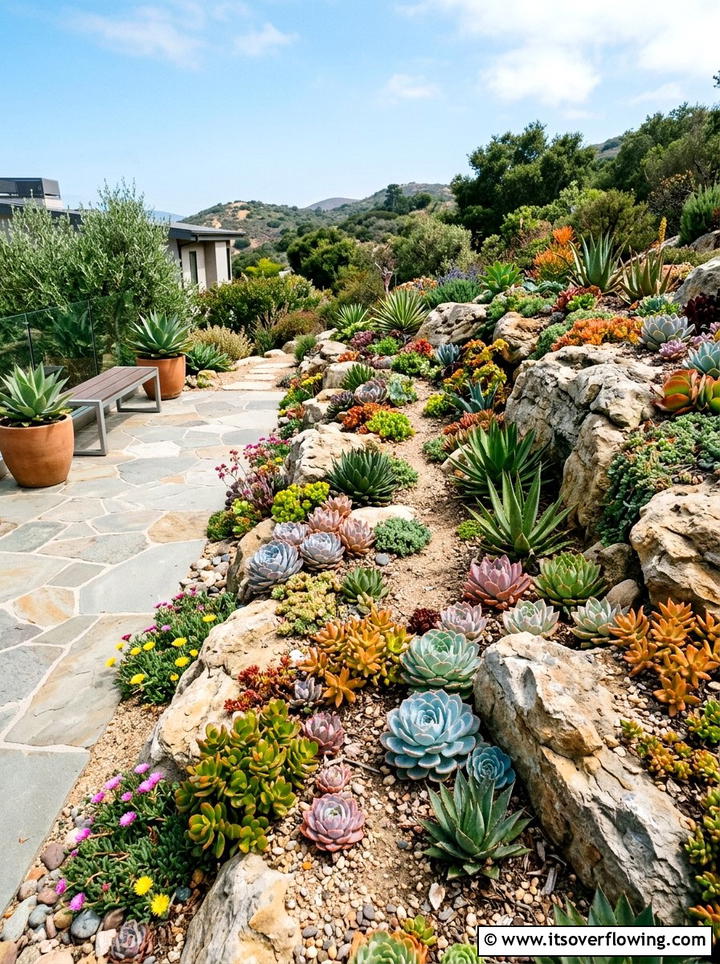
A succulent rock garden combines hardy plants with natural stone for a low-maintenance and visually striking display. You can nestle various types of echeveria, sedum, and aloe between large limestone rocks or decorative boulders. The different colors and shapes of the succulents create a miniature landscape that looks like a work of art. This feature works particularly well in sunny corners or on sloped areas where other plants might struggle to grow. Using a mix of gravel and sand around the plants ensures they have the proper drainage they need to thrive. It adds a modern and clean touch to the traditional Mediterranean garden theme.
18. Limestone Paving Terrace
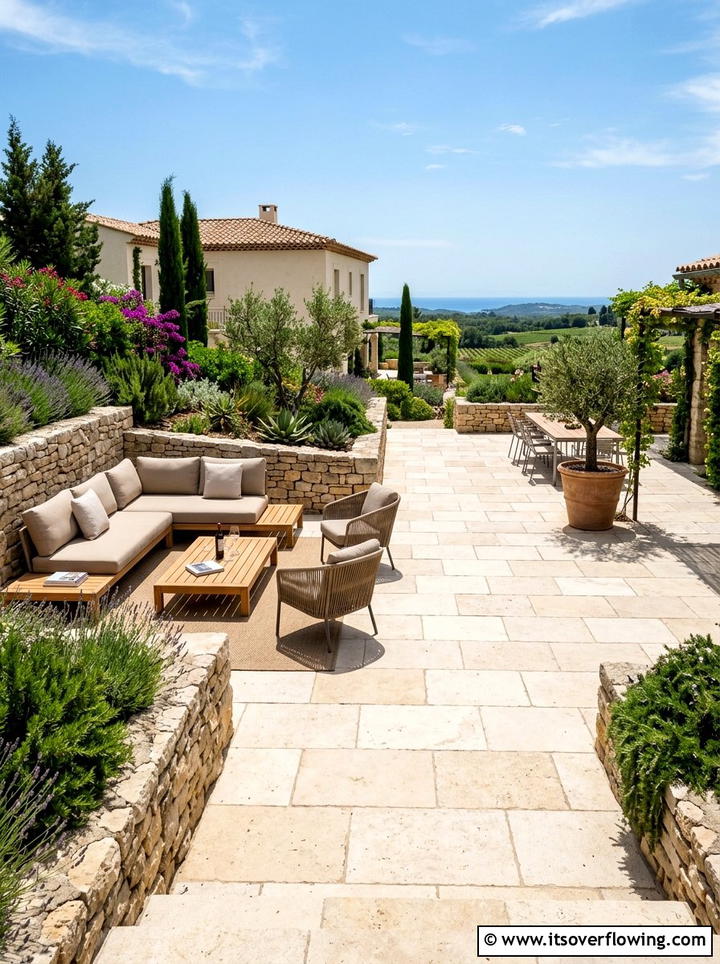
A limestone paving terrace provides a clean and sophisticated surface for your main outdoor living area. These large, light-colored stone slabs stay relatively cool in the sun and offer a flat surface for furniture. The natural variations in the stone add subtle texture and a sense of luxury to your patio. You can leave small gaps between the stones for moss or tiny herbs to grow, giving it an aged appearance. This durable flooring choice handles the weather well and only looks better as it develops a natural patina over time. It serves as a beautiful foundation for your dining tables and lounge chairs.
19. Rustic Wooden Shutters
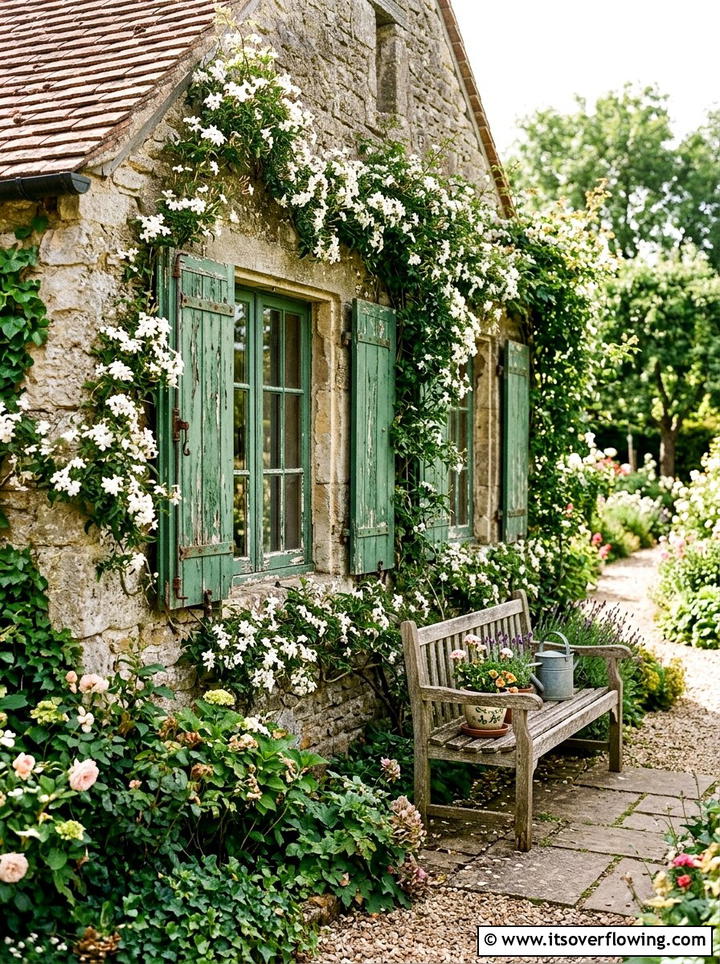
Incorporating rustic wooden shutters on your garden shed or house walls adds an authentic Mediterranean architectural detail. These shutters, usually painted in soft greens, blues, or left in a weathered wood finish, evoke the feeling of a coastal villa. They provide a sense of history and charm, even if they are purely decorative and do not actually close. Pairing them with climbing vines or window boxes filled with red geraniums completes the classic European look. This simple addition can transform a plain exterior wall into a picturesque backdrop for your garden. It is a great way to add color and texture to your vertical surfaces.
20. Mediterranean Herb Spiral
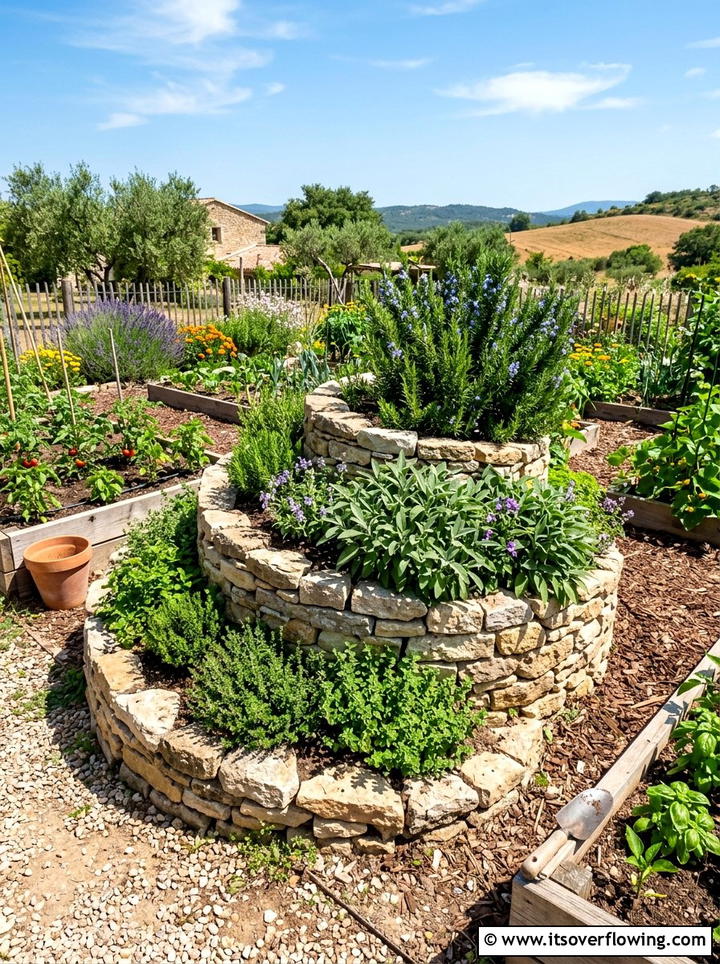
A Mediterranean herb spiral is a functional and artistic way to grow all your favorite culinary plants in one spot. This circular, tiered structure made of stone or brick allows you to plant rosemary, thyme, oregano, and sage together. The spiral design creates different microclimates, with the sun-loving herbs at the top and moisture-loving ones at the bottom. It saves a lot of space and makes harvesting fresh herbs for your kitchen very easy and convenient. This feature adds a unique architectural element to your garden while providing wonderful scents every time you walk by. It is a perfect example of combining beauty with practical utility.
21. Raised Masonry Planter
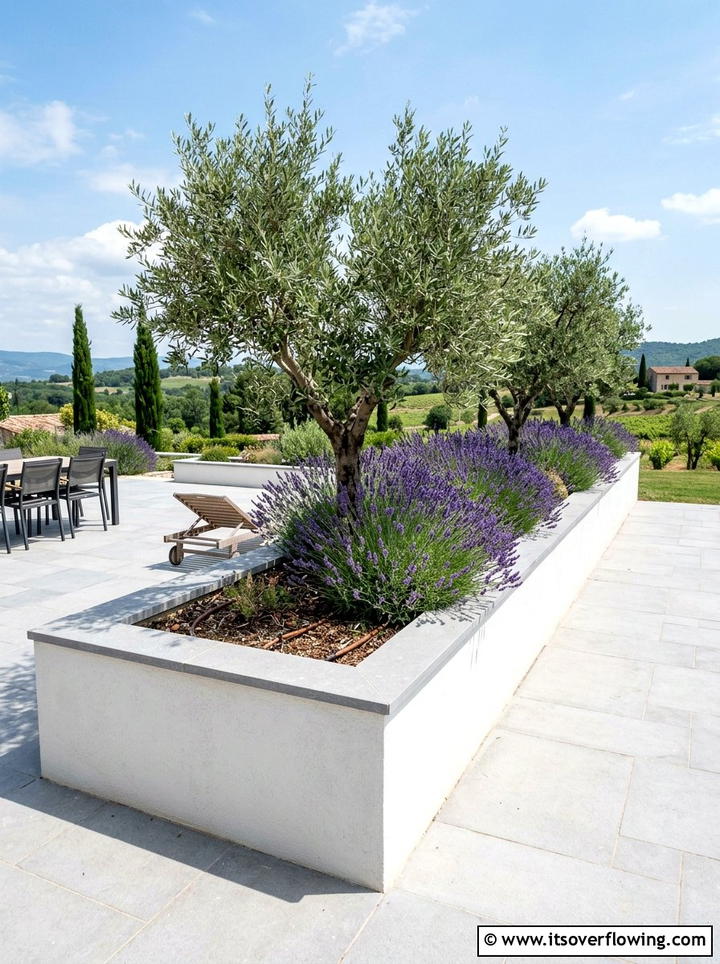
A raised masonry planter provides a structured and permanent home for your favorite Mediterranean trees and flowers. These built-in beds can be finished with smooth white plaster or faced with natural stone to match your patio. They are excellent for defining the edges of a seating area or providing extra seating along the walls. Raising the plants makes them easier to tend to and brings their fragrance closer to your nose. You can plant a mix of trailing vines and upright shrubs to create a layered and lush look within the containers. This design choice helps to organize your garden into distinct and manageable zones.
22. Hanging Flower Basket
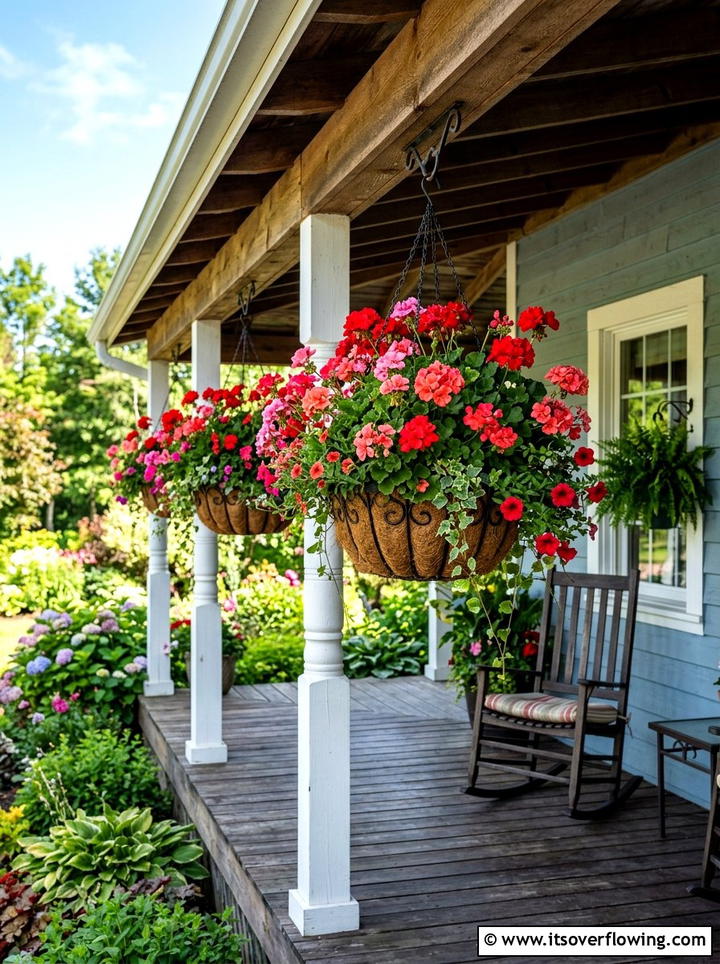
Hanging flower baskets add splashes of vertical color to your Mediterranean porch, pergola, or garden walls. You can fill these baskets with heat-loving plants like trailing petunias, geraniums, or colorful verbena. Using traditional wire or wicker baskets lined with moss helps to keep the plants hydrated and looking healthy. Hanging them at different heights creates a sense of depth and fills empty wall spaces with living beauty. These portable gardens are easy to maintain and can be changed out each season to keep your garden looking fresh. They are a simple way to bring vibrant life up to eye level in your outdoor space.
23. Shaded Dining Loggia
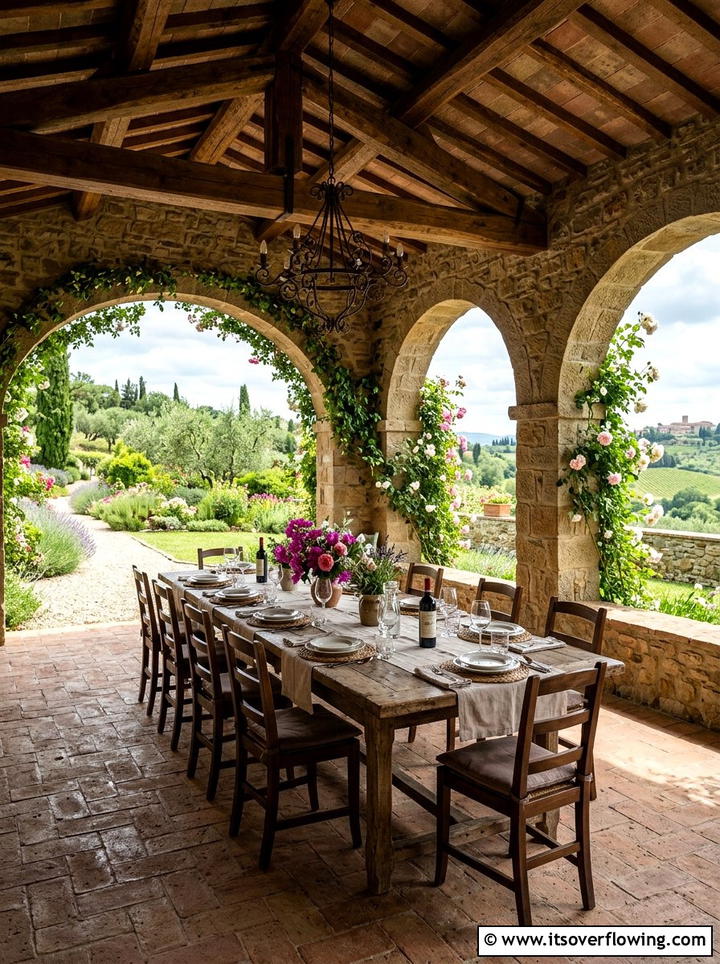
A shaded dining loggia is an architectural covered gallery that provides the perfect setting for long Mediterranean lunches. This structure is typically attached to the house and features open arches that look out over the garden. It offers total protection from the sun and rain while still allowing you to feel fully connected to the outdoors. You can furnish this space with a large rustic table and comfortable chairs for hosting big family gatherings. Adding a ceiling fan or decorative lighting allows you to use the space comfortably during the hottest days and coolest nights. It is the height of Mediterranean outdoor luxury and social living.
24. Sunken Fire Pit
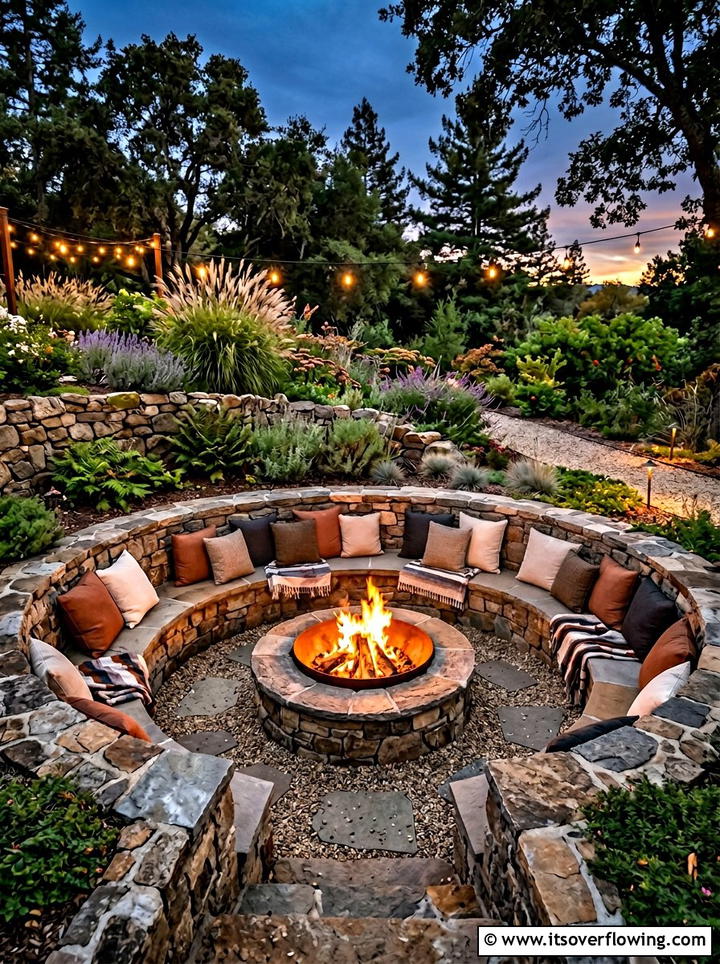
A sunken fire pit creates a cozy and intimate gathering spot within your larger Mediterranean garden landscape. By lowering the seating area into the ground and surrounding it with stone walls, you create a private nook. You can use a central stone fire bowl or a built-in pit to provide warmth and light during evening parties. Adding built-in stone benches with soft outdoor cushions makes the space feel like a natural extension of the garden. This feature allows you to enjoy your outdoor area even when the temperature drops in the autumn. It provides a modern focal point that still feels grounded in traditional stone masonry.
25. Mediterranean Swimming Pool
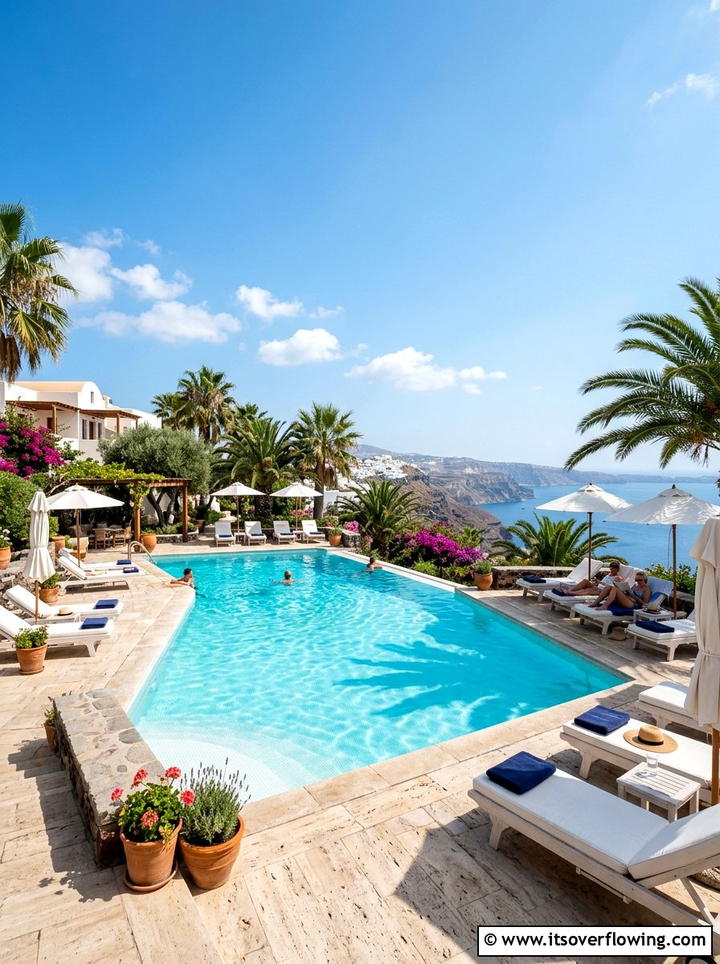
A Mediterranean swimming pool serves as a refreshing oasis that anchors your entire backyard landscape. These pools often feature turquoise water, simple rectangular shapes, and surround paving made of light-colored natural stone. You can add a few palm trees or potted citrus trees around the perimeter to enhance the tropical coastal feel. Using blue mosaic tiles along the waterline adds a touch of traditional craftsmanship and color. Including wide steps or a shallow lounging ledge makes the pool more functional for both exercise and relaxation. This water feature becomes the ultimate destination for cooling off and enjoying the sun in your private Mediterranean retreat.
Conclusion:
Designing a Mediterranean garden is all about creating a harmonious balance between natural beauty and functional outdoor living. By incorporating elements like gravel paths, stone walls, and drought-resistant plants, you can build a space that is both stunning and sustainable. These gardens celebrate the outdoor lifestyle, offering numerous areas for dining, relaxing, and enjoying the company of friends and family. Whether you choose to add a simple terracotta pot grouping or a grand shaded loggia, each detail contributes to a timeless aesthetic. Embracing this style ensures that your garden remains a peaceful and inviting sanctuary for many years to come.

Related posts:
 25 Garden Ideas for Desert Style With Stunning Low-Water Looks
 25 garden ideas for maximalist style: Bold Outdoor Looks
 25 garden ideas for minimalist style: Clean Outdoor Looks
 25 garden design ideas with drought tolerant plants: Easy Looks
 25 garden design ideas with low maintenance shrubs: Easy Looks
 25 garden design ideas with bold contrast: Dramatic Yard Style
 25 garden design ideas with height variation: Dynamic Yard Style
 25 Garden Ideas for Tropical Style to Brighten Your Yard
 25 garden design ideas for side yard strips: Narrow Space Wins
 25 garden ideas for hummingbirds: Nectar-Rich Yard Tips
 25 Garden Ideas With Pathways for a Beautiful Yard Makeover
 25 Small Garden Ideas for Side Yard Spaces That Shine