
Transforming your outdoor space does not have to cost a fortune when you understand how to use mulch effectively. Mulch is one of the most versatile and affordable tools in a gardener ‘s toolkit for creating a polished look. It serves many purposes, from suppressing stubborn weeds to retaining vital moisture in the soil during hot summer months. Whether you are looking to define clear pathways or create beautiful borders around your favorite trees, mulch provides an instant facelift. This guide explores creative ways to use different types of mulch to enhance your yard’ s beauty. You will find practical solutions that fit any budget while making your garden thrive and look professionally designed.
1. Cedar Mulch Flower Bed
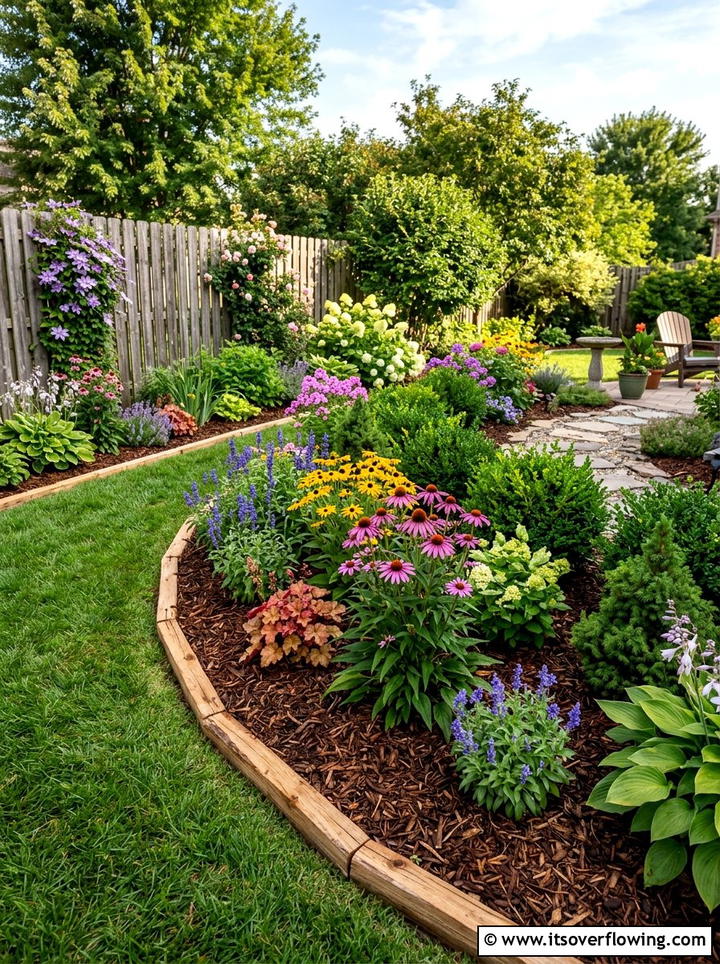
Cedar mulch is a fantastic choice for any home gardener looking to improve their flower beds without spending a lot of money. The natural oils found in cedar wood act as a wonderful deterrent for many common garden pests. You will notice that the warm reddish or tan colors provide a beautiful backdrop for your green foliage and bright blooms. This material stays in place better than lighter options, so you won’t have to replace it constantly after heavy rain. It also helps to keep the soil temperature consistent throughout the changing seasons. Using cedar mulch is an affordable way to give your outdoor space a very polished and professional look.
2. Wood Chip Garden Path
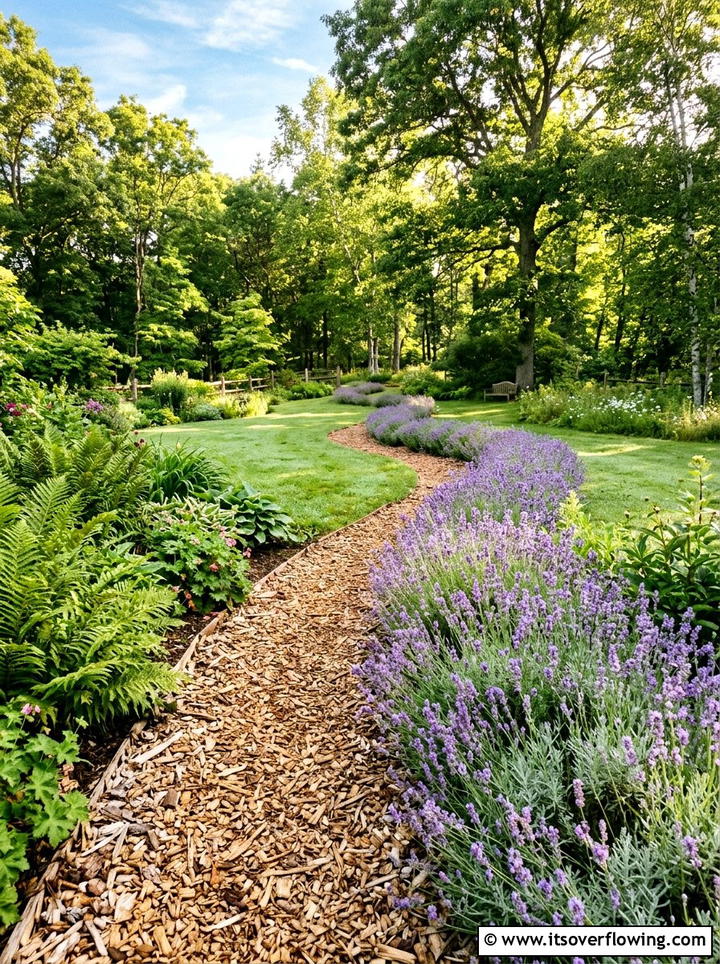
Creating a rustic walkway through your backyard is simple and cheap when you use basic wood chips. This material provides a soft and natural surface that feels great under your feet as you move through the garden. Wood chips are often available for a very low price or even for free from local tree service companies. They do a great job of preventing mud from forming in high-traffic areas after a storm. You can easily refresh the path every year by adding a thin new layer on top. This project adds a clear sense of structure and movement to your yard without requiring expensive paving stones or bricks.
3. Pine Bark Tree Ring
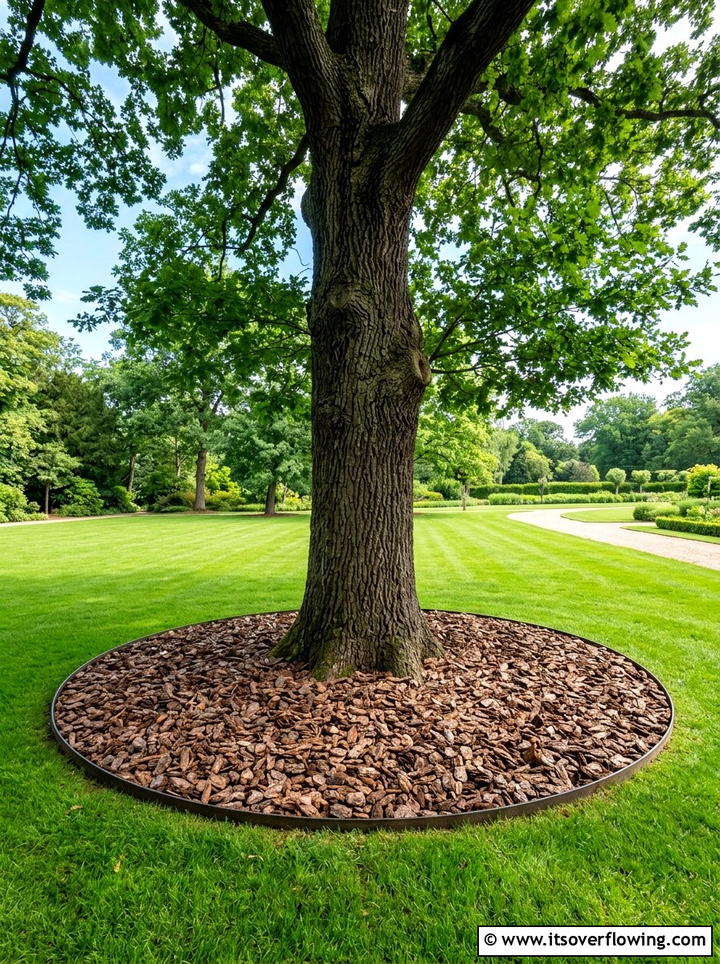
Adding a clean ring of pine bark around the base of your trees instantly makes your lawn look more manicured. This method protects the tree trunks from damage caused by lawn mowers and weed eaters during regular maintenance. Pine bark chunks decompose slowly, which means you get a lot of value for your investment over several years. The dark brown tones of the bark contrast beautifully with the green grass of your lawn. It also helps the tree roots stay hydrated by preventing the sun from baking the ground. This simple weekend project creates a professional landscape aesthetic that highlights the natural beauty of your large shade trees.
4. Black Mulch Front Yard
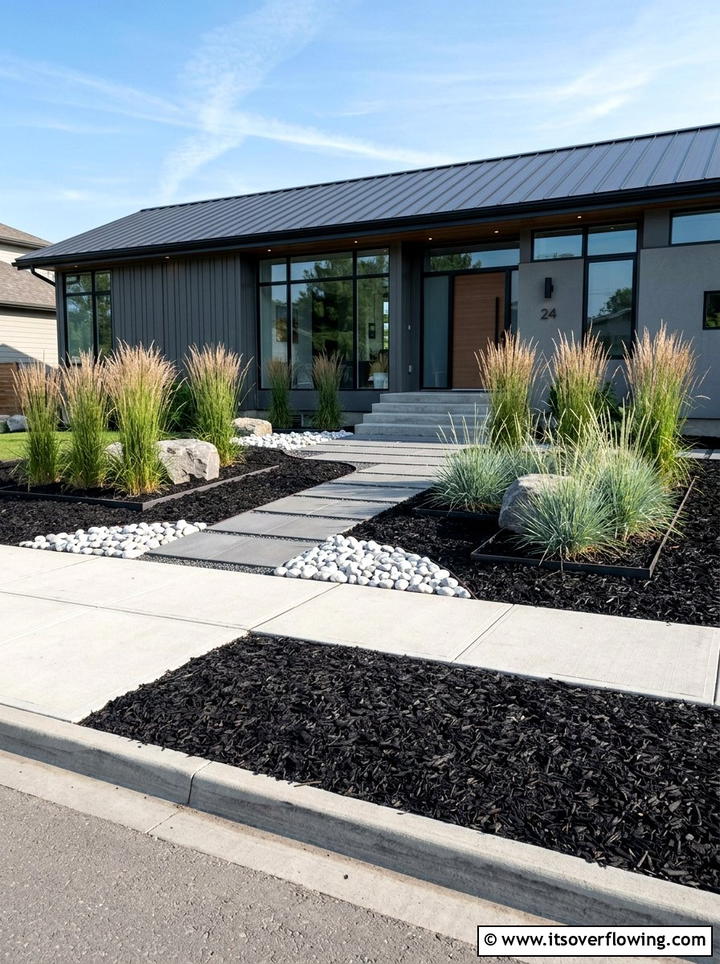
Using black mulch in your front yard landscaping creates a very modern and high-contrast look that boosts curb appeal. The deep dark color makes the bright greens and vibrant flower colors of your plants truly stand out. It gives the entire property a very clean and intentional appearance that many neighbors will admire. Black mulch is typically treated with food-grade dyes that are safe for your plants and pets. It absorbs heat well, which can be helpful for warming up the soil in early spring. This is a very popular choice for contemporary homes where a sleek and sophisticated outdoor environment is desired by the homeowner.
5. Vegetable Garden Straw Mulch
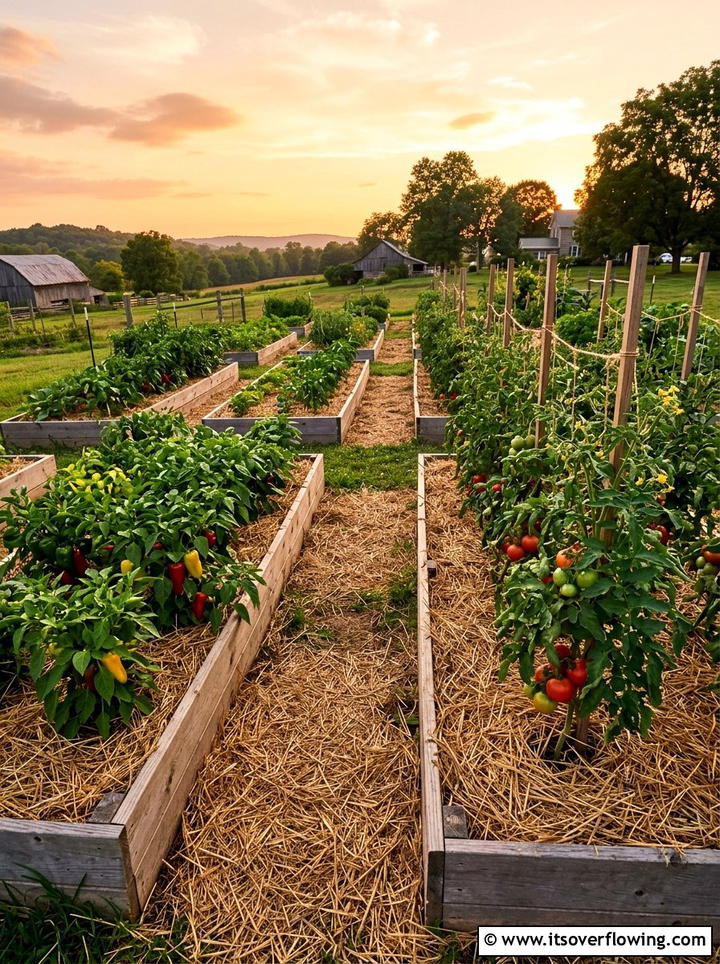
Straw is an excellent and very inexpensive mulch option specifically for those who love growing their own food. It keeps your vegetables clean by preventing soil from splashing up onto the leaves during heavy watering or rain. Straw also provides a great habitat for beneficial insects that help protect your crops from harmful pests. Since it is highly biodegradable, it improves the soil structure as it breaks down over the growing season. It is very easy to spread around delicate plants like tomatoes, peppers, and strawberries. This natural material ensures your garden stays productive while reducing the amount of time you spend pulling unwanted weeds by hand.
6. Rubber Mulch Play Area
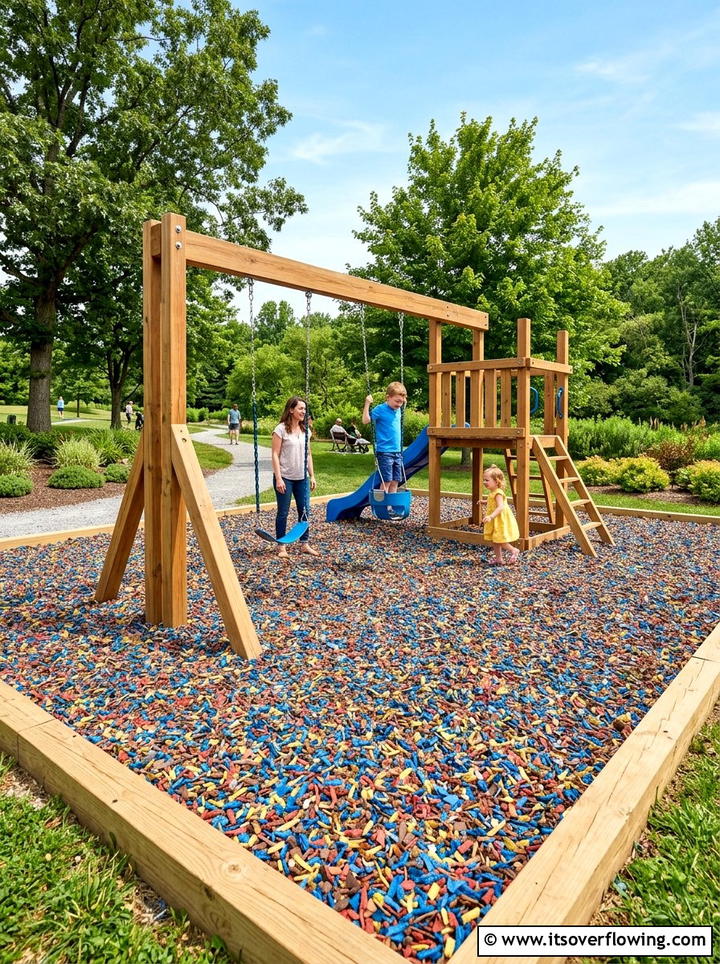
If you have children, creating a safe and durable play area using recycled rubber mulch is a smart investment. While the initial cost might be slightly higher than wood, it lasts for many years without needing to be replaced. It provides a soft, bouncy surface that helps cushion falls from swings or slides in the backyard. Rubber mulch does not attract insects and will not rot or grow mold like organic materials sometimes do. It stays in place during windy weather and does not wash away easily during heavy downpours. This choice keeps your play zone looking neat and tidy while prioritizing the safety of your young family.
7. Pine Needle Flower Border
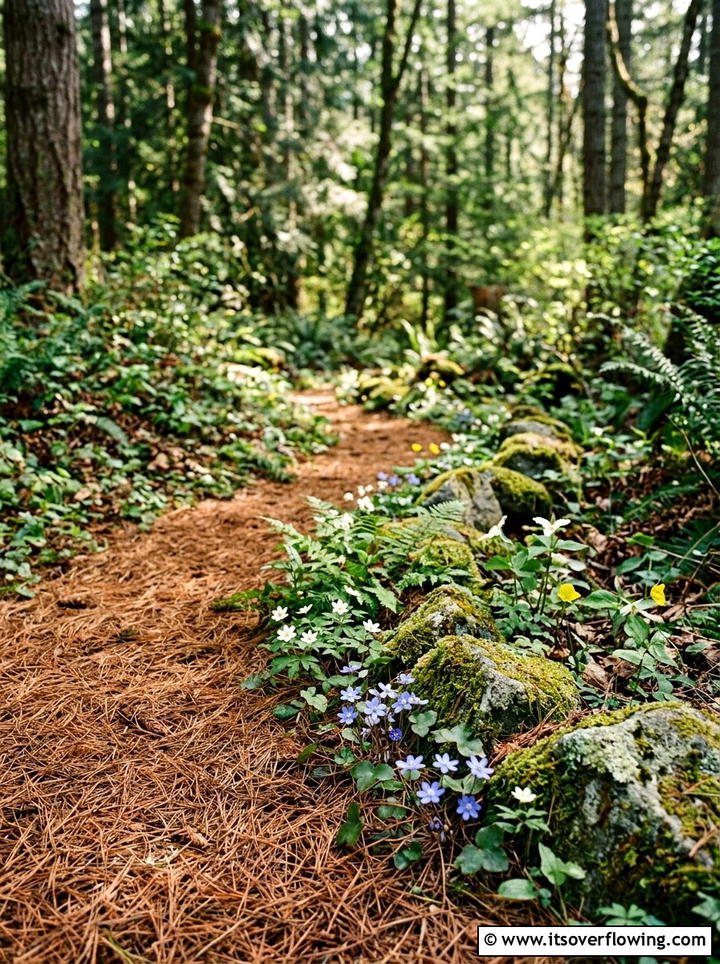
Pine needles, often called pine straw, offer a unique and airy texture that looks wonderful in informal garden borders. They are very lightweight and easy to distribute around small perennials or delicate woodland plants. This material is slightly acidic, which makes it a perfect choice for plants like azaleas, rhododendrons, and blueberries. The needles knit together over time, creating a stable mat that stays put even on slight inclines in your yard. Many people can find this material for free if they have pine trees on their property. It provides a natural, forest-like appearance that blends perfectly into a relaxed and organic landscape design theme.
8. Bark Chip Retaining Wall
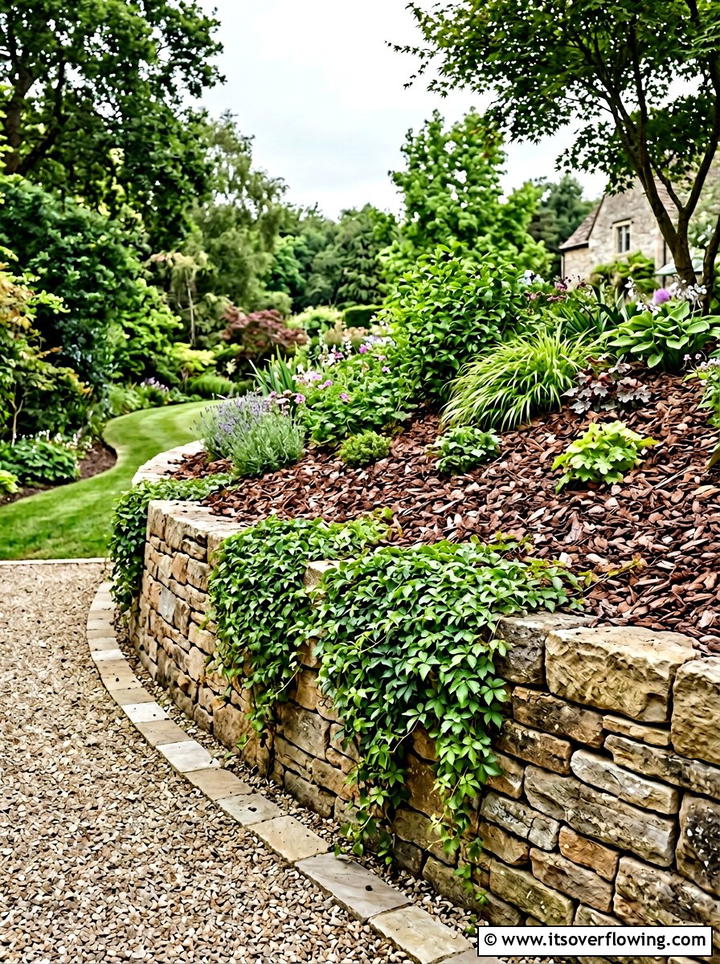
You can use large bark chips to fill in the spaces around a small natural stone or timber retaining wall. This helps to soften the hard edges of the structure and provides a finished look to the surrounding earth. The chips help with drainage, allowing water to flow through without washing away the soil behind the wall. It is a very cost-effective way to manage small slopes in your yard while adding visual interest. The organic texture of the bark complements the natural materials used in the wall construction perfectly. This simple addition makes your functional landscape features look like a deliberate part of your overall garden design.
9. Red Mulch Island Bed
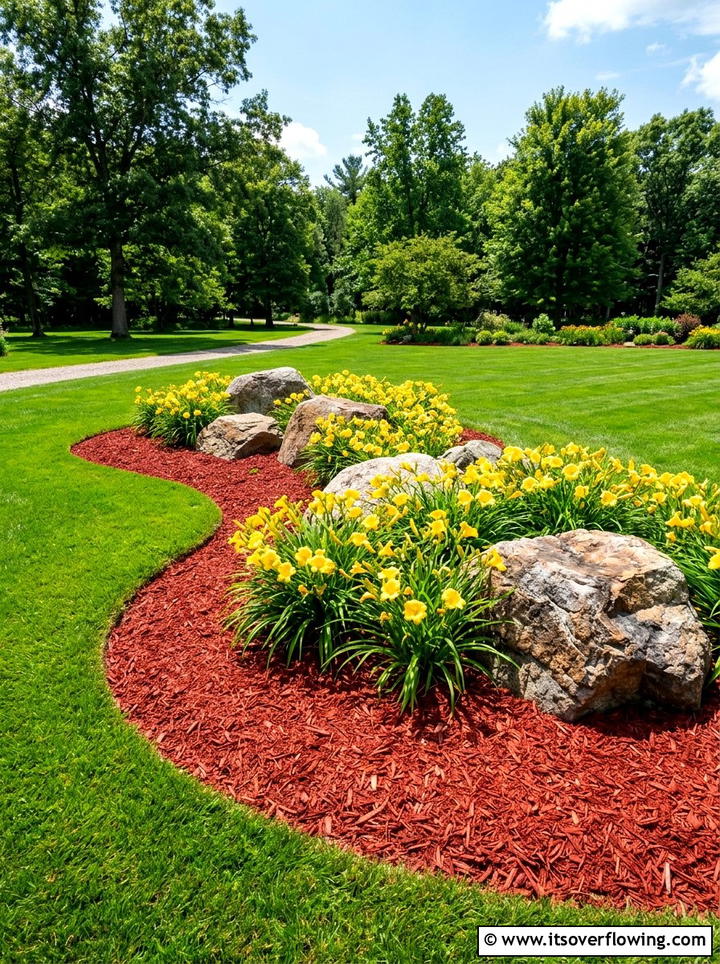
Red mulch is a bold choice that adds a splash of vibrant color to large island beds in the middle of a lawn. The bright hue draws the eye toward focal points like ornamental grasses or large decorative boulders. It is very effective at making a large, empty space feel more filled and intentional without planting too many shrubs. Red mulch holds its color quite well over the season, providing a consistent look for many months. It works particularly well with white or yellow flowering plants, creating a high-energy palette. This is a great way to define different zones in a large backyard while keeping costs very low.
10. Sheet Mulching Grass Removal
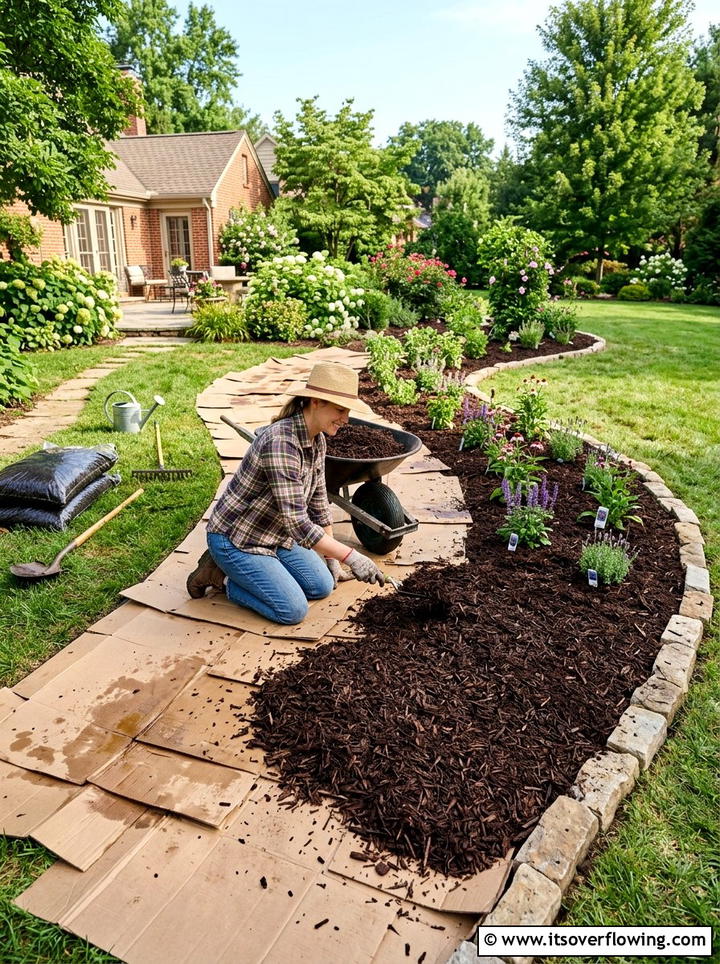
Sheet mulching is a clever and budget-friendly technique for anyone who wants to start a new garden bed without digging. You simply lay down layers of plain brown cardboard or thick newspaper directly over your existing grass. After that, you add a generous layer of mulch on top to hide the paper and provide a clean finish. This method smothers the weeds and grass beneath while slowly decomposing to enrich your soil with organic matter. It is a very low-effort way to expand your landscape during the spring or fall months. Many homeowners love this approach because it saves hours of labor and avoids the use of chemicals.
11. Wood Shaving Pathway
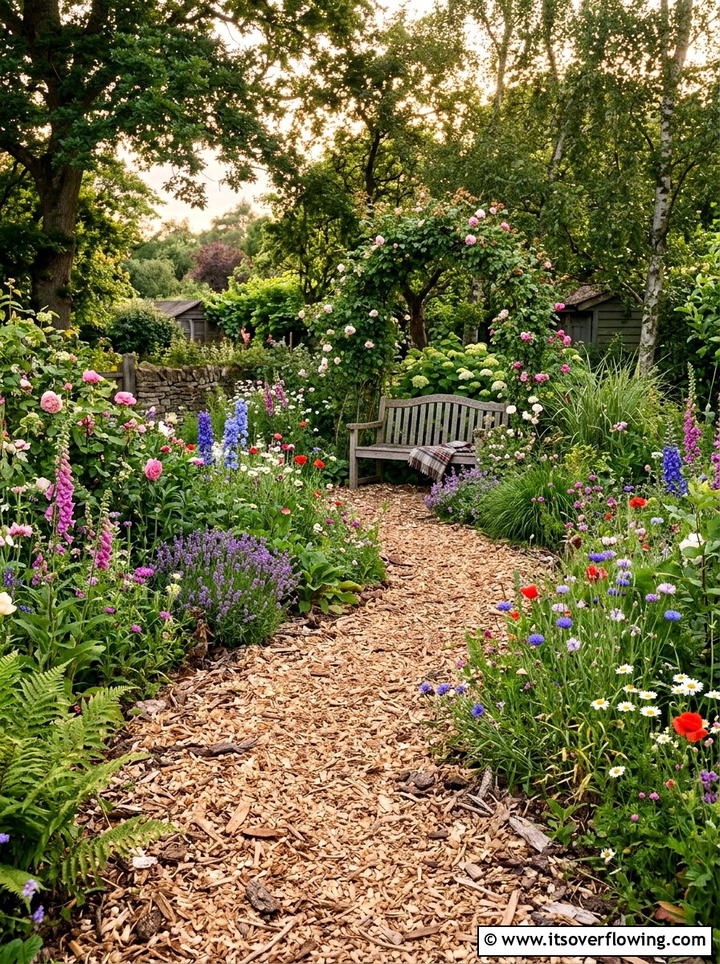
Thin wood shavings offer a very fine texture that works beautifully for secondary paths leading to hidden corners of your garden. They create a soft, almost carpet-like feel that is very pleasant to walk on during a morning stroll. Shavings are often a byproduct of woodworking, making them an eco-friendly and very cheap resource to find. They break down faster than large chips, so they are great for adding organic material to the ground. Because they are so fine, they can be spread very evenly to create a smooth and tidy surface. This look is perfect for a cottage-style garden or a quiet meditation space in the backyard.
12. Cypress Mulch Slope
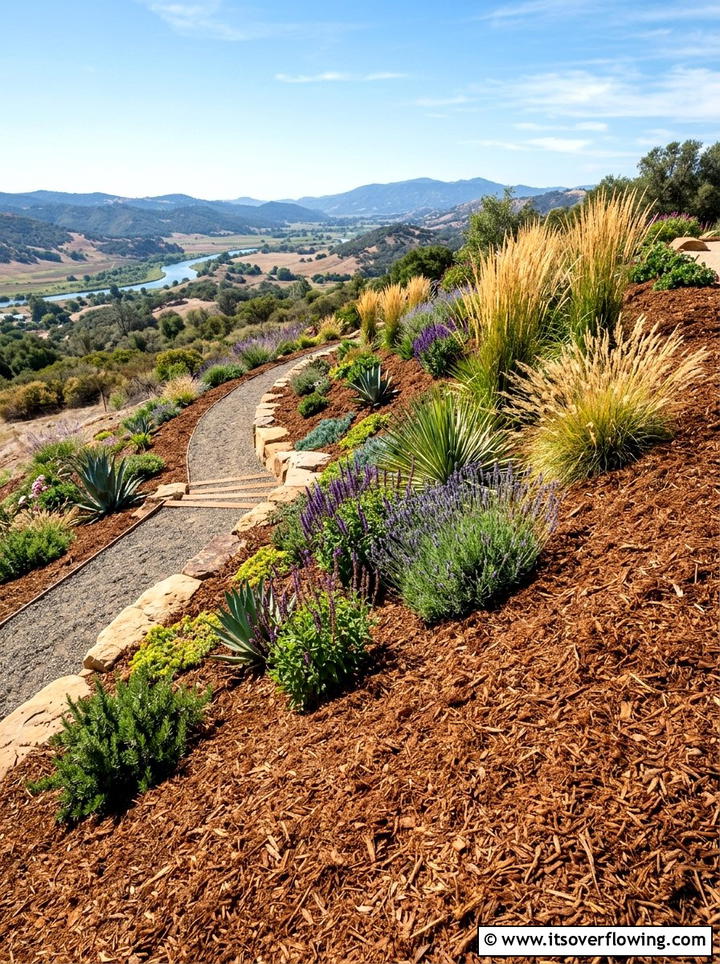
Cypress mulch is famous for its ability to stay in place, making it the ideal choice for sloping areas in your yard. The shredded fibers lock together to create a stable layer that resists erosion from wind and moving water. This prevents your valuable topsoil from washing away during heavy summer thunderstorms. It has a beautiful natural blonde or light brown color that looks very fresh and clean in any setting. Cypress is also naturally resistant to decay, so it lasts longer than many other types of wood mulch. Using it on hillsides is a practical and attractive way to handle difficult terrain on a tight budget.
13. Mulch And Stepping Stone Walkway
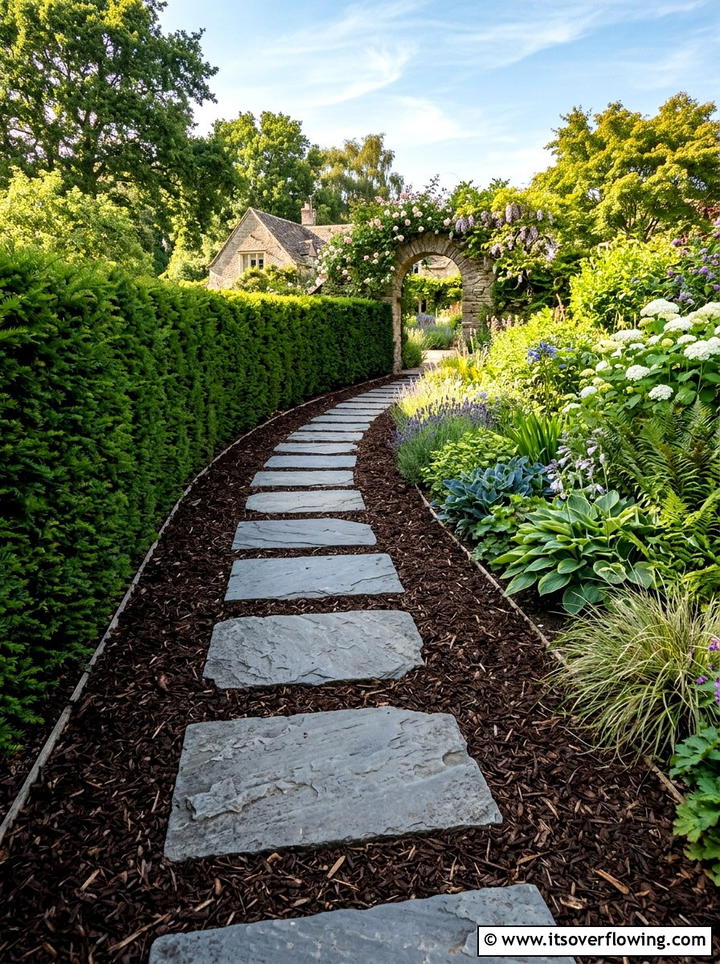
Combining mulch with large flat stepping stones creates a high-end look for a fraction of the cost of a full patio. You can place the stones at a natural walking pace and fill the gaps between them with a contrasting mulch color. This design prevents the stones from shifting while providing a stable and dry surface for walking. It looks much more expensive than it actually is and can be completed in just one afternoon. The mulch helps suppress weeds that would otherwise grow between the stones, keeping the path low maintenance. This project adds great architectural interest and a clear sense of direction to your landscape.
14. Fruit Tree Mulch Circle
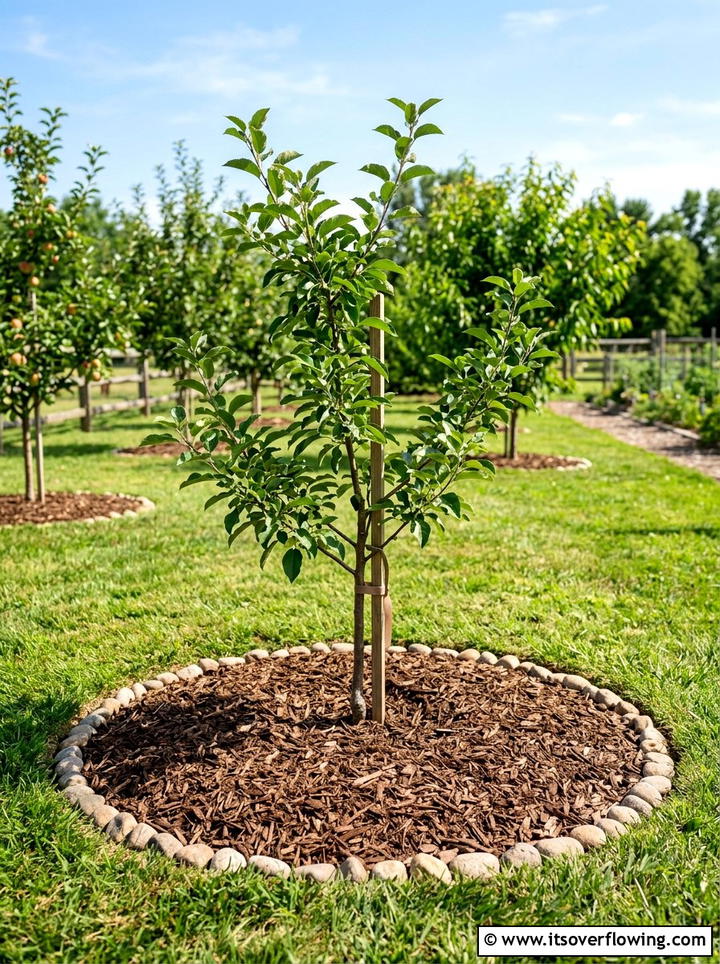
Giving your fruit trees a dedicated circle of mulch is essential for a healthy and productive backyard orchard. This practice eliminates competition from grass and weeds for water and nutrients, allowing your trees to grow faster. A thick layer of mulch keeps the soil moist, which is critical during the fruit-forming stage of the tree. It also provides a clean area for fallen fruit to land, making the harvest much easier and less messy. You should always leave a small gap between the mulch and the tree trunk to prevent rot. This simple step ensures your home-grown fruit trees stay healthy while looking very neat and tidy.
15. Raised Bed Wood Chip Surrounding
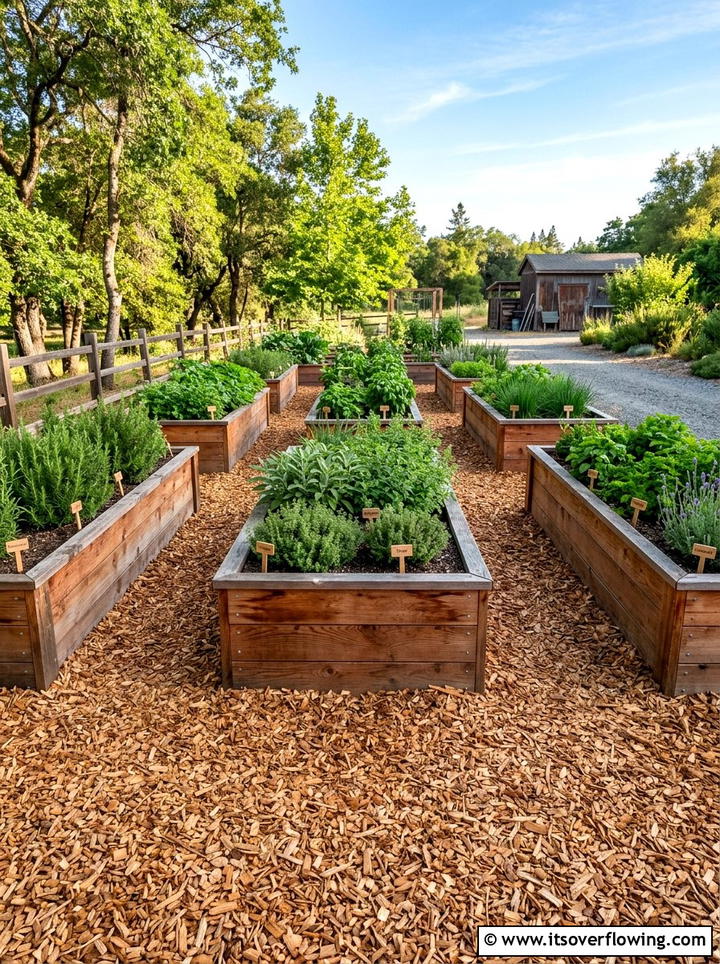
Using wood chips to fill the areas around your raised garden beds creates a very clean and functional workspace. This prevents the area from becoming a muddy mess when you are watering your plants or harvesting your vegetables. It also creates a clear boundary that keeps the grass from creeping into your growing boxes. Wood chips provide a stable surface for garden carts or wheelbarrows to move easily between the different beds. This setup makes your entire vegetable patch look like a professional and organized farm. It is an affordable way to improve the accessibility and overall aesthetic of your backyard food production zone.
16. Natural Wood Chip Edging
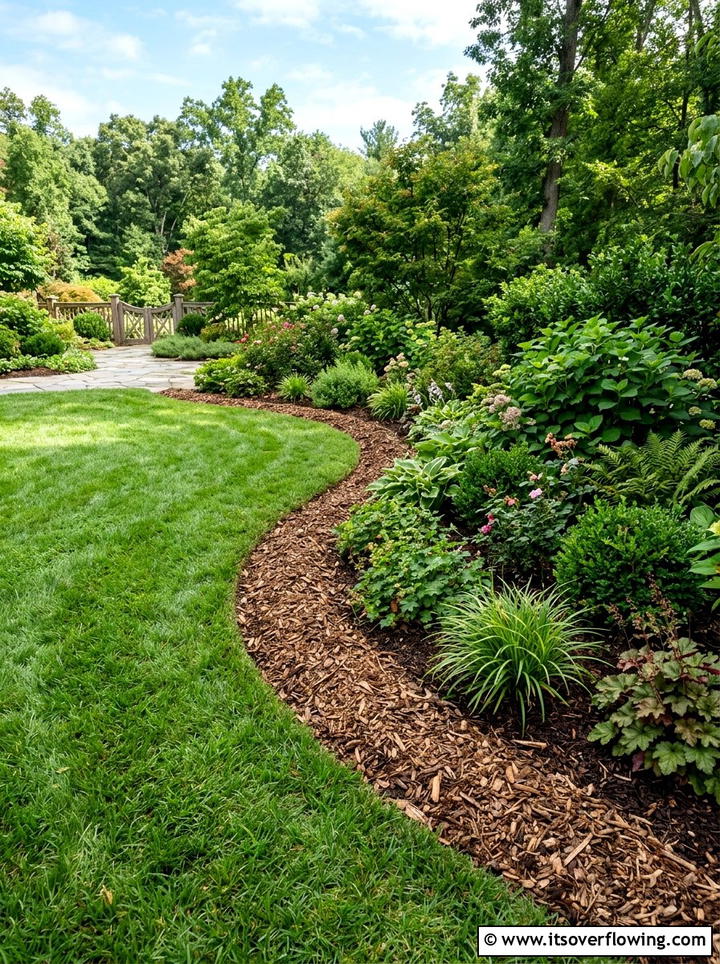
You can create a very natural and flowing edge for your garden beds by simply using a thick layer of wood chips. Instead of buying expensive plastic or metal edging, use a shovel to cut a clean trench and fill it with mulch. This creates a visual barrier that clearly separates your manicured beds from the wilder parts of your lawn. It is very easy to adjust the shape of your garden beds over time when you use this flexible method. The natural wood look blends seamlessly with the surrounding environment, creating a very harmonious feel. This approach is perfect for gardeners who prefer a soft and organic landscape style.
17. Dark Brown Mulch Foundation Planting
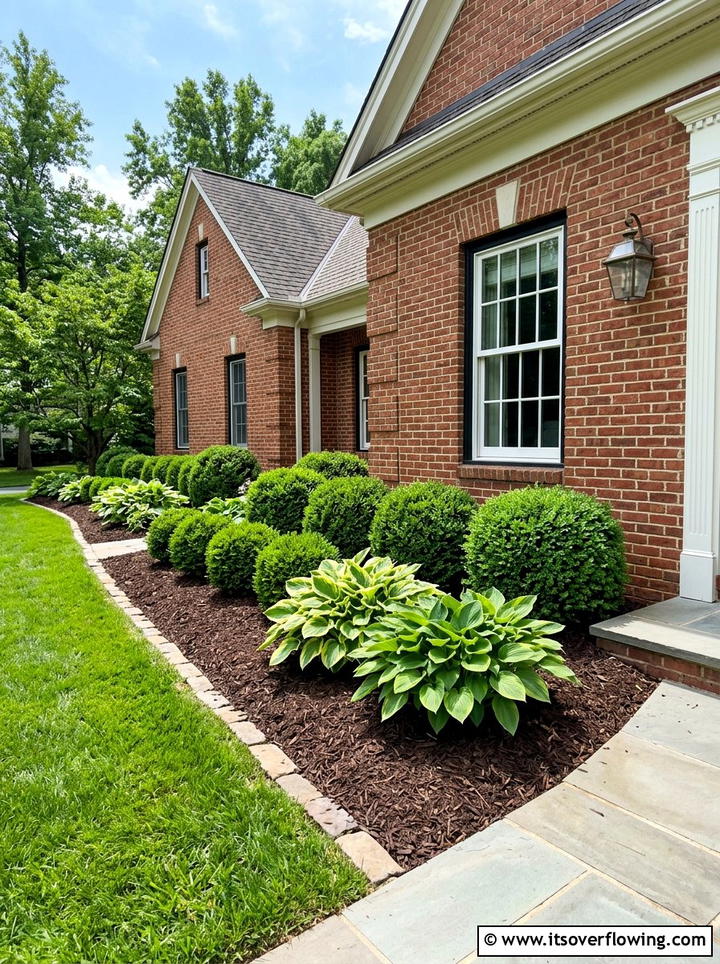
Placing dark brown mulch around the foundation of your home creates a grounded and stable look for your property. This classic color works well with almost any siding or brick color, providing a neutral and sophisticated base. It helps to hide any imperfections in the ground near the house and prevents soil from splashing onto the walls. Foundation plantings look much more established and healthy when they are surrounded by a consistent layer of high-quality mulch. It also helps to keep the basement or crawl space area a bit cooler by insulating the ground. This is one of the most effective ways to increase your home’s overall market value.
18. Hemlock Mulch Garden Border
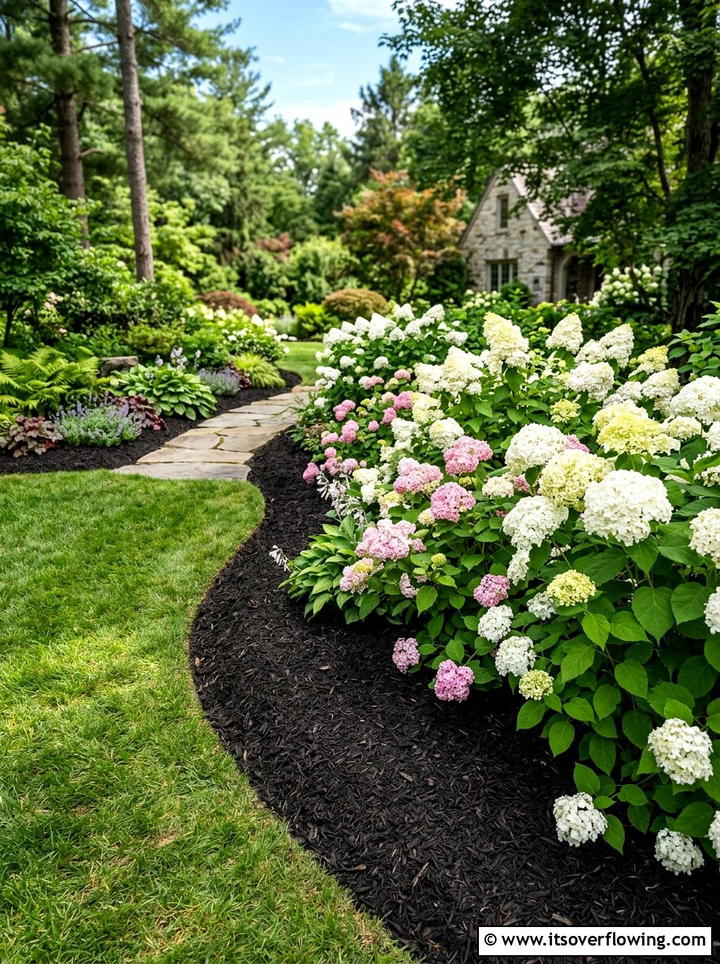
Hemlock mulch is prized for its rich, deep color and its ability to maintain that hue for a long time. It is a very fine-textured mulch that looks elegant in formal garden borders and near entryways. Many people choose hemlock because it is less likely to produce slivers, making it safer for pets and barefoot gardeners. The subtle aroma of the bark is very pleasant and adds an extra sensory layer to your outdoor experience. It does an excellent job of locking in moisture for your more sensitive perennial plants. Using this specific mulch type gives your garden a luxurious feel while remaining a very cost-effective landscaping solution.
19. Decorative Gravel And Mulch Mix
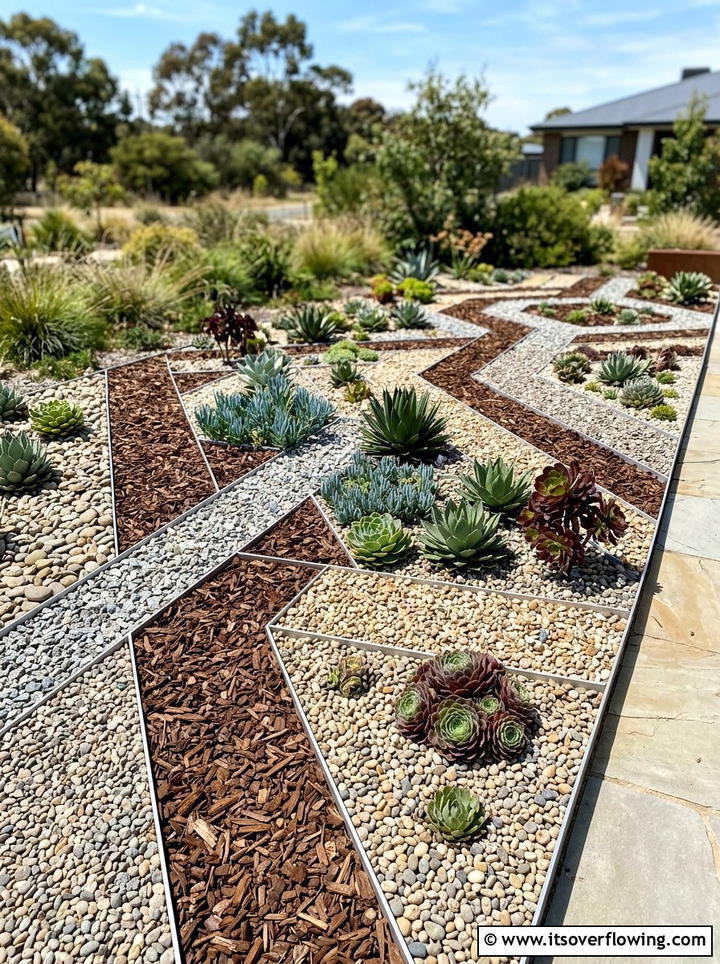
Mixing mulch with small pockets of decorative gravel can create a very interesting and multi-textured landscape design. You can use the gravel in areas where water might pool and the mulch in areas where you want to support plant growth. This combination adds visual depth and breaks up large expanses of a single material. It is a great way to save money by using cheaper mulch for the majority of the area and small amounts of stone for accents. The contrast between the hard stones and the soft wood fibers is very pleasing to the eye. This technique works exceptionally well in modern or Zen-inspired garden spaces.
20. Cocoa Bean Shell Mulch Bed
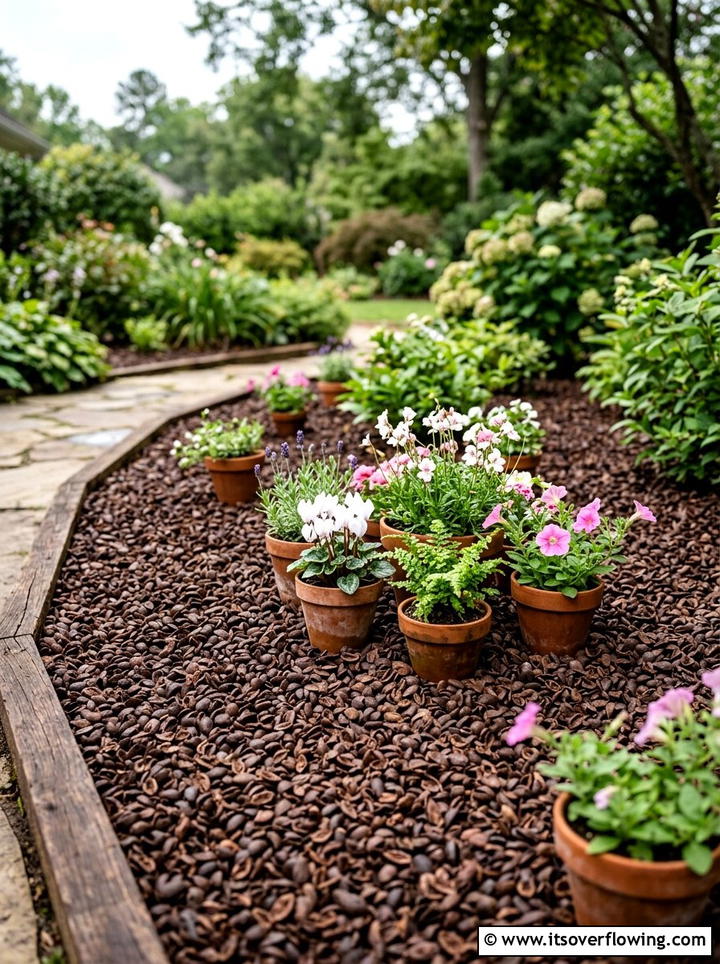
Cocoa bean shells are a unique mulch option that smells like delicious chocolate when first applied to the garden. They have a very dark, rich color and a small, delicate texture that looks great in containers or small flower beds. This material is a recycled byproduct of the chocolate industry, making it an environmentally friendly choice for your yard. The shells are very light and easy to handle, which is great for gardeners with limited physical strength. They help to suppress weeds and retain moisture just as well as traditional wood-based mulches. It provides a unique sensory experience and a high-end look for your favorite ornamental plants.
21. Playground Wood Fiber Surface
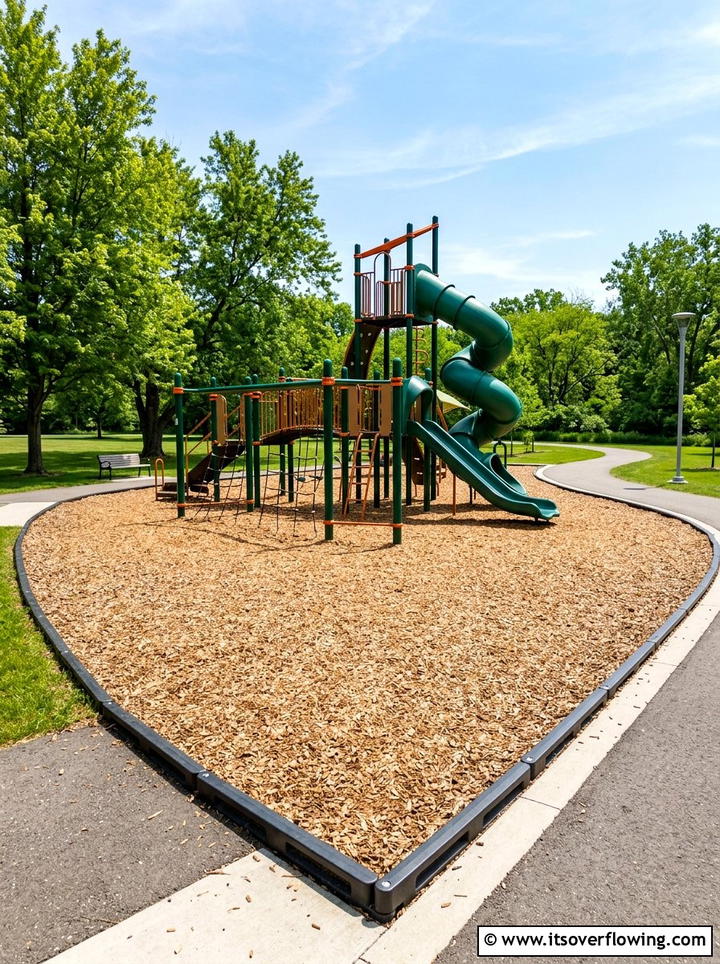
Engineered wood fiber is a specific type of mulch designed for high-impact areas like backyard playgrounds. It is processed to be softer and more fibrous than standard wood chips, which helps it knit together for a more stable surface. This material meets safety standards for fall protection, providing peace of mind for parents. It stays looking clean and light-colored, which reflects heat and keeps the play area cooler in the summer. It is a very affordable alternative to poured rubber or artificial turf for a family-friendly backyard. This functional mulch choice keeps your children safe while ensuring the yard looks tidy and well-maintained.
22. Arborist Wood Chip Ground Cover
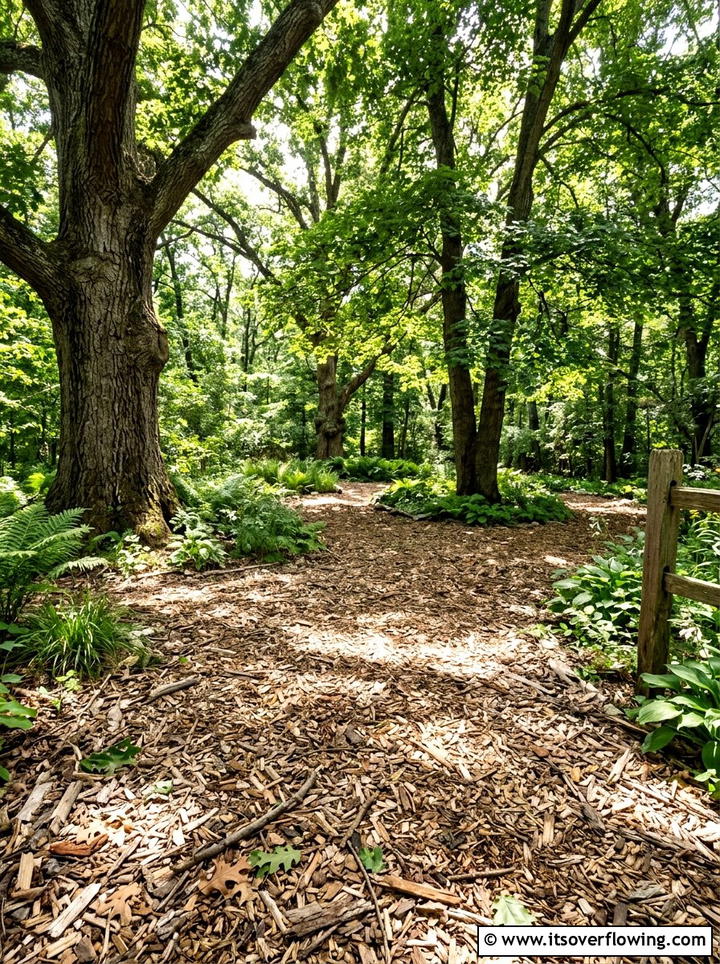
Getting a load of wood chips directly from a local arborist is often the cheapest way to cover large areas of ground. These chips usually contain a mix of bark, wood, and sometimes leaves, giving them a very natural and varied appearance. They are perfect for stabilizing soil in wooded areas or creating “wild” paths in larger backyards. Using these chips is a great way to recycle local waste and improve the health of your soil over time. They are very thick and durable, making them excellent for long-term weed suppression in neglected corners of the lot. This is the ultimate budget-friendly solution for extensive landscaping projects.
23. Hardwood Mulch Shrub Border
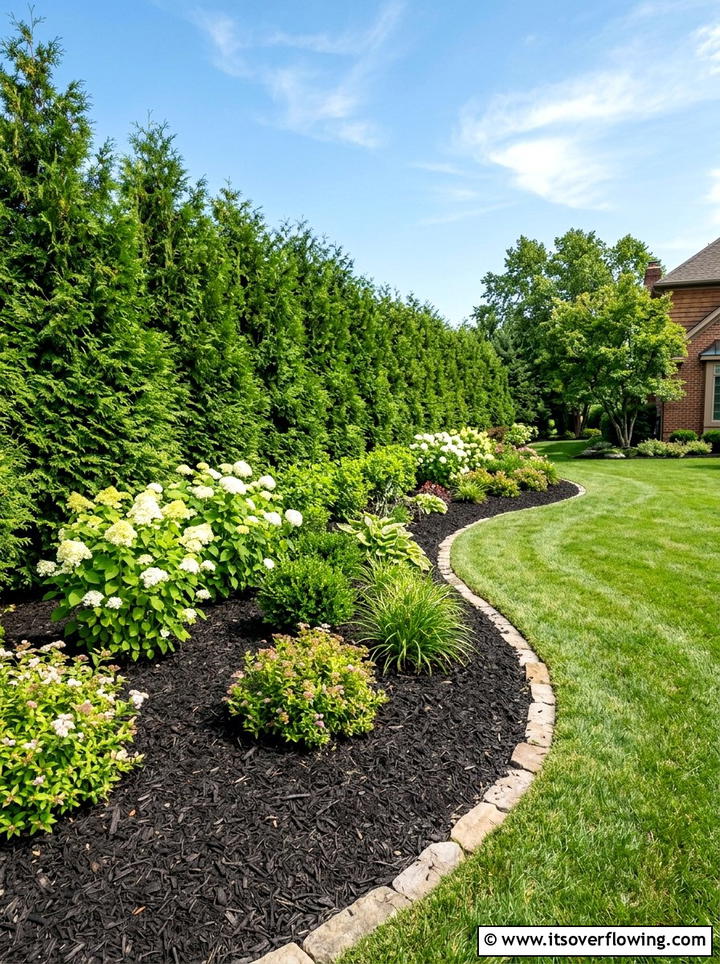
Shredded hardwood mulch is a heavy-duty option that is perfect for bordering large shrubs and foundation hedges. It is very dense and stays in place even in high-wind areas or near downspouts where water flows heavily. The natural brown tones look very organic and help your shrubs blend into the wider landscape. As hardwood decomposes, it adds a wealth of nutrients back into the soil, feeding your plants slowly over time. It is widely available at most garden centers and is very affordable when bought in bulk. This choice provides a sturdy and reliable ground cover that requires very little maintenance once it is installed.
24. Colored Mulch Curb Appeal
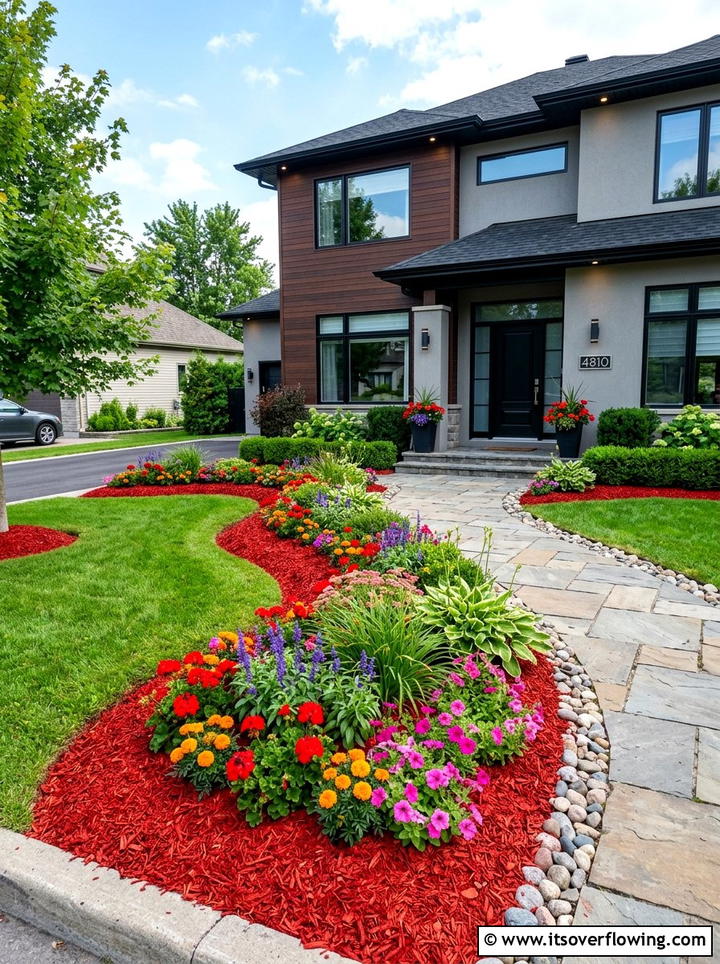
Using dyed mulches in specific colors can help you coordinate your landscape with the architectural details of your home. If you have a grey house, black or dark brown mulch can provide a stunning and modern contrast. For homes with warm stone or brick, a red or cedar-colored mulch can enhance the natural beauty of the building materials. This intentional color coordination is a secret trick used by professional stagers to make homes look more attractive to buyers. It is a very fast and inexpensive way to refresh the look of your entire property before a big event. Colored mulch keeps your yard looking vibrant and exciting.
25. Organic Compost And Mulch Layering
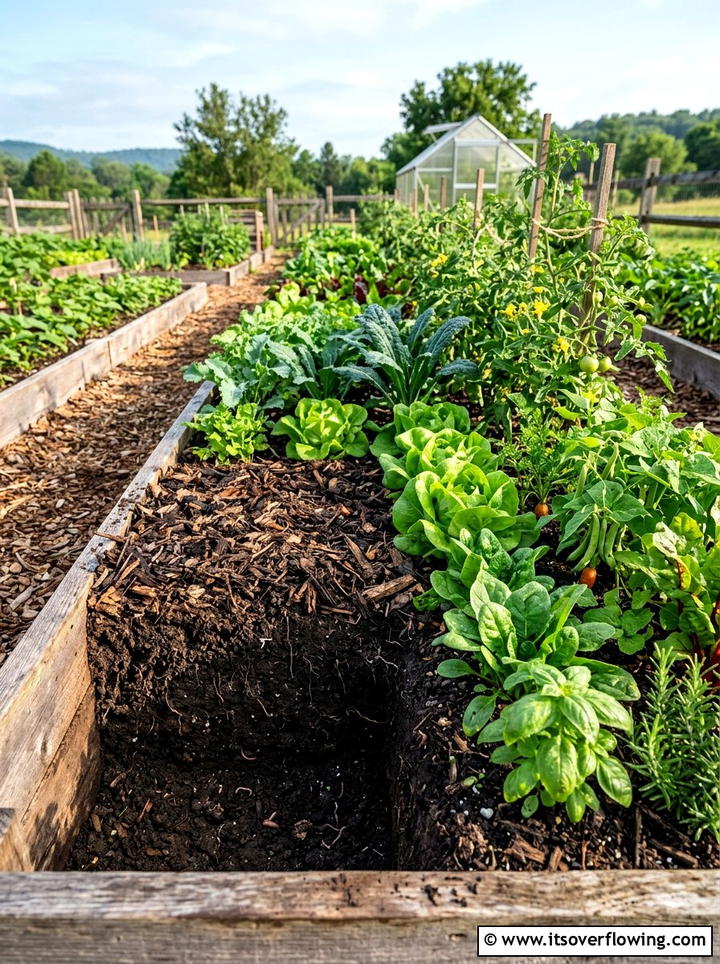
Combining a layer of rich organic compost with a top layer of mulch is the ultimate way to feed and protect your garden. The compost provides immediate nutrients to the roots of your plants, while the mulch prevents those nutrients from washing away. This “sandwich” method creates a thriving environment where plants can grow to their maximum potential. It is a very cost-effective way to improve poor soil quality without using expensive chemical fertilizers. Your garden will look beautifully finished on the surface while working hard underneath to build long-term soil health. This approach is the hallmark of a truly successful and sustainable home garden design.
Conclusion:
Investing time and a small amount of money into mulching your garden is one of the best decisions you can make for your property. From improving the health of your soil to creating a visually stunning outdoor environment, the benefits are truly endless. You have seen how different materials like cedar, straw, and even recycled rubber can solve various landscaping challenges. Whether you want a safe place for your kids to play or a sophisticated front yard that impresses your neighbors, mulch is the answer. By following these simple and affordable ideas, you can create a professional-looking garden that thrives for years to come.

Related posts:
 25 Cheap Garden Ideas for Front Yard Style on a Budget
 25 Cheap Garden Ideas To Refresh Your Outdoor Space Fast
 25 Cheap Garden Ideas With Cinder Blocks: Clever DIY Style
 25 Cheap Garden Ideas With Composting for Greener Outdoor Spaces
 25 Cheap Garden Ideas With Drought Tolerant Plants to Try
 25 Cheap Garden Ideas With Edging for Instant Curb Appeal
 25 Cheap Garden Ideas With Low Maintenance Plants That Thrive
 25 Cheap Garden Ideas With Native Plants for Easy Beauty
 25 Cheap Garden Ideas With Rain Barrels: Save Water in Style
 25 Cheap Garden Ideas With Simple Planters: Easy Budget Style
 25 Cheap Garden Ideas With String Lights: Magical Glow Tips
 25 Cheap Garden Ideas With Cuttings to Grow More for Less