
Ornamental grasses are the unsung heroes of modern landscape design, offering a unique blend of texture, movement, and year-round interest that few other plants can match. Whether you are looking to create a soft, romantic meadow or a sleek, contemporary courtyard, these versatile plants provide the perfect structural foundation. They dance in the slightest breeze, catching the golden hour light and adding a rhythmic sound to your outdoor sanctuary. Beyond their aesthetic appeal, many varieties are incredibly drought-tolerant and low-maintenance, making them ideal for busy homeowners who still want a professional-looking garden. From towering plumes of pampas to the silvery tufts of fescue, the possibilities for incorporating these architectural wonders into your landscape are truly endless.
1. Modern backyard with ornamental grass
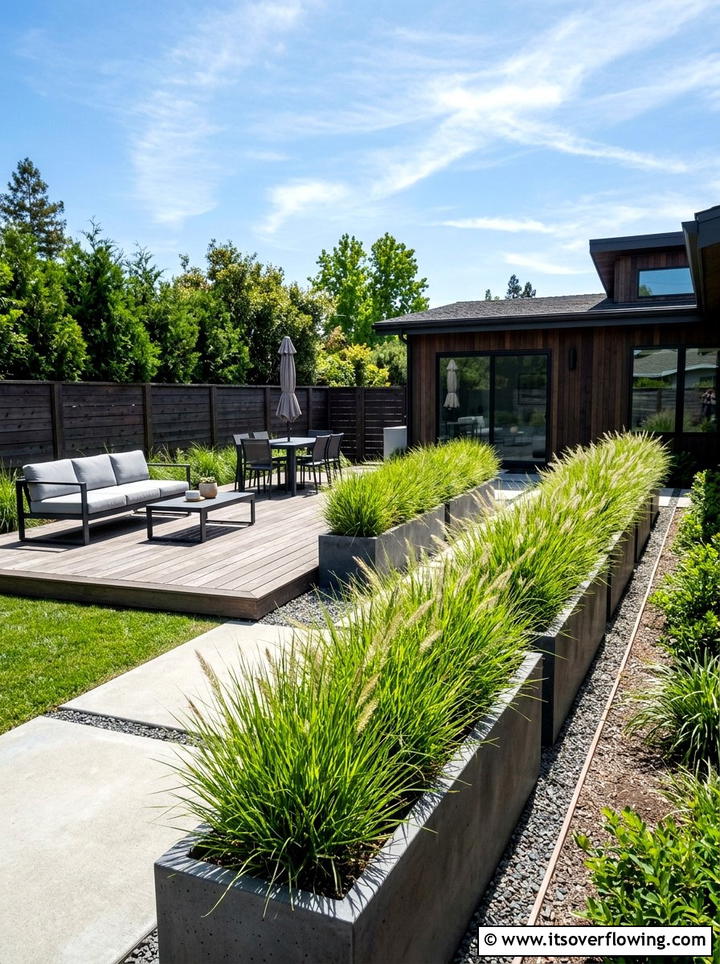
A modern backyard often relies on clean lines and a minimalist palette to create a sense of calm and order. By incorporating ornamental grasses into this setting, you introduce a soft, organic contrast to hard surfaces like concrete or wood decking. Imagine tall, upright varieties like feather reed grass planted in sleek, rectangular troughs or directly into the soil along a boundary wall. These plants act as living sculptures that change with the seasons, offering lush green blades in summer and golden tones in the winter. Their vertical growth habit helps to define different zones within the backyard without making the space feel closed off or cramped for guests.
2. Privacy screen with tall grass
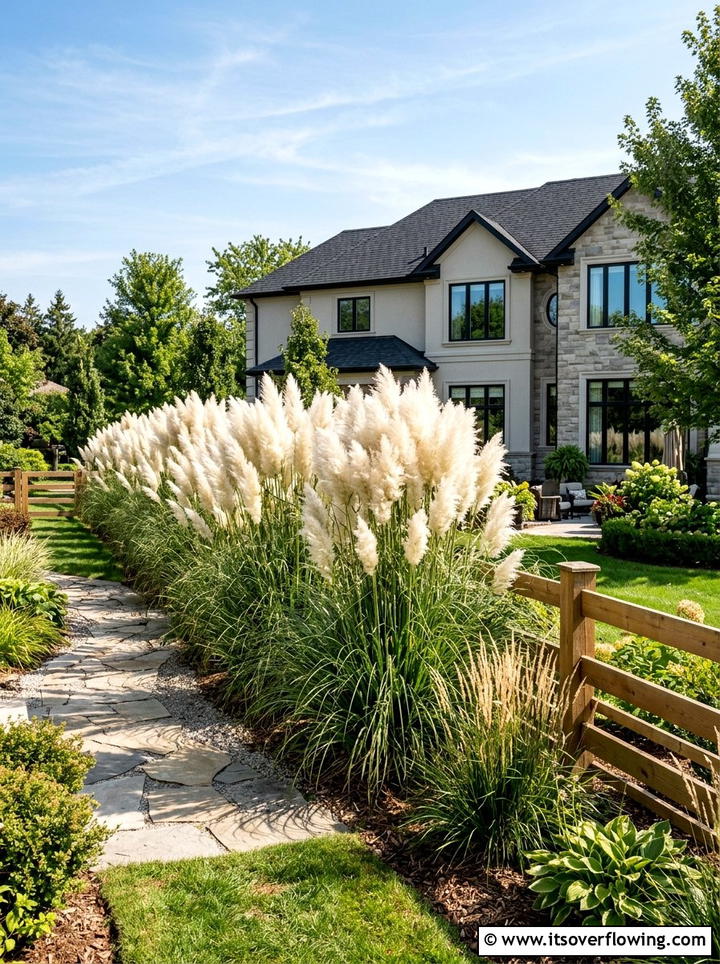
Creating a privacy screen with tall grass is an excellent way to shield your outdoor living space from neighbors while maintaining a natural feel. Unlike solid fences or brick walls, a living screen of pampas grass or giant miscanthus allows air to circulate and light to filter through gently. These grasses grow rapidly during the spring and summer months, quickly reaching heights that provide a significant visual barrier. The swaying movement of the tall blades creates a soothing rustling sound that can help mask ambient street noise. This approach is perfect for urban dwellers who want a bit of seclusion without feeling boxed in by heavy construction.
3. Gravel garden with ornamental grass
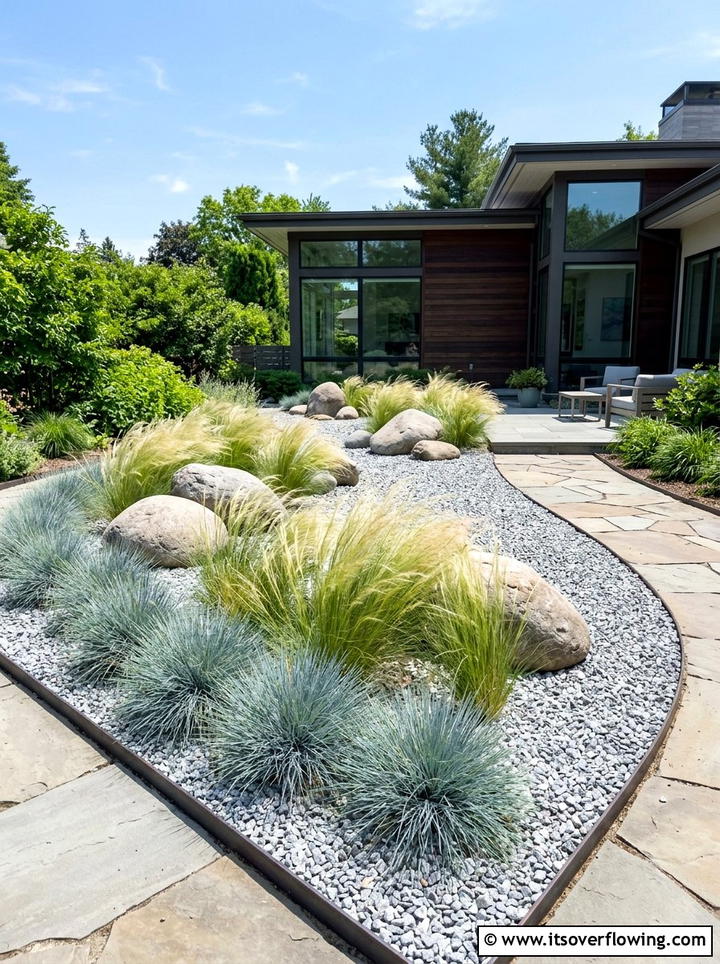
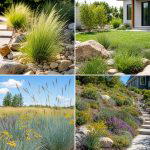
A gravel garden with ornamental grass is a beautiful, low-water solution that works perfectly in arid climates or for those seeking a Mediterranean look. By using crushed stone or pebbles as a mulch, you provide a neutral background that makes the vibrant colors of different grasses really pop. Varieties like blue fescue or Mexican feather grass look particularly striking against a light gray or beige gravel surface. This setup is highly practical because the gravel helps retain moisture in the soil while preventing weeds from sprouting around your plants. You can add a few large boulders to create more height and visual weight within the overall garden layout.
4. Ornamental grass border along walkway
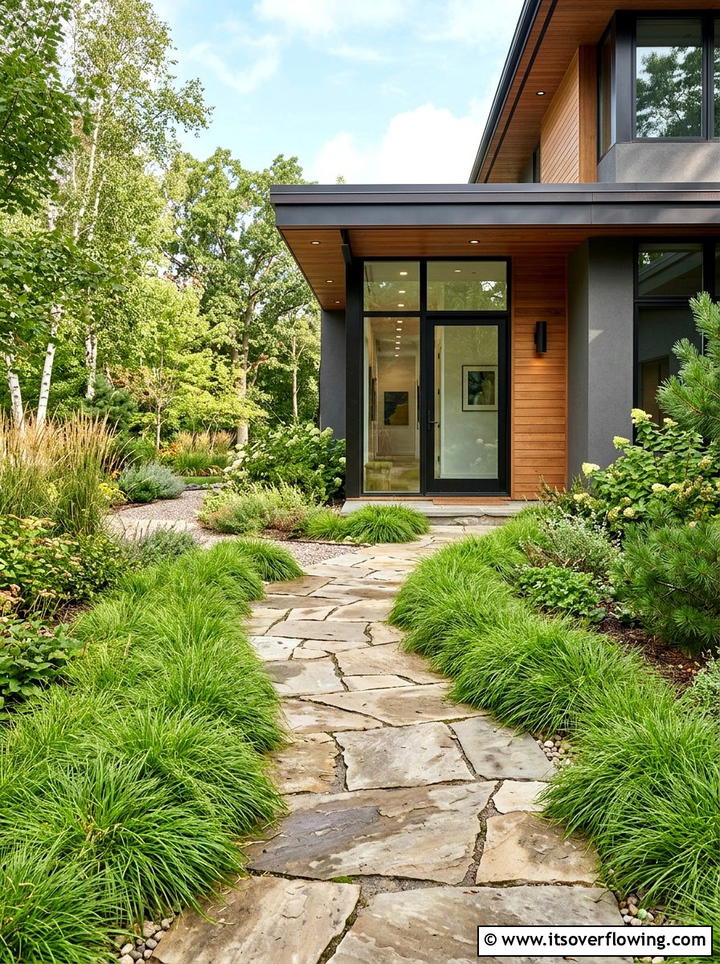
Planting an ornamental grass border along a walkway creates a soft, inviting transition from the driveway to your front door. Low-growing varieties like sedge or mondo grass are perfect for lining paths because they stay neat and compact without overgrowing the walking surface. As visitors walk by, the delicate blades often brush against their legs, providing a tactile experience that connects them with nature. This type of border also helps to define the path clearly, even in the evening when visibility might be lower. You can mix in some seasonal bulbs to add a splash of color among the green foliage throughout the early spring months.
5. Potted ornamental grass for patio
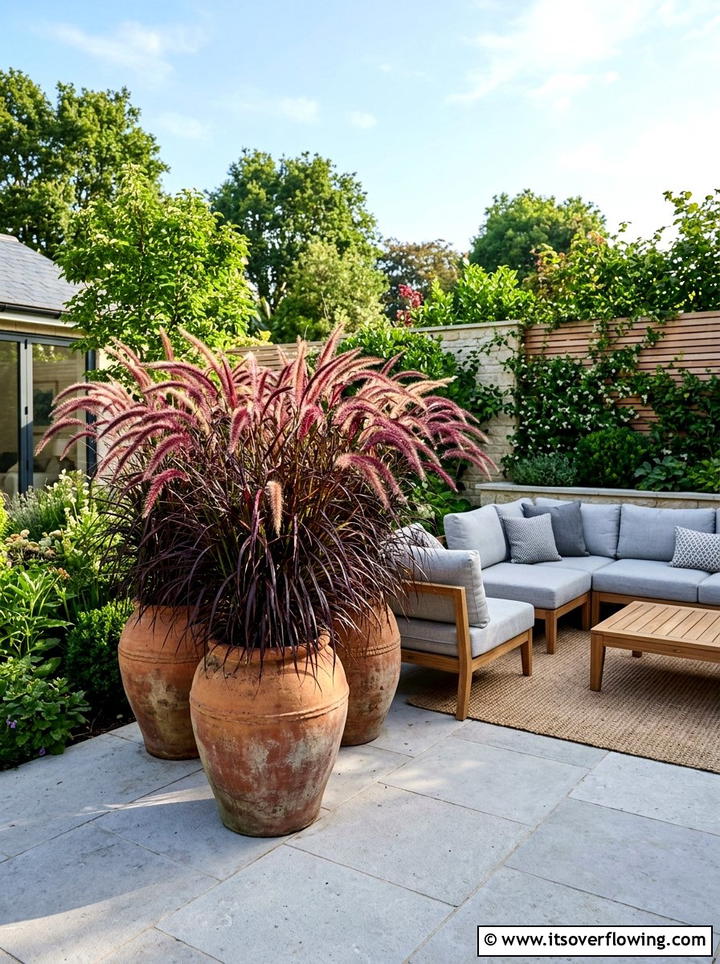
Using potted ornamental grass for a patio allows you to bring height and texture to your outdoor seating areas without permanent planting. Large containers filled with fountain grass or purple fountain grass serve as stunning focal points next to outdoor sofas or dining tables. Containers give you the flexibility to move your plants around depending on the season or if you are hosting a special event. Grasses in pots generally require more frequent watering than those in the ground, but they are very easy to maintain otherwise. Choosing pots that match your patio furniture helps to create a cohesive and well-designed look for the entire outdoor area.
6. Rock garden with blue fescue
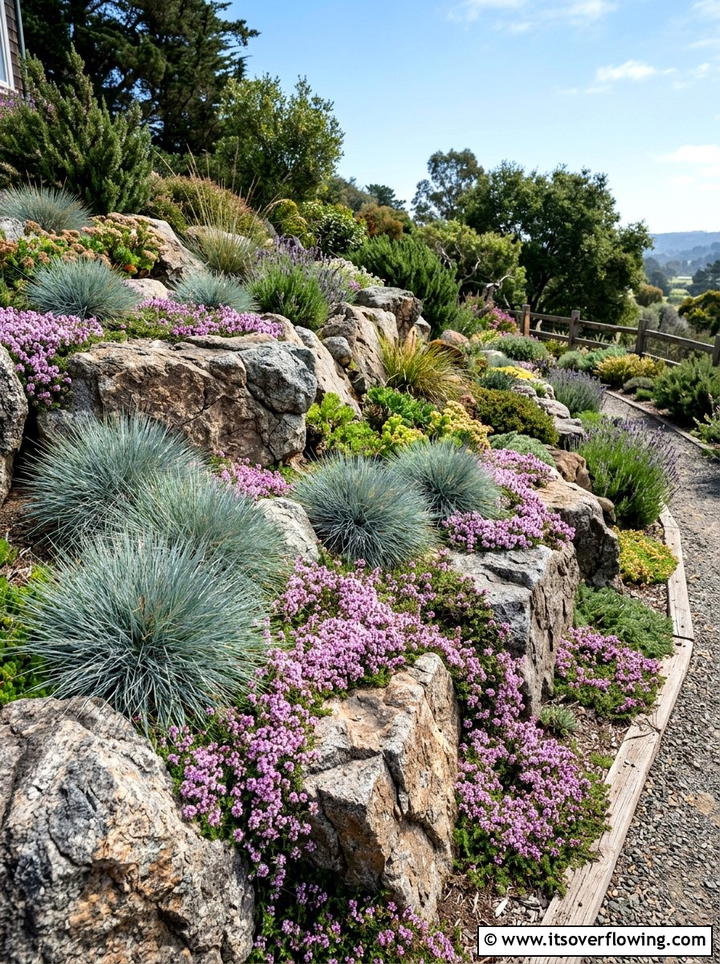
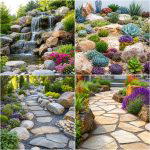
A rock garden with blue fescue provides a wonderful opportunity to play with color contrasts and interesting geological shapes in your landscaping. The icy blue-silver hue of the fescue tufts stands out beautifully against the natural browns, grays, and reds of various river rocks or jagged slate. These grasses naturally form tight, round mounds that mimic the shape of small boulders, creating a very harmonious and balanced visual effect. Because blue fescue is a smaller variety, it fits perfectly into the nooks and crannies of a rockery without overwhelming the other elements. This design is exceptionally hardy and requires very little intervention once the plants are established.
7. Prairie style garden with grasses and perennials
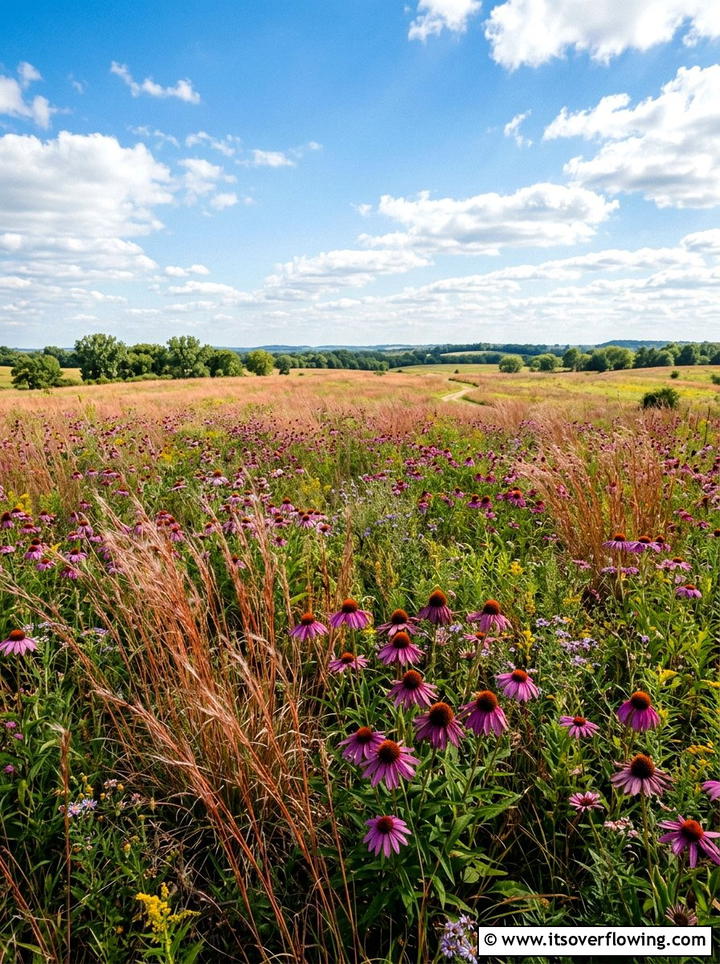
Creating a prairie style garden with grasses and perennials is all about embracing a wild, naturalistic aesthetic that mimics the open American landscape. This approach involves mixing large drifts of grasses like little bluestem with vibrant wildflowers such as coneflowers, black-eyed Susans, and blazing stars. The grasses provide a consistent backdrop and structural support for the flowering plants, preventing them from flopping over during heavy rains. Throughout the year, this garden type provides a rotating display of colors and textures that attract local pollinators and birds. It is a fantastic way to support local biodiversity while creating a stunning, high-impact landscape that requires minimal chemical fertilizers.

8. Fountain grass in front yard landscaping
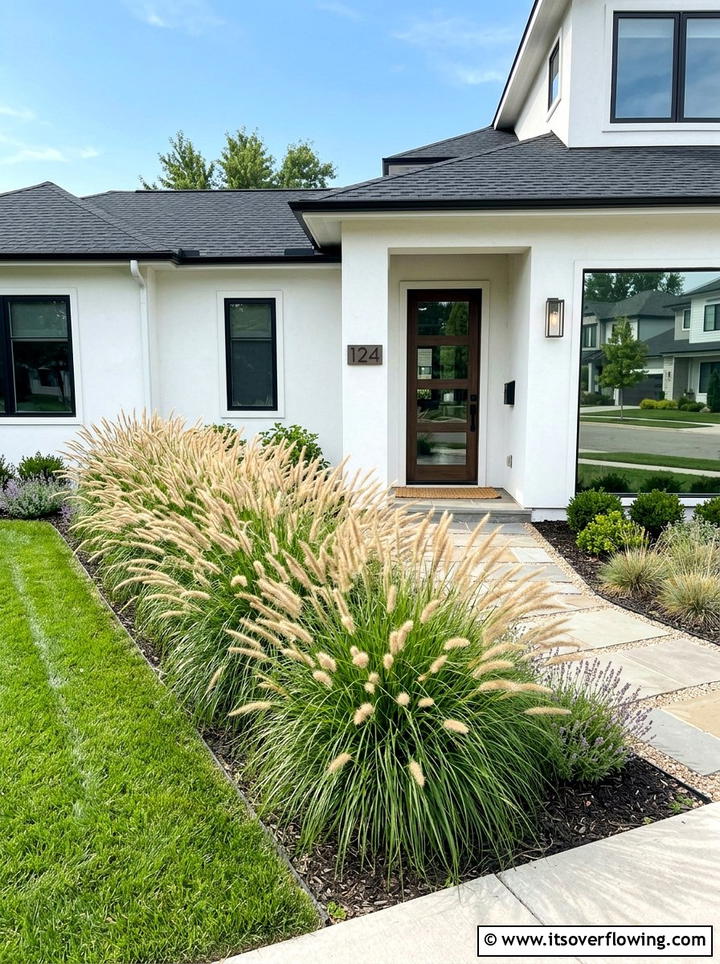
Incorporating fountain grass in front yard landscaping adds a sense of elegance and curb appeal that many traditional lawns lack. These grasses are named for their graceful, arching stems that look like spraying water, topped with fuzzy, bottle-brush flowers in late summer. When planted in groups of three or five near the house entrance, they create a welcoming and upscale atmosphere that stands out in the neighborhood. Fountain grass is particularly effective when backlit by the afternoon sun, as the plumes catch the light and glow with a soft radiance. They are very resilient and can handle the heat of a sunny front yard with very little extra care.
9. Small garden with ornamental grass
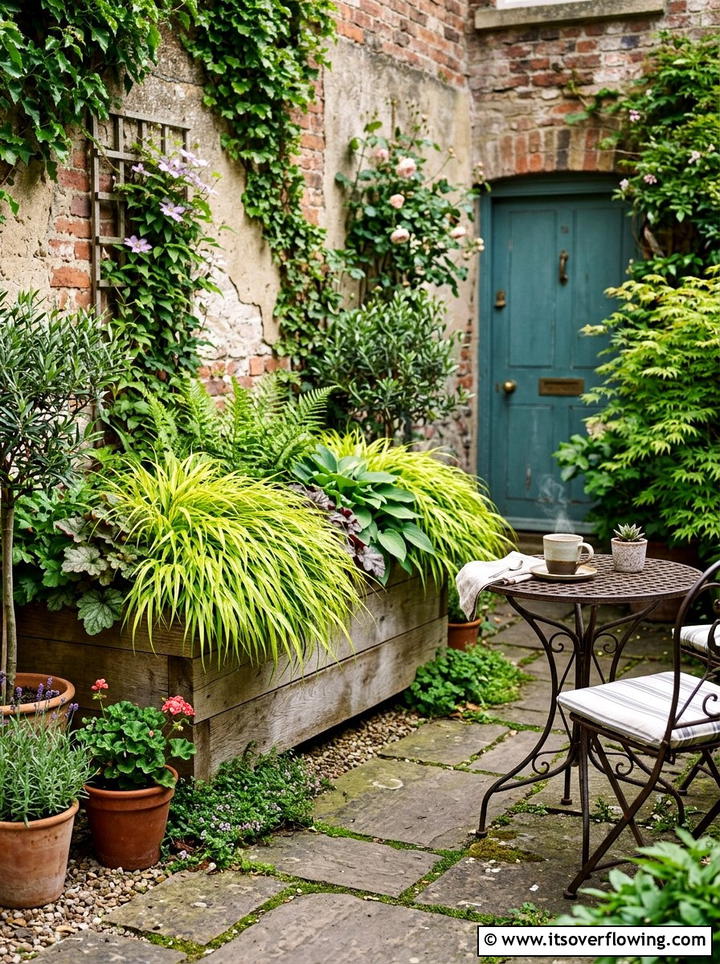
Designing a small garden with ornamental grass requires a focus on scale and proportion to ensure the space feels open and airy. Compact varieties like hakone grass or Japanese forest grass are ideal because they provide lush texture without taking up too much horizontal space. You can use these grasses to create layers of height, placing shorter varieties in the front and slightly taller ones toward the back wall or fence. The fine texture of grass blades actually makes a small space feel larger by adding depth and intricate detail to the eye. Even a tiny balcony can benefit from a single, well-placed pot of grass to add life.
10. Feather reed grass along fence
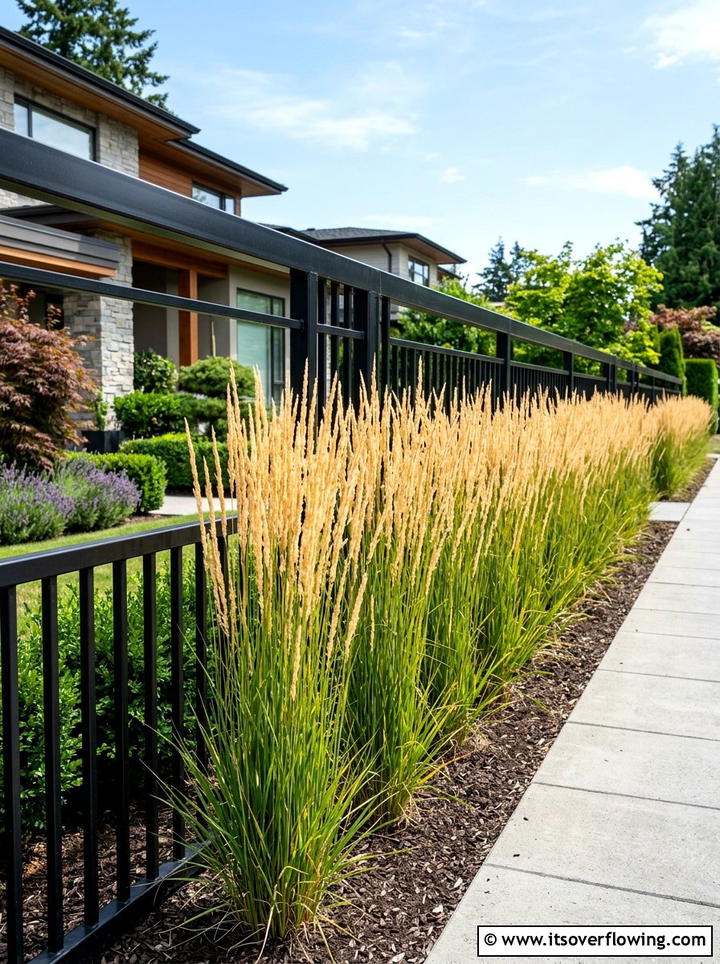
Planting feather reed grass along a fence line is a smart way to soften the appearance of hard boundary lines in your yard. The most popular variety, ‘Karl Foerster’ , is loved by designers for its strictly upright habit that stays narrow and tidy all year long. When planted in a row, these grasses create a vertical rhythm that draws the eye upward and makes the garden feel more structured. In early summer, they produce tall, wheat-like stalks that stay attractive well into the winter months, providing food for birds. This is an excellent choice for narrow side yards where you want green foliage but have limited room for wide-spreading shrubs.
11. Japanese garden with forest grass
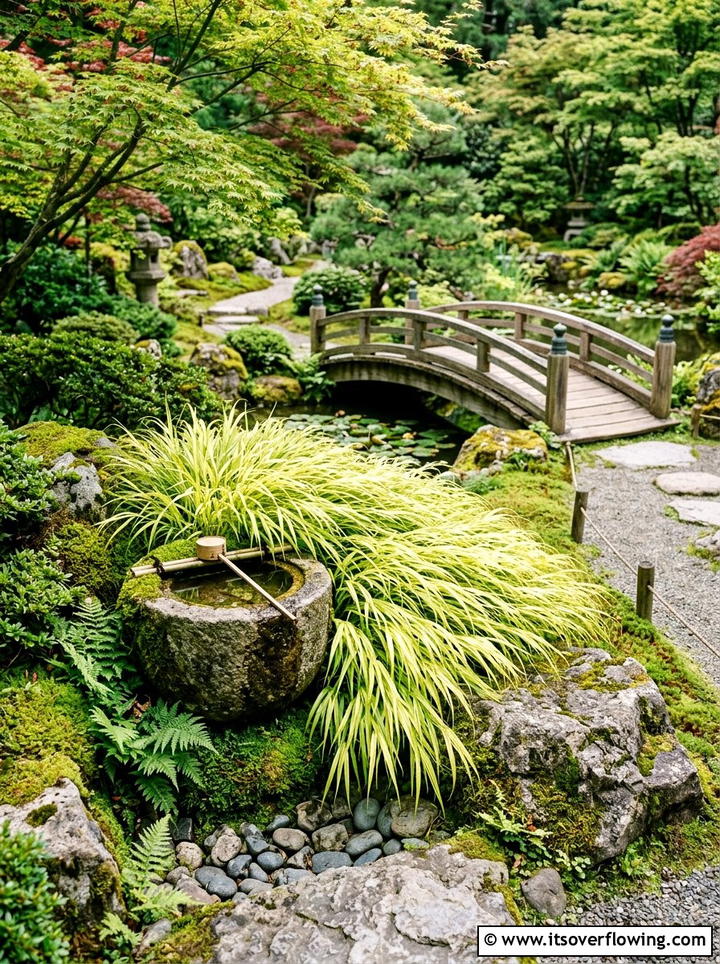
A Japanese garden with forest grass often features the stunning, cascading foliage of Hakonechloa, which thrives in shaded or semi-shaded conditions. This grass looks like a waterfall of gold or green, making it a perfect companion for moss-covered stones, stone lanterns, and quiet water features. Its soft texture provides a beautiful contrast to the rigid shapes of clipped evergreens or Japanese maple trees commonly found in these serene spaces. In the fall, the leaves often turn a warm bronze or orange, adding a final burst of color before the winter dormancy begins. The slow-growing nature of this grass makes it very easy to manage in a contemplative garden setting.
12. Poolside landscaping with ornamental grass
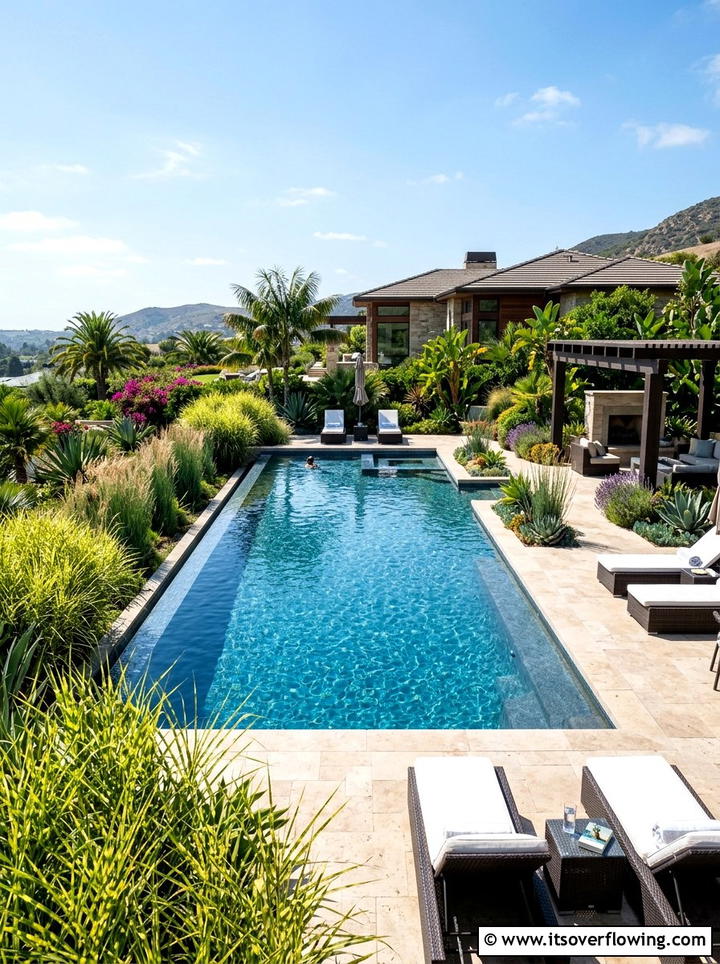
Using poolside landscaping with ornamental grass creates a resort-like atmosphere that is both functional and aesthetically pleasing for your summer swimming area. Many grasses are resistant to salt and chlorine, making them much more durable than delicate flowering plants near the water’s edge. Because they do not drop messy petals or sap, they keep the pool water cleaner and reduce the amount of maintenance required for the filtration system. Varieties like zebra grass or switchgrass provide a lush, tropical feel that complements the sparkling blue water perfectly. The gentle swaying of the grass in the breeze adds to the relaxing, vacation-like mood of your own private backyard oasis.
13. Drought tolerant garden with grasses
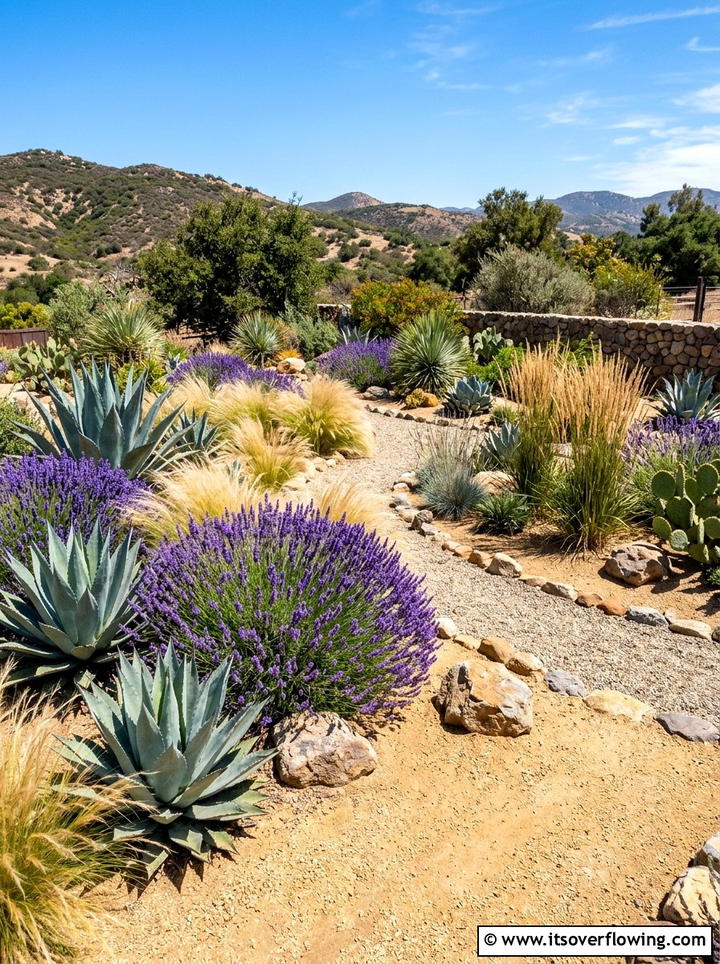
Building a drought tolerant garden with grasses is a responsible and beautiful way to landscape in regions with limited water resources or frequent dry spells. Native grasses are naturally adapted to survive with very little supplemental irrigation once their root systems are fully established in the soil. By grouping these plants together, you can create a high-impact landscape that remains vibrant and green even during the hottest months of the year. This type of garden often incorporates other water-wise elements like succulents, lavender, and sage to create a rich tapestry of colors and scents. It is a sustainable choice that saves money on water bills while looking professional.
14. Sloping backyard with ornamental grass
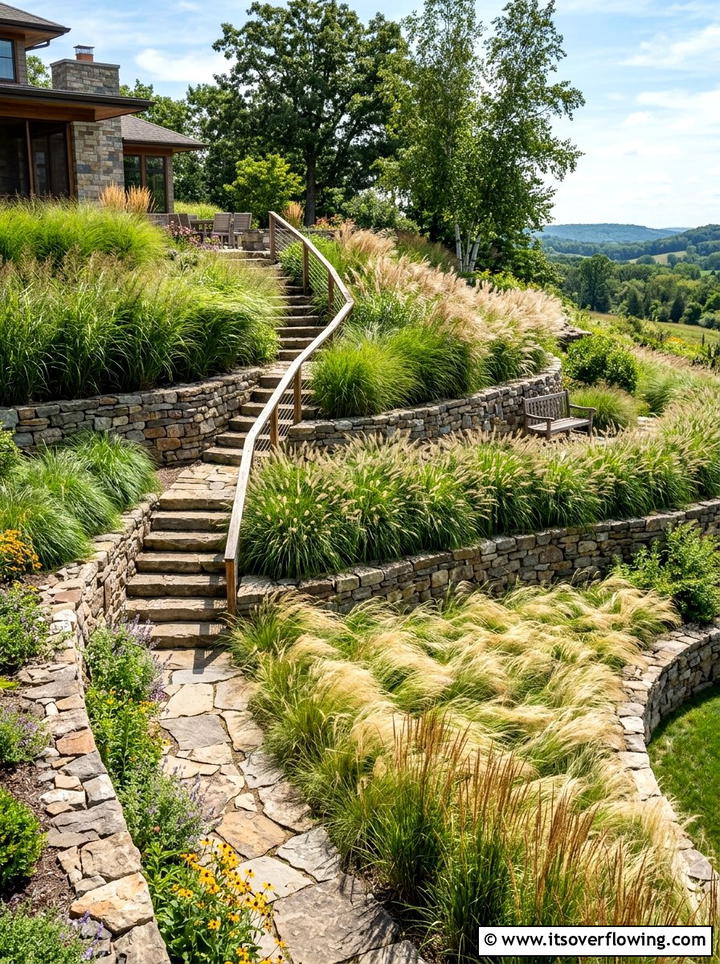
Dealing with a sloping backyard with ornamental grass is a practical solution for preventing soil erosion while adding visual interest to a difficult terrain. The deep, fibrous root systems of many grasses help to anchor the soil in place during heavy rainfall, preventing washouts and landslides. You can plant different varieties in tiers or drifts to create a terraced effect that makes the hill look like a planned landscape feature rather than a problem area. Grasses are much easier to maintain on a slope than a traditional lawn because they do not require frequent mowing, which can be dangerous on steep inclines. They effectively cover large areas quickly.
15. Modern courtyard with grasses
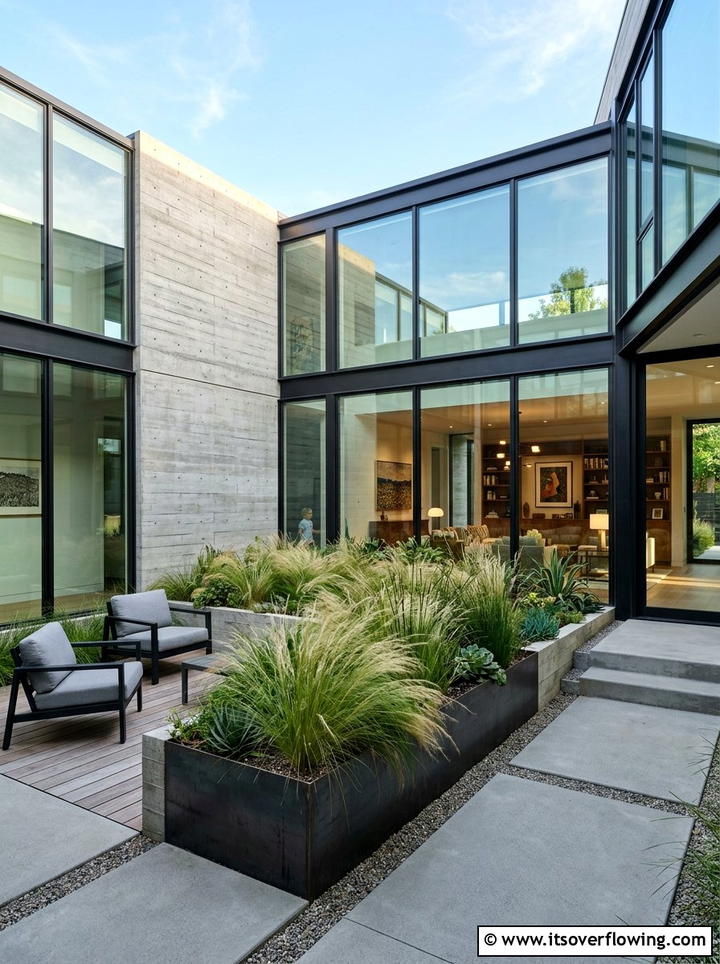
A modern courtyard with grasses often uses these plants to break up the monotony of paved surfaces and brick walls in enclosed spaces. Because courtyards can sometimes feel hot or stagnant, the movement of the grass blades helps to create a sense of airiness and life. You can plant them in narrow floor-level beds or raised steel planters to add architectural height and soft greenery to the corners of the space. The contrast between the sharp angles of the courtyard architecture and the soft, flowing nature of the grass creates a sophisticated and contemporary look. This setup is perfect for small urban homes where every square inch of outdoor space counts.
16. Zebra grass in flower bed
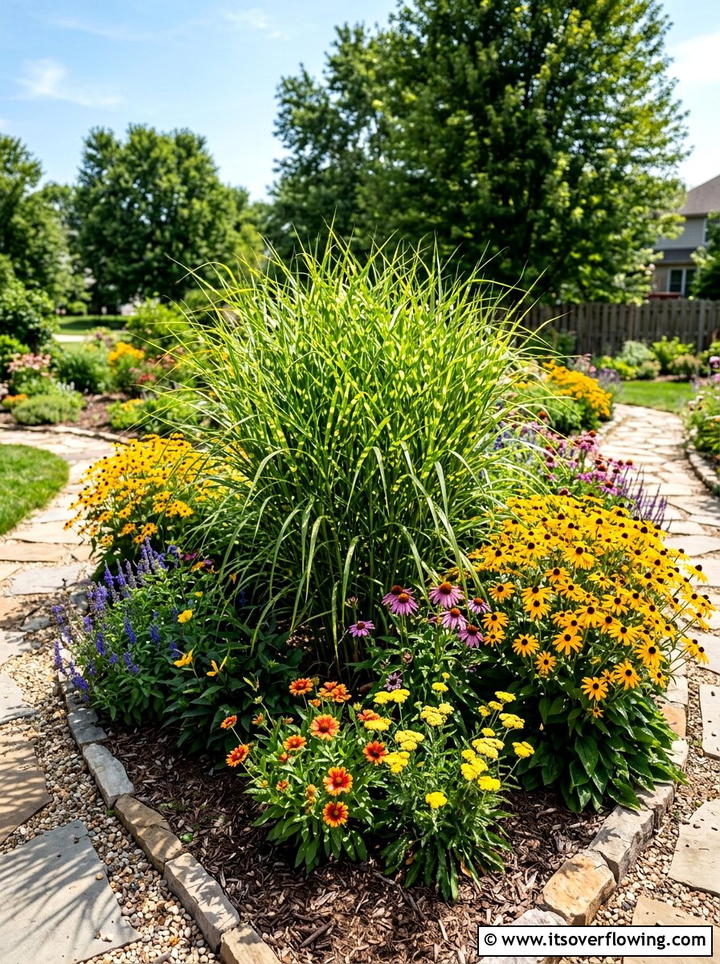
Adding zebra grass in a flower bed introduces a unique pattern and vertical interest that stands out among traditional green-leaved perennials. This specific variety is known for the horizontal yellow bands that cross its green blades, giving it a playful and exotic appearance. When placed in the center or back of a mixed border, it acts as a bold anchor that draws the eye and provides structure to the planting scheme. Zebra grass can grow quite large, so it is perfect for filling empty spaces in a large garden bed while requiring almost no pruning. Its late-summer plumes add an extra layer of beauty to the overall floral display.
17. Pink muhly grass landscape
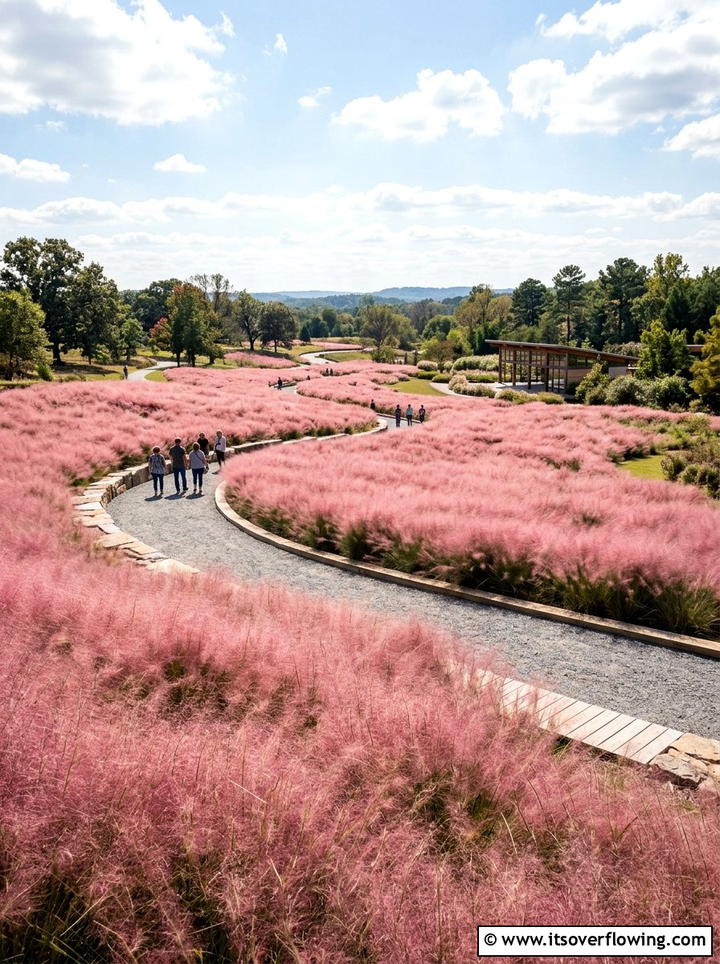
A pink muhly grass landscape is one of the most breathtaking sights you can have in an autumn garden when the plumes bloom. During late summer and fall, this grass produces airy, cloud-like seed heads that appear as a vibrant pink or purple haze over the foliage. When planted in large masses, the effect is truly ethereal and looks like a soft pink mist floating just above the ground. This grass is very hardy and performs exceptionally well in sunny spots with well-draining soil, making it a favorite for southern landscapes. Even when the pink color fades, the dried plumes continue to provide a lovely texture through the winter.
18. Mexican feather grass in urban garden
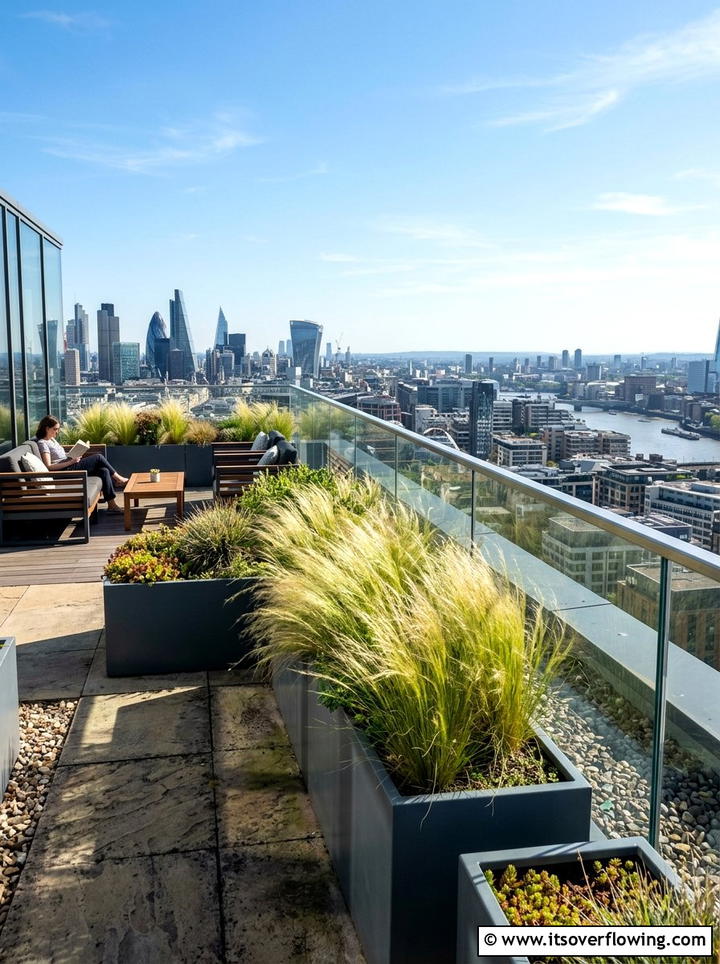
Using Mexican feather grass in an urban garden is a great way to add delicate texture and a sense of wildness to a city setting. This grass is famous for its extremely fine, hair-like blades that catch the slightest movement in the air, creating a constant sense of motion. It looks particularly beautiful when planted in long rows or allowed to spill over the edges of modern raised planters or balconies. Because it is highly drought-tolerant, it can survive the reflected heat from city sidewalks and buildings without much trouble. The golden-tan color of the mature seed heads adds a warm, rustic touch to the often-cold urban architecture.
19. Winter garden with dried ornamental grass
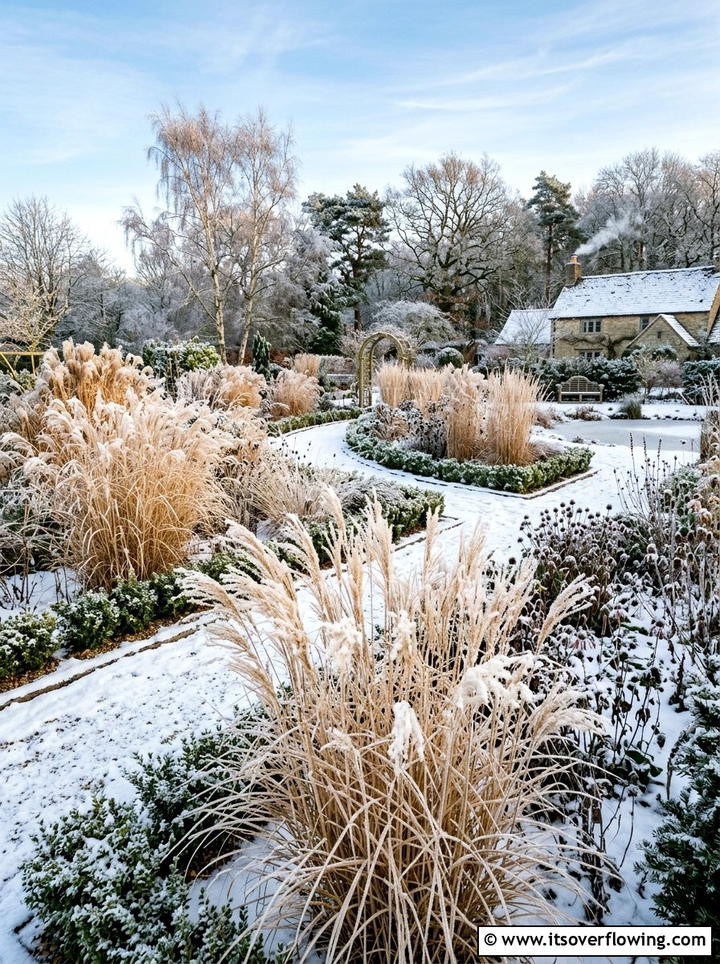
Designing a winter garden with dried ornamental grass ensures that your outdoor space remains attractive even after the first frost has killed other plants. Most grasses should not be cut back until early spring, as their dried stalks and seed heads provide essential structure and golden color during the snowy months. The contrast of brown, amber, and tan grasses against a white snow-covered landscape creates a serene and poetic atmosphere in the backyard. These standing stalks also provide vital shelter and nesting material for local birds and beneficial insects during the coldest part of the year. It turns a normally barren season into a time of quiet beauty.
20. Wildflower meadow with native grasses
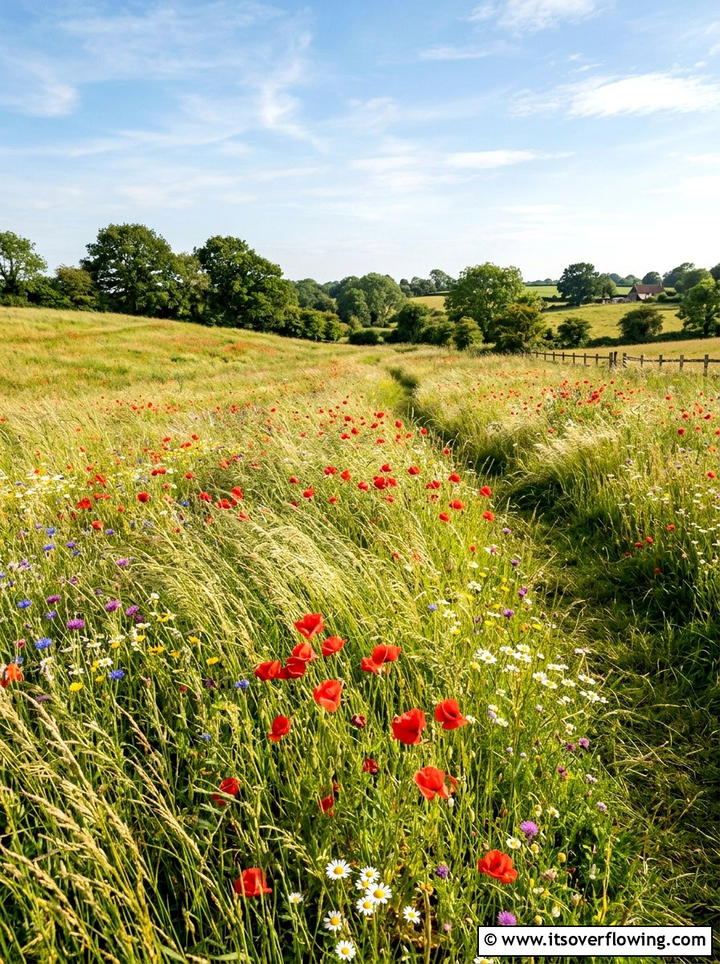
A wildflower meadow with native grasses is a fantastic alternative to a high-maintenance lawn, offering a beautiful and ecologically friendly outdoor environment. By mixing grasses like side-oats grama or buffalo grass with local wildflowers, you create a self-sustaining ecosystem that requires very little water or mowing. This type of landscape changes constantly throughout the spring and summer, providing a rotating show of colors and textures that delight the senses. The grasses serve as the “matrix” that holds the flowers in place and provides year-round ground cover to prevent weed growth. It is a perfect solution for large properties or areas where you want a natural look.
21. Shade garden with Japanese sedge
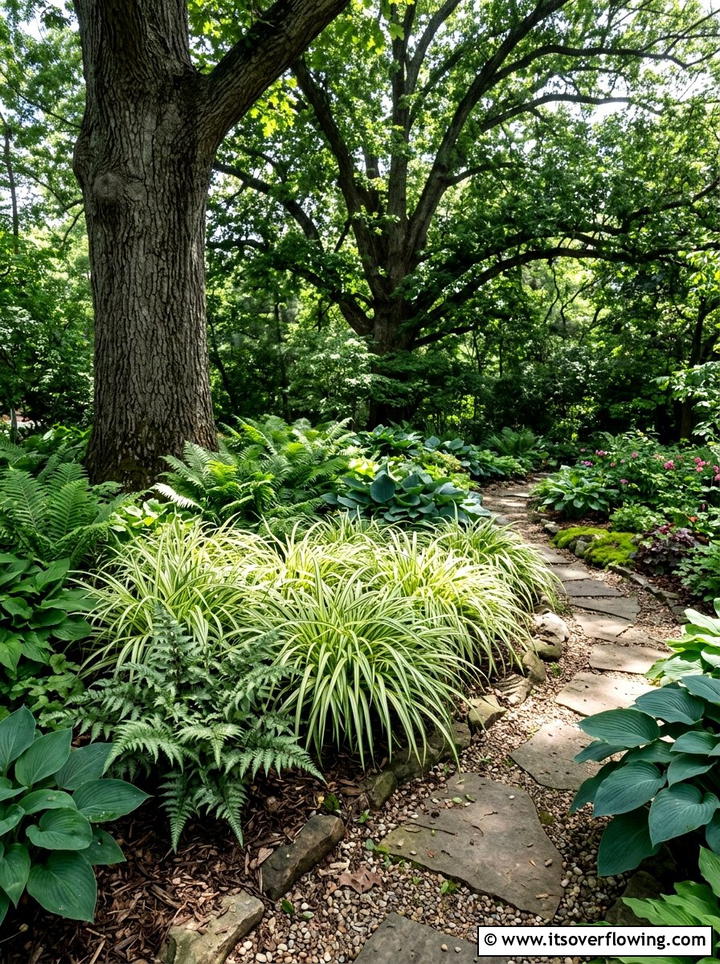
Developing a shade garden with Japanese sedge allows you to bring light and texture to the darker corners of your yard where grass usually fails. Many sedges, particularly variegated varieties with white or yellow stripes, act like little light bulbs that brighten up deep shadows under large trees. Unlike sun-loving grasses, these plants thrive in moist, cool environments and maintain their color throughout the entire growing season. They form neat, arching clumps that look great when planted in groups to create a lush, woodland-style ground cover. This is a very low-maintenance way to handle areas that are often difficult to plant with traditional lawn or flowers.
22. Side yard path with ornamental grass
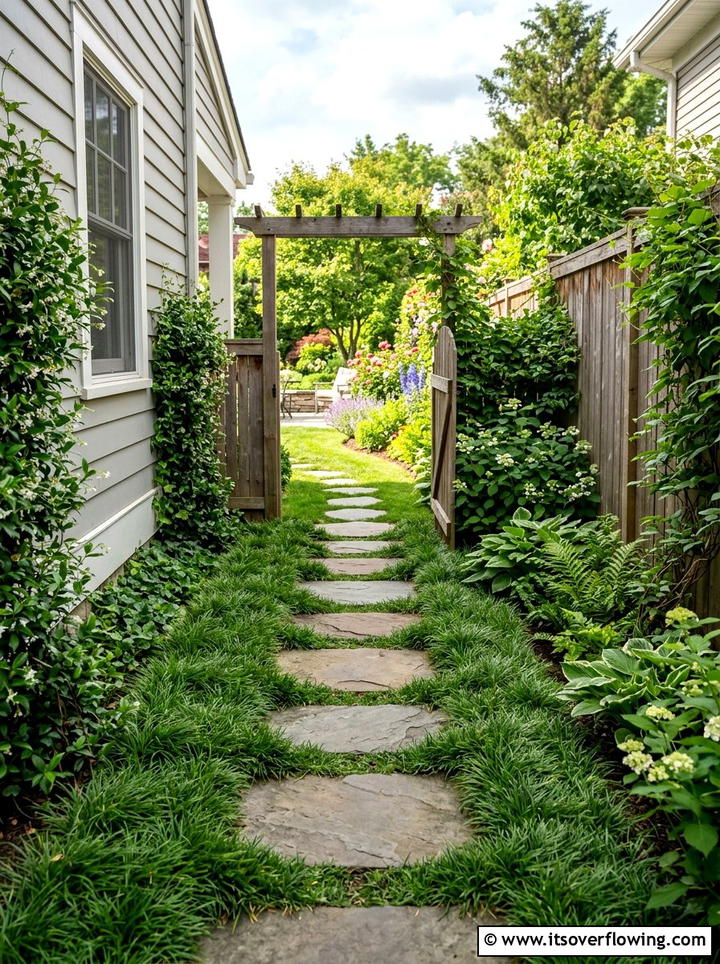
Transforming a side yard path with ornamental grass is an effective way to turn a neglected, narrow space into a beautiful transition area. Side yards are often cramped and shadowed, but varieties like sweet flag or mondo grass can handle these conditions while providing a clean, green look. You can place stepping stones in the center and surround them with soft tufts of grass to create a path that feels like a secret garden walkway. The verticality of taller grasses can also help hide air conditioning units or utility meters that are often located in these side areas. It makes the journey from the front to the back yard more pleasant.
23. Contemporary garden with mass planted grass
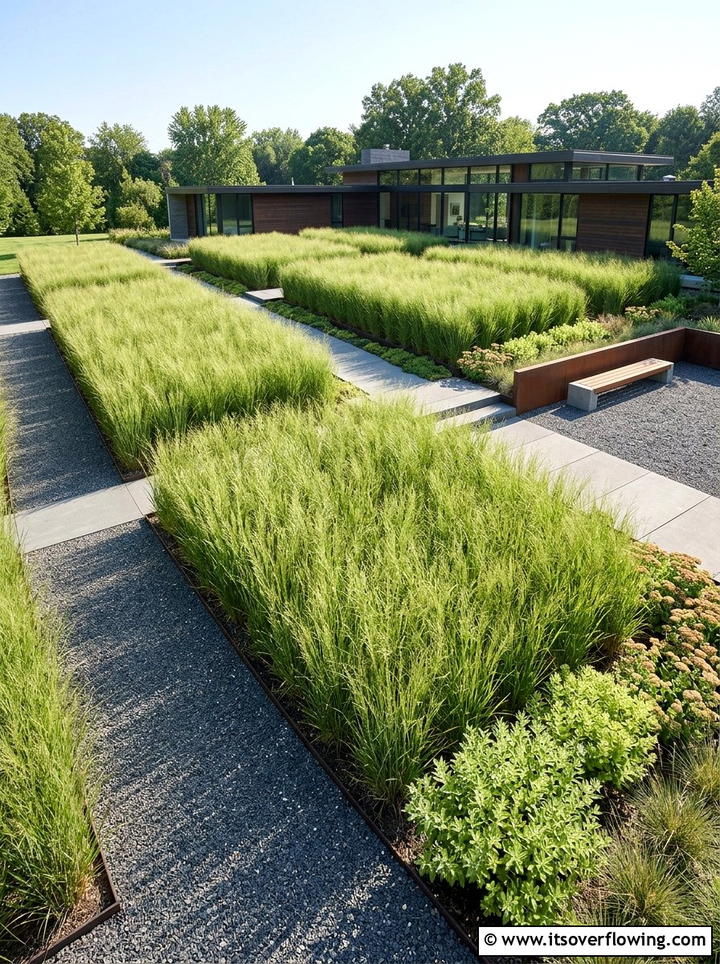
A contemporary garden with mass planted grass uses the power of repetition to create a high-impact and sophisticated landscape design. Instead of planting many different species, you choose one or two varieties and plant them in large, sweeping drifts across the entire yard. This technique creates a sense of unity and rhythm that is very pleasing to the eye and mimics the look of high-end commercial landscapes. It is a very efficient way to cover large areas of ground while keeping the overall maintenance requirements to a minimum. The simplicity of mass planting highlights the unique architectural form and texture of the chosen grass species.
24. Bird friendly garden with grass seeds
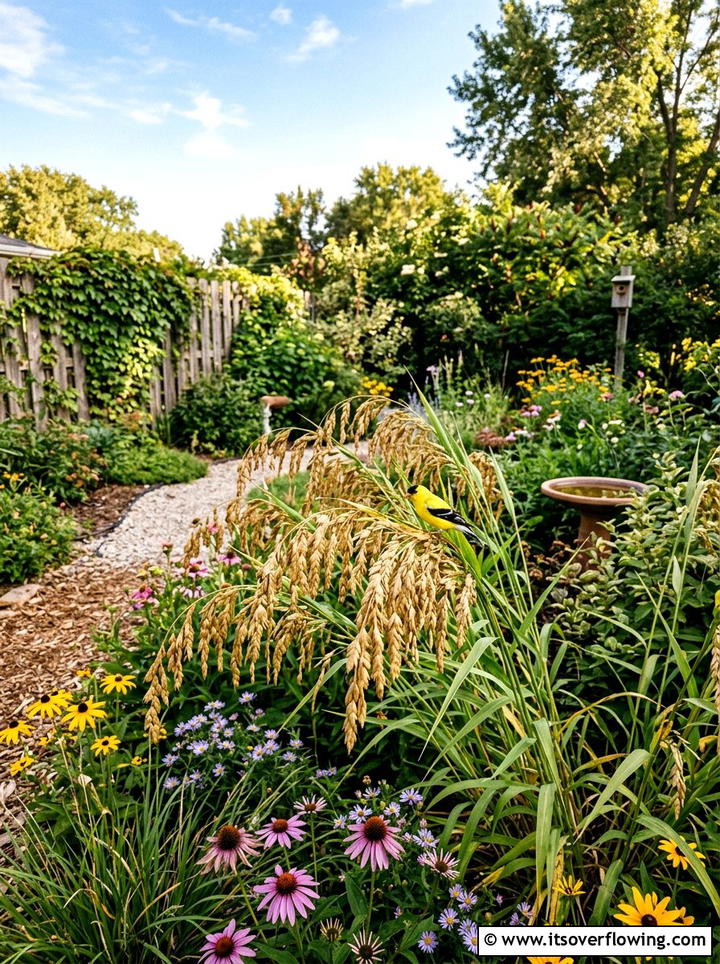
Creating a bird friendly garden with grass seeds is a wonderful way to invite local wildlife into your yard while enjoying beautiful scenery. Many ornamental grasses produce abundant seed heads that serve as a natural food source for finches, sparrows, and other small songbirds during the fall. By leaving the grasses standing through the winter, you provide both food and a safe place for birds to hide from predators and harsh weather. Grasses like switchgrass or northern sea oats are particularly known for their attractive seed clusters that birds find irresistible. This design choice adds a layer of life and activity to your garden that is very rewarding.
25. Terraced garden with ornamental grass
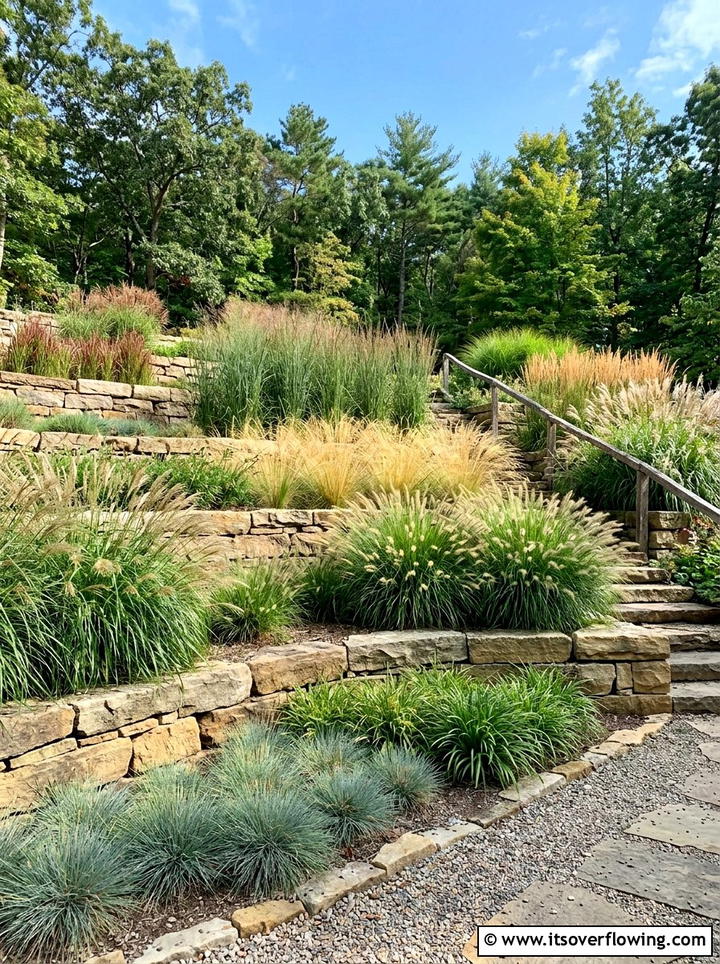
A terraced garden with ornamental grass is a brilliant way to manage steep slopes while creating multiple levels of visual interest in the landscape. Each level of the terrace can be planted with different varieties of grass to create a cascading effect of color and texture down the hillside. Using stone or timber retaining walls provides a hard-edged contrast to the soft, flowing plumes of the plants tucked behind them. This arrangement allows you to plant larger varieties in the back and smaller ones in the front of each terrace for maximum visibility. It turns a difficult gardening challenge into a stunning focal point for the entire property.
Conclusion:
Ornamental grasses offer an incredible variety of colors, textures, and heights that can transform any outdoor space into a professional-looking sanctuary. Their low-maintenance nature and high resilience make them a top choice for modern homeowners who want a beautiful garden without spending every weekend doing chores. Whether you use them for privacy, as a soft border, or as the main event in a minimalist courtyard, these plants bring life and movement to the landscape. By selecting the right varieties for your specific climate and light conditions, you can enjoy a garden that looks stunning throughout every season of the year. Embrace the simple elegance of grasses and let them redefine your outdoor living experience.

Related posts:
 25 Garden Design Ideas With Native Grasses for Natural Style
 25 Garden Design Ideas With Rock Gardens for Natural Texture
 25 Garden Design Ideas With Texture for a Lush Yard Look
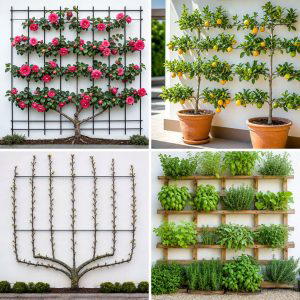 25 Creative Garden Ideas With Espalier Trees for Style
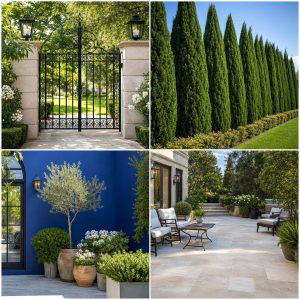 25 garden ideas for mediterranean style: Sunny Yard Looks
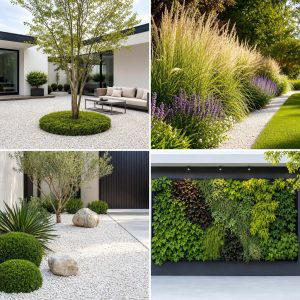 25 garden ideas for minimalist style: Clean Outdoor Looks
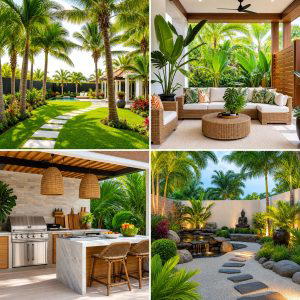 25 Garden Ideas for Tropical Style to Brighten Your Yard
 25 Small Garden Ideas for Full Sun With Bright, Bold Style
 25 Small Garden Ideas on a Budget for Beautiful Outdoor Style
 25 Small Garden Ideas With Container Clusters for Bold Style
 25 small garden ideas with succulents for Low-Maintenance Style
 25 small garden ideas with zen style for Calm Outdoor Living