
Transforming your outdoor space often requires a bit of vertical thinking, especially when you are working with a limited footprint or narrow side yards. Espalier trees are a brilliant solution for gardeners who want to combine the productivity of an orchard with the elegance of formal landscaping. This ancient technique involves training woody plants to grow flat against a wall or trellis, creating a stunning living tapestry that changes with the seasons. By focusing on structure and form, you can turn a plain brick wall into a focal point or create a functional privacy screen that produces fresh fruit. Let’s dive into these creative ways to integrate flat-grown trees into your personal garden sanctuary.
1. Espalier fruit trees on fence
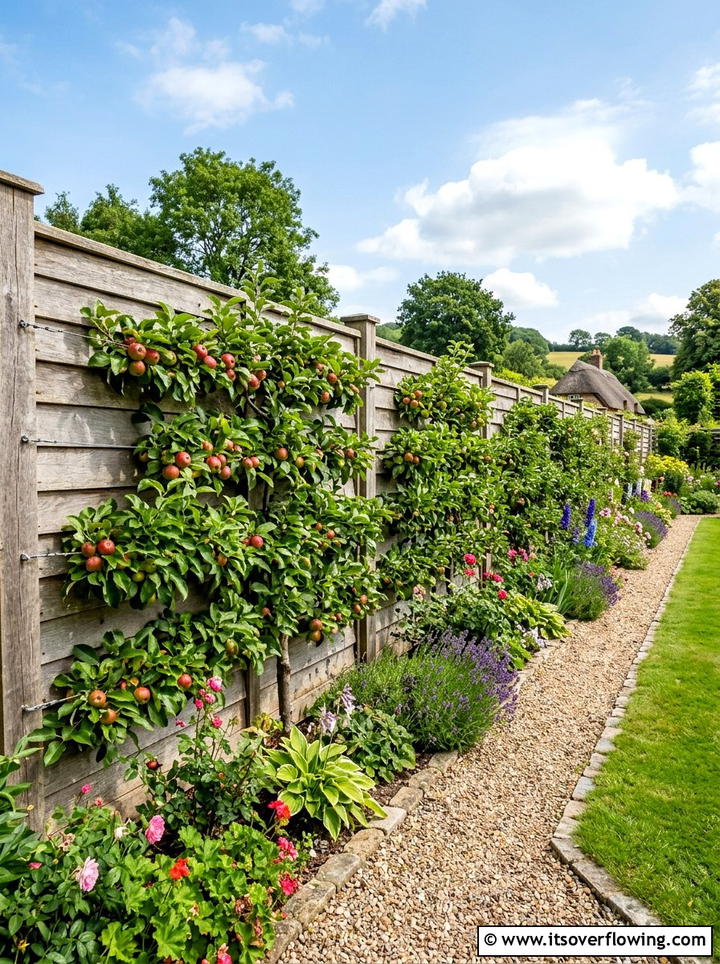
Imagine walking along your property line and plucking a ripe apple directly from a living fence. Training fruit trees against a wooden or wire fence is one of the most practical ways to maximize harvest in a narrow side yard. You can use simple horizontal wires to guide the branches, creating a neat and organized look that replaces a boring wooden barrier. This method allows plenty of sunlight to reach the fruit, which often results in a higher quality yield than traditional bush trees. It is a fantastic way to define your boundaries while adding a delicious, edible element to your daily outdoor experience and overall landscape design.
2. Belgian fence espalier
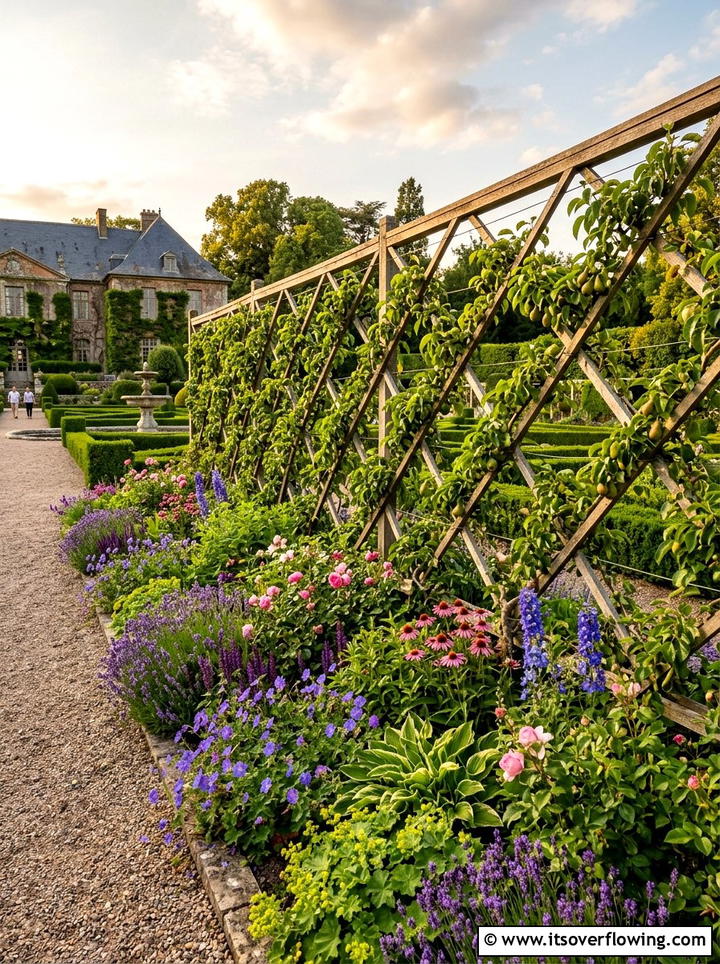
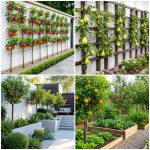
Have you ever seen a garden wall that looks like a beautiful diamond lattice made entirely of living wood? The Belgian fence is a sophisticated style where several trees are planted in a row and trained to cross each other at 45-degree angles. This creates a stunning woven effect that provides a medium level of privacy while still letting light and air flow through the branches. It works exceptionally well for pear or apple trees and acts as a sophisticated backdrop for lower-growing perennial flowers. Setting this up requires patience and careful pruning, but the architectural result is a true masterpiece that increases your home’s curb appeal.
3. Cordon espalier apple tree
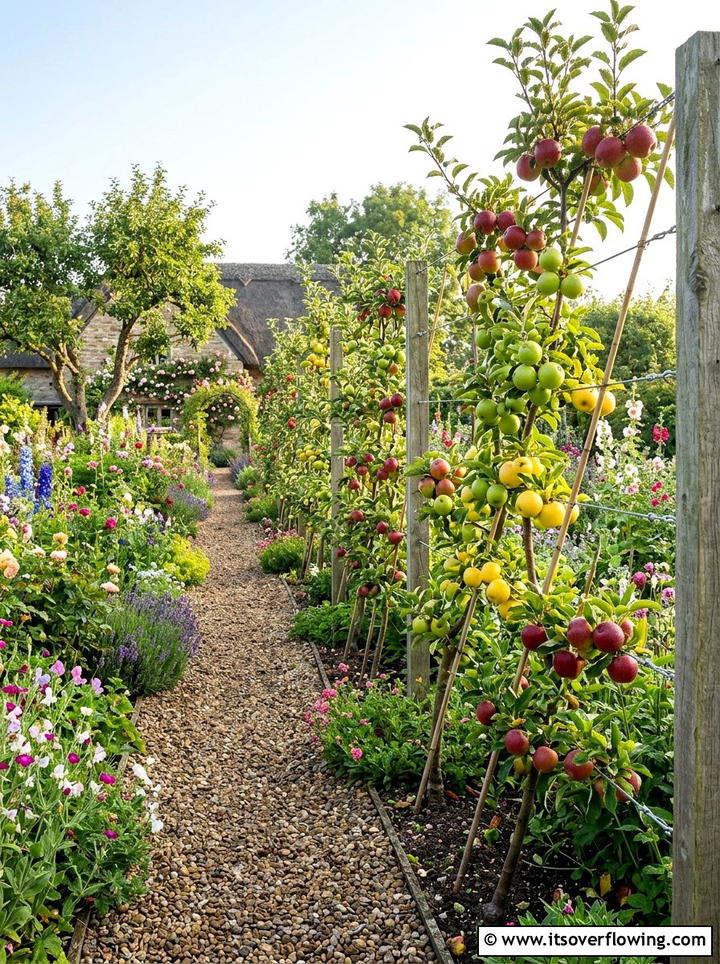
Are you looking for a way to grow multiple varieties of apples in a very small space? The cordon style involves a single main stem grown at an angle or vertically, with short fruiting spurs along its length. This is perhaps the simplest form of espalier, making it perfect for beginners who want to try the technique without complex geometry. You can line up several different cordons along a garden path to create a colorful and productive walkway. Because the trees remain compact, they are very easy to manage, prune, and harvest, ensuring you get the most fruit possible from every square inch of soil.
4. Palmette espalier on brick wall
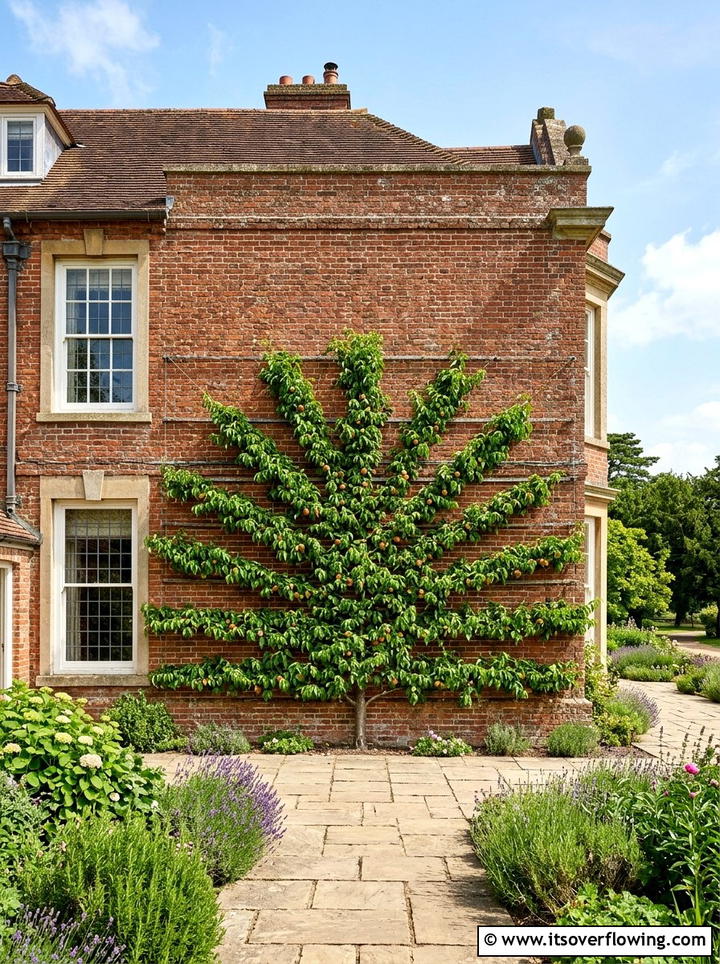
Does your home have a large, blank brick wall that feels a bit cold and uninviting? A palmette-style espalier, which resembles a decorative fan or a hand, can soften the harsh lines of masonry while adding lush greenery. The branches radiate outward and upward from a central trunk, creating a symmetrical and balanced look that feels very traditional. This layout is excellent for heat-loving trees like figs or peaches, as the brick wall absorbs sun during the day and radiates warmth at night. It turns an ordinary structural element into a vibrant, vertical garden that serves as a conversation piece for any guest.
5. Fan shape espalier fruit tree
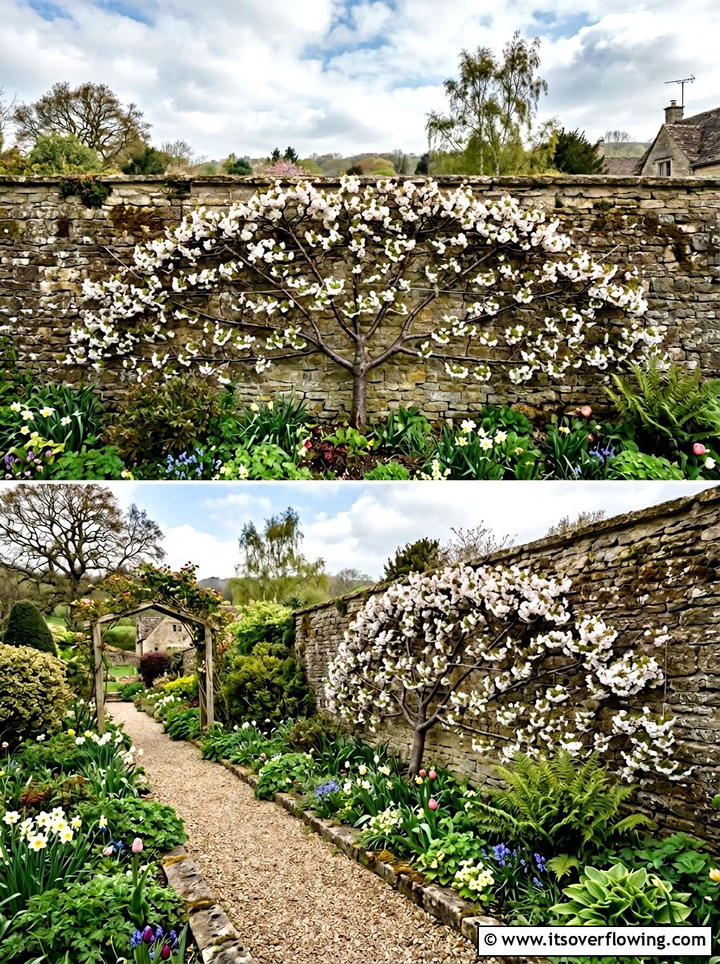
What if you could turn a stone wall into a sprawling display of blossoms and fruit? Fan training is a popular method for stone fruits like cherries, plums, and apricots that do not respond well to horizontal training. The branches are spread out in a wide arc, resembling an open folding fan, which ensures even light distribution across the entire tree. This setup is not only visually striking but also helps prevent diseases by improving air circulation around the foliage. It is a graceful way to cover a large vertical surface while enjoying the delicate spring flowers and heavy summer harvests that these trees provide.
6. Horizontal T espalier
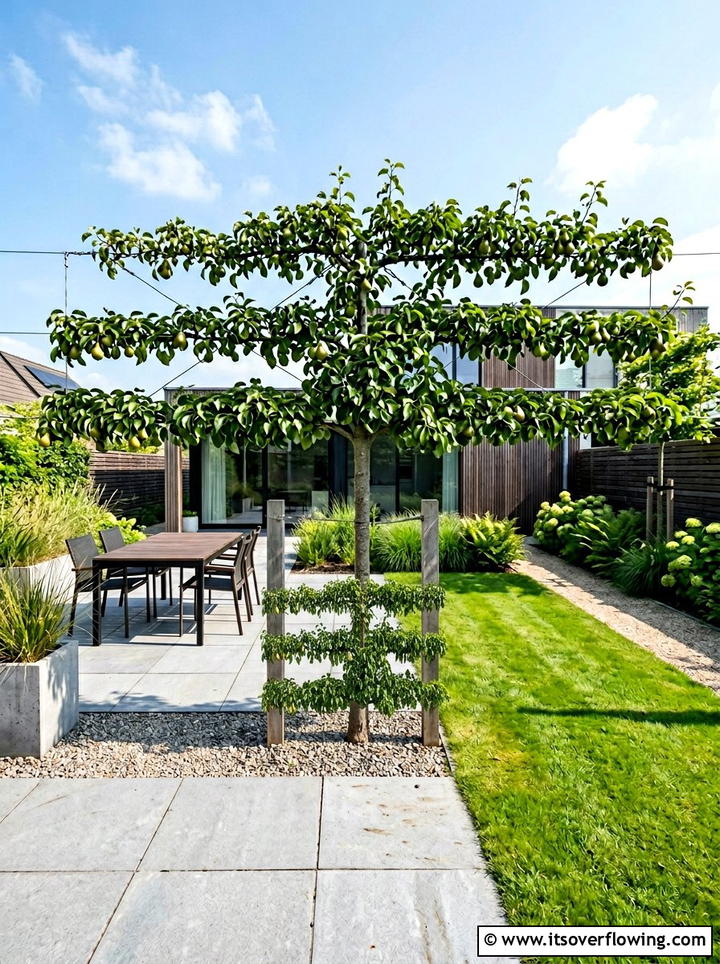
Could a single tree really replace a long section of a traditional garden railing? The horizontal T, or multi-tier espalier, features a central trunk with pairs of branches trained perfectly flat to the left and right. This creates a series of parallel lines that look incredibly clean and modern, fitting well in contemporary garden designs. It is often used to divide different sections of a yard, such as separating a vegetable patch from a seating area. The strong horizontal lines provide a sense of order and calm, making the garden feel more organized while showcasing the natural beauty of the bark and fruit clusters.
7. Espalier privacy screen
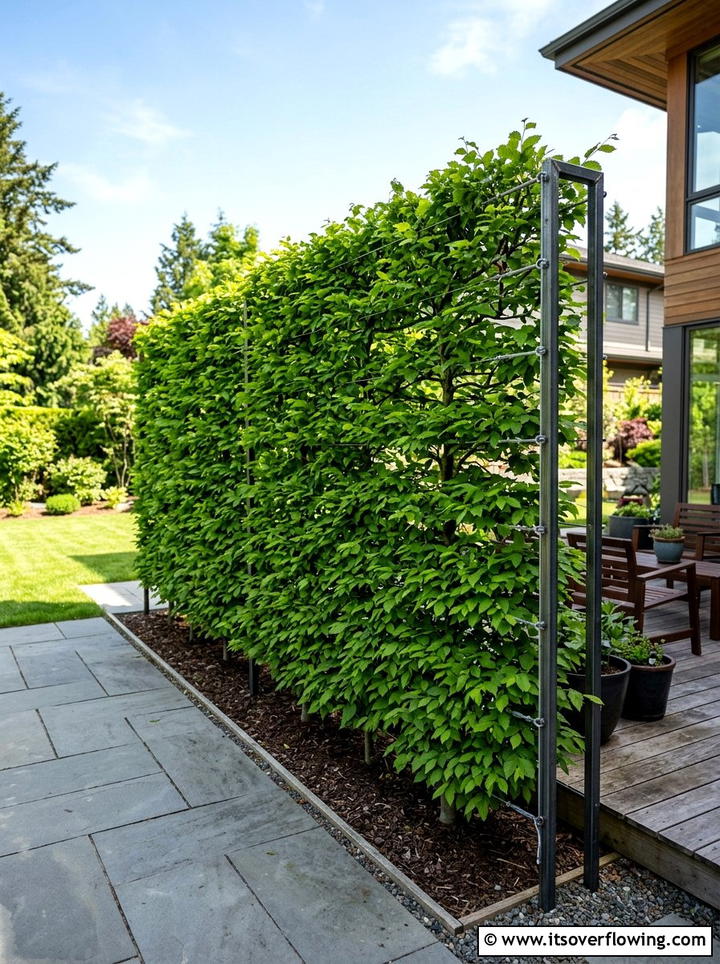
Are you tired of looking at your neighbor’s driveway or a nearby utility box? Creating a privacy screen with espaliered evergreens or densely branched deciduous trees offers a much more beautiful alternative to a standard plastic or wood fence. By using a free-standing post and wire system, you can grow a “green wall” that blocks unwanted views without feeling bulky or claustrophobic. Trees like camellias or hornbeams are excellent choices for this purpose because they hold their shape well and provide thick foliage. This living screen changes throughout the year, offering flowers, lush leaves, and interesting branch patterns that a static fence simply cannot match.
8. Espalier trees for small gardens
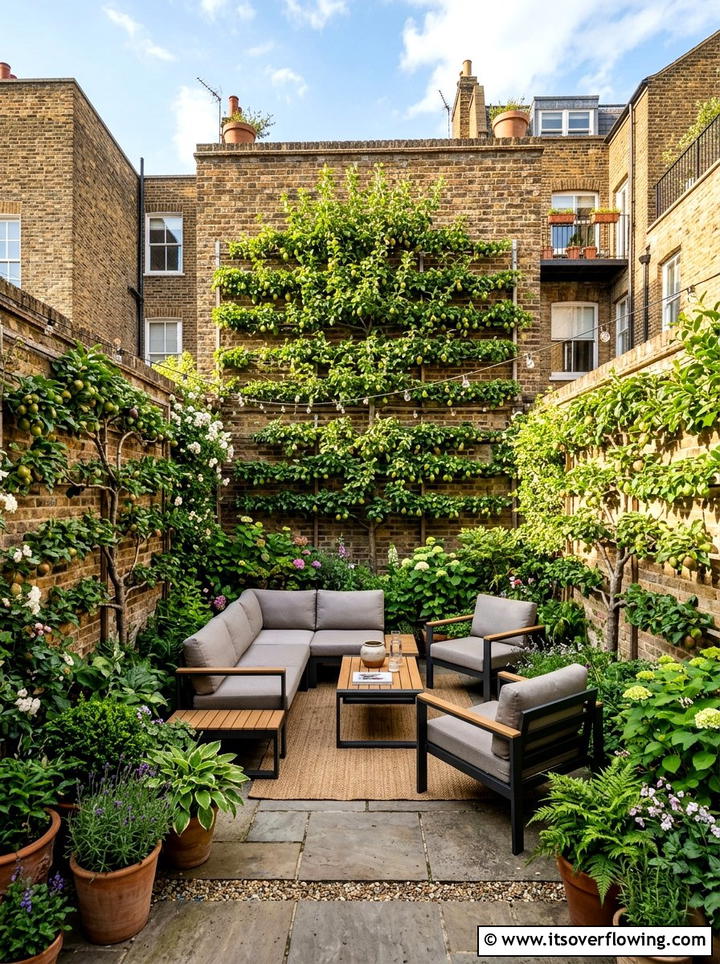
Do you feel like you have to choose between a patio and a garden because your yard is too tiny? Espaliering allows you to have both by moving your greenery onto the vertical plane, leaving the ground clear for furniture or pathways. Even the smallest urban courtyard can host a variety of trees when they are trained to grow just a few inches thick. You can plant them in narrow raised beds or even right against the foundation of your house. This space-saving technique brings the beauty of nature into cramped quarters, proving that you do not need a massive estate to enjoy the elegance of a well-tended orchard.
9. Camellia espalier on trellis
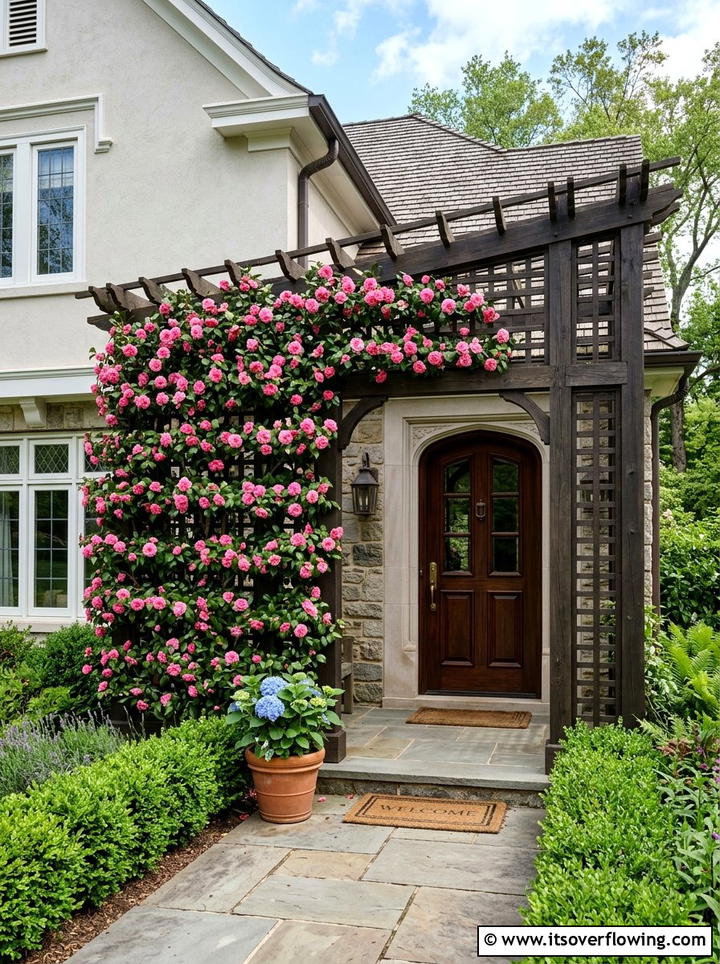
Have you considered using flowering shrubs instead of traditional fruit trees for your vertical garden? Camellias are a top choice for espalier because their naturally flexible branches are easy to guide onto a wooden or metal trellis. In the winter and early spring, when the rest of the garden might look dull, the camellia bursts into life with vibrant pink, red, or white blooms. Their glossy evergreen leaves provide year-round interest and a rich, dark backdrop for other plants. Training them against a trellis near an entryway creates a luxurious, welcoming atmosphere that feels like a high-end botanical garden right at your front door.
10. Citrus espalier in pots
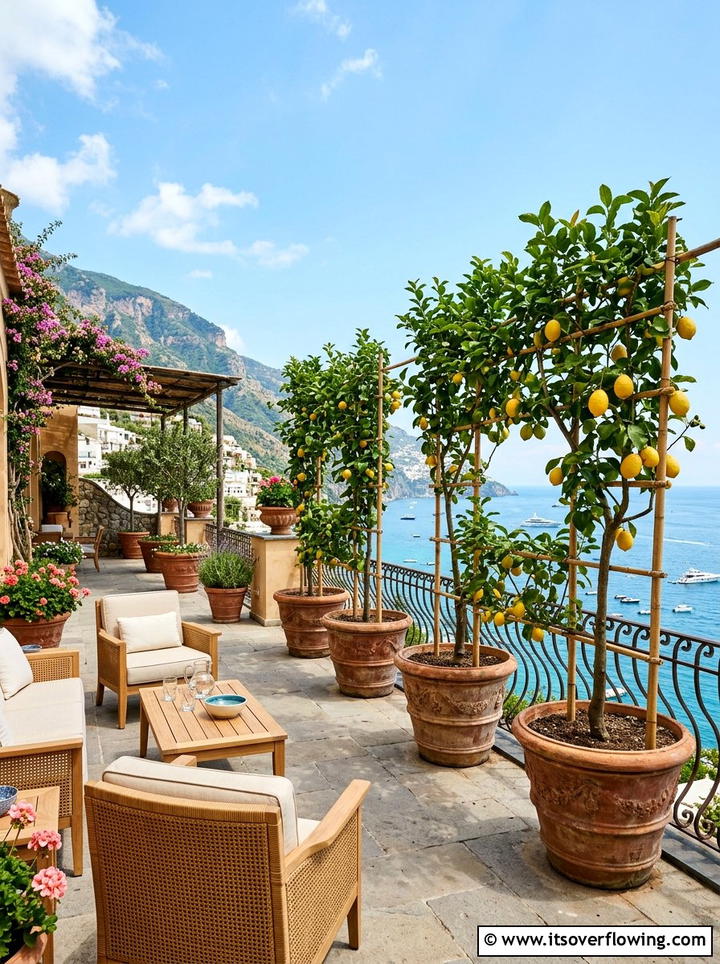
Can you imagine picking fresh lemons or limes from a tree that sits flat against your balcony wall? Espaliering citrus trees in large containers is a game-changer for people with limited outdoor space or those living in colder climates. By training the citrus onto a small frame within the pot, you keep the plant manageable and portable. This allows you to move the tree indoors during the winter while still maintaining its artistic, flat shape. The bright yellow or orange fruit against the waxy green leaves provides a stunning tropical vibe, and the fragrant blossoms will perfume your entire seating area with a sweet, refreshing scent.
11. Espalier pear tree archway
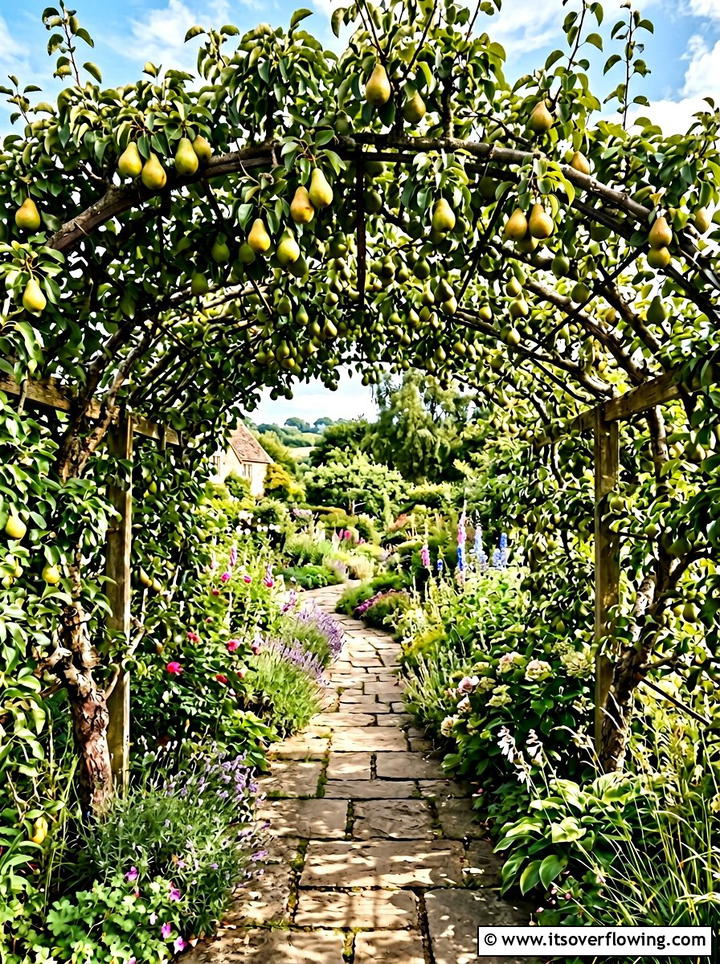
What could be more magical than walking through an archway made entirely of living pear trees? By planting two espaliered trees on either side of a path and training their top branches to meet in the middle, you can create a romantic garden tunnel. Pears are particularly suited for this because their wood is quite flexible when young and they produce beautiful white flowers in the spring. As the fruit hangs down from the top of the arch, it becomes incredibly easy to reach and pick. This architectural feature adds height and mystery to your landscape, drawing people forward to explore the rest of your beautiful outdoor space.
12. Stepover espalier apple tree
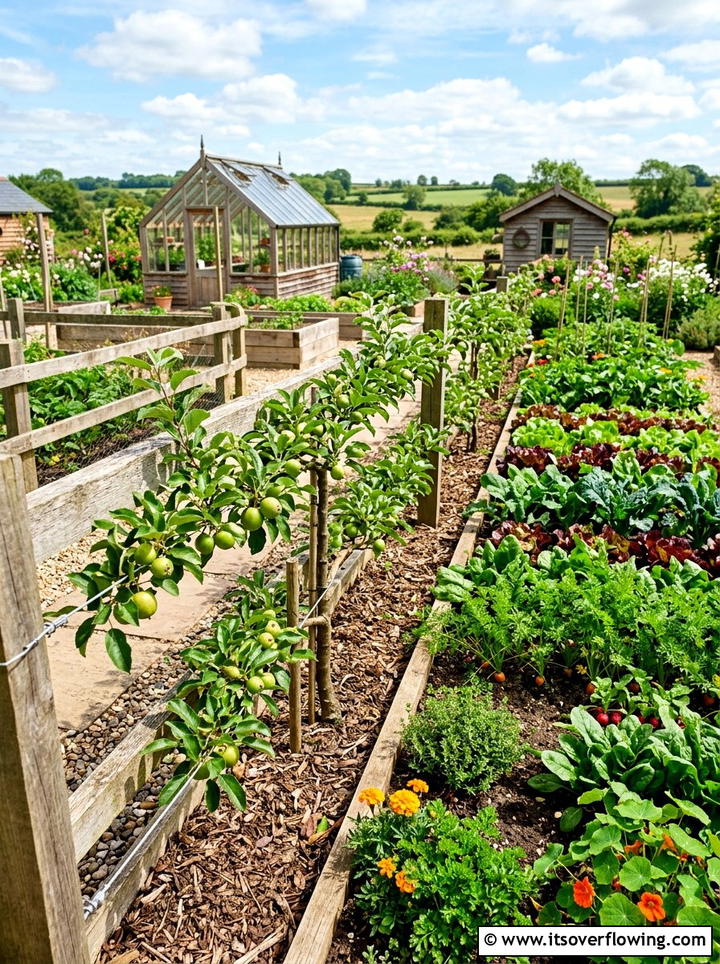
Are you looking for a unique way to edge your garden beds without using traditional timber or stone? A “stepover” espalier is a tree trained to have a very short trunk, with branches extending horizontally only about a foot off the ground. It creates a living low-level border that you can literally step over to reach your plants. This is a brilliant way to incorporate fruit production into a flower border or kitchen garden without shading out smaller herbs or vegetables. It defines the space beautifully and provides a surprising element that visitors will find fascinating, especially when the low branches are laden with colorful apples.
13. Pyracantha espalier for birds
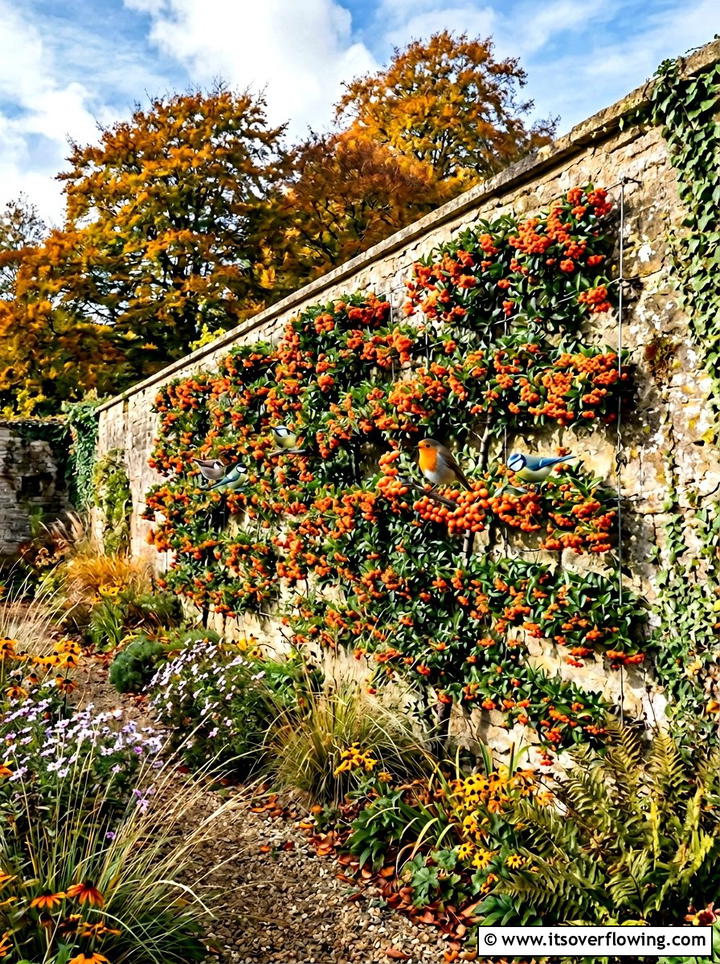
Would you like to attract more wildlife to your garden while adding a splash of intense autumn color? Pyracantha, also known as firethorn, is a vigorous grower that looks spectacular when trained flat against a wall or sturdy fence. In the spring, it is covered in clouds of white flowers, but the real show starts in the fall when it produces massive clusters of bright red or orange berries. These berries are a vital food source for birds during the colder months. The dense, thorny branches also provide a safe nesting site. It is a tough, hardy plant that brings life and movement to your vertical garden surfaces.
14. Espalier fig tree against house
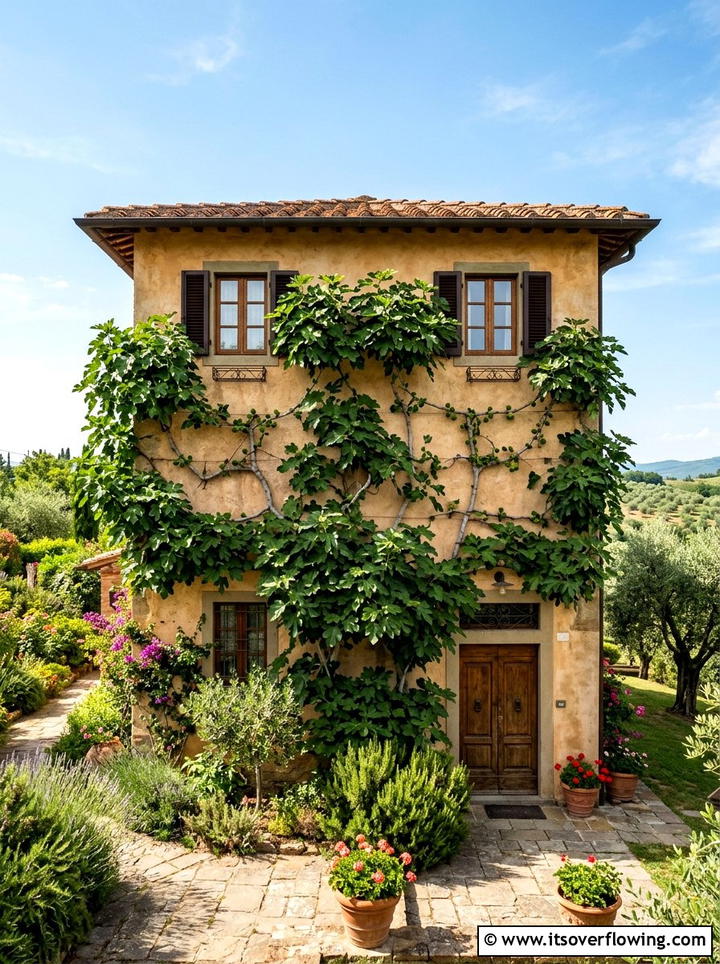
Do you have a sunny, south-facing wall on your house that gets quite hot in the summertime? A fig tree is the perfect candidate for this spot because it thrives in the reflected heat provided by the siding or brick. Fig leaves are large and architectural, creating a bold, Mediterranean look when spread out in an espalier pattern. Because figs can grow quite vigorously, training them flat helps keep their size under control and makes it much easier to protect the fruit from hungry birds. The combination of the prehistoric-looking foliage and the sweet, ripening fruit adds a touch of exotic luxury to any home exterior or garden.
15. Modern metal trellis espalier
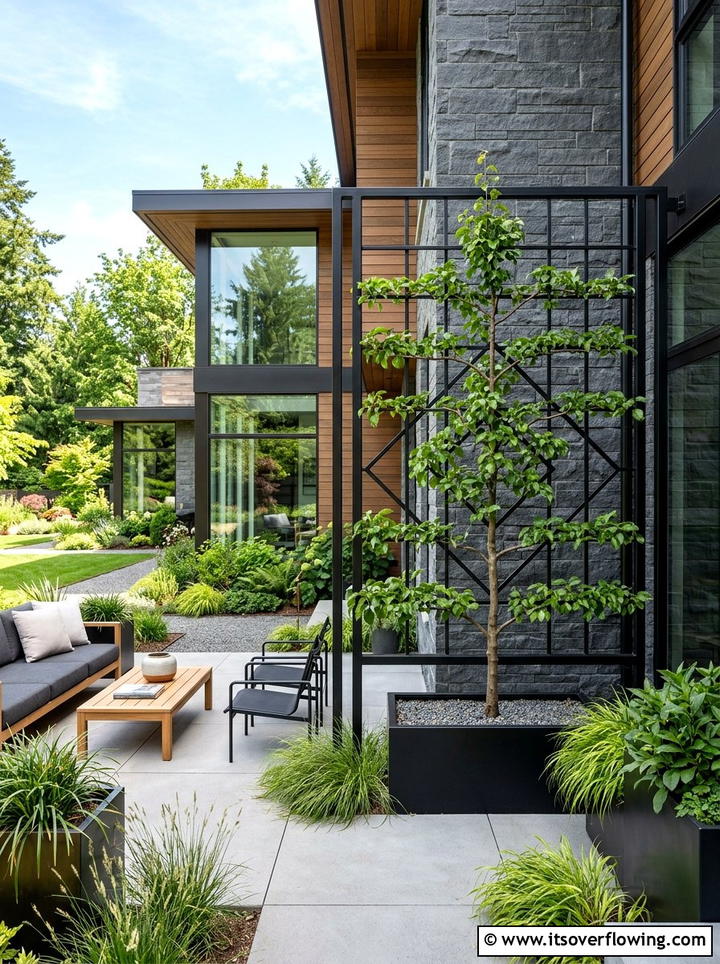
Are you trying to find a way to incorporate trees into a very sleek, contemporary garden design? Using a minimalist metal trellis system provides a sharp contrast to the organic shapes of the growing branches. Stainless steel cables or black iron frames can be used to create geometric patterns that look like modern art even during the winter when the leaves have fallen. This approach highlights the skeletal structure of the tree, emphasizing the skill involved in the training process. It is a clean and sophisticated way to add greenery to a modern patio or courtyard without introducing the rustic look of traditional wooden supports.
16. Espalier rose on garden wall
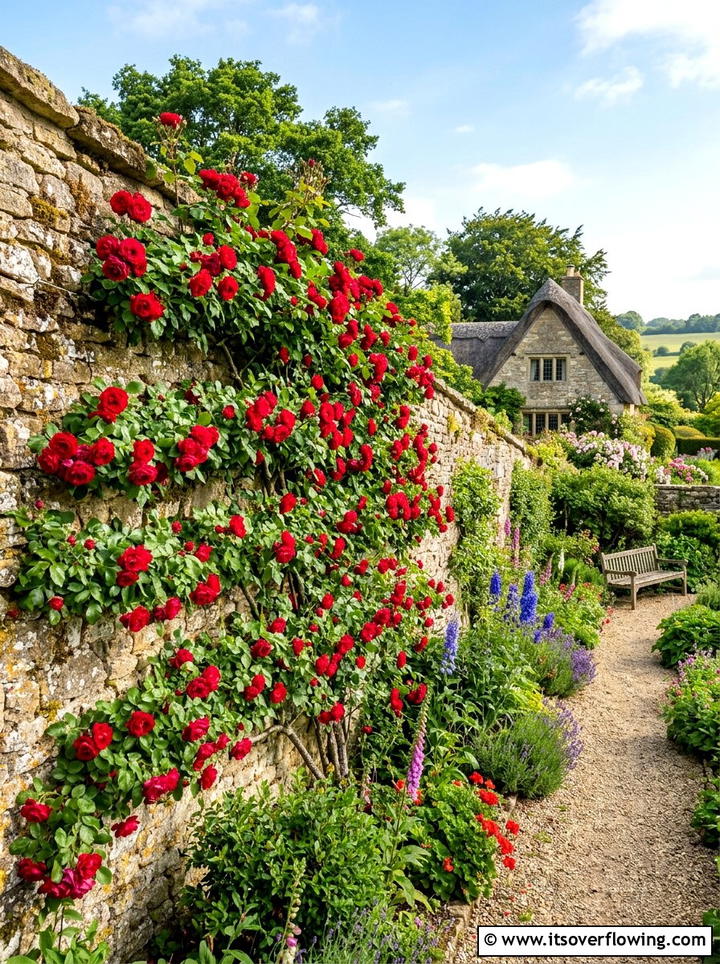
Can you imagine a solid wall of fragrant roses that only takes up a few inches of ground space? While we often think of “climbing” roses, training a vigorous rose bush in a formal espalier pattern creates a much more controlled and tidy appearance. By guiding the canes horizontally, you encourage more flower-bearing side shoots to grow, resulting in a more profuse display of blooms from the bottom to the top of the wall. This technique prevents the “leggy” look where all the flowers are at the very top of the plant. It turns a garden wall into a vertical carpet of color and incredible perfume.
17. Double U shape espalier
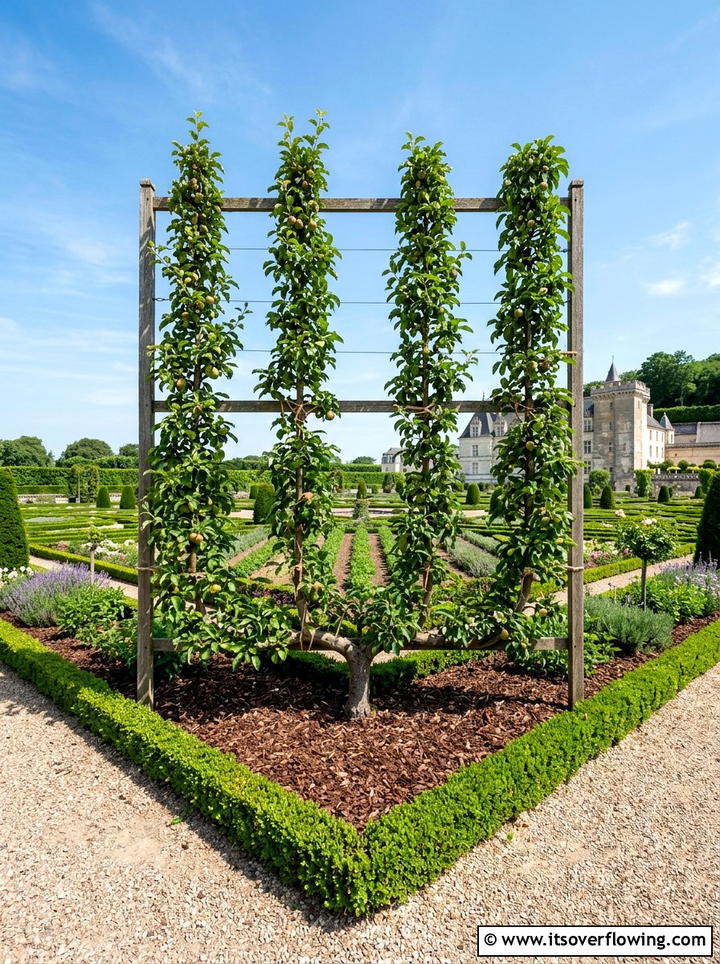
Have you ever wanted a garden feature that looks like a living candelabra or a piece of formal sculpture? The double U shape is a classic European espalier design where the main trunk splits into two, and each of those branches splits again to grow vertically. This creates four perfectly upright parallel branches that look very formal and symmetrical. It is a high-impact design that works beautifully as a standalone feature in the center of a courtyard or as a repeating pattern along a long wall. This style requires a bit more technical skill to maintain the perfect symmetry, but the visual reward is absolutely worth the effort.
18. Verrier candelabra espalier
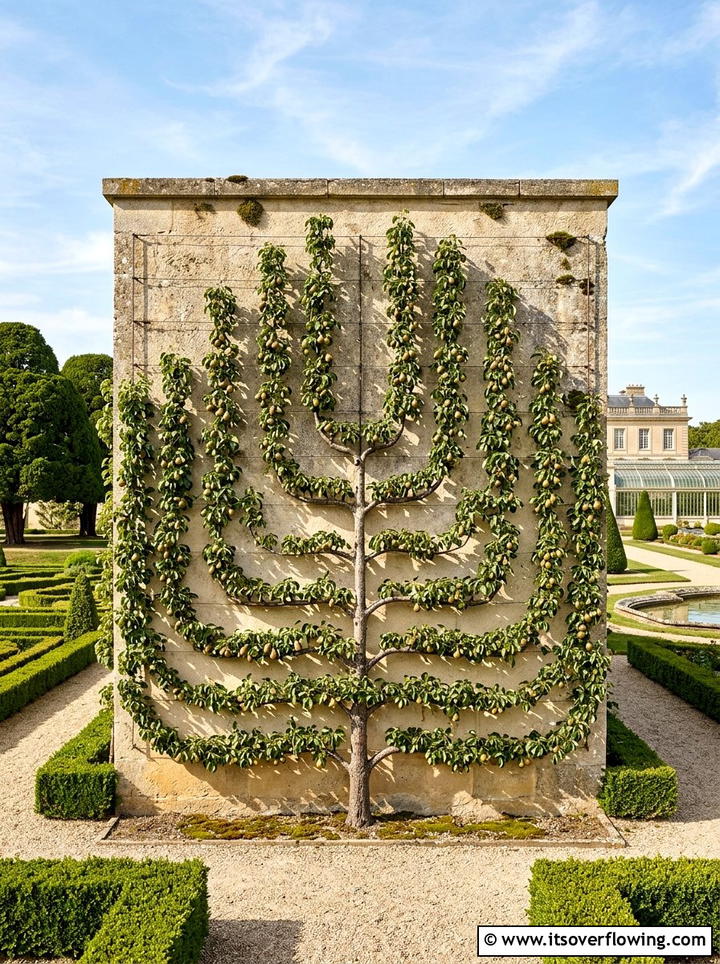
Is your goal to create a garden that feels like a historic French estate or a royal palace? The Verrier candelabra is one of the most complex and beautiful espalier forms, featuring multiple “U” shapes nested inside each other. It creates a series of vertical lines that are connected at the bottom, resembling a grand multi-armed candle holder. This design is exceptionally good at showing off the fruit, as each vertical branch gets equal access to sunlight and air. Because it is so decorative, it serves as a powerful focal point that can define the entire aesthetic of your garden, giving it a sense of history and refined craftsmanship.
19. Espalier trees for north facing wall
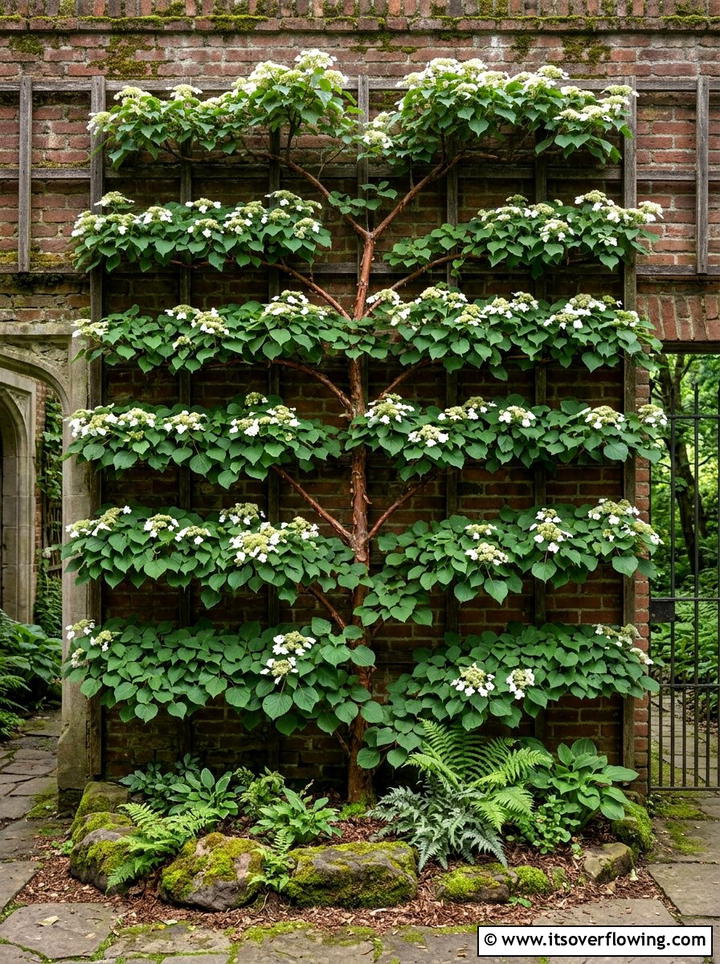
Do you have a shady side of your house where nothing seems to grow well? Choosing the right species, such as some varieties of plums or certain ornamental shrubs like hydrangea anomala, can allow you to enjoy espalier even in lower light. These trees can be trained to cover the cool wall, providing a lush green backdrop where other plants might struggle to survive. The key is selecting plants that naturally tolerate partial shade and using a lighter-colored wall to reflect what little light is available. It is a smart way to bring life to the “forgotten” parts of your yard that usually stay hidden in the shadows.
20. Free standing espalier trellis
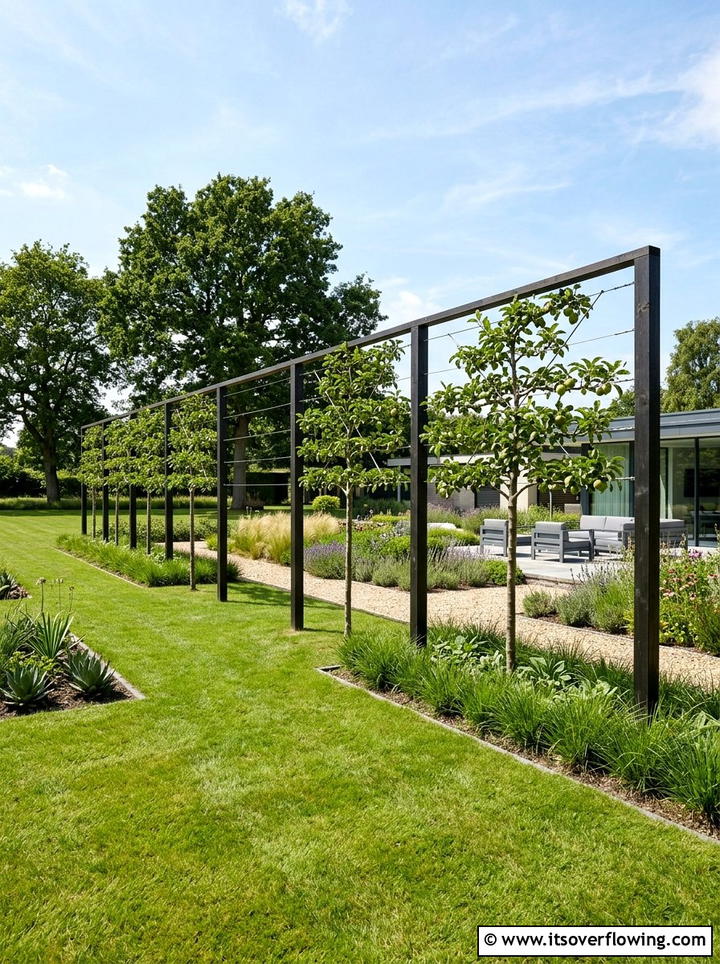
What if you want the look of an espalier but don ‘t have a wall or a fence to use as a support? A free-standing trellis system allows you to plant your trees anywhere in the garden, such as in the middle of a lawn or as a divider for an outdoor “room. ” By installing sturdy posts and high-tension wires, you create a transparent wall that supports the tree while allowing you to see through to the rest of the garden. This is a popular choice for create an edible “hedge” that doesn’ t block the view entirely. It adds a layer of depth and architectural interest to an open landscape.
21. Espalier herb garden backdrop
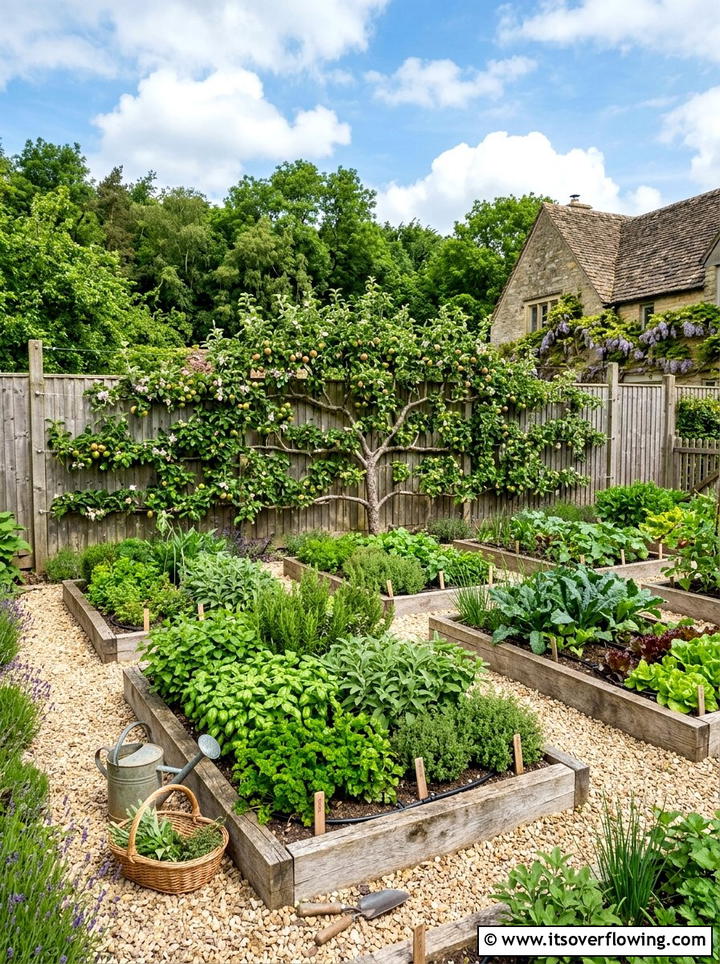
Could your raised herb beds benefit from a beautiful and productive living background? Planting espaliered fruit trees behind a collection of rosemary, lavender, and sage creates a layered, multi-dimensional garden that is both functional and aesthetic. The height of the trees provides a sense of enclosure for the smaller herbs, while the different textures of the foliage create a rich, tapestried look. This combination is a classic element of “potager” or kitchen garden design, where beauty and utility go hand in hand. It makes the act of gathering ingredients for a meal feel like a stroll through a miniature, well-organized woodland.
22. Magnolia espalier for shade
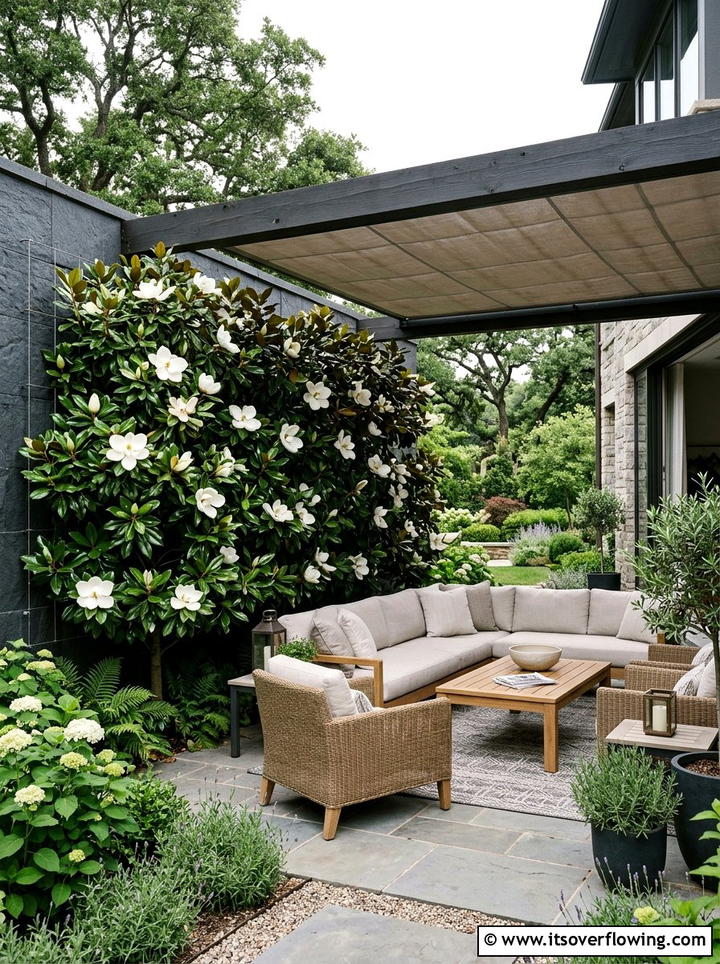
Have you ever wanted the giant, creamy blossoms of a magnolia but felt you didn’t have the space for a massive, spreading tree? Magnolia grandiflora can be successfully espaliered, allowing you to enjoy its massive flowers and thick, leathery leaves against a flat surface. This is particularly effective for creating a sense of privacy in a shaded patio area. The large leaves provide excellent sound dampening and a cool, tranquil atmosphere. When the flowers bloom, their intoxicating citrus-like scent will fill the air, creating a luxurious sensory experience in a compact footprint. It is a bold choice that adds instant drama and sophistication to your home.
23. Espalier trees lining walkway
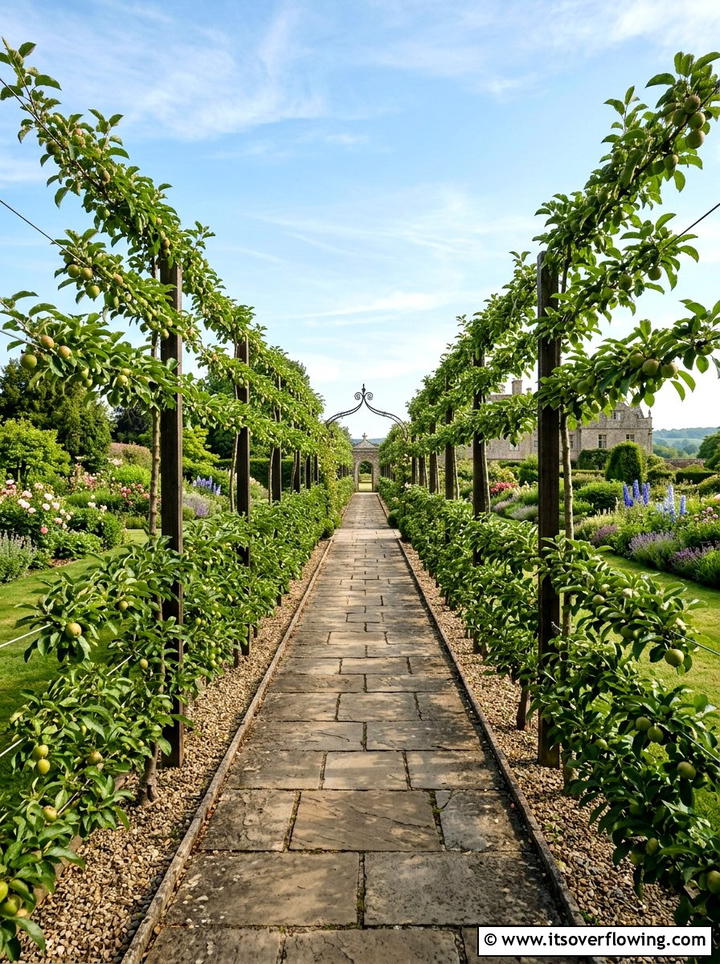
How can you make a simple path through your yard feel like a grand entrance to a secret estate? Lining both sides of a walkway with perfectly pruned espalier trees creates a sense of rhythm and ceremony. As you walk between the flat-grown trees, you are surrounded by greenery and ripening fruit at eye level. This approach uses verticality to frame the view and guide the visitor’s gaze toward a destination, like a bench or a fountain. It is a highly effective way to make a transition area feel like a destination itself, proving that even a narrow passage can be a highlight of your garden.
24. Drape espalier on balcony
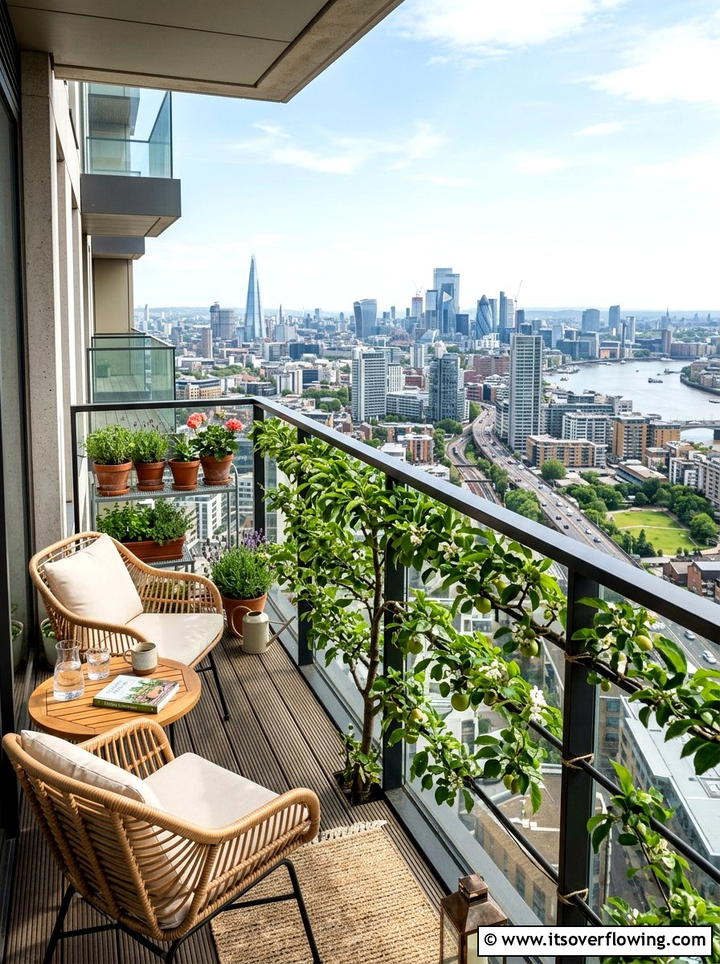
Do you live in an apartment and wish you could have a real tree on your small balcony? A “drape” or “weeping” style of espalier involves training branches to grow along a railing and then allowing some of them to spill over slightly. This softens the hard edges of the balcony and provides a bit of a screen from the street below. Using a lightweight trellis attached to the railing, you can support a small fruit tree or a flowering vine. It brings a touch of nature to an urban environment, providing a private green nook where you can enjoy your morning coffee while surrounded by living leaves.
25. Flowering cherry espalier
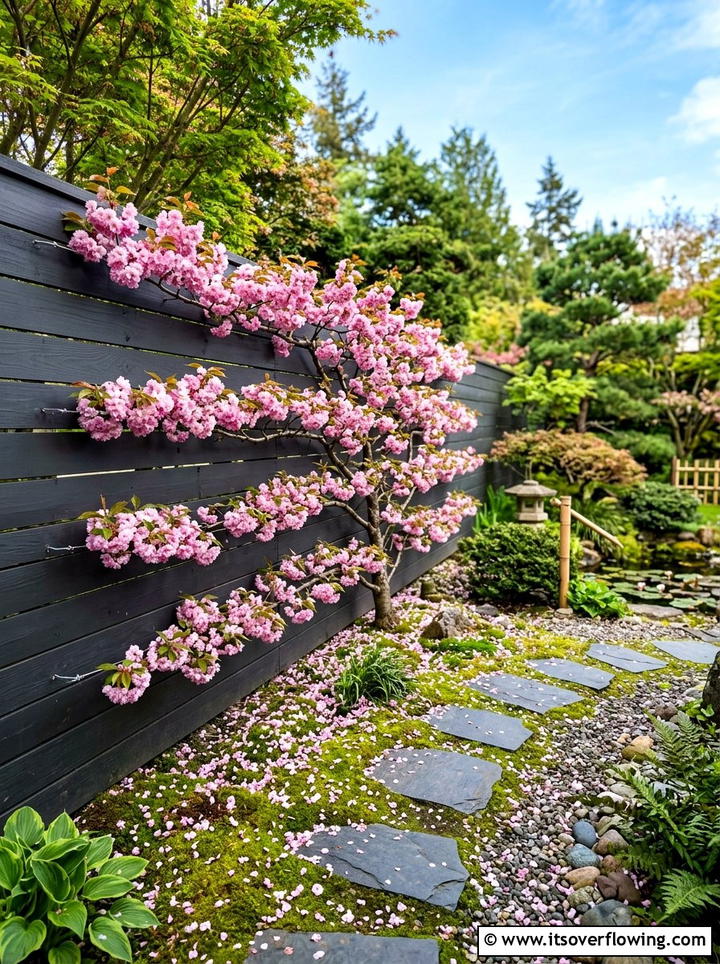
Can you imagine the ethereal beauty of cherry blossoms concentrated into a perfect, flat wall of pink or white? Ornamental cherries are often overlooked for espalier, but they are incredibly rewarding because of their spectacular spring display. By training the branches across a dark-colored fence, you create a high-contrast background that makes the delicate petals pop. After the flowers fade, the tree provides a neat screen of green leaves throughout the summer. This is a wonderful choice for gardeners who prioritize visual beauty and want to celebrate the arrival of spring with a dramatic, vertical burst of color that feels like a living painting.
Conclusion:
Building a garden with espalier trees is a journey that combines the art of sculpture with the science of horticulture. These twenty-five ideas demonstrate that no matter the size of your outdoor space, there is a way to incorporate the beauty and productivity of trees. Whether you choose a formal Belgian fence or a simple potted citrus, the key is to start with a clear plan and stay consistent with your pruning. Over time, your efforts will be rewarded with a unique, living structure that provides privacy, fruit, and endless visual interest. We hope these concepts inspire you to look at your walls and fences as the canvas for your next great gardening adventure.

Related posts:
 25 creative garden ideas with patio fruit trees for Fresh Harvests
 25 garden ideas with fruit trees for Beauty and Harvests
 25 Small Garden Ideas With Dwarf Trees for Big Small-Yard Impact
 25 Creative Garden Ideas for Patios: Fresh Outdoor Style
 25 creative garden ideas with minimal planting palette for Style
 25 creative garden ideas with personalized signs for Unique Style
 25 Creative Garden Ideas With Rain Chains for Serene Style
 25 Creative Garden Ideas With Topiary Shapes for Bold Style
 25 Garden Ideas With Cinder Blocks for Creative Outdoor Style
 25 Garden Ideas With Pallets For Creative Outdoor Style
 25 Creative Garden Ideas With Keyhole Garden Beds
 25 Creative Garden Ideas With Kids Garden Zone