
Topiary brings a unique blend of living art and structured design to any outdoor space, making your garden look instantly more professional and polished. Whether you have a massive backyard or a tiny balcony, adding shaped greenery can transform the entire atmosphere. These creative shapes offer a sense of order and timeless elegance that appeals to both modern and traditional tastes. From whimsical animal forms to sharp geometric figures, topiary allows homeowners to express their personality through nature. Exploring these ideas will help you find the perfect balance between wild growth and disciplined beauty. Let’s dive into these incredible ways to elevate your landscape with stunning shaped plants and creative greenery.
1. Boxwood Sphere Garden
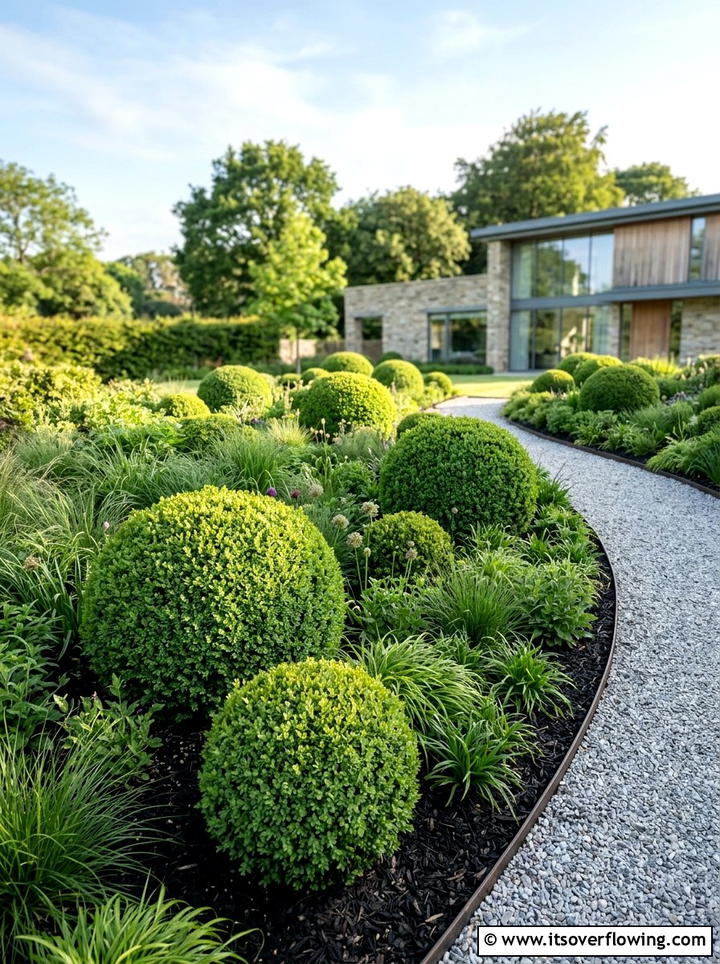
Boxwood sphere garden elements are a fantastic way to introduce soft curves and visual harmony into your landscape design. These rounded evergreen shrubs look wonderful when planted in groups of varying sizes to create a sense of movement and depth. You can place them along a gravel path or nestle them among colorful flowering perennials for a striking contrast. Their dense foliage makes them perfect for maintaining a crisp, clean shape throughout the entire year. Many designers use them as anchors at the corners of garden beds to provide a permanent structure. They are quite low-maintenance and only require a light trim once or twice every season to keep looking fresh.
2. Spiral Evergreen Plant
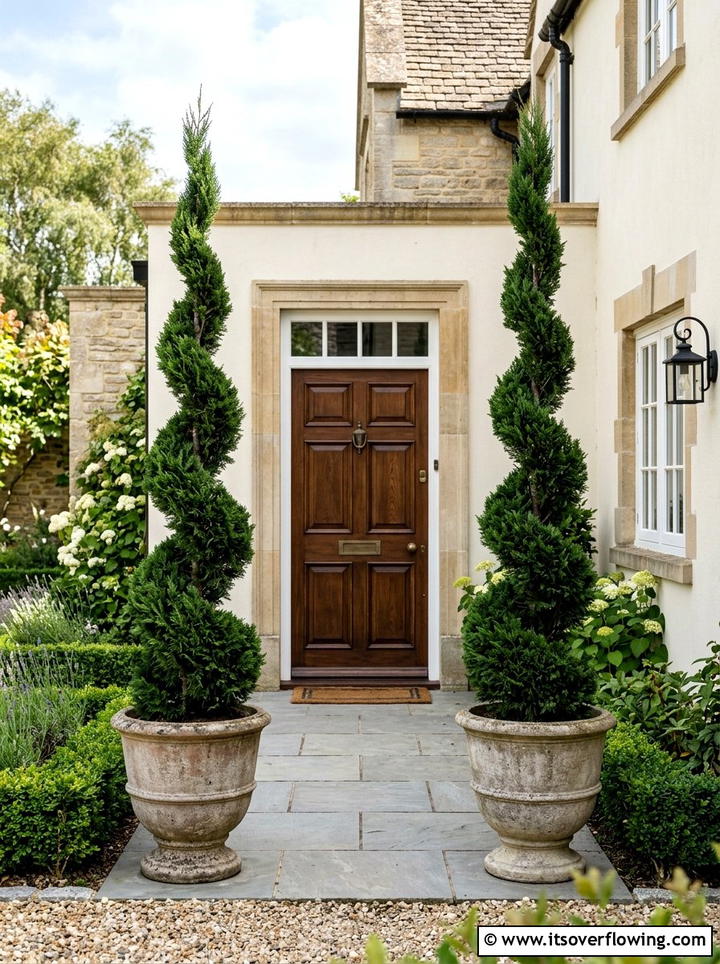
Spiral evergreen plant designs bring a high level of elegance and vertical drama to any garden entrance or patio corner. These twisting shapes are usually carved from hardy evergreens like juniper or arborvitae, which hold their form very well through cold winter months. The spiral movement guides the eye upward, making it a great choice for narrow spaces that need a bit of height. They look stunning when placed in matching large stone planters on either side of a front door. You can also plant them directly in the ground to act as a focal point. The tight foliage and unique silhouette provide a permanent structural element that stays green.
3. Pyramid Yew Tree
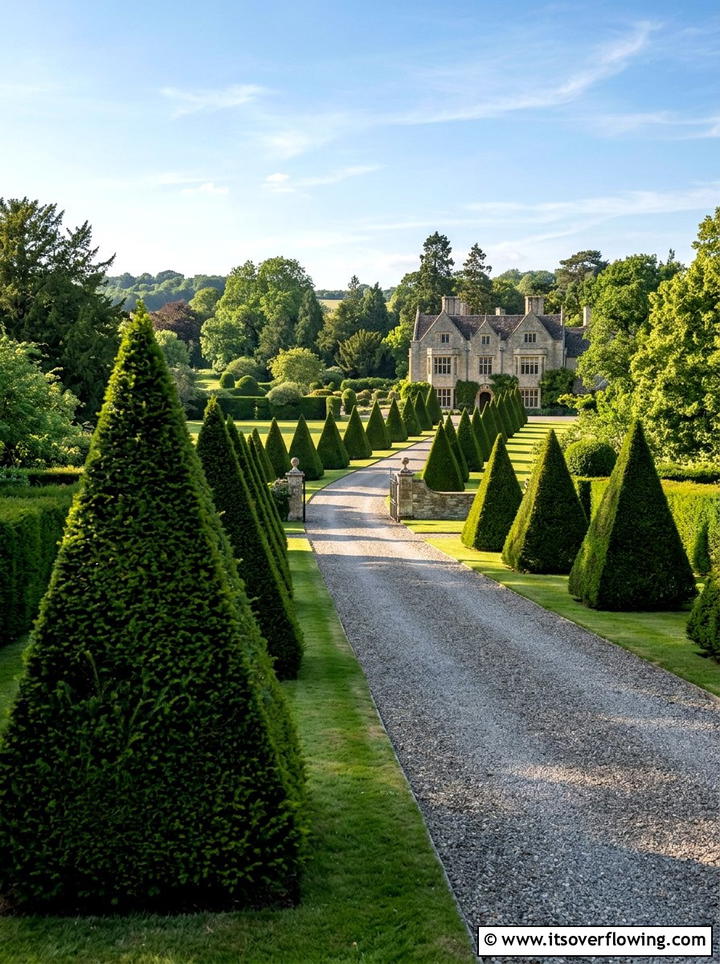
Pyramid yew tree shapes offer a very formal and stately appearance that works perfectly in traditional or contemporary garden layouts. These pointed, triangular forms provide a strong sense of verticality and can be used to frame a view or line a long driveway. Yew is a favorite for this shape because it grows slowly and has very dark, dense needles that look luxurious. You can use these pyramids to create a sense of rhythm when spaced evenly along a border. They also work well as solitary specimens in the middle of a lawn to add architectural interest. Their sharp lines offer a nice contrast to fluffy, unclipped plants nearby.
4. Animal Shaped Hedge
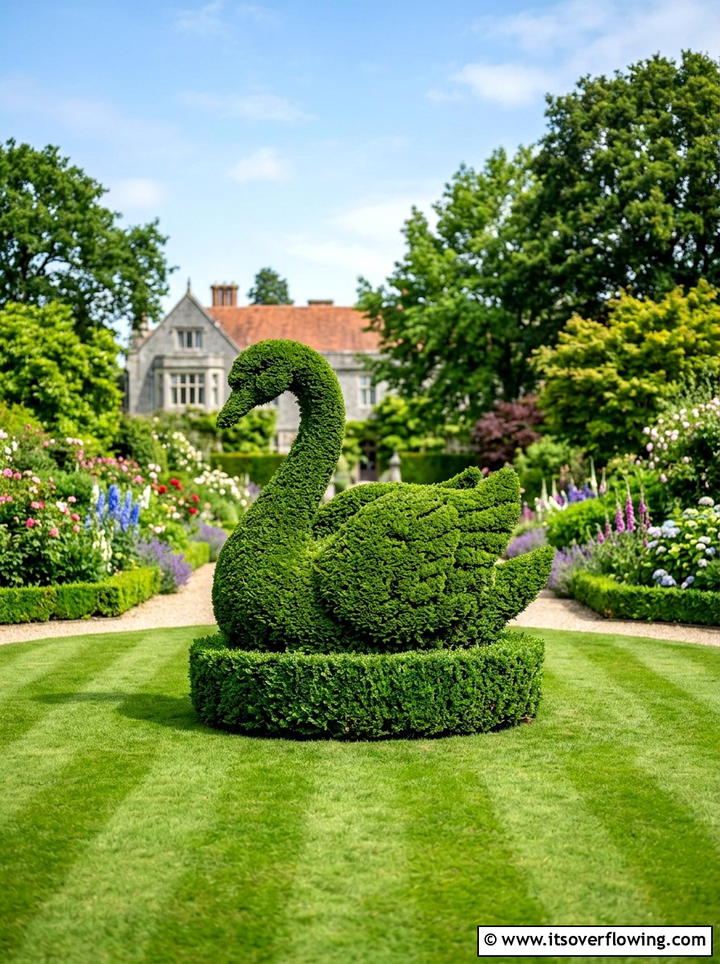
Animal shaped hedge creations add a playful and whimsical touch that can make any garden feel like a magical wonderland. From graceful swans to hopping rabbits, these living sculptures are a great conversation starter for guests and children alike. Creating these shapes often requires a wire frame to guide the growth of the shrub over several years. Once the plant fills the frame, you simply clip away any stray branches to keep the animal figure sharp. They look best when positioned in an open area where their silhouette can be clearly seen against a simple background. These topiaries bring a lot of personality and charm to your yard.
5. Cloud Pruned Shrub
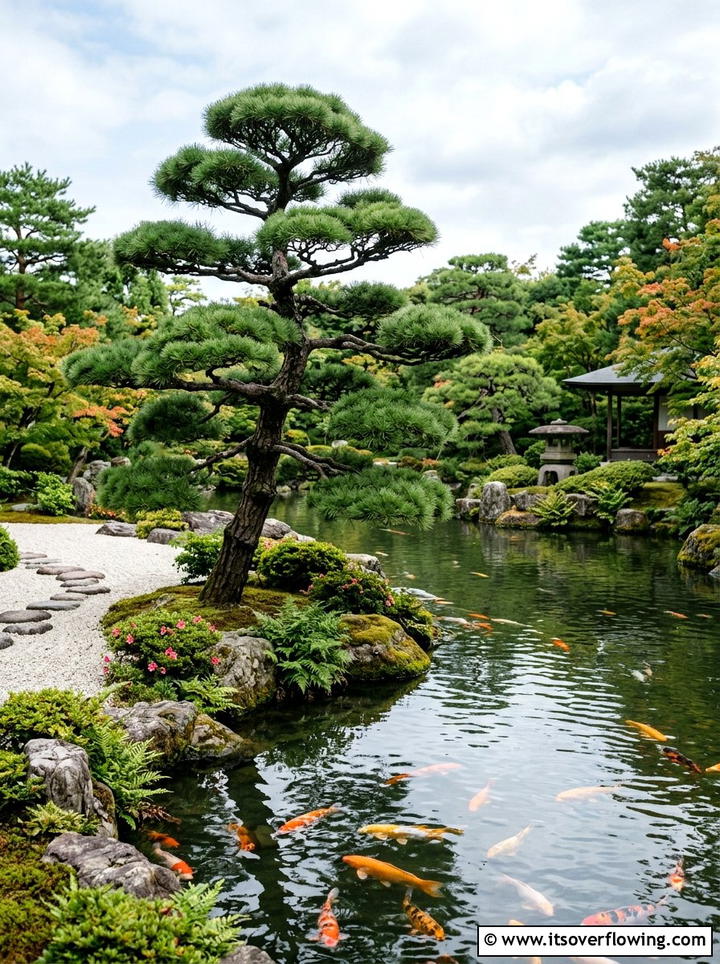
Cloud pruned shrub styles, also known as Niwaki, originate from Japanese tradition and focus on creating organic, billowing shapes. Instead of one solid mass, the plant is pruned to have several distinct “clouds” of foliage on different branches. This style looks incredibly artistic and works best with pine or boxwood varieties. It creates a sense of age and wisdom in the garden, making even a small space feel like a peaceful sanctuary. These topiaries look amazing when paired with large rocks, gravel, or water features. They require a bit more skill to prune, but the result is a breathtaking focal point that looks like a natural sculpture.
6. Potted Topiary Tree
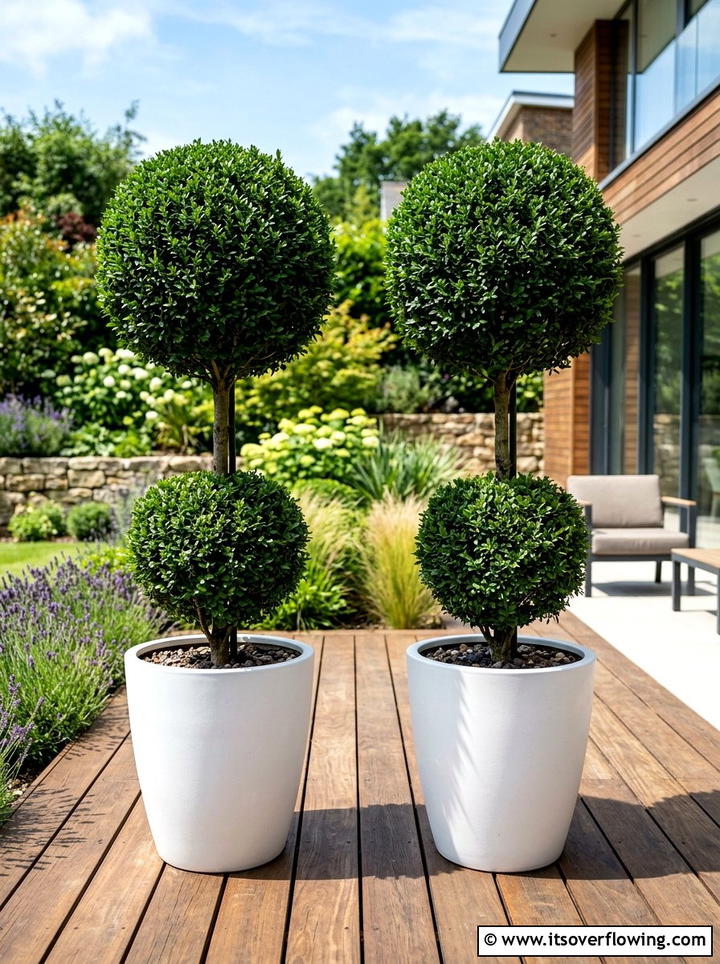
Potted topiary tree arrangements are the perfect solution for homeowners with limited ground space or those who want to decorate a porch. Growing shaped plants in containers allows you to move them around to change your garden ‘s look whenever you feel like it. You can choose classic shapes like balls or cones and place them in stylish ceramic pots that match your home’ s exterior. These trees are excellent for adding greenery to a deck or balcony where traditional planting isn’t possible. Because they are in pots, you have more control over the soil and drainage, which can lead to very healthy and vibrant growth for years.
7. Standard Ball Topiary
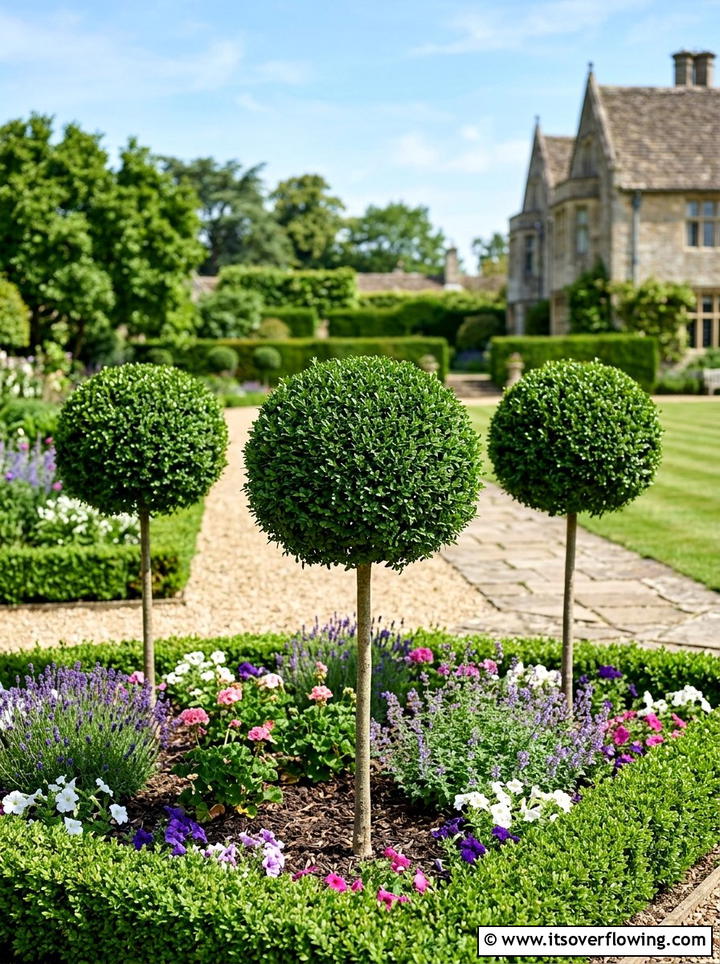
Standard ball topiary designs feature a perfectly round sphere of foliage sitting atop a single, clean wooden stem. This “lollipop” look is very popular for formal gardens and looks particularly beautiful when planted in rows. You can use them to line a walkway or place them in the center of a symmetrical flower bed. The height provided by the stem allows you to plant smaller flowers or groundcover underneath the topiary ball. This creates a layered look that adds a lot of visual interest to your garden. Many people use bay laurel or privet for this style because they have attractive leaves and respond very well to pruning.
8. Topiary Frame Sculpture
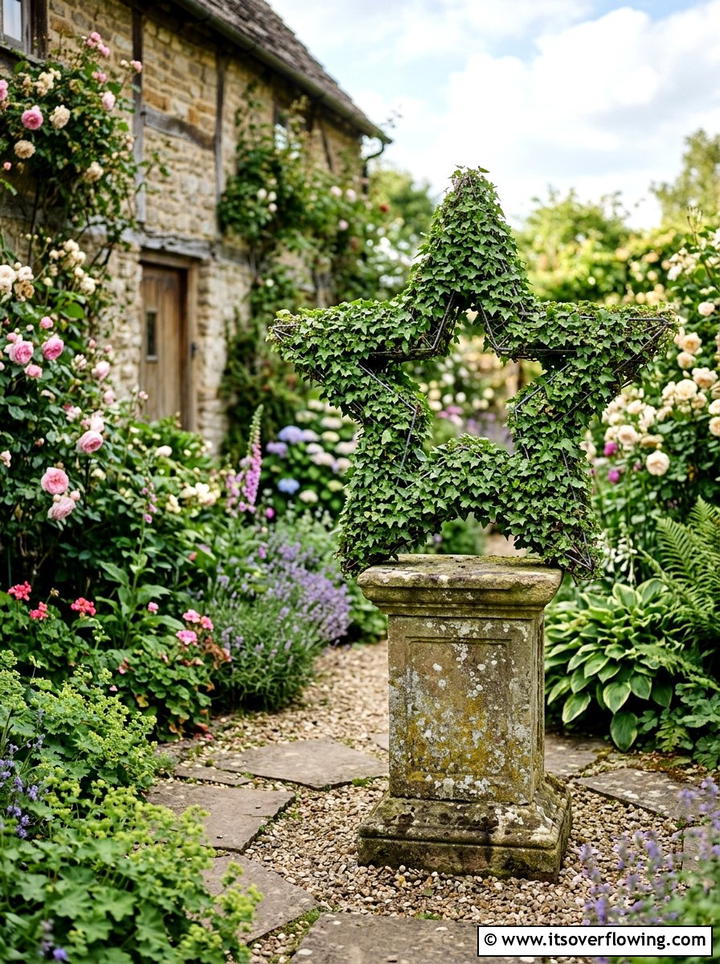
Topiary frame sculpture ideas allow you to create complex and intricate designs without needing to be a master gardener. By using a pre-made metal frame in the shape of a star, moon, or even a geometric pattern, you can train ivy or boxwood to grow over it. This method ensures that your topiary always keeps its intended shape, making maintenance much easier for beginners. These sculptures can be placed on pedestals or tucked into garden corners to act as hidden gems. They offer a unique way to incorporate art into your landscaping. Over time, the greenery completely hides the metal, leaving a beautiful living statue.
9. Tiered Lollipop Bush
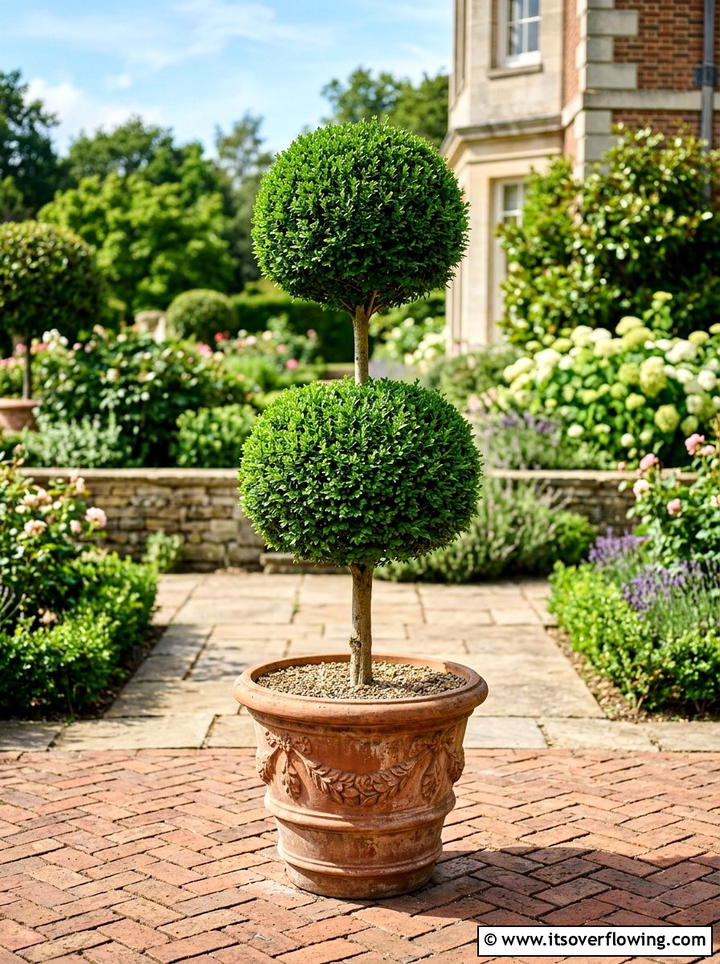
Tiered lollipop bush shapes consist of two or three spheres of foliage stacked on top of each other along a single trunk. This multi-level design adds a lot of height and a slightly more complex visual appeal than a single ball topiary. It looks very sophisticated and is often used in high-end landscape designs to create a sense of luxury. You can find these already trained at many nurseries, or you can try shaping one yourself over several growing seasons. They look best when used in pairs to frame an entrance or a set of stairs. The clear segments between the balls create a very modern look.
10. Cone Shaped Garden Shrub
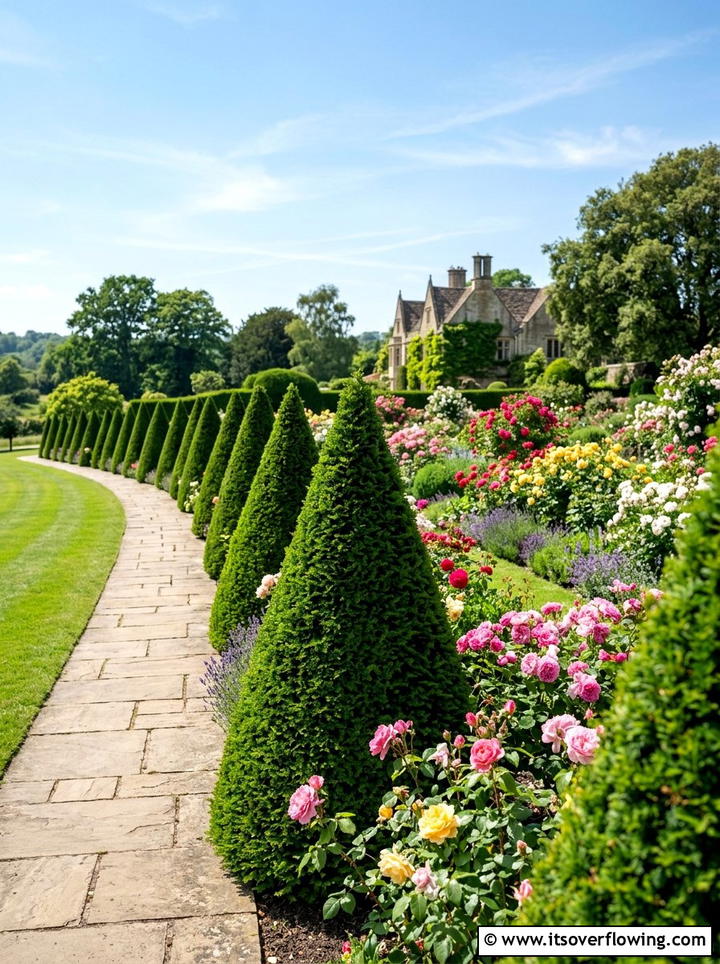
Cone shaped garden shrub options provide a classic, formal aesthetic that is very easy to achieve and maintain. The broad base and narrow top make these plants very stable and resistant to snow damage in colder climates. You can use cones to create a sense of boundary or to mark the end of a garden path. They also look wonderful when mixed with other shapes, like spheres, to create a varied geometric garden. Arborvitae and holly are excellent choices for cone topiaries because they naturally grow in a somewhat upright fashion. Their sharp points draw the eye upward and provide a very clean and tidy look.
11. Heart Shaped Hedge
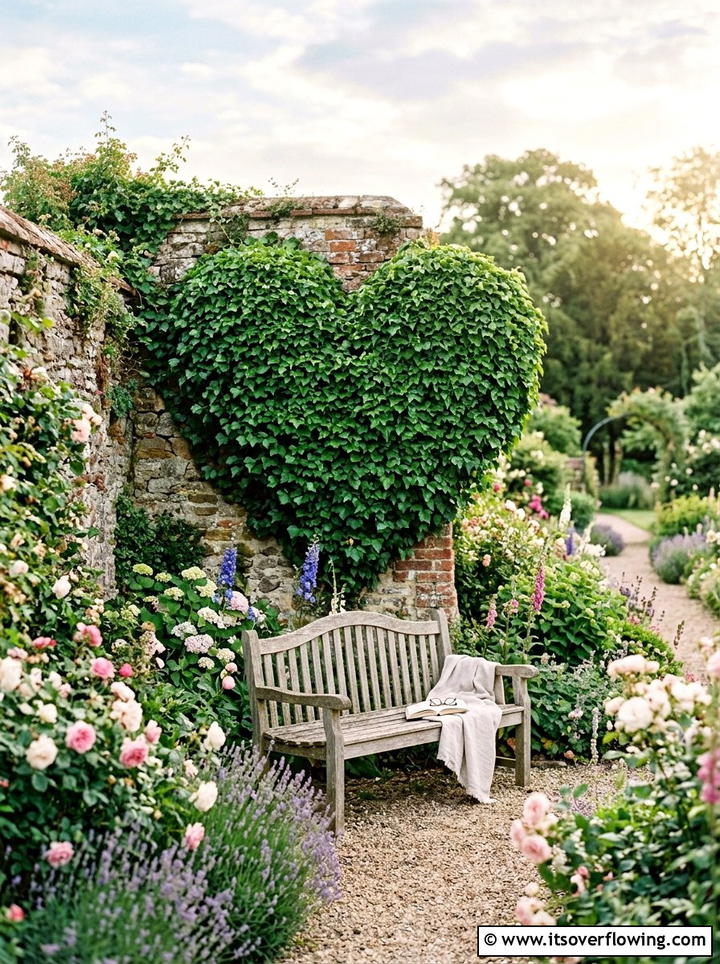
Heart shaped hedge designs are a lovely way to add a romantic and sweet element to your outdoor living space. These are often created using climbing plants like ivy or flexible shrubs like privet trained on a wire form. They make a wonderful addition to a private seating area or a small “secret garden” corner. Seeing a heart-shaped plant can bring a smile to anyone’s face and shows a great attention to detail in your gardening. While they might seem difficult, using a guide makes the process very straightforward. These topiaries are perfect for celebrating special occasions or simply expressing your love for your home and garden.
12. Boxwood Knot Garden
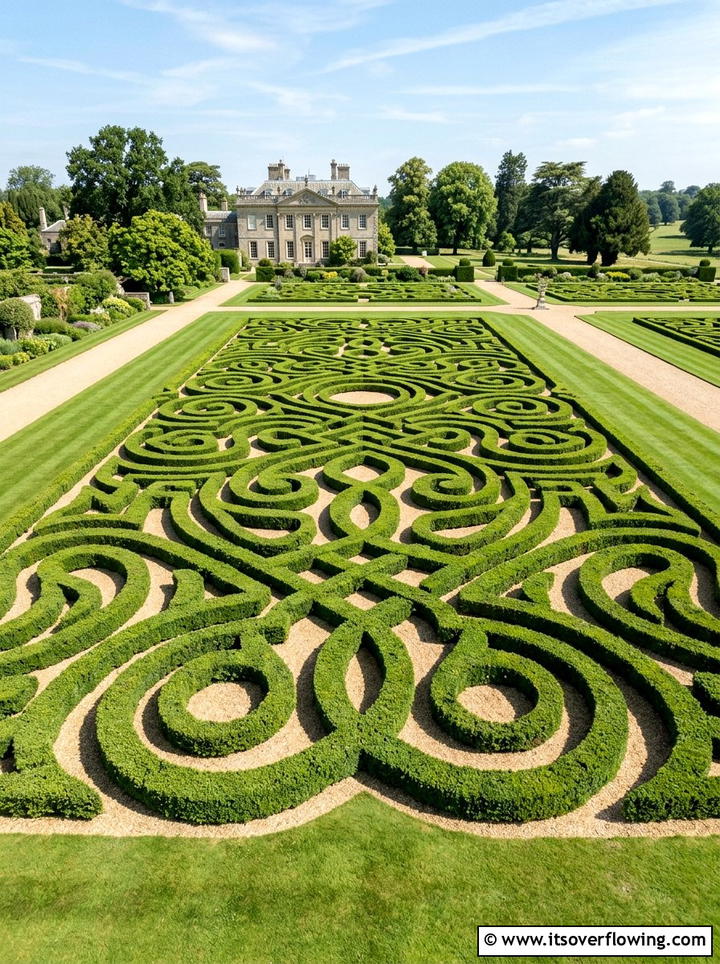
Boxwood knot garden layouts are a traditional European style where low hedges are planted in intricate, overlapping patterns. When viewed from above, the hedges appear to be tied in a knot, creating a stunning visual display. This style is perfect for a flat area of the yard where you want to create a formal centerpiece. Usually, different varieties of boxwood or herbs like lavender are used to provide subtle color differences between the “strands” of the knot. It requires precision pruning to keep the lines crisp, but the historical and artistic feel it brings is well worth the effort. It is a true garden masterpiece.
13. Geometric Boxwood Garden
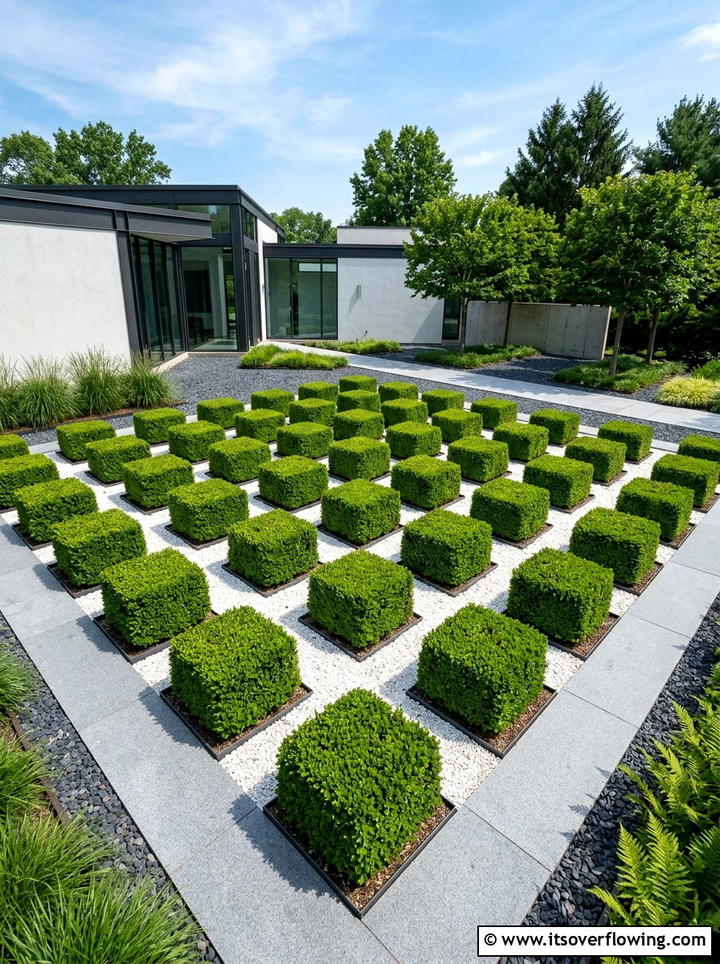
Geometric boxwood garden themes focus on using squares, rectangles, and triangles to create a very structured and modern landscape. This approach is all about symmetry and clean lines, which can make a small yard feel much more organized and spacious. You can create a grid of small boxwood cubes and fill the spaces between them with white pebbles or colorful flowers. This style works exceptionally well with modern architecture, as the sharp angles of the plants mirror the lines of the house. It provides a very tidy and “architectural” look that stays attractive even when other plants have finished blooming for the year.
14. Formal Topiary Parterre
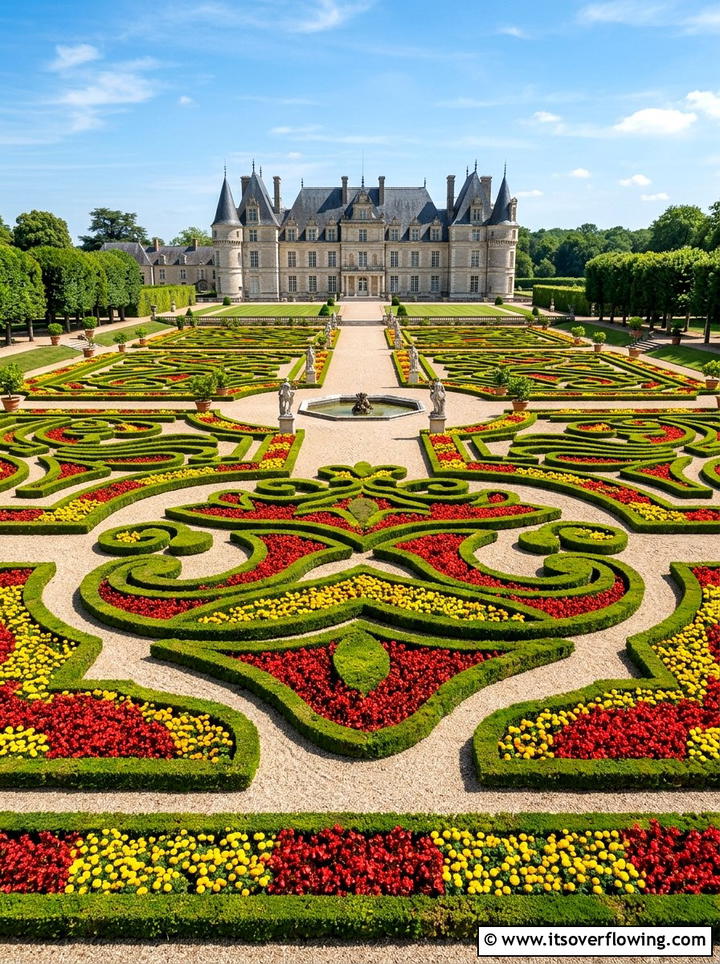
Formal topiary parterre designs are large-scale garden arrangements that use clipped hedges to create beautiful patterns on the ground. These were very popular in French palace gardens and can be adapted for smaller home landscapes today. The patterns are usually filled with flowers, colored mulch, or gravel to make the shapes stand out even more. A parterre adds a sense of grandeur and historical elegance to your property. It is best placed in an area where it can be seen from an upstairs window or a raised deck to fully appreciate the pattern. This style turns your entire backyard into a living work of high art.
15. Low Boxwood Border
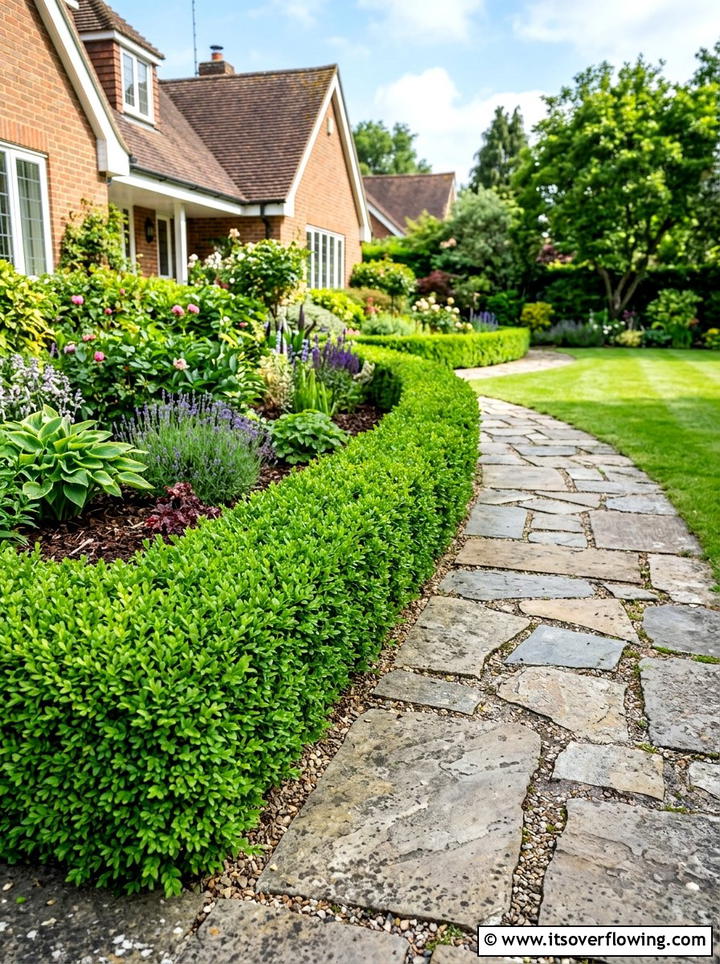
Low boxwood border shapes are one of the most practical and popular ways to use topiary in any garden size. By keeping a small hedge clipped into a neat rectangular or rounded wall, you can define the edges of your flower beds and paths. This prevents the garden from looking messy and gives it a professional “finished” look. A low border also helps to keep taller, floppier flowers from spilling out onto the lawn. It is a simple way to introduce topiary without committing to a complex sculpture. These borders are easy to trim and provide a rich green frame for your seasonal blooms.
16. Ivy Topiary Frame
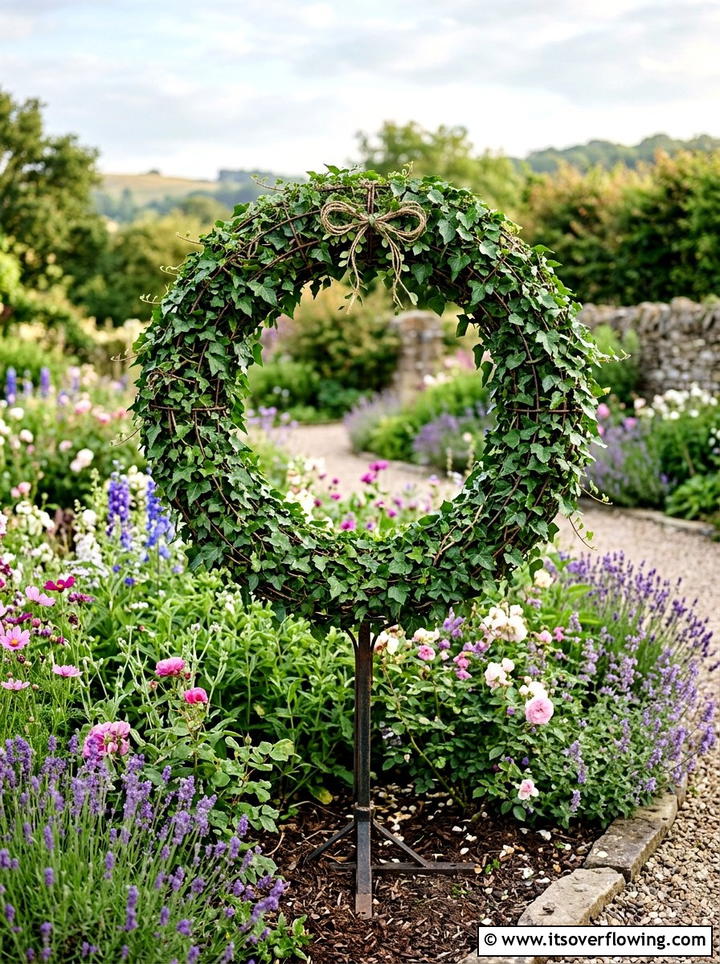
Ivy topiary frame ideas use fast-growing climbing plants to create lush, green shapes in a very short amount of time. Because ivy is so flexible, you can wrap it around almost any wire shape, from simple circles to complex stars. This is a great project for those who want quick results, as the ivy will cover the frame within a single growing season. These can be grown in pots with a trellis or as free-standing sculptures in the garden. Ivy stays green all year, so your topiary will look great even in the middle of winter. It adds a soft, textured look.
17. Double Ball Topiary
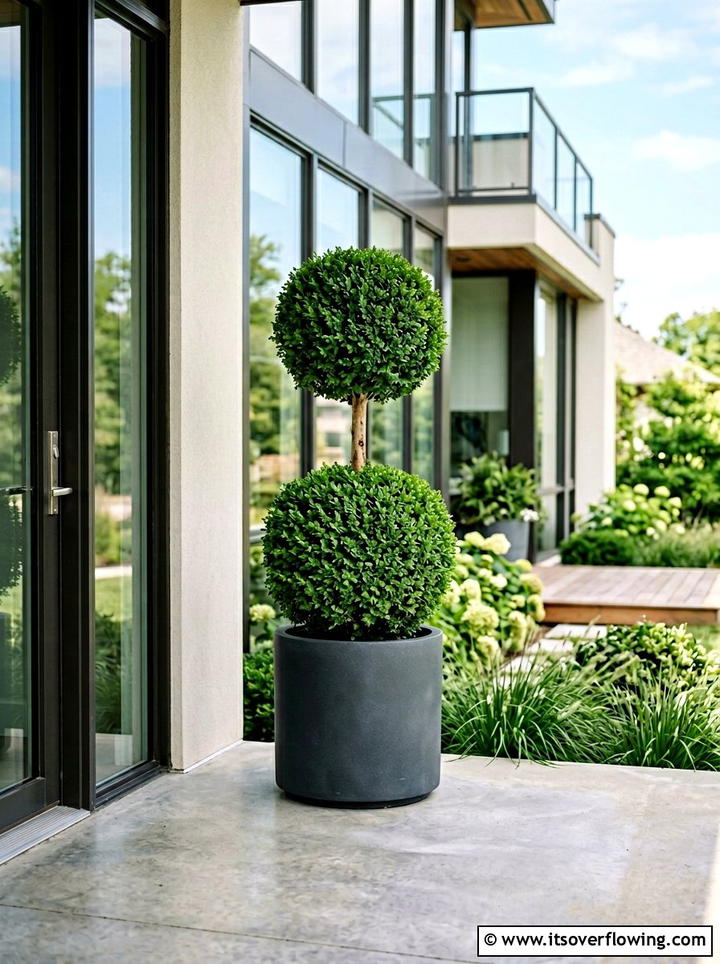
Double ball topiary shapes are a classic variation of the standard topiary, featuring two distinct spheres on a single trunk. Usually, the bottom ball is slightly larger than the top one, creating a balanced and pleasing silhouette. This style adds more vertical interest than a single ball and looks very sophisticated in a formal setting. They are often used to add height to a flat garden bed or to provide a focal point in a large planter. The space between the two balls allows for air and light to pass through, making the plant look lighter and more elegant. It is a timeless design.
18. Spiral Juniper Tree
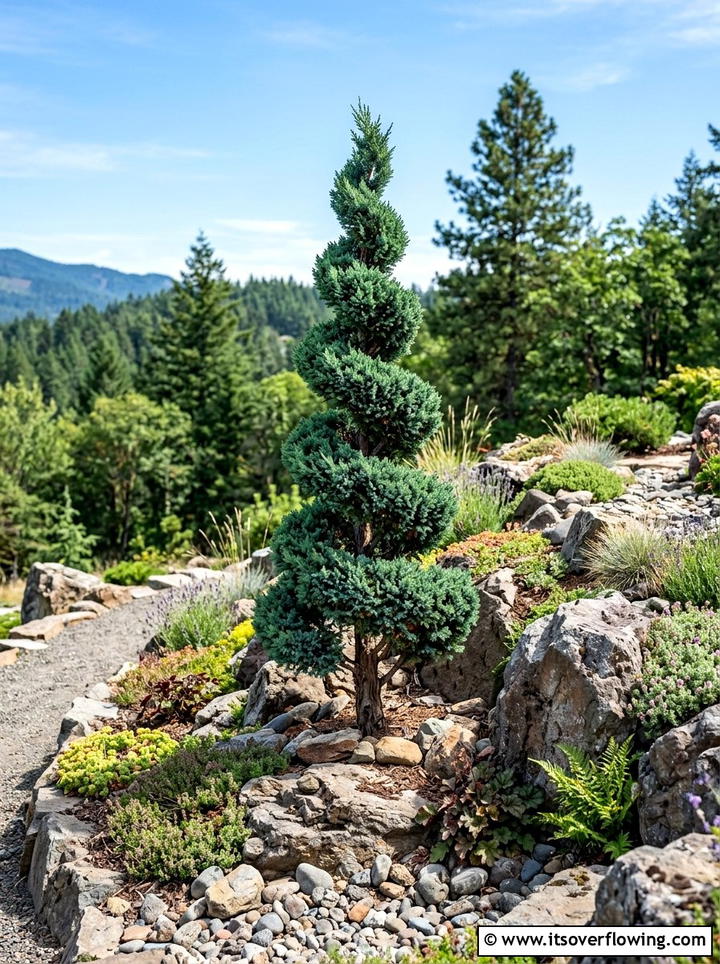
Spiral juniper tree designs are specifically prized for their rugged texture and ability to hold a very tight, sharp twist. Junipers come in various shades of green, blue, and gold, allowing you to choose a color that complements your existing plants. The natural growth habit of many junipers makes them ideal candidates for spiral pruning. These trees are very hardy and can withstand wind and cold better than many other topiary species. They look fantastic when used as a pair at the start of a garden path, acting as a green gateway. Their unique texture adds another layer of beauty to the garden.
19. Topiary Archway Gate
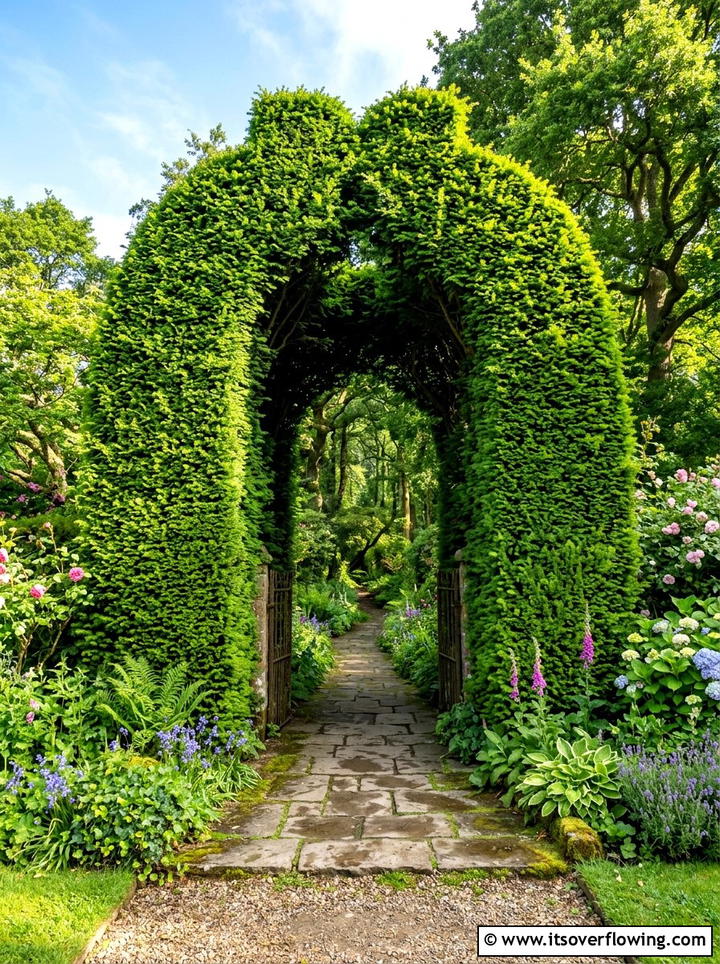
Topiary archway gate features create a living entrance that feels both grand and welcoming at the same time. You can train two tall shrubs to grow toward each other and eventually meet at the top to form a natural arch. This takes a few years of patience and careful pruning, but the result is a breathtaking passage into your garden. Hornbeam and beech are popular choices for this because their branches are strong yet flexible. Walking under a living archway feels like entering a secret forest. It is a wonderful way to divide different sections of your yard while keeping a natural, green look.
20. Obelisk Shaped Shrub
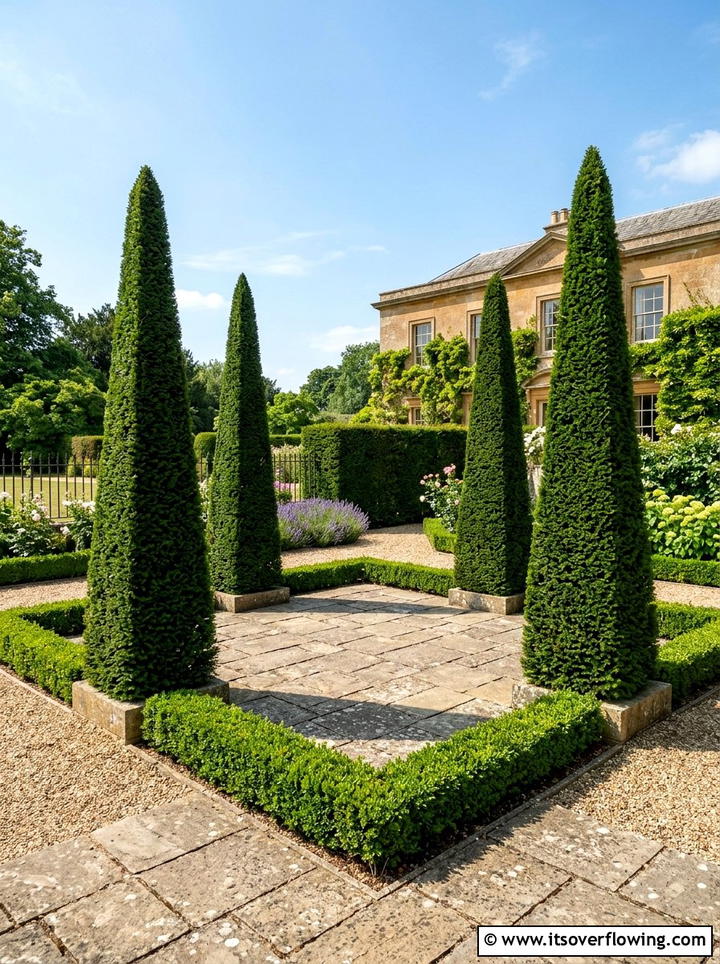
Obelisk shaped shrub forms are tall, four-sided pillars that taper slightly at the top, providing a very strong architectural presence. This shape is excellent for adding height to a garden without taking up too much ground space. You can use obelisks to frame a doorway or to add a sense of rhythm along a long wall. They look very modern and clean, making them a great fit for contemporary garden designs. Many gardeners use holly or yew to achieve this look because they can be clipped into very sharp, straight lines. An obelisk topiary acts like a green pillar that anchors your entire landscape.
21. Topiary Bird Sculpture
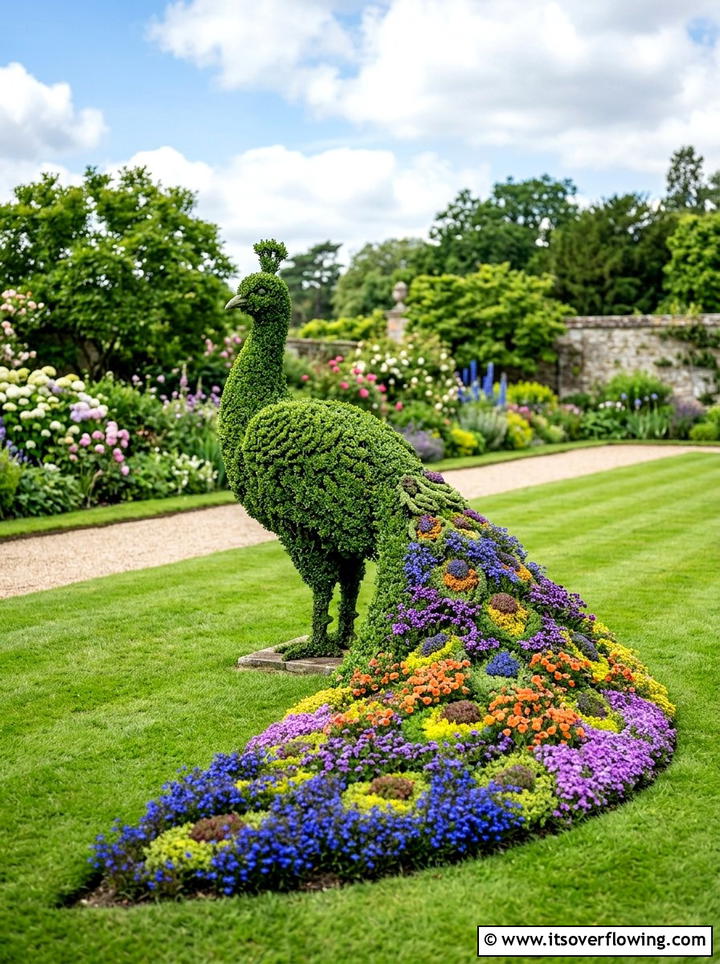
Topiary bird sculpture designs, like peacocks or small songbirds, add a touch of nature-inspired art to your garden beds. These shapes are often the highlight of a landscape because they are so unique and recognizable. A peacock topiary with a long, flowing “tail” made of groundcover plants can be a stunning center attraction. These shapes require a bit of artistic flair when pruning, but you can always use a wire guide to help you stay on track. Placing a topiary bird near a birdbath or a fountain creates a charming and cohesive theme. It brings a sense of life and motion to your quiet greenery.
22. Abstract Topiary Shape
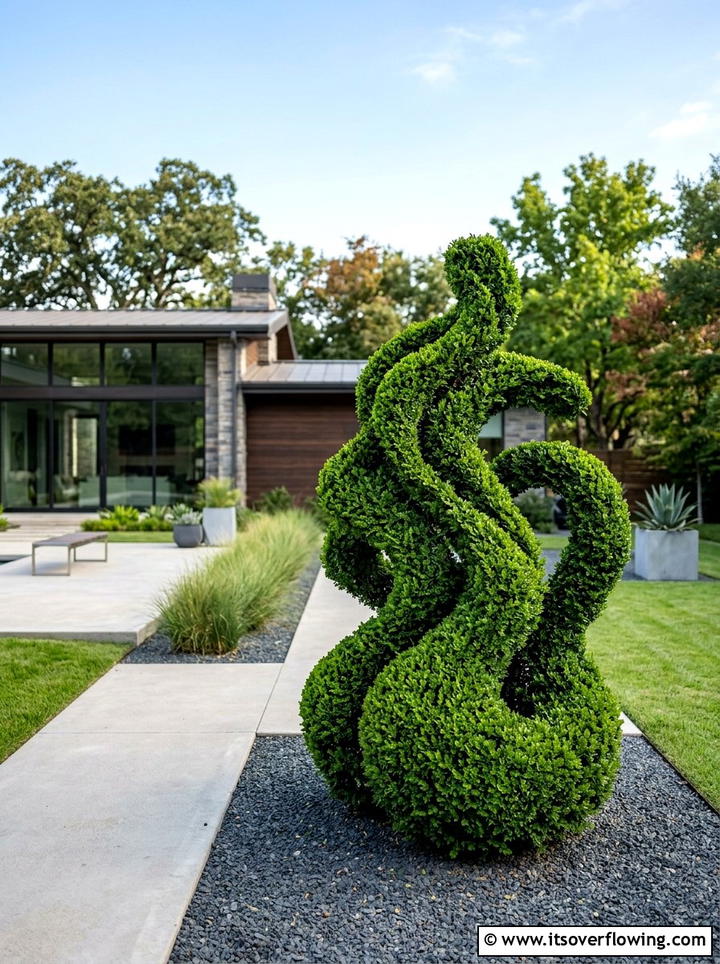
Abstract topiary shape ideas allow you to get creative and break away from traditional geometric or animal forms. You can prune your shrubs into flowing waves, jagged zig-zags, or any other form that inspires you. This style is perfect for an avant-garde garden where you want to push the boundaries of traditional landscaping. Abstract shapes can be used to mirror the style of a piece of modern outdoor art or sculpture. Because there are no “rules” for abstract shapes, you have the freedom to experiment and create something truly one-of-a-kind. It is a great way to show off your personal artistic style.
23. Miniature Topiary Pot
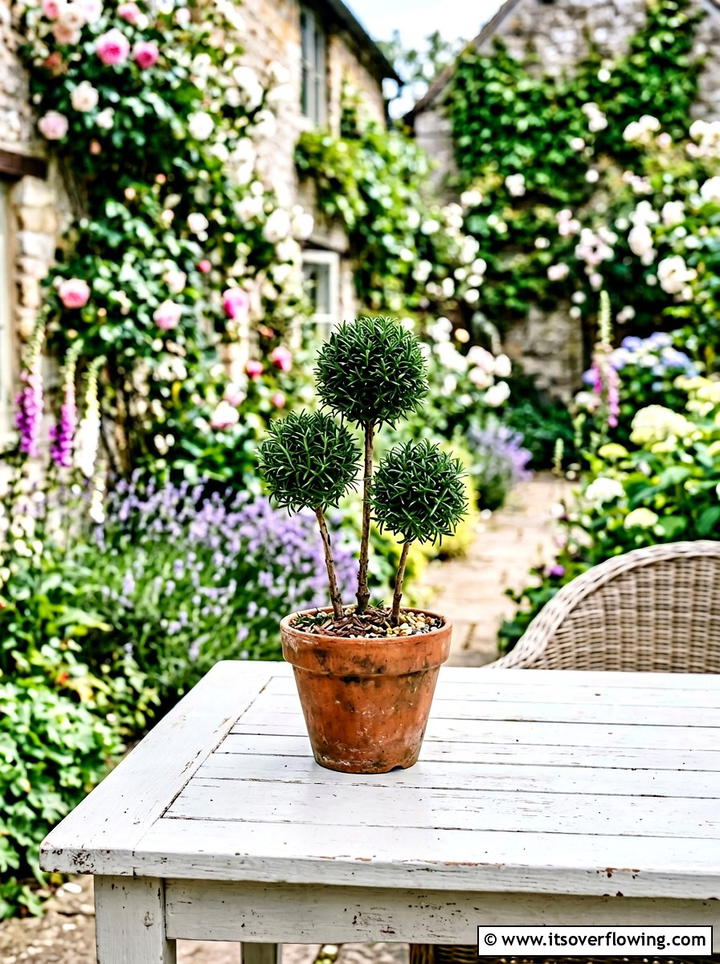
Miniature topiary pot arrangements are incredibly cute and perfect for decorating outdoor tables or windowsills. You can use small-leafed plants like dwarf boxwood or even herbs like rosemary to create tiny spheres or cones. These small topiaries bring the beauty of shaped greenery to a micro-scale, making them ideal for fairy gardens or small urban balconies. They are also much easier to prune since they are so small. You can group several miniature pots together to create a varied and interesting display. They make wonderful gifts for fellow garden lovers and add a refined touch to any small seating area or porch.
24. Tall Cedar Cone
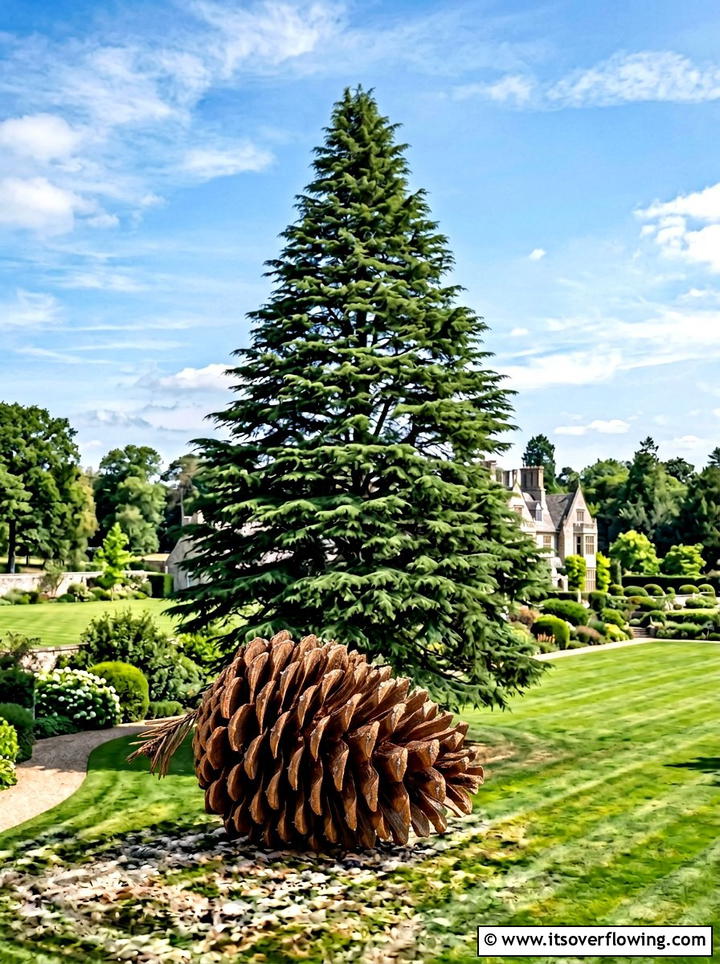
Tall cedar cone shapes are magnificent specimens that can reach several feet in height, providing a massive green presence in the yard. Cedar has a lovely fragrance and a soft, feathery texture that looks beautiful when kept in a tidy cone shape. These large topiaries are great for creating privacy or acting as windbreaks when planted in a row. They bring a forest-like feel to the garden while still maintaining the order of a manicured landscape. Because they are so large, they become a permanent part of the garden’s architecture. Their massive scale makes a big statement and provides a lush, evergreen backdrop.
25. Topiary Garden Path
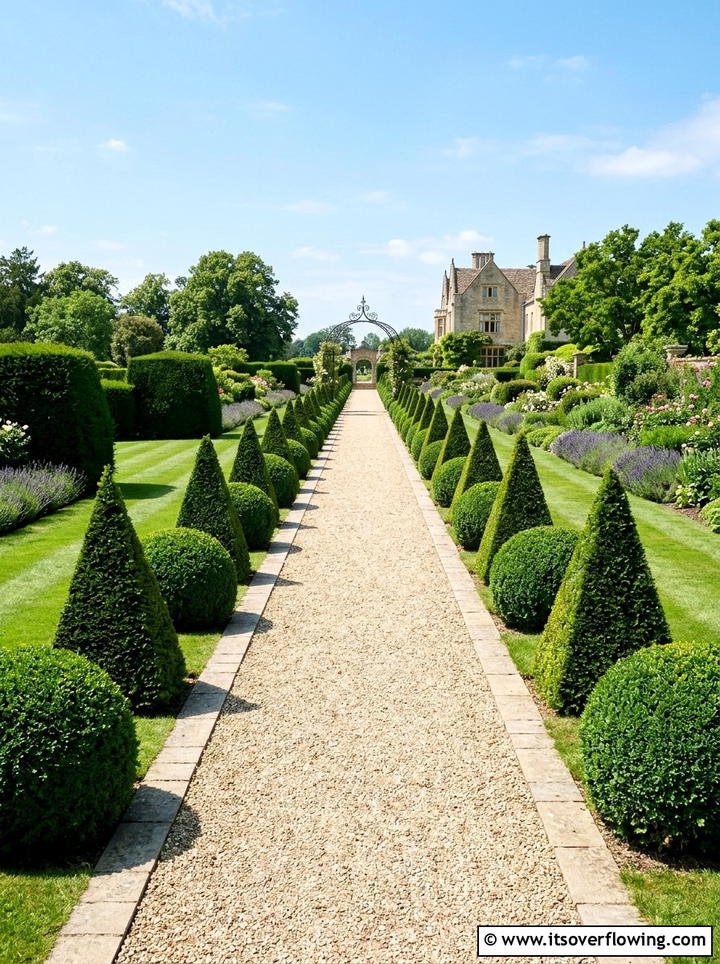
Topiary garden path designs involve lining a walkway with a series of shaped plants to guide visitors through the space. You could use a sequence of spheres, cones, or even spirals to create a rhythmic and engaging walking experience. This approach makes the journey through your garden just as important as the destination. The repetition of shapes creates a sense of harmony and professional design that is very satisfying to the eye. You can alternate shapes or keep them all the same for a more formal look. A topiary-lined path feels very upscale and turns a simple walk into a special event.
Conclusion:
Topiary shapes offer an incredible way to transform any ordinary backyard into a sophisticated and artistic sanctuary that reflects your style. By incorporating these living sculptures, you add structure, year-round color, and a unique sense of personality to your outdoor environment. Whether you prefer the clean lines of a geometric boxwood garden or the whimsical charm of animal-shaped hedges, there is a topiary style for everyone. Starting with simple shapes like spheres or cones is a great way for beginners to dive into this rewarding hobby. With a little patience and a pair of shears, you can create a stunning landscape that will impress guests for years.

Related posts:
 25 creative garden ideas with painted planters for Bold Color
 25 Creative Garden Ideas for Patios: Fresh Outdoor Style
 25 Creative Garden Ideas With Espalier Trees for Style
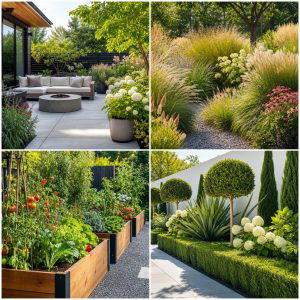 25 creative garden ideas with minimal planting palette for Style
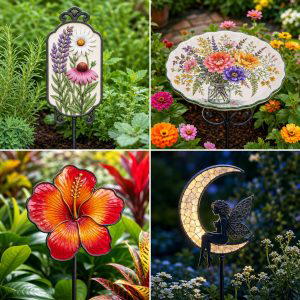 25 creative garden ideas with personalized signs for Unique Style
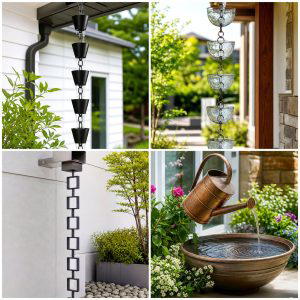 25 Creative Garden Ideas With Rain Chains for Serene Style
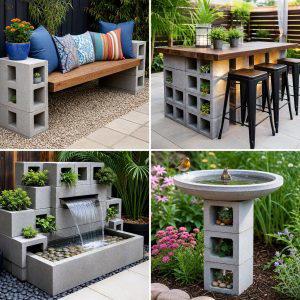 25 Garden Ideas With Cinder Blocks for Creative Outdoor Style
 25 Garden Ideas With Pallets For Creative Outdoor Style
 25 garden design ideas with bold contrast: Dramatic Yard Style
 25 garden ideas for maximalist style: Bold Outdoor Looks
 25 Small Garden Ideas for Full Sun With Bright, Bold Style
 25 Small Garden Ideas With Container Clusters for Bold Style