
Your front entryway is the very first thing guests see when they arrive at your home. It sets the tone for the entire interior experience and reflects your personal style. Creating a beautiful garden design for this space can significantly boost your curb appeal and make your house feel more inviting. Whether you have a massive front yard or just a tiny patch of concrete near the door, there are endless ways to incorporate greenery and texture. This guide explores a wide range of creative options to transform your entrance. We will look at everything from lush flowering beds to modern minimalist arrangements that stay green all year round. A well-designed garden creates a lasting first impression.
1. Front Porch Container Garden
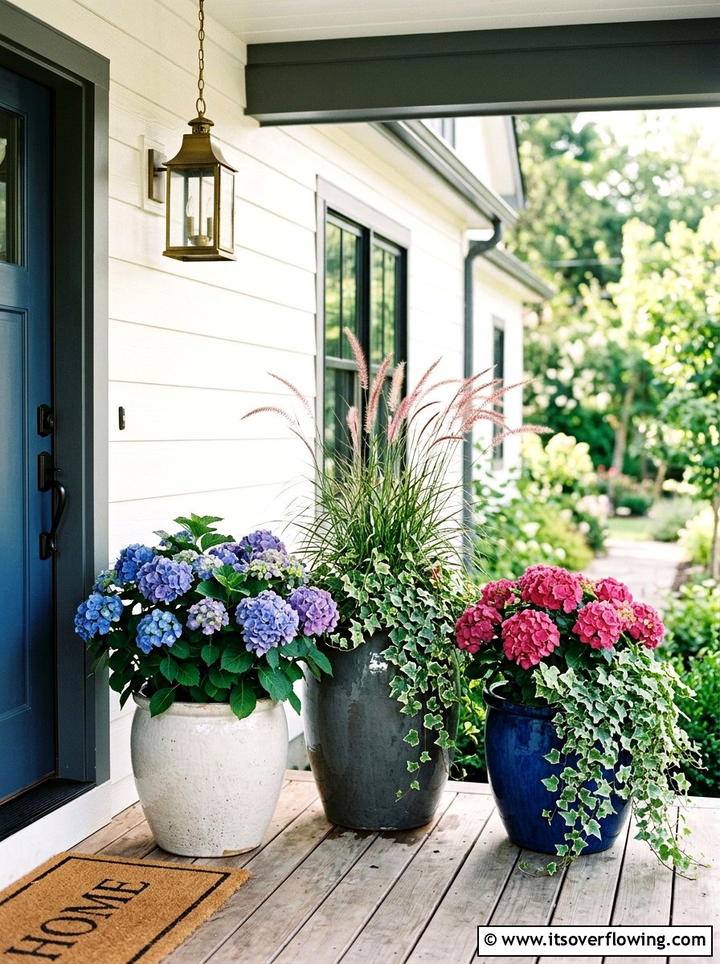
Using containers is one of the easiest ways to bring life to a porch. You can choose different sizes and shapes to create a layered look. Place larger pots in the back with tall plants like grasses or small trees. Fill the front pots with colorful flowers that spill over the edges. This approach allows you to change your plants with the seasons easily. It is also perfect for people who have limited ground space for digging. Brightly colored ceramic pots can add a pop of personality to a neutral house exterior. Make sure to water them regularly since pots dry out faster than the ground. This style is flexible and keeps your entry looking fresh.
2. Modern Paver Walkway
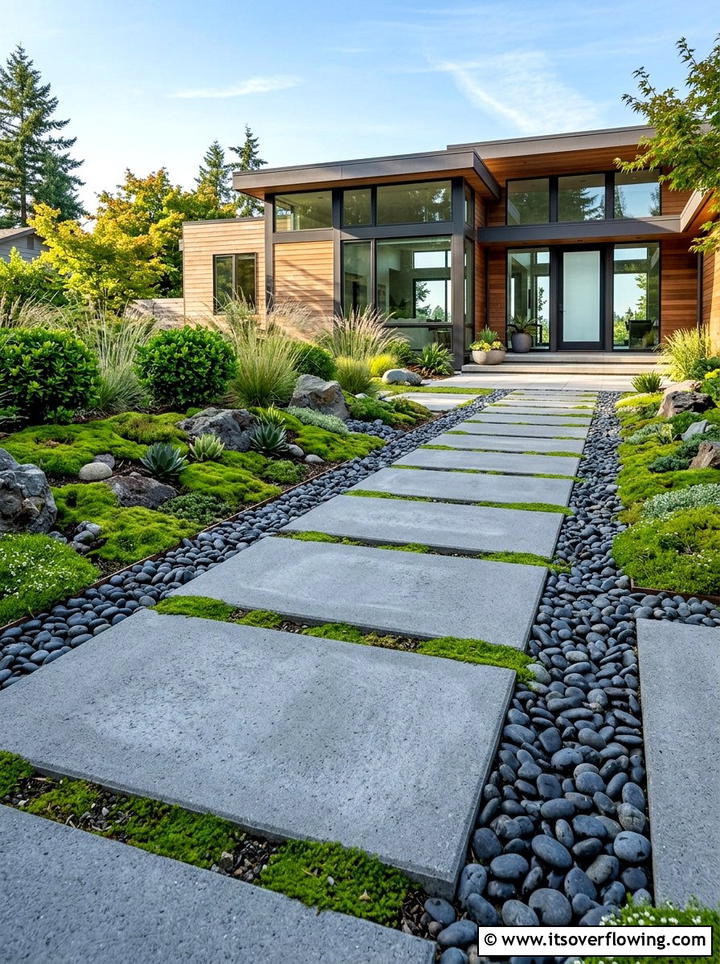
A clean walkway made of large pavers can instantly modernize your home’s entrance. You can use rectangular concrete slabs surrounded by small river rocks or dark mulch. This creates a high-contrast look that feels very organized and intentional. Planting low-growing groundcovers like creeping thyme or moss between the stones adds a touch of softness. It prevents the hardscaping from feeling too cold or industrial. The straight lines of the pavers guide the visitor’s eye directly to your front door. This design works exceptionally well with contemporary architecture and ranch-style homes. It is a low-maintenance option that stays looking tidy throughout every single season of the year.
3. Vertical Entryway Trellis
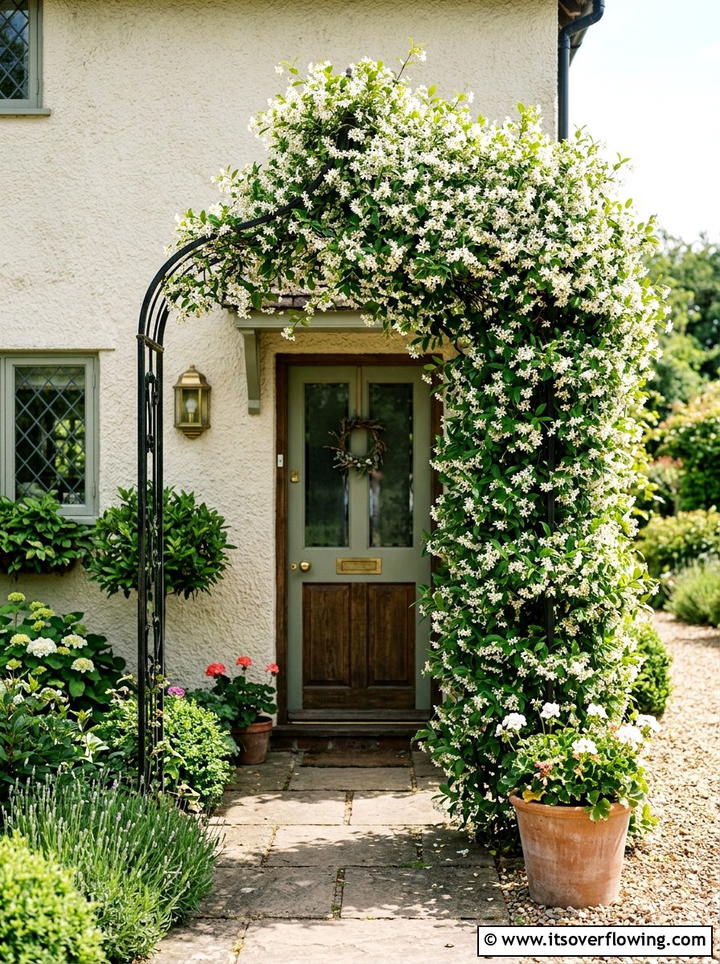
Adding a vertical element like a trellis can transform a flat wall into a living masterpiece. This is especially useful for narrow entryways where ground space is limited. You can grow climbing plants like jasmine or clematis to add both height and fragrance to your front door area. The trellis itself can be a decorative feature made of wood or metal. As the plants grow, they create a lush green screen that provides privacy and shade. It makes the space feel more enclosed and cozy like a secret garden. Make sure to choose a sturdy trellis that can support the weight of mature vines. This simple addition creates a dramatic visual impact.
4. Traditional Boxwood Hedge
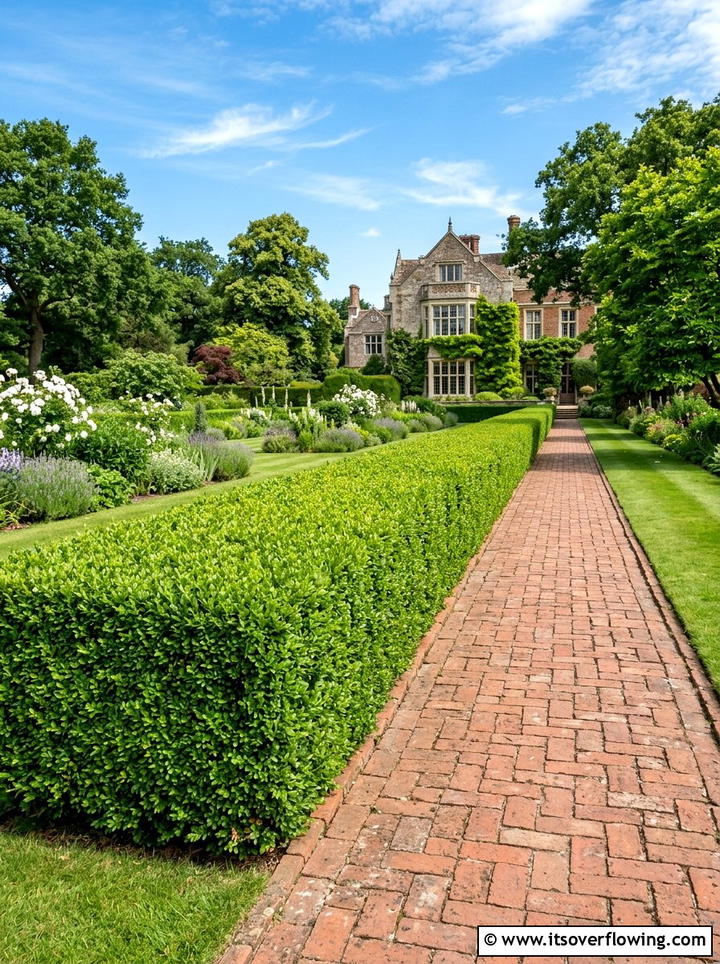
Classic boxwood hedges offer a timeless and formal look for any home entrance. These evergreen shrubs can be pruned into neat spheres or low rectangular borders. They provide a structured frame for your walkway and stay green throughout the winter. Pairing them with white gravel or dark mulch creates a sophisticated and high-end aesthetic. You can place them in a straight line or use them to create curved borders around flower beds. Their dense foliage is perfect for creating clean edges that define different areas of your garden. Because they grow slowly, they are relatively easy to maintain once they reach your desired height and shape.
5. Lavender Path Border
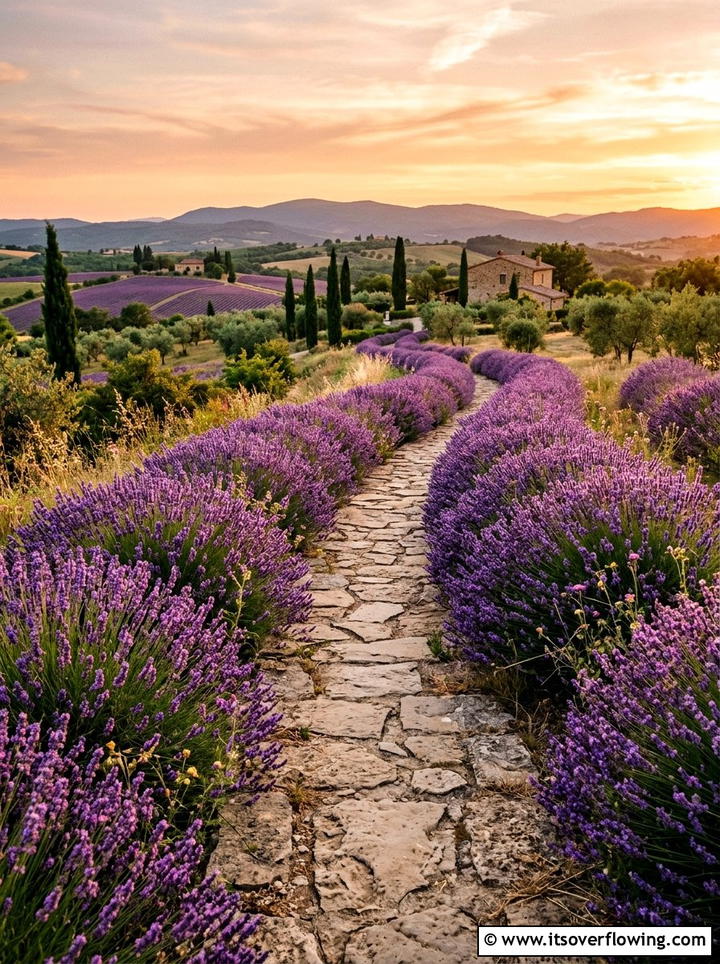
Planting lavender along your entryway path creates a sensory experience for every visitor who walks by. The silvery-green foliage and purple flowers look stunning against a stone or brick walkway. As people brush against the plants, a relaxing and sweet fragrance fills the air. Lavender thrives in sunny spots and requires very little water once it is established. It attracts beautiful butterflies and bees, bringing life to your front yard. You can trim the lavender into neat mounds to keep the path clear and tidy. This plant choice works beautifully for cottage-style homes or Mediterranean designs. It provides a soft and romantic feel to the entire entrance area.
6. Native Wildflower Meadow
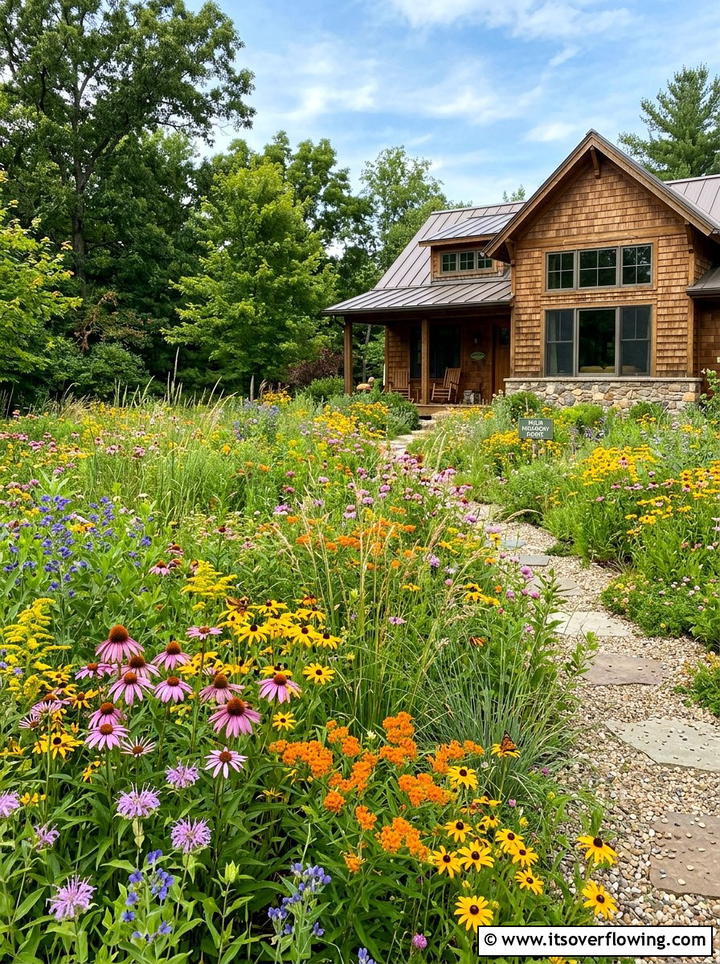
Choosing native wildflowers for your front entryway creates a low-maintenance and eco-friendly garden. These plants are naturally adapted to your local climate and require very little extra watering. They provide essential food and habitat for local pollinators like birds and butterflies. A wildflower meadow looks best when allowed to grow in a natural and slightly wild arrangement. You can include a mix of tall stalks and low-growing blooms to create visual interest. This style feels very welcoming and relaxed compared to more formal landscapes. It changes throughout the spring and summer, offering a new palette of colors every few weeks. It is a great choice for nature lovers.
7. Minimalist Zen Rock Garden
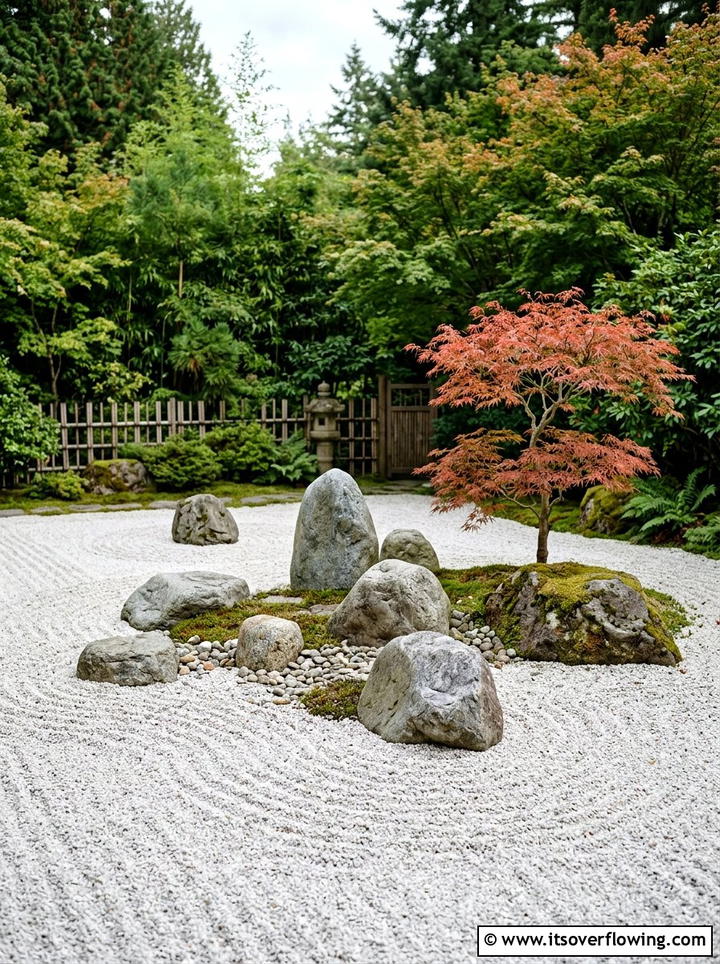
A Zen-inspired rock garden offers a calm and peaceful atmosphere for your home entrance. This design focuses on simplicity, using large boulders, smooth pebbles, and a few carefully selected plants. You might include a single ornamental tree like a Japanese maple as a focal point. Raked gravel patterns can add texture and a sense of movement to the ground. This type of garden is incredibly low-maintenance and stays looking perfect in all weather conditions. It works exceptionally well for modern or Asian-inspired architecture. The lack of clutter creates a sense of space and tranquility. It is an ideal choice for busy homeowners who want beauty without the constant weeding.
8. Tropical Entryway Palms
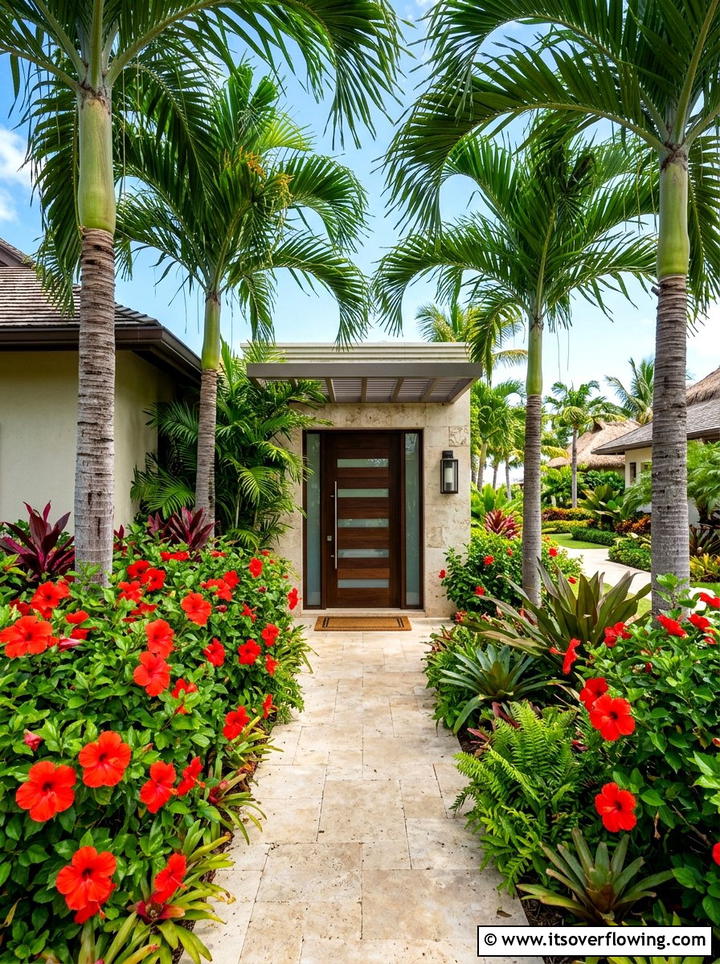
If you live in a warmer climate, adding palm trees can give your entryway a luxurious resort-like feel. Small palm varieties like sago palms or pygmy date palms fit perfectly in entry gardens. Their unique leaf textures and shapes create a bold architectural statement near the door. You can surround the base of the palms with colorful tropical flowers like hibiscus or ginger. This layered planting approach creates a lush and dense look that feels very vibrant. Using large river rocks or wood chips as mulch helps maintain the tropical theme. Lighting the palms from below at night creates dramatic shadows on the walls of your home.
9. Cottage Garden Flower Beds
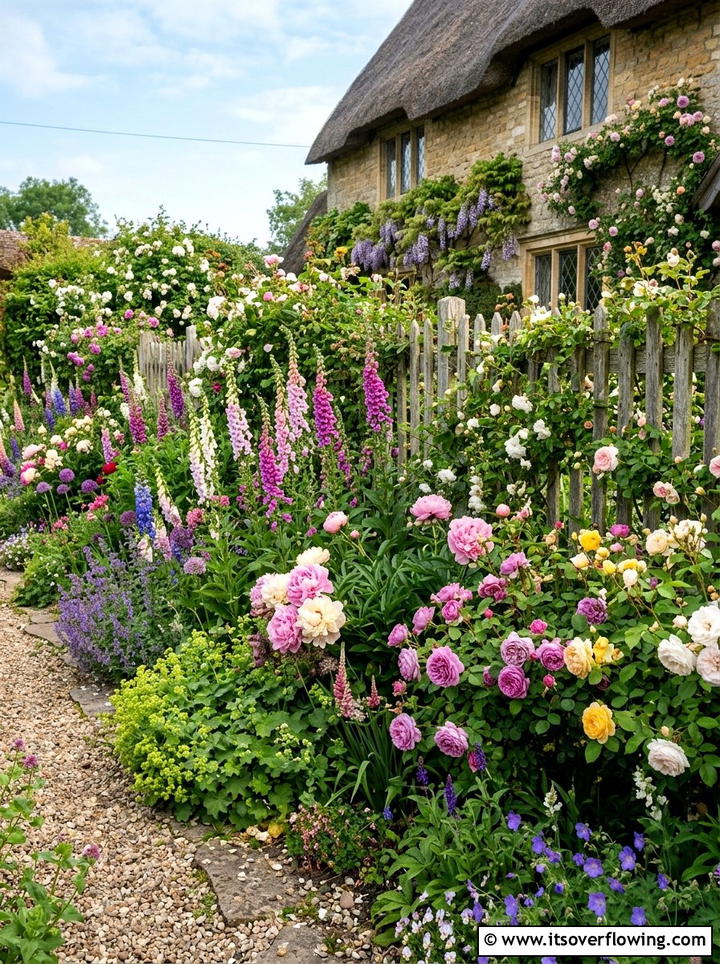
A cottage-style garden is filled with a dense and colorful mix of old-fashioned flowers. Think about using tall foxgloves, soft peonies, and climbing roses to fill the space. This design should feel slightly overgrown and abundant rather than perfectly manicured. Mixing different heights and textures creates a charming and cozy atmosphere that feels very lived-in. You can use curved garden edges to soften the lines of your house. Winding paths made of brick or stone fit perfectly within this floral abundance. This style is perfect for expressing your creativity with various colors. It provides a warm and cheerful welcome to anyone who visits your home during the blooming season.
10. Raised Stone Planters
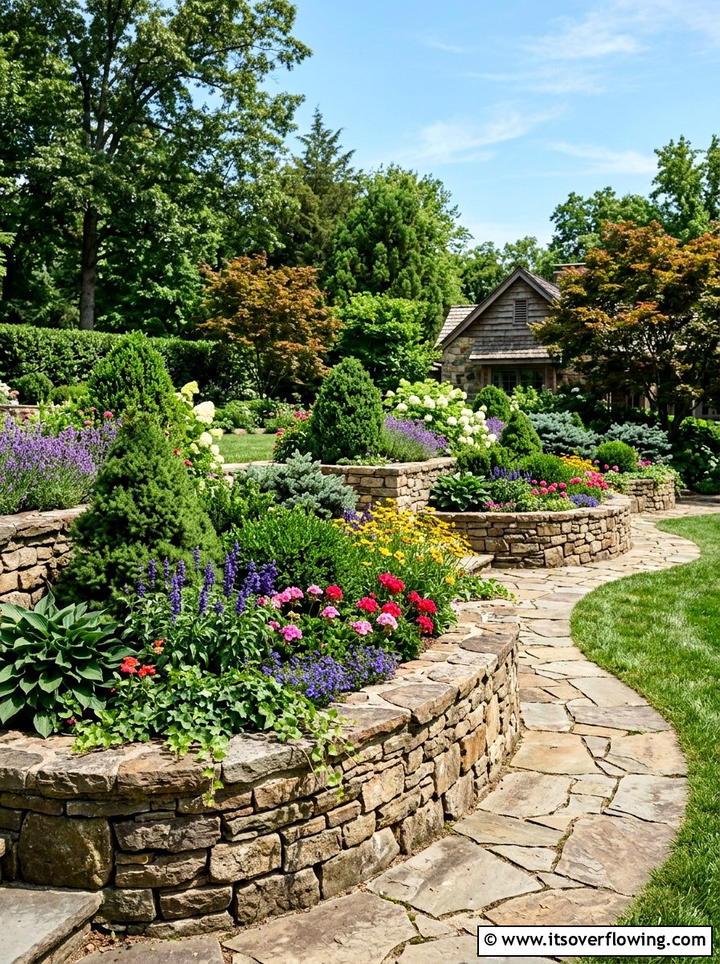
Building raised planters out of natural stone adds a permanent and high-quality structure to your entrance. These planters can be used to level out a sloped yard or define the edge of a porch. They raise the plants closer to eye level, making them more noticeable and easier to maintain. You can fill them with a mix of evergreen shrubs and seasonal annuals for constant color. The stone material coordinates well with many different architectural styles, from rustic to modern. Raised beds also provide better drainage for your plants, which helps them stay healthy. They create a very clean and organized look that significantly improves the overall curb appeal.
11. Hanging Porch Baskets
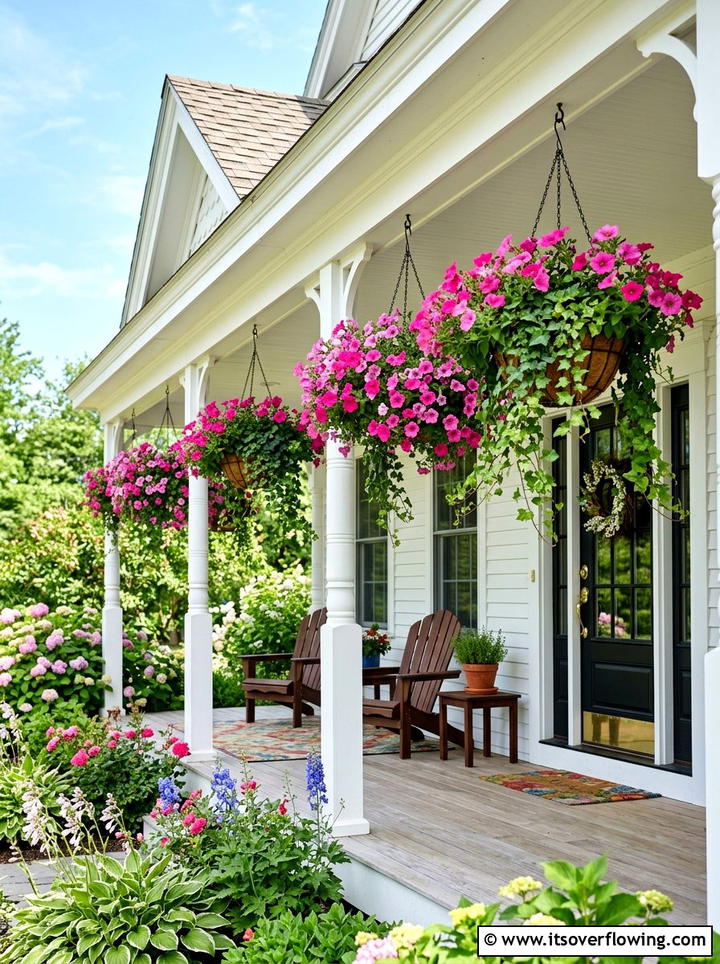
Hanging baskets are a fantastic way to utilize the vertical space under a porch roof. They bring pops of color up to eye level and soften the hard lines of the house. You can fill them with trailing plants like petunias, fuchsias, or ivy that spill gracefully over the sides. Using a variety of different flowers in one basket creates a lush and full appearance. Make sure to hang them at different heights to create more visual interest. They are easy to swap out as the seasons change, ensuring your porch always looks its best. Regular watering is key, as hanging containers tend to dry out quickly in the breeze.
12. Mediterranean Gravel Entry
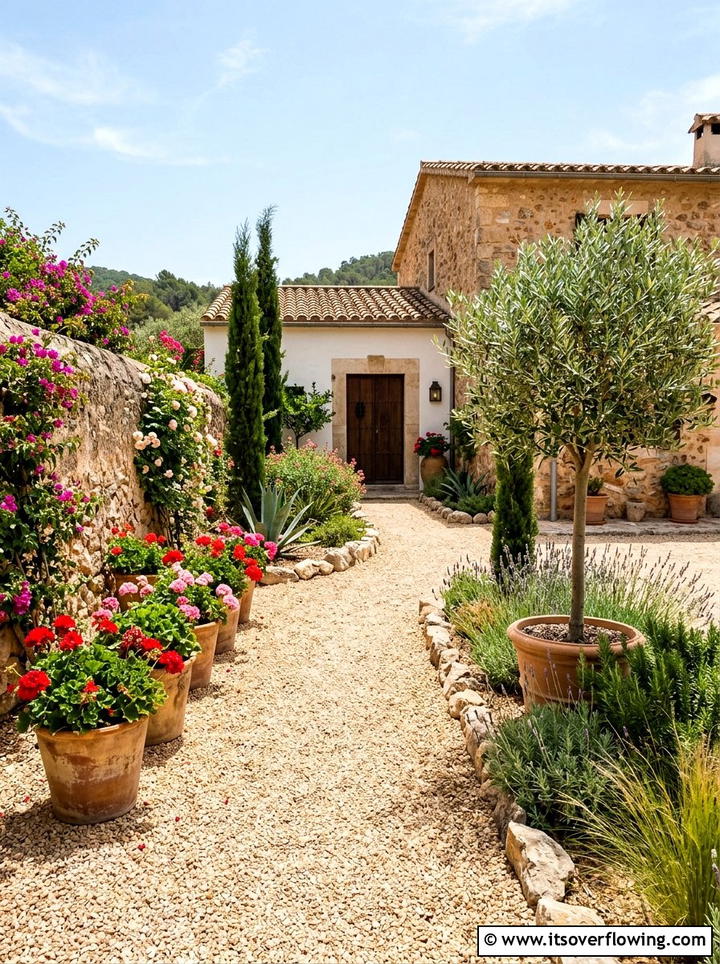
A Mediterranean-style garden uses gravel and drought-tolerant plants to create a sunny and warm vibe. You can use light-colored pea gravel as the main ground cover to reflect heat and light. Incorporate plants like rosemary, olive trees, and terracotta pots filled with bright geraniums. This design is very water-efficient and works well in dry regions. The combination of earthy tones and evergreen herbs creates a very grounded and natural feeling. You can add a small stone bench to provide a place to sit and enjoy the sun. This style is both practical and beautiful, offering a timeless look that requires very little pruning or lawn care.
13. Tiered Retaining Walls
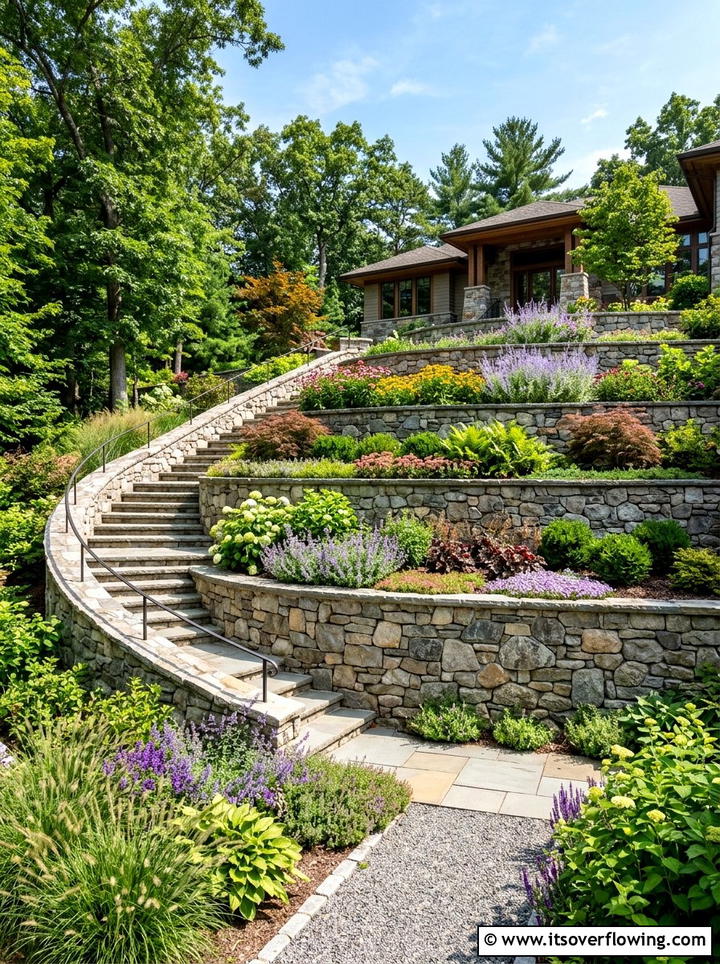
For homes with a steep front yard, tiered retaining walls create beautiful flat levels for gardening. You can use timber, stone, or concrete blocks to build these levels. Each tier can be planted with a different theme or type of plant to create variety. For example, the top tier could have tall shrubs while the bottom tier features low-growing flowers. This prevents soil erosion while adding a lot of visual depth to your entryway. Stairs built into the walls provide a clear path for guests to walk up to the house. It transforms a difficult slope into a stunning landscape feature that adds significant value to your home.
14. Symmetrical Potted Evergreens
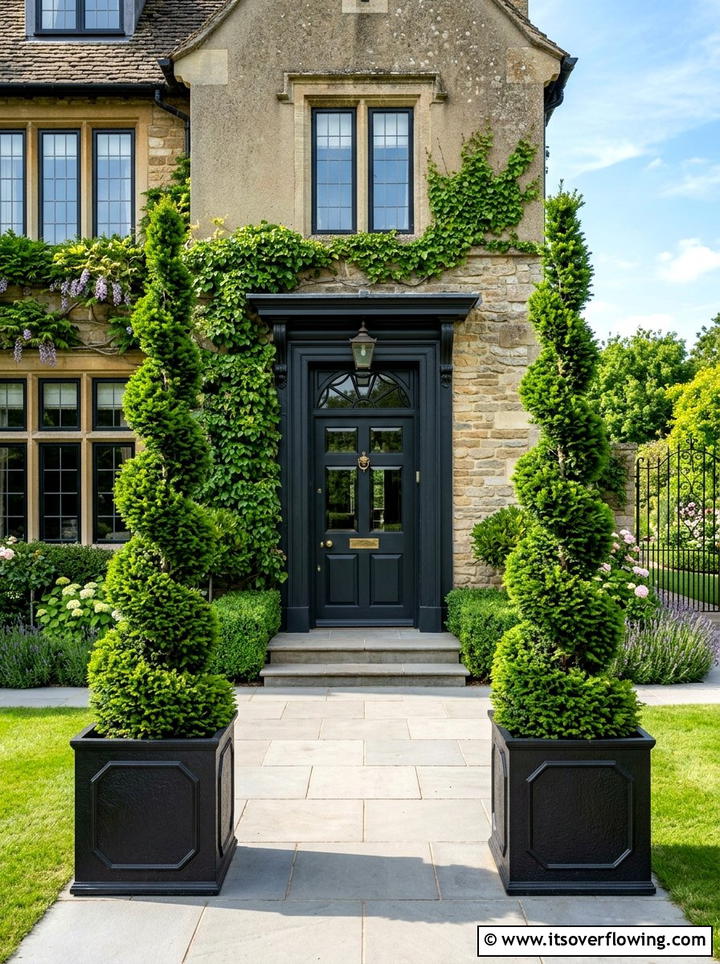
Symmetry is a classic design principle that creates a sense of balance and order at your front door. Placing matching pots with identical evergreen trees on either side of the entrance is very effective. You might choose spiral-trimmed junipers or tall cedar trees for a formal look. This arrangement frames the door and makes the entrance feel much more grand and important. Evergreens are a great choice because they maintain their shape and color all year long. This is a very low-effort way to achieve a high-end look that never goes out of style. It works perfectly for traditional, colonial, or stately home designs with a central front door.
15. Drought Tolerant Succulent Garden
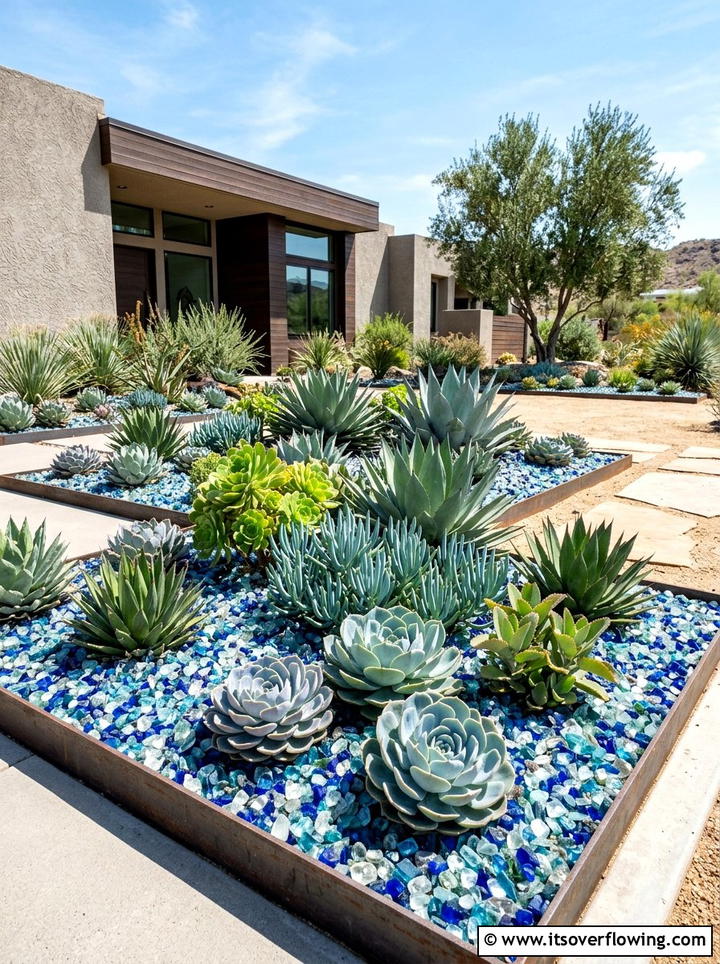
Succulents are an excellent choice for a modern and water-wise entryway garden. They come in a massive variety of shapes, colors, and textures that look like natural art. You can arrange them in a bed of decorative glass or colorful gravel to enhance their unique appearance. Use larger species like agave as focal points and smaller echeverias to fill in the gaps. These plants are incredibly hardy and can survive with very little attention or water. They are perfect for sunny entryways that get a lot of direct heat. This design looks very clean and sophisticated, making it a popular choice for contemporary homes in arid climates.
16. Arched Rose Arbor
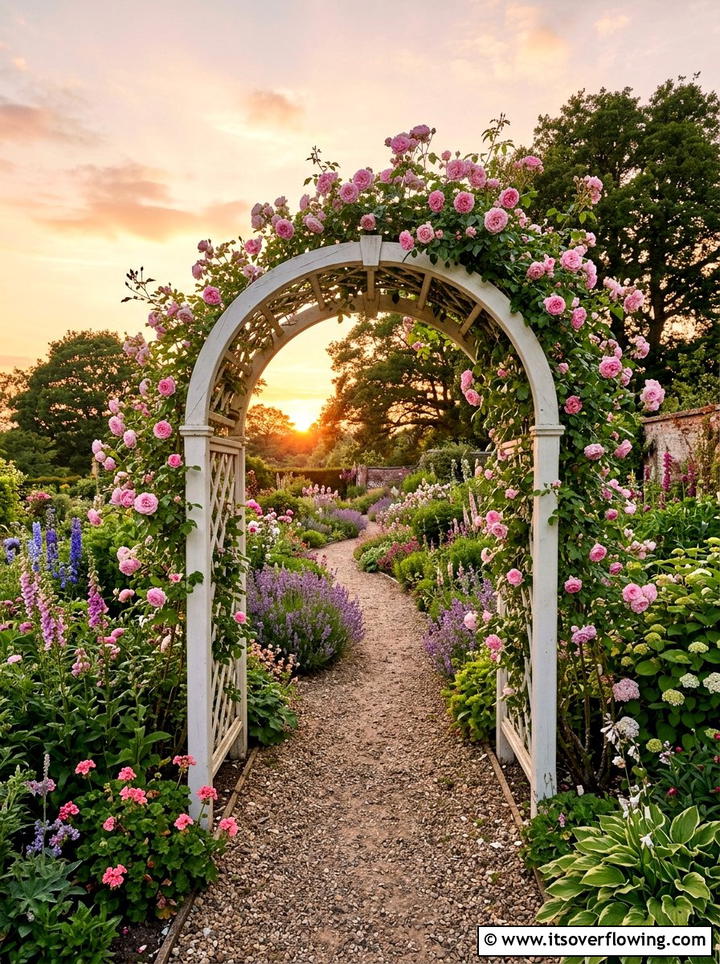
An arbor covered in climbing roses creates a truly magical and romantic entrance for any house. As guests walk under the arch, they are greeted by the sight and scent of beautiful blooms. You can place the arbor at the start of your walkway or right in front of the door. Choosing a classic white or natural wood arbor adds a charming architectural detail to your yard. Roses require some pruning and care, but the visual reward is absolutely worth the effort. This feature acts as a gateway, making the transition into your home feel special. It is a timeless garden element that has been loved for generations.
17. Ornamental Grass Border
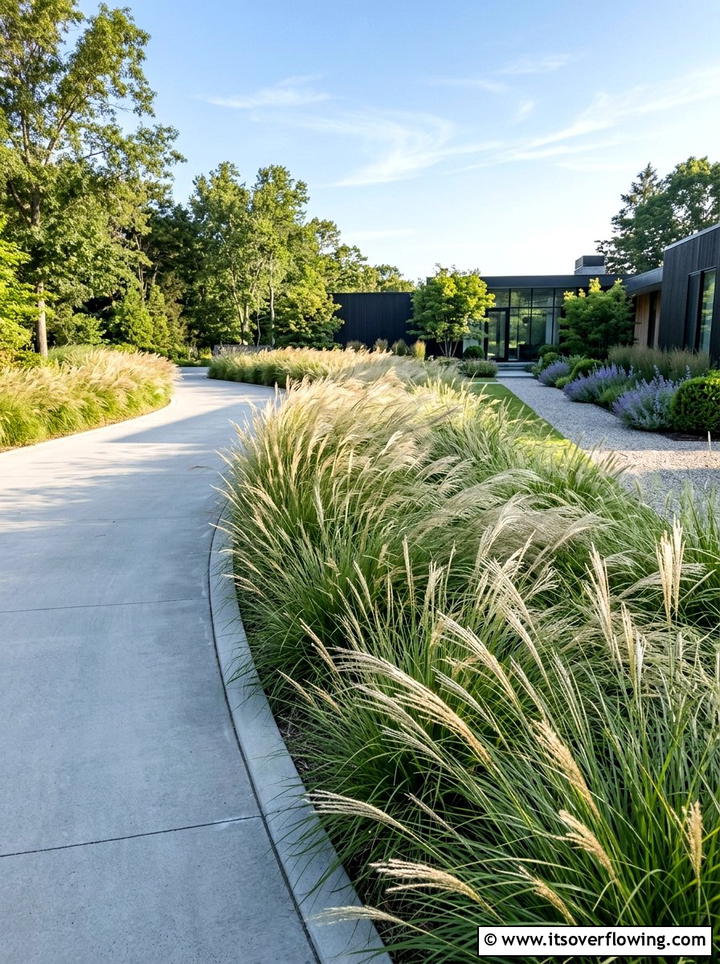
Ornamental grasses add a soft and flowing texture to your entryway that moves beautifully in the wind. Varieties like fountain grass or feather reed grass stay attractive from spring through winter. They can be planted in long rows to define the edge of a driveway or path. Their tall and wispy seed heads add height and a natural feel to the landscape. Grasses are generally very easy to grow and resistant to many common garden pests. They provide a nice contrast to the solid walls of a house and the hard surfaces of a walkway. This minimalist approach is perfect for creating a modern and relaxed entryway look.
18. Japanese Maple Focal Point
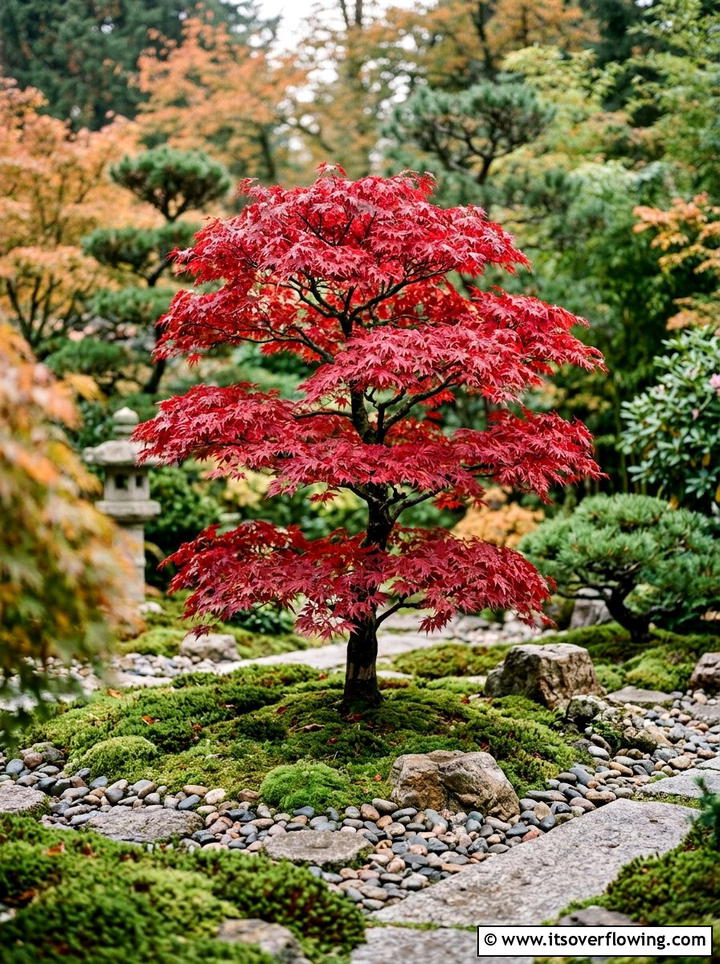
A single Japanese maple tree can serve as a stunning focal point for a small entry garden. These trees are known for their delicate, lacy leaves and incredible fall colors that turn bright red or orange. They grow slowly and stay relatively small, making them ideal for areas near the house. You can plant the tree in a central bed surrounded by low-growing moss or white pebbles. The unique branching structure of the tree looks beautiful even in the winter when the leaves are gone. Placing a small spotlight at the base of the tree highlights its shape during the evening hours. It adds a touch of elegance.
19. Modern Concrete Planters
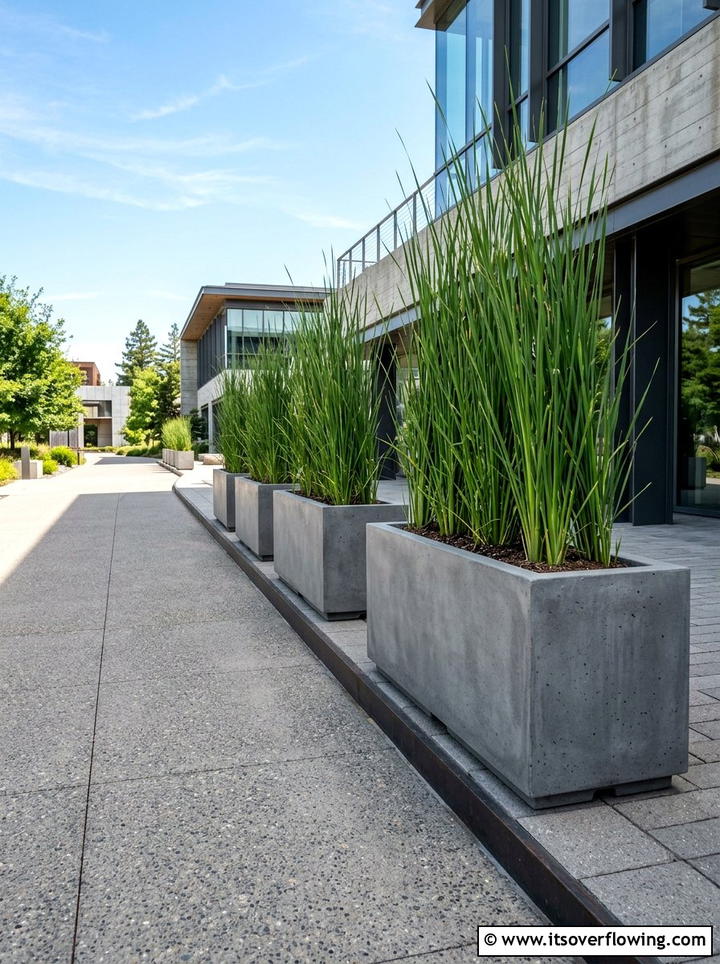
Large concrete planters offer a sleek and industrial look that is very popular in modern design. These heavy-duty containers come in various geometric shapes like cubes, cylinders, or long troughs. You can use them to line a walkway or create a barrier between the driveway and the porch. Planting them with architectural plants like horsetail reed or snake plants emphasizes the clean lines. The gray color of the concrete provides a neutral backdrop that makes the green foliage pop. These planters are very durable and can withstand harsh weather conditions without cracking. They provide a high-end and custom look to your home’s exterior without requiring a permanent installation.
20. Herb Garden Entrance
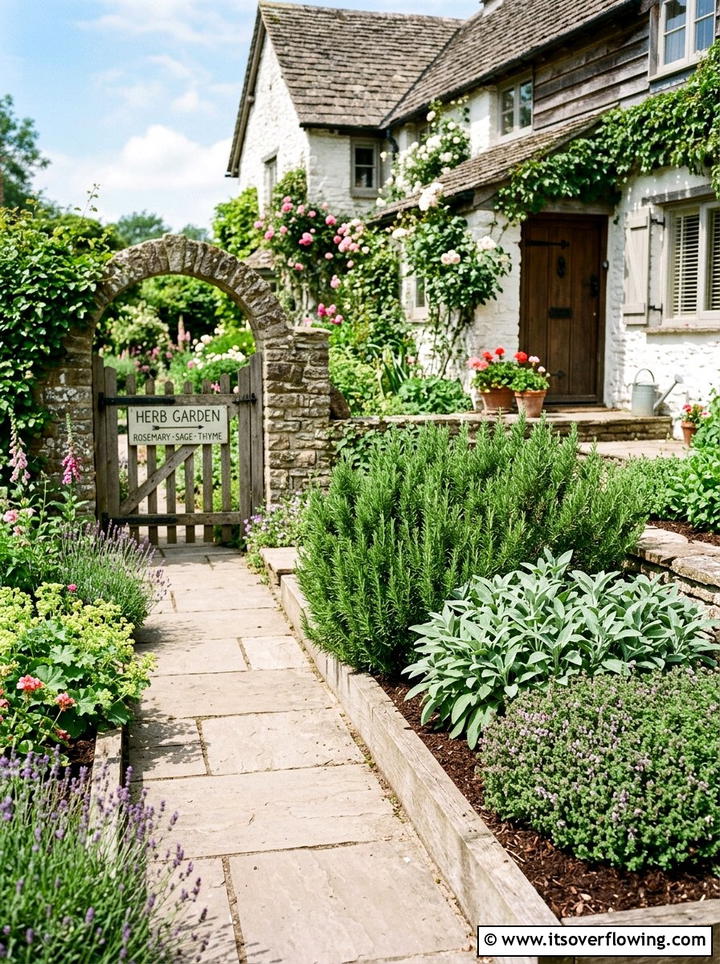
Growing an herb garden near your front door is both beautiful and highly practical for daily use. You can plant aromatic herbs like rosemary, thyme, sage, and mint in organized beds or pots. These plants offer a variety of leaf textures and shades of green that look great together. Every time you walk inside, you will catch the refreshing scent of fresh herbs in the air. This design is perfect for homeowners who enjoy cooking and want easy access to fresh ingredients. It also encourages guests to interact with the garden as they enter your home. Most herbs are very hardy and require minimal maintenance to stay healthy and productive.
21. Low Voltage Pathway Lighting
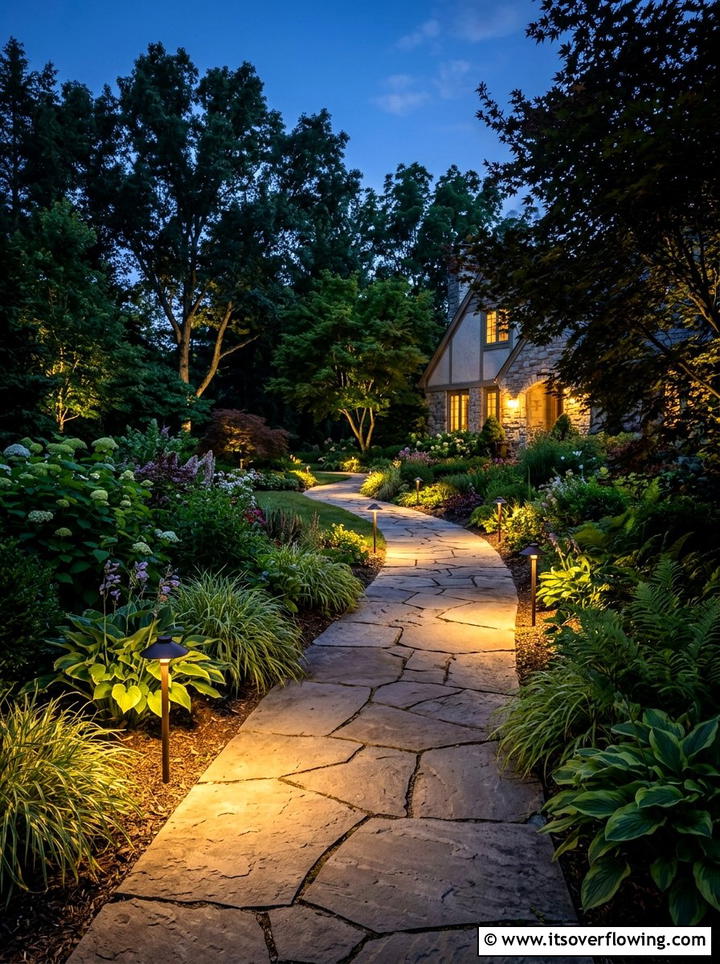
Lighting is a crucial part of garden design that ensures your entryway is safe and beautiful at night. You can install small LED lights along the edges of your path to guide visitors to the door. Uplighting trees or large shrubs creates dramatic shadows and highlights the texture of the foliage. This adds a layer of security to your home while significantly improving its nighttime curb appeal. Modern lighting systems are easy to install and very energy-efficient, using very little power. You can choose from many different styles, from classic lanterns to hidden modern fixtures. Good lighting makes your garden look professional and well-cared for after the sun goes down.
22. Climbing Ivy Wall
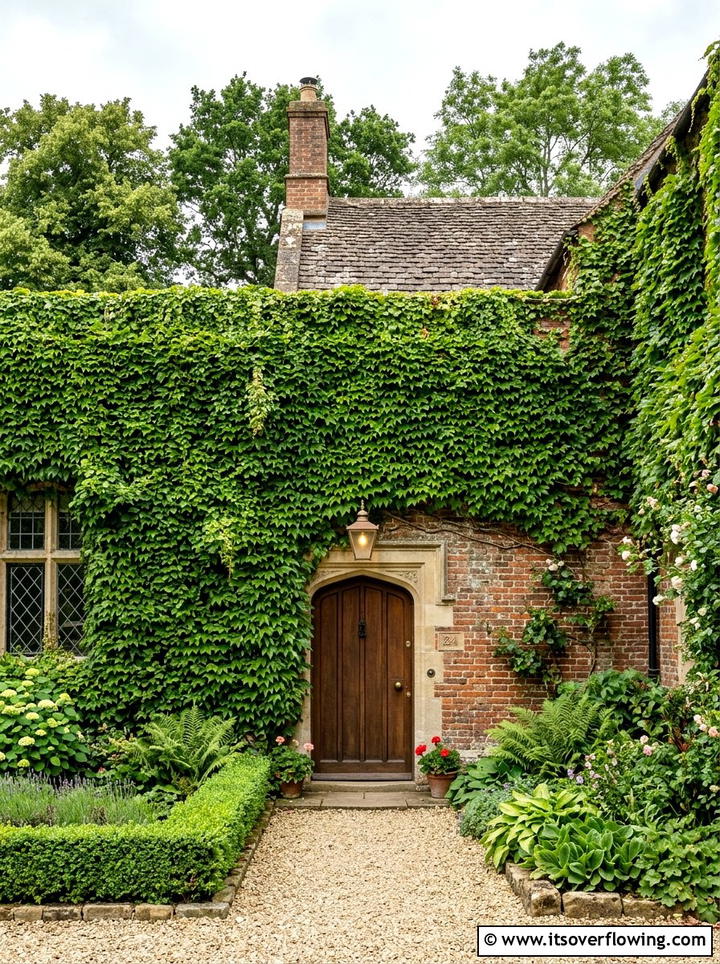
Allowing ivy to grow up the side of your home or a brick wall creates a classic and established look. This thick green covering softens the appearance of hard building materials and adds a touch of mystery. Ivy is very fast-growing and can quickly cover a large area with dense foliage. It stays green all year long, providing a consistent backdrop for your other garden plants. You can trim it around windows and doors to keep the entrance looking neat and tidy. This style is often associated with traditional English cottages or historic estates. It is a great way to hide unsightly walls or create a lush vertical garden.
23. Colorful Perennial Border
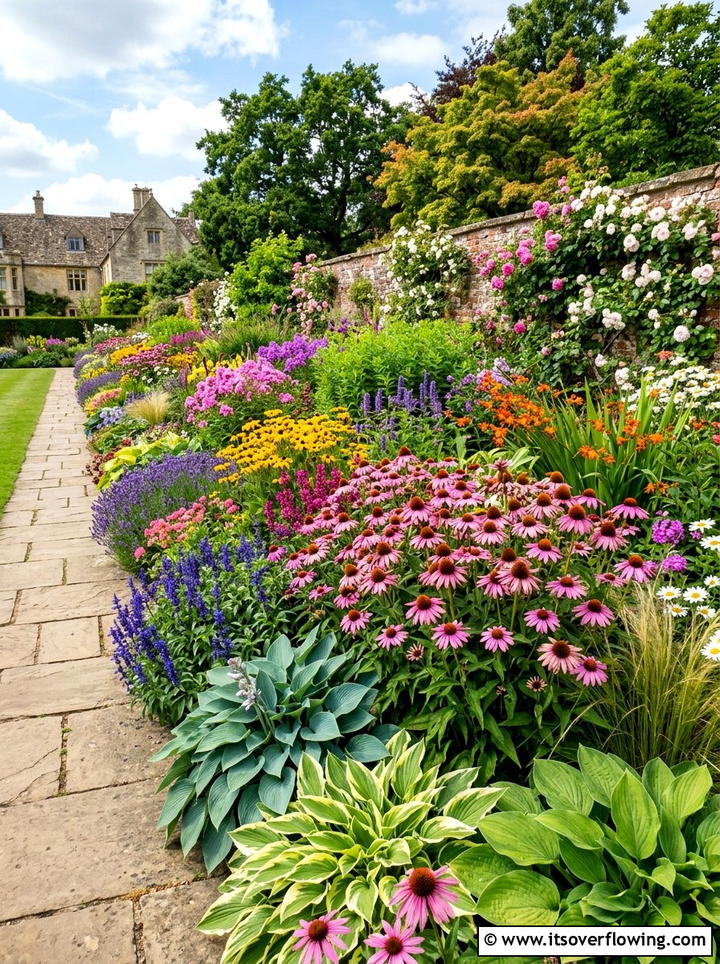
A perennial border is a smart investment because these plants come back year after year. You can design a border with a sequence of blooms that ensures color from early spring to late fall. Mix plants like coneflowers, daylilies, and hostas to create a varied and interesting display. Using different heights ensures that every plant is visible from the walkway. Perennials require less work than annuals because you do not have to replant them every single season. Once they are established, they fill in the space and help naturally crowd out any unwanted weeds. This provides a reliable and beautiful frame for your home’s front entrance area.
24. Small Space Courtyard
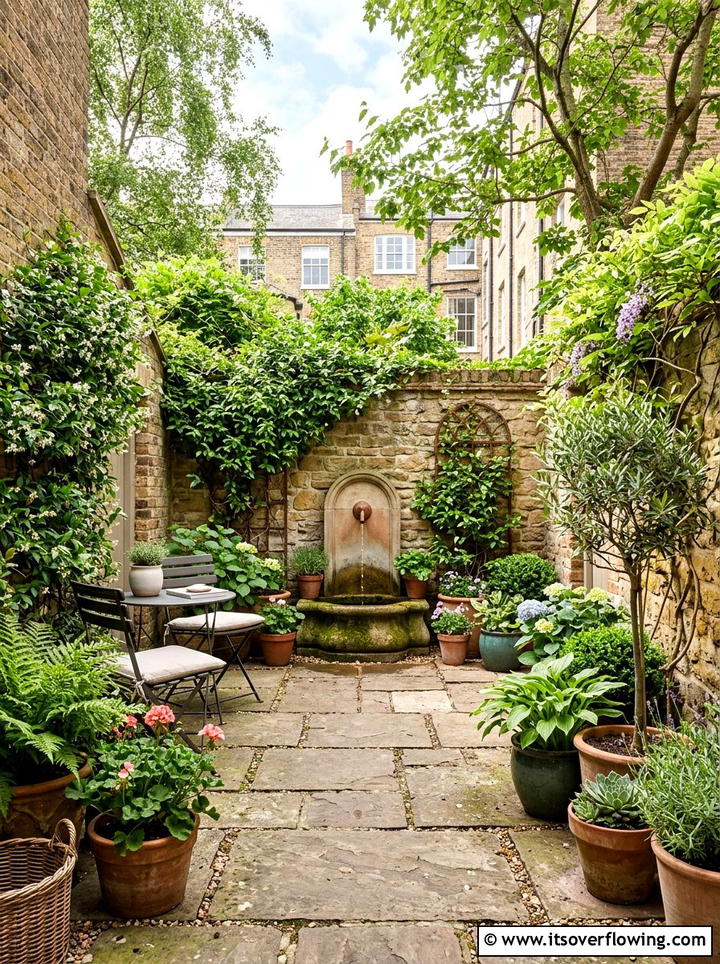
If you have a very small area, creating a mini courtyard can make the space feel much larger. You can use a mix of stone flooring and small garden beds to create an outdoor room. Adding a small water feature like a wall fountain provides a soothing sound that blocks out street noise. Use tall, narrow plants to maximize vertical space without taking up too much ground area. A single chair or a small bistro set can make the entryway feel like a functional part of the home. This design turns a tiny entrance into a private and peaceful retreat. It shows that you do not need much space.
25. Seasonal Porch Display
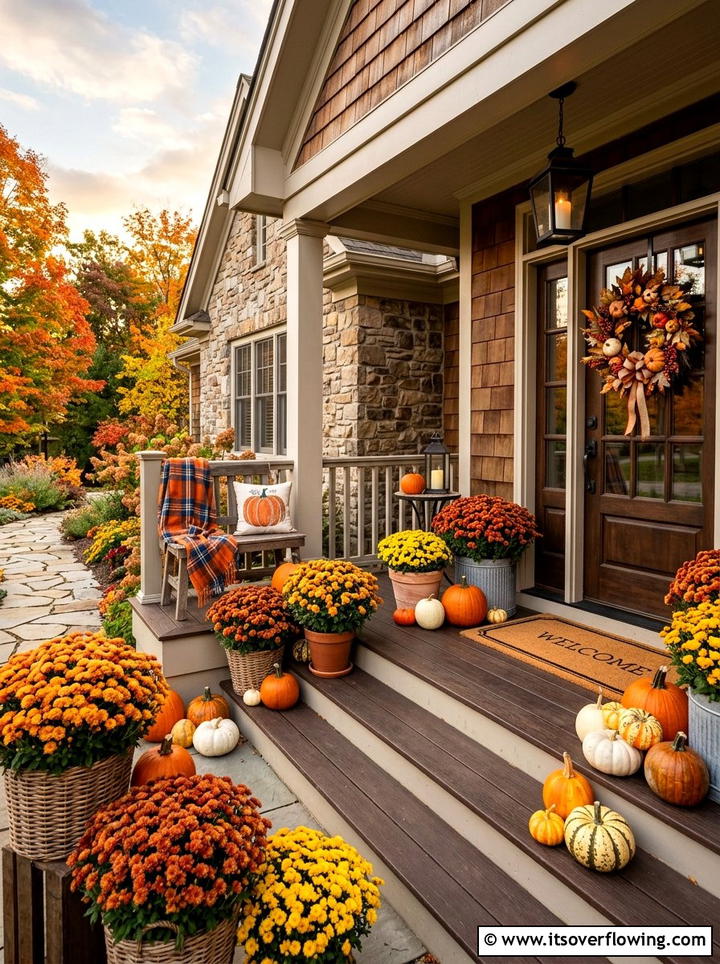
Changing your garden elements with the seasons keeps your home looking fresh and updated throughout the year. You can use seasonal flowers like pansies in the spring or mums in the fall. Adding decorative elements like pumpkins or winter greens helps tie the outdoor space to the time of year. This approach ensures your entryway never looks stagnant or boring for your neighbors. You can rotate your container plants to reflect current weather conditions and upcoming holidays. Using a mix of permanent evergreens and rotating annuals provides a consistent structure with changing colors. This dynamic style is always a favorite for visitors and makes your home feel very festive.
Conclusion:
Designing a beautiful entryway garden is a rewarding project that pays off every time you walk through your front door. It creates a seamless transition between the natural world and your private living space. By choosing the right plants and layout, you can enhance the architectural features of your home while expressing your unique creativity. Remember to consider your local climate and the amount of sunlight your entrance receives throughout the day. A well-planned garden adds value to your property and provides a warm welcome to everyone who visits. We hope these various ideas inspire you to start your own landscaping journey today. Your dream entrance is just a few plants away.

Related posts:
 25 Garden Design Ideas With Pathways for Beautiful Garden Flow
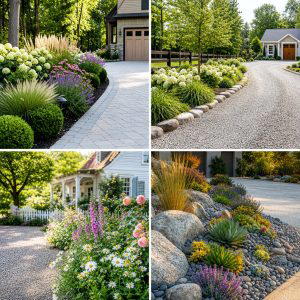 25 garden design ideas for driveways for Beautiful Curb Appeal
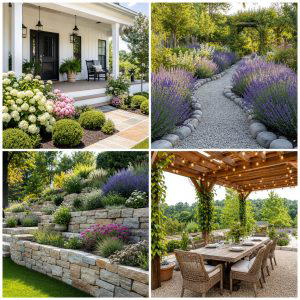 25 Garden Design Ideas for Farmhouse Landscapes With Rustic Charm
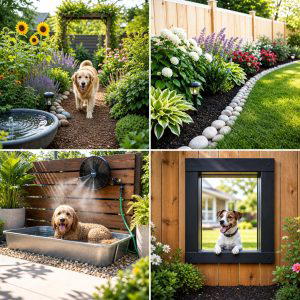 25 Garden Design Ideas for Pet Friendly Yards and Happy Pets
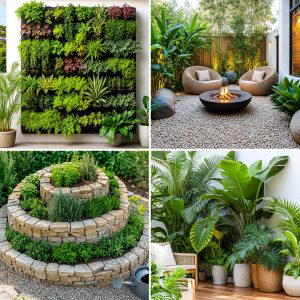 25 garden design ideas for small yards: Big Style, Tiny Spaces
 25 garden design ideas with curves for Flowing Spaces Now
 25 garden design ideas with evergreen structure: Year-Round
 25 garden design ideas with lighting plans: Bright Outdoor Style
 25 Garden Design Ideas With Native Grasses for Natural Style
 25 Garden Design Ideas With Privacy Screens for Secluded Yards
 25 Garden Design Ideas With Texture for a Lush Yard Look
 25 Garden Design Ideas With Vertical Gardens for Small Yards