
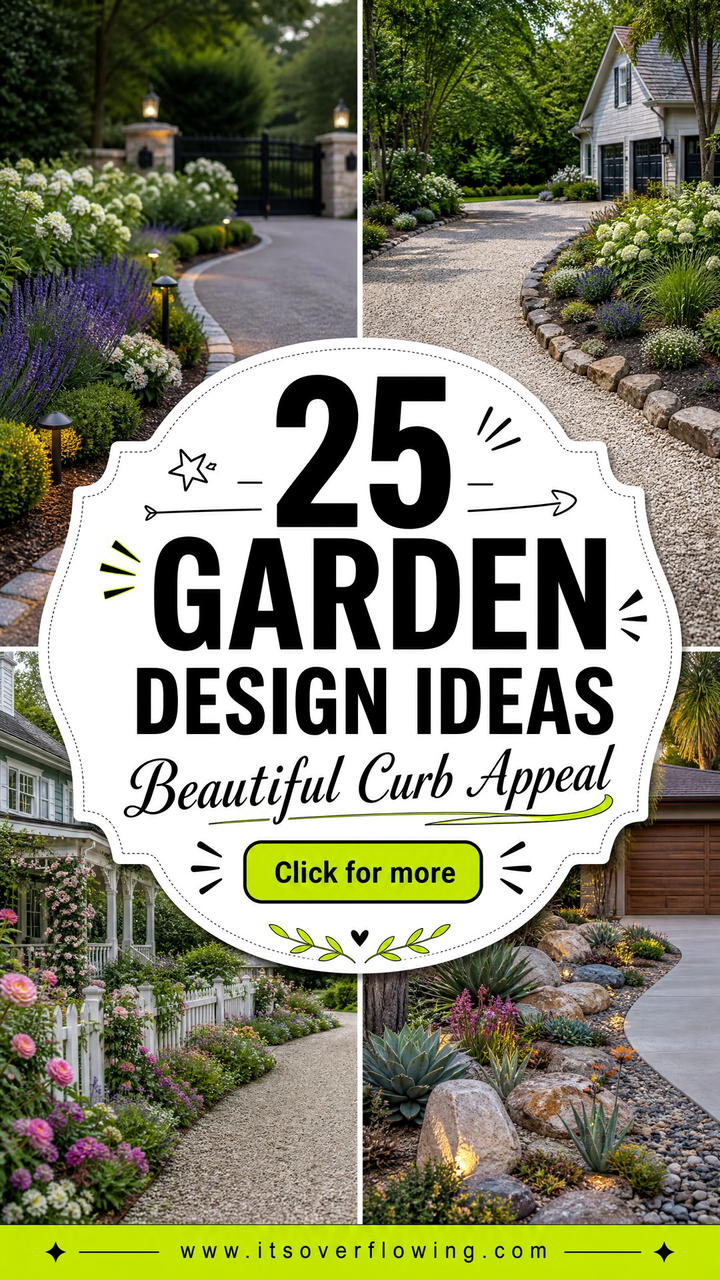
Your driveway is often the very first thing people notice when they arrive at your home, making it a vital part of your overall curb appeal. Transforming a plain functional path into a beautiful landscape requires a thoughtful approach to garden design that balances hardscaping with lush greenery. By integrating plants, textures, and thoughtful layouts, you can turn a standard parking area into a welcoming entrance that reflects your personal style. Whether you prefer a modern minimalist look or a sprawling cottage feel, the right botanical choices soften harsh lines and create a seamless transition between the street and your front door for a polished look.
1. Driveway border planting
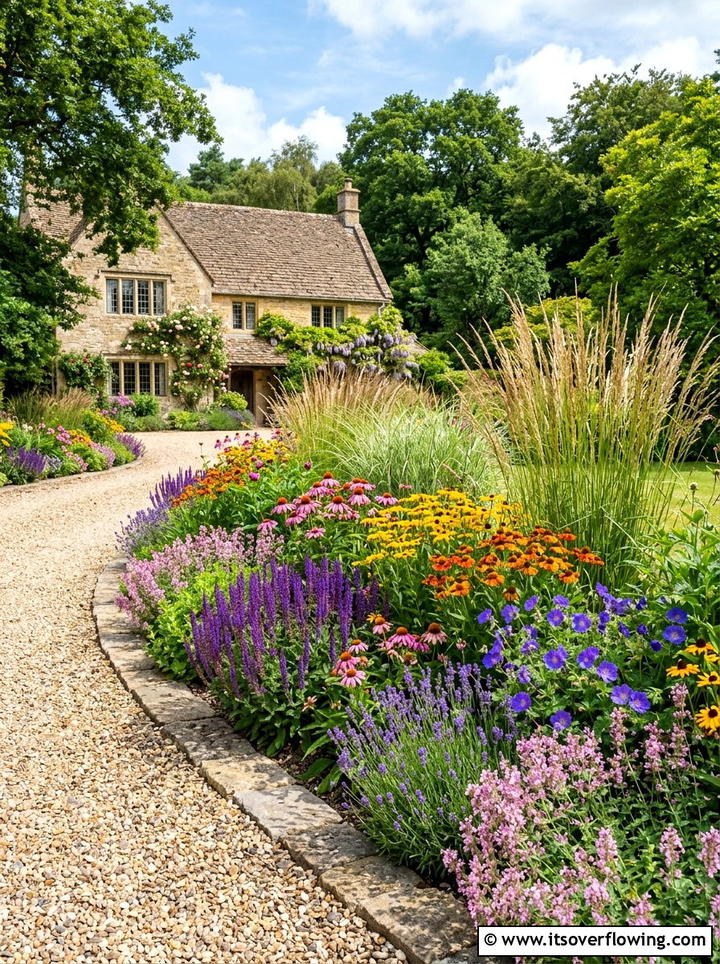
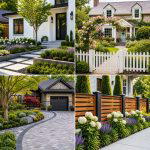
Creating a beautiful entrance starts with the right driveway border planting to frame your property perfectly. You can use a mix of perennial flowers and evergreen shrubs to ensure your home looks inviting throughout every season of the year. Layering different heights is a smart way to add depth and visual interest to a flat space. Start with shorter groundcovers near the pavement and gradually move to taller ornamental grasses or flowering bushes as you get closer to the house. This technique softens the harsh edges of concrete or asphalt and makes the transition from the street feel much more natural and welcoming for your guests.
2. Permeable paver grass
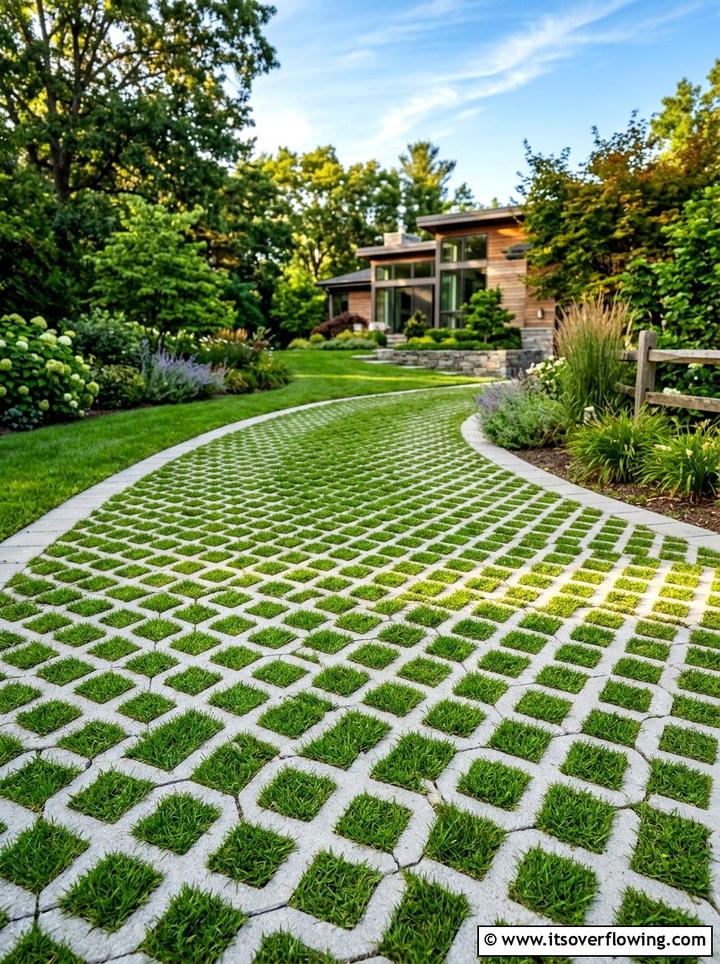
Many homeowners are choosing permeable paver grass to solve drainage issues while keeping their front yard looking green and vibrant. This setup uses open-cell concrete or plastic grids that allow grass to grow through the holes, creating a checkered or honeycomb pattern. It is an excellent choice for those who want a driveway that feels more like a part of the lawn than a solid slab of stone. Not only does this reduce rainwater runoff, but it also stays much cooler in the summer heat than traditional asphalt. It provides a modern, eco-conscious aesthetic that blends perfectly with minimalist or contemporary home architectures today.
3. Gravel driveway landscaping
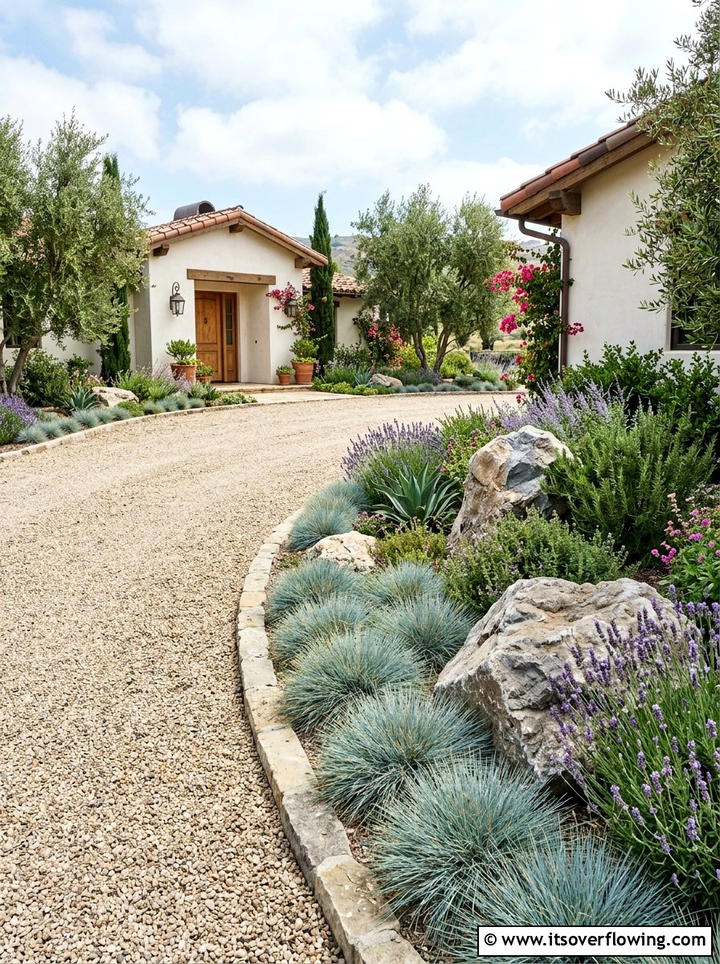
If you want a rustic or Mediterranean feel, gravel driveway landscaping offers a charming texture and a satisfying crunch underfoot. To keep the loose stones from looking messy, you should use sturdy metal or stone edging to define the boundaries of the driving surface. Incorporating large boulders and drought-tolerant plants like agave or blue fescue along the sides helps to anchor the space. This style is incredibly low maintenance and works well for long rural paths or small urban parking pads. The neutral tones of the gravel provide a beautiful backdrop that makes the green foliage of nearby plants pop with vibrant color.
4. Driveway entrance flower beds
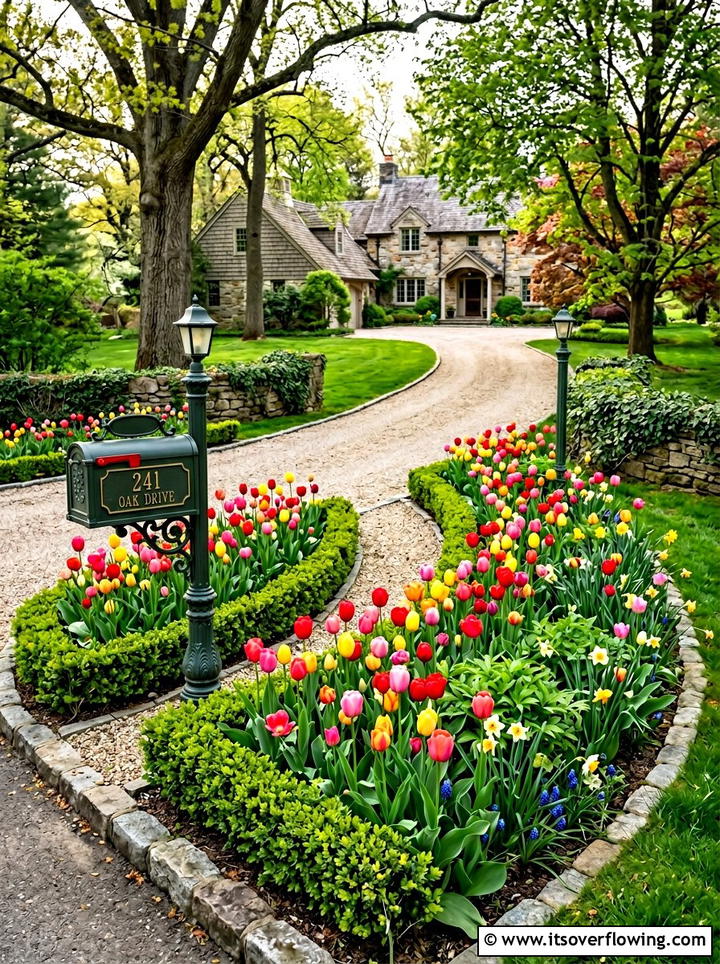
Is there anything more welcoming than large, colorful driveway entrance flower beds that greet you as you pull into your home? Focusing your landscaping efforts at the very start of the driveway creates an immediate focal point that boosts curb appeal instantly. You can choose a symmetrical look with matching beds on both sides of the entrance to create a sense of formal elegance. Incorporating a mix of seasonal bulbs, like tulips or daffodils, ensures that your garden feels fresh and new as the weather changes. Adding a few large boulders or a decorative mailbox can help ground the space and provide structure.
5. Modern concrete driveway strips
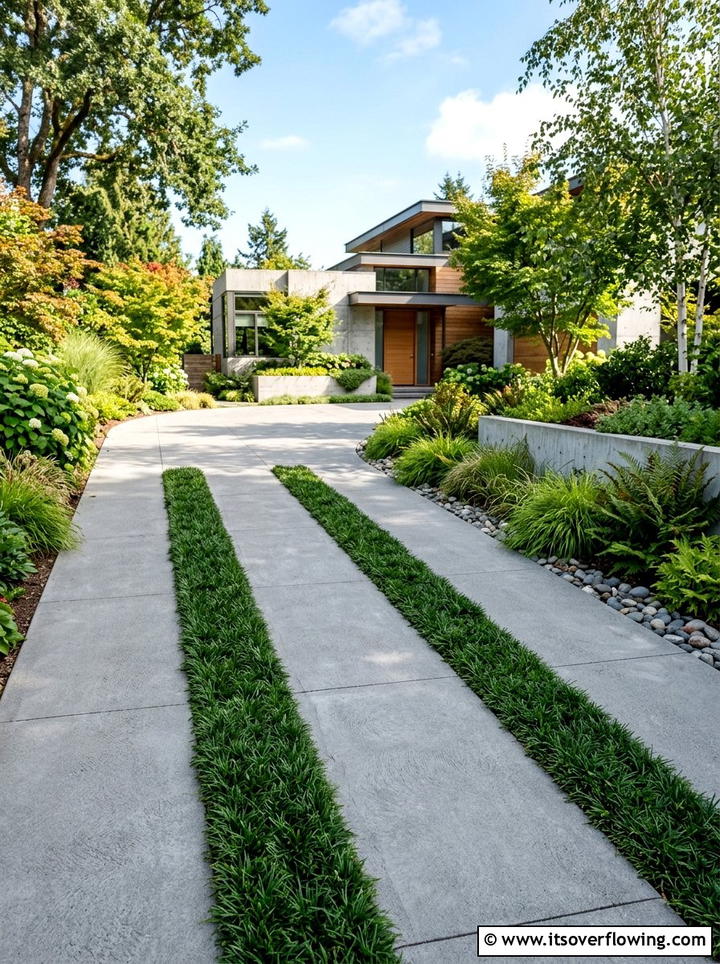
For a clean and sophisticated look, modern concrete driveway strips use parallel slabs of pavement with narrow gaps filled with low-growing greenery. This design emphasizes linear movements and geometric patterns, which are hallmarks of contemporary outdoor style. You can fill the center and side strips with durable groundcovers like creeping thyme or Mondo grass that can handle occasional foot traffic. This approach breaks up the massive look of a solid driveway, making the front yard feel more like a garden and less like a parking lot. It is a perfect solution for smaller urban homes looking to maximize their green footprint.
6. Low maintenance driveway greenery
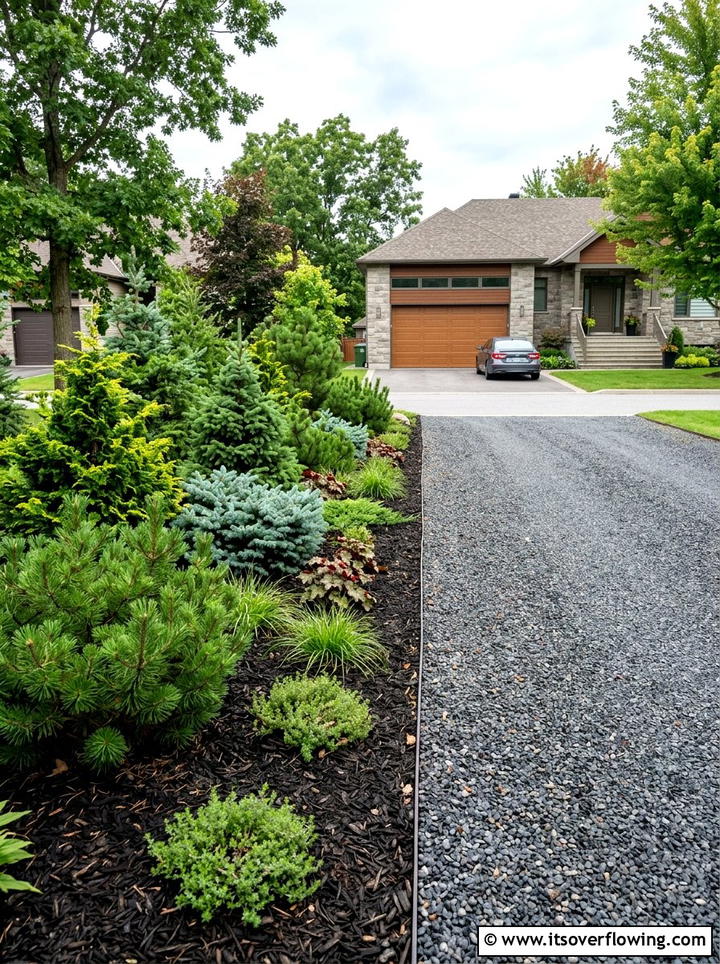
Busy homeowners often prefer low maintenance driveway greenery that looks lush without requiring constant pruning or watering every single day. Selecting hardy evergreen shrubs, such as dwarf conifers or boxwoods, provides structure and color throughout the winter months without much effort. You can also use wood mulch or decorative river rocks around the base of the plants to suppress weeds and retain soil moisture. This type of design focuses on slow-growing species that maintain their shape naturally over time. By choosing the right plants for your local climate, you can enjoy a polished and professional look with very minimal weekend chores.
7. Retaining wall driveway garden
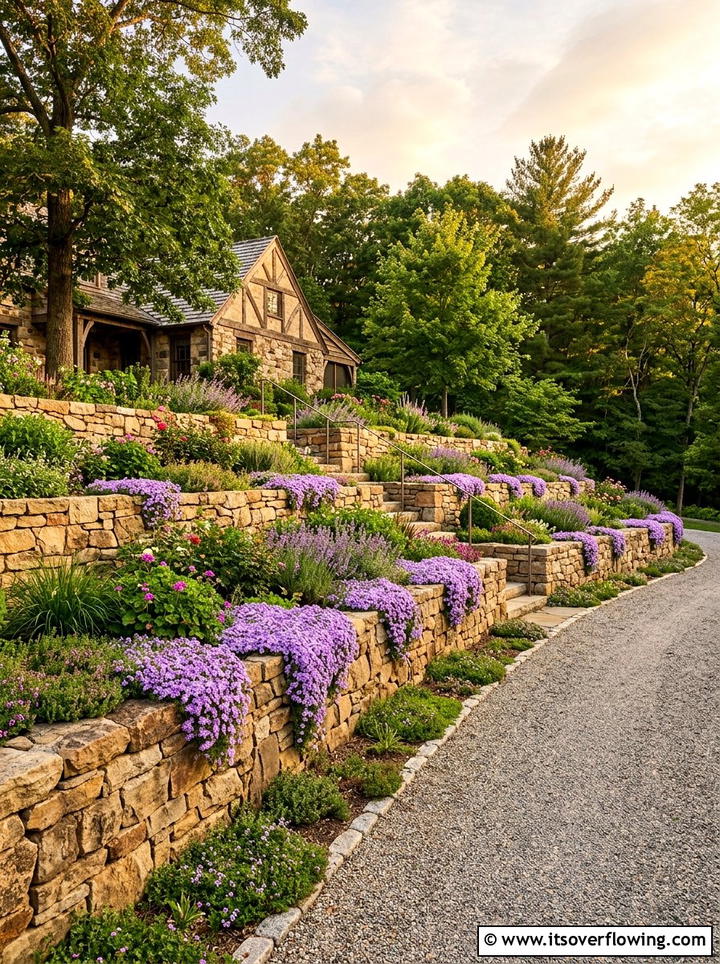
If your property has a slope, a retaining wall driveway garden is a practical and stunning way to manage elevation changes. Using natural stone or tiered timber walls allows you to create flat planting pockets that can be filled with cascading flowers and trailing vines. Creeping phlox or rosemary look beautiful as they spill over the edges of the wall, softening the appearance of the hard masonry. This design turns a functional necessity into a multi-dimensional garden that adds significant value to your home. It also prevents soil erosion while providing a clear, defined boundary for your vehicle as you park.
8. Driveway privacy hedge
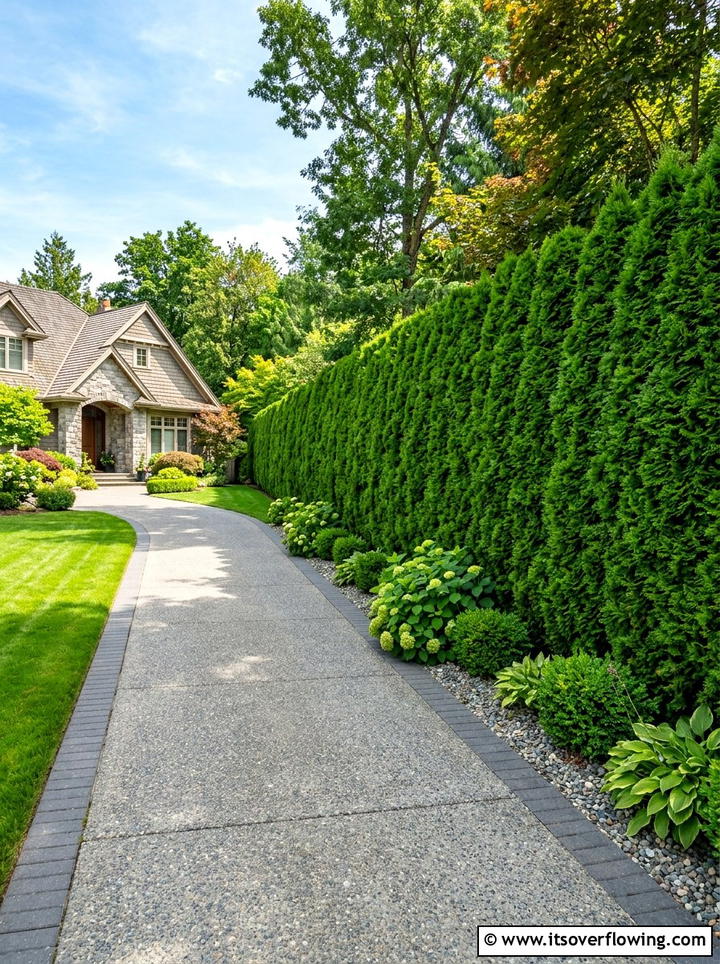
If you want to create a secluded retreat, a driveway privacy hedge serves as a living fence that blocks views from the street. Tall, dense evergreens like arborvitae or cherry laurel are popular choices because they provide a solid green wall all year long. This design not only adds a sense of security but also helps to dampen noise from passing traffic or neighbors. You can keep the hedge neatly trimmed for a formal look or let it grow more naturally for a relaxed, woodland vibe. Adding a few flowering shrubs in front of the hedge can provide extra layers of color and texture.
9. Cottage garden driveway edge
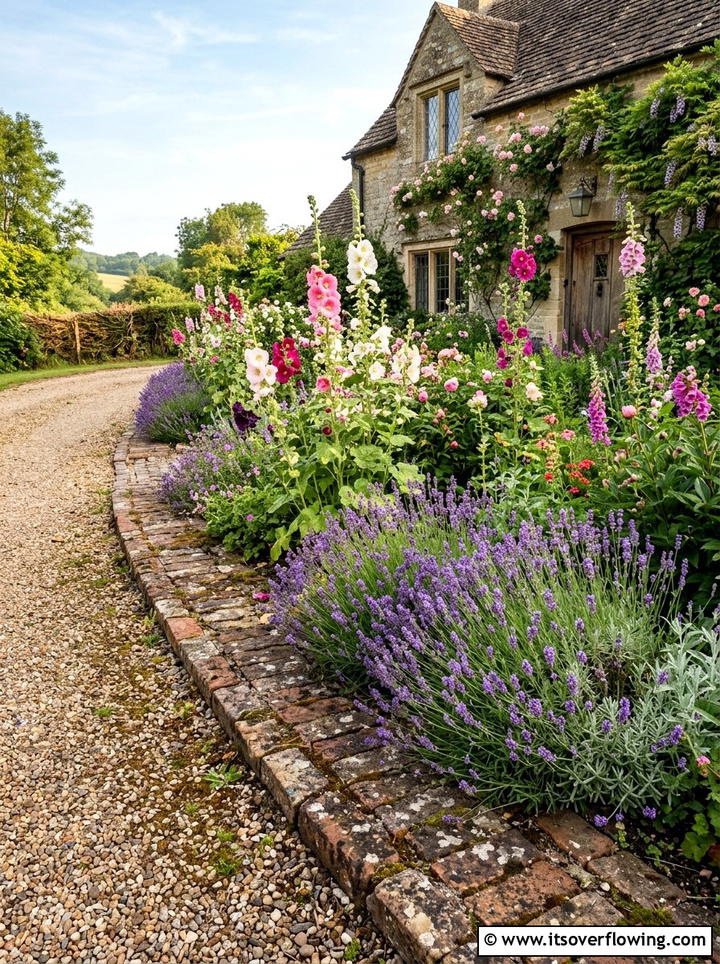
A cottage garden driveway edge is perfect for those who love a romantic, slightly wild look filled with abundance and variety. You can pack the borders with traditional favorites like foxgloves, delphiniums, and hollyhocks that grow to different heights and bloom at different times. This style encourages a mix of colors and textures, creating a soft and whimsical frame for your vehicle path. Using reclaimed bricks or weathered stones for the edging can enhance the vintage feel of the space. It is a wonderful way to attract pollinators like bees and butterflies, making your driveway a thriving part of the local ecosystem.
10. Succulent driveway border
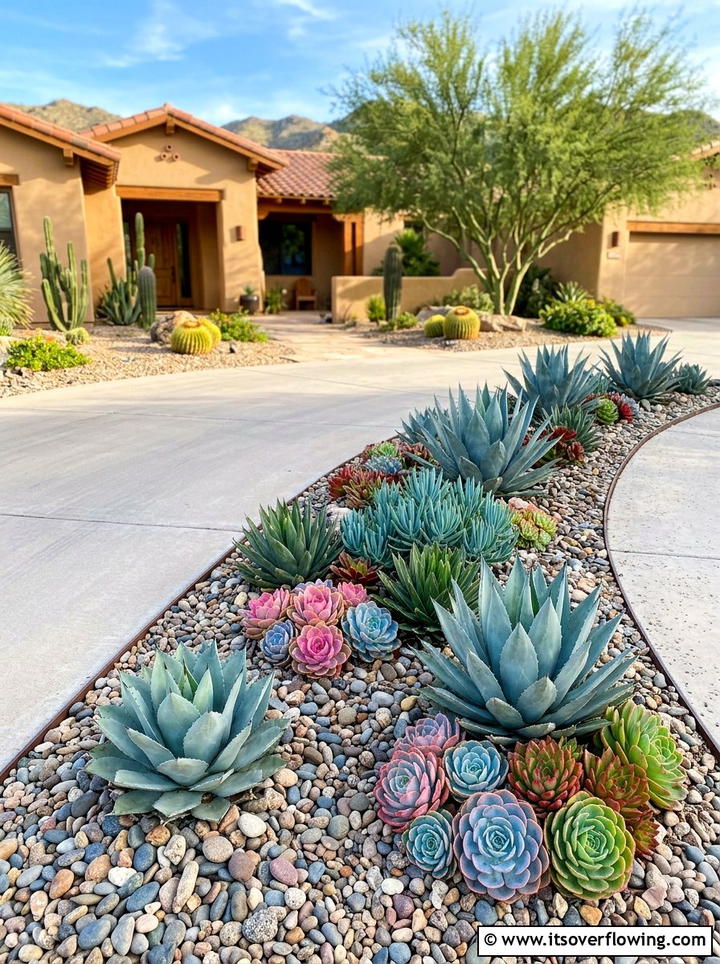
In warmer or more arid climates, a succulent driveway border provides a striking and sculptural look that requires very little water. You can combine different varieties of echeveria, sedum, and aloe to create a tapestry of blues, greens, and purples along the edge. These plants are incredibly resilient and thrive in the reflected heat that often radiates off of dark driveway surfaces. Adding a layer of small decorative pebbles between the plants helps with drainage and gives the garden a finished, desert-inspired appearance. This design is modern, clean, and perfectly suited for homeowners looking to save on their monthly water bills.
11. Ornamental grass driveway
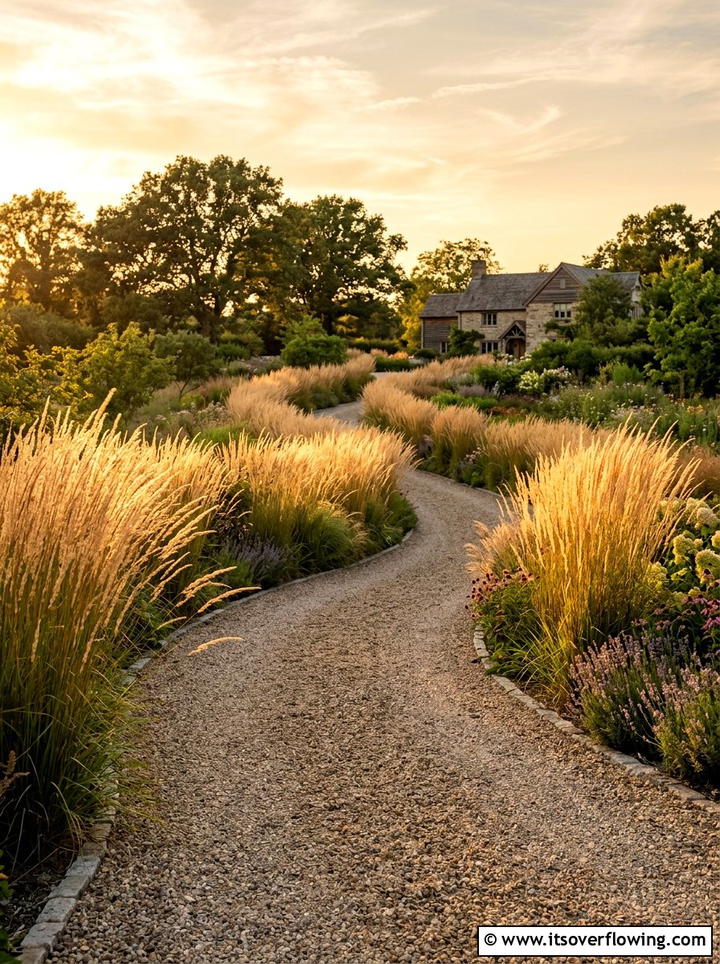
Using ornamental grass driveway landscaping is an excellent way to add movement and sound to your front yard as the wind blows. Species like fountain grass, switchgrass, or feather reed grass create tall, airy plumes that catch the light beautifully during the golden hour. These grasses are generally very hardy and provide visual interest even in the winter when they turn a golden tan color. They work well as a soft buffer between the driveway and the rest of the lawn, providing a bit of height without the density of a traditional hedge. This style is low-maintenance and fits well with naturalistic designs.
12. Driveway lighting landscaping
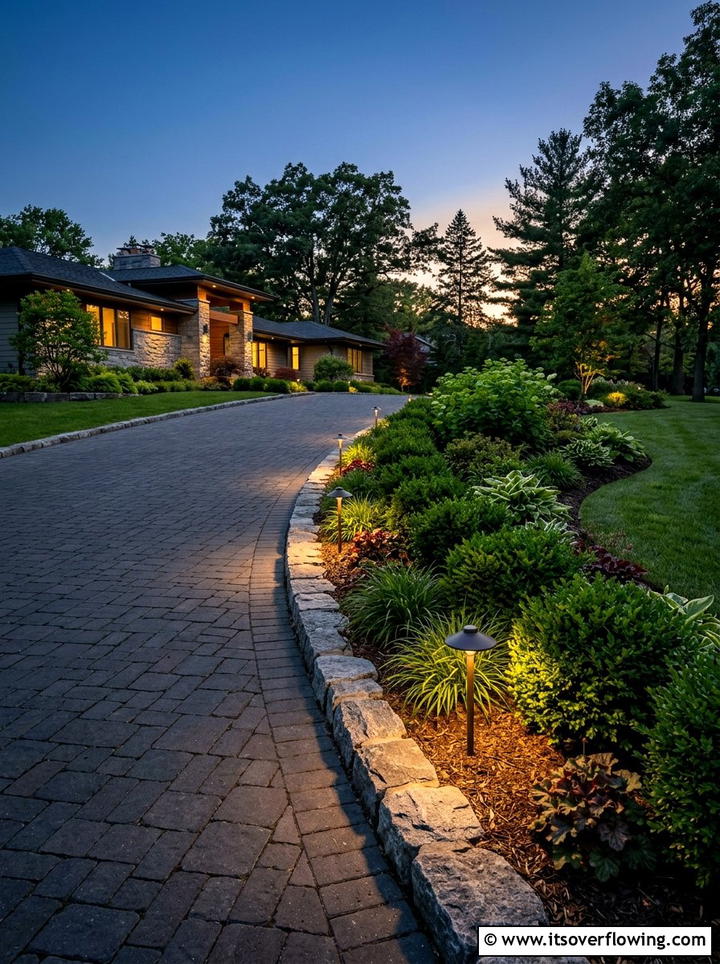
Effective driveway lighting landscaping ensures that your garden remains visible and safe to navigate long after the sun has gone down. You can tuck small LED path lights into your flower beds to highlight the edges of the driveway and illuminate your favorite plants. Up-lighting a few specimen trees or large shrubs creates dramatic shadows and a sense of depth in the front yard. Solar-powered stakes are an easy, wire-free option, while low-voltage wired systems offer a more permanent and consistent glow. Well-placed lights not only improve security but also make your home look warm and inviting during the evening hours.
13. Paver driveway with moss
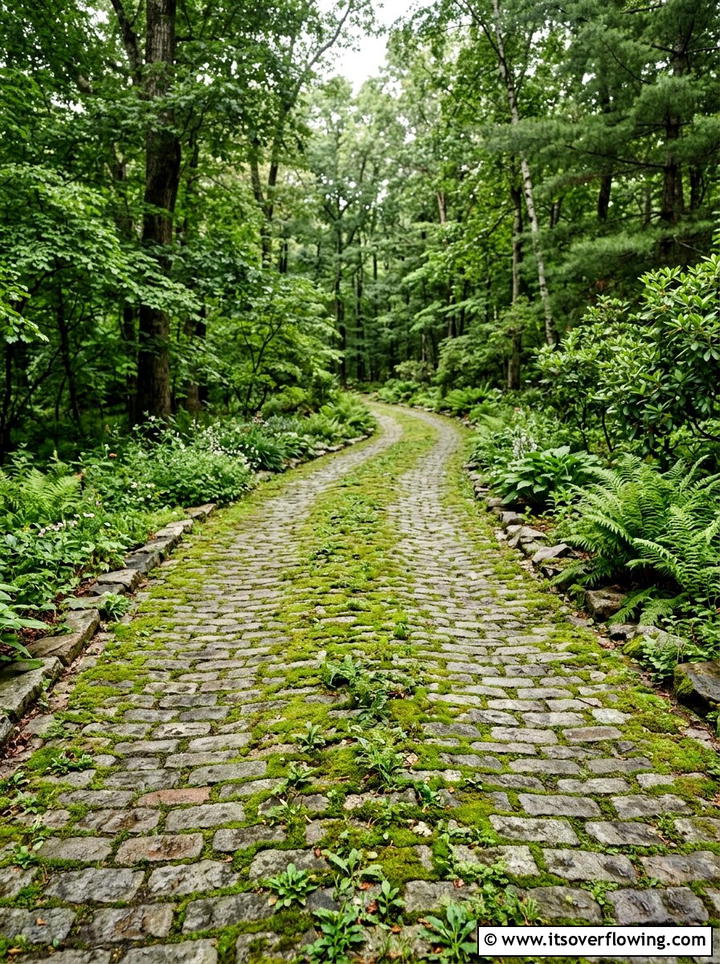
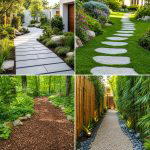
A paver driveway with moss growing in the joints creates an old-world, enchanting look that feels like it has been there for decades. This design works best in shaded areas where moisture is naturally present, allowing the soft green moss to thrive between the stones. It creates a beautiful contrast against grey or earth-toned pavers, softening the overall geometric pattern of the ground. Moss is a great alternative to grass because it never needs mowing and stays low to the ground. This approach is ideal for historic homes or forest-inspired landscapes where a natural and weathered appearance is desired by the owner.
14. Tropical driveway plants
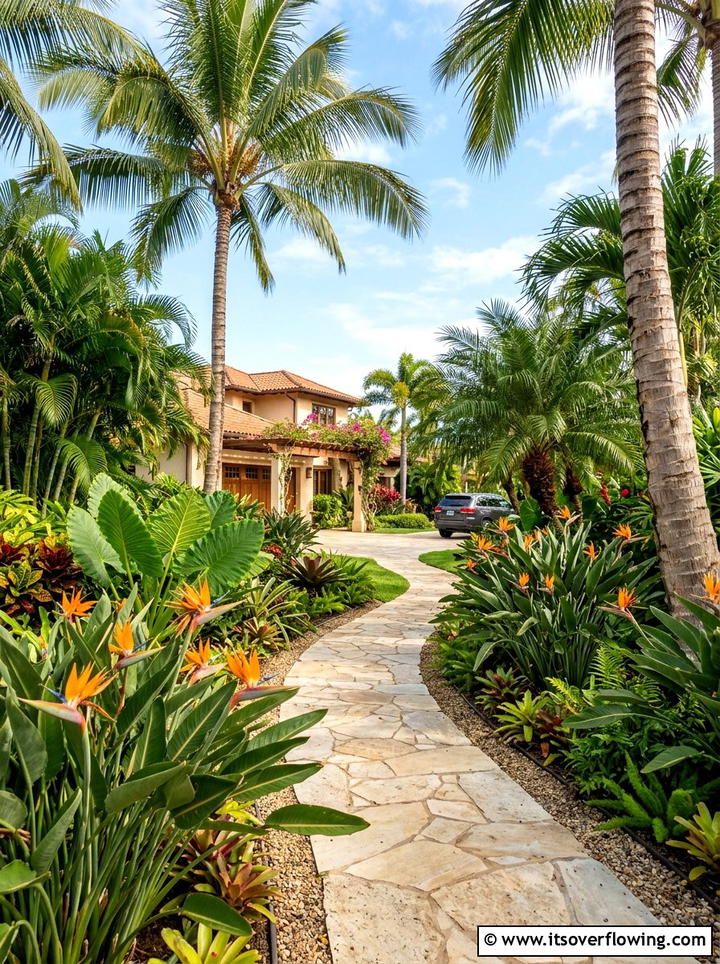
If you live in a warm region, using tropical driveway plants can make your home feel like a permanent vacation destination every day. Large-leafed varieties like bird of paradise, hibiscus, and various palm species create a lush and exotic atmosphere that makes a bold statement. Bold colors and oversized foliage help to fill large spaces quickly, providing plenty of greenery to frame your parking area. You should consider the mature size of these plants to ensure they do not overgrow the path or scratch your car. Pairing these plants with dark mulch or light-colored stones creates a high-contrast, high-impact look for the entrance.
15. Driveway rock garden
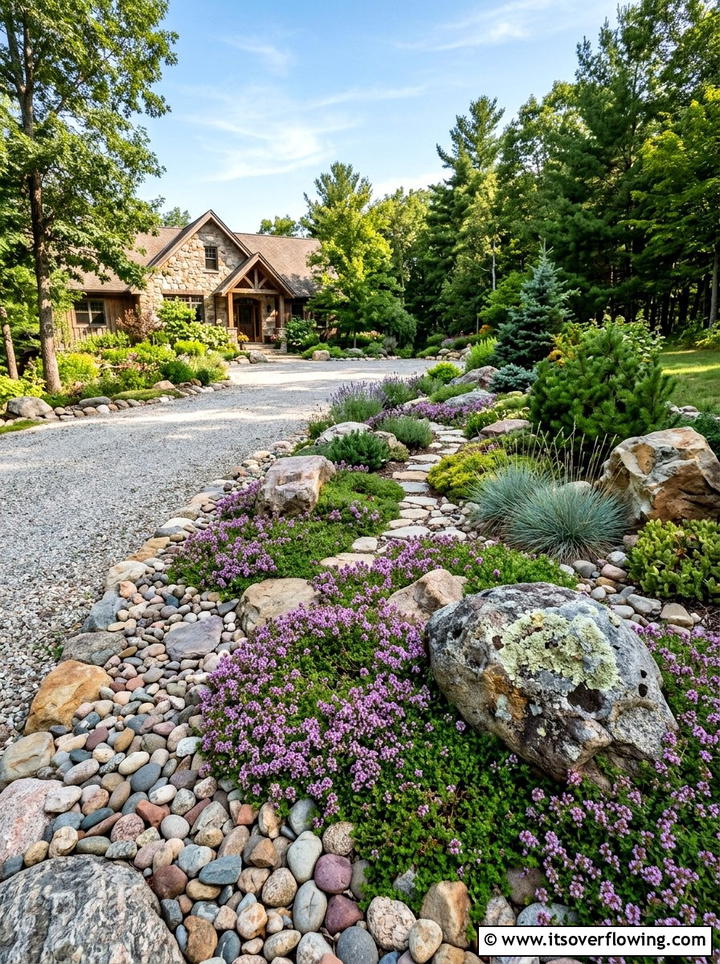
A driveway rock garden is a durable and stylish solution for areas that might be too harsh or dry for traditional lawns. By combining different sizes of river rocks, gravel, and large decorative boulders, you can create a rugged landscape that looks completely natural. You can tuck small, hardy alpine plants or herbs like creeping thyme into the crevices between the stones for a touch of life. This design is particularly effective for sloped driveways or corners where grass is difficult to maintain. It provides excellent drainage and creates a clean, structured look that remains beautiful throughout every season without any watering.
16. Perennial driveway border
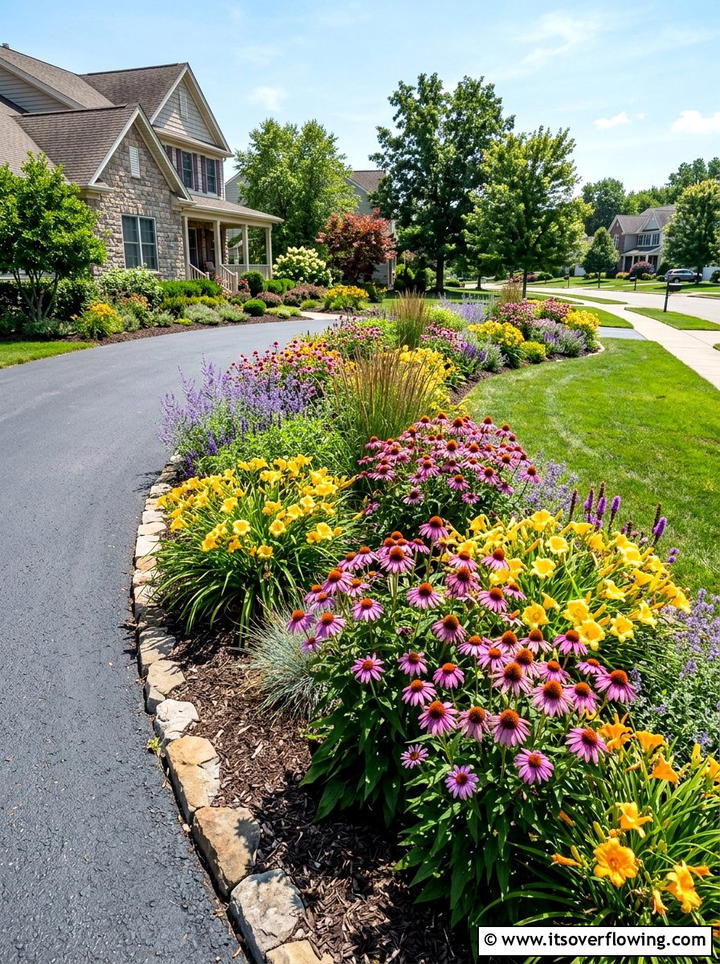
Planning a perennial driveway border is a smart investment because these plants come back year after year, saving you time and money. You can select a variety of species that bloom at different times to ensure there is always something colorful to look at. Lavender, coneflowers, and daylilies are excellent choices that provide reliable performance and can withstand the heat of the driveway. Grouping plants in clusters of three or five creates a more professional and intentional look than scattered individual plants. This design provides a changing landscape that evolves through the spring, summer, and fall, offering constant visual variety for visitors.
17. Boxwood driveway edging
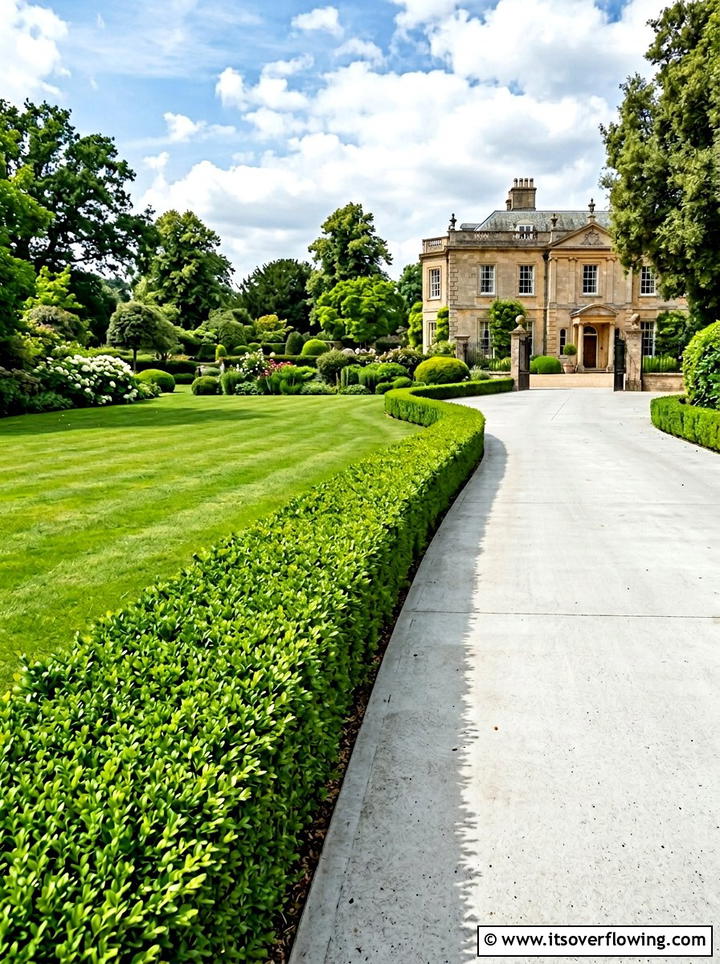
For a classic and formal aesthetic, boxwood driveway edging provides a crisp green line that defines the boundary of your property perfectly. These evergreen shrubs can be kept tightly pruned into a low square or rounded hedge for a very structured appearance. This look is often associated with traditional estates and French-style gardens, offering a sense of order and symmetry. Boxwoods are versatile and can handle various light conditions, making them a reliable choice for most front yards. Their consistent green color provides a steady backdrop for seasonal flowers that you might want to plant in front of or behind the hedge.
18. Driveway gate landscaping
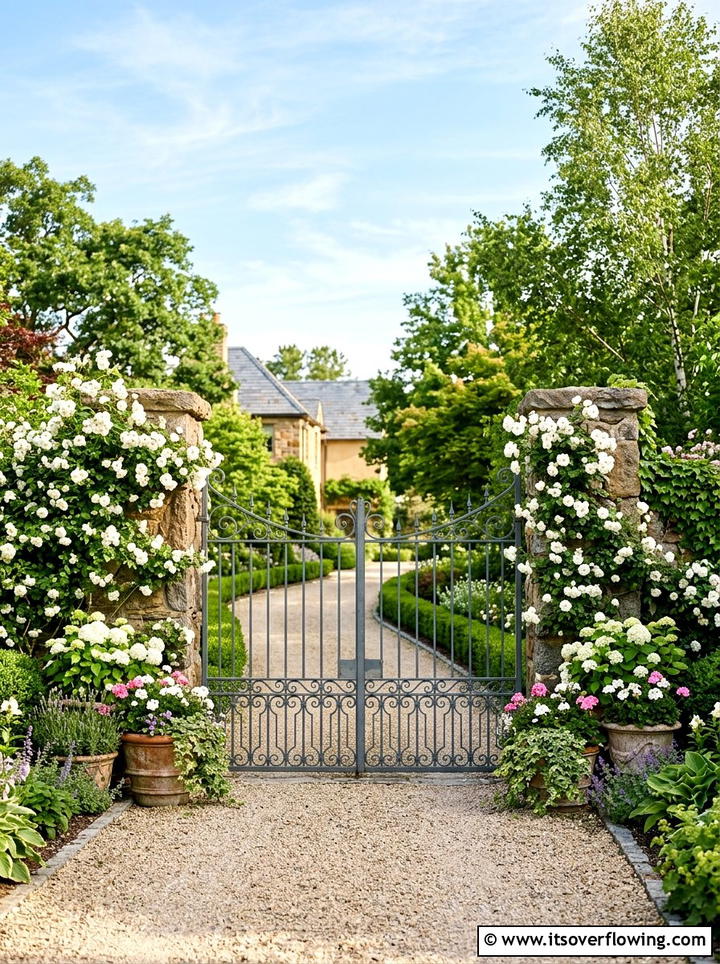
Focusing on driveway gate landscaping helps to create a grand sense of arrival and emphasizes the main entrance to your private property. You can plant climbing roses or jasmine to grow over the gate pillars, adding both beauty and a pleasant fragrance to the air. Large planters on either side of the gate can be filled with seasonal arrangements to add height and pops of color. This design frames the gate and makes it feel like an integrated part of the garden rather than just a security feature. Using a mix of evergreens ensures the entrance looks substantial and well-maintained even in winter.
19. Drought tolerant driveway garden
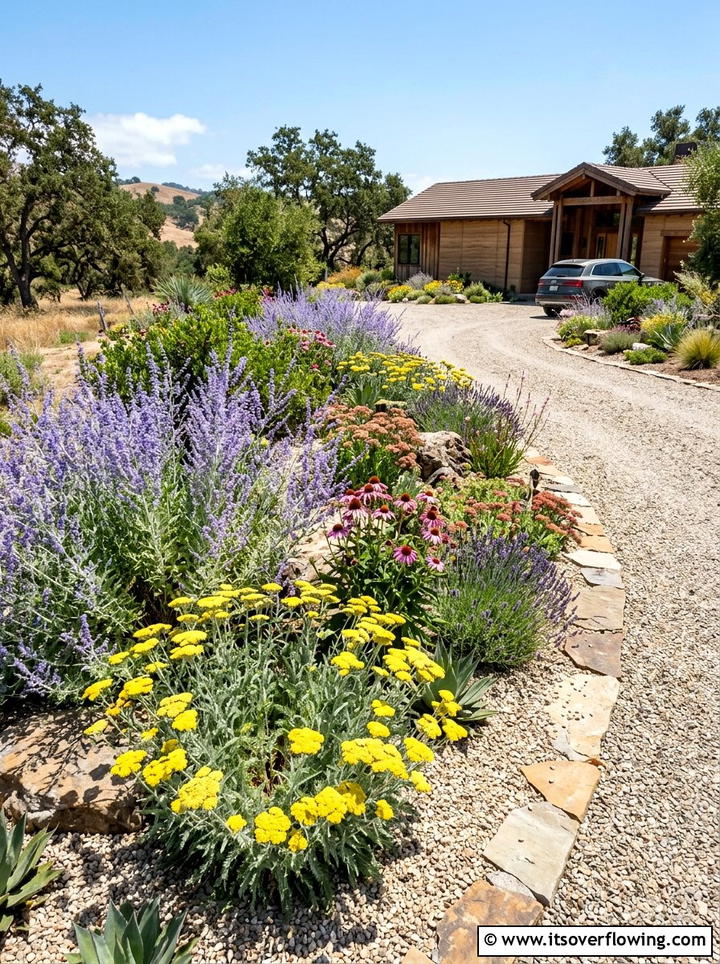
A drought tolerant driveway garden is the perfect solution for eco-conscious homeowners living in regions with limited water resources or frequent summer heatwaves. By selecting plants like yarrow, Russian sage, and various succulents, you can create a vibrant landscape that thrives on very little supplemental irrigation. These plants often have silver or grey-green foliage which reflects sunlight and helps them stay cool during the day. Using a thick layer of organic mulch or crushed stone around the base of the plants helps to keep the roots cool and moist. This design is not only sustainable but also incredibly modern and stylish.

20. Lavender driveway hedge
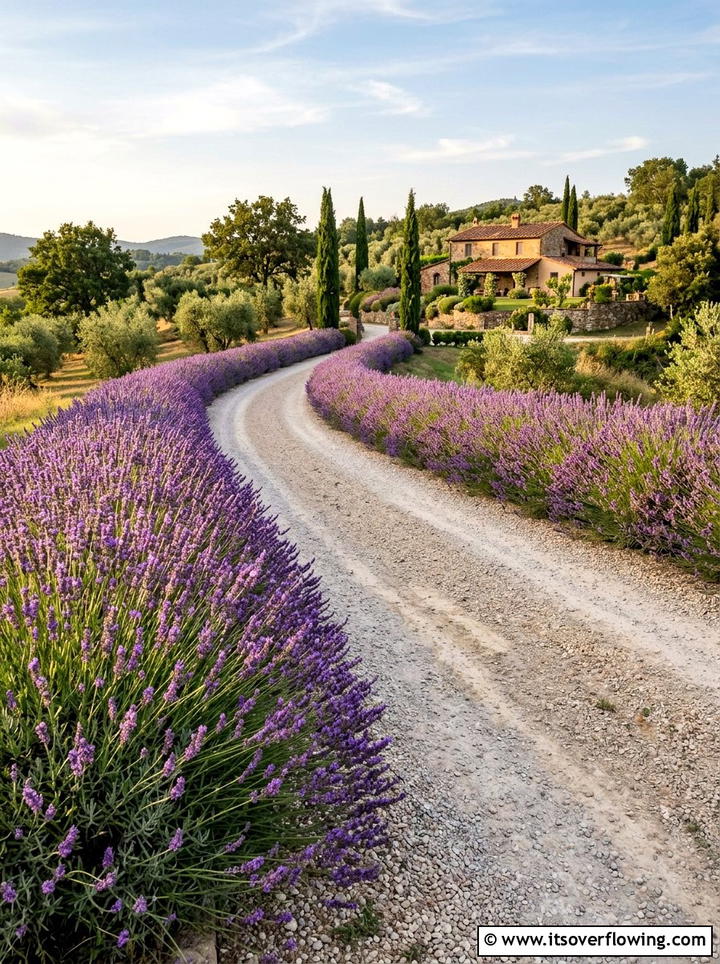
Planting a lavender driveway hedge provides a sensory experience every time you step out of your car and catch a scent. The silvery-purple blooms create a soft, hazy border that looks beautiful against both light and dark paving materials. Lavender thrives in the well-drained soil and full sun typically found alongside driveways, making it a very practical choice for many homes. Beyond its beauty, the fragrance is known for its calming properties, helping you relax as soon as you arrive home. This type of hedge also attracts many beneficial pollinators, bringing your front yard to life with the sound of bees.
21. Sloped driveway landscaping
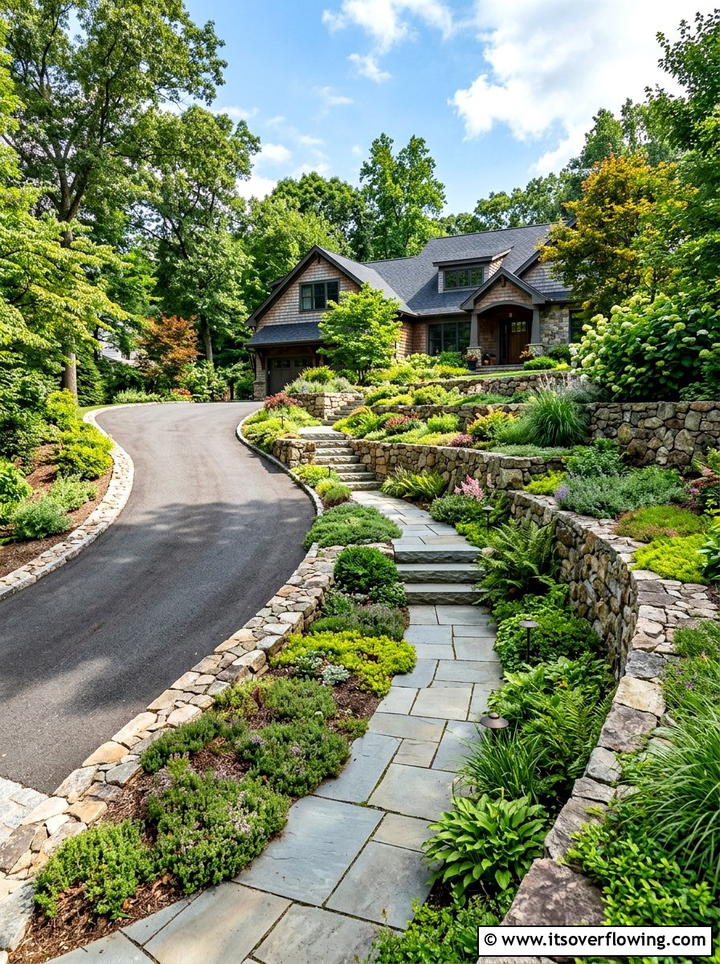
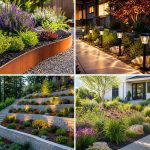
Managing a sloped driveway landscaping project requires a focus on stability and preventing soil from washing away during heavy rain storms. You can use a series of small terraces or rock gardens to hold the earth in place while providing beautiful planting pockets. Deep-rooted groundcovers and spreading shrubs are excellent for binding the soil together on steep inclines. This design turns a challenging terrain into a visual asset, allowing you to display a variety of plants at different eye levels. Incorporating stone steps or a winding path alongside the driveway can make the slope much easier and safer for people to navigate.
22. Contemporary driveway planters
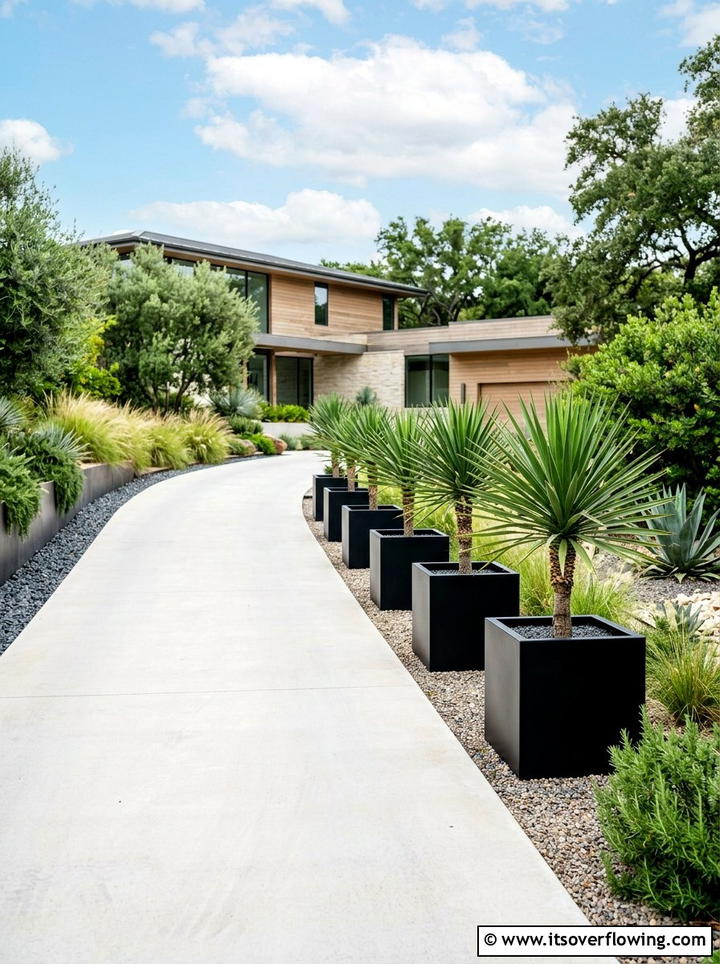
Using contemporary driveway planters is an easy way to add greenery to a space that is almost entirely covered in hard concrete. Large, minimalist pots made of concrete, metal, or wood can be placed strategically to guide the eye and define the parking area. You can fill these containers with architectural plants like yucca, ornamental grasses, or even small Japanese maple trees for a sophisticated look. This approach allows you to change your garden design seasonally without any digging or permanent changes to the landscape. It is an ideal solution for renters or those with very limited soil space near their driveway.
23. Rose bush driveway border
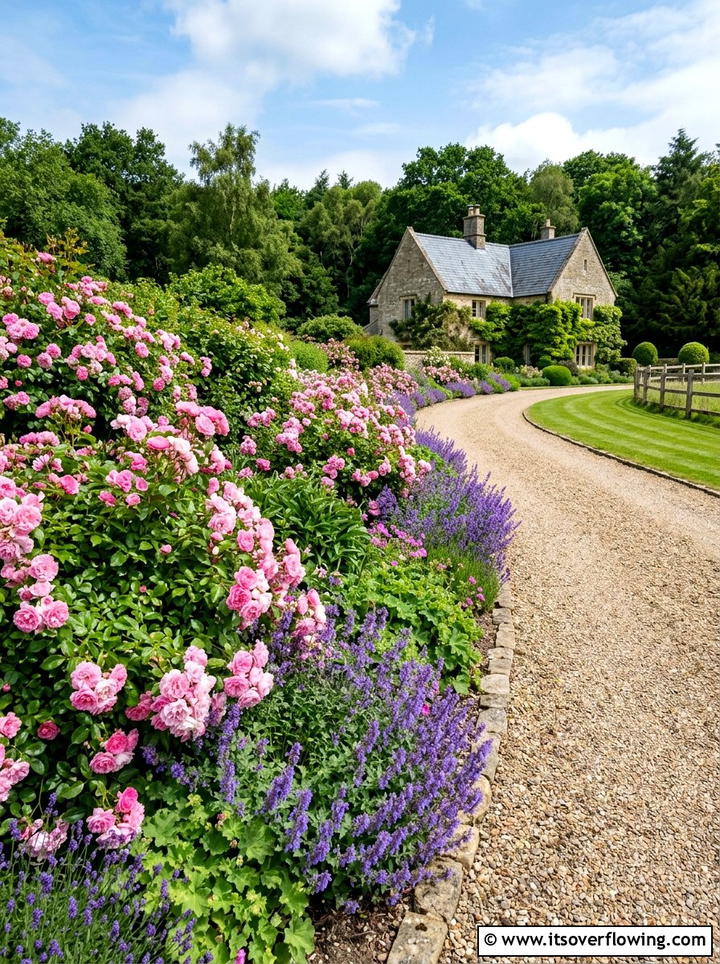
A rose bush driveway border adds a touch of classic elegance and timeless beauty to the front of any traditional or cottage-style home. You can choose from hardy shrub roses or climbing varieties to create a wall of color and fragrance that lasts all summer. While roses do require some pruning and care, the visual payoff of hundreds of blooms is well worth the effort for most gardeners. Pairing them with lower-growing perennials like catmint or salvia helps to hide the “legs” of the rose bushes and adds extra layers of color. This design creates a romantic and high-end feel for your property.
24. Driveway island garden
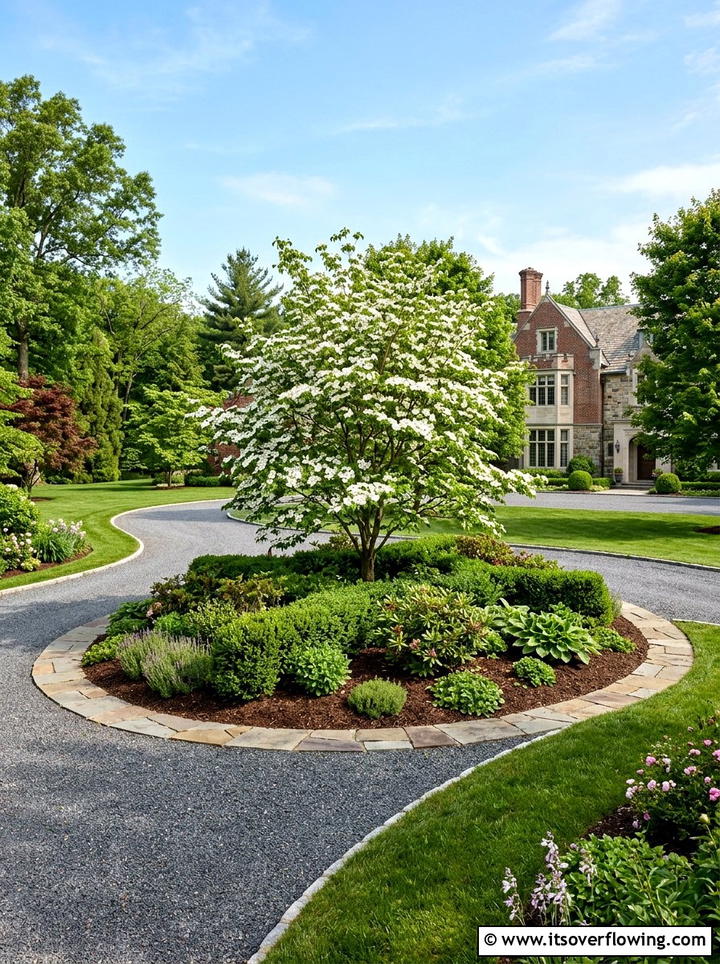
If you have a circular driveway or a wide turnaround area, a driveway island garden serves as a stunning central focal point. You can plant a specimen tree, like a weeping cherry or a dogwood, in the center and surround it with layers of shrubs and flowers. This design breaks up the large expanse of pavement and adds a lush, green heart to the front of your property. It also provides a great opportunity to install a water feature or a piece of outdoor art that reflects your style. A well-designed island garden makes the entire driveway feel more like a planned architectural landscape.
25. Native plant driveway landscaping
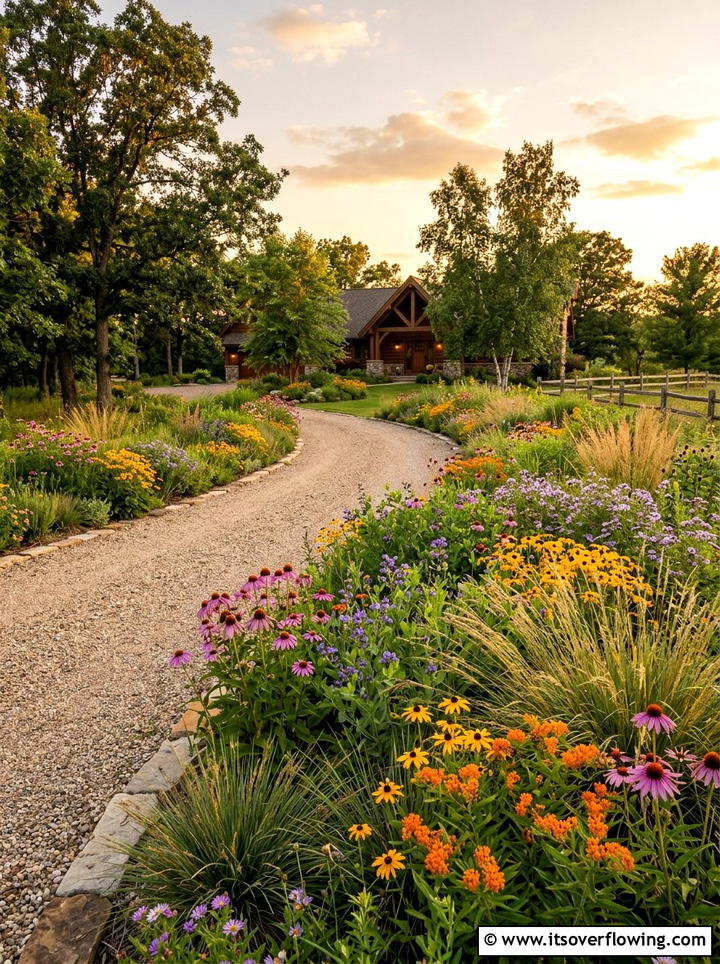
Choosing native plant driveway landscaping is one of the best ways to ensure your garden thrives with very little human intervention or chemicals. Native species are already adapted to your local soil and weather patterns, making them naturally resistant to local pests and typical diseases. These plants provide essential food and habitat for local birds and insects, supporting the biodiversity of your neighborhood. This design often has a more relaxed and naturalistic feel, blending your home seamlessly into the surrounding local environment. It is a low-maintenance, eco-friendly choice that looks beautiful and stays healthy throughout the entire year without much effort.
Conclusion:
Designing a garden for your driveway is a rewarding project that significantly enhances the aesthetic value and functionality of your home’s exterior space. By carefully selecting plants that complement your architecture and suit your local climate, you can create a welcoming atmosphere that greets you every time you return home. From formal boxwood hedges to wild cottage borders and modern permeable pavers, the possibilities for customization are truly endless. A well-planned driveway garden not only provides visual beauty but also addresses practical needs like drainage, privacy, and soil stability. Ultimately, investing time into your driveway landscaping ensures your property makes a lasting and positive first impression.

Related posts:
 25 Garden Design Ideas for Front Gardens With Curb Appeal
 25 Garden Design Ideas With Pathways for Beautiful Garden Flow
 25 garden design ideas with edible plants: Beautiful Foodscapes
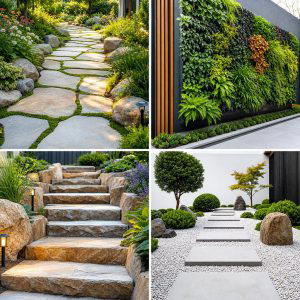 25 Creative Garden Ideas With High Impact Curb Appeal
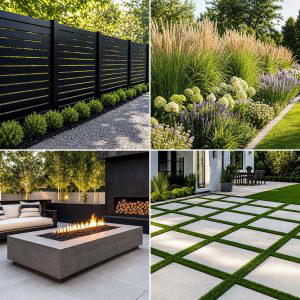 25 creative garden ideas with modern landscape lines for Curb Appeal
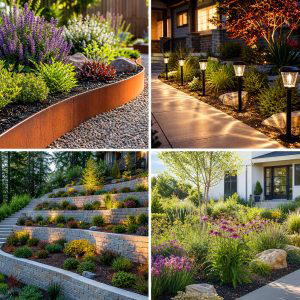 25 Garden Ideas for Curb Appeal to Transform Your Home
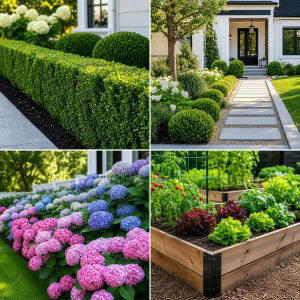 25 garden ideas for front yards: Boost Curb Appeal Fast
 25 Garden Ideas for Suburban Homes With Curb Appeal
 25 garden ideas with mulch: Easy Ways to Boost Curb Appeal
 25 Small Garden Ideas for Front Yard Curb Appeal
 25 Garden Ideas to Inspire a Beautiful Outdoor Makeover
 25 Small Garden Ideas on a Budget for Beautiful Outdoor Style