
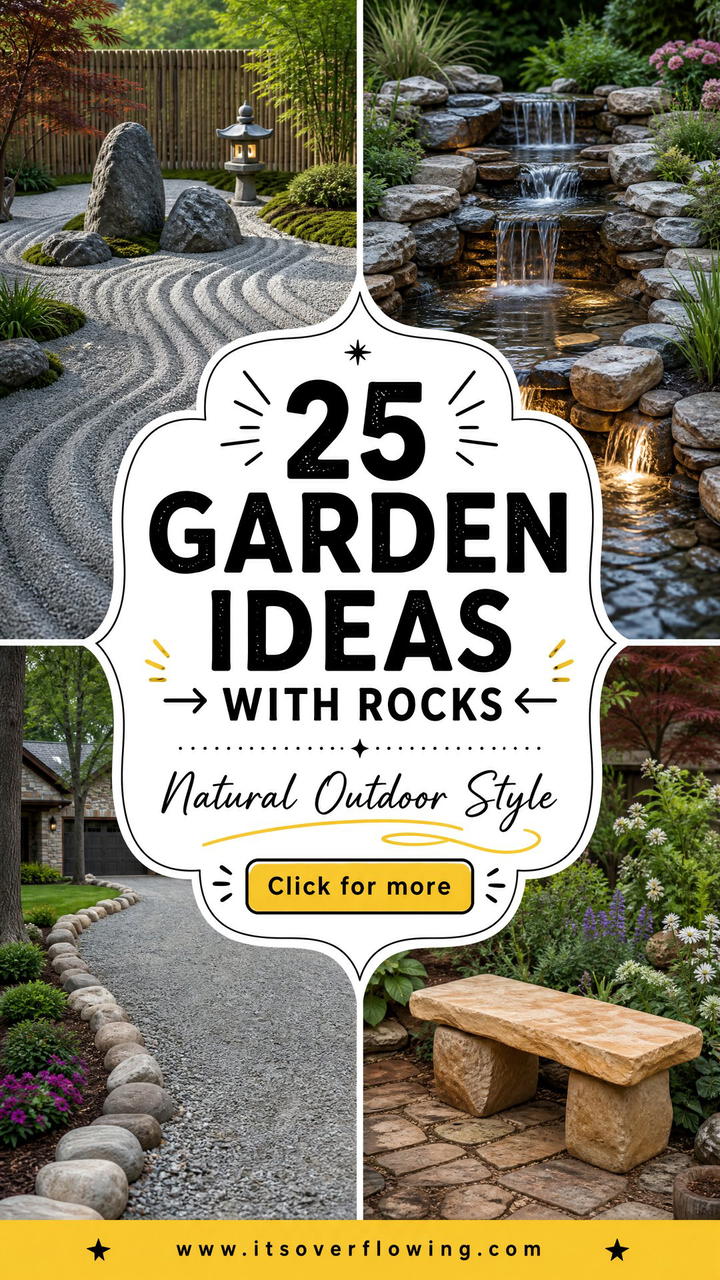
Transforming your outdoor space into a serene oasis often requires a balance between soft greenery and hard structural elements. Rocks offer a versatile and low-maintenance solution for homeowners looking to elevate their garden’s aesthetic without the constant need for pruning or watering. Whether you are dealing with a steep slope or a flat backyard, stones provide a sense of permanence and natural beauty that plants alone cannot achieve. From large, dramatic boulders to smooth river pebbles, the variety of textures and colors available allows for endless creativity in landscaping projects. This comprehensive guide explores different ways to integrate stones into your yard for a professional, high-end, and polished appearance that lasts for many years.
1. Rock garden path
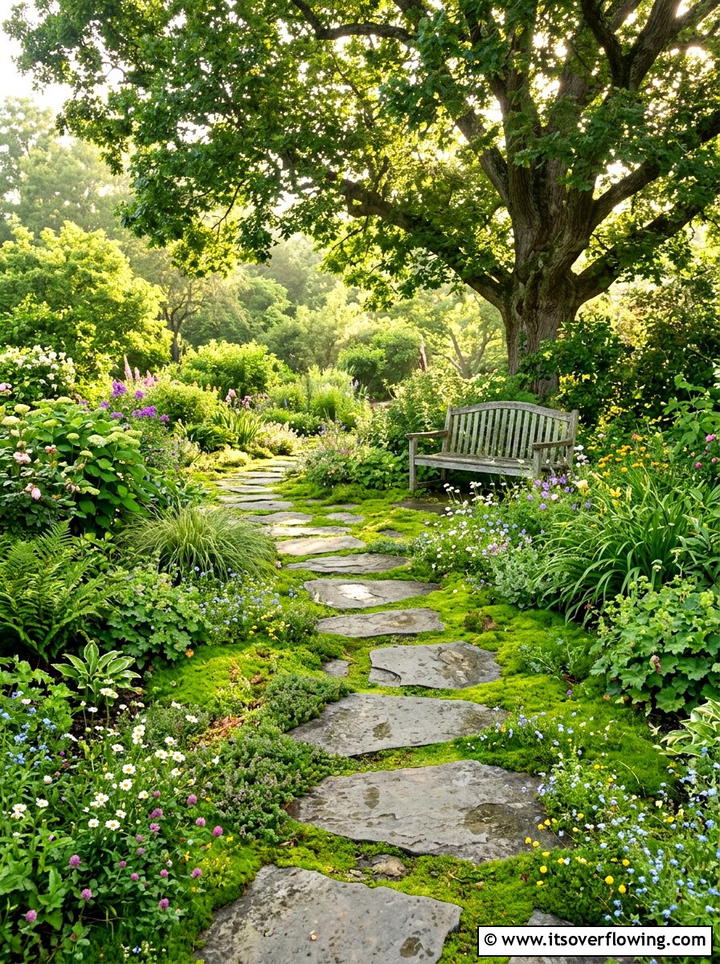
Are you looking for a durable walkway that guides guests through your yard while maintaining a beautiful natural aesthetic? Creating a path using flat flagstones or crushed gravel is an excellent way to define movement within your outdoor space. You can use large stones spaced out with moss or groundcover growing between them for a fairytale look. This functional design helps prevent soil compaction and keeps your footwear clean during rainy seasons. It is a practical addition that adds a sense of order and rustic charm to any backyard layout, making the transition between different zones look seamless. Every stone should be placed firmly to ensure safety and long-term stability for all walkers.
2. River rock dry creek bed
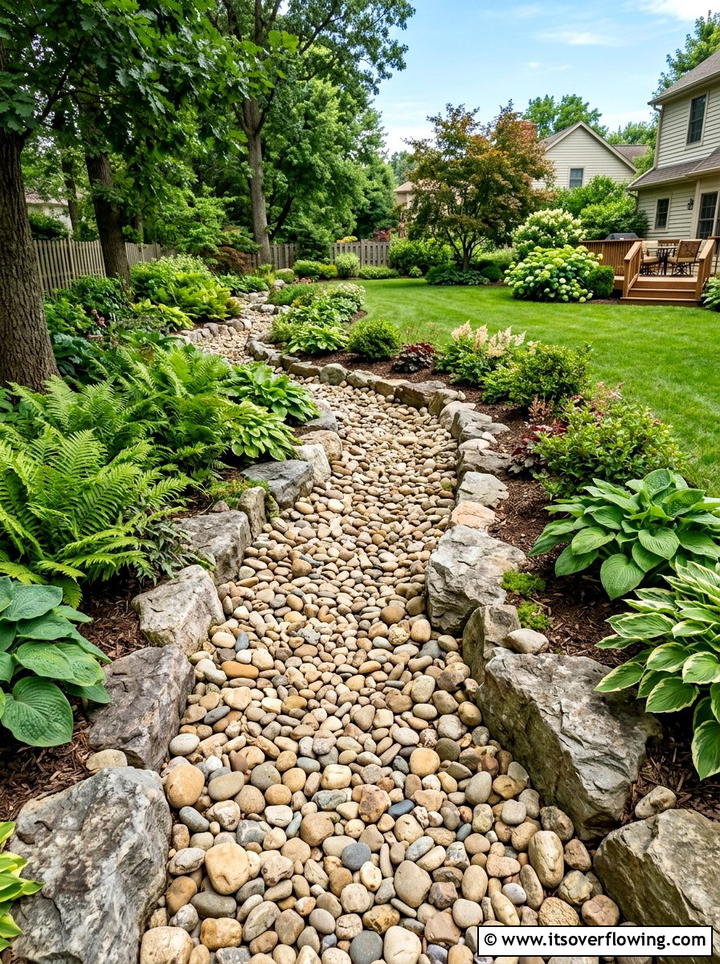
Have you ever noticed how water pools in certain areas of your property after a heavy rainstorm? A dry creek bed made from various sizes of river rocks can solve drainage issues while looking like a stunning natural stream. By layering larger boulders along the edges and filling the center with smaller, smooth pebbles, you mimic the appearance of a river that has run dry. This feature works exceptionally well on slopes or in low-lying areas where grass has difficulty growing. It adds a rugged, organic texture to the landscape and provides a wonderful backdrop for moisture-loving plants like ferns or hostas. This also helps redirect water runoff safely away.
3. Flagstone patio seating area
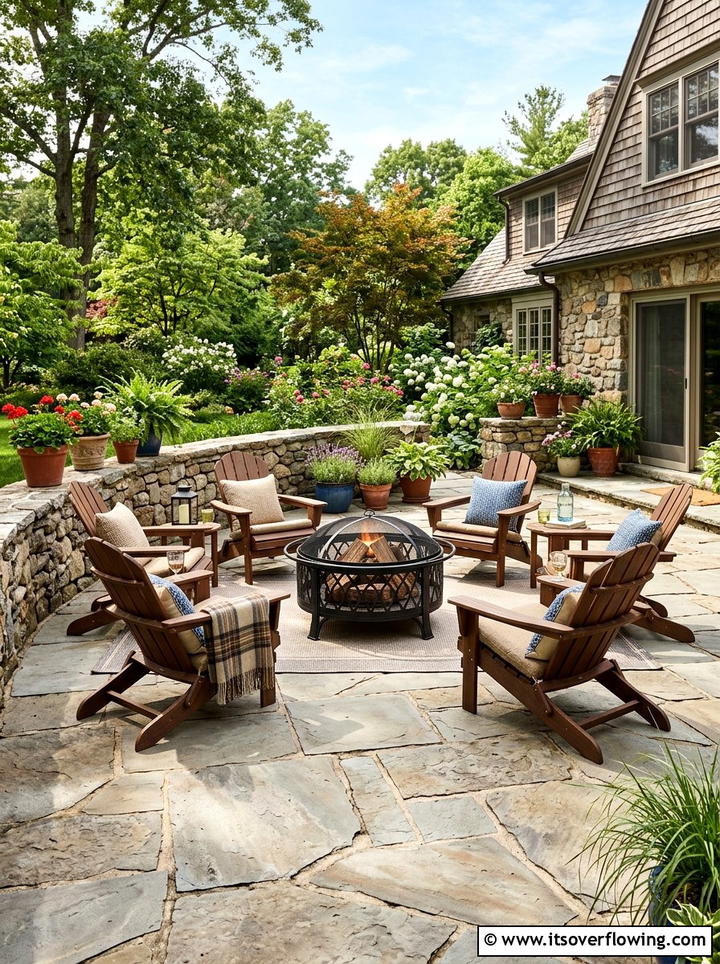
Imagine spending your summer evenings on a custom stone surface that blends perfectly with the surrounding environment. A flagstone patio offers a more organic feel than traditional poured concrete or standard brick pavers. These large, irregular slabs create a mosaic effect that feels timeless and sophisticated. You can fill the gaps with sand, fine gravel, or even creeping thyme to add a touch of green. This type of seating area is incredibly durable and can withstand harsh weather conditions for decades. It provides a solid foundation for outdoor furniture, fire pits, and barbecues, making it the ultimate gathering spot for family and friends during the warm weekend nights.
4. Stone retaining wall
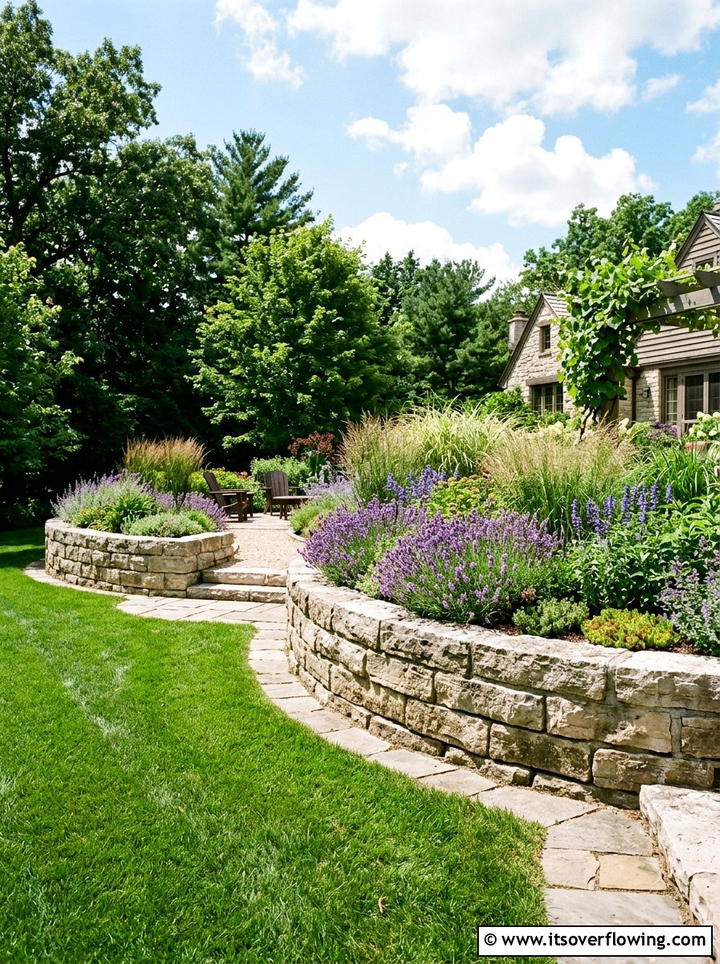
Do you have a sloped yard that makes gardening or entertaining difficult? A stone retaining wall is a functional and beautiful solution for leveling out uneven terrain and preventing soil erosion. Using natural stones like limestone or granite creates a sturdy barrier that looks like it has been part of the landscape for centuries. These walls can also double as extra seating or serve as the backdrop for tiered flower beds. When built correctly, they provide essential structural support while adding vertical interest to your garden. Choosing stones of different sizes adds a handcrafted feel that enhances the overall value and curb appeal of your beautiful home.
5. Rock border for flower beds
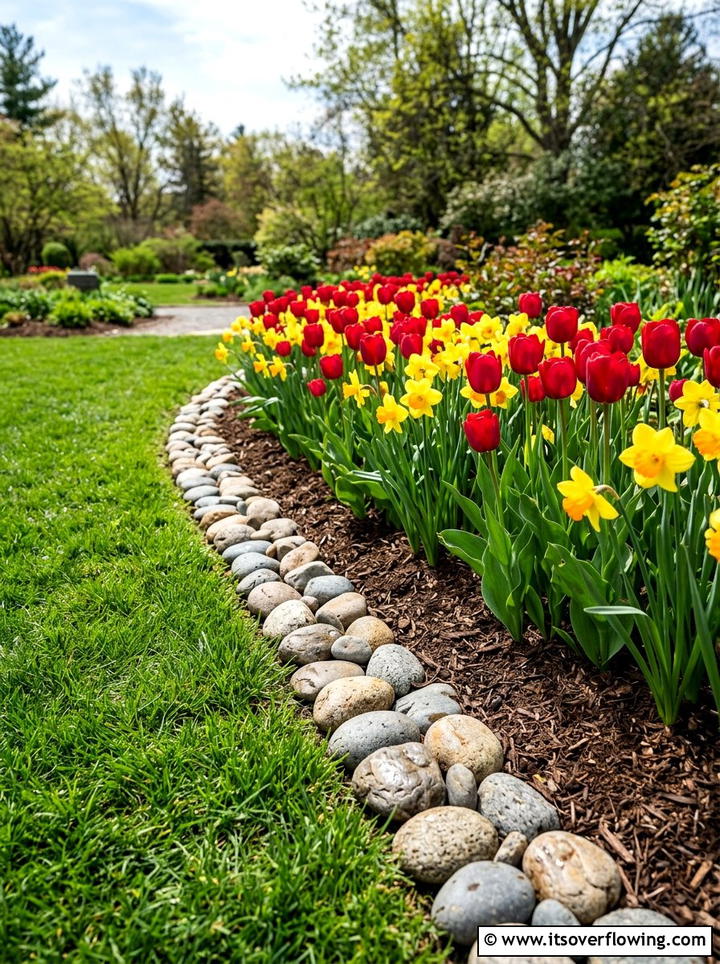
Tidying up the edges of your garden beds can instantly make your entire backyard look more professional and well-maintained. A rock border using medium-sized river stones or lava rocks provides a clear line between your lawn and your flowers. This prevents grass from creeping into your beds and helps keep mulch from washing away during heavy downpours. Unlike plastic or wood edging, stone borders will not rot or fade over time, ensuring a long-lasting and clean look. You can choose colors that complement your home’s exterior to create a cohesive design that draws the eye toward your colorful blooms and lush garden plants easily.
6. Succulent rockery
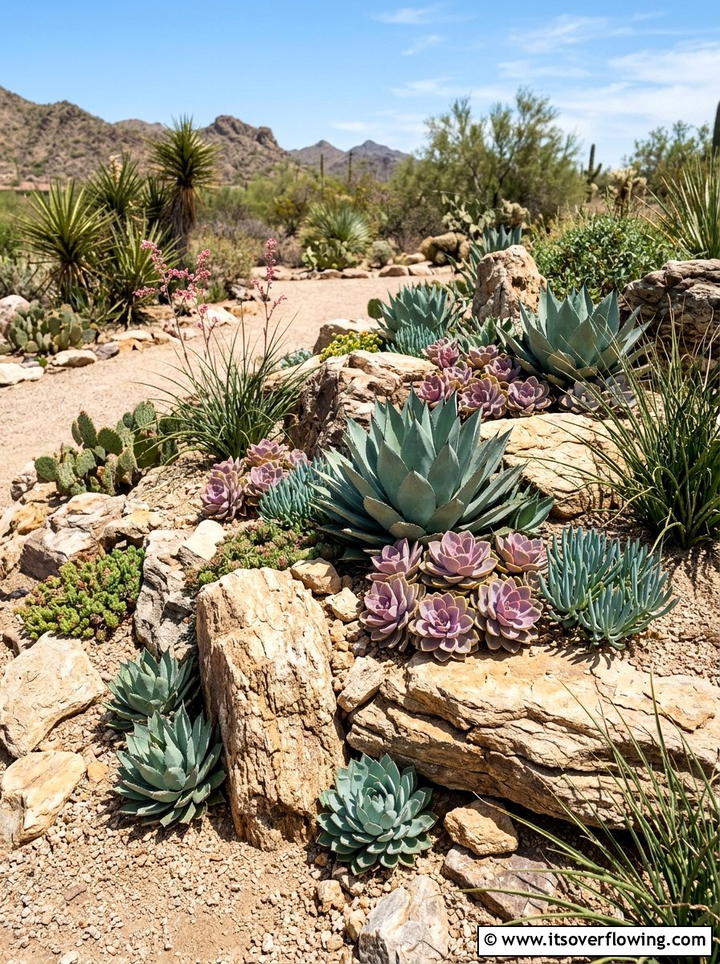
Creating a dedicated space for drought-tolerant plants is a smart way to save water while maintaining a vibrant garden. A succulent rockery uses a mix of porous stones and well-draining soil to house various Echeveria, Sedum, and Agave varieties. The rocks help regulate the temperature of the soil and provide the drainage these plants need to thrive. By tucking small plants into the crevices between stones, you create a miniature landscape that looks like a desert canyon. This low-maintenance idea is perfect for sunny spots in the yard where other plants might wilt. It offers a unique texture that stays green throughout the entire year.
7. Zen garden with raked gravel
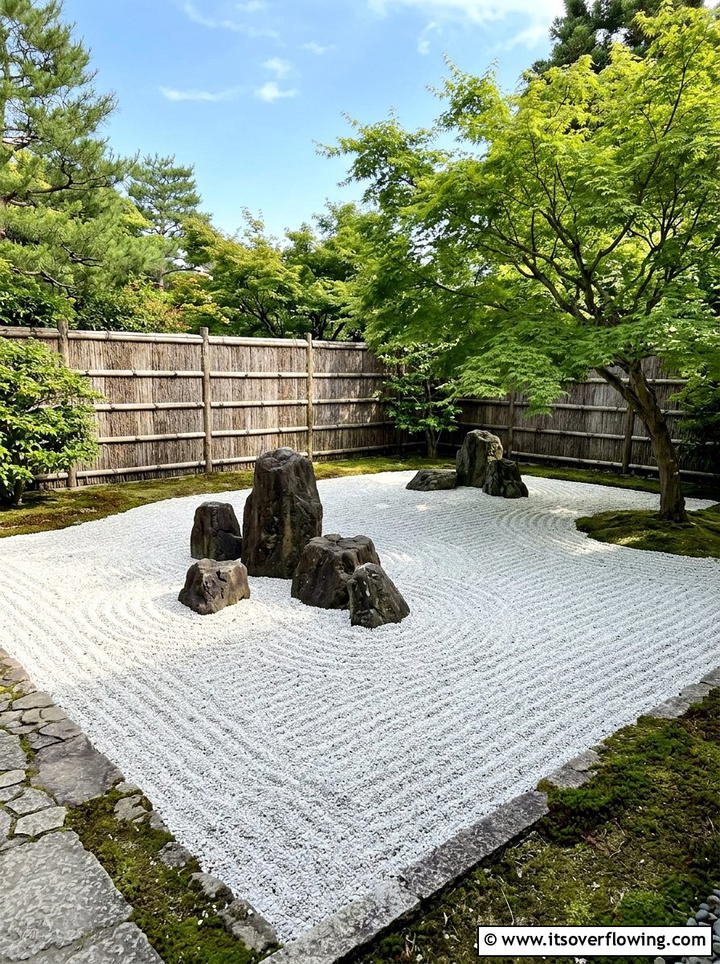
If you are seeking a peaceful spot for meditation and reflection, a Japanese-inspired Zen garden might be the perfect addition. This design typically features a large expanse of fine light-colored gravel or sand that is meticulously raked into swirling patterns. The patterns represent water waves, while carefully placed larger rocks symbolize islands or mountains. This minimalist approach focuses on simplicity and balance, providing a calm visual break from the busy world. Maintaining the raked lines can be a meditative practice itself. This style of garden requires very little water and works beautifully in small courtyards or tucked-away corners of a larger backyard garden space.
8. Large boulder focal point
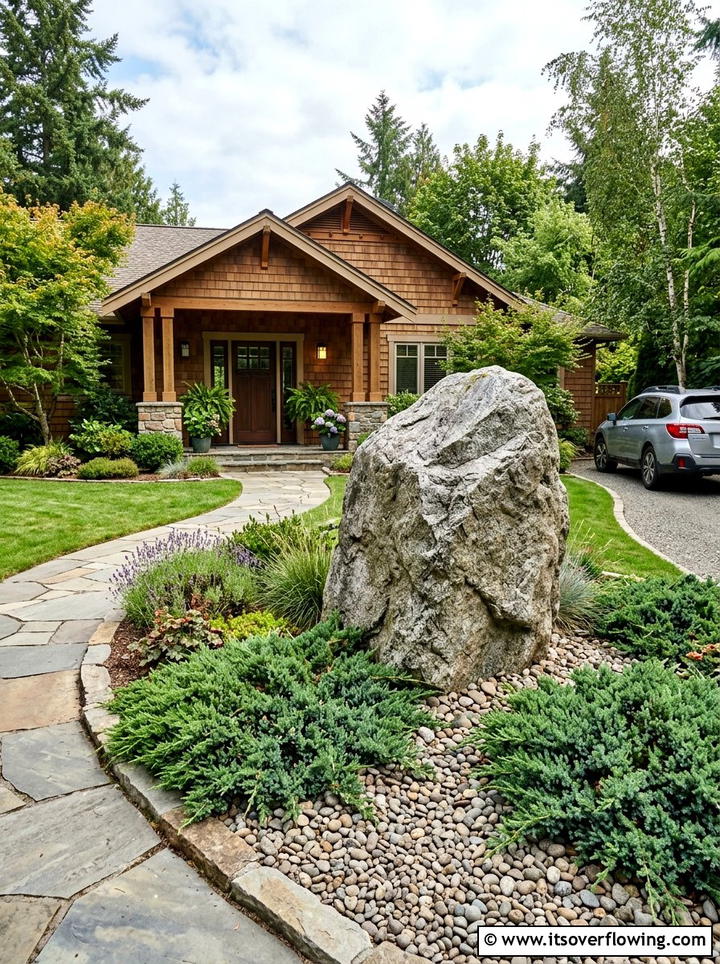
Sometimes a single dramatic element is all you need to transform a boring patch of grass into a professional landscape. Placing a large, weathered boulder in a prominent spot creates an instant focal point that anchors the rest of the garden design. You can surround the base with ornamental grasses, colorful flowers, or smaller accent stones to make it feel integrated into the environment. Boulders come in various shapes and mineral compositions, offering unique colors ranging from deep grey to rusty orange. This simple addition adds a sense of age and stability to the yard, making it feel more like a natural and wild mountain landscape.
9. Gravel walkway
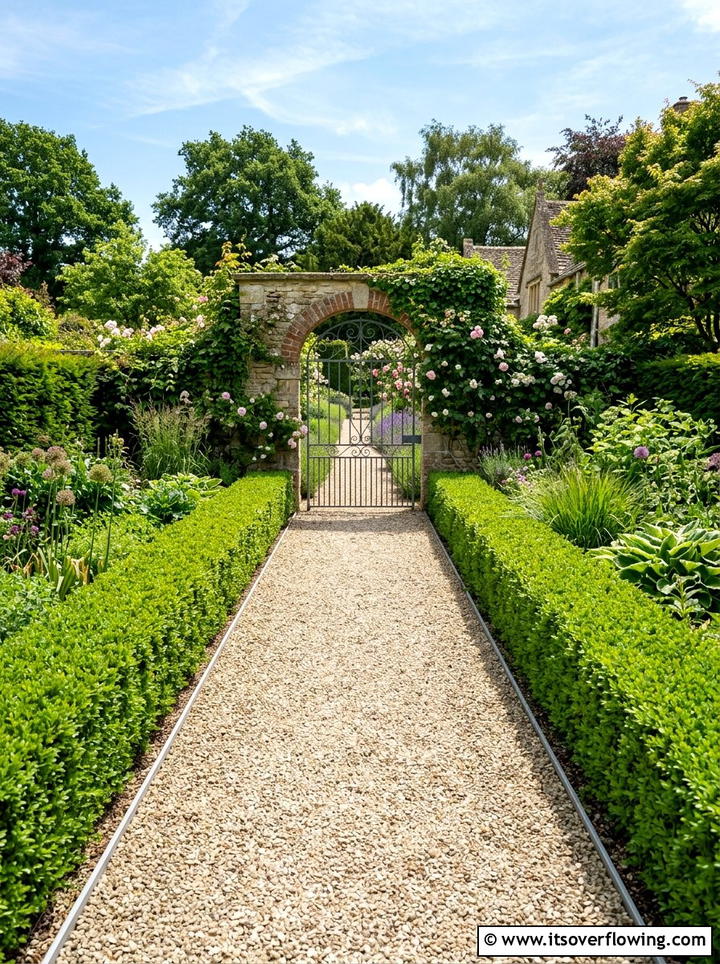
A gravel walkway is one of the most cost-effective and easiest ways to add structure to your outdoor space. Unlike solid pavement, gravel is permeable, allowing rainwater to soak into the ground rather than running off into the street. The crunching sound of footsteps on the stones also provides a layer of home security by alerting you to visitors. You can choose from many different types of gravel, such as pea stone, crushed granite, or marble chips, to match your style. Using a sturdy landscape fabric underneath will keep weeds at bay, ensuring your new garden path remains clean and inviting for many long years.
10. Alpine rock garden
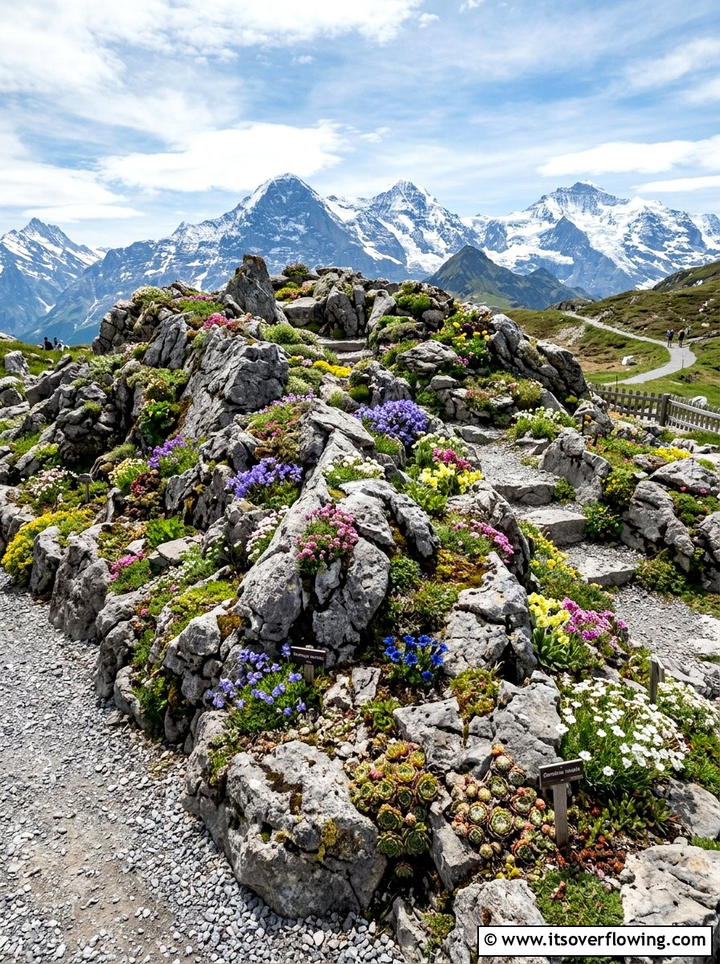
Do you love the look of mountain peaks and hardy, low-growing plants? An alpine rock garden mimics the high-altitude environment where small flowers grow in the cracks of rocky cliffs. This design uses a variety of jagged rocks and gravel to create a rugged terrain for plants like saxifrage and aubrieta. These plants thrive in the cool, well-drained conditions provided by the stone structures. Building a small mound or “scree” bed allows you to showcase tiny botanical treasures that might otherwise get lost in a traditional flower bed. It is a wonderful way to add height and interesting detail to any flat garden area.
11. Stone garden stairs
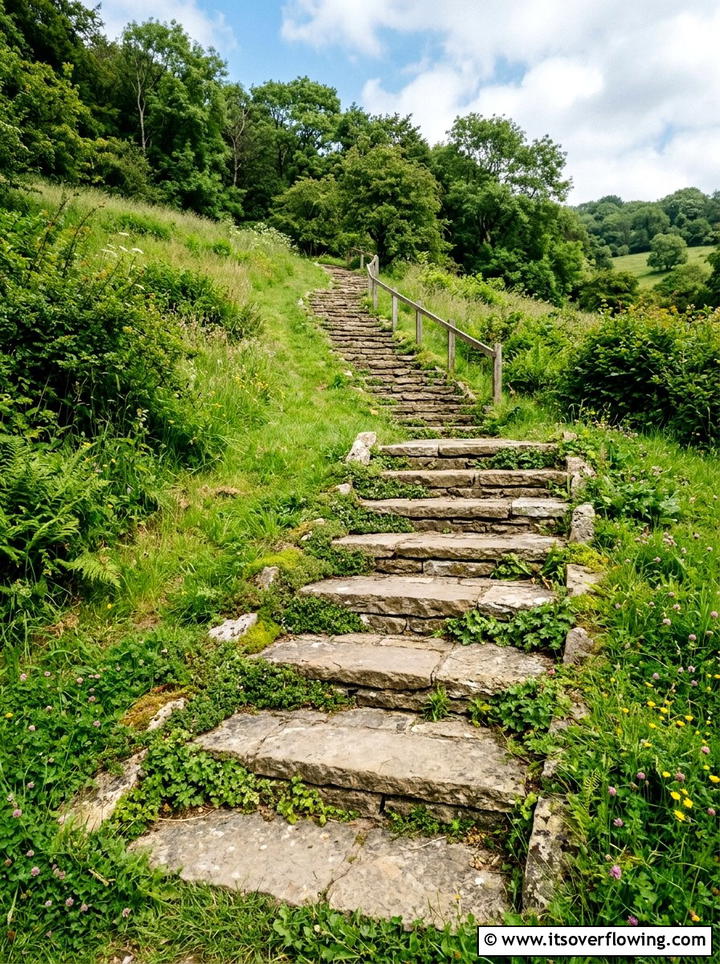
Navigating a hilly backyard can be a challenge without a safe and sturdy set of steps. Stone garden stairs made from thick slabs of natural rock offer a durable and attractive way to move between different levels of your property. Unlike wooden stairs that can become slippery and rot over time, stone steps provide excellent traction and last a lifetime. You can nestle the stones directly into the hillside for a natural look that blends with the earth. Surrounding the steps with groundcover plants or small pebbles helps to soften the edges and makes the staircase feel like a permanent and very sturdy part of the landscape.
12. Pebble mulch for trees
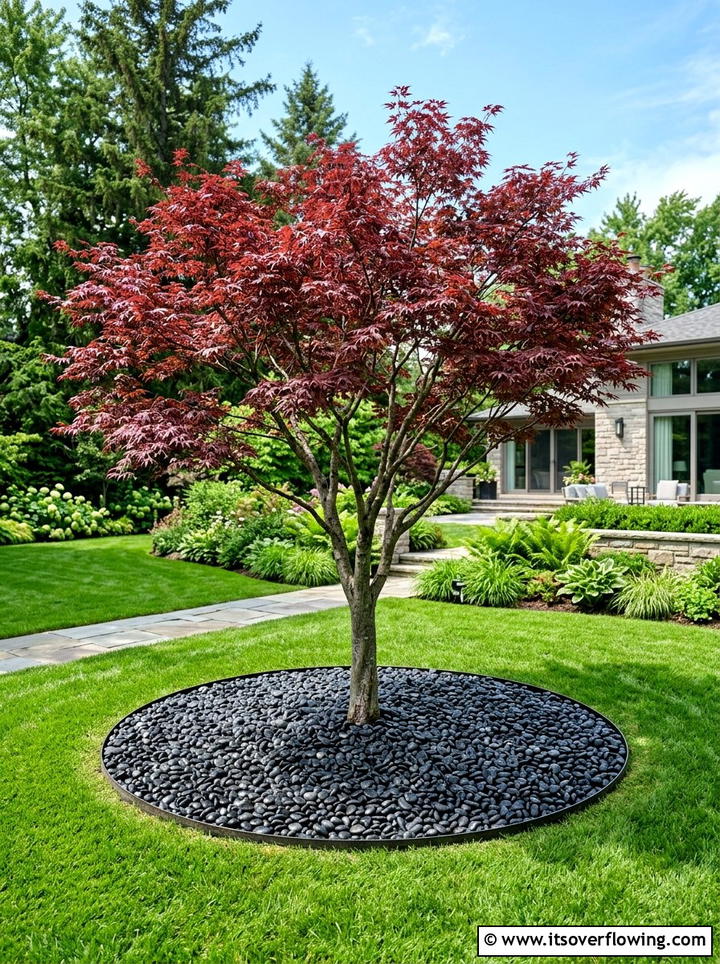
Using pebbles as mulch around the base of your trees is a modern alternative to traditional wood bark. Stone mulch does not decompose, meaning you won’t have to replace it every spring, saving you both time and money. It helps retain moisture in the soil and suppresses weed growth while giving the tree a clean, finished appearance. Small river stones or polished black pebbles look particularly striking against the dark bark of a specimen tree. This method also protects the trunk from damage caused by lawn mowers or string trimmers. It is an easy way to give your landscape a contemporary and very high-end feel.
13. Rock water feature
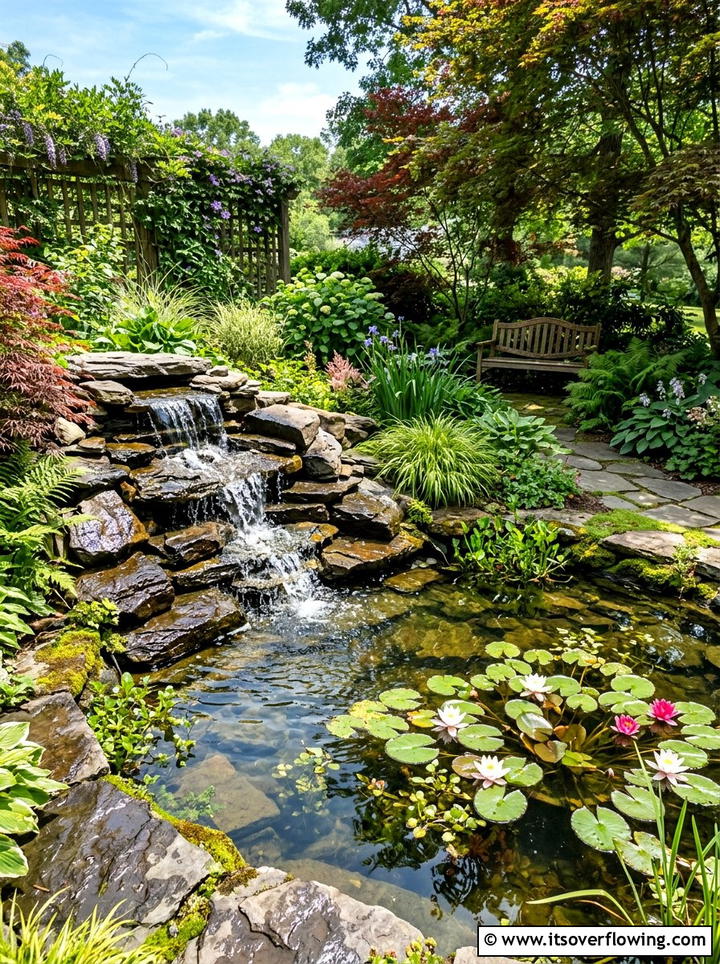
There is nothing quite as relaxing as the sound of water trickling over natural stones. A rock water feature, such as a bubbling boulder or a small pondless waterfall, adds movement and sound to your garden. By using stones of various sizes, you can control the flow of the water and create different splashing sounds. The wet rocks glisten in the sunlight, revealing deep colors and patterns that are hidden when dry. This type of feature also attracts birds and butterflies, bringing more life into your backyard. It serves as a peaceful retreat where you can unwind after a long day in a natural, lush environment.
14. Gabion wall planter
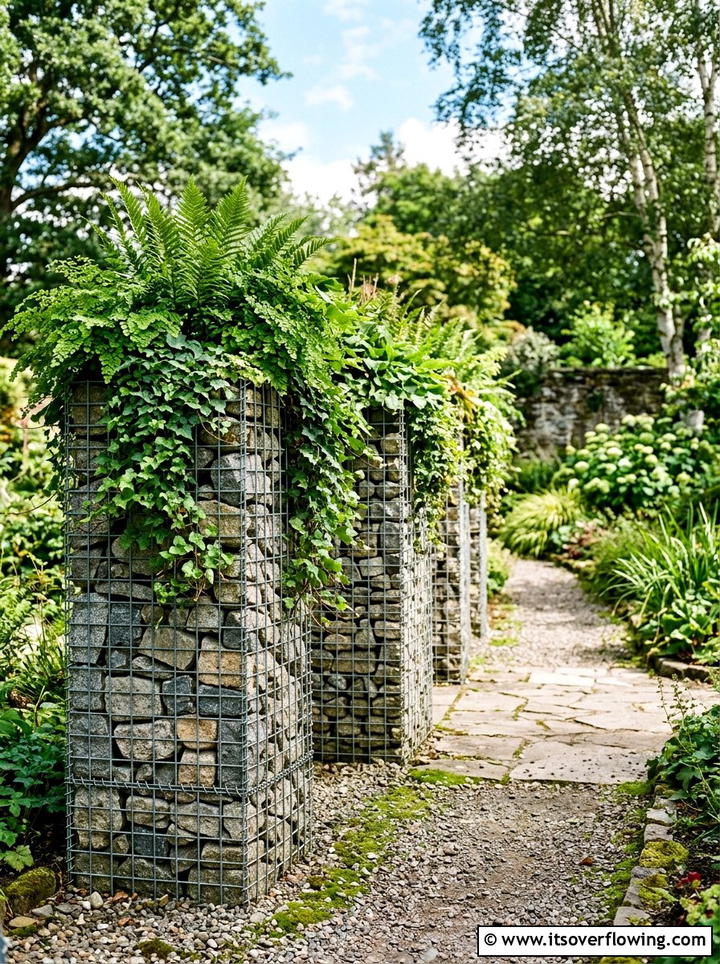
For a modern and industrial look, consider using gabion baskets filled with stones as a unique garden feature. A gabion is a wire mesh cage that you can fill with rocks of your choice, from smooth cobbles to jagged slate. These structures are incredibly strong and can be used to build raised planters, privacy screens, or even outdoor benches. Because the air can flow through the rocks, they provide excellent drainage for the plants housed within or behind them. You can play with different colors of stones inside the wire to create stripes or patterns, making your garden a true piece of contemporary and impressive outdoor art.
15. Slate chip ground cover
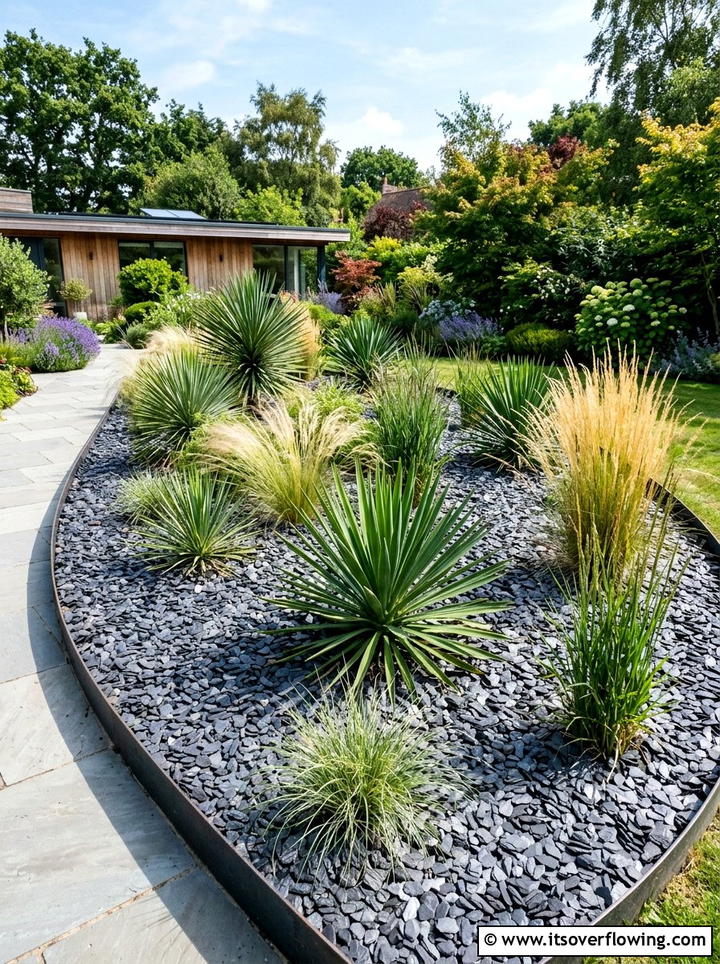
Slate chips are a popular choice for ground cover because of their unique flat shape and beautiful deep colors, including charcoal, purple, and green. These small pieces of stone lay flat on the ground, creating a sleek and uniform surface that is easy to walk on. They are excellent for filling in large areas where grass won’t grow or for highlighting specific garden features. Slate chips also help to keep the soil cool and moist, which is beneficial for nearby plants during the hot summer months. Their slightly reflective surface catches the light, adding a subtle shimmer to your garden floor that looks very expensive and sophisticated.
16. Stepping stone path through grass
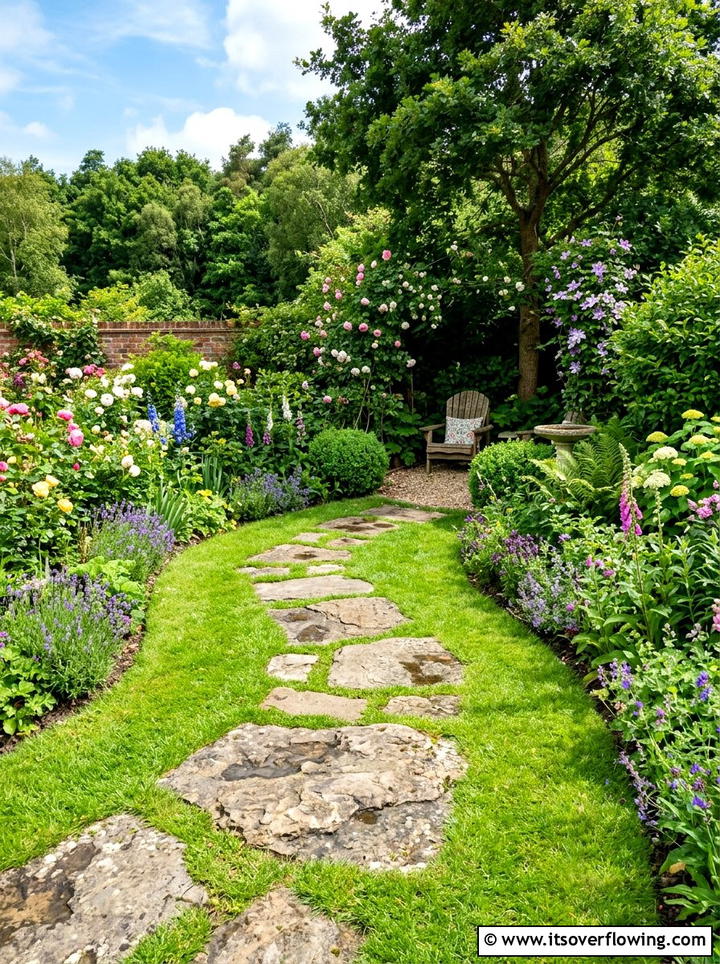
A stepping stone path is a classic garden element that adds a touch of whimsy and charm to any lawn. By placing large, flat stones at a natural walking stride distance, you create a path that protects your grass from heavy foot traffic. This look is perfect for a cottage-style garden or a rustic backyard setting. You can choose irregular, natural-edged stones for a more organic feel or circular cut stones for a clean, modern appearance. The grass grows right up to the edges of the rocks, making the path look like it has been there forever. It is an affordable and very easy project.
17. Rock edging for driveway
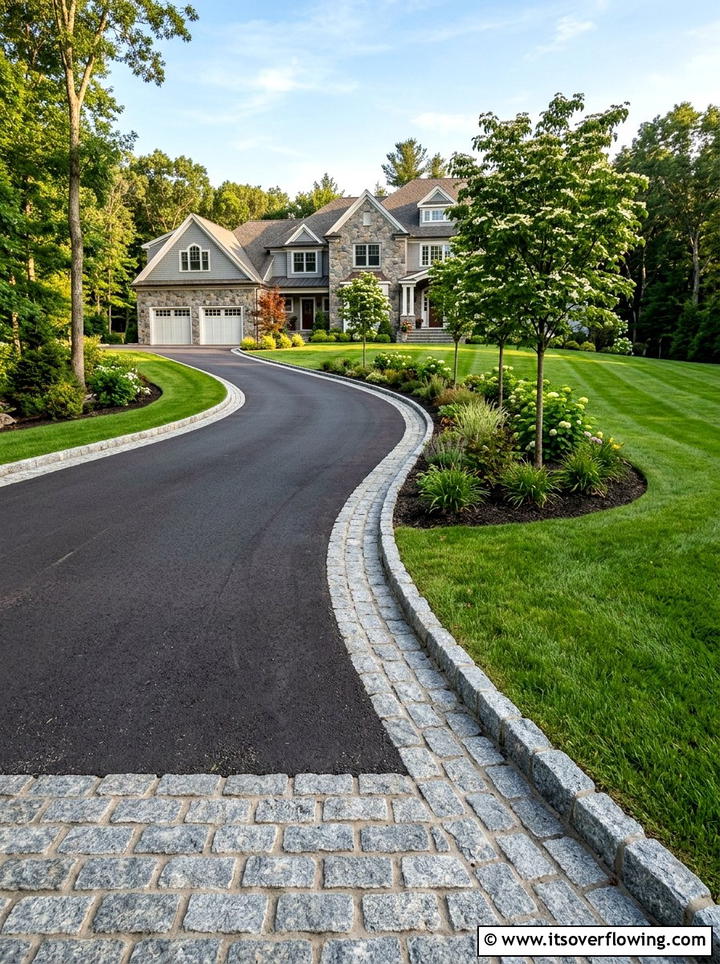
Your driveway is often the first thing people see when they arrive at your home, so making it look sharp is important. Using large rocks or cobbles to edge your driveway creates a clear boundary and prevents cars from driving onto the grass. It also helps to contain any gravel or mulch that might otherwise spill onto the pavement. Choosing stones that match the color of your home’s foundation or roofing can tie the entire property together visually. This heavy-duty edging is extremely durable and adds a high-end, custom look to your curb appeal. It is a simple upgrade that offers a huge visual impact.
18. Terraced rock garden
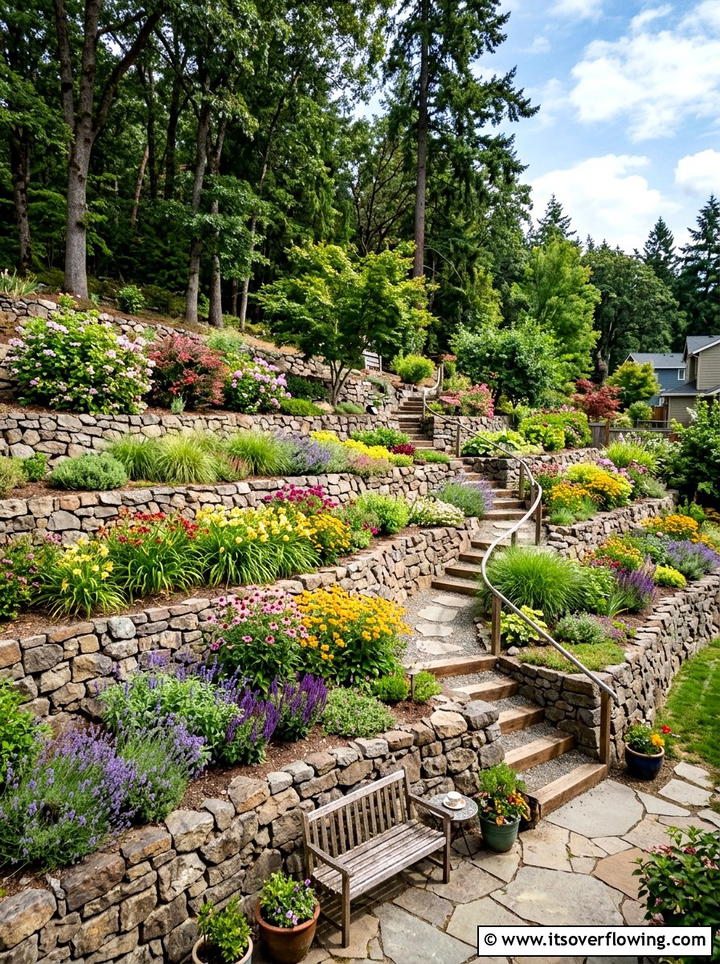
If you have a steep incline in your yard, a terraced rock garden can turn a difficult slope into a stunning vertical display. By building a series of low stone walls, you create flat steps where you can plant a variety of flowers and shrubs. This method prevents soil from washing down the hill and makes the entire area much easier to maintain. Each level of the terrace can have its own theme or color palette, providing plenty of room for horticultural experimentation. The combination of solid stone and cascading greenery creates a lush, tiered look that adds significant architectural interest to your outdoor living space.
19. Limestone rockery
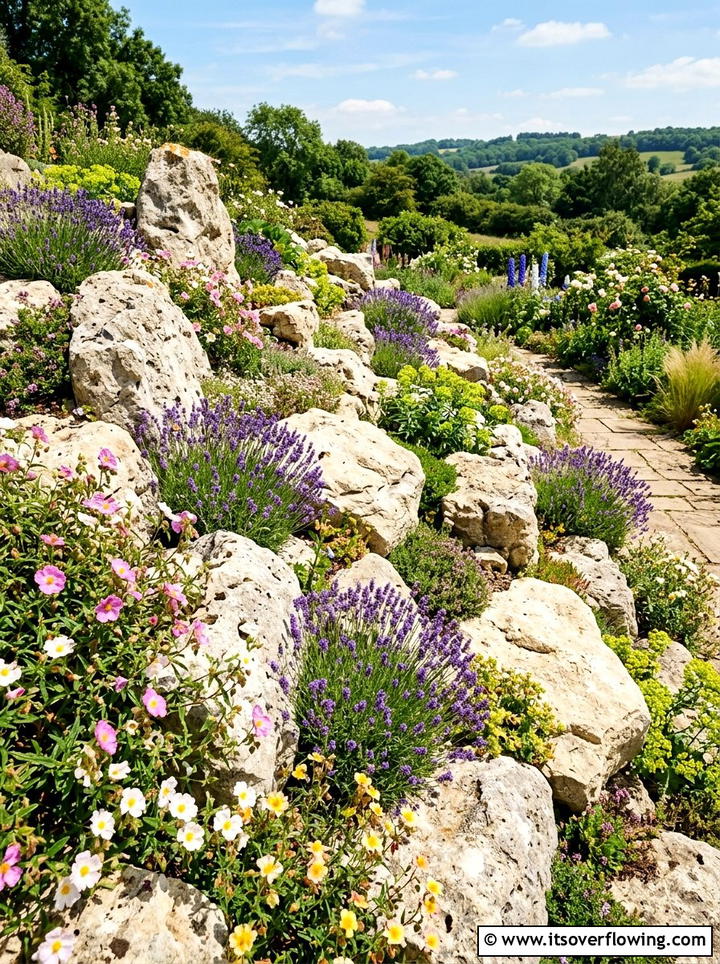
Limestone is a favorite material for gardeners because of its light color and interesting weathered texture. A limestone rockery involves grouping large chunks of this stone together to create a natural-looking outcrop. The alkaline nature of limestone is perfect for specific plants that prefer high pH soil, such as certain varieties of lavender and clematis. As the stone ages, it develops a beautiful patina and may even grow moss in shaded areas, adding to its character. This type of garden feature looks particularly stunning when lit from below at night, as the pale stone glows against the dark shadows of the surrounding foliage and plants.
20. Lava rock garden bed
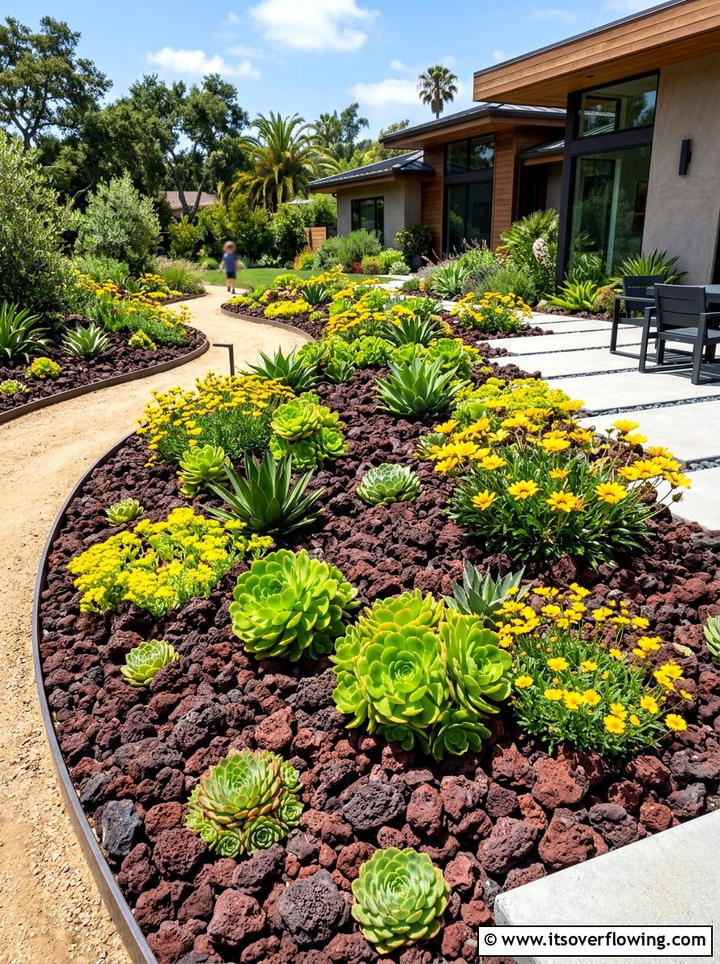
Lava rock is a lightweight and porous volcanic stone that brings a bold, dark texture to your landscaping projects. Its deep red or charcoal grey color provides a sharp contrast against bright green leaves and colorful flowers. Because lava rock is so porous, it is excellent at insulating the soil, keeping it warm in the winter and cool in the summer. It doesn’t wash away easily, making it a great choice for areas that experience heavy rain. Using lava rock in a garden bed creates a clean, modern look that requires almost no maintenance. It is a striking choice for those wanting a dramatic garden.
21. Granite boulder cluster
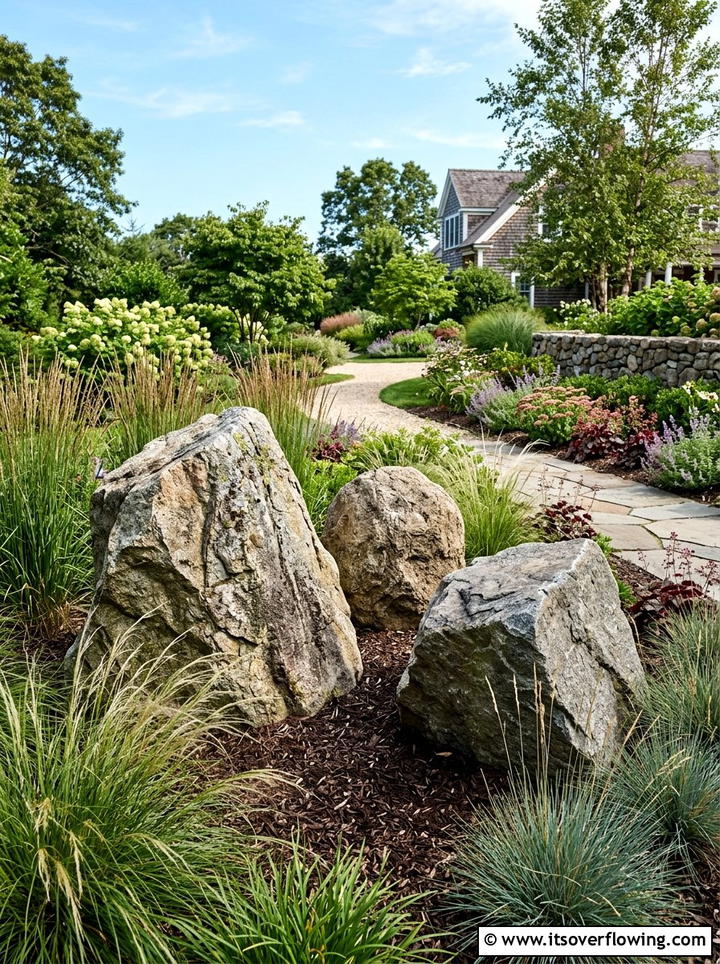
Grouping several granite boulders of different sizes together can create a mini-mountain landscape in the middle of your yard. Granite is one of the hardest and most durable stones available, ensuring that your garden feature will look great for a lifetime. When you arrange them in odd numbers, such as clusters of three or five, the arrangement looks more natural and balanced to the human eye. You can plant small evergreens or ornamental grasses between the boulders to soften the hard edges. This type of rock cluster adds a sense of weight and permanence to your garden, making it feel well-established and professional.
22. Sandstone garden bench
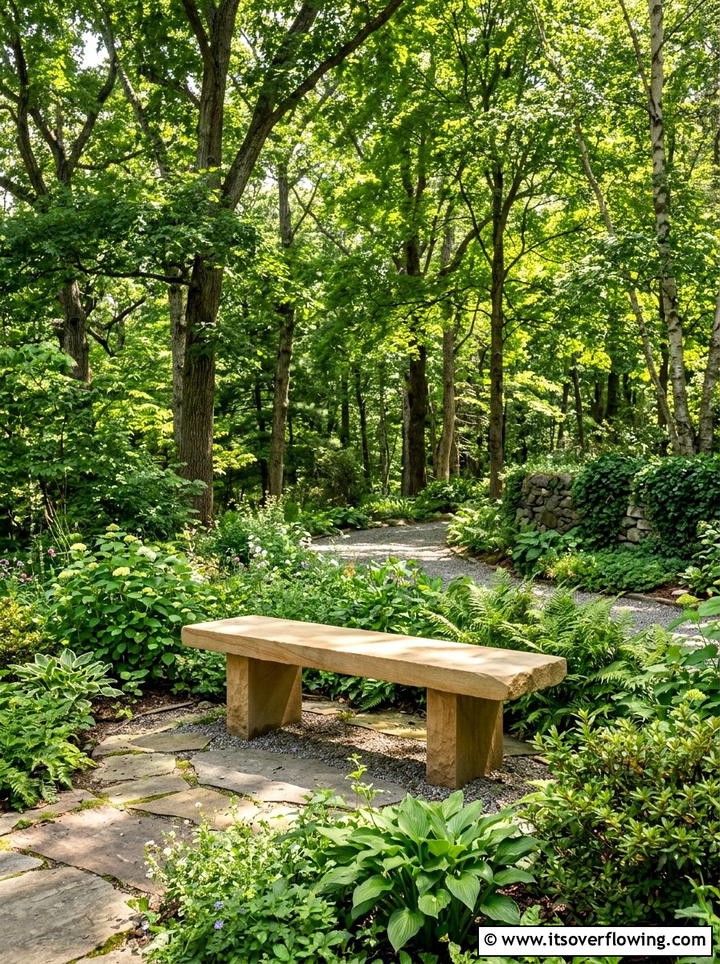
Why use plastic or metal furniture when you can have a bench made directly from the earth ‘s natural materials? A sandstone garden bench is a beautiful and functional piece of art that provides a permanent place to sit and enjoy your flowers. Sandstone has a warm, inviting color and a soft texture that feels comfortable even on a hot day. You can build a simple bench using two large stones as legs and a long, flat slab as the seat. This natural furniture piece won’ t blow over in the wind and requires no painting or staining. It becomes a timeless part of your garden.
23. Pea gravel patio
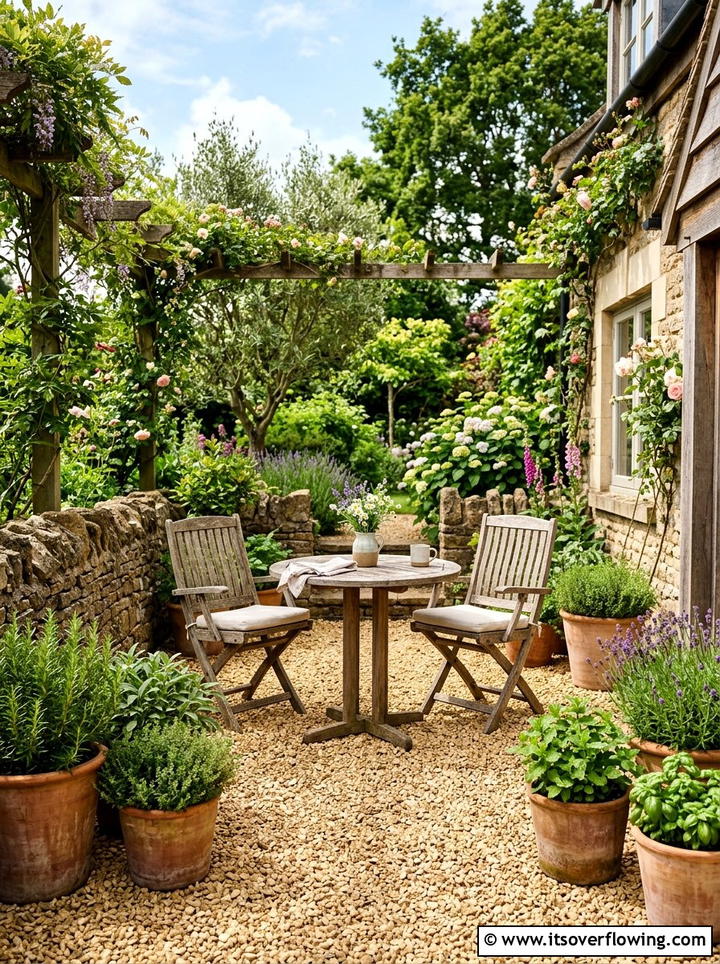
A pea gravel patio is a wonderful way to create a soft, permeable seating area that feels like it belongs in a European villa. The small, rounded stones are comfortable underfoot and create a relaxing sound as you walk across them. This type of patio is much easier and cheaper to install than traditional paving stones or wood decks. You can define the edges with larger rocks or timber to keep the gravel contained. It is the perfect spot for a bistro set or a collection of large potted plants. Pea gravel comes in various earthy tones, allowing for a fully customized style.
24. Cobblestone garden border
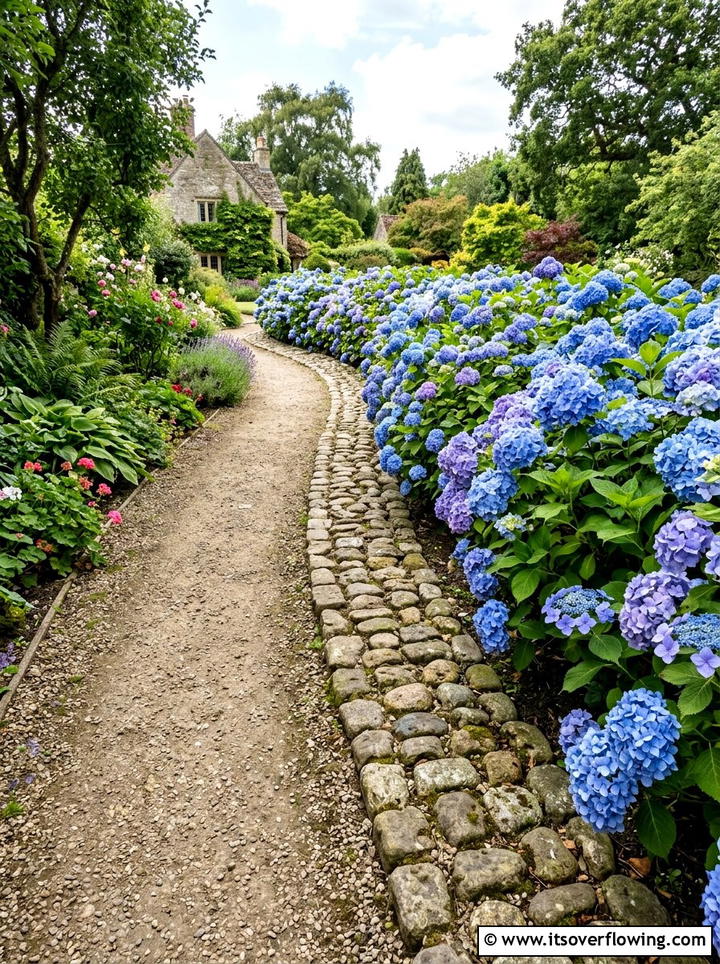
Cobblestones offer a classic, old-world charm that can make any garden feel like it belongs in a historic estate. Using these rounded, sturdy stones to border your paths or flower beds adds a tactile and visual weight to the landscape. They are incredibly tough and can withstand being stepped on or hit by garden tools without breaking. You can set them in mortar for a permanent look or simply bury them halfway in the soil for a more relaxed appearance. The irregular shapes and varied colors provide a beautiful contrast to the soft textures of blooming flowers and green leaves in your backyard space.
25. Quartz rock accent
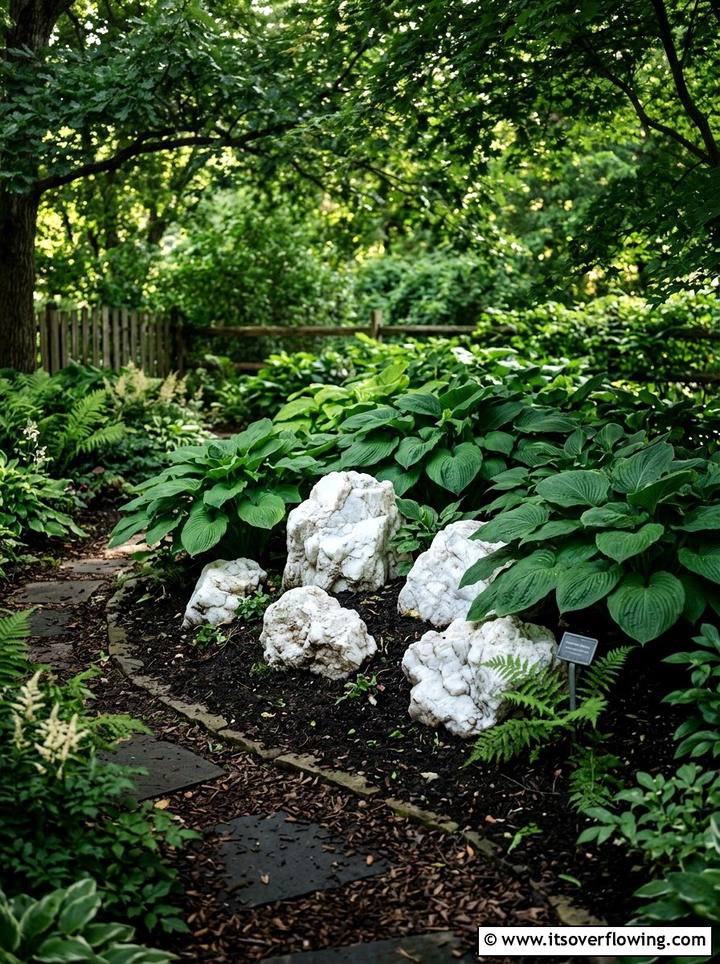
If you want to add a touch of sparkle and brightness to a shady corner, quartz rocks are an excellent choice. These stones often have a white or translucent appearance that reflects light, making them stand out against dark soil and green foliage. You can use large quartz chunks as individual accents or spread smaller quartz pebbles as a decorative mulch. They work particularly well near water features, where the splashing water makes the crystals shine even more. Adding quartz to your garden brings a clean, crisp feel to the space. It is a simple way to introduce a bit of natural luxury.
Conclusion:
Incorporating rocks into your garden design is a brilliant way to create a landscape that is both beautiful and sustainable. From functional paths and retaining walls to artistic focal points and relaxing water features, stones offer endless possibilities for enhancing your outdoor living area. They provide a sense of structure, texture, and permanence that complements the ever-changing nature of plants. By choosing the right types of rocks and placing them thoughtfully, you can reduce maintenance chores while increasing your property’s curb appeal significantly. Whether you prefer a modern minimalist look or a rugged natural aesthetic, rocks are the foundation of a truly timeless and stunning backyard garden.

Related posts:
 25 Garden Design Ideas With Native Grasses for Natural Style
 25 Garden Ideas for Rustic Style With Natural Charm
 25 Garden Ideas With Bamboo Projects for Natural Style
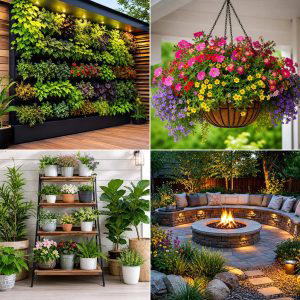 25 Creative Garden Ideas for Patios: Fresh Outdoor Style
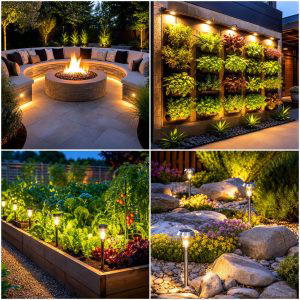 25 garden design ideas with lighting plans: Bright Outdoor Style
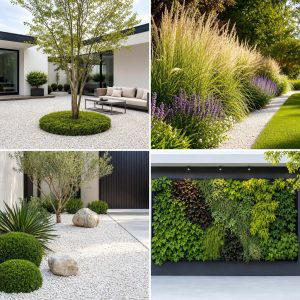 25 garden ideas for minimalist style: Clean Outdoor Looks
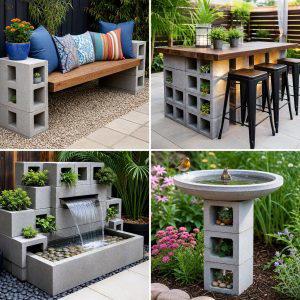 25 Garden Ideas With Cinder Blocks for Creative Outdoor Style
 25 Garden Ideas With Plant Markers for Organized Outdoor Style
 25 Small Garden Ideas on a Budget for Beautiful Outdoor Style
 25 Small Garden Ideas With Boho Style for Dreamy Outdoor Vibes
 25 small garden ideas with no lawn for Easy Outdoor Style
 25 small garden ideas with zen style for Calm Outdoor Living