
Cottage gardens are the epitome of romantic landscaping, characterized by their lush, overflowing layers and a sense of effortless beauty that feels both timeless and personal. Unlike formal gardens that rely on strict symmetry and rigid lines, the cottage style thrives on a beautiful kind of chaos where plants of varying heights, colors, and textures mingle together seamlessly. The secret to achieving this viral Pinterest look lies in the art of layering, where tall spires reach toward the sky while lower-growing perennials and ground covers fill every available inch of soil. This approach creates a rich tapestry that changes with the seasons, offering a sensory experience filled with soft fragrance and vibrant color. Whether you have a sprawling backyard or a tiny urban plot, mastering these layering techniques will transform your outdoor space into a charming sanctuary that feels like a scene from a fairytale.
1. Delphinium And Foxglove Border
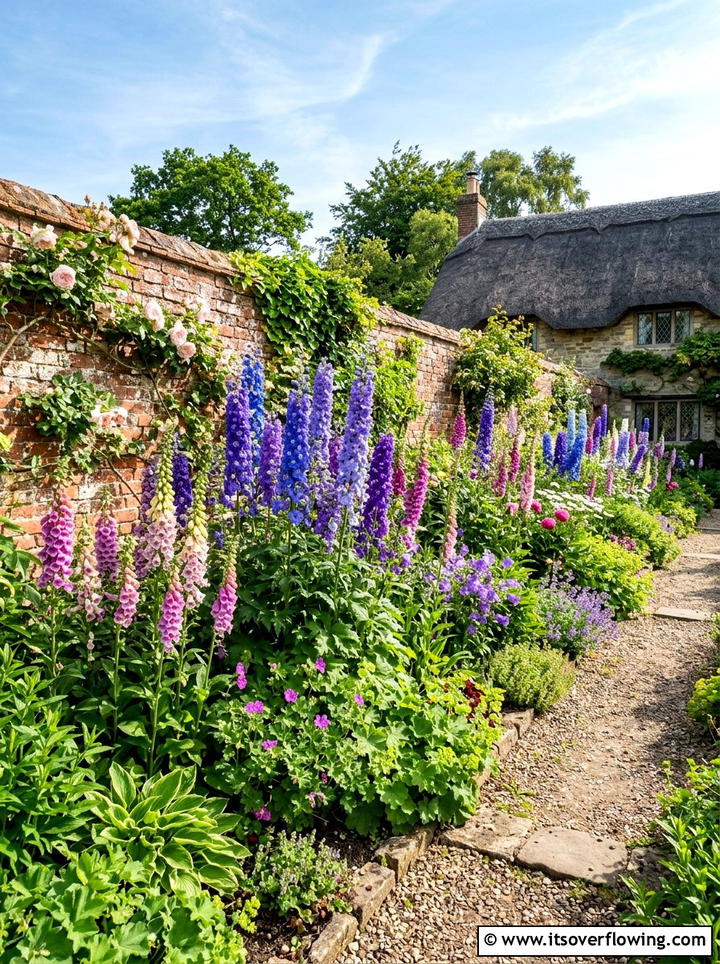
Are you looking for a way to add dramatic height and a sense of old-world charm to your backyard borders? Using tall spires like delphiniums and foxgloves creates an immediate vertical interest that anchors the back of a flower bed. These majestic plants provide a stunning backdrop for shorter species, allowing you to build depth within a compact space. By planting them in groups rather than single rows, you mimic the natural growth patterns found in historic English landscapes. Their vibrant blues and purples draw the eye upward, making even a small garden feel much larger. Ensure they have proper support to withstand wind, and you will enjoy a breathtaking display that serves as the perfect foundation for a layered cottage aesthetic.
2. Mixed Perennial Garden Bed
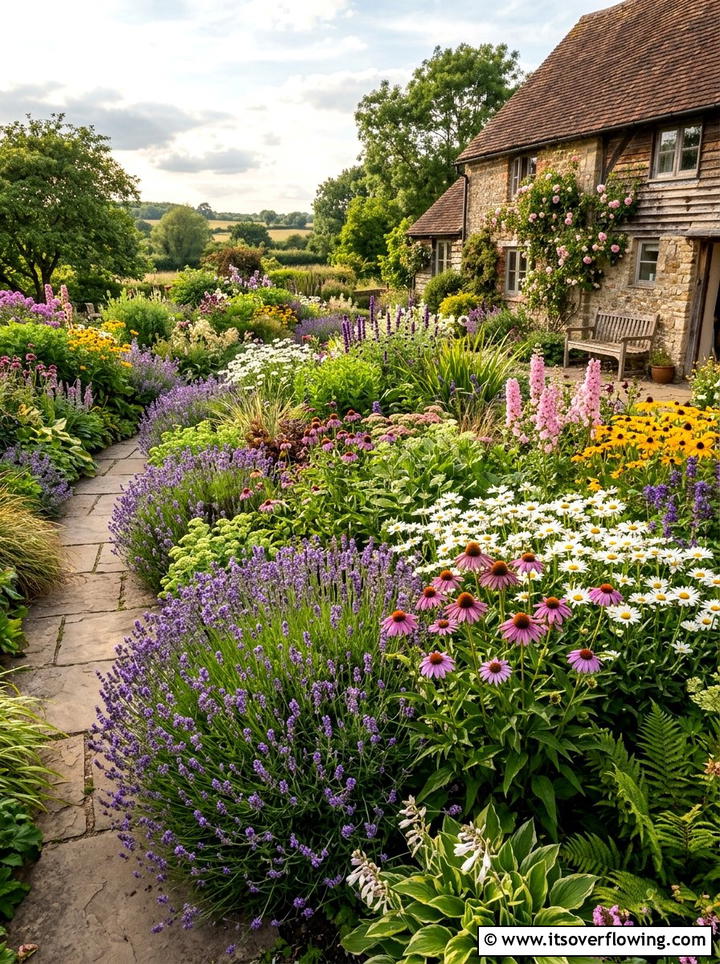
Creating a mixed perennial bed is the heartbeat of cottage layering because it ensures your garden looks full and vibrant throughout the growing season. You can combine different foliage textures, such as the silvery leaves of lamb’s ear with the deep greens of hostas, to create visual interest even when flowers are not in bloom. Interspersing different flowering times ensures that as one plant fades, another rises to take its place. This constant cycle of growth keeps the garden looking lush and intentional rather than neglected. Focus on placing medium-height plants like coneflowers or shasta daisies in the center of the bed to bridge the gap between tall background plants and low-growing front borders.
3. Climbing Roses On Trellis
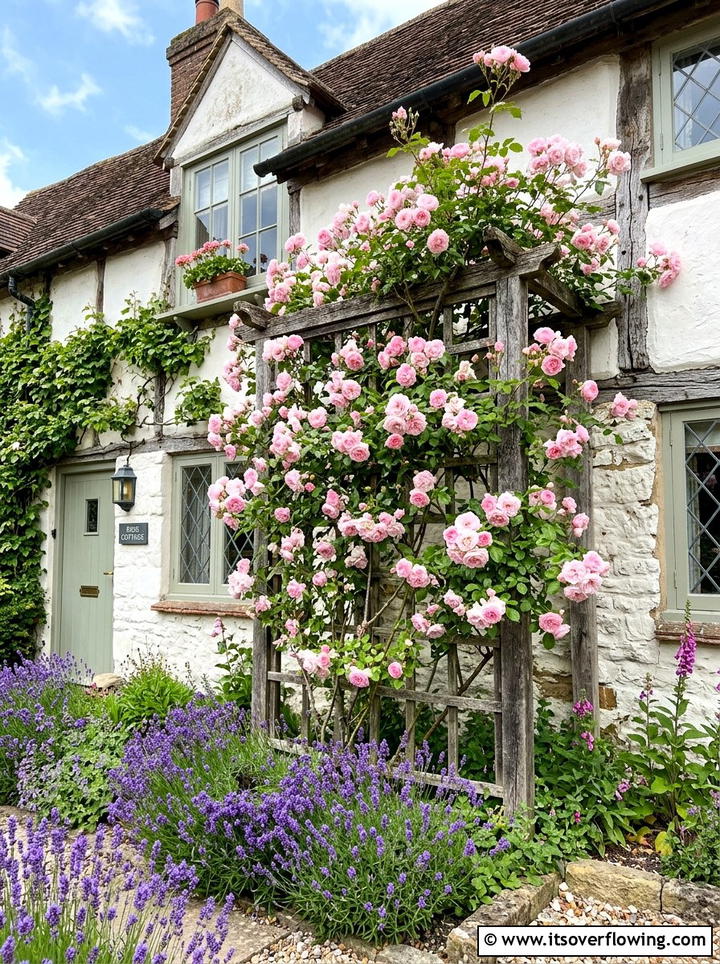
Have you ever dreamed of a garden wall covered in fragrant blooms that seem to spill over every surface? Climbing roses are essential for adding vertical layers to your cottage garden, especially when trained over a sturdy wooden trellis or wall frame. These plants provide a sense of enclosure and privacy while softening the hard lines of your home or fence. By choosing repeat-blooming varieties, you ensure a steady supply of color and scent from late spring through autumn. Layering these roses with clematis can create a stunning duo where the two plants intertwine for a more complex and beautiful look. This vertical layering technique maximizes space and adds a romantic, high-end feel to any outdoor area.
4. Flagstone Garden Path Layout
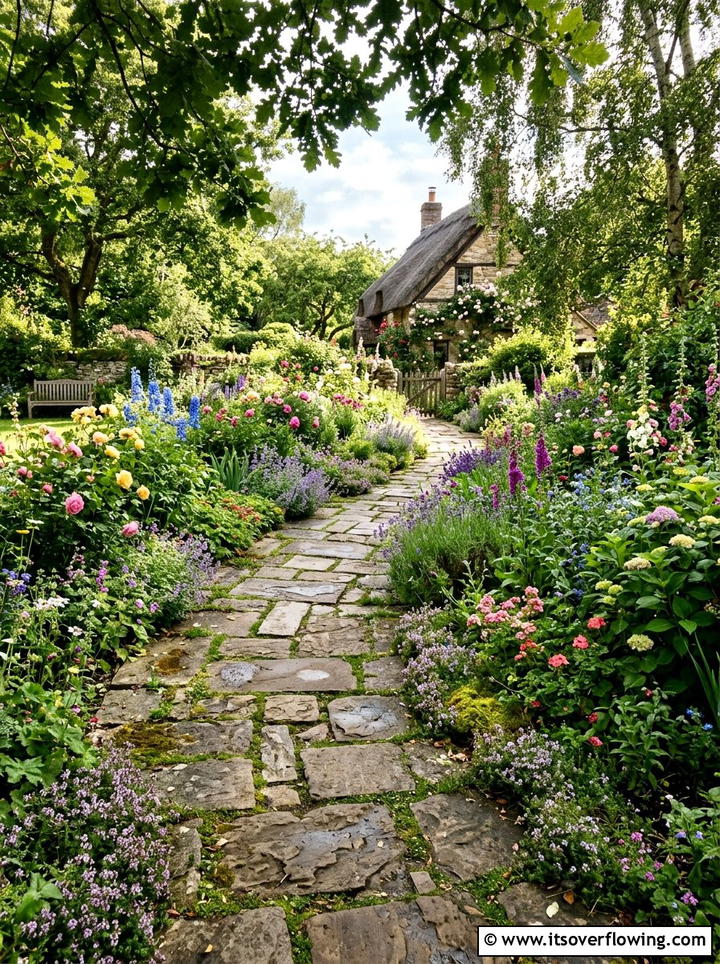
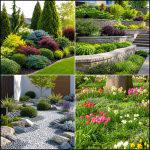
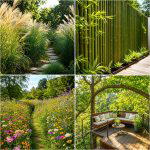
A winding flagstone path serves as the physical and visual spine of a layered cottage garden, guiding visitors through the dense foliage. Instead of straight concrete walks, choose irregular natural stones that allow small ground covers like creeping thyme or moss to grow in the crevices. This softens the edges and makes the path feel like it has been there for decades. The path should meander through the garden, disappearing behind tall plants to create a sense of mystery and discovery. By surrounding the stones with low-growing chamomile or sedum, you add another layer of texture right at your feet. This functional element becomes a design feature that grounds the entire landscape and enhances the cottage vibe.
5. Wildflower Meadow Garden Patch
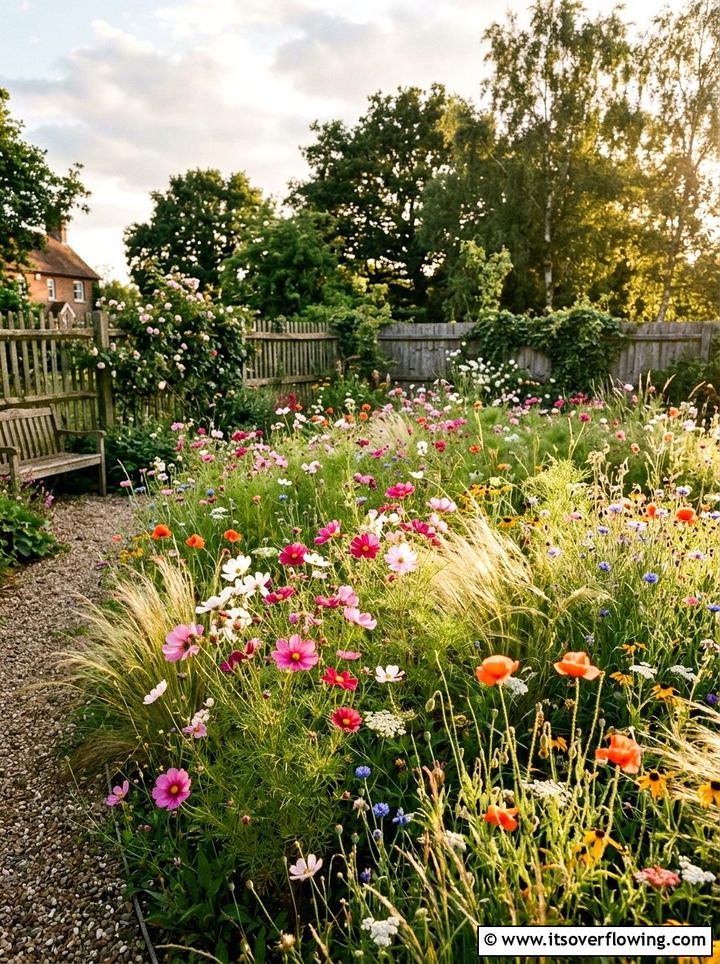
Transforming a corner of your yard into a wildflower meadow patch adds an airy, ethereal layer that attracts pollinators and brings movement to the space. Unlike manicured lawns, a meadow area features a mix of native grasses and dainty flowers like cosmos or poppies that sway in the breeze. This layering technique provides a soft contrast to the more structured perennial beds found elsewhere. It is a low-maintenance way to fill large gaps while providing essential habitats for bees and butterflies. The informal nature of wildflowers perfectly complements the cottage aesthetic by blurring the boundaries between the cultivated garden and the natural world. This creates a relaxed atmosphere that feels truly restorative and visually captivating.
6. Culinary Herb Garden Border
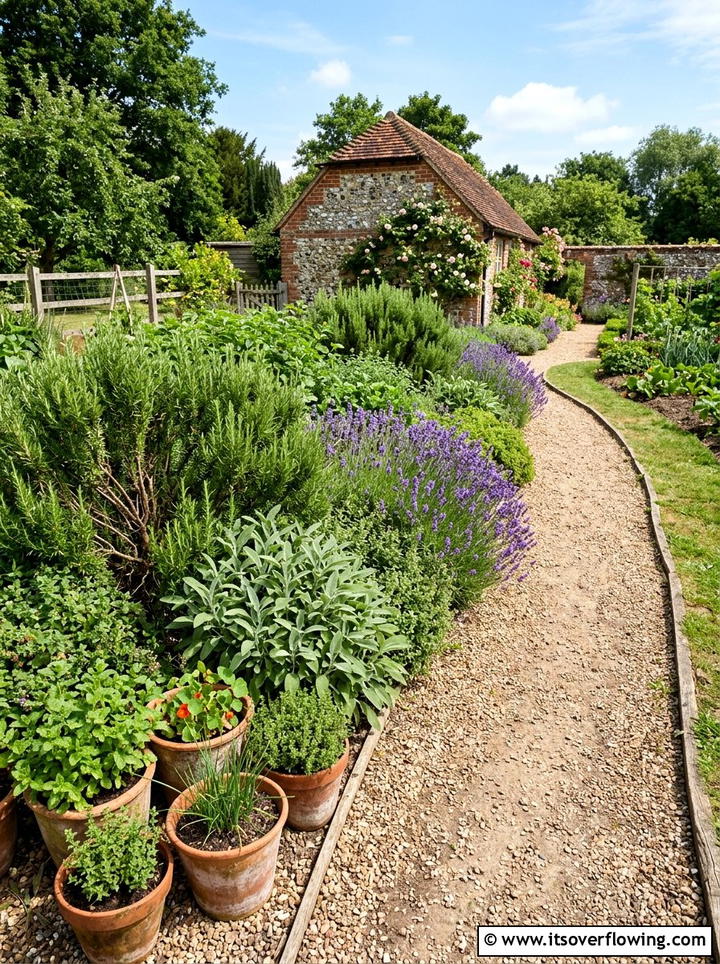
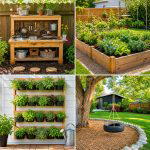
Integrating a culinary herb border near your kitchen door combines practical utility with the beautiful layering of a traditional cottage landscape. Herbs like rosemary, sage, and lavender offer fantastic silvery-green foliage that contrasts beautifully with brighter flowering plants. Many herbs produce delicate flowers that contribute to the overall color palette while providing wonderful fragrances whenever you brush past them. You can use woody herbs as low hedging to define the edges of your garden beds, creating a neat but soft frame for more chaotic interior plantings. This layering of scents and textures makes the garden more interactive, as you can harvest fresh ingredients while enjoying the visual beauty of the well-planned, functional outdoor space.
7. White Picket Fence Flowers
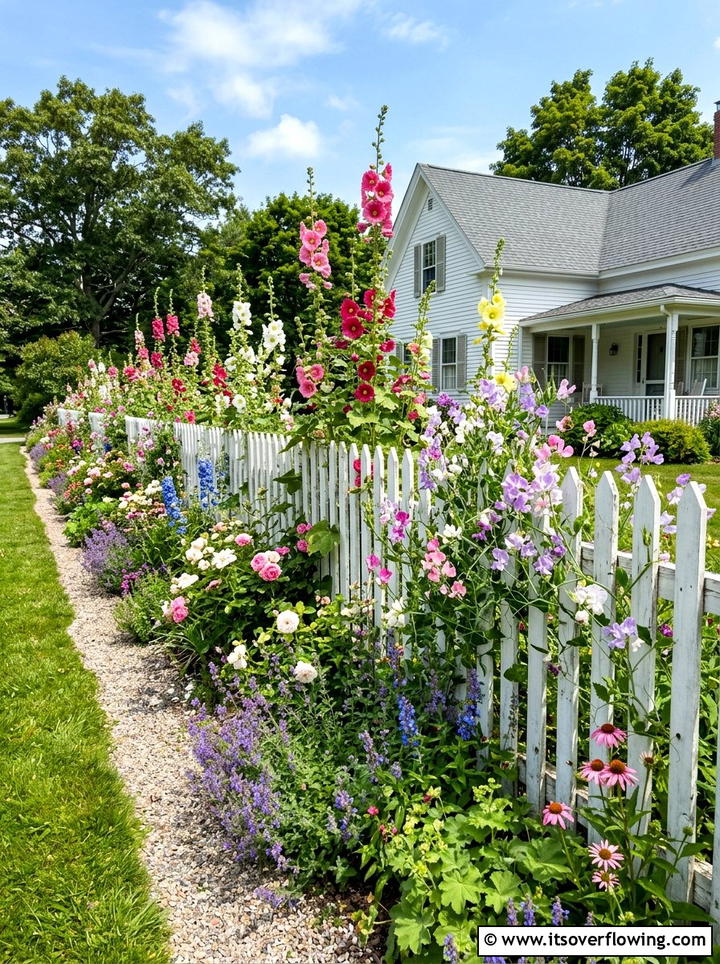
A white picket fence is a classic cottage element that provides the perfect structure for layering various flower heights against a crisp backdrop. By planting tall hollyhocks or sunflowers right against the fence, you create a tiered effect that peeks over the top to greet neighbors. In front of those, you can place mid-sized perennials like salvia or lavender to fill the mid-ground. Finally, spill-over plants like petunias or alyssum can soften the base of the fence where it meets the ground. This tiered approach creates a high-impact visual that looks stunning from both the street and the garden. The contrast between the white wood and vibrant green leaves makes the flower colors truly pop.
8. Lavender Garden Walkway Border
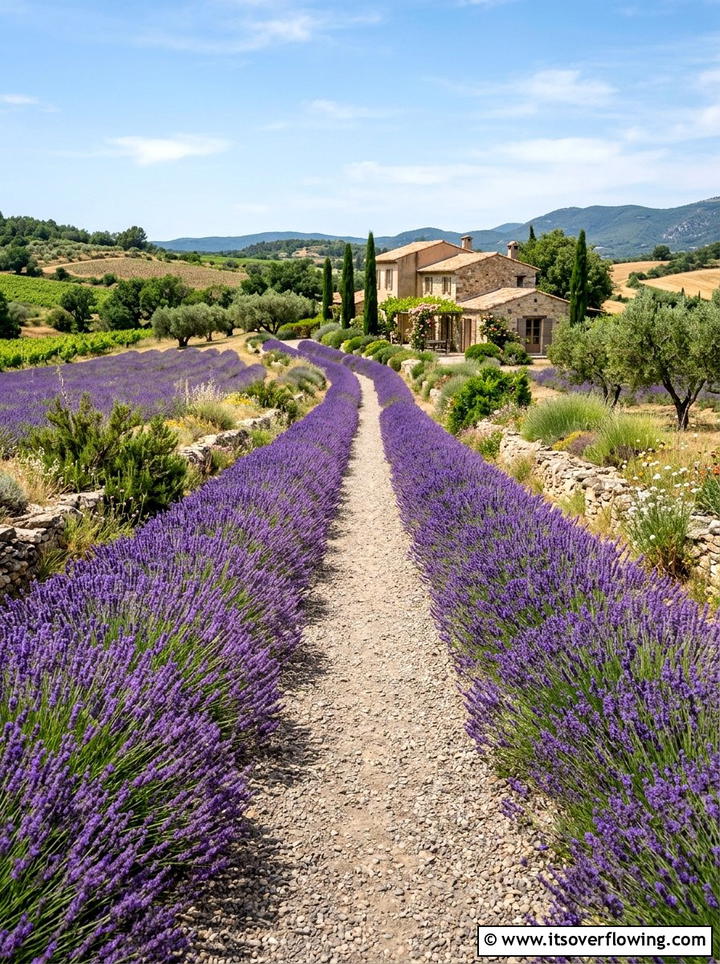
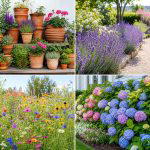
Imagine walking down a path lined with fragrant purple blooms that release a calming scent with every step you take. An English lavender walkway is a quintessential cottage garden feature that provides a structured yet soft layer along your main thoroughfares. Lavender stays relatively low, making it an excellent choice for the front of a layered border where it won’t hide the taller plants behind it. Its silvery foliage offers year-round interest even after the purple spikes have faded in the late summer heat. Pairing lavender with soft ornamental grasses creates a modern cottage look that is drought-tolerant and incredibly easy to maintain. This repetitive layering creates a sense of rhythm and harmony throughout the garden.
9. Rustic Backyard Seating Area
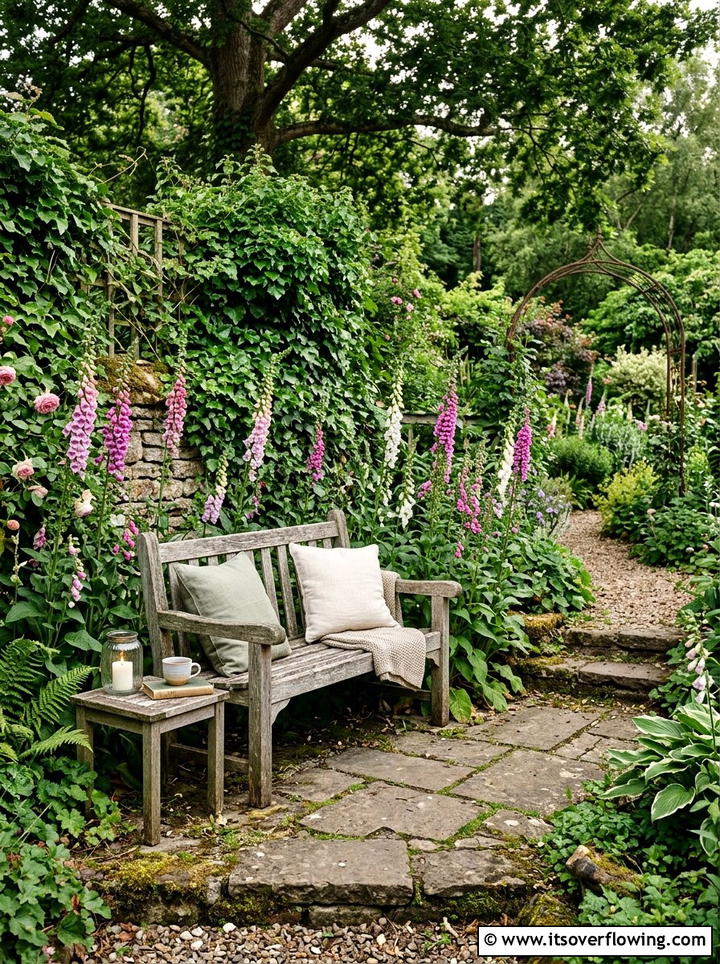
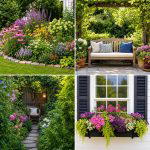
Every cottage garden needs a quiet spot to sit and soak in the surrounding beauty, and a rustic seating area provides that perfect focal point. Position a weathered wooden bench or a set of bistro chairs in a cozy nook surrounded by layers of greenery and flowers. By placing taller shrubs or climbing plants behind the seating, you create a sense of “garden rooms” that feel private and intimate. Low-growing flowers like pansies or lobelia can be planted around the feet of the furniture to ground the space. This layering of furniture with flora makes the seating area feel like an organic part of the landscape rather than an afterthought. It invites you to pause and enjoy the garden.
10. Traditional Stone Bird Bath
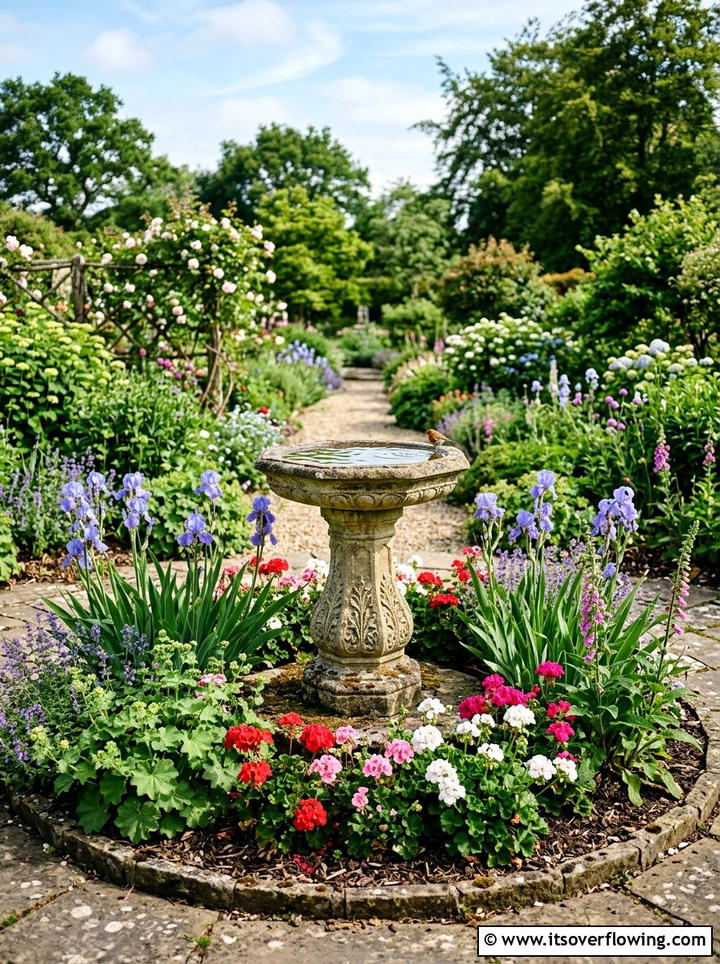
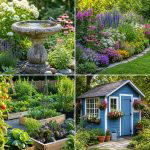
A traditional stone bird bath serves as a classic focal point that adds a layer of height and architectural interest to a flower bed. Placing it in the center of a circular planting scheme allows you to layer flowers around it in descending heights. You might plant tall iris behind the bath and shorter geraniums in front to create a balanced, three-dimensional look. Beyond its visual appeal, a bird bath introduces the element of water and movement as birds visit to drink and bathe. The weathered stone texture provides a nice contrast to soft flower petals, making the design feel established and historic. It anchors the bed and provides a clear destination for the eyes to rest.
11. Raised Vegetable Garden Bed
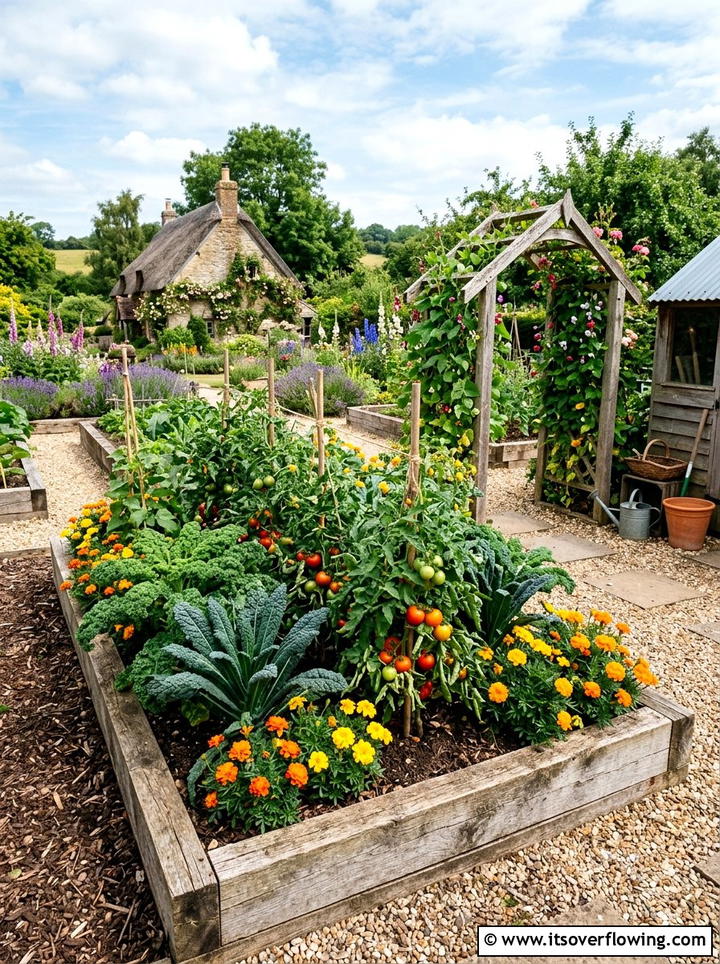
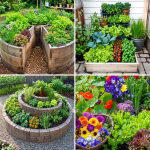
Who says vegetable gardens can’t be beautiful? Integrating raised beds into your cottage design allows you to layer edible crops with ornamental flowers for a lush, productive space. You can plant climbing beans on rustic teepees to add vertical interest while low-growing lettuces and marigolds fill the base. Marigolds not only add a splash of orange color but also help deter pests from your vegetables. This mixing of species creates a dense, layered look that is much more attractive than traditional row farming. Using natural wood or stone for the beds adds a tactile, earthy element that fits perfectly within the cottage aesthetic. It proves that utility and beauty can coexist in a well-planned garden.
12. Wrought Iron Garden Gate
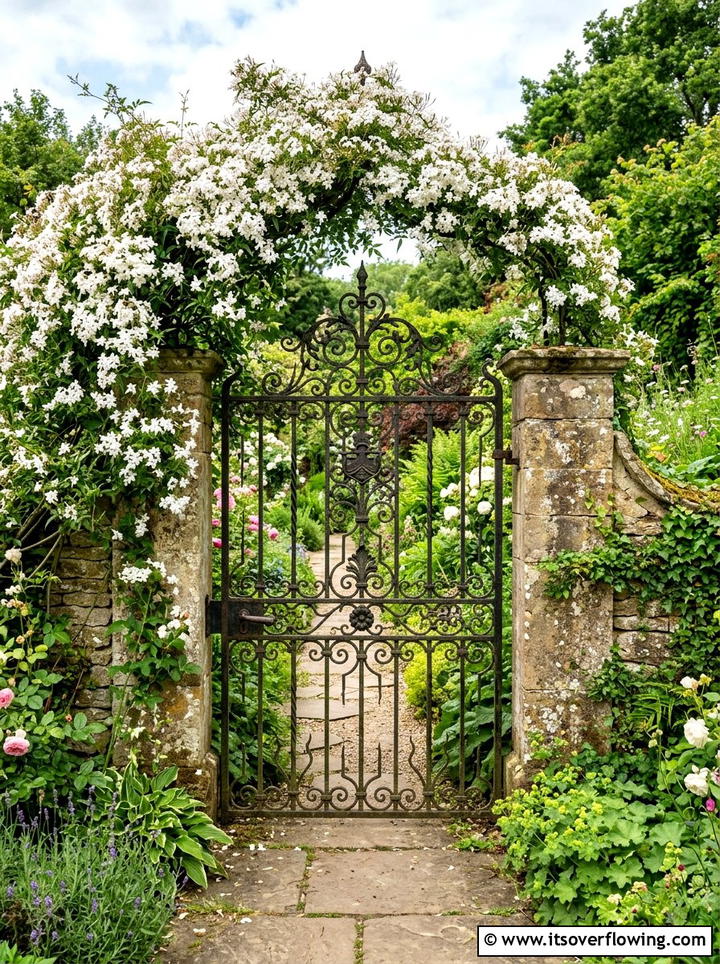
An antique wrought iron gate serves as a charming portal into your private sanctuary, offering a glimpse of the layered beauty within. You can surround the gate with climbing ivy or jasmine to soften the metal and blend it into the surrounding hedge or wall. This creates a vertical layer that frames the entrance and sets a romantic tone for the rest of the garden. As the gate weathers over time, its patina will only add to the cottage charm and sense of history. Placing a few large potted plants on either side of the entrance adds another layer of depth, making the transition from the outside world into your garden feel like a special, intentional experience for every guest.
13. Blue Hydrangea Garden Border
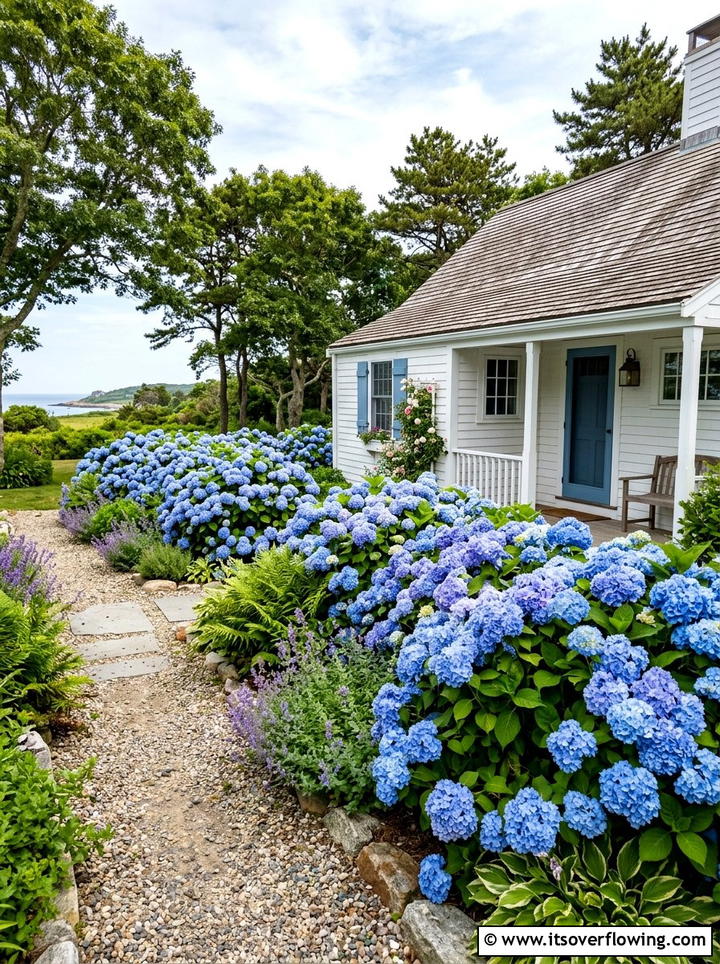
Hydrangeas are beloved in cottage gardens for their massive, cloud-like blooms and lush green foliage that fills large gaps in the mid-layer. Planting a row of blue hydrangeas along a fence or house foundation creates a soft, voluminous wall of color that anchors the space. Because they are shrubs, they provide a more substantial structure than delicate perennials, helping to define the layout of the garden even in winter. You can layer smaller white flowers or hostas at their base to highlight the vibrant blue tones of the hydrangea petals. This combination of scale and color makes hydrangeas a viral favorite for anyone looking to create a classic, high-impact cottage landscape that feels full and established.
14. Woven Willow Garden Edging
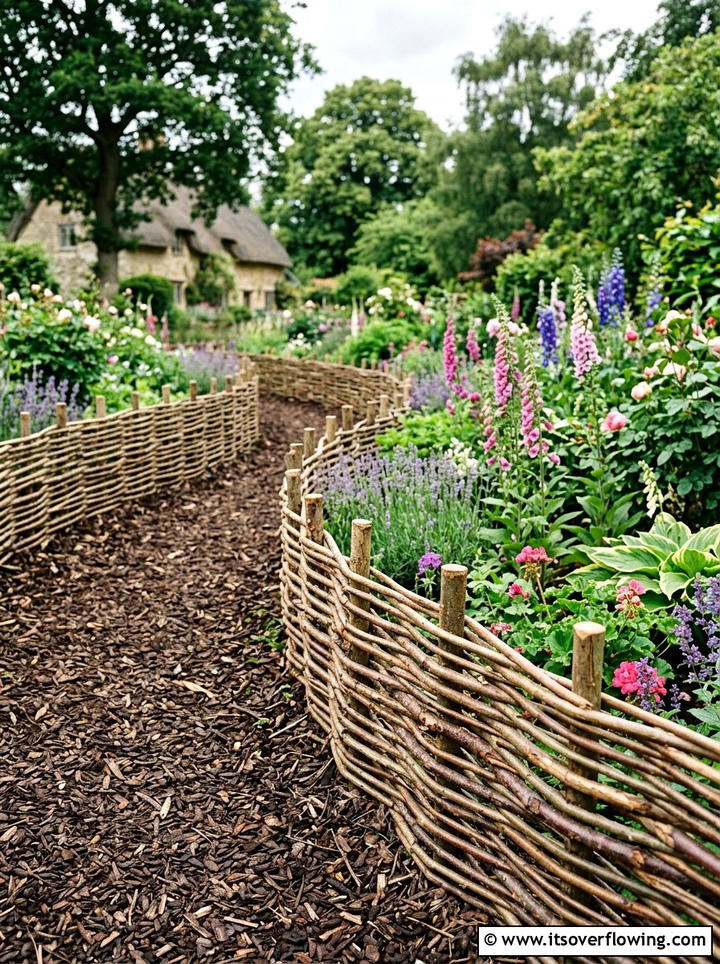
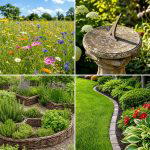
Adding woven willow edging to your garden beds provides a rustic, handmade layer that defines your paths and prevents mulch from spilling over. This traditional “wattle” style edging adds a beautiful organic texture that complements the soft shapes of cottage plants. It sits low to the ground, serving as the very first layer in your vertical design scheme. Willow is a natural material that blends seamlessly with the earth, unlike plastic or metal alternatives that can look out of place in a romantic garden. By using these hurdles, you can create slightly raised sections that give your plants a boost, making the entire garden look more dynamic and professionally designed while maintaining its cozy, cottage-style charm.
15. Peony Flower Garden Bed
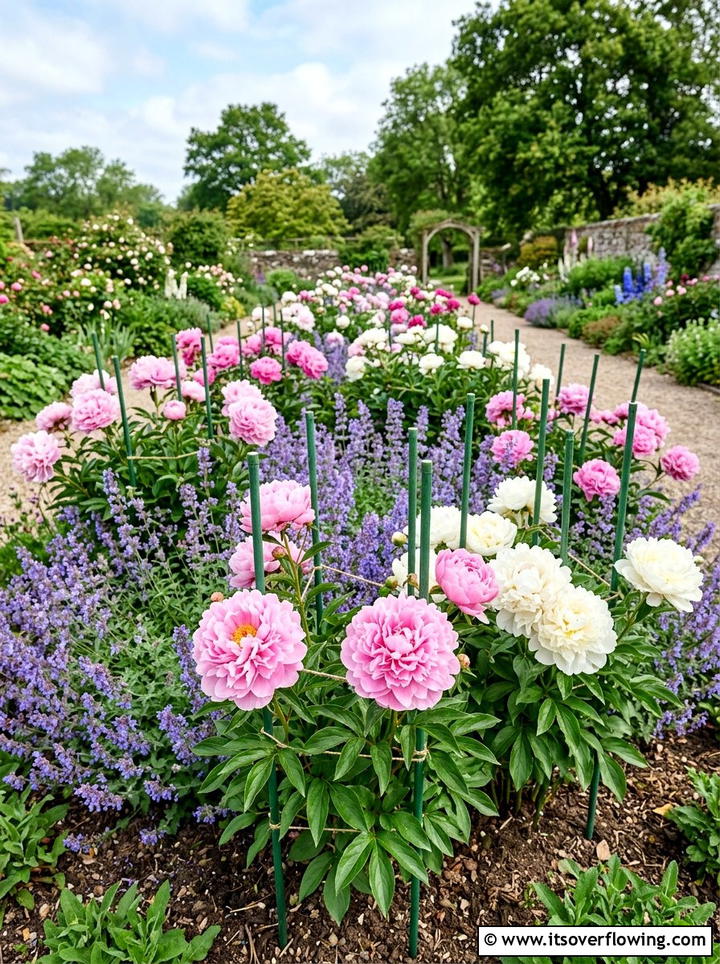
Peonies are the crown jewels of the early summer garden, offering huge, fragrant blooms that embody the romantic spirit of cottage layering. These perennials have a bushy growth habit that fills the middle layer of a border perfectly after the spring bulbs have finished. Their deep green, glossy leaves provide a sturdy backdrop for smaller annuals that can be tucked around their base. Since peonies can live for decades, they provide a sense of permanence and history to your landscape. Layering different varieties that bloom at slightly different times can extend the show for several weeks. Their heavy heads often require support, which can be provided by decorative metal cages that add another subtle visual layer.
16. Wooden Arched Garden Arbor
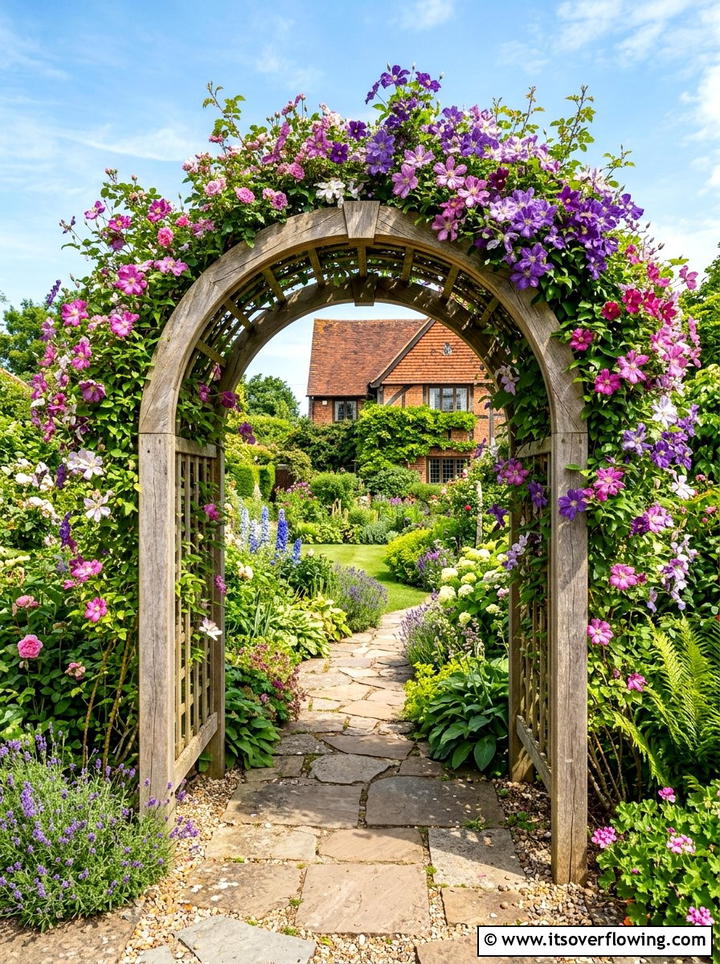
A wooden garden arbor creates a stunning architectural layer that draws the eye upward and provides a frame for climbing plants like honeysuckle or clematis. Positioned over a path, it acts as a transition point that leads you from one area of the garden to another. The archway allows you to experience the fragrance and beauty of flowers at eye level and above, fully immersing you in the greenery. You can plant shade-loving species at the base of the arbor where the structure casts a shadow, adding even more variety to your plant palette. This vertical element breaks up the flat plane of a lawn and adds a sense of grandeur and structure to the informal cottage style.
17. Shade Garden Fern Planting
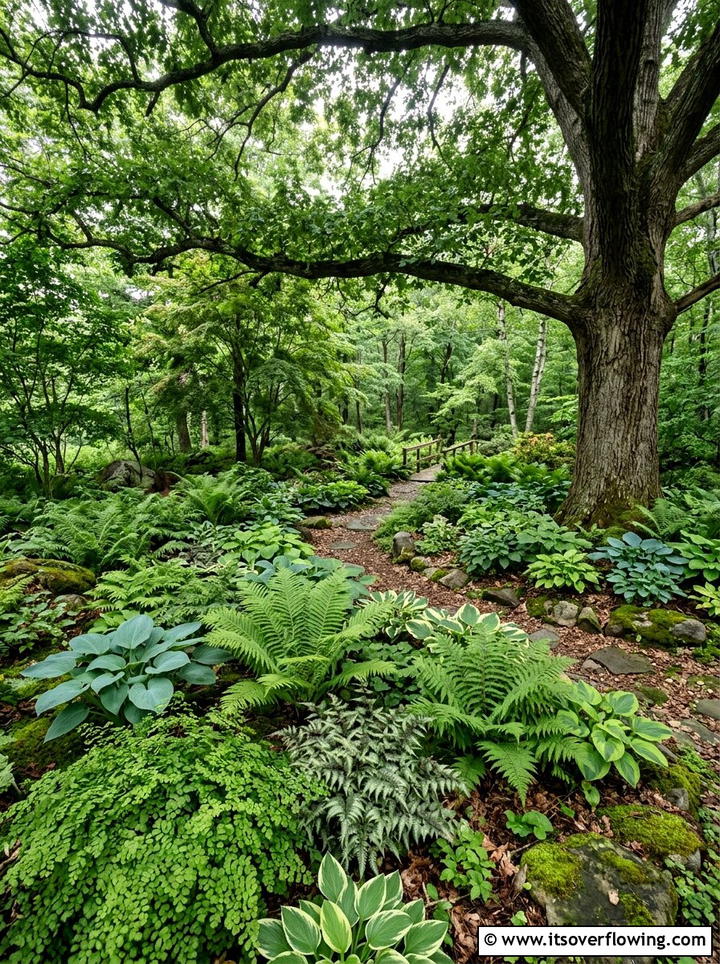
If you have a tucked-away corner under a large tree, a shade garden filled with ferns can create a lush, cool layer of green. Ferns offer incredible texture with their delicate fronds, ranging from the tall ostrich fern to the low-growing maidenhair variety. Layering different types of ferns with other shade-lovers like bleeding hearts or hellebores creates a woodland-inspired look that feels like a hidden retreat. The various shades of green and unique leaf shapes provide visual interest without needing bright sunlight. This layering technique is essential for making every part of your yard feel intentional and full, ensuring that even the dimmest spots contribute to the overall beauty of your cottage garden design.
18. French Potager Garden Layout
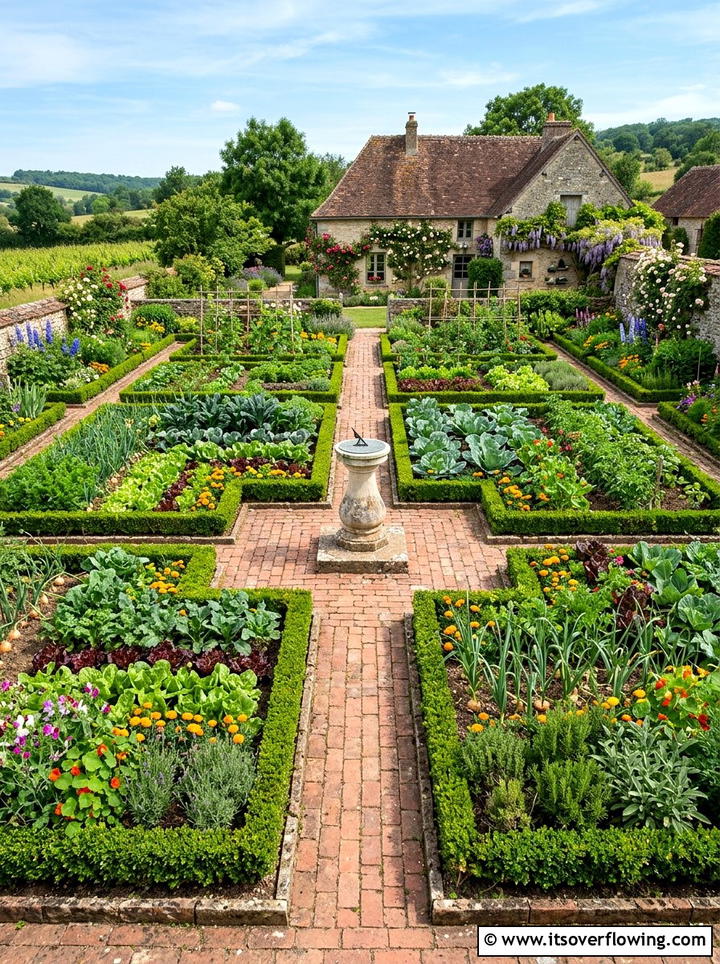
The French potager, or decorative kitchen garden, is the masterclass in aesthetic layering by mixing vegetables, fruits, and flowers in a geometric yet soft pattern. Instead of separate areas, you might see rows of kale interspersed with vibrant zinnias or blueberries guarded by lavender bushes. This approach creates a dense tapestry of colors and textures that is both beautiful and highly productive. The key is to treat the vegetables as ornamental plants, choosing varieties with interesting colors or leaf shapes. By layering these elements together, you create a garden that is a feast for both the eyes and the kitchen. It is a sustainable and stunning way to maximize every square inch of your backyard space.
19. Natural Wildlife Pond Edge
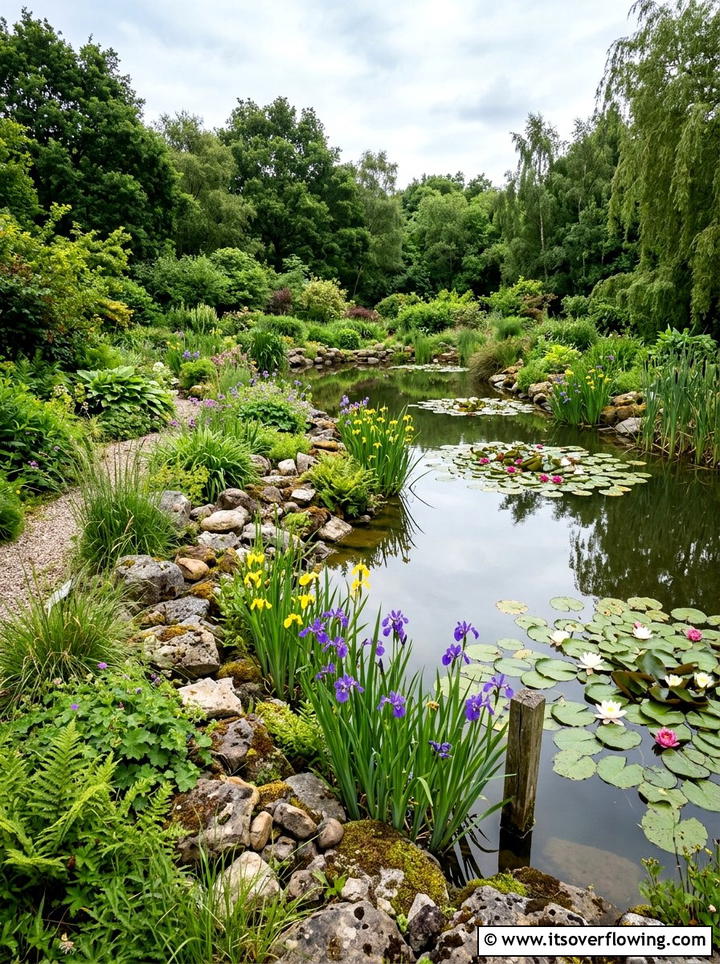
A small pond adds a serene water layer to your cottage garden, reflecting the sky and the surrounding flowers. To keep it looking natural, layer the edges with water-loving plants like iris, marsh marigolds, and creeping jenny that spill over the rocks into the water. This hides the pond liner and makes the feature look like an organic part of the landscape. The movement of the water and the presence of dragonflies or frogs add a living dimension to the garden that plants alone cannot provide. Surrounding the pond with different heights of greenery ensures it feels tucked away and private, creating a peaceful focal point that enhances the overall sensory experience of your outdoor sanctuary.

20. Wooden Cottage Window Box
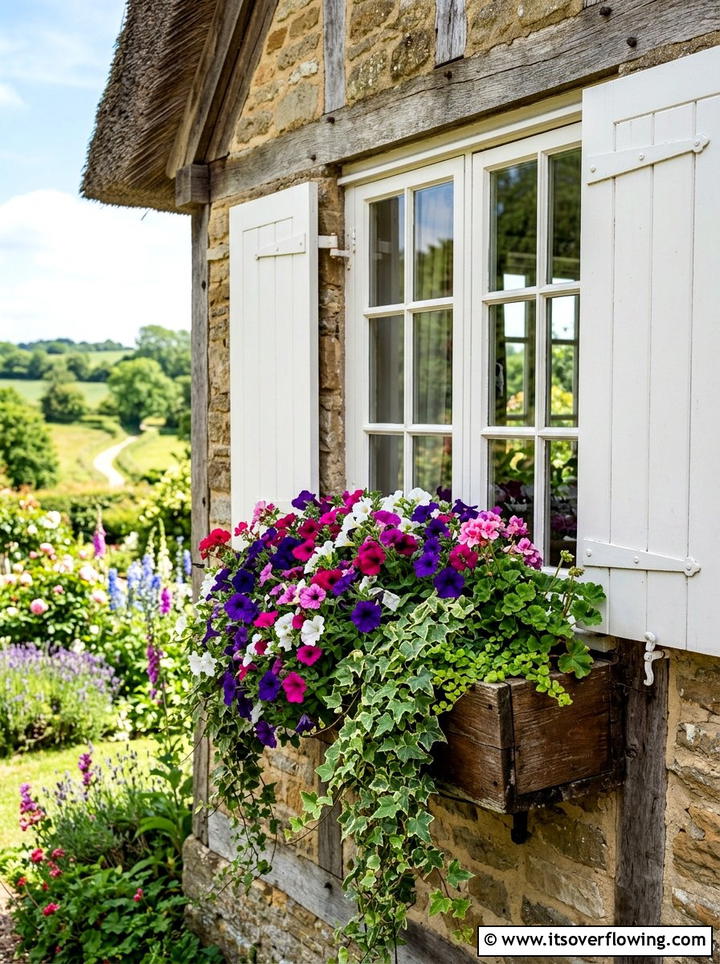
Window boxes allow you to bring the cottage layering style right up onto the walls of your home, creating a bridge between the house and the garden. A well-designed window box follows the “thriller, filler, and spiller” rule: a tall plant in the center, mounded flowers around it, and trailing vines hanging over the edge. This creates a mini-landscape that adds color and life to your facade. Using plants like geraniums, ivy, and petunias ensures a constant display of blooms that can be seen from both inside and out. It is an excellent way to add a layer of vertical interest if ground space is limited, making your entire property feel wrapped in a lush, floral embrace.
21. Pea Gravel Patio Area
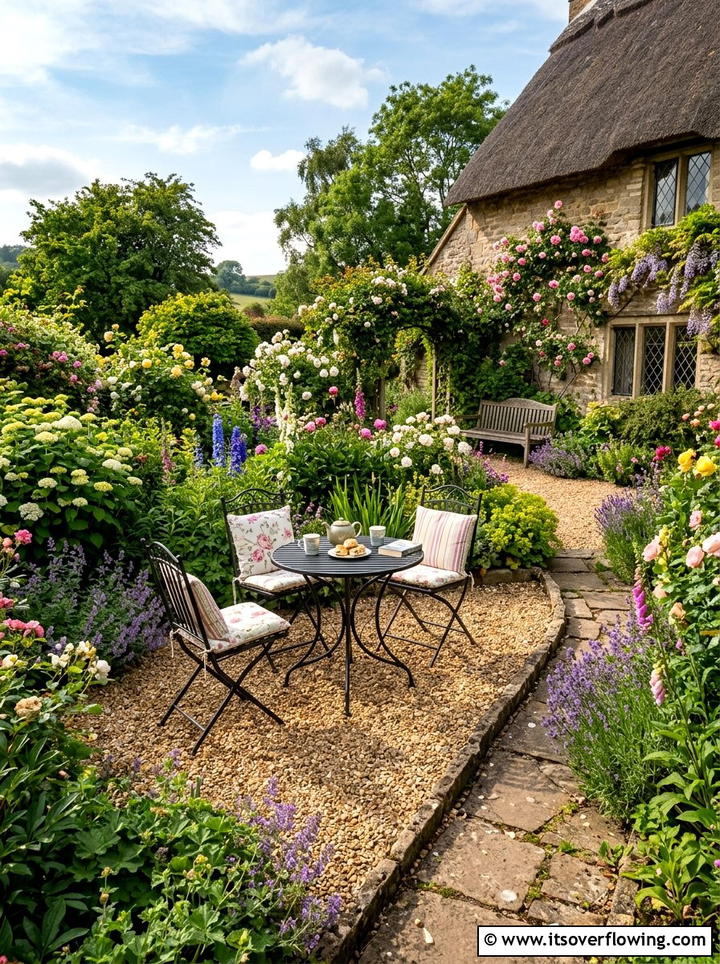
A pea gravel patio provides a crunching sound underfoot and a relaxed, permeable surface that fits perfectly with the informal cottage aesthetic. Instead of a rigid patio, the gravel allows for a softer transition between seating areas and planting beds. You can allow hardy plants like creeping thyme or self-seeding violets to grow right into the edges of the gravel, blurring the lines between the hardscape and the garden. This layering of stone and greenery makes the patio feel like a natural clearing in a forest. It is a low-maintenance and cost-effective way to create a functional outdoor living space that remains deeply connected to the surrounding layered landscape and its romantic, unpretentious charm.
22. Colorful Hanging Flower Baskets
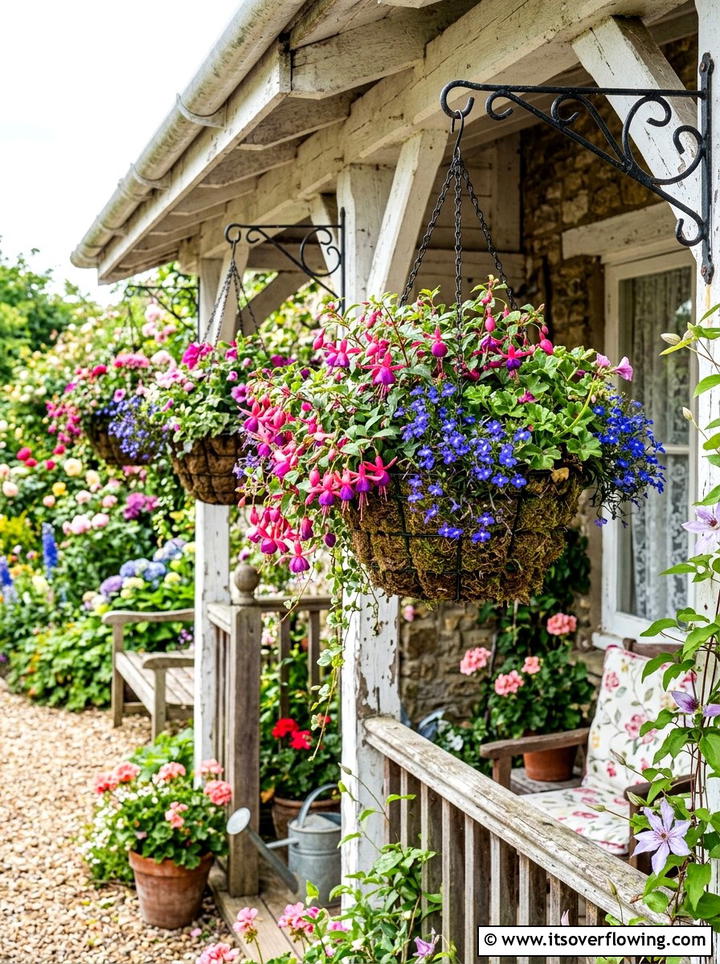
Hanging baskets provide an easy way to add a layer of color at eye level, especially around porches, pergolas, or sturdy tree branches. By selecting a mix of trailing plants like fuchsia, lobelia, and bacopa, you create a cascading effect that looks lush and full. These baskets can be moved around to fill temporary gaps in the garden or to bring color to areas where the soil is poor. The key to a viral-worthy hanging basket is density; you want the plants to overflow so the container is barely visible. This overhead layer of blooms completes the immersive feeling of a cottage garden, ensuring that there is beauty to see no matter where you look.
23. Ornamental Grass Garden Bed
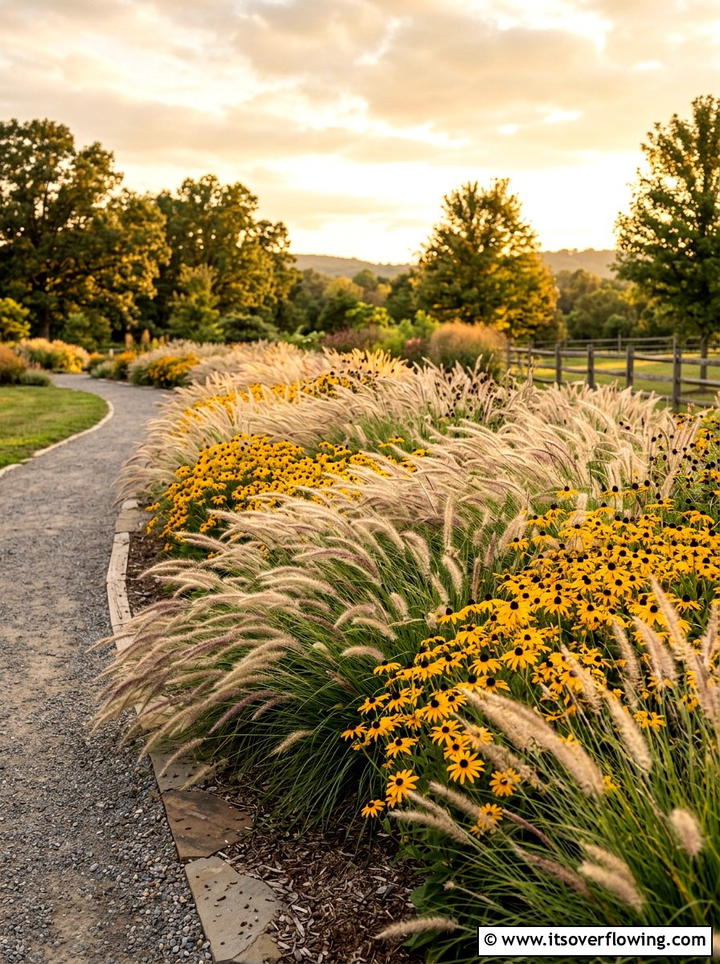
Integrating ornamental grasses into your garden beds adds a layer of movement and fine texture that contrasts beautifully with broad-leaved perennials. Grasses like Mexican feather grass or fountain grass catch the light and dance in the wind, bringing a dynamic energy to the landscape. They serve as excellent “fillers” that bridge the gaps between flowering plants, providing a cohesive backdrop that makes colors stand out. In the autumn and winter, the dried seed heads and golden blades provide structure and interest when other plants have gone dormant. Layering these grasses among your flowers ensures the garden remains visually interesting throughout the entire year, adding a touch of modern naturalism to the traditional cottage style.
24. Backyard Fruit Tree Orchard
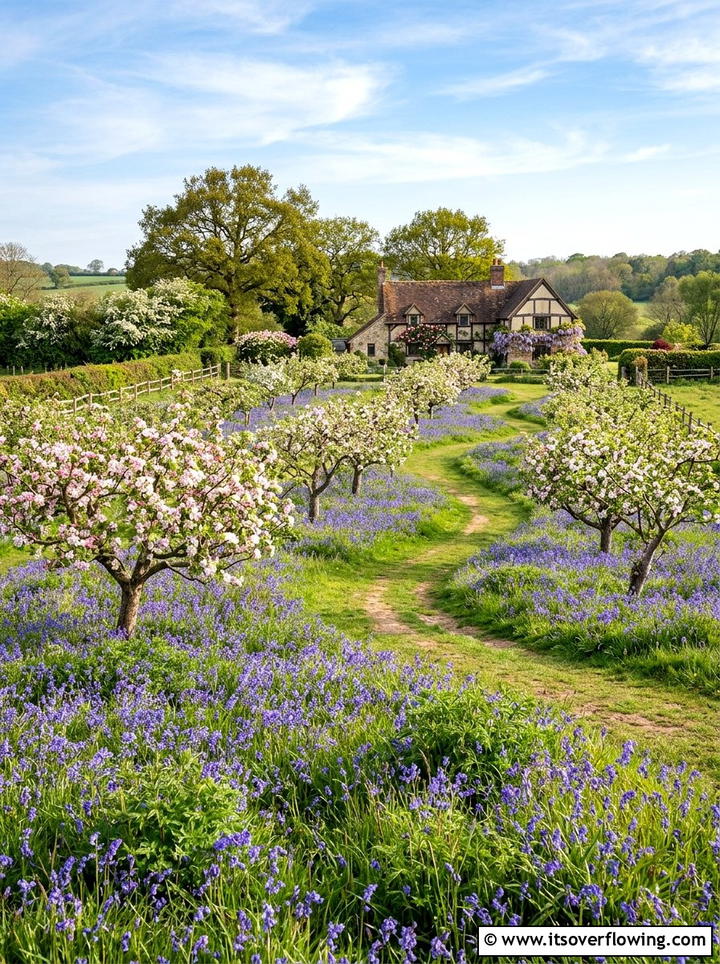
Even a few small fruit trees can add a productive canopy layer to your garden, providing shade, spring blossoms, and autumn harvests. Dwarf varieties of apple, pear, or cherry trees are perfect for cottage gardens because they don’t overwhelm the space. You can underplant these trees with shade-tolerant bulbs like daffodils or bluebells to create a beautiful spring display before the trees leaf out. This vertical layering utilizes the space above your head, making the garden feel like a private, enclosed grove. The gnarled branches of older fruit trees add a sense of character and age to the landscape, making your cottage garden feel like a long-established part of the natural environment.
25. Antique Garden Bench Seating
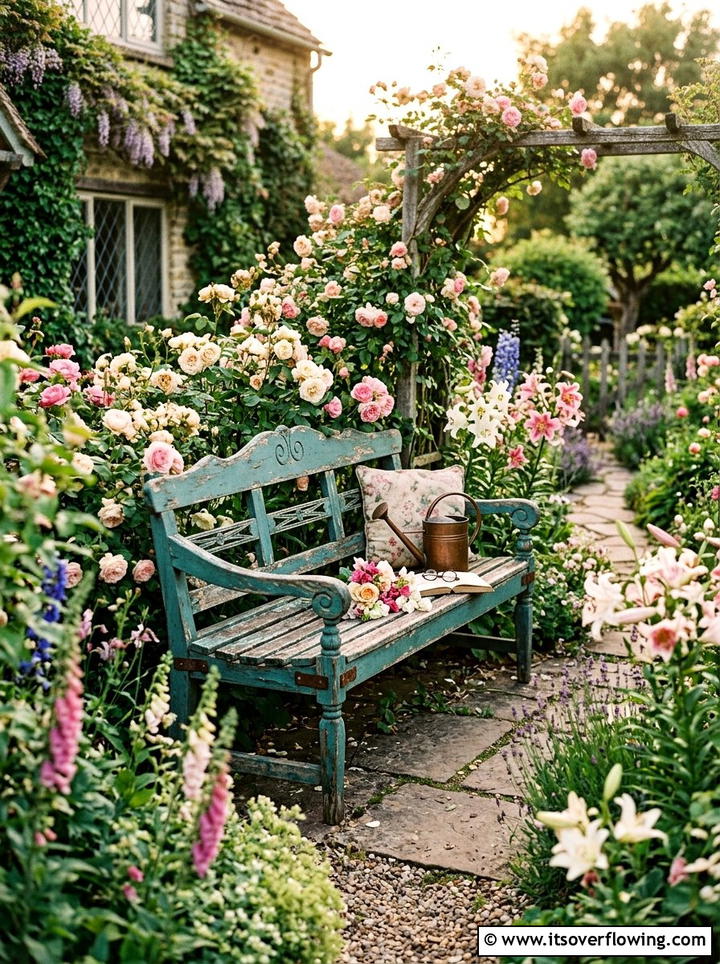
Placing an antique garden bench at the end of a path creates a visual destination and a layer of nostalgic charm. A bench made of weathered wood or ornate cast iron provides a place to rest and enjoy the fruits of your labor. Surround the bench with fragrant plants like honeysuckle or jasmine so that sitting there becomes a multi-sensory experience. This furniture piece acts as an anchor for the surrounding plantings, allowing you to layer flowers around it to make it feel “nested” into the garden. It is the final touch in a layered design, transforming a collection of plants into a livable, welcoming outdoor room that encourages relaxation and reflection.
Conclusion:
Mastering the art of cottage layering is a journey of discovery that allows you to express your personality through the natural beauty of plants. By focusing on varying heights, textures, and the intentional use of vertical space, you can create a garden that feels both abundant and harmonious. These twenty-five ideas provide a foundation for building a landscape that is not only visually stunning but also functional and welcoming to wildlife. Remember that the beauty of a cottage garden lies in its evolution over time, as plants grow, self-seed, and find their own place in the tapestry. With patience and creativity, your outdoor space will become a viral-worthy sanctuary that offers endless inspiration and a peaceful escape from the modern world.

Related posts:
 25 garden design ideas with layering for Lush Depth at Home
 25 Garden Design Ideas for Cottage Gardens Full of Charm
 25 Garden Ideas for Cottage Homes Full of Timeless Charm
 25 garden ideas for english style: Classic Cottage Charm
 25 Small Garden Ideas With Cottage Style for Charming Spaces
 25 Creative Garden Ideas With Hidden Garden Corners
 25 Creative Garden Ideas With Keyhole Garden Beds
 25 Creative Garden Ideas With Kids Garden Zone
 25 Creative Garden Ideas to Transform Any Outdoor Space Fast
 25 Creative Garden Ideas for Urban Homes
 25 Creative Garden Ideas With Fire Pit Circles
 25 Creative Garden Ideas With Maximal Flower Color