
Creating a garden that prioritizes clean lines and geometric shapes offers a refreshing sense of order and modern sophistication to any outdoor space. While organic curves have their place, the structured beauty of straight lines creates a visual rhythm that guides the eye and defines specific zones for relaxation, dining, or play. This architectural approach to landscaping works exceptionally well for both small urban courtyards and sprawling suburban backyards, providing a timeless aesthetic that feels intentional and well-maintained. By focusing on linear elements, you can transform a chaotic patch of grass into a sleek sanctuary that complements the modern architecture of your home and provides a serene backdrop for daily living.
1. Modern Rectangular Patio
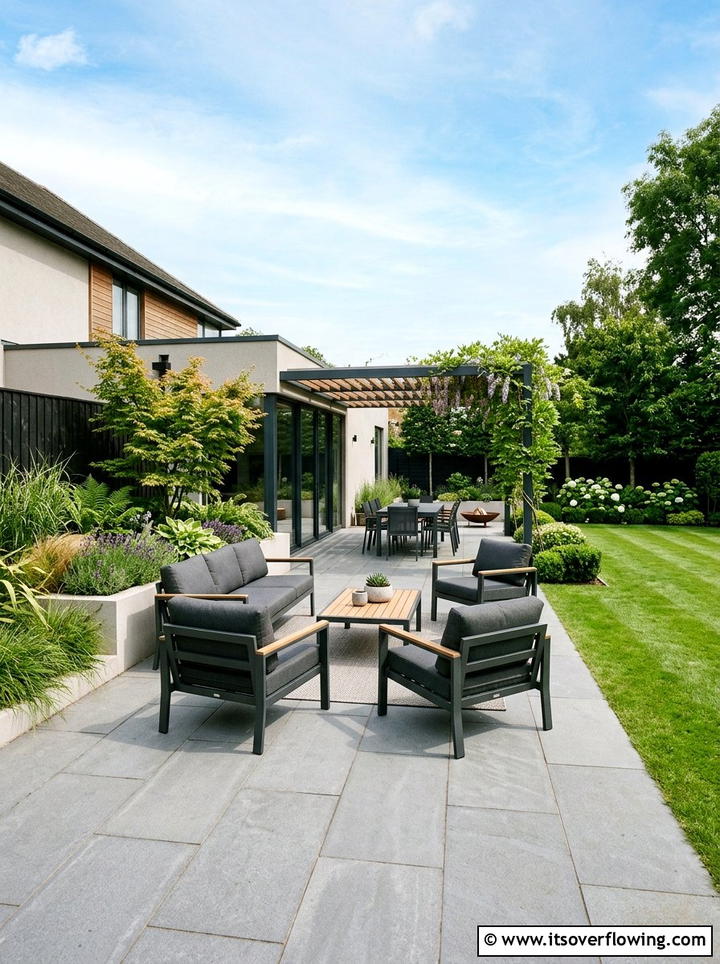
Have you ever noticed how a simple square or rectangular shape can instantly make a backyard feel more organized and spacious? A modern rectangular patio serves as a sturdy foundation for your outdoor living area, utilizing oversized concrete pavers or natural stone slabs with tight joints. The crisp, 90-degree angles create a clear boundary between the hardscape and the lush greenery of the surrounding garden. This design choice simplifies furniture placement, allowing for sleek modular sofas and long dining tables to sit perfectly within the frame. By sticking to a linear footprint, the patio acts as an outdoor room that feels like a direct extension of your home’s interior architecture.
2. Linear Water Feature
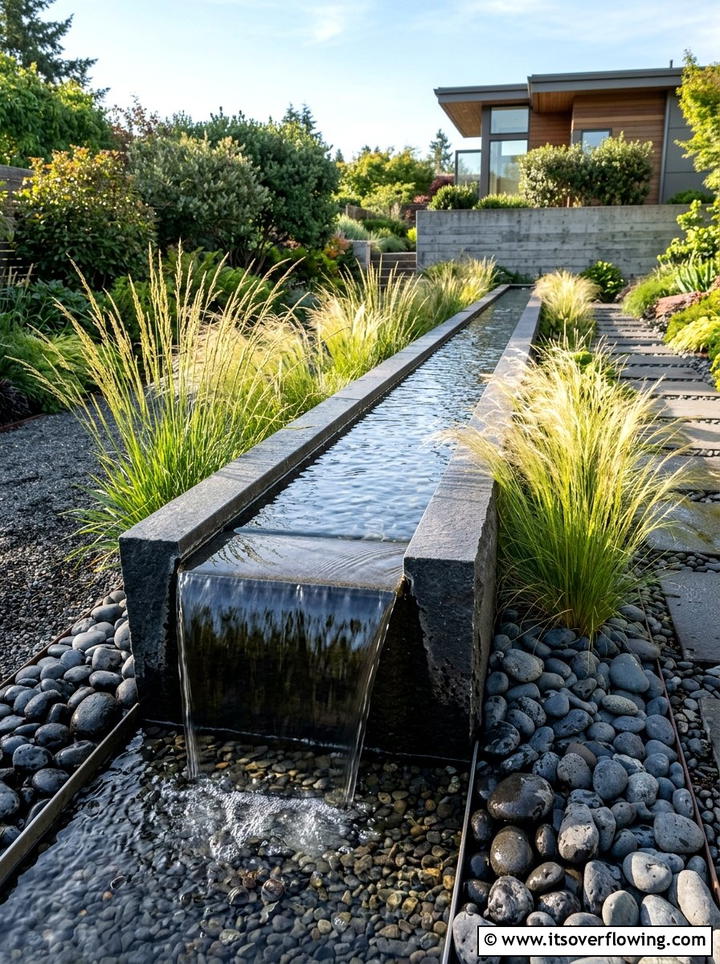
Imagine the soothing sound of water flowing over a perfectly flat stone edge into a hidden reservoir below. A linear water feature is a powerful focal point that reinforces the geometric theme of a modern garden while adding a sensory layer of tranquility. These features often consist of long, narrow troughs or rectangular reflecting pools that mirror the sky and surrounding foliage. Placing a water feature parallel to a walkway or along a boundary wall emphasizes the length of the space and creates a sense of movement. The clean edges of the basin provide a sharp contrast to the liquid surface, resulting in a sophisticated look that feels both contemporary and peaceful.
3. Boxwood Hedge Border
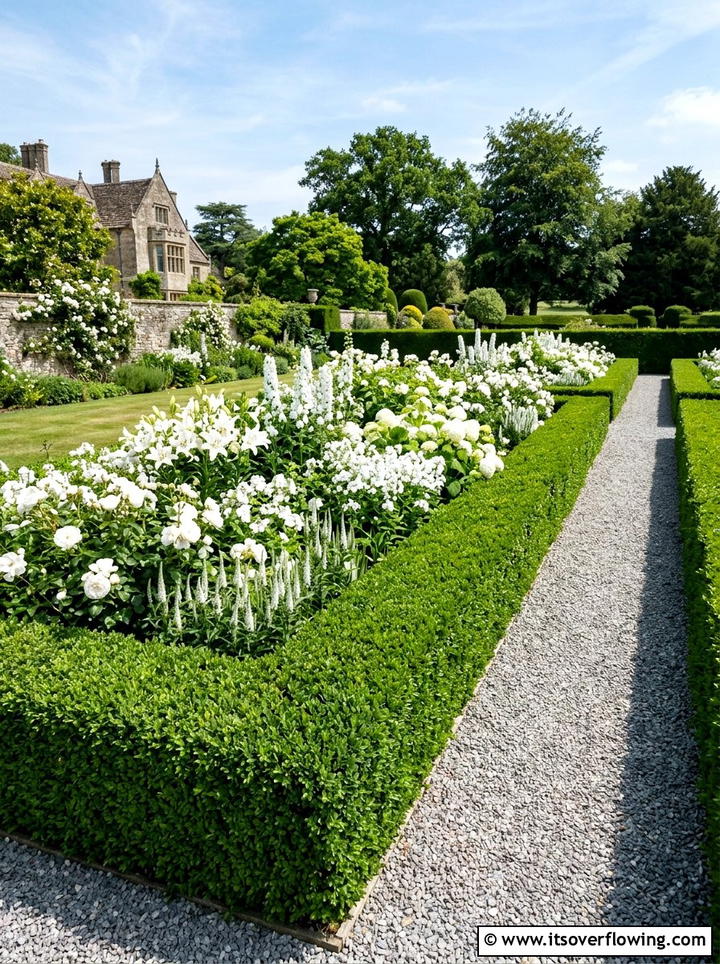
Can a living fence actually look like a piece of structural architecture? Using boxwood hedges as a border is a classic way to introduce straight lines through greenery, offering a soft yet structured edge to garden beds. These evergreen shrubs are easily sheared into perfect rectangular blocks, creating a living wall that remains vibrant and tidy throughout the entire year. By framing your flower beds or lawn with these crisp green borders, you create a sense of formality and purpose. The deep green foliage provides a neutral backdrop for colorful perennials, while the rigid shape ensures the garden layout looks intentional even during the dormant winter months.

4. Geometric Paver Path
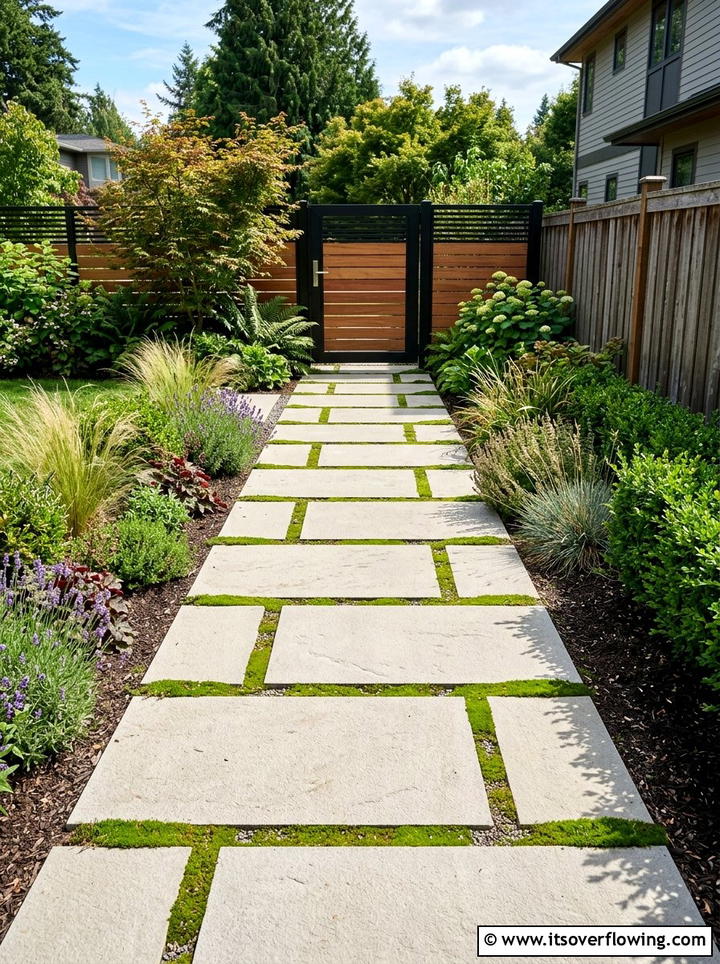
Walking through your garden should feel like a guided experience, and nothing directs the path better than a geometric paver walkway. Instead of winding trails, this design utilizes large rectangular stones set in a straight line, often separated by thin strips of grass or contrasting river rock. This approach creates a strong visual axis that draws the eye toward a specific destination, such as a seating area or a decorative sculpture. The repetitive pattern of the stones provides a rhythmic quality to the landscape, making the journey through the yard feel balanced and calm. It is a functional element that doubles as a striking piece of ground-level art.
5. Symmetrical Garden Bed
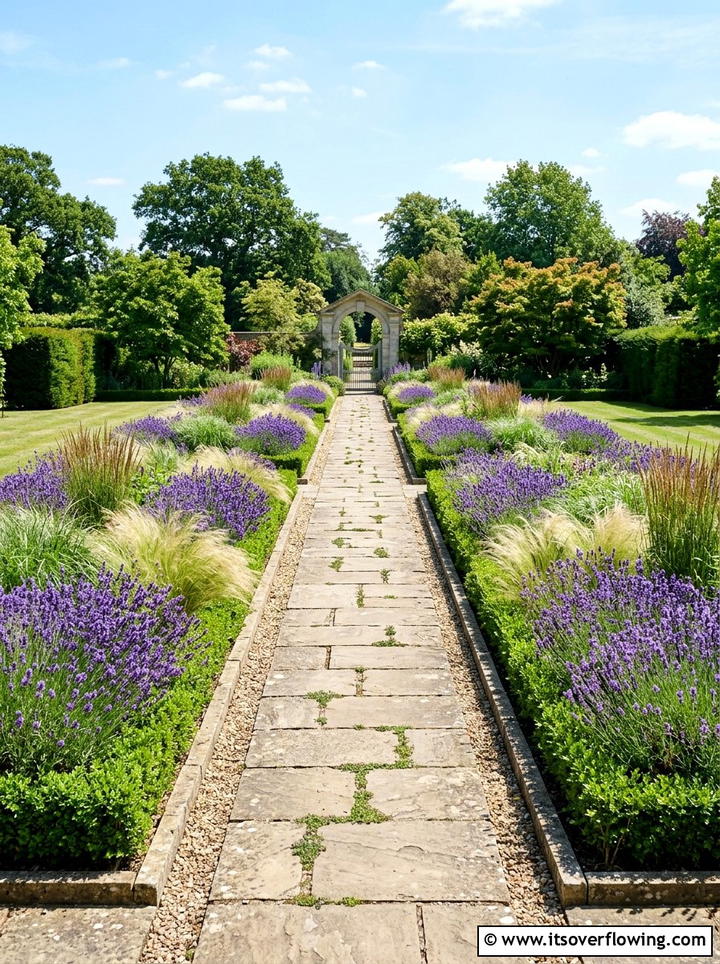
Structure and balance define the beauty of a symmetrical garden bed, where every plant has a designated spot within a rectangular frame. By mirroring the layout on both sides of a central path or focal point, you create a sense of harmony that is incredibly pleasing to the human eye. These beds often feature straight timber or metal edging to keep soil and mulch perfectly contained within the lines. The orderly arrangement allows for clear visibility of each plant species, preventing the garden from looking overgrown or messy. It is an ideal solution for homeowners who crave a tidy, low-maintenance landscape that always looks professionally curated.
6. Raised Concrete Planter
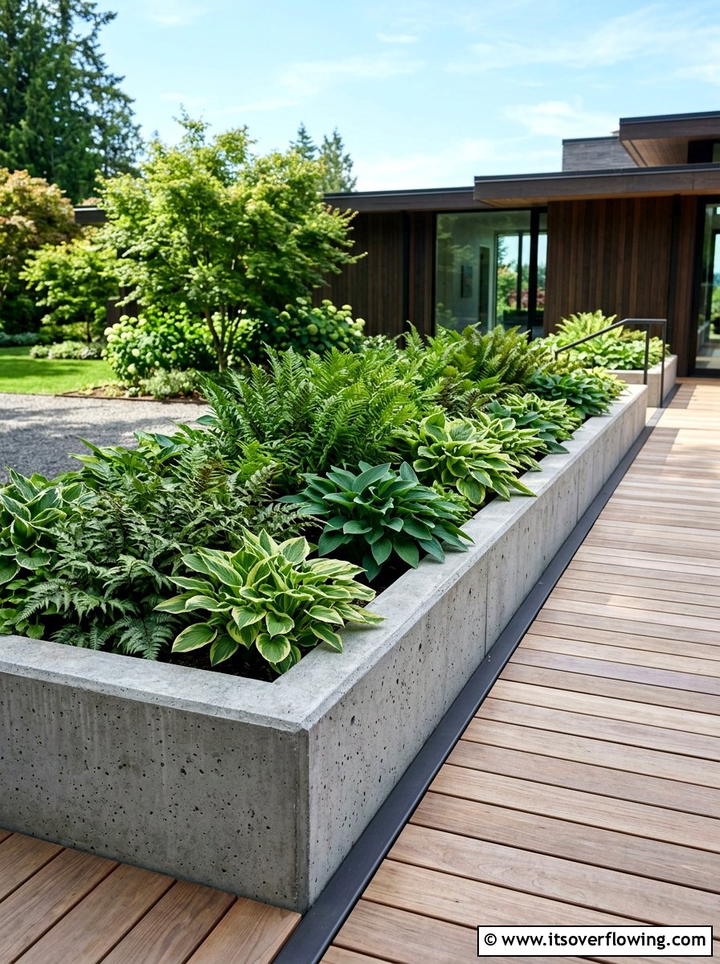
Why settle for ground-level planting when you can elevate your greenery in sleek, raised concrete planters? These structures are perfect for adding height and architectural interest to a flat yard while maintaining the strict linear theme of the design. The smooth, grey surfaces of the concrete provide a modern industrial vibe that looks stunning when paired with vibrant green ferns or architectural grasses. Because the walls are perfectly straight, these planters can also serve as secondary seating areas when built at the right height. They define the perimeter of a patio or deck, creating a nested feeling that makes the outdoor space feel cozy and protected.
7. Contemporary Cedar Fence
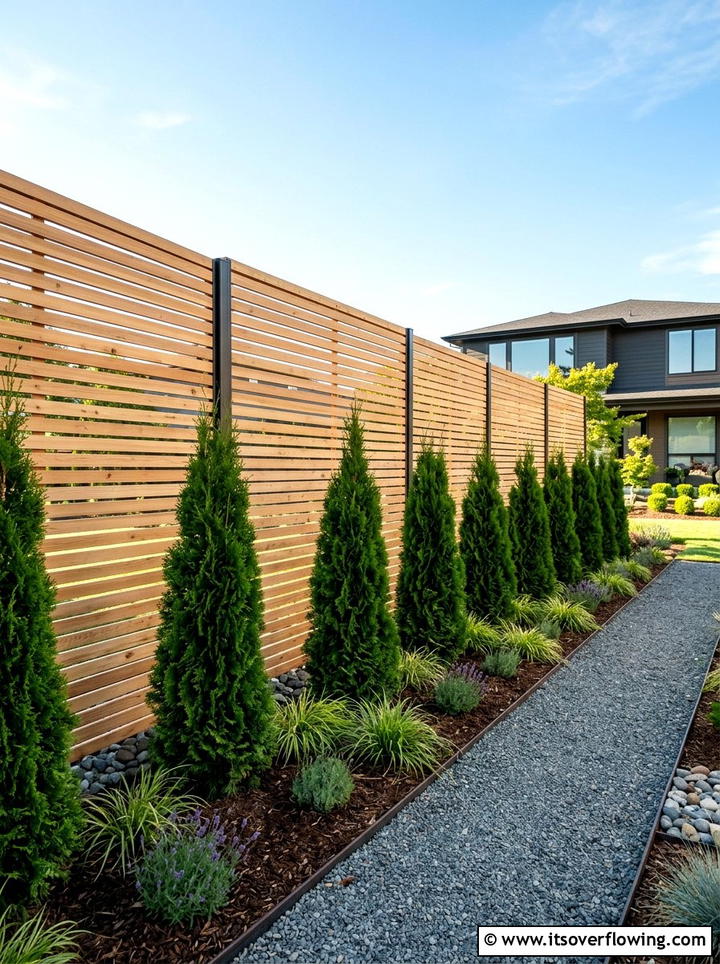
Does your privacy screen look as good as the rest of your garden? A contemporary cedar fence utilizes horizontal slats with small gaps in between to create a linear backdrop that feels light and airy rather than heavy. The straight lines of the wood grain and the horizontal orientation of the boards help to visually elongate the yard, making small spaces feel much wider. Cedar’s natural warmth provides a beautiful contrast to stone or concrete elements, adding a touch of organic texture to a geometric layout. This type of fencing is not just for security; it is a primary design feature that ties the whole modern garden together.
8. Vertical Trellis Wall
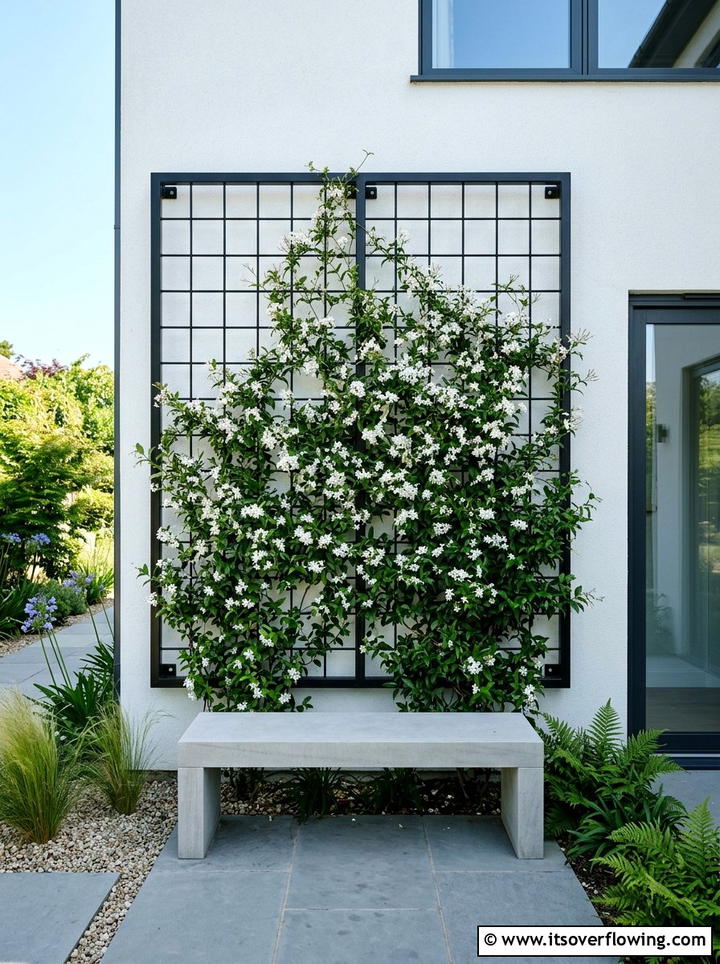
Transform a boring exterior wall into a living masterpiece by installing a vertical trellis wall designed with a strict grid pattern. This design uses thin metal or wooden laths arranged in perfect squares or rectangles to support climbing plants like ivy, jasmine, or clematis. The underlying structure remains visible as the plants grow, ensuring that the garden maintains its linear integrity even as the foliage becomes more lush. A vertical trellis is an excellent way to introduce greenery into tight spaces, such as narrow side yards or balconies, without taking up valuable floor real estate. It creates a lush, green tapestry that feels organized and modern.
9. Stepped Grass Terrace
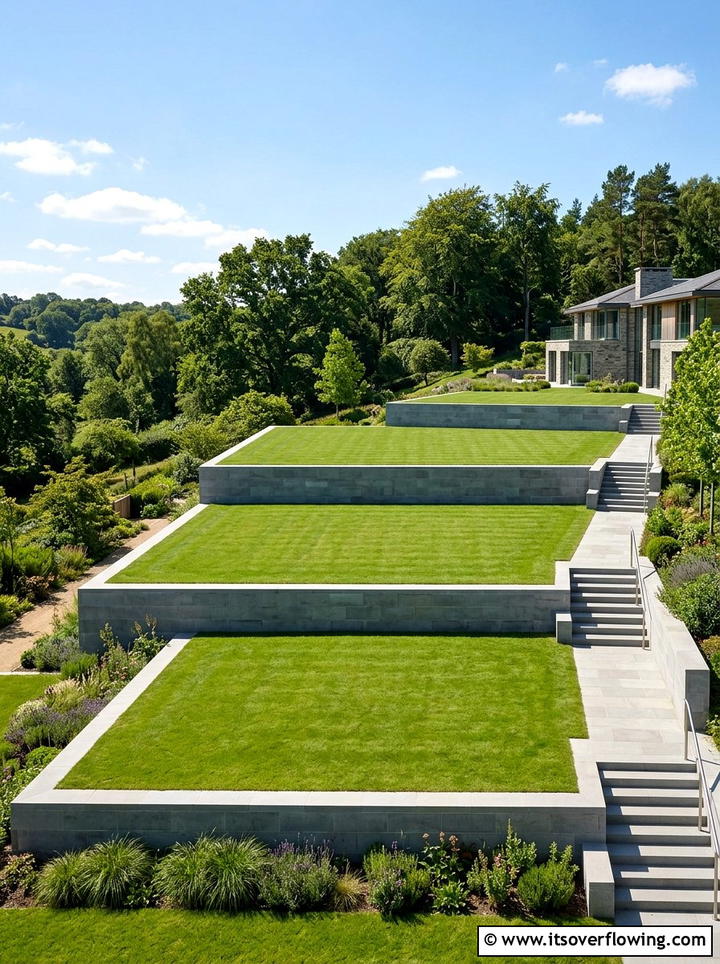
If you are dealing with a sloped yard, a stepped grass terrace is the ultimate way to embrace straight lines while managing the terrain. By cutting the slope into a series of flat, rectangular platforms held back by retaining walls, you create functional levels for different activities. Each terrace can be finished with a perfectly manicured lawn, looking like a series of green steps descending through the property. The sharp horizontal lines of the retaining walls contrast with the vertical drop, creating a dramatic architectural effect. This layout maximizes the usable space of a hilly lot and provides clear, unobstructed views from every level of the garden.
10. Long Narrow Lap Pool
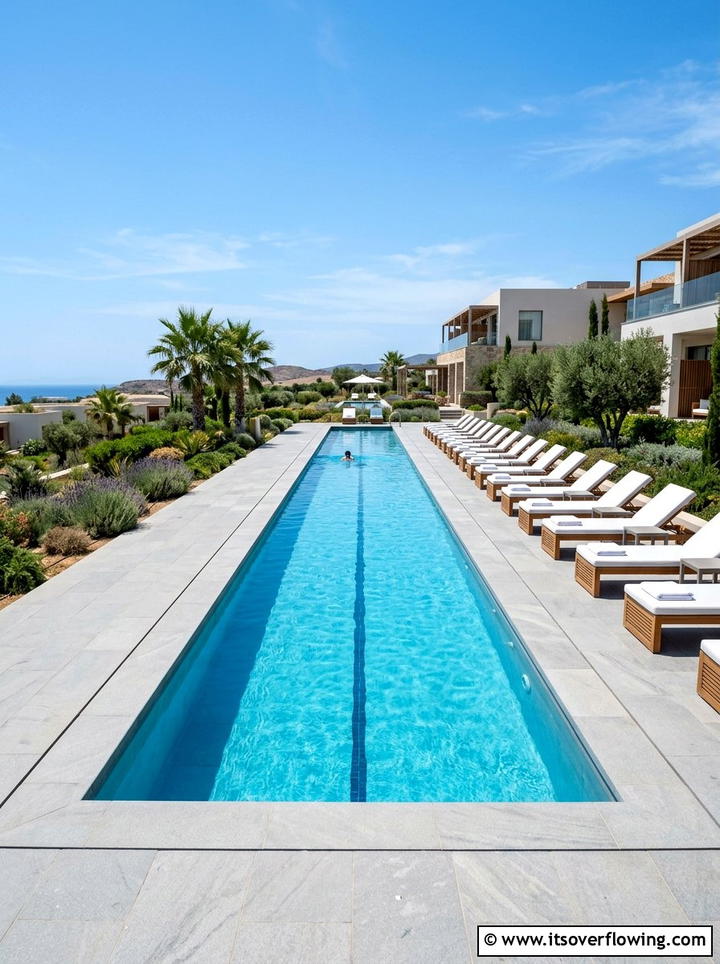
For those who love both fitness and fashion, a long narrow lap pool is the quintessential linear garden feature. These pools are designed with extended lengths and slim widths, mimicking the straight lines of a professional swimming lane. The rectangular shape fits perfectly alongside a house or a boundary fence, making efficient use of long, thin garden plots. Surrounding the water with a minimalist stone deck further emphasizes the geometric shape, creating a clean and luxurious atmosphere. The still water acts as a giant mirror, reflecting the straight lines of the home and the sky, which adds a deep sense of serenity to the entire backyard.
11. Minimalist Gravel Courtyard
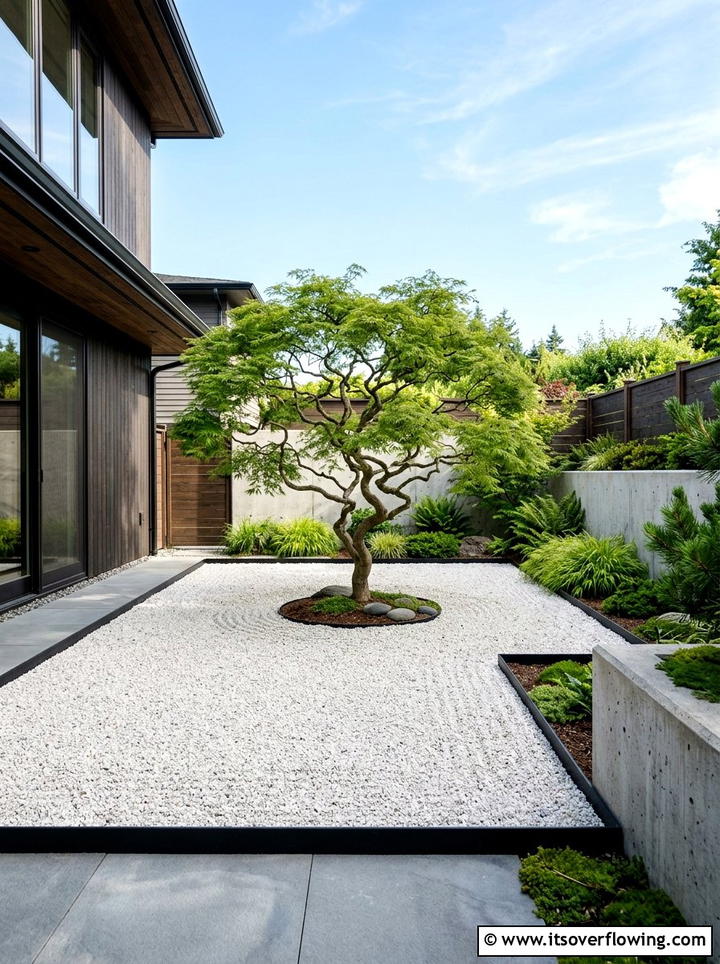
Sometimes, the most powerful garden designs are the ones that use the fewest materials. A minimalist gravel courtyard relies on a large, rectangular expanse of finely crushed stone to create a clean, open space that feels incredibly modern. By edging the area with steel or brick, you maintain a sharp border that prevents the gravel from migrating into nearby flower beds. This type of space is perfect for a central fire pit or a simple dining set, acting as a versatile “outdoor room. ” The uniform texture of the gravel provides a neutral base that makes any architectural plants or furniture pieces pop with visual clarity and importance.
12. Square Fire Pit Area
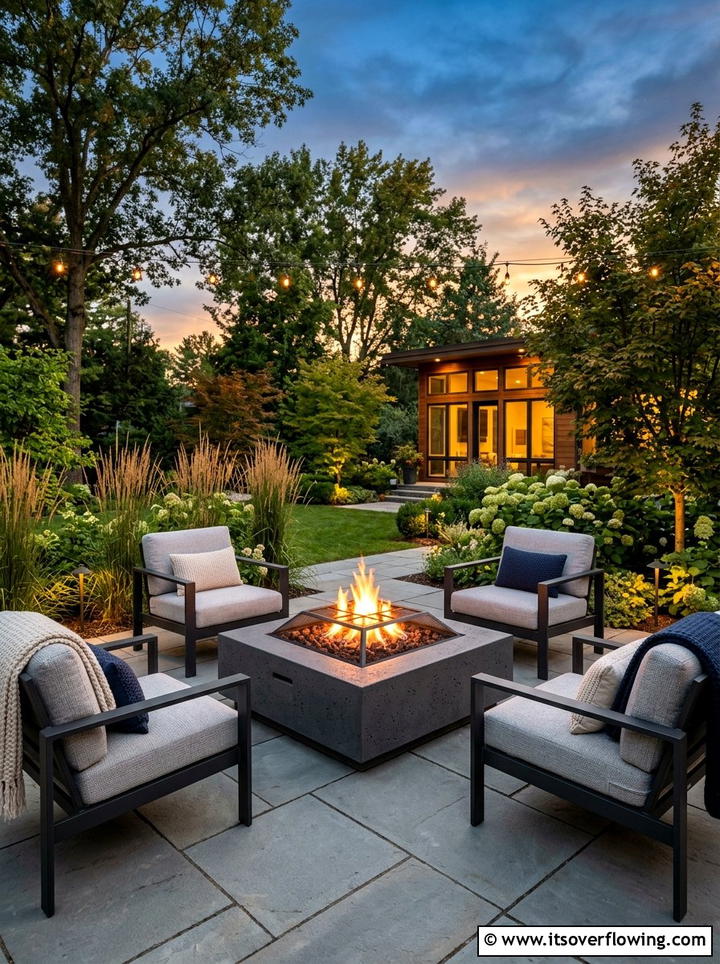
Gathering around a fire is a timeless tradition, but you can modernize the experience with a dedicated square fire pit area. By designing the pit and its surrounding seating zone as a perfect square, you create a sense of intimacy and order. Use large, flat flagstones or concrete tiles for the flooring to maintain the linear theme right up to the edge of the pit. A square fire pit built from stacked stone or smooth concrete serves as a sturdy anchor for the space. This geometric approach ensures that the fire area feels like an integrated part of the overall garden layout rather than an afterthought in the corner.
13. Parallel Flower Border
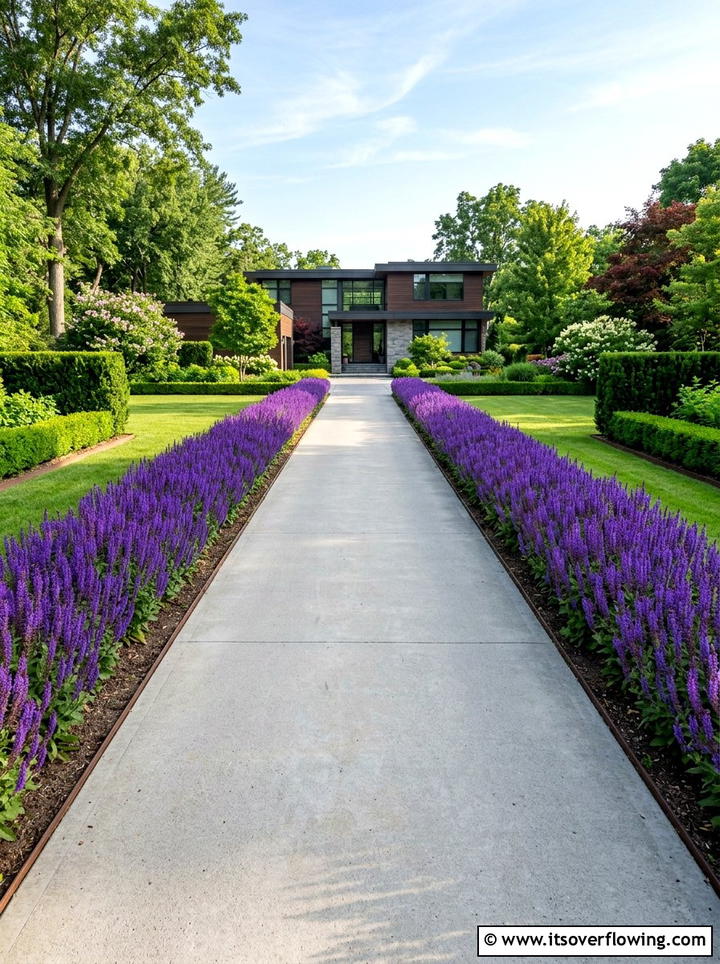
The repetitive beauty of a parallel flower border brings a sense of rhythm and depth to any garden path or driveway. By planting identical rows of lavender, salvia, or ornamental grasses in straight lines, you create a visual corridor that feels grand and expansive. The straight edges of the beds keep the plants in check, ensuring that the walkway remains clear and easy to navigate. This design technique is particularly effective in front yards, where the symmetry creates an inviting and formal entrance to the home. The contrast between the rigid lines of the beds and the swaying movement of the plants adds dynamic energy.
14. Formal Herb Garden
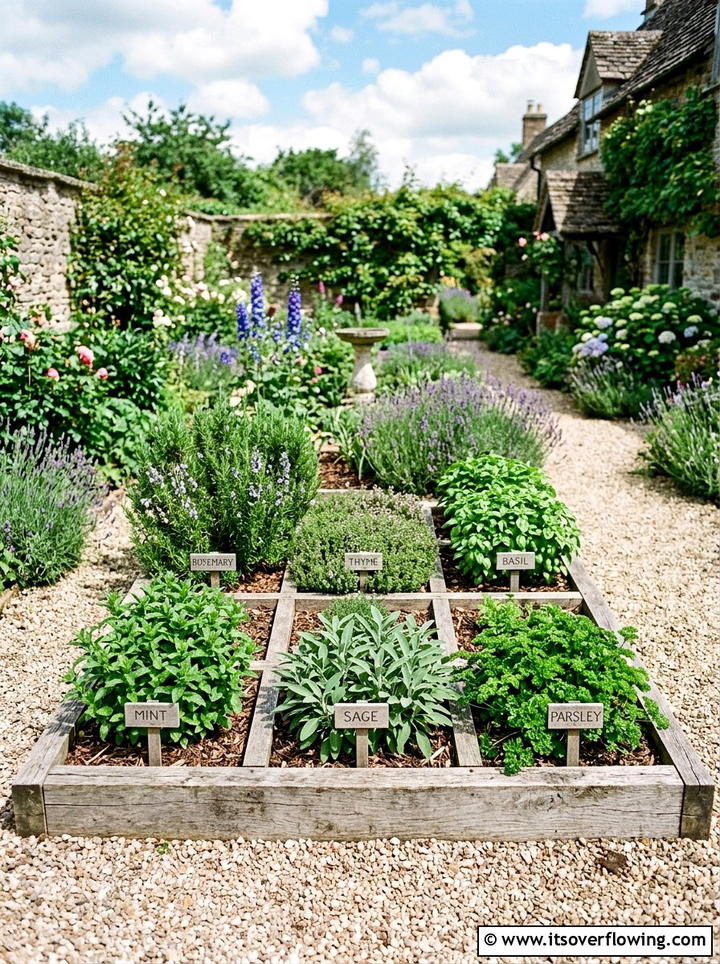
Why should a vegetable patch be messy when it can be a formal herb garden designed with mathematical precision? By dividing a rectangular plot into smaller square segments using timber or brick dividers, you create an organized grid for your edible plants. This layout makes it easy to separate different varieties of herbs, preventing them from competing for space or light. The straight lines of the dividers provide a clean look that fits perfectly within a modern or traditional landscape. A formal herb garden is not only highly productive but also serves as a beautiful decorative feature that showcases the diverse textures and colors of culinary plants.
15. Rectangular Pergola Structure
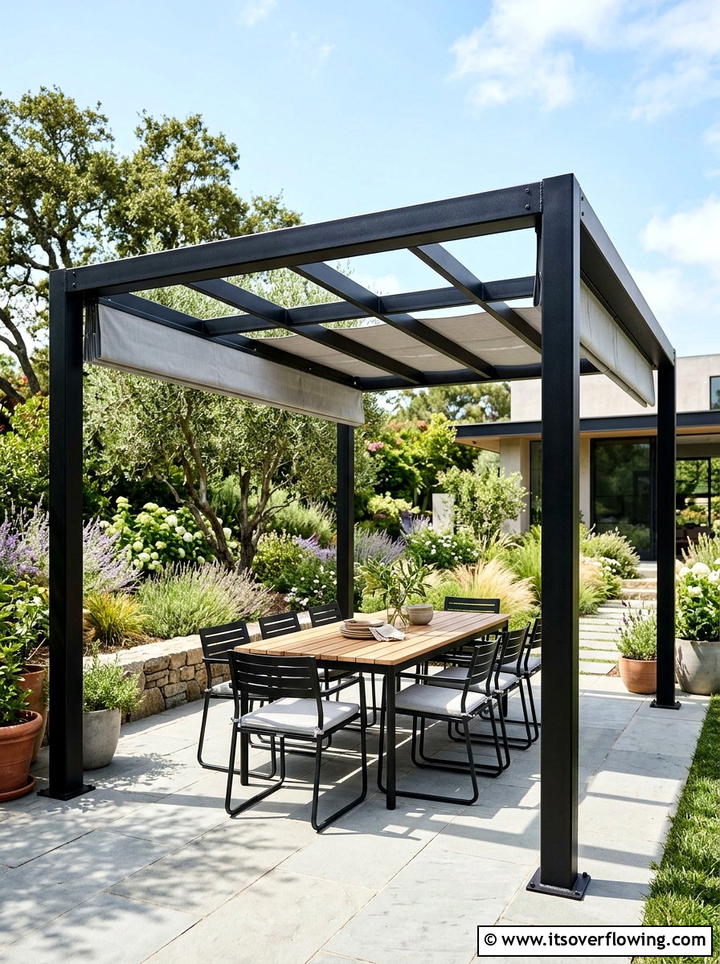
A rectangular pergola structure provides the perfect overhead frame for an outdoor lounge or dining area, reinforcing the linear theme from above. Using thick, square-cut timber or sleek black metal beams, this architectural element creates a defined “ceiling” for your garden room. The straight rafters cast shifting shadows throughout the day, adding a dynamic pattern of lines across the floor below. When left unadorned, the pergola looks minimalist and industrial; when draped with climbing vines, it offers a softer, more shaded retreat. This structure anchors the entire patio design, providing a sense of scale and verticality that balances the ground-level elements of the landscape.

16. Grid Pattern Vegetable Patch
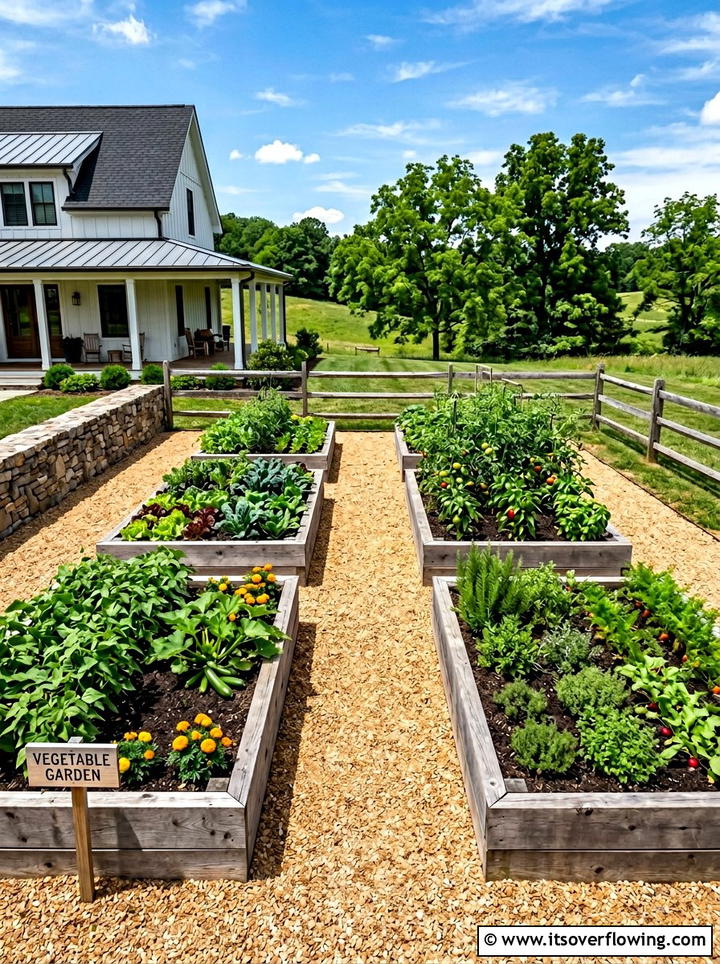
Growing your own food can be a stylish endeavor when you utilize a grid pattern vegetable patch. By building several identical raised wooden beds and arranging them in a perfect grid with wide, straight paths in between, you create a highly functional and visual space. This layout allows for easy access to all sides of the plants, making maintenance and harvesting a breeze. The uniform size of the beds creates a sense of cohesion across the garden, turning a utilitarian area into a design highlight. Covering the paths with cedar chips or fine gravel maintains the clean lines and keeps the space looking tidy year-round.
17. Modern Outdoor Kitchen
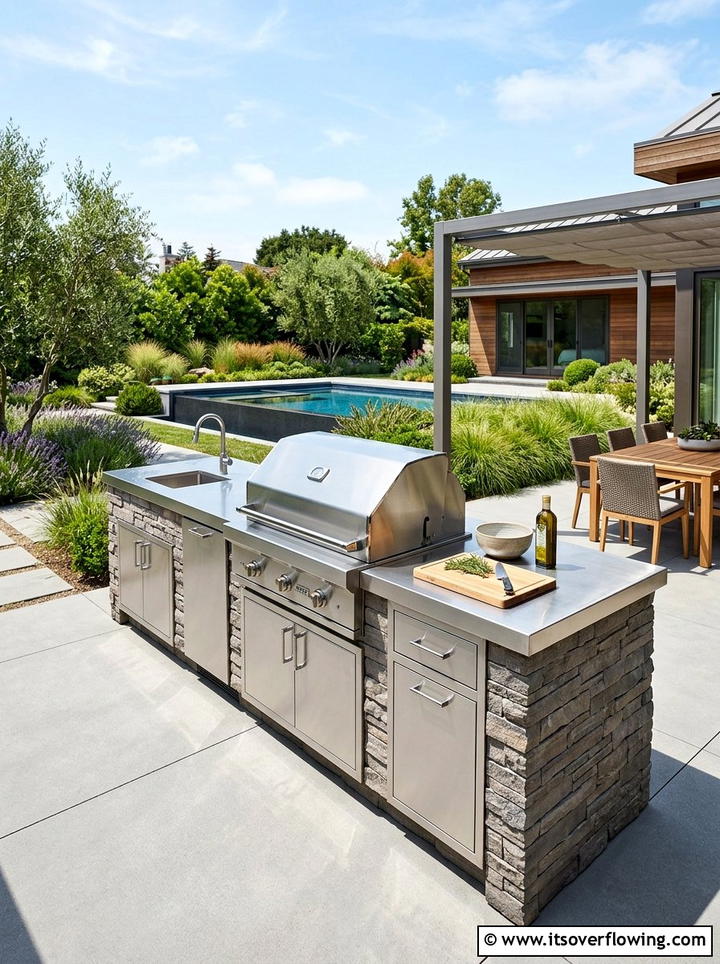
The modern outdoor kitchen is the ultimate luxury for those who love to entertain, and it thrives on a linear layout for maximum efficiency. By arranging the grill, countertop, and sink in a single straight line or an L-shape with sharp 90-degree corners, you create a professional-grade workspace. Using materials like stainless steel, polished concrete, or stacked stone reinforces the contemporary aesthetic. The straight lines of the cabinetry and appliances integrate seamlessly with the patio flooring, creating a cohesive look that mirrors the sleekness of an indoor kitchen. This design ensures that the cooking area remains a clean, organized, and stylish hub for all your summer gatherings.
18. Tiered Retaining Wall
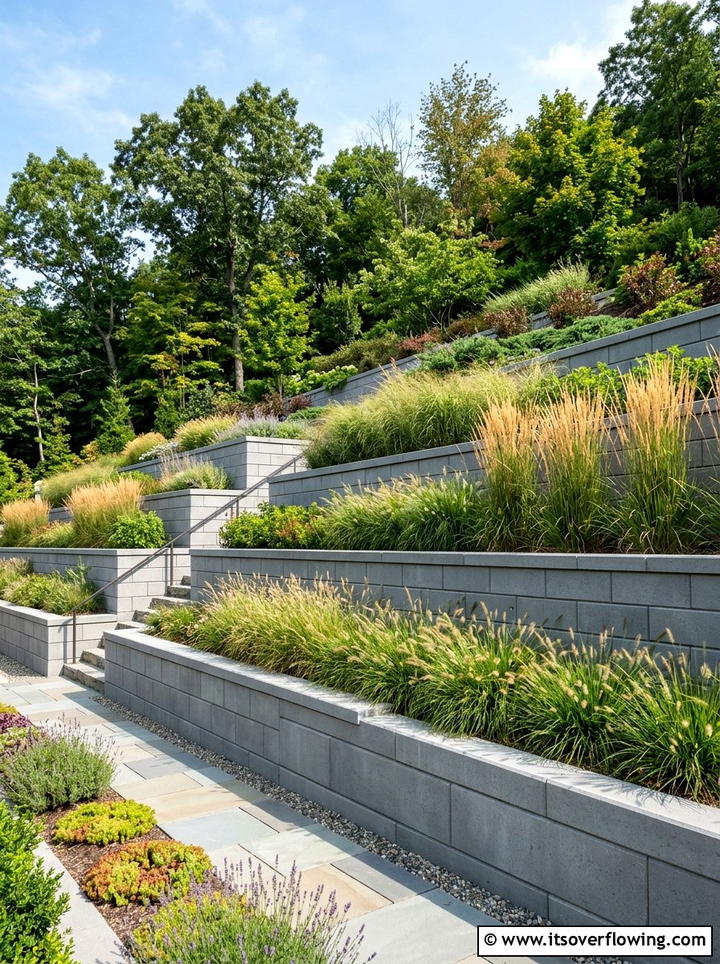
A tiered retaining wall is a brilliant way to turn a steep slope into a series of beautiful, usable garden levels. Instead of one massive wall, a series of shorter, straight walls creates a more approachable and visually interesting landscape. Each tier can be used for different purposes, such as a row of flowering shrubs on one level and a flat lawn on the next. The horizontal lines of the walls provide a strong structural base that feels secure and well-engineered. By using modern materials like smooth-faced blocks or timber, you can ensure that the retaining walls contribute to the overall geometric beauty of the property.
19. Symmetrical Privacy Screen
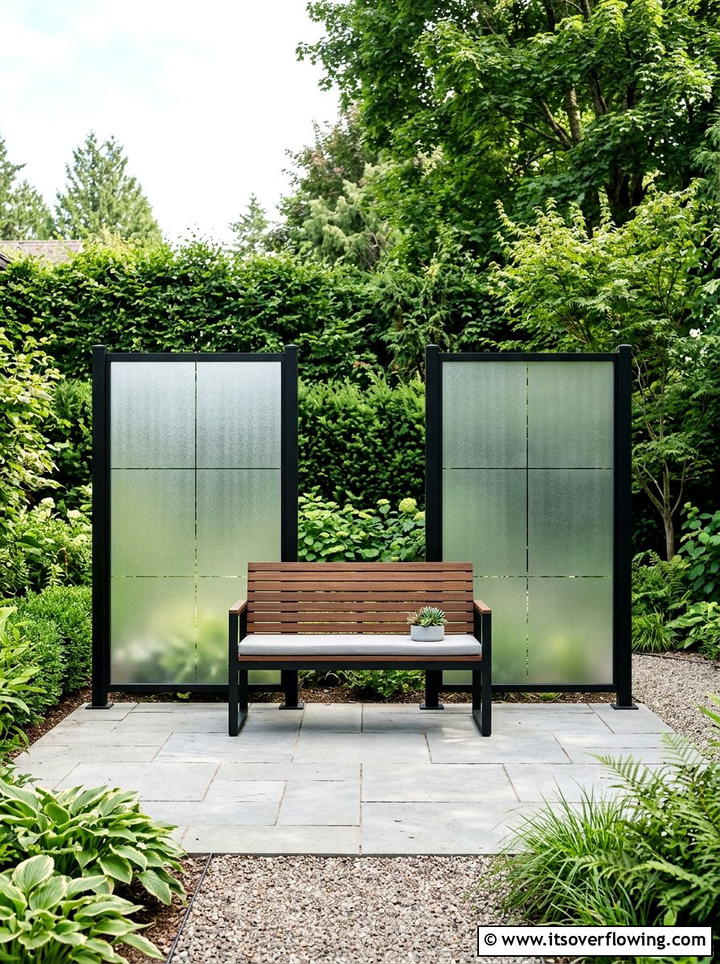
Privacy is essential in any garden, and a symmetrical privacy screen offers protection without sacrificing style. By installing identical panels of frosted glass, laser-cut metal, or horizontal wood slats on either side of a patio, you create a balanced and enclosed feeling. The straight edges of the panels provide a clean frame for the view beyond, acting like windows into the rest of your garden. This symmetrical arrangement creates a sense of formal luxury that is often found in high-end resort landscapes. It is a functional solution that adds architectural weight and serves as a primary decorative element in the outdoor living area.
20. Linear Seating Nook
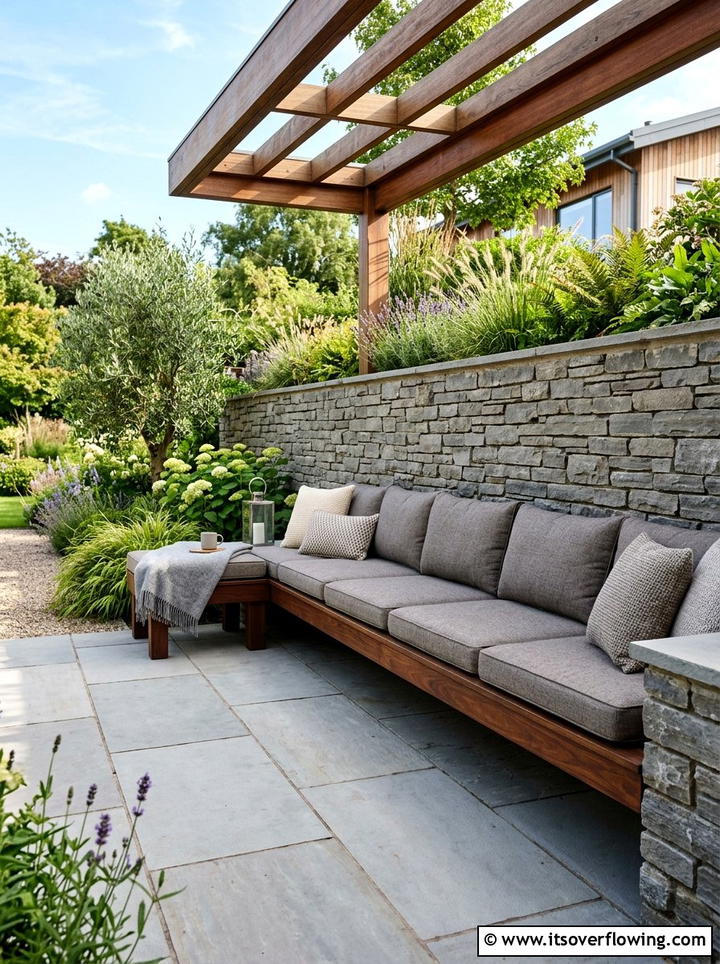
Every garden needs a quiet corner for reflection, and a linear seating nook provides a cozy retreat with a modern twist. By building a long, built-in bench directly into a retaining wall or a raised planter, you maximize space and reinforce the garden’s geometric lines. The continuous horizontal line of the bench draws the eye along the perimeter of the space, making the area feel more expansive. Adding simple, rectangular outdoor cushions in a neutral palette keeps the look clean and uncluttered. This integrated seating approach is perfect for small gardens where every inch of space must be used wisely and looks incredibly sleek.
21. Rectangular Reflecting Pool
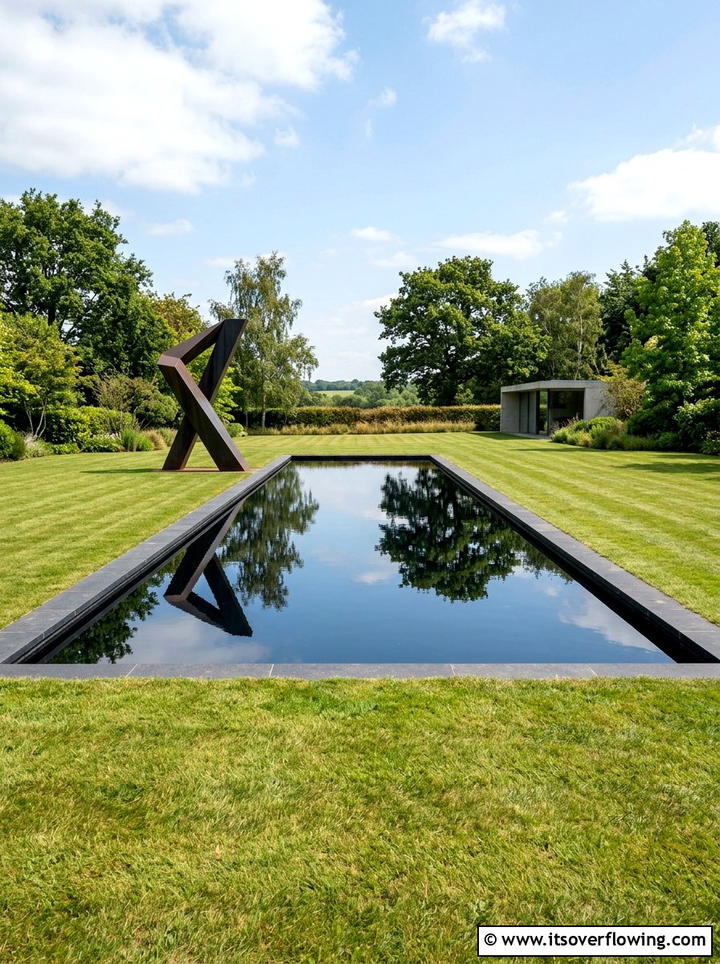
A rectangular reflecting pool is a masterclass in minimalist garden design, offering a perfectly still surface that captures the beauty of the surrounding environment. Unlike a swimming pool, this feature is often shallow and designed purely for its visual and psychological impact. The dark bottom of the pool creates a mirror effect, reflecting the straight lines of the house, the sky, and nearby architectural plants. Placing the pool in the center of a lawn or courtyard creates a powerful sense of symmetry and calm. It is a sophisticated way to introduce the element of water while maintaining the strict linear discipline of a contemporary landscape.
22. Geometric Stepping Stone
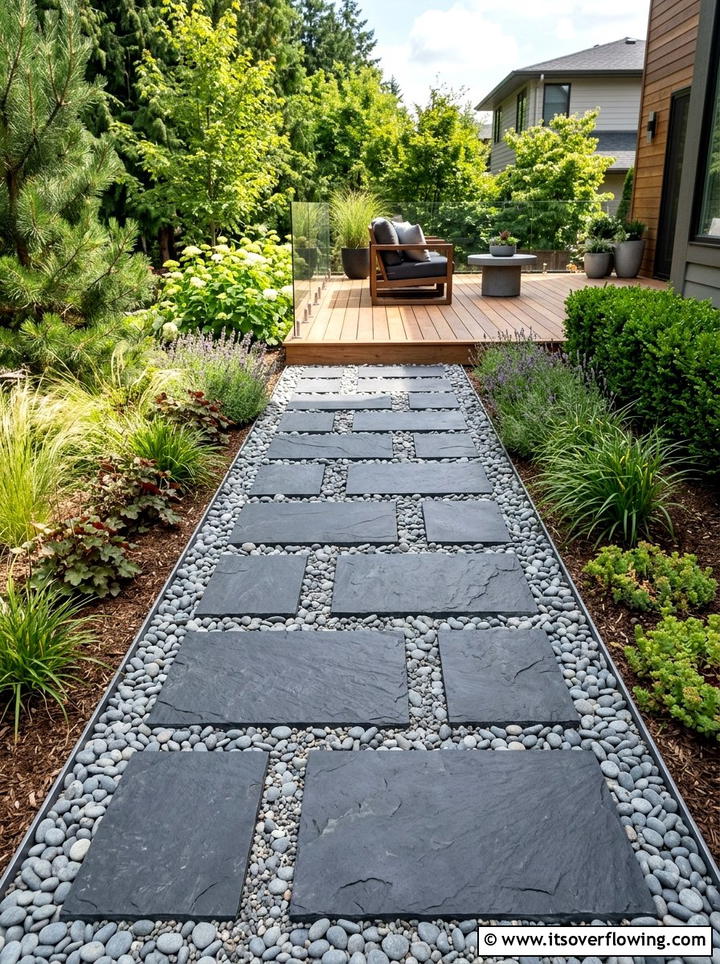
Why use a standard sidewalk when you can create a striking path with geometric stepping stones? By using large, square or rectangular slabs set into a bed of dark river rocks or lush green groundcover, you create a “floating” walkway effect. The gaps between the stones emphasize their sharp shapes and add a layer of texture to the ground. This design is highly versatile and can be used to connect different areas of the garden, such as the patio to the fire pit. The repetitive, straight-line arrangement of the stones provides a sense of order and modern elegance that elevates the overall look of the yard.
23. Modern Garden Path Lighting
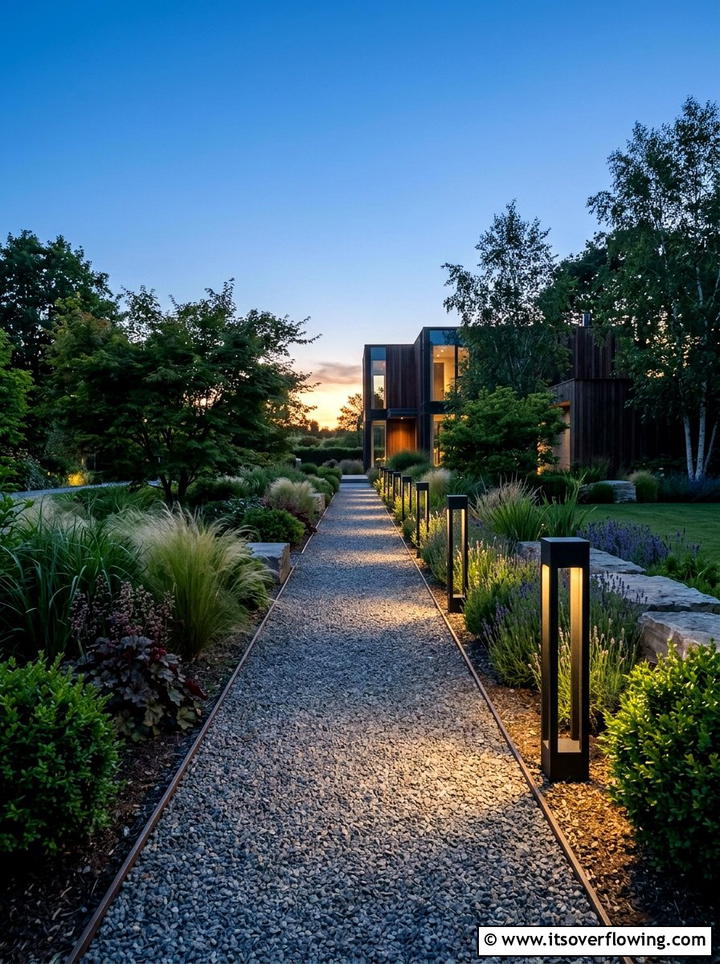
Lighting is the final touch that brings a linear garden to life after the sun goes down, and modern path lighting is designed to emphasize those clean lines. By installing low-profile, rectangular bollard lights or recessed LED strips along the edge of a walkway, you create a glowing corridor that guides the way. The straight alignment of the lights reinforces the geometric layout of the path, making it look like a high-end architectural feature at night. This purposeful lighting design ensures that the garden remains safe and navigable while highlighting the structural beauty of the landscape even in the dark, creating a magical atmosphere.
24. Framed Sun Deck
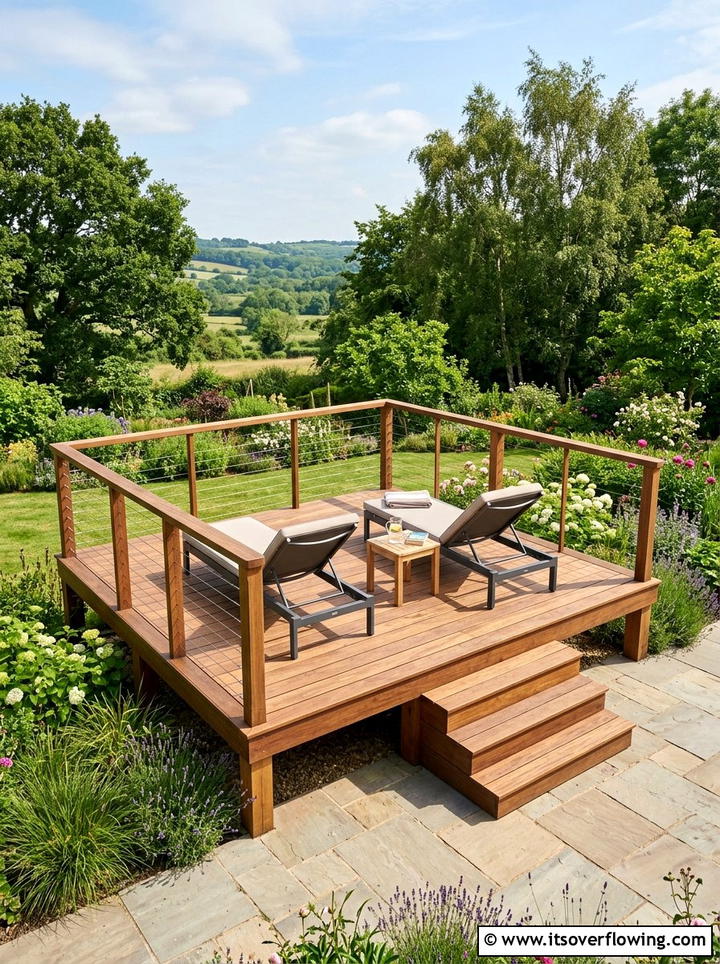
A framed sun deck provides a dedicated platform for relaxation that feels completely separate from the rest of the garden. By using a different material for the deck than the surrounding patio, such as warm wood against grey stone, you create a distinct rectangular zone. The straight lines of the decking boards should run parallel to the house to create a sense of continuity and length. Framing the deck with a low-profile border or integrated planters keeps the space looking crisp and contained. This design offers a clean, flat surface for sun loungers and side tables, making it the perfect spot for catching afternoon rays.
25. Contemporary Entrance Walkway
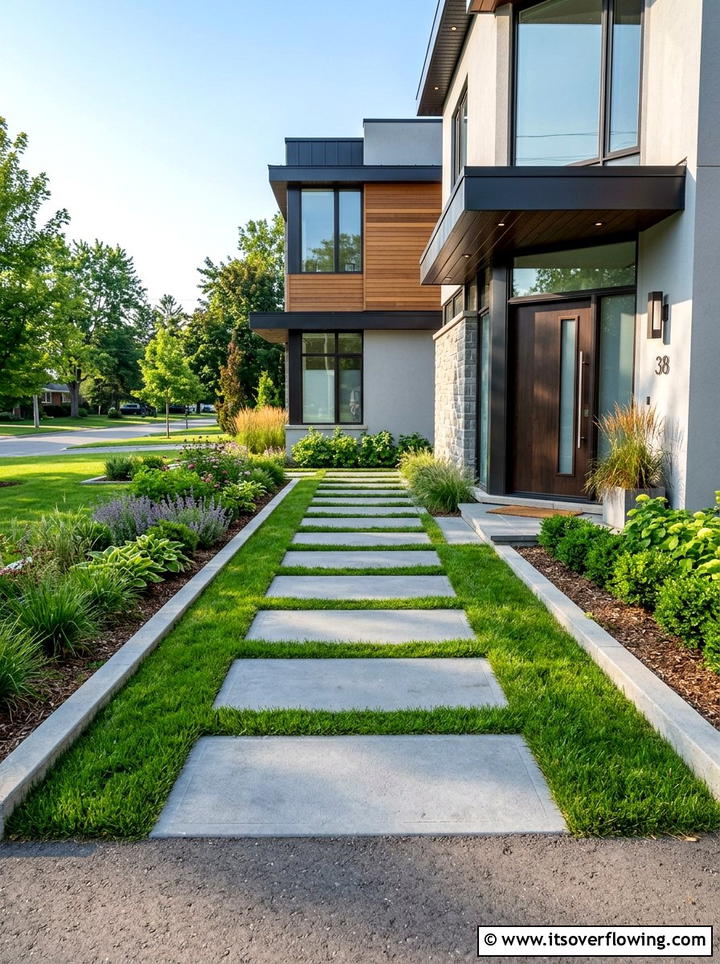
The first impression of your home starts at the curb, and a contemporary entrance walkway with straight lines sets a tone of modern sophistication. By using a series of wide, rectangular concrete pads that lead directly to the front door, you create a grand and welcoming approach. The straight path provides a clear sense of direction and mirrors the lines of the home’s architecture. Flanking the walkway with symmetrical plantings or low-profile linear walls adds to the formal and organized aesthetic. This design choice ensures that the transition from the street to the home feels intentional, balanced, and incredibly stylish for any visitor.
Conclusion:
Embracing a garden design focused on straight lines is about more than just aesthetics; it is about creating a functional, organized, and tranquil environment that stands the test of time. By utilizing geometric shapes and linear elements, you can create a sense of harmony that balances the wildness of nature with the structure of human design. Whether through a sleek rectangular pool, a perfectly sheared hedge, or a modern concrete patio, these clean lines provide a framework that makes every plant and piece of furniture look its best. As you plan your outdoor sanctuary, remember that simplicity often leads to the most impactful and enduring beauty in the landscape.

Related posts:
 25 Garden Design Ideas for Fence Lines for a Polished Yard
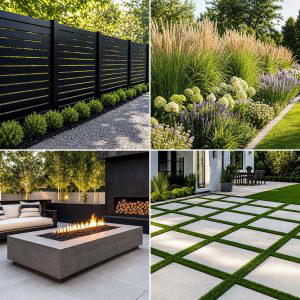 25 creative garden ideas with modern landscape lines for Curb Appeal
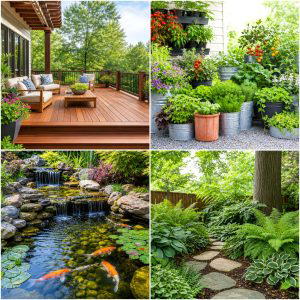 25 Creative Garden Ideas With No Lawn Design for Easy Yards
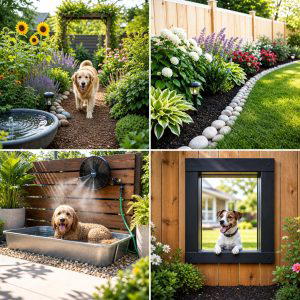 25 Garden Design Ideas for Pet Friendly Yards and Happy Pets
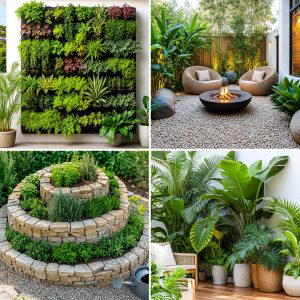 25 garden design ideas for small yards: Big Style, Tiny Spaces
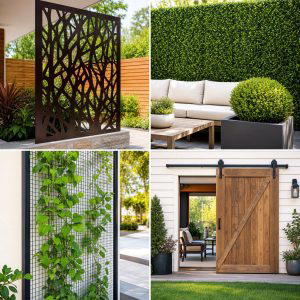 25 Garden Design Ideas With Privacy Screens for Secluded Yards
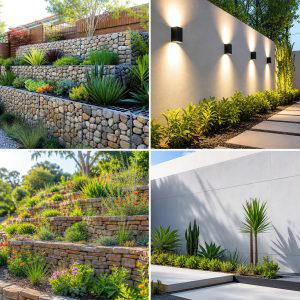 25 Garden Design Ideas With Retaining Walls for Sloped Yards
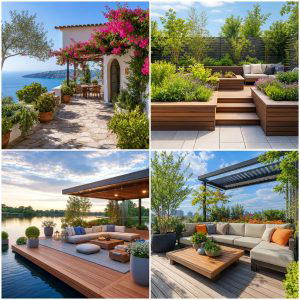 25 Garden Design Ideas With Terraces for Stylish Sloped Yards
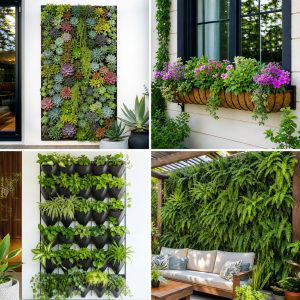 25 Garden Design Ideas With Vertical Gardens for Small Yards
 25 Creative Garden Ideas for Side Yards
 25 Creative Garden Ideas With Tropical Foliage for Lush Yards
 25 Garden Ideas for Cold Climate Yards That Thrive Beautifully