
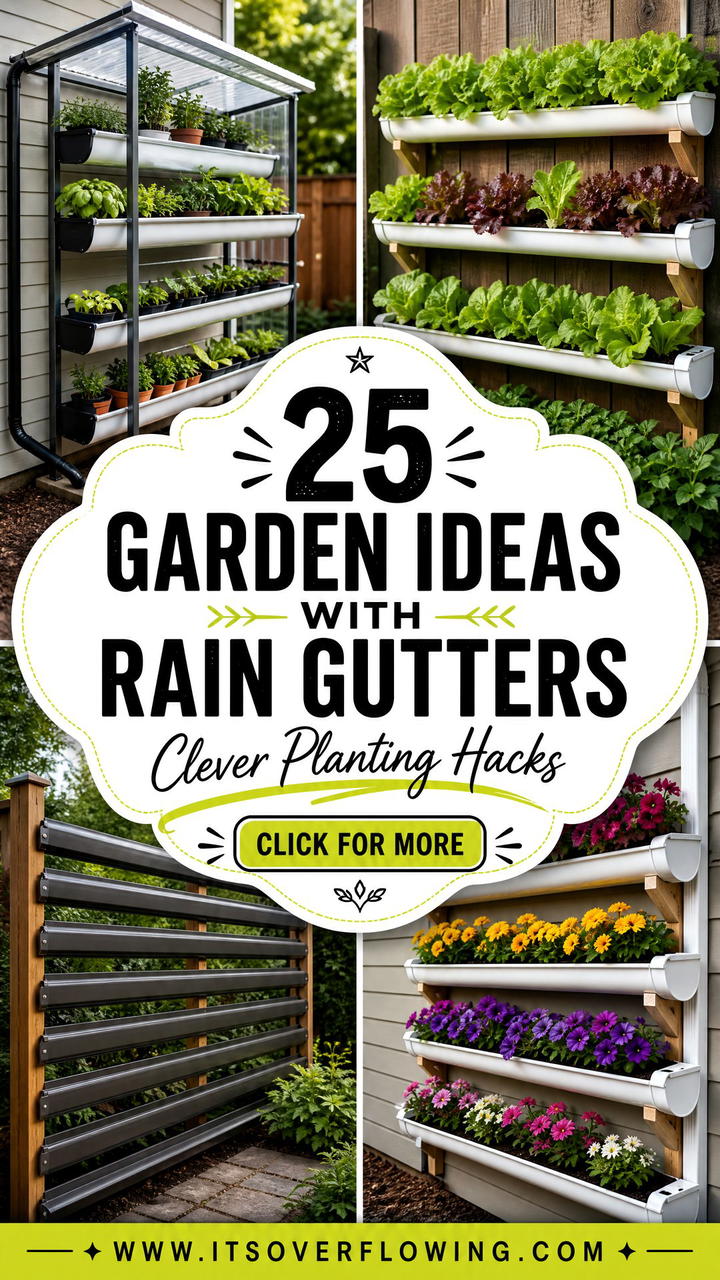
Gardeners often look for clever ways to use vertical space while keeping costs low. Utilizing rain gutters for gardening is a brilliant solution that combines functionality with a modern aesthetic. These long, narrow channels provide the perfect environment for shallow-rooted plants like herbs, strawberries, and greens. By repurposing gutters, you can transform a plain fence or a small balcony into a lush, productive oasis without spending a fortune. Whether you are an experienced horticulturist or a beginner DIY enthusiast, these gutter-based projects offer endless possibilities for creativity. This guide explores several ways to integrate rain gutters into your outdoor landscape for a beautiful and sustainable garden space.
1. Strawberry gutter planter
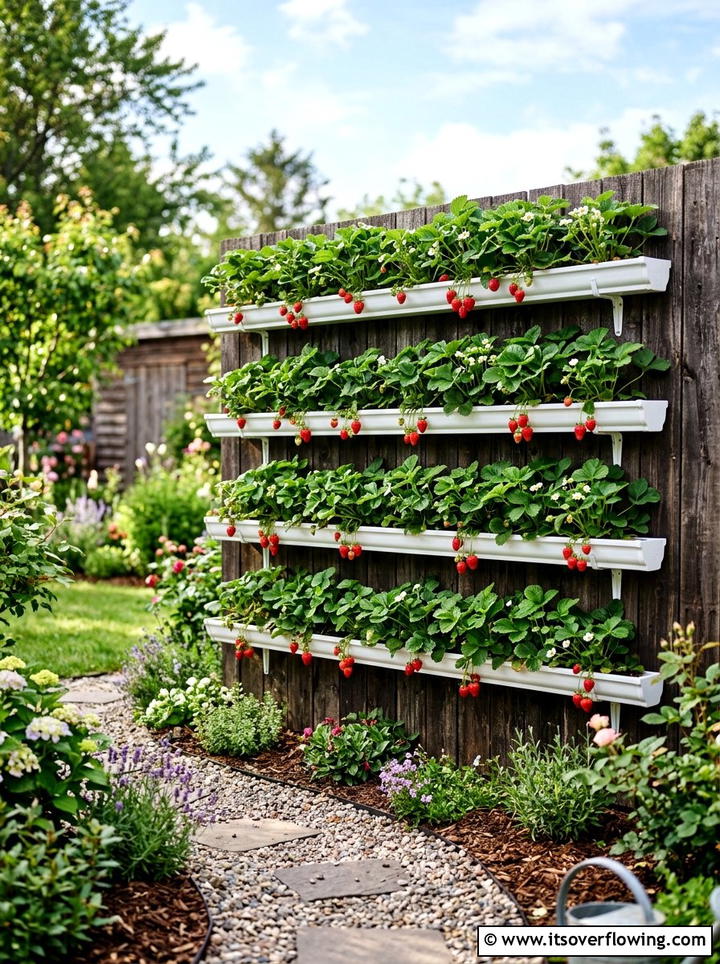
Are you looking for a way to grow delicious fruit without losing them to ground pests? Mounting rain gutters on a sunny wall or fence is a fantastic way to keep your strawberry plants elevated and healthy. This method prevents the berries from touching the soil, which significantly reduces the risk of rot and slugs. Strawberries have shallow root systems, making them ideal candidates for the limited depth of a standard gutter. You can easily water them from one end and ensure they get the perfect amount of sunlight. This setup also makes harvesting much easier on your back since no bending is required for picking your fruit.
2. Fence mounted herb garden
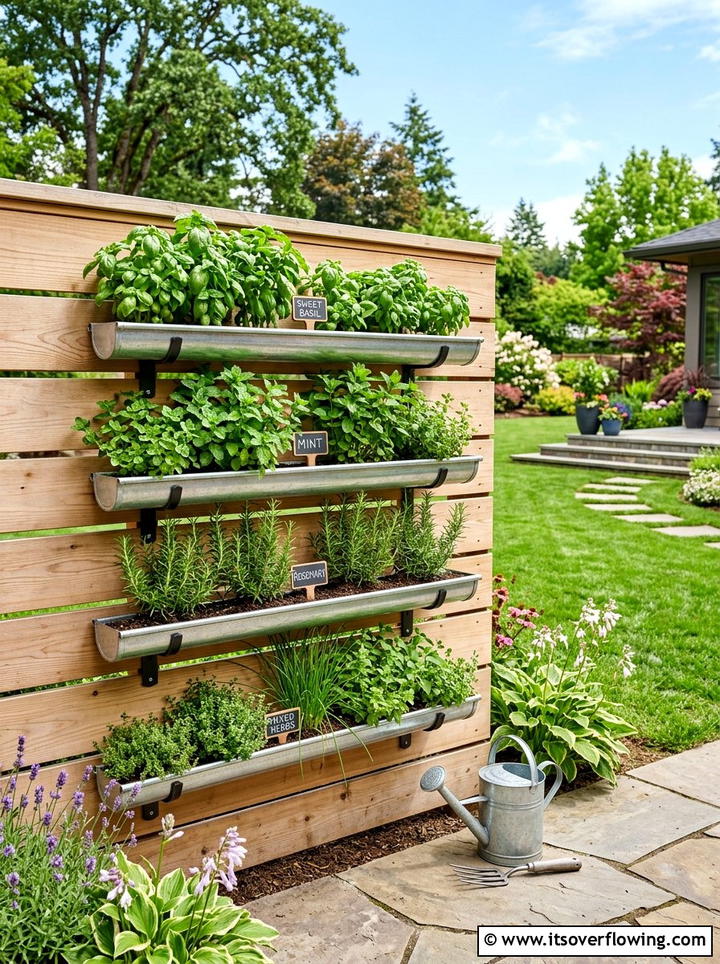
Imagine stepping outside your kitchen door to harvest fresh basil, parsley, or cilantro directly from your fence. Attaching white or metallic rain gutters to your wooden fence creates a beautiful and functional vertical herb garden. This setup saves valuable ground space and keeps your herbs away from pets and wildlife. You can arrange the gutters in parallel rows to create a full green wall effect that looks stunning throughout the summer months. It is important to drill drainage holes every few inches to prevent the roots from sitting in water. This simple project turns a boring boundary into a fragrant and useful culinary resource for your home.
3. Succulent wall gutter
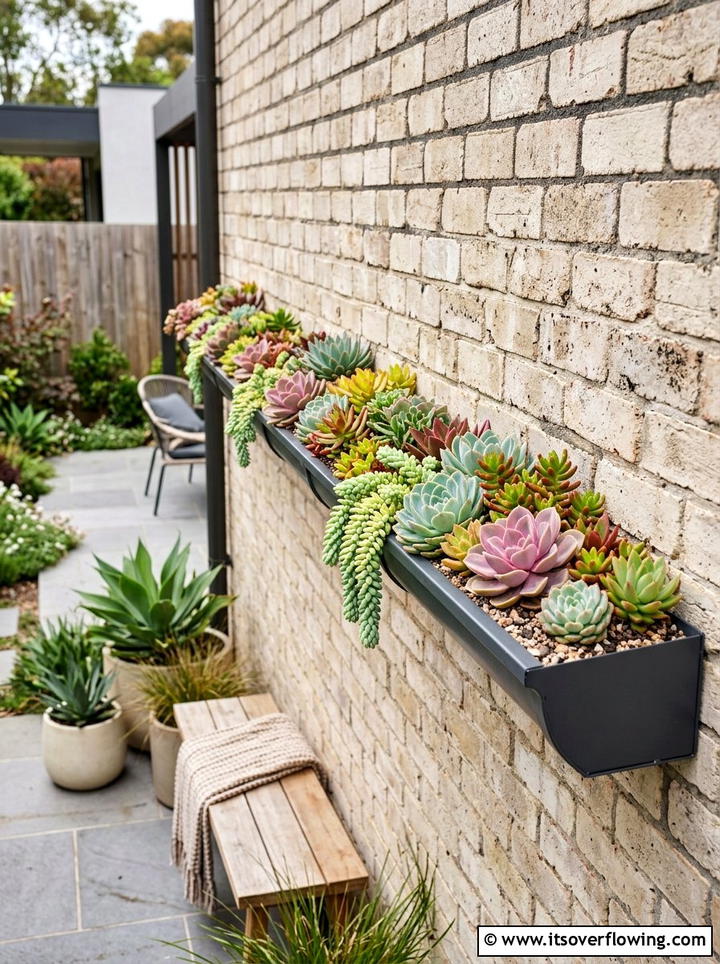
Have you ever wanted a low-maintenance living wall that brings texture and color to your patio? Succulents are famous for their resilience and ability to thrive in small amounts of soil, making them perfect for gutter planters. You can mix different varieties like echeveria, sedum, and hens and chicks to create a vibrant tapestry of shapes. Because these plants require very little water, the shallow gutter provides exactly what they need to stay healthy without drowning. Using gravel at the bottom helps with drainage and adds a professional touch to the display. This vertical arrangement creates a striking focal point on any outdoor wall or brick surface.


4. Balcony railing planter
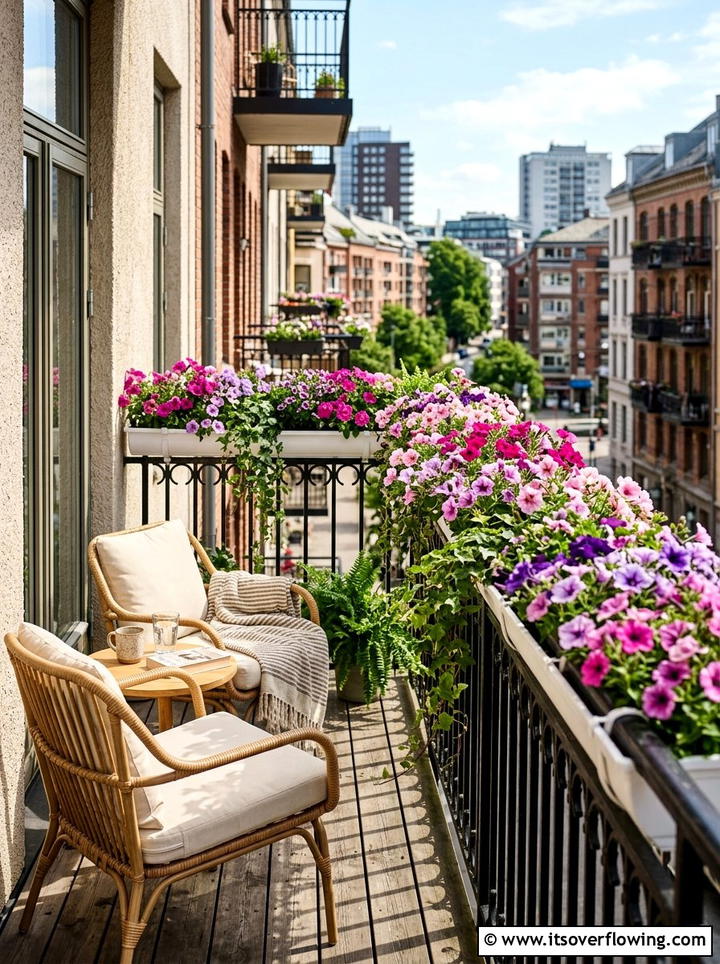
Living in an apartment often means you have to get creative with your limited outdoor square footage. Attaching rain gutters to your balcony railing is a clever way to grow flowers or small vegetables without using floor space. You can use heavy-duty zip ties or specialized brackets to secure the gutters firmly to the metal bars. This allows you to have a blooming perimeter that adds privacy and beauty to your urban dwelling. Petunias or pansies look especially lovely when they spill over the edges of the gutter. It transforms a cold metal railing into a soft, welcoming garden that you can enjoy every single day.
5. Gutter greenhouse shelving
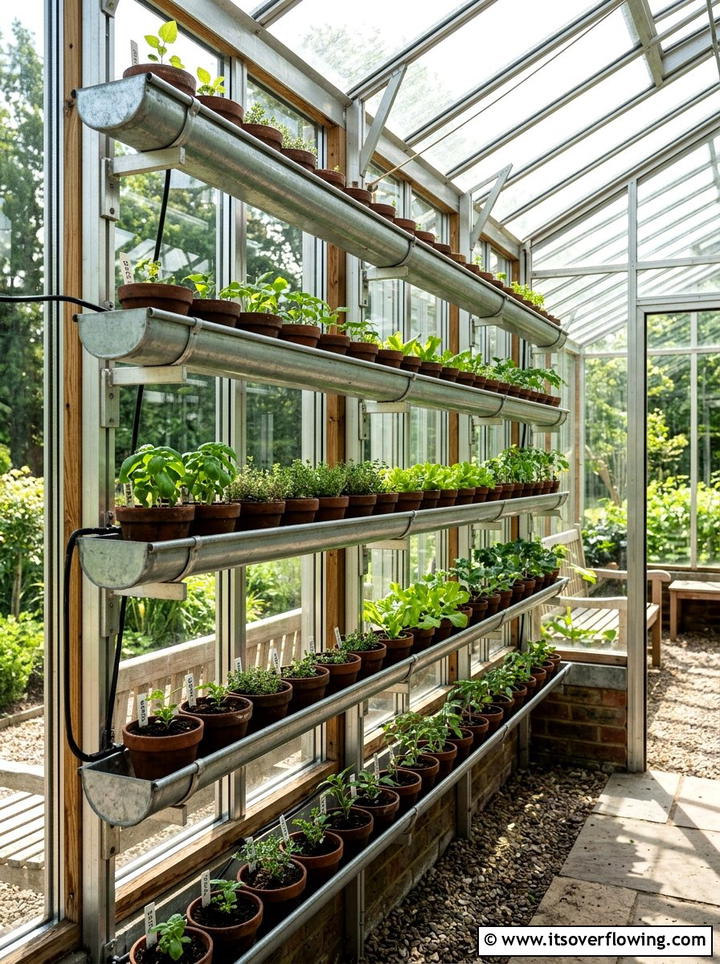
Inside a greenhouse, organizing your space is the key to a successful growing season. Using rain gutters as shelving units provides a narrow but long surface for small pots and seed trays. You can mount these along the interior walls to maximize vertical storage without blocking light from the central paths. This setup is particularly useful for delicate seedlings that need to be kept away from heavy floor-level moisture. The gutters act as a natural catchment for excess water, keeping your greenhouse floors cleaner and drier. It is an affordable way to add layers of productivity to your existing glass or plastic garden structure this year.
6. Vertical vegetable garden
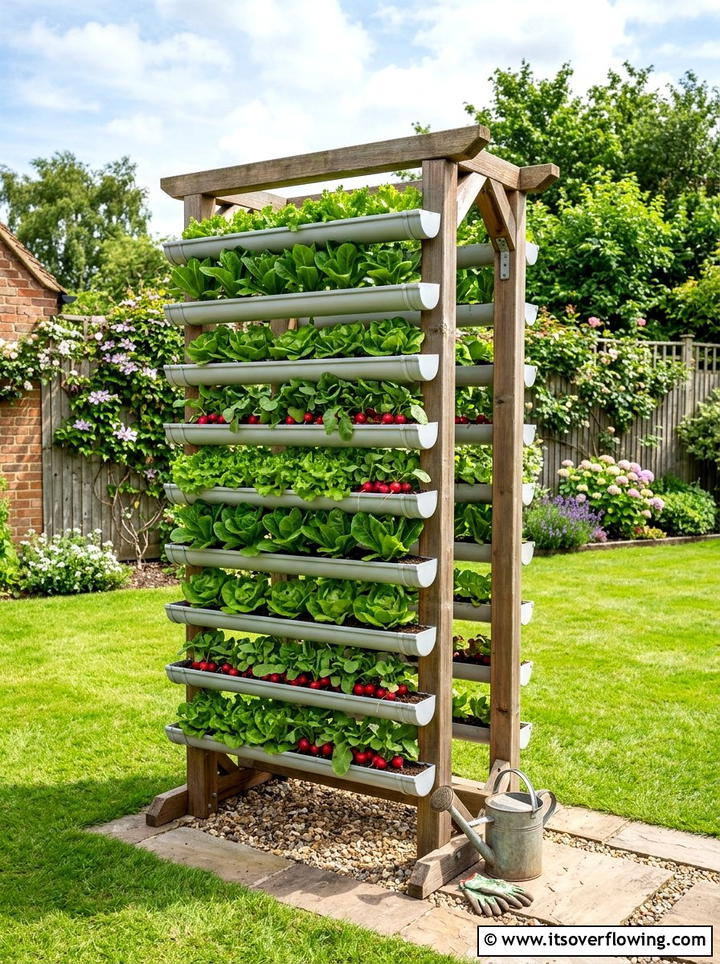
Growing a wide variety of vegetables usually requires a lot of ground space, but rain gutters change that rule completely. A vertical vegetable garden uses stacked gutters to grow spinach, radishes, and dwarf varieties of peas or beans. This method is incredibly efficient for small backyards where every inch of soil counts toward your harvest. By positioning the gutters one above the other, you create a ladder-like structure that is easy to access for watering and pruning. Make sure the structure is anchored securely to a wall to handle the weight of wet soil. It turns a flat wall into a lush, edible landscape for your family.
7. Rain chain gutter collection
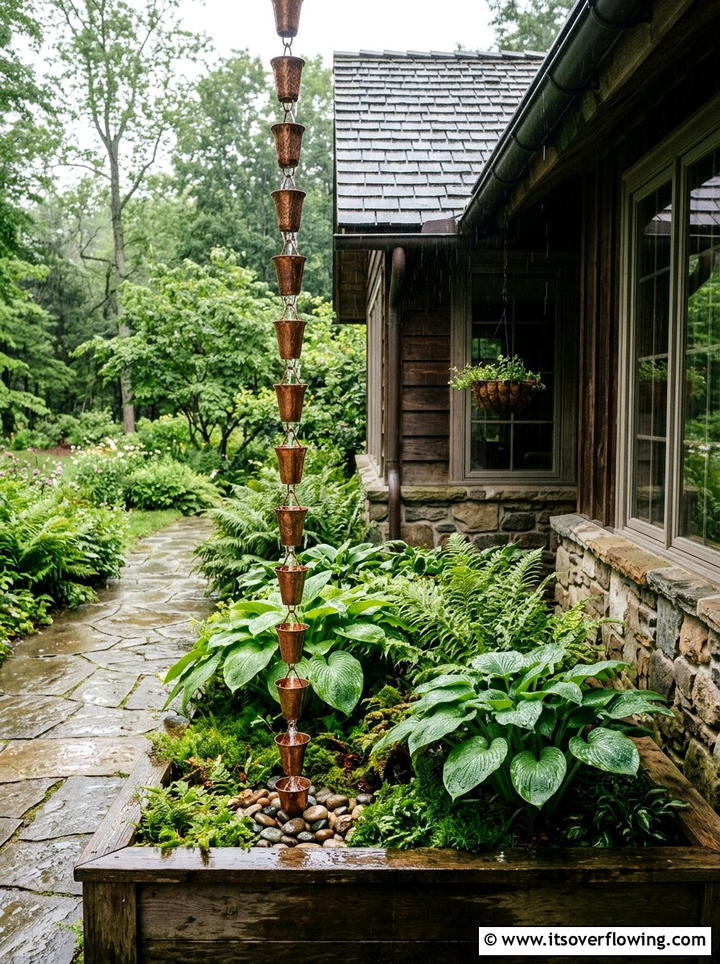
Do you want to combine water management with a beautiful garden aesthetic? Integrating a rain chain with a short section of gutter allows you to direct water into specific planting zones. The water flows down the decorative chain and into a gutter planter filled with moisture-loving plants like ferns or hostas. This setup creates a soothing sound during rainstorms and ensures your plants are naturally irrigated. It is a functional piece of art that serves as a focal point in any garden corner. Using copper gutters and chains can add a touch of elegance that patinas beautifully over time in your outdoor space.

8. Tiered lettuce planter
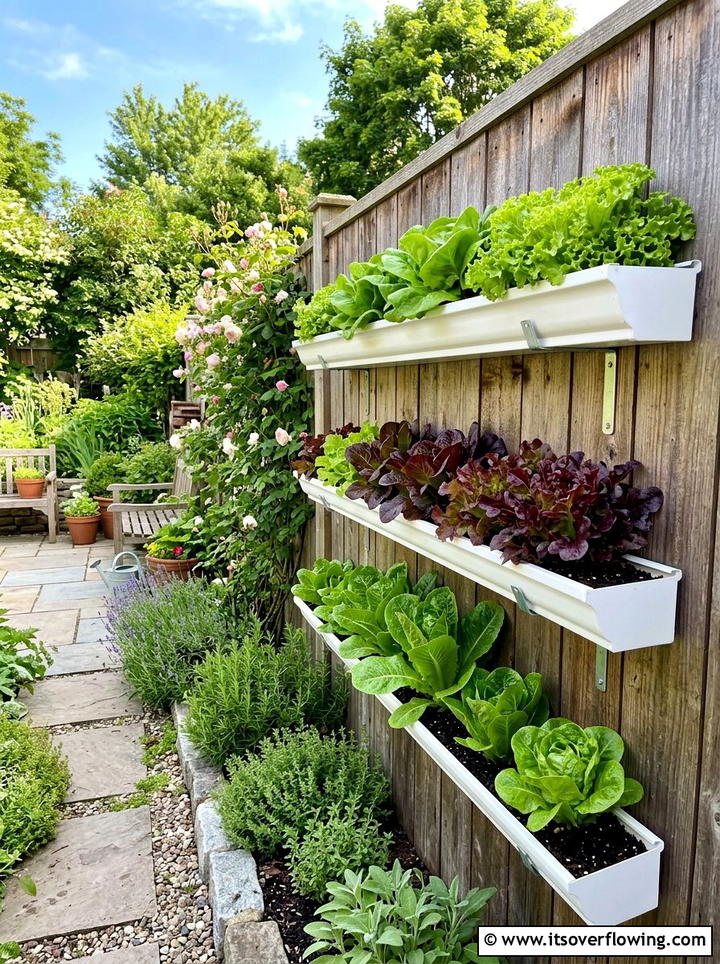
Growing your own salad greens is satisfying, but they often get muddy when grown directly in the ground. A tiered lettuce planter made from rain gutters keeps your leaves clean and away from hungry rabbits. By spacing several gutters a few inches apart vertically, you can grow different varieties of lettuce in a small footprint. This arrangement ensures that each layer gets enough air circulation and light to prevent diseases. Harvesting is a breeze, as you can simply snip the leaves at waist height. This system is perfect for anyone looking to maintain a continuous supply of fresh, crisp greens throughout the growing season.
9. Shed gutter garden
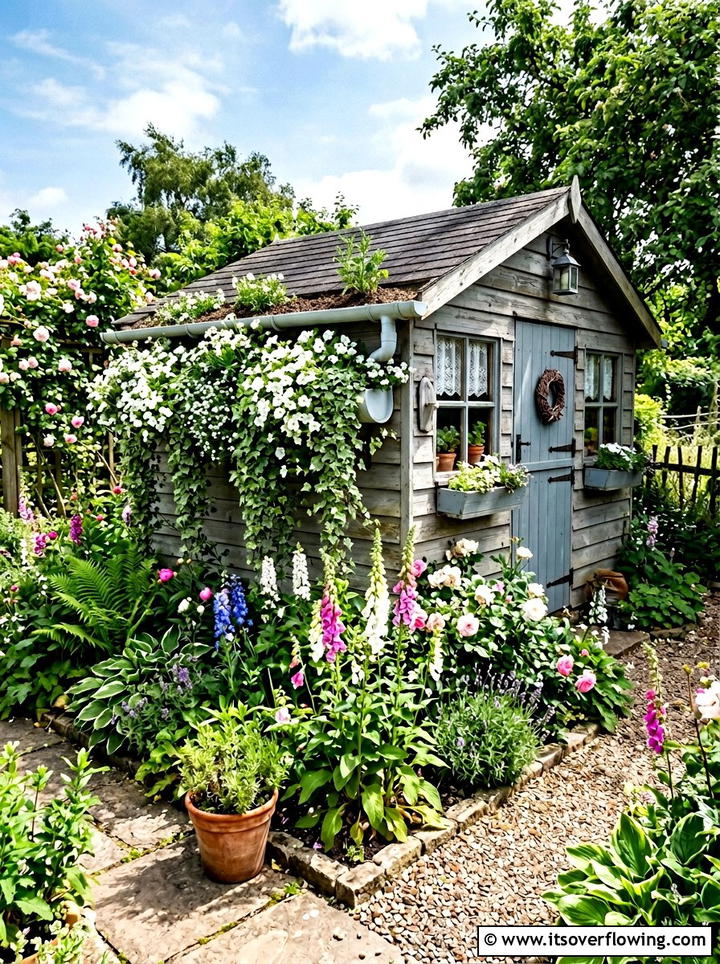
Most garden sheds have plain, unadorned walls that offer the perfect canvas for a vertical garden. Installing rain gutters on the side of your shed can transform it into a blooming feature of your backyard. You can fill these gutters with trailing vines or bright annuals to soften the look of the wooden or metal structure. This is an excellent way to use space that is otherwise wasted and brings more color to your utility areas. It also helps to manage rainwater runoff from the shed roof if you position them strategically. Your shed will go from a simple storage unit to a beautiful garden highlight.
10. Gutter privacy screen
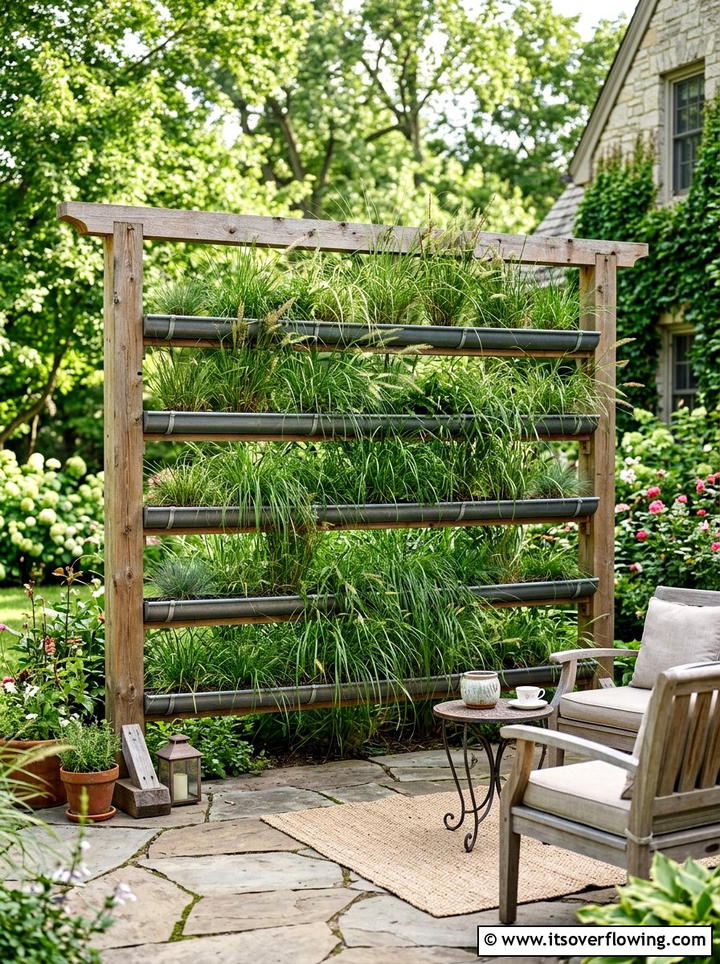
Creating privacy in a suburban backyard can be challenging without building expensive high fences. A gutter privacy screen uses multiple rows of gutters suspended from a frame to create a living wall of greenery. When filled with fast-growing plants like ivy or tall grasses, it blocks the view from neighbors while adding a lush feel. This structure is breathable and allows light to filter through, unlike a solid wooden wall. It provides a sense of enclosure and tranquility for your outdoor seating area. You can customize the height and width to perfectly fit the specific needs of your patio or deck space.
11. Floating gutter garden
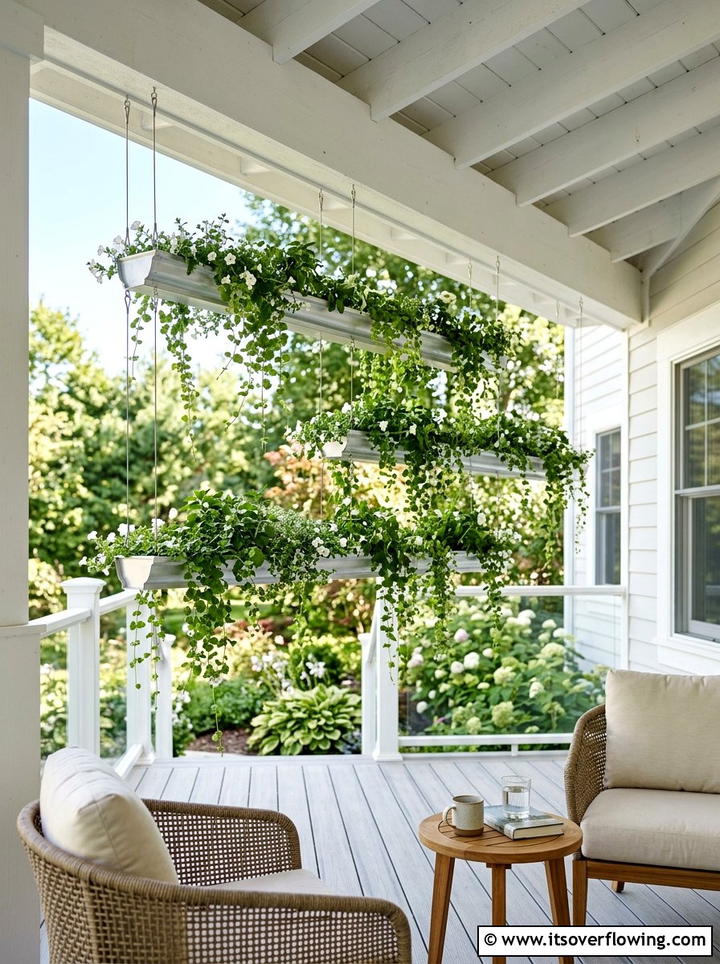
For a modern and minimalist look, a floating gutter garden can be suspended from a porch ceiling or a pergola. Using sturdy wires or chains, the gutters appear to hover in mid-air, creating a unique visual element. This is an ideal way to grow trailing plants like string of pearls or cascading lobelia. The elevated position keeps the plants safe from ground-dwelling insects and pets. It adds a layer of interest at eye level and makes use of the often-neglected overhead space in your garden. The movement of the suspended planters in a light breeze adds a dynamic and peaceful feel to the environment.

12. Gutter fairy garden
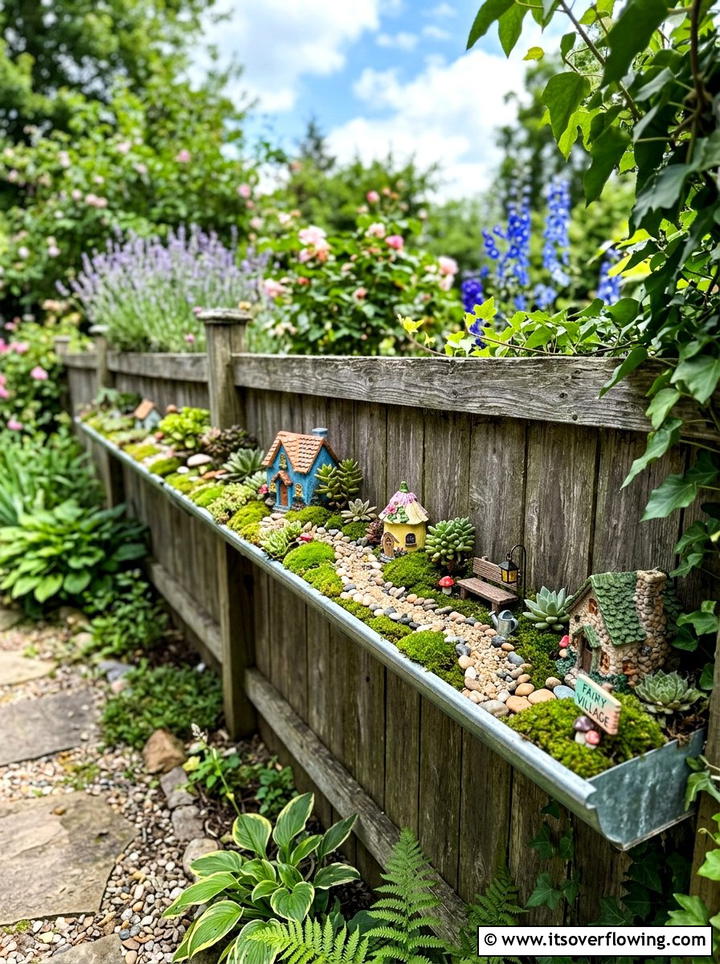
Creating a miniature world is a fun project for both children and adults who enjoy whimsical garden decor. A rain gutter provides a long, narrow tray that is perfect for designing a fairy garden path. You can add tiny houses, miniature bridges, and small-scale plants like moss or dwarf succulents to fill the space. Because the gutter is narrow, it naturally creates a “street” feel for your fairy village. This project can be mounted on a fence at a child’s height, making it an interactive and magical part of the yard. It is a creative way to use leftover gutter scraps for a charming backyard display.
13. Painted rain gutter planter
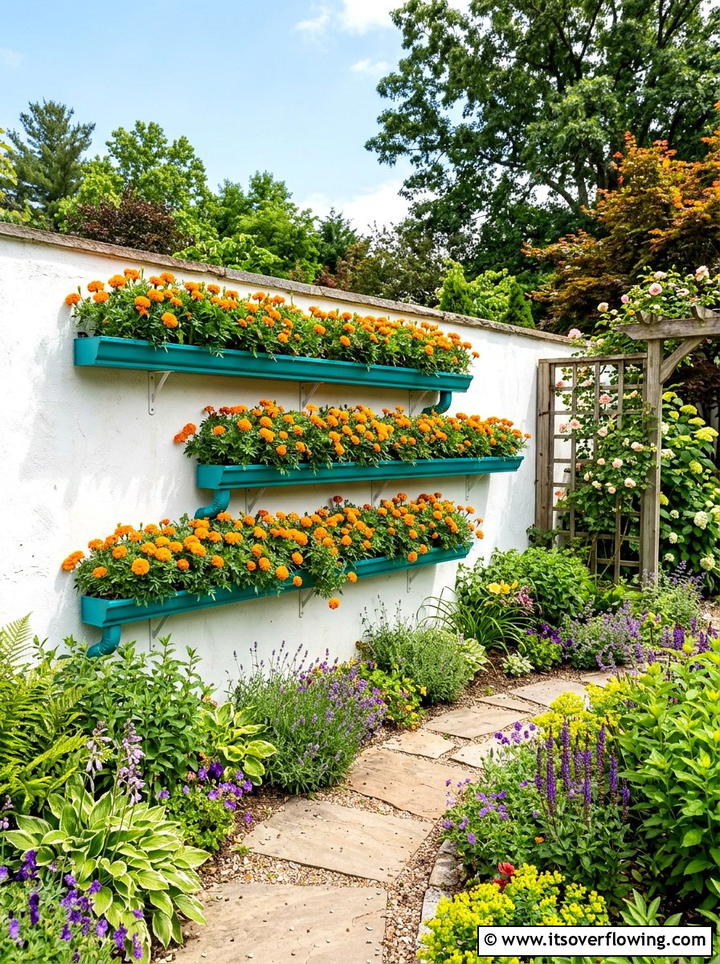
Standard white gutters are functional, but painting them can make your vertical garden pop with personality. You can use outdoor-grade spray paint to match your gutters to your shutters, door, or garden furniture. Bold colors like deep blue or bright yellow can turn your planters into a modern art installation. This customization allows the garden to feel like an intentional part of your home ‘s overall design scheme. Painting the gutters also provides an extra layer of protection against the elements, extending their lifespan. It is a simple weekend project that yields high-impact results for your home’ s curb appeal and garden style.
14. Gutter aquaponics system
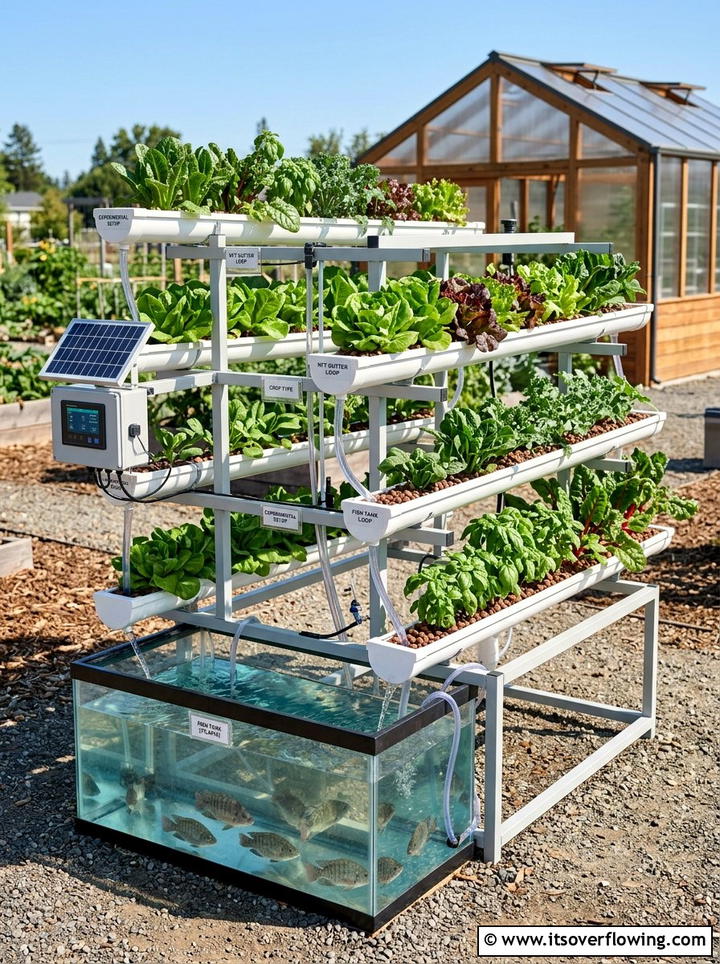
If you are interested in sustainable gardening, a rain gutter can be integrated into a small-scale aquaponics setup. In this system, water from a fish tank is pumped through the gutters, where plants filter out nutrients. The gutters serve as the grow beds for various greens, while the water eventually returns to the fish. This creates a closed-loop system that uses significantly less water than traditional soil-based gardening. It is a fascinating way to grow both food and fish in a compact space. The long, shallow nature of the gutter is perfect for maintaining a steady flow of nutrient-rich water across the plant roots.
15. Flower box gutter
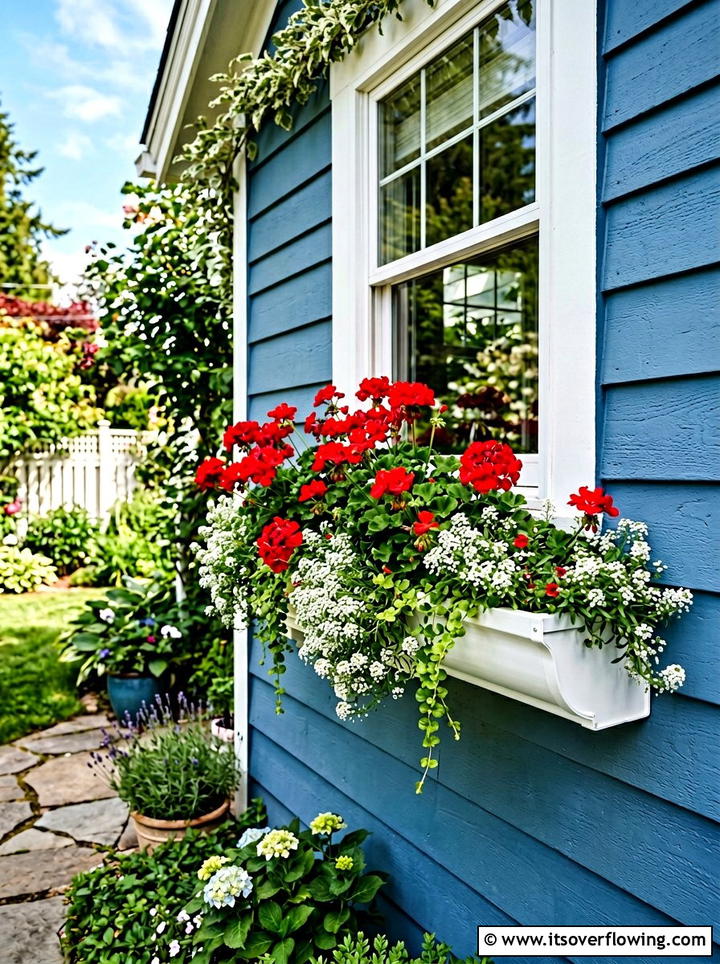
Classic window boxes can be heavy and expensive, but rain gutters offer a lightweight and affordable alternative. You can mount sections of gutter just below your windows to create a custom flower box that spans the entire width. Filling these with colorful annuals like petunias or geraniums adds instant charm to your home’s exterior. Since gutters are designed to handle water, they are naturally weather-resistant and easy to clean. You can even add end caps to give them a finished, polished look that mimics expensive custom planters. This simple addition makes your home feel more inviting and beautifully integrated with the surrounding natural landscape.


16. Deck railing gutter
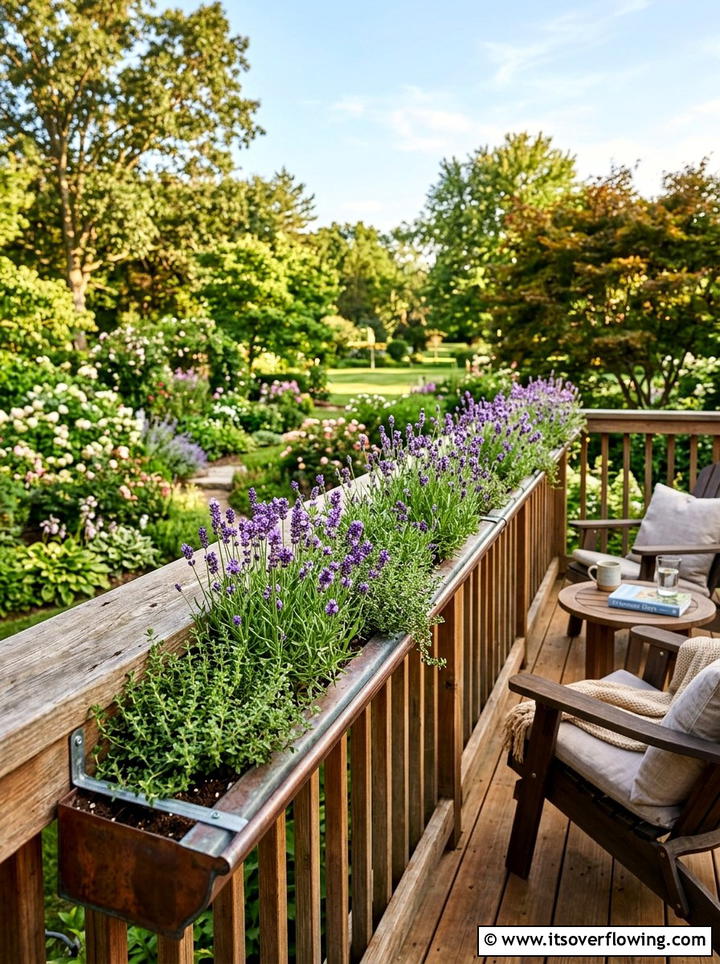
Your deck is often the center of outdoor entertaining, and adding plants can make it feel much more cozy. Attaching rain gutters to the inside or outside of your deck railing provides a place for lush greenery. You can grow herbs for outdoor cocktails or fragrant flowers that improve the ambiance of your gatherings. This placement keeps the plants close to where you spend your time, making maintenance easy and enjoyable. The gutters can be easily removed or repositioned if you decide to change your deck layout. It is a smart way to add life to your outdoor living space without cluttering the floor.
17. Gutter seedling starter
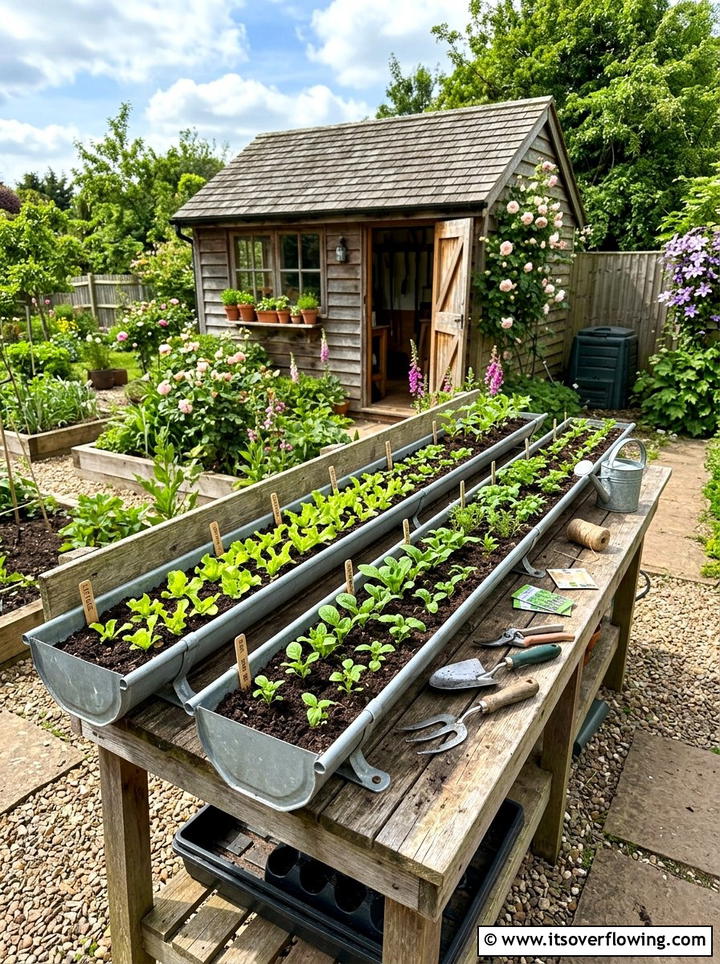
Starting seeds indoors or in a sheltered area requires a lot of small containers that can be messy to manage. Rain gutters act as perfect long trays for starting rows of seedlings before they are transplanted into the ground. You can fill a gutter with seed-starting mix and sow your seeds in a long, organized line. This makes it easy to water a large number of plants at once and ensures uniform growth. When the seedlings are ready, you can simply slide the entire row out or scoop them out individually. This method saves time and keeps your potting bench much more organized during the busy spring season.
18. Outdoor classroom garden
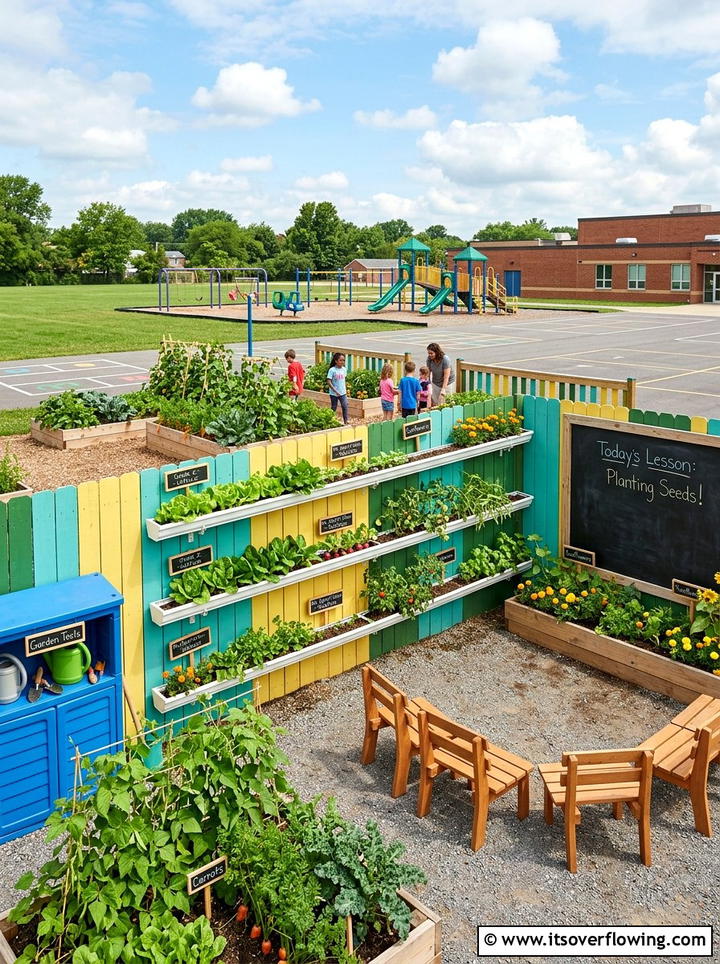
For schools or homeschooling families, a rain gutter garden provides an excellent hands-on learning tool for children. Mounting gutters at various heights allows students of all ages to observe plant growth up close. Children can take responsibility for watering their specific section and watching their seeds turn into food or flowers. It is a practical way to teach lessons about biology, sustainability, and where our food comes from. The narrow gutters are easy for small hands to manage and keep the garden organized and accessible. This interactive outdoor space encourages a love for nature and teaches valuable skills in a fun and engaging way.
19. Zig zag water feature
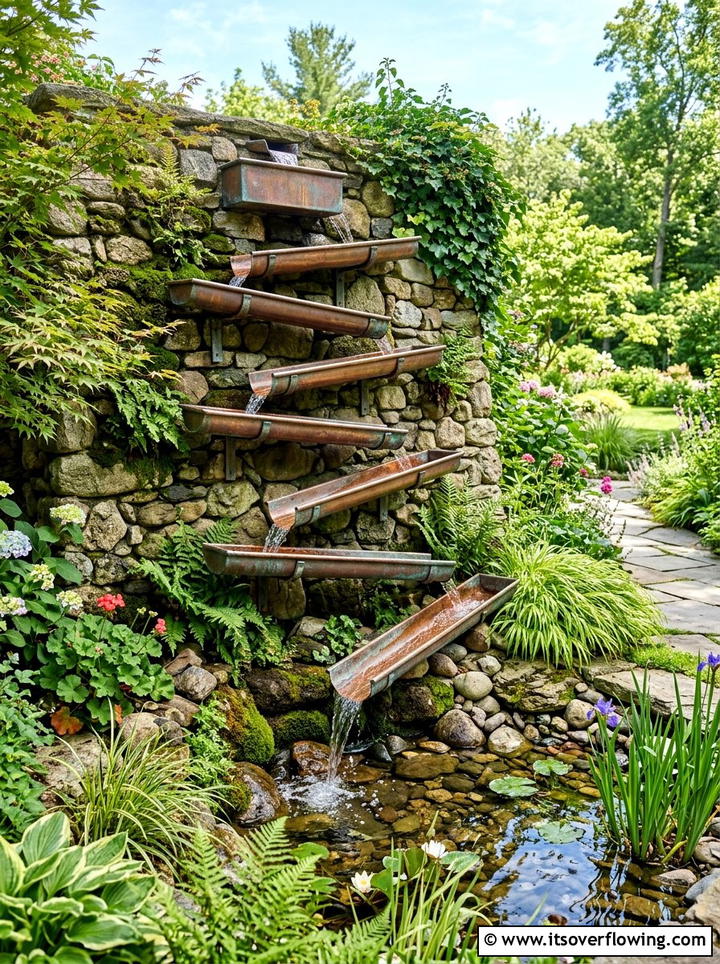
Rain gutters are not just for plants; they can also be used to create a modern and soothing water feature. By mounting gutters in a zig-zag pattern on a wall, you can create a cascading waterfall effect. A small pump moves water to the top gutter, and gravity pulls it down through the remaining levels. This creates a gentle splashing sound that masks neighborhood noise and brings peace to your backyard. You can even add small aquatic plants to the gutters for a more natural look. It is an innovative way to use industrial materials to create a tranquil and artistic water element.

20. Gutter microgreens tray
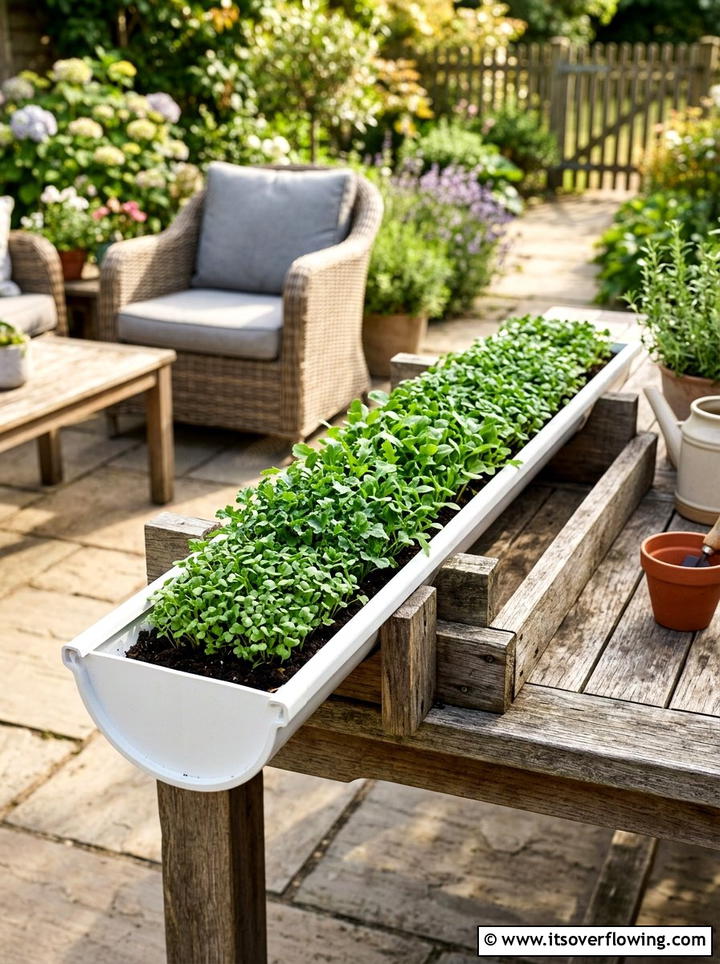
Microgreens are packed with nutrients and are incredibly expensive to buy at the store, but they are easy to grow. Using a shallow rain gutter as a tray allows you to grow large quantities of microgreens in a small area. These plants only need a couple of inches of soil, so the depth of a gutter is absolutely perfect. You can keep these trays on a porch or a sunny windowsill for easy access during meal preparation. Since they grow so quickly, you can have a fresh harvest every week. It is a cost-effective and space-saving way to boost the nutritional value of your home-cooked meals.
21. Cactus gutter garden
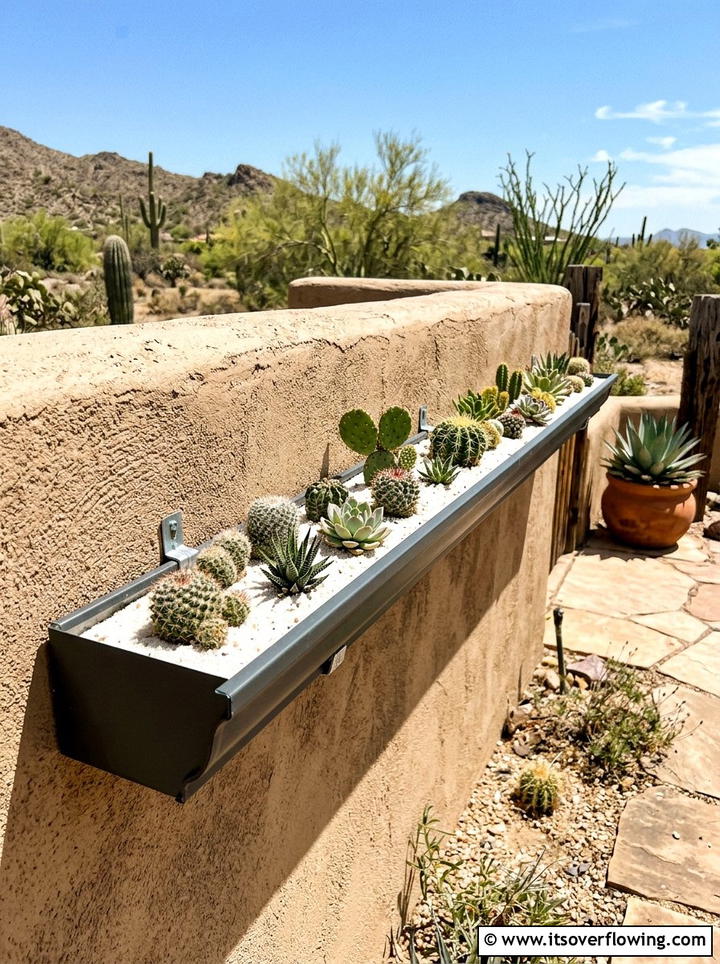
If you live in a dry climate or simply love the desert aesthetic, a cactus gutter garden is a great option. Cacti thrive in well-draining soil and don’t mind the confined space of a rain gutter. You can create a stunning arrangement by mixing different heights and textures of cacti and other desert plants. Adding decorative sand or small pebbles on top of the soil gives the planter a clean and finished look. These plants require very little maintenance, making them perfect for busy gardeners. This vertical cactus display adds a unique, modern touch to a sunny wall or a south-facing fence line.
22. Gutter bird feeder garden
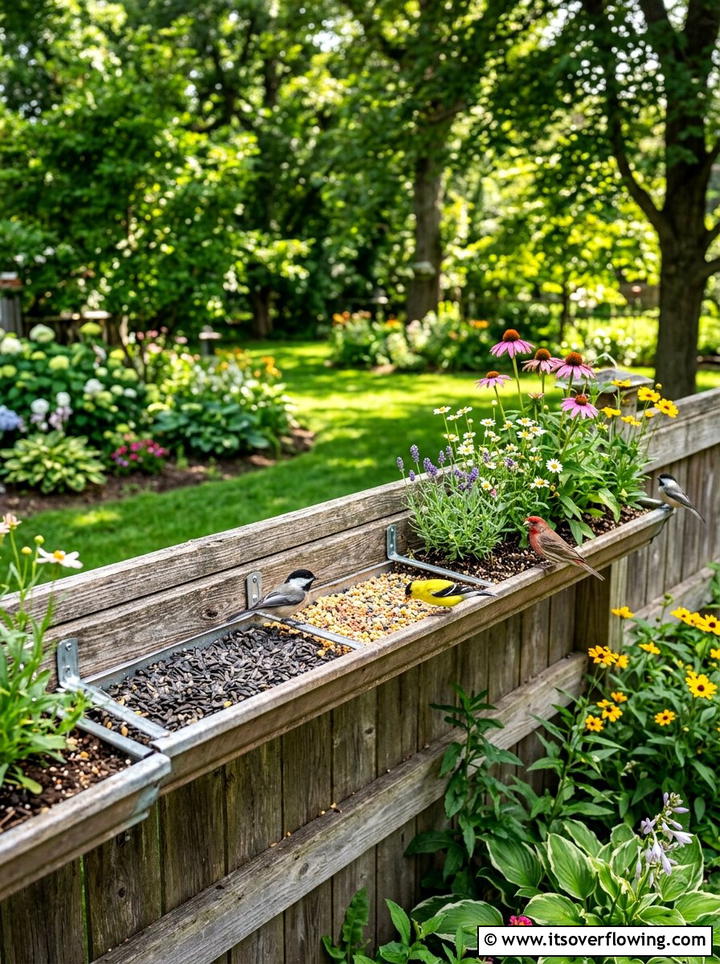
Why not combine your love for gardening with your love for local wildlife? A rain gutter can be divided into sections where some parts hold birdseed and others hold bird-friendly plants. You can plant flowers that produce seeds or attract insects that birds like to eat, such as sunflowers or zinnias. This creates a one-stop shop for your feathered friends right in your own backyard. Mounting this on a fence gives you a great view of the birds from your window. It is a wonderful way to support the local ecosystem while enjoying the beauty and movement of birds visiting your garden throughout the day.
23. Metal gutter herb wall
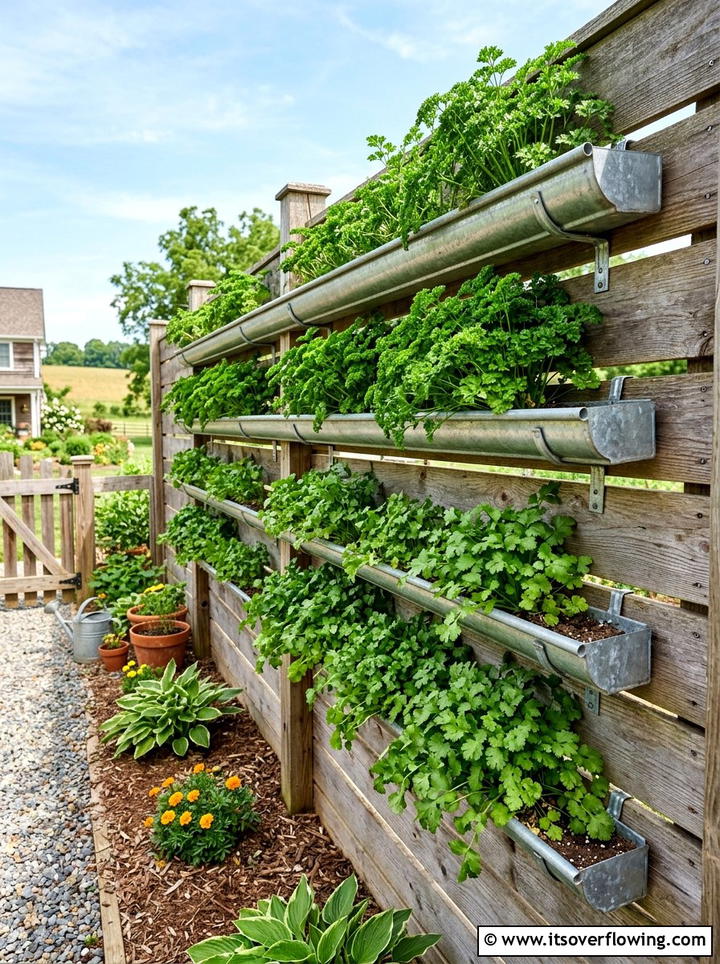
Using galvanized metal gutters can give your garden an industrial or farmhouse look that is very popular right now. Metal is extremely durable and provides a sturdy home for a large variety of culinary herbs. When mounted against a dark wood fence or a brick wall, the silver metal creates a beautiful contrast with the green leaves. These gutters can handle the weight of more soil, allowing you to grow slightly larger herb varieties. They are also very easy to clean and maintain over many years of use. This herb wall serves as both a functional kitchen garden and a stylish piece of outdoor decor for your home.
24. Gutter moss garden
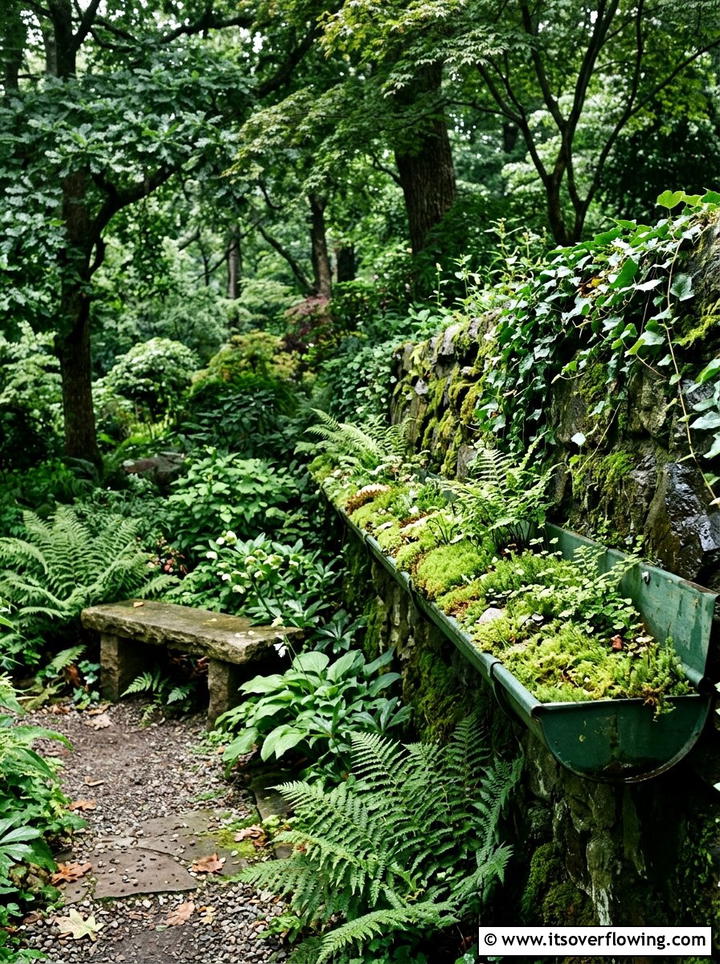
In shady areas where traditional flowers might struggle, a gutter moss garden can bring a lush, velvety green look. Moss loves the damp conditions that can be easily maintained in a rain gutter system. You can collect different types of moss to create a textured, forest-like carpet that stays green even in low light. This is a very peaceful and low-maintenance option for a north-facing wall or a shaded patio corner. Adding a few small stones or pieces of driftwood can enhance the natural, woodland aesthetic. It turns a dark and difficult garden spot into a beautiful and serene miniature landscape for you to enjoy.
25. Tiered flower gutter
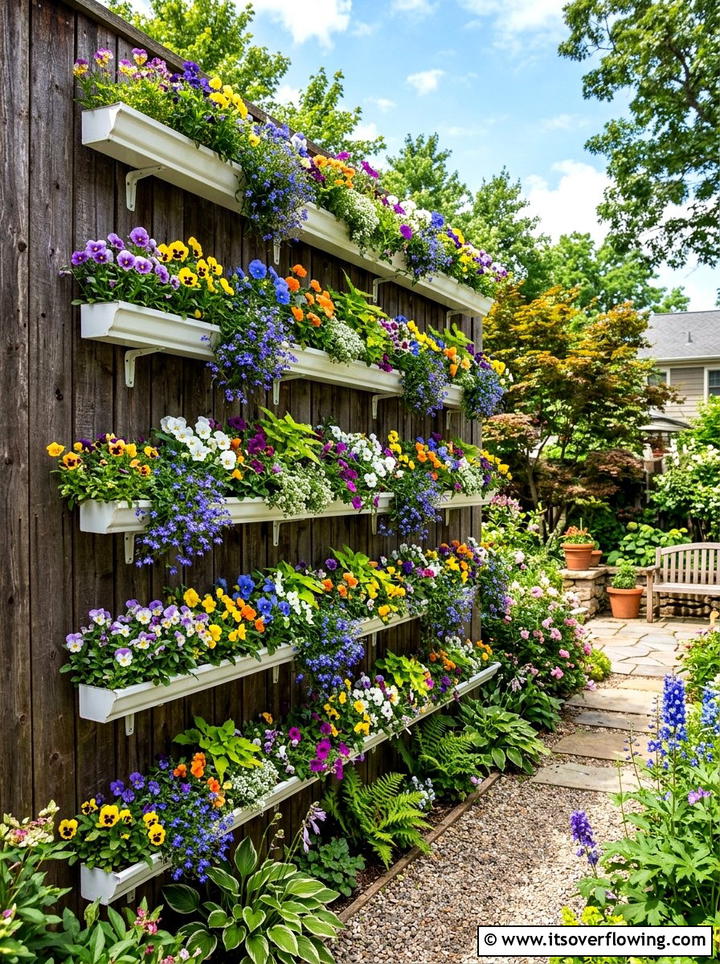
A tiered flower gutter system allows you to create a massive wall of color that can hide an ugly fence or wall. By stacking several gutters and filling them with overflowing flowers, you create a dramatic visual impact. Choose flowers with different blooming times to ensure your wall is colorful from spring all the way through autumn. This vertical arrangement makes the most of your sunlight by lifting plants up and away from the shadows cast by buildings. It is a fantastic way to enjoy a high-density flower garden even if you have very little ground space. The sheer volume of blooms will make your garden feel like a paradise.
Conclusion:
Repurposing rain gutters into garden planters is an innovative and sustainable way to enhance your outdoor living space. These projects are not only budget-friendly but also allow for incredible flexibility in design and plant choice. From growing your own food to creating beautiful privacy screens, the possibilities are limited only by your imagination. By using vertical space, you can maximize your garden’s productivity and aesthetic appeal, regardless of how much land you have. Whether you choose a sleek metal look or a colorful painted finish, gutter gardens bring life to every corner. Start your DIY gutter garden today and enjoy a unique, thriving backyard oasis.

Related posts:
 25 creative garden ideas with minimal planting palette for Style
 25 Creative Garden Ideas With Sensory Planting for Relaxation
 25 garden design ideas with monochrome plants: Chic Planting
 25 Creative Garden Ideas With Rain Chains for Serene Style
 25 creative garden ideas with rain gardens for Eco Yards
 25 Garden Ideas With Rain Barrels for Eco-Friendly Yards
 25 Creative Garden Ideas With Rain Barrel Displays That Wow
 25 Creative Garden Ideas With Keyhole Garden Beds
 25 Creative Garden Ideas With Kids Garden Zone
 25 Garden Design Ideas With Pathways for Beautiful Garden Flow
 25 garden ideas with hostas for Lush Shade Garden Beauty
 25 Small Garden Ideas With Edible Garden for Fresh Harvests