
Creating a beautiful outdoor space often involves finding the perfect balance between visual appeal and practical utility for your home. Mixing herbs and flowers is one of the most effective ways to achieve a garden that looks stunning while providing fresh ingredients for your kitchen. This approach, often seen in traditional cottage gardens, allows you to enjoy vibrant colors alongside the aromatic scents of rosemary, mint, and thyme. By carefully planning your layout, you can create a sensory experience that attracts helpful pollinators like bees and butterflies to your yard. These garden designs work for large backyards or small balconies, ensuring everyone can enjoy the benefits of homegrown plants and blossoms.
1. Cottage Garden Herbs And Flowers
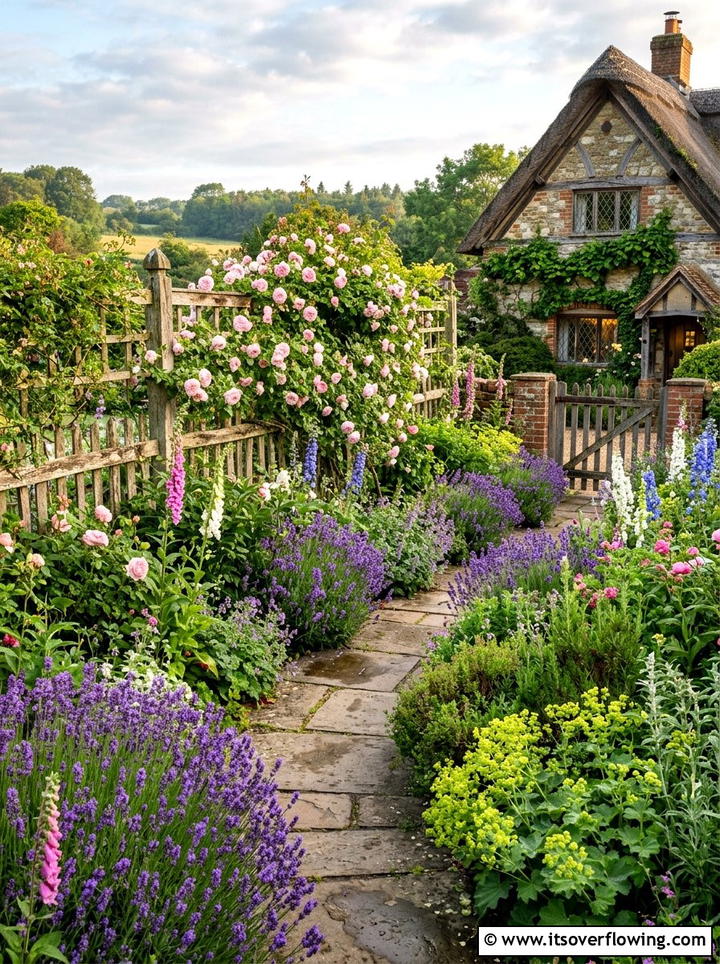
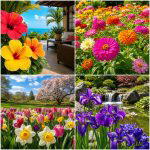
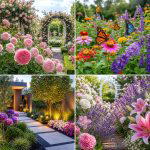
The classic cottage garden style is perfect for blending tall flowering perennials with fragrant herbs in a relaxed and informal way. You can plant tall foxgloves and delphiniums alongside woody rosemary bushes to create a layered look that feels naturally overgrown yet intentional. This design relies on soft colors like pink, purple, and white to establish a romantic atmosphere that smells incredible throughout the spring and summer months. By tucking edible blossoms like nasturtiums or pansies between your sage and oregano, you maximize your space while keeping the soil covered and healthy. This dense planting style naturally suppresses weeds and provides a wonderful habitat for local wildlife to thrive.
2. Raised Bed Kitchen Garden
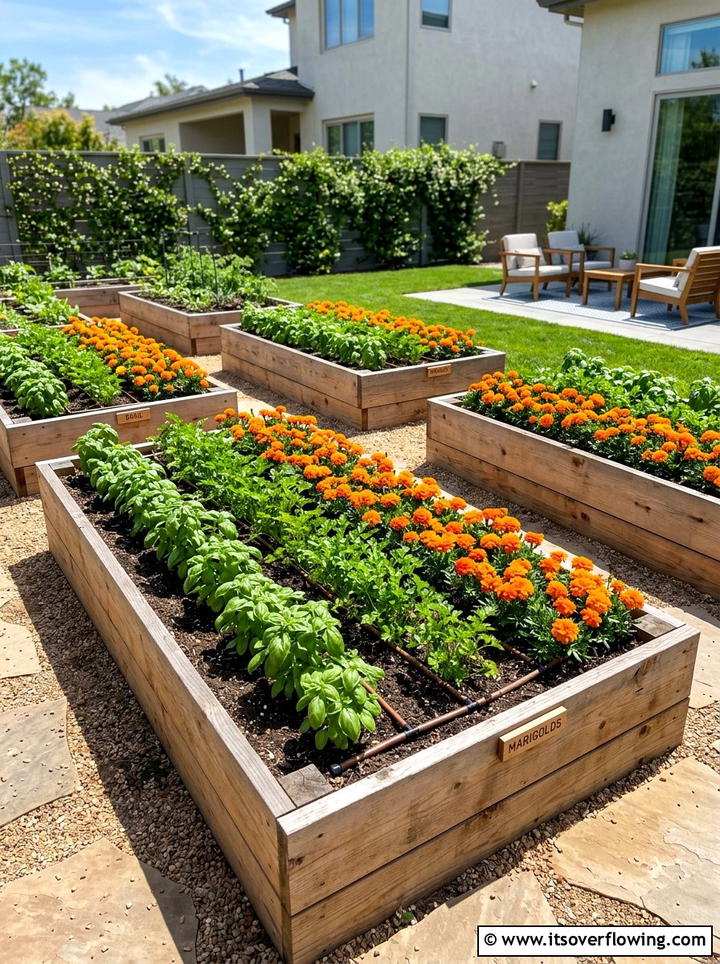
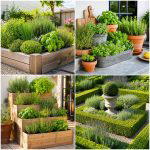
Using raised beds is a fantastic way to organize your herbs and flowers into neat, manageable sections that are easy to maintain. You can build these structures from natural cedar or recycled stone to match your home’s exterior and provide a clean, modern look. Planting marigolds around the edges of your basil and parsley not only adds a bright pop of orange but also helps deter common garden pests. The elevated height makes harvesting your fresh ingredients much more comfortable and provides better drainage for plants that dislike having soggy roots. This structured approach allows you to experiment with different soil mixes to ensure your Mediterranean herbs and delicate flowers grow perfectly.
3. Vertical Herb Wall Design
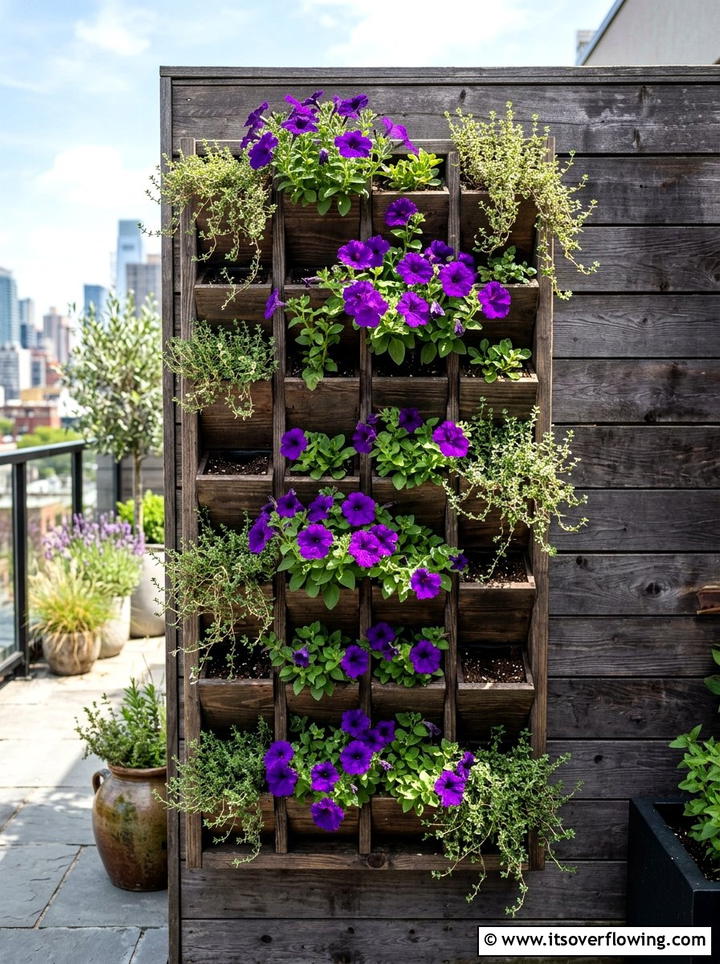
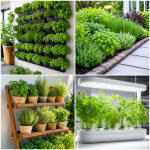
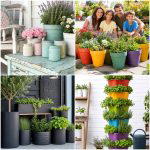
A vertical garden is the ultimate solution for homeowners with limited outdoor space who still want a lush herb and flower display. You can install a series of wooden planters or metal pockets on a sunny wall to create a living tapestry of greenery and color. Trailing plants like thyme or rosemary look beautiful when they spill over the edges, especially when paired with vibrant petunias or lobelia. This design keeps your herbs at eye level, making it incredibly convenient to snip a few leaves for your evening meal while enjoying the floral scent. Vertical setups also improve air circulation around your plants, which helps prevent diseases and keeps everything looking fresh.
4. Creeping Thyme Path Design
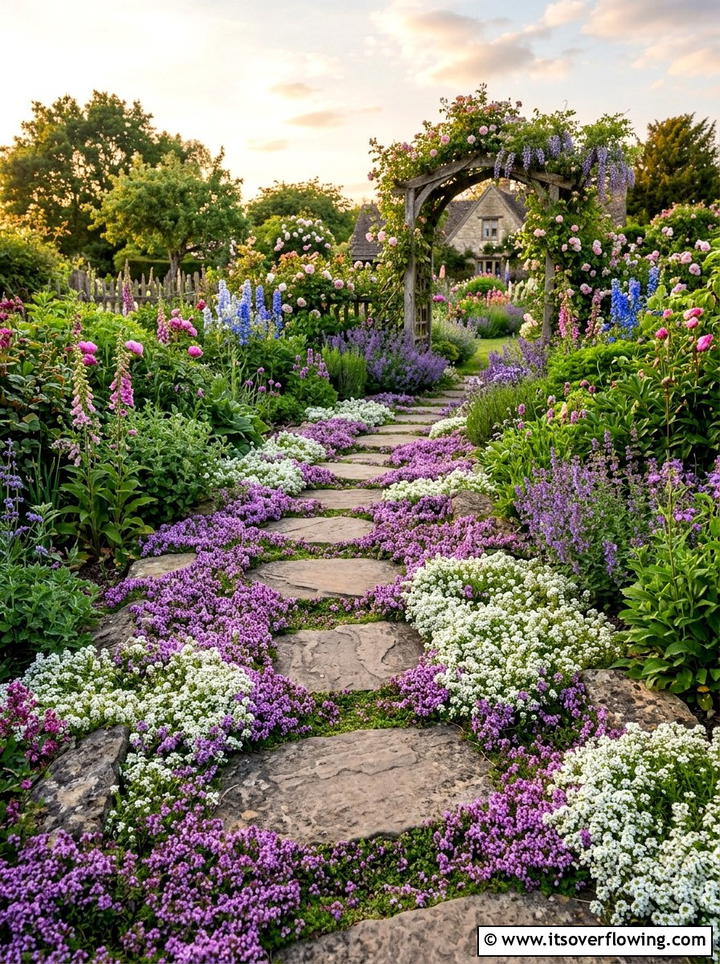
Replacing a traditional grass walkway with a path made of creeping thyme and small flowering groundcovers creates a magical and fragrant journey. As you walk along the stones, the herbs release a delightful aroma that fills the air and lingers long after you have passed by. You can tuck tiny alyssum or blue star creeper into the gaps between stepping stones to add soft texture and delicate pops of color. This type of low-growing garden design is very hardy and requires much less water and mowing than a standard lawn. It turns a functional part of your yard into a beautiful feature that feels integrated with the surrounding landscape.
5. Geometric Potager Garden Layout
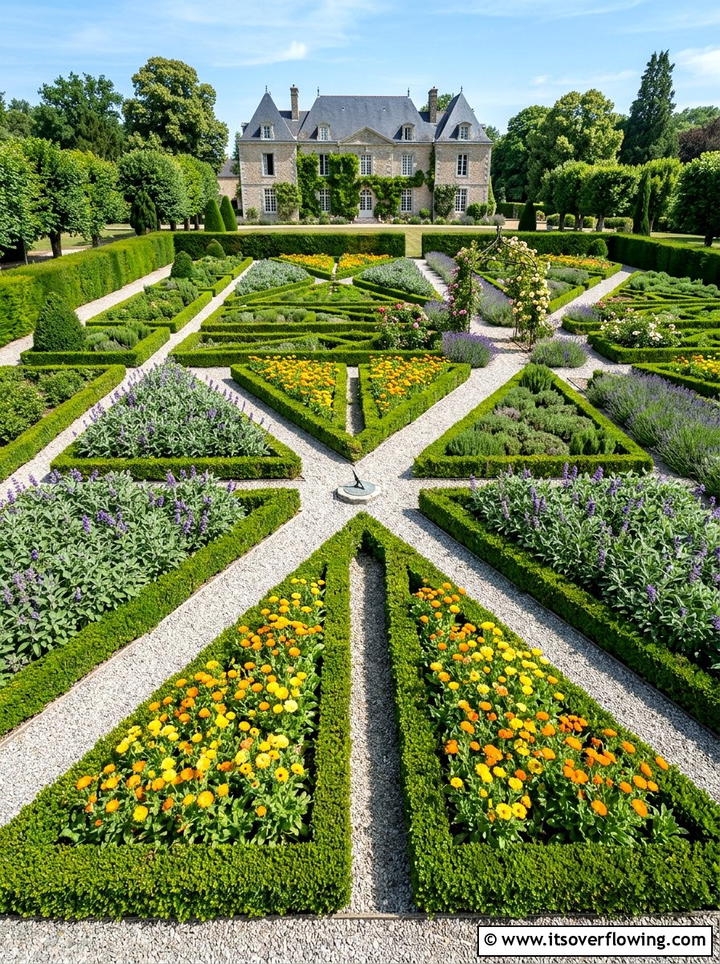
A formal potager garden uses geometric shapes and symmetry to create a highly organized space where herbs and flowers grow in perfect harmony. You can design paths that lead to a central focal point, like a birdbath or a large terracotta pot filled with blooming lavender. Each triangular or rectangular section can be dedicated to a specific herb, bordered by neatly trimmed flowers like calendula or dwarf zinnias. This layout is inspired by traditional French kitchen gardens and offers a sophisticated look that works well in both large and small yards. The clear structure makes it easy to rotate your crops and maintain a tidy appearance throughout the growing season.
6. Herb And Flower Window Box
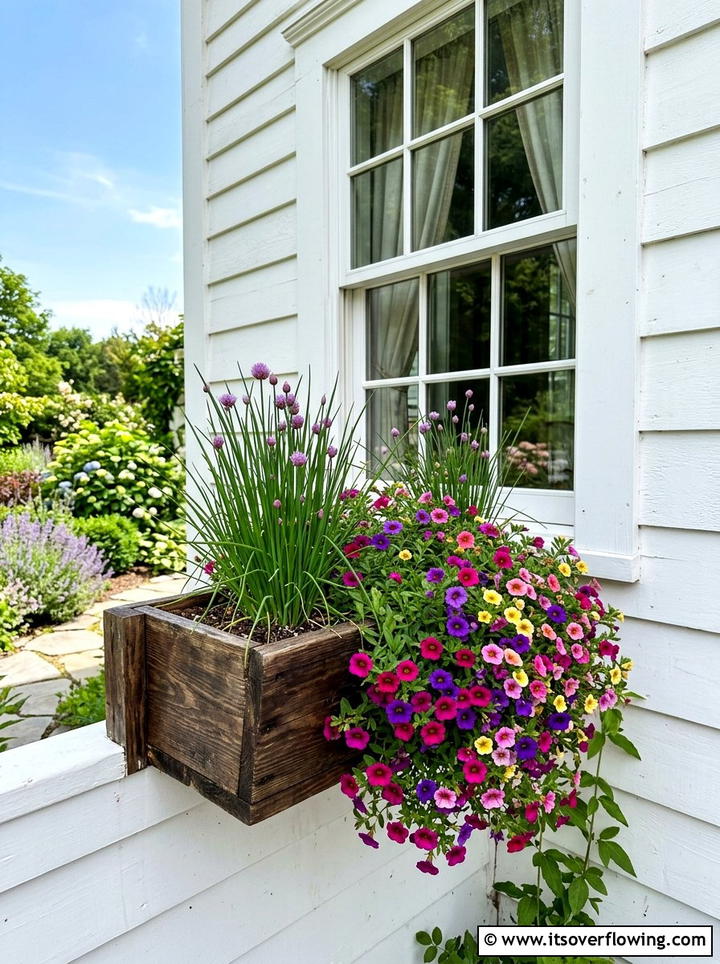
Window boxes are a charming way to bring the beauty of herbs and flowers directly to your home’s windows and railings. You can mix upright herbs like chives and cilantro with trailing flowers like bacopa or million bells for a dynamic and lush appearance. These small containers are easy to water and allow you to change your plant selection based on the season or your current culinary needs. Having fresh sage or mint just outside your kitchen window is incredibly practical and adds a lovely curb appeal to your house. Choosing a color palette that complements your shutters or siding can tie the whole look of your exterior together.
7. Tiered Garden Planter Ideas
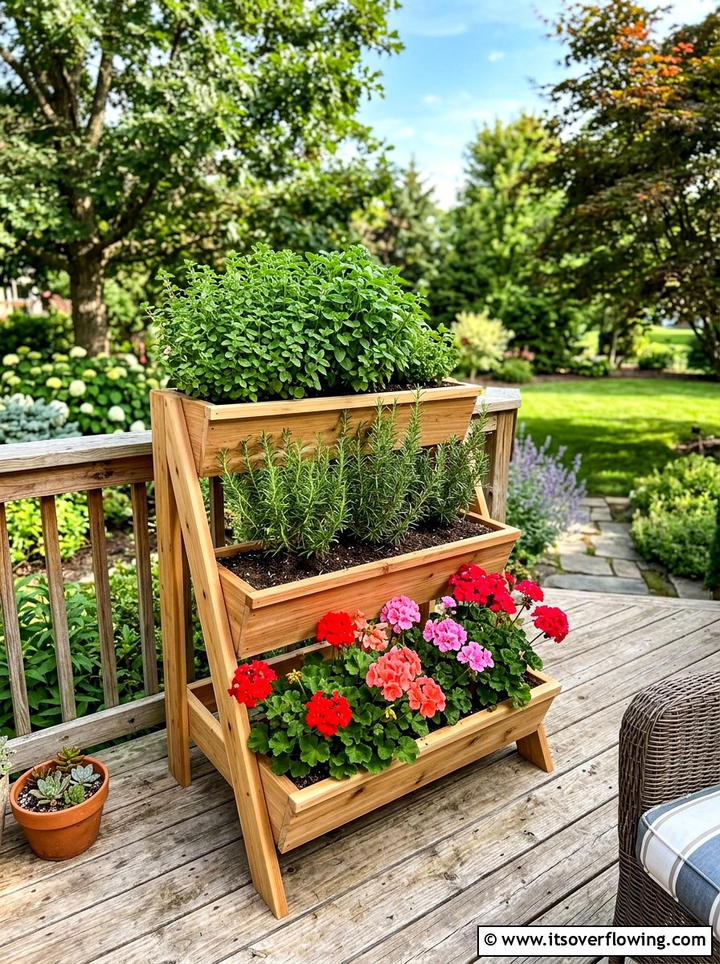
Tiered planters offer a wonderful way to add height and dimension to your patio or deck while keeping your garden organized. You can use a wooden ladder-style stand or a stacked stone arrangement to create different levels for your favorite herbs and colorful blossoms. Placing sun-loving plants like oregano and geraniums on the top tiers ensures they get the light they need to produce strong scents and bright petals. Lower tiers can house more delicate herbs like parsley or chervil that might prefer a little bit of afternoon shade. This vertical arrangement makes a striking visual statement and allows you to grow a wide variety of plants in a small footprint.
8. Modern Herb Garden Design
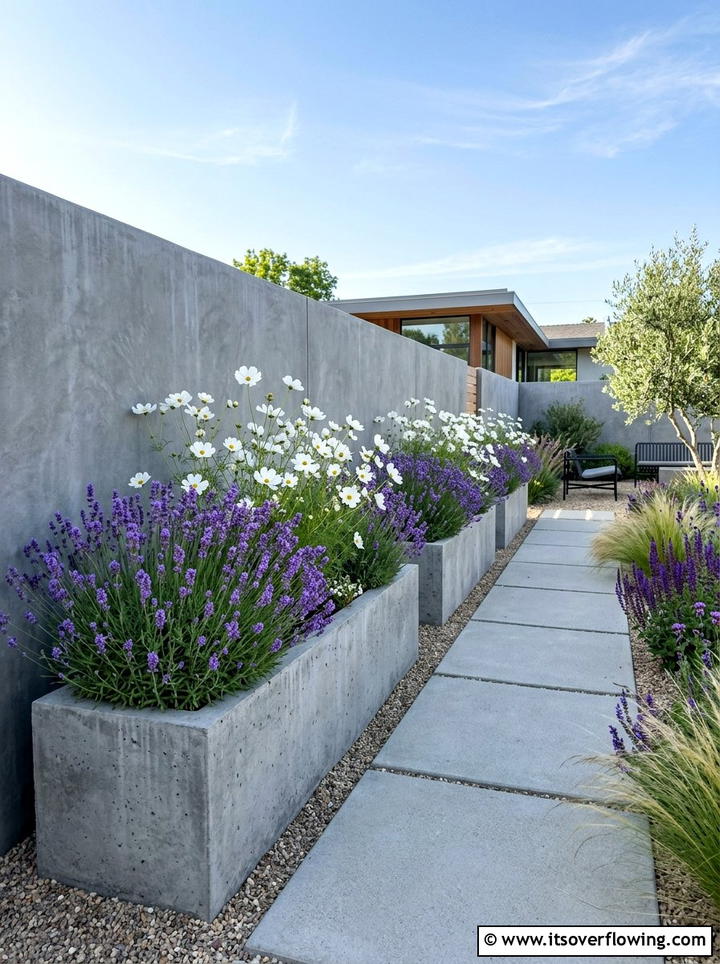
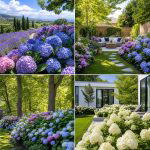
For homes with contemporary architecture, a modern garden design featuring clean lines and minimalist plantings of herbs and flowers is a great choice. You can use sleek metal troughs or concrete planters to house structured herbs like upright rosemary or neatly trimmed lavender bushes. Pairing these with monochromatic flowers, such as white cosmos or silver dusty miller, creates a sophisticated and calm environment that feels very high-end. This style focuses on the texture of the leaves and the architectural shape of the plants rather than a riot of different colors. It is a low-maintenance option that provides a serene backdrop for outdoor entertaining and relaxation on your backyard patio.
9. English Garden With Rosemary
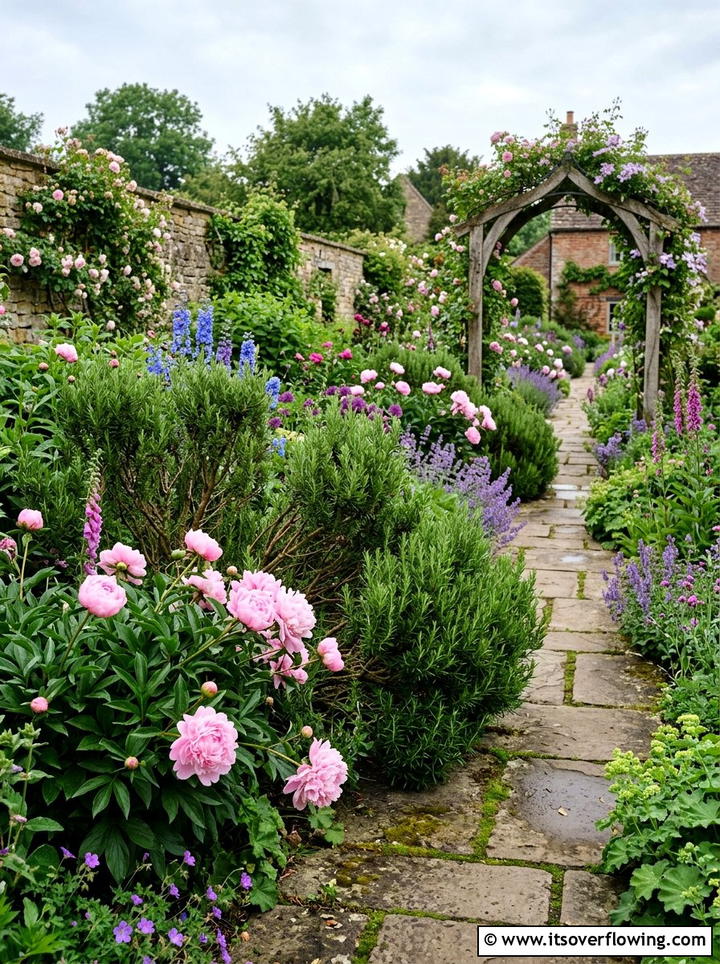
Incorporating rosemary into a traditional English garden design provides a sturdy, evergreen structure that looks beautiful alongside classic flowers like peonies and roses. The needle-like foliage of the rosemary offers a great textural contrast to the soft, rounded petals of traditional English blooms and remains green all year. You can use large rosemary bushes as a low hedge to define different areas of your garden or as a backdrop for shorter flowering annuals. This combination is particularly effective because rosemary is very drought-tolerant and can handle the heat of the summer while the flowers provide the seasonal color. The scent of rosemary mingling with floral notes is truly refreshing.
10. Mediterranean Gravel Herb Garden
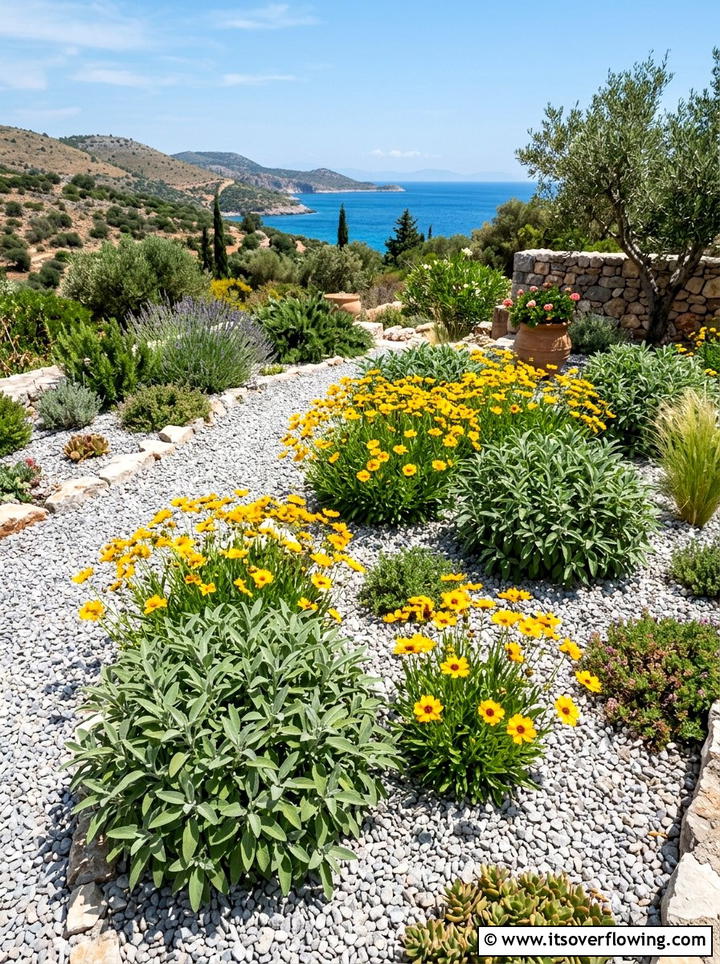
A gravel garden is an excellent low-water option that highlights the beauty of Mediterranean herbs like thyme, sage, and lavender alongside hardy flowers. By using light-colored stones or pebbles as mulch, you create a bright environment that reflects light onto the plants and keeps their roots warm. You can add pops of color with drought-resistant flowers like coreopsis or yarrow, which thrive in the same well-drained soil conditions as the herbs. This design is very sustainable and requires very little weeding or watering once the plants have become established in their new home. It creates a relaxed, coastal vibe that makes your backyard feel like a sunny Mediterranean getaway.
11. Repurposed Wheelbarrow Garden
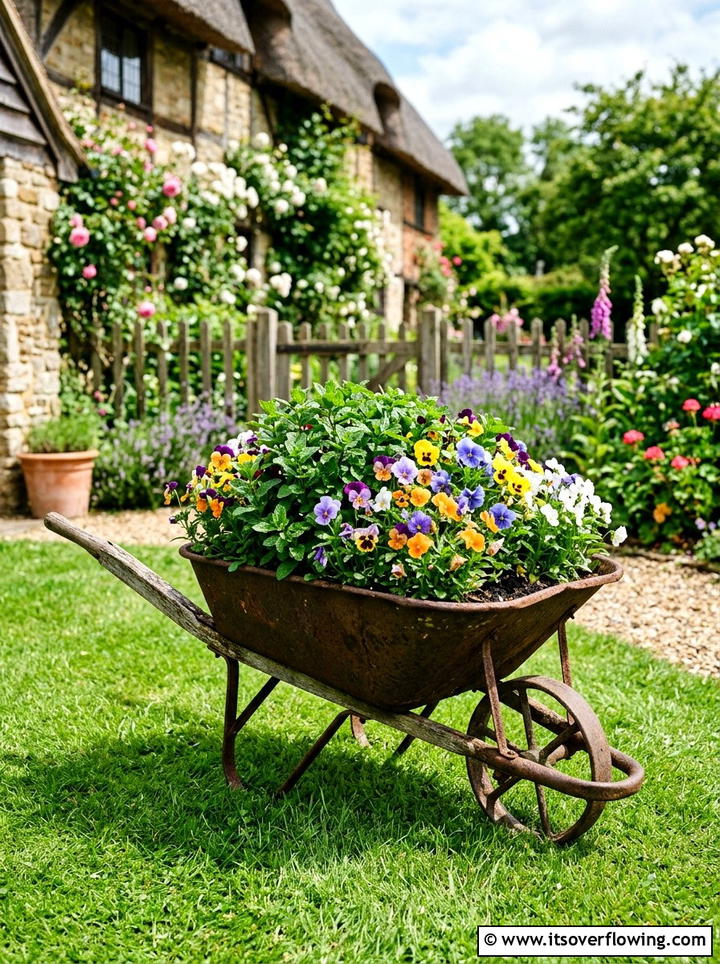
Using a vintage wheelbarrow as a mobile planter is a creative and rustic way to display a mix of herbs and flowers. You can fill the basin with nutrient-rich soil and plant a variety of low-growing herbs like mint and oregano alongside cheerful pansies or violas. This quirky garden feature adds a touch of farmhouse charm to your yard and can be moved around to take advantage of the sun. It is a perfect solution for gardeners who like to change their layout frequently or who have limited permanent planting space in their lawn. The overflowing greenery and colorful blooms make it a standout focal point in any garden setting.
12. Herb Spiral With Flowers
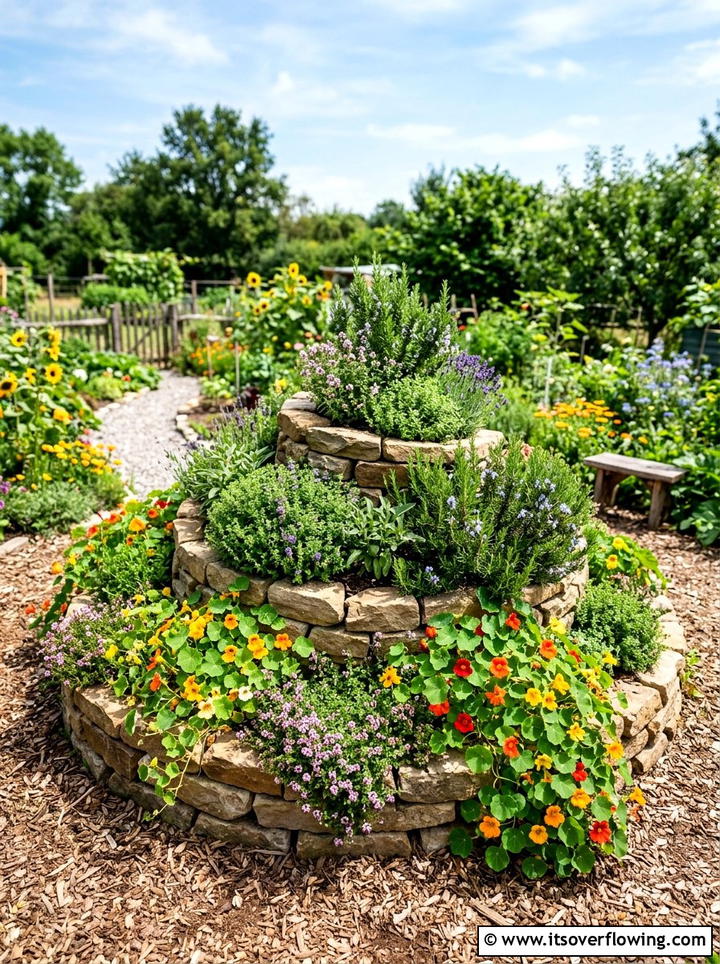
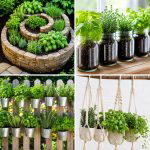
An herb spiral is a functional and visually interesting way to grow a large number of plants in a very small circular area. By building a spiral out of stones or bricks, you create different microclimates that suit the needs of various herbs and companion flowers. The top of the spiral is dry and sunny, perfect for rosemary, while the bottom stays cooler and moister for plants like mint. Tucking small flowers like nasturtiums or sweet alyssum into the crevices adds beauty and helps attract beneficial insects to the spiral garden. This three-dimensional design is not only practical for harvesting but also serves as a sculptural element in your backyard.
13. Patio Container Garden Layout
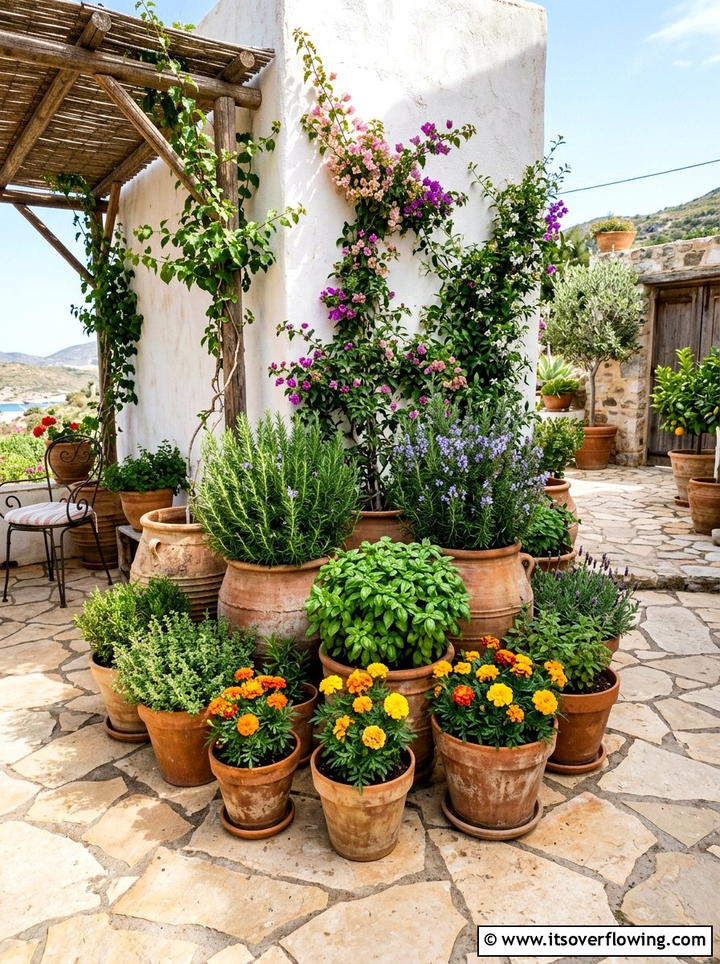
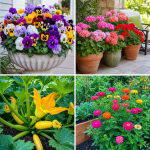
Grouping several large pots together on your patio allows you to create a lush garden atmosphere without needing any open soil or ground space. You can mix and match different container sizes and materials to house various combinations of culinary herbs and seasonal flowering plants. For example, a large terracotta pot can hold a center rosemary plant surrounded by trailing thyme and bright yellow marigolds for a full look. This flexible approach lets you move the pots around to find the best light or to clear space for outdoor gatherings and parties. It is an ideal way for apartment dwellers or those with small decks to enjoy fresh herbs.
14. Formal Herb Garden Borders
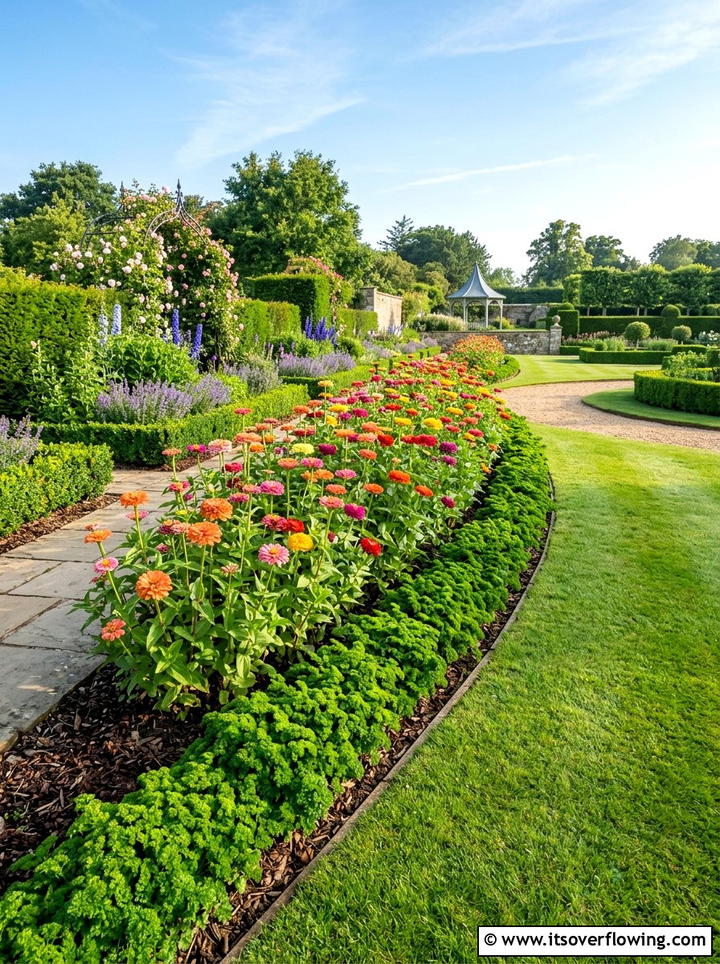
Creating neat borders of herbs and flowers along your garden paths or lawn edges provides a polished and professional look to your landscape. You can use low-growing herbs like chives or curly parsley as a living edge that stays green and productive throughout the growing season. Behind these herbs, you can plant rows of colorful flowers like snapdragons or zinnias to add height and a variety of different textures. This layered effect makes your garden feel more structured and helps to define the different functional zones of your outdoor living space. Regular trimming keeps the borders looking sharp and encourages the plants to grow bushier and more vigorous.
15. Wildflower And Herb Meadow
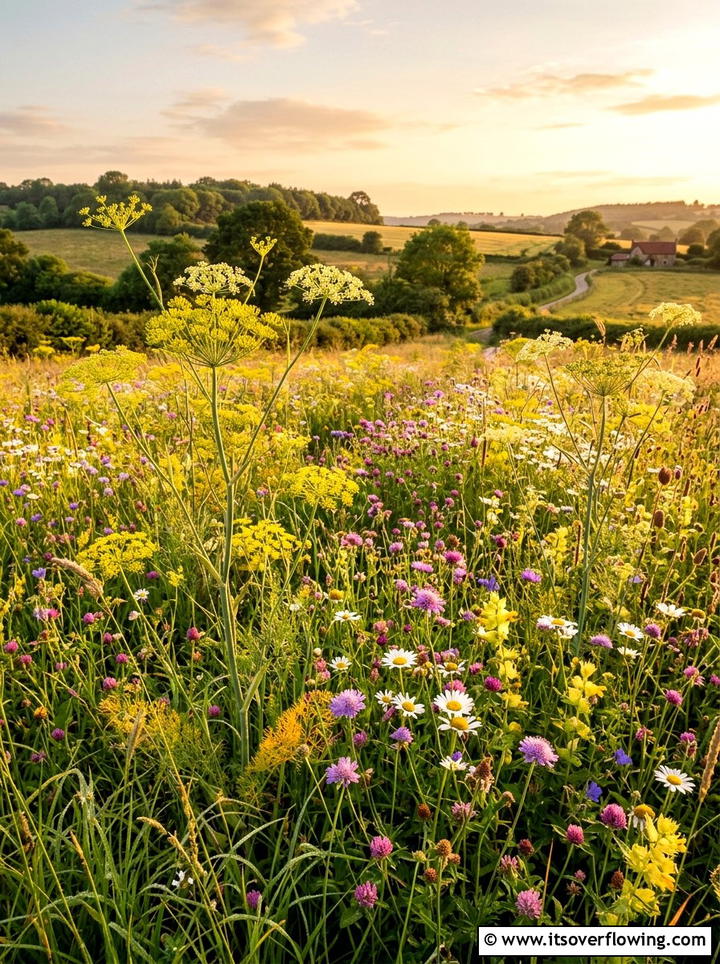
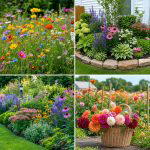
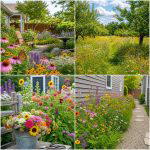
If you prefer a more natural and effortless look, a wildflower and herb meadow is a wonderful way to fill a large open area. You can sow a mix of native wildflower seeds along with hardy herbs like dill, fennel, and chamomile to create a buzzing ecosystem. This design requires very little maintenance once established and provides a constant supply of beautiful blooms for indoor floral arrangements and fresh herbal teas. The tall stalks of fennel and dill add an airy texture that dances in the wind, creating a sense of movement in your backyard. It is a fantastic way to support local bees and butterflies while enjoying a meadow.
16. Herb Rock Garden Design
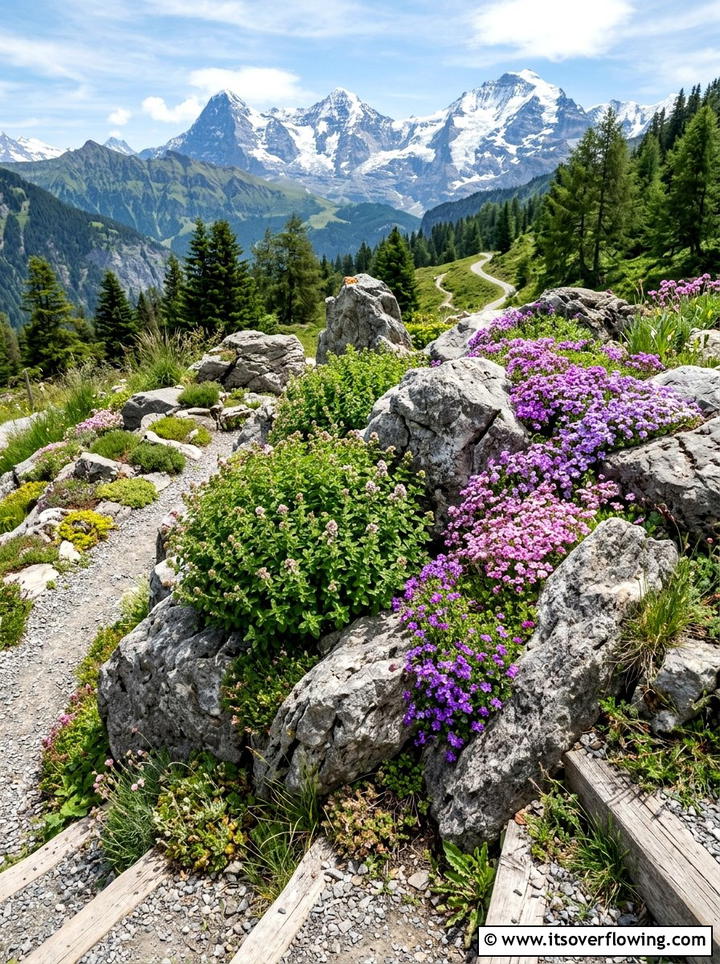
A rock garden is a perfect setting for alpine herbs and hardy flowers that love well-drained soil and rocky crevices to grow in. You can nestle clumps of thyme, oregano, and chives between large decorative boulders to create a rugged and naturalistic appearance for your front yard. Flowering plants like stonecrop or rock cress can be added to provide seasonal color and cover the stones with delicate mats of tiny blossoms. This type of garden is extremely low-maintenance and works well on sloped areas where traditional gardening might be difficult or impossible. The contrast between the hard stones and the soft greenery creates a very visually appealing landscape.
17. Arched Trellis Garden Ideas
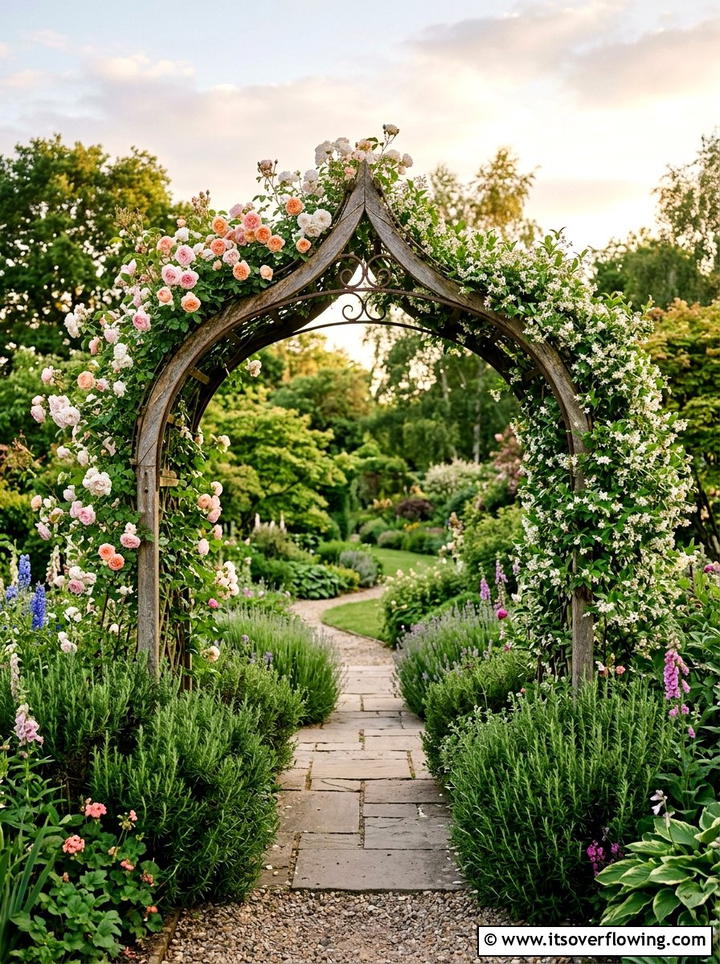
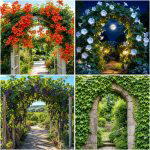
Adding an arched trellis to your garden provides a vertical structure for climbing herbs and flowers to grow up and over your pathways. You can plant climbing roses or honeysuckle alongside aromatic hops or even vining herbs like certain varieties of nasturtiums for a lush canopy. This creates a romantic tunnel of scent and color that makes walking through your garden feel like a truly special and immersive experience. The vertical growth also frees up space on the ground for more low-growing herbs and flowering perennials to flourish beneath the arch. It adds a sense of height and architectural interest that can make a small garden feel much larger.
18. Circular Herb Garden Plan
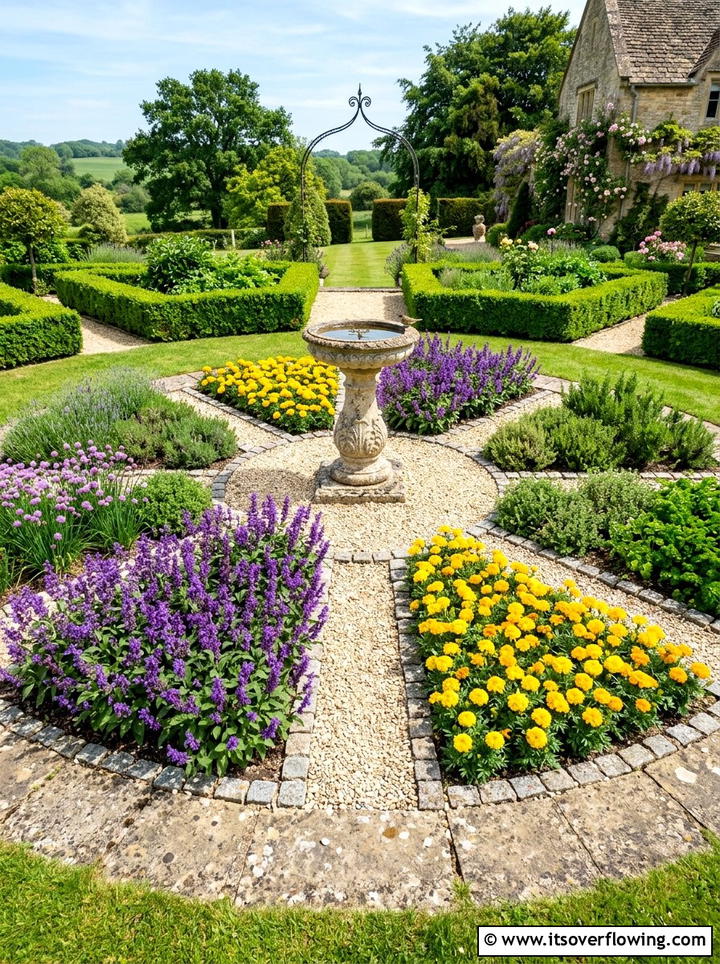
A circular garden layout provides a sense of harmony and balance that makes your outdoor space feel more relaxing and well-designed for visitors. You can divide the circle into wedges, like a pie, and dedicate each section to a different herb and a matching color of flower. For instance, one wedge could feature purple sage and lavender, while another showcases golden oregano and yellow marigolds for a bright contrast. A central focal point, such as a sundial or a decorative urn, ties the entire circular design together and provides a clear place for the eye to rest. This symmetrical pattern is very pleasing to look at from a distance.
19. Herb And Flower Hanging Baskets
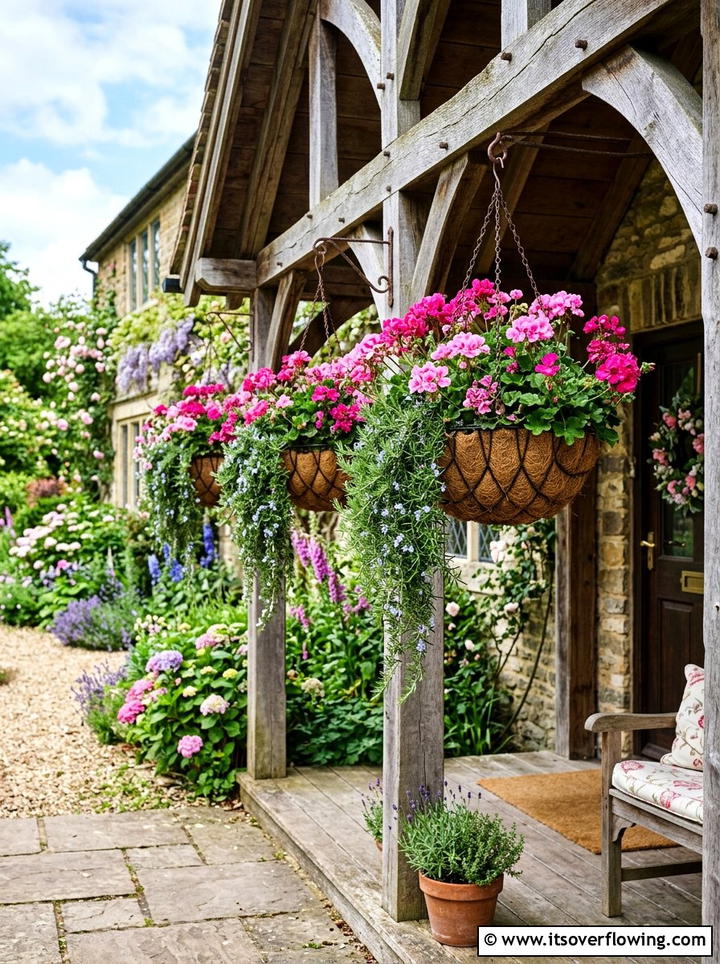
Hanging baskets are a fantastic way to utilize overhead space on your porch or from tree branches to grow a mix of herbs. You can create beautiful arrangements by planting trailing rosemary and mint with cascading flowers like fuchsia or ivy geraniums for a full effect. These baskets are easy to care for and can be hung at various heights to create a more dynamic and layered visual display. They bring the fragrance of the herbs closer to your nose and add a splash of color at eye level where it can be enjoyed. Regular watering and occasional feeding will keep these aerial gardens looking lush and productive all season long.

20. Garden Bench Herb Surround
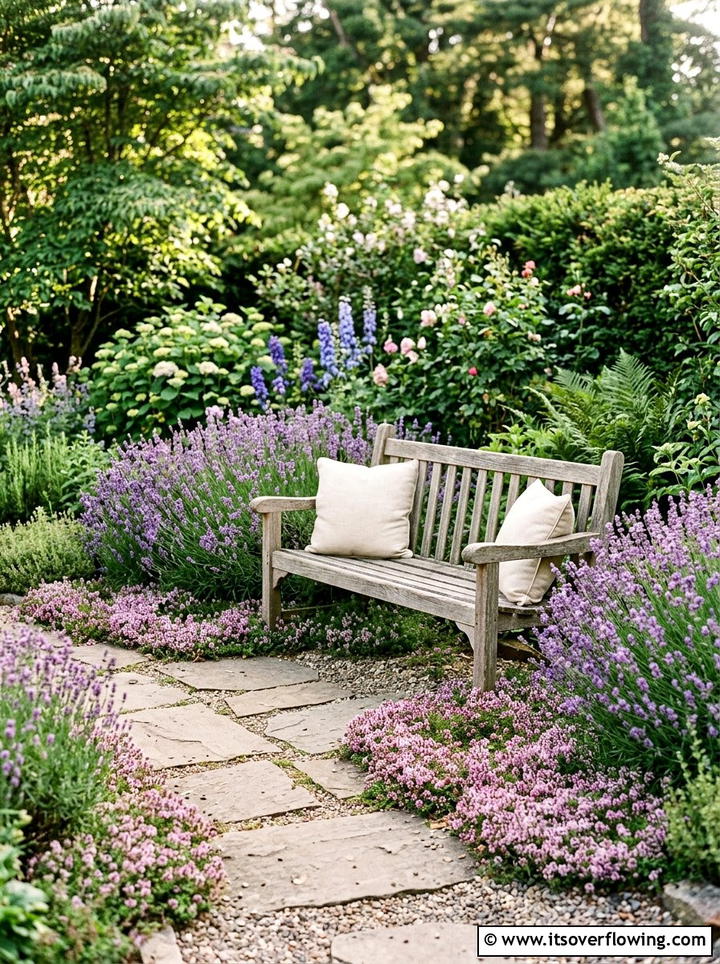
Placing a garden bench in the middle of a fragrant herb and flower patch creates a peaceful sanctuary where you can sit and relax. You can plant aromatic chamomile or creeping thyme around the base of the bench so the scent is released whenever you move your feet. Surrounding the seating area with taller plants like lavender and scented geraniums provides a sense of privacy and wraps you in a wonderful natural perfume. This design encourages you to spend more time outdoors and truly enjoy the sensory benefits of your garden work. It turns a simple piece of furniture into a destination within your backyard for reading or quiet contemplation.
21. Paved Courtyard Herb Pots
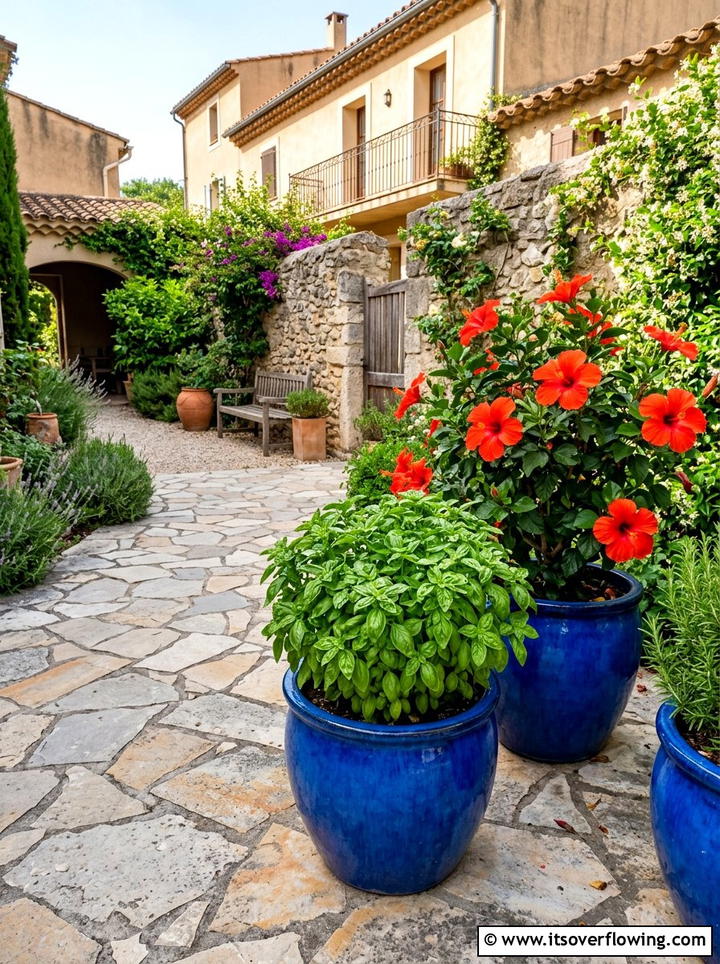
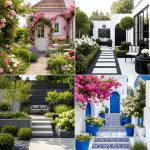
A paved courtyard can be transformed into a lush oasis by using a collection of potted herbs and vibrant flowering plants in various sizes. You can use large glazed ceramic pots in bright colors to add personality and style to an otherwise gray or neutral stone area. Mixing culinary herbs like basil and rosemary with heat-loving flowers like hibiscus or bougainvillea creates a lush, tropical feeling in a confined space. This arrangement is perfect for urban dwellers who want a garden but only have a small patio or enclosed courtyard to work with. The pots can be rearranged whenever you want to change the look or functional flow.
22. Shade Herb Garden Layout
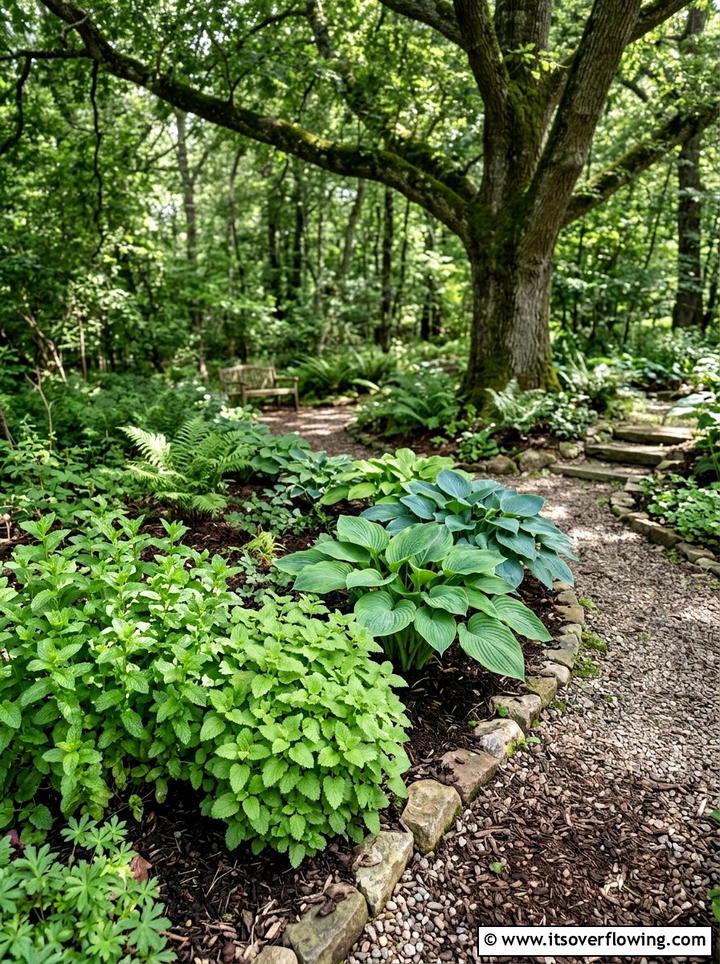
Many people think you need full sun for a garden, but a shade-tolerant herb and flower garden can be just as beautiful. You can plant mint, chervil, and lemon balm in the cooler, shadier parts of your yard alongside flowers like hostas and bleeding hearts. These plants often have lush, green foliage that provides a cool and refreshing look during the hottest parts of the summer months. Using light-colored flowers or variegated leaves can help brighten up a dark corner and make it feel more inviting and part of the garden. This approach allows you to make use of every inch of your yard, regardless of light levels.
23. Herbal Tea Garden Design
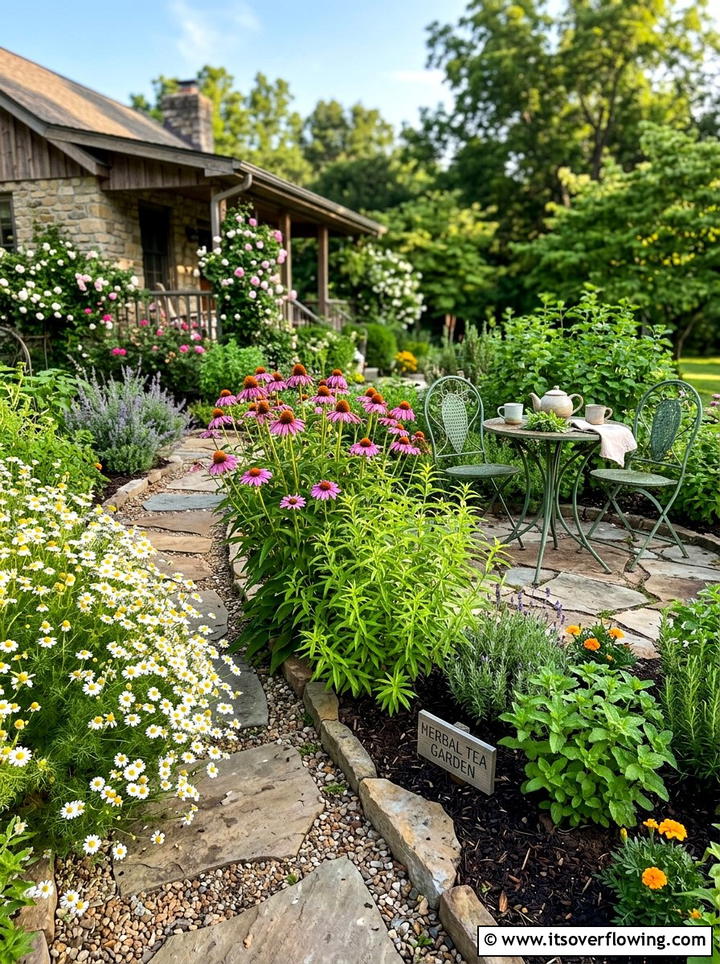
An herbal tea garden is a functional and delightful concept that focuses on plants you can use to brew your own fresh beverages. You can grow chamomile, lemon verbena, and various mints alongside beautiful edible flowers like echinacea and hibiscus for a multi-purpose outdoor space. This design can be organized into a dedicated bed with a small table and chairs nearby so you can enjoy your tea right where it grows. The combination of soothing scents and pretty blossoms makes this a very therapeutic and relaxing part of the garden to maintain. It is a wonderful way to connect your gardening hobby directly with your daily kitchen rituals.
24. Pollinator Herb Garden Ideas
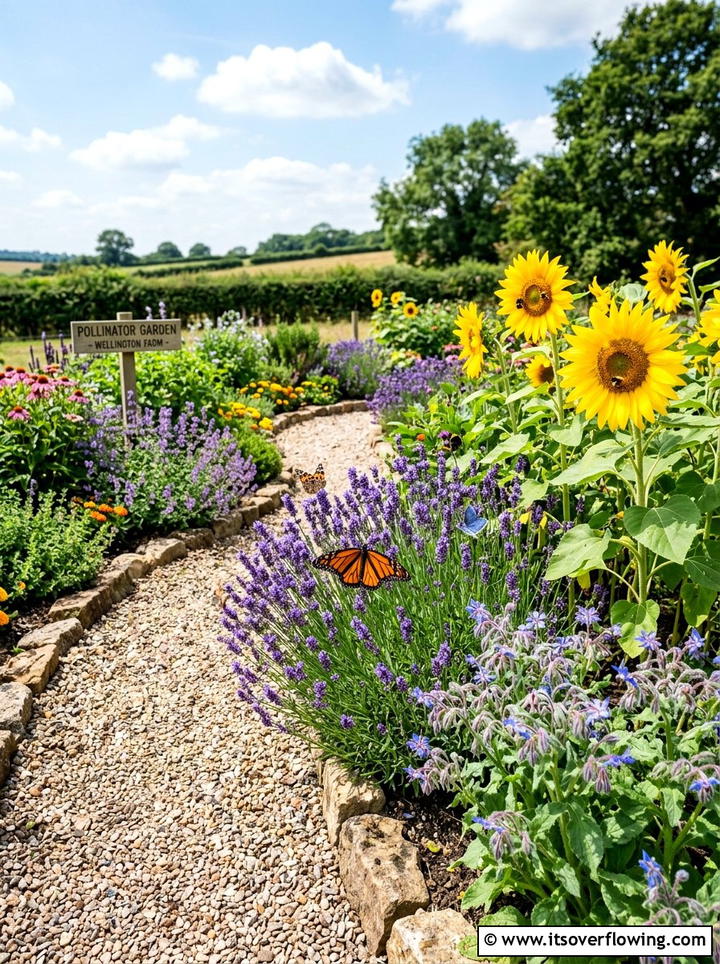
Designing a garden specifically to attract bees, butterflies, and hummingbirds is a rewarding way to use herbs and flowers in your landscape. Herbs like borage, lavender, and oregano are famous for their ability to attract pollinators with their nectar-rich blossoms and strong scents. By interplanting these with bright flowers like zinnias, sunflowers, and butterfly bush, you create a vibrant buffet for local wildlife to enjoy all day. This type of garden is full of life and movement, providing endless entertainment and helping to support the local environment and its health. Watching the various insects visit your plants adds another layer of enjoyment to your outdoor space and gardening.
25. Zen Herb Garden Design
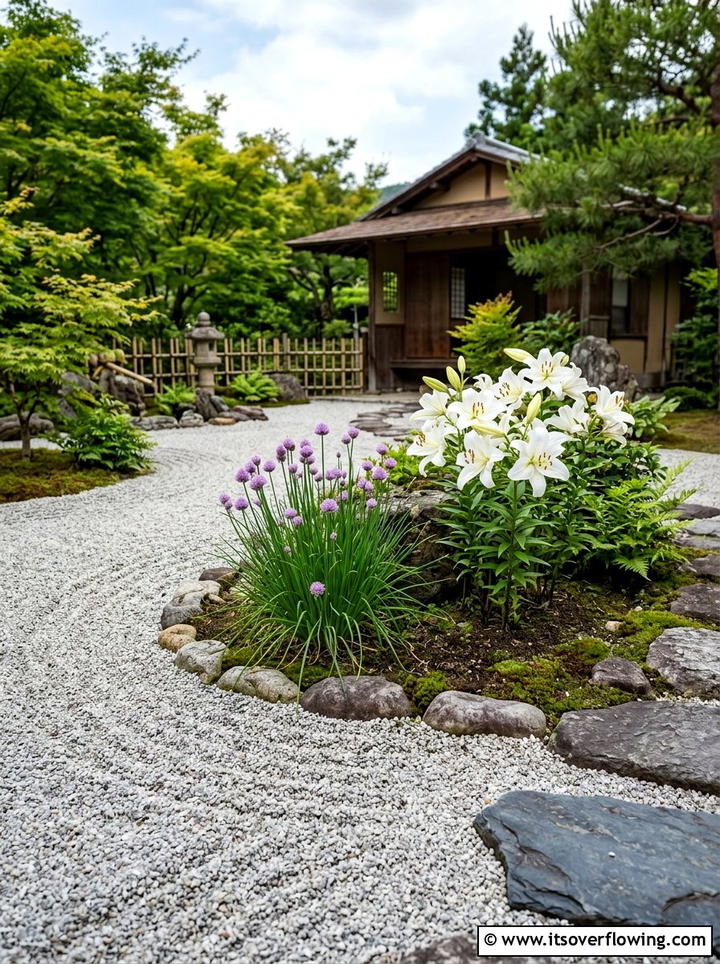
A Zen-inspired garden uses simplicity and natural materials to create a calm space where herbs and flowers are used sparingly for maximum impact. You can use neat gravel paths and carefully placed rocks to frame small clumps of chives, ornamental grasses, and white flowering perennials like lilies. This design focuses on the balance between empty space and living plants, creating a sense of order and tranquility in your backyard. Using herbs with subtle scents, like lemon balm or sweet woodruff, adds to the peaceful atmosphere without being too overwhelming for the senses. It is a perfect choice for those who want a low-maintenance garden that promotes mindfulness and relaxation.
Conclusion:
Integrating herbs and flowers into your garden design is a wonderful way to create a space that is both beautiful and highly functional. Whether you choose a formal potager layout or a wild meadow style, the combination of scents and colors will enhance your home’s outdoor appeal. These garden ideas offer something for every homeowner, regardless of the size of their yard or their level of gardening experience and skill. By following these suggestions, you can enjoy a productive garden that provides fresh ingredients while serving as a stunning backdrop for your life. Start planning your unique herb and flower garden today to experience the joy of a truly balanced landscape.

Related posts:
 25 Garden Design Ideas With Seasonal Flowers for Year-Round Color
 25 creative garden ideas with medicinal herbs for Wellness
 25 garden ideas with herbs for Fresh, Fragrant Outdoor Spaces
 25 Small Garden Ideas With Herbs for Fresh, Fragrant Spaces
 25 Creative Garden Ideas With Archway Flowers
 25 Creative Garden Ideas With Edible Flowers
 25 small garden ideas with flowers for Colorful Outdoor Charm
 25 garden design ideas with color themes: Stunning Palette Tips
 25 Creative Garden Ideas With Maximal Flower Color
 25 creative garden ideas with painted planters for Bold Color
 25 garden ideas with hydrangeas for Stunning Color Displays
 25 Garden Ideas With Wildflowers for Natural Color